
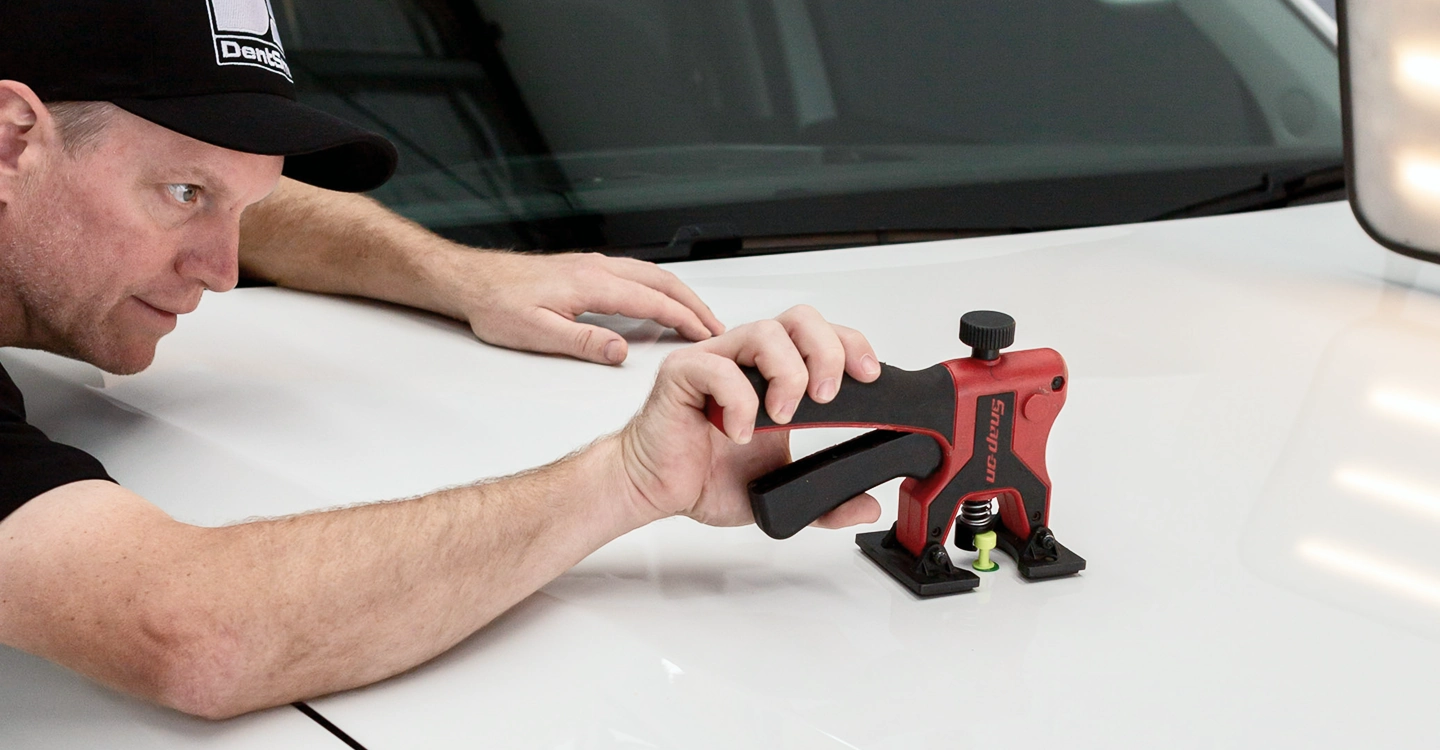
Small dents can make a car look older than it really is, but many minor dents do not require an expensive visit to a body shop. With the right technique, basic tools, patience, and careful handling, some shallow dents can be improved or removed at home.
The best method depends on the dent’s size, depth, location, and whether the paint has been damaged. This guide covers ten practical ways to get small dents out without professional bodywork. Before starting, inspect the affected area carefully and choose a method that matches the type of damage. Taking your time can help prevent scratches, paint damage, and costly repairs.
1. Try a Plunger on a Shallow Dent
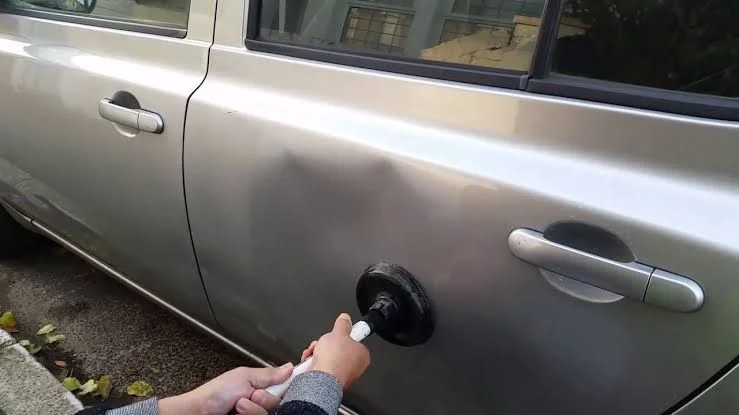
For a small, shallow dent, a clean household plunger may sometimes do the trick. It works by creating suction against the panel, giving you enough grip to gently pull the metal back toward its original shape.
This method tends to work best on larger, rounded dents that do not have sharp creases. A small dent on a relatively flat section of a door, quarter panel, or similar body panel may respond well to this approach.
Before using a plunger, wash the damaged area thoroughly. Dirt and grit trapped between the plunger and paint can create scratches when you move the tool. Use automotive soap and water, then dry the panel with a soft microfiber towel.
You can lightly wet the area again before positioning the plunger because a small amount of moisture can help create a better seal. Make sure you use a clean plunger rather than one that has been used for household plumbing.
Place the plunger directly over the center of the dent and press it firmly against the panel. Pull the handle toward you using steady pressure rather than making a sudden, aggressive movement.
If the dent does not move, reposition the plunger and try again. Several controlled attempts are safer than applying excessive force. If the metal starts moving, continue slowly until the panel returns closer to its original shape.
This method is less useful for dents with sharp edges, deep creases, or damage close to a panel seam. Modern vehicle panels can also have different shapes and levels of flexibility, so the same technique may produce different results on different cars.
If the panel feels extremely rigid, stop rather than forcing it. Excessive pulling can potentially stretch the metal or create a raised area around the original dent.
A plunger is appealing because it is inexpensive and easy to find, but it should be treated as a gentle repair method rather than a guaranteed solution. It is best suited to minor cosmetic damage where the paint remains intact.
If the dent is small enough and the panel has enough flexibility, suction may restore the shape surprisingly well. If there is little improvement after a few attempts, switching to a more appropriate technique is usually better than continuing to pull.
2. Use a Hair Dryer and Compressed Air
Temperature can affect the flexibility of some vehicle body panels, which is why a hair dryer may help with certain shallow dents.
The technique involves gently warming the affected area and then using a rapid temperature change to encourage the panel to move. This method is most suitable for minor dents in plastic components or thin panels that can respond to temperature changes.
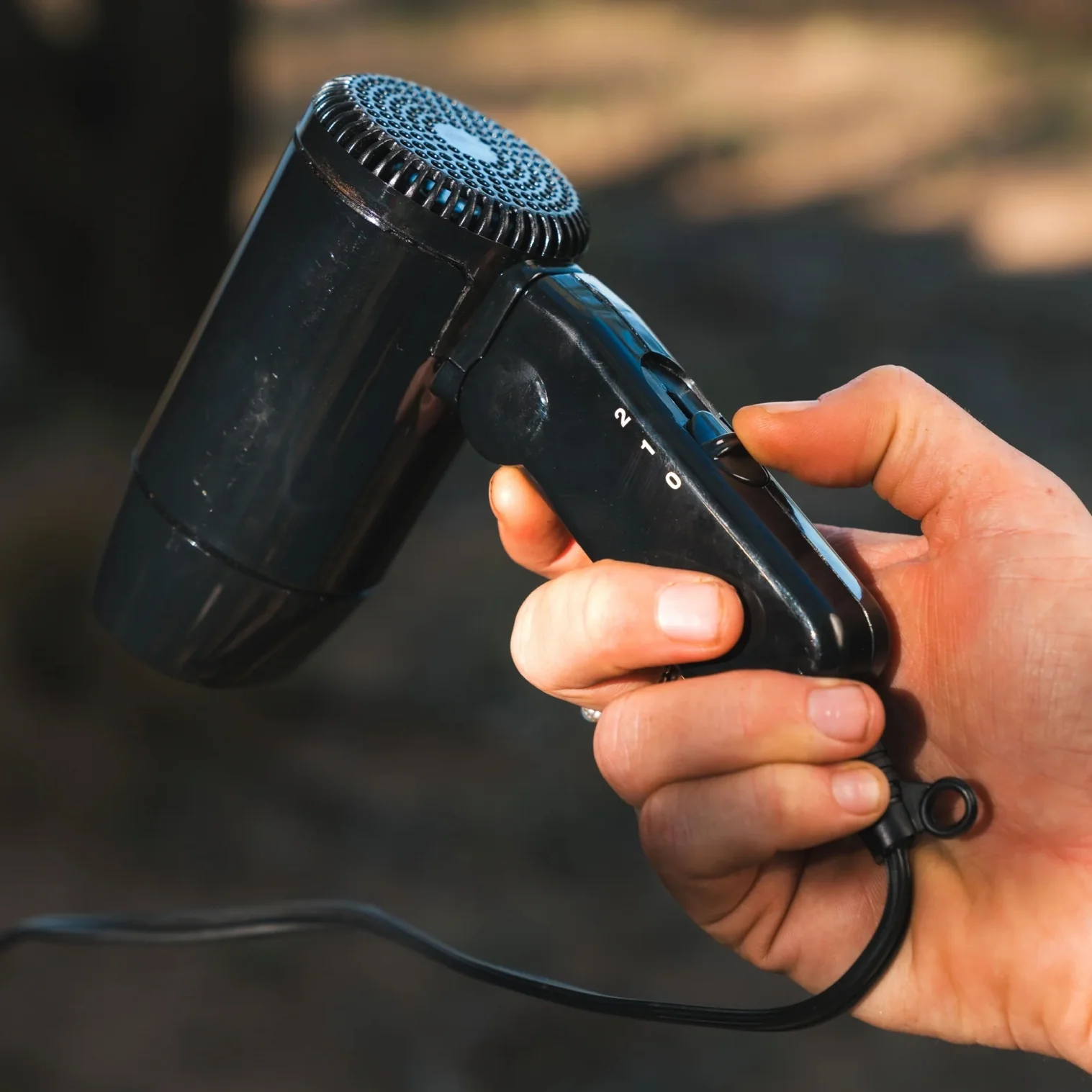
Start by cleaning and drying the damaged surface. Set a household hair dryer to a moderate heat setting and hold it several inches away from the panel. Move the dryer continuously rather than keeping it in a single position. Concentrated heat can damage automotive paint, trim, or plastic, so the goal is gentle and even warming rather than making the panel extremely hot.
Once the area has been warmed for several minutes, compressed air can be sprayed over the surface. If you are using a can of compressed air, follow its instructions carefully and keep it positioned correctly.
The sudden temperature change may cause the material to contract. In some cases, this movement can help a shallow dent return toward its original shape. Results vary significantly based on the panel material and type of dent.
Avoid using a heat gun unless you understand how to control its temperature and distance from automotive paint. Heat guns can reach temperatures far beyond what is appropriate for a casual repair and can cause discoloration, bubbling, or other damage. A hair dryer is slower, but its lower heat output provides a larger margin for error.
This approach should be considered a gentle experiment rather than a dependable repair for every metal dent. It works better with flexible materials and simple, rounded imperfections.
If the panel has a sharp crease, cracked paint, or deep damage, heat is unlikely to solve the problem. Stop immediately if the paint changes color, becomes unusually soft, or develops an abnormal texture.
3. Apply Hot Water to a Plastic Bumper Dent
Plastic bumpers can sometimes be reshaped using hot water because heat makes certain plastics more flexible. This method is particularly useful for shallow dents or pushed-in sections on plastic bumper covers.
It is not intended for every type of automotive damage, and you should first determine whether the damaged component is plastic rather than painted metal.
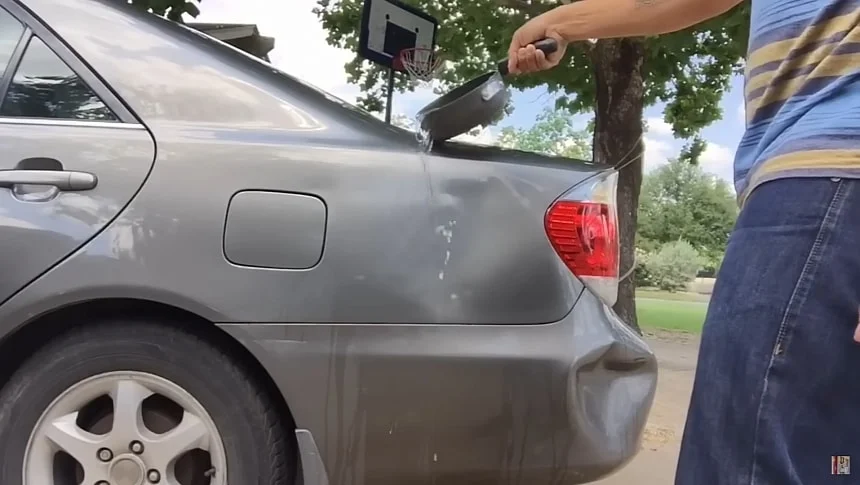
Boil water and transfer it into a container that can be handled safely. Pour the hot water slowly over the dented section from a safe position. The goal is to warm the plastic evenly. Do not rush the process by using an excessive amount of water at once. Protect your hands and surroundings because hot water can cause serious burns.
After warming the bumper, you may be able to push the dent outward from behind the panel. If you can safely reach the rear of the bumper, use your hands and apply gradual pressure. Avoid using sharp tools or excessive force. The softened plastic may move more easily than it did at room temperature, allowing the bumper cover to regain much of its original shape.
Once the bumper has returned closer to its normal position, allow it to cool naturally. You can hold the panel in the correct shape while it cools if doing so is safe and practical. Avoid immediately applying very cold water because a sudden temperature change can affect some plastics and may not provide the desired result.
This technique can be effective for certain flexible bumper covers, but modern bumpers can contain different plastics, reinforcement structures, sensors, clips, and other components.
If the bumper has moved out of alignment, has broken mounting points, or contains damaged sensors, a home repair may not be sufficient. Hot water can help with shape, but it cannot repair structural damage or broken components.
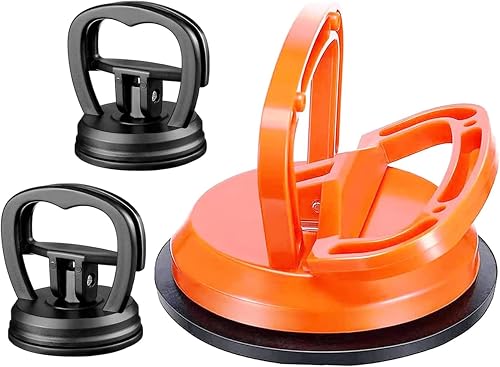
4. Try a Suction Cup Dent Puller
A dedicated suction cup dent puller is designed specifically for pulling shallow dents from relatively smooth surfaces. Compared with a household plunger, a purpose-built tool can provide better control and a more appropriate contact surface. These tools are generally inexpensive and can be useful for people who want to handle minor cosmetic repairs at home.
Clean the vehicle panel before attaching the suction cup. Any dust or grit can interfere with the seal and may scratch the paint. Dry the area thoroughly, then position the suction cup over the deepest part of the dent.
Some models have a locking mechanism that helps create stronger suction, so follow the tool manufacturer’s instructions.
Pull the tool gradually and pay attention to how the panel responds. You are looking for controlled movement rather than a sudden pop. If the dent begins to rise, reduce the amount of force you apply. A panel can sometimes move farther than intended, leaving a small raised spot around the original damage.
Suction tools work best when the dent has smooth edges and the surrounding panel is relatively flat. They are less effective on creased dents or areas with strong body lines. A dent near a door edge, wheel arch, or structural reinforcement may also resist movement because the metal has less freedom to return to its original position.
If the suction cup repeatedly loses its seal, check the surface and the tool for dirt. Some suction cups work better when the surface is slightly damp, while others are designed for dry use.
Do not keep increasing the pulling force simply because the dent has not moved. If the panel refuses to respond, another repair method may be more suitable.
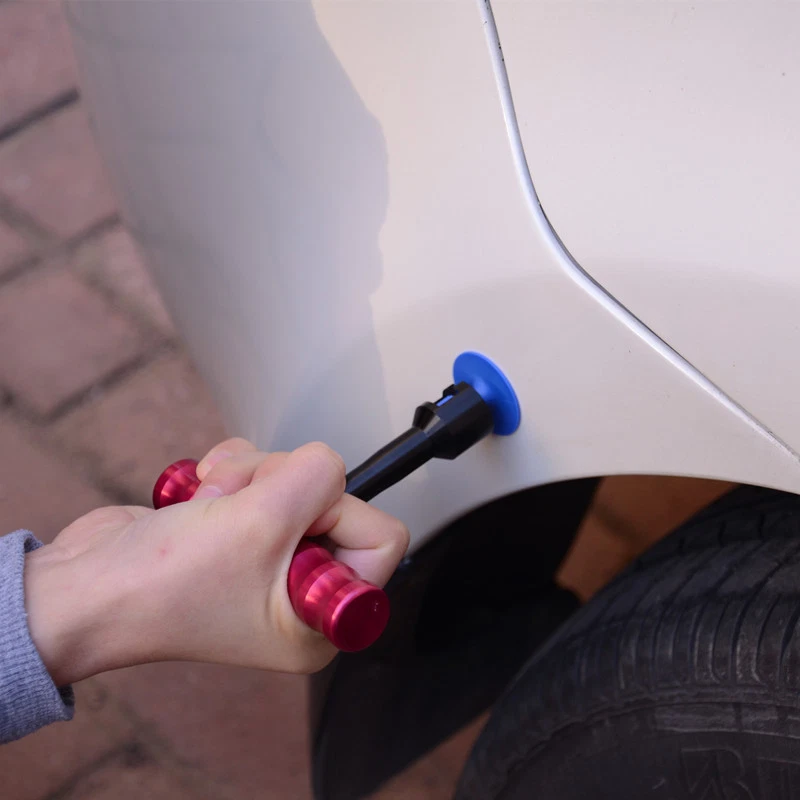
5. Use a Dent Removal Glue Puller
A glue puller can be useful when you cannot reach the back of a panel. This technique uses specialized hot glue and a pulling tab that attaches to the center of the dent.
Once the glue has bonded, a slide hammer or similar pulling tool can gradually bring the metal outward. The method is commonly associated with paintless dent repair, but inexpensive kits are also available for home use.
Before applying anything, clean the panel thoroughly. Automotive dent-pulling glue is designed to attach securely to a clean surface.
Do not use ordinary household glue because it may not provide the correct bond and could make the cleanup process harder. Follow the instructions supplied with the kit and allow the glue to reach the recommended temperature.
Place the pulling tab carefully in the center of the dent or at the location specified by the kit instructions. Allow the adhesive to cool and bond before pulling. The objective is controlled movement. Pulling too hard can create a high spot or potentially damage the paint, especially if the panel or finish is already weakened.
After the dent moves, release the glue according to the product instructions. Specialized dent-removal glue is generally designed to be removed from automotive finishes, but careless scraping can still cause damage. Avoid using metal blades or aggressive solvents unless the manufacturer specifically recommends them.
Glue pulling requires more practice than a simple suction method. It can be useful for dents where rear access is blocked, but it is not ideal for every panel. If the paint is cracked or peeling, pulling can make the damage worse.
For valuable vehicles or difficult dents, professional paintless dent repair remains the safer choice because trained technicians can control the panel from multiple points.
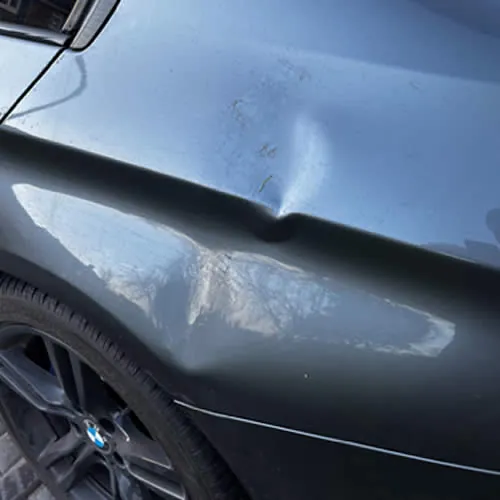
6. Push the Dent Out From Behind the Panel
If you can safely access the back of the damaged panel, direct pressure can be an effective way to correct a small dent. This approach is closely related to paintless dent repair, where the technician carefully massages the metal back into its original shape without repainting the panel. At home, the same general principle can be used for very minor damage.
First, determine how you can reach the back of the dent. Access may be possible after removing a door trim panel, trunk liner, wheel-well liner, or other interior component. Do not remove parts unless you know how they are secured. Modern vehicles may have wiring, airbags, clips, sensors, and other components behind trim panels.
Once you reach the rear of the dent, place your hand or a suitable rounded tool against the metal. Apply slow, controlled pressure near the outer edges of the dent before gradually working toward the center. The aim is to move the metal in small increments rather than pushing the deepest point outward with a single strong movement.
Good lighting is important because it helps you see how the metal is changing. A reflection across the panel can reveal high spots and low areas that are difficult to notice by looking directly at the paint. Stop frequently and inspect the surface from different angles. This can prevent you from pushing too far.
This technique requires patience because metal can be surprisingly sensitive to pressure. If you push aggressively, you may create a raised area or distort the panel. When the dent has a sharp crease or the metal has been stretched, returning it perfectly to its original shape can be difficult without specialized tools and experience.
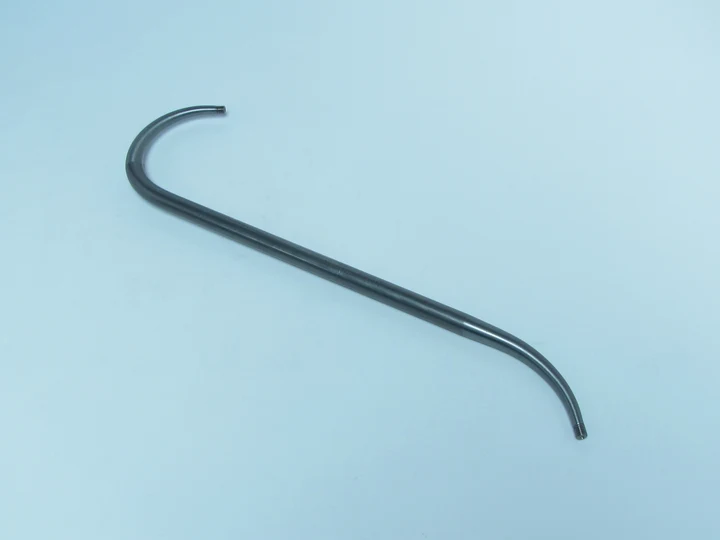
7. Use a Specialized Dent Rod Carefully
Dent rods are long tools designed to reach behind vehicle panels and apply precise pressure to damaged areas. They are commonly used by professional dent technicians, but some basic versions are available for home users.
The advantage of a dent rod is that it provides access to areas that may be difficult to reach with your hands.
Before using a rod, identify the strongest and safest access point. Never force the tool through a narrow opening if doing so could damage wiring, insulation, trim, or other components. If the panel contains an airbag or electrical equipment, use extra caution and consider leaving the repair to a professional.
Once the tool is positioned behind the dent, apply very small amounts of pressure. Think of the process as gently massaging the metal rather than pushing it aggressively. Move around the dent and gradually reduce the depth. Experienced technicians often use reflections or specialized lighting to identify exactly where pressure should be applied.
A common mistake is pressing directly into the deepest part of a dent with too much force. This can create a noticeable high spot. The metal surrounding a dent may also contain tension that needs to be released gradually. Controlled pressure around the affected area can produce a smoother result.
Dent rods can be extremely useful, but they have a learning curve. If you have never used one, practice on an inexpensive damaged panel before attempting repairs on a vehicle you care about. For a small, simple dent, gentle hand pressure may be safer than trying to manipulate a professional-style tool without experience.
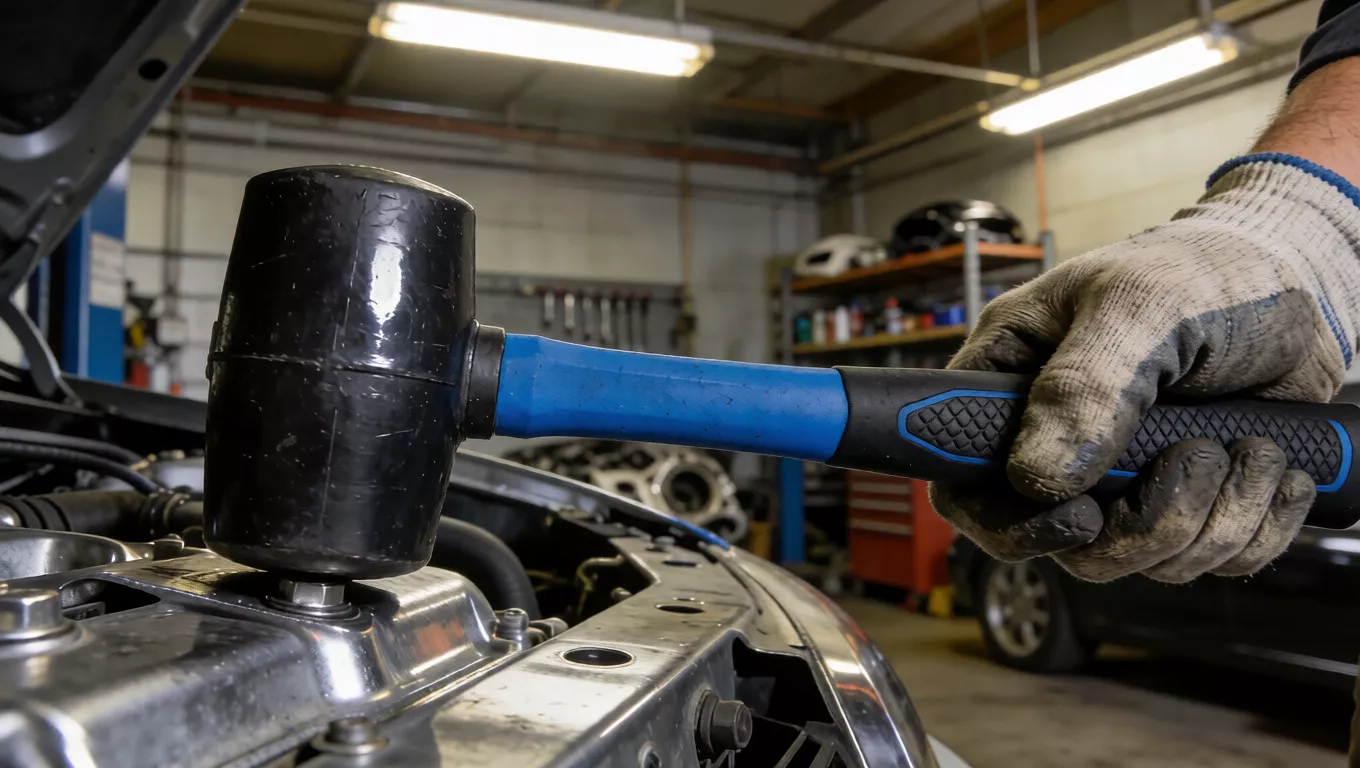
8. Use a Rubber Mallet With Proper Support
A rubber mallet can help correct certain dents when you have access to the back of a panel. Unlike a metal hammer, a rubber mallet has a softer striking surface that reduces the risk of creating sharp marks. Even so, striking vehicle panels requires caution because excessive force can stretch or distort the metal.
Place appropriate support behind the damaged section if the panel design allows it. The support should distribute force rather than creating a concentrated pressure point. Never strike directly against a thin edge or unsupported section without understanding how the panel will react.
Use very light taps rather than heavy blows. After each small movement, inspect the panel from several angles. You may need to work around the edges of the dent rather than repeatedly hitting its center. The objective is to gradually return the metal to a smoother shape.
Protect the painted side of the panel from accidental contact with hard surfaces. Even rubber can leave marks when used aggressively, and dirt trapped between the mallet and panel can scratch the finish. Keep both the tool and work area clean.
This technique is best reserved for simple dents where you have good access to the back of the panel. It is not suitable for every vehicle or body panel. If you do not know how the panel is constructed, a suction tool or professional assessment may be safer. A mistake with a hammer can turn a small cosmetic issue into a larger repair.
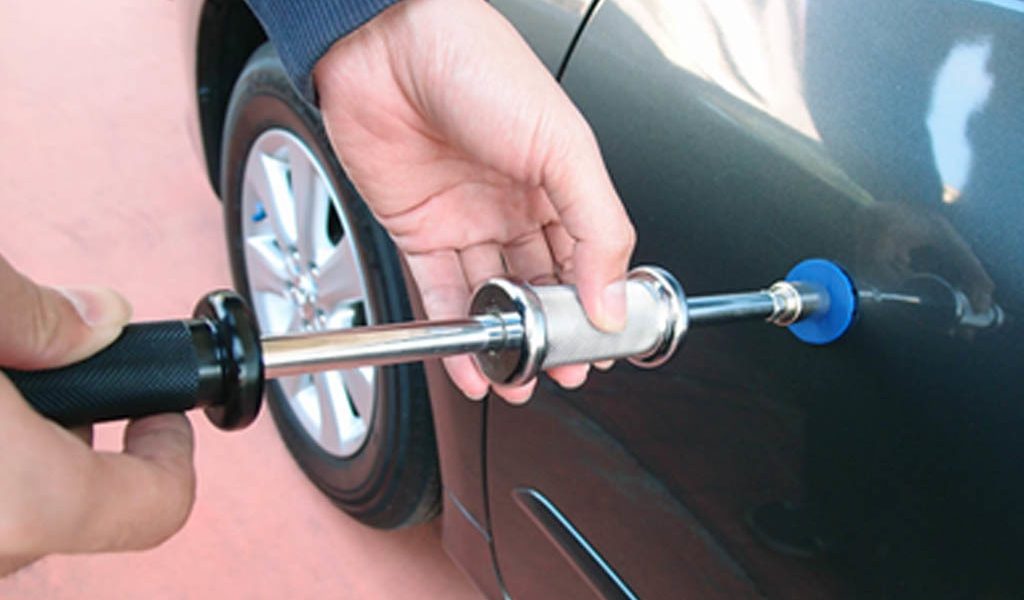
9. Try a Manual Dent Pulling Tool
Manual dent pulling tools are available in several designs, including lever-style devices and compact pulling mechanisms.
These tools can provide more control than improvised household methods. They are particularly useful when a dent is shallow but cannot be reached conveniently from behind.
Read the instructions before using the tool and understand exactly where the pulling point should be positioned. Some devices attach using suction, while others rely on adhesive tabs or mechanical contact. Each design requires a different technique, so following the manufacturer’s guidance matters.
Clean the affected area before attaching the tool. A secure connection is important because a tool that slips can scratch the paint or suddenly release. Apply steady pressure and watch the panel carefully. If the metal starts returning to shape, ease off rather than continuing to pull at the same rate.
The shape of the dent determines how useful a manual puller will be. A broad, shallow depression may respond well, while a sharp crease may require pressure from several directions. Pulling only from the deepest point can sometimes leave the surrounding metal uneven.
If the tool produces little movement, do not assume more force will solve the problem. Vehicle panels can become permanently stretched when damaged, and excessive pulling may create a raised section. Small cosmetic improvements are often better than attempting a dramatic correction that causes additional damage.
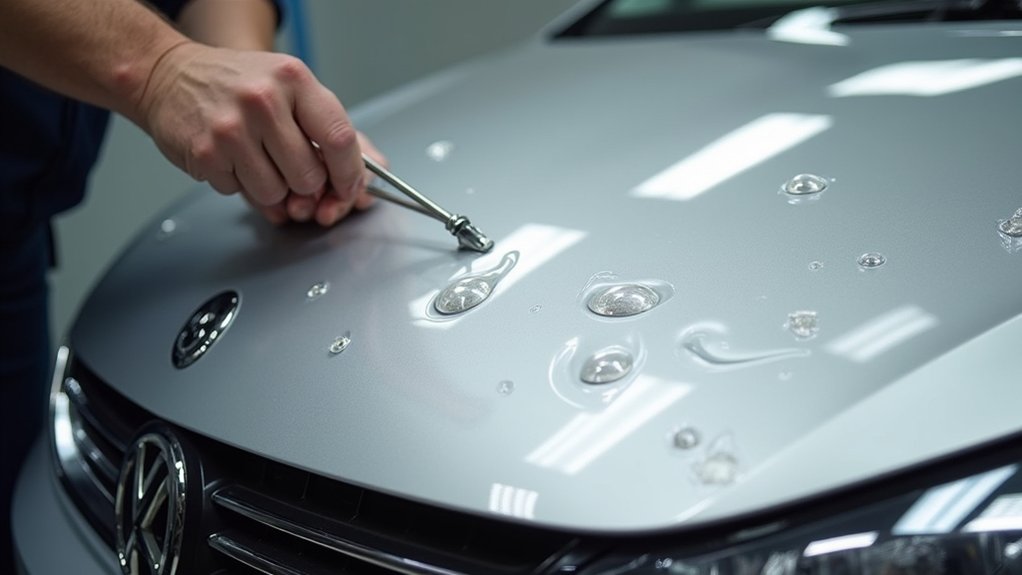
10. Use Paintless Dent Repair Techniques With Patience
Paintless dent repair, commonly called PDR, is a method of correcting certain dents without repainting the panel. The process usually involves carefully manipulating the metal from behind with specialized tools. For suitable dents, this can preserve the factory paint finish and avoid the need for conventional bodywork.
The key factor is the condition of the paint. If the paint has remained intact and the metal has not been severely stretched, there may be a good chance of restoring the panel’s appearance. If the paint is cracked, chipped, or peeling, the situation becomes more complicated because restoring the shape will not restore the damaged finish.
At home, the safest way to apply the general PDR principle is to work slowly and use minimal pressure. Good lighting can help you monitor the surface. Move around the damaged area in small increments instead of trying to force the entire dent out at once.
Patience matters because metal does not always move exactly where you expect. A small amount of pressure can affect an area larger than the point where the tool touches. Checking your progress repeatedly can help you avoid creating high spots. If the panel begins to look uneven, stop and reassess your technique.
