
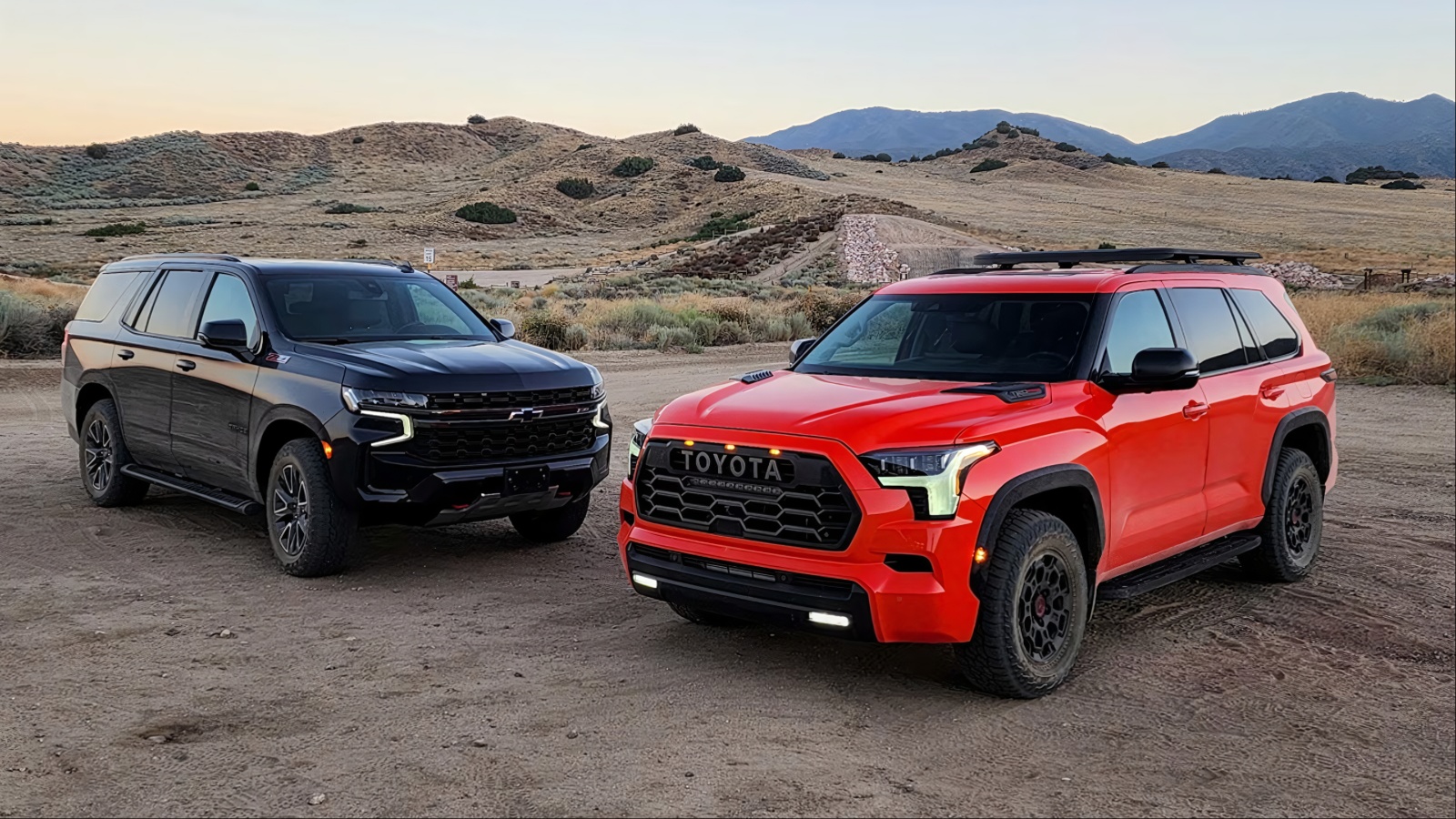
Choosing a large three-row SUV means balancing power, comfort, towing ability, fuel economy, technology, cargo room, and long-term practicality. The Toyota Sequoia, Nissan Armada, and Jeep Wagoneer approach that challenge in different ways.
The Sequoia combines a powerful hybrid system with strong towing capability, the Armada emphasizes passenger room and rugged hardware, while the Wagoneer focuses heavily on interior space and everyday family usability.
Looking closely at their engines, cabins, cargo areas, technology, efficiency, pricing, and towing ratings makes the differences easier to understand. This comparison examines where each SUV stands and which type of driver each model suits best.
Sequoia vs. Armada vs. Wagoneer: Power and Performance
The Toyota Sequoia takes a distinctive approach to full-size SUV performance because its standard powertrain uses a twin-turbocharged 3.4-liter V6 paired with an electric motor. The i-FORCE MAX hybrid system produces 437 horsepower and 583 lb-ft of torque.
A 10-speed automatic transmission manages the power delivery. Depending on the configuration, buyers can choose rear-wheel drive or four-wheel drive, while the TRD Pro is designed with four-wheel drive as standard equipment. This combination gives the Sequoia strong acceleration and substantial low-end torque without relying on a large naturally aspirated V8.
The Nissan Armada uses a different formula. Its 3.5-liter twin-turbocharged V6 develops 425 horsepower and 516 lb-ft of torque in most versions. Power reaches the wheels through a nine-speed automatic transmission, with rear-wheel drive or four-wheel drive depending on configuration.
The Armada also offers the PRO-4X for buyers seeking more off-road capability. For 2026, Nissan added the NISMO model, which raises output to 460 horsepower and receives chassis and suspension changes intended to provide a more performance-oriented driving experience.
The Jeep Wagoneer uses a 3.0-liter twin-turbocharged Hurricane inline-six. Published specifications list 420 horsepower and 468 lb-ft of torque for the standard engine. The engine is paired with an eight-speed automatic transmission.
The Wagoneer’s powertrain has a different character from the Toyota because there is no hybrid electric motor contributing additional torque. Its strength comes from a modern turbocharged six-cylinder engine designed to deliver the kind of power expected from a large premium SUV.
In everyday driving, all three SUVs have enough power for highway merging, carrying several passengers, and pulling substantial loads. The Sequoia has the highest standard horsepower and torque figures among the standard versions, while the Armada NISMO moves into a separate performance category with 460 horsepower.
The Wagoneer remains competitive with 420 horsepower, and its engine works with an eight-speed transmission rather than the nine- or 10-speed units used by its rivals. The differences are therefore less about whether these SUVs have enough power and more about how that power is delivered.
For buyers who want strong acceleration combined with improved fuel efficiency, the Sequoia’s hybrid system is a significant part of its appeal. The Armada offers a traditional gasoline powertrain, while the Wagoneer also uses gasoline-only turbocharged power.
Drivers who regularly carry heavy loads may appreciate the Sequoia and Wagoneer’s substantial torque output, while buyers interested in an aggressive performance-oriented full-size SUV can consider the Armada NISMO. The best choice in this category depends on whether efficiency, conventional power delivery, or performance character matters most.
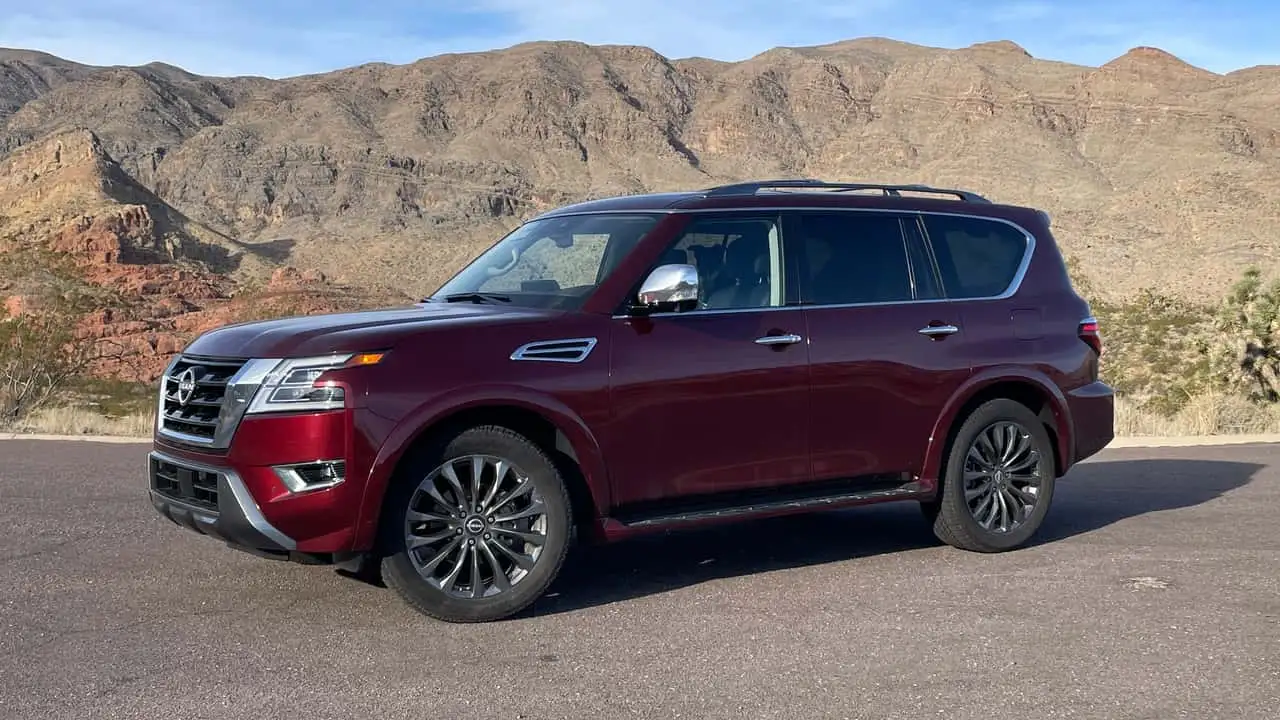
Fuel Economy and Efficiency
Fuel economy is an important consideration with full-size SUVs because these vehicles are large, heavy, and designed to carry significant loads. The Sequoia has a clear technical advantage here through its standard hybrid powertrain.
Current comparison data lists the Sequoia at up to 21 mpg city and 24 mpg highway, while the Armada is rated at up to 16 mpg city and 20 mpg highway. That difference can become meaningful for families that drive long distances throughout the year.
The Armada’s fuel economy reflects its conventional twin-turbocharged V6. A 23.6-gallon fuel tank gives the SUV useful range between fuel stops, but its official efficiency numbers remain below those of the Sequoia.
The Armada’s engineering priorities include strong towing capacity, off-road capability, passenger space, and robust four-wheel-drive hardware. Those features make it a versatile vehicle, but buyers should expect fuel consumption typical of a large gasoline-powered SUV.
The Wagoneer’s published figures also show the compromises associated with a large turbocharged SUV. Cars.com lists the 2025 Wagoneer at 17 mpg city and 24 mpg highway, while Car and Driver notes that the 2026 model’s EPA fuel economy information had not yet been released at the time of its review and references the same powertrain’s 2025 ratings of 16 mpg city and 23 mpg highway. Car and Driver recorded 22 mpg during its 75-mph highway fuel-economy test with an all-wheel-drive Wagoneer.
Fuel economy should also be considered in relation to how each SUV is used. A family that spends much of its time in city traffic may notice the Sequoia’s hybrid advantage more frequently than a driver who mainly travels on open highways.
Heavy towing can reduce the efficiency of any SUV, and four-wheel drive, passengers, luggage, weather, tire choice, and driving habits can also affect real-world fuel consumption. Official EPA figures are useful for comparisons, but they should not be treated as guaranteed results for every driver.
The Sequoia therefore has the strongest efficiency story of these three vehicles based on the currently published figures. The Armada and Wagoneer rely entirely on turbocharged gasoline engines, giving them conventional power delivery but less assistance from electrification.
For shoppers who want a full-size SUV but are concerned about fuel consumption, the Sequoia deserves close attention. For shoppers who place greater emphasis on interior space, equipment, or other capabilities, the fuel economy difference may be only one factor in a much larger decision.
Interior Space, Seating and Cargo
Interior space is where the Nissan Armada and Jeep Wagoneer become particularly interesting. The Armada provides generous passenger dimensions, including 43.8 inches of front legroom and 39.2 inches of second-row legroom in published comparison specifications.
Its third row provides 36.2 inches of headroom and 39.2 inches of legroom. The SUV can seat up to eight people with a second-row bench or seven with second-row captain’s chairs.
The Sequoia provides seating for up to eight as well, but its interior packaging has received criticism in comparison testing because of third-row and cargo limitations.
Published specifications show 35.6 inches of third-row headroom and 33.7 inches of third-row legroom in certain configurations, while cargo capacity varies depending on how the adjustable third row is positioned. The design prioritizes the vehicle’s hybrid system and body-on-frame architecture, which affects how much usable space is available behind the rear seats.
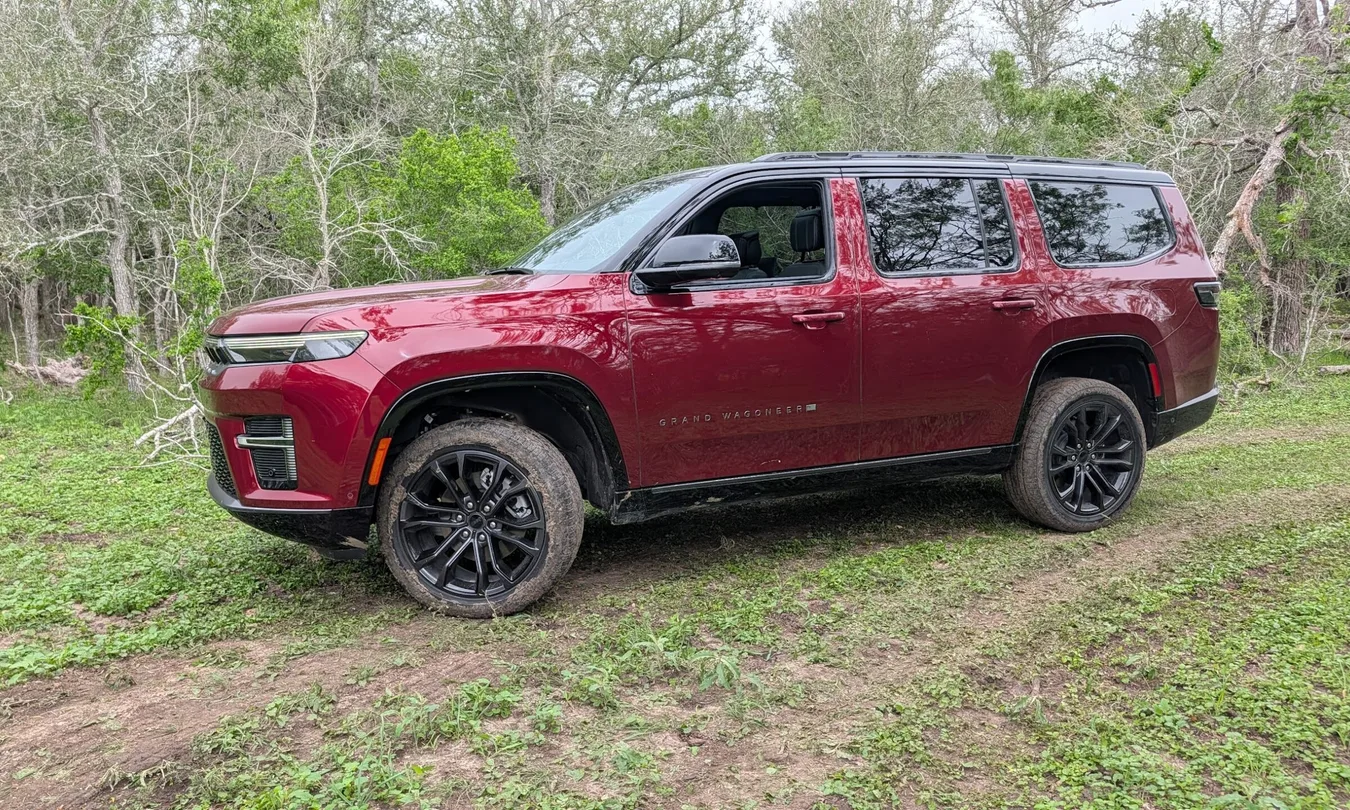
The Wagoneer has a major advantage when interior volume is the priority. Published figures show 179 cubic feet of passenger volume, compared with 168 cubic feet listed for the Armada in CarsDirect’s comparison data.
The Wagoneer also provides 42.7 inches of second-row legroom and 39.0 inches of third-row headroom. Those measurements help explain why the Jeep is particularly attractive to families who frequently carry adults or older children in all three rows.
Cargo capacity further separates the three SUVs. Published specifications list approximately 116.7 cubic feet of maximum cargo space for the Wagoneer, 97.1 cubic feet for the Armada, and 86.9 cubic feet for the Sequoia.
With all seating positions in use, the Wagoneer also provides a larger cargo area than the Sequoia and Armada in the cited comparisons. The Armada offers a useful middle position, while the Sequoia’s cargo layout is less generous once all three rows are being used.
This makes the Wagoneer particularly practical for families that regularly combine passengers with bulky luggage, sports equipment, groceries, or travel bags.
The Armada offers a comfortable compromise between passenger room and cargo flexibility, while the Sequoia makes more sense for shoppers who are willing to accept less cargo flexibility in exchange for its hybrid powertrain and towing capability.
Interior measurements do not tell the complete story, but they provide a useful guide when choosing a large SUV for regular family use.
Towing and Off-Road Capability
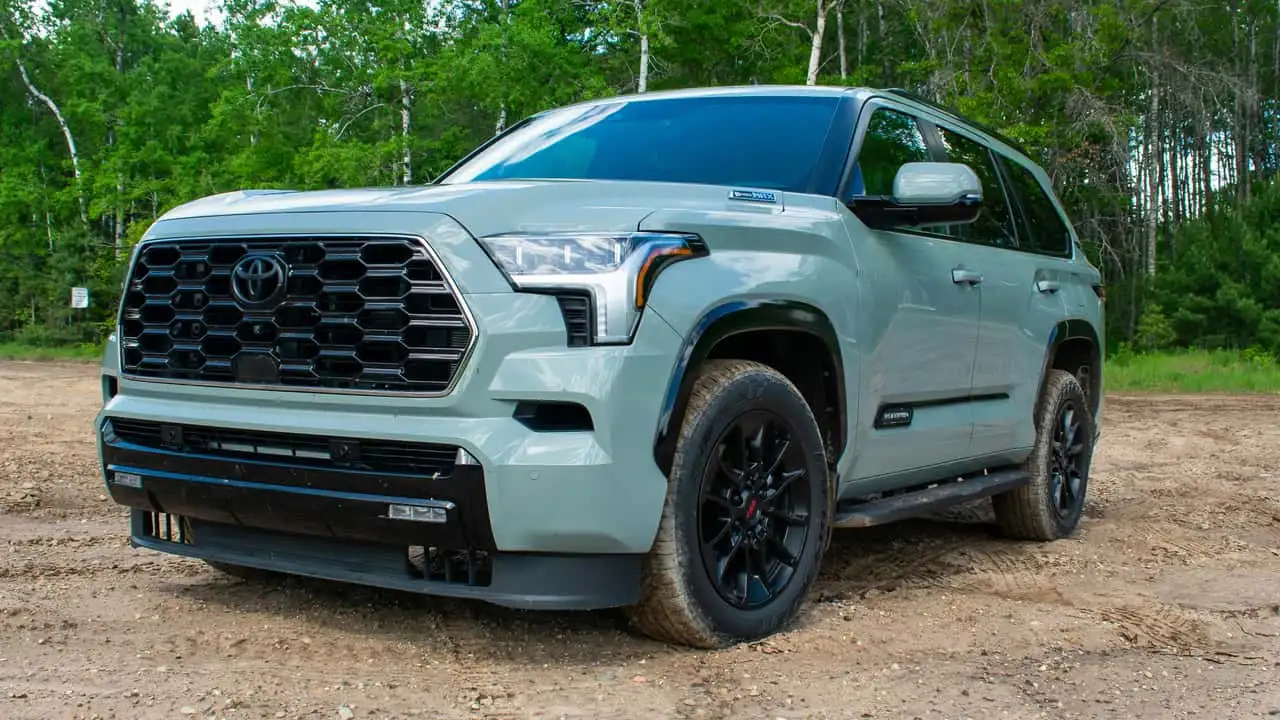
Towing is a major reason many buyers choose a full-size SUV instead of a crossover. The Sequoia has a maximum towing capacity that reaches approximately 9,500 pounds depending on configuration.
Current comparison data lists 9,520 pounds for certain Sequoia configurations. The Armada has a maximum rating of 8,500 pounds across its lineup, according to Nissan’s published specifications. The Wagoneer reaches as high as 10,000 pounds when properly equipped.
These numbers need to be interpreted carefully because maximum towing capacity depends on trim, drivetrain, equipment, trailer configuration, payload, and other factors.
A vehicle’s maximum advertised rating does not mean every version can tow that amount. Buyers should check the specific vehicle’s towing package, axle configuration, payload rating, hitch equipment, and manufacturer’s towing guidelines before purchasing or towing a heavy trailer.
The Wagoneer has the highest maximum towing figure among the three when properly equipped, reaching 10,000 pounds according to Car and Driver. That makes it relevant to buyers who tow larger boats, recreational trailers, or work equipment.
The Sequoia remains highly capable and can approach the Wagoneer’s rating in selected configurations. The Armada trails both in maximum tow rating, but 8,500 pounds is still substantial for many family trailers and recreational applications.
Off-road capability changes the picture. The Sequoia TRD Pro is designed specifically for demanding terrain and comes with four-wheel drive and specialized off-road hardware. Nissan offers the Armada PRO-4X, which also deserves consideration because of its 10,000-pound maximum towing capacity.
For buyers who combine towing with off-road travel, the Sequoia and Armada offer specialized variants that may be more relevant.
The Sequoia also brings the benefit of its hybrid torque delivery, while the Armada’s four-wheel-drive system and PRO-4X configuration provide a strong argument for buyers who spend time on rough SUVs are expected to provide much more than power and space. Infotainment, driver-assistance systems, climate controls, seating features, cameras, connectivity, and cabin materials all contribute to the daily experience.
The Sequoia offers a wide range of technology across its trim levels, with higher versions adding premium materials and equipment.
Toyota also gives buyers access to specialized models such as the TRD Pro and 1794 Edition, allowing the same basic SUV with three rows, and higher trims can be equipped with premium materials and convenience features. Its size is noticeable, but that physical scale contributes to the generous interior.
For road manners among these SUVs. Car and Driver’s comparison testing highlighted the Wagoneer’s spacious cabin and easy access, while also noting braking concerns. Its evaluation of the Sequoia pointed to efficiency and driver amenities while criticizing its ride and rear-seat and cargo limitations.
These observations represent specific road tests rather than universal experiences mpg city and 24 mpg highway figures compare favorably with the Armada’s 16 mpg city and 20 mpg highway figures. The difference could become meaningful for drivers covering high annual mileage.
Maintenance, insurance, financing, tires, depreciation, fuel prices, and fuel economy are higher than the Armada. Its 437 horsepower and 583 lb-ft of torque give it plenty of performance, while its maximum towing capacity can reach about 9,520 pounds depending on configuration.
The trade-off, With a published maximum cargo volume of about 116.7 cubic feet and passenger volume of about 179 cubic feet, it provides substantial room for families and luggage. Its 420-horsepower turbocharged inline-six gives it plenty of power, while its road hardware.
The Wagoneer emphasizes cabin room, cargo capacity, comfort, and high towing potential. Comparing the exact trims rather than only the model names is important because equipment, drivetrain, seating configuration, towing ratings, and prices can change significantly.
For a purchase decision, buyers should compare the specific versions they intend to own, calculate expected fuel and ownership costs, and test each SUV with their own set of off-road-oriented equipment. These versions are aimed at buyers who expect to leave paved roads regularly.
The Wagoneer can also be equipped with four-wheel drive, but its larger cabin and luxury-oriented positioning make its core mission somewhat different from the dedicated off-road variants of the Toyota and Nissan.
For serious towing, the Wagoneer deserves consideration because of its 10,000-pound maximum rating. For buyers who combine towing with off-road travel, the Sequoia and Armada offer specialized variants that may be more relevant.
The Sequoia also brings the benefit of its hybrid torque delivery, while the Armada’s four-wheel-drive system and PRO-4X configuration provide a strong argument for buyers who spend time on rough trails. Towing capacity is therefore not simply a numbers contest because the right choice depends on the trailer, terrain, passengers, and equipment involved.
Technology, Comfort and Daily Driving
Modern full-size SUVs are expected to provide much more than power and space. Infotainment, driver-assistance systems, climate controls, seating features, cameras, connectivity, and cabin materials all contribute to the daily experience.
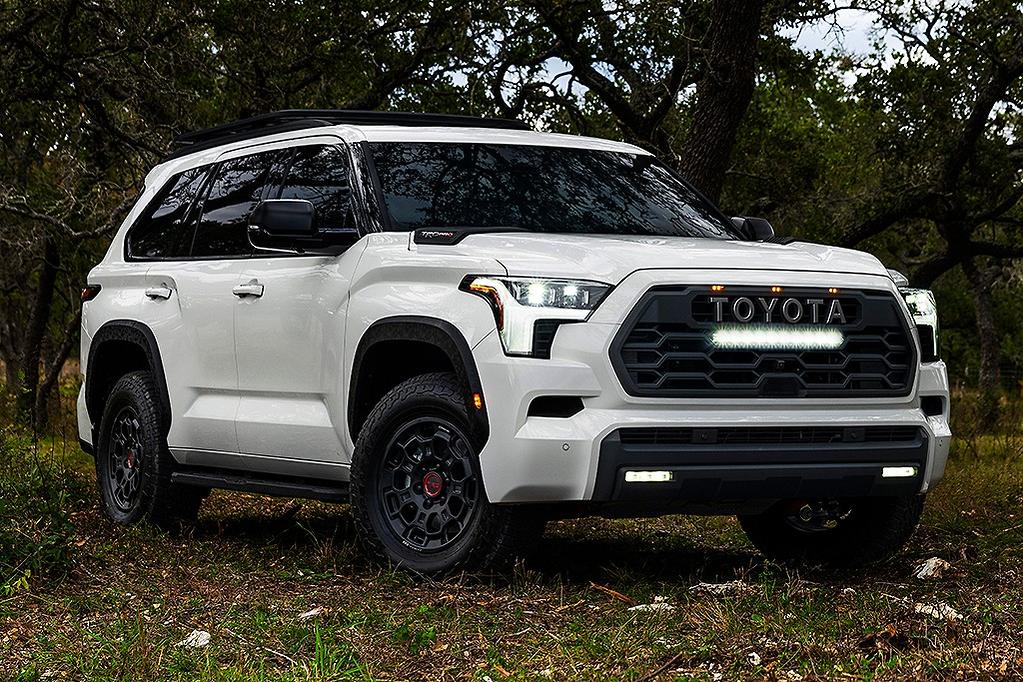
The Sequoia offers a wide range of technology across its trim levels, with higher versions adding premium materials and equipment. Toyota also gives buyers access to specialized models such as the TRD Pro and 1794 Edition, allowing the same basic SUV to serve very different priorities.
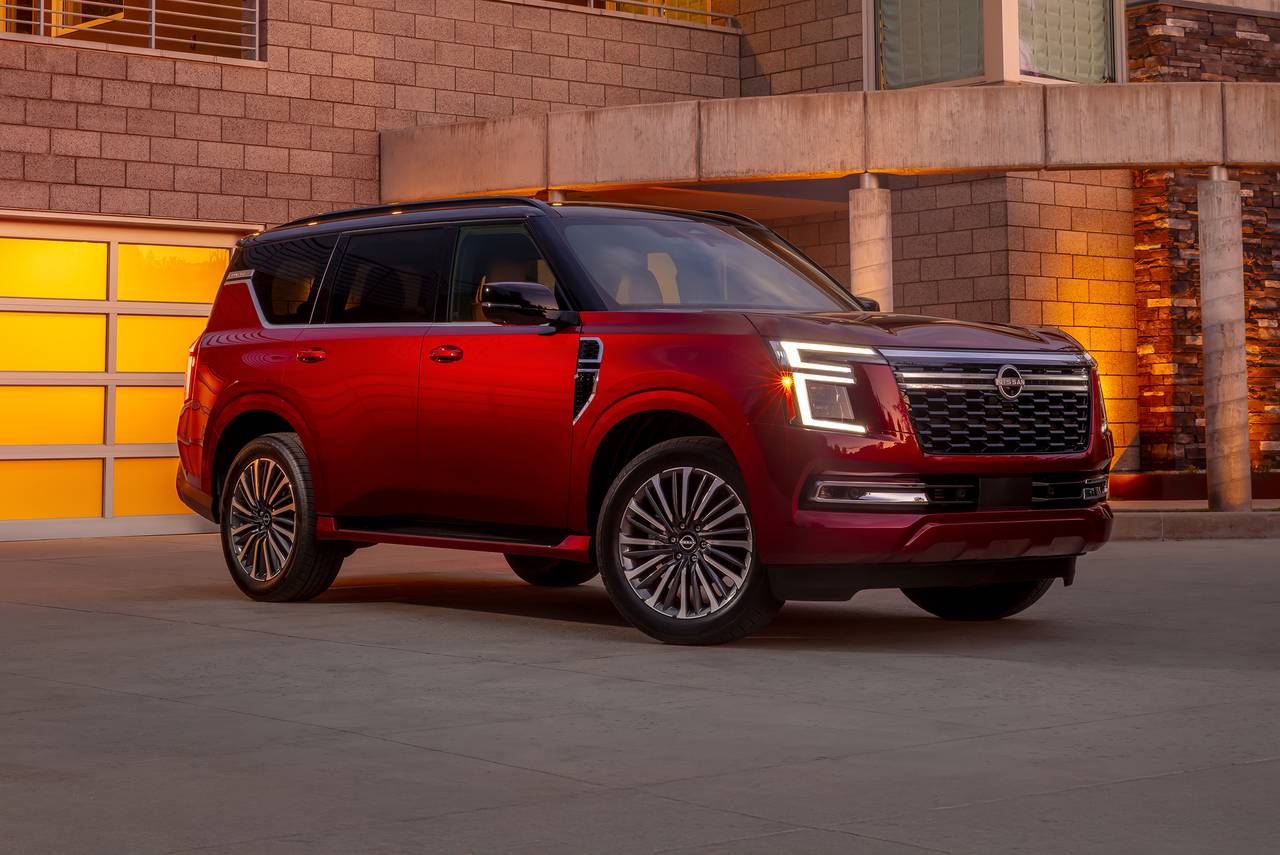
The Armada takes a technology-heavy approach as well. Its cabin includes a large central display, and the model provides features designed around family convenience and driver assistance.
The available four-wheel-drive system includes electronic low-range gearing and other hardware aimed at improving traction in challenging conditions. Nissan’s approach also includes distinct versions such as the PRO-4X and NISMO, giving the Armada a broader range of personalities within the same model family.
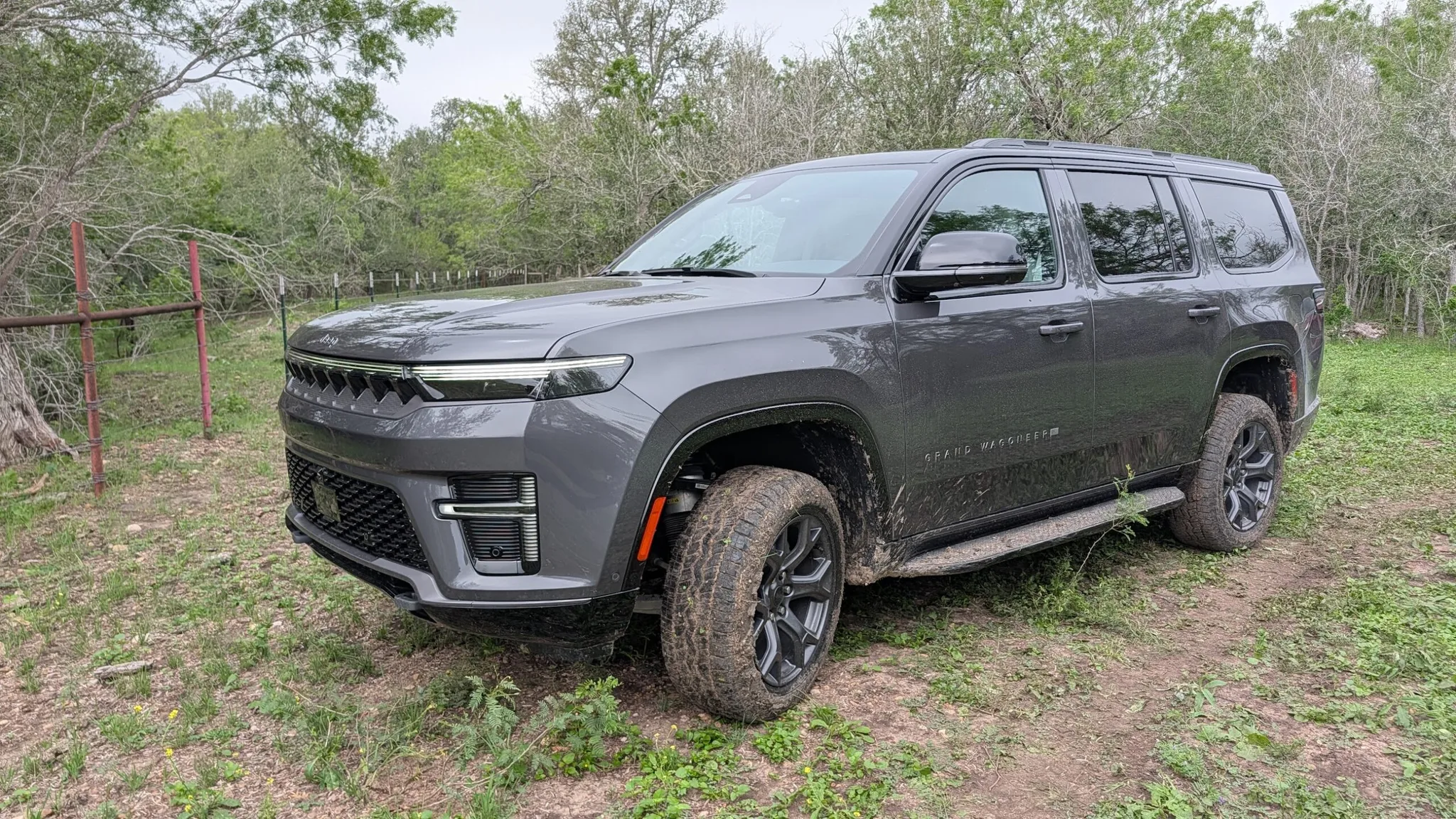
The Wagoneer emphasizes comfort and passenger accommodation. Its large cabin provides substantial space in all three rows, and higher trims can be equipped with premium materials and convenience features. Its size is noticeable, but that physical scale contributes to the generous interior.
For families spending hours on road trips, the combination of passenger room, cargo capacity, and available comfort equipment can make a significant difference.
Ride quality is more difficult to judge through specifications alone. Published comparison testing has pointed to differences in suspension tuning, body control, braking, steering, and road manners among these SUVs. Car and Driver’s comparison testing highlighted the Wagoneer’s spacious cabin and easy access, while also noting braking concerns.
Its evaluation of the Sequoia pointed to efficiency and driver amenities while criticizing its ride and rear-seat and cargo limitations. These observations represent specific road tests rather than universal experiences for every driver or trim.
Price, Value and Ownership Considerations
Purchase price is an important difference between these SUVs. Current 2026 comparison data lists the Nissan Armada starting around $58,840, while the Toyota Sequoia starts around the mid-$60,000 range depending on the source and configuration.
CarsDirect’s current comparison lists a 2026 Sequoia SR5 at $68,120 and a 2026 Armada SV at $61,085 before considering transaction-specific pricing. These figures can change with destination charges, regional pricing, incentives, options, and dealer pricing.
The Wagoneer occupies a related price range but should be considered separately because trim structure and equipment can significantly change its final price. Cars.com lists the 2025 Wagoneer at $59,945 in its comparison with the 2026 Sequoia.
Buyers considering a 2026 Wagoneer should check the exact trim and current manufacturer’s pricing rather than assuming the previous model year’s starting price remains unchanged.
Value also involves what comes with the vehicle. The Sequoia’s higher starting price is connected to its standard hybrid powertrain and strong towing capability. The Armada offers a lower entry price while providing a powerful twin-turbocharged V6 and substantial passenger and cargo capacity.
The Wagoneer’s appeal comes from its large cabin, premium positioning, and strong maximum towing capability when properly equipped. A lower sticker price does not automatically mean lower long-term cost, just as a higher price does not automatically guarantee better ownership value.
Fuel costs can influence the ownership equation. The Sequoia’s published 21 mpg city and 24 mpg highway figures compare favorably with the Armada’s 16 mpg city and 20 mpg highway figures.
Sequoia vs. Armada vs. Wagoneer: Which Should You Choose?
The Toyota Sequoia is a strong match for buyers who want a full-size SUV with a hybrid powertrain, high torque output, strong towing ability, and better published fuel economy than the Armada.
Its 437 horsepower and 583 lb-ft of torque give it plenty of performance, while its maximum towing capacity can reach about 9,520 pounds depending on configuration. The trade-off is interior packaging, particularly cargo flexibility and third-row space.
The Nissan Armada makes sense for buyers who place a high value on passenger space, rugged capability, and a strong conventional gasoline engine. Its 425-horsepower twin-turbo V6, 8,500-pound towing rating, available four-wheel drive, PRO-4X trim, and spacious cabin give it a broad range of abilities.
The 2026 NISMO version adds 460 horsepower for shoppers interested in a sportier interpretation of the Armada. Its fuel economy is lower than the Sequoia’s published figures, which is an important consideration for high-mileage drivers.
The Jeep Wagoneer stands out for interior space and cargo capacity. With a published maximum cargo volume of about 116.7 cubic feet and passenger volume of about 179 cubic feet, it provides substantial room for families and luggage.
Its 420-horsepower turbocharged inline-six gives it plenty of power, while its maximum towing rating can reach 10,000 pounds when properly equipped. Those characteristics make it particularly relevant to buyers who regularly need a spacious three-row SUV.
| Category | Winner | The Edge |
|---|---|---|
| Performance | Sequoia | 437 hp, 583 lb-ft |
| Fuel Economy | Sequoia | Up to 24 mpg highway |
| Passenger Space | Wagoneer | More spacious cabin |
| Cargo Space | Wagoneer | Up to 116.7 cu. ft. |
| Towing | Wagoneer | Up to 10,000 lbs |
| Off-Road | Sequoia | TRD Pro hardware |
| Sporty Performance | Armada | 460 hp NISMO |
| Technology | Armada | Strong tech features |
| Family Use | Wagoneer | Space and comfort |
| Price | Armada | Lower starting price |
