
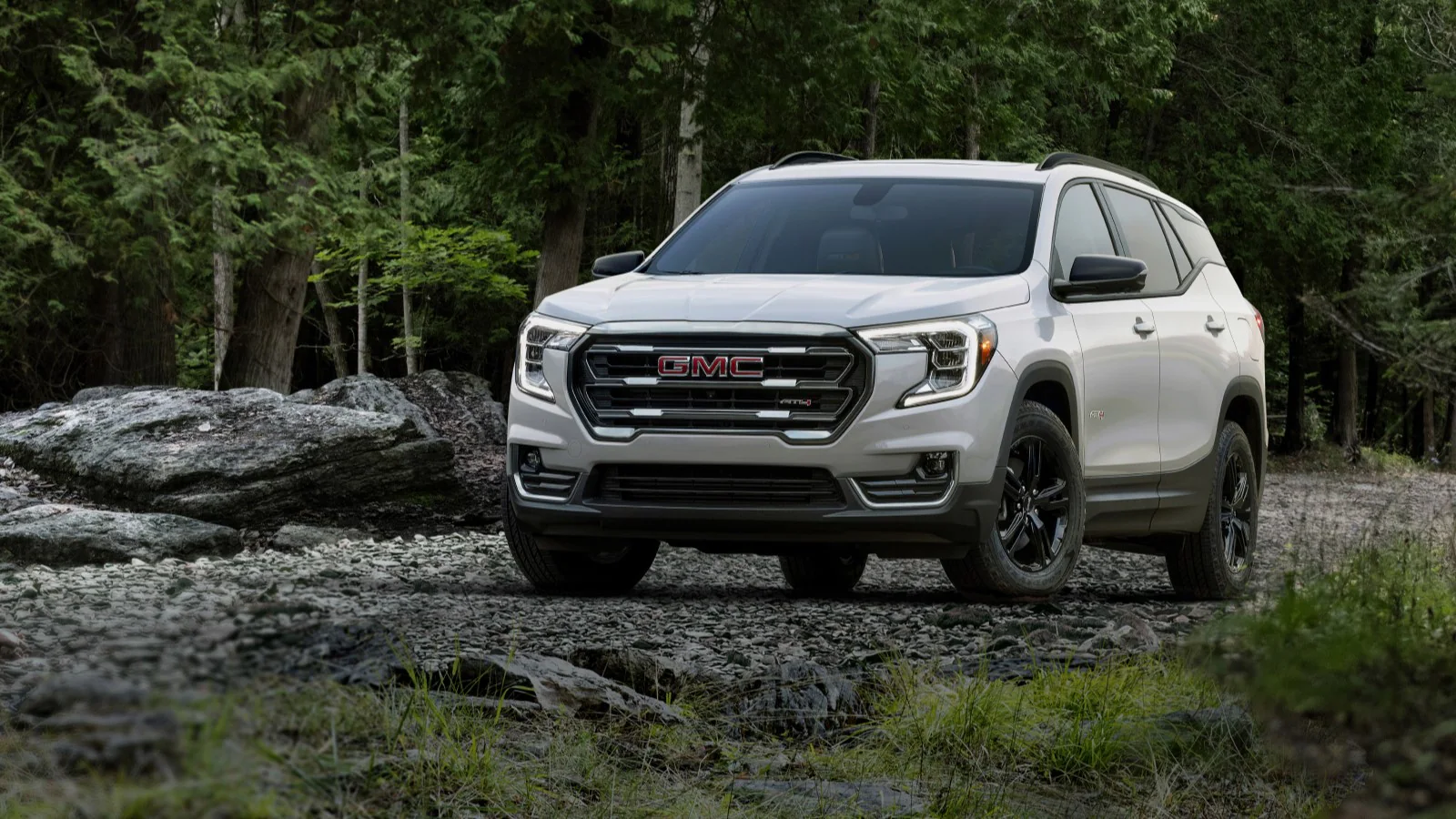
The GMC Terrain is a compact SUV designed for buyers who want practical space, modern technology, available all-wheel drive, and a comfortable daily driving experience. When comparing Terrain trims, the lowest purchase price does not always translate into the lowest five-year ownership cost.
Kelley Blue Book’s 5-Year Cost to Own calculation considers several expenses beyond the initial transaction, including depreciation, fuel, insurance, maintenance, repairs, and financing. For shoppers focused on long-term value, understanding these costs can be more useful than comparing sticker prices alone.
The Terrain trim with the lowest total ownership expense can depend on equipment, drivetrain, mileage, fuel prices, and market conditions.
How KBB 5-Year Cost to Own Works for the GMC Terrain
Kelley Blue Book’s 5-Year Cost to Own is intended to show what a vehicle can cost over a five-year period rather than focusing only on its purchase price. The calculation considers expenses that owners are likely to encounter after buying a vehicle.
This makes it particularly useful when comparing different trims that may have different starting prices and equipment levels.
For the GMC Terrain, depreciation can have a significant effect on the five-year ownership calculation. Depreciation represents the difference between what the vehicle costs when purchased and what it may be worth after several years.
A trim with a higher initial price can therefore carry a larger depreciation expense if its resale value does not rise enough to offset the additional purchase cost.
Fuel is another important component. The Terrain uses a turbocharged four-cylinder engine, and fuel consumption can vary according to drivetrain, wheel size, driving conditions, traffic, and driving habits.
A front-wheel-drive configuration can have different fuel costs from an all-wheel-drive model. Buyers who drive many miles each year should pay close attention to fuel economy because even modest differences can become meaningful over five years.
Insurance, maintenance, and repair expenses also contribute to the KBB calculation. Insurance costs can vary according to location, driver history, coverage level, and vehicle configuration, so an individual owner’s actual bill may differ substantially from a published estimate.
Maintenance costs include routine services required to keep the SUV operating properly, while repair expenses account for potential mechanical and component-related costs.
Financing can further change the five-year picture. A buyer who finances the Terrain will pay interest in addition to the vehicle’s selling price.
The actual amount depends on the loan amount, interest rate, down payment, term, credit profile, and incentives available at the time of purchase. For this reason, KBB’s ownership estimate should be viewed as a comparison tool rather than a guarantee of what every Terrain owner will spend.
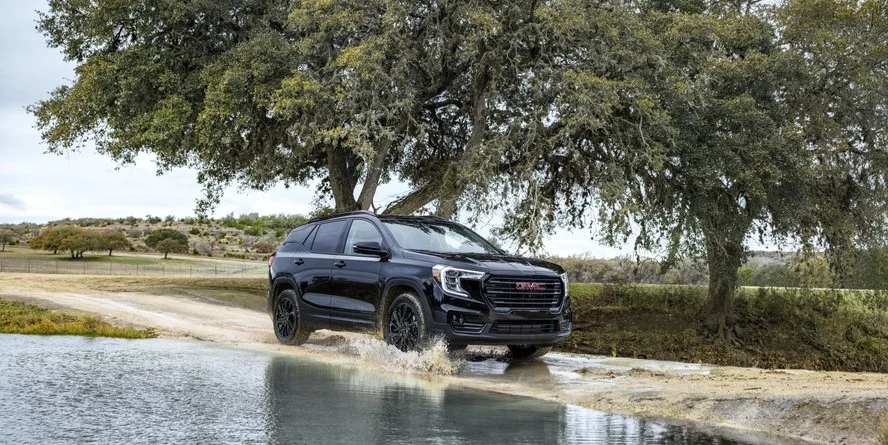
Which GMC Terrain Trim Has the Lowest Ownership Cost?
The entry-level GMC Terrain trim is generally the logical starting point for shoppers looking for the lowest five-year ownership cost. A lower purchase price means there is less money tied up in the vehicle from the beginning, and it can also reduce the amount financed if the buyer takes out an auto loan.
The current-generation Terrain lineup has included different trim structures depending on model year, with GMC positioning higher trims around additional comfort, technology, styling, and convenience features. The entry model generally provides the core Terrain package without requiring buyers to pay for as many premium features. This can make it attractive for people who care more about transportation costs than luxury equipment.
However, choosing the least expensive trim requires more than looking at the MSRP. A buyer should also compare the equipment included as standard, because adding popular options to a lower trim can narrow the price gap with a better-equipped version.
If a buyer needs features that are standard on a higher trim, purchasing the base version and adding equipment may not produce the expected savings.
Drivetrain is also important. All-wheel drive can provide additional traction in certain conditions, but it generally adds to the purchase price and can affect fuel consumption. Buyers who do not need all-wheel drive may reduce their initial and running costs by choosing a front-wheel-drive Terrain when that configuration is available for the model year being considered.
The most economical Terrain for a particular buyer can therefore be described as the lowest-priced configuration that meets their actual needs.
For a driver who wants a practical compact SUV, does not require premium features, and drives a moderate number of miles, an entry-level front-wheel-drive Terrain is likely to provide a lower ownership-cost starting point than a heavily equipped model. Exact KBB figures should be checked for the specific model year and configuration before making a purchase decision.
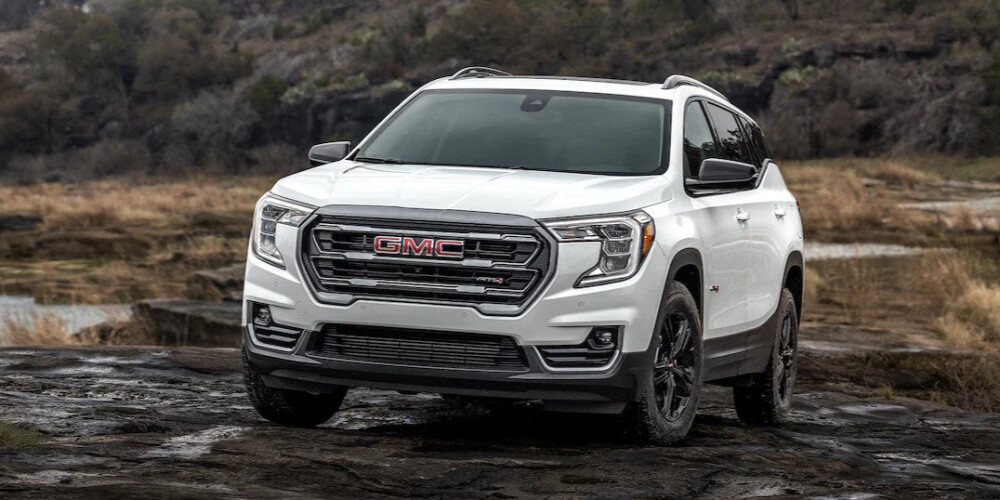
Why a More Expensive Terrain Trim Can Cost More Over Five Years
Higher GMC Terrain trims typically add equipment such as upgraded interior materials, larger wheels, additional convenience features, enhanced technology, exterior styling changes, and other comfort-oriented upgrades.
These features can make a vehicle more appealing, but they also increase the amount paid at purchase.
A higher purchase price can affect depreciation in dollar terms. Even if two Terrain trims lose a similar percentage of their original value, the trim that started at a higher price can lose more money in absolute dollars. Resale demand, equipment levels, mileage, condition, and used-car market conditions all influence the eventual value.
Larger wheels can also have financial consequences. Tires with larger dimensions or more specialized specifications can cost more to replace. Tire prices vary significantly by brand and size, so buyers who plan to keep their Terrain for many years should consider replacement costs when comparing configurations.
Additional equipment can also affect insurance and repair costs. The effect is not identical for every driver or insurance company, and modern safety and driver-assistance technology can have different replacement costs depending on the component involved.
A damaged camera, sensor, lighting unit, or electronic component may cost more to replace than a conventional part.
That does not mean a higher trim is automatically a poor financial choice. Buyers who value its features may consider the additional expense worthwhile for their needs.
The important point is that a trim’s extra equipment should be treated as a purchase decision rather than assumed to improve five-year cost efficiency. For a buyer whose primary goal is minimizing ownership expenses, paying for features that are not necessary can work against that objective.
Terrain Ownership Costs That Buyers Should Watch
Depreciation is usually a major factor in the five-year cost of owning a new vehicle. The exact depreciation of a GMC Terrain will depend on the model year, mileage, condition, accident history, local demand, equipment, and broader used-car market conditions. Because these variables change, a five-year estimate should not be treated as a guaranteed future resale value.
Fuel costs deserve special attention from high-mileage drivers. Someone who drives 20,000 miles per year will spend considerably more on gasoline than someone who drives 8,000 miles.
Even if two Terrain configurations have relatively similar fuel economy, the difference in annual mileage can have a much greater effect on the owner’s actual fuel bill.
Routine maintenance is easier to anticipate. Owners should budget for services such as oil and filter changes, tire rotations, inspections where required, air and cabin filter replacement, brake service, and other maintenance specified by GMC. Following the manufacturer’s maintenance schedule can help protect reliability and resale condition.
Repairs are less predictable because they depend on vehicle age, mileage, usage, and individual component failures. A new Terrain benefits from being a relatively new vehicle during the first several years of ownership, but wear items and unexpected repairs can still occur.
A buyer planning to keep the SUV beyond the five-year period should consider how warranty coverage and long-term maintenance requirements fit into their plans.
Insurance is highly personal. Two owners of identical Terrain trims can receive very different insurance quotes. Location, age, driving record, claims history, coverage limits, deductible, credit-based insurance factors where permitted, and insurer pricing can all affect premiums.
Getting actual insurance quotes for the exact Terrain configuration is therefore more useful than relying solely on a national estimate.
Is the Cheapest Terrain Trim the Best Value?
The cheapest Terrain trim and the best-value Terrain trim are not necessarily identical. Value depends on what the buyer receives for the money. If the entry-level version provides everything a driver needs, moving to a higher trim may simply add expenses without delivering meaningful benefits.
A higher trim can make sense when its additional equipment replaces options that would otherwise need to be purchased separately.
For example, if a buyer already intends to add certain convenience or technology features, comparing the price of those options with the cost of moving to a better-equipped factory trim can reveal which configuration makes more financial sense.
All-wheel drive presents a similar question. Drivers in areas with frequent snow, ice, steep roads, or rough conditions may place greater importance on traction. In that situation, the additional cost of an AWD Terrain can be considered alongside its practical benefits rather than evaluated purely as an ownership-cost penalty.
Resale value also deserves attention. A well-equipped SUV can appeal to used-vehicle shoppers, but resale performance depends on market demand and the specific configuration. There is no guarantee that paying more for a premium trim will produce enough additional resale value to recover the original price difference.
For buyers focused on keeping five-year expenses as low as possible, the approach is fairly simple. Choose the most affordable Terrain configuration that still offers the needed drivetrain, safety features, comfort, and everyday practicality.
Avoid paying for equipment that will rarely be used, and compare actual transaction prices rather than relying exclusively on MSRP.
