

Choosing the right Nissan Rogue engine requires more than comparing horsepower or fuel economy figures. The 2.5-liter four-cylinder and newer 1.5-liter VC-Turbo offer different strengths, and their ownership histories deserve careful attention.
The 2.5-liter engine was used in the redesigned 2021 Rogue, while Nissan later switched to a smaller turbocharged engine for the 2022 model year. EPA fuel economy favors the 1.5-liter, but NHTSA records raise important questions about certain 1.5-liter engines and bearing failures.
RepairPal data also provides useful information about Rogue ownership costs. This guide compares these engines using fuel economy, reliability records, complaints, recalls, and repair considerations for buyers.
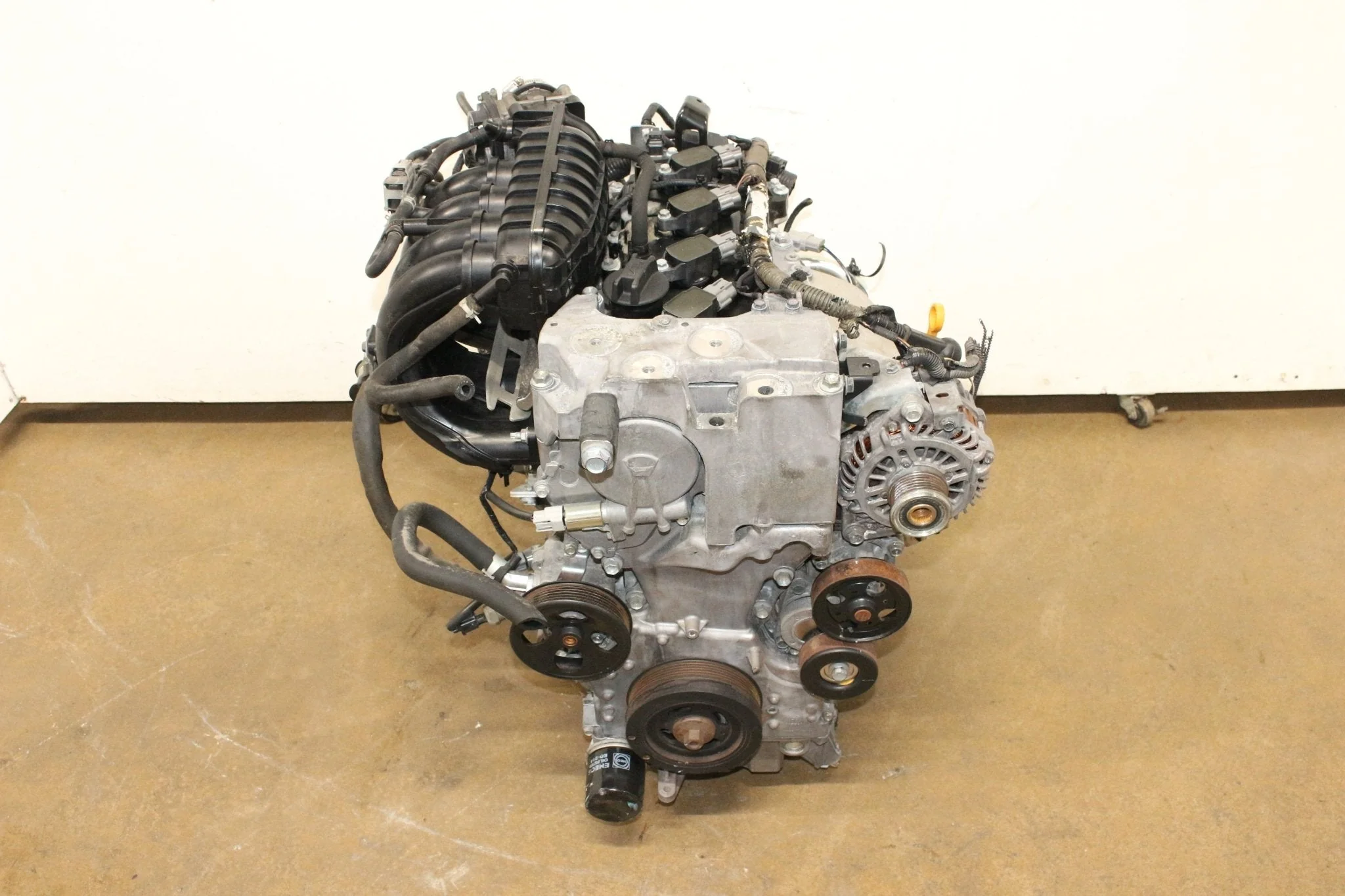
Why the 2021 Rogue’s Naturally Aspirated 2.5-Liter Engine Deserves a Look
The 2.5-liter four-cylinder engine powers the redesigned 2021 Nissan Rogue. It uses a naturally aspirated design rather than a turbocharger, producing 181 horsepower and 181 lb-ft of torque. Power reaches the wheels through Nissan’s continuously variable transmission.
For drivers considering a used Rogue, the 2.5-liter is significant because it represents a relatively short production period before Nissan introduced the smaller 1.5-liter VC-Turbo engine for the 2022 model year. Its conventional naturally aspirated layout can also appeal to buyers who prefer fewer turbocharging-related components.
Fuel economy is where the 2.5-liter gives ground to the later engine. EPA figures for the 2021 Rogue vary with drivetrain and configuration, with front-wheel-drive versions rated around 27 mpg city and 35 mpg highway.
All-wheel-drive models have lower ratings. Those figures remain competitive for a compact SUV, but the 1.5-liter improves on them. Buyers who spend most of their time on highways may notice the difference over several years of ownership, particularly when fuel prices are high.
The 2.5-liter also has a straightforward driving character. It does not depend on turbo boost to produce its power, which means acceleration tends to build progressively rather than arriving with a strong surge at low engine speeds.
Some drivers prefer this predictable response for commuting and family transportation. The CVT remains a major part of the driving experience, so engine choice does not eliminate the transmission characteristics associated with the Rogue.
From a used-car perspective, the 2.5-liter deserves attention because it is not covered by the major VC-Turbo engine-bearing recalls that affected certain newer Rogue engines.
NHTSA’s 2025 recall specifically identified certain Rogue vehicles equipped with the 1.5-liter and 2.0-liter VC-Turbo engines. The affected population included 2021 through 2024 Rogue vehicles, meaning buyers need to identify the actual engine installed rather than assuming every 2021 Rogue has the same powertrain.
That distinction makes the 2021 Rogue’s engine particularly important when shopping for a used example. A buyer should verify the VIN, engine specification, maintenance history, and recall status before purchasing.
A clean service record does not replace a recall check, but it can provide valuable evidence about how the vehicle was maintained.
For shoppers who place engine simplicity and established service history ahead of maximum fuel economy, the 2.5-liter deserves serious consideration.
The 1.5-Liter VC-Turbo Engine Trades Simplicity for Efficiency
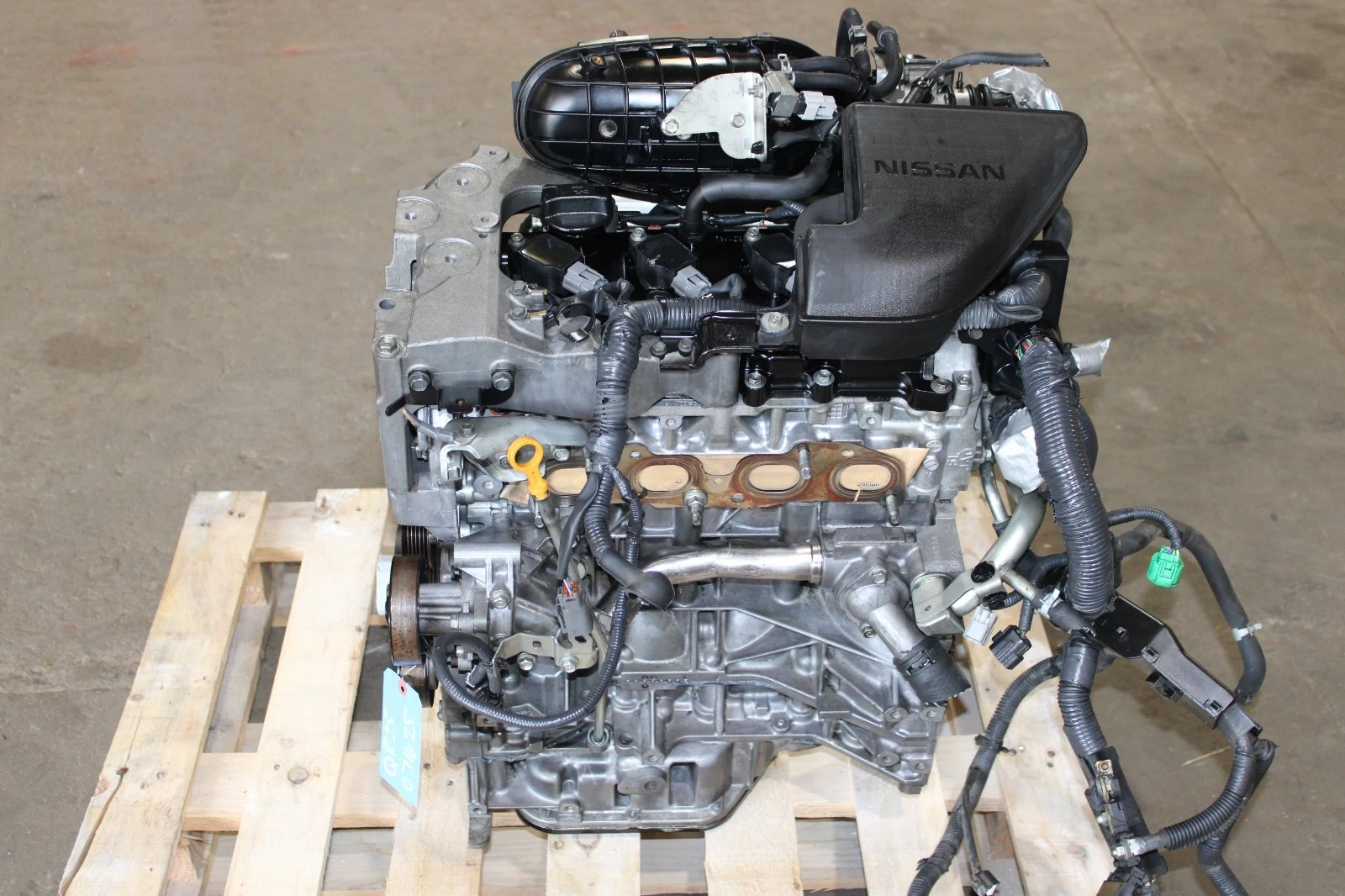
Nissan introduced the 1.5-liter three-cylinder VC-Turbo engine in the Rogue for the 2022 model year. The engine uses variable compression technology and turbocharging, allowing Nissan to target a combination of efficiency and stronger performance than the previous naturally aspirated engine.
Output increased to roughly 201 horsepower and 225 lb-ft of torque. That gives the smaller engine more torque than the 2.5-liter while also reducing displacement.
EPA fuel economy is the biggest advantage of the 1.5-liter. Depending on model year and drivetrain, later Rogue versions can achieve roughly 30 mpg city and 37 mpg highway in favorable configurations.
All-wheel-drive versions generally have slightly lower EPA ratings. For someone driving 15,000 miles annually, even a few extra miles per gallon can translate into meaningful fuel savings over several years. Exact figures should always be checked for the specific model year and drivetrain being considered.
The 1.5-liter also gives the Rogue a more responsive feel in everyday driving. Its turbocharger produces additional torque at lower engine speeds, which can make merging onto highways and accelerating from a stop feel easier.
The engine’s three-cylinder configuration may sound different from a conventional four-cylinder, but modern engine management and turbocharging allow it to deliver substantially more output than its displacement might suggest.
The technology comes with added complexity, however. Variable compression requires additional mechanical components, while turbocharging introduces more heat and pressure into the engine system.
These technologies are designed to improve efficiency and performance, but they can make the engine more complicated than the naturally aspirated 2.5-liter. Complexity alone does not prove poor reliability, yet it becomes relevant when combined with documented recall information.
NHTSA records are especially important for the 1.5-liter because the agency investigated engine failures involving certain 2021 through 2023 Rogue vehicles and related Nissan and Infiniti models. The investigation documented reports involving engine knocking, loss of power, and engine failure.
Nissan later recalled affected vehicles, citing defective engine bearings. Buyers should therefore determine whether a particular Rogue’s engine falls within an affected population and confirm that all applicable recall work has been completed.
NHTSA Complaints, Recalls and Engine Concerns
NHTSA complaint information should be interpreted carefully. A complaint is a report submitted by a vehicle owner or other individual, not proof that every vehicle has the reported problem.
NHTSA explains that complaints are used alongside other information, including manufacturer data and investigations, to identify potential safety trends. This makes complaint records useful for research, but they should be considered together with recalls and technical findings.
The engine issue involving certain Rogue VC-Turbo engines received substantial regulatory attention. NHTSA’s investigation PE23-023 examined allegations of engine failures and loss of motive power in affected vehicles.
According to the agency’s closing documentation, Nissan provided hundreds of customer reports and more than 1,100 warranty claims connected with the alleged defect across the affected vehicles. The investigation closed after Nissan submitted recall 25V-437.
The 2025 recall covered certain Rogue vehicles with the 1.5-liter and 2.0-liter VC-Turbo engines. NHTSA stated that defective bearings could lead to engine damage and potentially engine failure.
The recall population included 2021 through 2024 Rogue models, but the recall applies to specific engine assemblies and production populations rather than every Rogue from those model years. This is why a VIN-based recall check is more useful than relying only on the model year.
The situation became more significant in 2026 when NHTSA acknowledged another recall involving certain 2023 through 2025 Rogue vehicles equipped with the 1.5-liter VC-Turbo.
Nissan reported that increased engine oil temperatures could degrade lubrication and potentially cause bearing seizure. The recall involved 323,917 potentially affected vehicles. Nissan’s report also stated that certain earlier Rogue vehicles were included in the previous recall population.
There is also a separate 2026 recall involving certain 2024 and 2025 Rogue vehicles with the 1.5-liter engine. NHTSA reported that gears inside the electronic throttle body could break, potentially causing a loss of drive power. This is not the same defect as the engine-bearing problem, but it adds another recall item for shoppers evaluating later Rogue models.
RepairPal Reliability and Ownership Costs
RepairPal’s broader Nissan Rogue data gives the model a 4.0 out of 5 reliability rating and reports an average annual repair cost of about $467.
Its data covers multiple Rogue model years, so this figure should not be treated as a precise forecast for a particular engine or model year. RepairPal also reports an average of about 0.3 unscheduled shop visits per year for the Rogue.
The distinction between model-wide reliability and engine-specific reliability is important. A Rogue can have reasonable average maintenance costs while a particular engine generation has a serious recall.
RepairPal’s figures therefore provide useful context about general ownership expenses, but they cannot cancel out documented NHTSA findings involving specific engines. A buyer should consider both types of information instead of relying on a single reliability score.
RepairPal lists several possible Rogue repairs, including oil pump replacement, radiator fan assembly replacement, fuel injector replacement, and various electrical or sensor-related repairs.
Estimated repair prices vary based on location, vehicle year, labor rates, and the exact problem. These estimates are useful for understanding potential repair exposure, but they should not be interpreted as a prediction that a particular Rogue will need these repairs.
For used buyers, maintenance history can be more informative than a generic reliability rating. Regular oil changes are especially important for turbocharged engines because engine oil performs critical lubrication and cooling functions.
A prospective buyer should ask for service records, check the oil condition, inspect for warning lights, and arrange an independent mechanical inspection before completing the purchase.
RepairPal’s data also shows why model-year research matters. Its current Rogue information identifies numerous problems across the model’s long production history, while individual model years can have very different records.
A buyer comparing a 2021 Rogue with a 2023 Rogue should therefore examine each vehicle separately rather than assuming the entire Rogue lineup shares identical reliability characteristics.
