
The 25% U.S. tariff on imported automobiles has changed how American car buyers look at vehicle production. A car assembled inside the United States is not treated the same way as a fully imported vehicle under the Section 232 auto tariff.
That makes U.S. assembly increasingly important for shoppers watching prices. Still, “made in America” does not mean every component comes from American factories.
Modern vehicles rely on international supply chains, so imported parts can remain exposed to tariffs. With that distinction in mind, these 12 2026 vehicles stand out because their final assembly takes place in the United States.
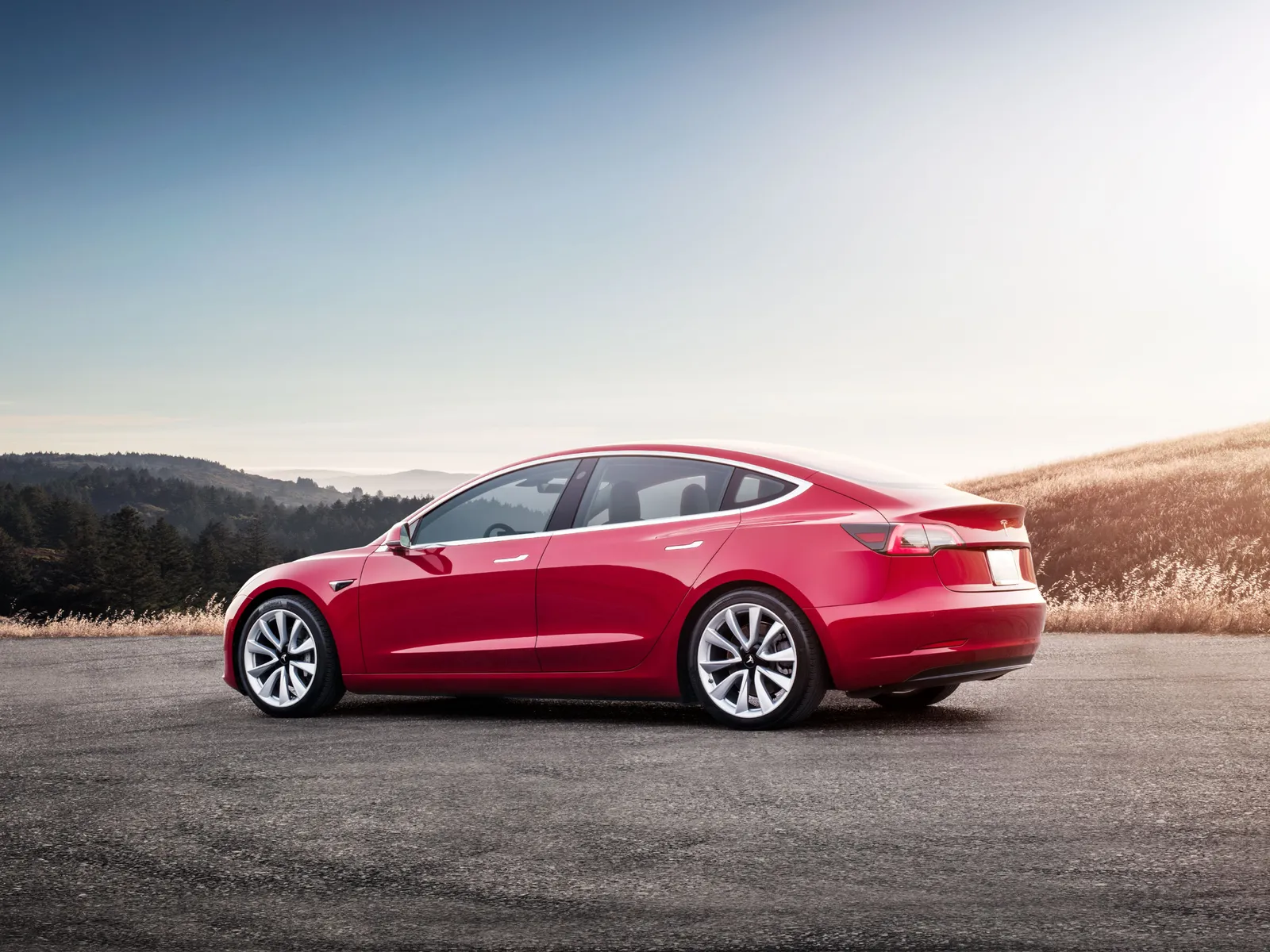
1. Tesla Model 3
The Tesla Model 3 is a strong example of a vehicle benefiting from U.S. final assembly. For the 2026 model year, NHTSA data lists the Model 3 with final assembly in the United States. The same data lists 75% U.S./Canadian content for the Model 3 RWD and AWD configurations, giving buyers a clear indication that the vehicle has a substantial North American manufacturing footprint.
The Model 3 is produced by Tesla, a U.S.-based electric vehicle manufacturer with major manufacturing operations in California and Texas.
Its American production network gives the sedan an important advantage under a tariff system aimed at imported finished automobiles. A Model 3 assembled domestically does not enter the country as an imported finished car from an overseas assembly plant.
That does not mean the Model 3 is completely protected from trade-related costs. Electric vehicles contain batteries, electronics, minerals, semiconductors, and other components sourced through international supply chains.
NHTSA’s labeling system specifically separates U.S./Canadian parts content from foreign parts content, showing why final assembly location should not be confused with total domestic sourcing.
The Model 3 also demonstrates why buyers should look beyond the badge on the hood. Tesla is an American company, but company headquarters and vehicle production are different issues when tariffs are involved.
The important point for this discussion is that the Model 3 sold in the United States can be assembled domestically, reducing exposure to the 25% tariff applied to imported finished automobiles.
For shoppers comparing electric sedans, the Model 3 therefore represents a vehicle with significant U.S. manufacturing involvement. The exact tariff impact can vary according to parts sourcing and future policy changes, but its domestic final assembly puts it in a different position from an electric sedan imported fully from Europe or Asia.
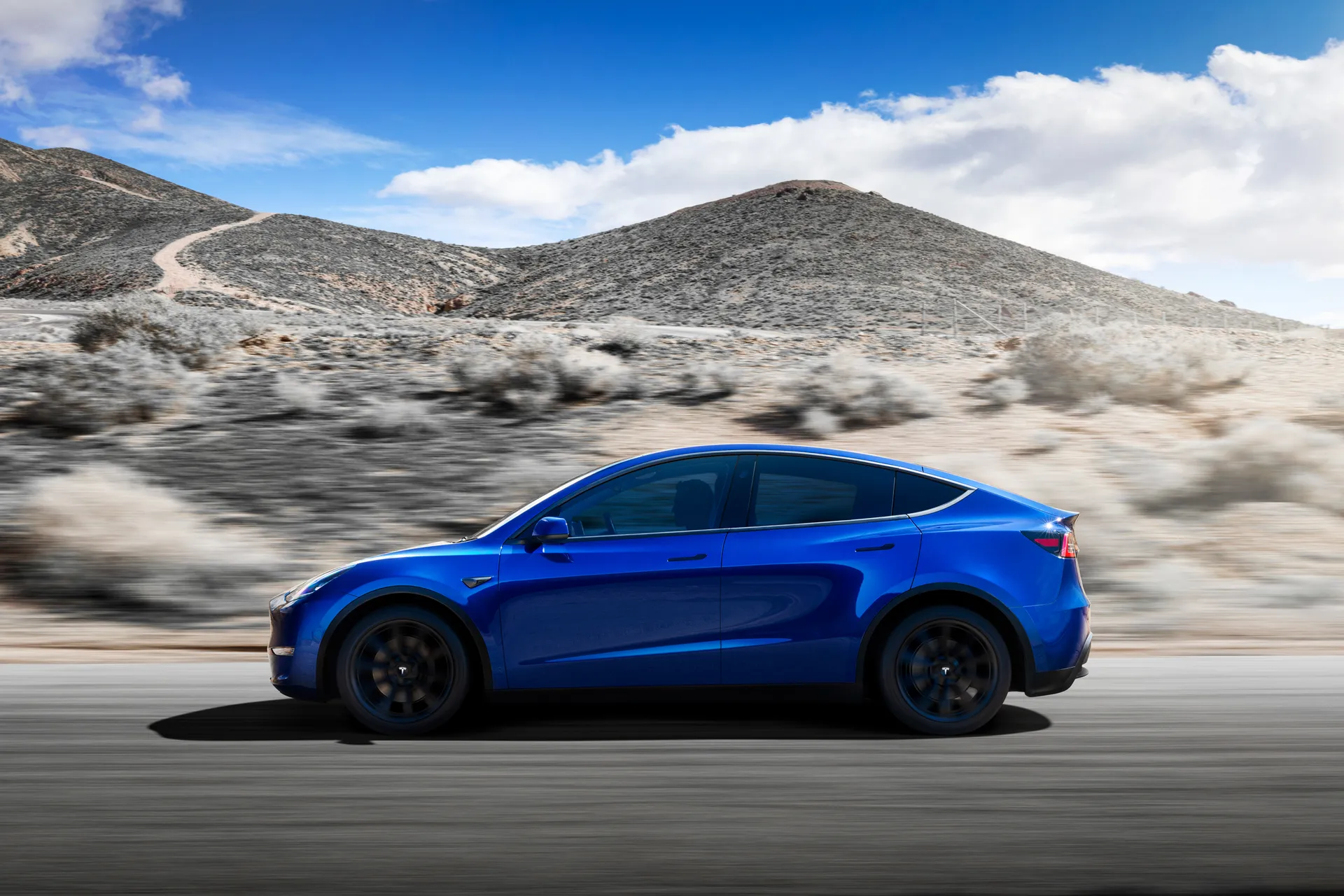
2. Tesla Model Y
The Tesla Model Y has also become a major part of America’s domestic electric vehicle manufacturing base. The 2026 Model Y is assembled in the United States, and NHTSA lists U.S. final assembly for the model. Tesla also operates large-scale American production facilities that support its growing electric vehicle lineup.
For tariff purposes, that assembly location matters. A vehicle that is completed at a U.S. factory is not entering the American market as an imported finished automobile. This gives the Model Y an important distinction from electric SUVs that arrive at U.S. dealerships after final assembly overseas.
The Model Y still depends on a global supply chain. Batteries and other electric vehicle components can involve materials and manufacturing operations outside the United States. That means buyers should not interpret U.S. assembly as proof that every dollar of the vehicle’s value originates domestically.
The Model Y has also received attention in the 2026 American-made vehicle data. Cars.com included it among the vehicles contributing significantly to American manufacturing, parts sourcing and employment. Its ranking in that research reflects several factors rather than simply the location of final assembly.
For consumers seeking a U.S.-assembled electric SUV, the Model Y is therefore a choice from a manufacturing perspective. Its domestic assembly can shield the finished vehicle from the direct 25% imported-vehicle tariff, while imported components remain a separate consideration.
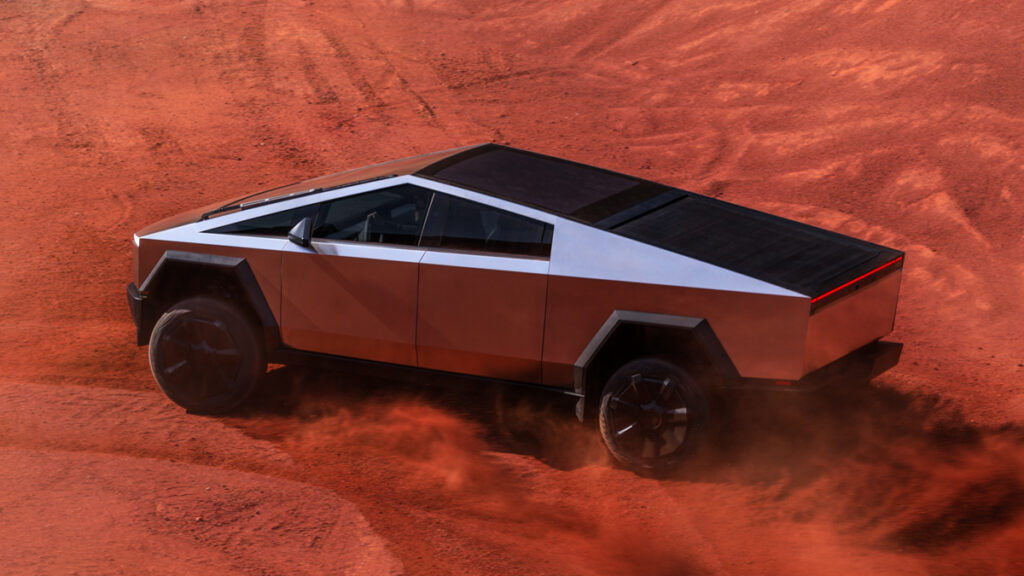
3. Tesla Cybertruck
The Tesla Cybertruck is another electric vehicle assembled in the United States. NHTSA’s 2026 information lists the Cybertruck with U.S. final assembly and 65% U.S./Canadian parts content. The data also identifies the United States as the country of origin for its electric motor and transmission-related equipment.
That domestic production matters under the current automobile tariff structure. The 25% Section 232 tariff applies to imported automobiles, meaning a vehicle assembled domestically does not face that particular charge as an imported finished vehicle. This is an important difference for buyers comparing American-built vehicles with imported alternatives.
The Cybertruck is not completely insulated from trade policy. NHTSA’s figures show that 25% of the vehicle’s parts content comes from Mexico, which illustrates how closely American vehicle manufacturing remains connected to neighboring countries. Imported components can carry their own costs depending on the applicable tariff rules.
The Cybertruck also illustrates how the phrase “made in the USA” should be used carefully. American final assembly is a factual manufacturing detail, while total domestic content is a separate measurement. NHTSA requires automakers to disclose U.S./Canadian parts content, major foreign parts sources, and final assembly location on vehicle labeling.
For buyers focused on tariff exposure, the Cybertruck’s American final assembly is the key point. It does not eliminate every trade-related cost, but it means the finished pickup is not arriving in the United States as a foreign-built automobile subject to the 25% imported-vehicle tariff.
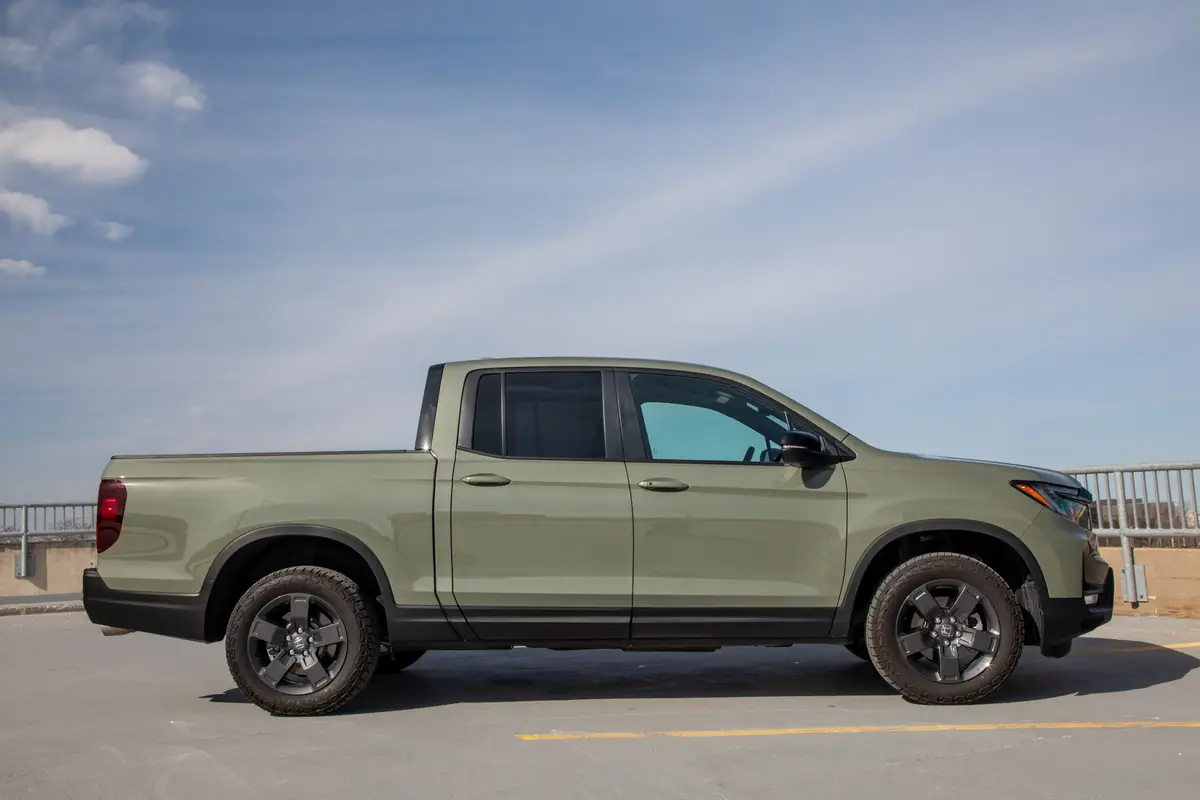
4. Honda Ridgeline
Honda’s ownership does not change the tariff treatment of the finished vehicle. Tariffs are applied according to the applicable trade rules and the product’s import status, rather than simply according to whether the manufacturer is headquartered in America, Japan, or elsewhere.
The Ridgeline is particularly interesting because it combines foreign corporate ownership with substantial U.S. production. Its American assembly operation has been established for years, and the truck’s high U.S./Canadian content gives consumers more information about the domestic share of its parts.
NHTSA’s labeling data is useful here because it separates the concepts that shoppers often combine. U.S./Canadian content represents equipment and parts value, while final assembly identifies where the vehicle is completed. Those measurements provide a more accurate picture than simply calling a vehicle “American” or “foreign.”
For someone shopping for a pickup while watching the effects of the 25% auto tariff, the Ridgeline has a clear manufacturing advantage compared with a truck imported fully from another country.
Its domestic assembly keeps the finished vehicle outside the direct imported-car tariff category, while its parts supply chain remains relevant to costs.
5. Honda Accord
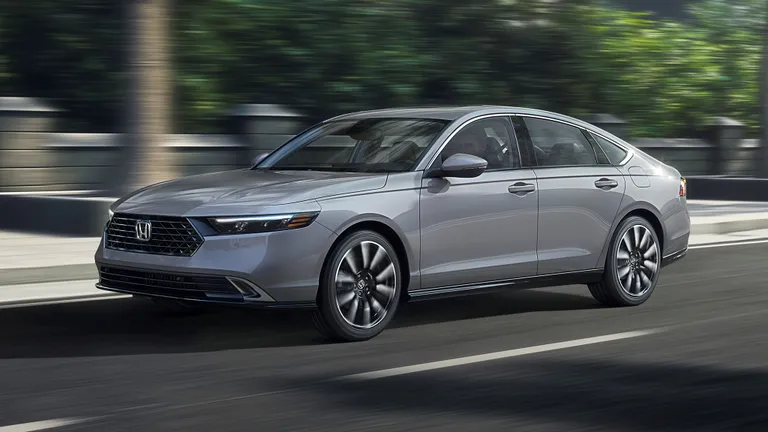
The Honda Accord remains an important U.S.-assembled sedan in the 2026 market. Honda builds the Accord in Ohio, giving the vehicle domestic final assembly even though Honda itself is headquartered in Japan. The Accord has also appeared prominently in current American-made vehicle research because of its U.S. manufacturing footprint.
This is significant because the 25% auto tariff is aimed at imported automobiles. An Accord completed at an American assembly plant is not imported as a finished automobile from Japan. That distinction can matter when comparing it with sedans that are shipped into the United States after final assembly overseas.
The Accord still contains internationally sourced parts. That is normal for the modern automotive industry. NHTSA requires manufacturers to disclose the percentage of U.S./Canadian parts content and identify certain major foreign sources, making it possible for buyers to see that final assembly does not tell the entire manufacturing story.
The Accord’s production history also shows why U.S. assembly is not limited to traditional American automakers. Japanese, Korean, and German manufacturers operate major factories across the United States, employing American workers and supplying vehicles to the domestic market.
For tariff-conscious sedan shoppers, the Accord is therefore worth considering from a production standpoint. Its American final assembly means it does not face the 25% tariff as an imported finished car, though parts-related tariff costs can still influence manufacturing expenses and vehicle pricing.
6. Honda Odyssey
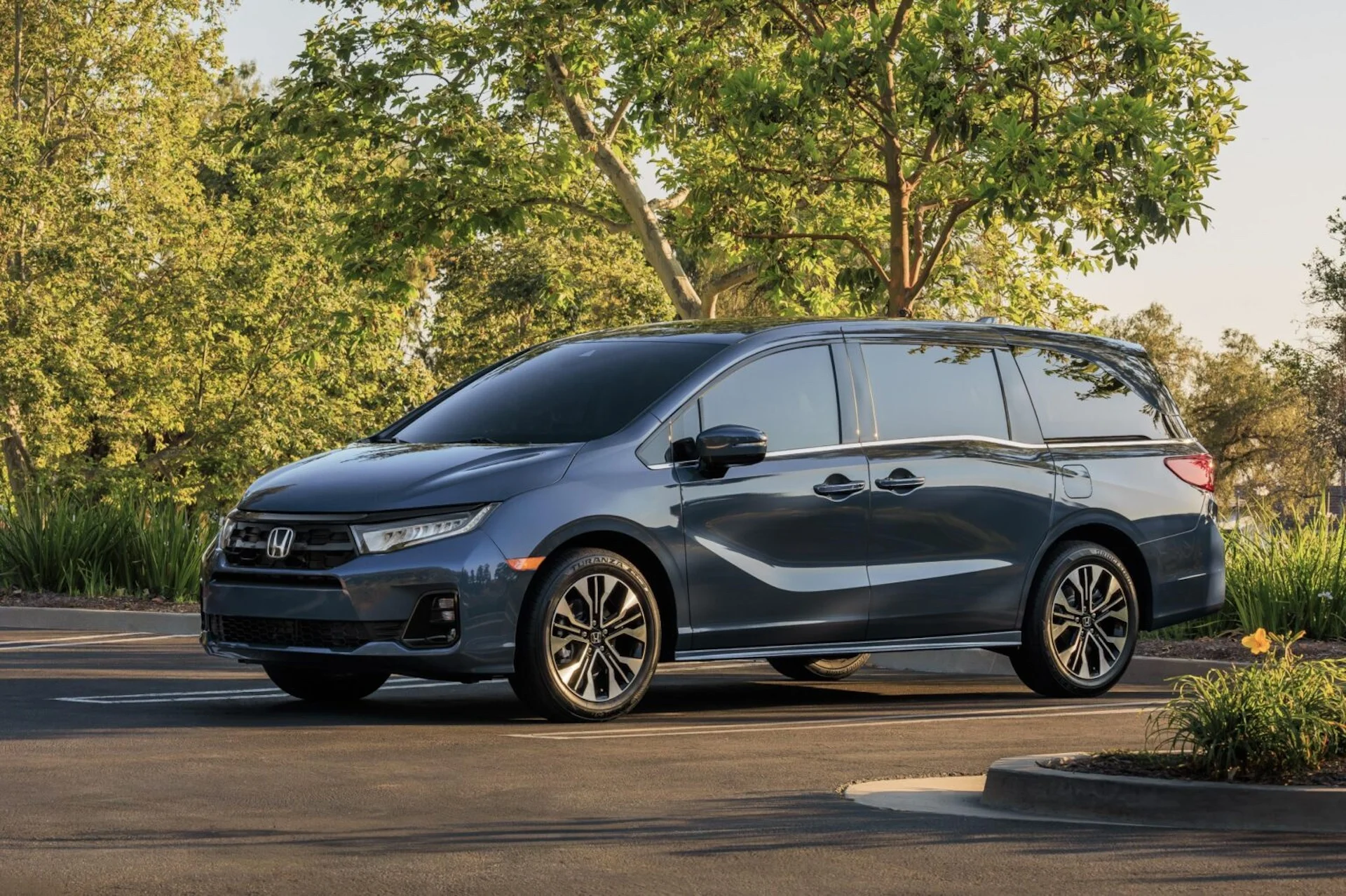
The Honda Odyssey is another Honda model with U.S. final assembly. Production takes place in Alabama, where Honda operates a major manufacturing complex. The Odyssey has been built in the United States for many years, making its domestic manufacturing status relatively straightforward for American buyers.
The tariff distinction is important here. A minivan assembled in an American plant is not imported as a finished automobile. The Section 232 automobile tariff specifically targets covered imported automobiles, so domestic final assembly provides a direct separation from that vehicle-level import charge.
The Odyssey still relies on suppliers operating across North America and beyond. That means its production costs can respond to tariffs imposed on imported components. The federal government created an offset system for U.S.-assembled vehicles to reduce part of the tariff burden associated with imported automobile parts during the specified periods.
Honda’s American manufacturing presence also illustrates the difference between an automaker’s nationality and the location where a specific vehicle is built. A Japanese company can manufacture a vehicle in Alabama, while an American company can manufacture another vehicle in Mexico or Canada.
7. Toyota Camry
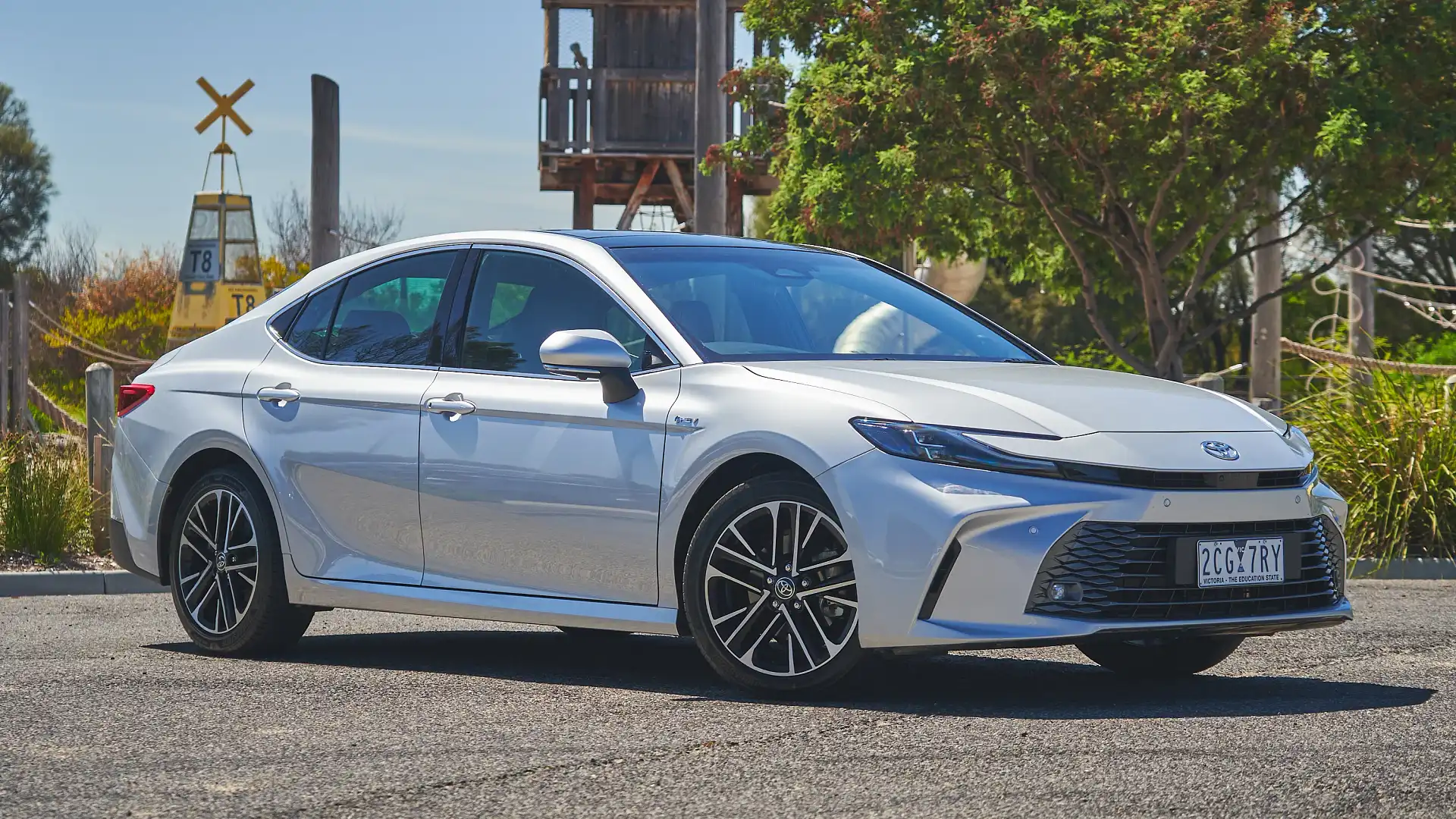
The Toyota Camry is another long-running example of a foreign-brand vehicle assembled in the United States. Toyota produces the Camry at its Kentucky manufacturing operation. NHTSA’s 2026 information lists the Camry Hybrid with 60% U.S./Canadian content, U.S. final assembly, and a U.S.-origin engine.
The Camry’s American production is especially relevant because it remains a major midsize sedan in the U.S. market. Instead of being shipped into the country as a finished vehicle from Japan, the Camry sold through this domestic production channel is completed inside the United States.
The 2026 data also shows why consumers should pay attention to the exact powertrain. Toyota’s labeling information distinguishes the Camry Hybrid from other configurations, and component origins can vary by version. The same nameplate does not necessarily mean every vehicle has identical sourcing.
The Camry also demonstrates that tariff exposure is not determined by brand nationality. Toyota is headquartered in Japan, yet its Kentucky operation produces vehicles for American consumers. The relevant question for the finished-car tariff is where the particular vehicle is assembled.
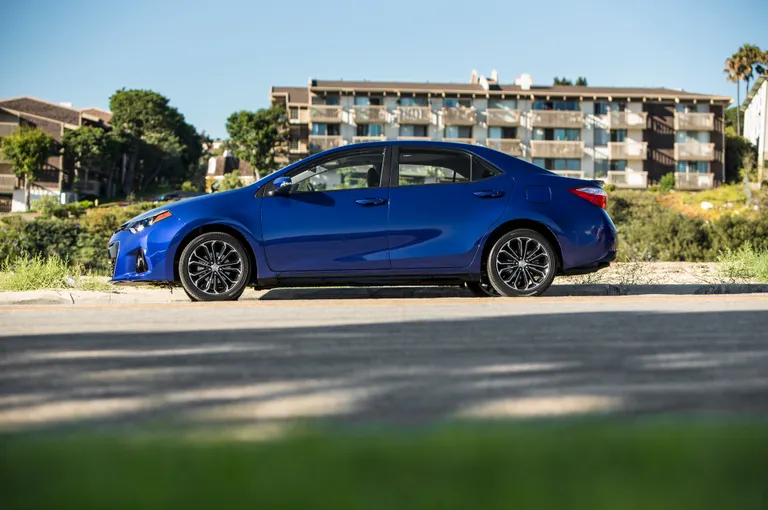
8. Toyota Corolla
The Toyota Corolla is another familiar name with U.S. production. NHTSA’s 2026 data lists the Corolla with 60% U.S./Canadian content and U.S. final assembly, while also identifying Japan as a major source of foreign parts content and the engine and transmission sources for the applicable car line.
That combination is a useful reminder that domestic assembly and domestic content are different measurements. Sixty percent U.S./Canadian content does not mean 60% of the entire retail price was created inside America, because NHTSA’s calculation is based on equipment and parts content rather than every element of vehicle value.
For tariff purposes, the Corolla’s U.S. final assembly remains significant. The finished sedan is completed in the United States instead of being imported as a completed automobile from Japan. This gives the Corolla a different tariff profile from Toyota models that are imported directly.
The Corolla also shows why shoppers should check the actual vehicle rather than relying on a brand-wide assumption. Toyota sells vehicles from factories in the United States, Canada, Mexico, and Japan, so production location can differ substantially between models.
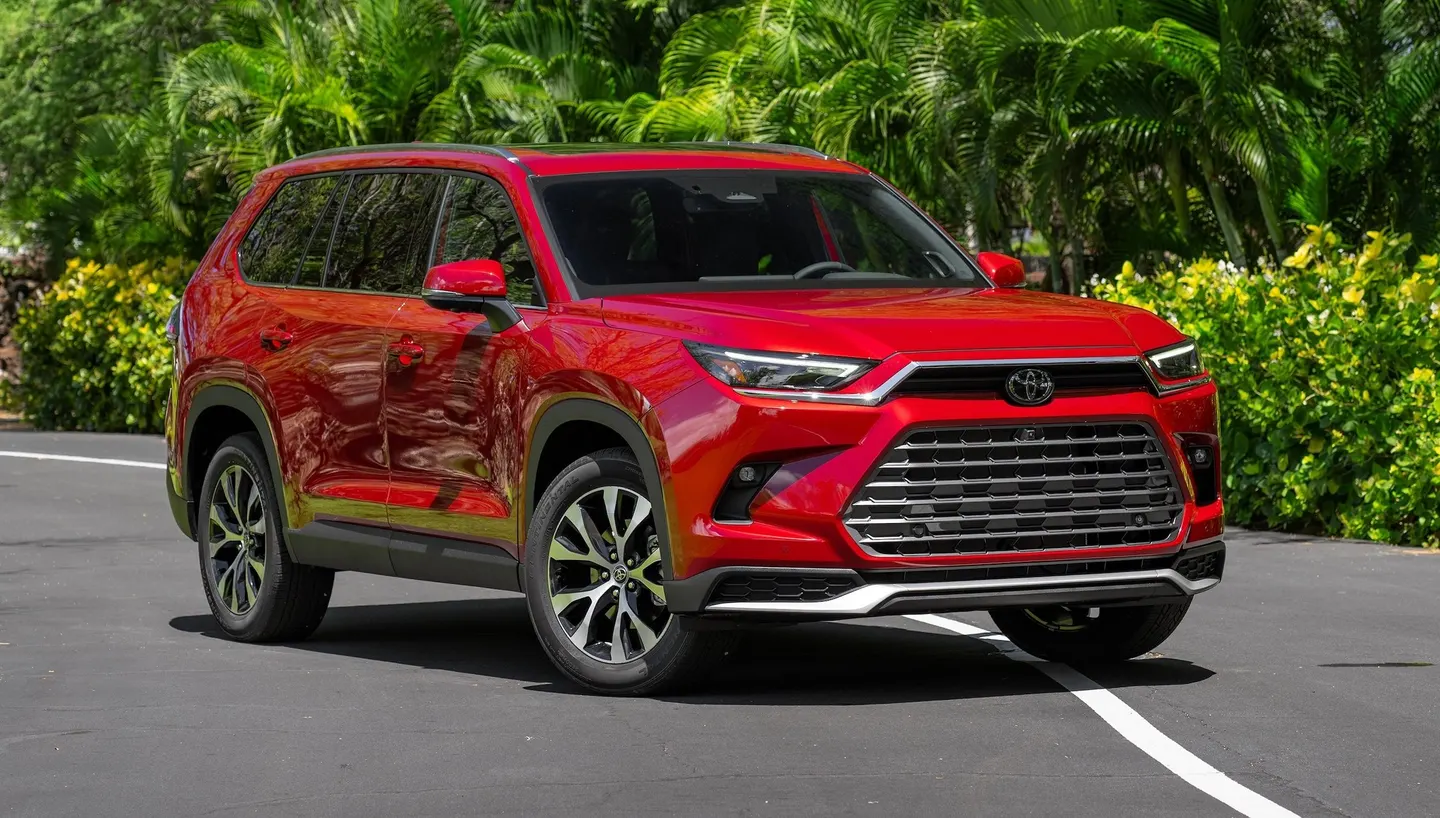
9. Toyota Grand Highlander
The Toyota Grand Highlander is assembled in the United States and has become part of Toyota’s growing domestic SUV manufacturing footprint. NHTSA’s 2026 data lists U.S. final assembly and 65% U.S./Canadian content for the Grand Highlander, with Japan identified as a major foreign source for parts content.
The vehicle is produced at Toyota’s Indiana manufacturing facility, giving American consumers a domestic assembly option in the three-row SUV segment. This is significant for families because many large SUVs sold in the United States are produced through a mixture of American, Canadian, and Mexican operations.
The Grand Highlander is not a completely domestic vehicle. Its NHTSA information shows that foreign parts remain part of its supply chain. The presence of Japanese-sourced components is a reminder that American factories still depend on international suppliers.
That distinction matters when discussing the 25% tariff. The vehicle itself is assembled in America, so it is not an imported finished automobile. Imported parts can still affect the manufacturer’s costs, and those costs can eventually influence vehicle pricing.
For shoppers searching for a family SUV with U.S. production, the Grand Highlander offers a strong example of how international automakers have established large manufacturing operations in America. Its domestic final assembly provides an important tariff advantage without making the SUV completely immune to trade-related costs.
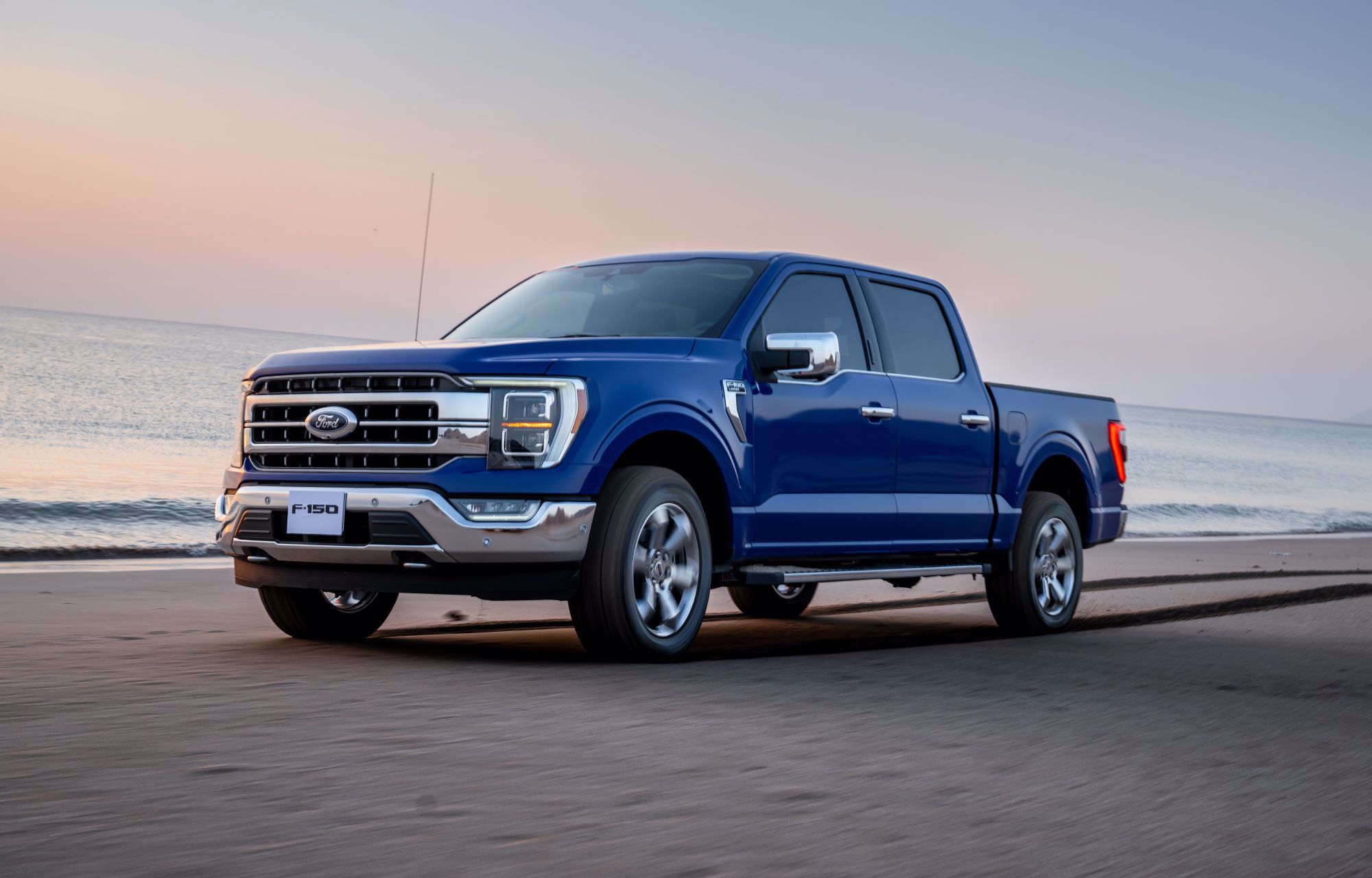
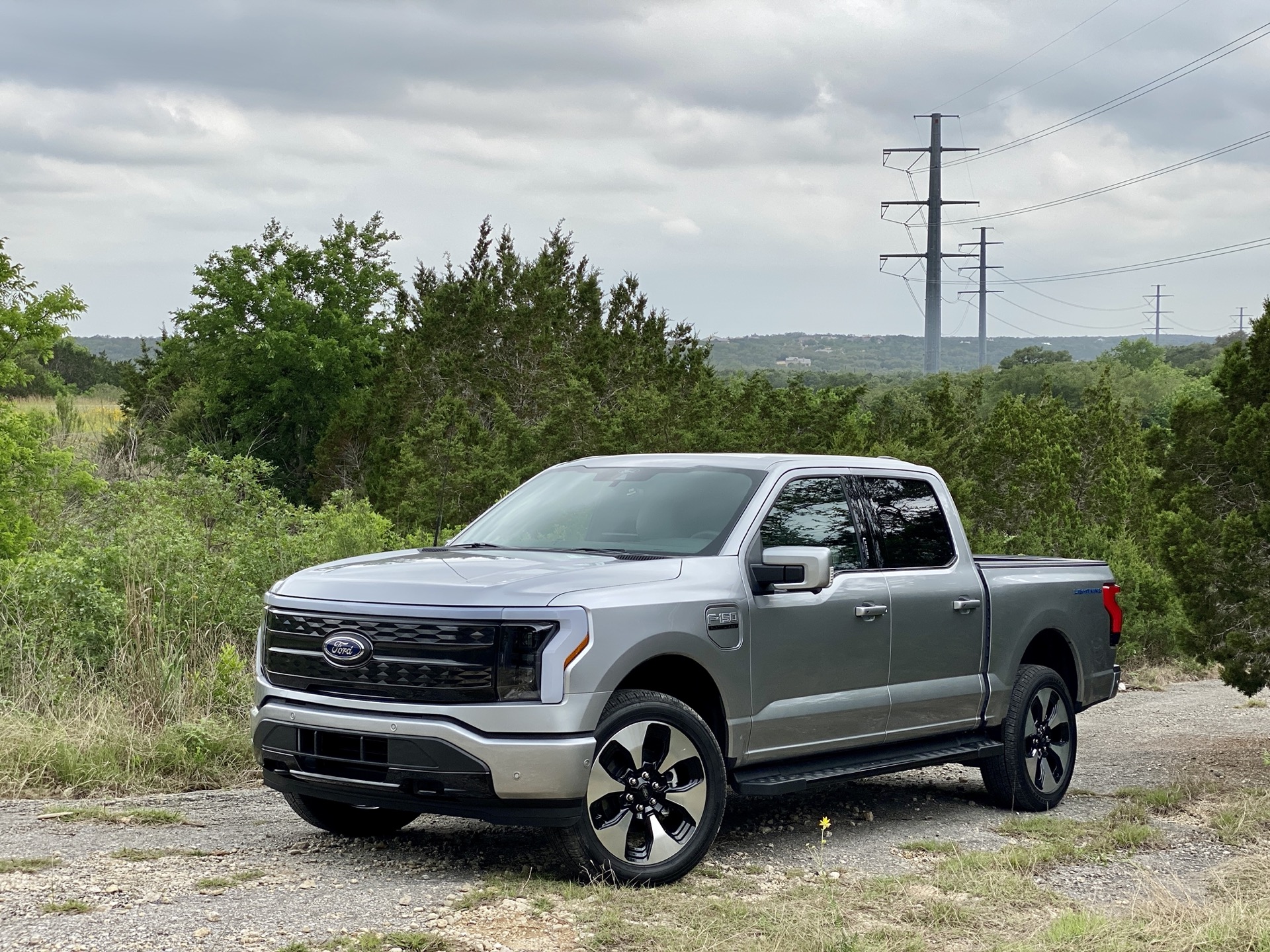
10. Ford F-150
The Ford F-150 has long been closely associated with American vehicle manufacturing, and its U.S. production remains extensive for the 2026 model year. Ford states that its F-Series trucks are assembled in America, while NHTSA’s labeling system identifies final assembly locations and domestic parts content for individual vehicle lines.
The F-150 is particularly relevant to the tariff discussion because pickup trucks have large and complex supply chains. Engines, transmissions, electronics, steel, aluminum, and other components can come from multiple countries before the truck reaches its final assembly plant.
Because the F-150 is assembled in the United States, it is not treated as an imported finished automobile entering the country. That means the 25% tariff on imported automobiles does not simply add 25% to the vehicle because of its production location.
Parts remain a separate matter. The federal auto tariff program established an offset for eligible U.S.-assembled automobiles to help manufacturers deal with tariffs on imported automobile parts. The offset was set at 3.75% of aggregate MSRP for the first specified period and 2.5% for the second period beginning May 1, 2026.
For truck buyers, the F-150 therefore represents a vehicle with substantial American manufacturing involvement. It should not be described as completely tariff-proof, but its domestic final assembly gives it an important distinction from a pickup imported fully from another country.
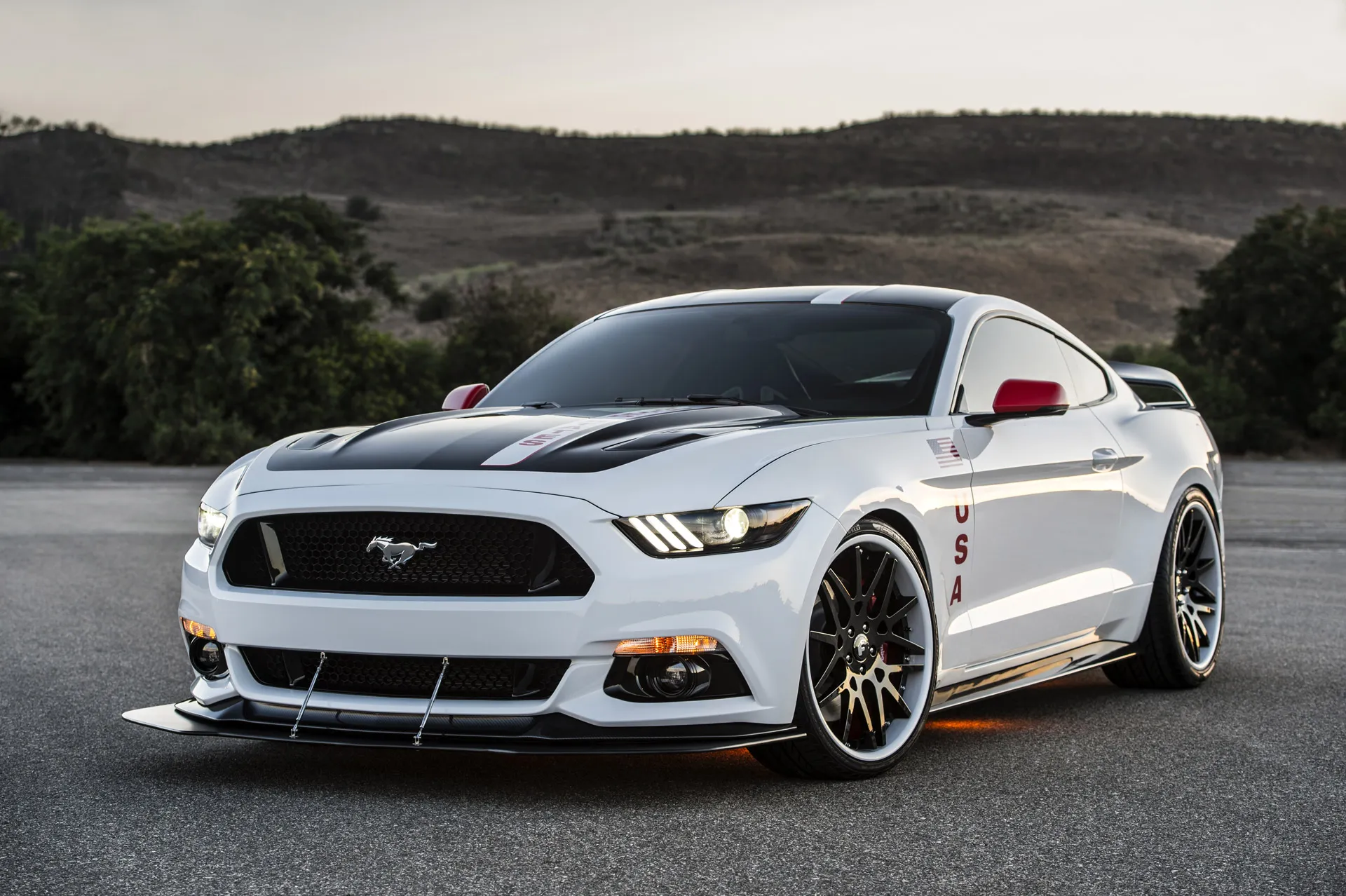
11. Ford Mustang
The Ford Mustang remains a U.S.-assembled performance car for the 2026 model year. Ford lists the Mustang among its vehicles assembled in America, and NHTSA’s 2026 labeling data identifies U.S. final assembly for the Mustang along with U.S./Canadian content information.
The Mustang is especially relevant because performance cars are often sold through global production networks. Some competitors are imported from Europe or Japan, exposing them to the 25% automobile tariff when they enter the United States as finished vehicles.
The American-built Mustang takes a different route. Its final assembly happens inside the United States, so the completed vehicle is not imported into America as a foreign-built automobile. This can reduce its direct exposure to the vehicle-level tariff.
Parts sourcing remains international. NHTSA’s data shows that Mustang production includes foreign content, and the transmission information can vary according to configuration. This means the tariff story can differ between components even when the final assembly point stays the same.
For enthusiasts who want an American-assembled sports car, the Mustang provides a clear example. Its domestic assembly can keep the finished vehicle outside the direct 25% imported-car tariff, while imported components and future changes in trade rules remain factors that could influence manufacturing costs.
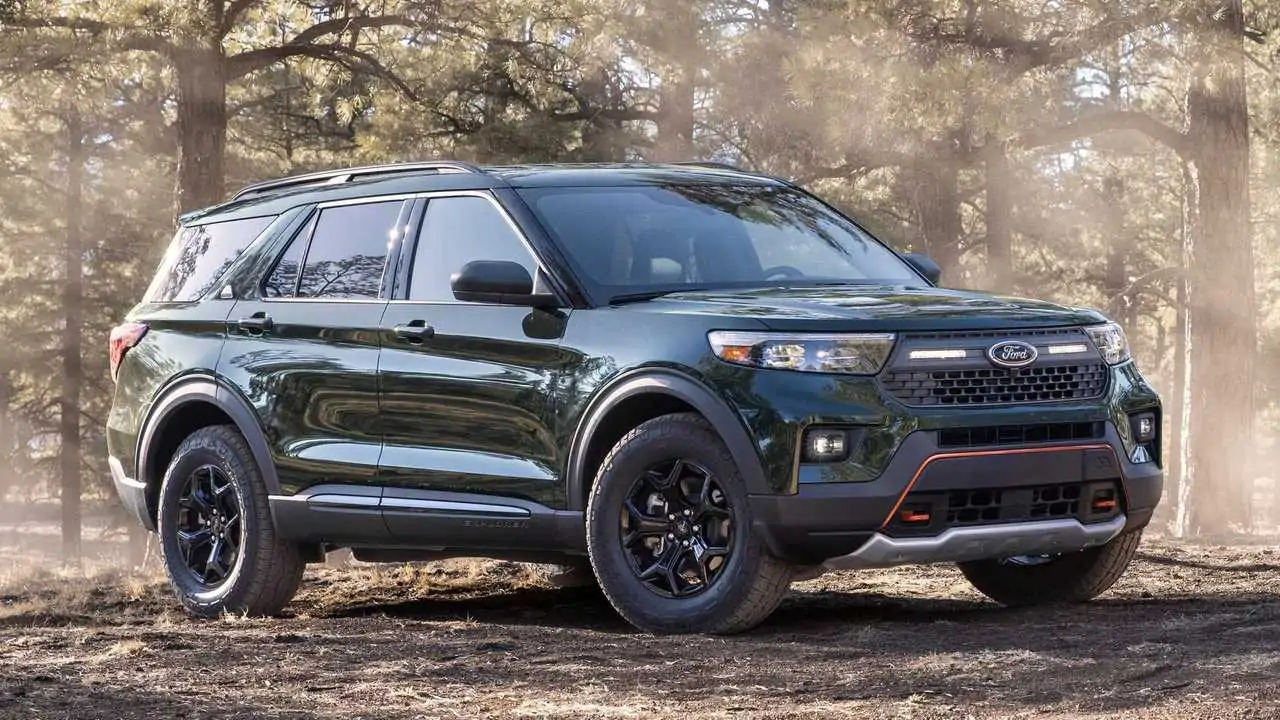
12. Ford Explorer
The Ford Explorer is another U.S.-assembled vehicle available to American buyers. Ford produces the Explorer at its Chicago Assembly Plant, and NHTSA’s 2026 data lists the Explorer with U.S. final assembly and 55% U.S./Canadian content. The data also identifies the United States as the engine source for the listed configurations.
The Explorer’s production location makes it relevant to families comparing midsize SUVs during a period of changing automotive trade policy. An Explorer completed in Chicago is not imported into the country as a finished vehicle, so the 25% automobile tariff does not apply to it in the same manner as it would to an imported SUV.
The 55% U.S./Canadian content figure also shows why the phrase “made here” needs context. More than half of the applicable parts content comes from the United States and Canada under the NHTSA measurement, but the remaining content can originate elsewhere.
Ford’s American assembly footprint is extensive. The company says roughly 80% of the vehicles it sells in the United States are assembled in America, including its entire F-Series truck range. That makes domestic production a significant part of Ford’s U.S. strategy.
