
American vehicles have long been associated with generous proportions, powerful engines, and road-going designs built around wide lanes and spacious parking areas. Some US-market vehicles take that philosophy much further, reaching dimensions that can create problems under European vehicle regulations.
European rules are not identical across every country, so a vehicle being too large for standard approval does not always mean it can never be registered. Width, length, axle dimensions, and maneuverability can trigger additional requirements.
This article examines twelve large US-based vehicles whose dimensions could create serious approval or road-use complications in parts of Europe, focusing specifically on physical size rather than emissions or engine regulations.
1. Ford F-650 Super Duty
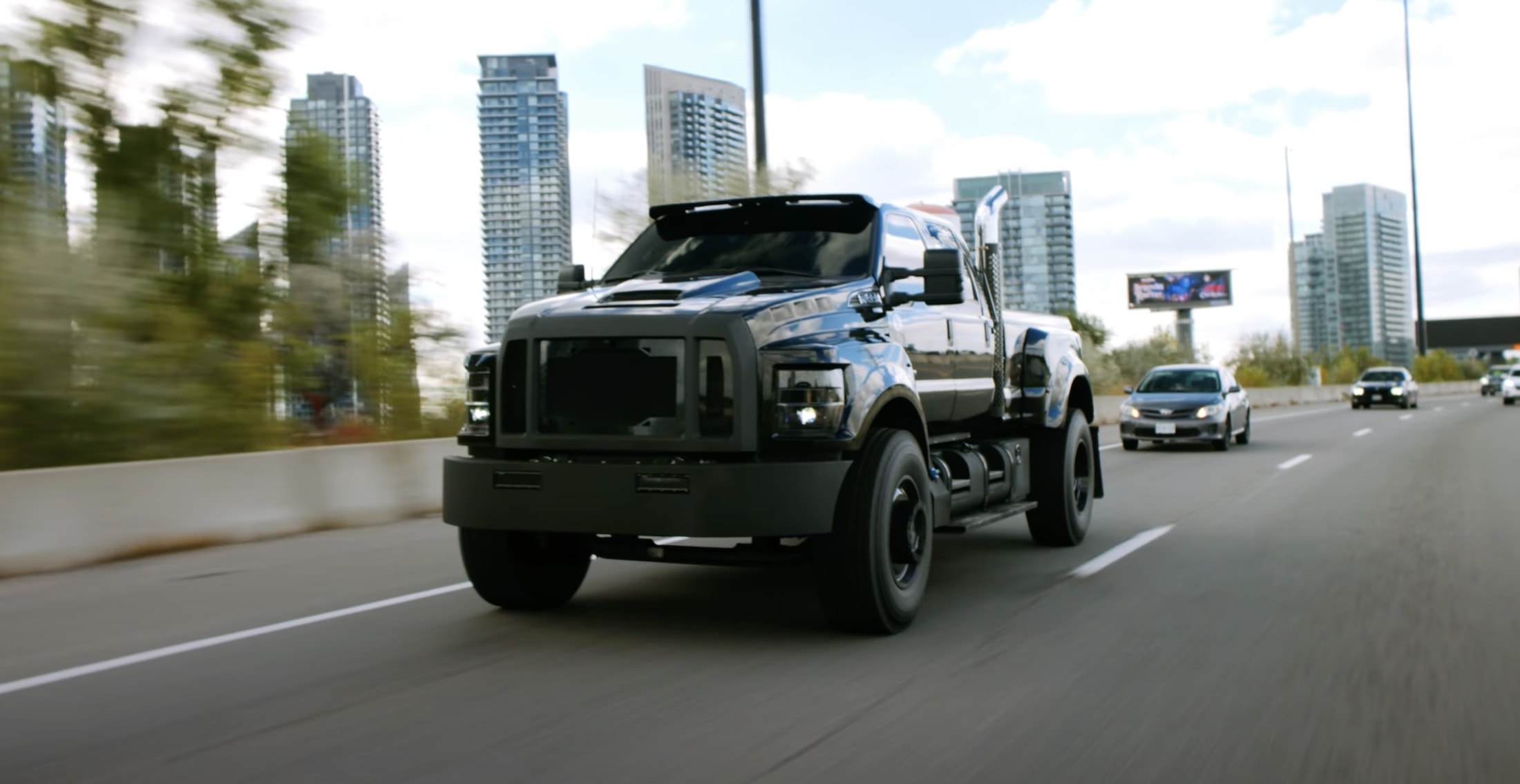
The Ford F-650 occupies a strange position in the American vehicle market because it sits far beyond the dimensions of a conventional pickup. It is a medium-duty truck designed primarily for commercial work, fleet applications, towing, construction, and specialized body configurations.
Depending on its configuration, the F-650 can be substantially longer and taller than ordinary European passenger vehicles. Its sheer physical presence is a product of its intended role rather than an attempt to create a large family vehicle.
Width is not necessarily the only concern with the F-650. European road rules also pay attention to length, axle loading, turning characteristics, and the dimensions of commercial vehicles.
A heavily configured F-650 can reach dimensions that make ordinary European streets, parking structures, and restricted roads difficult to negotiate. Standard vehicle approval would therefore be a significant issue for some configurations.
The F-650 also demonstrates why simply comparing advertised vehicle width can be misleading. The truck’s body, mirrors, equipment, cargo body, and other fitted components can influence the usable road envelope.
European regulations measure particular dimensions according to defined technical procedures, meaning a vehicle cannot simply be judged by looking at a manufacturer’s basic specification sheet.
A privately imported F-650 would not necessarily be banned everywhere in Europe. Individual countries have their own registration procedures and may provide special approval routes for vehicles that do not meet normal dimensions.
The important distinction is that a standard US-market configuration could fall outside the dimensional framework used for ordinary European vehicle approval.
For buyers considering such a truck, size alone can therefore become a practical legal obstacle before emissions, lighting, safety equipment, or other technical requirements are even considered.
The F-650 is built for an environment where large commercial vehicles are common, while many European urban areas were designed around much smaller vehicles and narrower infrastructure.
2. Ford F-750 Super Duty
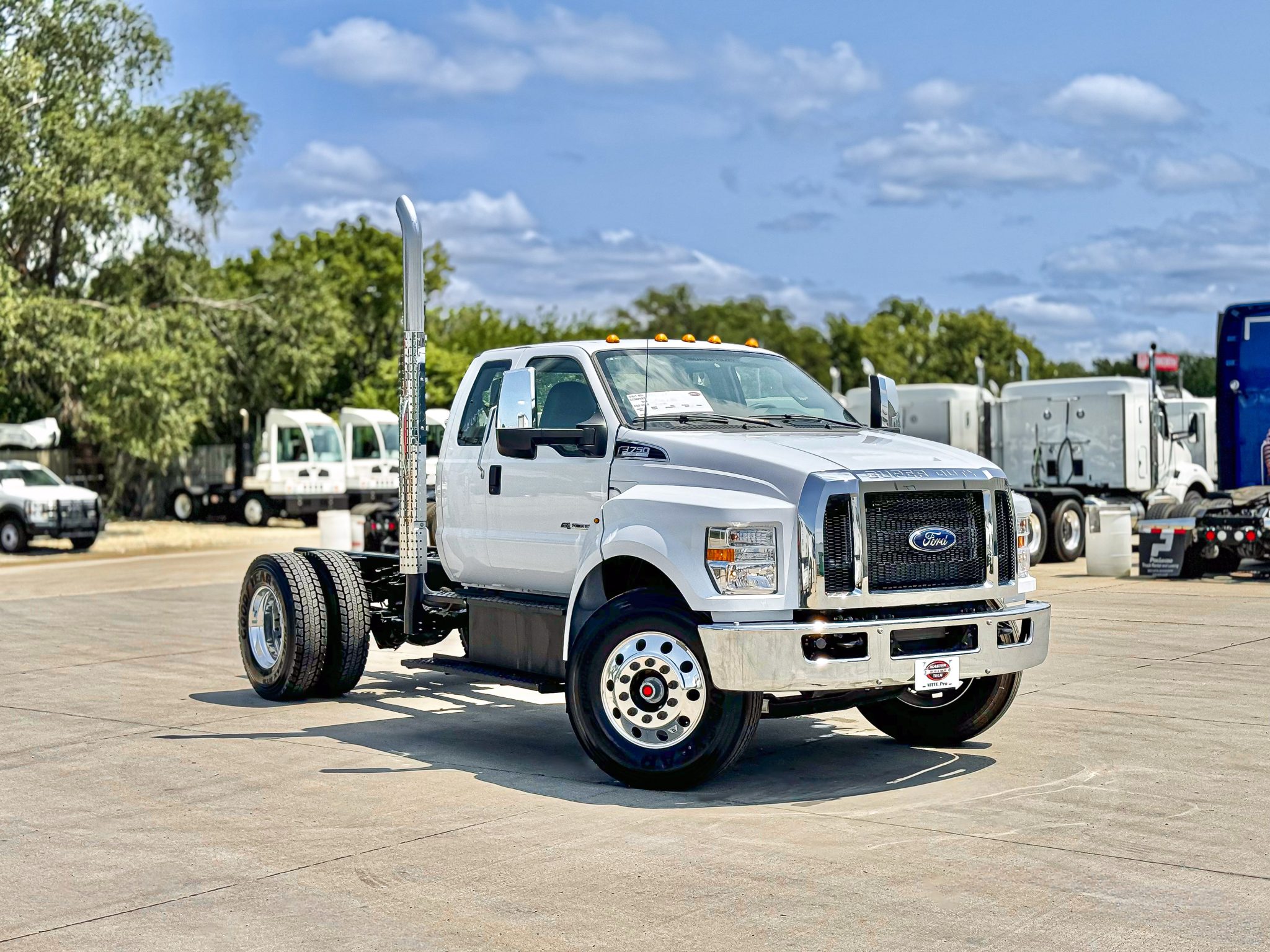
The Ford F-750 takes the concept of the F-650 further into medium-duty territory. It is available for serious commercial applications and can be configured with substantial wheelbases, large cargo bodies, towing equipment, and other specialized hardware.
Its chassis is intended to support work rather than fit neatly into the dimensions of a European family car or conventional light commercial vehicle.
Its physical size can become particularly relevant when the truck is equipped with a long wheelbase and commercial body. European regulations distinguish between vehicle categories, and dimensional requirements can become stricter or more complicated as a vehicle moves into heavier commercial classifications.
An imported F-750 therefore faces a very different regulatory situation from a normal passenger vehicle.
Height creates an additional challenge. A tall American medium-duty truck can encounter underground parking entrances, bridges, loading areas, and urban structures where height restrictions are common.
These limitations are not necessarily laws aimed specifically at American vehicles. They are infrastructure restrictions that become important when a vehicle exceeds the dimensions assumed by the road network.
Length and turning radius can also affect where such a truck may legally operate. A vehicle that fits comfortably on a wide American arterial road may have difficulty navigating historic European city centers. Certain roads can impose restrictions based on vehicle length, weight, or class, meaning registration and unrestricted use are separate questions.
The F-750 is therefore a good example of a vehicle whose American specifications can create problems before mechanical compliance is considered.
It might be possible to register a specially approved example in a European country, but that does not mean every F-750 configuration would receive ordinary approval. Its dimensions place it firmly into a category where specialized rules become important.
3. Ford F-550 Super Duty
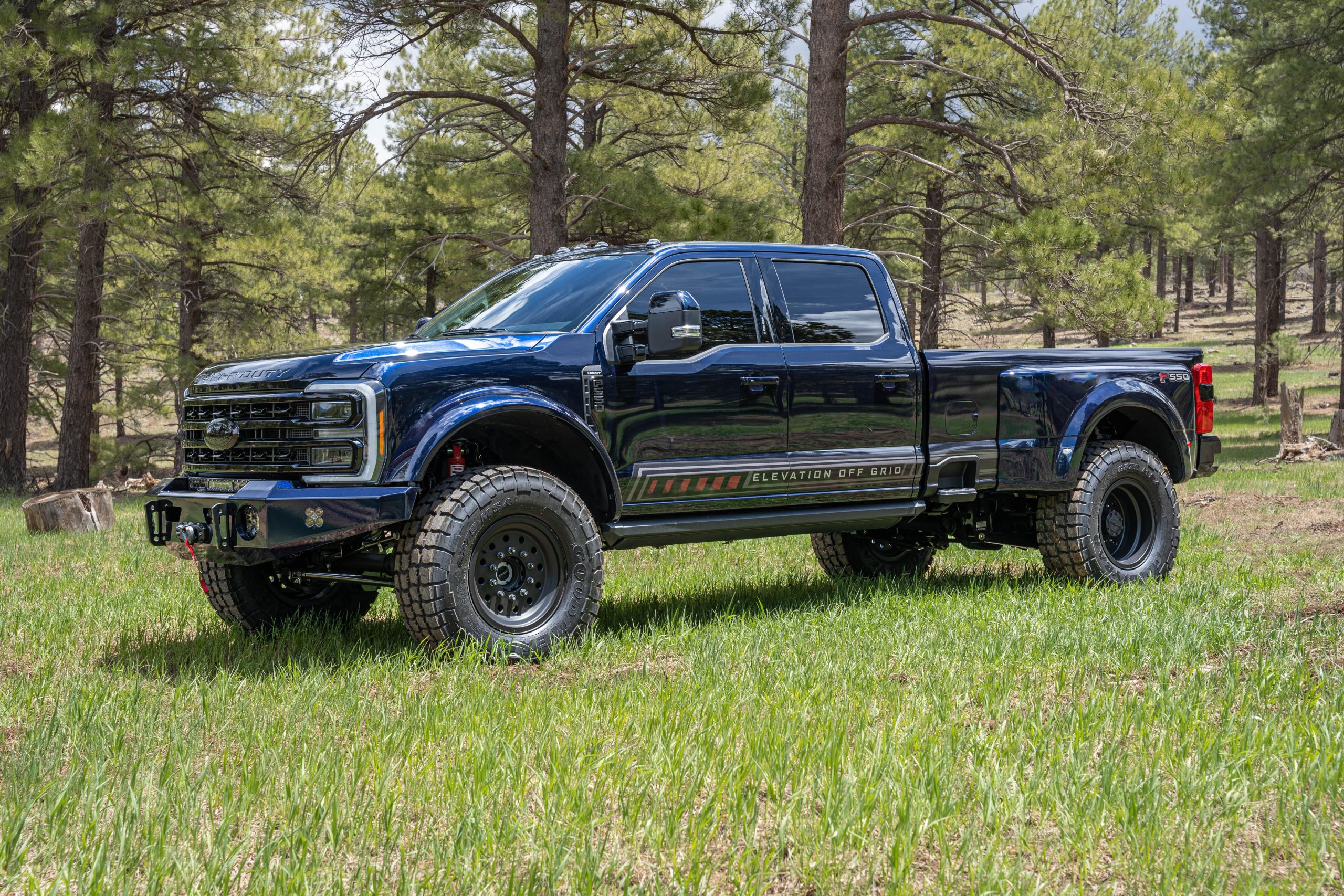
The Ford F-550 is smaller than the F-650 and F-750, yet it remains substantially larger than many vehicles commonly encountered on European roads.
It is a heavy-duty truck designed for commercial users who need high payload capacity, towing capability, and chassis strength. Configurations can include service bodies, flatbeds, utility equipment, and large towing setups.
The standard chassis itself may not exceed every European dimensional threshold, which is why describing the F-550 as universally illegal would be inaccurate. Its classification, final body, equipment, and registered configuration matter. Some versions could potentially be adapted or approved, while others could encounter dimensional restrictions.
The main concern comes from how American trucks are configured. A dual-rear-wheel version can become considerably wider than a conventional pickup.
Wheel arches, bodywork, mirrors, and commercial equipment all affect the final package. European type approval is concerned with regulated dimensions rather than the general reputation of a vehicle as being large.
The F-550 also highlights the difference between European and American truck design. European commercial vehicles intended for dense cities often prioritize maneuverability and compact dimensions. The F-550 gives buyers a heavy-duty chassis that accepts substantial bodies and equipment, creating a footprint that can be difficult to accommodate in older urban environments.
For an American owner moving to Europe, this does not automatically mean the F-550 must remain behind. Special registration and technical approval may be possible depending on the country and configuration. Still, a US-market F-550 can encounter size-related approval hurdles that a typical European light commercial vehicle would avoid.
4. Chevrolet Silverado 3500HD Dually
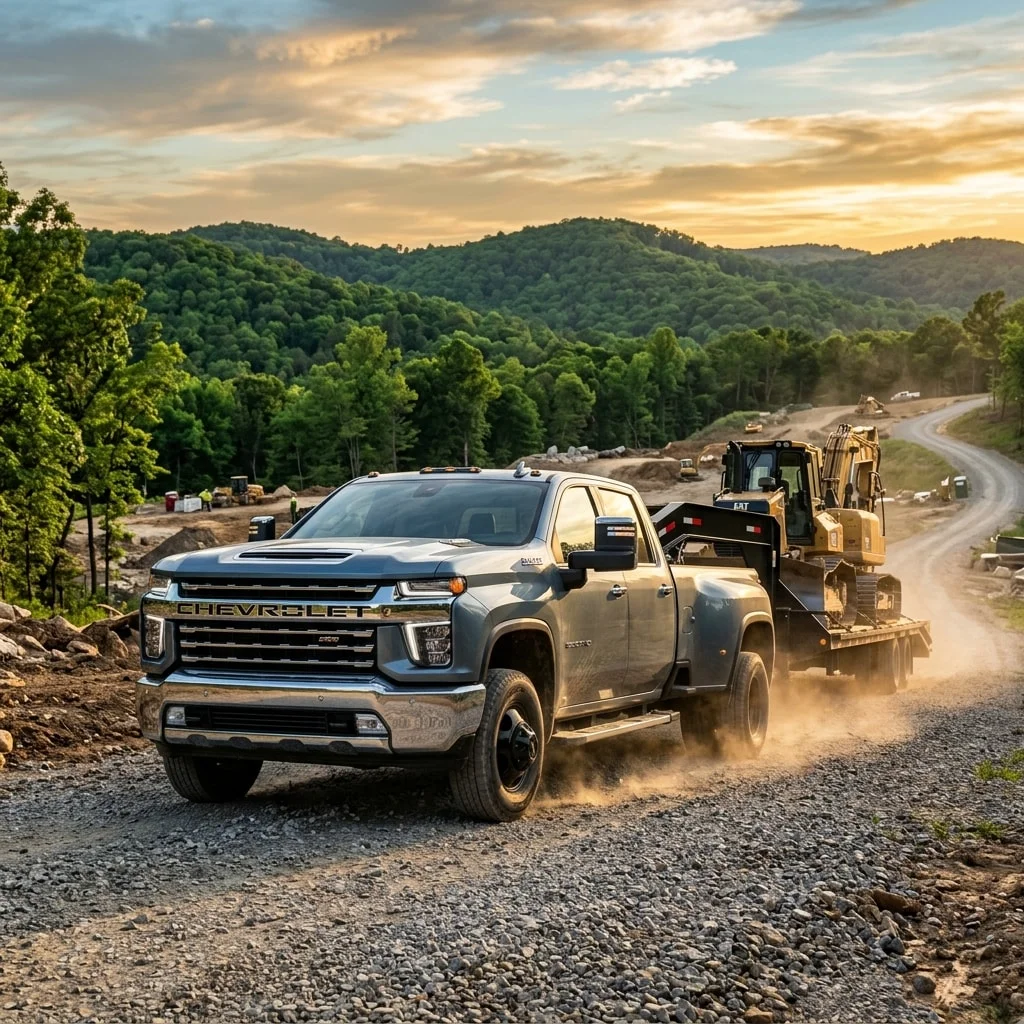
The Chevrolet Silverado 3500HD is a familiar name in the American heavy-duty pickup market. Its dual-rear-wheel version, commonly called a dually, is especially important because its rear fenders spread outward to cover the additional wheels. That design provides greater stability and payload capability, but it also increases the truck’s physical footprint.
A dually can approach the upper end of ordinary vehicle-width limits when measured without mirrors. European vehicle approval commonly uses a maximum width of around 2.55 meters for many motor vehicles, with specific exceptions and category rules.
That makes the exact configuration important. A Silverado 3500HD cannot simply be labeled illegal because it looks wider than European cars.
The rear fender design is particularly relevant because it is part of the truck’s permanent body structure. It is not merely a set of protruding mirrors that could be ignored during certain measurements. If a specific configuration exceeds an applicable dimensional limit, registration can require an individual approval process or modifications.
Parking and road access present additional practical concerns. A large dually needs considerable lateral space, while many European parking spaces were designed around compact hatchbacks and narrow sedans. Narrow village streets can present an even greater challenge, particularly where buildings sit close to the carriageway.
The Silverado 3500HD Dually illustrates a broader issue with American heavy-duty pickups. Their dimensions were developed around towing and hauling demands common in the United States. In Europe, the same capabilities may be available through smaller commercial vehicles designed around tighter dimensional standards.
5. GMC Sierra 3500HD Denali Dually
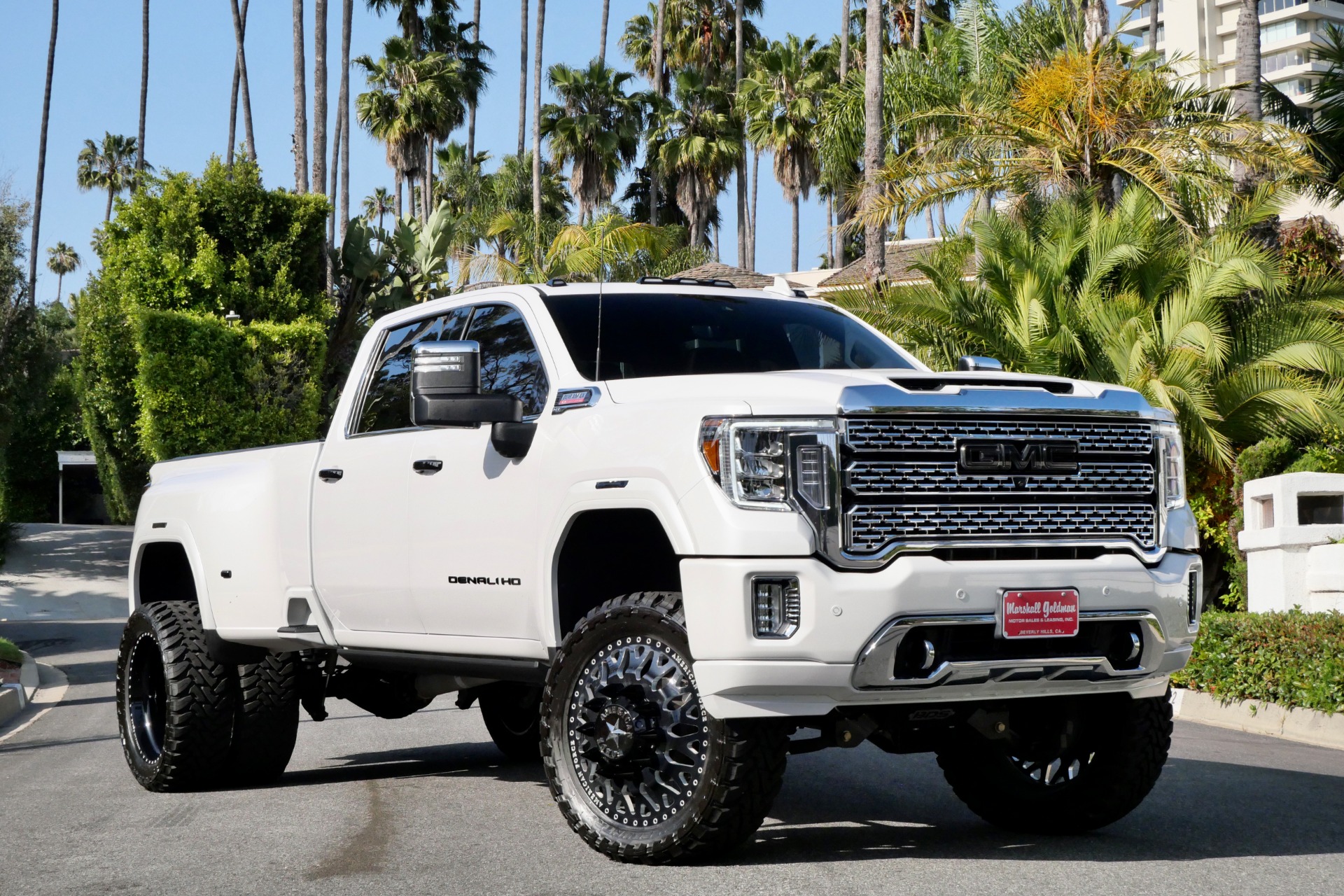
The GMC Sierra 3500HD Denali combines the heavy-duty architecture of a large American pickup with a luxury-oriented trim. Its dually configuration gives it a wide rear body, substantial suspension hardware, and the physical proportions expected from a truck designed for serious towing. The result is a vehicle that can look enormous beside European passenger cars.
Size regulations become particularly relevant with the dual-rear-wheel configuration. European approval procedures do not judge a vehicle solely by whether it can physically fit down a road.
They consider defined technical dimensions, and the applicable limits depend on vehicle category and use. A US specification that exceeds those limits can require an alternative approval route.
The Denali trim also demonstrates that luxury equipment does not make a heavy-duty truck smaller. Large wheels, substantial bumpers, running boards, towing equipment, and bodywork contribute to the dimensions. Accessories fitted after manufacture can create additional complications if they alter regulated dimensions.
A vehicle of this size may also face restrictions unrelated to registration. European cities frequently use weight limits, width restrictions, pedestrian zones, and vehicle-class controls.
Even if an individual Sierra receives registration, its owner may find that certain roads remain unavailable.
The Sierra 3500HD Denali is therefore better understood as a vehicle that can encounter European size restrictions rather than as a truck that is automatically prohibited across the continent. Its American dimensions can make standard approval difficult in particular configurations, while country-specific rules determine what alternatives are available.
6. Ram 3500 Heavy Duty Dually
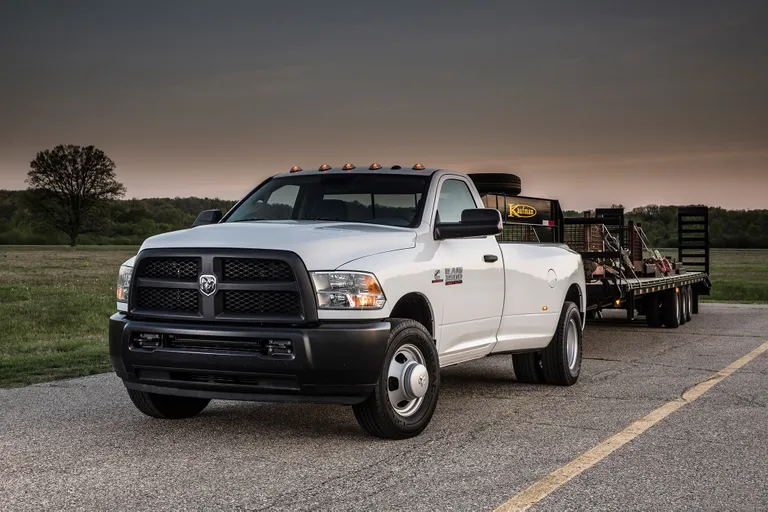
The Ram 3500 is another American heavy-duty pickup that can become exceptionally substantial in dual-rear-wheel form. Its long-wheelbase configurations are designed for towing large trailers and carrying heavy loads. The dually bodywork increases the rear width, giving the truck a distinctive appearance that is uncommon among European passenger vehicles.
The physical dimensions matter because European regulations use defined maximum measurements for various classes of road vehicles.
A Ram 3500 that approaches or exceeds an applicable limit cannot simply receive standard approval because it is popular in another market. Imported vehicles must satisfy the dimensional requirements applicable to their registration category.
The truck’s mirrors are also enormous compared with those of ordinary cars. Mirror dimensions can be treated separately under particular measurement rules, but that does not eliminate concerns about the body’s width. The distinction is important when determining whether a vehicle actually exceeds a regulatory limit.
Long-bed versions add another challenge. The combination of a long cargo box, extended wheelbase, and large turning circle can make the vehicle awkward in European towns. A legal registration does not guarantee unrestricted access to every street, parking facility, ferry, or loading area.
The Ram 3500 shows how the phrase “too big for Europe” requires qualification. Europe has plenty of large commercial vehicles, buses, coaches, and trucks.
The issue is whether a particular American configuration fits the dimensional and classification requirements applicable to that vehicle, not whether Europeans are unfamiliar with large vehicles.
7. Hummer EV Pickup
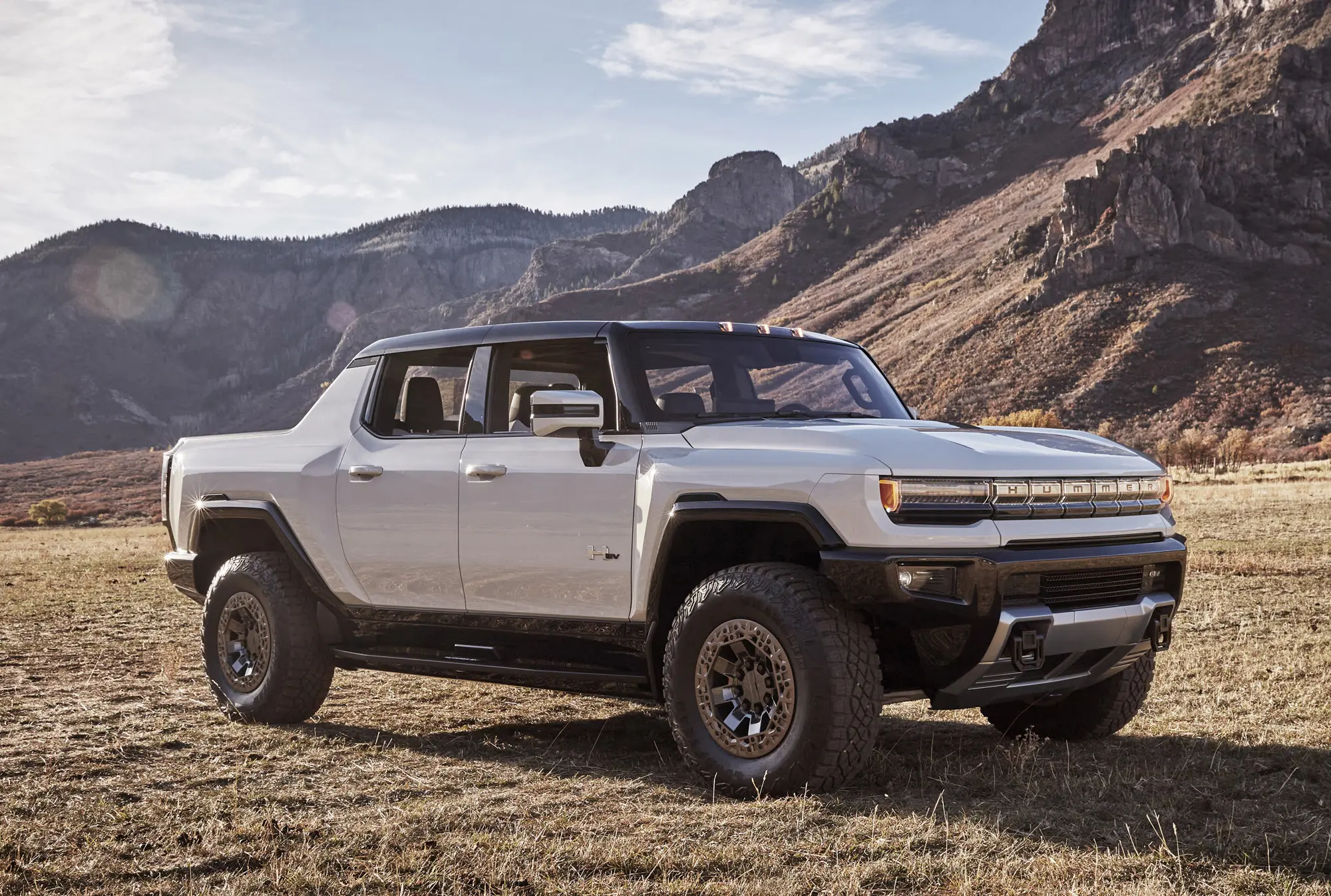
The GMC Hummer EV Pickup is perhaps the most visually obvious example on this list. It was designed as a massive electric off-road vehicle with a wide stance, substantial ground clearance, and an extremely large battery platform. Its width and length give it a footprint far removed from typical European electric cars.
The Hummer EV’s width is significant because European vehicle standards commonly use a 2.55-meter maximum width for many categories.
The Hummer itself is roughly 2.2 meters wide before considering mirrors, so its basic body does not automatically cross that threshold. This distinction matters because appearance alone cannot establish illegality.
Its size can still create practical problems in Europe. European parking spaces, residential garages, narrow streets, and historic urban areas are frequently much tighter than the infrastructure encountered by large US vehicles. A vehicle can comply with a dimensional approval rule while remaining inconvenient or restricted in particular locations.
The Hummer’s turning technology can help in confined spaces. Features such as rear-wheel steering reduce the turning circle and make the vehicle more maneuverable than its size might suggest. That does not change its external dimensions, however, so parking and width restrictions remain relevant.
Calling the Hummer EV automatically illegal in Europe on size alone would therefore be misleading. Its physical dimensions are extraordinary, but its basic width does not necessarily exceed the common 2.55-meter European vehicle-width ceiling. The stronger argument concerns practical compatibility with European infrastructure rather than universal dimensional prohibition.
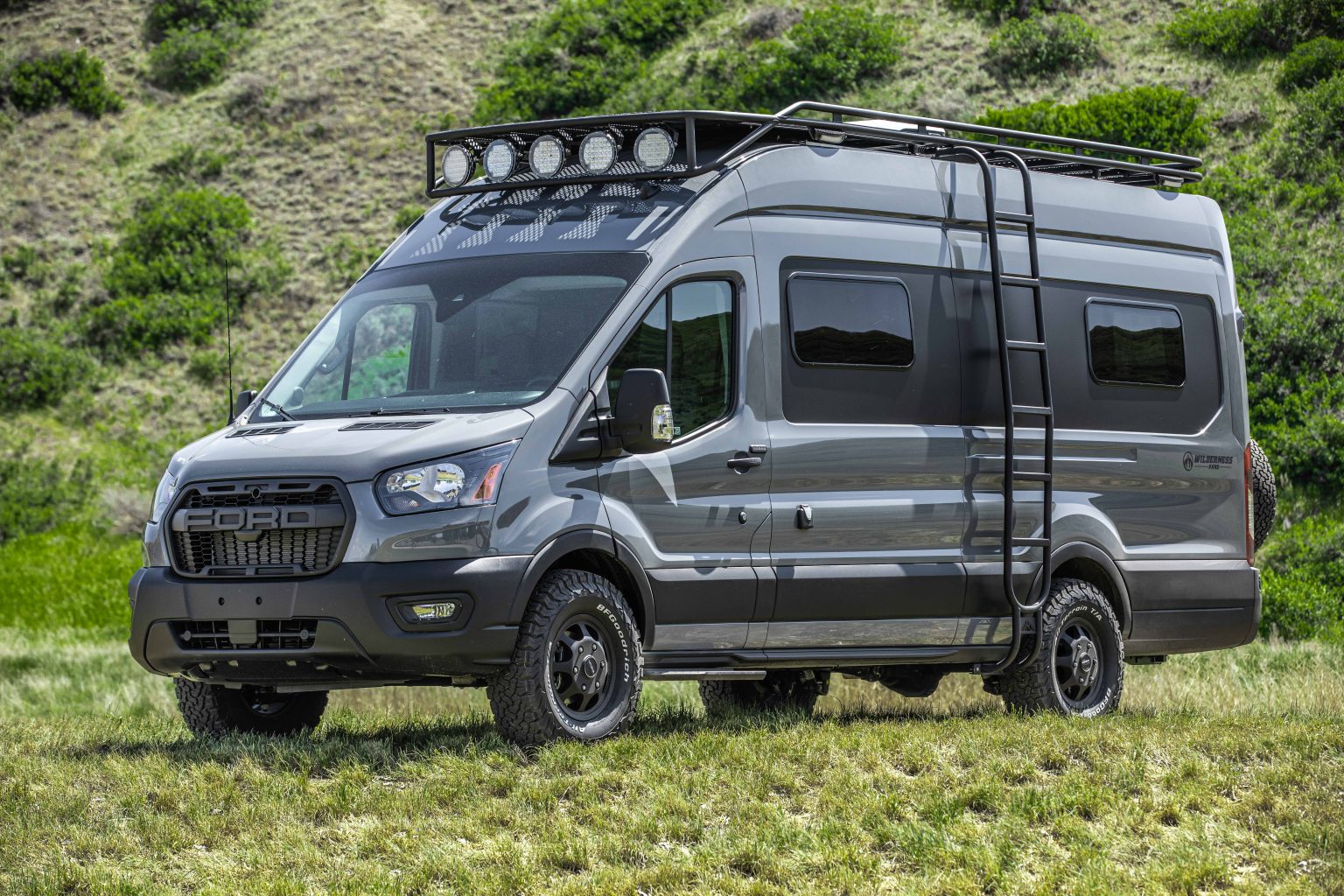
8. Ford Transit Extended-Length High-Roof
The Ford Transit is sold in Europe as well as the United States, which makes it an interesting entry on this list. The US market offers large configurations, including extended-length and high-roof versions. These versions can have a much larger physical envelope than the compact vans commonly used in dense European cities.
The high-roof configuration creates an obvious height issue. European roads contain many bridges, tunnels, parking garages, and loading areas with defined clearance limits. A tall van can remain legally registered while being prohibited from specific locations because of those local restrictions.
Length also matters. The extended-length Transit can become difficult to maneuver in compact streets and parking facilities.
European commercial vehicle rules account for vehicle dimensions, and specific national requirements can apply to longer configurations. Registration therefore depends on the exact version and intended use.
The Transit is a useful reminder that a vehicle being sold by the same manufacturer in Europe does not mean every US specification automatically meets European standards. Manufacturers frequently tailor wheelbases, body styles, engines, equipment, and dimensions to regional requirements.
A US-market extended Transit could potentially be modified or individually approved, depending on its configuration and destination country. The question is not simply whether the Transit name appears in European dealerships. It is whether that particular US-built configuration falls within the dimensional limits and technical category required for approval.
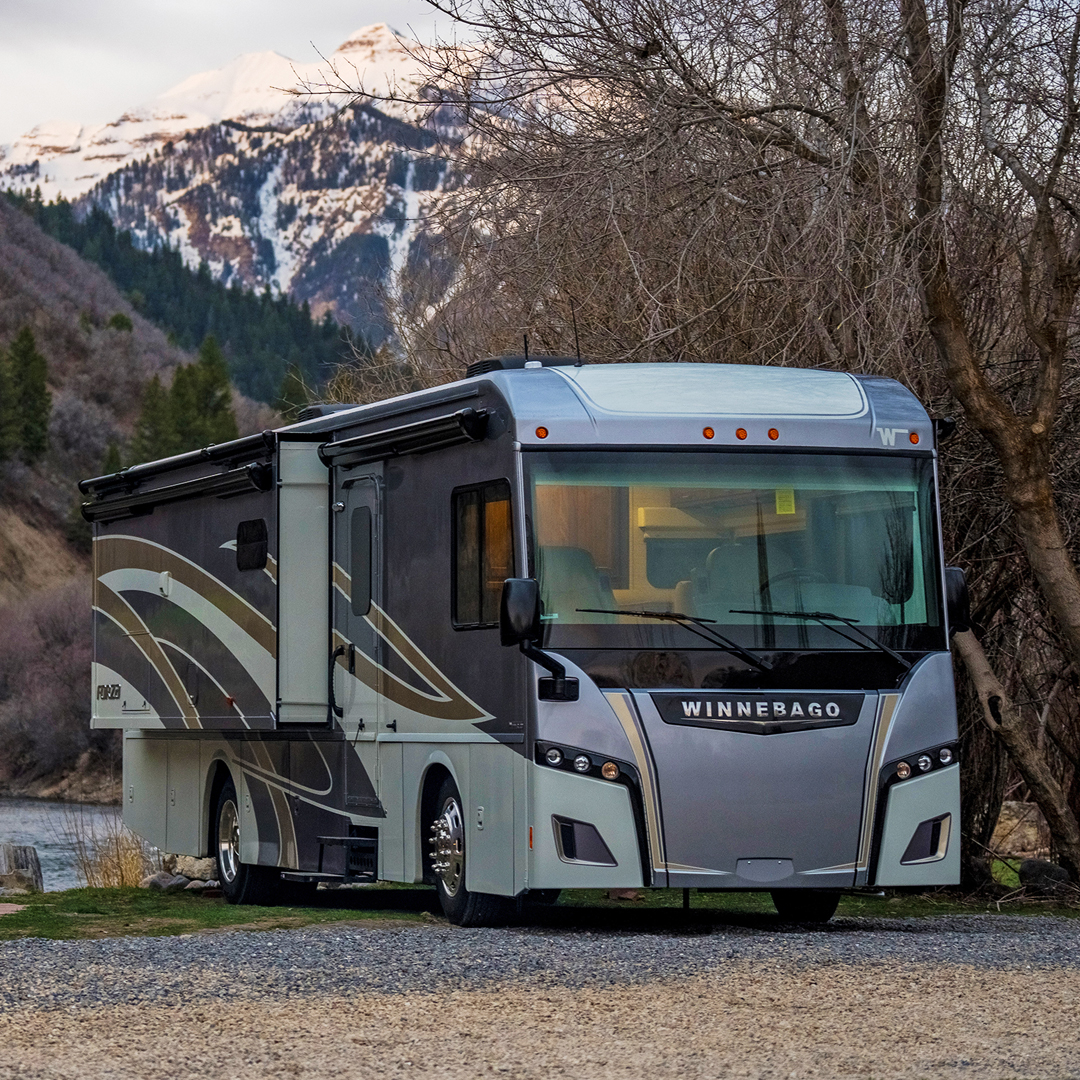
9. Winnebago Forza
Large American motorhomes create a separate set of dimensional challenges. The Winnebago Forza is a Class A diesel motorhome built around a bus-style platform and designed to provide substantial living space. Its length, height, and width are considerably greater than those of ordinary European motorhomes.
Width is especially important because large motorhomes can approach or exceed common European dimensional thresholds. A motorhome measuring slightly above a relevant maximum may require special approval rather than receiving ordinary registration. The exact result depends on the country, vehicle classification, and technical specification.
Length is another major factor. American Class A motorhomes are frequently designed for long-distance highway travel, with layouts that maximize interior living space. European motorhomes tend to have greater variety in size, including compact models intended for narrow roads and smaller campsites.
The Forza also illustrates the difference between legal registration and practical usability. Even if a country permits a specially approved motorhome, local roads can still impose restrictions. Campsites, bridges, mountain roads, city centers, and parking areas may have their own limits.
For someone importing a Forza, dimensional approval would need to be considered before worrying about comfort equipment or mechanical conversion. A large American motorhome can require substantial planning because its dimensions affect where it can legally and practically travel.
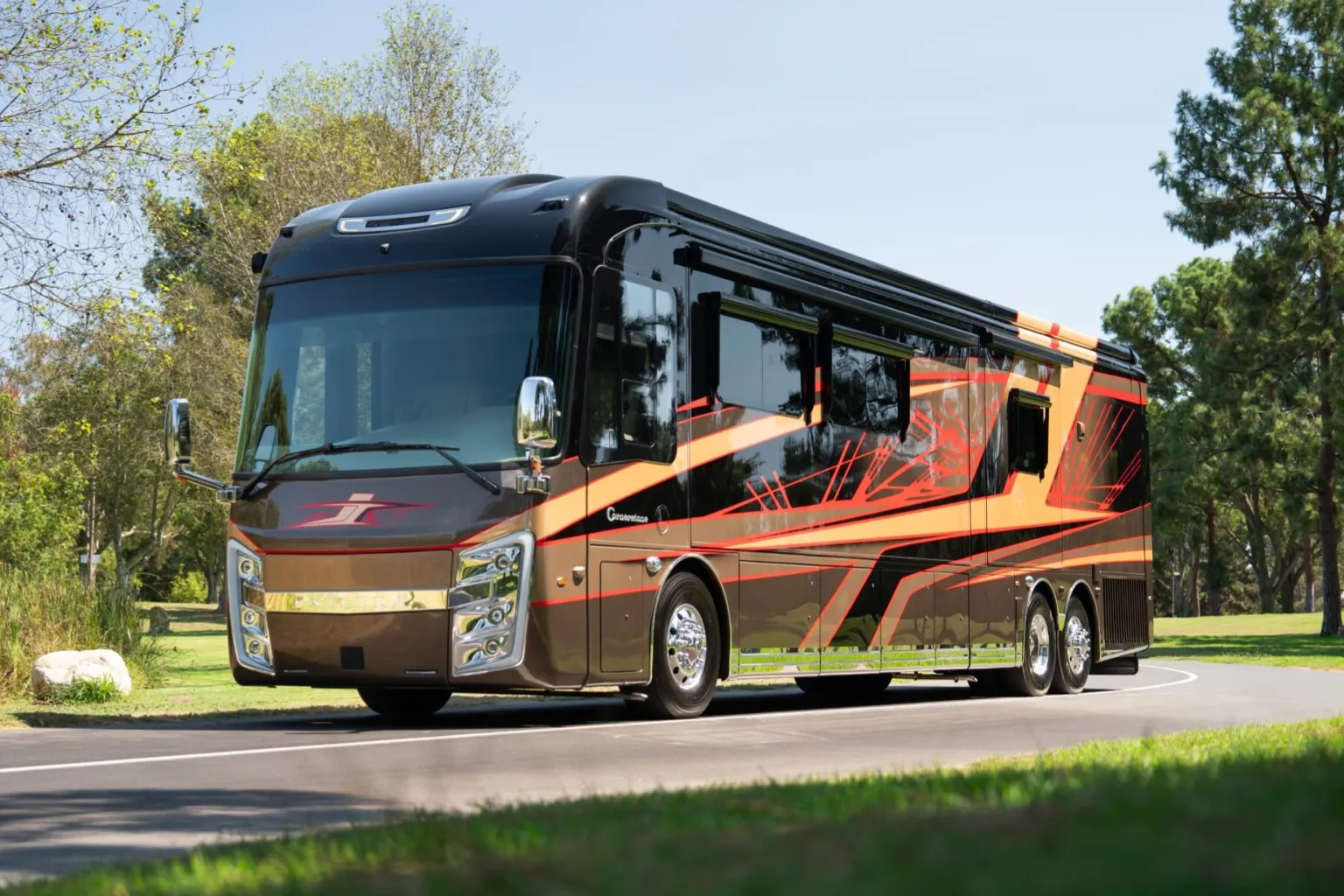
10. Entegra Coach Cornerstone
The Entegra Coach Cornerstone represents the upper end of American Class A motorhome design. It provides a large residential interior, extensive onboard equipment, and a substantial road-going platform. Its dimensions reflect the expectation that owners will travel primarily on wide highways and stay at facilities designed to accommodate large recreational vehicles.
The width of a large coach is particularly important in Europe. A vehicle exceeding the applicable maximum width may not qualify for ordinary approval. Some countries can offer special procedures, but those procedures do not necessarily provide unrestricted use across neighboring countries.
Its length can also affect road access. Long motorhomes require greater turning space and can swing outward during tight maneuvers. European towns with narrow streets and historic layouts can present serious difficulties for vehicles designed around North American highway infrastructure.
Height creates a third issue. A large coach may fit comfortably beneath normal highway structures while encountering problems at older bridges, underground parking facilities, or smaller roads. Drivers must pay attention to posted clearance signs because legal registration does not eliminate physical restrictions.
The Cornerstone is thus an example of how American recreational vehicles can run into Europe’s dimensional framework. It may be possible to import and register such a coach in a particular country under the appropriate procedure, but its size can make standard approval and unrestricted travel considerably more complicated.
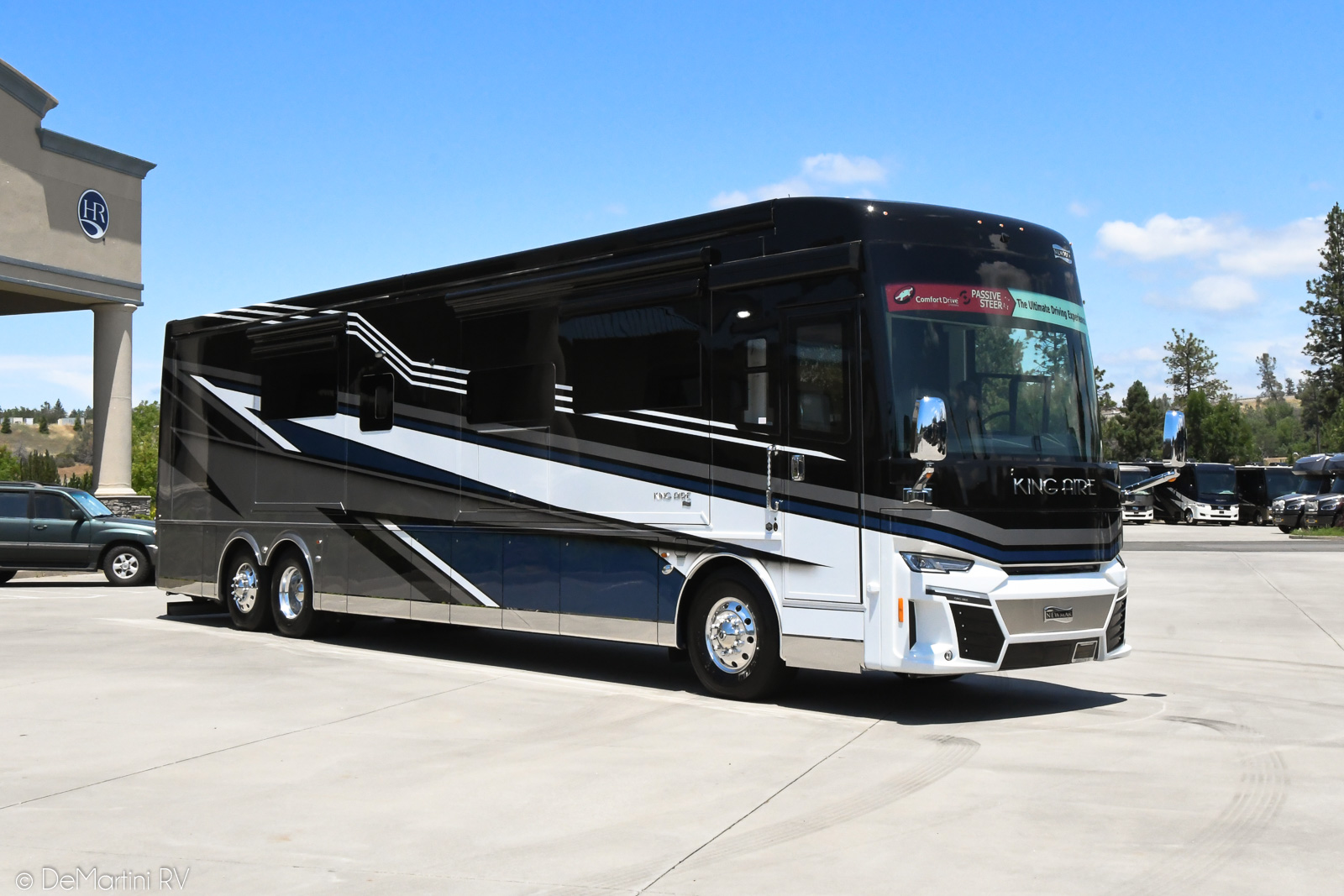
11. Newmar King Aire
The Newmar King Aire is another large American Class A motorhome built with extensive living accommodations. Its substantial length, broad body, and high roofline create dimensions closer to a small coach than a conventional recreational vehicle. That physical scale is the central reason it can face difficulties in European markets.
Width regulations are particularly important for imported motorhomes. European authorities evaluate the actual dimensions of the vehicle, and a configuration outside the applicable limit may require individual approval. Different national rules can also affect what is possible after importation.
The King Aire’s length can create challenges in urban environments. A long coach needs significant space when turning, parking, or reversing. European cities often have compact road layouts, while rural regions can include roads with tight corners and limited passing space.
Motorhome owners also need to consider campsite infrastructure. A coach that can legally travel on a particular road may still exceed the maximum pitch length or width offered by a campsite. Fuel stations and service areas can create similar problems.
The King Aire therefore represents a category where dimensions can matter more than the vehicle’s mechanical specification. A buyer importing such a coach needs to establish the applicable maximum dimensions before purchase, since modifying a huge motorhome to satisfy a width or length requirement may be difficult and expensive.

12. Prevost H3-45
The Prevost H3-45 is a highway coach platform associated with large commercial and luxury motorcoach applications. It is substantially larger than an ordinary passenger vehicle and is built around the requirements of North American coach travel. Its height, length, width, and mass place it firmly into a different regulatory category.
European rules for buses and coaches can involve dimensional limits that differ from those applied to passenger cars. This distinction is important because the H3-45 cannot be evaluated using ordinary car standards. Vehicle category, seating configuration, intended use, axle loading, and national regulations all influence the approval process.
Its large height can be particularly challenging on roads with low clearances. Coach operators already have to account for bridge heights, tunnels, tree branches, and other physical obstacles. European roads can add historic structures and tightly constrained urban routes to that list.
The vehicle’s length also affects maneuverability. A coach of this scale requires suitable turning areas and road geometry. It may be perfectly appropriate for highways and dedicated coach facilities while being poorly suited to narrow city streets.
