
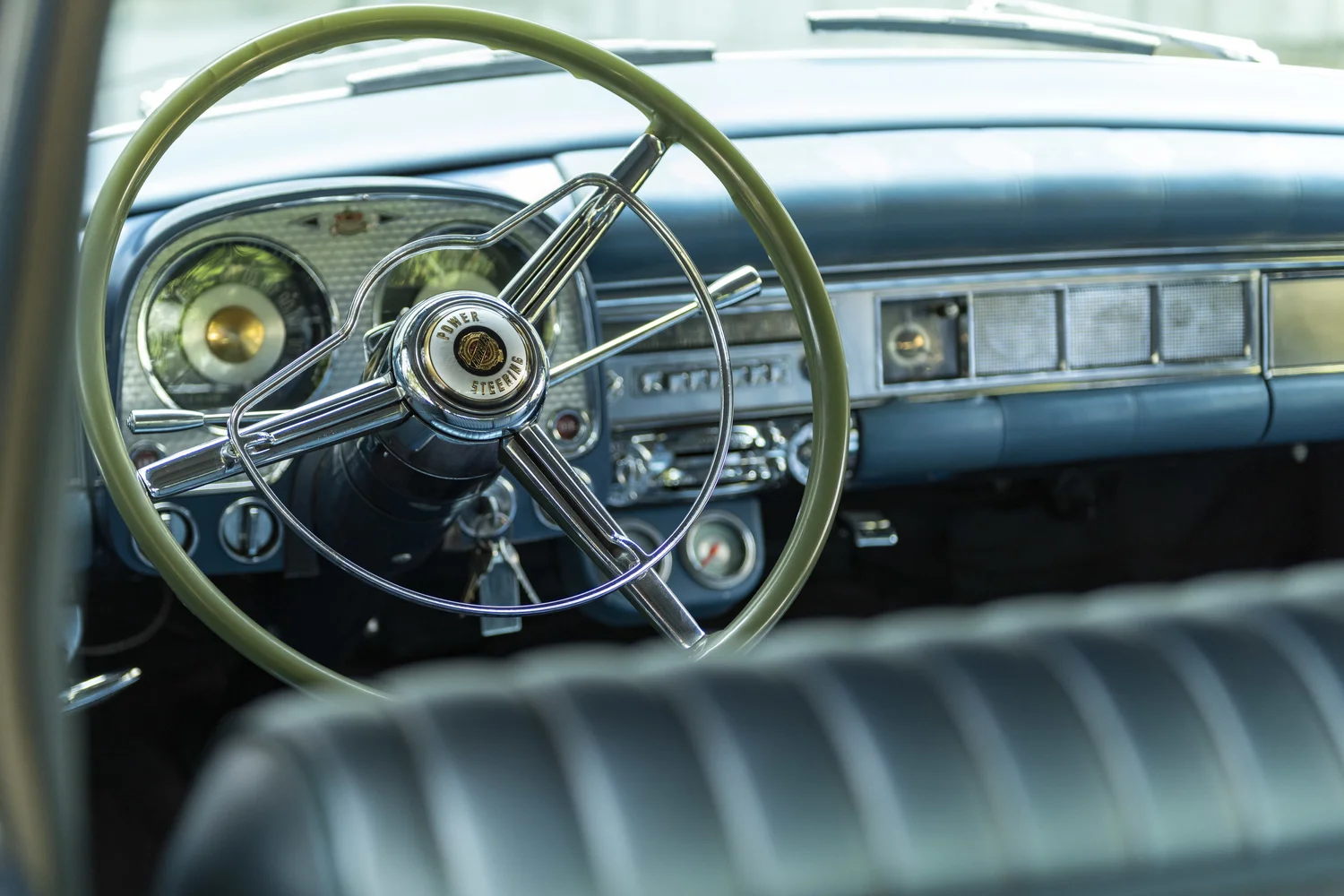
Car interiors have changed dramatically over the decades. Features that once seemed futuristic, such as digital displays, electronic controls, unusual seating layouts, and advanced driver information systems, eventually became familiar parts of everyday vehicles.
Some American cars introduced these ideas long before buyers were ready for them, creating cabins that looked and felt years ahead of their era. From dramatic 1950s dashboards to sophisticated 1980s electronics, these seven interiors show how automakers experimented with technology, comfort, design, and usability long before many of those ideas became mainstream in the United States.
1. 1956 Lincoln Continental Mark II
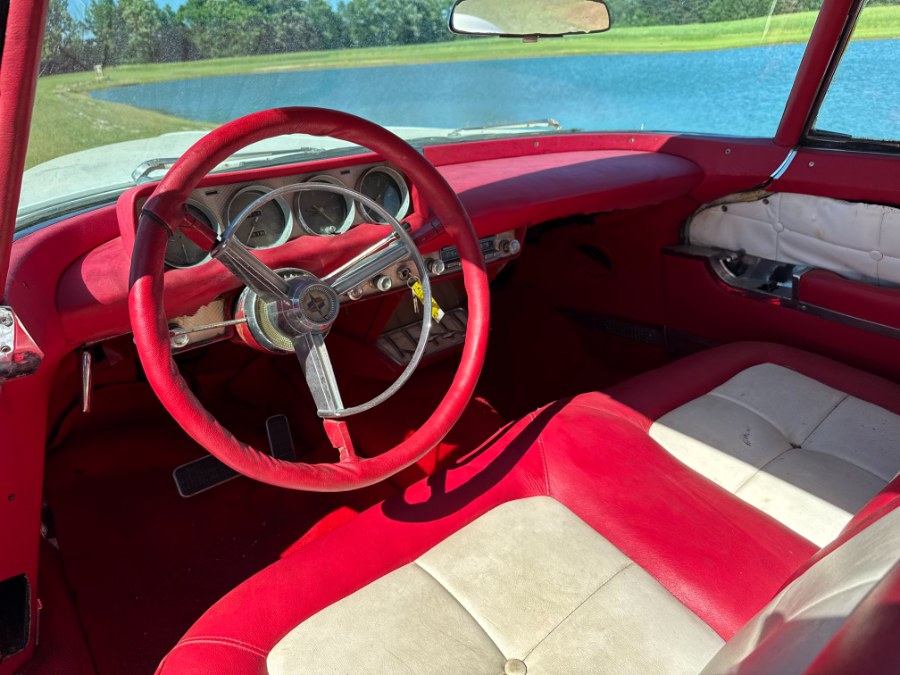
The 1956 Lincoln Continental Mark II took a very different approach to luxury than the heavily decorated American cars that surrounded it. Built by Ford Motor Company through its Continental Division, the Mark II emphasized restraint, quality, and a carefully organized passenger compartment.
Its cabin did not depend on excessive chrome or exaggerated ornamentation to communicate status. Instead, the interior used high-quality materials, a clean dashboard layout, and a more sophisticated visual presentation that separated it from many contemporary domestic automobiles.
The dashboard was designed around the driver rather than simply being a broad decorative panel. Instrumentation was positioned in a straightforward arrangement, while the controls were integrated into the dashboard design.
For a vehicle introduced during the mid-1950s, that approach was unusually mature. Many American cars of the period were filled with large quantities of bright trim and decorative shapes, while the Mark II presented a more restrained environment that anticipated the cleaner luxury interiors that became common decades later.
Comfort was another major part of the Mark II’s interior philosophy. The car was conceived as a premium personal luxury automobile, and its cabin reflected that mission. Materials, seating, carpeting, and trim were carefully selected to create an upscale environment.
The attention given to small interior details helped establish a design philosophy in which luxury was communicated through craftsmanship and refinement rather than simply through visual excess.
The Mark II also showed how an American manufacturer could treat the interior as a complete design rather than a collection of separate components. The dashboard, seats, door panels, carpeting, and controls worked together visually.
This sounds ordinary today, but integrated interior design was not always the priority during the period. Designers were increasingly recognizing that the passenger compartment could influence how buyers perceived the entire automobile.
Its importance comes from the philosophy behind the cabin. The Continental Mark II demonstrated that American luxury did not have to mean a complicated or flashy interior. Its restrained presentation helped point toward a future where premium vehicles would increasingly use carefully coordinated materials, ergonomics, and understated styling to establish their identity.
2. 1958 Chrysler Imperial
The 1958 Chrysler Imperial represented a different form of futuristic thinking. While the Continental Mark II favored restraint, the Imperial embraced technology and visual drama.
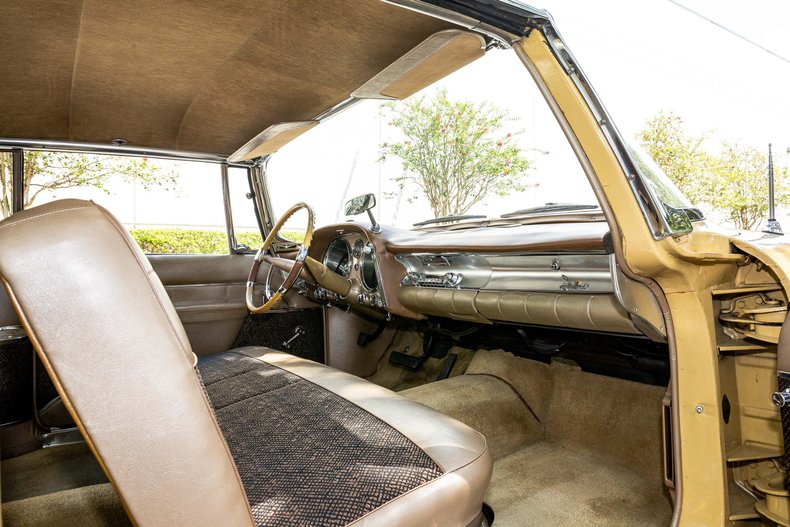
Chrysler had been experimenting with advanced dashboard concepts, electronic features, and futuristic styling throughout the 1950s, and the Imperial became a striking example of that approach. Its cabin reflected the era’s fascination with aviation, electronics, and the promise of a technologically advanced future.
The dashboard was unusually elaborate for its time. Chrysler incorporated controls and instruments into a broad, sculpted dashboard rather than treating the instrument panel as a simple collection of gauges.
The design gave the driver an impression of sitting inside a sophisticated machine. This was consistent with the broader design language of late-1950s American automobiles, when manufacturers frequently looked toward aircraft and space-age technology for inspiration.
Some versions of Chrysler products from this era also offered electronic conveniences that were unusual for mainstream automobiles. The company’s push toward push-button transmission controls became particularly memorable. Rather than using a traditional mechanical-looking gear selector, Chrysler placed transmission controls within an electronic-looking control panel.
The concept was striking and helped reinforce the idea that automotive technology could change the driver’s relationship with the dashboard.
The Imperial’s cabin also demonstrated how designers were beginning to consider controls as part of the user experience. Buttons, switches, gauges, and trim were arranged to create a sense of technological sophistication.
Modern vehicles have taken this idea much further with touchscreens and digital interfaces, but the underlying concept remains the same. The dashboard can function as an information and control center rather than simply housing a speedometer and a few switches.
The result was an interior that feels particularly interesting when viewed from the perspective of modern automotive design. Not every idea from the period was practical or durable, and the futuristic styling could sometimes take priority over simplicity.
Still, the Imperial showed remarkable confidence in the idea that a car interior could resemble the technology of the future long before digital dashboards became normal.
3. 1966 Oldsmobile Toronado
The 1966 Oldsmobile Toronado is remembered primarily for its front-wheel-drive layout and distinctive exterior, but its interior deserves just as much attention. General Motors positioned the Toronado as a technologically advanced personal luxury coupe, and the cabin was designed to reinforce that identity.
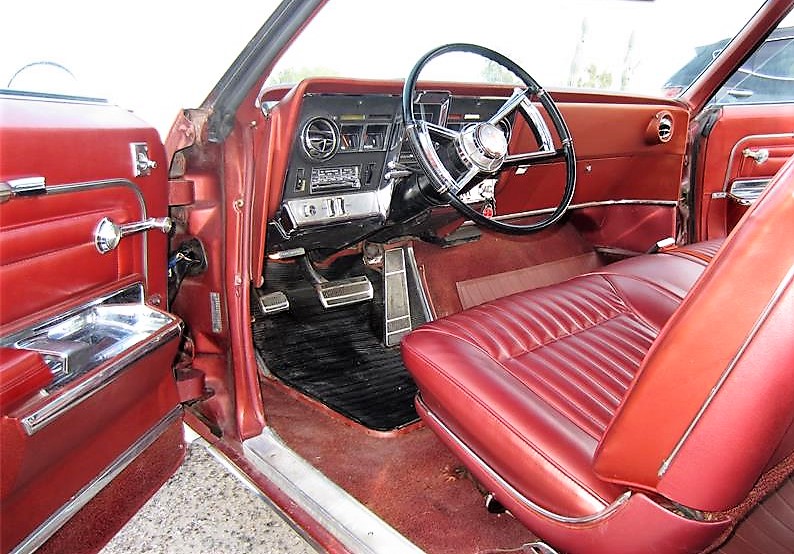
Its dashboard and seating arrangement created a distinctive environment that separated the car from conventional American coupes of the period.
The Toronado used a front-wheel-drive drivetrain that allowed engineers to package the car differently from many rear-wheel-drive competitors.
This influenced the interior because there was no conventional transmission tunnel running through the passenger compartment in the same manner. The resulting cabin could provide a different sense of space and helped demonstrate how mechanical engineering could affect interior design.
Its instrument panel was another memorable feature. The driver faced a broad collection of gauges and controls integrated into a strongly horizontal dashboard.
The arrangement reflected the design trends of the 1960s, yet it also had a purposeful character that made the driver feel connected to the car’s technology. The Toronado was not simply trying to look expensive. It was presenting itself as a modern machine.
The seating and interior proportions also contributed to its identity as a personal luxury vehicle. The cabin placed considerable emphasis on the driver and front passenger while retaining the long, low proportions expected from a large American coupe. This combination helped establish a different interpretation of comfort, performance, and technology.
What makes the Toronado particularly significant is the connection between its engineering and its interior. Rather than treating the cabin as an isolated design exercise, Oldsmobile’s unusual drivetrain created opportunities for different packaging.
Modern vehicle designers routinely work around platforms, batteries, motors, electronics, and occupant requirements to create distinctive cabins. The Toronado demonstrated an early version of that thinking in an American production car.
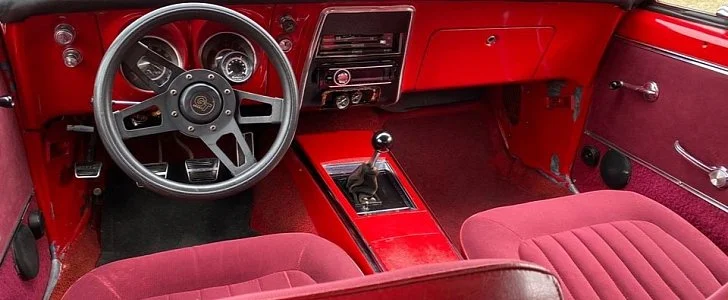
4. 1967 Chevrolet Camaro
The first-generation Chevrolet Camaro is often praised for its styling and performance, but its interior deserves attention for another reason. It helped establish a driver-focused cockpit in the affordable American pony car segment.
Introduced for the 1967 model year, the Camaro offered a cabin that could be configured with a range of instruments and equipment, allowing buyers to create a more performance-oriented environment without moving into a completely different class of automobile.
The dashboard design was especially important. The instrument cluster placed key information directly in front of the driver, while additional gauges and controls could be specified depending on the configuration.
The layout gave the Camaro a more purposeful character than a basic economy-oriented cabin. The driver could sit behind a steering wheel surrounded by information rather than facing a dashboard designed purely for decoration.
The optional console and instrumentation helped make the cabin feel customizable. Buyers could select equipment that changed the character of the car, creating a stronger connection between the interior and the performance image of the vehicle.
This idea became increasingly important in later decades, when automakers began offering multiple interior packages and technology levels across the same model range.
The Camaro’s interior also demonstrated the importance of visual consistency. The shapes of the dashboard, instruments, console, seats, and door panels were designed to create a cohesive cockpit. This was especially significant in a market where muscle cars and pony cars competed heavily on appearance. The cabin had to communicate the car’s personality even when the engine was switched off.
The first Camaro was not technologically advanced in the same way as later cars equipped with digital screens, navigation, or sophisticated electronics. Its forward-thinking quality came from how it treated the driver environment.
The idea that an affordable performance car should give the driver a distinctive, information-rich cockpit became a major part of American performance-car design in the decades that followed.
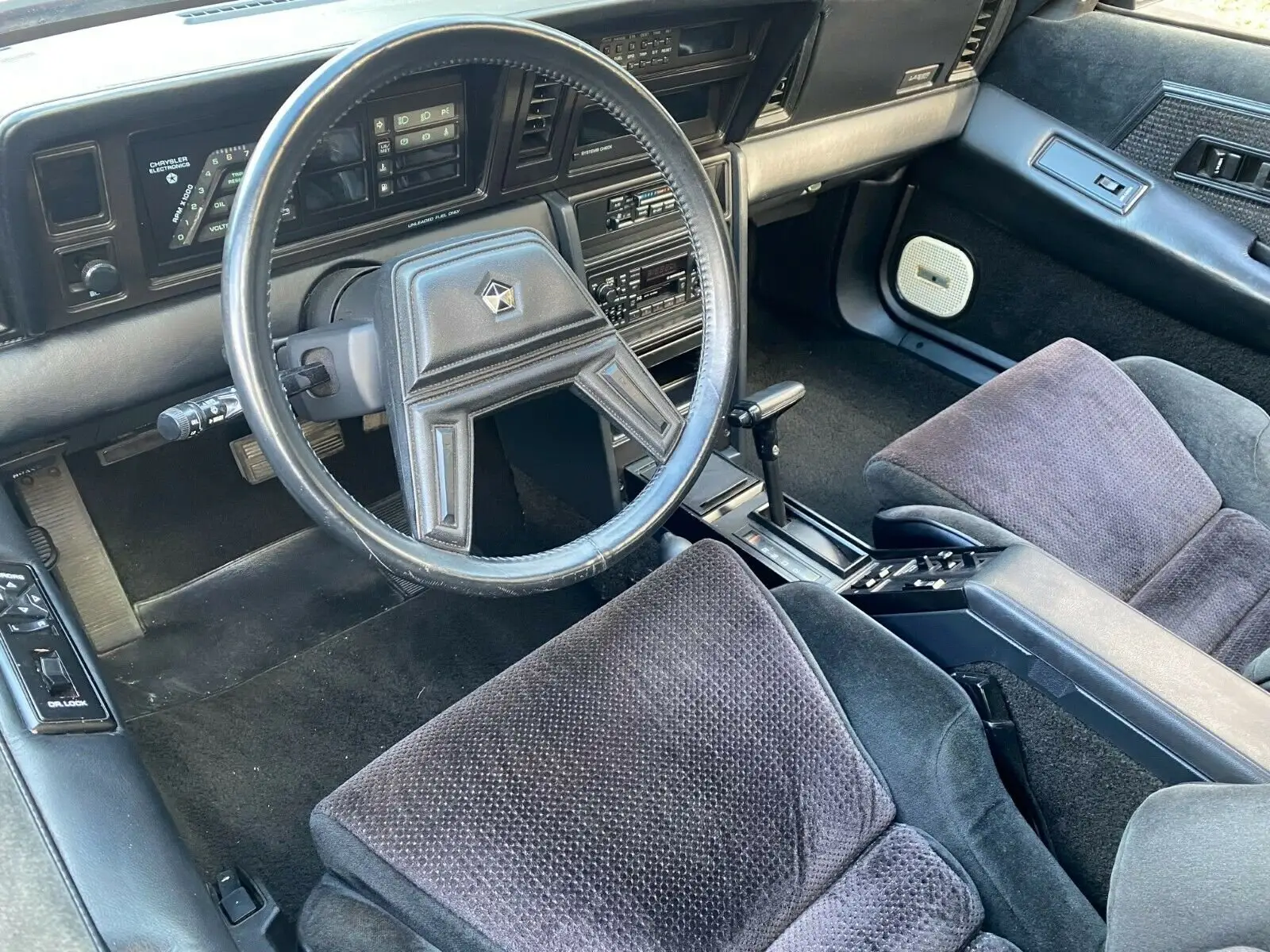
5. 1984 Chrysler Laser
By the 1980s, automotive interiors were beginning to undergo a major transformation. Mechanical gauges and simple switches were increasingly being joined by electronic displays, digital clocks, computer-assisted systems, and more complicated information interfaces.
The 1984 Chrysler Laser arrived during this transition and demonstrated how electronics could become part of the visual identity of an affordable American automobile.
The Laser was based on Chrysler’s front-wheel-drive K-car architecture, but its interior attempted to give the compact coupe a more technologically sophisticated personality.
Digital instrumentation was available, giving drivers information through electronic displays rather than relying exclusively on traditional analog gauges. At a time when digital displays were becoming fashionable in consumer electronics, this created a distinctly futuristic impression.
The use of digital information in a relatively accessible car was particularly significant. During the early 1980s, digital displays were still associated with emerging technology.
Consumers were seeing them in calculators, watches, home electronics, and arcade machines. Bringing that visual language into an automobile made the dashboard feel connected to the rapidly changing technology sector.
The Laser also reflected the period’s interest in combining compact dimensions with a surprisingly feature-rich cabin. American manufacturers were responding to changing consumer preferences and increased competition from imported vehicles. Electronics offered a way to differentiate cars without relying solely on larger engines or excessive exterior dimensions.
Some early digital automotive displays did not age particularly well, and modern drivers may find their appearance unusual. Yet their historical importance is clear.
The Chrysler Laser belonged to a period when manufacturers were testing how electronic information could replace familiar mechanical interfaces. That experiment eventually led toward the sophisticated digital instrument clusters found in many modern vehicles.
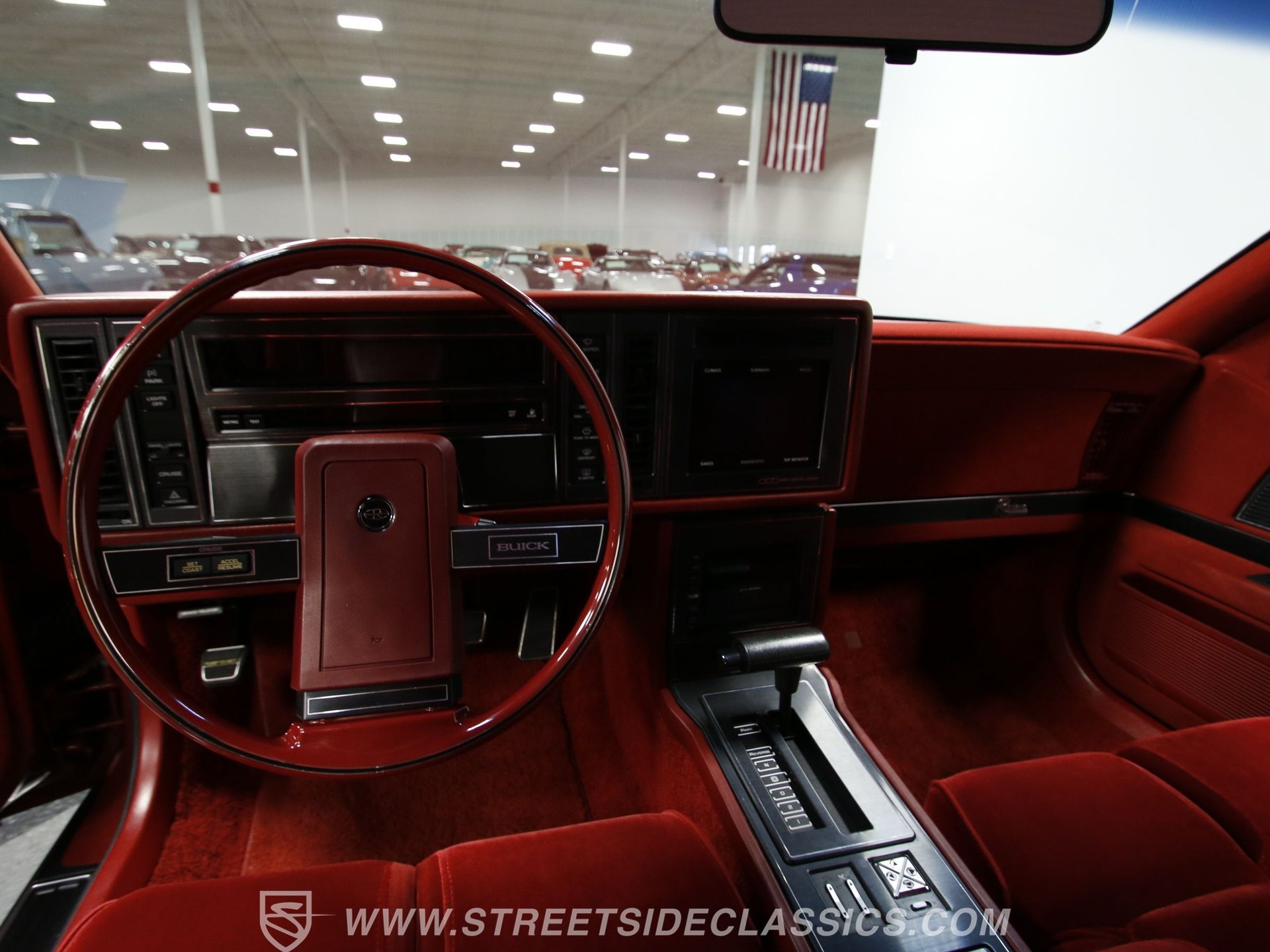
6. 1986 Buick Riviera
The 1986 Buick Riviera is perhaps the clearest example on this list of an interior concept that looked directly toward the future. Buick introduced a touchscreen-based interface called the Graphic Control Center as an available feature in the Riviera.
At a time when most cars still relied heavily on physical switches, knobs, and mechanical gauges, putting a screen at the center of the dashboard was an extraordinary decision.
The touchscreen allowed drivers to interact with various vehicle functions through an electronic display. The system could provide information and control functions related to the vehicle, bringing several tasks together through a single interface. The graphics were primitive compared with today’s high-resolution displays, but the fundamental concept was remarkably familiar.
Modern cars commonly use large central screens for navigation, climate functions, audio, vehicle settings, smartphone integration, and other features.
The Riviera’s approach anticipated that trend by treating the display as a central interface between the driver and the automobile. The technology was not as polished as current systems, and physical controls remained important, but the basic direction was strikingly similar.
There were practical drawbacks. Touchscreen operation required the driver to look at the display, and the system’s graphics and responsiveness were limited by the technology available during the 1980s.
Buyers were also accustomed to tactile buttons and knobs, which provided physical feedback without requiring visual confirmation. The concept therefore arrived before the supporting technology and user expectations were fully developed.
That timing is precisely why the Riviera remains so interesting. It demonstrated that the idea of a touchscreen car dashboard was not invented in the smartphone era. American automotive designers were already experimenting with centralized electronic interfaces decades earlier.
The 1986 Riviera showed what could happen when automakers applied emerging consumer-electronics ideas to the automobile.
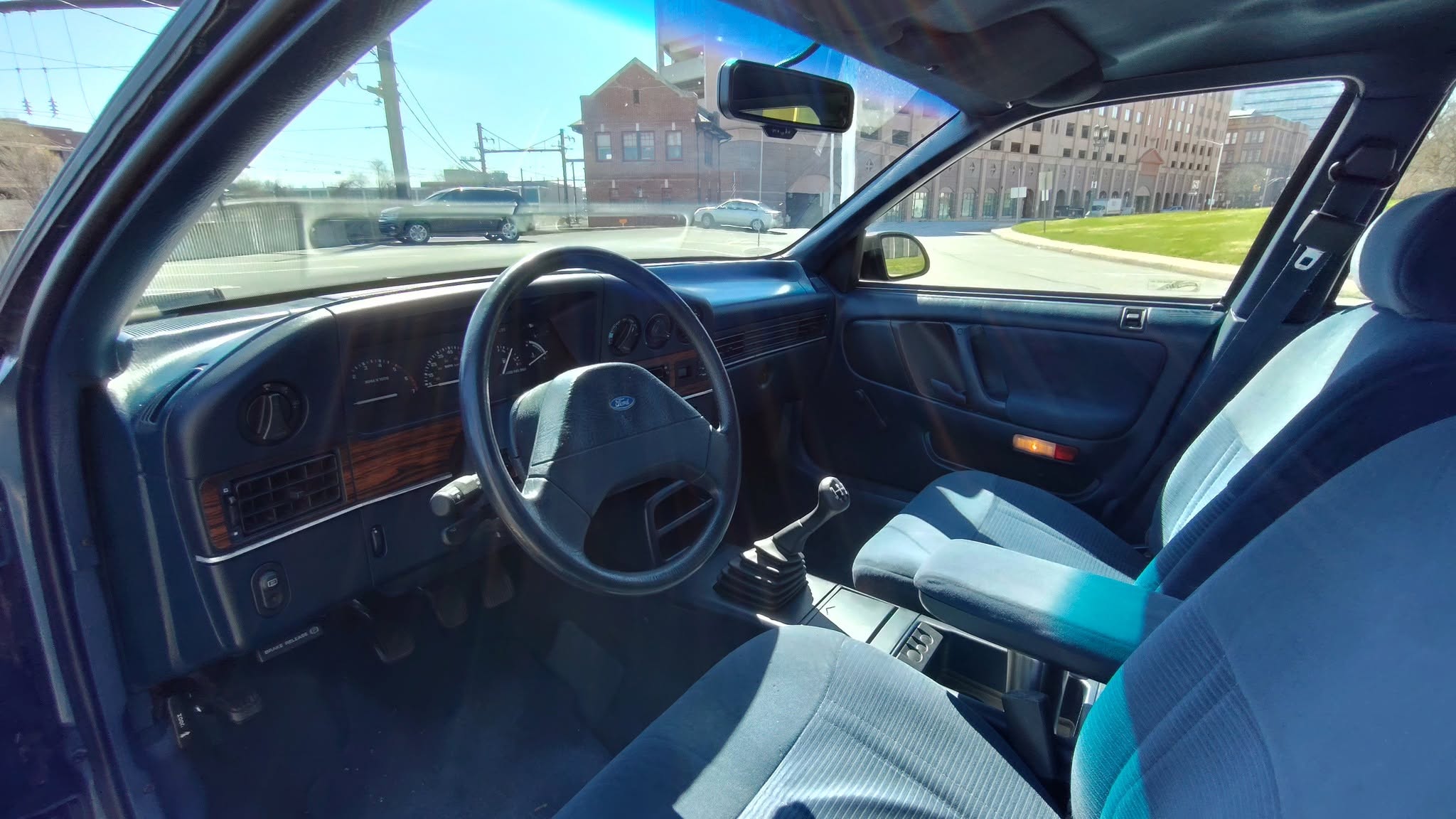
7. 1986 Ford Taurus
The 1986 Ford Taurus brought futuristic interior design to a much broader audience. Introduced for the 1986 model year, the Taurus was significant for its aerodynamic exterior, front-wheel-drive platform, and modern approach to vehicle packaging. Its interior continued that theme with a dashboard that emphasized simplicity, visibility, and a driver-oriented arrangement.
The Taurus dashboard was clean compared with many American interiors of the previous decade. Controls were arranged around the driver, and the instrument panel used rounded forms that complemented the car’s aerodynamic exterior. Ford avoided some of the boxy, heavily ornamented dashboard designs that had characterized earlier American vehicles.
A particularly interesting feature was the use of controls positioned near the steering wheel. The available steering-wheel-mounted buttons allowed the driver to interact with certain functions without removing their hands completely from the wheel.
The exact equipment varied by model and package, but the underlying design philosophy was clear. Frequently used functions should be easy and convenient for the driver to access.
The Taurus also showed how interior design could support an entirely new brand image. Ford was trying to move away from the traditional styling associated with many American family sedans, and the cabin helped communicate that change. The dashboard, seating, door panels, and controls presented a cohesive modern appearance that matched the vehicle’s aerodynamic body.
Its lasting significance comes from accessibility. The Taurus did not require buyers to purchase an ultra-luxury car to experience a modern-looking cabin.
It brought a cleaner dashboard philosophy, improved packaging, and driver-oriented controls into a mainstream American family sedan. Many later vehicles adopted similar ideas, proving that futuristic design could become practical when applied to cars intended for everyday use.
