Choosing an SUV for camper towing requires careful attention to towing capacity, engine performance, passenger comfort, and cargo space. A suitable vehicle makes weekend camping trips easier while providing enough power to pull a small travel trailer safely.
From compact SUVs designed for lightweight campers to larger models capable of handling heavier loads, buyers have several practical options. Understanding each vehicle’s strengths helps drivers select a model that matches their travel plans, budget, and everyday needs. This guide highlights ten SUVs worth considering, along with their towing capabilities, useful features, and important factors to check before purchasing.
1. Jeep Grand Cherokee: A Strong Choice for Camper Towing
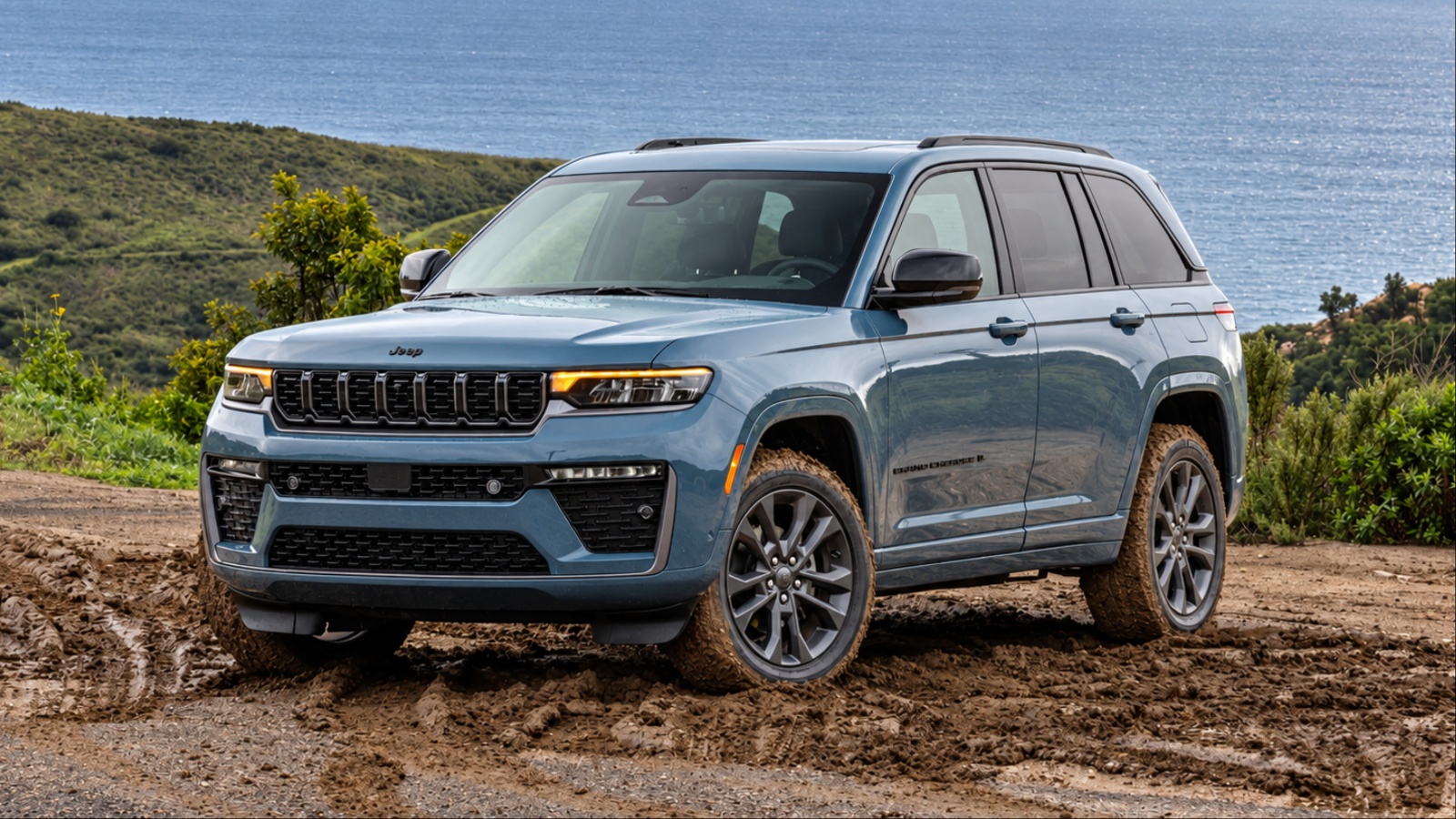
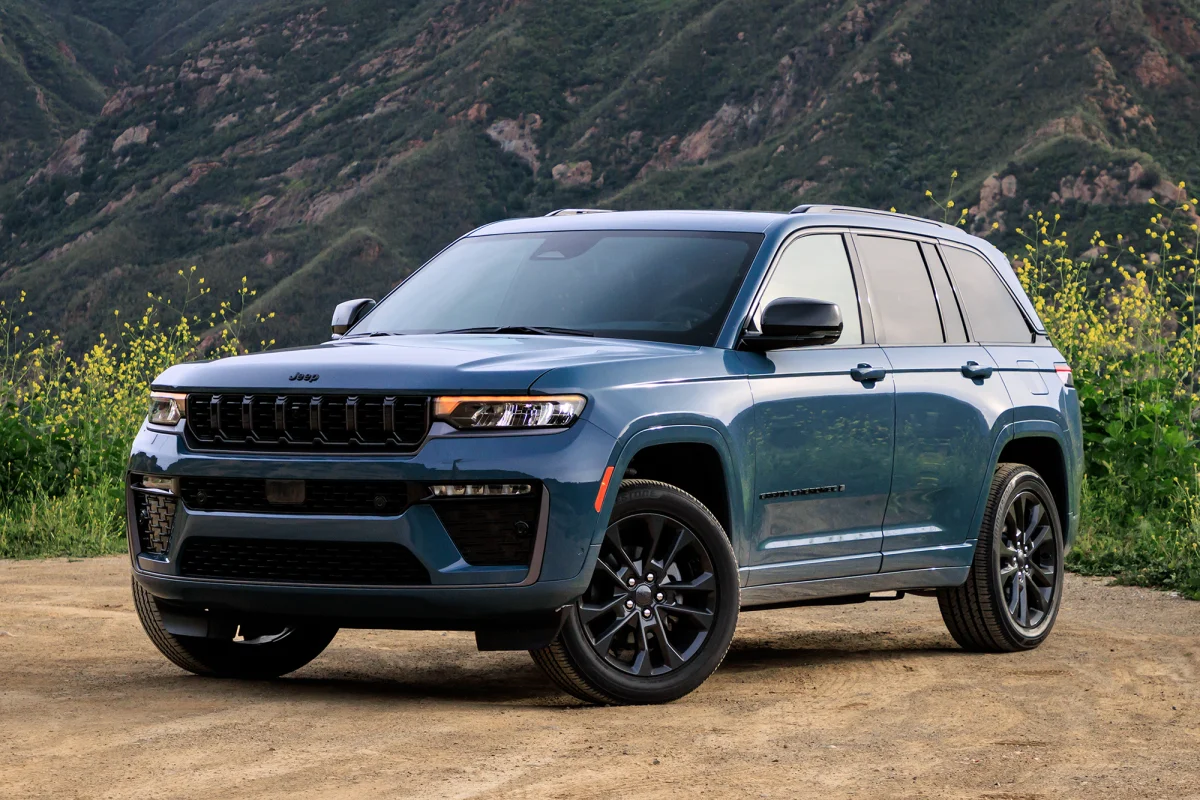
The Jeep Grand Cherokee is a practical option for drivers who want a comfortable family SUV with substantial towing capability. Depending on the model year, engine, and configuration, its maximum towing capacity can reach approximately 6,200 pounds.
This gives properly equipped versions enough capacity for many small travel trailers, compact hard-sided campers, and larger pop-up trailers. Buyers should confirm the precise rating for their selected vehicle before choosing a camper.
One of the Grand Cherokee’s main advantages is its combination of road comfort and rugged engineering. Its available four-wheel-drive systems help provide traction on gravel roads, uneven campground entrances, and slippery surfaces.
This is useful for travelers who prefer campsites away from busy tourist areas. However, four-wheel drive does not increase every version’s towing rating automatically, so checking the specific configuration remains important.
Interior comfort also makes this SUV attractive for extended trips. Depending on the trim, drivers can find supportive seating, modern infotainment features, climate control, and useful storage compartments.
Families can carry camping equipment, clothing, food, and other essentials without needing a separate vehicle. Available driver-assistance features may also help reduce the workload during long highway journeys.
Fuel consumption deserves attention before purchasing a Grand Cherokee for regular camper trips. Towing increases the workload on the engine, and fuel economy generally falls when pulling a trailer, particularly on steep roads or at highway speeds.
Buyers should compare engine options based on their expected trailer weight, annual mileage, and typical routes instead of selecting a model based solely on its maximum towing figure.
For campers who want a capable vehicle for daily commuting and outdoor holidays, the Grand Cherokee deserves serious consideration. It is particularly suitable for small travel trailers that require more towing headroom than many compact crossovers provide.
Check the owner’s manual, payload sticker, hitch specifications, and trailer tongue weight before connecting a camper. These figures determine whether the chosen vehicle can safely manage the complete load.
2. Toyota 4Runner: Built for Outdoor Adventures
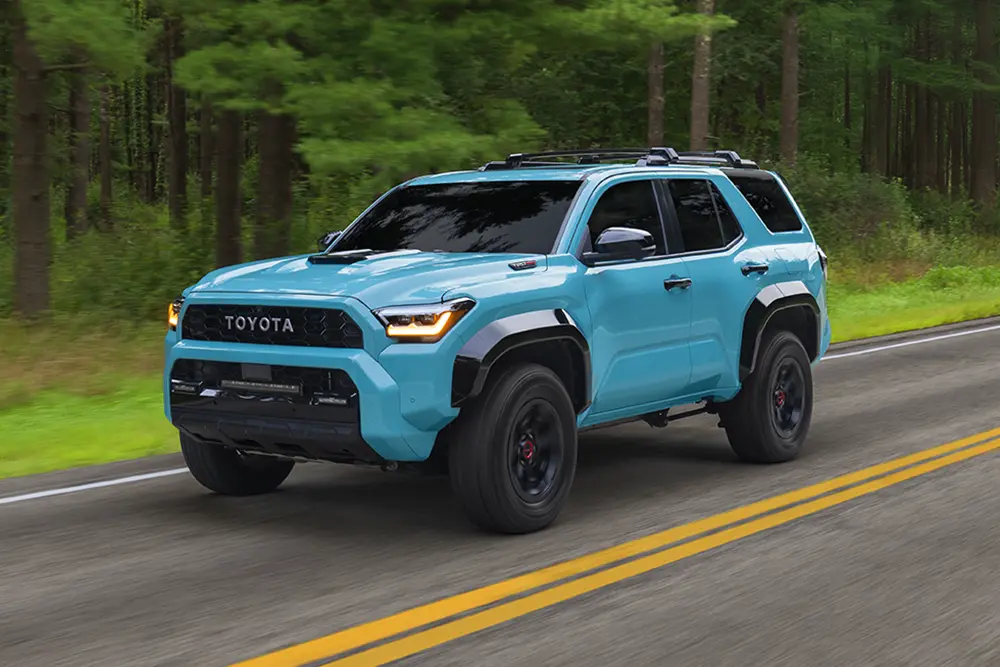
The Toyota 4Runner appeals to drivers who enjoy camping in remote locations and want a rugged SUV for mixed driving conditions.
Depending on the model year and configuration, maximum towing capacity reaches approximately 6,000 pounds. This rating places properly equipped versions among the more capable midsize choices for small campers. Actual limits depend on the vehicle’s specifications and installed equipment.
Its body-on-frame construction supports a more traditional utility-focused design. This approach appeals to travelers who regularly drive on rough access roads, visit mountain campgrounds, or carry outdoor equipment.
Available four-wheel-drive systems and terrain-focused features can improve capability on suitable surfaces. Drivers should still remember that difficult terrain, soft ground, and steep inclines demand careful planning when towing.
The 4Runner also offers a useful cabin for families and outdoor enthusiasts. Seating arrangements, cargo room, and equipment availability depend on the trim selected.
A family can pack sleeping bags, cooking supplies, hiking gear, and other necessities while keeping the camper organized for overnight stays. Checking the available payload is especially important when several passengers and heavy luggage travel together.
Engine performance and transmission behavior matter when pulling a trailer through hilly regions. A vehicle with sufficient torque can help maintain progress on inclines, yet no engine eliminates the need for sensible speeds and proper gear selection. Drivers should follow Toyota’s towing instructions, avoid abrupt acceleration, and use appropriate braking techniques when descending long grades.
The Toyota 4Runner is worth considering for buyers who prioritize outdoor capability and towing strength over the smaller dimensions of a compact crossover.
It may suit a lightweight hard-sided trailer or a well-equipped pop-up camper, provided the loaded weight falls within all applicable limits. Compare the trailer’s actual weight, the vehicle’s payload allowance, and the hitch rating before deciding which configuration meets your needs.
3. Honda Passport: Comfortable and Capable for Weekend Trips
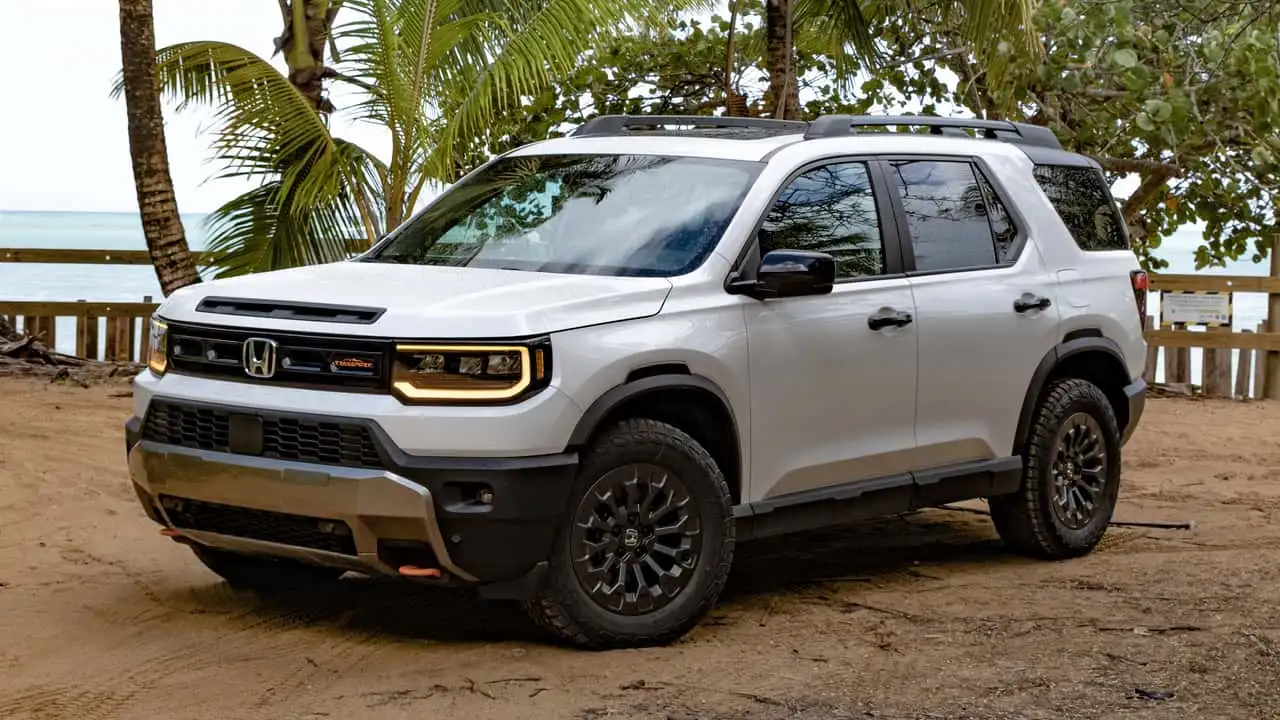
The Honda Passport is a midsize SUV suited to drivers who want everyday practicality with enough strength for a small camper. Honda lists a maximum towing capacity of up to 5,000 pounds for the 2026 Passport. Its V6 engine, available all-wheel drive, and tow mode make it a useful candidate for travelers who plan to combine highway driving with camping weekends.
A comfortable driving position and roomy passenger cabin help make the Passport convenient for longer journeys. Families can carry everyday belongings and camping supplies without needing to rely entirely on trailer storage.
The two-row layout may also appeal to couples or smaller families who prefer a generous cargo area instead of a third row of seats.
The available all-wheel-drive system can help manage changing traction conditions on wet pavement, gravel, and other suitable surfaces.
Some trims feature equipment intended for outdoor travel, including protective components and all-terrain tires. Such features can be valuable on rough campground approaches, but drivers should avoid assuming that off-road equipment makes every trail suitable for a vehicle towing a trailer.
A 5,000-pound maximum rating offers flexibility for many lightweight campers, yet the trailer’s fully loaded weight remains the important number.
Water tanks, batteries, cooking supplies, and personal belongings can add substantial weight after a trailer leaves the dealership. Weighing the camper in travel-ready condition gives a more realistic picture of whether the Passport can manage it.
For buyers seeking a practical SUV that can serve as a daily driver throughout the year, the Passport is a strong candidate. It offers a useful balance of cabin comfort, available traction features, and towing capacity. Before buying, confirm the rating for the exact model, check the required hitch equipment, and leave enough capacity for passengers and luggage.
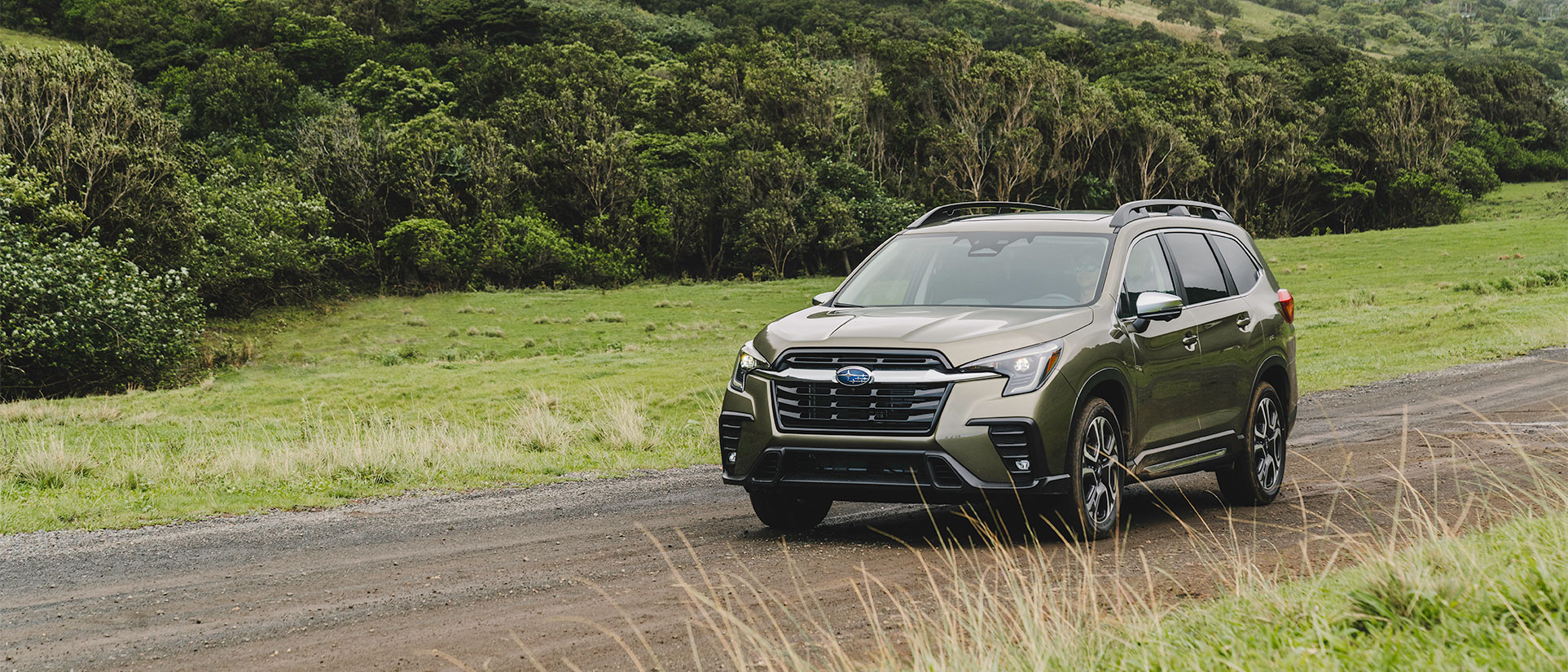
4. Subaru Ascent: A Family SUV for Camping Holidays
The Subaru Ascent is designed for families who need three rows of seating and practical everyday utility. Subaru lists a towing capacity of 5,000 pounds for the 2026 Ascent.
This gives properly equipped examples the ability to handle many lightweight travel trailers, small hard-sided campers, and pop-up models. The vehicle is worth considering when passenger space is as important as towing ability.
Subaru’s symmetrical all-wheel-drive system is a feature for families who travel through rain, snow, and changing road conditions. It can help distribute power to maintain traction when the road surface becomes slippery. Good traction is particularly useful when approaching a campground on a damp incline, but drivers must still respect the limits of their tires, brakes, and trailer setup.
The three-row cabin allows families to travel with children or additional passengers while keeping essential belongings within reach. Depending on the seating configuration, owners can adjust the cabin to make room for luggage and recreational equipment.
The available space is useful for longer holidays when families carry coolers, folding chairs, sleeping bags, and supplies for several nights away from home.
When towing a camper, the Ascent’s total payload must receive as much attention as its maximum trailer rating. Passengers, luggage, accessories, and trailer tongue weight all affect the load carried by the vehicle. A camper that falls below the advertised towing maximum can still create a problem if the SUV exceeds its permitted payload or rear axle limit.
The Ascent makes sense for families who want one vehicle for school runs, shopping, road trips, and camping holidays. Its 5,000-pound rating provides useful flexibility for small campers, subject to the exact vehicle specifications and legal requirements. Buyers should compare the loaded trailer weight with the SUV’s towing and payload limits before selecting a camper for frequent travel.
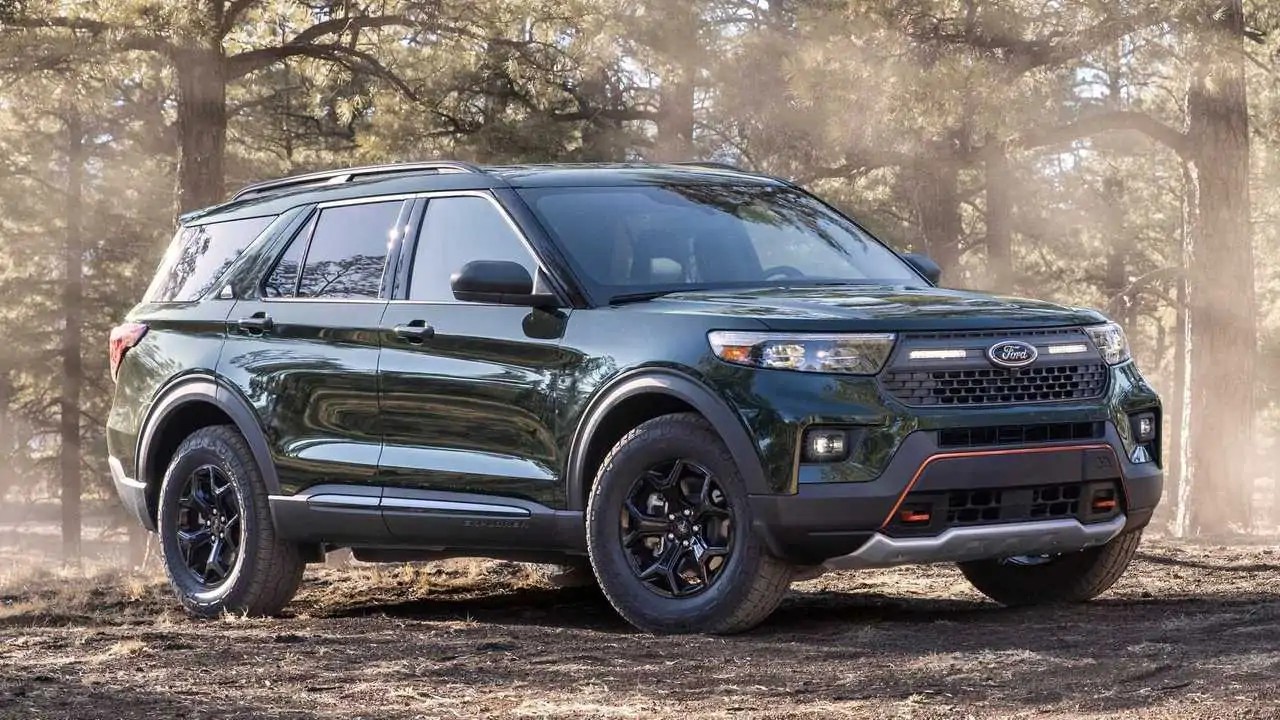
5. Ford Explorer: Versatility for Everyday Driving and Towing
The Ford Explorer is a midsize SUV that combines family-oriented features with useful towing capability. Certain properly equipped versions can tow up to approximately 5,000 pounds, making them suitable candidates for many small travel trailers.
The exact rating depends on the model year, powertrain, drivetrain, and required towing equipment. Ford’s official towing guide provides configuration-specific information that buyers should check before purchasing.
Its three-row seating gives families flexibility when carrying passengers and everyday belongings. The cabin can accommodate a mixture of people, luggage, and camping supplies, depending on the seating arrangement.
Drivers who regularly take long road trips may appreciate the available comfort and technology features. Cargo organization remains important because bulky equipment can quickly use up the vehicle’s remaining payload allowance.
The Explorer’s driving manners can make it appealing to people who spend most of their time on paved roads. Modern driver-assistance features, when fitted, can support awareness during highway travel.
However, these systems do not replace careful mirror checks, wider turning allowances, or safe following distances. A trailer changes a vehicle’s acceleration and braking behavior, so towing requires additional attention.
Buyers should check whether the selected Explorer includes the equipment required for its advertised towing capacity. A factory tow package, suitable hitch, wiring, and any specified cooling or braking components may be necessary, depending on the configuration. Installing a receiver hitch alone does not automatically provide the vehicle with its highest published rating.
The Explorer is a sensible choice for households that need room for passengers during the week and towing capability during holidays. It can work well with compact campers when the fully loaded trailer stays within the vehicle’s limits.
Comparing individual trim specifications, payload ratings, and real-world trailer weights helps prevent costly mistakes and supports safer travel.
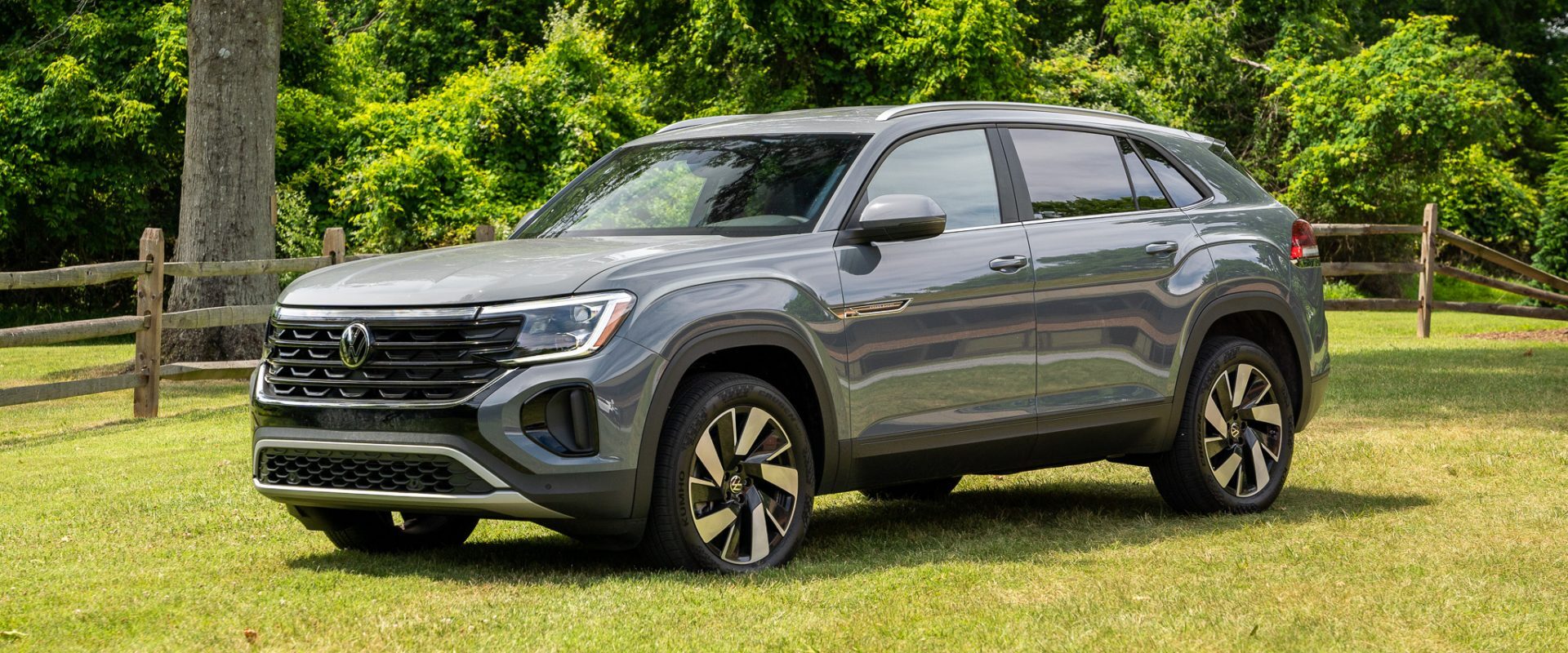
6. Volkswagen Atlas Cross Sport: Space and Practicality for Camping
The Volkswagen Atlas Cross Sport is a midsize crossover for drivers who want a spacious cabin, a comfortable ride, and useful towing capacity.
Properly equipped 2026 models can offer up to 5,000 pounds of braked towing capacity, depending on the trim and equipment. That rating can accommodate various small campers, provided the trailer’s loaded weight and tongue weight remain within the vehicle’s limits.
Its two-row cabin provides seating for up to five people, making it suitable for couples and smaller families. The rear cargo area can hold camping essentials such as duffel bags, food containers, folding tables, and outdoor clothing. This arrangement works well for travelers who prefer to keep frequently used belongings inside the vehicle instead of storing everything in the camper.
A spacious interior is particularly useful during multi-day trips. Families often carry additional items for changing weather, outdoor cooking, and unexpected overnight stops.
The Atlas Cross Sport gives drivers room to organize these supplies, though the combined weight of passengers and cargo still counts against the SUV’s payload limit. Keeping heavier belongings low and secure also helps maintain sensible load distribution.
For towing, buyers should confirm whether the chosen trim includes the required factory hitch and towing equipment. Volkswagen specifies braked towing capacity for applicable versions, meaning the trailer must have the braking system required by the vehicle’s specifications and local regulations.
The tow rating alone does not establish whether a particular camper is suitable, especially when the trailer has a heavy front section.
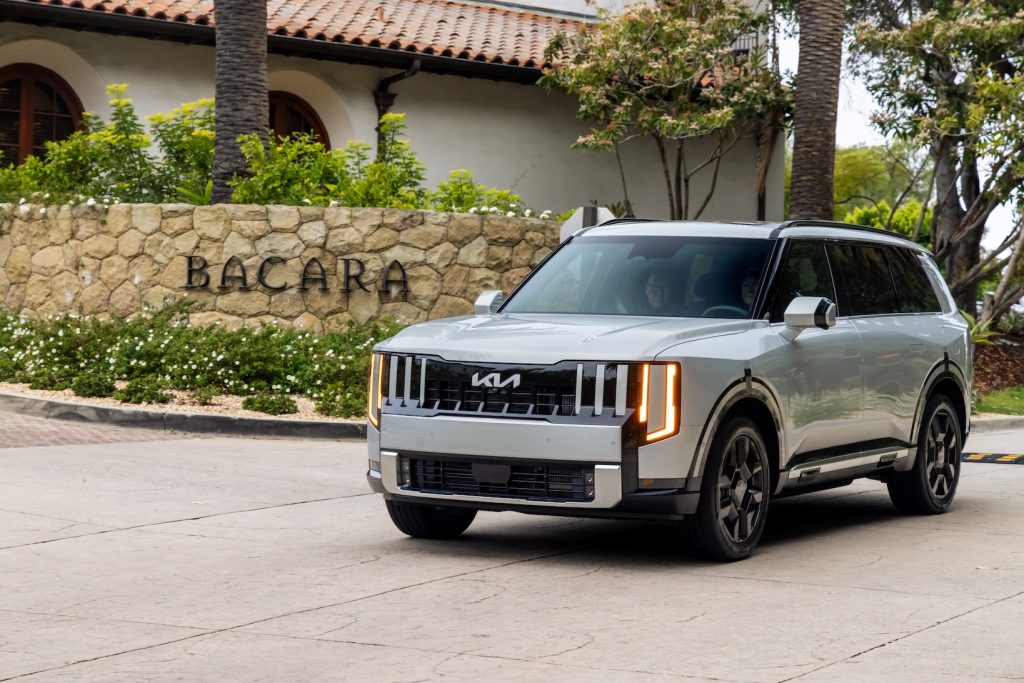
7. Kia Telluride: A Practical Option for Family Camping
The Kia Telluride has built a strong case as a family SUV thanks to its spacious cabin, three-row seating, and useful everyday features.
Properly equipped versions of recent Telluride model years offer towing capacity of up to approximately 5,000 pounds. The precise rating depends on the year, trim, powertrain, and towing equipment, so buyers should verify the figure for the specific vehicle.
The roomy cabin is useful for families who travel with children, relatives, or friends. Depending on the configuration, passengers can share the cabin while the cargo area accommodates bags, snacks, and camping supplies. This layout reduces the need to carry every item inside the trailer, helping travelers keep essential belongings accessible during rest stops and overnight journeys.
Comfort features can make a meaningful difference when the campsite is several hours away. Depending on the trim, the Telluride may include modern infotainment technology, smartphone integration, driver-assistance systems, and convenient seating features.
These amenities help make the vehicle suitable for everyday use, though drivers should review the available equipment rather than assume every feature comes standard.
When selecting a camper for a Telluride, focus on its travel-ready weight rather than its advertised dry weight. Water, propane, batteries, kitchen supplies, and camping equipment can add hundreds of pounds to a trailer. The tongue weight also reduces the amount of weight the SUV can carry inside its cabin, making careful load calculations essential for families traveling with several passengers.
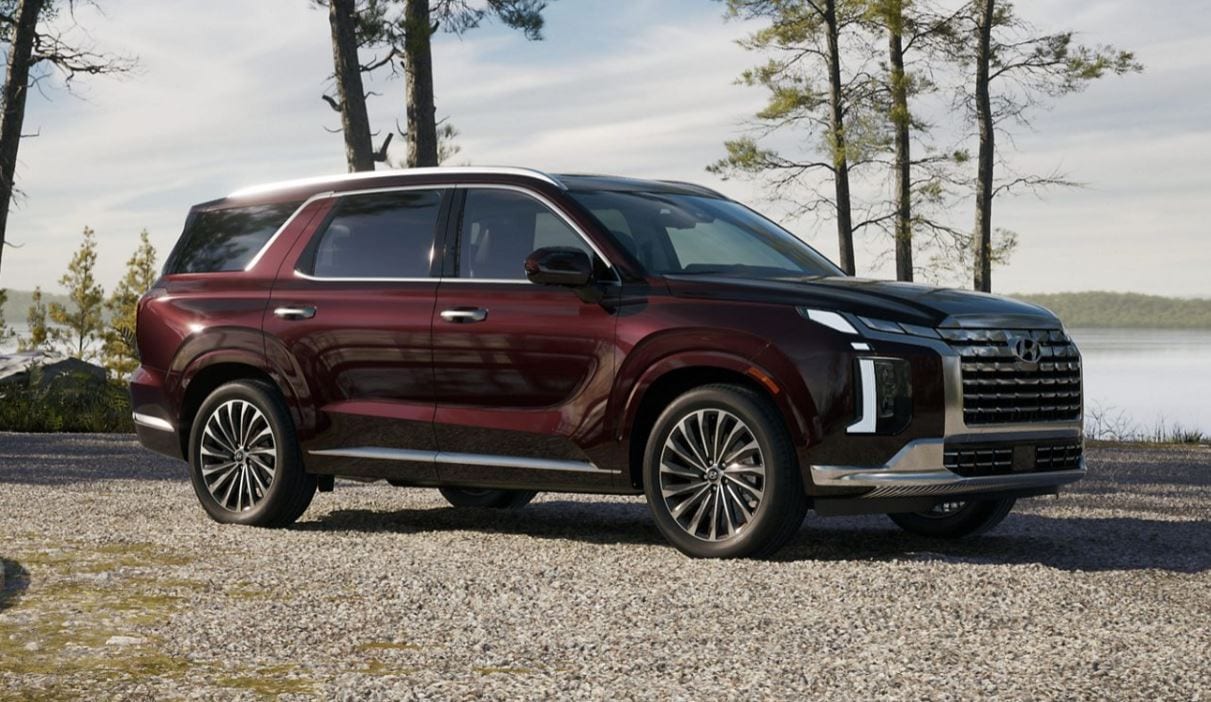
8. Hyundai Palisade: Comfort for Longer Camper Trips
The Hyundai Palisade is a three-row SUV aimed at families who value passenger comfort and flexible storage.
Depending on the model year and configuration, gasoline-powered versions have offered towing capacity of up to approximately 5,000 pounds when properly equipped. Buyers considering a newer Palisade should check the exact manufacturer’s specifications because ratings can differ between powertrain options.
Its cabin is designed to carry families and their belongings on everyday journeys and longer holidays. Three-row seating provides flexibility when more passengers need a ride, while folding seats create additional cargo room when fewer people are traveling. This versatility helps owners pack sleeping bags, clothing, cooking equipment, and other supplies for a weekend at a campground.
Technology and comfort equipment can make extended driving less tiring. Available features may include touchscreen infotainment, smartphone connectivity, climate-control options, and driver-assistance technology.
The exact equipment depends on the trim. Drivers should become familiar with the vehicle’s towing-related displays, mirrors, and controls before starting a trip with a camper attached.
A camper’s weight must be calculated with all travel supplies included. If the trailer carries a full water tank, additional batteries, food, and outdoor equipment, its loaded weight can be substantially higher than the figure shown in a sales brochure. Owners should also calculate tongue weight and ensure that passengers, luggage, and trailer load do not exceed the Palisade’s permitted limits.
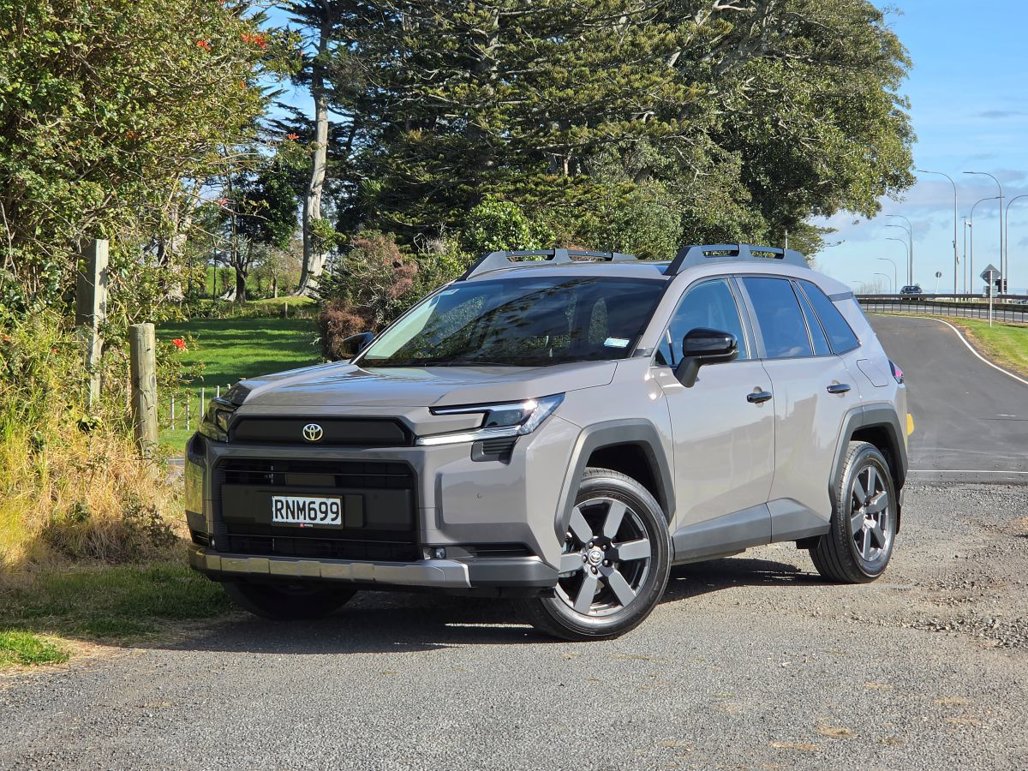
9. Toyota RAV4: An Efficient Choice for Lightweight Campers
The Toyota RAV4 is a compact SUV that appeals to drivers who want manageable dimensions, practical storage, and fuel-conscious everyday transportation. Certain properly equipped RAV4 configurations have offered towing capacities of up to approximately 3,500 pounds.
The correct rating depends on the model year, powertrain, and market, so buyers should consult the official specifications for the exact vehicle they intend to purchase.
Its smaller footprint can make parking and maneuvering easier than with a large three-row SUV. This is useful for drivers who spend most of the week commuting or navigating crowded streets but want to take a camper away on weekends. The compact size can also be convenient at campsites with limited parking, provided the combined vehicle and trailer fit the available space.
The RAV4 offers a practical cabin for carrying everyday items and lightweight camping gear. Depending on the version, buyers can choose different powertrain and drivetrain arrangements.
Hybrid technology may help reduce fuel consumption during ordinary driving, but towing places additional demands on the vehicle and can reduce efficiency. Fuel economy while pulling a trailer will depend on speed, terrain, weather, and total load.
For a RAV4, camper selection deserves particular care because its towing capacity is lower than that of several midsize SUVs. Small teardrop trailers and lightweight pop-up campers may be appropriate when their fully loaded weights fall within the vehicle’s limits. Larger enclosed trailers can become too heavy once water, batteries, food, and equipment are added.
The RAV4 is best suited to campers who value daily usability and want to tow a modest trailer rather than a large travel unit. Its compact design may help keep ordinary ownership convenient while still allowing outdoor holidays.
Check the vehicle’s towing documentation, payload, hitch rating, and trailer tongue weight, and leave a reasonable margin below the maximum permitted limits.
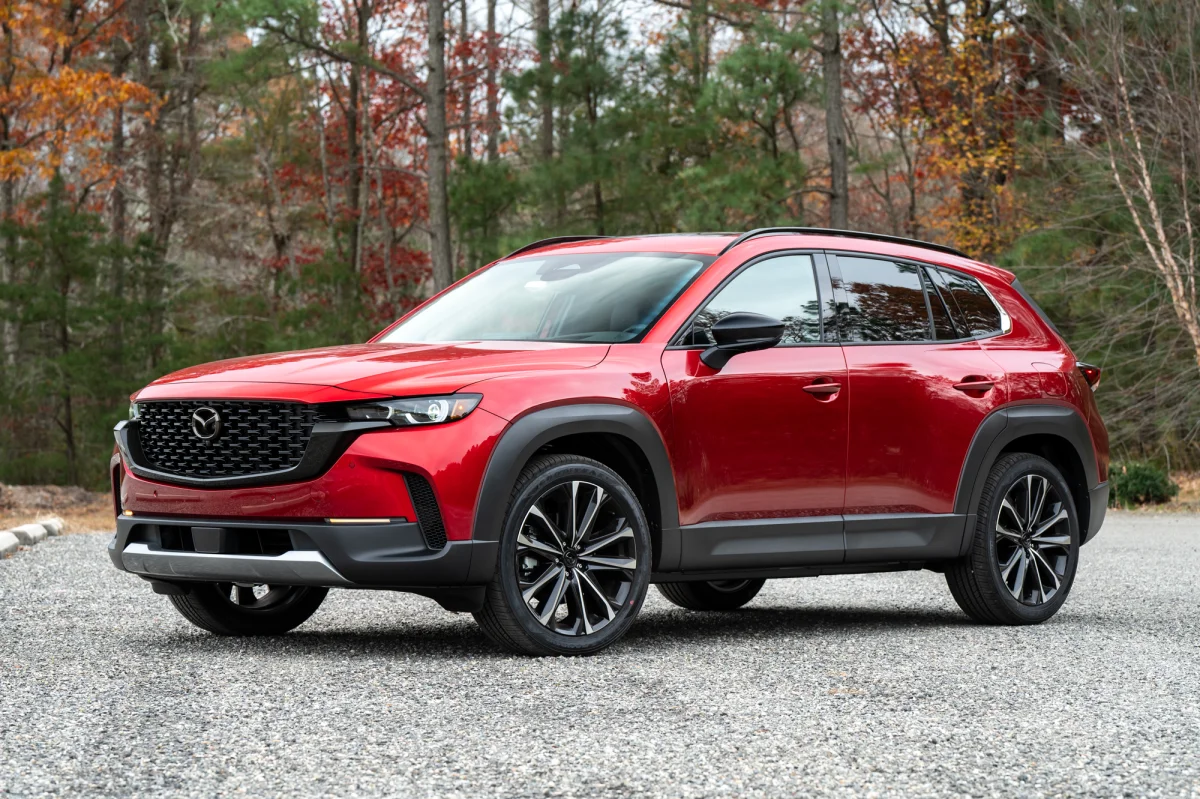
10. Mazda CX-50: A Compact SUV with Useful Towing Potential
The Mazda CX-50 is a compact crossover that combines a practical cabin with styling aimed at drivers who enjoy outdoor activities.
Certain turbocharged configurations have offered towing capacity of up to approximately 3,500 pounds, depending on model year, market, and equipment. Buyers should verify the rating for their exact version because not every engine option necessarily shares the same towing limit.
The CX-50’s dimensions make it appealing to people who want a vehicle that remains convenient for everyday errands. Its seating layout suits couples and smaller families, while the cargo area can carry bags, hiking equipment, and food for short trips. This combination helps owners avoid purchasing a much larger SUV solely for occasional camping use.
The turbocharged engine available in applicable versions can provide additional power compared with lower-output configurations. That can be useful when accelerating with a light trailer or traveling through rolling terrain. Still, engine output is only part of towing performance.
Transmission temperatures, braking ability, vehicle loading, hitch equipment, and trailer stability all affect how comfortably and safely the combination operates.
Because the CX-50 is a compact SUV, buyers should be selective about camper size. Lightweight teardrop trailers and smaller pop-up campers are more suitable candidates than large, fully equipped travel trailers.
A camper’s dry weight can give a misleading impression of its towing demands, so owners should calculate the actual loaded weight before committing to a purchase.