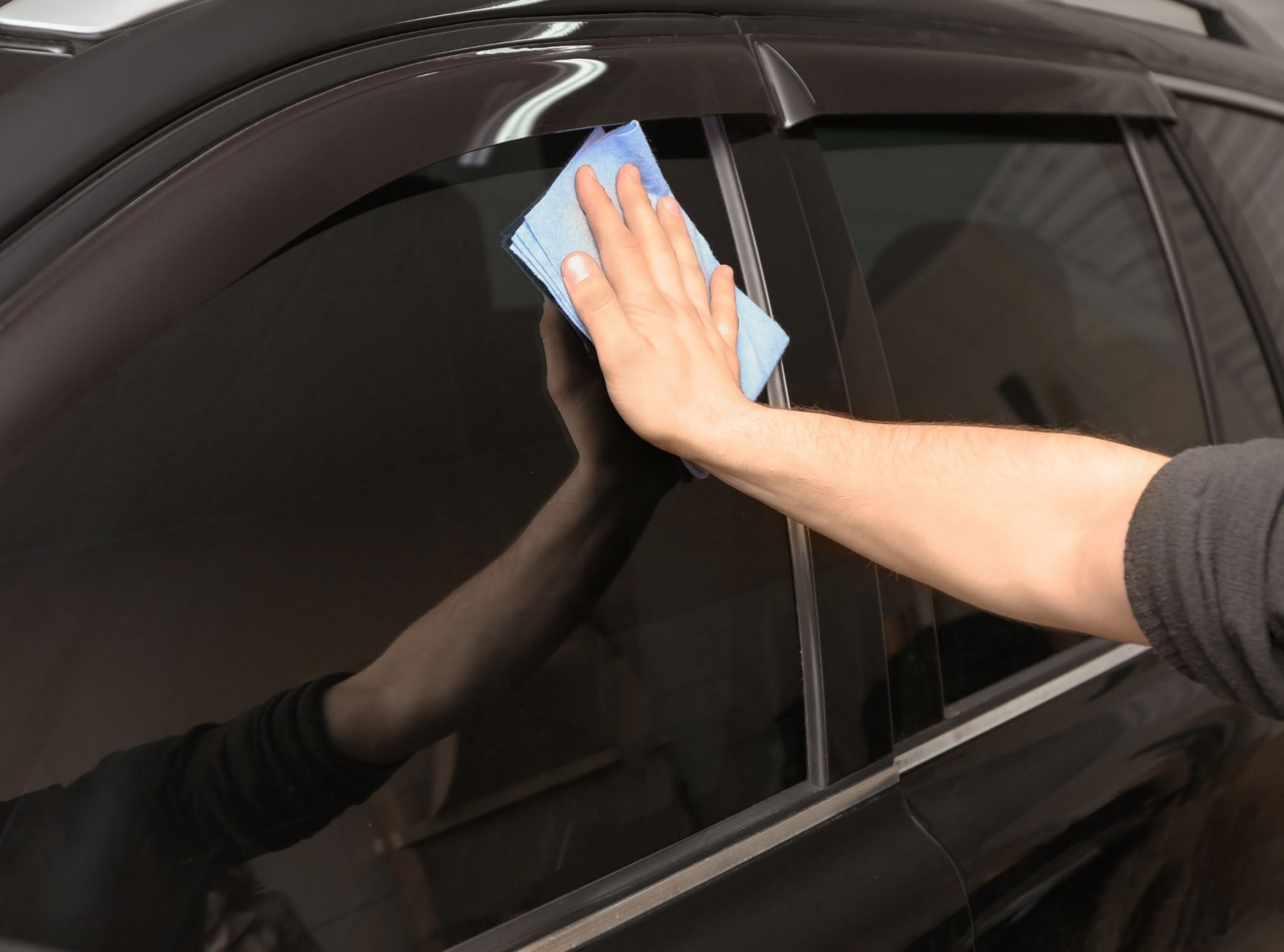
Ceramic window tint is a popular choice for drivers who want a cooler cabin, reduced glare, and protection from ultraviolet radiation without sacrificing visibility. It usually costs more than dyed or standard carbon tint, but its heat rejection performance can make the upgrade worthwhile, especially in hot climates.
Before paying extra, it is important to understand visible light transmission (VLT) limits, manufacturer specifications, installation quality, and long-term value. This guide explains how ceramic tint compares with cheaper alternatives, what performance figures actually mean, and how to decide whether the additional expense makes sense for your vehicle.
What Is Ceramic Window Tint?
Ceramic window tint is a window film made with microscopic ceramic particles designed to manage solar energy without relying on dark dyes or metallic layers. These particles interact with selected wavelengths of sunlight, helping reduce heat entering the vehicle while maintaining useful visible light transmission.
The film is typically applied to the inside surface of automotive glass by a professional installer. Its performance depends on the particular product, the glass beneath it, and the quality of the installation. Ceramic tint is not necessarily the darkest option, and a lighter ceramic film can outperform a darker, lower-quality film at rejecting solar heat.
The key advantage of ceramic technology is its ability to reduce infrared energy while retaining relatively clear visibility. Infrared radiation contributes to solar heat gain, which can make a parked car uncomfortable in direct sunlight. Quality ceramic films are engineered to reject a portion of this energy, helping the interior warm up more slowly.
However, no tint can eliminate heat buildup completely. Sunlight also enters through the windshield, roof, and other surfaces, while the vehicle’s upholstery and dashboard absorb and retain energy. Ceramic tint works best as part of a broader strategy that includes sunshades, ventilation, and sensible parking choices.
Ceramic films also offer substantial ultraviolet protection. Many premium products advertise up to 99% or 99.9% UV rejection, depending on the product specification and testing method.
This can help reduce exposure to UV radiation through treated windows and slow the fading of interior materials. UV protection is not exclusive to ceramic films, since many conventional films provide similar performance. The distinction is that premium ceramic products can combine strong UV protection with improved infrared rejection and good optical clarity.
Buyers should compare documented specifications rather than assume that every film marketed as ceramic provides identical results.
Another benefit is that nonmetallic ceramic films generally avoid the signal interference associated with certain metallic window films. This matters to drivers who rely on GPS navigation, mobile connectivity, toll transponders, or other electronic equipment.
Modern vehicles contain many wireless systems, so avoiding a conductive metallic layer can be useful. Still, signal compatibility depends on the film construction and the vehicle’s equipment, and some nonmetallic films can have other practical limitations. Drivers should ask the installer whether the chosen product is compatible with their specific vehicle before making a decision.
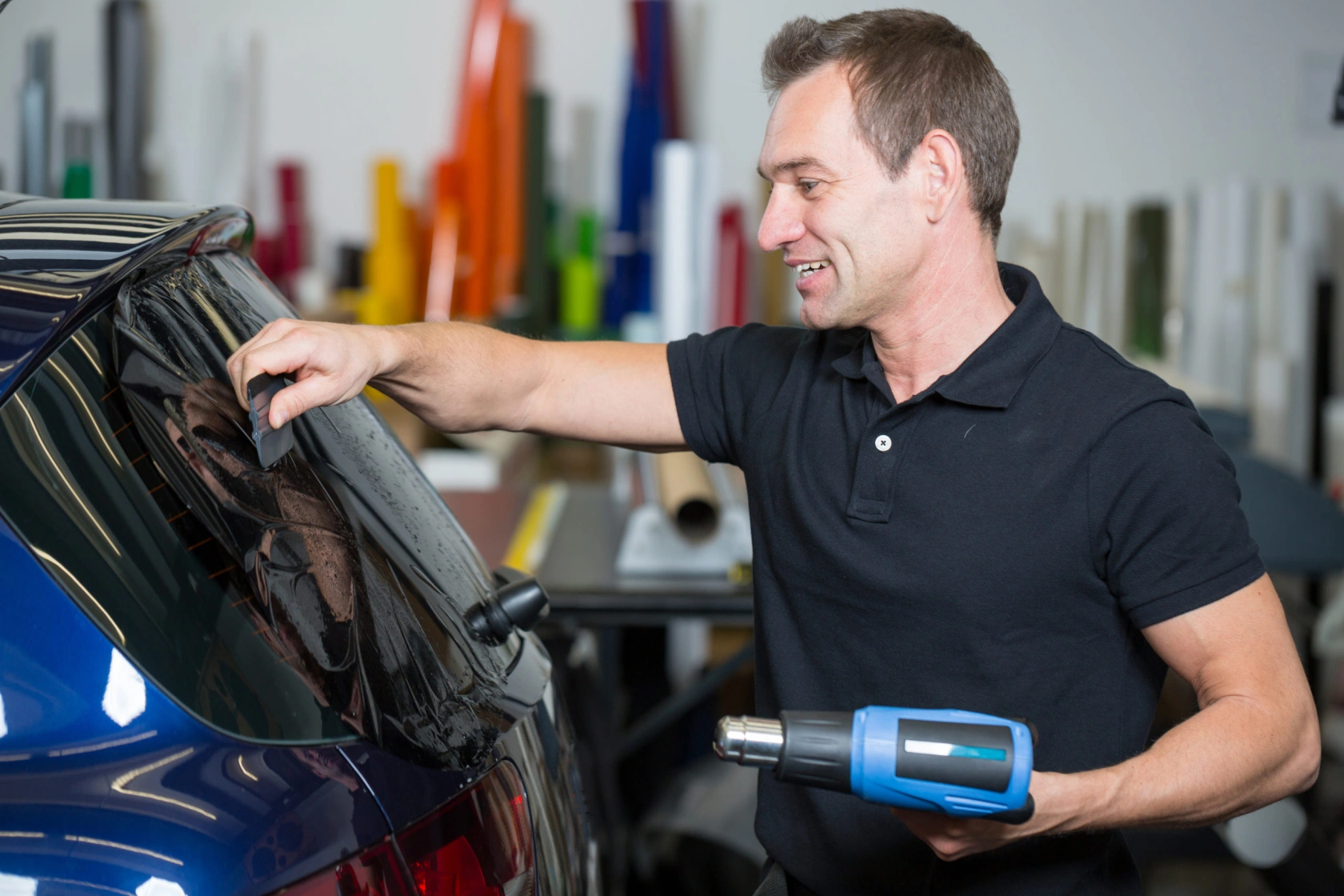
Ceramic Tint vs. Dyed and Carbon Window Tint
Dyed window tint is generally the most affordable option. It uses dye to reduce visible light entering the cabin, providing privacy and reducing glare. However, a dark appearance does not necessarily indicate strong heat rejection. Basic dyed films can provide limited infrared control, and their color may change over time depending on product quality and exposure.
They remain reasonable for drivers who mainly want a darker appearance at a lower initial cost. For someone who parks in direct sunlight daily, however, the additional thermal performance offered by a quality ceramic film may justify spending more.
Carbon tint usually occupies the middle ground between basic dyed film and premium ceramic products. Carbon-based films can provide a nonmetallic construction, attractive appearance, useful UV protection, and better color stability than some basic dyed options.
Their solar performance varies by manufacturer and product line. Certain carbon films perform well, while premium ceramic products may offer higher infrared rejection at comparable VLT levels. The best comparison is between specific products with published test results, not broad claims that every ceramic film outperforms every carbon film.
Ceramic tint generally commands a higher purchase price because of its material technology, manufacturing process, and positioning in the premium market. The exact difference depends on vehicle size, the number of windows, film brand, warranty, and installer experience.
A compact car with basic dyed film may cost substantially less than the same car fitted with a premium ceramic product. Larger vehicles with more glass require more material and labor. Requesting an itemized quotation helps clarify whether the price difference reflects the film itself, installation quality, warranty coverage, or additional services.
Heat rejection figures deserve particular attention when comparing films. Manufacturers may advertise infrared rejection at a selected wavelength, total solar energy rejected, or total solar energy rejected by a complete glass-and-film combination. These measurements describe different things and should not be treated as interchangeable.
A film claiming high infrared rejection at a specific wavelength does not necessarily reject the same percentage of the sun’s total heat energy. Total solar energy rejected, often abbreviated TSER, is generally more useful when comparing the solar-control performance of automotive window films.
A practical comparison should consider thermal performance, visibility, durability, warranty, and price together. If you mainly drive short distances in mild weather, a good carbon film may offer sufficient value. If your vehicle spends long hours in direct sunlight, a well-specified ceramic product may be a better investment.
In either case, installation matters. Poorly fitted film can develop bubbles, peeling edges, contamination, or optical distortion, reducing satisfaction regardless of the material. A skilled installer using a reputable product is usually a safer choice than selecting a film solely because it promises the highest advertised rejection percentage.
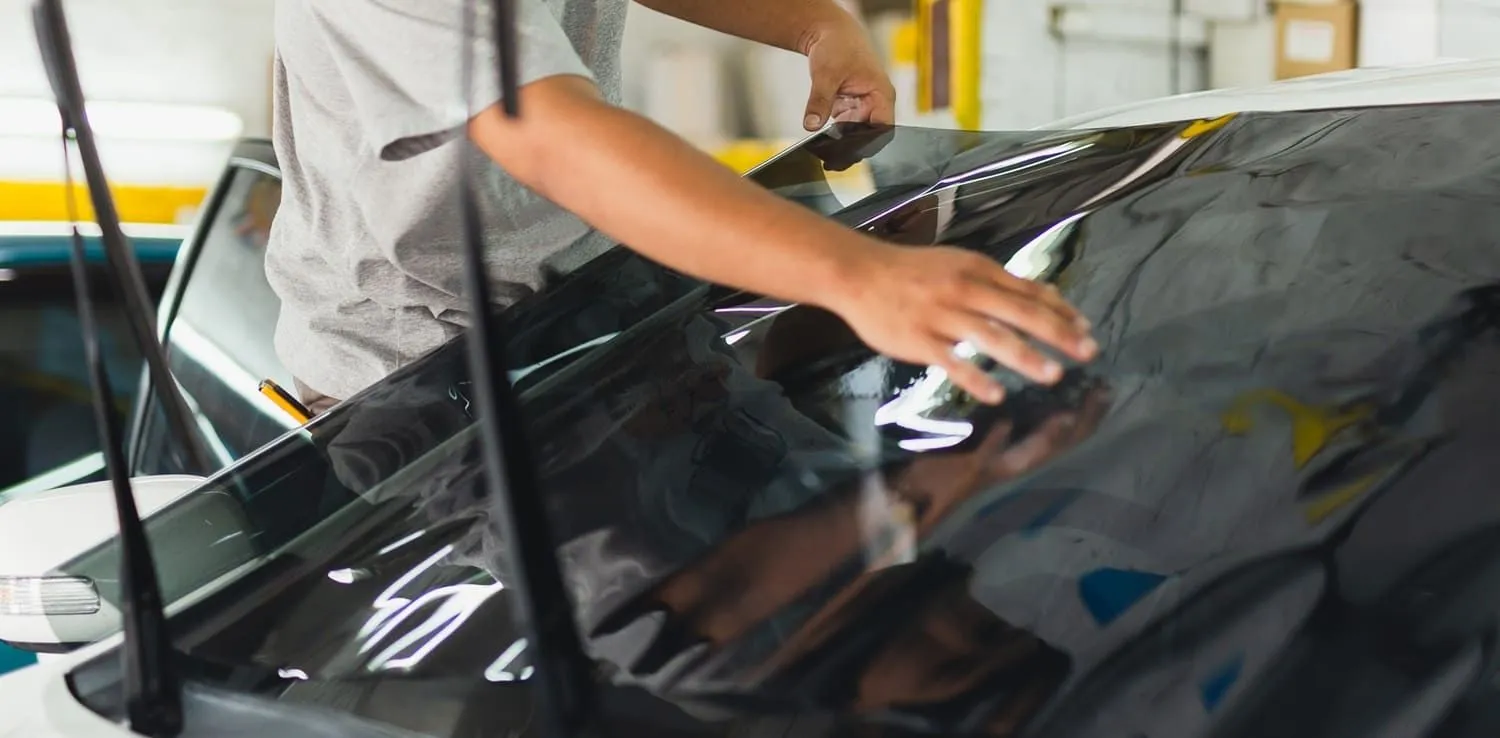
Manufacturer Heat Rejection Specifications: What the Numbers Mean
Manufacturer data provides a useful way to judge whether ceramic window tint is worth the extra cost. For example, 3M Ceramic IR Series publishes different performance figures for its various tint shades. Its technical data lists total solar energy rejection of approximately 51% to 66%, depending on the shade and test conditions.
Advertised infrared rejection ranges from 78% to 95%, while UV rejection reaches up to 99.9% for specified variants. These are product-specific figures, not universal results for every ceramic film.
The most useful figure for comparing total heat reduction is usually TSER, or Total Solar Energy Rejected. This percentage estimates how much of the sun’s total energy is rejected by the tested glass-and-film combination. A higher TSER generally indicates less solar energy entering the cabin.
Infrared rejection, or IRR, measures a narrower part of the solar spectrum and can produce impressive-looking numbers without describing the entire heat-control performance. When choosing a film, compare TSER, VLT, and the test conditions together rather than selecting the product with the highest infrared percentage alone.
Consider the published specifications for 3M Ceramic IR film as an example. Its IR 70 option has a listed VLT of 64%, TSER of 51%, and infrared rejection of 78%. The darker IR 35 option lists a VLT of 37%, TSER of 58%, and infrared rejection of 85%. These figures illustrate the trade-off between light transmission and solar control within a particular product range.
They also show why a lighter ceramic film can still provide meaningful heat reduction without making windows excessively dark. Actual performance depends on the original glass and the manufacturer’s testing method.
A second example is 3M Crystalline Automotive Window Film. The manufacturer advertises up to 64% total solar energy rejection and up to 68% infrared energy rejection for its India-market product information. Its US product page also advertises up to 99% rejection of heat-generating infrared rays under its stated measurement approach.
These figures should not be compared directly without checking the exact product, region, shade, and definition of each measurement. Different product families may use different testing methods, so a technical data sheet is more informative than a headline claim.
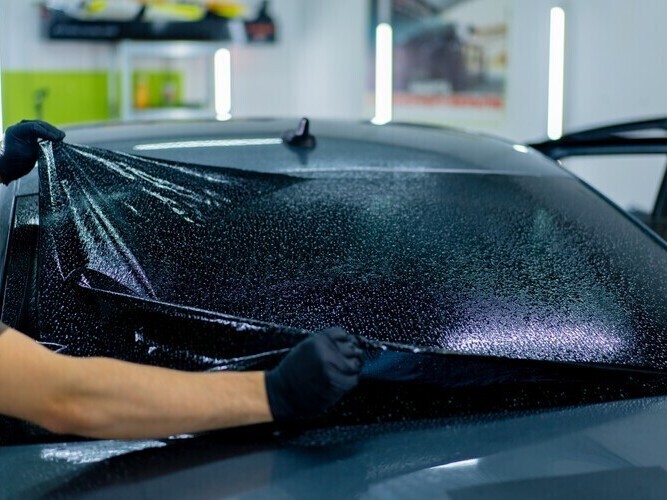
VLT Limits and Window Tint Laws
Visible light transmission, commonly shortened to VLT, is the percentage of visible light that passes through a window. A film with 70% VLT allows more light through than a film with 35% VLT.
A lower VLT usually produces a darker appearance and greater glare reduction, but it can also make nighttime driving more difficult. Legal limits depend on the country, state, vehicle category, and window position. Drivers should verify the rules that apply to their registration location before choosing a tint shade.
In the United States, window tint laws vary by state. Many states set different requirements for front side windows, rear side windows, the rear windshield, and the windshield’s upper sunstrip. Some allow darker rear windows on certain vehicles, while others impose stricter requirements.
Medical exemptions, reflectivity restrictions, and rules concerning tint colors may also apply. Because these regulations can change, a driver should consult the relevant state’s motor vehicle agency or current statutory guidance rather than rely on a general chart or a tint shop’s verbal assurance.
If you are driving in India, the rules require particular attention. Under Rule 100 of the Central Motor Vehicles Rules, 1989, the specified minimum visible light transmission is 70% for the windscreen and rear window, and 50% for side windows.
However, the Supreme Court’s 2012 ruling prohibited applying aftermarket films or other materials to vehicle safety glass, even where the resulting visibility might meet those numerical thresholds.
The key point is that VLT ratings alone do not determine whether aftermarket window tint is legal in India. Before installing any film, check the latest official regulations to ensure it complies with current legal requirements.