
Ever wonder why a German car brand carries a Latin name? The answer isn’t marketing genius or focus group testing. It’s a courtroom loss, a stubborn engineer, and a teenager doing his homework at exactly the right moment. August Horch built a car company, got pushed out of his own business, then tried to start over using the one thing he thought no one could take from him: his own last name.
A judge disagreed. What happened next turned a legal defeat into one of the most recognizable badges on the road today. Grab a coffee, because this origin story is stranger and more human than most people realize.
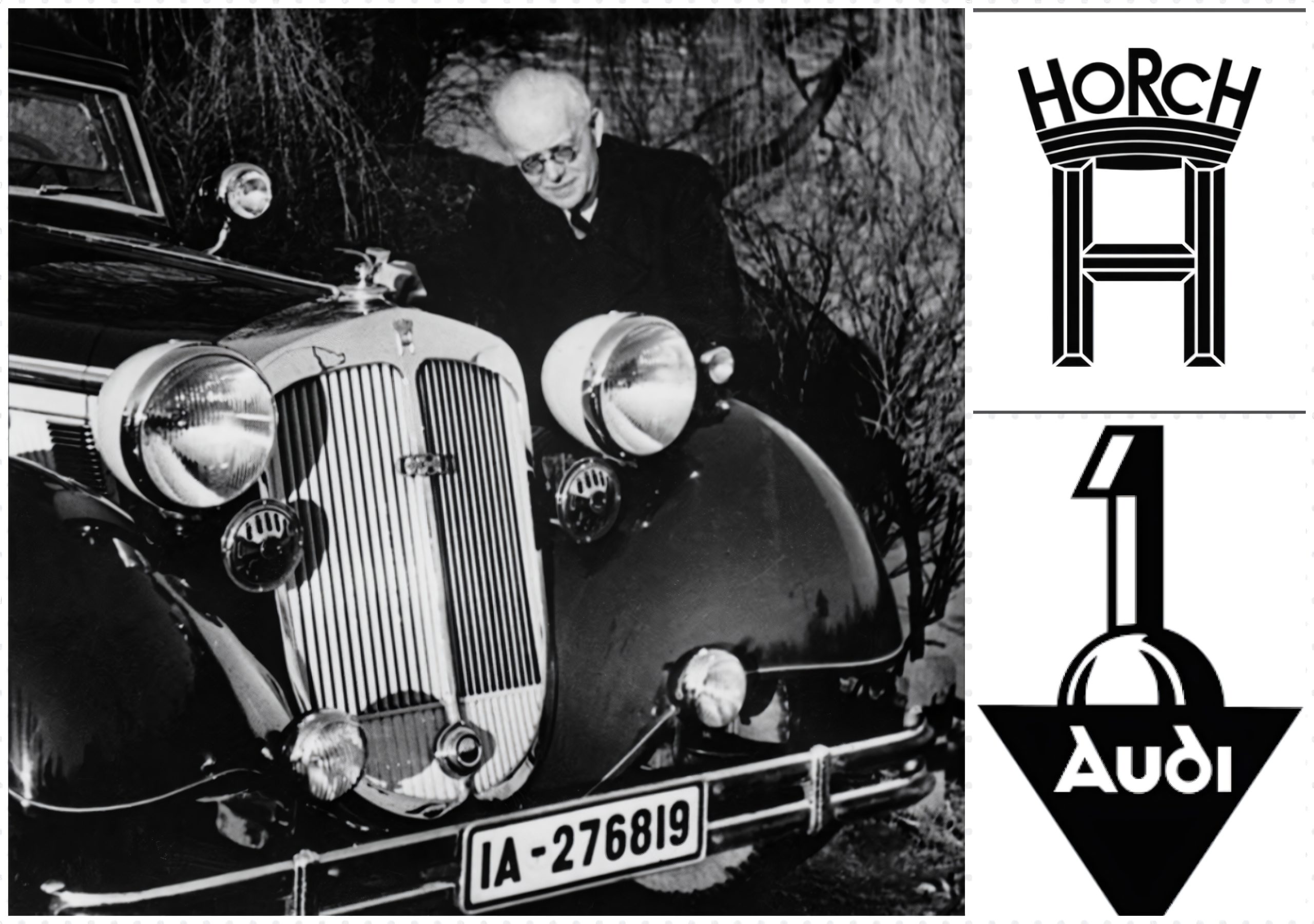
The Man Behind the Brand
August Horch was born in October 1868 in Winningen, Germany, and his path into cars started with hands-on engineering rather than boardroom ambition. After studying mechanical engineering, he worked under Karl Benz, a job that placed him directly inside the birth of the automobile industry at a time when horses still outnumbered engines on most roads.
That experience stuck with him. By the turn of the century, Horch felt ready to build something of his own, and in 1899 he founded A. Horch & Cie. in Cologne. The company built its first car in 1901, and it didn’t take long for buyers to notice.
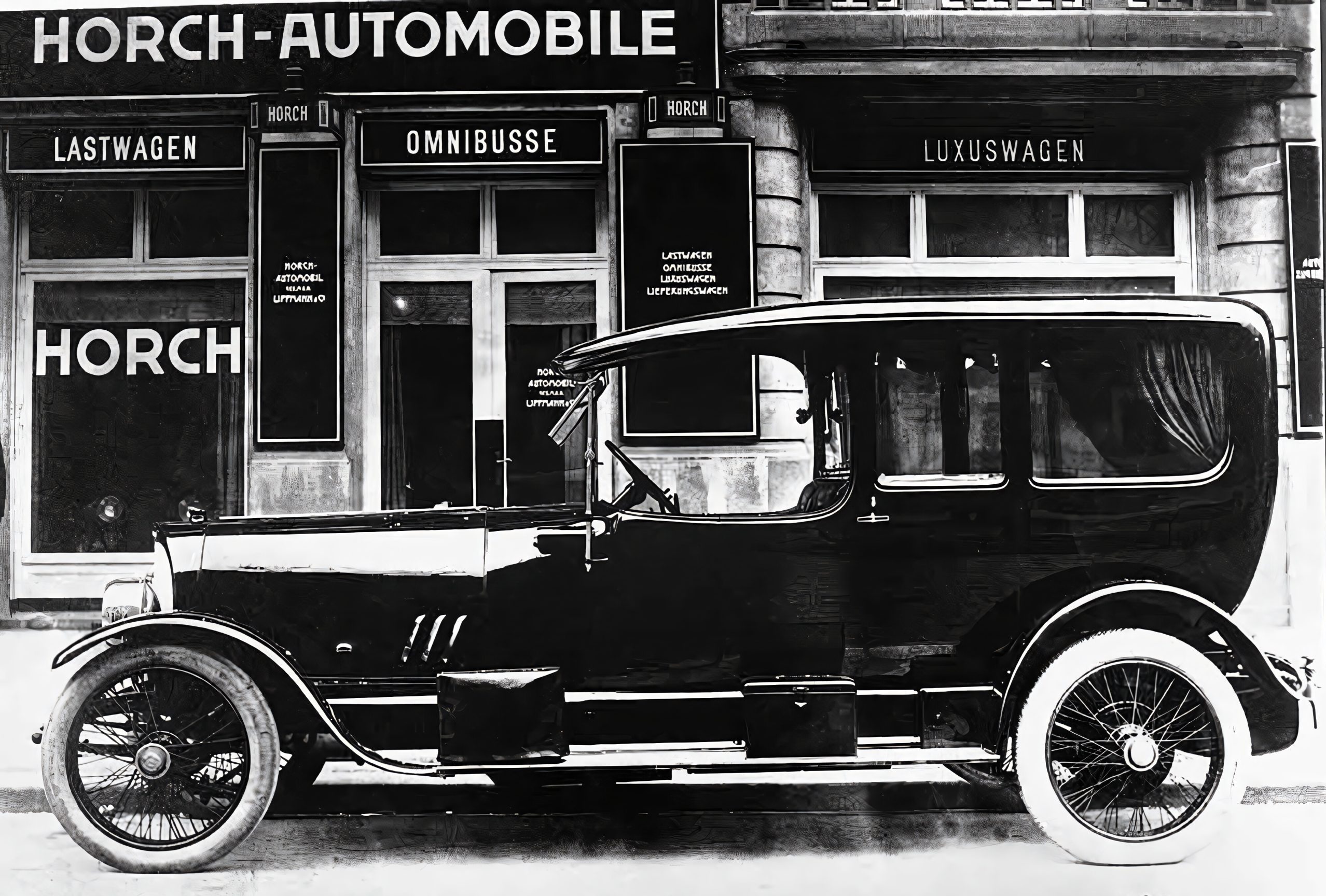
Horch vehicles earned a reputation for solid engineering and dependable performance, qualities that mattered enormously in an era when most cars broke down more often than they ran smoothly. Success brought growth, and growth brought a move to Zwickau. On paper, everything looked promising.
Behind the scenes, though, cracks were forming between Horch and the people running his company alongside him. Disagreements piled up over technical choices and financial decisions, and by 1909, the relationship had broken down completely, pushing Horch out of the very company that carried his name.
Losing His Own Name in Court
Here’s where the story takes a turn that still surprises people today. After leaving his first company, Horch didn’t waste time feeling sorry for himself. He founded a second business in Zwickau, and naturally, he wanted to call it Horch again. Why wouldn’t he? It was his name, his reputation, and his engineering standards baked into every vehicle he’d ever built.
His former partners had other plans. They took him to court, and the ruling did not go his way. Because the original company still legally owned rights to the Horch name, the judge blocked him from using it for his new venture. Just think about that for a moment. A man loses his job, starts over, and then gets told he can’t even use his own last name for the business he’s building from nothing.
Frustration aside, the clock was ticking. A car company without a name isn’t a car company at all, and Horch needed something fast. Meetings were happening, ideas were getting tossed around, and nothing quite fit. Little did anyone in that room expect the solution would come from a teenager working on Latin homework nearby.
A Boy’s Homework Solves It
Picture this scene for a second. A room full of adults, frustrated and stuck, trying to solve a naming problem that legal experts couldn’t crack. Meanwhile, off to the side, the 14-year-old son of one of Horch’s business associates sat quietly finishing his Latin assignment.
That detail alone makes this one of the more charming stories in automotive history. According to accounts of the moment, the boy overheard the adults struggling and offered a simple idea. He pointed out that “Horch” translates to “listen” or “hark” in German. Since Latin class was fresh in his mind, he suggested translating that same meaning into Latin instead.
The Latin word for “listen” is “audi.” Simple as that. Everyone in the room recognized it immediately. The word sounded clean, professional, and distinctive, while still carrying the exact same meaning as the name legally stripped away from Horch just months earlier.
By 1910, the new company officially adopted the name AUDI Werke GmbH, and the automotive world gained one of its most enduring names almost by accident. Few brand names carry that kind of origin story, and fewer still involve a homework assignment as the deciding factor.
From a Difficult Period to a Second Empire
What happened after the renaming says just as much about Horch’s character as the naming dispute itself. Rather than treating Audi as a consolation prize, he poured the same standards into it that had made his first company respected across Germany. Engineering excellence became the calling card once again, and motorsport success soon followed, giving the new brand credibility fast.
Building a company from scratch once is impressive. Doing it twice, after losing your name and starting essentially from zero, says something different entirely. Horch proved that his success wasn’t tied to four letters on a nameplate. It was tied to how he approached the work itself.
Audi grew steadily through the early twentieth century, earning a place among Germany’s respected automakers. The brand’s legal form later changed in 1915 when it became Audiwerke AG, another step in formalizing what had started as an improvised solution to a painful problem.
Business rivals who assumed Horch was finished after his ousting badly misjudged him. Reputation, it turns out, travels with the person who earned it, not just the name printed on the factory door.
Four Rings, One Legacy
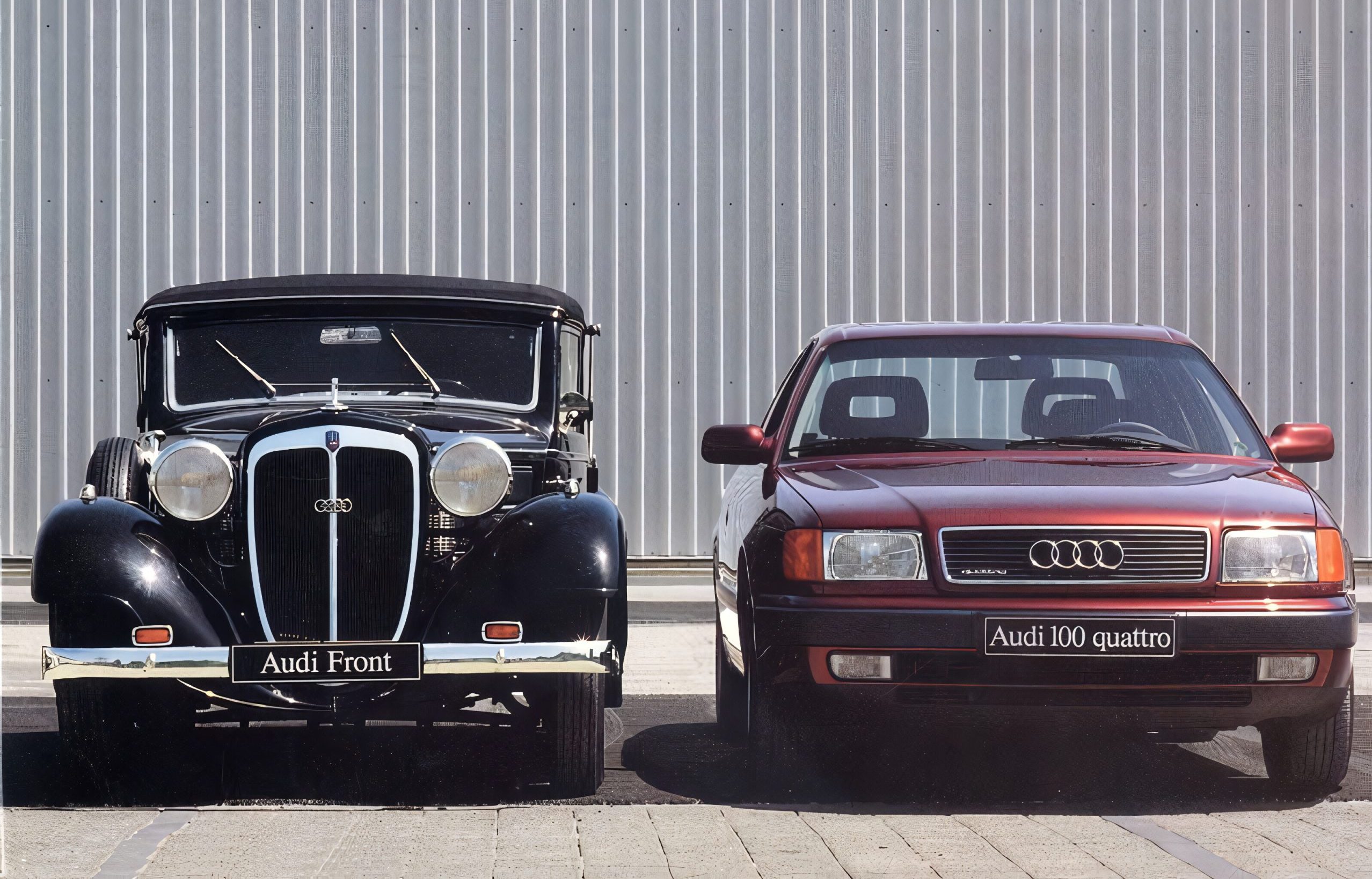
Audi’s story doesn’t stop with its founder. In 1932, four separate German car companies combined forces to survive a brutal economic period. Audi joined DKW, Wanderer, and Horch, the very company that had once blocked its founder from using his own name, to form Auto Union AG.
That merger produced the four interlocking rings still stamped on every Audi today, each representing one of those founding brands. World War II disrupted everything, and in 1949, Auto Union GmbH found a fresh start in Bavaria, carrying the four-ring identity forward.
Volkswagen entered the picture during the 1960s, acquiring Auto Union and gradually increasing its stake. In 1969, a merger with NSU created Audi NSU Auto Union AG, and by 1985, the business settled into its current form as AUDI AG, headquartered in Ingolstadt.
August Horch passed away in 1951, having witnessed the automobile transform from a curiosity into an everyday necessity. He didn’t live to see Audi become a global premium brand, but the foundation he built twice made that outcome possible. A lawsuit tried to erase his name. A boy’s Latin homework made sure it survived anyway.
