
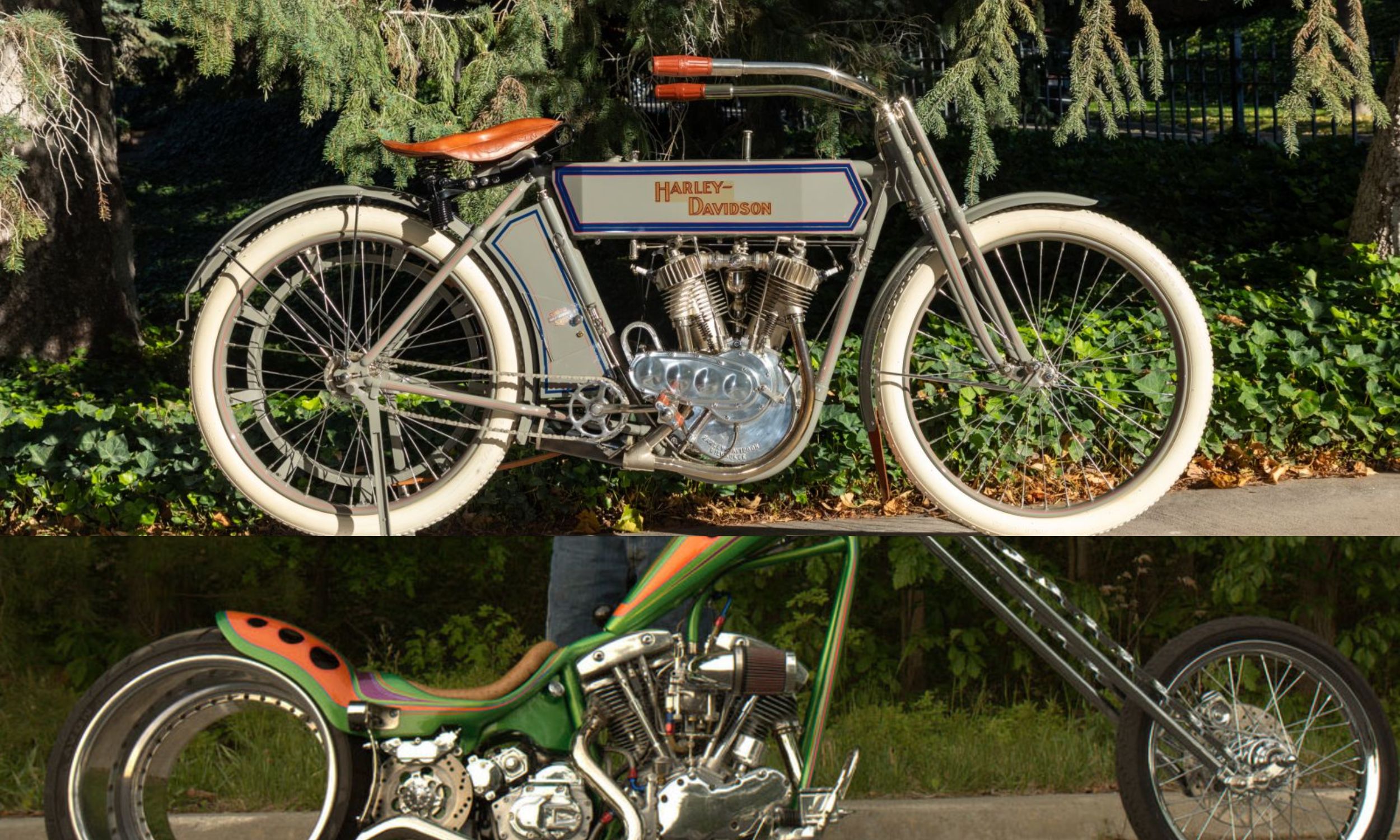
Some motorcycles are built to cover miles, while others earn a place in history. The ten Harley-Davidsons on this list belong in that second group. Each one stands out for a different reason, whether it’s an extraordinary level of rarity, a connection to a famous owner, or an important place in the company’s long history. These motorcycles are much more than collectible machines. They represent moments that helped shape both Harley-Davidson and American motorcycle culture.
From a custom chopper made famous by Hollywood to century-old strap tank models that very few people have ever seen in person, every bike here has a story worth telling. When examples like these appear at auction, collectors from around the world compete for the chance to own them. The result is eye-catching sale prices that continue to raise the bar for vintage Harley-Davidson motorcycles and prove that history can be just as valuable as performance.
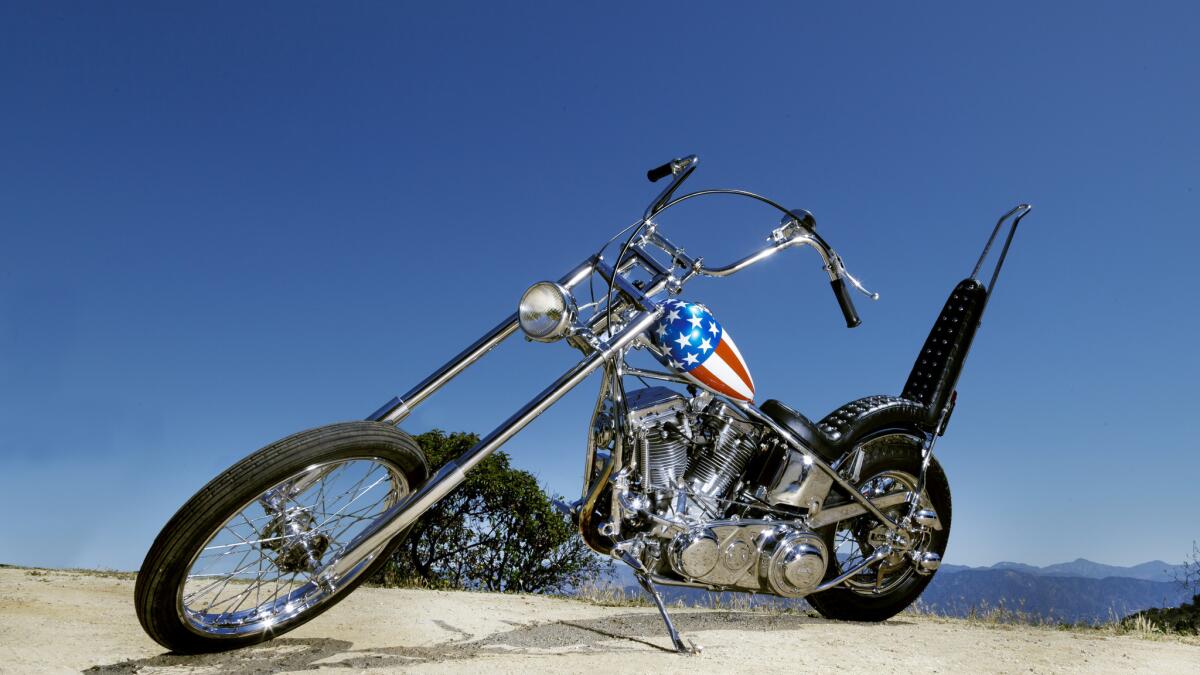
1. 1969 Harley-Davidson “Captain America” Chopper (Easy Rider) – $1,350,000
- Engine: 74 cu in (1,208 cc) OHV Panhead V-Twin
- Horsepower: 60 hp
- Torque: 65 lb-ft
- Size: 74 cu in (1,208 cc)
Few motorcycles have left a mark on popular culture quite like the “Captain America” chopper from the 1969 film Easy Rider. Its place at the top of Harley-Davidson auction records comes from far more than its mechanical parts.
This motorcycle became a lasting symbol of freedom, adventure, and the open road, thanks to its unforgettable appearance on the big screen. With its stars-and-stripes paint scheme and stretched custom design, it remains one of the most recognizable motorcycles ever created.
Built specifically for Easy Rider, the bike played a major role in a film that changed how many people viewed motorcycles and motorcycle culture. Decades after the movie’s release, it still holds a special place in the hearts of movie lovers, motorcycle collectors, and historians alike. That lasting connection gives the bike a value that goes well beyond its performance.
Mechanically, the chopper featured a 1,208cc Panhead V-twin engine producing 60 horsepower and 65 lb-ft of torque. Those numbers were respectable for the late 1960s, though they were never the main reason collectors wanted it. Plenty of custom motorcycles from the same period offered similar performance. What made this one different was its documented role in one of Hollywood’s most celebrated road movies.
When the Captain America bike reached the auction stage, buyers were competing for an authentic piece of film history rather than simply another vintage Harley-Davidson. The motorcycle represented a cultural moment that continues to inspire riders and collectors decades later.
That unmatched blend of movie history, rarity, and authenticity helped drive the final sale price to an astonishing $1.35 million, setting a record that remains the standard against which other Harley-Davidson auction sales are judged.
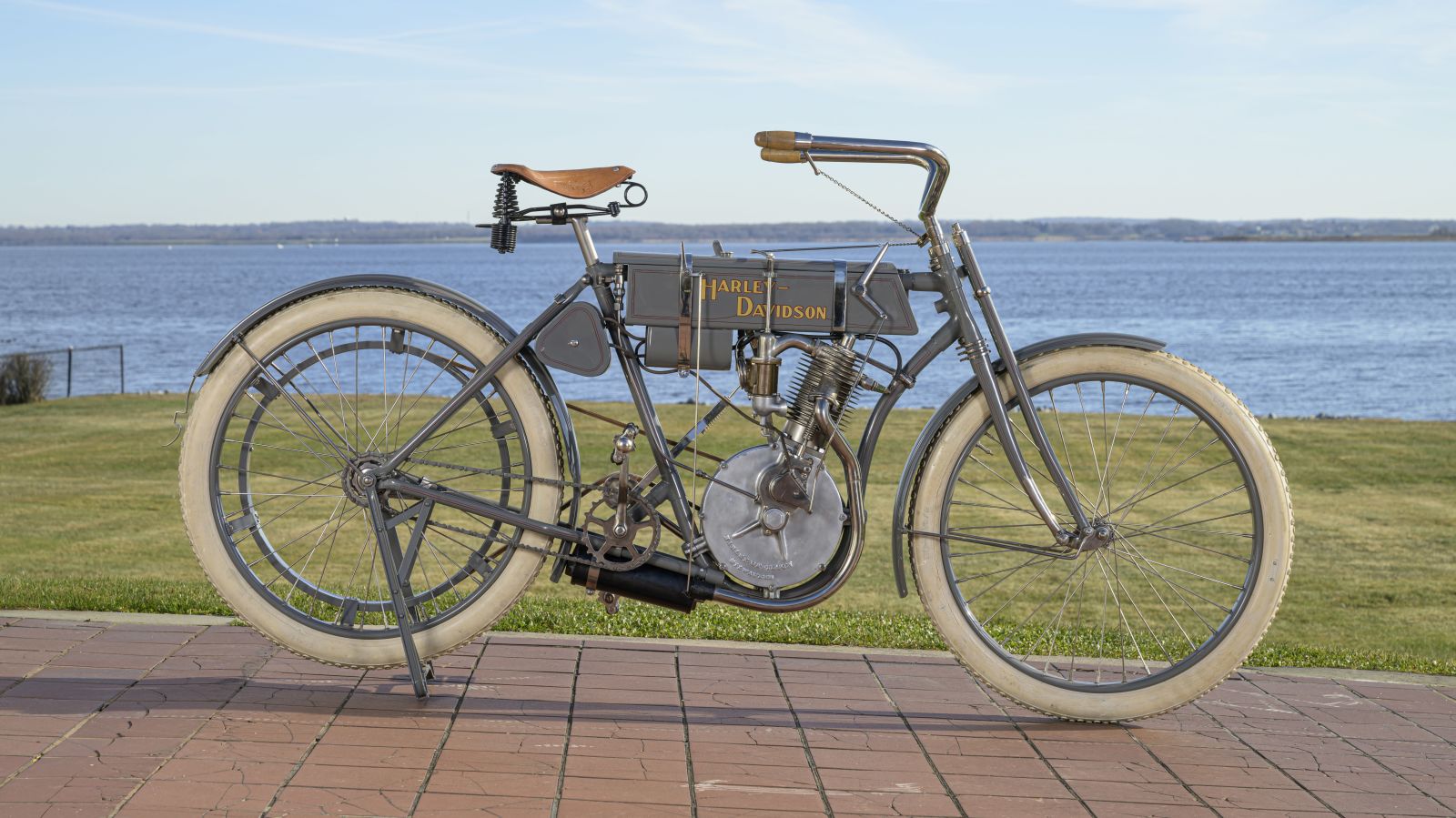
2. 1908 Harley-Davidson Model 4 Strap Tank – $935,000
- Engine: Single-Cylinder Atmospheric Inlet
- Horsepower: 4 hp
- Torque: N/A
- Size: 26.8 cu in (440 cc)
Age alone doesn’t guarantee value, but genuine rarity absolutely does, and the 1908 Model 4 Strap Tank represents rarity in its purest form. Built during Harley-Davidson’s earliest production years, when the company was still finding its footing in a young and rapidly evolving motorcycle industry, surviving examples from this specific era number in the single digits worldwide.
That scarcity alone would justify serious collector interest, but condition and documentation pushed this particular bike considerably higher than typical early Harleys ever reach.
Its single-cylinder atmospheric inlet engine produced a modest 4 horsepower, numbers that sound almost comical by modern standards but represented genuine cutting-edge engineering back when motorized transportation itself remained a novelty for most Americans.
The distinctive strap tank design, where leather straps literally held the fuel tank in place atop the frame, gives these early bikes their nickname and their unmistakable visual identity among vintage collectors. Buyers competing for this specific machine understood they weren’t just purchasing a motorcycle.
They were purchasing a functioning artifact from the earliest days of Harley-Davidson’s existence, one that survived over a century of potential loss, damage, or simple neglect. That survival story, combined with extreme scarcity, drove the final auction price to $935,000, making it one of the most valuable pre-World War I motorcycles ever sold at public auction anywhere in the world.
Also Read: 10 Most Hardcore Harley-Davidsons of the Last Ten Years
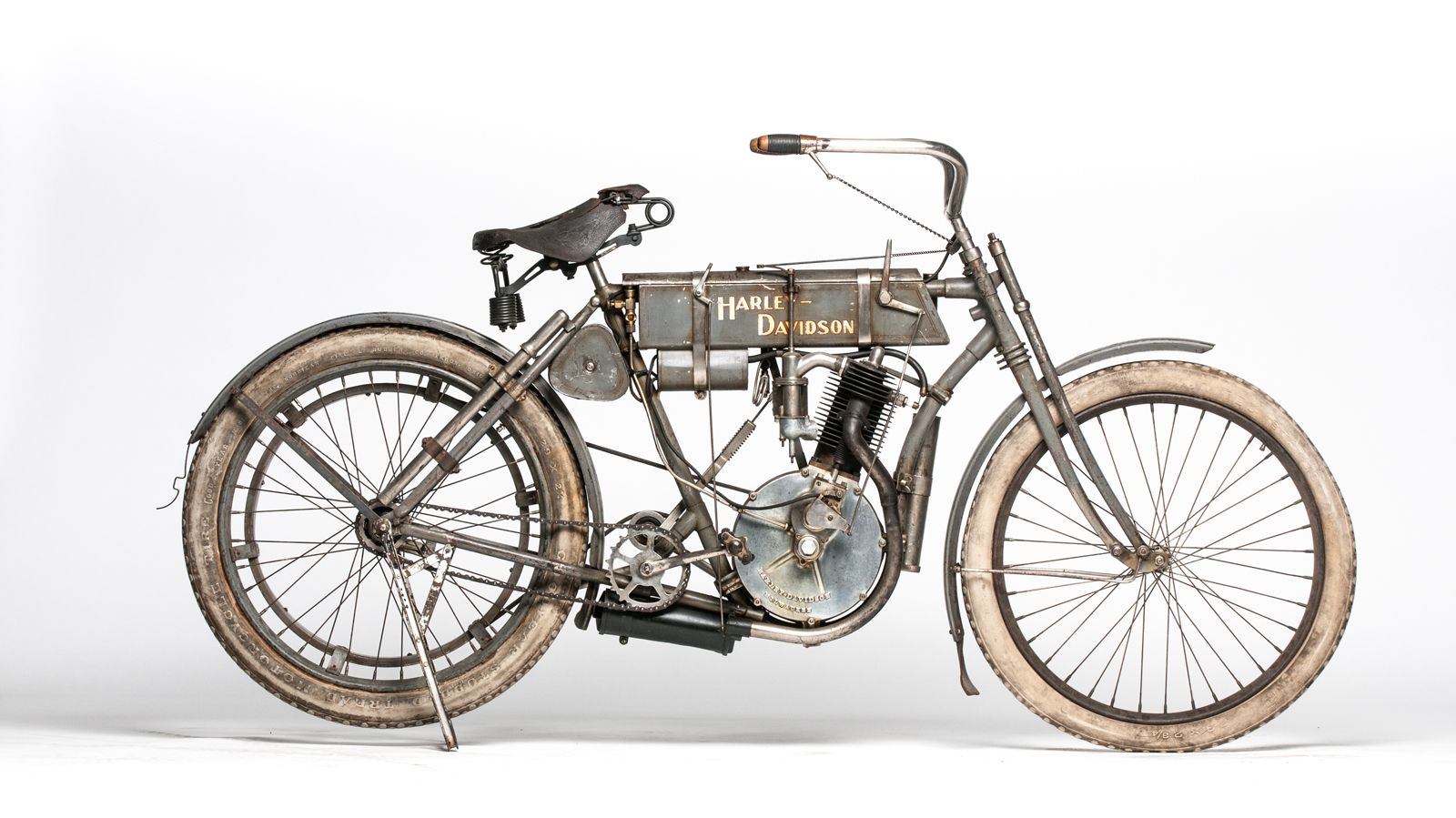
3. 1907 Harley-Davidson Strap Tank – $715,000
- Engine: Single-Cylinder Atmospheric Inlet
- Horsepower: 4 hp
- Torque: N/A
- Size: 26.8 cu in (440 cc)
Here’s a question worth sitting with for a moment: how does a motorcycle built before World War I even still exist, let alone in condition good enough to command hundreds of thousands of dollars at auction? The 1907 Strap Tank answers that question through sheer survival against overwhelming odds.
Predating the Model 4 by a single year, this bike represents Harley-Davidson at its absolute earliest production stage, when the company operated out of a small wooden shed and built motorcycles essentially by hand, one at a time, with limited resources and even more limited manufacturing infrastructure.
Mechanically nearly identical to its 1908 counterpart, sharing the same single-cylinder atmospheric inlet design and modest 4 horsepower output, what separates this bike in collector value comes down almost entirely to its earlier production date and documented history.
Vintage motorcycle collectors, much like classic car enthusiasts, place enormous weight on exact production years when nearly every unit built during a company’s founding era carries genuine historical importance. Fewer than a handful of verified examples from this specific year are known to exist today, scattered across private collections and museum holdings worldwide.
When one becomes available for public sale, serious collectors treat the opportunity as essentially unrepeatable, driving bidding well past $700,000 for a machine that originally sold for a small fraction of that amount over a century ago.
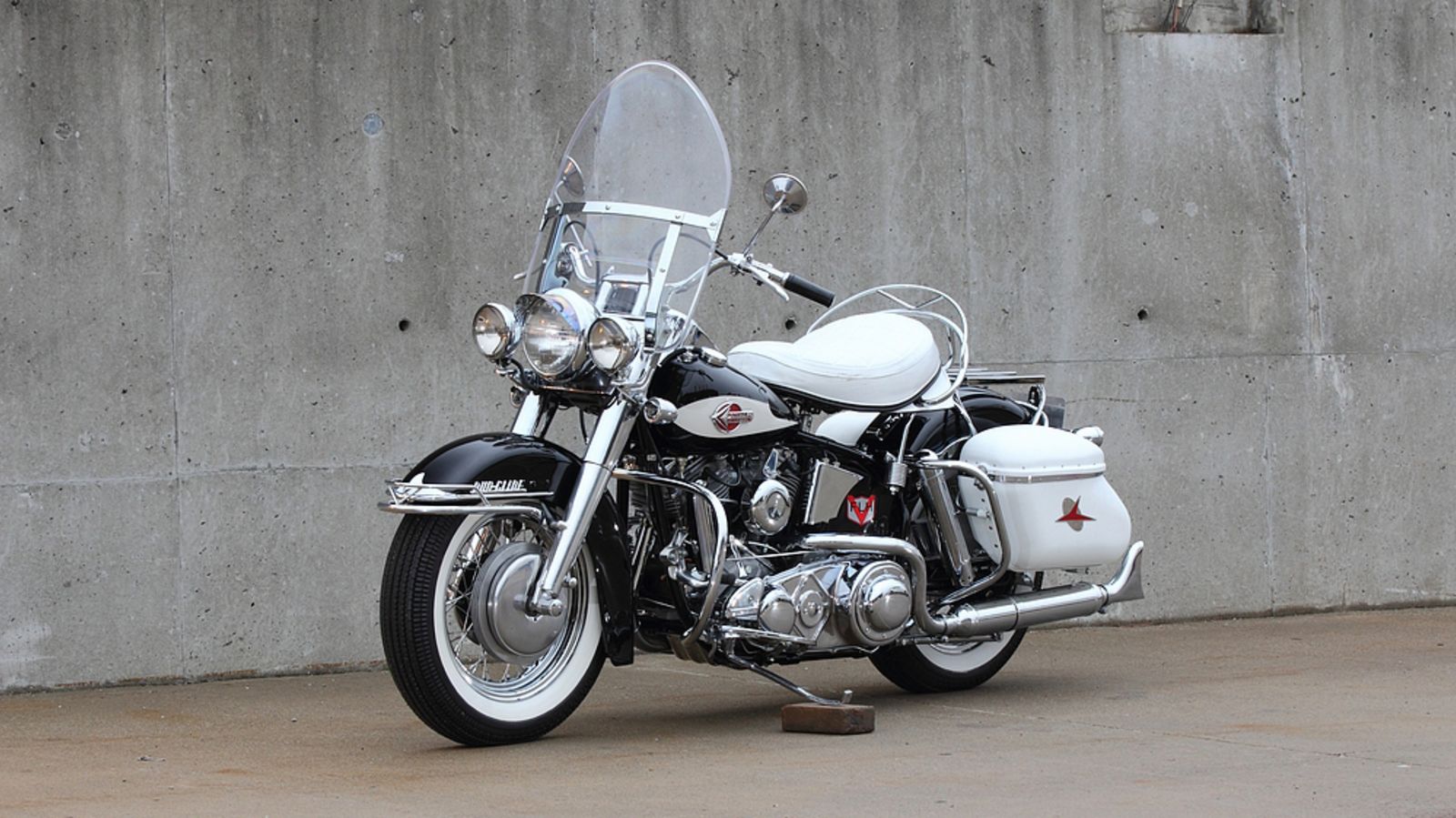
4. 1959 Harley-Davidson FLH Duo-Glide (Jerry Lee Lewis) – $385,000
- Engine: 74 cu in Panhead V-Twin
- Horsepower: 60 hp
- Torque: 65 lb-ft
- Size: 74 cu in (1,208 cc)
A famous owner can make a motorcycle far more valuable, and that was certainly true for this 1959 Harley-Davidson FLH Duo-Glide once owned by Jerry Lee Lewis. While the bike was already a desirable Panhead-era model, its connection to the rock and roll legend made it much more appealing to collectors.
The Duo-Glide marked an important point in Harley-Davidson’s history by introducing rear suspension to its touring motorcycles. Riders enjoyed a smoother experience than the older rigid-frame models.
Under the tank sat the familiar 74 cubic inch Panhead V-twin, producing 60 horsepower and 65 lb-ft of torque. Those figures matched many other Harley models from the same period, so performance was not what made this motorcycle stand out.
Its real value came from its documented ownership. Collectors of music memorabilia and vintage motorcycles often seek authentic pieces tied to famous people, especially when there is clear proof of ownership. This Duo-Glide offered both a well-preserved motorcycle and a direct link to one of rock music’s biggest names.
That combination sparked strong bidding when it reached auction. Buyers were paying for more than a classic Harley-Davidson. They were also buying a genuine piece of music history. That connection helped the motorcycle sell for nearly three times what a similar 1959 Duo-Glide without celebrity ownership would likely bring at a vintage motorcycle auction.
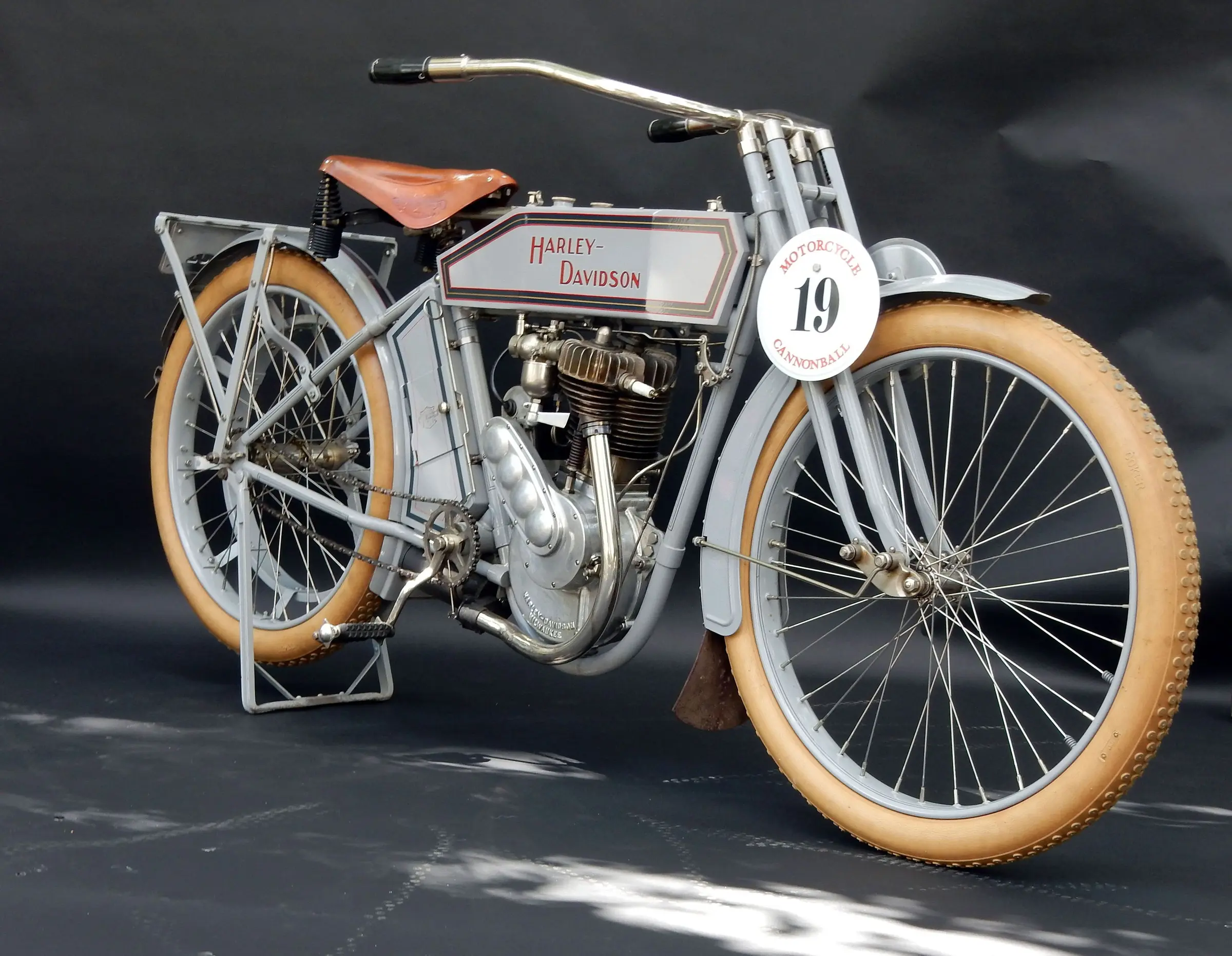
5. 1912 Harley-Davidson Model 8A Twin – $236,500
- Engine: F-head V-Twin
- Horsepower: 7 hp
- Torque: N/A
- Size: 61 cu in (989 cc)
The 1912 Model 8A Twin shows how fast Harley-Davidson advanced during its first decade. Only a few years after producing its early single-cylinder strap tank motorcycles, the company introduced the F-head V-twin engine, marking a major step forward in performance. Power increased to 7 horsepower, almost double the output of Harley’s earliest models, giving riders a stronger and more dependable motorcycle.
Engine size also grew from 440cc in the early strap tank models to 989cc in the Model 8A. This increase reflected Harley-Davidson’s growing confidence and improving manufacturing ability only five years after the company began building motorcycles.
Collectors who focus on Harley’s early V-twin history place high value on the Model 8A because it marks the point where the company began building the engine style that would become its trademark. While the earliest single-cylinder motorcycles remain extremely rare, the 8A stands as an important chapter in Harley’s engineering story.
Well-preserved examples with documented ownership and original mechanical parts are difficult to find. When one reached auction, its authenticity and history attracted strong interest from collectors, helping it sell for $236,500. The price reflects both its rarity and its place in the early development of one of the most recognizable motorcycle brands in history.
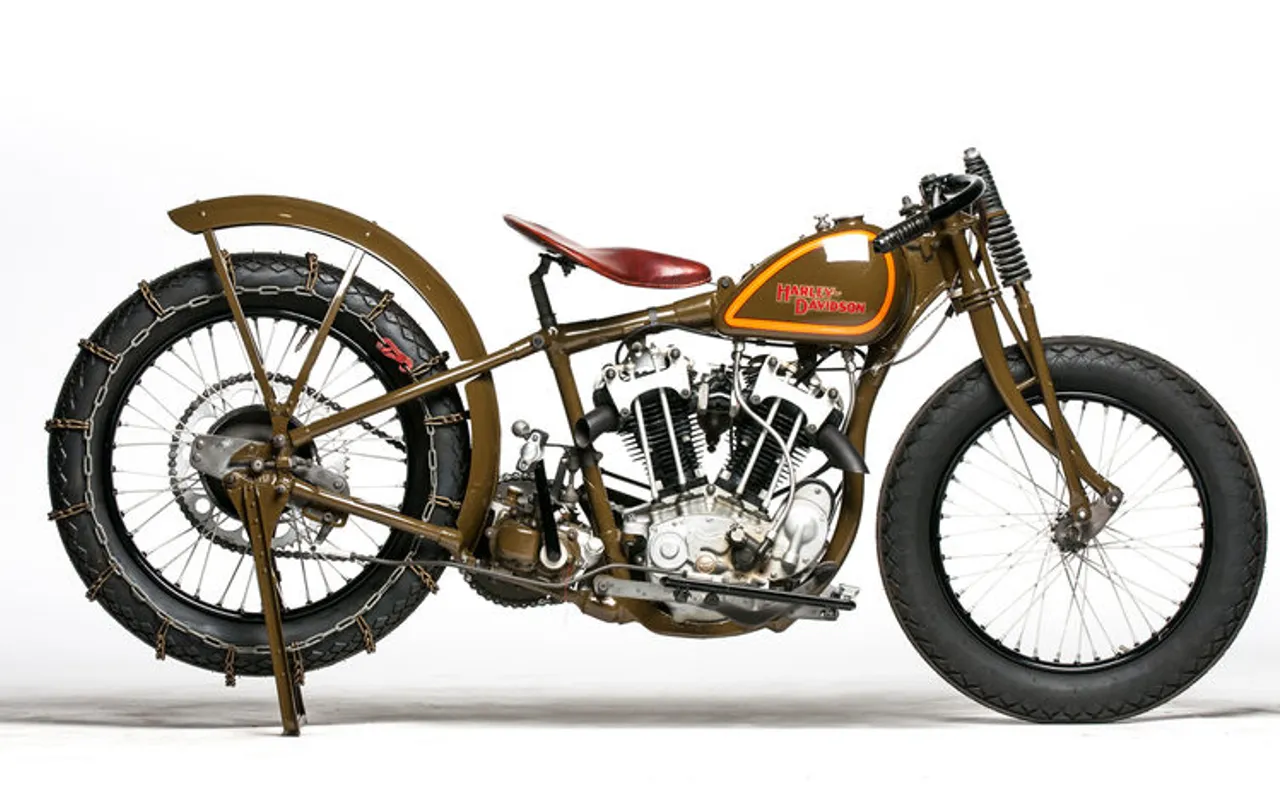
6. 1930 Harley-Davidson Factory Hillclimber – $181,500
- Engine: JDH F-head V-Twin
- Horsepower: 28 hp
- Torque: N/A
- Size: 74 cu in (1,208 cc)
Racing history carries its own distinct appeal among collectors, separate entirely from general vintage rarity, and this factory Hillclimber represents that appeal in concentrated form. Built specifically for competitive hillclimbing, a genuinely popular motorsport during the 1920s and 1930s where riders battled steep, unpaved inclines in front of large crowds, this machine wasn’t designed for street use or casual riding whatsoever.
Everything about its construction prioritized raw power and traction over comfort or practicality. The JDH F-head V-twin engine produced 28 horsepower, a genuinely impressive figure for 1930 and considerably higher than the street-legal touring bikes of the same era, since factory racing machines received specialized tuning and modifications unavailable to everyday consumers purchasing standard production models.
Surviving factory racing bikes from this specific period remain extraordinarily scarce, since many were modified repeatedly, crashed, or simply discarded once newer racing technology emerged and made them obsolete for competitive purposes. Documented, unrestored examples with verified factory racing history command serious premiums specifically because so few survived the decades of hard competitive use intact.
Motorsport historians and vintage racing enthusiasts actively compete for machines like this one, valuing genuine period-correct racing provenance considerably more than they might value a purely cosmetic restoration. That competitive collector interest, combined with the bike’s rarity and racing pedigree, drove the final auction price to $181,500.
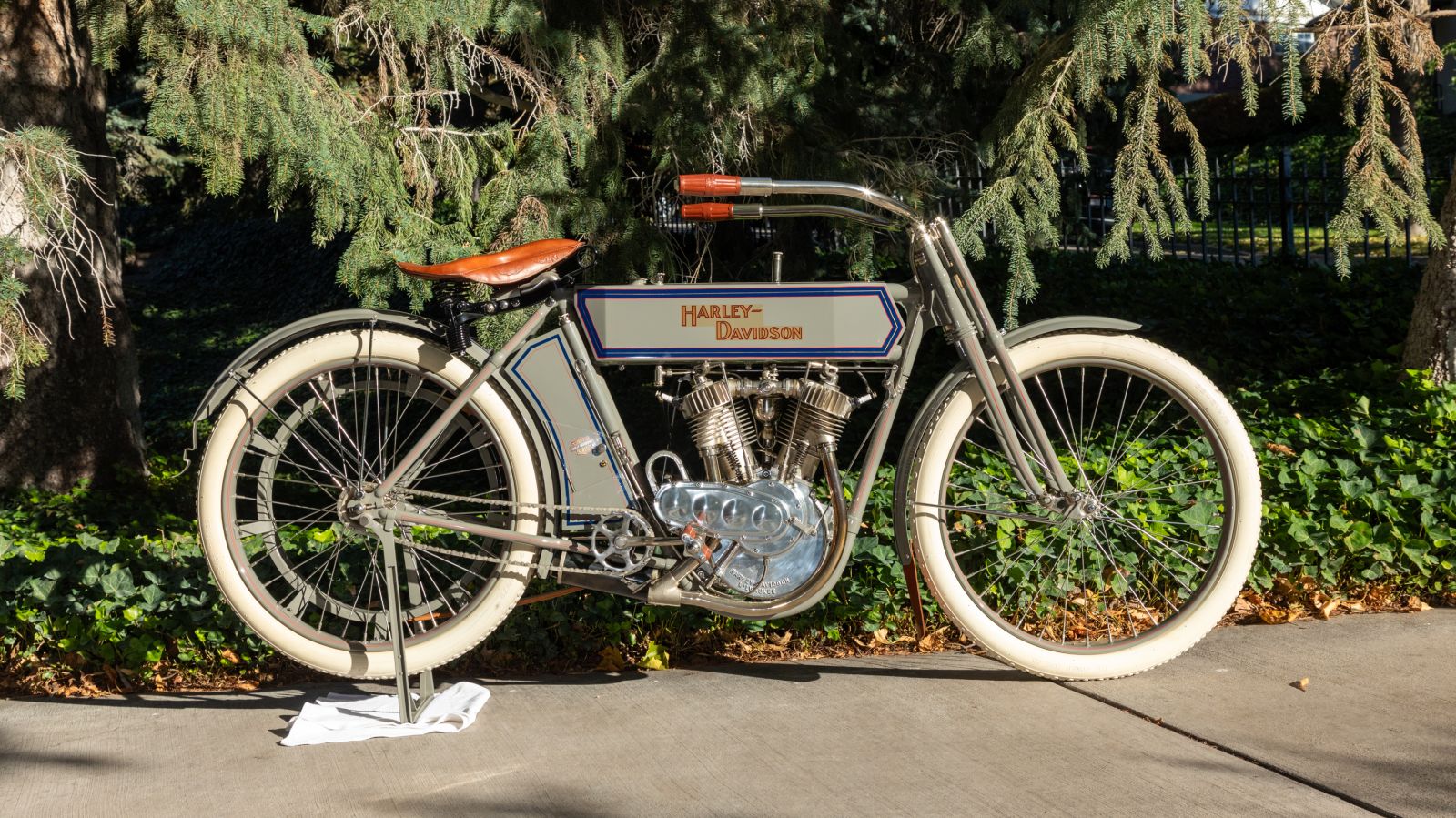
7. 1911 Harley-Davidson 7D Twin – $160,000
- Engine: F-head V-Twin
- Horsepower: 7 hp
- Torque: N/A
- Size: 49.5 cu in (811 cc)
Not every valuable Harley needs a celebrity connection or a Hollywood film credit to command real money at auction. Sometimes pure engineering history and documented originality carry the entire story on their own, and the 1911 7D Twin demonstrates exactly that principle.
Arriving one year before the Model 8A discussed earlier on this list, the 7D represents an even earlier stage in Harley’s transition toward V-twin engine configurations, making it a genuinely important piece in tracing the company’s engineering development during its formative years.
Displacement measured 811cc, smaller than the later 8A model, while horsepower output matched at 7 hp, showing how Harley continued refining this early V-twin platform across successive production years while working out the engineering details. What makes surviving 7D models particularly valuable to serious collectors is documentation.
Bikes from this specific production year with verified, unbroken ownership history and largely original components remain extremely difficult to locate, since most machines from this era either disappeared entirely over the following century or underwent extensive modification and restoration work that compromised their originality for value purposes.
Collectors specifically prioritizing matching numbers and period-correct components over cosmetic perfection actively seek out bikes exactly like this one. That specific collector demand, focused on originality and documented history rather than restoration quality, supported a final auction price of $160,000 for this remarkably well-preserved example from Harley’s earliest V-twin era.
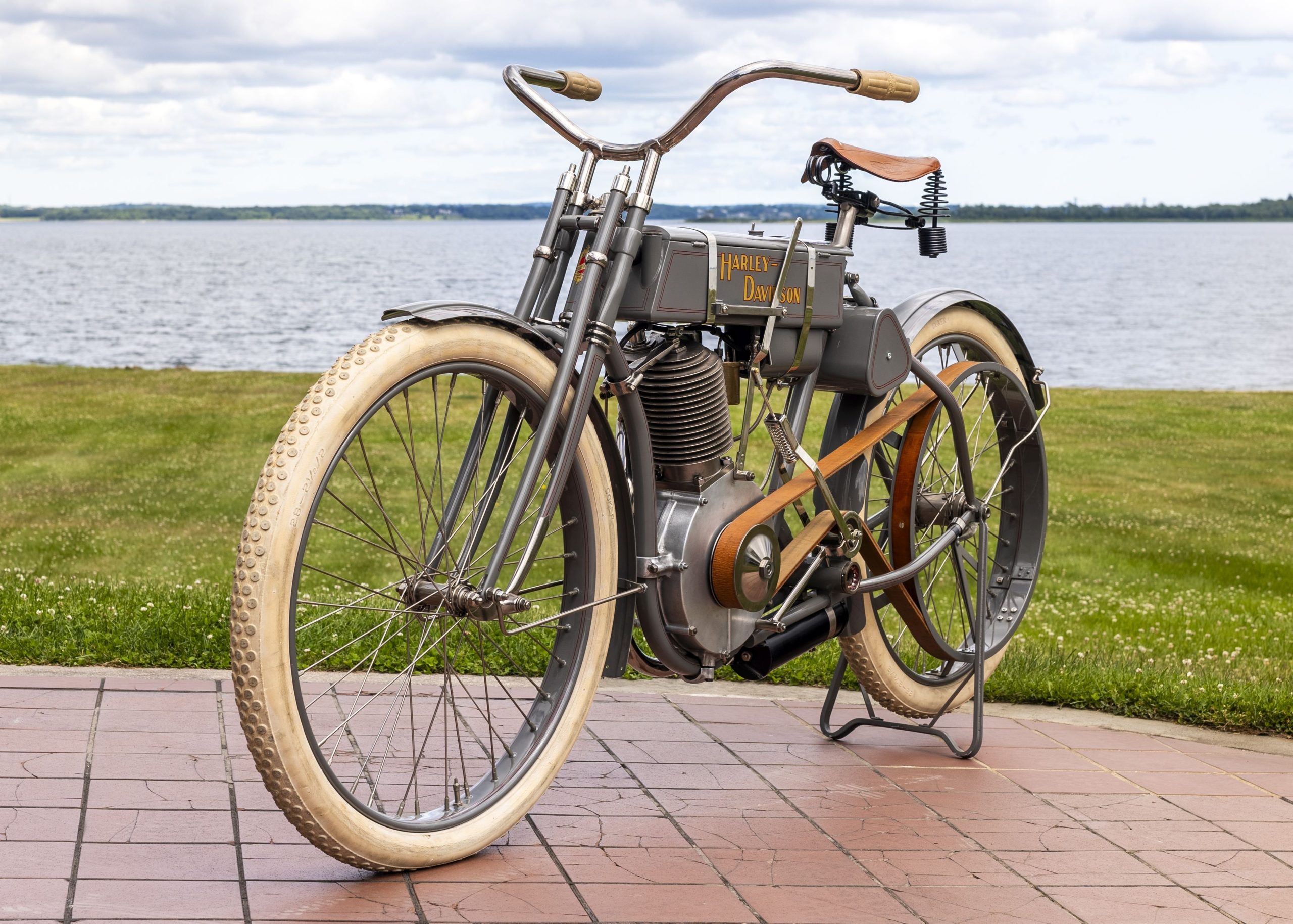
8. 1908 Harley-Davidson Strap Tank (AMCA Award Winner) – $150,000
- Engine: Single-Cylinder Atmospheric Inlet
- Horsepower: 4 hp
- Torque: N/A
- Size: 26.8 cu in (440 cc)
Here’s an interesting comparison worth making directly: this bike shares its exact production year, engine configuration, and specifications with the Model 4 Strap Tank that sold for $935,000 earlier on this list, yet this particular example commanded considerably less at auction.
Why the difference? Documentation and award history explain much of the gap, though not in the direction you might initially assume. This specific 1908 Strap Tank carries recognition from the Antique Motorcycle Club of America, a genuinely respected credential among vintage collectors that confirms authenticity and judged quality according to established preservation standards.
That AMCA recognition adds real credibility and desirability, yet the earlier Model 4 example apparently carried additional provenance, condition factors, or ownership history that pushed its own final price considerably higher during a separate auction event.
This comparison highlights something worth understanding about vintage motorcycle valuation generally: identical specifications on paper don’t guarantee identical auction results, since condition nuances, documented history, and even the specific timing and competitive atmosphere of a particular auction event can meaningfully change final numbers between otherwise comparable machines.
Buyers competing for this AMCA-recognized example still pushed the price to a genuinely substantial $150,000, confirming strong collector demand for verified, judged examples of Harley’s earliest single-cylinder production, even when a technically similar bike achieved a considerably higher result elsewhere.
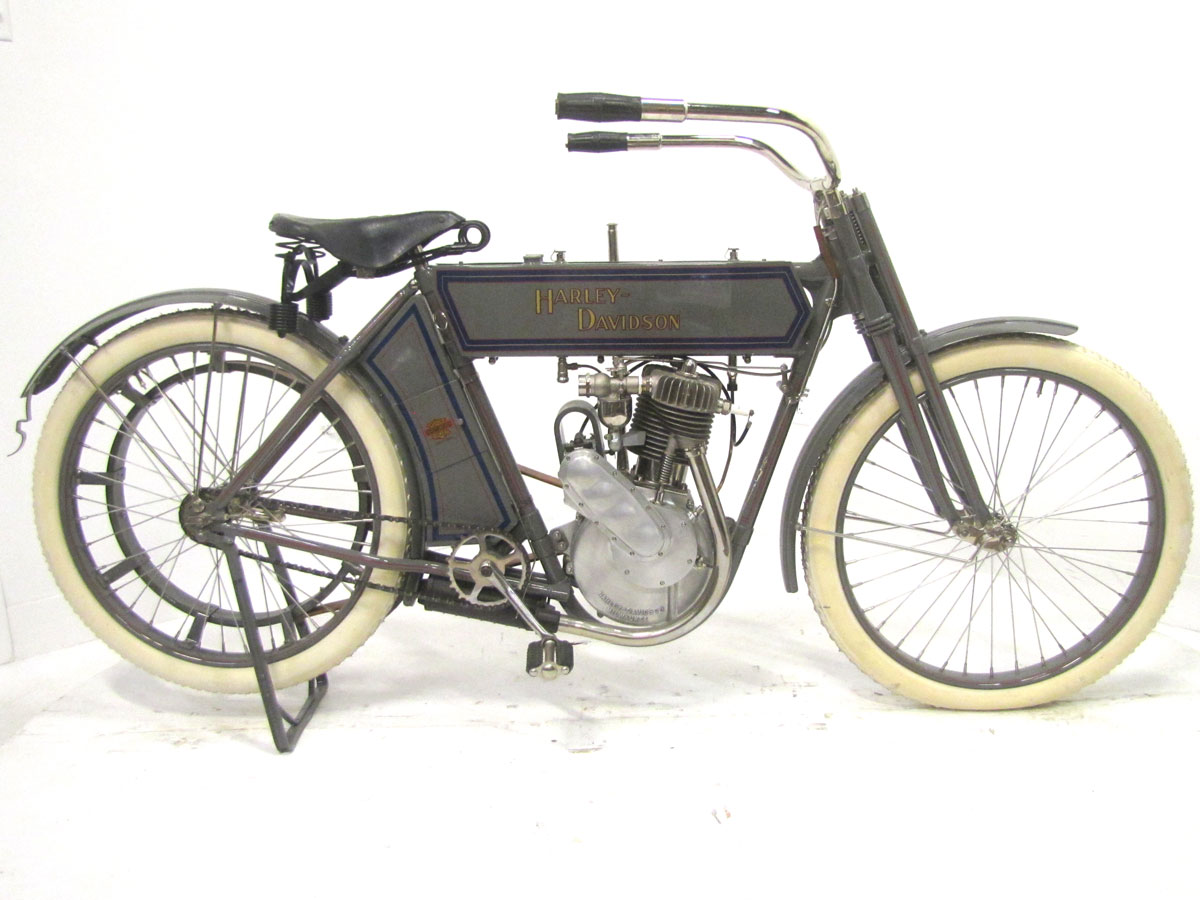
9. 1911 Harley-Davidson Model 7A Single – $126,500
- Engine: Single-Cylinder Atmospheric Inlet
- Horsepower: 4.5 hp
- Torque: N/A
- Size: 30.2 cu in (494 cc)
The 1911 Model 7A Single offers a look at an important period in Harley-Davidson’s early history, when single-cylinder motorcycles remained a popular choice even as the company started introducing V-twin machines. Built during the same year as the Model 7D Twin, the 7A gave customers a dependable and more affordable option while still benefiting from Harley’s steady engineering improvements.
It served riders who wanted a simple motorcycle that was practical for everyday travel without the added cost of a larger engine. The Model 7A used a 494cc single-cylinder engine, making it larger than the strap tank motorcycles Harley-Davidson produced in 1907 and 1908.
The increase in engine size showed how quickly the company was improving its designs during its first few years. Output rose to 4.5 horsepower, which may seem modest today, though it provided a welcome boost at a time when roads were often rough, unpaved, and challenging to travel.
Collectors appreciate the Model 7A because it represents an important step in Harley-Davidson’s development. While early V-twin motorcycles often receive most of the attention, models like the 7A tell the rest of the story by showing how the company’s single-cylinder lineup continued to improve alongside its newer designs. It helps paint a fuller picture of Harley’s engineering progress during its formative years.
Original examples are extremely difficult to find today, especially those that still retain authentic parts and a documented ownership history. When a well-preserved Model 7A reached auction, determined collectors drove the final sale price to $126,500, proving that these early motorcycles remain highly prized pieces of Harley-Davidson history.
Also Read: 8 Vintage Harley Davidsons Worth Hunting Down
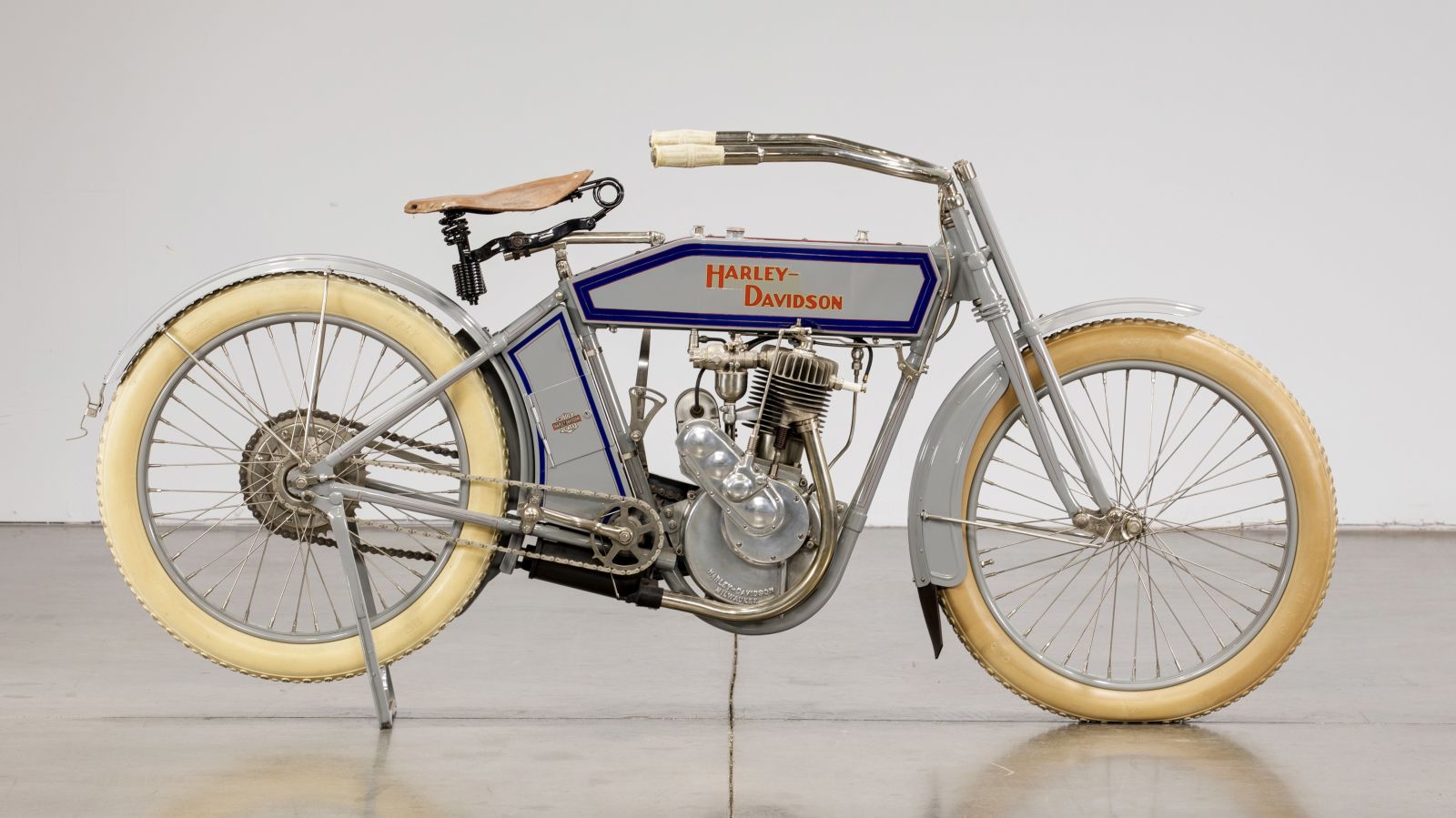
10. 1913 Harley-Davidson Model 9B Twin – $120,750
- Engine: F-head V-Twin
- Horsepower: 8 hp
- Torque: N/A
- Size: 61 cu in (989 cc)
The 1913 Model 9B Twin brings this list to a fitting close, showing how quickly Harley-Davidson improved its motorcycles during its first ten years. It shared the same 989cc engine as the 1912 Model 8A, though power increased to 8 horsepower. That small gain reflected steady improvements to the F-head V-twin as the company’s engineers refined the design through experience.
By 1913, Harley-Davidson had moved well beyond its early single-cylinder motorcycles. The V-twin had become a major part of the brand’s identity, laying the foundation for the motorcycles it would build for generations.
Original 1913 Model 9B Twins are very rare today, especially those that still have most of their factory parts and a well-documented ownership history passed down through multiple owners. Collectors interested in Harley-Davidson’s earliest V-twin motorcycles value models like the 9B because they help show how the design changed from one year to the next during the company’s early days.
When one of these motorcycles reached auction, strong bidding from vintage motorcycle collectors drove the final sale price to $120,750. The result shows that a motorcycle does not need impressive performance numbers to attract high bids. A rare production year, authentic parts, and a well-recorded history can make an early Harley-Davidson one of the most sought-after motorcycles at auction.
