
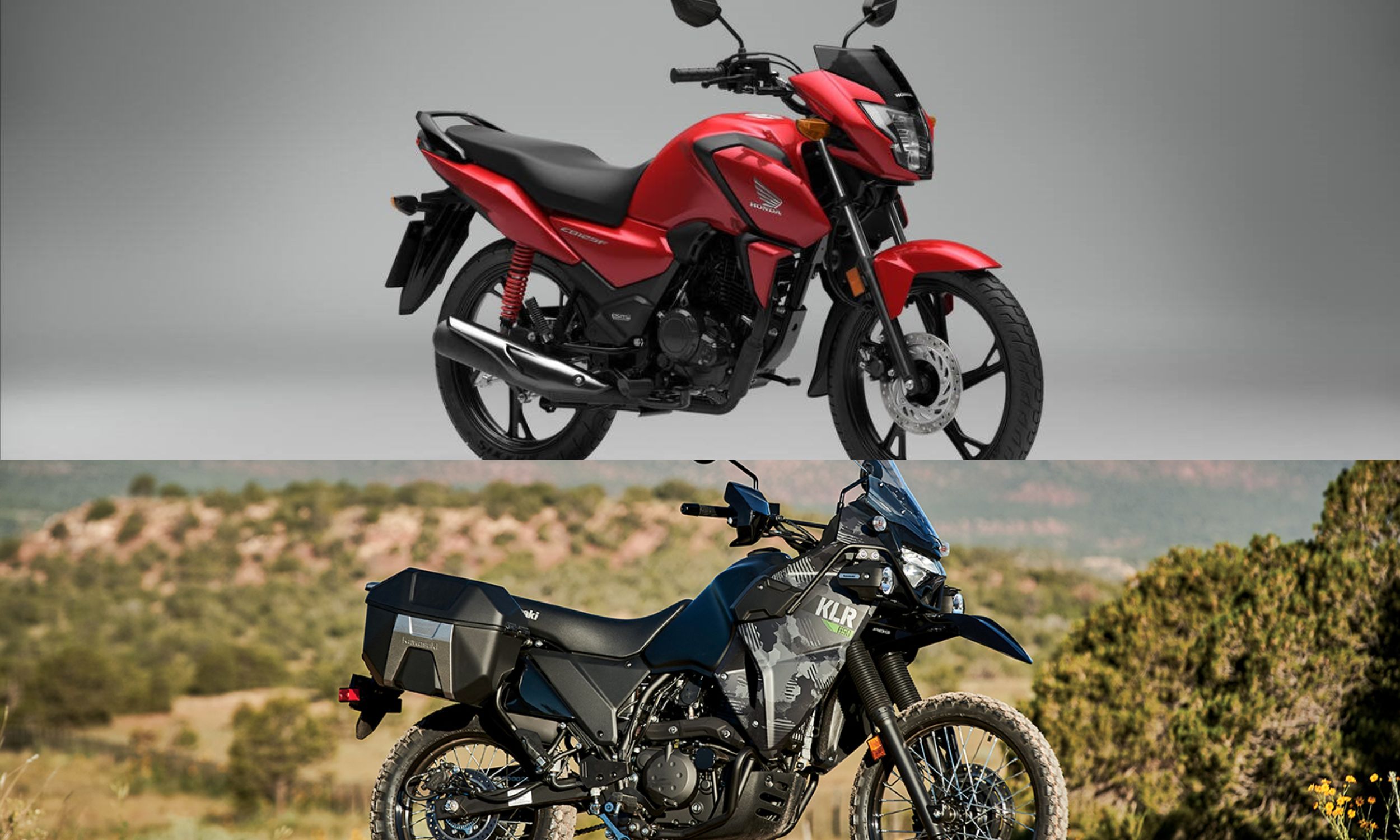
Nobody loves stopping every 150 miles just to top off a tank, especially when the open road stretches out ahead with nothing but good weather and better scenery. Some motorcycles solve that problem better than others, thanks to a simple formula: fuel tank capacity multiplied by fuel economy equals maximum range.
The bikes below were built with exactly that math in mind, whether through massive tanks, remarkably efficient engines, or both working together. From featherweight commuters sipping fuel to full-size adventure machines built for continents, these ten motorcycles let you spend more time riding and less time hunting for the next gas station.
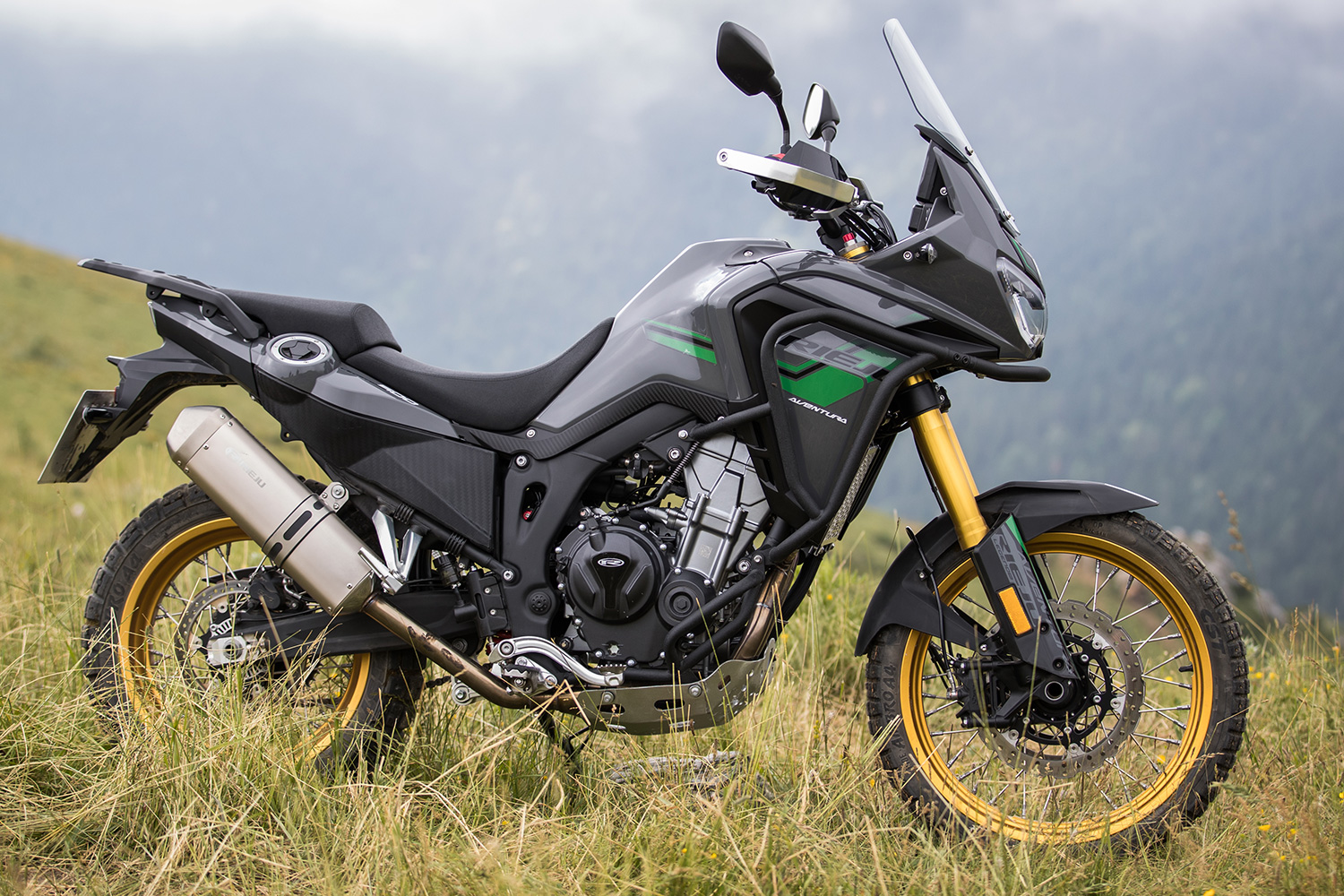
1. Rieju Aventura 500
- Engine: 471cc Liquid-Cooled Parallel Twin
- Horsepower: 47 hp
- Torque: 32 lb-ft
- Size: 86.6″ Long x 34.6″ Wide
- Tank-Size Math: 10.5 Gallons (40 Litres) × 60 MPG = 630 Miles (~1,014 km)
No other production adventure motorcycle offers fuel capacity quite like this model, making it an easy choice for the top position. Its outstanding range comes from a well-planned fuel system that uses two separate 5.25-gallon tanks instead of one large reservoir.
This arrangement allows the motorcycle to carry a large amount of fuel while keeping the weight evenly distributed across the chassis. The result is a machine that remains balanced and comfortable to ride, even during long trips.
Actual riding distance will always depend on road conditions and riding habits. Strong winds, steep climbs, rough surfaces, and higher speeds can all reduce how far the motorcycle travels before another refill becomes necessary.
Even with those factors, covering more than 500 miles on a single tank remains achievable during normal touring. Very few adventure motorcycles can match that level of endurance without making several fuel stops along the way.
Long-distance riders gain a clear advantage from this impressive fuel range, especially when travelling through isolated places where filling stations are difficult to find. Instead of worrying about locating fuel every couple of hours, riders can concentrate on enjoying the trip and reaching their planned destination without unnecessary interruptions.
That extra freedom makes long journeys much less stressful and allows better flexibility when choosing travel routes. The motorcycle’s impressive range is not simply a number on paper.
It delivers practical value for people who enjoy travelling across remote areas. With fewer refuelling stops and a well-balanced design, this machine gives riders the confidence to cover long distances without constantly worrying about running out of fuel.
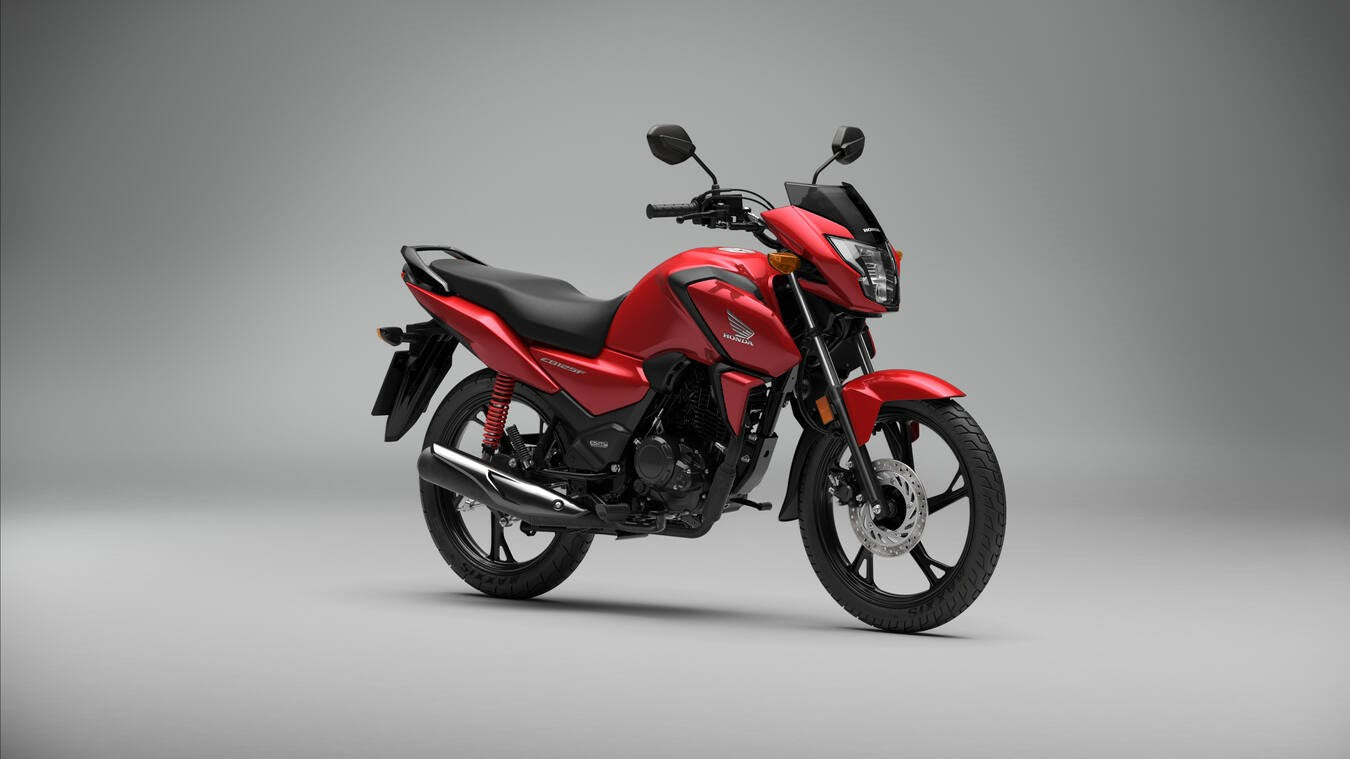
2. Honda CB125F
- Engine: 124cc Air-Cooled Single Cylinder
- Horsepower: 11 hp
- Torque: 8 lb-ft
- Size: 79.1″ Long x 29.7″ Wide
- Tank-Size Math: 2.9 Gallons × 150 MPG = 435 Miles (~700 km)
Small doesn’t mean limited, and this commuter bike proves that point convincingly. Its tank holds barely three gallons, tiny by any standard, yet it still manages to outdistance motorcycles carrying two or three times that fuel capacity. The secret sits entirely in the engine itself.
Honda’s enhanced Smart Power technology squeezes remarkable efficiency out of a modest single-cylinder design, returning fuel economy figures that sound almost unbelievable next to typical motorcycle numbers. Under ideal conditions, this little engine sips fuel so conservatively that its range rivals machines built specifically for long-distance touring.
That efficiency makes this bike a favorite among riders who prioritize low running costs over outright power, particularly commuters covering daily mileage in urban and suburban settings. It won’t win any drag races, and nobody buys one expecting thrilling acceleration.
What it delivers instead is dependable, inexpensive transportation that barely touches a gas station budget. Sometimes the smartest engineering solution isn’t a bigger tank at all, just an engine smart enough not to need one.
Also Read: 10 Most Expensive Motorcycles Ever Sold In The US
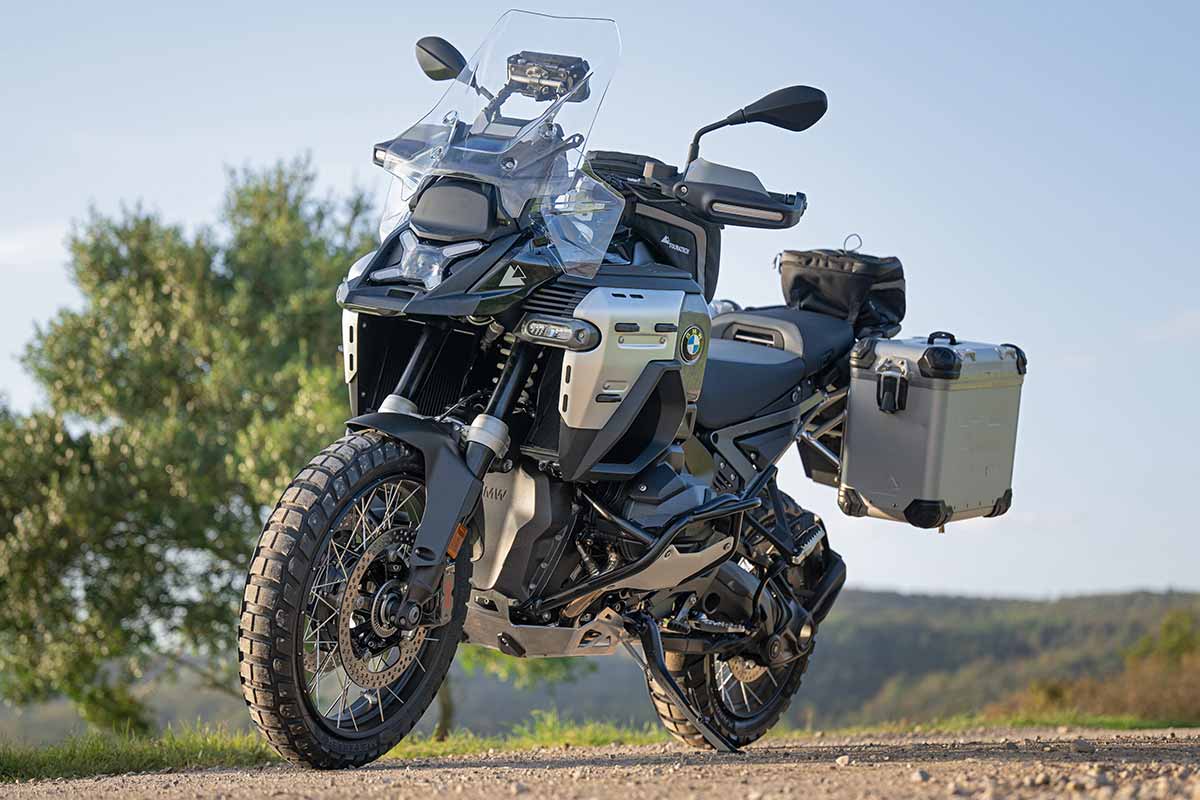
3. BMW R 1300 GS Adventure
- Engine: 1,300cc ShiftCam Boxer Twin
- Horsepower: 145 hp
- Torque: 110 lb-ft
- Size: 87.1″ Long x 39.4″ Wide
- Tank-Size Math: 7.92 Gallons (30 Litres) × 49 MPG = 388 Miles (~624 km)
BMW designed this flagship adventure motorcycle for riders who enjoy travelling across countries and tackling long journeys without worrying about frequent fuel stops. Built for demanding expeditions, the motorcycle combines comfort, durability, and dependable performance, making it a trusted option for people who spend long hours on the road or venture into remote locations where fuel stations are difficult to find.
A large 30-litre fuel tank plays a major part in the motorcycle’s long-distance ability. BMW paired that generous fuel capacity with an engine developed to deliver strong performance while using fuel efficiently. This combination allows riders to travel well beyond 350 miles before the low-fuel warning appears on the dashboard.
That level of endurance places the motorcycle among the strongest long-distance adventure bikes available for riders who enjoy extended touring. What gives this model an advantage is not only the size of its fuel tank but also how closely its real-life performance matches official estimates.
Many owners regularly report reaching fuel economy figures that are very close to expectations during ordinary touring rather than under controlled testing conditions. That consistency gives riders greater confidence whenever they travel across unfamiliar routes.
People planning trips through isolated regions often choose this BMW because they know they can depend on its fuel range. Long distances between fuel stations become less of a concern, allowing riders to concentrate on the journey instead of worrying about the next refill.
The motorcycle reflects BMW’s long-standing focus on careful engineering, with every part of the fuel system and engine working together to deliver dependable performance and excellent travelling distance for serious adventure riding.
4. Triumph Tiger 1200 GT Explorer
- Engine: 1,160cc Liquid-Cooled Inline-Three
- Horsepower: 147 hp
- Torque: 95 lb-ft
- Size: 88.4″ Long x 38.7″ Wide
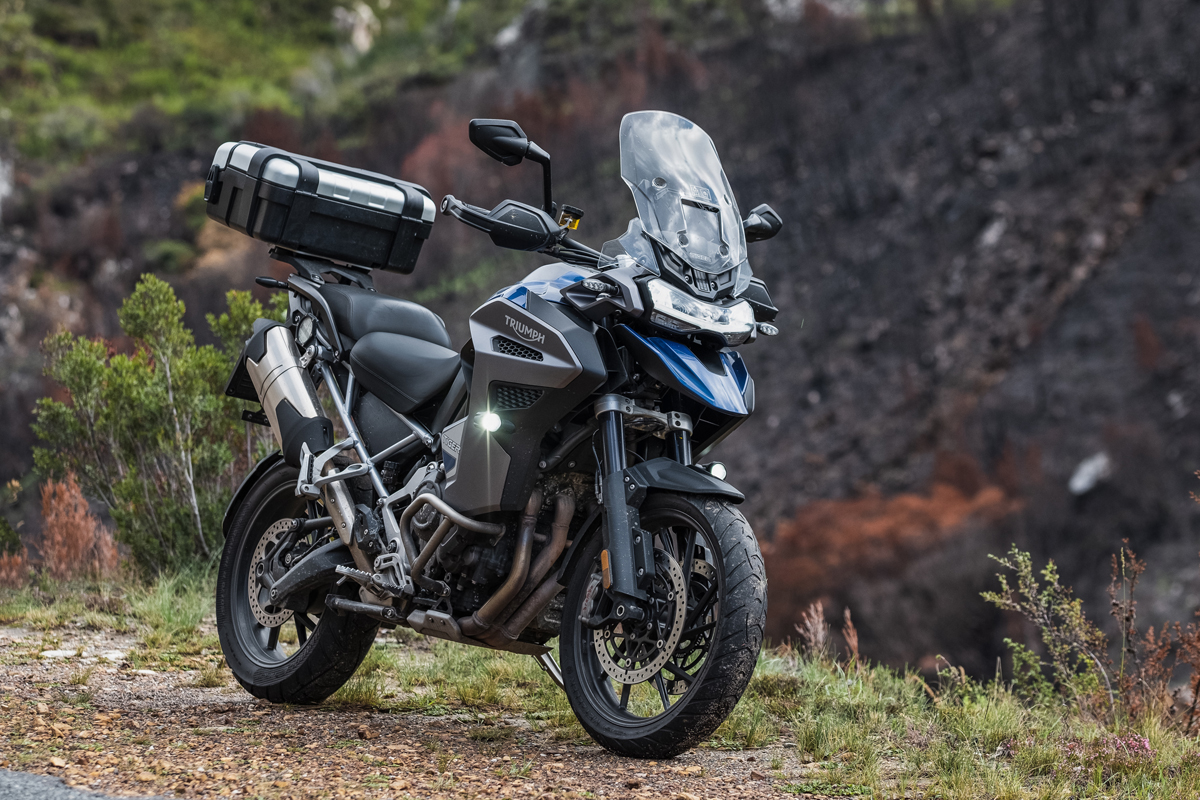
- Tank-Size Math: 7.92 Gallons (30 Litres) × 46 MPG = 364 Miles (~586 km)
Long-distance travel sat at the center of every design decision Triumph made with this model, and the results speak for themselves. Matching its BMW rival with an identical 30-litre fuel tank, this Tiger pairs that generous capacity with a triple-cylinder engine tuned as much for efficiency as it is for the kind of strong, linear power delivery Triumph’s inline-three engines are known for.
That balance gives riders excellent touring range without sacrificing the performance needed to handle mountain switchbacks or open highway stretches with equal confidence. Riders covering serious mileage on multi-day trips appreciate not having to choose between range and capability, since this bike delivers both without compromise.
The triple-cylinder configuration also brings a distinct character to the ride, something between the smoothness of a four-cylinder and the torque delivery of a twin, adding personality to what might otherwise be a purely practical touring machine. For riders cross-shopping large adventure bikes purely on range numbers, this Tiger sits close enough to the segment leaders that the decision often comes down to riding feel instead.
5. Honda ST1300 Pan European
- Engine: 1,261cc Longitudinal V4
- Horsepower: 125 hp
- Torque: 85 lb-ft
- Size: 89.4″ Long x 33.9″ Wide
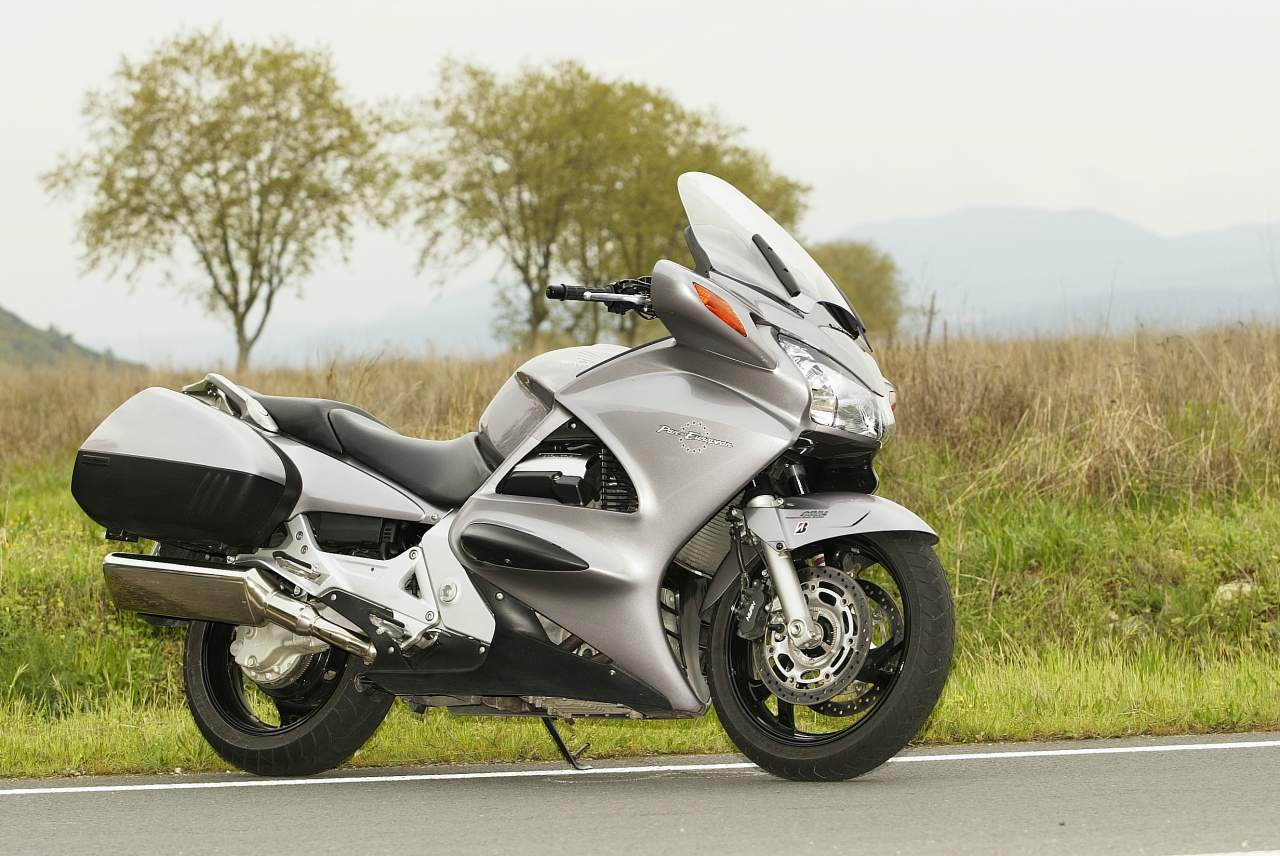
- Tank-Size Math: 7.66 Gallons × 44 MPG = 337 Miles (~542 km)
Sport-touring bikes rarely get the recognition they deserve, and this Honda ranks among the finest examples of the category ever built. Part of its fuel supply sits beneath the rider’s seat rather than in a conventional above-frame tank, a design choice that lowers the center of gravity and improves handling at speed, something riders notice immediately when carving through curves on a loaded touring bike.
That unconventional tank placement doesn’t come at the cost of range either. Riders can comfortably exceed 330 miles between fill-ups, a genuinely impressive figure for a bike built around sport-oriented handling rather than pure long-distance hauling. The V4 engine configuration adds smoothness that inline-four or V-twin competitors can’t quite match, delivering power in a way that feels refined rather than raw.
For riders who want serious mileage between stops but refuse to give up cornering confidence for it, this Pan European hits a sweet spot few other sport-touring bikes manage. It’s proof that thoughtful engineering can solve two problems, range and handling, with a single clever solution.
6. Honda Africa Twin Adventure Sports
- Engine: 1,084cc Liquid-Cooled Parallel Twin
- Horsepower: 101 hp
- Torque: 82 lb-ft
- Size: 91.7″ Long x 38.2″ Wide
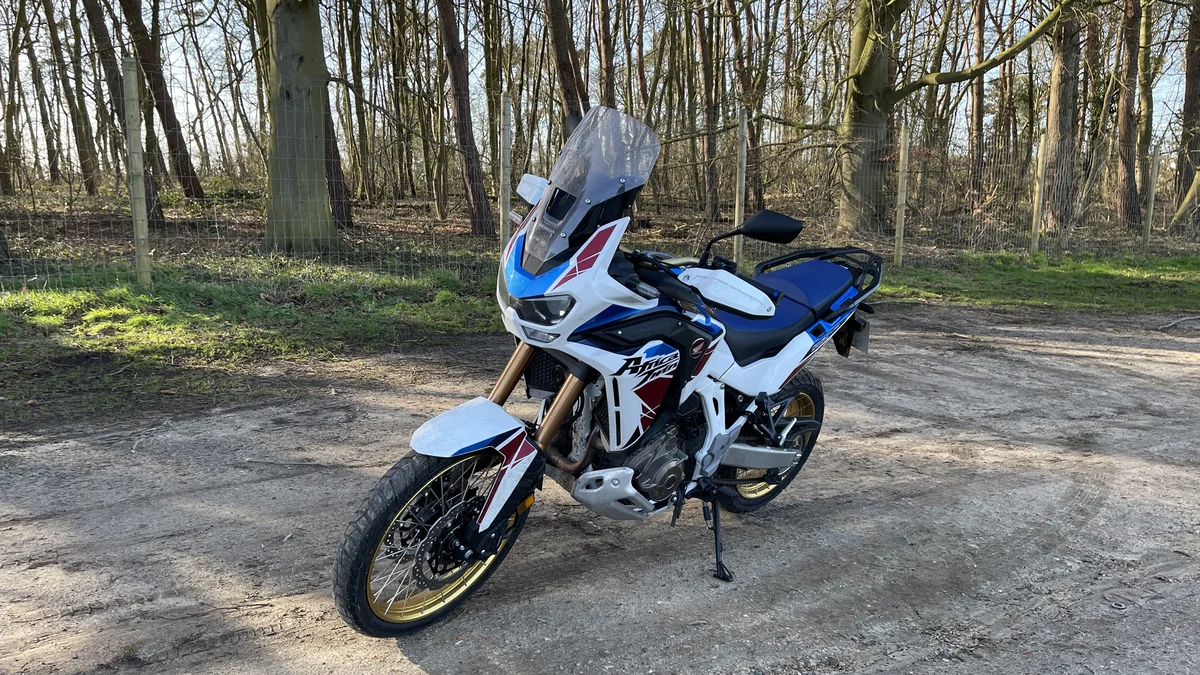
- Tank-Size Math: 6.55 Gallons (24.8 Litres) × 53 MPG = 347 Miles (~558 km)
A motorcycle built for remote travel must offer much more than comfort and good looks, and the Honda Africa Twin Adventure Sports was designed with that purpose in mind. Unlike bikes intended mainly for weekend outings, this version is made for riders who spend long hours far from towns and fuel stations.
Honda increased the fuel tank size compared to the standard Africa Twin because long-distance off-road riding calls for extra fuel storage to keep journeys going without unnecessary interruptions. The larger fuel tank works well with Honda’s efficient parallel-twin engine, allowing the motorcycle to travel long distances before needing another refill.
That extra range becomes very useful when riding through places where fuel stations are scarce or completely unavailable. Whether the route passes through dry desert tracks, remote countryside roads, or mountain paths, riders can continue with greater confidence, knowing the motorcycle is prepared for demanding conditions.
Many off-road motorcycles struggle to combine generous fuel capacity with good handling because carrying extra fuel adds more weight. Honda addressed that challenge by designing the Adventure Sports to remain stable and responsive even with its larger tank. The motorcycle still feels capable on rough tracks while giving riders the benefit of extended travel between refuelling stops.
The Adventure Sports name reflects the motorcycle’s real purpose rather than serving as a promotional label. Every part of its design supports riders who travel beyond paved roads and into isolated areas. Its larger fuel capacity, dependable engine, and balanced handling make it a dependable choice for riders who expect their motorcycle to perform well when the nearest fuel station is still many miles away.
7. Moto Guzzi Stelvio
- Engine: 1,042cc Transverse V-Twin
- Horsepower: 115 hp
- Torque: 77 lb-ft
- Size: 90.4″ Long x 38.6″ Wide
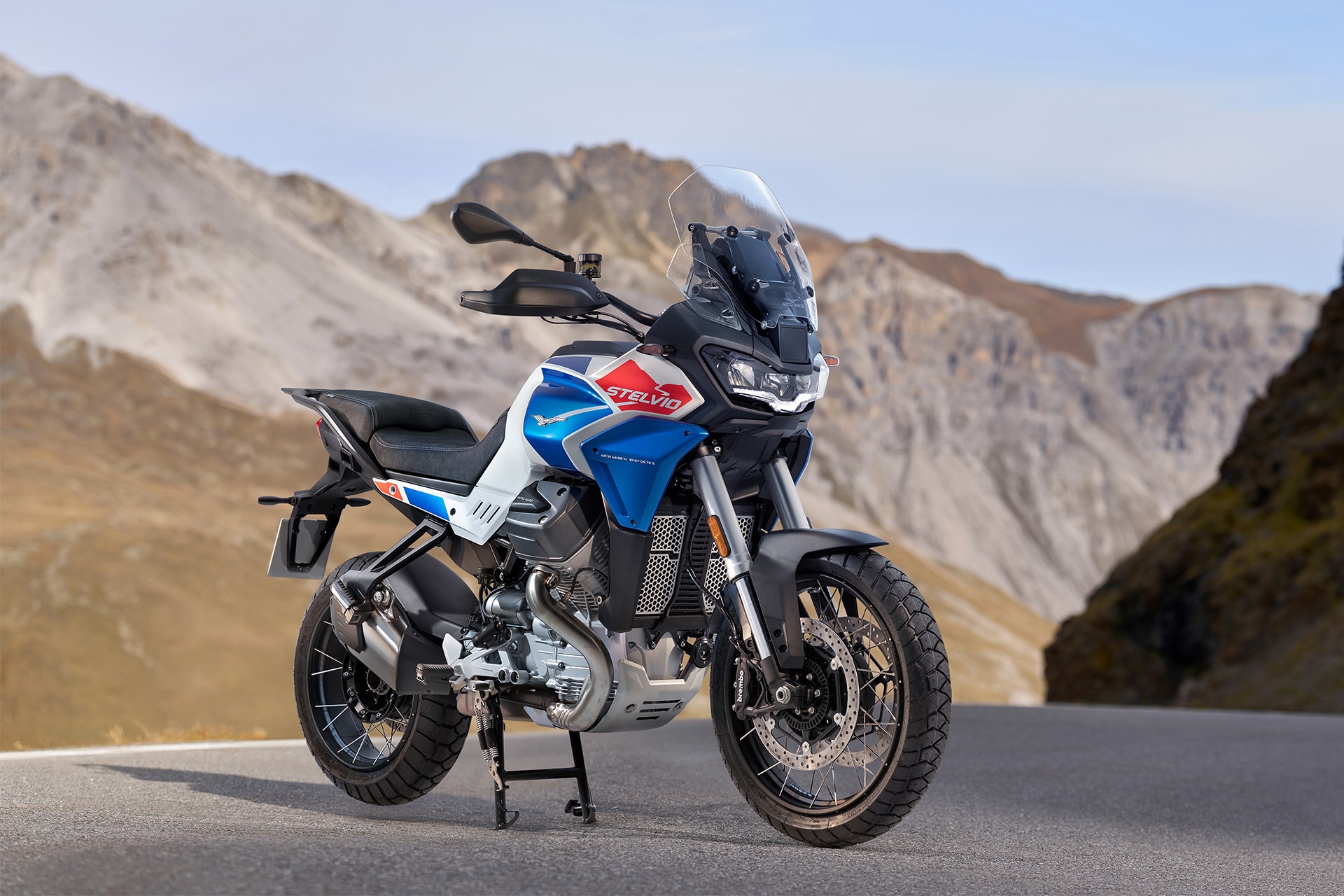
- Tank-Size Math: 5.54 Gallons (21 Litres) × 60 MPG = 332 Miles (~534 km)
Competing directly against Europe’s most established adventure tourers takes confidence, and Moto Guzzi built this modern Stelvio specifically with that competition in mind. Its transverse V-twin engine configuration, a signature layout for the brand, delivers efficiency figures strong enough to push this bike well above 300 miles despite carrying a fuel tank smaller than several rivals on this list.
That efficiency-first approach shows exactly how engine design can compensate for a more modest tank size, achieving comparable range numbers through smarter fuel consumption rather than sheer fuel volume. Riders drawn to Moto Guzzi’s distinct engineering approach, including its shaft-drive layout and unmistakable engine character, get genuine touring capability without needing to sacrifice the brand’s signature riding feel.
European adventure touring has plenty of established players, and carving out a respectable position in that segment requires real engineering substance rather than just badge appeal. This Stelvio backs up its ambitions with numbers that hold their own against bikes built by longer-established rivals in the same class.
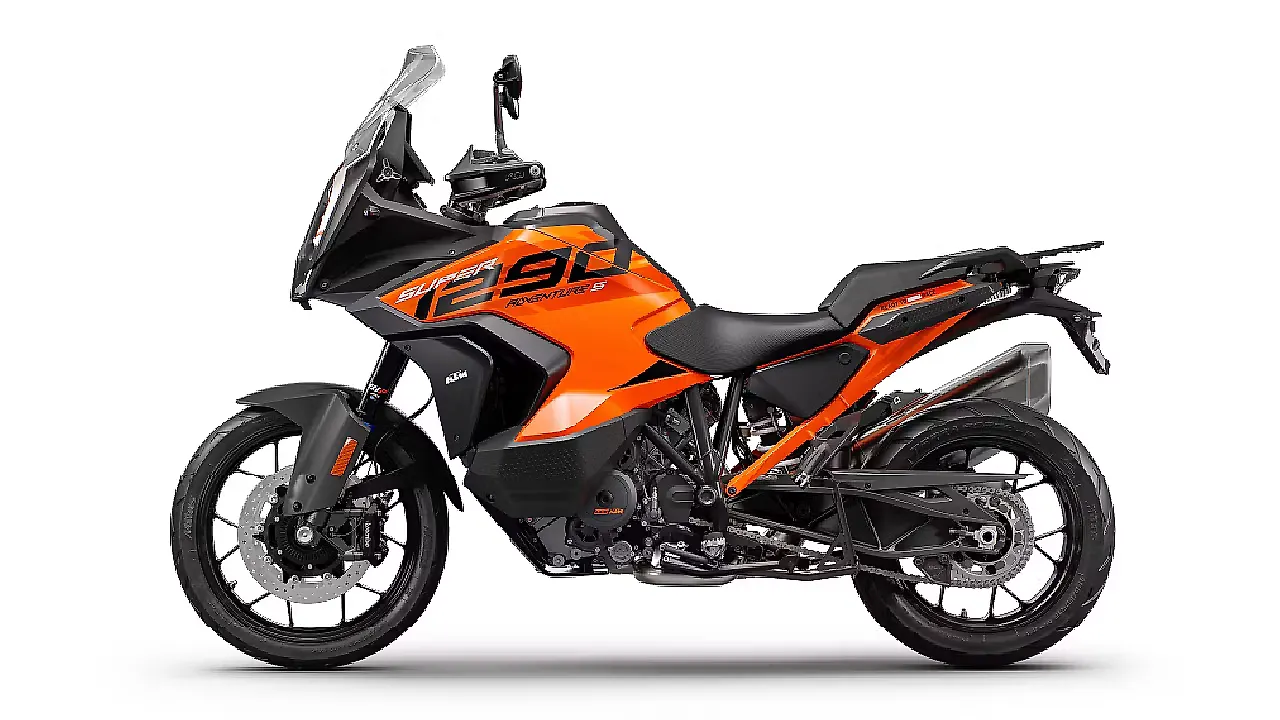
8. KTM 1290 Super Adventure R / S
- Engine: 1,301cc LC8 75-Degree V-Twin
- Horsepower: 160 hp
- Torque: 102 lb-ft
- Size: 89.7″ Long x 35.5″ Wide
- Tank-Size Math: 6.1 Gallons × 45 MPG = 275 Miles (~443 km)
KTM’s experience in the Dakar Rally has shaped many parts of its adventure motorcycles, and the Super Adventure clearly reflects that racing background. One feature that stands out is the position of its fuel tank. Instead of placing it high above the engine like many competing adventure bikes, KTM installs it much lower on the frame.
This idea comes directly from the company’s rally motorcycles and serves a practical purpose beyond appearance. Placing the fuel tank lower gives the motorcycle a better balance by keeping much of its weight closer to the ground. As a result, the bike feels steadier and easier to control, especially when tackling demanding off-road routes.
Riders can move through rocky paths, uneven tracks, and loose surfaces with greater confidence because the motorcycle remains more stable. A heavy fuel load positioned higher can make a bike harder to manage, particularly when quick reactions are needed on rough ground.
Although the Super Adventure carries less fuel than certain motorcycles in the same category, it still delivers enough riding distance for long trips that combine highways with dirt trails. Most riders will find the available range suitable for extended travel without making frequent stops to refill the tank.
Many adventure riders are willing to accept the slightly lower fuel capacity because the motorcycle rewards them with sharper handling and a more controlled riding experience. This design shows that fuel capacity alone does not determine how capable an adventure motorcycle is. Careful engineering and balanced weight distribution often make a much bigger difference when riding across demanding routes.
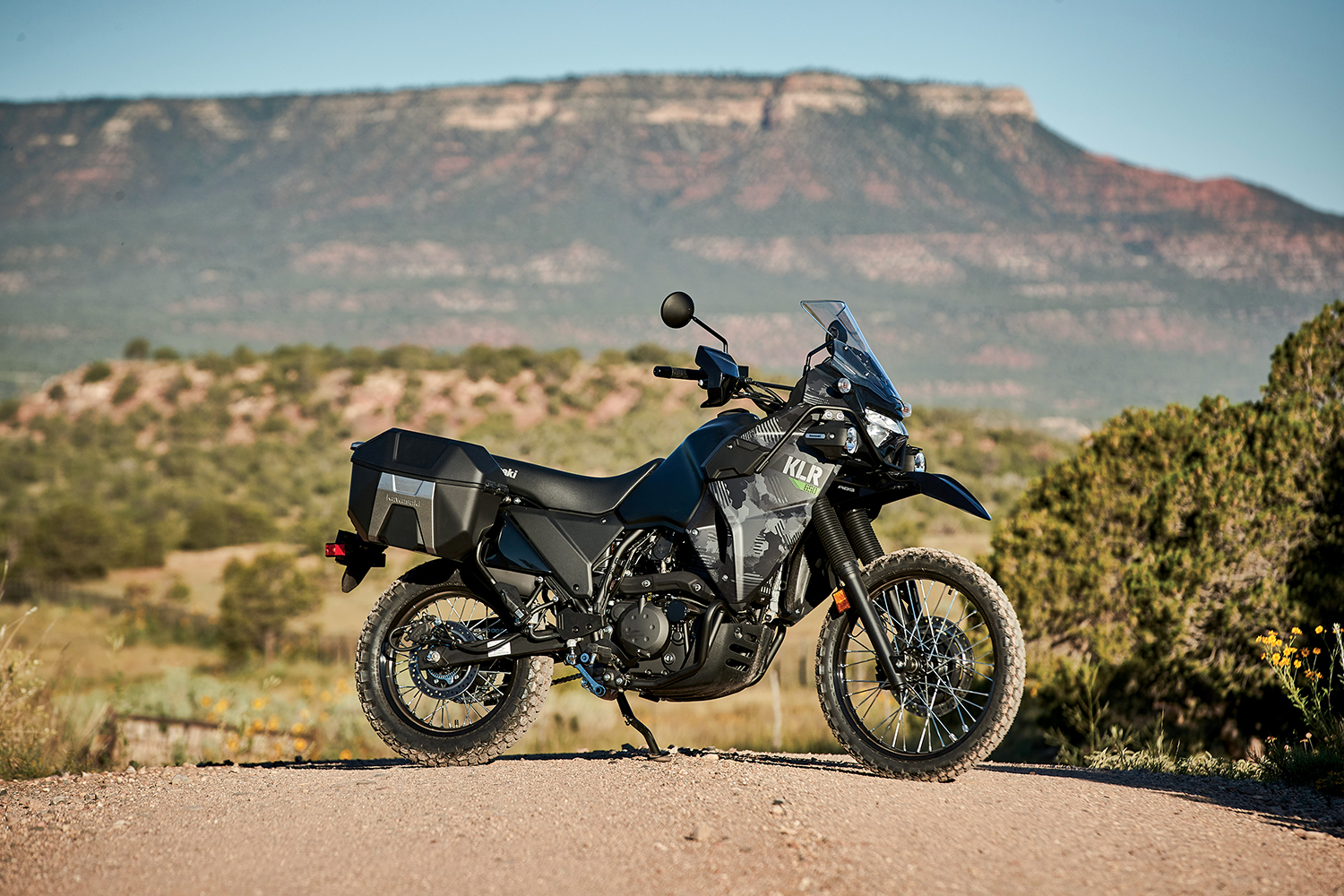
9. Kawasaki KLR650 Adventure
- Engine: 652cc Liquid-Cooled Single Cylinder
- Horsepower: 40 hp
- Torque: 39 lb-ft
- Size: 88.4″ Long x 38.2″ Wide
- Tank-Size Math: 6.1 Gallons × 44 MPG = 268 Miles (~431 km)
Simplicity has its own kind of appeal, and few motorcycles demonstrate that better than this long-running Kawasaki. Riders traveling through remote regions have gravitated toward this bike for decades, drawn less by flashy specifications and more by a reputation for showing up and starting every single time, regardless of conditions.
Its single-cylinder engine trades outright power for dependable, economical operation, exactly the kind of tradeoff that matters most when the nearest repair shop sits hundreds of miles away. A generously sized fuel tank paired with that efficient engine delivers genuinely dependable long-range capability whether riders stay on pavement or head off into dirt and gravel. This isn’t a bike built to impress anyone with numbers on a spec sheet.
It’s built to get riders where they’re going and back again without drama, which explains why it’s remained a favorite among overlanders and remote-region travelers for so many years. Sometimes the most valuable quality a motorcycle can offer isn’t speed or power, but plain, unglamorous reliability mile after mile.
Also Read: 10 Monster Motorcycles That Prioritize Comfort Over Weight
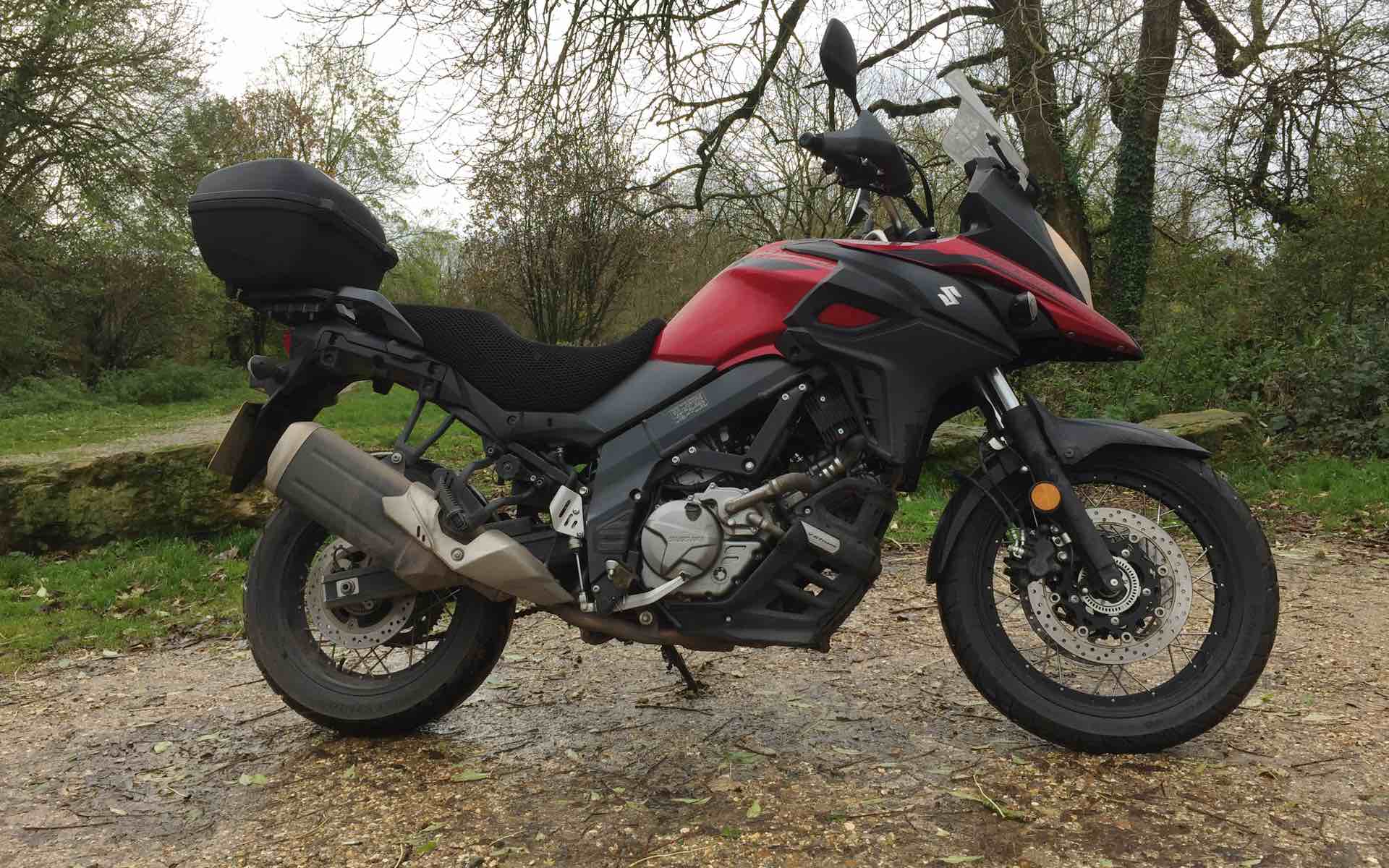
10. Suzuki V-Strom 650XT
- Engine: 645cc 90-Degree V-Twin
- Horsepower: 70 hp
- Torque: 46 lb-ft
- Size: 89.6″ Long x 35.8″ Wide
- Tank-Size Math: 5.3 Gallons × 48 MPG = 254 Miles (~409 km)
Finding the right middleweight adventure motorcycle is not always easy because it must satisfy experienced riders while remaining comfortable for those moving up from smaller bikes. The Suzuki V-Strom achieves that balance with a practical design that suits many riding styles.
It offers dependable performance without making riders feel overwhelmed, making it a popular option for people who want a motorcycle they can rely on every day. Power comes from Suzuki’s well-tested V-twin engine, which has built a strong reputation through years of dependable service.
Rather than chasing impressive performance figures, the engine focuses on smooth power delivery and excellent fuel economy. During long-distance touring, riders can comfortably travel beyond 250 miles on a full tank before looking for another filling station. That combination of efficiency and reliability gives riders greater confidence when covering long distances.
Years of dependable service have helped the V-Strom earn the trust of riders who want a motorcycle capable of handling different conditions. While its fuel range may not match the highest figures in the adventure motorcycle category, it still provides more than enough distance for touring, commuting, and weekend rides.
The motorcycle performs consistently without demanding constant attention or expensive maintenance. Many people choosing their first serious touring motorcycle see the V-Strom as a dependable investment. It handles daily travel with ease while remaining ready for longer journeys whenever the opportunity comes.
Riders appreciate its comfortable riding position, predictable handling, and trusted engine. Instead of focusing on one outstanding feature, the motorcycle delivers a well-rounded package that continues to satisfy owners long after the first ride.
