
As electric vehicles continue to gain traction in the automotive market, one question remains front and center for both first-time and experienced EV buyers: How long does the battery last? This concern is especially critical for those considering used electric cars, where the lifespan and condition of the original battery pack can significantly influence long-term value.
The cost of replacing a battery is not insignificant, and for many, it determines whether purchasing a used EV is a smart investment or a financial risk. For years, skeptics have warned about potential battery degradation, reduced range, and eventual failure, predictions that left many cautious about the long-term viability of EV ownership.
But those fears are increasingly being challenged by real-world data. As EVs have aged, they’ve started telling their own story, and it’s more optimistic than many expected. Vehicles that hit the market as far back as 2012 are still running with their original batteries, sometimes with hundreds of thousands of miles on the odometer.
While range loss does occur over time, the rate of degradation has often been much slower than originally feared. With proper care and intelligent engineering, many EV batteries have remained not only functional but impressively reliable. This shift in understanding is helping more people feel confident about the used EV market.
Much of this success comes down to design choices made by automakers. From the beginning, most major EV manufacturers knew that battery longevity would be crucial. They developed sophisticated battery management systems (BMS), temperature control mechanisms, and charging protocols to preserve the health of battery cells over time.
Some went a step further by building in charge limits, buffer zones, and regenerative braking features that reduced wear and optimized battery usage patterns. These technical decisions weren’t about just improving performance in the short term; they were made with durability in mind.
The role of the driver can’t be overlooked either. A careful owner can extend the life of a battery significantly by following simple habits: avoiding extreme discharges, limiting frequent fast-charging, parking in shaded or insulated areas, and maintaining a consistent state of charge.
On the flip side, poor charging habits and environmental exposure can speed up battery decline. The good news is that many used EVs on the market today come from drivers who understood this and who helped their vehicles retain strong battery health.
Now, with a growing number of EVs on the used market, it’s easier than ever to examine real-world examples of long-lasting battery performance. These are not cherry-picked outliers or flukes; they represent vehicles across brands, price ranges, and driving styles.
In this article, we highlight 10 electric vehicles that have kept their original battery packs working efficiently years after their release. These vehicles weren’t necessarily the most expensive or highest range models, but they’ve proven that durability and smart design can go a long way.
Whether you’re an EV enthusiast, a cautious buyer doing your research, or someone just curious about the evolving industry of battery-powered cars, these examples serve as a reassuring sign of where the technology stands.
These vehicles show that even first- and second-generation EVs can be trusted to perform reliably for many years, and that buying used doesn’t mean compromising on dependability. With a bit of research and the right model, you can own an EV that still delivers solid range, dependable performance, and thousands of miles of driving, all on its original battery.
Also Read: 5 BMW Engines That Last and 5 That Drain Your Wallet
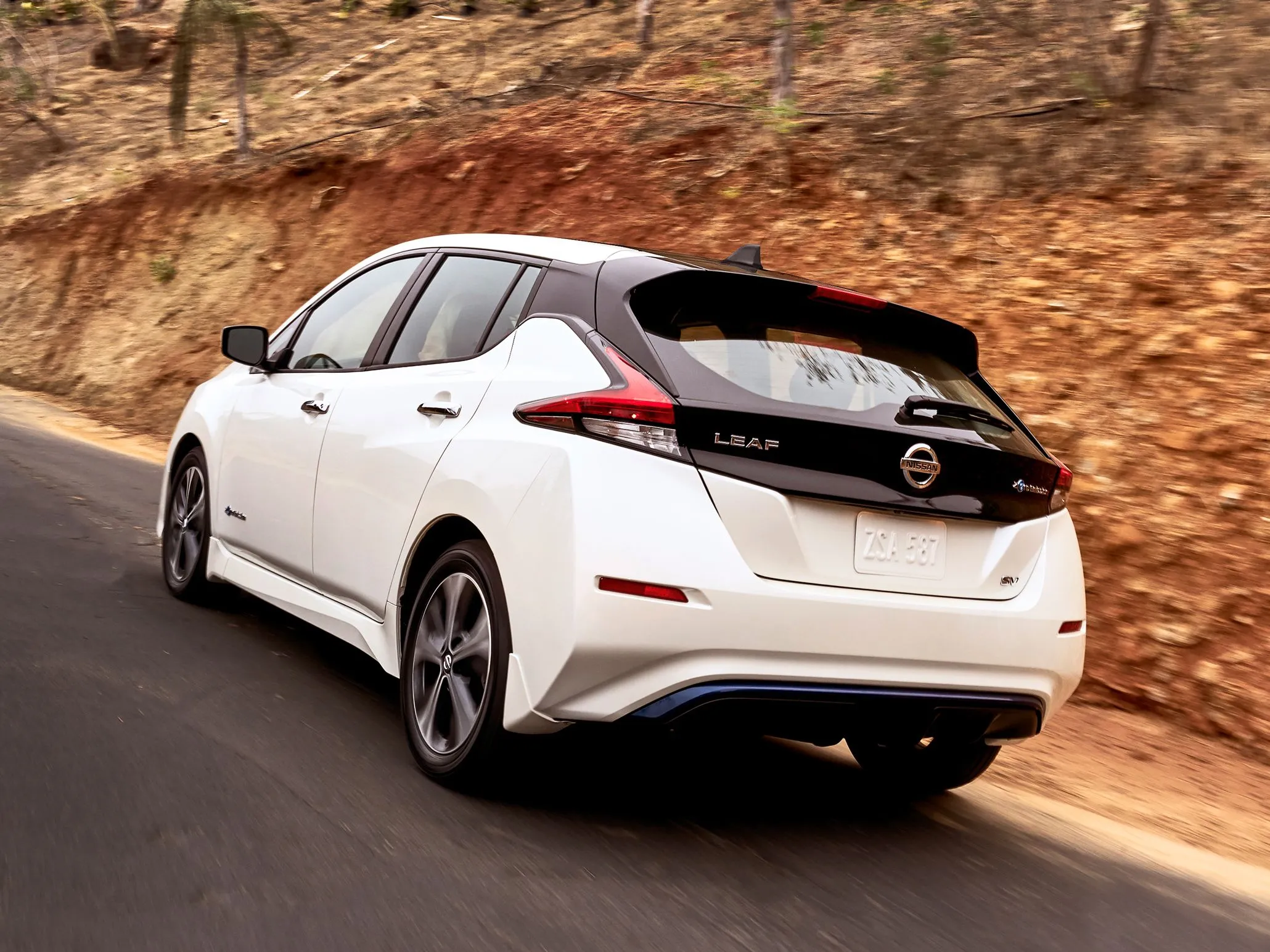
1. Nissan Leaf (2013–2017)
The early Nissan Leaf was one of the first mass-market electric cars, and despite its air-cooled battery system, which lacks the advanced thermal management seen in newer models, many units are still on the road today with their original battery packs functioning well.
The 24 kWh and 30 kWh battery variants were seen in models from 2013 to 2017, and with proper use, these batteries have aged surprisingly well. While some degradation is inevitable, many owners still report 70% to 85% of original capacity even after nearly a decade of ownership.
A key factor in the longevity of these early Leaf models is climate. Owners in temperate regions report far better battery health than those in hot climates, where air-cooled packs were more prone to heat-related degradation. Nevertheless, plenty of Leafs in moderate weather zones have kept their original packs with usable range for commuting and short trips. Maintenance has also played a role; conservative charging habits and avoiding full discharges have preserved battery life effectively.
It’s not uncommon to find a 2014 or 2015 Leaf with over 100,000 miles and still covering 60 to 70 miles per charge. While this may not be sufficient for everyone, it still suits many urban drivers. Because the range on these cars was limited from the start, the perception of degradation can be more psychological than practical. If a car started with 84 miles and now does 65, it’s still usable for many lifestyles.
Battery replacement on older Leafs can be expensive, but the fact that so many are still operating with their original packs suggests that these costs are often unnecessary. For someone looking at affordable EV entry, the Leaf still offers a viable path, especially if buying from a cool-weather region with detailed service history and signs of careful battery usage.
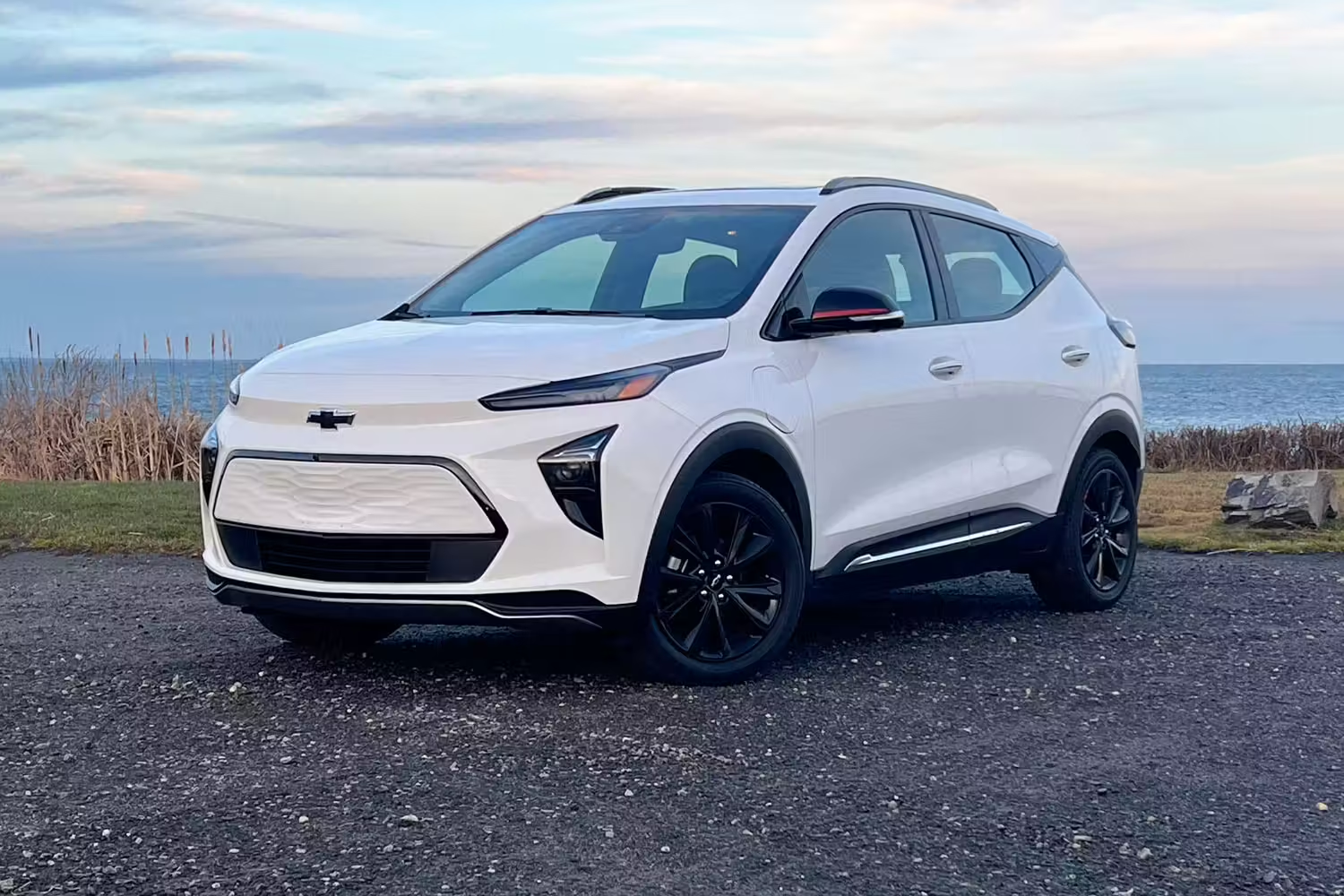
2. Chevrolet Bolt EV (2017–2019)
Despite the recalls and battery fire risks that made headlines, many 2017–2019 Chevy Bolts have original battery packs working just fine after extensive mileage. These vehicles came equipped with a 60 kWh LG Chem battery that, when functioning as intended, delivers strong performance and respectable range even after years on the road. For those outside the scope of the battery recall or those who had their packs replaced and still own the original, the Bolt’s battery aging has been relatively mild.
One reason behind the Bolt’s battery stability is its robust liquid cooling system. Temperature control is essential for lithium-ion battery health, and GM integrated a comprehensive system to manage heat and cold. Owners who charge at home on Level 2 chargers and avoid rapid charging exclusively tend to report better long-term results, keeping capacity degradation to a minimum even past 80,000 miles.
Real-world users have posted data showing 90% or more of the original range after five or six years, often with daily use and minimal babying. While urban stop-and-go traffic tends to help regenerative braking, highway miles don’t degrade the battery as rapidly either, particularly with proper cooling and charging practices. The Bolt also includes robust battery management software to prevent harmful charging behaviors.
If you’re in the used market for a Bolt, it’s important to confirm the status of the battery recall and whether the original pack remains. For those that do, you’re looking at a car that still provides 200+ miles on a single charge, making it one of the most capable used EVs in its price bracket. For a vehicle now entering its seventh or eighth year, that’s impressive performance and a mark of solid engineering.
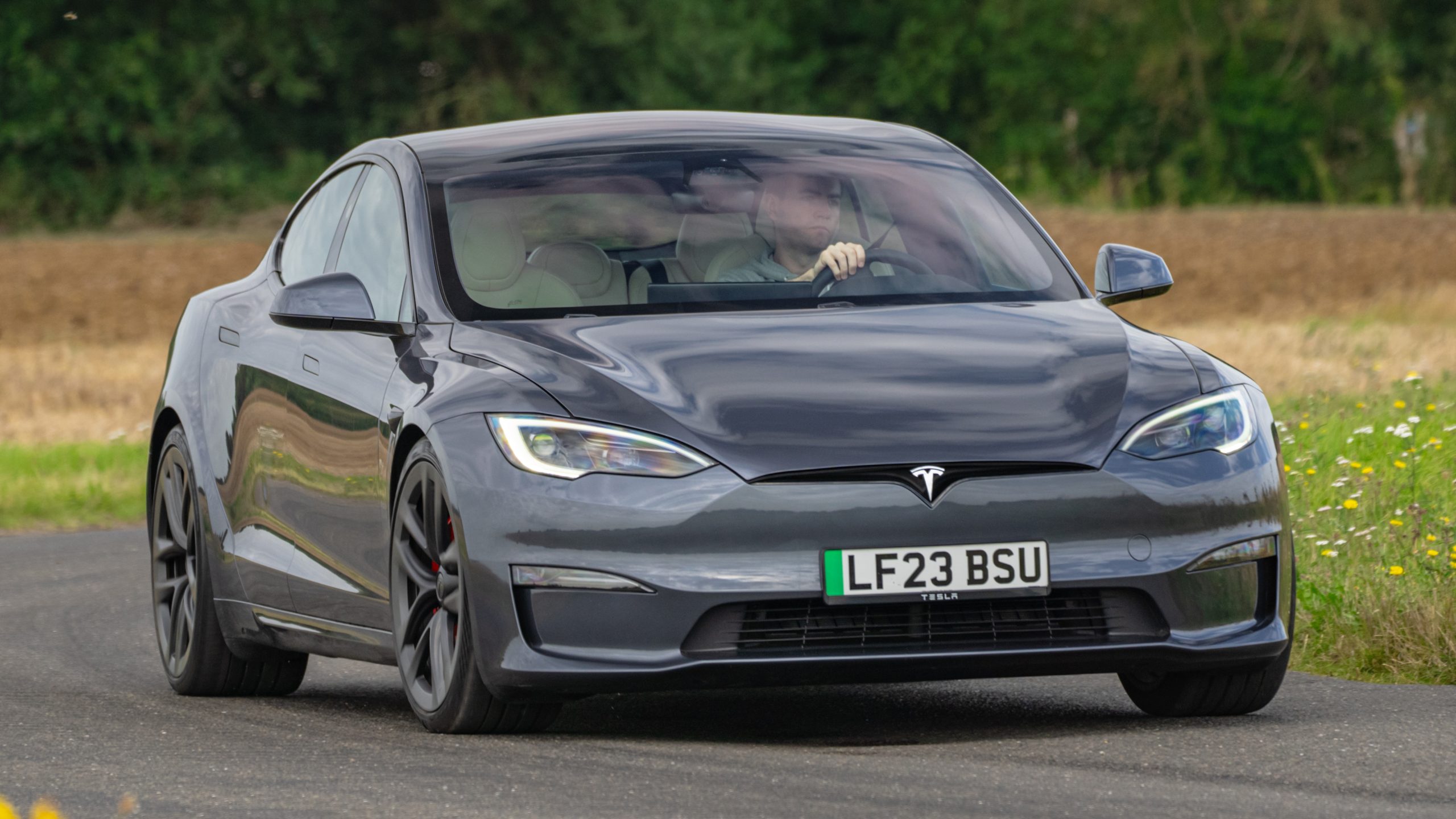
3. Tesla Model S (2014–2016)
Early Tesla Model S vehicles are now a decade old, yet many of them are still running with their original battery packs. Tesla’s approach to battery design was aggressive and forward-thinking: large battery capacity, comprehensive liquid thermal management, and software-limited charge ranges to protect against overuse. These design features have helped some high-mileage Model S units reach over 200,000 miles with acceptable levels of degradation.
Most early Model S units came with 60, 70, 85, or 90 kWh batteries, depending on the trim. Even accounting for 10–15% degradation, these batteries still allow for long-distance travel and daily usability. Owners frequently report that even after nearly a decade, they’re still achieving 200+ miles per charge, which is more than enough for most drivers. Unlike some other EVs, Tesla designed their vehicles with highway use in mind, and the larger battery sizes provided more buffer for aging.
Tesla’s over-the-air updates and battery conditioning software have also played an important role in preserving pack health. Battery preconditioning before supercharging and temperature-sensitive charge limits help reduce long-term stress on the battery. This level of software integration is rarely seen in older EVs, giving the Model S an advantage in battery longevity.
One more strength of the Model S is the transparency of the owner community. Tesla forums and third-party tools make it easy to track battery performance over time. As a result, prospective buyers can find data-supported examples of long-range vehicles still holding strong. While repairs on other parts of the car can be costly, the battery packs have often proven more durable than expected.
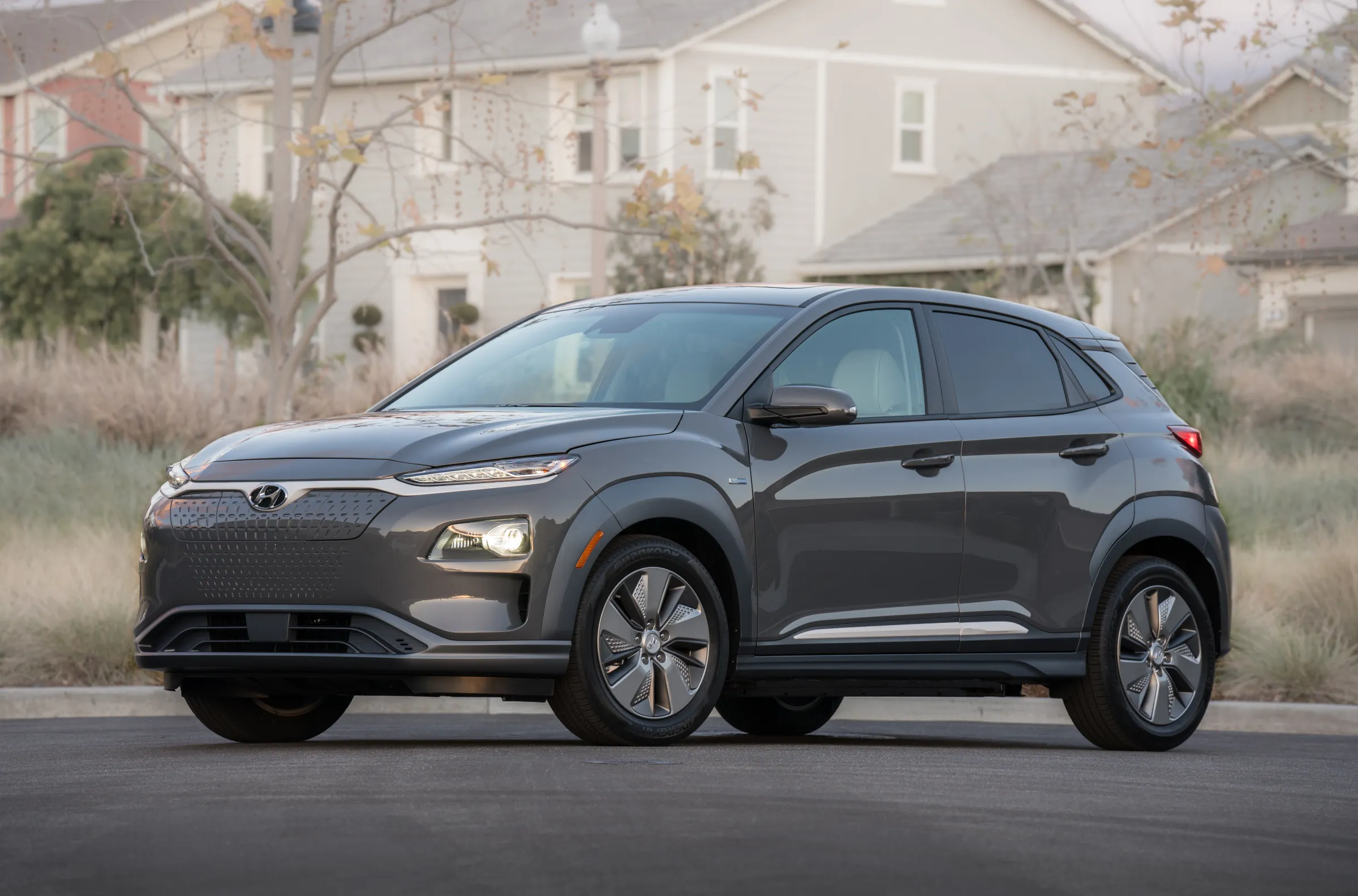
4. BMW i3 (2014–2019)
The BMW i3 was a quirky and compact city EV that surprised many with its build quality and battery resilience. Using Samsung-supplied battery cells and sophisticated thermal management, the i3’s battery pack has aged better than many expected. There were multiple iterations of the i3 battery: 22 kWh in early models, 33 kWh by 2017, and later 42 kWh. Across all variants, original battery packs are still holding up well in 2025.
Part of what has helped the i3’s longevity is its focus on efficiency over brute power. The lightweight carbon-fiber frame reduced strain on the battery, and many i3s were not driven aggressively due to their design as commuter vehicles. This translated into more consistent charging cycles and fewer deep discharges, both of which helped preserve the original battery’s chemistry.
Even the earlier 22 kWh battery models, which only delivered about 80 miles of range when new, still offer 60 to 70 miles of range in many cases. The later 33 and 42 kWh models are doing even better, with some owners still reporting over 90% of their original range after 6–8 years. That’s a strong performance metric for any used EV, especially one built in the early stages of mass electrification.
Another factor in the i3’s favor is its regenerative braking system, which reduces wear and tear on the drivetrain and helps maintain consistent energy recovery. The i3’s small but active owner community frequently shares diagnostic tools and battery health data, helping to verify the longevity claims. It’s a unique EV that still holds value on the used market, largely because its original batteries have held up better than most would’ve guessed when it first launched.
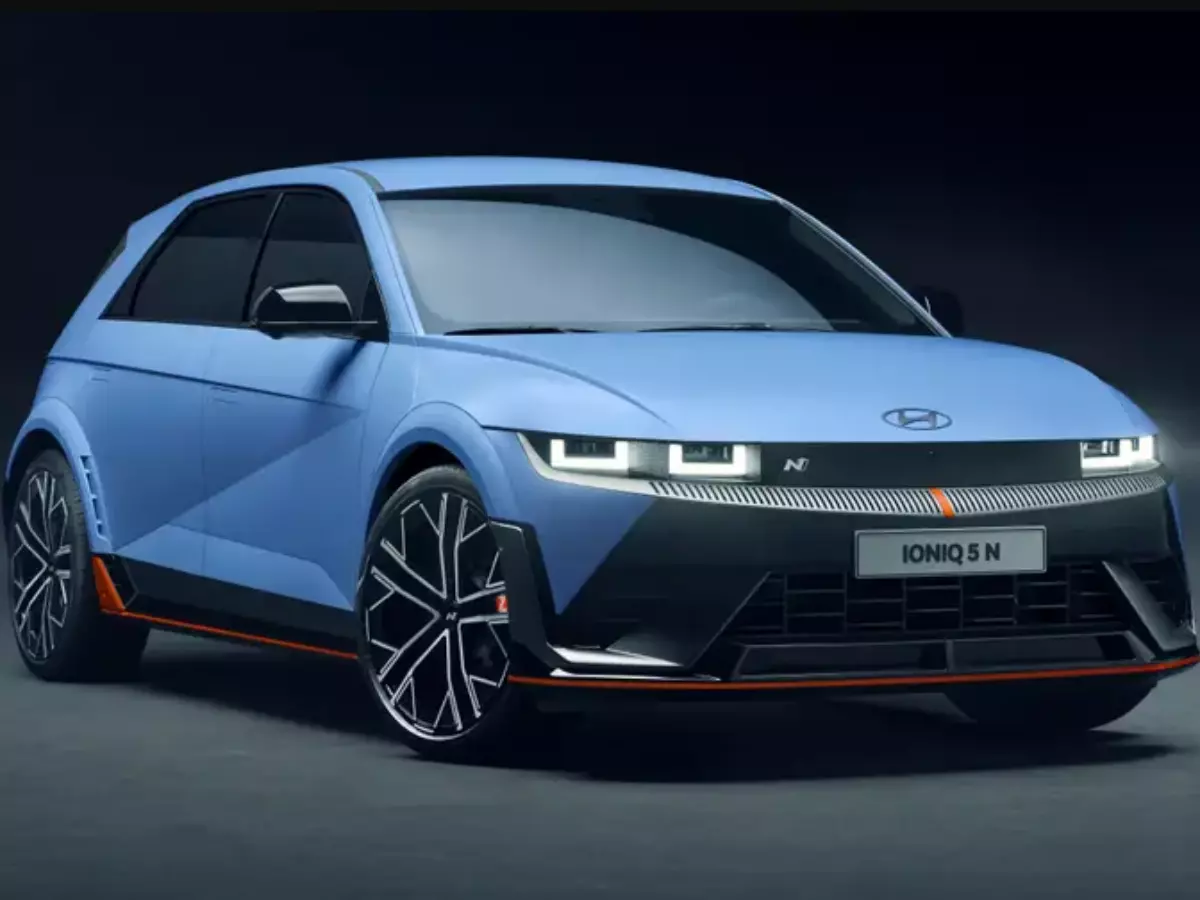
5. Hyundai Ioniq Electric (2017–2019)
The Hyundai Ioniq Electric didn’t make as much noise in the EV space as some competitors, but it quietly built a reputation for extreme efficiency and reliable battery life. With a 28 kWh battery pack and one of the lowest energy consumption rates in the industry, the Ioniq could achieve over 120 MPGe when new. Many early owners have reported that even after 6 or 7 years, their Ioniq is still capable of 100+ miles per charge, often without any signs of battery fatigue or range anxiety.
Hyundai used a liquid-cooled battery system in the Ioniq Electric, which was uncommon in smaller EVs at the time. This helped maintain thermal balance across various climates and charging conditions. When paired with a conservative charging strategy, it created ideal conditions for battery preservation. Unlike EVs with smaller, uncooled battery packs, the Ioniq’s system mitigated high temperature risks, leading to better long-term cell health.
Real-world data from Ioniq owners consistently shows less than 10% battery degradation after 70,000–90,000 miles. Drivers who use Level 2 home charging and avoid frequent DC fast charging tend to experience the best longevity.
The Ioniq’s software also includes battery protection features like limiting full charge thresholds and tapering current during long sessions, which further shields the battery from stress.
The simplicity and efficiency of the Ioniq Electric make it one of the most underrated used EVs on the market. While the car lacks the range of newer models, it’s still highly practical for urban commuting. Many owners continue to use their original battery packs daily without noticeable decline. For buyers focused on reliability, longevity, and low running costs, this model remains a strong contender in the used market.
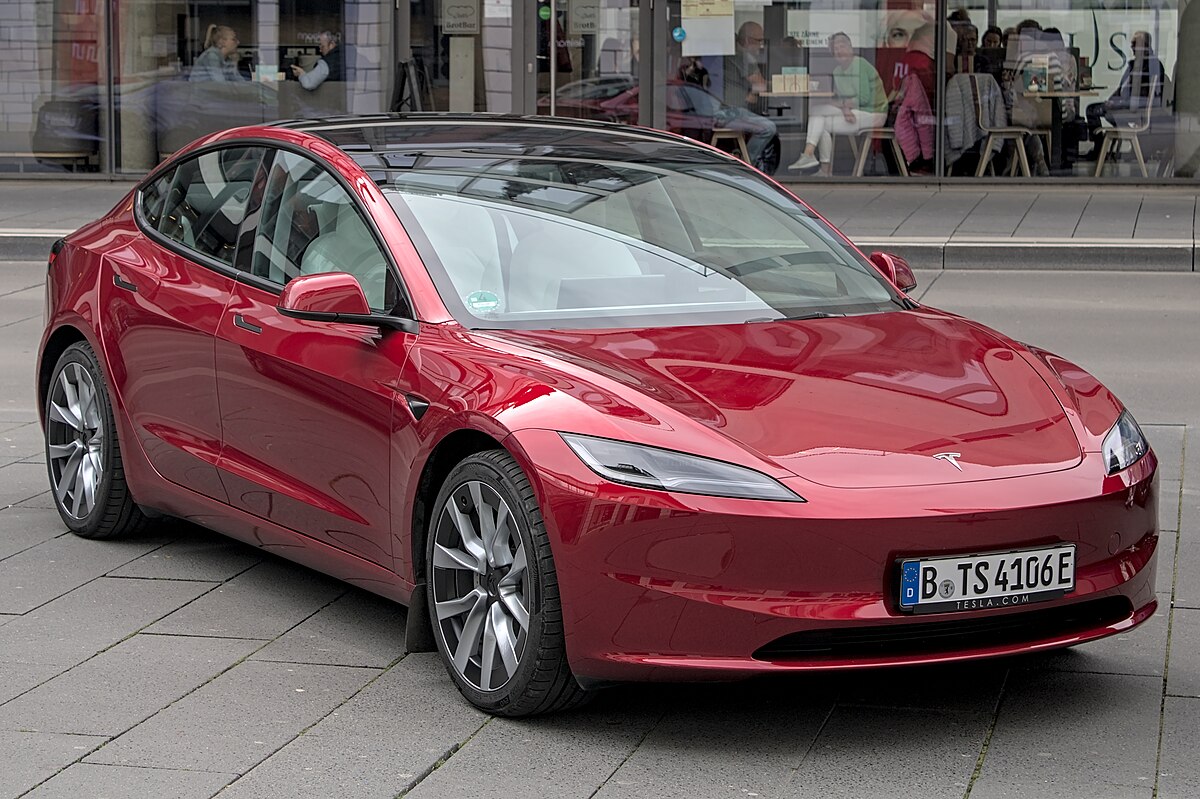
6. Tesla Model 3 (2018–2020)
The Model 3 brought Tesla’s technology to a more accessible audience, and despite its relatively recent launch, many early units are now past 5 years old with substantial mileage. These vehicles, especially the Long Range variants with 75–82 kWh packs, have shown solid battery retention under a variety of usage patterns. Some owners have logged over 100,000 miles and still report 90–93% battery capacity with the original pack.
What helps the Model 3 stand out is Tesla’s comprehensive approach to battery management. From software-controlled charge limits to intelligent thermal conditioning, the system works continuously to keep the battery in a safe operating window. This is especially useful for drivers in regions with extreme temperatures, where unmanaged packs tend to degrade faster. Even with regular Supercharging, many Model 3 batteries are holding strong.
Tesla’s focus on software updates also plays a large role in pack longevity. Over-the-air firmware changes have introduced features like automatic charge limit adjustments, battery preheating, and optimized regenerative braking. These seemingly small tweaks contribute significantly to reducing battery stress over time. As a result, Tesla’s early Model 3 units are outperforming many expectations when it comes to battery life.
Because of its large user base, there’s also more public data available on Model 3 battery health than for almost any other EV. This transparency helps buyers make informed decisions when considering a used Model 3. As more examples continue to pass the 150,000-mile mark with original batteries still in good condition, the Model 3 strengthens its case as one of the most durable used EVs available.
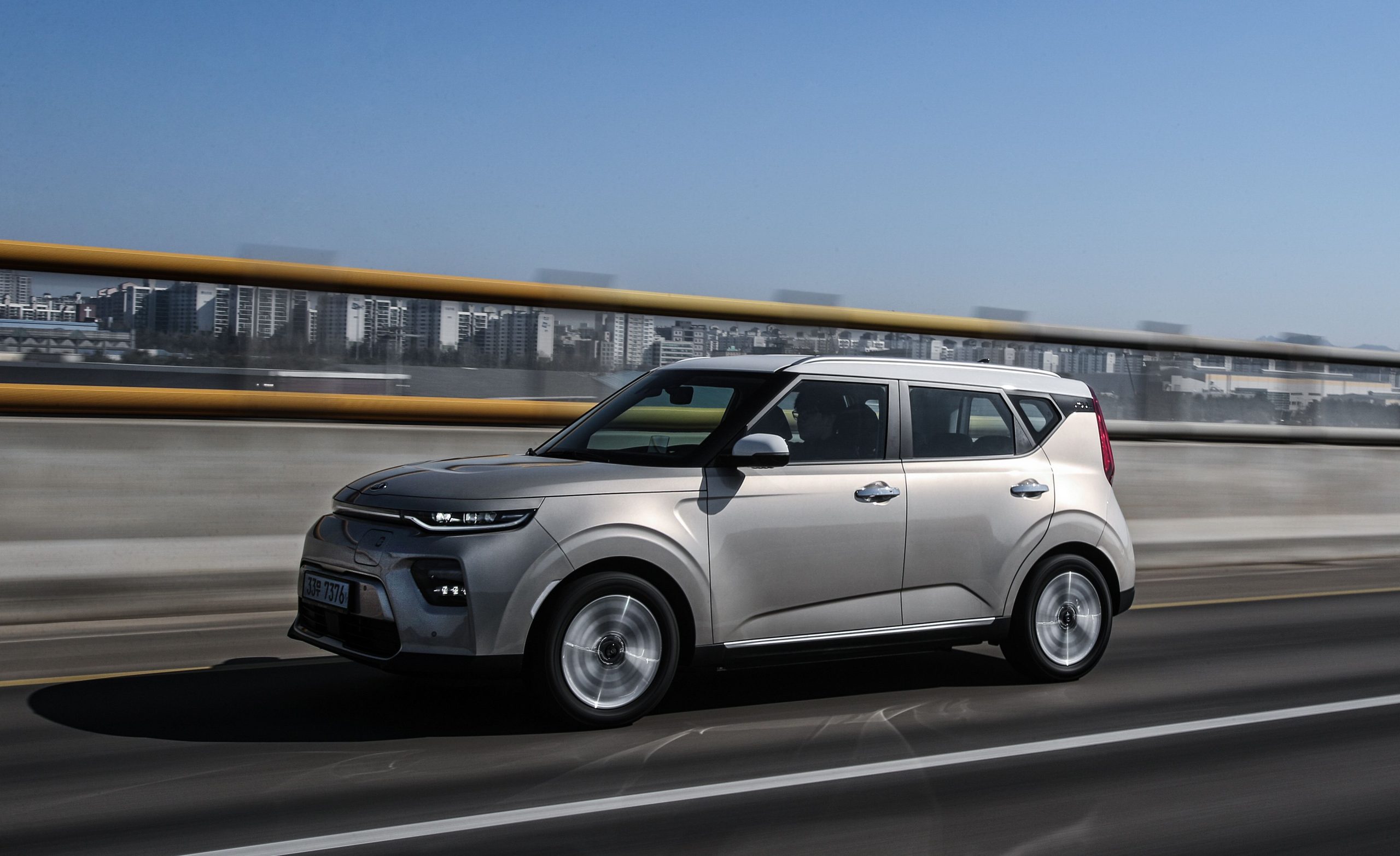
7. Kia Soul EV (2015–2019)
The Kia Soul EV built its reputation quietly, with reliability and practicality leading the way. It didn’t aim to break performance records or push massive range figures, but what it delivered was consistency. With battery capacities of 27 kWh in earlier years and 30 kWh in later models, the Soul EV was best suited for urban and suburban drivers.
What has impressed many long-term owners is just how well these batteries have aged, even with daily use. Original battery packs are still functioning without severe degradation in most cases, often maintaining 75–85% capacity after 6–8 years.
The Soul EV benefits from its simplicity. The car was not engineered to push the limits of power or acceleration, meaning the battery was rarely stressed by high-load driving. This makes a big difference over the long term. Batteries tend to degrade faster when exposed to consistent heavy acceleration or high discharge rates.
By building the car with modest performance expectations, Kia created an environment where the battery could last longer. This was further supported by a sensible thermal management system that used liquid cooling to stabilize cell temperatures during charging and driving.
Another aspect that helped extend battery life was Kia’s software control. The system limited extreme behaviors like full 100% charging and deep discharges down to 0%, which are known to accelerate degradation. Owners who primarily used Level 2 charging at home and avoided excessive DC fast charging benefited the most.
These habits, combined with well-managed battery chemistry, are why many of these EVs are still operating reliably. The car’s onboard range estimation system also allowed drivers to monitor battery health more closely, preventing situations that could strain the pack unnecessarily.
In today’s used EV market, the Soul EV holds a unique position. It’s not the flashiest option and doesn’t offer the longest range, but it is consistent. For buyers seeking a dependable used EV with a strong track record of battery life, the Soul EV provides a lot of reassurance. It’s still easy to find models with original battery packs that haven’t had major range losses. While it may lack some of the high-end features or prestige of newer EVs, its durability and ease of use make it a smart and economical choice.
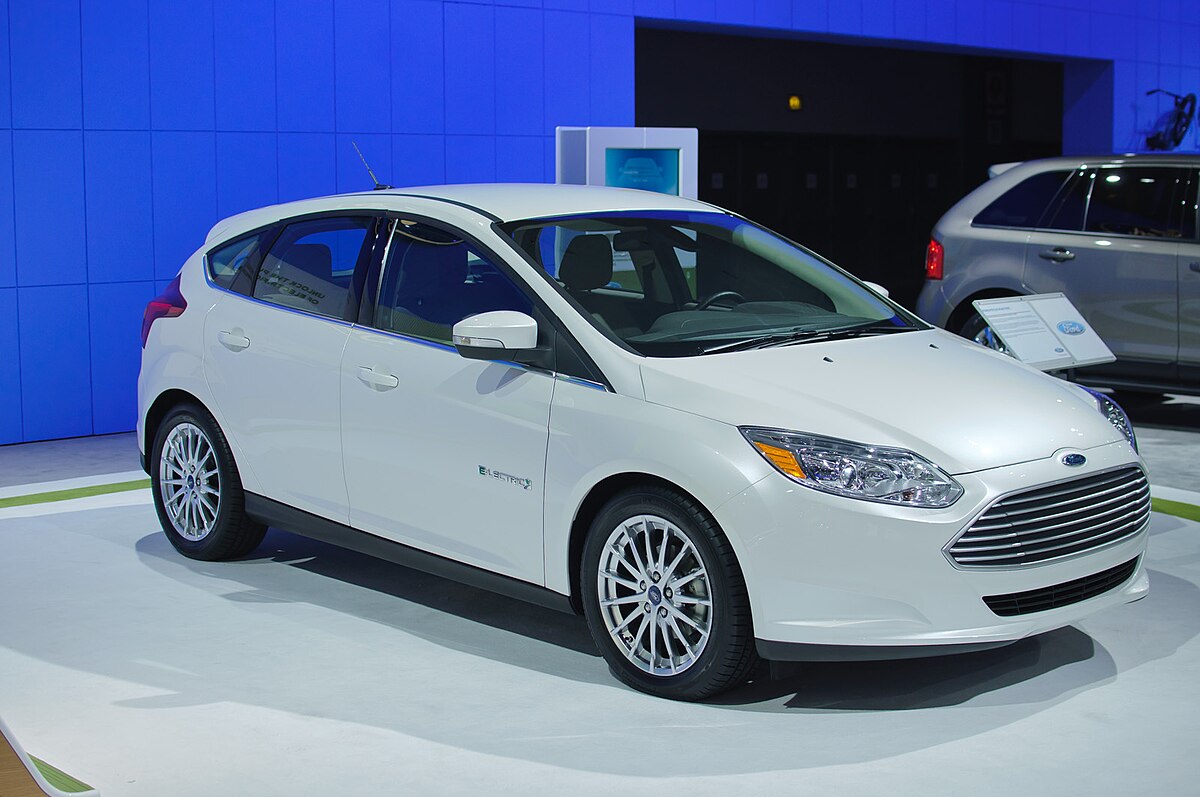
8. Ford Focus Electric (2012–2018)
The Ford Focus Electric was one of the lesser-known entries in the early EV market, overshadowed by bigger names like the Nissan Leaf and Tesla Model S. But those who owned one discovered a surprisingly well-built and practical electric vehicle. It used a 23 kWh battery in earlier years and a larger 33.5 kWh battery in its later run. Although it didn’t boast an impressive range, many units are still on the road with their original battery packs, maintaining reliability and efficiency with age.
Ford’s conservative engineering approach helped extend the life of the Focus Electric’s battery. The car was not designed to be sporty or performance-focused. Instead, it emphasized smooth, predictable driving. As a result, the battery rarely experienced harsh load cycles.
This stable usage pattern allowed the lithium-ion cells to age more gracefully than in vehicles subjected to aggressive driving or more frequent fast charging. The vehicle’s thermal management system also played a significant role in protecting the battery, keeping temperature fluctuations to a minimum during both operation and charging.
Focus Electric owners have reported degradation in the range of 10%–15% after 80,000 to 100,000 miles. These numbers are particularly encouraging given the car’s early market entry and relatively modest battery size. While the car’s range when new wasn’t outstanding, what matters now is that many of these EVs can still achieve a consistent 60 to 80 miles of real-world range.
For those using the car for commuting, errands, or short trips, this is often more than sufficient. The low total cost of ownership and minimal maintenance requirements also make it a practical choice for budget-conscious buyers.
Even though the Ford Focus Electric never captured major headlines, it remains a valuable option in the used EV market. Its original battery pack has proven more resilient than expected, especially for a first-generation model. Buyers should look for examples with regular service records, a history of gentle driving, and preferably in climates that aren’t extreme.
These vehicles may not be flashy, but their track record shows that they were well-designed and built to last beyond their original warranty window.
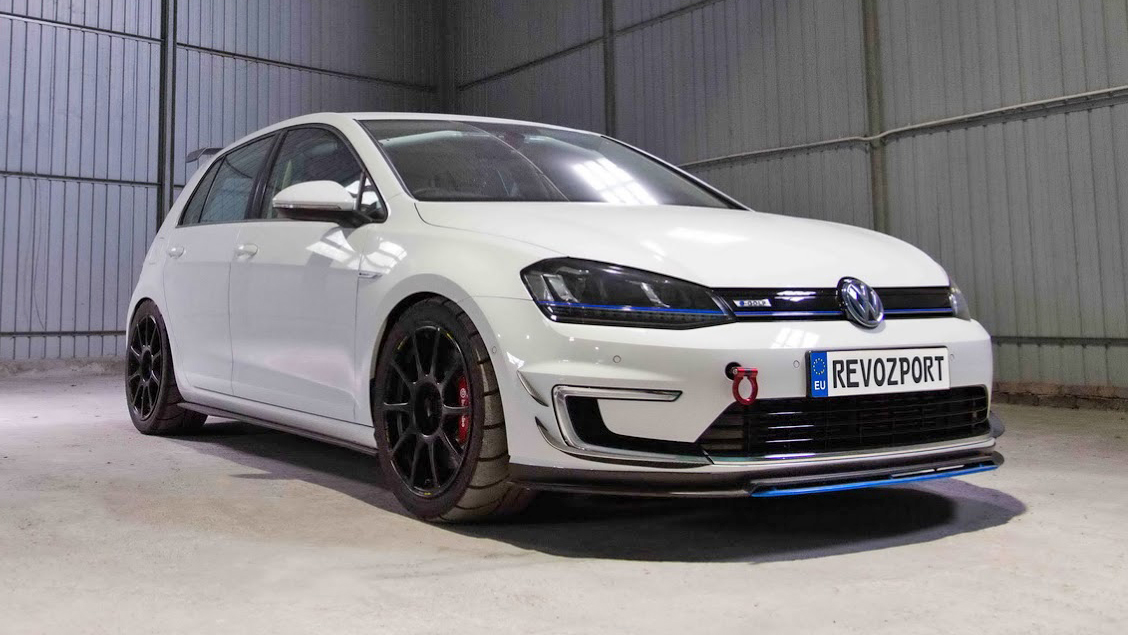
9. VW e-Golf (2015–2019)
The Volkswagen e-Golf struck a balance between familiarity and innovation, packaging an electric drivetrain into the proven Golf platform. Early models started with a 24.2 kWh battery, while later versions moved to a 35.8 kWh pack. While it didn’t aim for the highest range in its class, the e-Golf gained respect for its reliable battery performance and traditional driving feel. Years later, many e-Golfs are still performing well with their original batteries, offering consistent range and minimal loss of function.
VW’s attention to thermal stability gave the e-Golf a real edge. The car featured a robust liquid-cooled battery system, which managed heat more effectively than the passive air-cooled systems found in some other EVs of the time.
This helped reduce the stress placed on battery cells, especially during fast charging or extended drives in warm conditions. As a result, owners have reported strong battery health well into the 6-to-8-year mark, with some e-Golfs maintaining more than 85% of their initial range.
Another factor in the e-Golf’s favor is its efficient energy usage. Volkswagen tuned the motor and control systems to prioritize range over aggressive acceleration, which helped prolong the life of the battery. Regenerative braking systems also assisted in recapturing energy and reducing wear on both the battery and braking components. The predictable nature of its driving profile and well-balanced hardware meant that battery cycling stayed within optimal thresholds more often than not.
Today, used e-Golfs present an attractive proposition for those seeking a dependable EV at a reasonable price. Despite being several years old, many of these vehicles continue to deliver more than 80 miles per charge in real-world conditions, enough for many daily routines.
The e-Golf’s understated design and strong engineering make it a great choice for buyers who value quality and practicality over flash. Its continued success with original battery packs reinforces its place among the most reliable used EVs available.
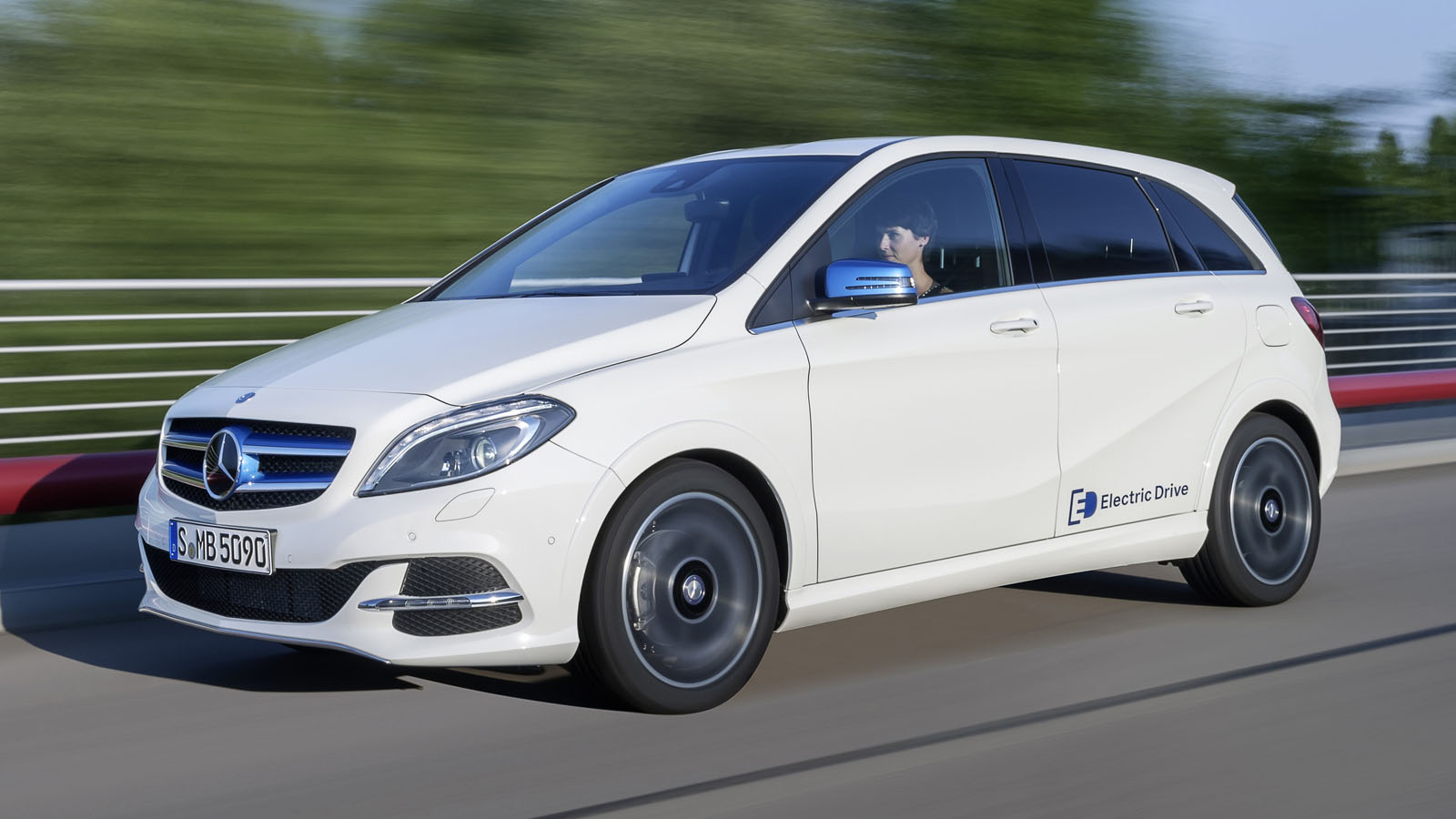
10. Mercedes-Benz B-Class Electric Drive (2014–2017)
The Mercedes-Benz B-Class Electric Drive often goes unnoticed in the conversation around long-lasting EVs, but it has quietly built a reputation for solid performance and battery durability. Developed in partnership with Tesla, the B-Class used a Tesla-supplied 28 kWh battery and electric drivetrain.
This connection gave it a head start in battery technology and thermal management compared to many of its competitors at the time. Even now, many of these vehicles are still being used with their original battery packs, performing within acceptable limits after nearly a decade.
One of the standout features of the B-Class was its premium build quality combined with tried-and-tested Tesla battery engineering. This pairing allowed Mercedes to deliver a vehicle that felt refined and drove smoothly, without compromising on battery safety or longevity.
The liquid-cooled battery system managed temperature extremes effectively, while Mercedes’ software limited charge and discharge rates in a way that promoted long-term battery health. Many owners found themselves still achieving 70–80 miles per charge, which was not far from the car’s original EPA-rated range.
Another reason for the battery’s resilience was the vehicle’s conservative performance tuning. It wasn’t designed to be sporty or aggressive; instead, it offered a calm, composed ride that placed minimal stress on the battery cells. Owners who used the vehicle primarily for urban commuting or light suburban travel benefited the most.
With most units having relatively low annual mileage and consistent charging routines, the batteries avoided the high-stress usage patterns that often shorten lifespan in performance EVs.
Today, the B-Class Electric Drive represents a unique niche in the used EV market. It combines German automotive quality with Tesla’s battery technology, and in the right conditions, this blend has proven to be highly durable. While its limited range may not suit long-haul drivers, it remains a reliable option for those who need a practical, electric daily driver. The consistent reports of original battery packs holding up well make it a smart choice for anyone prioritizing reliability over range or speed.
Also Read: 5 BMW Engines That Last and 5 That Drain Your Wallet
Battery longevity remains one of the most influential factors shaping the perception of electric vehicles, especially in the secondhand market. A few years ago, the idea of buying a 6- to 10-year-old EV might have sounded risky to many. Concerns over degraded batteries, expensive replacements, and reduced usability dominated the conversation.
Yet the growing body of evidence tells a different story, one in which well-maintained EVs, supported by good design and smart driving practices, continue to operate effectively well beyond their expected lifespans. These ten examples serve as proof that the early worries about battery failure, while not unfounded, may have been overstated.
Every vehicle on this list has earned its spot not by being the most advanced or luxurious but by showing consistent and measurable battery performance years after it left the factory. This is important for consumers trying to balance affordability with reliability.
Buying used is often a more practical choice for budget-conscious drivers, but only if the long-term performance of the vehicle can be trusted. Seeing high-mileage EVs, some with over 100,000 or even 200,000 miles, still running on their original battery packs changes the narrative. It tells prospective buyers that used EVs are not ticking time bombs, but potentially smart and sustainable investments.
One major takeaway from these examples is that battery health isn’t only determined by the size of the pack or the brand behind it. Instead, it’s the combination of thermal management systems, battery chemistry, software design, and driver behavior that collectively determines how well an EV battery will age.
Vehicles like the Tesla Model 3 and Nissan Leaf have very different systems and ranges, but both have proven to be capable of preserving battery function under the right conditions. Similarly, less popular models like the Ford Focus Electric or Mercedes B-Class Electric Drive may lack hype, but they’ve shown real staying power when it comes to battery retention.
As the used EV market continues to grow, this kind of real-world performance data becomes even more valuable. Buyers no longer need to rely solely on manufacturer claims or worry about the worst-case scenarios. Instead, they can look to the past decade of ownership reports, community feedback, and long-term test cases to make informed decisions.
These vehicles, still functioning well with their original battery packs, offer peace of mind. They also reduce environmental waste by extending the usable life of the vehicle, making EVs an even more sustainable option.
That said, no battery lasts forever, and degradation is still a natural part of EV ownership. But the key point is that for many vehicles, this degradation has occurred slowly and predictably. In most cases, it hasn’t rendered the car unusable or required expensive repairs.
Understanding the factors that contribute to long battery life, such as moderate charging habits, temperature management, and intelligent software design, gives buyers a roadmap for maintaining performance after purchase. With this knowledge, even a used EV from 2015 or 2016 can be a viable daily driver today.
The conversation around battery longevity is shifting from fear to informed optimism. As more vehicles prove their durability on the road, trust in EV technology continues to grow. The ten models featured in this article serve as encouraging examples for anyone considering a secondhand EV.
They show that with the right conditions and care, electric vehicles can remain reliable and useful far longer than many had anticipated. That confidence is what will continue to power the transition to electric mobility, not just for new car buyers, but for the growing number of drivers entering the EV world through the used market.
