

Fuel pumps are one of the most vital yet often overlooked components in a vehicle’s fuel delivery system. These devices are responsible for drawing fuel from the tank and sending it to the engine at the required pressure. Without a properly functioning fuel pump, even a perfectly tuned engine won’t run.
While fuel pumps are generally designed to last over 100,000 miles, not all car manufacturers hit the mark in terms of durability and reliability. Some brands consistently produce vehicles with fuel pumps that are prone to early failure, leading to unexpected breakdowns, expensive repairs, and significant inconvenience for drivers.
When a fuel pump starts to go bad, the symptoms can range from engine sputtering and stalling to poor acceleration and even total engine failure. What makes matters worse is that many of these symptoms are difficult for the average driver to trace directly to the fuel pump, often resulting in misdiagnosis and unnecessary repairs.
This issue becomes even more frustrating when the car in question is relatively new or hasn’t reached high mileage. In these cases, owners are left wondering why such a critical component has failed prematurely.
Not all cars are built the same, and neither are their fuel delivery systems. Some manufacturers use more cost-effective materials or adopt designs that put additional stress on the pump. Others may install fuel pumps in configurations that make cooling less effective or make the system more sensitive to contaminants and fuel quality.
These design flaws, while often unintentional, lead to a pattern of early fuel pump failures in certain brands. While routine maintenance can help extend the life of a fuel pump, no amount of careful driving can overcome a fundamentally weak component.
In this article, we will look at 12 car brands that have earned a reputation for fuel pump issues. Each of these manufacturers has had models plagued by sensitive pumps that simply don’t last as long as they should.
We’ll go through each brand, explain the common patterns seen with their fuel pump problems, and highlight the models most affected. If you’re a potential car buyer or an owner dealing with frequent fuel issues, this information could save you a lot of time, money, and frustration.
ALSO READ: 10 Worst Cars to Trust After 100K Miles That Often Disappoint Drivers

1. Volkswagen
Volkswagen has long been known for engineering precision and design, but when it comes to fuel pumps, the German automaker has had its share of criticism. Many VW models, particularly those using the 2.0L turbocharged engines, have experienced frequent fuel pump failures. The high-pressure fuel system in these engines puts extra strain on the fuel pump, causing premature wear, especially in vehicles that see aggressive driving or inconsistent fuel quality.
One of the most commonly cited models is the Volkswagen GTI. Owners of various model years have reported sudden stalling and no-start conditions caused by failing fuel pumps. In some cases, even low-mileage vehicles have encountered problems, leading to costly repairs and a sense of unreliability. Compounding the issue is the design placement of the pump, which can make replacement labor-intensive and expensive.
Fuel pump control modules have also been problematic across several Volkswagen models. These modules are responsible for regulating pump function, and when they fail, they mimic the symptoms of a bad fuel pump. The result is that owners and even some mechanics may replace the pump without realizing the actual issue lies with the control unit. This creates a cycle of misdiagnosis and unnecessary part replacements.
While Volkswagen has issued technical service bulletins and even recalls in some regions, the underlying issue of sensitive pumps continues to affect newer models as well. For owners, the best defense is vigilance, keeping up with maintenance and paying close attention to early warning signs such as surging, sluggish starts, or intermittent power loss. Unfortunately, even with care, the sensitive design leaves little margin for error.

2. BMW
BMWs are performance-oriented machines known for their engineering complexity. However, this complexity often translates into more delicate components, and the fuel pump is no exception. High-pressure fuel systems, especially in turbocharged engines like the N54 and N55, have shown a consistent tendency to fail early. Owners of 3 Series, 5 Series, and X Series vehicles have reported numerous issues with fuel pump reliability.
One major problem has been the high-pressure fuel pump (HPFP) used in direct-injection engines. These pumps operate under extreme pressure, and if the internal seals or bearings degrade, the entire system can lose pressure, leading to engine misfires or total stalling. In some cases, vehicles have gone into limp mode on the highway, creating serious safety concerns. BMW has extended warranties for some models, but the frequency of replacements remains high.
Another issue is the sensitivity of BMW’s fuel pumps to ethanol-blended fuels and contaminants. Many owners in the U.S., where ethanol content is higher, have reported premature pump wear due to this incompatibility. Even with fuel system cleaners and premium gas, the pumps often wear out before the 100,000-mile mark. Because of the performance tuning of BMW engines, even small variances in fuel delivery can lead to noticeable driveability problems.
The cost of replacing a fuel pump in a BMW is particularly steep, both in terms of parts and labor. In many cases, access to the pump requires partial disassembly of the rear seats or trunk area, and labor rates at BMW dealerships only add to the financial strain. Despite the brand’s luxury status, the fuel pump remains one of the weakest links in the vehicle’s mechanical reliability.

3. Hyundai
Hyundai has made big strides in vehicle design and reliability, but fuel pump issues continue to affect a significant number of models, particularly from the early 2010s. Models like the Elantra, Sonata, and Santa Fe have all experienced recurring fuel pump problems, often manifesting as sudden stalling or hard starting. These issues tend to appear well before 100,000 miles, much earlier than the industry average.
A common problem with Hyundai’s fuel pumps is their susceptibility to fuel quality. These pumps don’t tolerate contaminated or low-grade fuel very well. In regions with inconsistent fuel standards, Hyundai owners often find themselves replacing the fuel pump after just a few years. Moreover, many of these pumps are integrated with the fuel sending unit, making them more expensive and time-consuming to replace.
Another contributing factor is Hyundai’s cost-cutting approach in certain models. While this makes vehicles more affordable upfront, it also means some components, like the fuel pump, aren’t built to last as long as they should. Plastic internals and weak electrical connections contribute to pump failures that could otherwise be avoided with slightly higher-quality parts.
Although Hyundai has issued some recalls and service bulletins, the problem remains largely unaddressed in their budget-tier vehicles. For many owners, especially those in areas where dealership support is limited, fuel pump failure means being stranded or relying on aftermarket parts that may not last much longer. It’s a weak spot in an otherwise improving brand reputation.

4. Chevrolet
Chevrolet has a wide range of vehicles in its lineup, from compact sedans to full-size trucks, but fuel pump issues seem to be a common thread across many of them. The Malibu, Silverado, Equinox, and Cruze have all shown patterns of premature fuel pump failure. In many cases, these failures occur without much warning, leaving drivers stuck on the side of the road or unable to restart the engine.
One of the main reasons for the failures is the inconsistent quality of OEM fuel pumps across different production batches. Some Chevrolet models have pumps that last well over 120,000 miles, while others fail before 60,000. The inconsistency makes it difficult for owners to anticipate or prevent problems. This is especially frustrating for those who perform regular maintenance and still experience breakdowns.
Another issue with Chevrolet’s fuel systems is the use of in-tank pumps that are difficult to access. Replacing the pump often requires dropping the fuel tank, a job that’s labor-intensive and expensive. In rural areas or for DIY mechanics without access to a lift, this turns a basic repair into a major ordeal. It’s not just a cost issue; it’s also a matter of practicality and time.
Electrical faults have also been a culprit in many Chevrolet fuel pump failures. Corroded connectors, poor grounding, and failing relays can all mimic the symptoms of a bad pump, and sometimes even cause the pump itself to fail prematurely. For owners, this means that diagnosing and fixing the issue often requires more than just swapping out a part. Even experienced mechanics may need several attempts to track down the root cause.

5. Ford
Ford has a strong presence across multiple vehicle segments, but fuel pump reliability hasn’t been its strongest suit. Models such as the Focus, Fusion, F-150, and Escape have all experienced fuel pump issues, with problems most frequently arising between 60,000 and 90,000 miles. In particular, Ford’s use of fuel modules and electric in-tank pumps has created a pattern of premature failure.
One of the known issues involves the fuel pump driver module, which is prone to corrosion. The module is often mounted in areas exposed to moisture and road salt, leading to electrical shorts or open circuits. When the module fails, it cuts power to the pump, resulting in sudden engine stalls or a no-start condition. Although this isn’t a direct failure of the pump itself, it still leads to the same outcome: an inoperable vehicle.
Ford’s EcoBoost engines, which are becoming more common across their lineup, require more precise fuel delivery than naturally aspirated engines. The increased demand on the fuel pump, especially under load or during high boost, causes accelerated wear in the pump mechanism. Owners of turbocharged F-150s and Explorers have noted how quickly fuel pressure becomes erratic, which eventually leads to total pump failure.
In many cases, the symptoms of a failing Ford fuel pump appear intermittently. Drivers may experience sluggish acceleration or momentary stalling that corrects itself, making it difficult to pinpoint the issue until it worsens. This delayed diagnosis often results in more damage to other components, such as injectors or ignition coils, and raises the cost of repairs. While Ford has acknowledged the issue in some models, many others remain without extended coverage.
6. Mazda
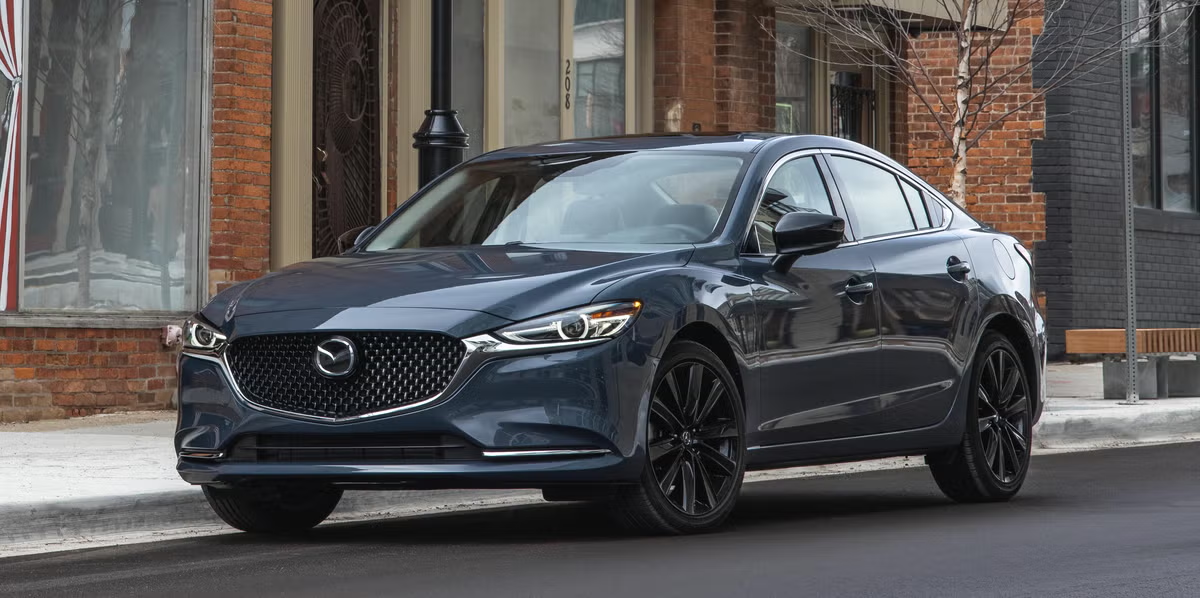
Mazda vehicles are generally praised for their responsive handling and practical design, but fuel pump reliability has been a weak point in certain models. The Mazda3, CX-5, and Mazda6 have all had known issues, particularly in model years from the mid-2010s. Owners have reported fuel pumps that become noisy, inconsistent, or completely fail long before they should.
The issue often stems from weak internals in the pump assembly. These components are sensitive to fuel quality and degrade quickly when exposed to ethanol-heavy gasoline. In areas where ethanol content exceeds 10%, Mazda owners have noticed shorter pump life spans, especially in vehicles driven primarily in urban environments with frequent stop-and-go conditions.
Another factor is Mazda’s relatively small engine size paired with high compression ratios, which puts added stress on fuel delivery. Even minor pressure inconsistencies can result in misfires or hesitation under acceleration. Over time, this leads to cumulative wear on the pump and other parts of the fuel system. Many owners find themselves replacing the pump after fewer than 80,000 miles.
Mazda has responded to some of these complaints by improving pump design in newer models, but many affected owners are left without support. Extended warranties are rare, and the cost of parts can be high due to the integrated nature of the pump with the sending unit. While the brand’s reliability remains above average, the fuel pump issue is a exception.

7. Nissan
Nissan has built a reputation for affordability and practicality, but several of its models have suffered from recurring fuel pump failures. The Altima, Sentra, Maxima, and Pathfinder have all experienced premature pump wear. Often, the failures are tied to electrical issues within the pump or corrosion in the power connectors that supply it.
A significant portion of complaints stem from the use of plastic gears and impellers inside the fuel pump module. These components are sensitive to heat and ethanol exposure, which leads to cracking or deformation. Once this occurs, fuel pressure drops, and the engine either sputters or refuses to start. Nissan’s cost-focused engineering has left little margin for environmental wear-and-tear.
The issue is compounded by poor diagnostic procedures at some service centers. Rather than isolating the root cause, mechanics sometimes replace the entire fuel assembly without checking related wiring or relays. This results in temporary fixes and recurring problems. Many owners report multiple pump replacements within a short time span, particularly in older Sentras and Altimas.
In recent years, Nissan has moved toward more modular fuel systems, which should improve repairability. However, for models produced between 2010 and 2018, the pump issues remain a common source of frustration. Drivers are often caught off-guard by the problem, especially since it may not trigger a check engine light until the pump has almost completely failed.

8. Subaru
Subaru vehicles are widely appreciated for their all-wheel drive systems and rugged reliability, but fuel pump failures have become a recurring issue in newer models. In particular, the 2019–2020 Outback, Forester, Legacy, and Ascent were affected by a batch of defective low-pressure fuel pumps that failed at alarming rates.
These pumps, manufactured by a third-party supplier, contained impellers that could crack due to an improper resin material. This caused the impeller to deform over time, resulting in low fuel pressure and engine stalling. Subaru issued a recall for many of the affected models, but not all vehicles were covered. As a result, some owners had to pay out-of-pocket for repairs on what should have been a manufacturer’s responsibility.
The symptoms of a failing Subaru pump typically begin with hard starting or hesitation during acceleration. In colder climates, the failure tends to progress faster, likely due to temperature-related material contraction. Many owners were caught off guard because the symptoms often came on suddenly, even in relatively new cars with less than 20,000 miles.
Subaru’s response to the problem was somewhat slow, and replacement parts were not always readily available. In some cases, dealerships had long backorders for the new pump units. This left many owners in a difficult position, unable to use their cars while waiting for parts. Although Subaru has improved quality control since, the affected model years remain a sore spot for many.
9. Toyota
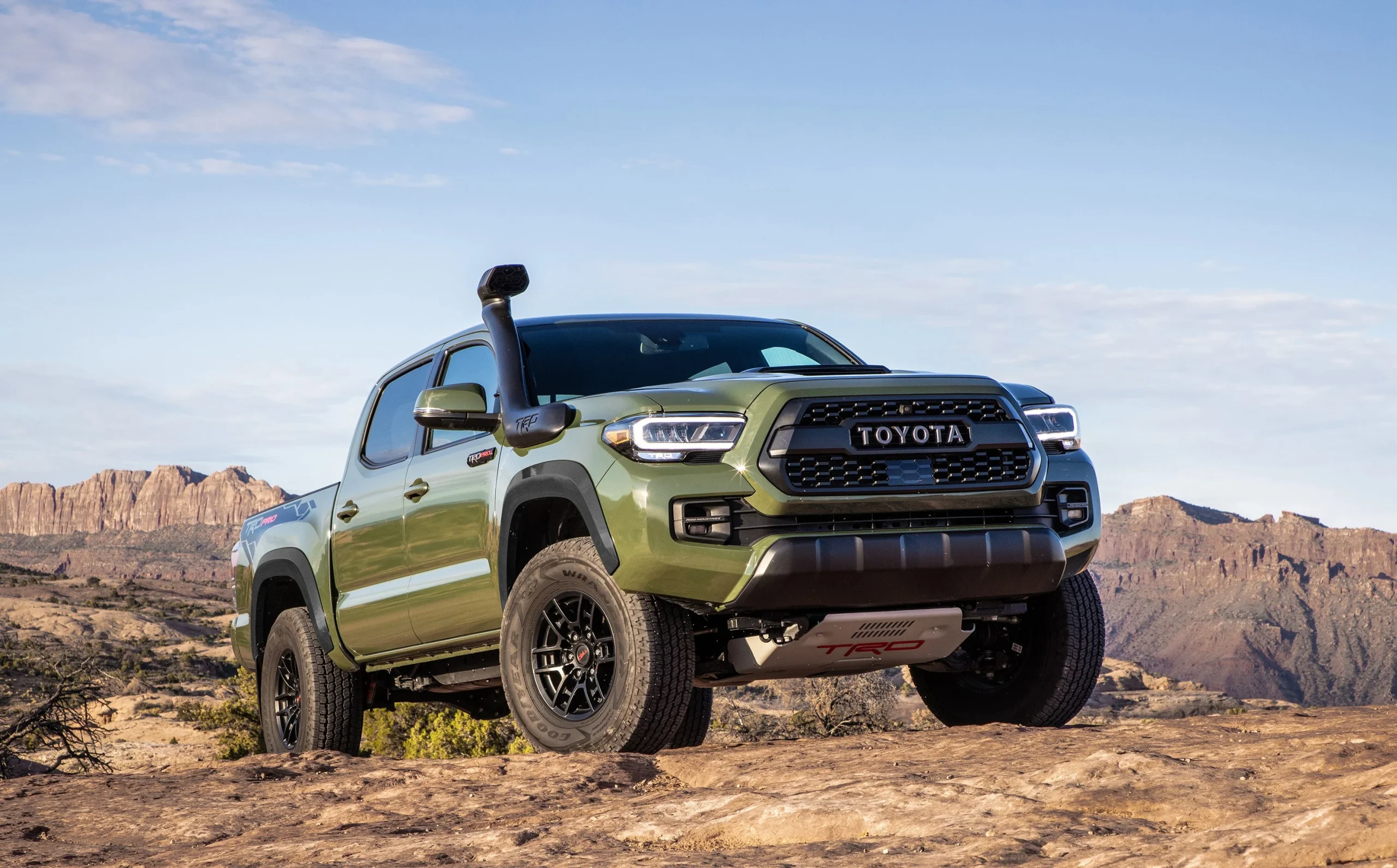
Toyota is often praised for its reliability, but even they haven’t been immune to fuel pump issues. In 2020, Toyota issued a massive recall covering over 1.5 million vehicles due to faulty fuel pumps. The recall affected popular models like the Camry, Corolla, RAV4, Highlander, and even Lexus models, making it one of the largest pump-related recalls in the industry.
The problem centered on low-pressure fuel pumps with impellers that could become deformed due to chemical absorption from fuel. The deformation would cause the pump to stop working, leading to stalling at low speeds or during startup. Although the issue was linked to a specific supplier, the widespread use of the part meant the failure rate was unusually high for a brand like Toyota.
Many Toyota owners experienced the issue in vehicles with less than 50,000 miles. The suddenness of the failure, combined with the absence of warning lights in some cases, made it difficult to detect before it caused a breakdown. For a brand known for dependability, this was a surprising and frustrating development.
Toyota acted relatively quickly in issuing the recall and offered free replacements. However, the scale of the issue meant parts were in short supply for months, and many dealers struggled to meet demand. For owners, the delay added stress and forced some to rely on rental cars or alternative transportation while waiting for the fix.
10. Kia
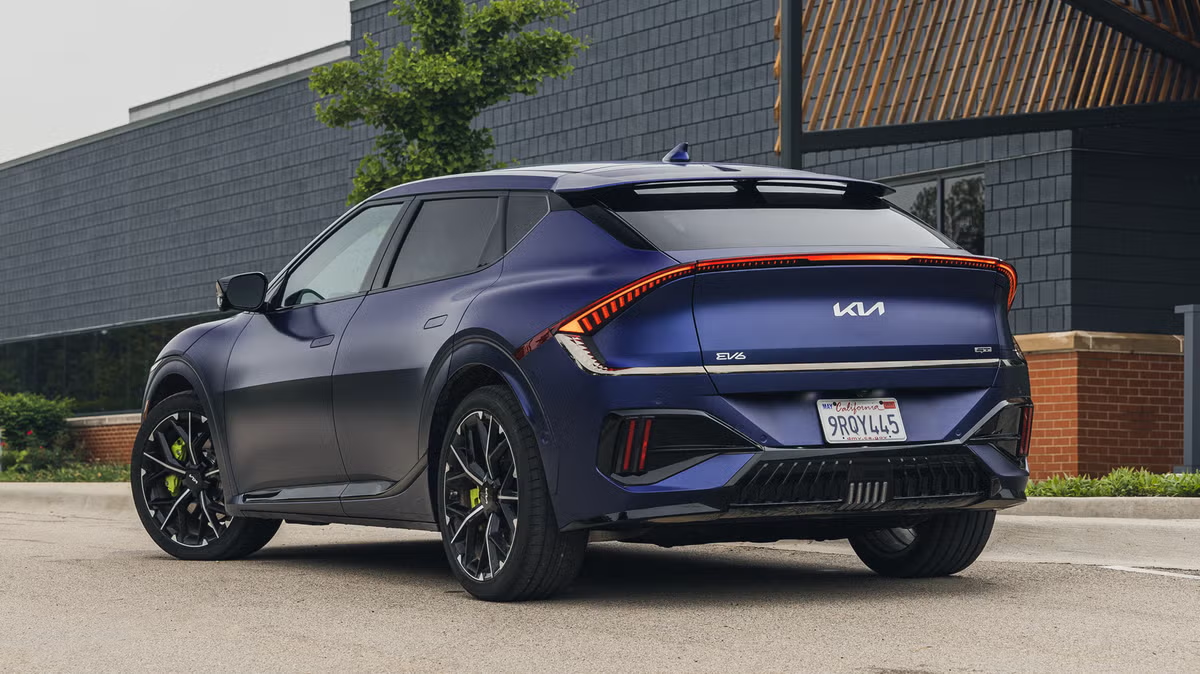
Kia, like its sister company Hyundai, has made huge improvements in vehicle quality, but certain models still suffer from fragile fuel pumps. Vehicles such as the Optima, Sorento, and Sportage have seen an above-average rate of pump failures. Many issues mirror those found in Hyundai vehicles, suggesting shared component designs across the two brands.
A recurring theme with Kia fuel pumps is their sensitivity to ethanol-based fuels and low-quality gasoline. These factors accelerate wear on the internal components, especially when combined with high ambient temperatures or long idle periods. As with Hyundai, pump failures often result in sudden stalling, usually without prior symptoms.
One of the more problematic design choices is the integration of the fuel pump and fuel level sensor into one module. This increases replacement costs and makes it harder for DIY owners to perform repairs. Additionally, replacement parts from third-party suppliers don’t always meet OEM standards, leading to short-lived fixes and repeated breakdowns.
Kia has made efforts to improve in newer models, but the reputation for sensitive pumps still lingers. In some cases, owners report replacing pumps more than once before reaching 100,000 miles. While the rest of the car may hold up well, the fragility of the fuel pump leaves a noticeable mark on Kia’s reliability image.
11. Chrysler (Including Dodge and Jeep)
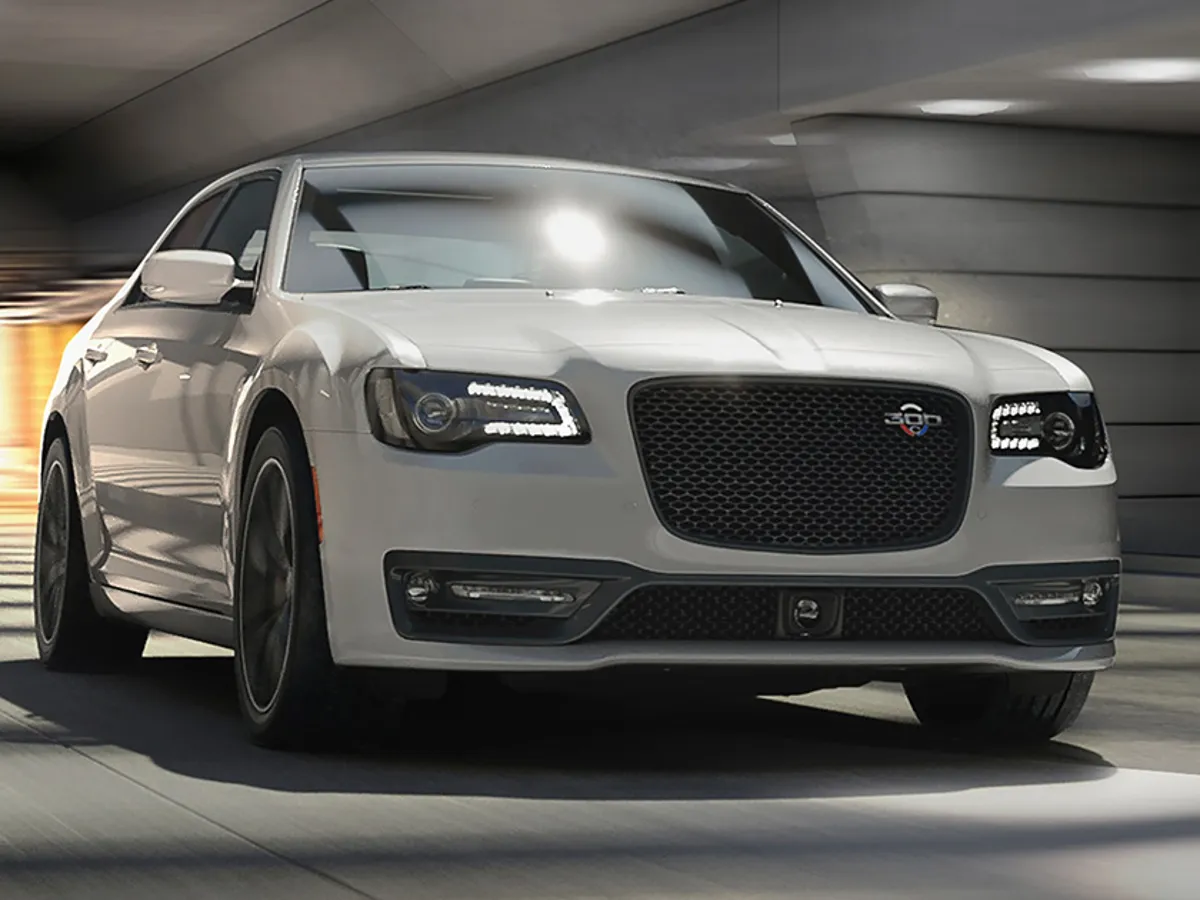
Chrysler, along with its sub-brands Dodge and Jeep, has faced significant complaints regarding premature fuel pump failures. Many of these issues are concentrated in models like the Dodge Journey, Jeep Grand Cherokee, Chrysler 300, and Dodge Charger. Despite their large engines and rugged image, the underlying fuel delivery systems often don’t hold up under real-world conditions.
One of the most common problems in these vehicles is the failure of the fuel pump relay. These relays are part of the Totally Integrated Power Module (TIPM), which has become notorious for reliability issues. When the relay fails, it either cuts off power to the pump or delivers it inconsistently. This causes intermittent stalling and starting problems that can be difficult to diagnose, especially for owners unfamiliar with the complexities of the TIPM system.
Chrysler’s in-tank fuel pumps are also prone to failure due to wear and poor quality control. Many drivers have reported loud whining noises from the fuel tank before total failure, a sign of internal components degrading. Others note that the pump gives out without any warning, often while driving at highway speeds. In some Dodge and Jeep models, this has resulted in safety concerns due to the vehicle suddenly losing power.
Replacing the pump in many Chrysler vehicles is further complicated by the need to remove large fuel tanks or access panels under the rear seat, depending on the model. These design choices drive up labor costs and often discourage proactive maintenance. The company has issued several recalls related to fuel system electronics, but full resolution is rare unless the entire TIPM is replaced, an expensive and time-consuming process.

12. Mitsubishi
Mitsubishi has a smaller presence in many global markets, but fuel pump reliability has still been a point of concern for several of its vehicles. The Outlander, Lancer, and Mirage have all been affected by reports of sensitive or short-lived fuel pumps. Despite relatively simple engineering and modest power output in most of these cars, the fuel delivery system appears to be one of their weak links.
Mitsubishi’s fuel pumps often fail due to electrical issues in the harness or degradation of internal plastic parts. These components wear out quickly in hotter climates or when ethanol-blended fuels are used. Many owners report trouble starting their vehicles or experience hesitation under acceleration. In some cases, the vehicle may start fine in the morning and then fail to start later in the day, creating an inconsistent and frustrating ownership experience.
Another problem has been Mitsubishi’s slow response to consumer complaints. Even when patterns of early pump failures are reported across forums and repair databases, the brand has been relatively quiet about issuing recalls or technical service bulletins. This has led many drivers to seek out aftermarket pump replacements, which don’t always match the original specifications and can cause additional performance issues.
The impact of fuel pump failures is particularly hard on owners of economy models like the Mirage, where any major repair can represent a large percentage of the car’s value. For drivers who chose Mitsubishi for affordability and simplicity, the fuel pump issue can come as an unpleasant surprise that undermines the ownership experience. Until quality improves, fuel delivery remains a risk area for the brand.
ALSO READ: 10 Worst Cars to Trust After 100K Miles That Often Disappoint Drivers
Fuel pump reliability varies widely across automotive brands, and while many manufacturers aim to provide long-lasting components, not all succeed equally. The brands discussed above have each shown patterns of fuel pump sensitivity or premature failure, often due to a mix of design flaws, material choices, or poorly managed supply chains.
While some issues have been addressed through recalls or technical updates, others continue to affect newer vehicles, catching owners off guard and causing expensive repairs.
Drivers of affected brands often find themselves dealing with vague symptoms that can be difficult to diagnose. Engine hesitation, unexpected stalling, or hard starting can all point to a failing pump, yet many service centers may overlook these signs until the failure becomes total.
In some cases, related components like control modules or relays are the true culprits, but poor integration or shared circuit faults still bring the blame back to the fuel system. This complexity only increases repair costs and the chance of repeated breakdowns.
Maintenance can help to some degree, such as keeping the fuel tank above a quarter full, using high-quality gasoline, and replacing filters as needed. However, none of these habits can entirely compensate for a flawed part. For brands that have used weaker or more sensitive pumps, the only true fix is either a redesign or higher-quality aftermarket components. In certain models, preventative replacement may even be a worthwhile investment before symptoms appear.
For buyers, knowledge is power. Understanding which brands and models are more prone to fuel pump issues can guide smarter purchase decisions. While no vehicle is perfect, avoiding those with a known history of weak fuel systems can save thousands in repair costs and untold frustration. And for current owners, staying alert to the early signs of failure may at least help avoid being stranded on the road with a silent fuel pump and a car that refuses to start.
