
Some vehicles come and go without leaving a trace. Others stay parked in history for a while, remembered but rarely seen again in motion. And then there are Jeeps, built not just to last but to lead. For more than eight decades, Jeep has stood as a symbol of grit, utility, and off-road dominance.
While newer models continue to attract attention with sleek tech and refreshed designs, there’s something unique about those older models that still hold their own in mud, rock, sand, and snow.
These are machines that never needed constant reinvention because they were engineered to perform long before trends started dictating capability.
Across dusty backroads, dense forests, steep rocky inclines, and endless deserts, Jeep models from two decades ago continue to forge their own paths. These vehicles were built with purpose and character. What many lack in modern electronics or flashy interiors, they more than make up for in mechanical strength and trail-tested confidence.
The craftsmanship found in the suspension, axles, transfer cases, and body-on-frame construction has made them irreplaceable to off-road enthusiasts, mechanics, and collectors alike.
Some of these vehicles have been modified over the years, lift kits, upgraded tires, engine swaps. Others are still remarkably stock, running just as they were when they rolled off the assembly line.
That’s part of their charm: even the factory versions had enough ground clearance, torque, and articulation to muscle through the same terrain people now pay thousands of dollars in accessories to handle.
Whether on solo backcountry trips or at group trail meets, these Jeeps are still admired not for what they look like, but for what they can do when the terrain gets tough.
This article highlights 10 Jeep models that, despite being 20 years old or more, continue to dominate trails around the country and beyond.
From fan favorites to underappreciated workhorses, each model has earned its place not just through nostalgia, but through consistent real-world performance that proves age is just a number when it comes to trail readiness.
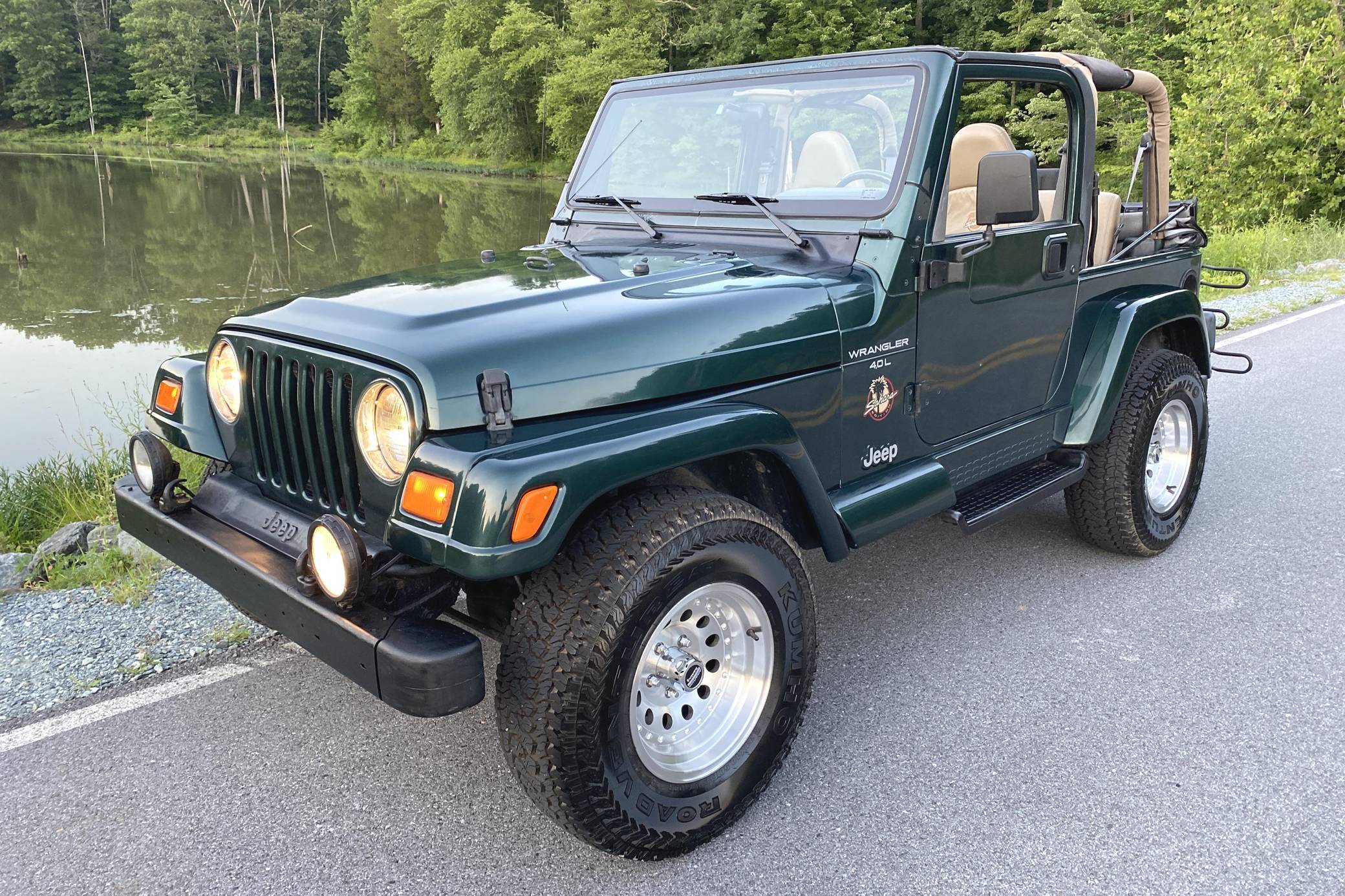
1. Jeep Wrangler TJ (1997–2006)
The TJ Wrangler stands as one of the most beloved and respected Jeeps ever built. It marked the return of the solid front axle and coil spring suspension, which gave it both excellent off-road articulation and improved ride comfort on the pavement.
It wasn’t the most refined vehicle of its time, but it never needed to be. Its simplicity made it a favorite among those who like to maintain and upgrade their own vehicles. This model year range saw a blend of old-school Jeep character with newer suspension engineering, which created an instant classic.
The TJ introduced the iconic round headlights back into the Wrangler series, a visual return to the CJ models of the past. It also came in both two-door and long-wheelbase “LJ” versions toward the later years.
This gave buyers more flexibility in terms of cargo space and on-road stability without losing off-road prowess. The 4.0L inline-six engine, used in many TJs, has been described as one of the most durable Jeep powerplants ever produced. It can take high mileage and keep going with regular maintenance.
What continues to make the TJ relevant on trails is how modifiable it is. Owners can easily add lift kits, lockers, winches, and upgraded armor. The aftermarket support is massive, and there’s a large community dedicated solely to this generation.
Whether you’re rock crawling in Moab or navigating deep ruts in the Appalachian backwoods, the TJ can handle it all. Its shorter wheelbase also gives it an edge in tighter, more technical trails where larger vehicles might struggle.
For those who prefer to drive their vehicles hard without worrying about complex electronics or fragile systems, the TJ is still a top pick. It’s not uncommon to see TJs with 200,000 miles or more still taking on new terrain every weekend. They’re used, abused, and still showing up ready for more.
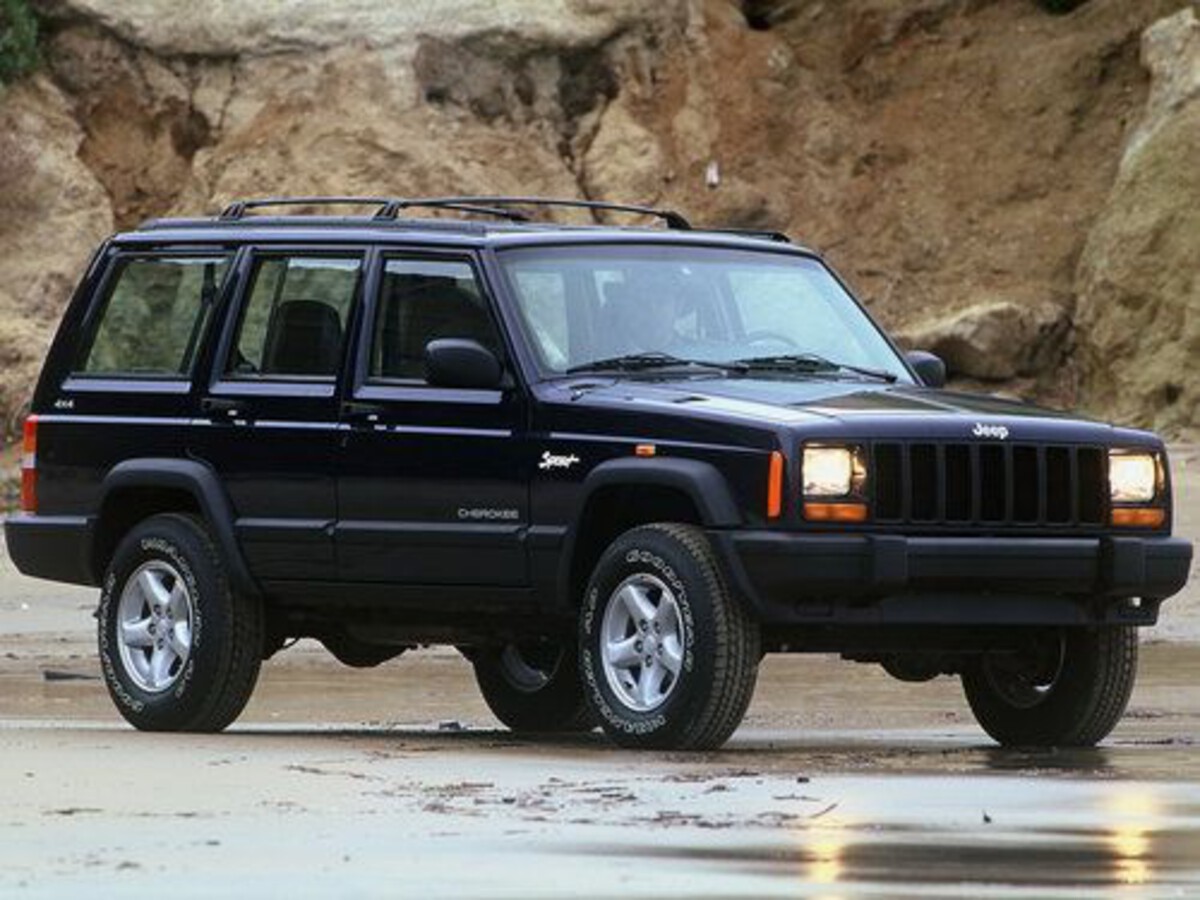
2. Jeep Cherokee XJ (1984–2001)
Ask any off-roading veteran about reliable trail rigs, and the Cherokee XJ almost always comes up. It’s a unibody SUV, which might seem like a disadvantage compared to body-on-frame setups, but Jeep got the formula right.
Lightweight, compact, and built with strong components, the XJ is a machine that can take a beating and keep going. Despite being out of production since 2001, it remains one of the most popular choices for overland builds and weekend warriors alike.
One of the key strengths of the XJ is its legendary 4.0L inline-six engine, the same one found in many TJ Wranglers. It’s not particularly fast, but it’s virtually bulletproof.
Combine that with a solid Dana 30 front axle and Chrysler 8.25 or Dana 35 rear axle, and you’ve got a platform that’s trail-ready out of the box. The suspension design offers good travel for a stock vehicle, and with minimal upgrades, it becomes a serious off-road contender.
The interior of the XJ is simple, but it has enough room for gear and passengers, making it a solid choice for weekend trips. Many enthusiasts appreciate that there’s no need to babysit electronics or worry about complex diagnostics in the middle of nowhere.
Everything from door locks to window switches is straightforward to fix or bypass. This kind of simplicity is part of what keeps older XJs on the road and on the trails, even decades later.
What sets the XJ apart is how affordable and available parts remain. From junkyard rescues to fully rebuilt overland machines, the XJ community is still thriving.
There’s an entire culture around modifying these vehicles, whether for rock crawling or long-distance travel. It’s a vehicle that proves how sometimes, the simplest solutions are the best for getting through rough terrain.
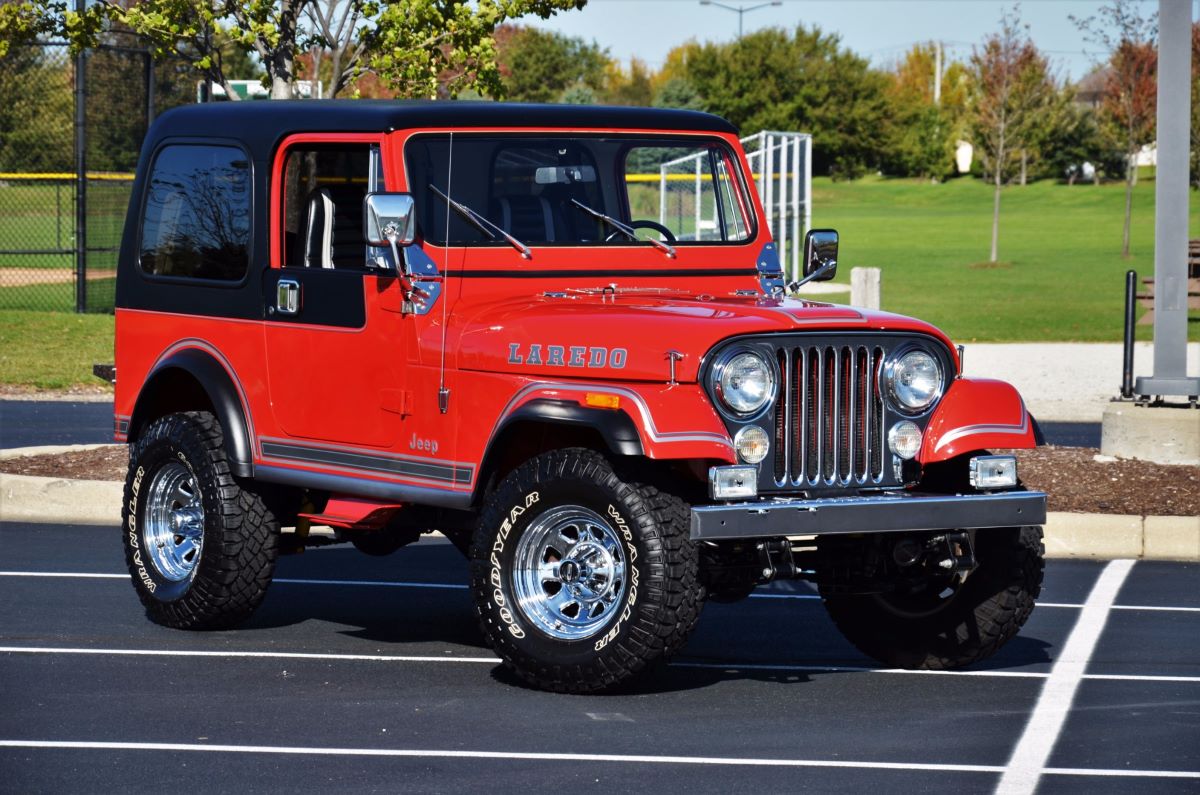
3. Jeep CJ-7 (1976–1986)
The CJ-7 is more than a trail machine; it’s part of American automotive history. While it predates the 20-year mark by a good margin, many well-kept CJ-7s are still running strong on trails across the country.
It was the first CJ model to feature an automatic transmission as an option, and the longer wheelbase improved stability without sacrificing the core Jeep feel. The combination of rugged mechanics and timeless design gives the CJ-7 its lasting appeal.
With solid axles front and rear, manual locking hubs, and available low-range gearing, the CJ-7 has the essentials of any good trail rig. These models came with a variety of engines, including the dependable AMC 258 inline-six, which provided enough torque to crawl through most obstacles.
The 4-speed and 5-speed manual transmissions offered good control on technical terrain, while the frames were tough enough to handle years of abuse.
A large part of the CJ-7’s enduring popularity is its adaptability. It’s a blank canvas for those who want to build a custom crawler or off-road camper.
Tube doors, full roll cages, suspension lifts, engine swaps, almost anything is possible with the CJ-7. Its open-body design also makes it ideal for those who want a true outdoor driving experience, with nothing but the essentials between them and the environment.
Despite its age, the CJ-7 doesn’t feel outdated when taken off-road. It keeps things raw and mechanical, which many drivers prefer when the goal is to feel every inch of the terrain.
Whether on rocky inclines or muddy paths, the CJ-7 still delivers real trail capability, backed by an almost cult-level following that ensures these vehicles won’t disappear any time soon.
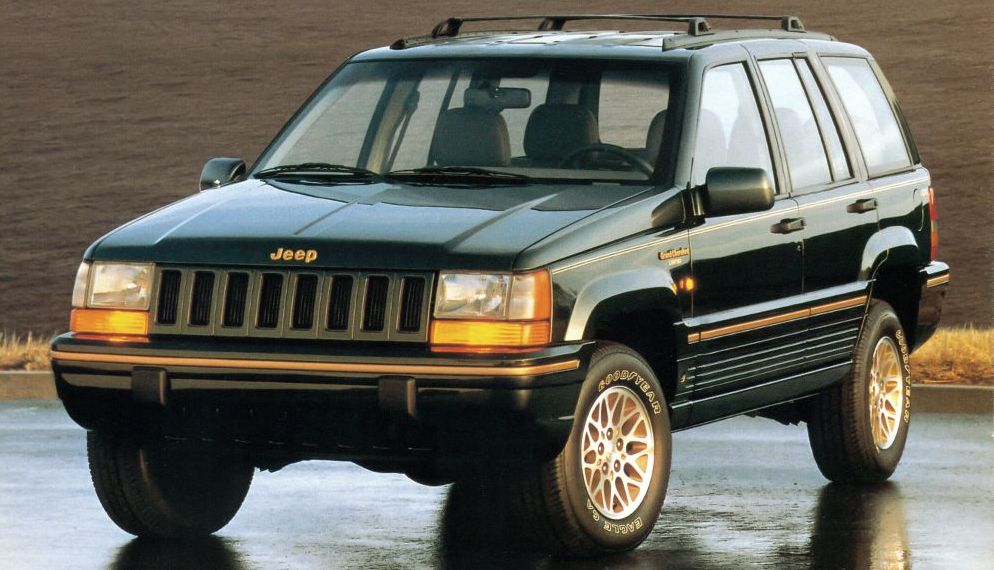
4. Jeep Grand Cherokee ZJ (1993–1998)
The first-generation Grand Cherokee, known as the ZJ, was Jeep’s bold attempt to create an SUV that could handle both daily driving and serious off-road conditions.
Introduced in the early 90s and produced until 1998, the ZJ combined unibody construction with surprisingly capable drivetrain options. It was one of the first luxury SUVs that could be taken straight from the dealership to the trail with minimal complaints.
Several engine options were available, but the standout was the 5.2L V8, which provided solid power for climbing and hauling. The available Quadra-Trac full-time four-wheel drive system ensured that traction was always on hand, even in unpredictable conditions.
While not quite as nimble as the smaller Wrangler or Cherokee models, the ZJ made up for it with torque, interior space, and comfort.
What helps the ZJ remain trail-capable today is its strong axle configuration and robust aftermarket support. Even stock, it had decent approach and departure angles for an SUV.
Many owners have found that a modest lift and 31-inch tires are enough to unlock its full potential. With modifications, the ZJ becomes a serious overland or trail vehicle, capable of taking on steep inclines and loose surfaces without hesitation.
You still see ZJs showing up at trail events, especially with older owners who have maintained them for decades. Some have been passed down within families, a testament to their reliability and lasting performance.
While it might not have the flashy appearance of modern SUVs, the ZJ does what matters, it gets the job done when the road disappears.
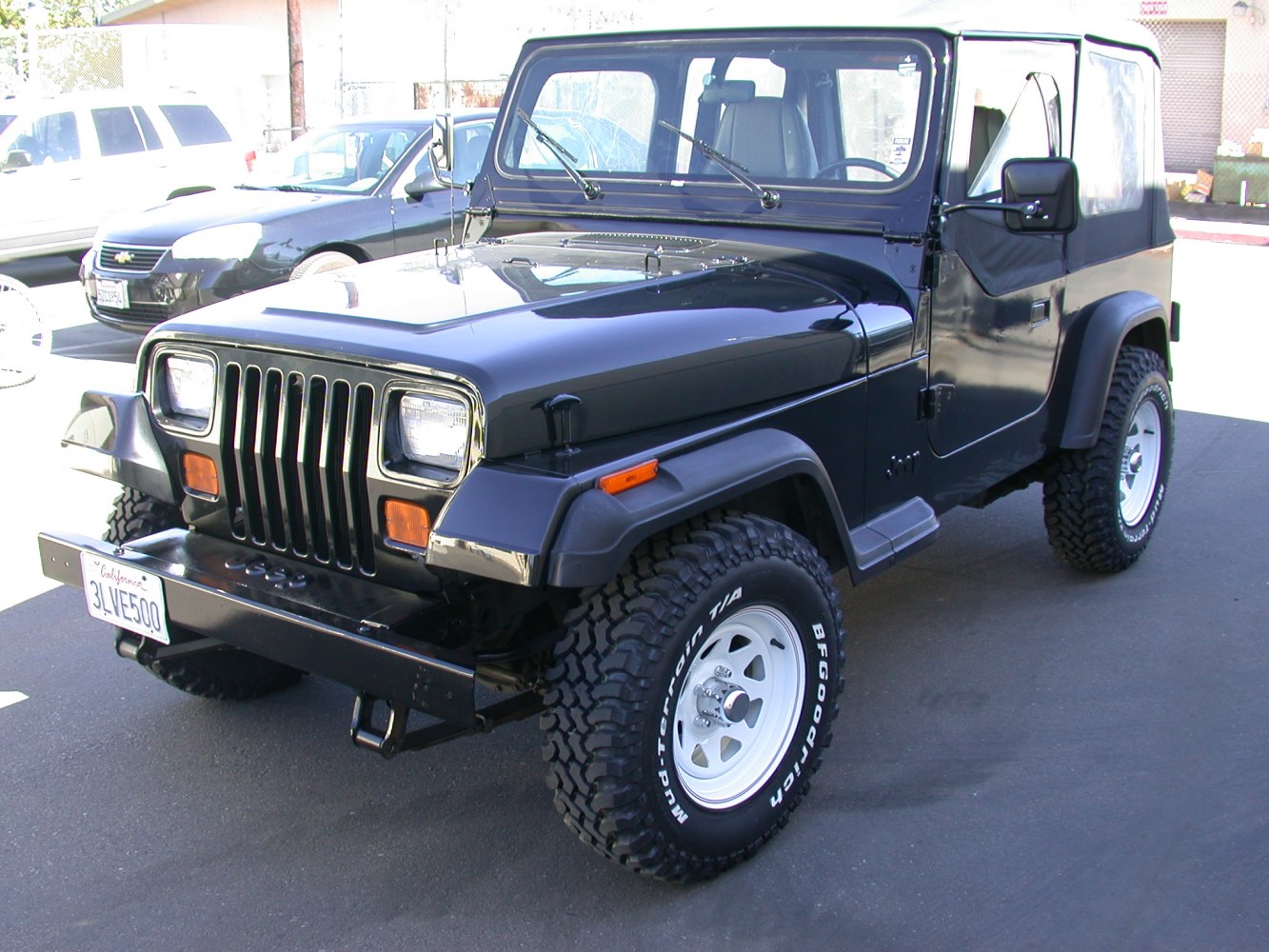
5. Jeep Wrangler YJ (1987–1995)
The YJ often stands in the shadow of its more popular successors, but it deserves a closer look. It was the first Wrangler to carry the new name after Jeep phased out the CJ series. The most controversial part of the YJ was its square headlights, a stark departure from the classic round design.
This cosmetic change led to years of divided opinions, but under the skin, the YJ carried forward much of the CJ’s spirit, with some crucial upgrades that made it more suitable for everyday use while retaining off-road ability.
A major improvement over the CJ was the addition of wider leaf springs, which gave the YJ better on-road handling without completely sacrificing articulation. It also introduced more stable track widths and a stronger frame, making it less prone to flex under stress.
Some models were equipped with the fuel-injected 4.0L inline-six, a major leap forward in terms of engine durability and performance. That same engine would later become a hallmark of the TJ and XJ as well.
Today, many YJs are still being used on trails and backroads across the country. A big reason for their continued presence is the simple, rugged construction.
Owners can wrench on them without needing special tools or advanced diagnostic equipment. In fact, many repairs can be made trailside with nothing more than a basic tool kit and a little know-how. This makes the YJ especially appealing for those who enjoy the DIY side of off-roading.
Another thing that helps the YJ remain viable after all these years is the availability of aftermarket parts. Whether it’s axle upgrades, suspension lifts, armor, or engine conversions, there’s almost nothing you can’t do to a YJ if you’re willing to put in the effort.
It’s a vehicle that continues to earn respect not because it’s the best at anything in particular, but because it refuses to quit, even after decades of abuse and modification. It might be the underdog of the Wrangler line, but it keeps coming back for more.
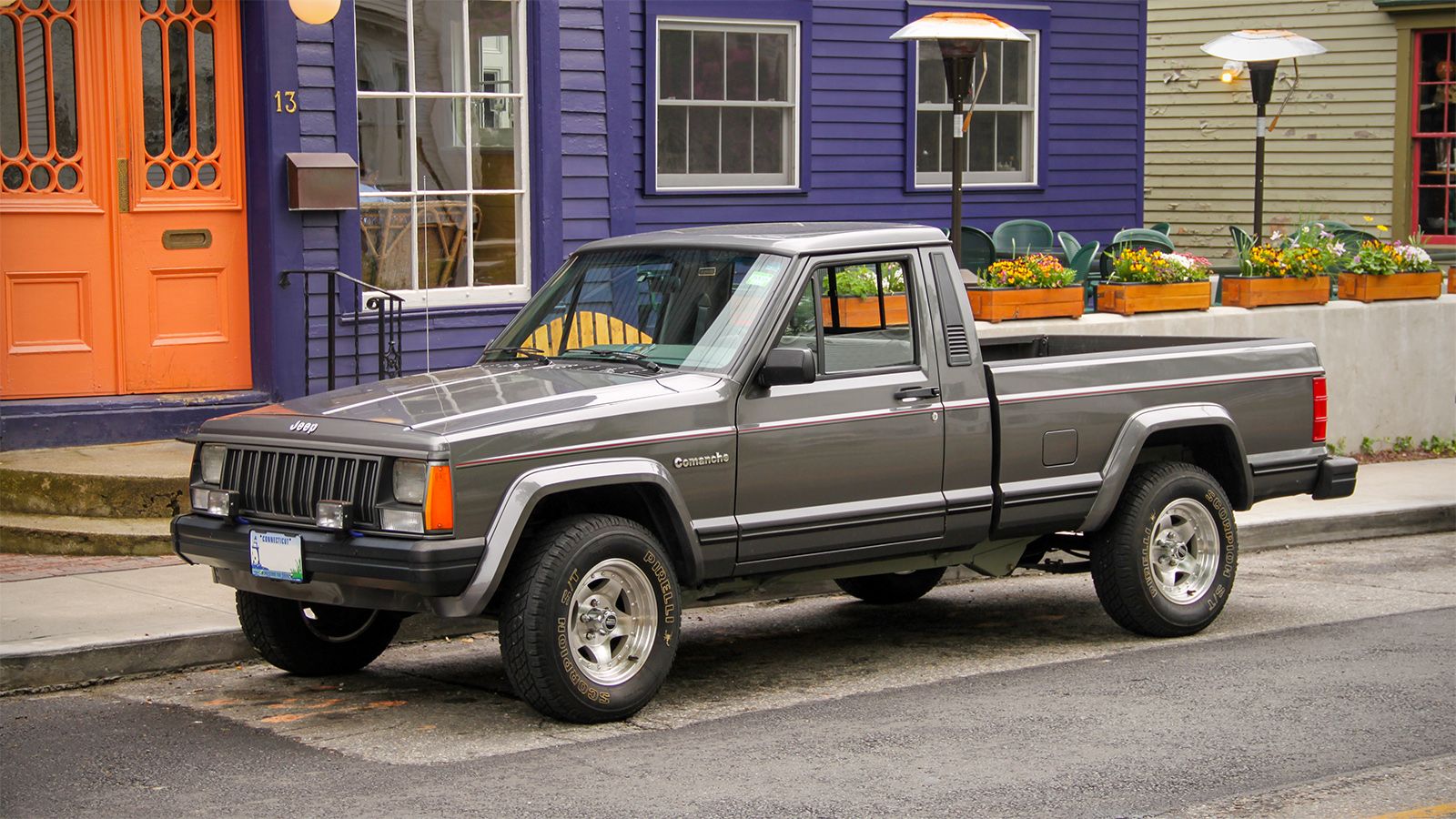
6. Jeep Comanche MJ (1986–1992)
The Jeep Comanche MJ is often overlooked because it’s a pickup truck in a lineup known for its SUVs and 4x4s. But that’s exactly what makes it stand out.
Built on the same unibody platform as the Cherokee XJ, the Comanche combined the ruggedness of a Jeep with the practicality of a light-duty truck. It offered solid off-road capabilities, a decent payload, and the classic Jeep reliability that makes it a hidden gem among trail rigs.
One of the key strengths of the Comanche was its versatility. It was available in both rear-wheel-drive and four-wheel-drive configurations, with a range of engine options, including the dependable 4.0L inline-six.
It also offered different bed lengths, giving owners a choice depending on their needs. While it was never as widely popular as other Jeep models, those who owned Comanches tended to hold onto them. And that speaks volumes about their performance and usefulness.
The Comanche’s off-road chops are legitimate. With the right upgrades, such as a modest lift, larger tires, and lockers, the MJ can tackle trails just as confidently as the XJ or TJ.
Its wheelbase is slightly longer, which adds stability in open terrain, though it can be a drawback on tight technical trails. However, for overland-style adventures or general backwoods exploration, the Comanche is more than capable.
The biggest challenge with the Comanche today is availability. Fewer were produced compared to other Jeep models, and not as many have survived into the present day. But those that have are fiercely protected by their owners. There’s also a strong online community dedicated to preserving and restoring these trucks.
The MJ may not have the fame of the Wrangler or the XJ, but those who know it understand that it’s every bit as tough, and still perfectly suited for a hard day on the trail, even 30 years later.
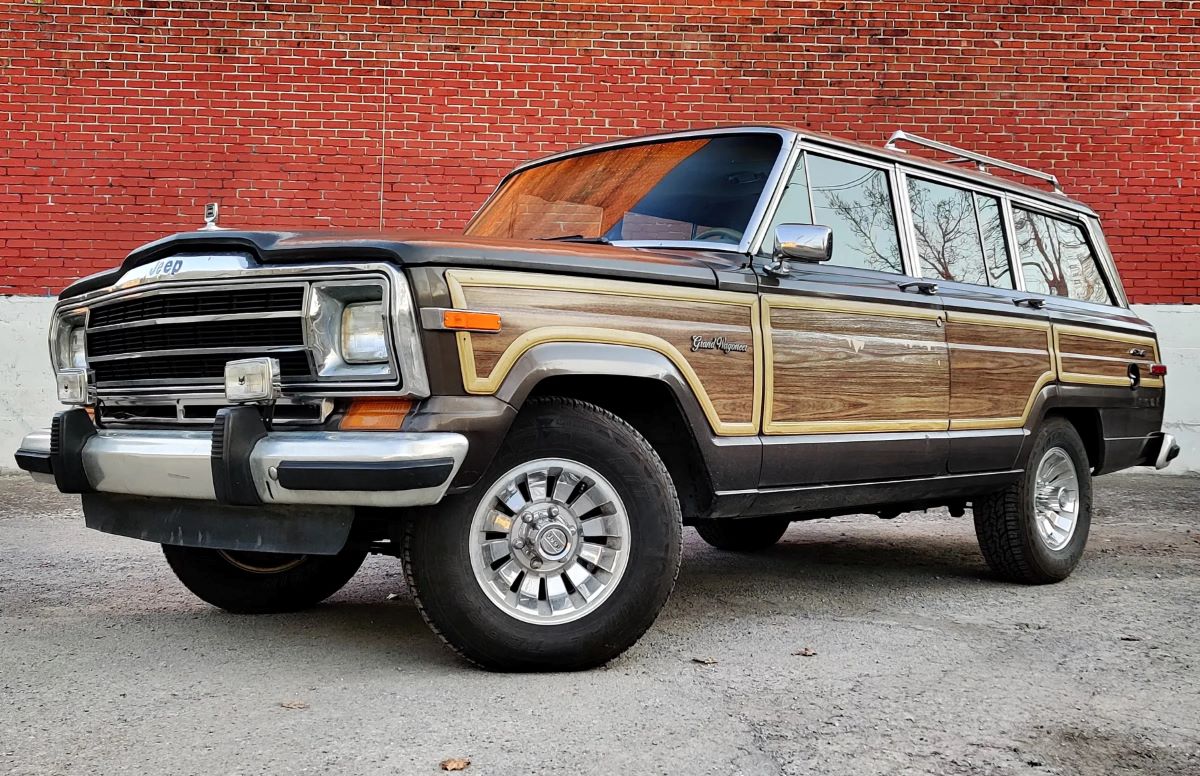
7. Jeep Wagoneer SJ (1963–1991)
The full-size Jeep Wagoneer SJ is a classic in every sense. While most think of it as a luxury vehicle from the 80s, it originally started as one of the earliest sport utility vehicles, well before the SUV category became mainstream.
Designed with family use in mind but built with the bones of a workhorse, the SJ Wagoneer offered an unmatched blend of comfort and capability. Many of these older models are still found today in both urban garages and remote mountain cabins, fully operational and ready to hit the trails.
Underneath the stylish wood-grain trim and plush interiors, the Wagoneer packed solid axles, leaf-spring suspension, and heavy-duty drivetrains. Many came with the AMC 360 V8, a torquey engine that could move the heavy SUV over challenging terrain without hesitation.
Four-wheel drive was standard or available depending on the year, and some later models even included full-time systems like Quadra-Trac, allowing for easy traction control without shifting transfer case levers.
What makes the SJ Wagoneer particularly impressive is how it handles rough terrain despite its size and age. The longer wheelbase adds stability on uneven ground, and the robust construction holds up surprisingly well under trail stress.
Even though it lacks the ground clearance of smaller models, many owners have outfitted their Wagoneers with suspension lifts, skid plates, and bigger tires to close that gap. The vehicle’s frame and drivetrain components are strong enough to handle the extra stress without major issues.
There’s a deep appreciation among collectors and off-roaders alike for the SJ Wagoneer. Some keep them as pristine classics, while others build them into trail rigs capable of handling harsh conditions.
Either way, this model continues to earn respect more than 30 years after production ended. Its blend of elegance and toughness, along with its mechanical simplicity, ensures that it still has a place on both the road and the trail.
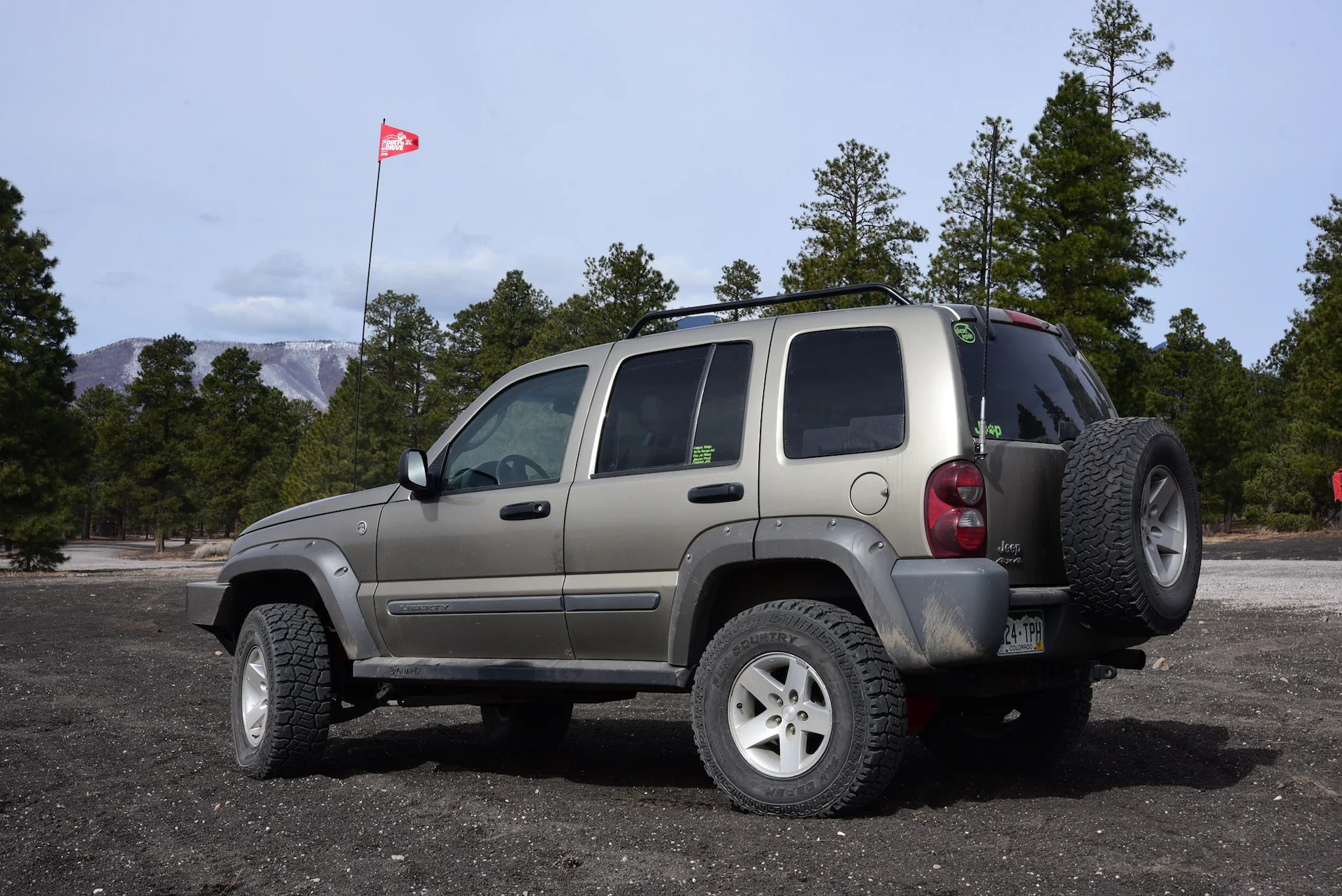
8. Jeep Liberty KJ (2002–2007)
The Jeep Liberty KJ might not be the first model that comes to mind when discussing trail dominance, but it has more going for it than many realize.
As the first Jeep to feature independent front suspension (IFS), it faced criticism from traditionalists who preferred the articulation of solid axles. However, the KJ made up for this change with a stiff chassis, solid rear axle, and a low-range transfer case that gave it real off-road functionality in the right hands.
Power came from either a 2.4L inline-four or a 3.7L V6, the latter being more common in trail-focused builds. While neither engine is legendary, they provided enough power to climb hills, push through snow, or drag through mud.
The KJ’s suspension allowed for a comfortable ride on paved roads while maintaining decent trail manners when taken off the beaten path. It also came in Trail Rated trims that added skid plates, tow hooks, and more aggressive tires from the factory.
The Liberty KJ has slowly gained recognition in off-road circles due to its affordability and modifiability. Lift kits, rock sliders, and upgraded bumpers are available from a growing number of aftermarket suppliers.
While it will never articulate like a TJ or XJ, it handles moderate to challenging trails with competence, especially when equipped with a rear locker or traction control system. For many entry-level off-roaders, it became a stepping stone into the world of Jeep ownership.
Over the years, many KJs have proven themselves on real trails. You’ll find them at trail rides, in overlanding groups, and even on solo cross-country trips.
Their mechanical simplicity compared to newer compact SUVs is part of what keeps them viable. In a time when many crossovers have gone soft, the Liberty KJ remains one of the few in its class that can still back up the Jeep name with actual off-road performance, even after more than two decades.
9. Jeep J-Series Pickup (1962–1988)
The Jeep J-Series pickup, often referred to simply as the J10 or J20 depending on the model, is one of the most rugged and long-lasting Jeep vehicles ever produced.
Built on the same platform as the Wagoneer SJ, these trucks were designed for work first and style second, but they carry a distinct presence that has only grown with time.
They weren’t flashy or mass-market sensations, but they gained a following due to their no-nonsense attitude, full-size utility, and brute strength on and off the trail.
One of the biggest advantages of the J-Series trucks is their toughness. These vehicles came with solid axles, stout frames, and heavy-duty leaf springs that were designed to handle hauling, towing, and trail abuse with ease.
Many J20 models featured Dana 44 or Dana 60 axles, which are still considered some of the most durable axles ever used in a stock 4×4. Combined with torquey V8 engine options like the AMC 360 or 401, these trucks had the power and the driveline to tackle tough terrain, even with a heavy load in the bed.
Where the J-Series shines on trails is in its raw mechanical grip and ground clearance. Although larger than the average trail rig, its long wheelbase and high-riding stance allow it to clear obstacles that would leave smaller rigs spinning or stuck.
With some basic off-road modifications such as upgraded suspension, 33-inch or larger tires, and skid plating, the J-Series becomes a formidable machine for backcountry travel. It may not have the agility of a Wrangler, but its raw capability more than makes up for it in open terrain, mud bogs, and forest service roads.
Many of these trucks are still in use today, often passed down through families or restored by enthusiasts who value their unique place in Jeep history.
They’ve become sought-after by collectors not just for their vintage charm but because they’re still so capable. It’s not uncommon to see a J10 or J20 leading a convoy of modern Jeeps on a trail ride, reminding everyone that real utility doesn’t come with an expiration date.
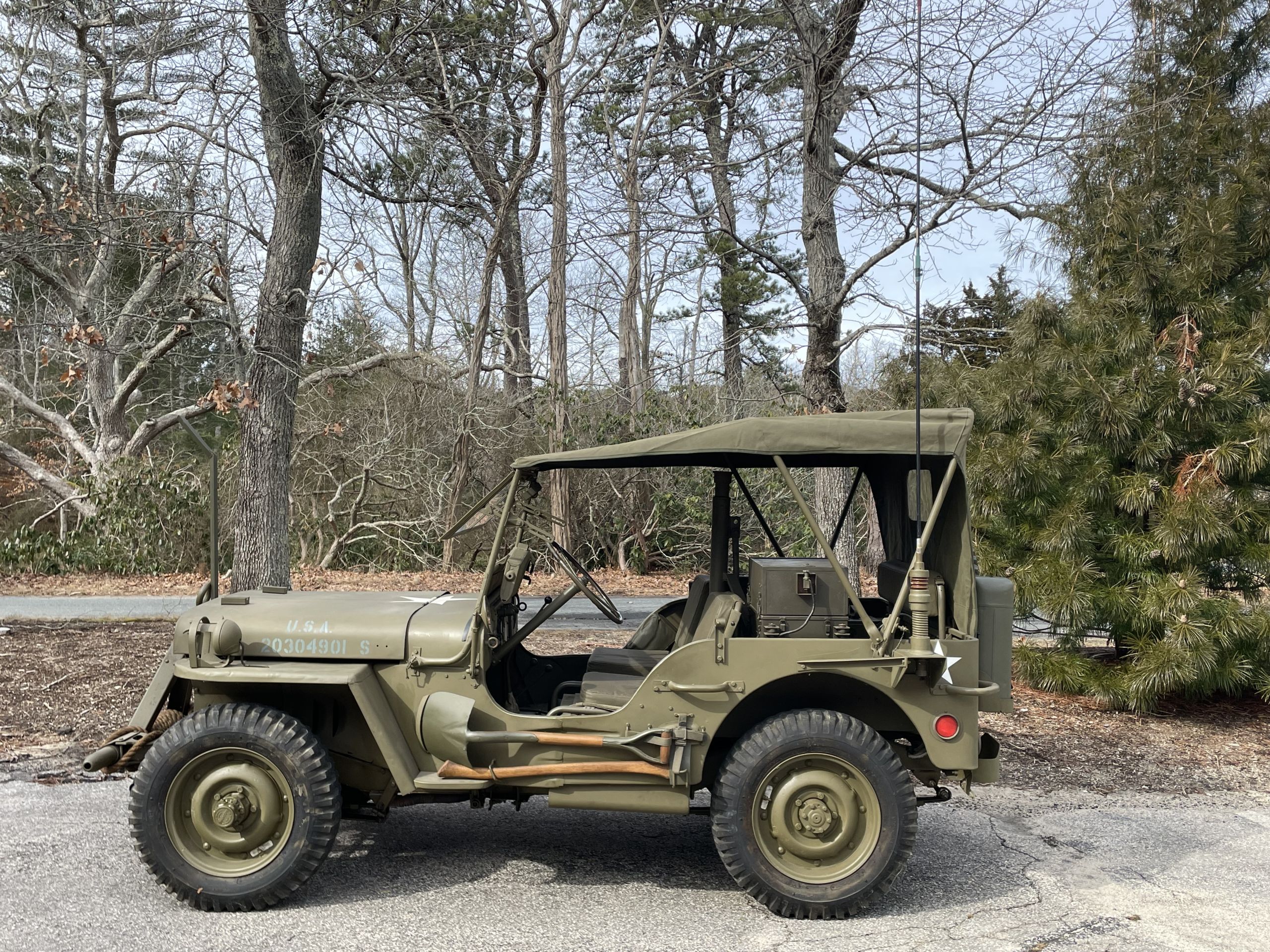
10. Jeep Willys MB / CJ-2A and CJ-5 (1940s–1980s)
No list of trail-capable Jeeps would be complete without acknowledging where it all began. The Willys MB, the original military Jeep, laid the foundation for everything that followed.
Though it’s more than 80 years old, and obviously primitive by today’s standards, the design principles of the MB and its civilian successors like the CJ-2A and CJ-5 are still echoed in modern off-road vehicles.
Their lightweight construction, simplicity, and four-wheel drive capability made them legendary, and their impact is still felt every time a Jeep badge rolls off the line.
The CJ-2A, introduced after World War II, brought the concept of the off-road utility vehicle to civilians. Farmers, ranchers, explorers, and outdoor workers used it for decades, often pushing it far beyond what modern vehicles would endure.
The short wheelbase, narrow body, and high clearance allowed the CJ-2A to squeeze through tight trails, climb steep inclines, and navigate over rocks with ease. It didn’t have much horsepower, but it didn’t need it. The low gearing and lightweight design made it nearly unstoppable in the right hands.
Later models like the CJ-5 took the same core design and added refinements. The CJ-5 remained in production for nearly 30 years, a testament to its popularity and effectiveness.
With options for stronger axles, improved engines like the Dauntless V6 or AMC straight-six, and better creature comforts, the CJ-5 managed to maintain the rugged DNA of its predecessors while adapting to changing times.
It’s still one of the most recognizable shapes in the Jeep family, and many of them are still crawling over rocks and through woods today.
There’s a reason why so many modern off-roaders and custom builders look to these early Jeeps for inspiration. They’re compact, purpose-built, and mechanically straightforward.
While few original Willys MBs or early CJ-2As are used for regular trail riding today due to their historic value, CJ-5s and later CJs are still commonly seen on trails, lifted and modified for modern performance.
Despite their age, they remind everyone on the trail what real capability looks like when it’s reduced to its most essential form, mechanical grip, driver skill, and a willingness to go wherever the road stops.
Also Read: 5 Engines That Rarely Leak Oil vs 5 That Constantly Drip
Across generations, Jeep has managed to keep one foot in the past and another in the present. These ten models show that true off-road capability isn’t something that fades with time.
It’s rooted in good design, strong parts, and a community of owners who understand the value of a vehicle that can handle real-world terrain.
Whether you prefer the simplicity of the CJ line, the balance of the TJ and XJ, or the full-size power of the Wagoneer and J-Series trucks, there’s a common thread that ties them all together: dependability under pressure and the ability to conquer challenges without relying on modern conveniences.
What stands out about these Jeeps isn’t just that they’re still running, it’s that they’re still running hard. These aren’t just antiques or garage queens.
They’re tools that get used the way they were meant to, often with decades of trail dust in their seams and countless hours of wrenching behind them.
They’ve proven themselves not just once but again and again, year after year, trial after trial. There are a few vehicles you can say that about with the same level of confidence.
Even as technology continues to reshape the automotive world, something is refreshing about vehicles that let the driver do the driving. No lane assist.
No predictive traction control. No touchscreens. Just wheels turning, engines working, and a direct connection between man, machine, and terrain.
These Jeeps offer that kind of experience, and it’s one reason why people keep coming back to them long after newer models have tried to take their place.
Whether you’re looking for your first off-road project or just appreciate the legacy of off-road engineering, these ten Jeeps represent something more than old metal and gears.
They’re proof that capability, when done right, doesn’t need constant reinvention. It just needs maintenance, respect, and a road that’s not paved.
