
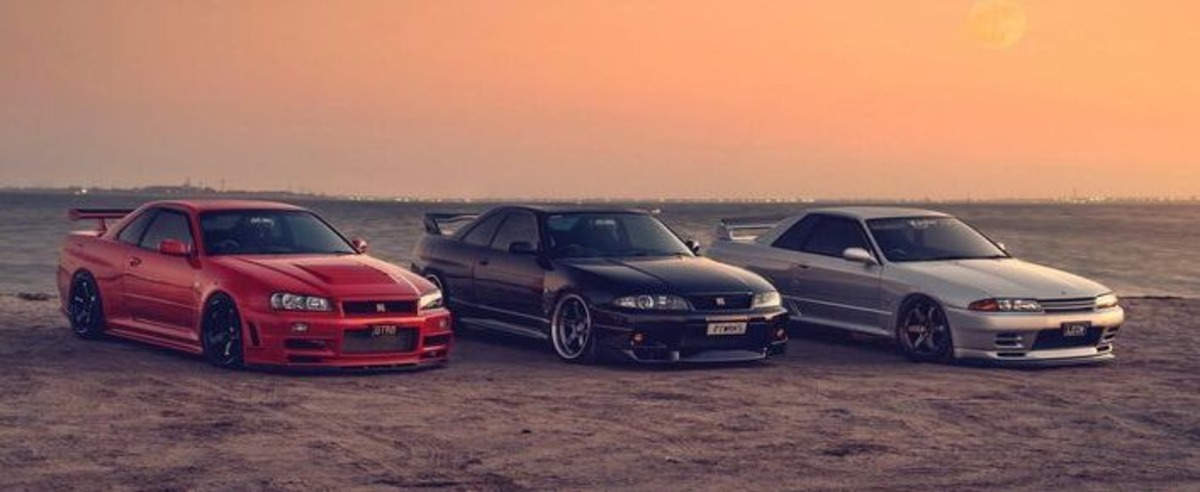
The 1990s were a pivotal time for Japanese automakers. It was a decade that saw experimentation, performance innovation, and bold design choices that redefined what affordable performance could look like.
Japan’s “Big Four”, Toyota, Nissan, Honda, and Mazda, all pushed engineering boundaries, not just for the domestic market but with a keen eye on global competition.
Back then, many of these cars were considered relatively inexpensive alternatives to their European counterparts. Fast forward to today, and some of those very same models are now becoming prized collector’s items.
They are no longer just old cars; they are statements, time capsules of a decade that mixed analog driving feel with the beginning of modern automotive technology.
Many enthusiasts and collectors are now looking at these cars not only with nostalgia but also with growing respect. The unique combination of reliability, performance, and design has led to a resurgence in popularity.
Some of these models have already seen dramatic increases in auction prices, while others are just beginning to gain the recognition they arguably always deserved. It’s not just about horsepower or speed anymore; it’s about heritage, originality, and the stories these cars tell.
Japanese cars from the ’90s offer a unique ownership experience because they represent a transitional phase in automotive history, one where manufacturers began blending mechanical simplicity with emerging electronics.
The appeal also lies in the diversity of the offerings. From all-wheel-drive rally monsters to rear-wheel-drive drift legends, from lightweight sports coupes to luxurious grand tourers, there’s something for nearly every type of car enthusiast.
And unlike many modern cars that rely heavily on driver aids and artificial sensations, many of these vehicles offer a raw, connected driving feel that is increasingly hard to find in today’s market. This analog charm has become a major factor in their climb up the collector ladder.
Enthusiasts appreciate how these cars feel, sound, and handle. They don’t need to be perfect, they just need to be genuine, and these cars deliver on that front with character in spades.
Also Read: 5 Vehicles With Bulletproof Transmissions and 5 With Gearboxes That Fail Early
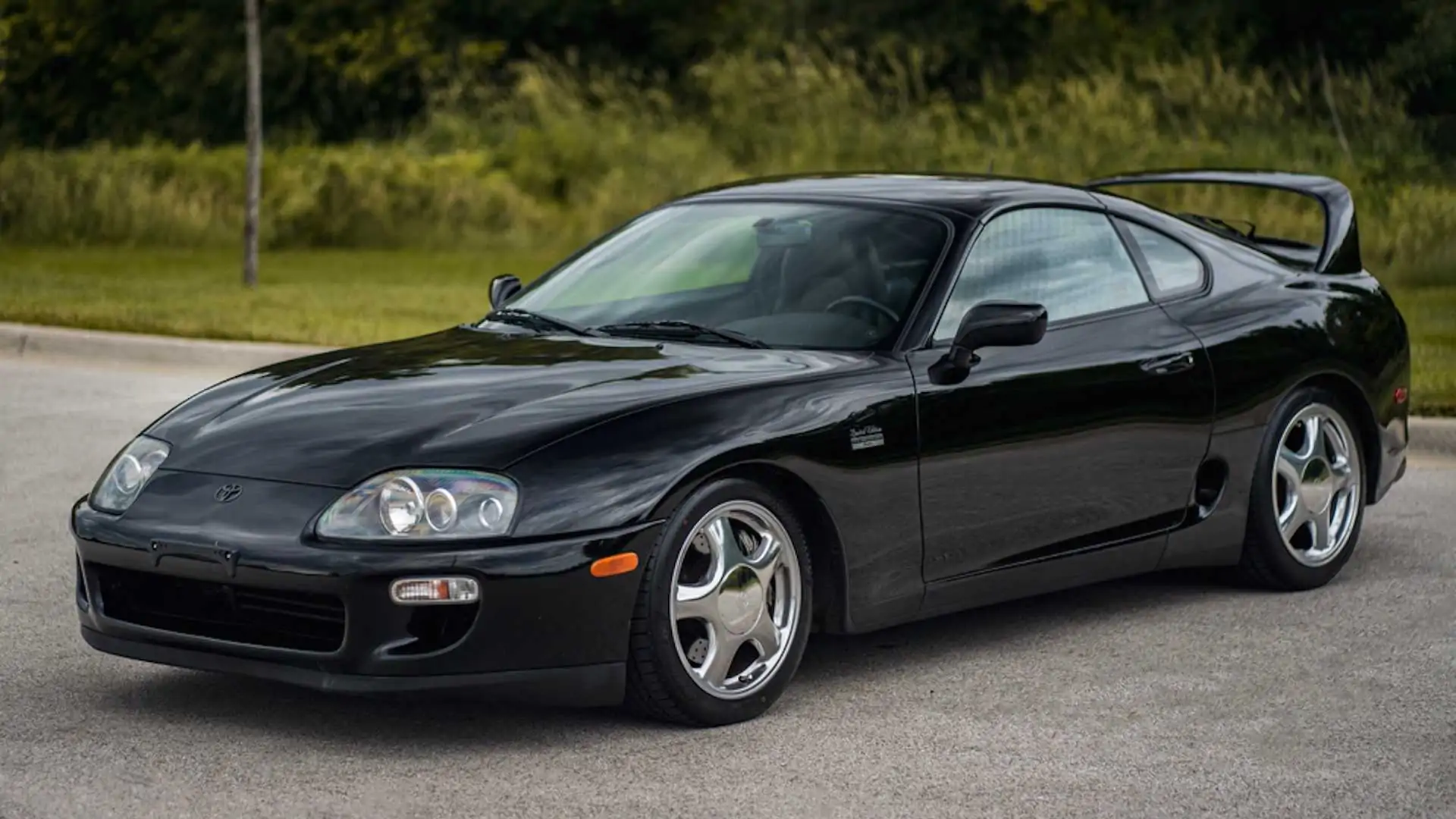
1. Toyota Supra MK4 (1993–2002)
Few cars from the 1990s have had as meteoric a rise in popularity as the Toyota Supra MK4. Originally released in 1993, the MK4 Supra quickly earned a reputation for its incredible performance capabilities, largely thanks to the now-legendary 2JZ-GTE engine.
This 3.0-liter inline-six, equipped with twin turbochargers, was engineered with durability in mind. It wasn’t just fast from the factory; it was also extremely receptive to tuning. Even modest modifications could unleash performance levels that rivaled or surpassed exotic cars of the time.
The design of the MK4 Supra was bold and timeless. Its long hood, wide stance, and aggressive rear wing gave it a distinct look that still turns heads today.
Toyota used lightweight materials like aluminum for parts such as the hood and targa top, which helped improve handling and balance.
The interior was focused on the driver, with a cockpit-like layout that wrapped around the driver seat and central controls angled for easy access. While some found the styling a bit flashy, there’s no denying its visual impact.
What has truly propelled the Supra into collector territory is its cultural influence. Its role in video games and movies, especially the Fast and Furious franchise, gave it a sort of celebrity status.
This pop-culture exposure created emotional connections for many who never had a chance to own one when they were new. As these people grew older and gained the means to buy the cars they once dreamed of, demand surged and prices followed suit.
Today, clean, unmodified examples of the MK4 Supra are becoming increasingly hard to find. Many were modified heavily during the 2000s tuning craze, and fewer original cars remain in circulation.
This scarcity, combined with its mechanical potential and emotional pull, has helped push the Supra into the realm of collector royalty. It’s not just a car anymore; it’s a symbol of an era.
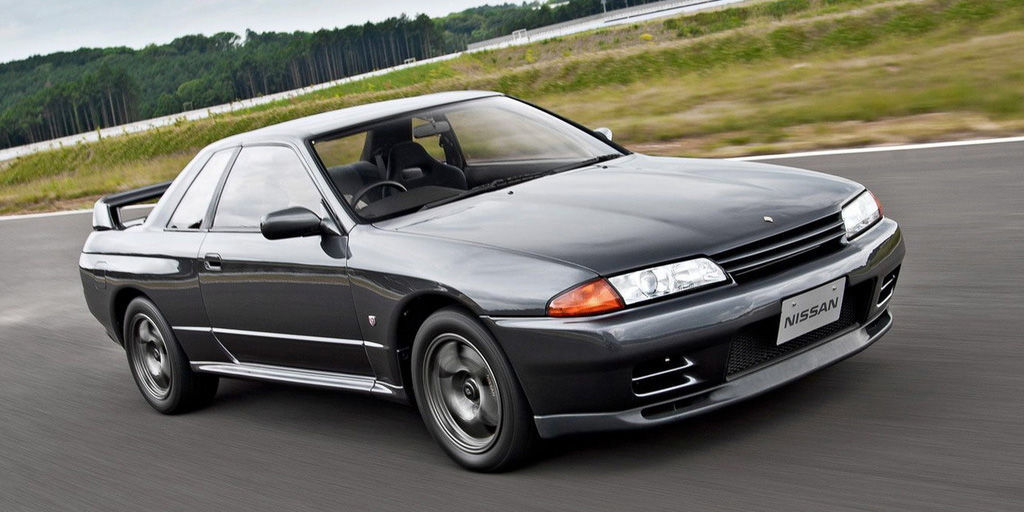
2. Nissan Skyline GT-R R32 (1989–1994)
Although technically debuting in 1989, the R32 Skyline GT-R fully came into its own during the early ’90s. Known as “Godzilla” for its monstrous performance and dominance in motorsports, the R32 was a leap forward in engineering.
It featured the RB26DETT engine, a 2.6-liter twin-turbo inline-six, paired with the ATTESA all-wheel-drive system and Super-HICAS four-wheel steering. These technologies gave the R32 unmatched grip and handling for its time, especially in corners and under pressure.
In Japan, the R32 became a motorsport icon, dominating Group A racing and earning a long list of victories. However, its impact wasn’t initially felt in the U.S. because it was never officially sold there.
This made it the subject of fascination and mystique among enthusiasts. People would read about it in magazines or watch grainy videos online and dream about owning one. When the 25-year import rule allowed U.S. collectors to bring them in legally, demand exploded almost overnight.
The R32’s styling was functional, clean, and purposeful. It didn’t have flamboyant curves or exaggerated features, but it had presence. Everything about it was focused on performance, from the aerodynamics to the suspension.
Inside, the cabin was simple but effective, designed for driving more than comfort. Its build quality and reliability also helped it age well compared to some contemporaries.
Collectors are now recognizing the R32 as the starting point of a dynasty that continued through the R33 and R34.
While the R34 often grabs more attention due to its later success and pop culture fame, the R32 is where it all began. Its historical significance, combined with mechanical excellence and limited availability outside Japan, makes it a true icon among ’90s Japanese cars.
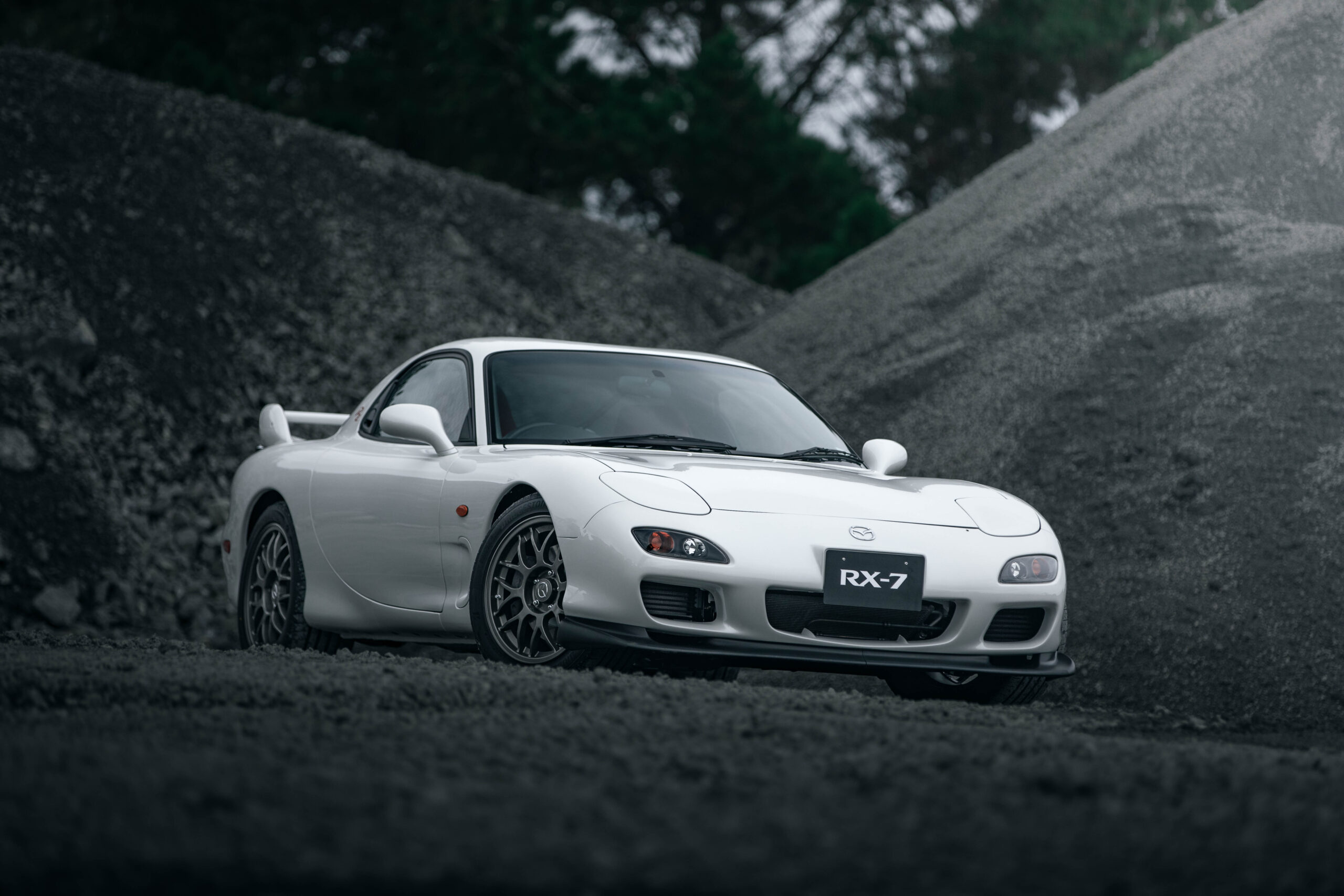
3. Mazda RX-7 FD (1992–2002)
The third-generation Mazda RX-7, often referred to by its chassis code FD, is one of the most unique sports cars of the 1990s.
Its primary claim to fame is the rotary engine, the 13B-REW, which was compact, lightweight, and capable of impressive high-rev performance. The RX-7 wasn’t about brute force; it was about balance, agility, and a driving experience that felt precise and responsive.
The styling of the FD RX-7 was fluid and elegant, often described as one of the most beautiful Japanese cars ever made. Its rounded lines, pop-up headlights, and compact proportions gave it a timeless design that still looks modern today.
Mazda focused heavily on keeping weight down, using aluminum and composite materials throughout the car. The result was a car that handled exceptionally well, with sharp steering and near-perfect weight distribution.
Driving an RX-7 is a distinctive experience. The rotary engine delivers power differently than a traditional piston engine, requiring drivers to stay in the higher rev range to access its potential.
This makes the car feel alive and eager, especially when coupled with the tight manual transmission and rear-wheel-drive layout. It rewards skill and punishes sloppy driving, which adds to its appeal among enthusiasts looking for a pure experience.
As time passes, the RX-7 has become more rare, particularly in unmodified or well-maintained condition. Rotary engines require attentive care and specific maintenance, which has led to many cars falling into disrepair or being heavily altered. For collectors, finding an original or tastefully upgraded FD RX-7 is becoming increasingly difficult. This scarcity, combined with its unique engineering and emotional appeal, is pushing the RX-7 into a class of highly desirable Japanese collector cars.
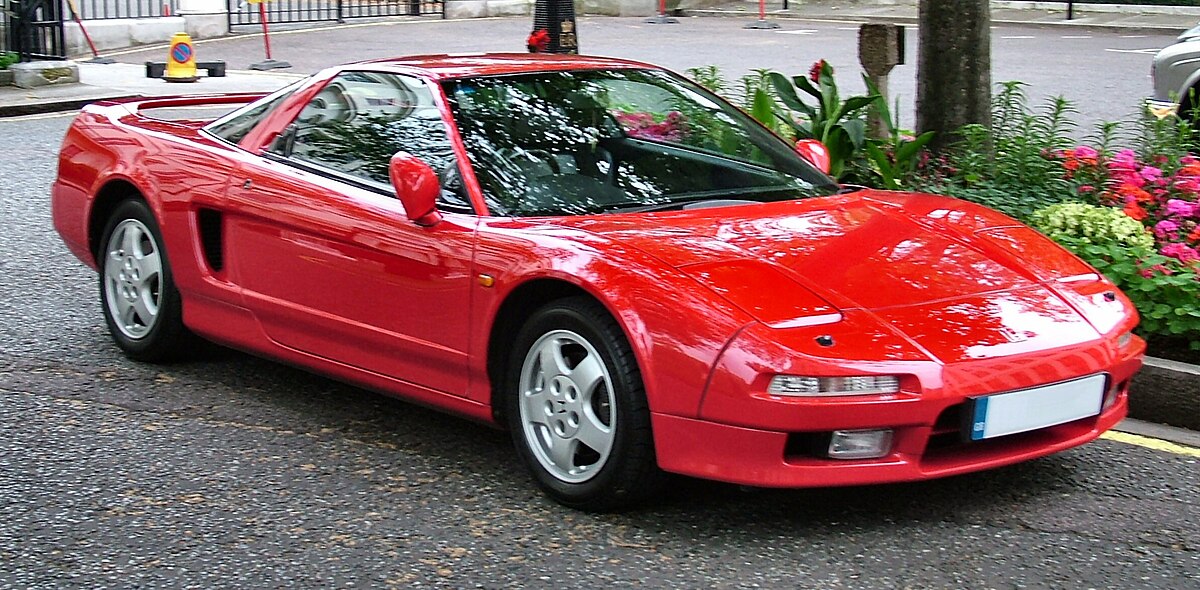
4. Honda NSX (1990–2005)
The Honda NSX, known as the Acura NSX in North America, was Japan’s first true answer to the European supercar. Developed with input from Formula 1 legend Ayrton Senna, the NSX was a groundbreaking car for its time.
It featured an all-aluminum body, mid-engine layout, and a naturally aspirated V6 engine with VTEC. The goal wasn’t to outgun competitors in terms of raw speed but to redefine how a supercar could feel and function.
Where many exotic cars of the era were temperamental or difficult to drive daily, the NSX was engineered to be usable. It had a comfortable interior, excellent visibility, and unmatched reliability in the high-performance world.
The result was a car that could be driven hard on a track or cruised comfortably through traffic without the drama often associated with supercars. This usability didn’t compromise the thrill of driving, either, the handling was razor-sharp and precise.
Stylistically, the NSX was sleek and aerodynamic without being over-designed. Its proportions were well-balanced, and it sat low to the ground with a purposeful stance.
The interior was minimalist but high quality, with excellent ergonomics and a focus on the driver. Over the years, Honda made subtle improvements, but the core formula remained largely unchanged through its production run.
Today, the NSX has gained widespread recognition for its engineering significance and influence on the supercar segment. Values have risen steadily, especially for early models with manual transmissions and low mileage.
Enthusiasts respect it for what it represented at the time: a car that proved you didn’t need to sacrifice reliability and comfort for performance. Its place in automotive history is secure, and collectors
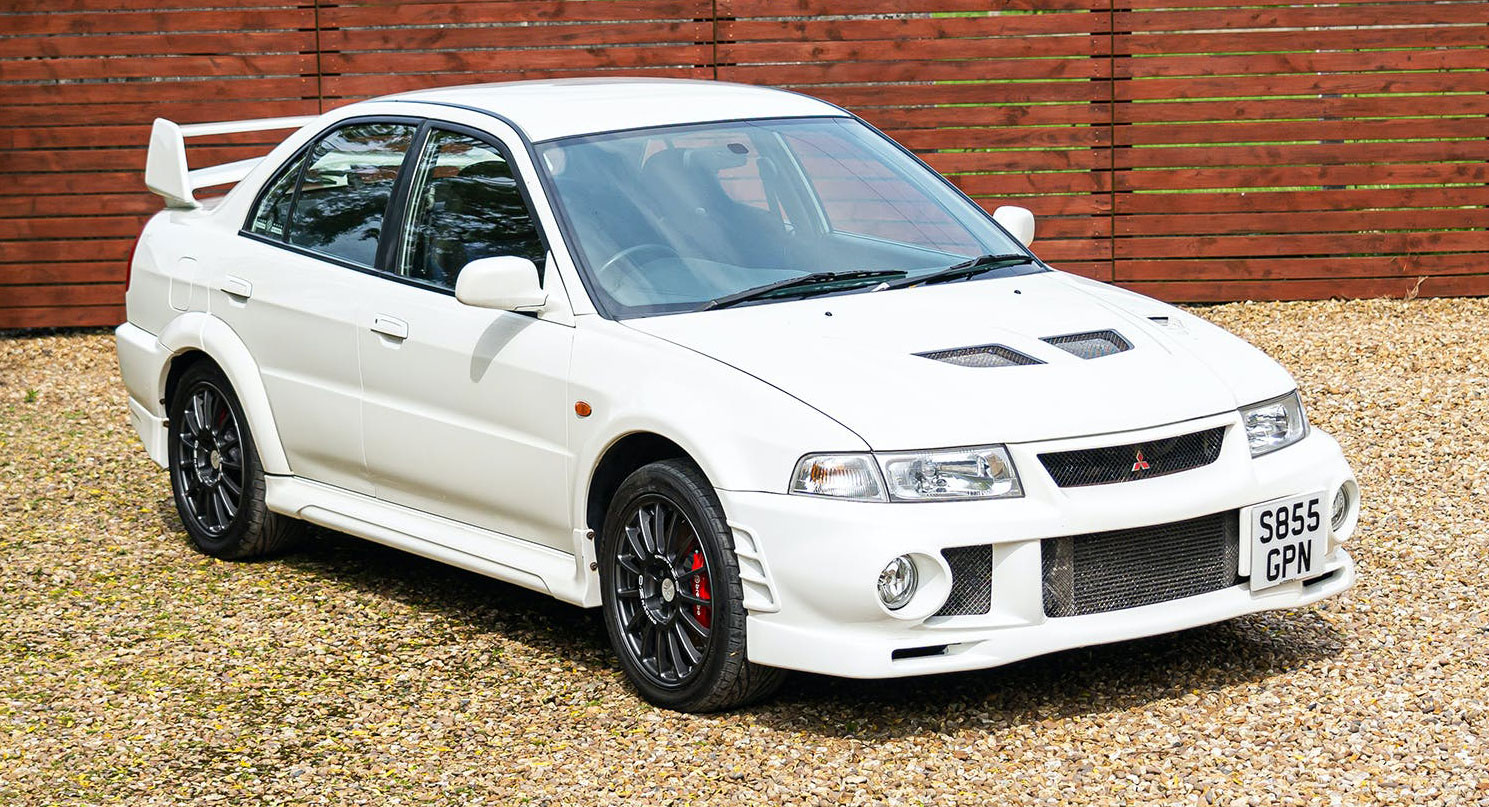
5. Mitsubishi Lancer Evolution VI (1999–2001)
The Mitsubishi Lancer Evolution VI represents a peak in the evolution of Mitsubishi’s rally-inspired performance cars. Built on the proven Lancer platform, the Evo VI was a direct product of lessons learned from the World Rally Championship.
While previous versions had laid the groundwork, this generation marked a clear maturation in design, capability, and execution.
With the 4G63T turbocharged inline-four engine producing around 276 horsepower, paired with Mitsubishi’s advanced all-wheel-drive system, it delivered performance that was difficult to rival in its price range.
The focus was squarely on performance and real-world usability, and it succeeded on both fronts.
One of the distinguishing features of the Evo VI was its constant refinement. While on paper it may not have appeared vastly different from the Evo V, the changes were critical.
Improved cooling, enhanced aerodynamics, revised suspension geometry, and even weight distribution adjustments showed that Mitsubishi was obsessively focused on the details.
The special-edition Evo VI Tommi Mäkinen Edition, named after the championship-winning rally driver, brought a limited-run package that included quicker steering, revised shocks, and unique styling cues.
These special models are especially sought after by collectors today, not just for their rarity but also for their direct link to Mitsubishi’s motorsport success.
The Evo VI had a stark and functional design. It wasn’t built to be flashy or luxurious. Instead, it emphasized aggression and utility. The massive rear wing, deep front bumper with larger fog lights, and rally-style vents all served a purpose. Inside, it was Spartan but effective.
Bucket seats, a short-throw gear shifter, and minimal distractions gave the driver complete control. This lack of unnecessary features appeals to purists and driving enthusiasts who appreciate the focus on driving above all else. For many, it represents the last breath of a time before performance cars began to add layers of digital mediation.
Today, the Evo VI is becoming a collector’s dream not only because of its performance but because of what it symbolizes. It’s a car that came from a company deeply involved in motorsport, where every model year was built with direct feedback from the rally stages.
Its limited availability outside Japan, especially the special editions, has made it highly desirable. Unlike some cars that only became popular years after release, the Evo VI was respected in its time and has only grown in stature since then.
As clean examples get harder to find, especially unmodified ones, collectors are quickly recognizing their long-term value.
Also Read: 5 Cars That Last With Minimal Maintenance vs 5 That Demand Constant Care
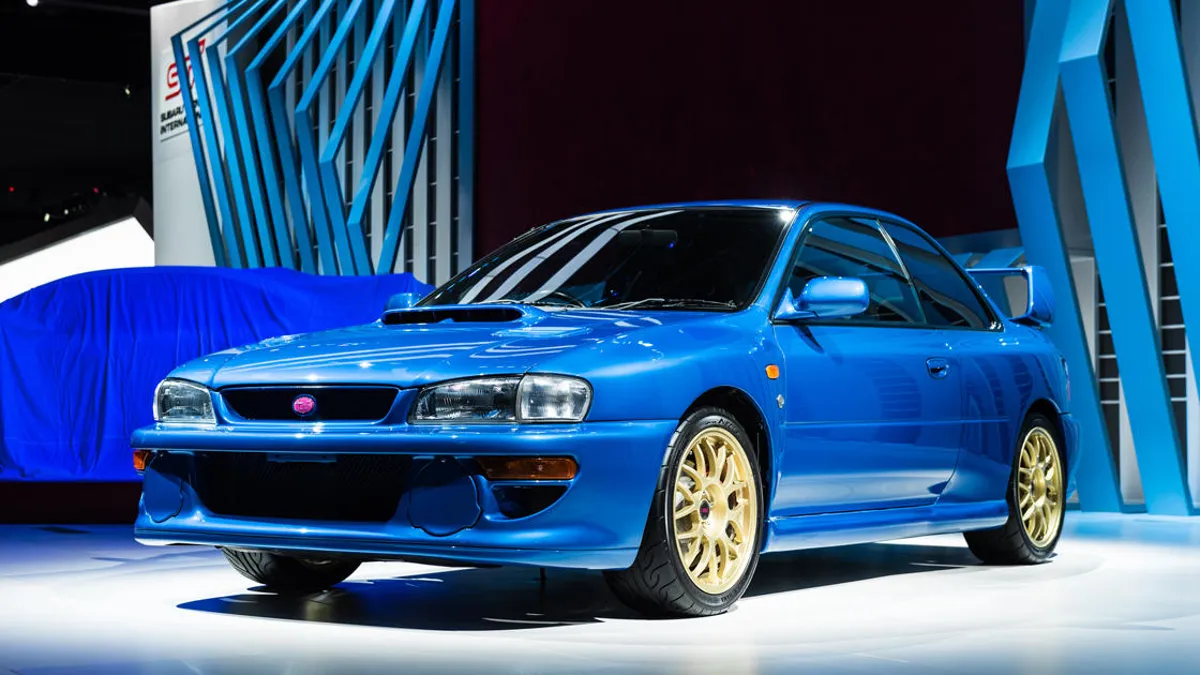
6. Subaru Impreza WRX STI 22B (1998)
The Subaru Impreza WRX STI 22B is one of the most revered Japanese performance cars ever made, and perhaps the symbol of Subaru’s rally heritage. Built to celebrate Subaru’s 40th anniversary and its third consecutive World Rally Championship constructors’ title, only 400 units of the 22B were produced for the Japanese market.
This limited-run, wide-bodied machine was far more than just a regular WRX with some cosmetic tweaks. Under the hood was a 2.2-liter turbocharged flat-four engine producing around 276 horsepower, but it was believed by many to be underrated in official specs. Its acceleration, grip, and handling were on par with those of much more expensive sports cars.
The 22B stood apart due to its bespoke features. The flared fenders were wider than those on any previous Impreza, giving the car a stance that was as aggressive as it was purposeful. The adjustable rear wing, unique bumper design, and gold BBS wheels completed the car’s unmistakable rally-inspired look.
Unlike later mass-produced STI models, the 22B was hand-assembled in many areas, making it feel more like a race car homologated for the road than a typical production vehicle. Subaru didn’t just focus on exterior flair either; the suspension and drivetrain were specially tuned, resulting in sharper cornering and more responsive handling.
Inside, the 22B featured an STI-specific interior with blue Alcantara seats, special badging, and a three-spoke MOMO steering wheel. It wasn’t luxurious, but it offered just enough comfort to make daily driving feasible without compromising its track-ready nature.
Every detail in the cabin reflected the car’s motorsport DNA. It had an aura of purpose that resonated with those who followed Subaru’s WRC exploits during the 1990s. For many fans, owning a 22B is about more than just performance figures. It’s about connecting with a piece of rallying history that was rarely accessible to the public.
Due to its rarity, historical importance, and the reverence it receives from the Subaru community, the 22B has skyrocketed in value over the years. Finding a clean, unmodified example is incredibly difficult, and auction prices have consistently broken records for Japanese cars of the era.
Its combination of exclusivity, design authenticity, and motorsport lineage has solidified the 22B as a true collector’s icon. It’s not just a special edition; it’s the holy grail of Subaru performance cars.
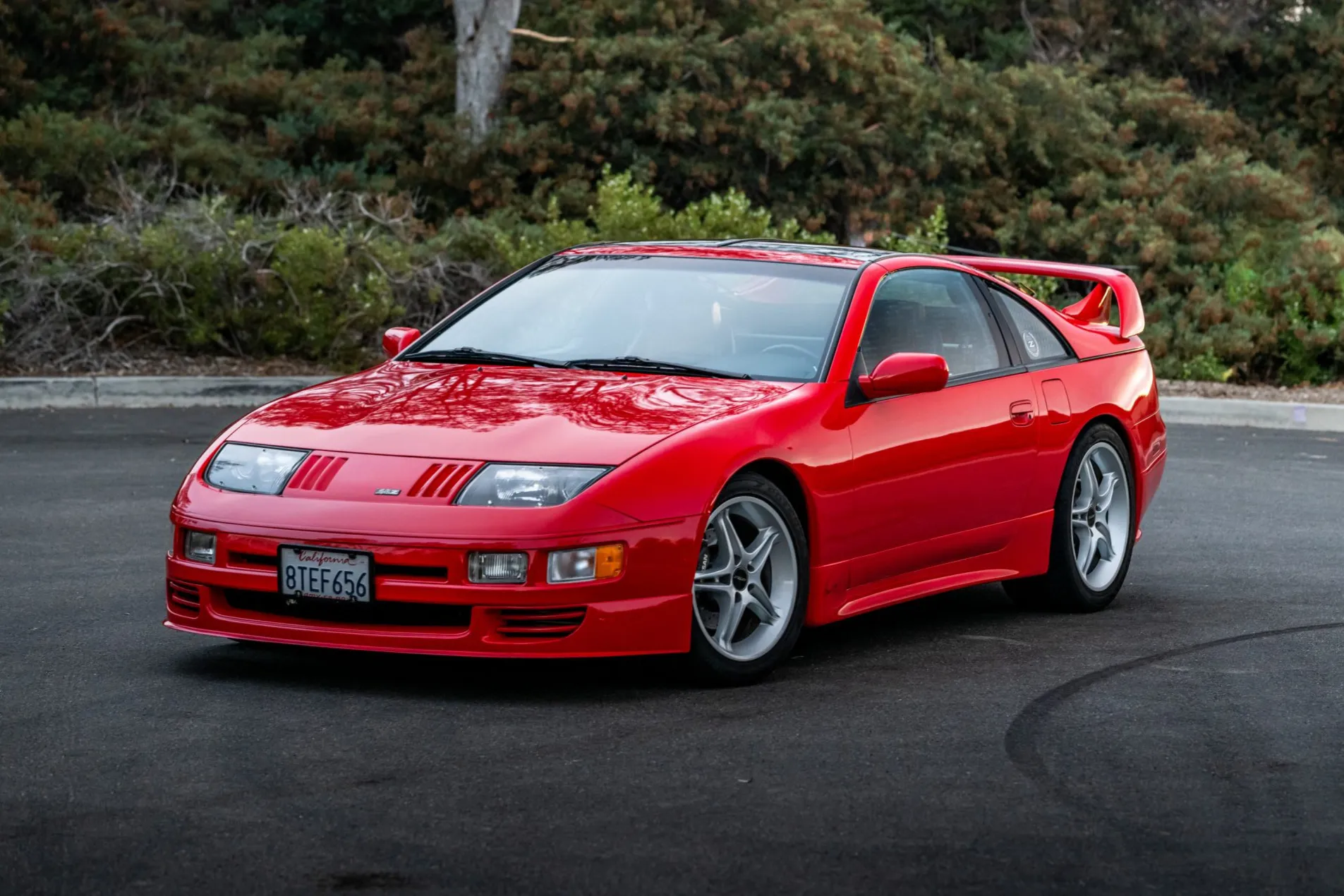
7. Nissan 300ZX (Z32) (1990–1996)
The Nissan 300ZX of the early ’90s marked a significant technological and aesthetic shift for the Z-car lineage. Moving away from the more angular design of the 1980s Z31 model, the Z32 featured smooth, flowing lines and a futuristic look that still holds up today.
It was available in naturally aspirated and twin-turbocharged versions, both using a 3.0-liter V6 engine. The twin-turbo variant in particular was a standout performer, offering 300 horsepower, rear-wheel drive, and a chassis that was finely balanced for its time.
It was a car that didn’t just focus on raw speed but also on refinement and composure at high speeds. What set the Z32 apart from many of its contemporaries was the level of engineering Nissan poured into it.
From the use of a multi-link rear suspension to the electronically controlled adjustable dampers and HICAS four-wheel steering, the car was packed with technology that enhanced its driving dynamics.
For its time, this was an advanced machine, and it was aimed at competing not only with Japanese rivals but also with European GT cars. While it was heavier than some of its peers, the performance and comfort trade-off made it a great long-distance sports car, capable of both aggression and ease.
The interior of the Z32 was well ahead of its time. The driver-centric cockpit featured deeply recessed gauges, a wraparound dash, and a surprising amount of luxury features, including power leather seats, digital climate control, and premium audio systems in higher trims.
It was a sports car that felt expensive in the right ways without being gaudy. Both the 2+0 and 2+2 layouts were available, giving buyers the choice of a slightly more practical configuration. The T-top roof on many models added to the car’s appeal and sense of occasion.
As collector interest in Japanese cars has grown, the Z32 has finally started to get its due. For years it lived somewhat in the shadow of the Supra and RX-7, but that is changing rapidly. Clean, original examples are now increasingly difficult to find, particularly the twin-turbo versions with manual transmissions.
As enthusiasts rediscover just how much this car offered at the time, it’s beginning to take its rightful place among the collector icons of the 1990s.
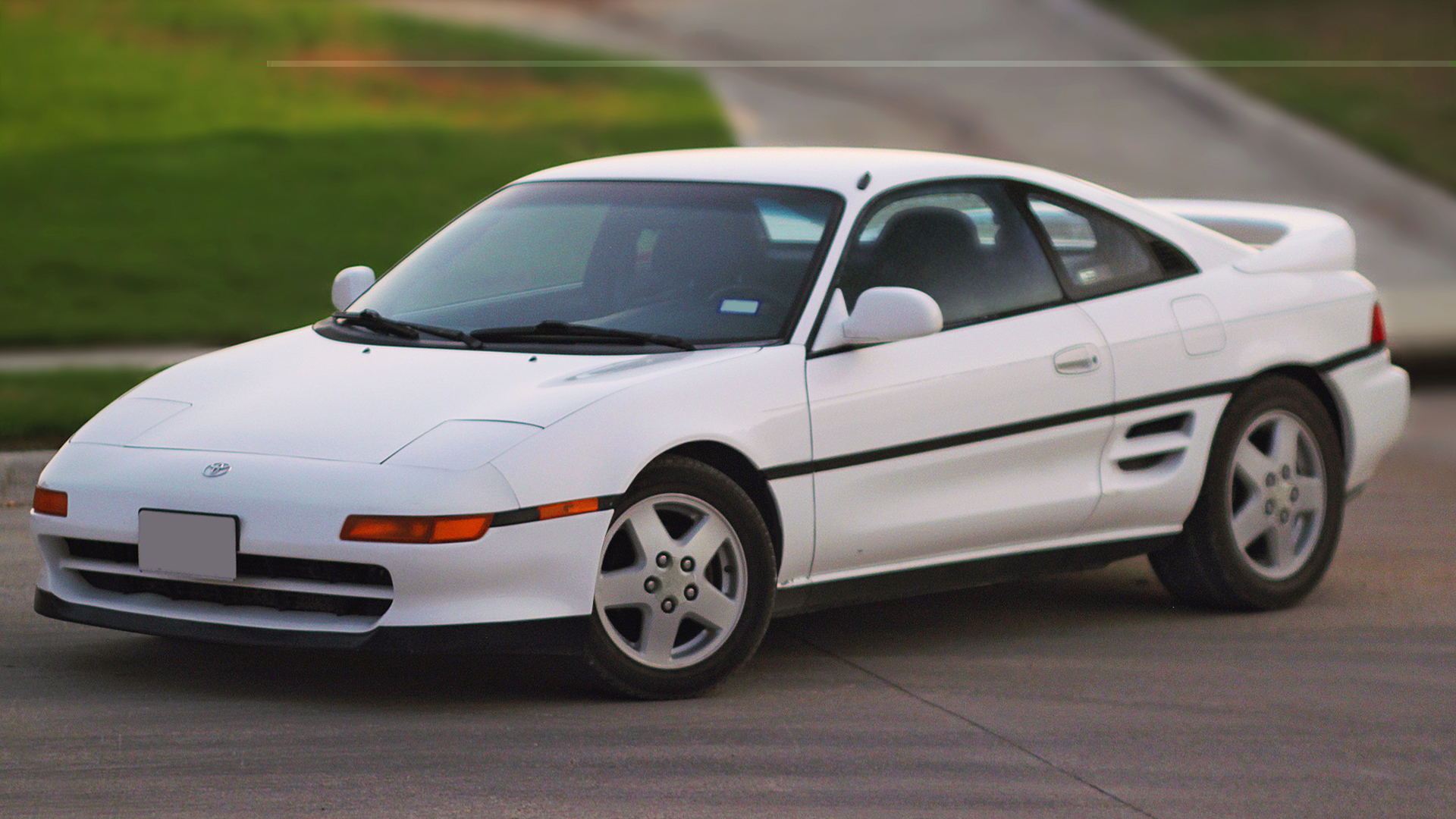
8. Toyota MR2 SW20 (1990–1999)
The second-generation Toyota MR2, known by its chassis code SW20, is one of the more unique entries in the 1990s Japanese sports car lineup. With a mid-engine, rear-wheel-drive layout, the MR2 was Toyota’s attempt to deliver exotic performance at a fraction of the cost.
The turbocharged version, featuring the 3S-GTE engine, delivered around 200 horsepower in a compact and lightweight package. While the numbers might not seem extreme by today’s standards, the car’s balance and handling made it a favorite for those who appreciated driver-focused engineering.
The SW20’s reputation was mixed early on due to handling characteristics that could be unforgiving at the limit. Often referred to as “snap oversteer,” the MR2’s tendency to rotate quickly caught many drivers off guard.
However, Toyota made several revisions during its production run to improve stability and handling predictability. Once tamed, the MR2 became a remarkably agile and capable machine, especially on winding roads and track days. Enthusiasts who took the time to learn the car’s dynamics found it immensely rewarding to drive.
Styling was another strong point of the MR2. With a silhouette that drew comparisons to Italian exotics, especially the Ferrari 348, it had real visual presence. The pop-up headlights, side air intakes, and short overhangs gave it a purposeful and sporty appearance.
Inside, the cabin was tight but well laid out, with supportive seats and a driver-focused dashboard. The T-top roof available on many models added both aesthetic charm and open-air driving appeal, further enhancing its desirability.
As the collector car market matures, the MR2 is being re-evaluated by enthusiasts and investors alike. The combination of unique layout, engaging driving experience, and relative rarity of clean turbocharged models has led to increased demand. It’s a car that offers something fundamentally different from the front-engine Japanese sports cars of the era.
For those seeking a pure, analog, mid-engine experience without the six-figure price tag of European alternatives, the SW20 MR2 is becoming an increasingly attractive option.
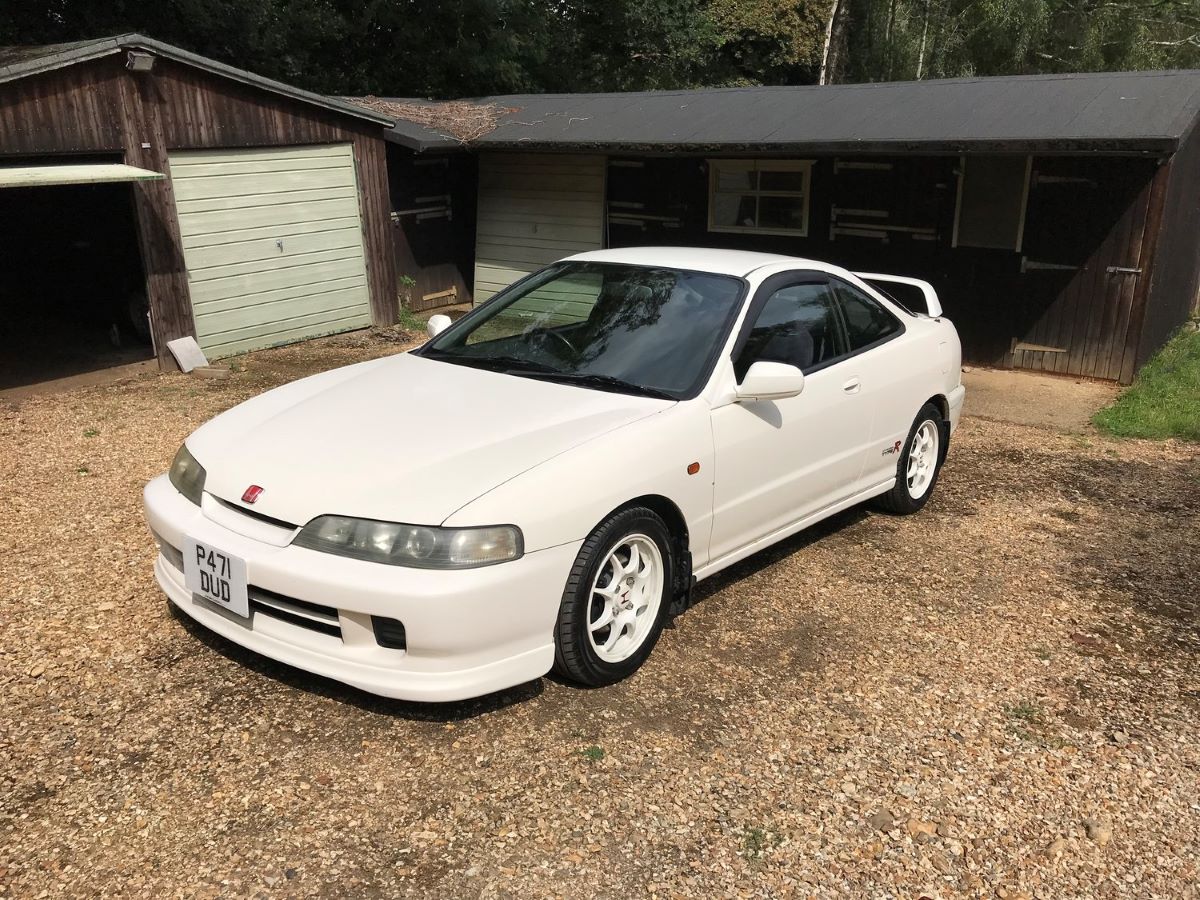
9. Honda Integra Type R (DC2) (1995–2001)
The Honda Integra Type R is often described as one of the finest front-wheel-drive performance cars ever built. Introduced in the mid-1990s, the DC2 Type R was a result of Honda’s desire to create a purist’s machine. It was not about comfort or luxury. It was about focus, weight reduction, and driver engagement.
The engine was the famous B18C5, a 1.8-liter naturally aspirated inline-four producing about 197 horsepower in U.S. trim and slightly more in JDM variants.
What set it apart wasn’t just the output, but how that power was delivered. The engine revved past 8,000 rpm, with VTEC kicking in high in the range, rewarding drivers who kept the engine in its power band.
The Integra Type R was more than just a strong engine, though. Honda went to great lengths to make the car feel special. The chassis was extensively reinforced for rigidity, while sound deadening and other non-essential weight was removed to keep it light.
The suspension was tuned with precision, resulting in sharp turn-in and exceptional cornering stability. The limited-slip differential provided excellent traction out of corners, and the close-ratio manual gearbox was considered one of the best ever made. All of this made for a car that felt razor-sharp on the road or track, far more focused than many cars twice its price.
Visually, the DC2 Type R had a clean and functional look. It didn’t rely on flashy design elements or aggressive aero. Instead, it featured subtle Type R badging, lightweight wheels, a modest rear wing, and in many markets, Championship White paint with red Honda badges.
The interior featured lightweight Recaro seats, a titanium shift knob, and red carpeting, all contributing to a sense of purpose without being overstyled. Every detail, from the seating position to the visibility, was designed with the driver in mind. Even small things like the steering feel and pedal placement were refined to an unusual degree.
Despite being a front-wheel-drive car in a segment dominated by rear-wheel-drive legends, the Integra Type R has built a loyal following. It’s now widely regarded as a collectible not just because of its rarity, but because of its engineering purity and raw driving pleasure.
Prices have been steadily climbing, especially for low-mileage, unmodified examples. In many ways, the Type R is the embodiment of what made Honda special in the ’90s: a commitment to precision, high-revving engines, and engineering brilliance that put driving feel above all else.
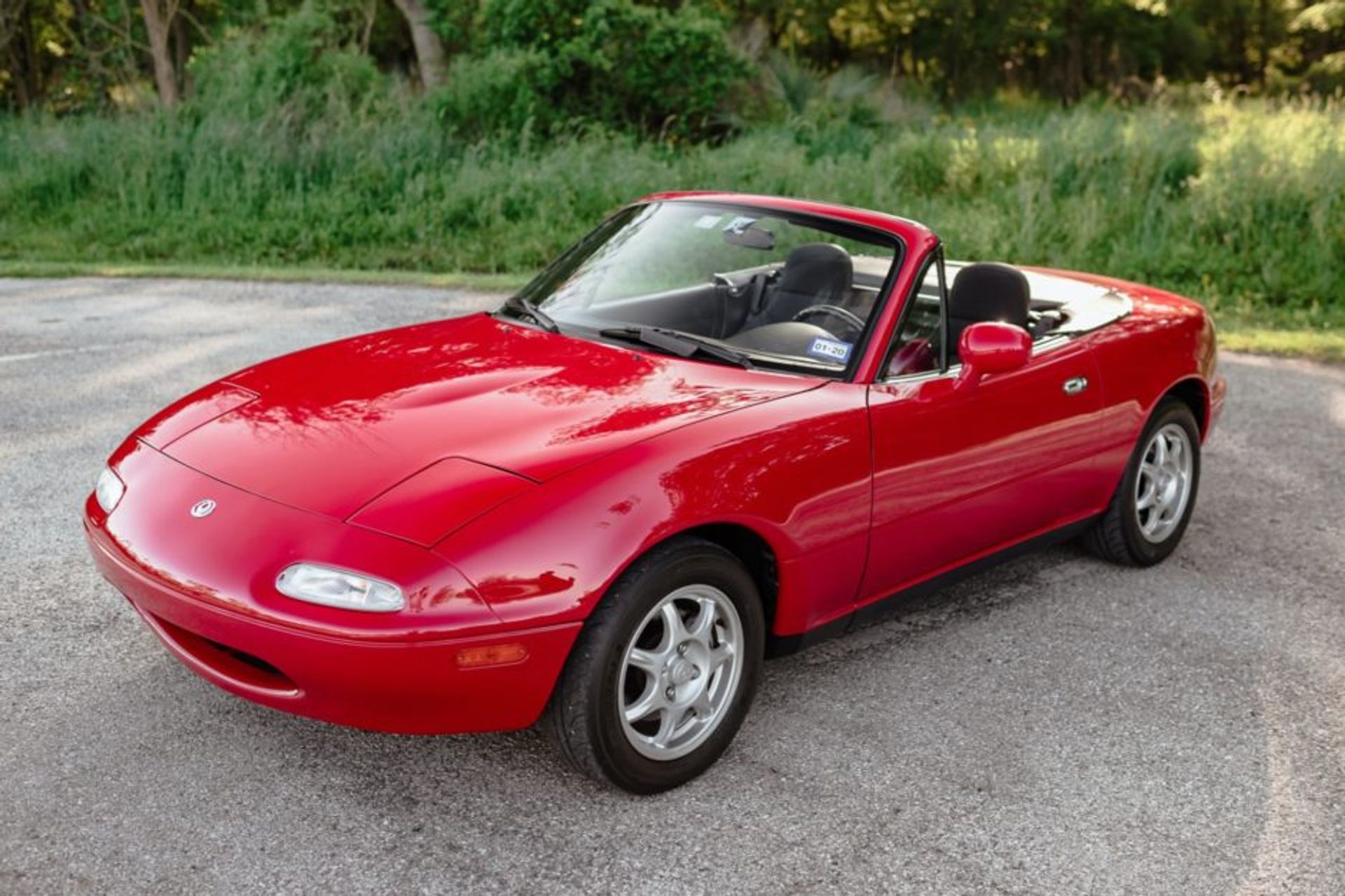
10. Mazda MX-5 Miata (NA) (1989–1997)
The original Mazda MX-5 Miata, often referred to by its chassis code NA, redefined what a lightweight roadster could be for a new generation of drivers.
While it technically launched in 1989, its presence throughout the 1990s was foundational in reviving the spirit of British sports cars but with Japanese reliability and engineering.
The formula was simple yet effective: front-engine, rear-wheel drive, perfect 50:50 weight distribution, and a curb weight under 2,200 pounds. Its 1.6-liter and later 1.8-liter inline-four engines were not powerful by any stretch, but the car’s balance and handling made every drive enjoyable.
What made the NA Miata stand out was its philosophy. Mazda wasn’t trying to compete on speed or luxury. Instead, they aimed to create a car that made driving fun at any speed. The steering was communicative, the shifter had short, satisfying throws, and the chassis was eager to rotate with the right input.
You didn’t need to be on a racetrack to enjoy it. A curvy back road or even a daily commute became more engaging. The Miata became a gateway car for enthusiasts, teaching countless drivers about the value of lightness and momentum over brute horsepower.
Aesthetically, the NA Miata has become iconic, in large part due to its pop-up headlights and simple, rounded shape. The design was charming without being overly nostalgic or gimmicky. Inside, the cabin was minimalist, with manual controls and straightforward materials.
But everything was where it should be, and the experience felt tailored toward involvement. It was also extremely customizable, with a massive aftermarket and strong community support. Whether used for autocross, weekend cruising, or full-blown track builds, the Miata’s versatility made it appealing to a broad range of drivers.
As collector interest in analog, simple sports cars has grown, the Miata’s reputation has risen accordingly.
Early models, especially special editions or those in original condition, are beginning to command real money in the market. Unlike some collector cars that intimidate with complexity or fragility, the Miata remains approachable.
It’s easy to work on, inexpensive to maintain, and rewarding in all the ways that matter to driving purists. For many collectors, it represents the essence of what a sports car should be: light, honest, and built for the love of driving.
