
Over the last decade, electric vehicles have transformed what drivers expect from performance, handling, responsiveness and refinement.
Improvements in battery technology and electric powertrains have brought instant torque, lower centres of gravity, and fewer compromises.
For many people, the question is no longer whether an EV can match a gas car in acceleration or high speed, but whether it can surpass it in day‑to‑day drivability, comfort, cornering, and satisfaction behind the wheel.
Several EVs do exactly that. They do not simply replicate what internal combustion engine (ICE) vehicles offer. They provide a driving experience that feels more direct, more composed, quieter, and more engaging in situations where gas rivals often lag.
Some EVs offer sharper acceleration, better regenerative braking control, more predictable handling through weight distribution, and much less noise in the cabin. In traffic, on twisty roads, on highways, in stop‑and‑go, EVs are showing advantages that many gas cars struggle to match.
This article presents twelve electric vehicles that many drivers consider to drive better than their gasoline‑powered rivals in one or more key aspects.
The list includes cars that offer superb performance in acceleration, those that shine in braking and control, models whose weight and chassis tuning give them an unexpected composure, and ones whose integration of electric powertrain and suspension make them more fun or more relaxing than gas versions in comparable segments.
Some of these vehicles are luxury sedans, others SUVs or crossovers; a few are pickup trucks. What unites them is how they outperform gas rivals across real‐world driving tasks rather than just spec sheets. Each example includes comparisons with what critics or owners commonly say about the corresponding ICE cars.
Whether you are interested in handling on winding roads, smooth power delivery, cabin quiet or braking behaviour, these twelve EVs each have something to teach about how electric drive can provide a superior driving experience.
Below are twelve EVs that, in many respects, drive better than comparable gas ones. After reading them you may reconsider what driving really means when electric powertrains are part of the equation.
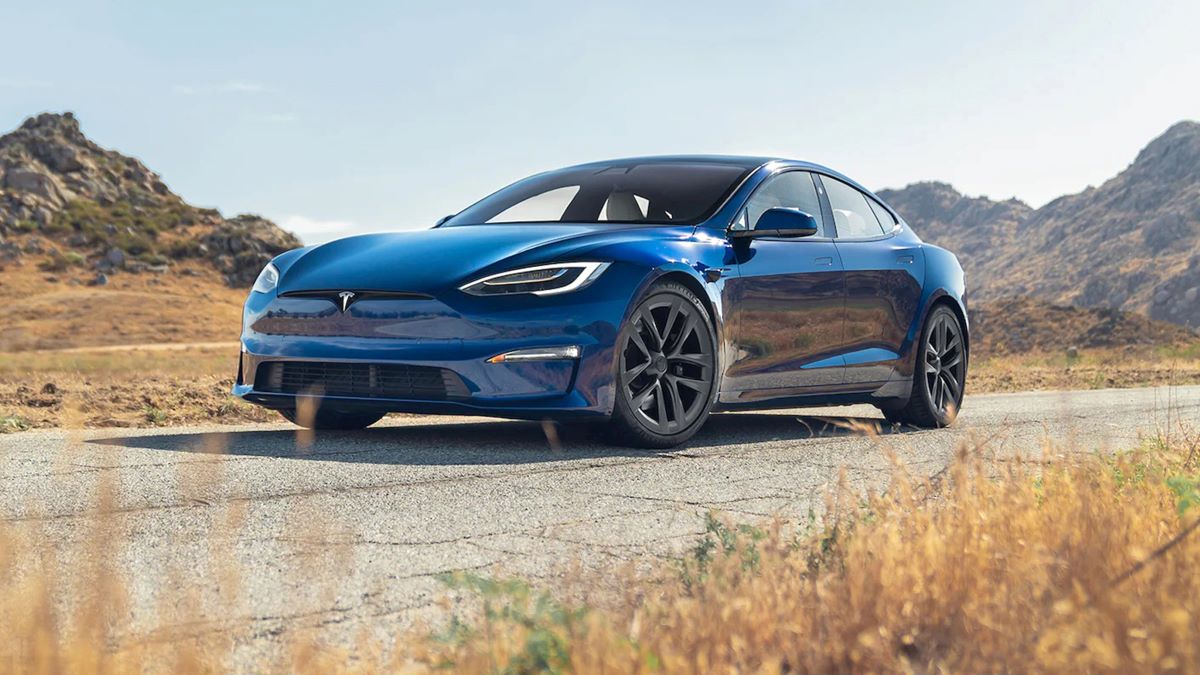
1. Tesla Model S
The Tesla Model S has become a benchmark for what full‑size electric sedans can do. It accelerates from zero to sixty miles per hour faster than many sports cars of previous generations.
Gas rivals in this range often need large displacement engines, heavy turbos, or forced induction to produce similar thrust. What the Model S does is deliver that acceleration almost seamlessly, with full torque from zero RPM, no gear shifts to interrupt thrust, and minimal vibration.
Where many performance gas sedans produce turbo lag, engine drone under load, or varying responses depending on RPM, the Model S offers steadier, more predictable push when you floor it. That gives a sensation of control and linearity that gas rivals often fail to match at least without careful tuning or cost.
Beyond straight line speed the Model S also holds its own around corners. Thanks to its battery pack mounted low in the floor it has a centre of gravity much lower than many gas sedans of similar size. That improves handling, reduces body roll, and helps it stay composed over a series of bends.
The car’s active suspension (on certain trims) or air suspension tuning further helps it soak up bumps while resisting lean when cornering.
Many gas performance sedans must compromise between stiff suspension to control body roll and comfort over imperfect road surfaces. The Tesla manages to stand firm without transferring every bump into the cabin, something that rivals struggle to balance so well.
Perhaps one of the most underappreciated facets of driving the Model S is its regenerative braking system.
Gas cars rely on friction brakes almost always, requiring the driver to modulate pedal pressure frequently. Regeneration allows for a form of one‑pedal driving under certain conditions.
In stop‑and‑go traffic that means fewer brake pad dust, less fade, more consistency. Gas rivals do not offer anything quite like this across their performance segments.
Even when they do provide regenerative or energy recovery systems, those often feel tacked on or inconsistent. The regenerative braking in the Model S feels like an integral part of how the car is driven.
Finally the quietness of the cabin, the lack of engine noise, the steadiness at highway speeds, the absence of thumping idles, all these add up to a refinement that many gas full‑size sedans cannot beat. Even a well‑tuned V6 or V8 is noisy at idle or under heavy acceleration.
Wind and road noise remain, but without that sometimes harsh mechanical background the driving atmosphere is calmer. Long trips, especially, showcase this contrast: driving past a gas rival, you may notice fatigue from vibration, sound and shifting behaviour that simply isn’t present in the Tesla.
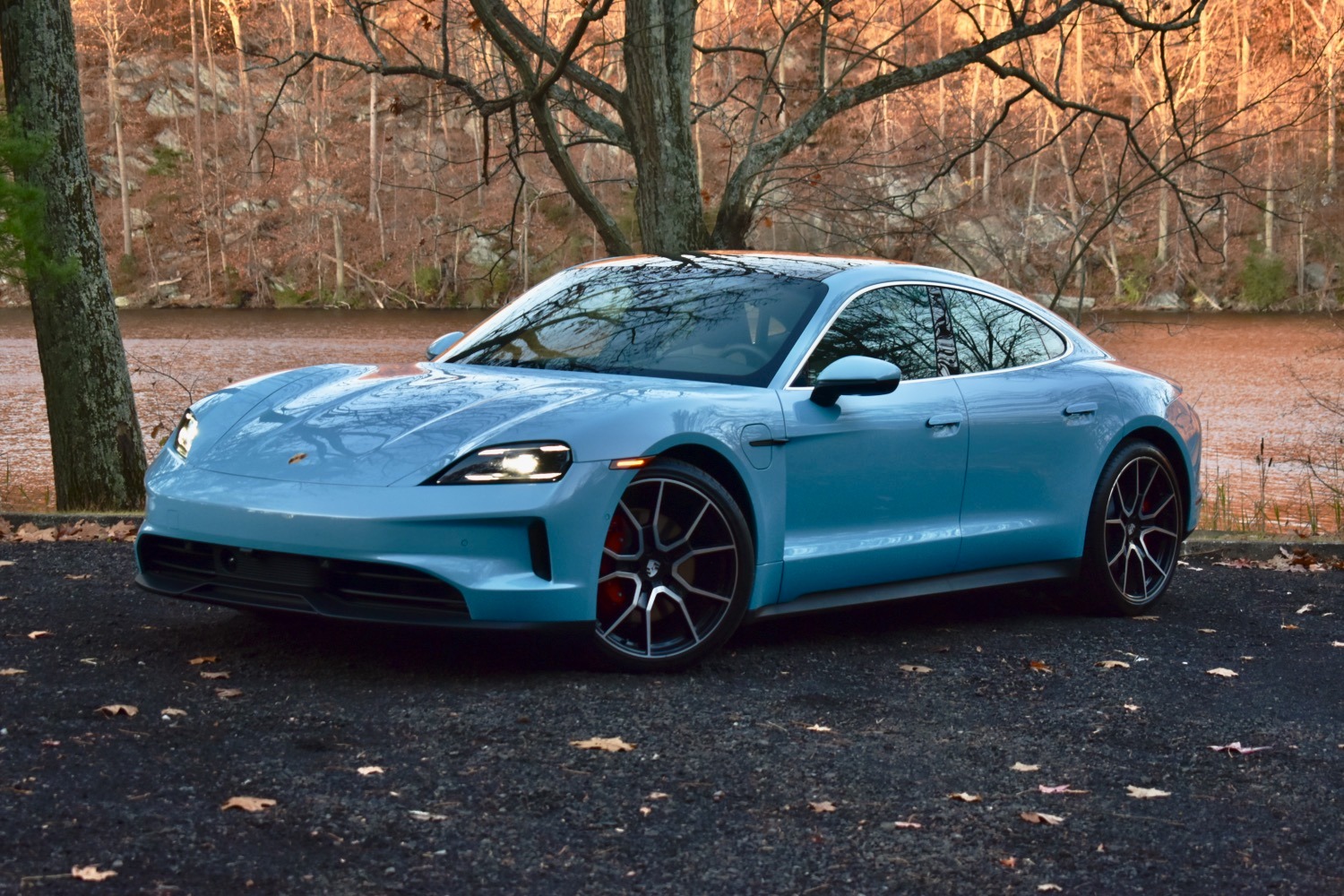
2. Porsche Taycan
Porsche has long been a name associated with driver engagement and chassis excellence. The Taycan brings much of that pedigree into the electric domain and in many ways outperforms gas sports sedans.
First, its handling stands out. With precise steering, weight balance nearly 50‑50 front to rear in many variants, and a well‑tuned suspension, the Taycan remains composed even under dynamic loads.
On twisty roads or during successive corners it shows agility rare among electric vehicles. Gas sports sedans typically rely on high revs, multi‑gear transmissions and sometimes complex systems to get good road holding.
The Taycan instead uses immediate torque delivery and low‑centered mass to stay planted, reducing the feel of delay or inertia.
Its braking and regenerative system support more than just slowing down. Drivers often report feeling very connected to the road when entering a corner because regen helps modulate speed before braking hard.
Compared to gas models that may require late braking or that suffer from fade after repeated hard stops, the Taycan’s brakes combined with regen maintain performance.
This produces more consistent lap times or consistent performance across spirited driving stretches. Gas rivals with complex cooling systems still sometimes overheat under repeated heavy use; the Taycan seems more resilient thanks to fewer heat‑producing mechanical linkages in its drivetrain.
Acceleration from zero is another area where the Taycan beats many gas sports cars. Turbocharged or supercharged ICE models often need to spool or reach certain revs; the Taycan delivers torque instantly. Even in base trims its sprint is strong and smooth.
In performance trims its 0‑60 times rival or beat many established gas sports models. That gives the driver a feeling of surge rather than waiting for boost or gearing.
That surge makes driving on ramps, overtaking at speed, merging into traffic more satisfying than many gas versions might manage.
Sound and refinement in the cabin also lean in favor of the electric version here. Without engine noise to mask subtle suspension and tire feedback, the driver hears more of what’s going on under the car, road texture, tire behavior, steering feedback.
Porsche has tuned the suspension and insulation well so that road harshness is managed and wind noise is minimized.
Gas sports sedans sometimes add sound insulation at expense of weight or compromise handling; the Taycan seems to find a better balance. The result is a ride that feels both sporty and refined in circumstances where many gas rivals feel harsh or noisy.
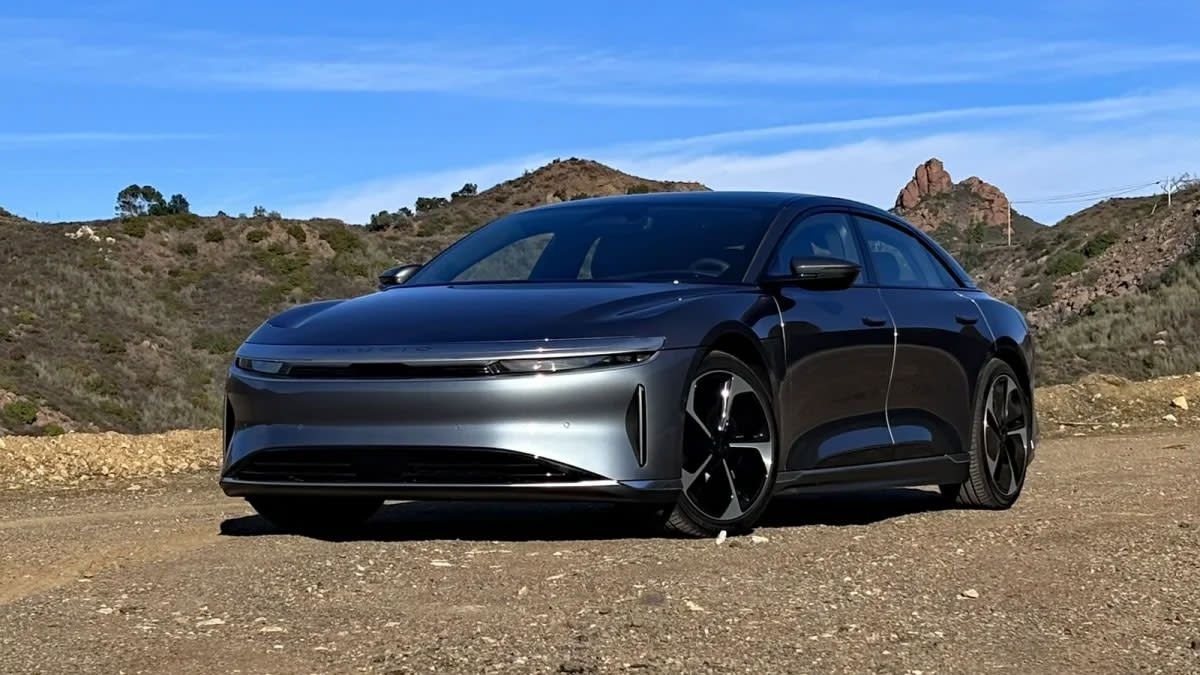
3. Lucid Air
The Lucid Air draws attention first with excellent range figures but even more impressive is how it drives compared with luxury gas sedans. When people drive a Mercedes‑Benz S‑Class, BMW 7 Series or Audi A8 they expect comfort, smoothness, and a serene cabin.
The Lucid Air matches and often exceeds these expectations. Its powertrain is whisper quiet, with virtually no vibration or harshness from the drivetrain. Gas large sedans often run large engines which produce low frequency noise and subtle resonances.
The EV alternative does away with many moving parts that generate those resonances. The result is an experience that feels more refined at similar speeds.
Ride comfort in the Lucid Air also outshines many gas‑powered luxury sedans. It softens road irregularities with a suspension tuned to absorb imperfections with poise. Despite its size and weight the car handles bumps, expansion joints and rough surfaces without jarring.
Many gas rivals must compromise between soft ride and body control; too soft and body motion, too firm and every bump becomes discomfort.
Lucid’s engineering enables a suspension that keeps the cabin level and passengers comfortable while corners are handled with surprising agility by such a substantial vehicle.
Acceleration and response are another major section where Lucid Air excels. The instant torque makes merging into highway traffic easy. Slow speed maneuvers like pulling out from side roads or accelerating past slower vehicles feel linear and strong.
Many gas luxury cars use eight or more speeds in automatic transmissions and shifting between them introduces delays or shift shock under certain loads. In contrast the Lucid Air’s powertrain feels continuous in response and strong across its speed band.
Handling dynamics also offer benefits. Thanks to its low center of mass, substantial battery mass distributed across the floor rather than in a rear trunk, and well‑balanced front and rear weight, it resists lean in turns.
While gas luxury cars may feel floaty or roll through curves, the Lucid feels more grounded. Steering calibration gives enough feedback to reassure the driver without feeling artificial or numb. That mix of comfort and control is something many ICE luxury sedans promise but do not deliver as neatly.
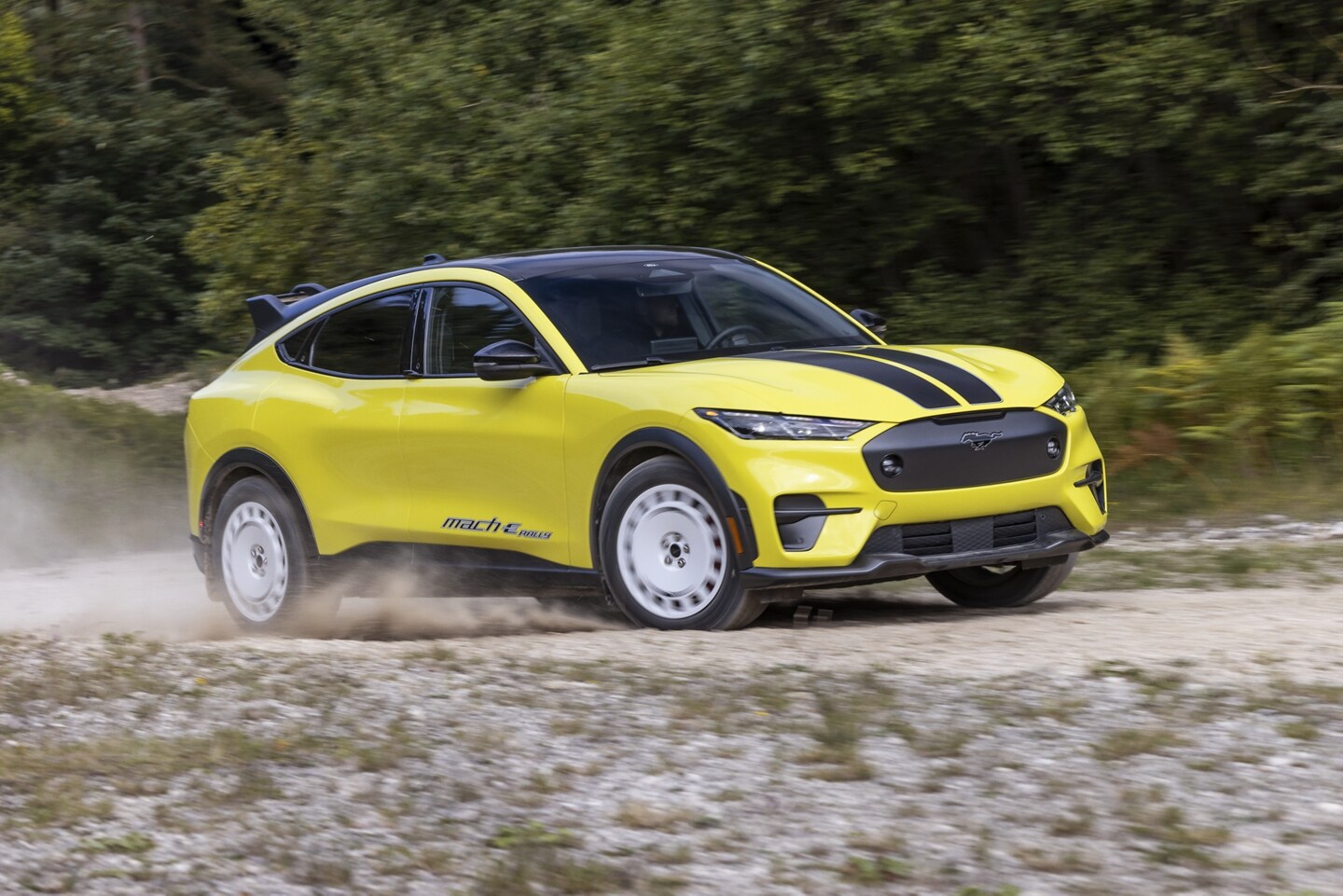
4. Ford Mustang Mach‑E
The Mustang Mach‑E might surprise some people who think electric Mustangs would be compromise versions of gas ones.
It stands up well when compared with traditional sports crossovers or sport‑oriented SUVs. Its acceleration is impressive, particularly in the GT variant. The car pulls strongly from low speed without waiting for turbo spooling or gearing shifts.
Many gas performance SUVs depend heavily on forced induction or heavy components which introduce turbo lag or weight penalties. The Mach‑E provides strong, usable power across a wide range of speeds.
The handling of the Mach‑E is another strong area. It has enough chassis stiffness and suspension calibration that when cornering it does not sway excessively. Steering feels responsive and relatively quick in many trims so that driver inputs translate into satisfying reactions.
Compared with gas crossovers that tend to be high and soft, Mach‑E’s lower height and electric drivetrain allow a better centre of gravity.
As a result the vehicle feels more planted in curves. Even on rougher roads the tires grip well and the bodyroll is controlled, giving more confidence than many gas crossover/SUV rivals deliver.
Regenerative braking again plays a role in the Mach‑E’s advantage. In traffic or urban driving, the ability to recapture energy while slowing means that braking is smoother. Drivers note less need for brake pedal modulation as regen picks up some work before friction brakes engage.
Many gas SUVs use large drums or less refined brake feel for certain trims which feel less precise. The Mach‑E often gives more consistent deceleration, helping with driver confidence especially when approaching intersections or descending slopes.
Finally cabin quiet and refinement make everyday driving more pleasant. The lack of engine vibration and shifting reduces fatigue. Under acceleration or constant high speed, gas rivals may emit more noise from engine bay, from exhaust, or from intake.
The Mach‑E’s electric powertrain is much quieter. Visibility, driver assistance, and steering feedback combine with sound insulation to make long distance or highway driving less tiring. That contributes to the feeling that the Mach‑E can match or exceed gas SUVs’ comfort.
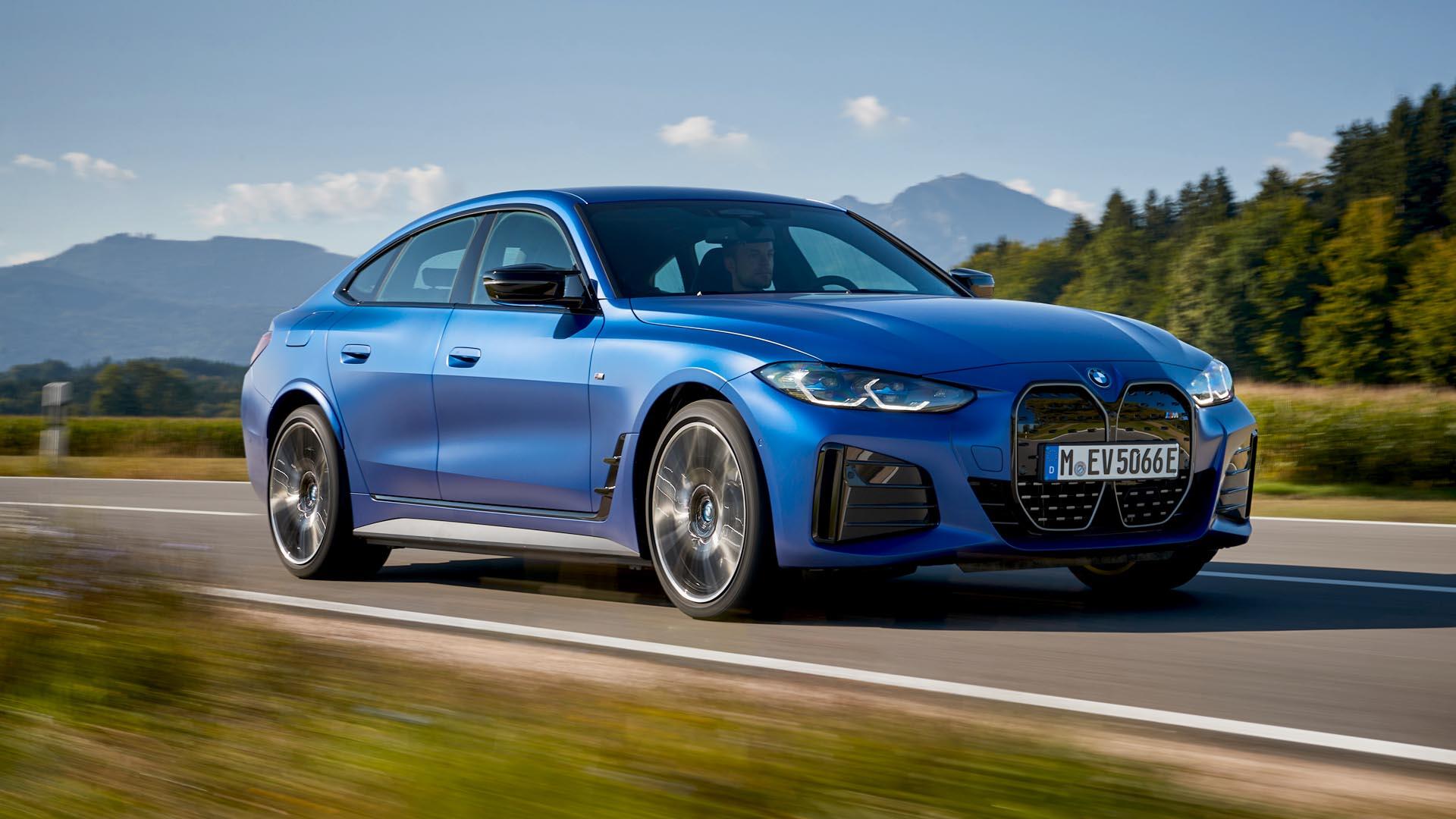
5. BMW i4
The BMW i4 manages to preserve much of what drivers expect from a brand long known for sporty sedans while offering benefits ICE versions sometimes struggle with.
First, its weight distribution is more balanced. Electric motors on one or both axles placed close to the wheels help reduce weight overhangs.
Gas rivals often have front heavy or rear heavy bias depending on whether they are rear‑wheel drive or front‑wheel drive.
The i4, especially in its M‑Performance version, mixes torque vectoring and balanced chassis geometry so that corners feel more planted. There is less understeer or oversteer in moderate driving which improves driver confidence. Drivers who enjoy winding roads find the i4 more engaging in that zone than many gas sedans.
Its acceleration is strong and seamless. The typical gas competition in the same class may produce good power figures, but shifting between gears, waiting for turbo spools or dealing with torque curves introduces delays or surges.
The i4 delivers torque instantly, offering linear acceleration from a crawl to higher speeds. When overtaking or merging the car responds with immediacy. That removes much of the lag that can make gas sedans feel less sprightly in everyday conditions.
Ride comfort remains very competitive. The i4 soaks up imperfections while keeping body control. Although electric motors, battery packs and associated cooling systems add weight, BMW has tuned the suspension so that ride quality is not sacrificed terribly.
Many gas rivals prefer firmer setups to improve handling but that makes them less friendly on imperfect pavement. The i4 avoids that compromise more successfully.
Even though it is heavier than a typical gas sedan of similar size, the distribution of mass helps reduce jostling and gives a more stable ride.
Lastly the refinement inside the cabin matters. Silence at idle, lack of engine vibration under light load, no gear shifts that disrupt power delivery make for a more relaxed pilot experience. Acoustic insulation and reduced noise sources mean that highway cruising is more serene.
Gas rivals often betray their mechanical nature under load or at high revs. The i4’s electric powertrain makes such transitions far smoother. The driver hears and feels less mechanical intrusion.
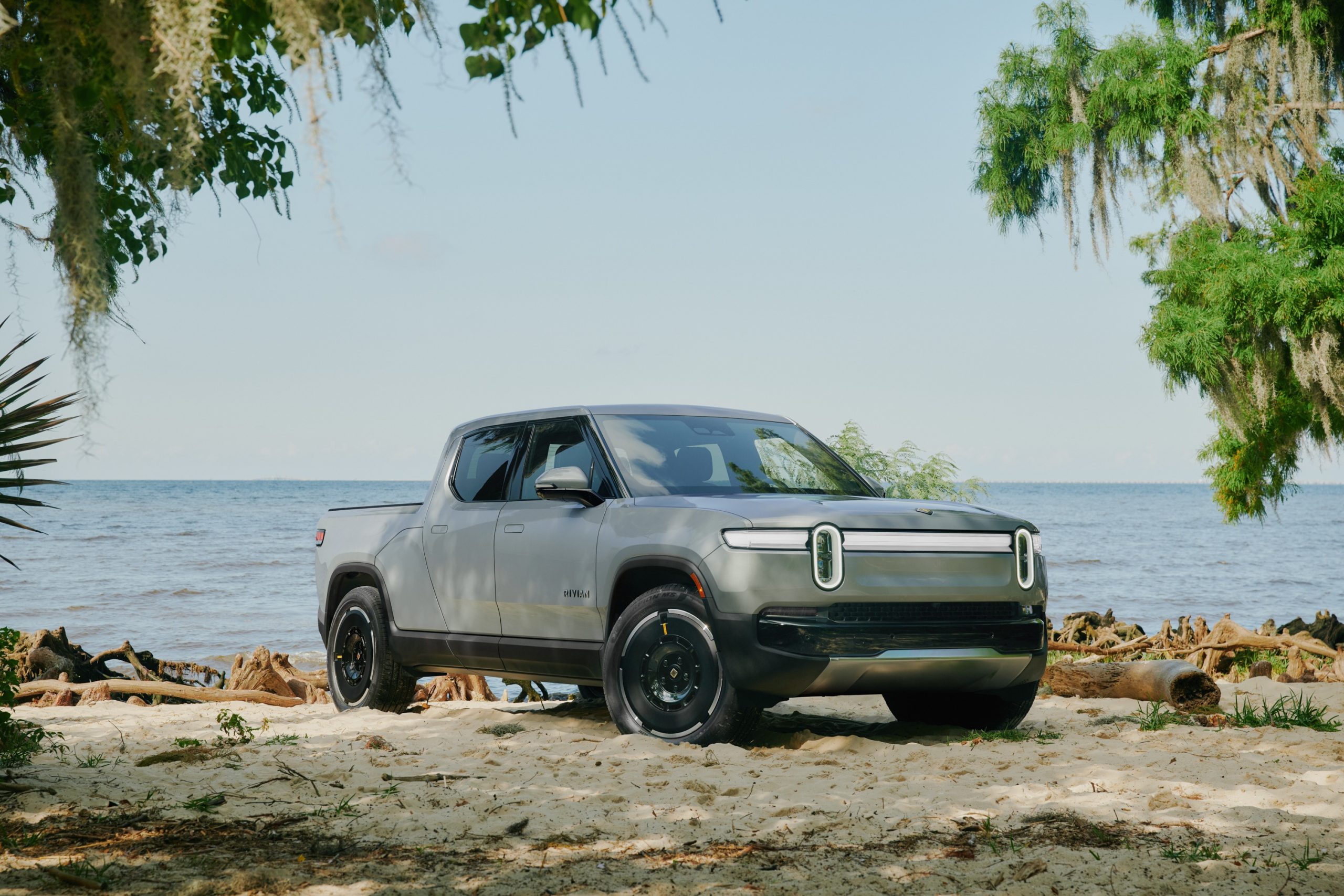
6. Rivian R1T
Pickup trucks have for decades been judged by towing, haul capacity and rough road toughness. Many gas pickups excel in those areas but do not offer a refined ride, responsive handling or smooth torque at low speed. The Rivian R1T is an EV that changes expectations.
From zero it offers huge torque without gear shifts, which helps with pulling away from stoplights, towing and carrying heavy loads.
Many gas trucks use large transmissions which result in shifts that are felt, or delays while torque builds under load. Rivian’s powertrain gives more immediate response which improves usability.
Handling and ride comfort on off‑road or mixed conditions show how well the R1T is engineered. Its air suspension or adaptive dampers help smooth rougher terrains yet maintain control.
Many gas trucks trade off comfort for ruggedness which leads to harshness over smaller bumps or when driving unloaded.
The R1T’s weight and suspension tuning make both road and trail travel more civil. Drivers using gas trucks often report fatigue from vibration, harshness or lag in steering feedback; Rivian improves on that.
Braking and downhill control in the R1T are also strong. Regen braking helps slow the vehicle without excessive wear on friction brakes, and provides consistent braking feel whether the truck is heavy with load or empty.
In gas trucks brake fade under repeated heavy use or downhill descents is a known problem. The R1T handles those situations with more consistency because of electric motor assistance and energy recovery systems integrated into braking.
Lastly the quietness and usability of the cab matter. Gas trucks frequently transmit engine noise through the cabin, especially when towing or accelerating under load. Rivian’s motors are much quieter; shiftless acceleration means less intrusion in sound and vibration.
Visibility, steering precision and driver aids enhance confidence. Drivers who are towing or driving long distances appreciate less fatigue. The R1T offers a more civilized driving experience while retaining pickup capability.
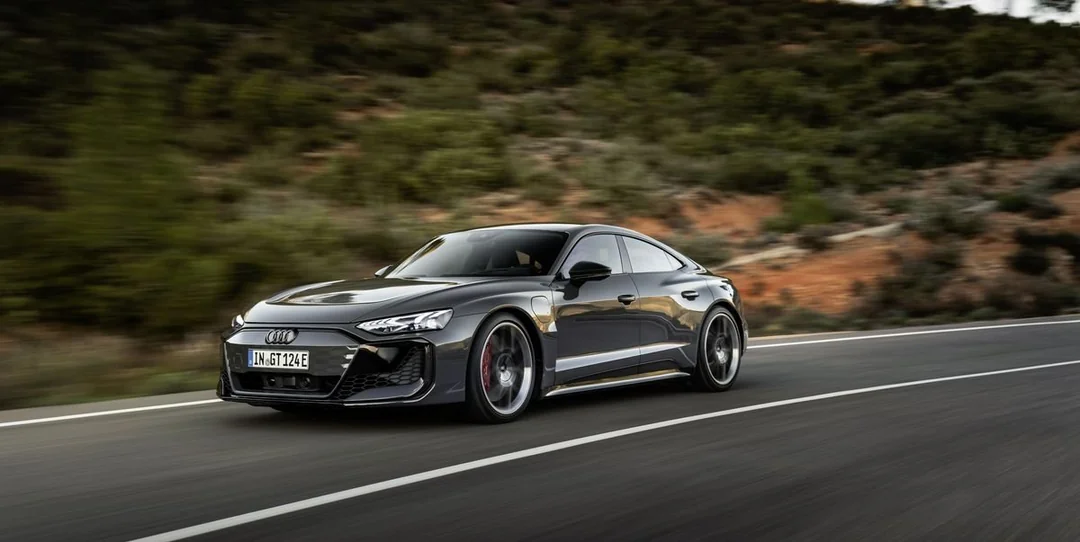
7. Audi e‑tron GT
The Audi e‑tron GT combines grand touring comfort with performance traits that rival many gas sports sedans and coupes. It delivers strong acceleration, especially in the sporty trims, where it overtakes many gas models from similar brands in straight line speed.
The immediate torque produces a surge that is more usable in everyday driving or overtaking. Gas GT‑type cars frequently use large engines that produce torque lower in the rev range or rely on forced induction which may introduce turbo lag. The electric powertrain in the e‑tron GT sidesteps many of those issues.
Chassis tuning is a highlight. The car rests solidly on its wheels, body roll is controlled, and suspension tuning gives a balanced mix of firmness for cornering and compliance over rough road patches. Gas rivals often must pick one direction in tuning leading to compromise.
The e‑tron GT’s weight distribution and low centre of mass help it track corners with poise. Steering feedback is precise enough to make drivers feel connected to the road without being harsh or overly sensitive.
Regenerative braking, once again, contributes. In high performance variants the brakes work in harmony with regen to produce smooth deceleration. Gas counterparts might rely on high-performance carbon‑ceramic or large disc brakes but those require careful maintenance and suffer from heat fade.
The e‑tron GT’s system helps maintain braking consistency over repeated applications. On long descents or in traffic that makes a difference.
Interior refinement and cabin comfort also stand out. Noise from engines, exhausts, and gearboxes is replaced by electric hum and minimal moving parts. The e‑tron GT employs sound insulation, careful sealings and aerodynamic shaping to reduce wind and road noise.
Seats and suspension are tuned for long journey comfort without sacrificing sportiness. When compared with gas GT models, the EV version often feels more composed at speed, more relaxing yet with muscle when called upon.
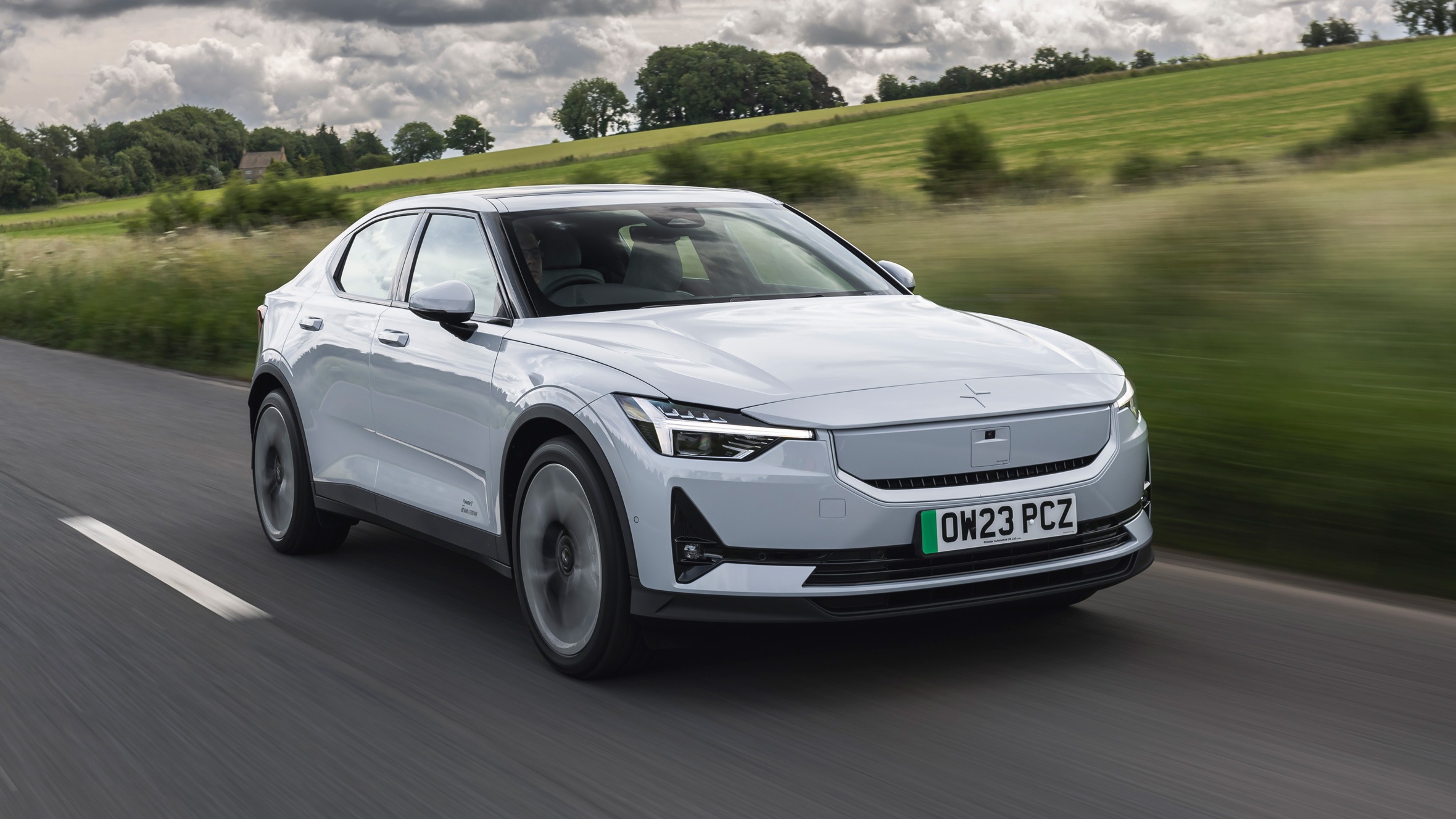
8. Polestar 2
The Polestar 2 is compact by luxury standards but punches above many gas compact executive sedans in terms of driver satisfaction.
Its steering feel is tight, with good feedback and precision. Gas executive sedans in this class sometimes suffer from numb steering or vague centrelines under load.
Polestar gives the driver a sharper sense of control. Whether on twisty roads, bends or during lane changes the car responds naturally.
The electric motors’ instant thrust helps in overtaking and merging which gives a confidence boost gas versions lack, especially those not fitted with high output engines.
Acceleration is strong. Even the base Polestar 2 feels more lively than many four‑cylinder turbo gas rivals. Gas engines often need to build into their powerband, shift through transmissions or suffer lag under turbo boost. The Polestar 2 delivers thrust immediately from rest and holds it well.
That makes city driving, traffic light pulls or highway merging more satisfying. Drivers often report enjoying the crispness of the pedal response that gas cars rarely match without spending extra sums or going for higher trims.
Ride comfort and refinement are competitive. Polestar tunes suspension to cope with road irregularities without transmitting harshness into the cabin. Gas compact luxury cars often have to make a tradeoff between sporty handling and ride softness.
Polestar 2 balances that trade so that the cabin remains quiet, distractions are reduced, passengers are comfortable over longer journeys.
Also electric drive means fewer vibrations and simpler engine mount requirements which helps reduce NVH (noise, vibration and harshness) levels compared with many gas cars.
Braking and control also favor the EV. Regenerative braking helps especially in stop‑start traffic, offering smooth deceleration before friction brakes are applied.
The pedal feel is more consistent perhaps and easier to modulate than many gas counterparts which may rely solely on friction brakes and may feel grabby or spongy depending on condition or temperature.
On steep descents or when slowing from speed Polestar gives more stability and less reliance on sudden braking which gas cars often require.
9. Hyundai Ioniq 5
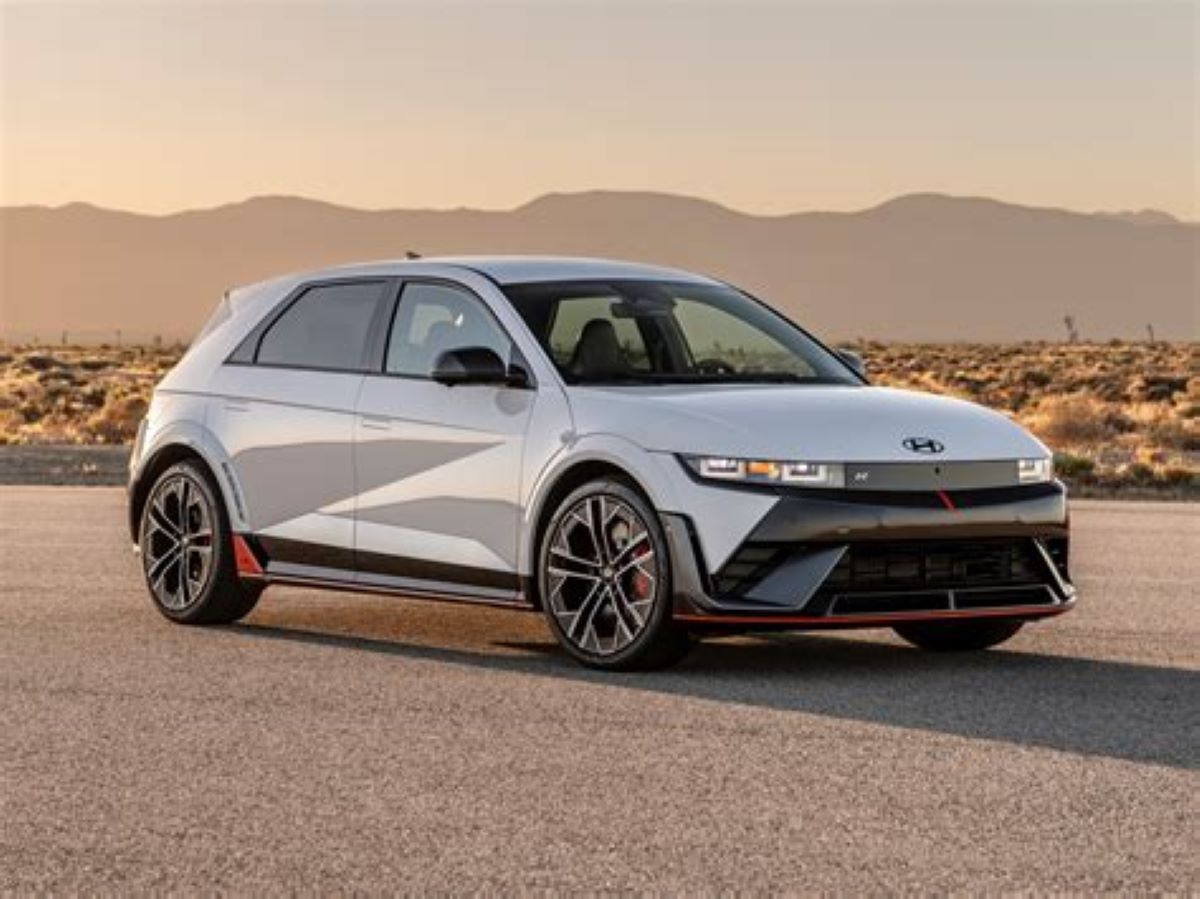
The Hyundai Ioniq 5 offers an appealing mix of comfort, agility and futuristic packaging that lets it outperform many gas crossovers or hatchbacks in practical driving. Its acceleration in both rear wheel drive and dual motor versions is brisk.
Many gas crossovers rely on four‑cylinder turbo cars which need to build boost or shift through gear ratios. The Ioniq 5 gives strong thrust early and does not suffer from shift shock or delayed torque. When overtaking or accelerating from low speeds it often feels more responsive than similar gas models.
Handling on imperfect roads is noteworthy. Its relatively flat floor, battery under the floor and well tuned suspension allow it to smooth road imperfections.
Body motions are controlled, though weight is present. Many gas crossovers have high centres of mass and lack the weight distribution advantages EVs provide.
The Ioniq 5’s architecture keeps weight low, helps reduce roll, and steering response is well balanced. On winding roads or through tight bends the car feels more composed than gas rivals whose tall posture, soft suspension, or poor damping lead to float or skid.
Regenerative braking influences the daily driving feel. The driver can often drive with minimal use of friction brakes. Fine control of speed on downhill sections without dragging brakes and good feedback under braking add to predictability.
In gas crossovers brake fade, inconsistent pedal feel or imbalance between brakes and cushioning often cause discomfort or worry. Ioniq 5 handles those more reliably.
Interior quiet and comfort count heavily. Without engine rumble or exhaust noise, quiet zones prevail. Air conditioning, HVAC systems, wind noise may still exist but the absence of combustion engine sound, idling clatter or gear shifts makes cruising more peaceful.
Seats, visibility, ergonomics and driver assist packaging further increase comfort. Many gas crossovers feel more cramped or noisy in equivalent segments, particularly during acceleration or under load.
10. Kia EV6
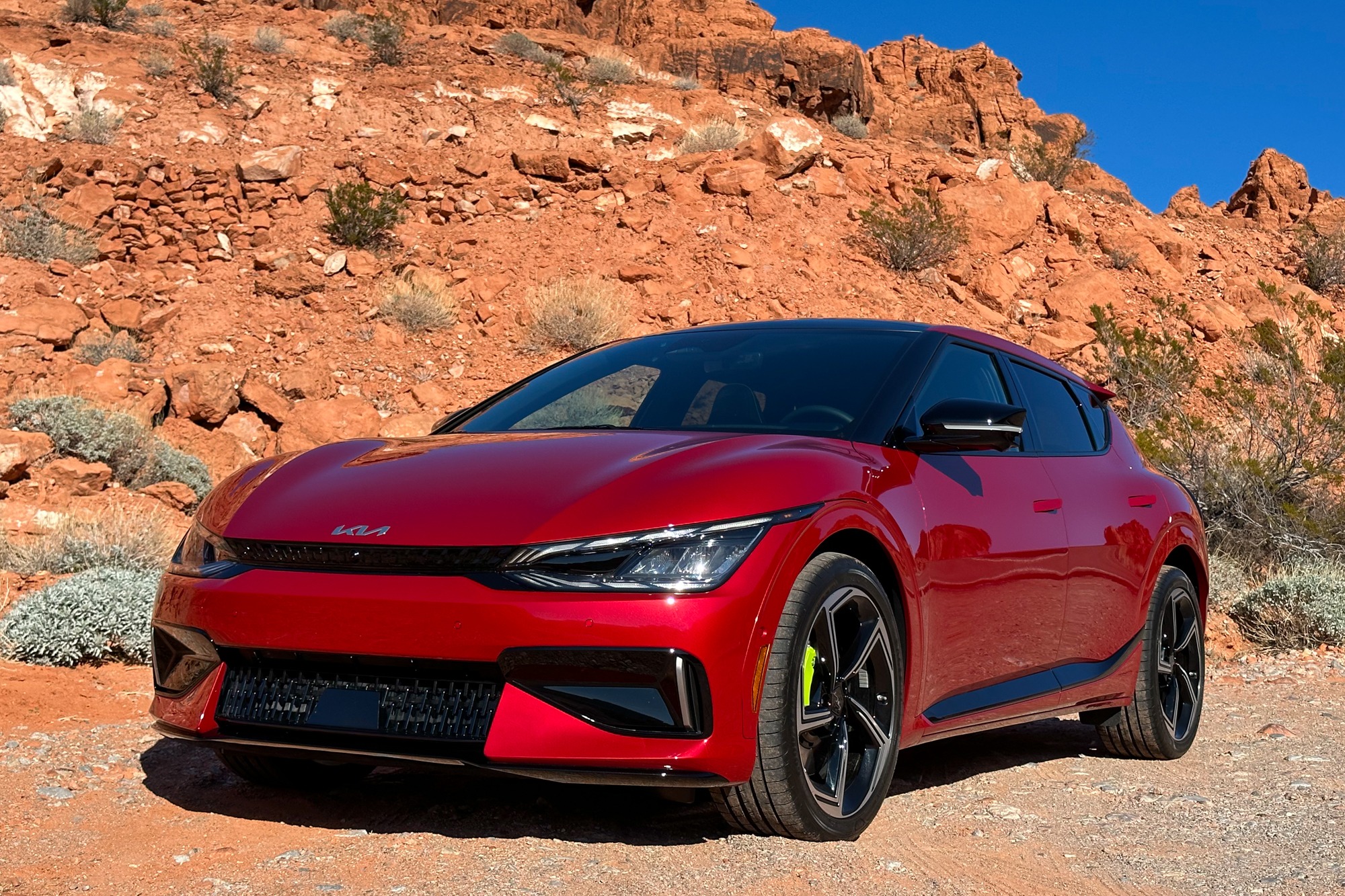
The Kia EV6 shares underpinnings with Ioniq 5 but carries a somewhat more dynamic tuning that lets it match or beat many gas performance crossovers or sporty hatchbacks. Acceleration in its AWD performance variant is strong and immediate.
Gas rivals with turbocharged engines may have impressive horsepower specs but they still need to manage torque curves, grading shifts, and often make compromises to emissions or efficiency. EV6 manages strong pull from rest, making launches more exciting, overtakes safer and merges quicker.
Handling benefits from battery placement and fairly low ride height. Kia has tuned suspension and chassis to give a balanced feel.
The EV6 tends to be more agile than many gas crossovers whose higher weight and soft suspensions lead to leaning in corners or vague handling.
On twisty roads or during spirited driving the EV6 delivers sharper responses and greater confidence. Gas crossover rivals often sacrifice handling for ride comfort; EV6 often strikes better balance.
Regenerative braking adds to driver control particularly in urban or mixed driving. It allows smoother deceleration patterns and often lets drivers modulate how the car slows with more precision.
Gas competitors sometimes produce inconsistent brake feel particularly when brakes are cold or under heavy use. The EV6’s regen support helps maintain control, reduce brake fade and deliver repeatable pedal behaviour.
In cabin comfort and quietness EV6 often surpasses many gas performance crossovers. Cabin insulation, lower mechanical noise, no exhaust noise under acceleration make long drives more pleasant.
Also packaging benefits from fewer moving parts under the hood meaning sometimes better visibility or lower forward bulk.
Features and interior layout also matter; EV6 often offers similar amenities, driver assists, refinement and tech that rival gas models charge premium for.
