
Leaf springs are a key component in the suspension system of many trucks. They help support the vehicle’s weight, maintain stability, and manage the distribution of heavy loads.
While most trucks are designed to handle cargo and towing, the quality and design of the leaf springs can greatly influence how the truck performs under load.
Some trucks are engineered so that their leaf springs maintain a nearly level stance even when carrying significant weight, providing better control, stability, and comfort. Other trucks may experience leaf spring sag when loaded, which can lead to decreased handling, reduced ride quality, and uneven tire wear.
Trucks that maintain level leaf springs under load often benefit from reinforced spring packs, properly rated suspension components, and careful engineering that accounts for both payload and towing requirements.
This level stance allows for safer braking, better cornering, and a more comfortable ride for drivers and passengers.
Trucks with sagging springs, on the other hand, may require aftermarket modifications to improve performance, such as helper springs, air suspension kits, or upgraded shocks.
Sagging leaf springs can be caused by the inherent design of the truck, insufficient spring rating for the intended load, or aging and fatigue of the steel in the spring packs.
Understanding the behavior of a truck’s leaf springs is crucial for anyone who frequently hauls heavy cargo or tows trailers. For commercial operators, knowing which trucks stay level under load versus those that sag can mean the difference between reliable performance and unexpected handling issues.
For recreational users, it can affect comfort and confidence on the road. Manufacturers may provide payload ratings, but real-world performance can vary depending on driving conditions, additional cargo, and long-term wear on suspension components.
This article will examine examples of trucks that maintain level leaf springs under load and those that tend to sag. We will highlight five trucks known for their stable suspension performance and five trucks where sagging under heavy load is more noticeable.
Understanding these differences can help drivers make informed decisions when selecting a vehicle for towing, hauling, or everyday work.
Trucks with Leaf Springs That Stay Level Under Load
1. Ford F-250 Super Duty
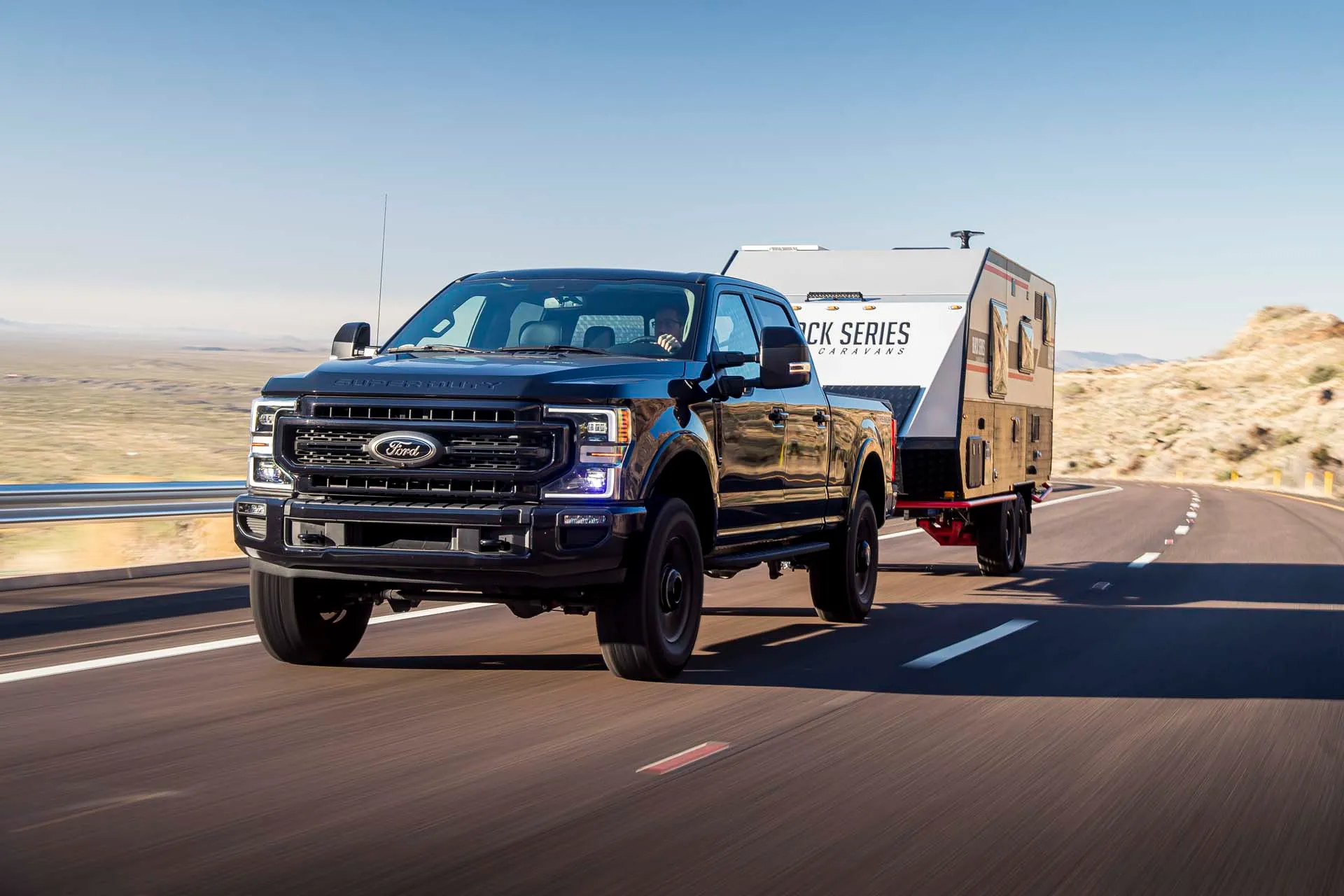
The Ford F-250 Super Duty is widely recognized for its heavy-duty performance, and much of this capability comes from its robust suspension system. Its rear leaf springs are designed with multiple leaf packs that are rated to support extremely high payloads.
Even when fully loaded, the F-250 maintains a near-level stance, which provides a significant advantage for stability, safety, and ride comfort. Unlike lighter trucks that tend to sag when carrying heavy equipment or trailers, the F-250 distributes weight evenly across its frame.
This ensures that the tires maintain optimal contact with the road, reducing uneven tire wear and improving braking efficiency.
Professional drivers who rely on the F-250 for towing large trailers, hauling construction materials, or transporting livestock often praise its consistent stance under full load, noting that it allows them to maintain better control and confidence in challenging conditions.
Ford’s engineering approach for the F-250 emphasizes not just strength but also long-term durability. The leaf springs are manufactured from high-quality alloy steel, carefully heat-treated to resist fatigue and deformation over time.
Each leaf in the pack is designed to work in unison with the others, providing progressive resistance that adapts to the weight of the cargo.
The F-250 also employs specific spring geometry and mounting points that maximize leverage and load distribution, ensuring that the rear of the truck does not sink under pressure. This design prevents bottoming out when carrying maximum payloads and allows for a smoother, more controlled ride.
The combination of strong materials and thoughtful engineering makes the F-250 one of the few pickups in its class capable of carrying its maximum payload without excessive sag.
Another reason the F-250’s rear springs maintain their level stance is the integration with its shock absorber system. The truck’s heavy-duty shocks are tuned to complement the leaf springs, damping vibrations and absorbing road irregularities without compromising load-bearing capacity.
This balance allows the truck to carry significant weight while still providing a comfortable ride, which is critical for drivers who spend long hours on highways or rough job sites.
In addition, the even compression of the springs reduces the stress on other suspension components such as bushings, shackles, and the rear axle, increasing longevity and reducing maintenance concerns.
Finally, the F-250 benefits from engineering that considers both payload and towing needs. Ford publishes detailed guidelines for maximum payloads and trailer weights, and the leaf springs are optimized to handle these limits.
The truck’s suspension performance ensures that even when loaded near the maximum, the vehicle remains level, providing predictable handling, safer braking, and reduced trailer sway.
For those using the truck in demanding conditions, the level stance under load is a significant advantage, making the F-250 a top choice for heavy-duty applications where both power and stability are essential.
2. Chevrolet Silverado 2500HD
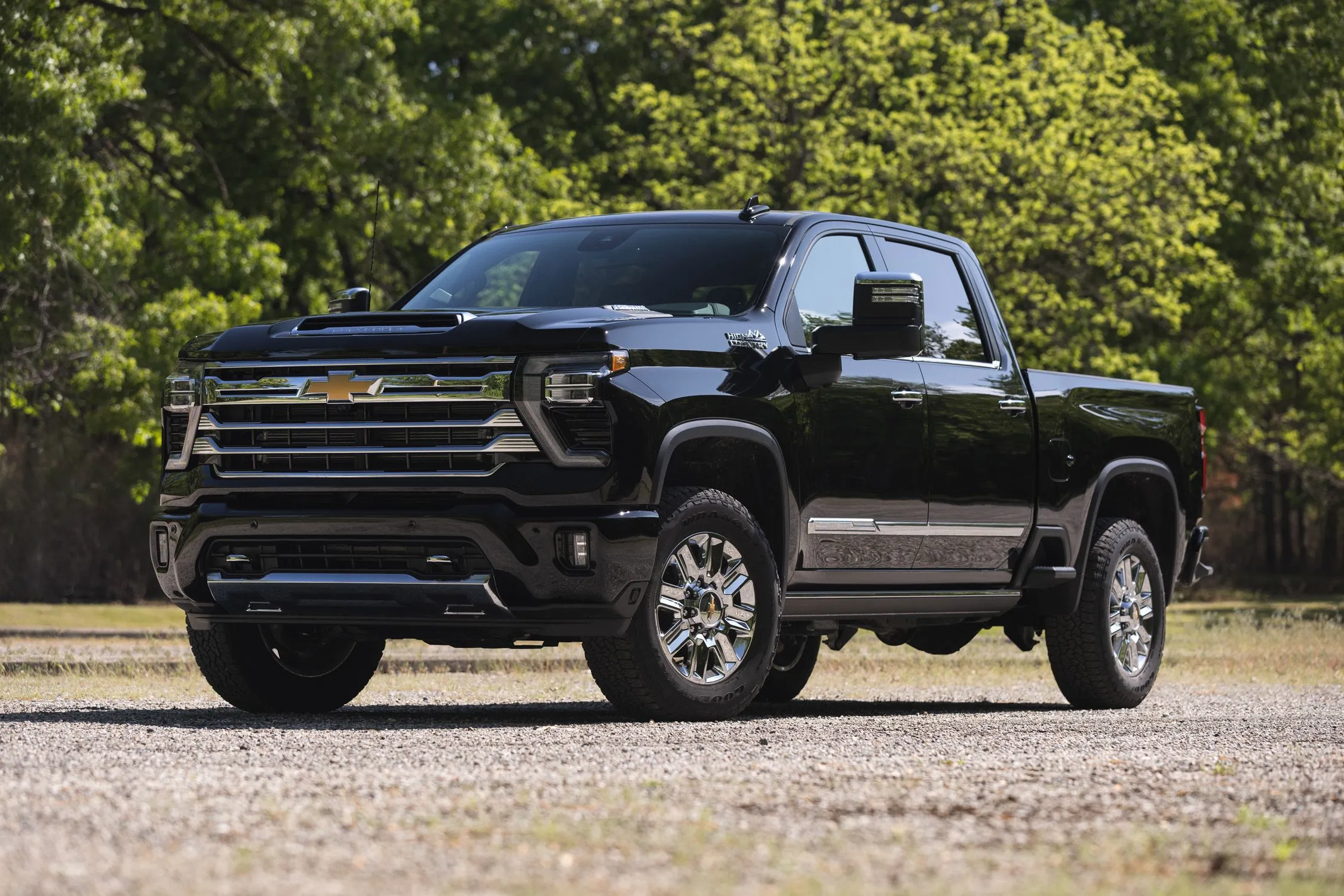
The Chevrolet Silverado 2500HD is built to handle demanding workloads while maintaining stability under heavy payloads. Its rear suspension employs multi-leaf packs designed to support substantial weight without excessive sagging.
The truck remains level even when fully loaded, making it ideal for towing trailers, hauling construction equipment, or transporting bulk materials. Unlike lighter pickups, which often experience rear-end drop and reduced handling under load, the Silverado 2500HD distributes the weight evenly across the rear axle.
This even distribution is particularly important for maintaining stability when hauling trailers, as it minimizes the risk of sway and ensures consistent braking performance. Drivers who rely on the Silverado for professional work often note that it handles similarly whether it is empty or fully loaded, a testament to its robust suspension design.
The Silverado’s leaf spring system works in combination with a solid rear axle, which provides additional support for heavy loads. The axle helps to distribute weight evenly, reducing the stress on individual leaf packs and ensuring a consistent ride height.
The leaf packs themselves are carefully engineered to offer a progressive spring rate, meaning that as the weight increases, the suspension stiffens proportionally.
This ensures that the truck does not bottom out under maximum payload conditions and maintains a level stance across a wide range of weights. The high-quality steel used in the leaf packs is treated to resist fatigue and corrosion, extending the life of the suspension even under constant heavy use.
Shock absorber integration further enhances the Silverado’s suspension performance. The rear shocks are tuned to complement the leaf springs, damping vibrations and smoothing the ride without compromising load-bearing ability.
This synergy between shocks and springs is essential for drivers who transport sensitive equipment or navigate uneven roads, as it minimizes jarring and ensures that cargo remains stable.
The combination of strong leaf springs, well-distributed axle support, and tuned shocks creates a suspension system that is both durable and capable of maintaining a level stance under extreme load conditions.
Chevrolet also provides detailed payload and towing guidelines to maximize safety and performance. The Silverado 2500HD is engineered to perform reliably when loaded to these limits, offering drivers predictable handling, improved braking, and reduced trailer sway.
Many owners find that the truck performs exceptionally well for professional use without requiring aftermarket modifications.
This reliability under full load demonstrates the effectiveness of its leaf spring design and explains why the Silverado 2500HD is a preferred choice for those who need a truck capable of consistently maintaining a level stance under heavy-duty conditions.
3. Ram 3500
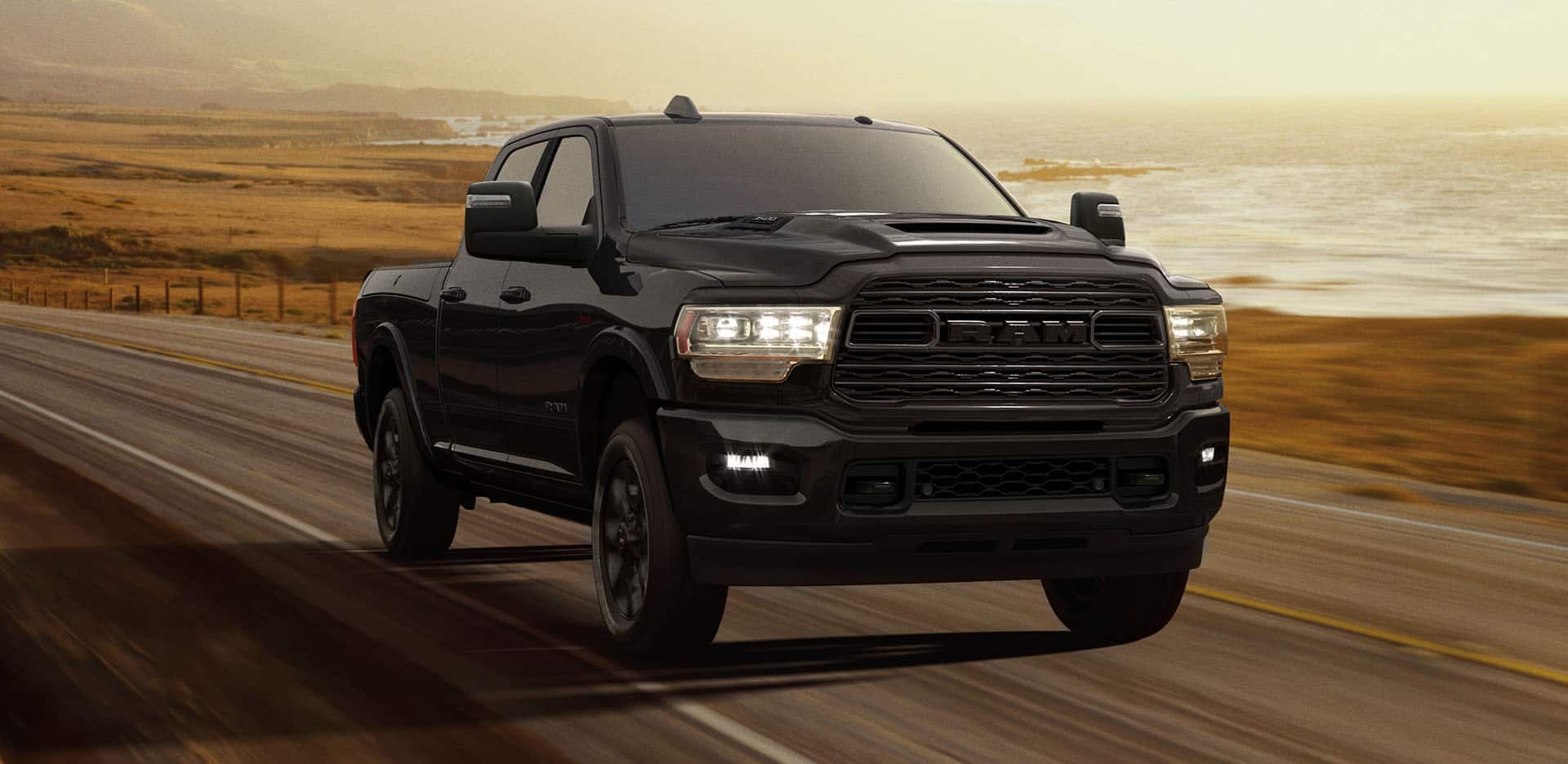
The Ram 3500 is one of the most capable heavy-duty pickups available, with a rear suspension designed to carry maximum payloads while maintaining a nearly level stance. Its multi-leaf spring packs are engineered to provide both strength and durability, ensuring that the truck’s rear does not sag under heavy loads.
The solid rear axle design works in conjunction with the leaf springs to evenly distribute weight across the rear of the truck, improving handling and braking performance when fully loaded.
This makes the Ram 3500 particularly suitable for towing large trailers or transporting heavy machinery, as it can maintain stability even in demanding conditions.
Drivers appreciate that the truck maintains predictable handling under load, reducing driver fatigue and increasing confidence when navigating highways or job sites.
Ram’s engineers have focused on the material properties and design of the leaf packs to resist sagging over time. Each leaf in the pack is made from high-strength steel and is heat-treated to prevent permanent deformation.
The leaf packs are designed to compress gradually under load, providing progressive support that increases stiffness as weight increases.
This allows the truck to carry full payloads without compromising ride quality or risking bottoming out. The careful balance between flexibility and stiffness ensures that the Ram 3500 handles similarly when empty or fully loaded, a feature that is particularly important for commercial operators who frequently switch between cargo types.
Shock absorbers complement the leaf springs by controlling oscillations and reducing vibrations transmitted to the cab. This combination ensures that the truck provides a smooth ride even when carrying heavy loads or towing large trailers.
The suspension’s design reduces the risk of cargo damage and improves vehicle control. Additionally, by maintaining a level stance under load, the Ram 3500 minimizes uneven tire wear, ensuring longer-lasting performance and safety.
Ram also provides clear payload and towing specifications to help drivers maximize the truck’s capabilities safely. The leaf spring design is directly aligned with these ratings, allowing drivers to carry maximum loads without sagging issues.
The combination of solid engineering, high-quality materials, and precise tuning makes the Ram 3500 a heavy-duty truck that consistently maintains a level stance under heavy payloads, making it a reliable choice for demanding professional and recreational applications.
4. Toyota Tundra 1794 Edition (CrewMax 4×4)
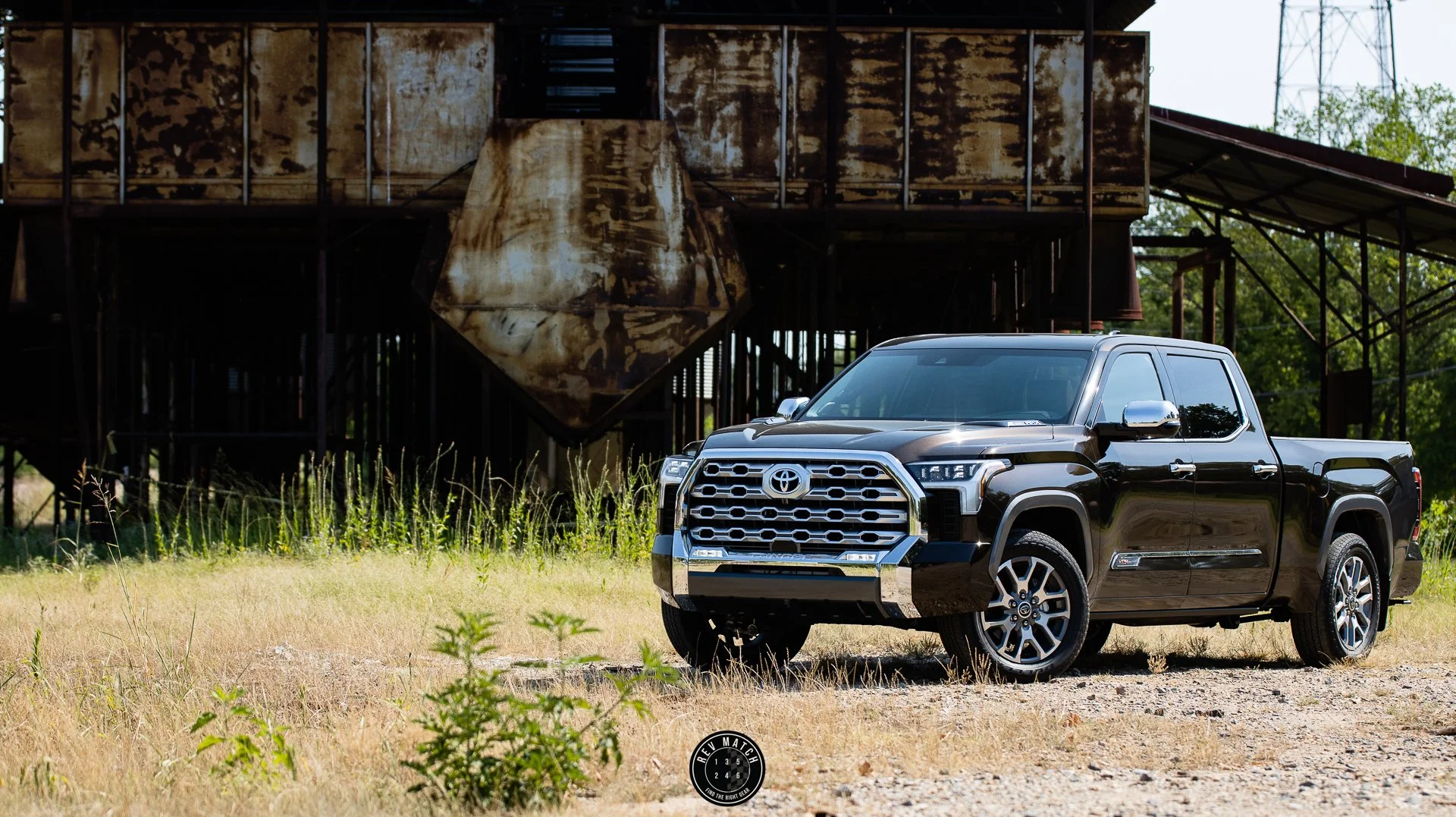
The Toyota Tundra, particularly the 1794 Edition with CrewMax 4×4 configuration, is equipped with a suspension system capable of supporting substantial payloads while remaining level.
The rear leaf springs are designed with multiple leaves made of high-strength steel, providing the necessary resistance to sagging under heavy loads.
This level stance is particularly important for towing boats, trailers, or transporting construction materials, as it ensures stable handling and reduces stress on the chassis.
Drivers who use the Tundra for both recreational and professional purposes often report that the rear remains nearly flat even when the truck is fully loaded, contributing to confidence and control on a variety of road surfaces.
Toyota’s leaf spring design emphasizes long-term durability. The leaf packs are carefully engineered to resist fatigue and permanent deformation, ensuring consistent performance over the life of the truck.
The progressive spring rate allows the suspension to stiffen as the load increases, providing predictable support without sacrificing comfort. This means the Tundra can carry heavy cargo or tow trailers while maintaining a level stance, which is essential for both safety and drivability.
The Tundra’s suspension system also includes shock absorbers that work in tandem with the leaf springs to control oscillations and minimize excessive bouncing. This integration ensures that the ride remains comfortable even when the truck is carrying its maximum payload.
The combination of strong leaf springs, high-quality shocks, and solid suspension geometry contributes to the truck’s ability to maintain a level profile under load, enhancing stability and reducing trailer sway.
Finally, Toyota’s payload and towing guidelines are matched to the suspension design, ensuring that drivers can maximize the truck’s capabilities safely. The Tundra’s leaf springs are engineered to maintain a level stance under recommended loads, making aftermarket modifications largely unnecessary.
This combination of strong materials, careful engineering, and practical design makes the Tundra 1794 Edition a capable and reliable truck for both work and recreational use, with a rear suspension that remains level under demanding conditions.
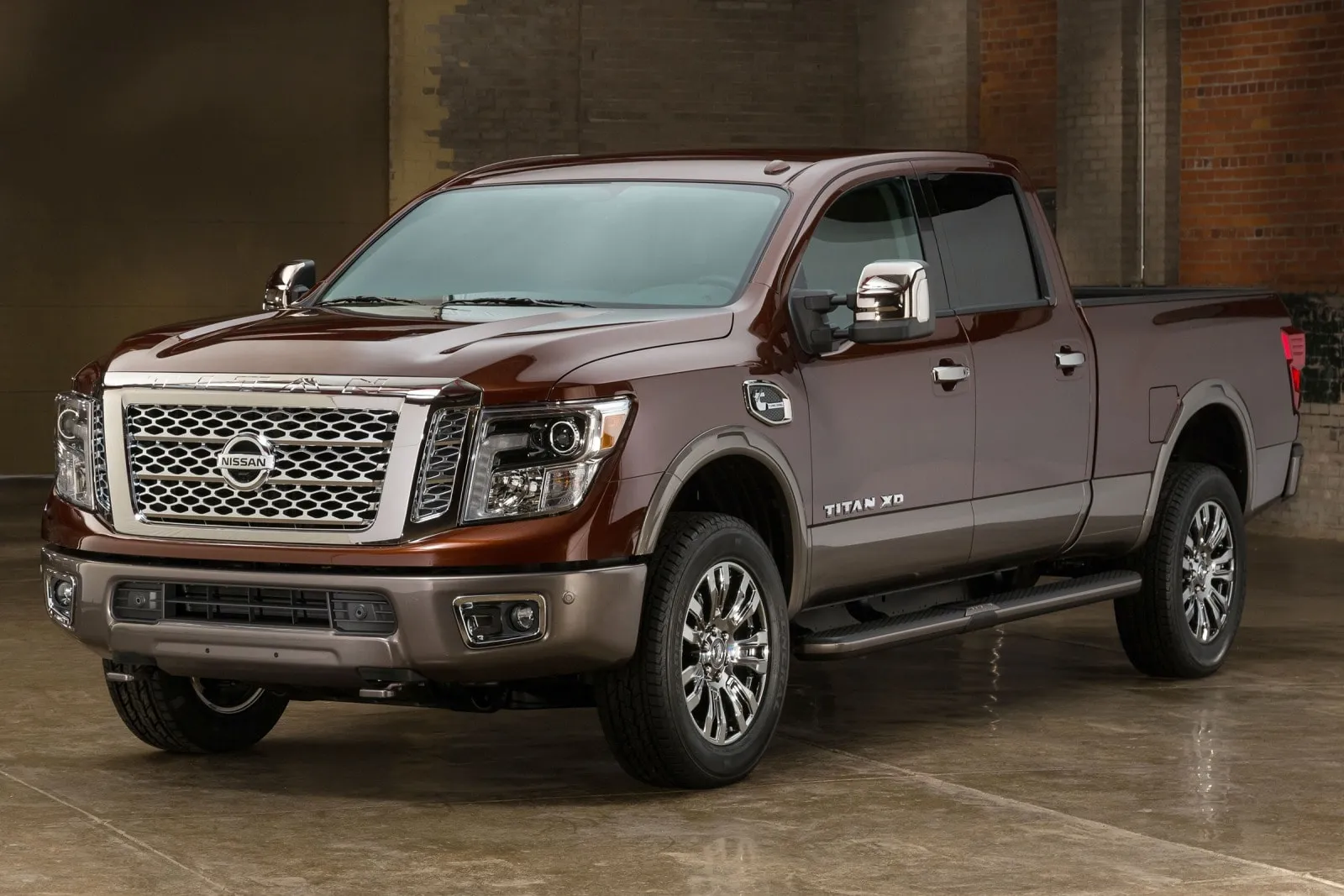
5. Nissan Titan XD
The Nissan Titan XD is designed to handle payloads heavier than standard light-duty pickups, and its rear leaf spring system reflects this capability.
The multi-leaf packs provide strong support, allowing the rear to remain level under load. The solid rear axle further distributes the weight evenly, preventing the sagging that is common in lighter trucks when fully loaded.
This design enhances handling, braking, and stability, making the Titan XD suitable for towing heavy trailers or transporting bulky cargo. Owners frequently note that the truck retains a consistent ride height even when loaded near its maximum capacity, which improves driver confidence and reduces the risk of trailer sway or instability.
The Titan XD’s leaf springs are constructed from high-quality steel and are engineered to resist fatigue, corrosion, and permanent deformation.
Each leaf in the pack works together to provide progressive stiffness as weight increases, allowing the truck to carry large payloads without compromising ride comfort or safety. This makes the suspension system highly reliable, particularly for drivers who need consistent performance in demanding conditions.
The shocks in the Titan XD are tuned to complement the leaf springs, damping vibrations and smoothing the ride while still supporting heavy loads.
This ensures that cargo remains stable and the vehicle maintains a level stance even under full payload. The balance between stiffness and comfort allows drivers to tow large trailers or haul construction materials without sacrificing handling or ride quality.
Finally, Nissan’s payload ratings align with the leaf spring design to ensure the truck performs as expected under load. The Titan XD’s suspension system demonstrates that careful engineering, material selection, and tuning can produce a truck capable of carrying substantial weight while maintaining a level stance.
This reliability makes it a practical choice for drivers seeking a pickup that performs consistently in both professional and recreational applications.
Trucks That Sag Under Load
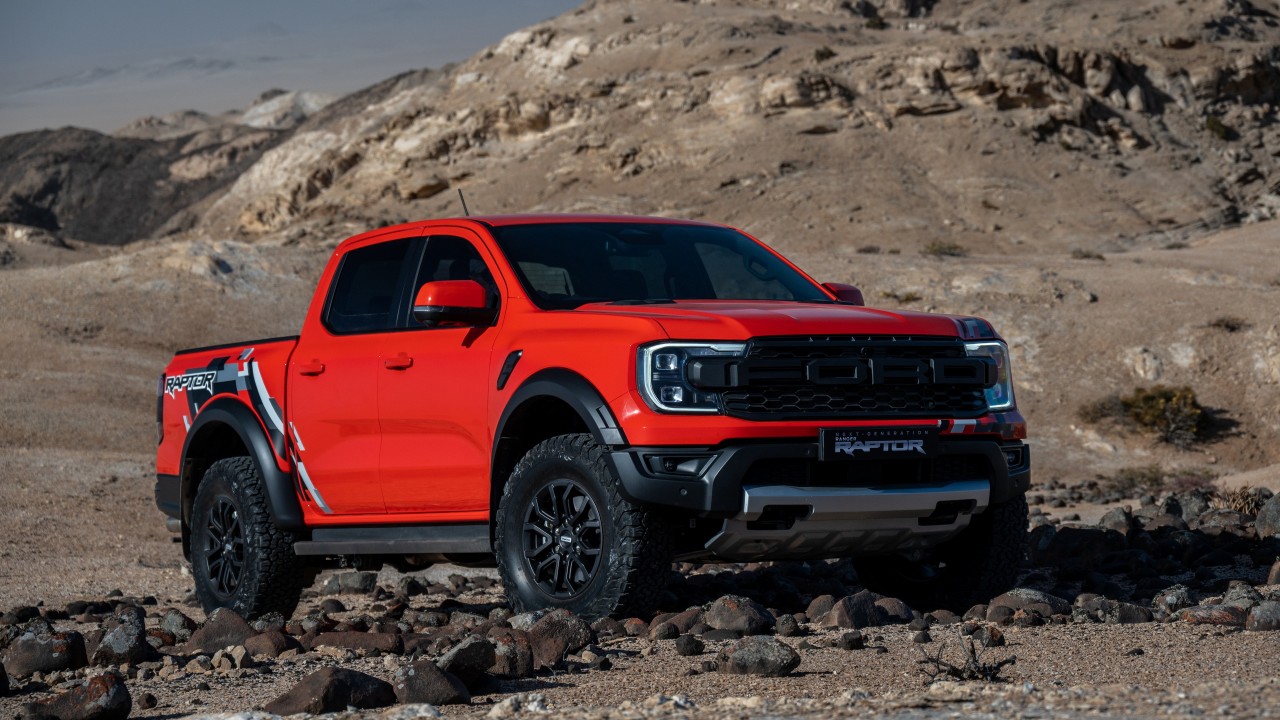
1. Ford Ranger
The Ford Ranger is a midsize pickup designed primarily for light-duty tasks, which means its suspension is not optimized for extremely heavy loads. Its rear leaf springs, while adequate for moderate cargo, often sag noticeably when the truck is fully loaded or towing near its maximum capacity.
This sagging occurs because the Ranger’s leaf spring packs are shorter and thinner compared to heavy-duty pickups, giving them less structural strength to resist compression. When loaded, the rear end drops, which changes the truck’s rake angle and affects stability.
Drivers may notice that braking distances increase slightly, and handling can feel less predictable, particularly when cornering or navigating uneven surfaces. The Ranger’s suspension design prioritizes comfort and agility over heavy payload support, which explains why sagging occurs under heavier loads.
The leaf springs themselves are made to balance ride quality with light-duty load support, but they are not heavily reinforced. Each leaf is relatively narrow and uses fewer leaves in the pack, which limits the truck’s ability to maintain a level stance when under stress.
Over time, repeated heavy loading can exacerbate sagging by causing permanent deformation in the leaves, resulting in a rear end that sits lower than intended even when the truck is unloaded.
This can reduce ground clearance and place additional stress on other suspension components such as shackles and bushings, potentially leading to premature wear or failure.
Shock absorbers on the Ranger are tuned for everyday driving comfort rather than heavy-duty load management. As a result, they do little to prevent the rear from sagging when fully loaded.
When the suspension compresses excessively, the shocks can bottom out, reducing their effectiveness and leading to a harsher ride. Drivers may experience a “bouncy” feel when the truck is loaded with heavy cargo, particularly on rough or uneven roads, highlighting the limitations of the Ranger’s light-duty design.
Despite these limitations, the Ranger remains a versatile and reliable midsize pickup for moderate loads, daily commuting, and recreational towing.
Its tendency to sag under heavier loads is an important consideration for owners who regularly haul heavy items, as it impacts stability and handling.
Many Ranger owners who require more consistent ride height under load consider aftermarket solutions, such as helper springs or air suspension kits, to improve rear-end support and reduce sag.
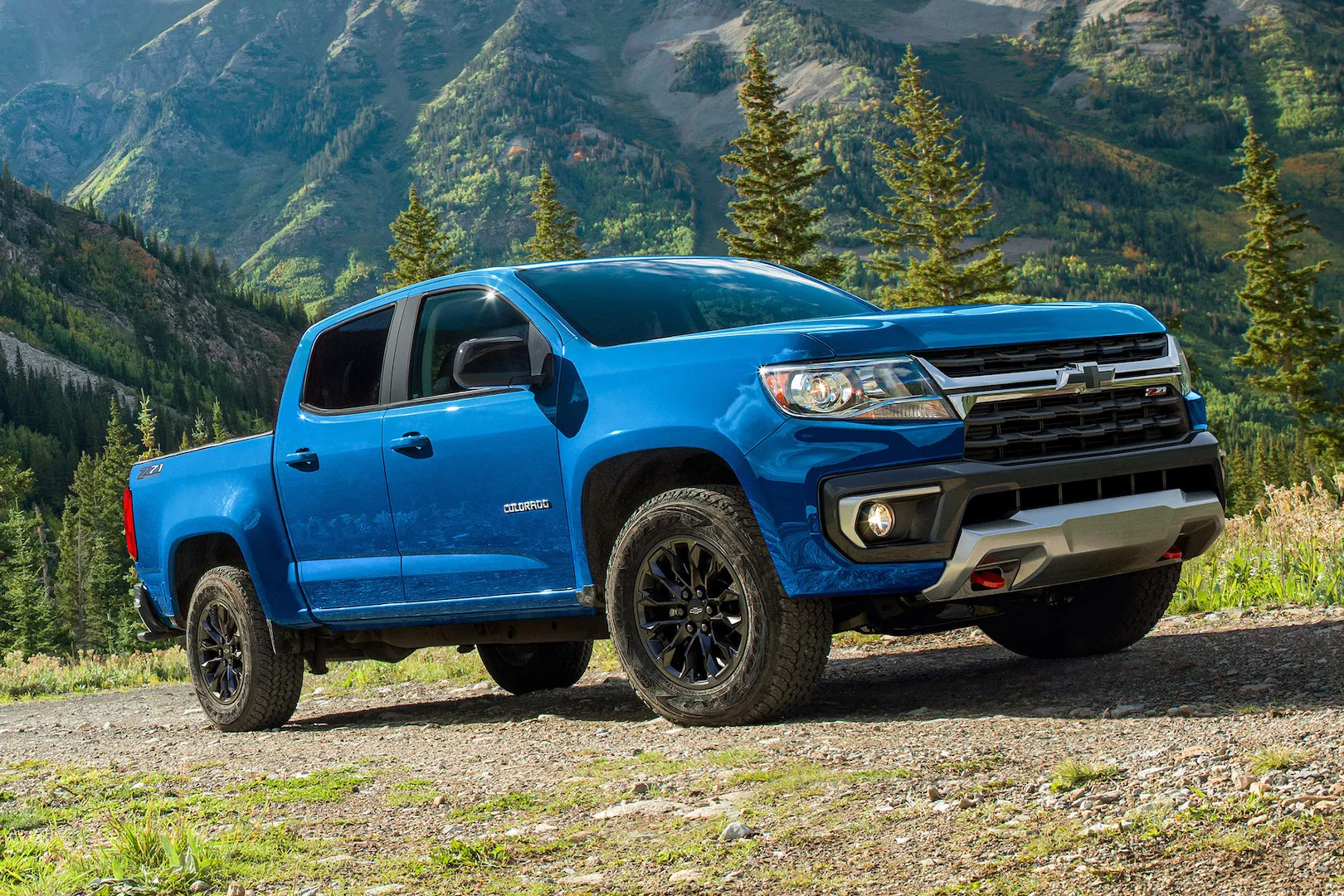
2. Chevrolet Colorado
The Chevrolet Colorado is another midsize pickup whose rear leaf springs are designed primarily for moderate payloads.
While capable of handling daily work and recreational towing, the Colorado’s leaf spring packs are not heavily reinforced, which often leads to sagging when carrying heavy loads or towing near its maximum payload.
The rear of the truck drops under stress, affecting handling, braking, and tire contact with the road. Drivers may notice that the truck feels less planted and that trailer sway can increase when fully loaded, especially during high-speed driving or sharp maneuvers.
The sagging is most pronounced in older models or when carrying consistently heavy cargo, as repeated stress can reduce the springs’ ability to return to their original shape.
The Colorado’s suspension design favors comfort and maneuverability over extreme load-bearing capability. Its leaf springs are relatively thin and include fewer leaves than those in heavy-duty trucks, which limits their structural strength under heavy loads.
The material itself, while durable for standard usage, is more prone to fatigue and deformation under constant high-load conditions. Over time, this can result in permanent sagging, lowering the truck’s rear ride height and potentially causing uneven tire wear, reduced ground clearance, and altered alignment.
Shock absorbers complement the Colorado’s suspension for everyday driving comfort, but they cannot compensate for the limits of the leaf springs when heavily loaded. When the rear sags, shocks can reach the end of their travel, reducing their damping ability and producing a rougher ride.
This is especially noticeable when the truck carries construction materials, or other bulky cargo, as the rear end compresses significantly. Drivers may experience a noticeable change in vehicle dynamics, including a forward tilt that can make steering feel less responsive and braking less predictable.
Despite these limitations, the Chevrolet Colorado remains a practical midsize truck for light to moderate hauling. Its tendency to sag under heavy loads is a design trade-off for comfort, agility, and fuel efficiency.
Owners who need more consistent ride height often install helper springs or air-assist systems to reduce rear sag and improve towing performance. Understanding the limits of the Colorado’s rear suspension is crucial for safe loading and maintaining optimal handling under heavy payload conditions.
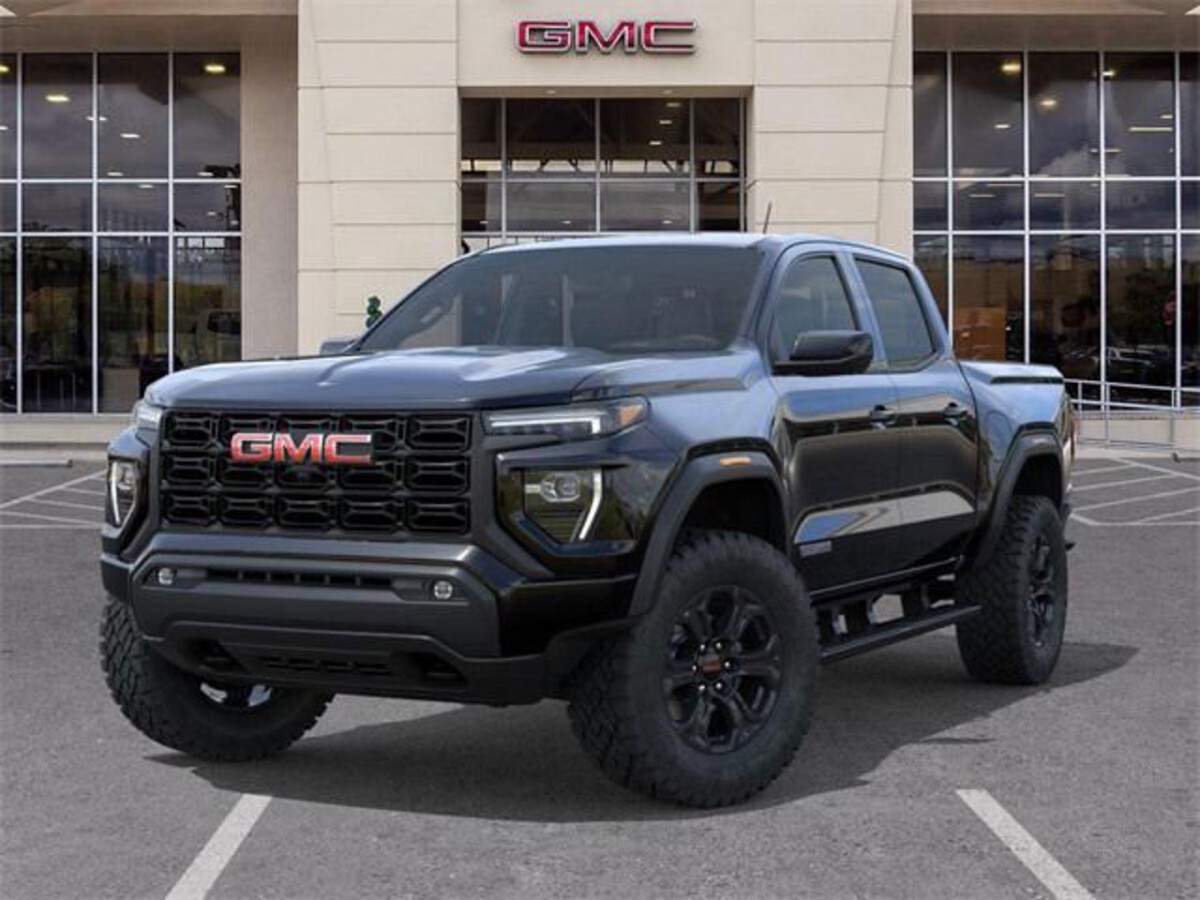
3. GMC Canyon
The GMC Canyon, closely related to the Chevrolet Colorado, shares similar rear leaf spring characteristics and limitations. Its rear suspension is adequate for daily driving, recreational towing, and moderate payloads but tends to sag noticeably under heavy loads.
This sagging results from thinner, shorter leaf spring packs that are designed for light-duty support rather than heavy commercial use. When the rear end drops, the truck’s handling and braking performance can be negatively affected.
Drivers often notice a lower ride height, altered rake angle, and increased body roll when cornering with a fully loaded bed or trailer. Over time, repeated heavy loading can exacerbate sagging, creating permanent deformation in the leaf springs.
GMC designed the Canyon with comfort and agility in mind, which means the suspension favors a smoother ride rather than maximum payload capacity.
Each leaf in the rear pack is engineered to flex under stress, but the limited number of leaves and thinner gauge steel reduce the truck’s ability to maintain a level stance when fully loaded.
This design choice prioritizes ride quality over heavy-load stability, resulting in rear sag when the truck is pushed near its maximum payload or towing capacity. Prolonged overloading can accelerate wear on the springs, shackles, and bushings, potentially leading to maintenance issues if not addressed.
The shock absorbers on the Canyon are tuned for light-duty comfort, and they cannot prevent sagging under heavy payloads. When the rear compresses, shocks reach their limit, reducing damping efficiency and resulting in a harsher ride.
Drivers may notice bouncing or bottoming out when driving on rough roads with heavy cargo, which can reduce control and increase driver fatigue over long trips. These effects make the Canyon less ideal for heavy-duty towing or frequent high-payload use without suspension modifications.
For owners seeking to maximize the Canyon’s utility, aftermarket options such as helper springs, airbag kits, or upgraded leaf packs can help mitigate rear sag and improve ride height under load.
Despite its tendency to sag under heavy weight, the GMC Canyon remains a competent midsize pickup for light commercial work, recreational towing, and daily driving, provided drivers respect the limits of its suspension system.
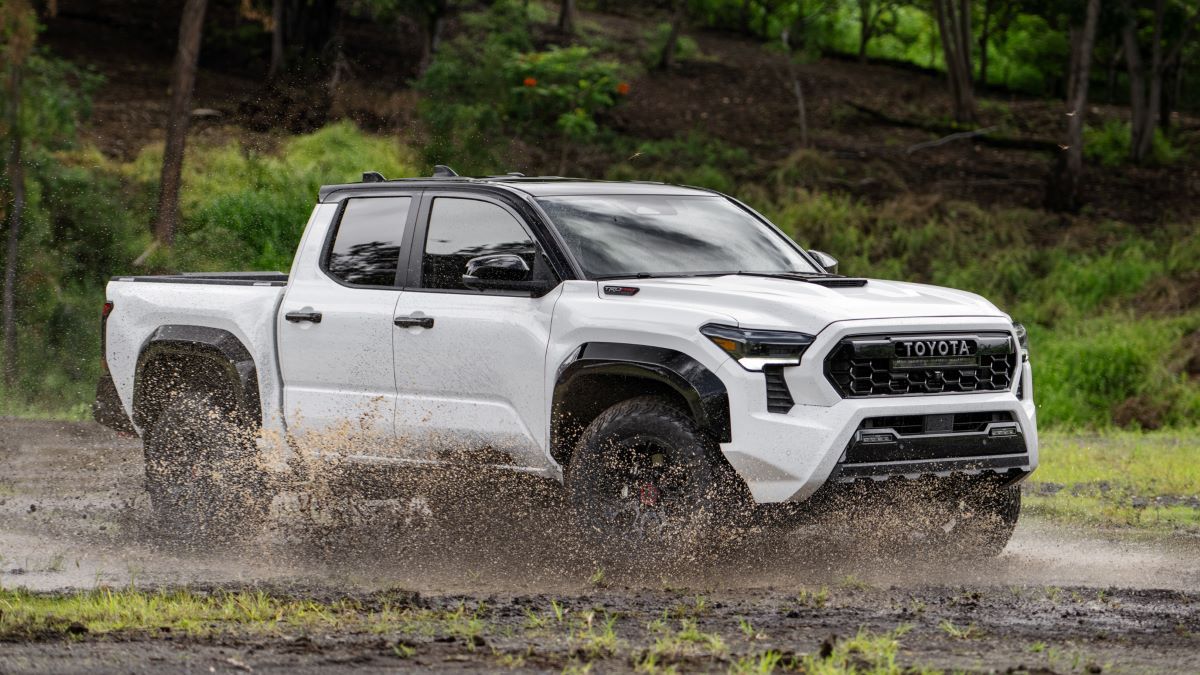
4. Toyota Tacoma
The Toyota Tacoma is a popular midsize truck known for reliability and off-road capability, but its rear leaf springs are not optimized for heavy payloads. When loaded with substantial cargo, the Tacoma’s rear end often sags, which can reduce stability and alter handling characteristics.
The sag is due to the leaf springs’ relatively short length, limited number of leaves, and light-duty steel composition.
This allows the rear to compress under weight, producing a noticeable tilt from front to back. While manageable for light hauling and recreational use, the sag can be significant when carrying construction materials or other heavy cargo consistently.
Tacoma’s leaf springs are designed to strike a balance between comfort and moderate load support. The steel leaves are flexible enough to provide a smooth ride, but they are not reinforced for maximum payloads. As weight increases, the springs compress significantly, which can lead to permanent deformation over time.
This not only reduces ground clearance but also affects tire alignment and may cause uneven wear. Drivers may notice that the truck’s braking and cornering performance are affected when heavily loaded, as the altered rake angle shifts the vehicle’s weight distribution.
Shock absorbers tuned for a moderate ride complement the leaf springs but cannot prevent the rear from sagging. Excessive rear compression reduces the shocks’ effectiveness, resulting in a harsher, less controlled ride.
Off-road performance can also be impacted, as the lowered rear end reduces departure angles and increases the likelihood of bottoming out on uneven terrain.
While the Tacoma excels in reliability and off-road capability, its suspension limitations under heavy load are important for drivers who frequently haul large payloads or tow trailers near the maximum rating.
To mitigate sag, Tacoma owners sometimes use helper springs or air suspension kits, which provide additional support for heavy cargo.
Despite the sag under load, the Tacoma remains a versatile midsize truck suitable for daily driving, light-duty hauling, and moderate towing. Awareness of the suspension limitations is key to maintaining safety, ride quality, and vehicle longevity.
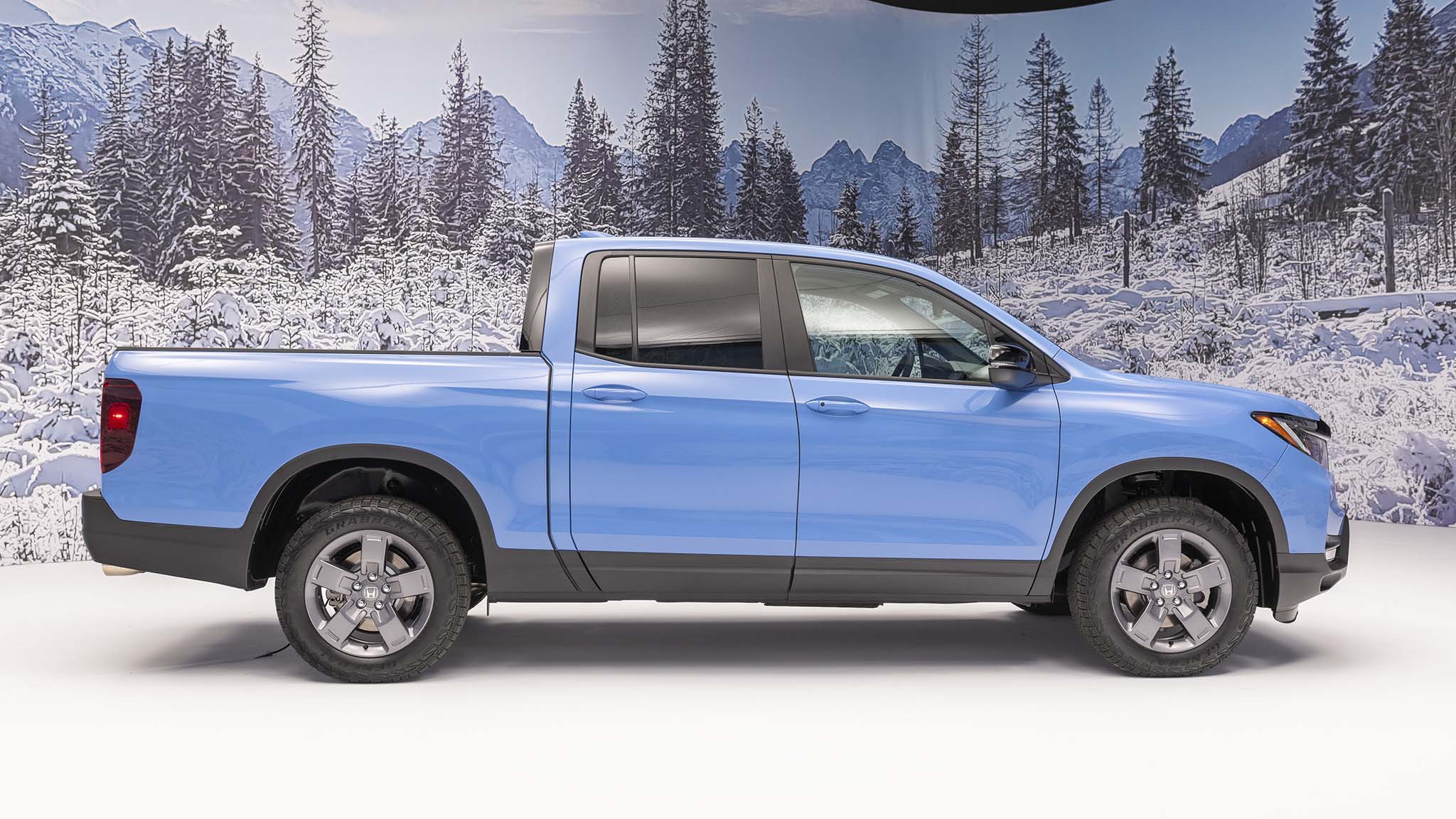
5. Honda Ridgeline
The Honda Ridgeline uses a unique unibody design with leaf springs at the rear, but its system is not optimized for heavy payloads. While the truck provides a smooth and comfortable ride for everyday use, the rear often sags under heavy cargo.
This is due to the lighter-duty leaf spring design, which prioritizes ride comfort and versatility over maximum load support.
When fully loaded, the Ridgeline’s rear compresses noticeably, affecting handling, braking, and stability. Drivers may experience a forward tilt that changes the truck’s dynamics, particularly when towing or carrying heavy materials, making the vehicle feel less responsive under stress.
The Ridgeline’s rear leaf springs are shorter, thinner, and fewer in number compared to heavy-duty pickups, which limits their ability to maintain a level stance. Over time, repeated heavy loading can cause permanent sagging, reducing ground clearance and altering the truck’s alignment.
While the suspension provides a comfortable ride under normal conditions, the lighter-duty design means that handling characteristics change under significant payloads, impacting driving confidence.
Shock absorbers in the Ridgeline are tuned to complement the leaf springs for a smooth and quiet ride. However, when the rear compresses under heavy weight, shocks can bottom out and lose effectiveness, resulting in a harsher ride and reduced control.
The combination of sagging and diminished damping can make the truck less stable during braking, cornering, or highway driving with a fully loaded bed or trailer.
Despite its limitations under heavy load, the Honda Ridgeline remains a capable midsize truck for everyday driving, light towing, and moderate cargo transport.
Many owners who require additional load support turn to aftermarket helper springs or air-assist systems to reduce sag. Understanding the Ridgeline’s suspension limitations is critical for maintaining safe and predictable handling when carrying heavier payloads.
