

Electric vehicles have changed the automotive industry dramatically over the last decade. Their rise has not only influenced environmental discussions and fuel consumption but also brought new considerations for vehicle ownership.
One of the factors that often gets overlooked when comparing electric vehicles to traditional gasoline-powered cars is tire wear.
Tire longevity is more than just a cost issue; it directly affects driving safety, performance, and even the environmental impact of owning a vehicle.
Some EVs are surprisingly gentle on their tires, offering owners long stretches between replacements, while others seem to demand new rubber almost as quickly as oil changes would have been required in older cars.
Understanding which vehicles provide more affordable tire life versus those that wear tires rapidly can help buyers make smarter decisions, especially as EVs become more common.
Tire wear in electric vehicles is influenced by several factors that differ from conventional cars. The instant torque that electric motors deliver can lead to accelerated wear, especially on rear or drive tires, if the vehicle is heavy or performance-focused.
Weight distribution is another crucial aspect, as batteries tend to add significant mass, affecting how the tires interact with the road. Tire composition and manufacturer specifications play a role, too, as EV-specific tires often balance low rolling resistance with durability.
However, some models prioritize performance over longevity, which can lead to frequent replacements and higher ownership costs. Drivers may not always realize the financial impact of these differences until they experience it firsthand.
Choosing an EV is no longer only about range, charging infrastructure, or acceleration. For some drivers, the total cost of ownership, including tire replacement, can be a deciding factor.
Affordable tire life can make a significant difference over the lifespan of the vehicle, especially for those who drive long distances or live in areas with rough roads.
Conversely, some EVs that wear tires rapidly might offer other benefits like superior handling or higher speed capabilities, but they come at a cost that extends beyond the sticker price.
Consumers must balance performance desires with practicality, and understanding which vehicles fall into which category helps set realistic expectations.
This article categorizes ten popular electric vehicles into two groups based on tire longevity. The first group represents models with affordable tire life, offering a more economical and practical experience for daily driving.
The second group highlights EVs that tend to wear tires rapidly, often requiring replacement every 10,000 miles or so.
By comparing these vehicles, prospective buyers can make informed choices about which EV suits their needs best, whether they prioritize cost efficiency, performance, or a balance of both.
EVs With Affordable Tire Life
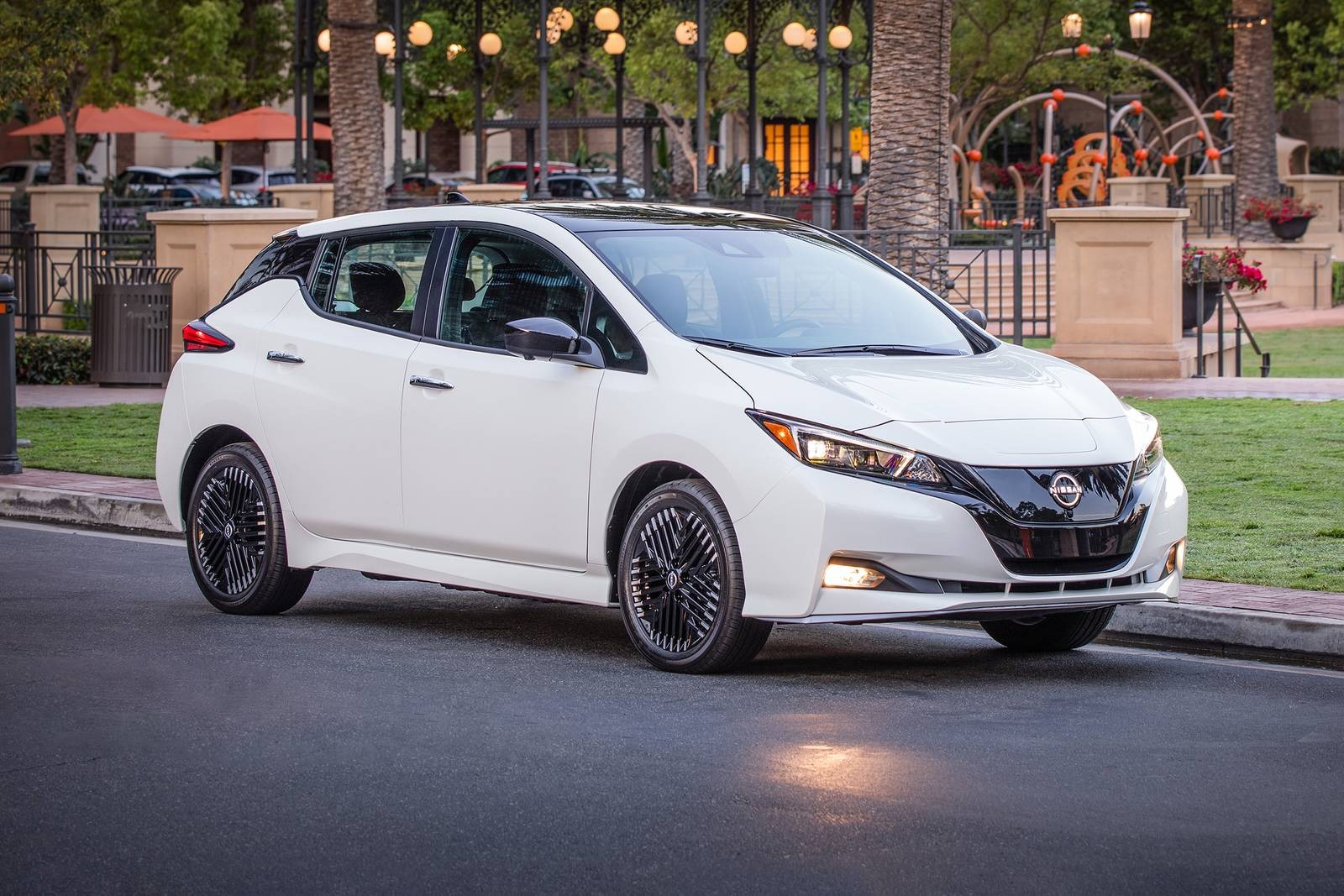
1. Nissan Leaf
The Nissan Leaf has established itself as one of the most practical and cost-conscious electric vehicles available. One of its key advantages is the relatively low stress it places on tires.
Unlike high-performance electric vehicles that demand instant torque and aggressive acceleration, the Leaf’s motor provides moderate and manageable power. This results in a smoother transfer of energy to the road, reducing sudden tire slippage and uneven wear.
Another factor contributing to the Leaf’s long tire life is its suspension design. The Leaf prioritizes comfort over aggressive handling, which results in even weight distribution and stable tire contact with the road..
Its independent front suspension and multi-link rear setup allow tires to absorb road irregularities without concentrating stress in specific areas, which is a common cause of premature wear.
Moreover, the Leaf’s chassis design ensures that during turns or heavy braking, the tires maintain proper alignment, reducing uneven tread wear.
Even in urban environments with frequent stops and starts, the Leaf’s suspension keeps tire deterioration gradual, making replacements infrequent and predictable.
The electric motor’s controlled power delivery also contributes to tire longevity. Unlike vehicles with high torque bursts that can instantly overpower the tires and cause wheel spin, the Leaf provides linear acceleration.
This feature is particularly beneficial in wet or slippery conditions, where aggressive torque can lead to uneven wear or tire damage.
By delivering power smoothly, the Leaf allows the tires to maintain consistent traction and tread integrity, further extending their lifespan. This characteristic makes the Leaf ideal for drivers who value practicality and long-term cost savings over raw performance metrics.
Finally, the affordability of tires for the Nissan Leaf adds another layer of practicality. Its tire sizes are common among compact and mid-size vehicles, meaning replacements are widely available and reasonably priced.
Owners do not need to purchase specialty tires designed for high performance, which can often cost significantly more.
Combined with the Leaf’s moderate power, well-engineered suspension, and balanced weight distribution, the vehicle consistently provides long tire life.
For drivers prioritizing cost-efficient maintenance without compromising safety or everyday usability, the Nissan Leaf represents one of the most sensible choices on the electric vehicle market.
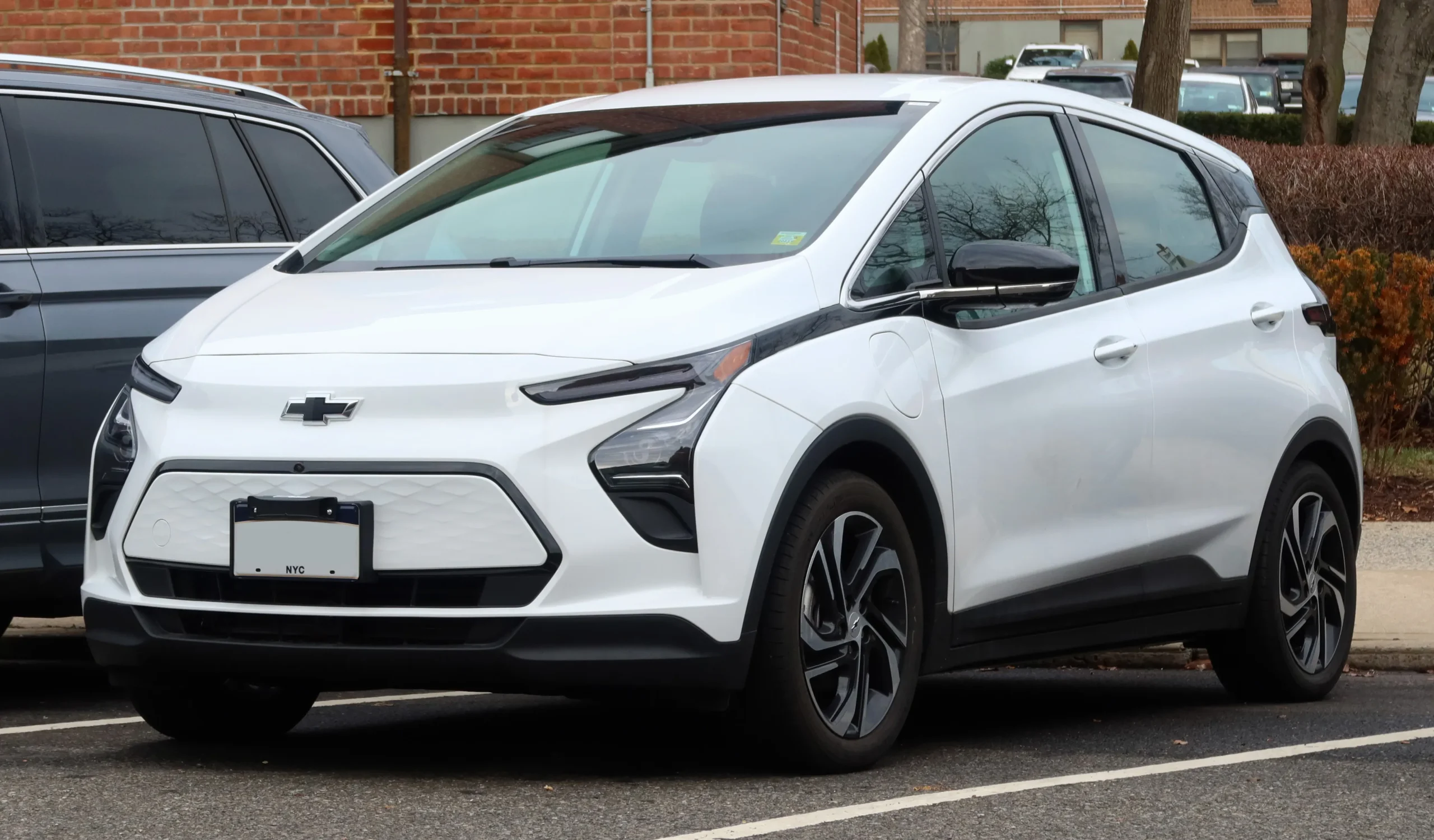
2. Chevrolet Bolt EV
The Chevrolet Bolt EV is widely recognized for its compact design, efficiency, and practical approach to electric driving. One of its strongest points regarding tire maintenance is the relatively low stress it places on its tires.
The Bolt’s battery pack is lighter than those found in larger EVs, which reduces downward force and the resulting wear on each tire.
This factor alone significantly extends tread life, particularly in urban driving where frequent stopping and turning can quickly degrade tires in heavier vehicles.
The Bolt’s engineering focuses on a balance between efficiency and everyday usability, ensuring that tires wear evenly over time.
Another aspect that contributes to tire longevity is the Bolt’s traction control and torque management systems.
These systems are calibrated to prevent excessive tire spinning, especially during acceleration from a stop.
In performance-focused EVs, high torque can cause immediate tire slippage, resulting in rapid tread wear, but the Bolt moderates this power to preserve tire integrity.
Even drivers who tend to accelerate more aggressively notice that the tires remain durable over extended periods.
This thoughtful approach to torque delivery minimizes costly and frequent replacements, making the Bolt one of the more budget-friendly options for maintenance.
The vehicle’s wheel size is another contributing factor. The Bolt typically comes with 16- or 17-inch wheels, which are smaller than the large performance wheels seen on many sporty EVs.
Smaller wheels allow for higher-profile tires, which are inherently more durable and better able to absorb road imperfections.
This reduces the likelihood of sidewall damage and uneven tread wear. Combined with a smooth suspension and carefully balanced weight distribution, the Bolt demonstrates how practical engineering can extend tire life without compromising safety or comfort.
Finally, the regenerative braking system indirectly extends tire longevity. By using the electric motor to slow the vehicle, braking is more gradual and reduces abrupt forces on the tires. This lessens the risk of uneven wear caused by frequent hard stops, particularly in city traffic.
Additionally, the combination of efficient regenerative braking and balanced acceleration ensures that the tires maintain consistent traction and tread health over time.
For Bolt EV owners who prioritize long-term savings and minimal maintenance, these factors make the vehicle one of the most cost-efficient choices on the EV market.
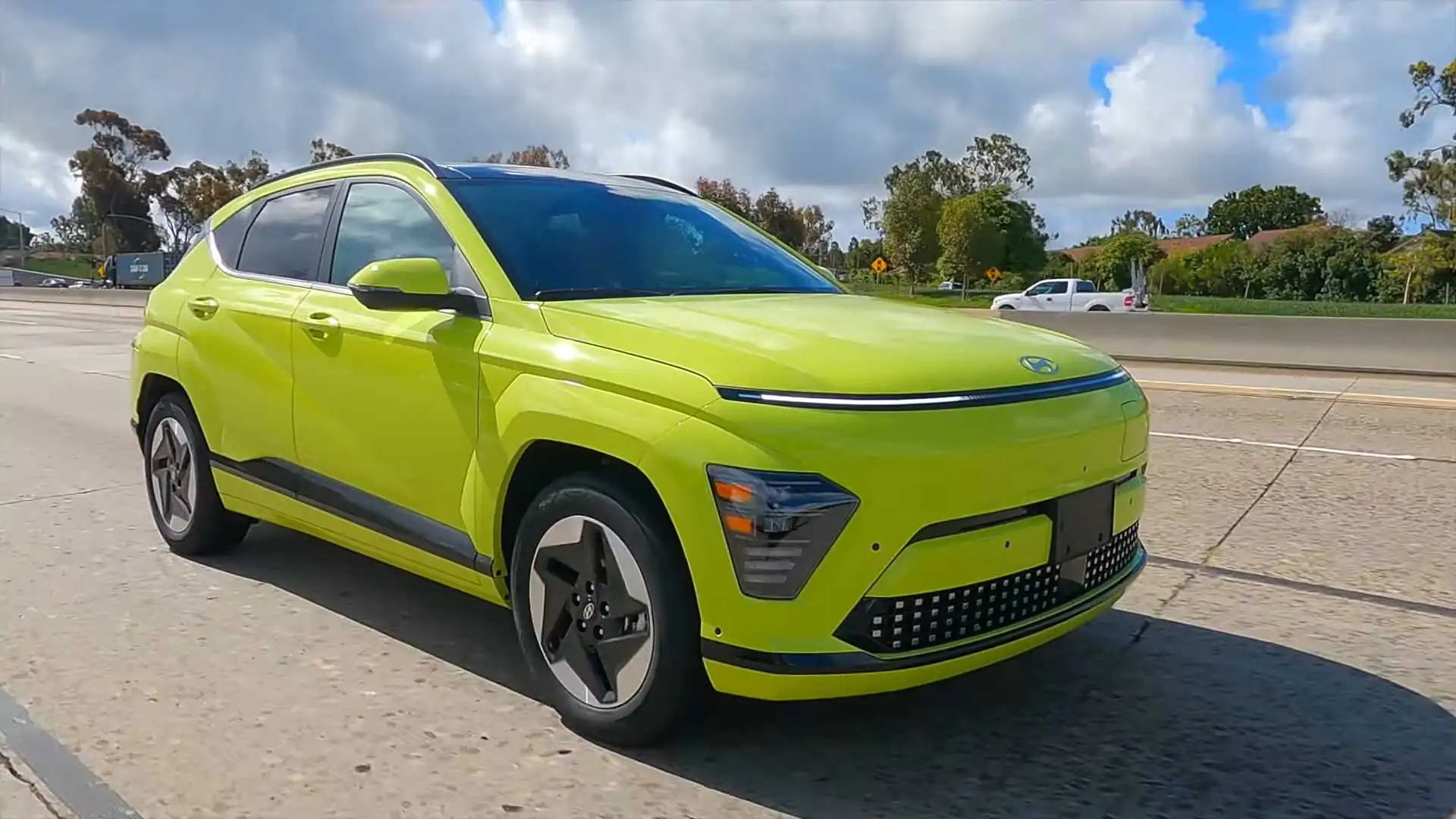
3. Hyundai Kona Electric
The Hyundai Kona Electric has earned a reputation for being a practical and efficient electric vehicle with minimal maintenance costs.
Its tires, in particular, benefit from several design considerations aimed at extending longevity. The Kona Electric features an evenly distributed weight across its axles, which reduces pressure on individual tires and promotes uniform tread wear.
Unlike heavier or performance-oriented EVs, the Kona Electric does not rely on extreme torque, which prevents tires from rapidly wearing under everyday driving conditions.
This combination of moderate power and even load distribution makes the vehicle highly suitable for drivers concerned with long-term tire costs.
Tire composition and selection also play a significant role. The Kona Electric is equipped with tires that emphasize low rolling resistance, reducing friction between the tire and the road while maintaining safety and handling.
While these tires are not designed for high-performance driving, they provide exceptional durability for city and highway use.
The balance between comfort, efficiency, and tread life makes them practical for owners who log significant annual mileage without wanting to incur frequent replacement costs.
Even when navigating uneven or rough road surfaces, the tires perform consistently and maintain their tread over longer distances.
The suspension and alignment of the Kona Electric further contribute to tire longevity. Its carefully calibrated suspension absorbs road irregularities effectively, distributing forces evenly across each tire.
This minimizes uneven wear and prevents premature bald spots, common in vehicles with performance-tuned suspensions.
Additionally, regular tire rotations are sufficient to maintain even tread patterns, ensuring tires last as long as possible. Drivers can expect predictable intervals between replacements, which simplifies budgeting for maintenance and reduces surprises.
Regenerative braking provides a subtle but meaningful benefit as well. By slowing the vehicle using the electric motor, sudden braking forces are reduced, which helps maintain tire integrity.
This system complements the vehicle’s moderate torque output and suspension design to protect tires during everyday driving.
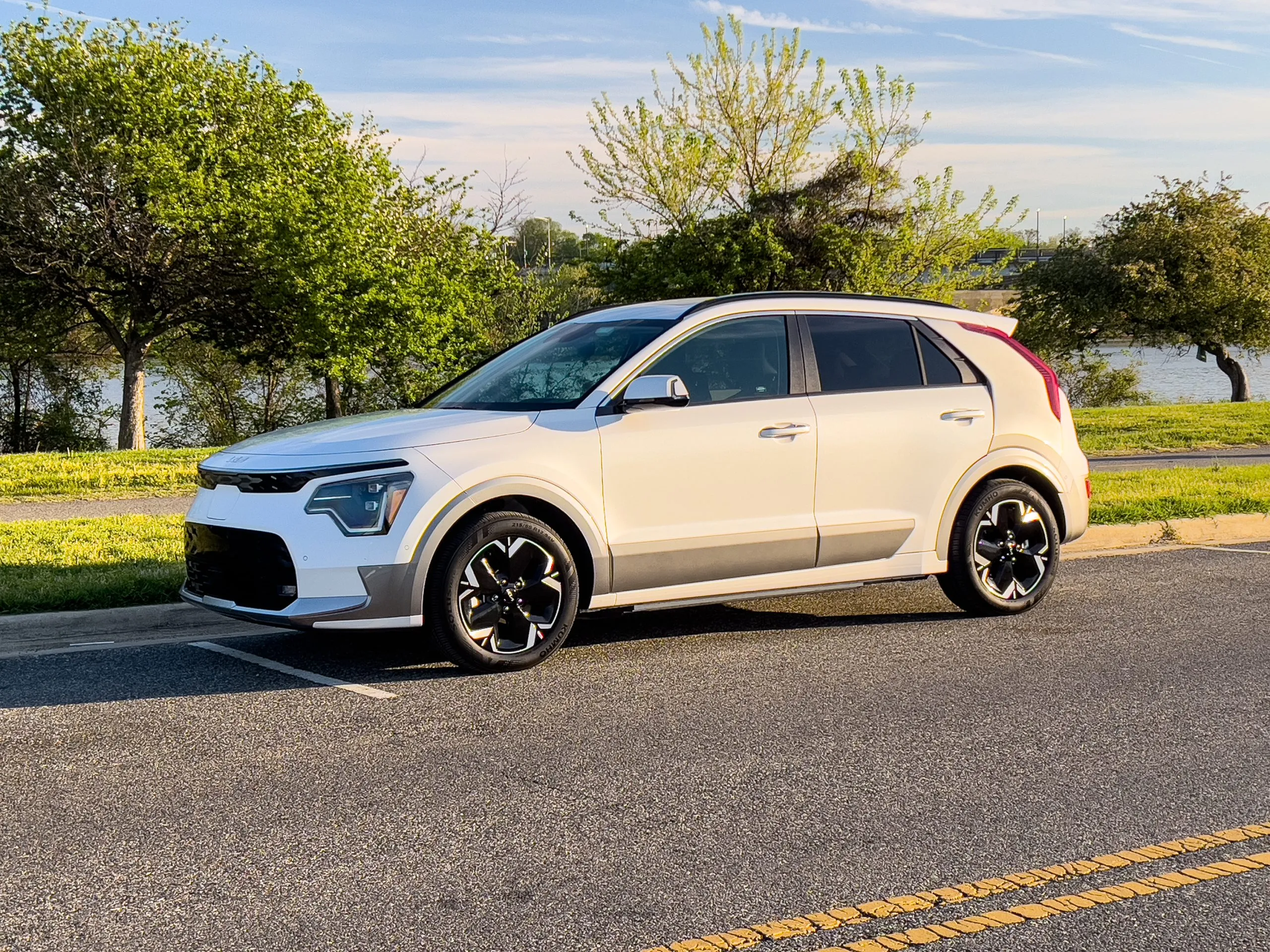
4. Kia Niro EV
The Kia Niro EV offers a blend of practicality, efficiency, and everyday usability while minimizing maintenance costs, particularly when it comes to tires.
Its moderate power output and even weight distribution ensure that tires are not subjected to extreme stress during acceleration, cornering, or braking.
Suspension design also plays a critical role in preserving tire life. The Niro EV focuses on comfort, absorbing road imperfections and distributing forces evenly across all four tires.
This reduces uneven tread wear and the development of bald spots, a common problem in vehicles with more aggressive handling or high torque outputs.
Even on bumpy or poorly maintained roads, the Niro EV’s suspension ensures that tires age gracefully, allowing owners to maximize their lifespan.
The vehicle’s regenerative braking system further protects tires. By slowing the car through the electric motor rather than relying solely on the brake pads, the Niro EV reduces abrupt weight shifts that can cause tire wear.
This feature is particularly useful in urban driving environments, where stop-and-go traffic is frequent. In combination with moderate torque delivery and careful suspension design, regenerative braking enhances tire longevity, creating a practical advantage for owners.
Tire size and availability enhance affordability. Most trims of the Niro EV come with 16- to 18-inch wheels, which support standard tire options that are widely available and reasonably priced.
Replacement costs are manageable, and the combination of moderate torque, evenly distributed weight, and careful suspension design ensures that tires remain functional for long intervals.
For drivers prioritizing cost efficiency, reliability, and minimal maintenance, the Kia Niro EV represents a smart choice that balances performance with practical long-term ownership considerations.
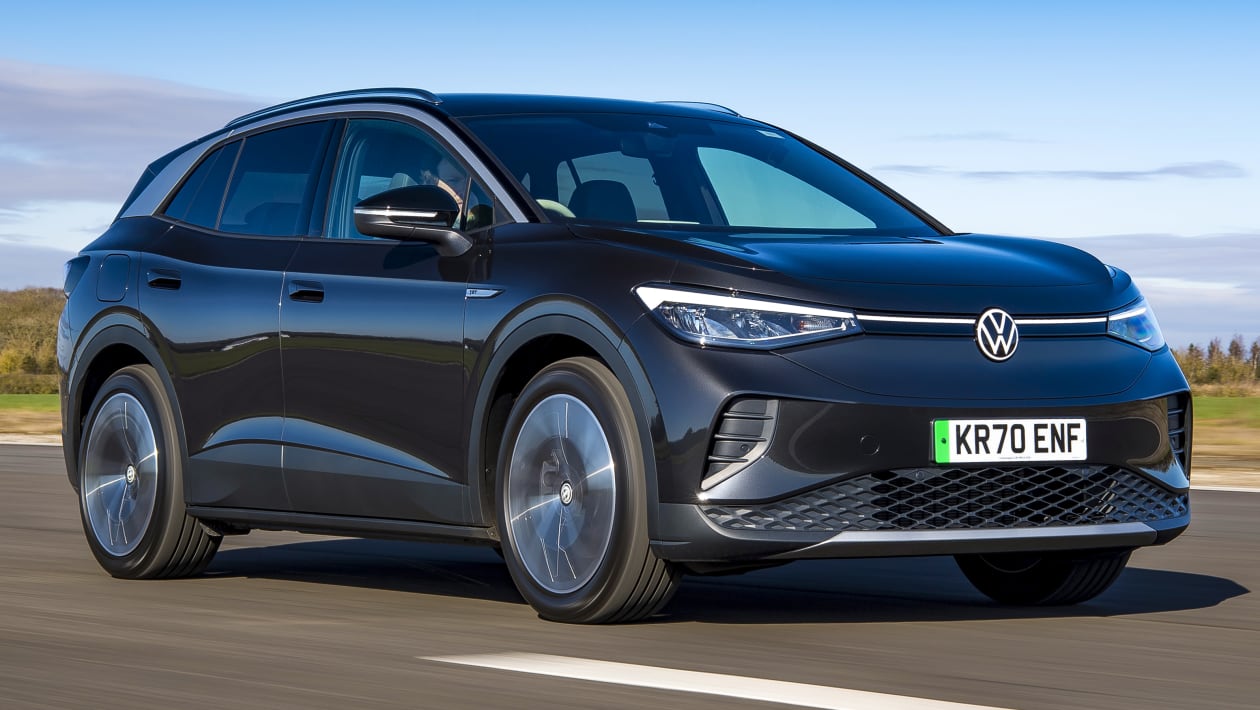
5. Volkswagen ID.4
The Volkswagen ID.4 blends practicality with SUV functionality while maintaining moderate stress on its tires.
Despite being heavier than compact EVs, its suspension and drivetrain design distribute weight evenly across all four tires, preventing excessive load on individual wheels.
This even distribution, combined with moderate torque delivery, significantly reduces the risk of rapid tire wear.
As a result, many ID.4 owners experience long intervals between replacements, which contributes to lower maintenance costs and more predictable ownership expenses.
The vehicle’s controlled acceleration and torque delivery also play a crucial role. The ID.4 does not exhibit the extreme torque spikes seen in high-performance electric vehicles, which can lead to immediate tire slippage and uneven tread degradation.
Drivers benefit from smooth acceleration and predictable handling, which reduces stress on the tires and prolongs their lifespan. This makes the ID.4 an excellent choice for daily commuting, long-distance travel, or urban driving without frequent tire concerns.
Wheel size contributes to durability as well. Lower trims often come with 18-inch wheels, providing higher-profile tires that better absorb road imperfections.
Larger performance wheels generally accelerate wear, but the ID.4’s moderate wheel size and carefully engineered tires provide a longer-lasting solution.
The combination of suspension tuning, weight distribution, and wheel design allows tires to maintain traction and tread depth over extended periods, providing reliability and cost savings.
Finally, regenerative braking enhances tire longevity. By using the electric motor to slow the vehicle, braking forces are distributed more evenly across the tires, preventing uneven wear caused by abrupt deceleration.
Alongside balanced torque and efficient suspension, this feature allows the ID.4 to preserve tire health effectively.
EVs That Chew Rubber Every 10k
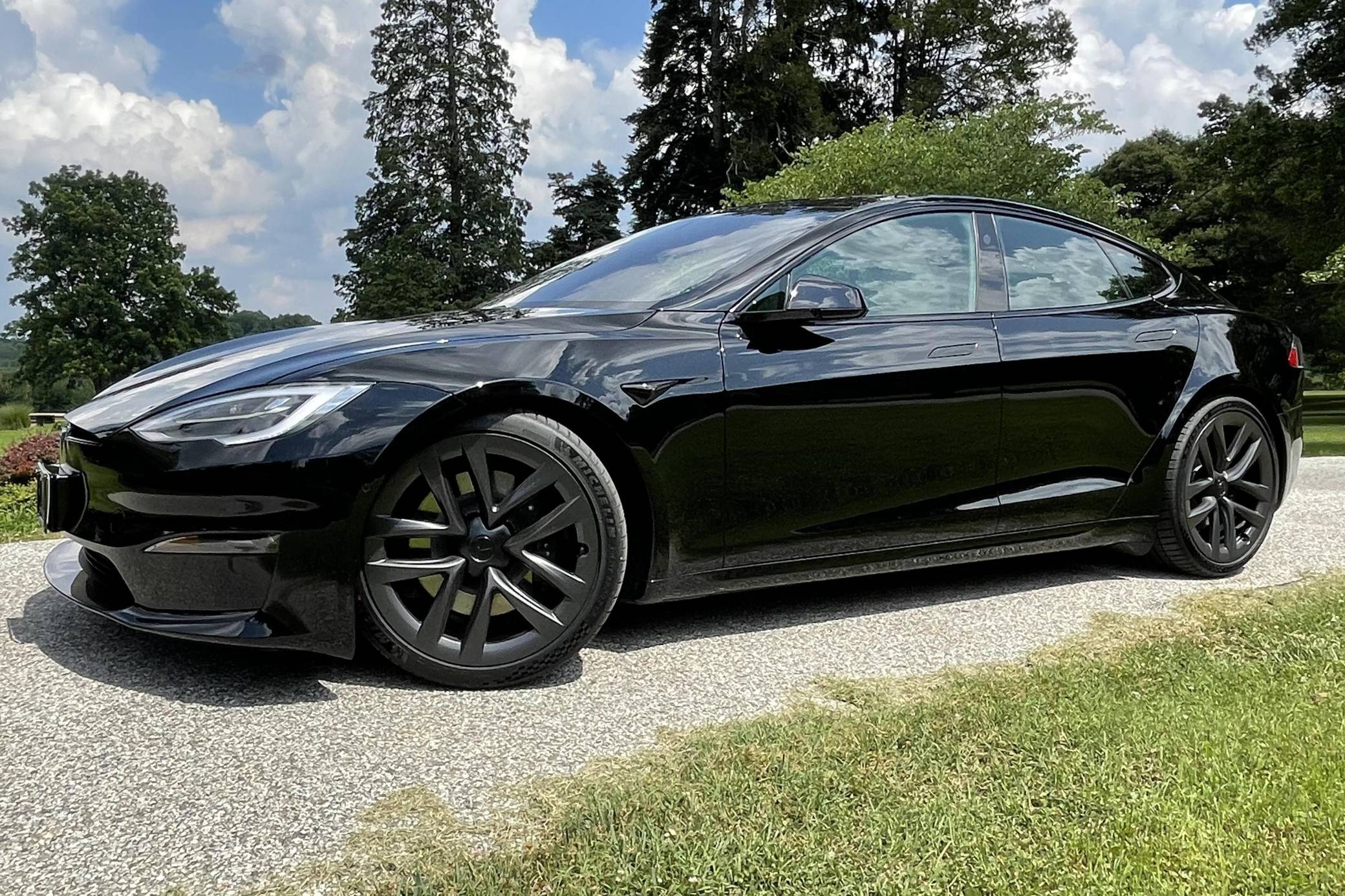
1. Tesla Model S Plaid
The Tesla Model S Plaid is widely regarded as one of the fastest production electric vehicles on the market, delivering mind-boggling acceleration and top-tier performance.
This performance, however, comes at a cost when it comes to tires. The Plaid’s tri-motor setup generates immense torque, which is sent directly to the wheels almost instantaneously.
This means that even moderate acceleration can cause the tires to slip slightly, generating friction and wearing down the tread much faster than on more sedate EVs.
Owners frequently report having to replace tires after as little as 10,000 miles, and the aggressive torque combined with high-speed driving compounds this effect.
Beyond just straight-line acceleration, cornering at high speeds exerts significant lateral forces on the tires, further accelerating wear.
Another contributing factor is the vehicle’s weight. The Tesla Model S Plaid is a large sedan with a hefty battery pack, which places considerable load on each tire.
Unlike smaller EVs, the combination of high mass and instantaneous torque creates intense stress during everyday driving, especially in urban stop-and-go situations or during spirited driving on winding roads.
Even with Tesla’s advanced traction control systems, the tires are still subjected to repeated strain from wheel spin and torque fluctuations.
This is why many owners consider tire maintenance one of the largest ongoing costs of owning a Plaid, as tire wear is unavoidable under normal driving conditions.
Tire selection also plays a role in the Plaid’s rapid wear. To handle the extreme speeds and acceleration, many owners choose high-performance tires with soft compounds for maximum grip.
While these tires enhance handling and safety at high speeds, they are inherently less durable than standard touring or all-season tires.
This combination of soft compound tires and the car’s explosive acceleration creates the perfect storm for rapid tread degradation.
Drivers seeking longevity in their tires often have to compromise on performance or settle for frequent replacements, which can be a significant financial consideration for Plaid owners.
Finally, the Plaid’s regenerative braking, while beneficial for slowing the car and recapturing energy, does little to mitigate tire wear compared to its high torque and weight.
The vehicle’s performance-oriented suspension and aggressive acceleration overpower the benefits of regenerative braking in terms of tire longevity.
As a result, even with careful driving, tires on the Model S Plaid tend to wear quickly, often requiring careful monitoring and replacement every 8,000–12,000 miles.
For drivers who prioritize performance above all else, the Plaid delivers unmatched speed and excitement, but it also comes with the trade-off of frequent and expensive tire maintenance.
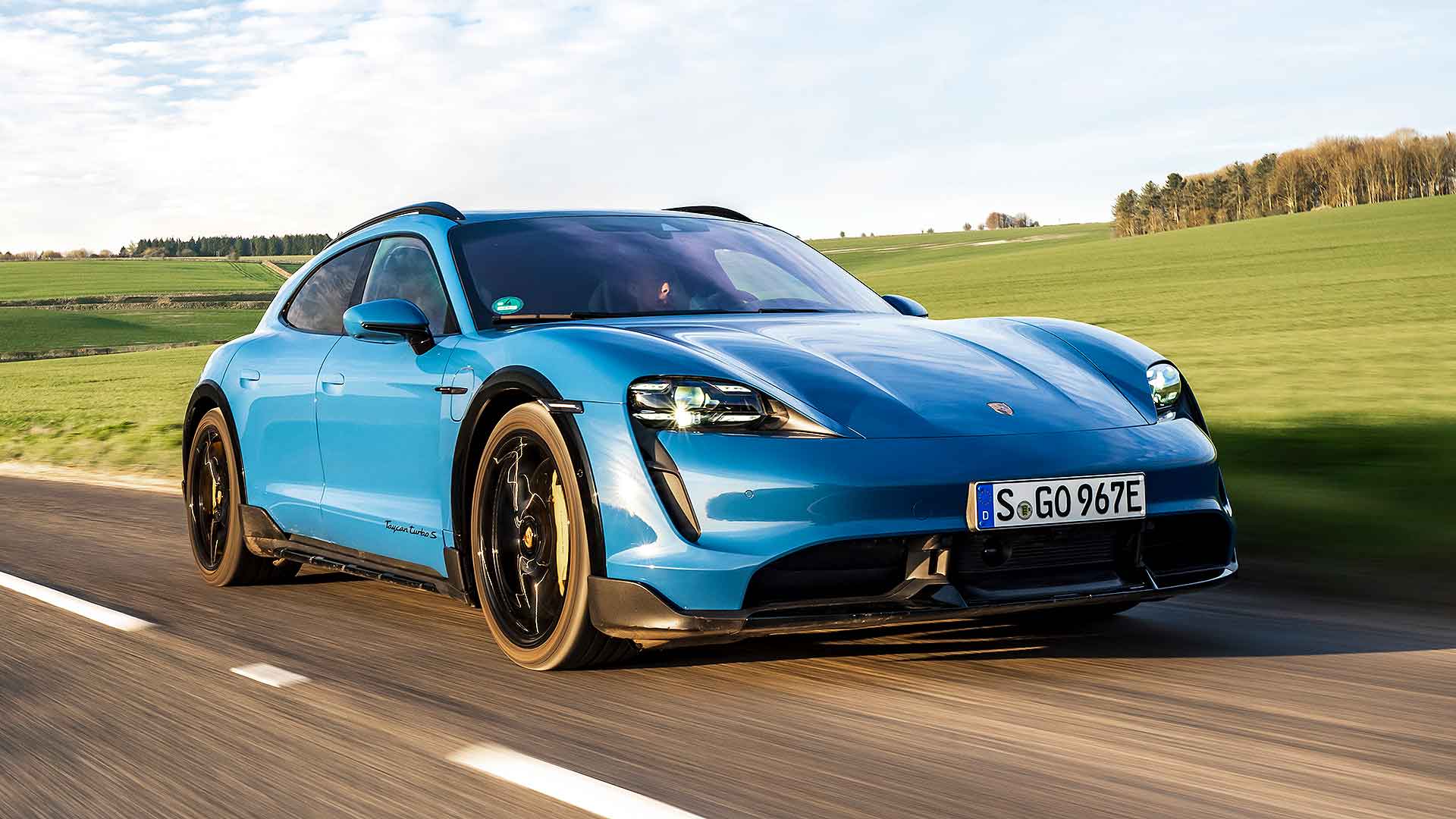
2. Porsche Taycan Turbo
The Porsche Taycan Turbo is engineered to deliver a thrilling driving experience, with rapid acceleration, tight handling, and high-speed stability.
However, this focus on performance has a direct impact on tire life. The Taycan Turbo’s dual-motor system provides tremendous instantaneous torque, which places intense stress on the tires during takeoff and sharp cornering.
Even relatively controlled acceleration can lead to slight tire slippage, gradually eroding tread. Many Taycan Turbo owners find themselves replacing tires after roughly 10,000 miles, particularly if they frequently enjoy spirited driving on open roads or twisty highways.
The high-speed handling capabilities of the Taycan only intensify tire wear, as the tires are designed to grip aggressively and absorb the energy generated during hard maneuvers.
Weight distribution and battery mass further accelerate tire wear. While Porsche has carefully engineered the Taycan’s chassis for balance, the heavy battery pack means that each tire supports a significant portion of the vehicle’s mass.
Combined with high torque delivery, this causes tires to wear unevenly if rotations and alignments are not performed regularly.
Additionally, Porsche’s sports-oriented suspension, tuned for sharp handling and responsiveness, transfers more forces to the tires than comfort-focused systems found in more practical EVs.
This creates an unavoidable cycle of frequent tire replacements, especially for owners who prioritize spirited driving over conservative, eco-friendly use.
The choice of tires for the Taycan Turbo also contributes to rapid wear. Owners typically equip the vehicle with ultra-high-performance tires designed for maximum grip in both wet and dry conditions.
While these tires enhance handling and safety, they are softer than standard touring tires and sacrifice longevity. On top of that, the Taycan’s large wheels, often 20 or 21 inches, reduce sidewall height, making the tires more susceptible to wear from road imperfections and curbing.
This combination of soft compounds, large wheels, and high-performance suspension ensures that tire replacement is an almost inevitable expense for Taycan Turbo owners.
Finally, regenerative braking in the Taycan provides some relief, but it is not sufficient to offset the rapid tire wear caused by high torque and aggressive handling.
While the system reduces the strain on the brakes, the tires continue to experience lateral and longitudinal forces during everyday driving.
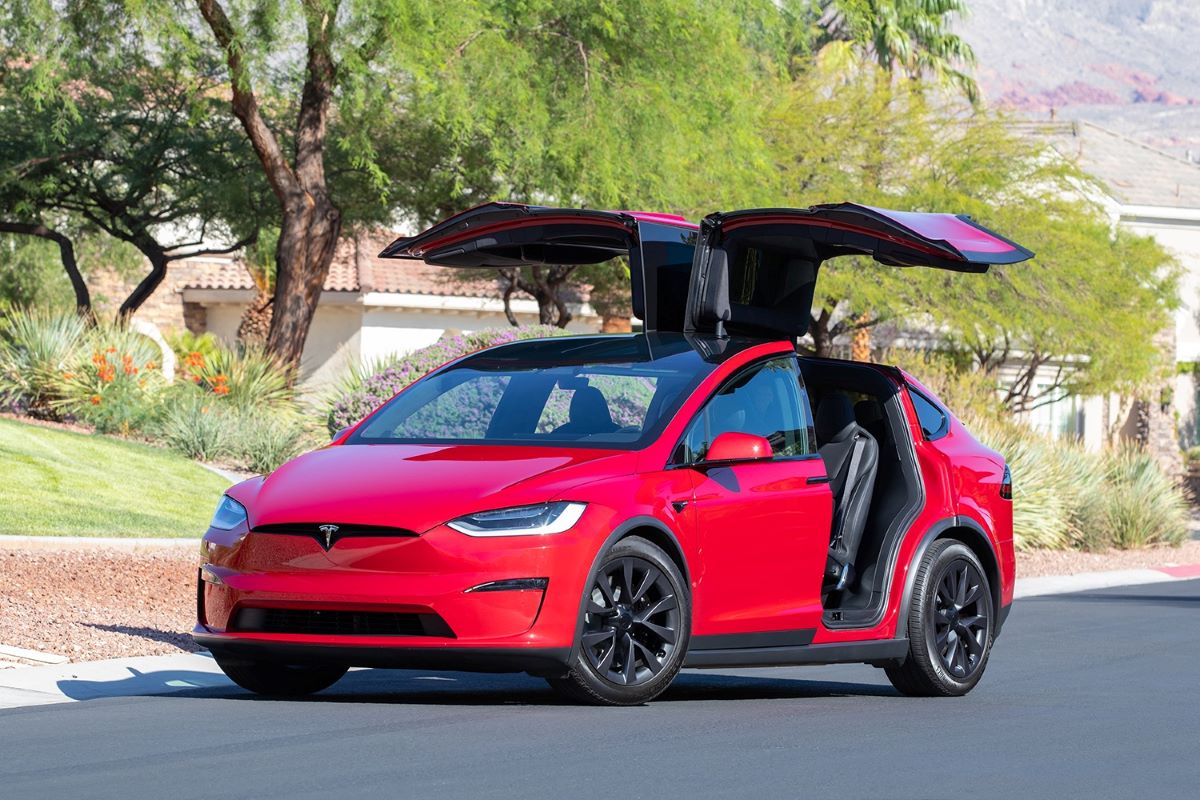
3. Tesla Model X Plaid
The Tesla Model X Plaid combines SUV practicality with high-performance electric driving, but this combination results in some of the shortest tire lifespans in the EV market.
Like the Model S Plaid, the Model X Plaid features tri-motor all-wheel drive with immense torque delivered instantaneously.
Given its SUV size and battery weight, the tires face enormous stress during regular acceleration, tight turns, and sudden braking.
Reports from owners often indicate tire replacement as frequently as every 10,000 miles. The sheer size of the SUV amplifies forces on the tires compared to smaller, lighter EVs, making maintenance particularly costly.
The Model X Plaid’s weight is a critical factor in tire wear. With its large battery pack and spacious cabin, the vehicle exerts significant downward pressure on each tire, accelerating tread wear even under normal driving conditions.
Combined with high torque, this leads to rapid degradation of soft compound tires chosen for grip and handling. Steering and cornering dynamics in an SUV of this size also cause uneven wear if rotations are not frequent and careful.
Even owners who drive conservatively may find that tires need replacing much sooner than expected, as the combination of weight and torque is unavoidable in a high-performance SUV platform.
Tire choice is another contributor to frequent wear. The Model X Plaid often comes equipped with performance-oriented tires that prioritize grip over longevity.
While these tires are essential for handling the high speeds and sharp cornering the vehicle is capable of, they are inherently less durable than standard all-season tires.
The result is that Plaid SUV owners often face costly replacements multiple times within the first 20,000 miles of ownership.
Tires are not just a maintenance item, they become a frequent, predictable expense that must be factored into the total cost of owning such a high-performance EV.
Regenerative braking does help in slowing the vehicle and reducing wear on brake pads, but it has minimal effect on mitigating tire wear for the Model X Plaid.
The SUV’s weight, combined with the tri-motor torque, continues to stress the tires during normal driving, particularly in stop-and-go traffic or during spirited acceleration.
Owners must carefully monitor tire tread and rotate regularly to avoid uneven wear, but even with proper maintenance, replacement intervals are short compared to more moderate EVs.
For those who prioritize extreme performance in an SUV form factor, the Model X Plaid delivers extraordinary speed and handling, but tire longevity is sacrificed as a direct result.
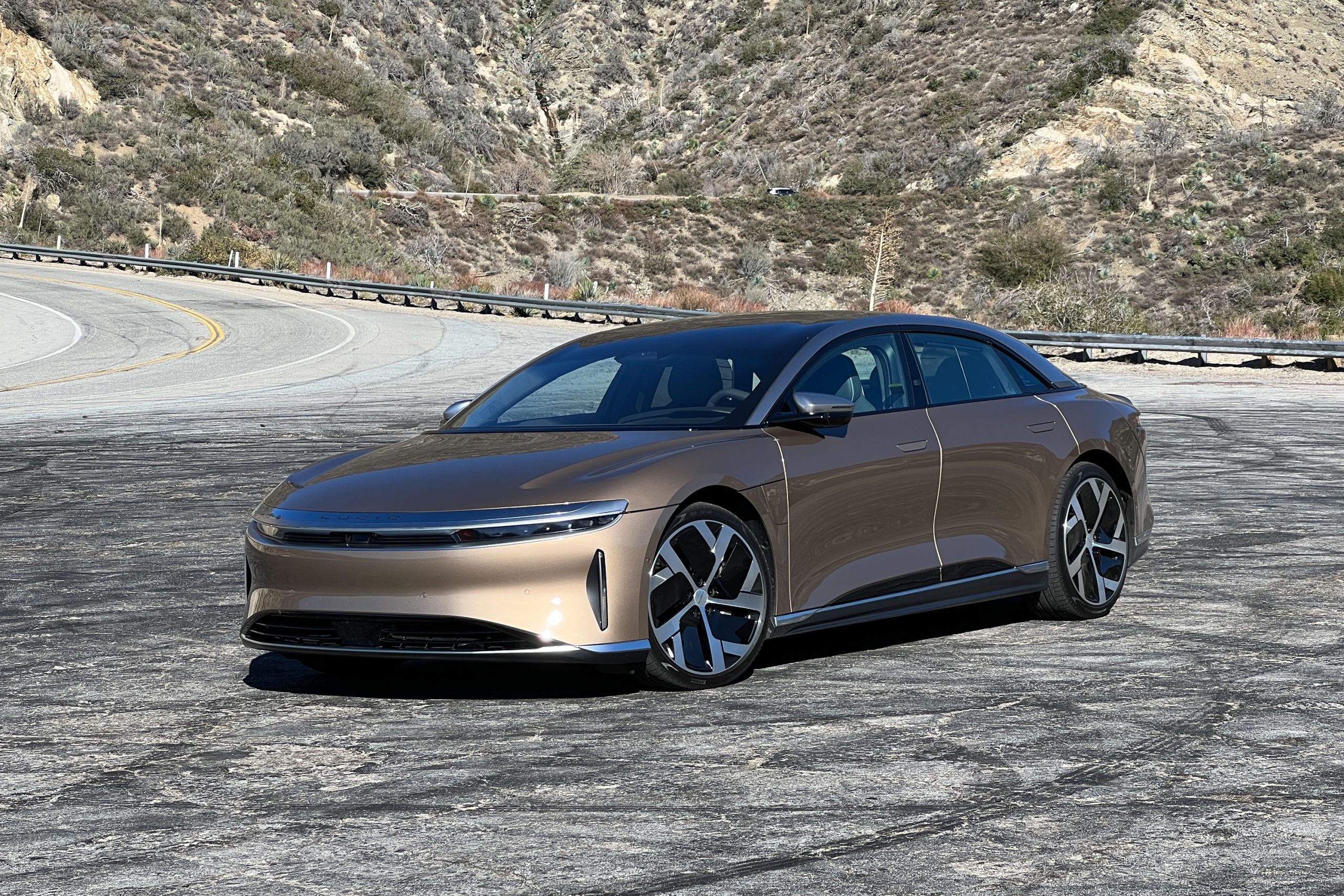
4. Lucid Air Dream Edition
The Lucid Air Dream Edition is a luxury electric sedan that prioritizes performance, refinement, and technological innovation. Its incredible acceleration and high top speed, however, place significant demands on its tires.
The dual-motor system delivers massive torque to the wheels almost instantly, and with the vehicle’s weight concentrated in a large battery pack, the tires endure a tremendous amount of stress.
Lucid owners have reported needing tire replacements around the 10,000-mile mark, particularly if the car is driven enthusiastically. The combination of weight, power, and performance-oriented tires ensures that tread wear is rapid and frequent.
Weight distribution in the Lucid Air Dream Edition, while optimized for handling, still places considerable stress on each tire.
The long wheelbase and luxury-oriented features, including large wheels, exacerbate tire wear because each tire absorbs substantial forces during acceleration, braking, and cornering.
Even with careful alignment and suspension tuning, soft compound tires wear quickly under the immense power delivered by the electric drivetrain.
Owners who prioritize performance or luxury handling often face unavoidable, recurring tire costs that are considerably higher than for more practical EVs.
Tire selection further accelerates wear. Many Lucid Air owners opt for ultra-high-performance tires that maximize grip, stability, and braking performance.
These tires, while excellent for handling, sacrifice longevity and are susceptible to uneven wear if not rotated frequently.
Large wheel sizes reduce sidewall flexibility, transmitting more road imperfections to the tire tread and contributing to faster degradation.
This combination of performance focus, luxury features, and tire composition means that maintaining the Lucid Air Dream Edition can become a frequent and costly endeavor.
Finally, regenerative braking helps reduce stress on the brake components, but the tires themselves still absorb significant lateral and longitudinal forces during driving.
The combination of high torque, large mass, and soft compound tires ensures rapid tread wear despite careful driving.
Owners can manage tire life with rotations and alignments, but replacements remain frequent. For those who value luxury, speed, and cutting-edge technology, the Lucid Air Dream Edition delivers exceptional performance, yet tire longevity is a clear compromise in exchange for extreme driving capabilities.
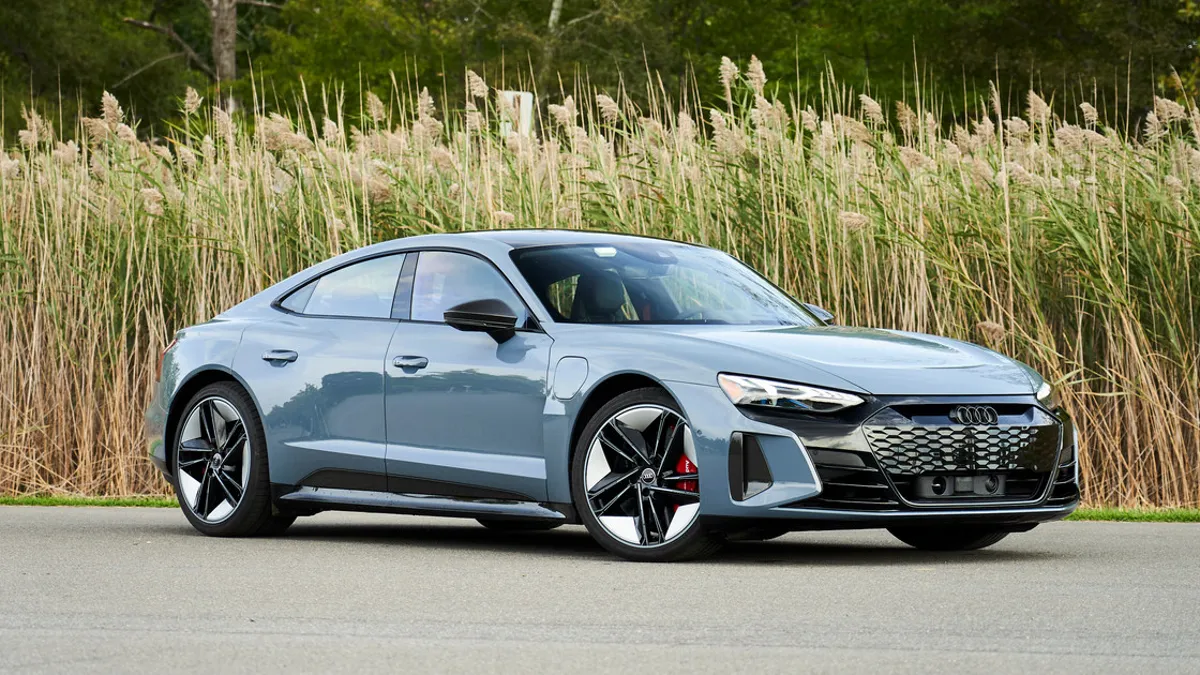
5. Audi e-tron GT RS
The Audi e-tron GT RS is a high-performance electric sedan designed for drivers who prioritize speed, handling, and aggressive styling.
Its dual-motor all-wheel-drive system provides instant torque, which subjects the tires to extreme stress even during moderate driving.
The combination of acceleration, high cornering forces, and the vehicle’s weight leads to rapid tire wear, often necessitating replacements around the 10,000-mile mark.
Performance tires chosen for grip further exacerbate the problem, as soft compounds wear more quickly than standard touring tires, making tire maintenance one of the most significant recurring costs for e-tron GT RS owners.
Weight and suspension tuning contribute to tire stress. While Audi has engineered the e-tron GT RS for exceptional handling and stability, the heavy battery pack and aggressive suspension setup mean that each tire is under constant strain.
Even with advanced traction control and electronic stability systems, the tires experience repeated slippage and lateral forces during spirited driving.
This is particularly true during high-speed cornering, where the combination of weight, torque, and soft performance tires accelerates tread wear dramatically.
Tire size also plays a role in reducing longevity. The e-tron GT RS often comes equipped with 20- or 21-inch wheels, which require low-profile tires.
While low-profile tires enhance handling and responsiveness, they are more susceptible to wear from road imperfections, curbs, and lateral forces.
Soft compound tires combined with low-profile design and high performance means that even careful driving cannot prevent frequent replacement. For owners who value handling precision and acceleration, this trade-off is expected but unavoidable.
Regenerative braking has a minor effect on tire wear, helping slightly by reducing the need for sudden braking forces. However, the primary contributors to tire wear remain torque, weight, and performance-oriented suspension.
Owners must plan for frequent tire replacements as part of the vehicle’s ongoing maintenance, which adds to the cost of ownership.
The Audi e-tron GT RS delivers exceptional speed, cornering, and driving excitement, yet it does so at the expense of tire longevity, making it one of the EVs most notorious for chewing through rubber rapidly.
