
The 1970s were a transformative decade for American muscle cars. The energy crisis, rising insurance costs, and tightening emissions regulations threatened to extinguish the high-horsepower glory that had defined the previous decade.
Yet, even within those challenges, automakers continued to create machines that embodied raw strength, attitude, and cultural significance. The spirit of American performance persisted, shaping a generation that valued torque, individuality, and craftsmanship. For many car enthusiasts, the 1970s remain a time of both defiance and evolution, a period when muscle cars had to adapt while keeping their character intact.
Many of the most respected names in American automotive history came from this era. These cars weren’t only about straight-line speed; they represented identity, freedom, and mechanical pride.
Each carried a distinctive roar, a visual statement, and a reputation that has only grown stronger with time. Despite the decline of factory-backed racing and the challenges of stricter regulations, engineers and designers still managed to craft masterpieces that continue to command admiration and strong values in the collector market today.
When discussing cars that have retained both historical and financial value, the 1970s lineup stands out. The decade produced icons that remain cornerstones of car culture, machines that balance nostalgia with legitimate performance.
These models are more than vintage machinery; they are tangible reflections of American resilience and creativity during a period of dramatic change. For collectors, owning one of these cars means holding a piece of living history.
Below are ten muscle cars from the 1970s that continue to impress with their design, power, and staying power in today’s market. Each one carries a story that reflects not only the engineering achievements of its time but also the spirit of those who refused to let performance die, even as the industry was forced to change course.
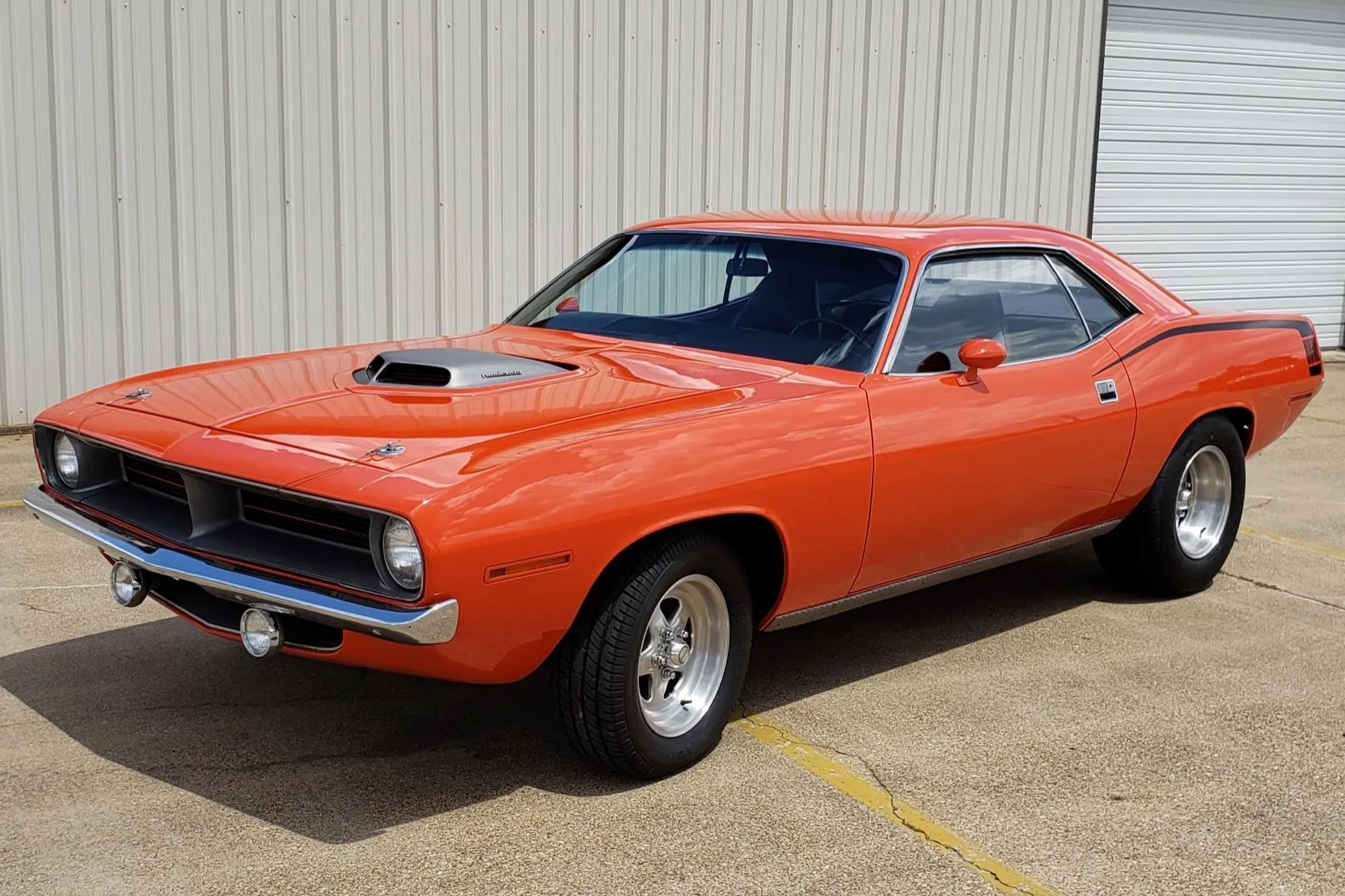
1. 1970 Plymouth Hemi ‘Cuda
The 1970 Plymouth Hemi ‘Cuda is often regarded as the expression of muscle car performance. It was born during the last great year before emissions restrictions began softening American engines. Built on Chrysler’s E-body platform, the car’s design was both purposeful and stylish.
The Hemi’s hemispherical combustion chambers allowed for exceptional airflow, giving the engine unmatched breathing ability and incredible performance. Few production cars of its day could rival its raw strength and audacious character.
The Hemi ‘Cuda’s appearance was as bold as its engineering. With options like the shaker hood, through which the air scoop protruded directly from the engine, it looked like it was ready to pounce. Plymouth offered a range of “High Impact” colors, like Vitamin C Orange, Lemon Twist Yellow, and In Violet, that made the car instantly recognizable.
Every design element, from its blacked-out grille to its broad rear haunches, projected aggression and confidence. Inside, the car featured a driver-oriented cockpit with bucket seats, a rally instrument cluster, and details that made it feel more like a street-legal race car than a daily driver.
The driving experience of a Hemi ‘Cuda was unforgettable. The car demanded respect, its heavy clutch, quick throttle response, and brutal acceleration tested both skill and nerve. On open roads, the deep roar of the Hemi engine filled the air with authority.
Although its handling was less refined than European sports cars of the era, it made up for it with sheer straight-line ferocity. Drivers who mastered the Hemi ‘Cuda understood that it was not merely transportation but a test of character. It symbolized a time when Detroit’s engineers built cars with raw heart and minimal restraint.
Today, the Hemi ‘Cuda stands among the most coveted collector cars in existence. Surviving examples, especially those with matching numbers and rare color combinations, regularly reach seven-figure values at auctions. Its mystique comes not just from rarity but from what it represents: the pinnacle of unfiltered American muscle.
It captures the last full-throttle moment before an era of restrictions changed performance forever. For enthusiasts, owning one is not just a matter of pride but a celebration of uncompromised engineering and spirit.
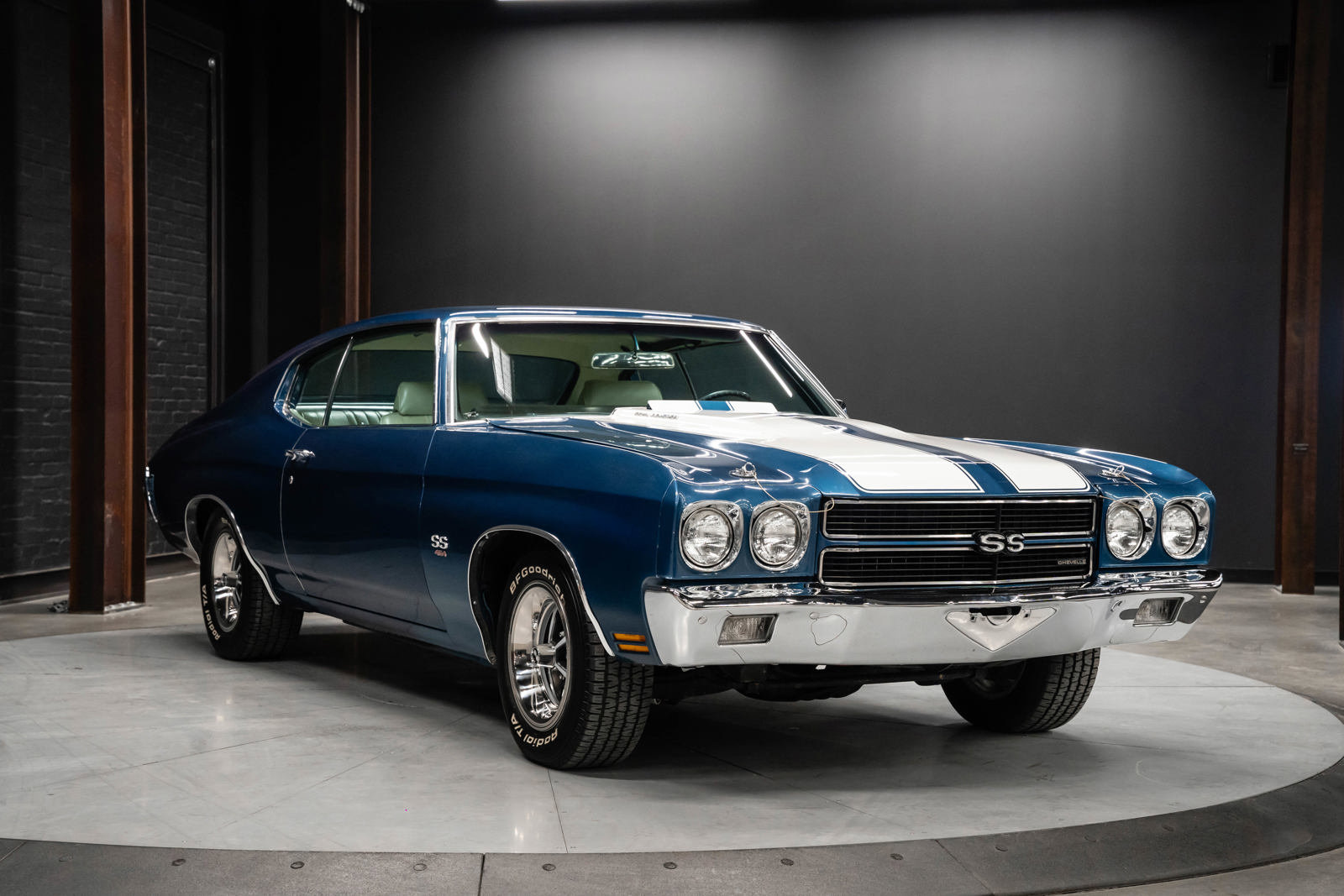
2. 1970 Chevrolet Chevelle SS 454
The 1970 Chevrolet Chevelle SS 454 remains one of the greatest success stories in American muscle history. By the start of the decade, Chevrolet had already refined the Chevelle into a potent blend of style and performance. The 1970 model, particularly the SS 454 LS6 version, became a legend for its power, appearance, and undeniable charisma.
The LS6 engine, a 454-cubic-inch big block, was rated at 450 horsepower and an incredible 500 pound-feet of torque. At the time, those were staggering numbers for a streetcar, and they gave the Chevelle SS 454 an aura of dominance that few rivals could challenge.
From a design standpoint, the Chevelle SS looked every bit the part of a muscle icon. The car featured bold dual stripes running across the hood and trunk, a functional cowl induction system, and muscular body lines that radiated confidence. The combination of size, balance, and proportion made it one of the most visually appealing cars of the decade.
The SS badge itself became a symbol of status among performance enthusiasts, signaling that the car was equipped to deliver excitement without compromise. Inside, the Chevelle offered a mix of comfort and function, featuring bucket seats, sport gauges, and a driver-focused layout.
Driving the Chevelle SS 454 was a visceral experience. The torque delivery was immediate and immense, launching the car forward with astonishing force. Even with its heavy frame, the LS6 engine gave it sports-car-like acceleration in a straight line.
The suspension, though designed for comfort, handled the car’s power well, especially for its era. Few things matched the sensation of pushing the throttle and hearing the deep, rumbling roar that made the SS 454 a legend at drag strips across the country. It was not a car that asked for attention, it commanded it.
Over time, the Chevelle SS 454 has become one of the most respected names in American automotive culture. Collectors cherish it not just for its brute strength but for its role as a turning point in the muscle car story.
As emissions and insurance pressures mounted, 1970 represented the high-water mark of performance freedom. Well-preserved LS6 Chevelles now rank among the most valuable Chevrolet models ever built. It remains a perfect symbol of the muscle car’s golden moment, when power and beauty worked in perfect harmony.
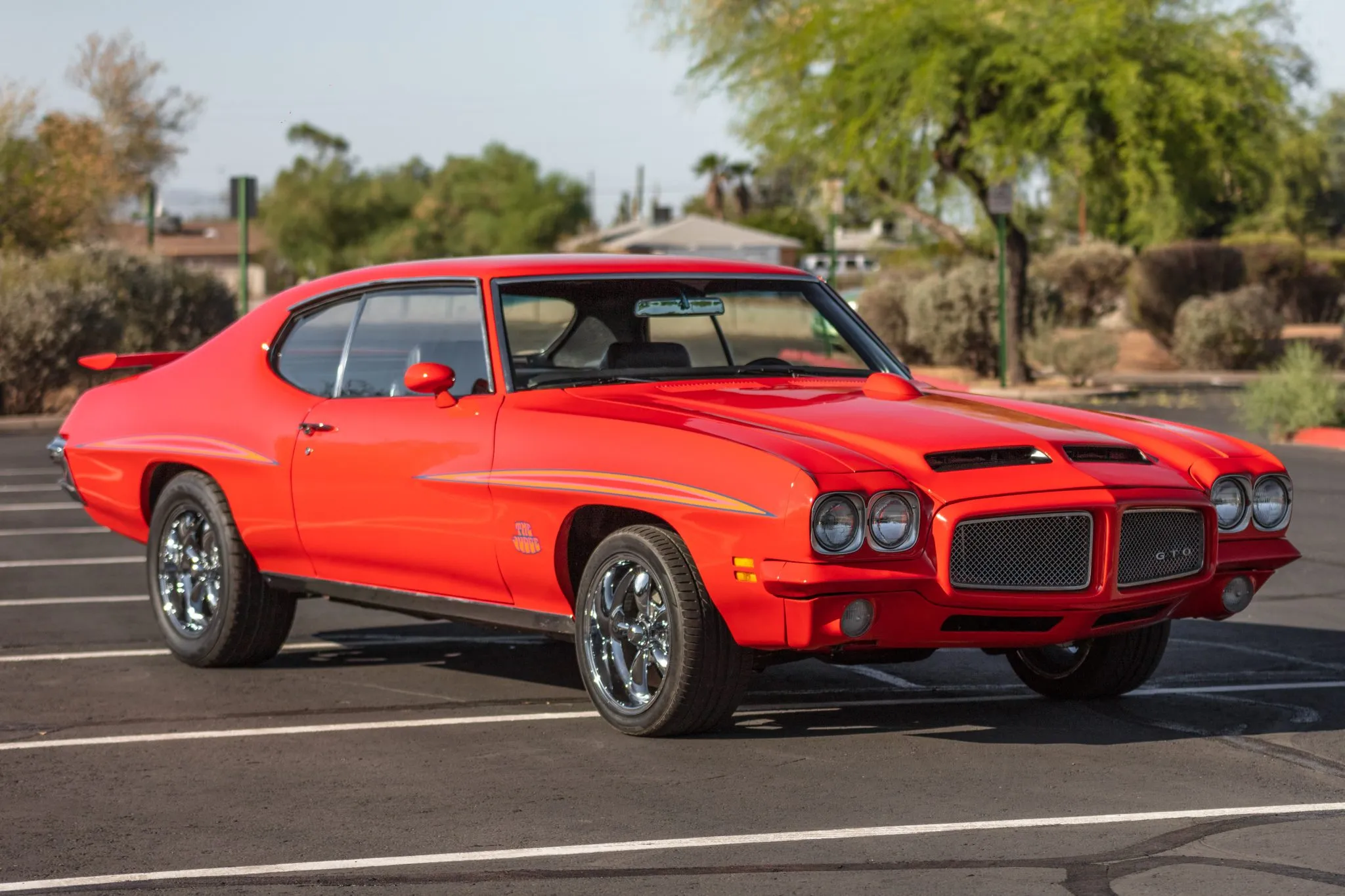
3. 1971 Pontiac GTO Judge
The 1971 Pontiac GTO Judge represented both the height of Pontiac’s muscle car evolution and the beginning of a changing era. The Judge package was initially introduced to appeal to younger drivers with bold styling and a rebellious spirit, and by 1971 it had evolved into one of the most recognizable names in American performance.
The 1971 model offered the new 455 HO engine, a torque-rich powerhouse rated at 335 horsepower, but capable of much more in practice. Despite stricter emissions standards beginning to take effect, Pontiac engineers managed to deliver strong performance that kept the GTO Judge competitive with its rivals.
Visually, the 1971 GTO Judge continued Pontiac’s tradition of flair and aggression. The car’s Endura front bumper integrated seamlessly with the body, giving it a unified, aerodynamic appearance. The rear wing, racing stripes, and “The Judge” graphics made sure no one mistook it for an ordinary GTO.
Pontiac offered a palette of vibrant colors, and its bold personality reflected the freedom and energy of early 1970s car culture. The Judge didn’t just turn heads, it made a statement about confidence and individuality.
Behind the wheel, the GTO Judge balanced power with surprising refinement. The 455 HO engine delivered massive low-end torque, making the car feel muscular even at moderate speeds. Its upgraded suspension, heavy-duty components, and power-assisted steering created a sense of control that earlier models lacked.
It was fast, but it was also predictable, a muscle car that could handle its own power without feeling overwhelming. For drivers, that combination of aggression and confidence defined the Judge’s lasting appeal.
Today, the 1971 GTO Judge is a prized collector’s item, representing one of the last true expressions of Pontiac performance before the brand began shifting toward smaller, less powerful engines. Original examples, especially those equipped with the 455 HO, command high values due to their rarity and significance.
The Judge remains a symbol of individuality and defiance, a car that refused to compromise its identity, even as the muscle era was fading. It stands as a reminder of when Pontiac built cars that reflected attitude as much as engineering.
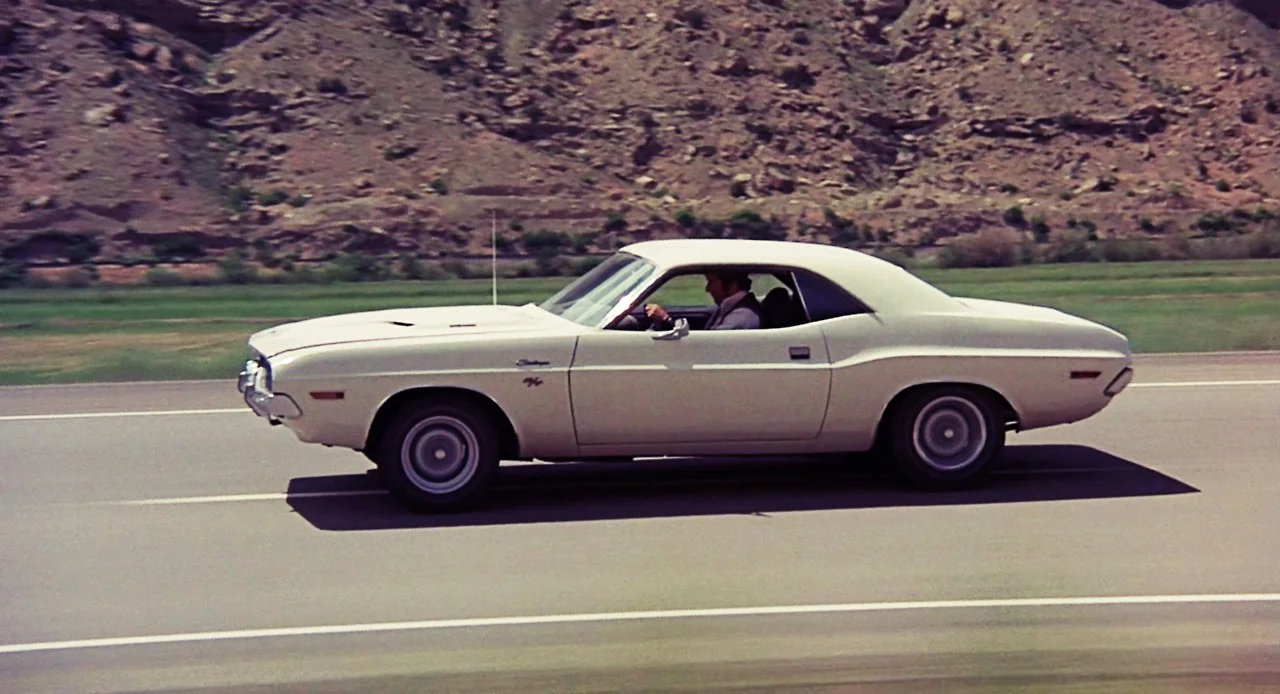
4. 1970 Dodge Challenger R/T 440 Six Pack
The 1970 Dodge Challenger R/T 440 Six Pack stood as a fierce competitor in the muscle car ranks. Dodge entered the performance scene later than Ford or Chevrolet, but when the Challenger arrived, it made an immediate impact. Its design was striking, long, low, and wide, with sculpted lines and a bold grille that demanded attention.
The Challenger R/T was offered with a wide range of colors and customization options, which made it one of the most expressive cars of its day. Buyers could select eye-catching finishes like Plum Crazy Purple or Go Mango Orange, combined with black stripes and the famous “R/T” badging.
Inside, the car delivered a blend of comfort and sportiness, featuring high-backed bucket seats, a full instrument panel, and available woodgrain accents that added a touch of class to its raw performance image.
On the road, the 440 Six Pack Challenger was a thrill. The triple-carb setup made throttle response instantaneous, giving drivers immediate control over a surge of power. Its heavy-duty suspension and wide track made it surprisingly stable, while the steering provided decent feedback for a car of its size.
The driving experience was loud, powerful, and unapologetically American. Many drivers considered it a more accessible alternative to the Hemi-powered version, with similar excitement and easier maintenance.
Collectors have long admired the 440 Six Pack Challenger for its balance of rarity, power, and visual appeal. It embodies the Mopar philosophy of bold engineering and fearless design. Even today, it remains one of the most desirable muscle cars from the early 1970s.
Well-documented R/T models, especially those with original drivetrain components, continue to bring strong auction prices. The Challenger R/T’s legacy endures not just because of its performance, but because it represents a time when creativity and strength defined American automotive identity.
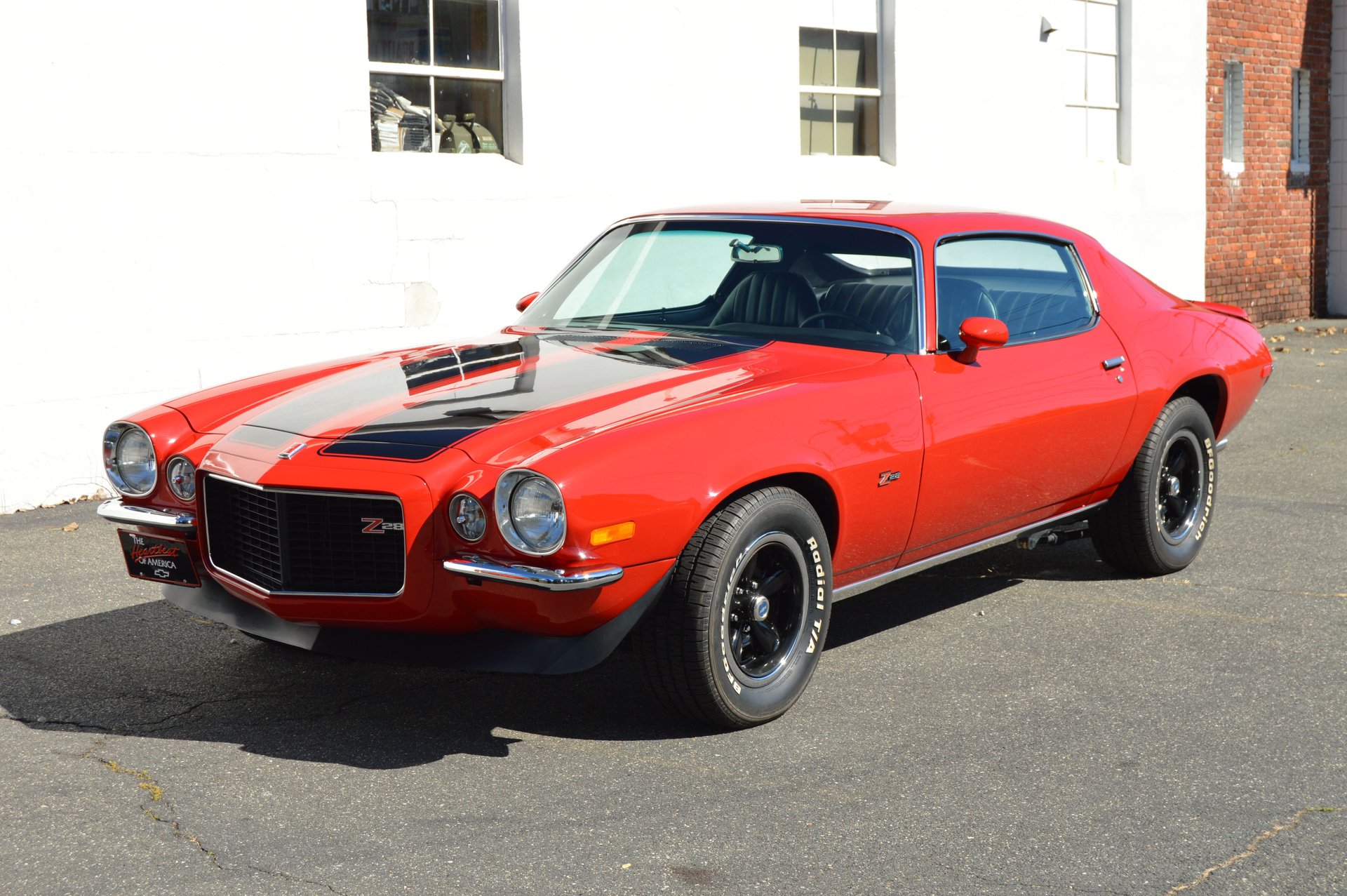
5. 1971 Chevrolet Camaro Z28
The 1971 Chevrolet Camaro Z28 reflected a refined approach to performance during a decade of change. The second-generation Camaro introduced a sleeker, more aerodynamic profile than its predecessor, with European-inspired styling that gave it both elegance and aggression.
Under the hood, the LT-1 350-cubic-inch small-block engine provided 330 horsepower, impressive for its displacement, and was paired with either a four-speed manual transmission or an automatic. It offered responsive power delivery and a willingness to rev, making it a favorite among drivers who valued precision as much as strength.
From the outside, the 1971 Z28 carried an athletic, purposeful design. The split front bumper, low stance, and sweeping fender lines gave it a distinctly modern appearance that set it apart from boxier rivals. The car’s proportions, long hood, compact cabin, and muscular haunches, conveyed both sophistication and speed.
The Z28 badging and racing stripes reinforced its performance image, while details like the rear spoiler and chrome accents provided balance and style. Chevrolet had managed to evolve the Camaro without losing its muscle car soul.
The Z28’s driving dynamics made it one of the most balanced muscle cars of the early 1970s. Thanks to its improved suspension geometry, lower center of gravity, and responsive steering, it handled corners with confidence that earlier American muscle cars lacked.
The LT-1 engine’s smooth power delivery and willingness to spin to higher RPMs gave it a character distinct from the brute-force big blocks dominating the era. It was a car for drivers who appreciated finesse, offering speed without sacrificing control.
Collectors continue to prize the 1971 Camaro Z28 for its transitional role between pure muscle and the more refined performance cars that followed. Its combination of agility, design, and reliable small-block power keeps it relevant among enthusiasts.
While horsepower numbers began to fall across the industry after 1971, the Z28 maintained its reputation as a driver’s car, one that blended classic American power with handling that rivaled sports cars from abroad. Its lasting value comes from that rare harmony of performance and precision.
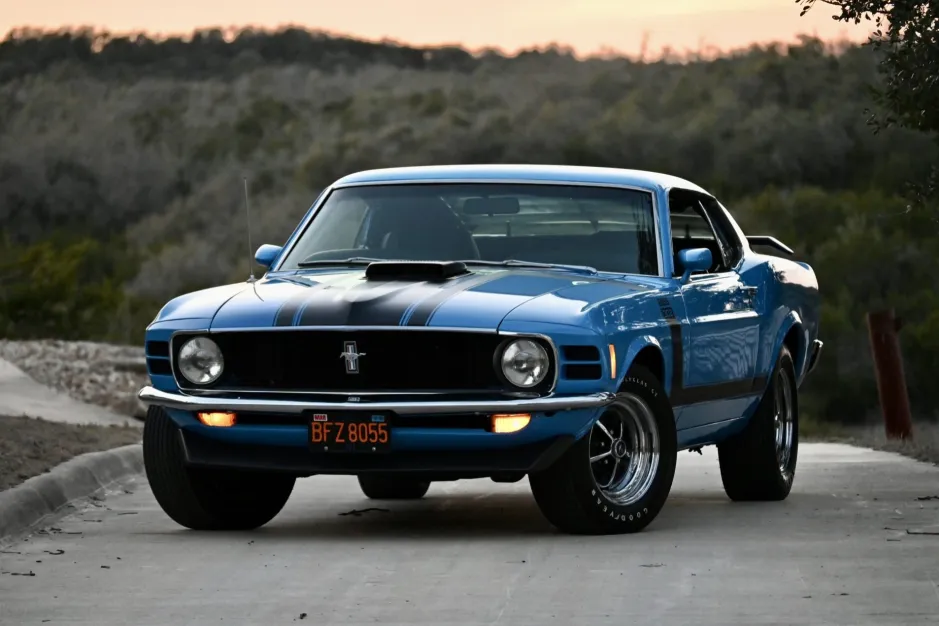
6. 1970 Ford Mustang Boss 429
The 1970 Ford Mustang Boss 429 is one of the most legendary Mustangs ever built, and it represents a unique chapter in muscle car history. Developed specifically to homologate Ford’s massive 429-cubic-inch V8 engine for NASCAR, the Boss 429 combined raw power with a surprisingly balanced chassis.
The engine, rated at 375 horsepower, was a high-revving big-block unit with aluminum heads and solid lifters, delivering both explosive acceleration and a distinctive exhaust note. Ford had to engineer special modifications to the Mustang’s frame and suspension to accommodate the engine, making the Boss 429 a highly specialized and rare machine.
Its styling set it apart from other Mustangs of the time. While the Boss 302 was designed for road racing with more subtle cues, the Boss 429 carried a more aggressive stance, a functional hood scoop, and minimal ornamentation to emphasize its performance focus.
Buyers could select classic Mustang colors with racing stripes, and the car’s wide fender flares hinted at the enormous power hidden beneath the hood. The interior was clean and driver-focused, with optional bucket seats, rally gauges, and a center console, making it functional yet stylish.
Driving a Boss 429 was a remarkable experience. The car demanded respect, as the enormous torque and high-revving nature of the engine could overwhelm inexperienced drivers. Yet in skilled hands, it delivered linear power and straight-line dominance that few competitors could match.
Handling was firm but predictable, thanks to upgraded suspension components that balanced the car’s heavy front end. On highways and quarter-mile strips, the Boss 429 left a lasting impression, proving that Ford could produce a Mustang that was competitive not just on the street but on the track as well.
Today, the Boss 429 is one of the most valuable and collectible Mustangs ever produced. Its rarity, less than 1,350 units built, combined with its race-bred engineering and iconic design, has made it a prized collector car. Surviving examples with original engines and matching numbers fetch extremely high prices at auction.
Beyond numbers, the car represents a peak moment in Ford’s muscle car development, when engineering ambition and performance were pursued without compromise. The Boss 429 remains a symbol of American automotive audacity.
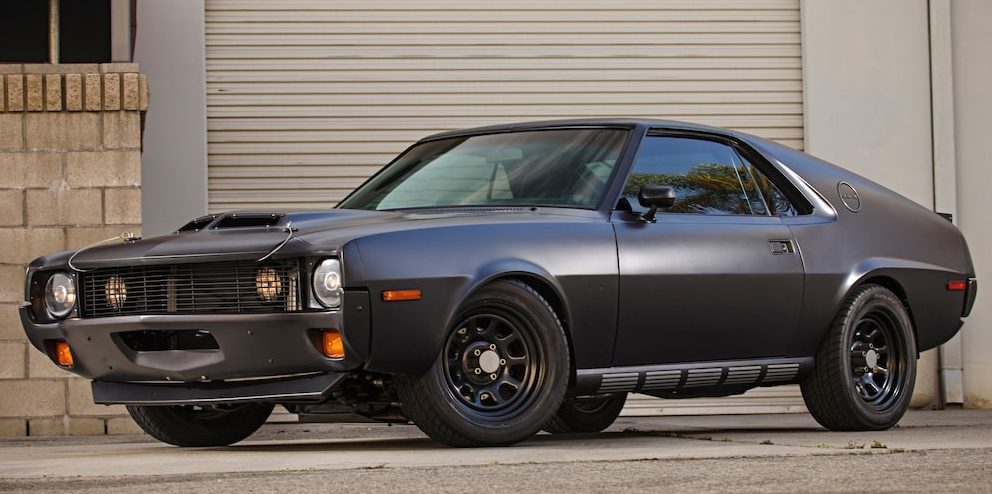
7. 1970 AMC AMX
The 1970 AMC AMX carved out a unique identity in the muscle car world, distinguishing itself with compact proportions and performance that rivaled more mainstream competitors. AMC, often considered an underdog brand, introduced the AMX as a two-seater with a focus on lightweight performance.
The 390-cubic-inch V8 engine produced 315 horsepower, delivering impressive acceleration and a lively driving experience. The car’s compact size, combined with a short wheelbase, made it more agile than larger muscle cars, giving it an edge on winding roads and in cornering stability.
Visually, the AMX projected aggressiveness despite its smaller size. Its wide stance, long hood, and short rear deck provided the classic muscle car silhouette in a compact package. Bold paint options and racing stripes allowed owners to create personalized statements, while features like shaker hoods and blacked-out grilles added a touch of performance-oriented flair.
The interior matched its sporty intentions with bucket seats, a full instrument cluster, and simple, driver-focused controls. Unlike some muscle cars that emphasized size over substance, the AMX felt purposeful from every angle.
Driving the AMX was a dynamic and engaging experience. The engine delivered strong mid-range torque, allowing for confident acceleration out of corners. Its smaller size made it more nimble than many of its contemporaries, allowing drivers to enjoy spirited handling without the intimidation factor of larger cars.
The AMX’s lightweight design also contributed to braking efficiency and balance, making it one of the more driver-oriented muscle cars of its era. Enthusiasts appreciated the combination of power and agility, which made the AMX suitable for both daily driving and spirited weekend runs.
Today, the AMC AMX has gained recognition as a rare and valuable collector car. Its relative rarity compared to more mainstream brands like Ford and Chevrolet, combined with its distinct styling and performance credentials, makes it highly sought after.
Well-maintained examples continue to increase in value, and the car is often celebrated for its innovation and willingness to stand apart from the muscle car crowd. The 1970 AMX remains an enduring symbol of creativity and performance, demonstrating that smaller manufacturers could produce muscle cars with heart and capability.
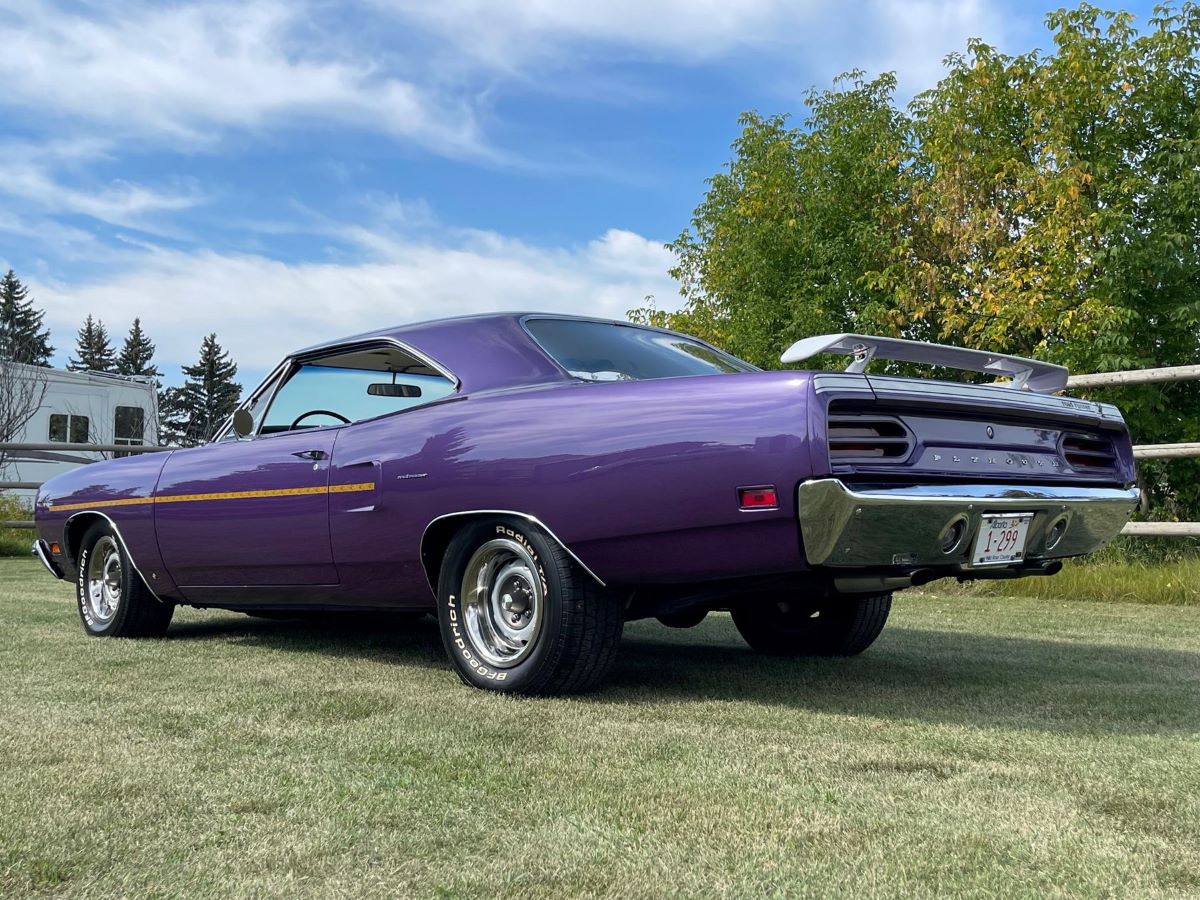
8. 1970 Plymouth Road Runner
The 1970 Plymouth Road Runner captured the essence of no-nonsense muscle car performance. Designed as an affordable, fun-to-drive option for young enthusiasts, it offered serious power without excess weight or unnecessary frills.
The Road Runner came with a variety of engines, but the 426-cubic-inch Hemi version was the expression of the model’s performance potential. This engine produced 425 horsepower and immense torque, propelling the car forward with breathtaking acceleration. Even the base 383 V8 provided lively performance, making the Road Runner accessible while still delivering a thrilling experience.
Its styling was bold and purposeful, with a simple, aggressive design that emphasized function over luxury. The wide stance, sculpted fenders, and optional “Air Grabber” hood were all designed to maximize performance and cooling efficiency.
The Road Runner’s bright, vibrant colors and playful decals, including the famous “beep beep” horn, added a sense of personality that made the car instantly recognizable. Inside, the focus remained on practicality and driver enjoyment, with minimal distractions and supportive seating designed to keep the driver in command.
On the road, the Road Runner was a car that rewarded confident driving. Its suspension, though not as sophisticated as higher-end models, handled its power admirably and allowed drivers to push the car with enthusiasm.
The lightweight construction contributed to nimble handling and excellent acceleration, making it one of the most fun muscle cars of the era. The Road Runner’s character was a combination of raw power, simplicity, and reliability, allowing owners to enjoy performance without worrying about unnecessary complications.
Collectors now prize the Plymouth Road Runner for its iconic status, affordability in its day, and sheer entertainment value. Original Hemi models are particularly valuable, while even base models continue to see strong appreciation.
The Road Runner’s legacy lies in its philosophy: deliver maximum fun at a reasonable price while maintaining the integrity of muscle car performance. It remains a defining symbol of Plymouth’s commitment to accessible, exciting performance during the peak of the muscle car era.
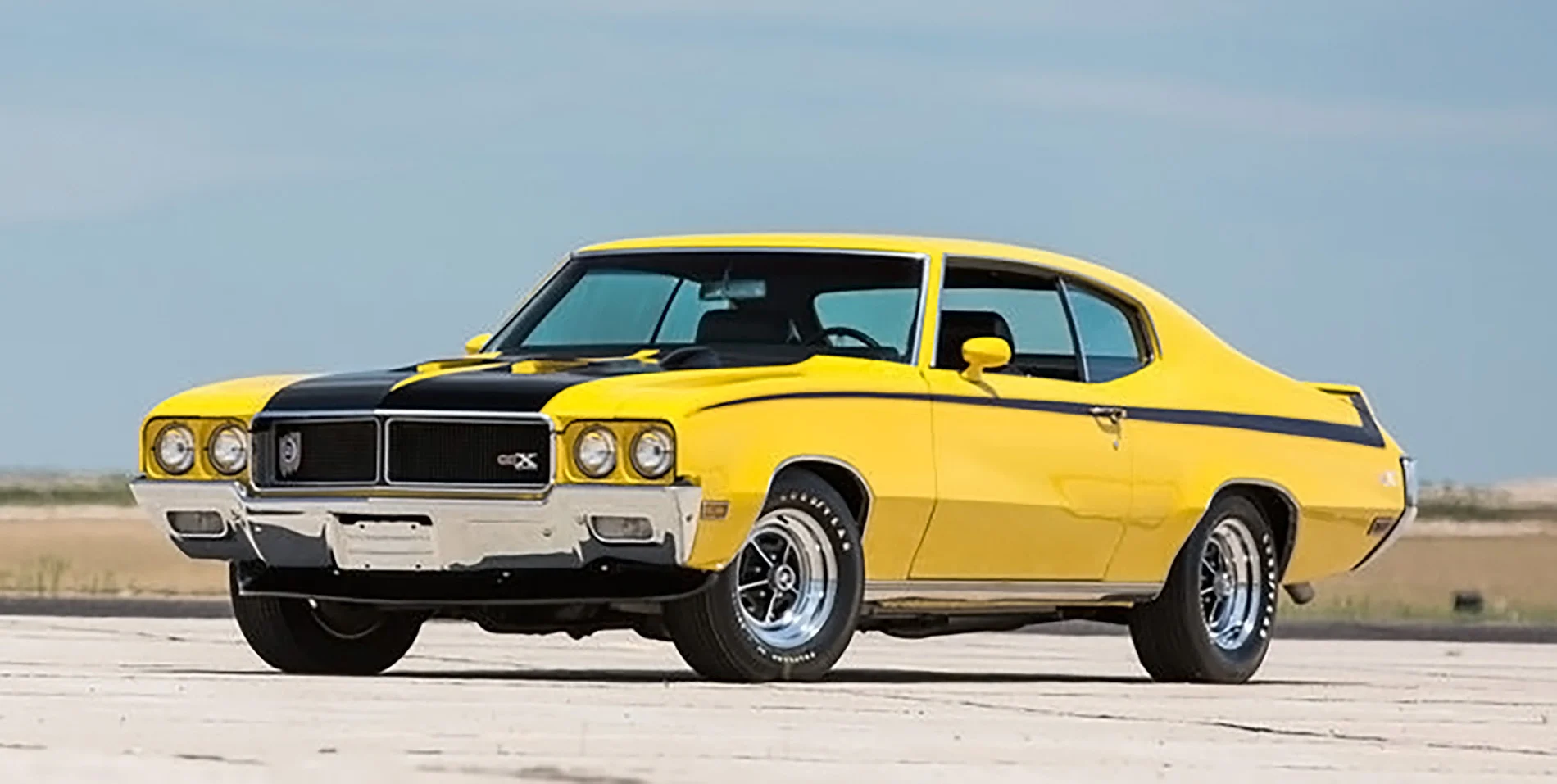
9. 1970 Buick GSX
The 1970 Buick GSX was a unique muscle car that combined luxury touches with serious performance credentials. Buick, traditionally known for comfort and refinement, surprised enthusiasts with the GSX by offering a car that could compete with the fastest muscle cars of its time.
The 455-cubic-inch Stage 1 engine produced 360 horsepower and massive torque, delivering exceptional acceleration and a strong presence on the road. This engine, paired with a heavy-duty automatic or manual transmission, allowed the GSX to perform at levels previously unexpected from a full-sized Buick platform.
Styling was both aggressive and sophisticated, bridging the gap between muscle car aesthetics and upscale design. The GSX featured a distinctive rear spoiler, racing stripes, and GSX badging, along with optional Rallye instrumentation inside.
Its wide stance, sculpted fenders, and long hood gave it a commanding presence, while interior touches such as plush seating, woodgrain accents, and detailed instrumentation reminded drivers that it was still a Buick. This balance of power and refinement made it appealing to buyers who wanted both performance and comfort.
Driving the GSX was a unique experience for the era. The Stage 1 engine provided linear and predictable power delivery, making it manageable despite its strength. The suspension was tuned to provide a balance between handling and ride comfort, allowing the car to excel on both straight roads and winding curves.
Unlike some muscle cars that prioritized brute force over drivability, the GSX offered an environment where the driver could fully enjoy performance without feeling overwhelmed. Its combination of refinement and muscle made it a standout in a crowded field.
Today, the 1970 Buick GSX is a highly collectible muscle car, recognized for its rarity, performance, and luxury combination. Well-preserved examples, particularly those with the Stage 1 package, command premium prices at auctions.
Its significance lies in demonstrating that muscle car excitement was not limited to traditional sports-oriented brands. The GSX remains a testament to Buick’s ability to blend power, style, and sophistication, securing its place among the most respected and desirable muscle cars of the early 1970s.
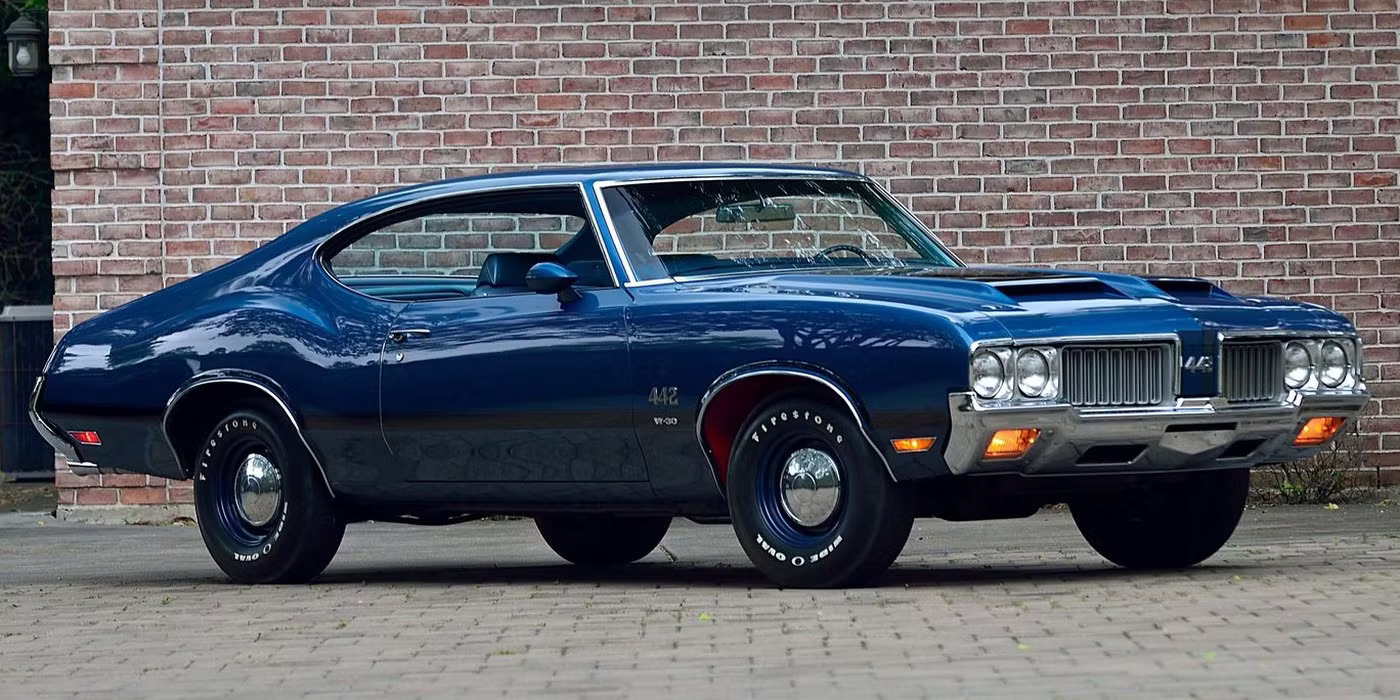
10. 1970 Oldsmobile 442
The 1970 Oldsmobile 442 was one of the most well-rounded muscle cars of its time, offering a blend of straight-line power, comfortable ride quality, and distinctive styling.
The 442 designation originally stood for four-barrel carburetor, four-speed manual transmission, and dual exhaust, though by 1970 it represented a performance package that could be paired with different engines. The top-of-the-line 455-cubic-inch V8 produced 365 horsepower and 500 pound-feet of torque, delivering impressive acceleration while maintaining reliability for everyday driving.
Its exterior design balanced aggression with elegance, featuring a broad stance, sharp lines, and optional rally stripes. The hood bulge, dual exhaust tips, and chrome accents emphasized performance without being ostentatious.
Inside, the 442 provided a comfortable and driver-focused cabin with bucket seats, woodgrain trim, and optional tachometer instrumentation. This combination of aesthetics and functionality made it appealing to both enthusiasts seeking performance and those who wanted a car that could serve as a daily driver.
The 442’s driving experience reflected its balanced approach. The car accelerated rapidly from a stop, with torque-rich power that made highway passing effortless. Its suspension provided a comfortable yet controlled ride, absorbing bumps without sacrificing handling or stability.
Steering was precise enough to provide confidence in corners, while brakes were sufficient for the car’s weight and speed. The 442 delivered a combination of performance and refinement that few muscle cars of the era could match.
Today, the 1970 Oldsmobile 442 is celebrated as a classic muscle car with strong collector value. Its combination of power, design, and comfort has allowed it to maintain relevance among enthusiasts. Well-maintained original models are increasingly rare and continue to appreciate.
The 442 remains a symbol of Oldsmobile’s ability to produce a muscle car that offered excitement, reliability, and style in equal measure, standing out as a versatile and enduring icon of the 1970s American automotive scene.
