
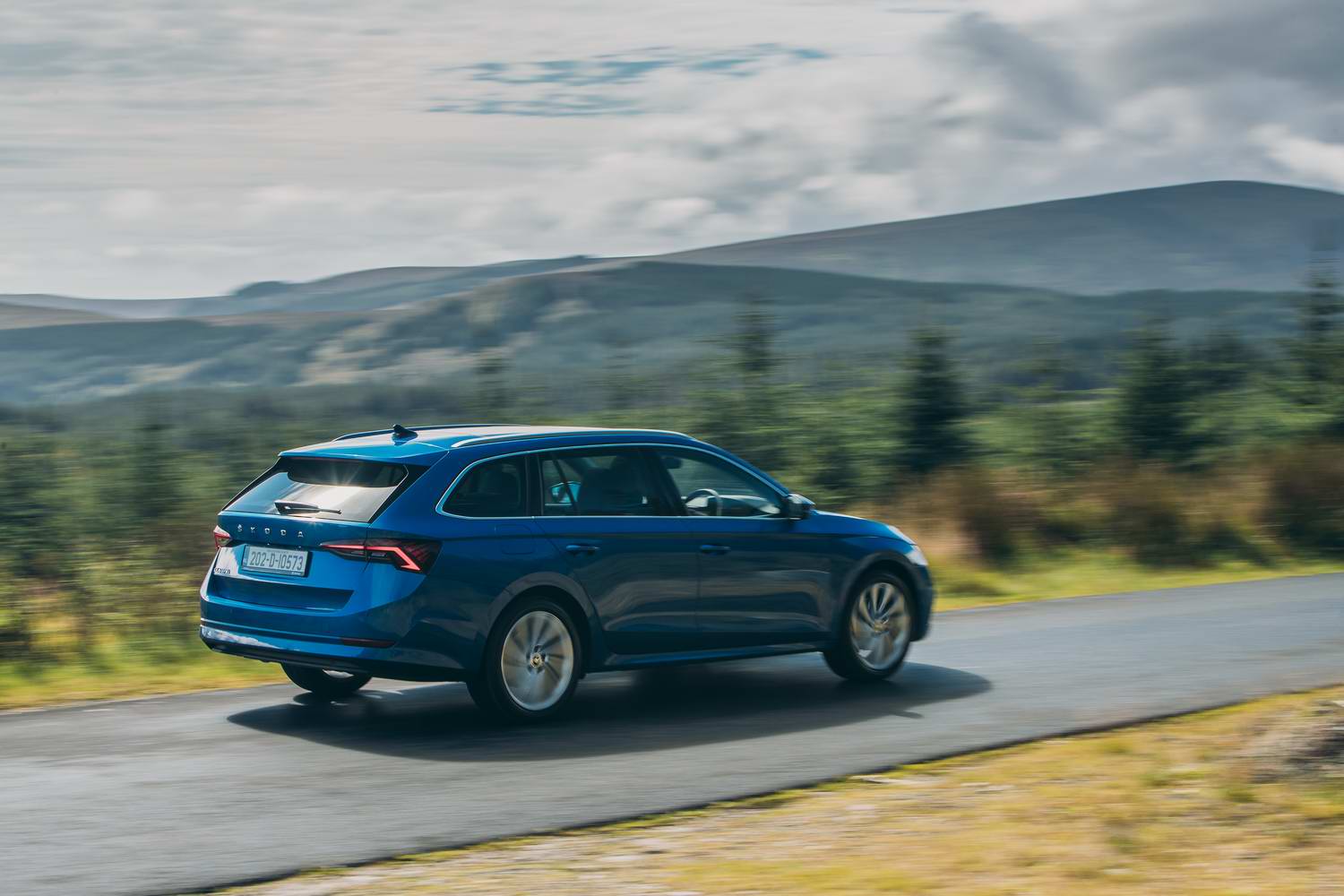
Front wheel drive performance cars have often been underestimated by drivers who associate rear wheel drive with purity, balance, and tradition. Yet many cars that send power to the front axle have managed to deliver speed, stability, and handling that challenge long held assumptions.
These machines do not rely on fanfare or nostalgia. Instead, they use clever engineering, smart weight distribution, and carefully tuned suspension geometry to produce memorable results.
Drivers who experience them quickly learn that tire squeal and torque steer are not the defining traits of the layout, but rather characteristics that manufacturers learned to manage and eventually conquer. Once the weaknesses were addressed, front wheel drive became a platform that could match or even surpass the performance of many rear wheel drive competitors.
Another factor that allows these cars to stand out is how approachable they feel when pushed near their limits. While rear wheel drive machines often require familiarity with power oversteer and quick corrections, many front wheel drive performance cars encourage confidence through predictable behavior.
The front tires pull the car into corners while the rear follows with stability and composure. When power builds, the experience offers clarity rather than intimidation, allowing drivers of different skill levels to access speed without fear of sudden loss of control. This characteristic does not make these cars less skilled or less capable. It simply means that their strengths are more accessible to a broader audience.
Beyond practicality, front wheel drive performance cars have set lap times and acceleration figures that silence skeptics. Their engines produce remarkable output, their chassis take advantage of compact drivetrains, and their limited slip differentials keep power flowing efficiently. Manufacturers have learned to tune every component so precisely that these cars frequently embarrass rivals sending power to the rear.
These ten front wheel drive performance cars not only hold their own but in many situations outshine rear wheel drive machines with compelling results. Their blend of power, control, and sensitivity reveals what front wheel drive architecture can truly accomplish when engineers push it to its limits.
They stand as reminders that greatness in performance does not depend on which wheels are driven, but rather how every part of the vehicle works together.
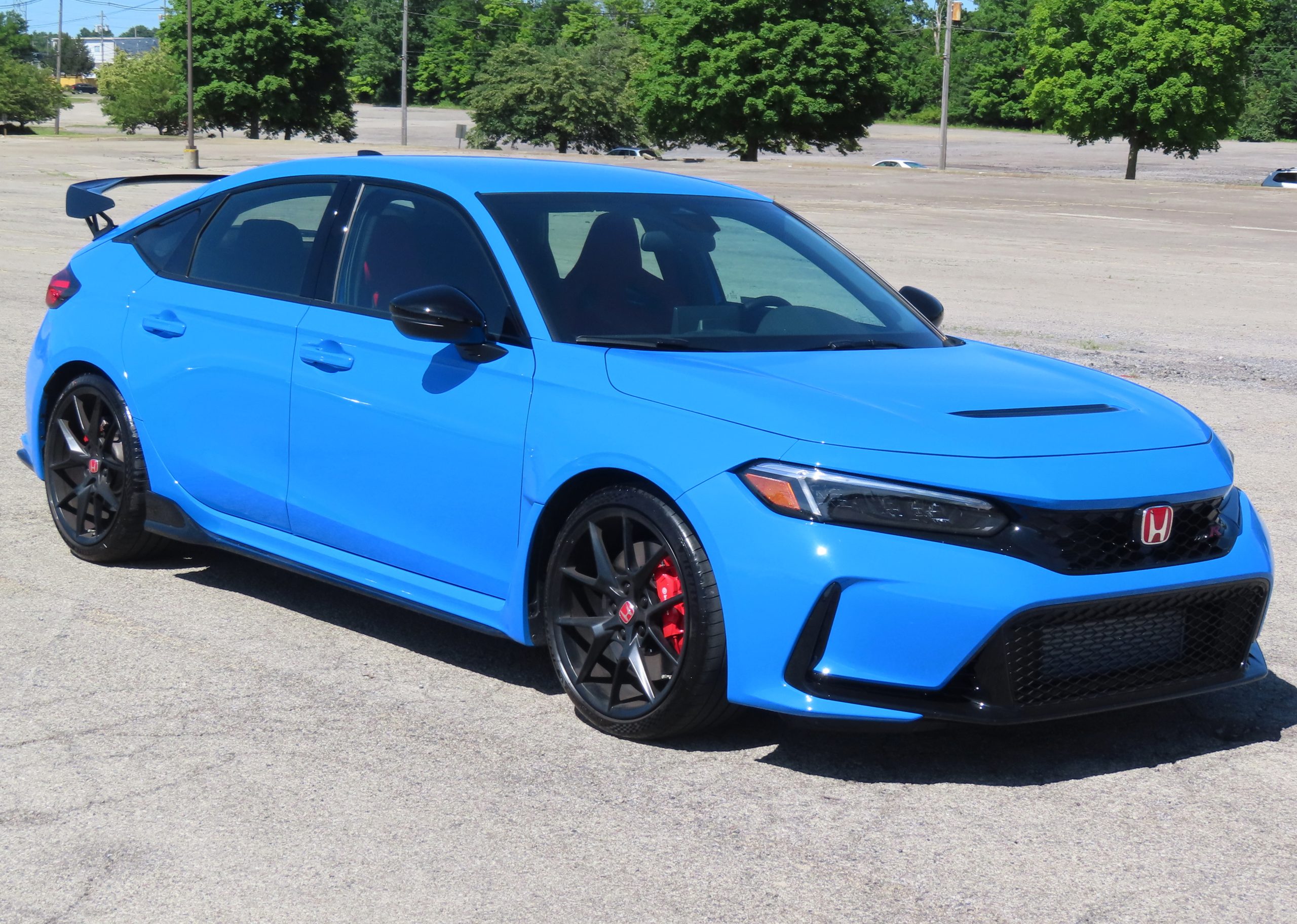
1. Honda Civic Type R
The Civic Type R has long been proof that efficiency and raw speed can live in harmony. Its turbocharged four cylinder engine delivers an impressive balance of high revving excitement and accessible midrange torque.
Unlike many performance cars that require constant attention to maintain speed, the Civic Type R provides power that feels manageable and linear, giving drivers a sense of control that encourages confidence on both road and track. The engine’s responsiveness is matched by an intelligently designed intake and exhaust system that maximizes airflow and sound without sacrificing refinement.
Every shift through the crisp manual transmission reinforces the connection between driver and machine, making acceleration feel purposeful and exhilarating rather than sudden or erratic. Its design ensures that power is delivered to the front wheels without excessive torque steer, a challenge that has historically plagued high output front wheel drive cars.
The car manages to balance sharp handling with a level of comfort that is rarely found in pure performance vehicles. Cabin ergonomics place essential controls within easy reach, while the sport seats offer firm support that holds the driver in place without causing fatigue on longer drives.
This attentiveness to detail extends to the car’s electronic aids, which enhance performance subtly rather than dominating the driving experience. For instance, stability and traction control intervene only when necessary, allowing skilled drivers to explore the car’s limits without feeling restricted.
The predictable behavior of the Civic Type R allows drivers of varying skill levels to extract performance without fear of sudden oversteer, a trait that many rear wheel drive cars only achieve after extensive practice or electronic assistance.
Performance on the track further demonstrates why the Civic Type R often outshines rear wheel drive rivals. Its braking system, composed of ventilated discs and high friction pads, allows later braking into corners without compromising stability.
Aerodynamic enhancements, including a functional rear wing, front splitter, and side skirts, reduce lift and improve high speed stability, allowing drivers to confidently maintain cornering speeds that many RWD cars struggle to match. Tire performance is optimized through wide, sticky rubber that balances grip and longevity, ensuring the car can deliver multiple hot laps without rapid degradation.
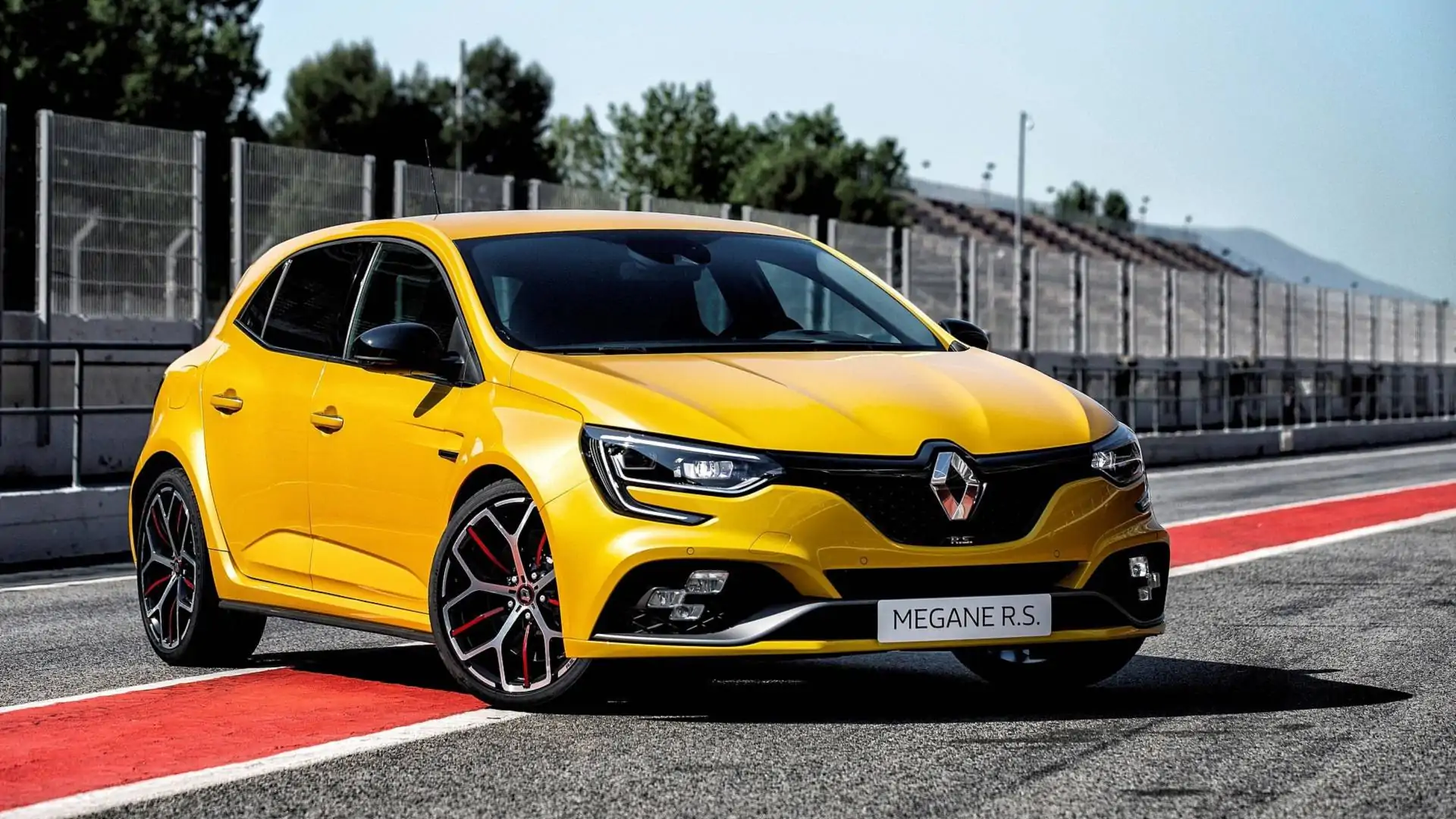
2. Renault Megane RS
The Renault Megane RS combines precise engineering with an aggressive character, offering a performance experience that many rear wheel drive cars find difficult to match. Its turbocharged four cylinder engine delivers instant throttle response paired with a broad power band, ensuring smooth acceleration from low to high speeds.
Unlike some rivals that demand high revs to achieve their best performance, the Megane RS is effective across a wide range of speeds, giving drivers a sense of control in varied driving environments.
The engine’s torque delivery, combined with a well-tuned intake and exhaust system, ensures that power is usable rather than overwhelming, which is particularly important for front wheel drive cars that can experience traction limitations if power is applied carelessly. This careful calibration allows the Megane to remain confident under both spirited road driving and demanding track conditions.
Cornering ability is another area where the Megane RS excels. Its electronically controlled limited slip differential directs torque efficiently between the front wheels, minimizing understeer and allowing aggressive corner entry and exit.
The suspension setup, which balances stiffness with compliance, ensures that the car stays planted over uneven surfaces, providing drivers with confidence that is often lacking in Rear Wheel Drive vehicles of similar power.
Braking stability is further enhanced by large, ventilated discs and precision calipers, which maintain consistent performance even during repeated hard stops. Together, these systems allow the Megane RS to achieve fast cornering speeds while remaining controllable and predictable, making it a formidable opponent against more traditional rear wheel drive hot hatches.
On the track, the Megane RS proves that thoughtful engineering can overcome traditional assumptions about drivetrain superiority. Its aerodynamic elements, including a roof spoiler, rear diffuser, and front splitter, contribute to high speed stability, reducing lift and improving tire contact with the road.
Tire grip is optimized through wide, sticky compounds that offer both traction and durability, allowing drivers to push hard without concern for premature wear. These factors combine to deliver lap times and handling characteristics that often surpass rear wheel drive rivals with higher horsepower.
The Megane RS demonstrates that when front wheel drive systems are carefully tuned, they can offer performance and confidence that rivals vehicles traditionally regarded as superior due to their rear wheel drive layouts.
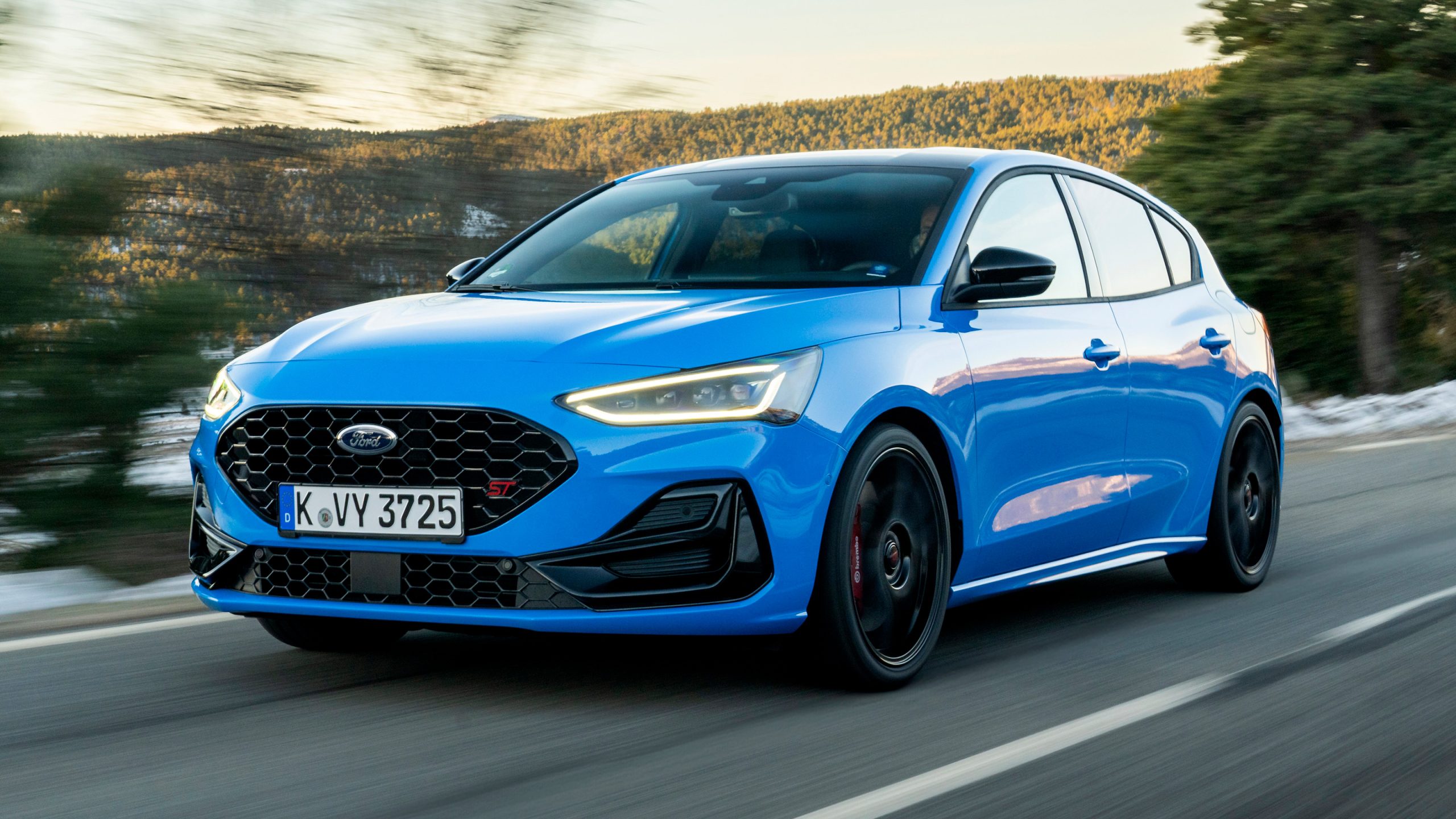
3. Ford Focus ST
The Ford Focus ST successfully blends daily usability with spirited performance, creating a front wheel drive experience that challenges rear wheel drive assumptions. Its turbocharged engine delivers strong midrange torque that feels natural and powerful, providing effortless acceleration across a variety of driving scenarios.
Unlike some rear wheel drive competitors, which may require high revs or careful clutch management to maintain momentum, the Focus ST’s power delivery is smooth and linear, allowing drivers to exploit its performance without interruption.
The manual transmission complements the engine perfectly, offering crisp gear changes that reinforce a sense of control and connection to the road. Its compact layout and efficient use of space also contribute to the car’s balance, allowing it to feel nimble despite its hatchback dimensions.
Steering precision is a major strength of the Focus ST, offering immediate feedback and communication between driver and road. The front suspension geometry has been carefully calibrated to provide sharp turn-in and stability throughout the corner, ensuring that the driver can place the car exactly where intended.
Rear wheel drive competitors may require continuous corrections due to weight transfer and rotational inertia, whereas the Focus ST maintains a consistent line with minimal adjustment.
The balance between responsiveness and predictability enhances confidence, allowing drivers to tackle both fast sweepers and tight hairpins without uncertainty. The handling package ensures that the car feels connected, poised, and eager to accelerate out of corners.
Suspension tuning allows the Focus ST to handle rough or uneven surfaces with minimal loss of control. The front strut and rear multi-link setup absorbs minor imperfections while maintaining chassis rigidity, creating a composed ride that keeps tires firmly in contact with the road.
This characteristic provides an advantage over Rear Wheel Drive rivals, which often require heavier setups to maintain traction under similar conditions, sometimes at the cost of agility.
The car’s ability to remain stable under both light and heavy throttle inputs ensures that performance is not compromised by surface irregularities, giving drivers the ability to confidently explore the limits of grip. Braking performance is equally strong, with large discs and high quality calipers providing consistent stopping power even during repeated high speed deceleration.
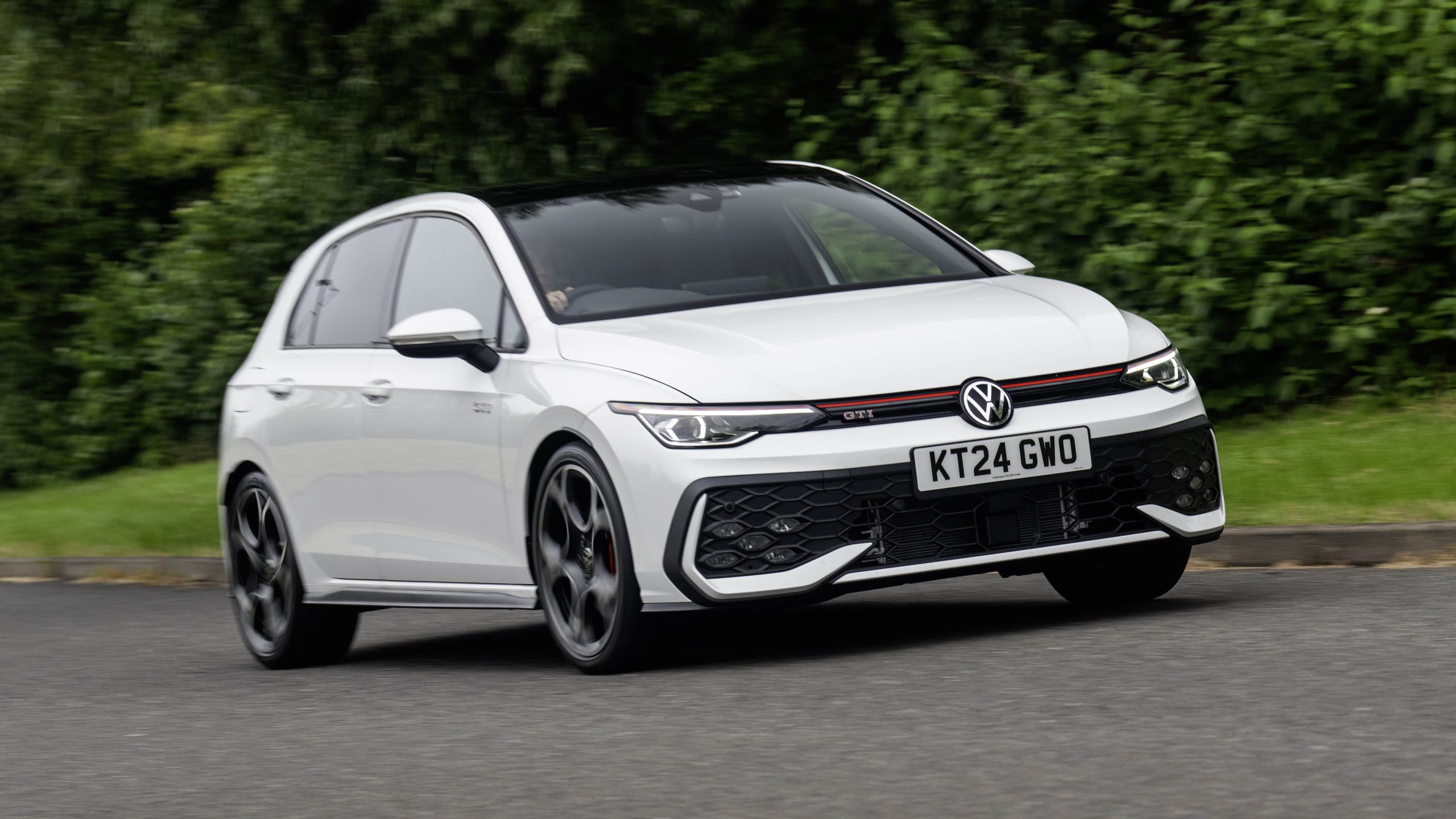
4. Volkswagen Golf GTI
The Volkswagen Golf GTI has earned a reputation as a benchmark for balanced front wheel drive performance, combining power, handling, and comfort in a package that is approachable yet thrilling. Its turbocharged engine delivers smooth, linear acceleration that is effective across a wide RPM range, allowing the driver to extract performance without worrying about sudden loss of traction.
The manual and DSG transmission options provide different experiences, with both ensuring precise gear selection and a sense of control. Unlike many rear wheel drive competitors, which can require careful modulation to maintain composure under acceleration, the Golf GTI’s setup allows confident application of power, making it suitable for both everyday driving and spirited track sessions.
Steering and suspension play a key role in the Golf GTI’s ability to outperform some rear wheel drive rivals. The car is tuned for balance, with firm yet compliant suspension components that maintain body control while delivering a connected feel. Turn-in is precise, and the car communicates subtle changes in grip, helping the driver maintain control at higher speeds.
While rear wheel drive cars often rely on lateral rotation to navigate corners, the Golf GTI achieves comparable results by keeping the front wheels firmly planted and using torque vectoring to enhance cornering dynamics. This combination allows for faster and more confident cornering with minimal driver correction.
Traction and stability are further enhanced through the use of a sophisticated limited slip differential, which directs torque between the front wheels to prevent wheelspin and reduce understeer. This system allows the GTI to maximize corner exit speed and maintain composure during aggressive throttle inputs.
Rear wheel drive vehicles often require wider tires or additional electronic aids to achieve similar results, whereas the Golf GTI accomplishes this through mechanical and electronic synergy. The predictable grip levels allow the driver to push harder without fear of losing control, enhancing confidence and consistency.
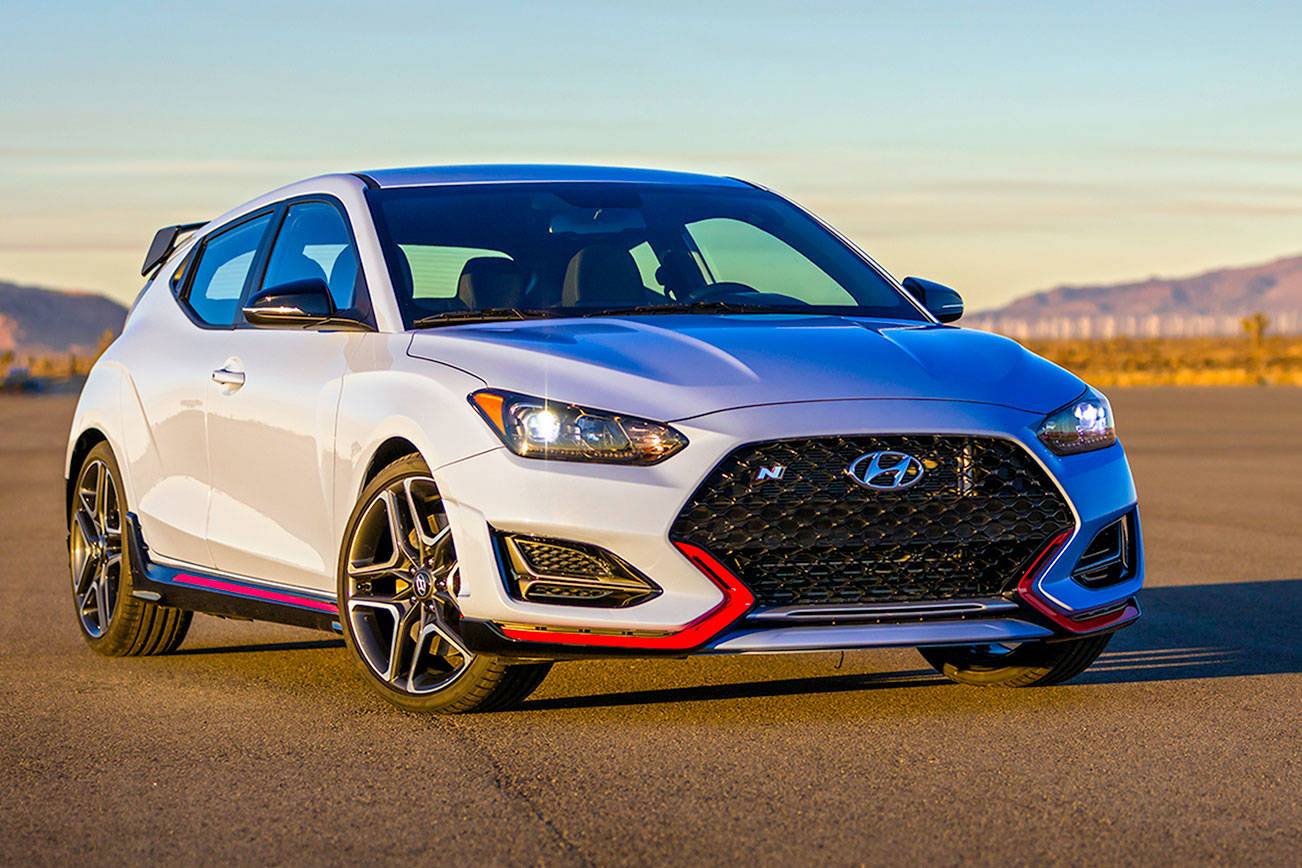
5. Hyundai Veloster N
The Hyundai Veloster N stands out as a small but formidable performance machine. Its turbocharged engine delivers strong midrange torque with a lively exhaust note that enhances the driving experience without being fatiguing.
The car’s lightweight construction allows it to accelerate with agility and respond quickly to driver input, giving it a responsiveness that rivals some larger Rear Wheel Drive competitors.
The manual gearbox is precise and engaging, reinforcing a sense of control, while the automatic option allows for accessible performance without compromise. The combination of turbocharged power, lightweight design, and precise transmission ensures that the Veloster N feels quick and capable across a variety of scenarios.
A highlight of the Veloster N is its electronically controlled limited slip differential, which manages torque delivery to each front wheel. This system minimizes wheelspin during hard acceleration out of corners and reduces understeer during aggressive maneuvers.
The result is a car that feels planted and responsive, capable of handling power without hesitation. While rear wheel drive cars may achieve similar results with wider tires or advanced electronics, the Veloster N accomplishes this with mechanical precision and clever software integration. Drivers experience both engagement and predictability, a rare combination in a small, powerful vehicle.
On winding roads and demanding tracks, the Veloster N demonstrates its ability to outperform rear wheel drive competitors in certain situations. Its combination of light weight, chassis rigidity, and responsive engine allows drivers to maintain corner speed and precise line control.
Tire grip and suspension tuning ensure that the car remains stable under repeated stress, reducing fatigue and enhancing confidence. Whether navigating tight switchbacks or pushing through fast sweepers, the Veloster N exemplifies how a front wheel drive platform, when executed with attention to detail and advanced engineering, can compete with or even exceed the capabilities of rear wheel drive rivals.
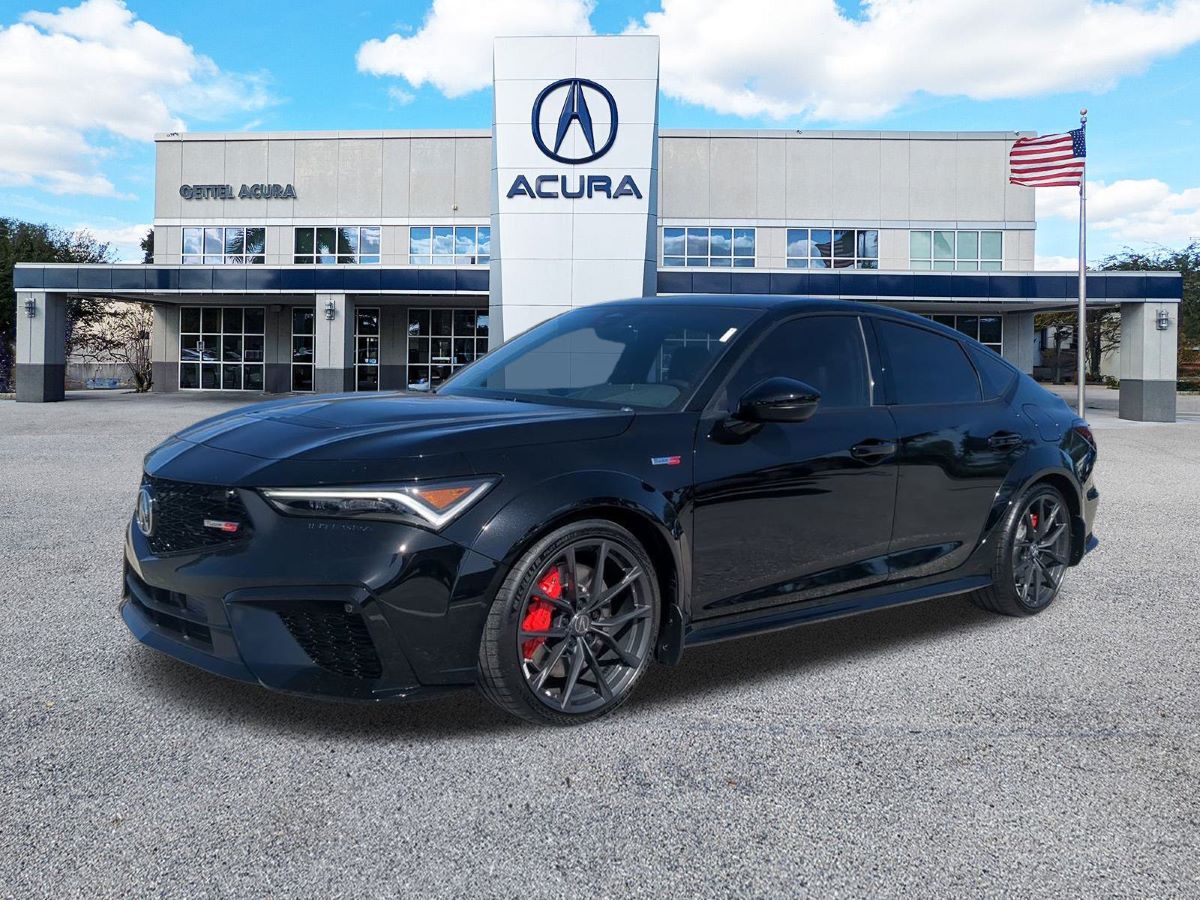
6. Acura Integra Type S
The Acura Integra Type S is a modern reinterpretation of a classic performance nameplate, offering a front wheel drive experience that balances precision, power, and driver engagement. Its turbocharged engine produces a lively and responsive output across the rev range, providing both low-end torque for city driving and high-end excitement for spirited road runs.
The manual transmission reinforces the connection between driver and car, delivering crisp and accurate shifts that allow for precise control over acceleration and engine speed.
Unlike many rear wheel drive competitors, which often require careful throttle modulation to maintain traction during corner exit, the Integra Type S provides a linear and predictable power delivery that encourages confident driving without feeling intimidating.
The chassis of the Integra Type S emphasizes rigidity and balance, allowing the car to respond to steering inputs with remarkable accuracy. The front struts are tuned to reduce torque steer while providing sharp turn-in, and the multi-link rear suspension maintains composure through fast bends and uneven surfaces.
This combination ensures that the car feels stable yet lively, giving drivers the ability to navigate tight corners and sweeping curves with confidence. The precise steering also allows subtle adjustments to line and speed without destabilizing the car, creating a level of control that many rear wheel drive vehicles struggle to achieve without electronic aids.
Weight distribution is carefully managed in the Integra Type S to optimize traction and handling. By concentrating mass over the front axle and keeping the center of gravity low, Acura ensures that the front wheels remain firmly planted during acceleration and cornering.
This mechanical grip allows the car to maintain momentum through technical sections, while the rear suspension prevents excessive squat or lift. Drivers often note that this balance results in a sense of poise that rivals rear wheel drive cars, which may need additional stabilization or electronic intervention to achieve similar cornering confidence.
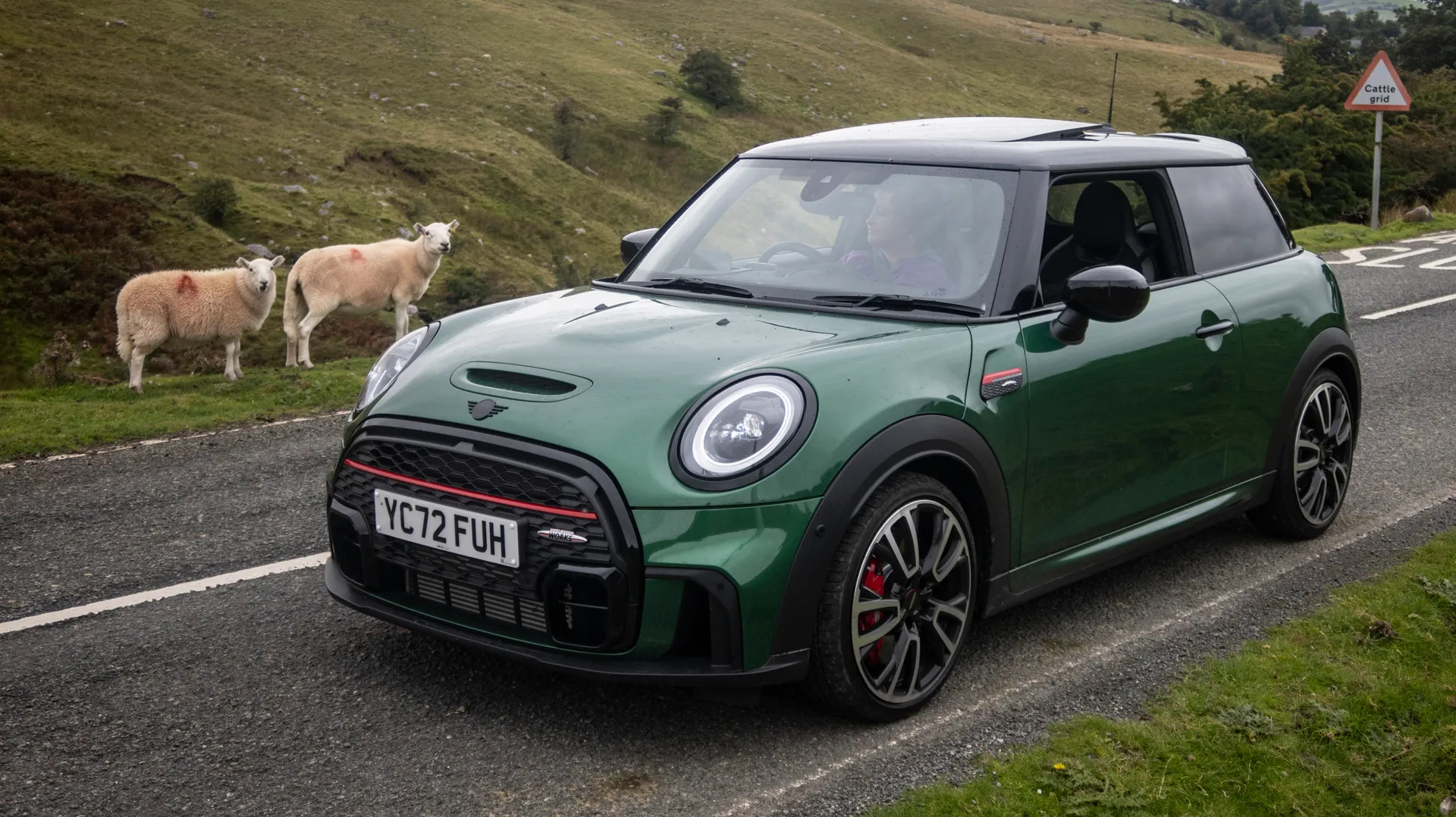
7. Mini Cooper JCW
The Mini Cooper JCW is a small but dynamic performance machine that turns compact dimensions into an advantage. Its turbocharged engine delivers immediate throttle response and a broad torque curve, creating acceleration that feels sharp and energetic across all speeds.
Unlike many rear wheel drive vehicles that rely on rotational dynamics to create excitement, the JCW uses front wheel drive efficiency to pull itself through corners with confidence and precision.
The manual transmission option enhances driver engagement, while the automatic transmission ensures consistent performance for those seeking convenience without losing spirited character. The car’s small footprint also makes it highly maneuverable in tight urban environments or twisty roads, a trait that larger rear wheel drive rivals cannot match.
Handling is a standout feature of the JCW, with suspension tuning designed to maximize both agility and stability. The front struts and rear multi-link configuration keep body roll under control while maintaining firm contact with the road surface. Steering is precise and communicative, allowing drivers to navigate corners with accuracy and confidence.
This combination of chassis stiffness and responsive steering allows the JCW to change direction quickly, creating a sensation of nimbleness that is difficult to replicate in rear wheel drive vehicles of similar size and power. The car feels lively without being unpredictable, offering a balance of excitement and safety.
On both twisty backroads and controlled circuit environments, the Mini Cooper JCW proves that small front wheel drive cars can outperform more powerful rear wheel drive rivals. Its compact dimensions, chassis tuning, and torque management allow for quick cornering and confident handling, while the engine’s responsiveness ensures spirited acceleration.
The car’s lightweight design and balance make it feel agile, enhancing driver enjoyment and making it a strong contender among hot hatches. The JCW is a prime example of how clever engineering and thoughtful tuning can maximize the potential of a front wheel drive layout.
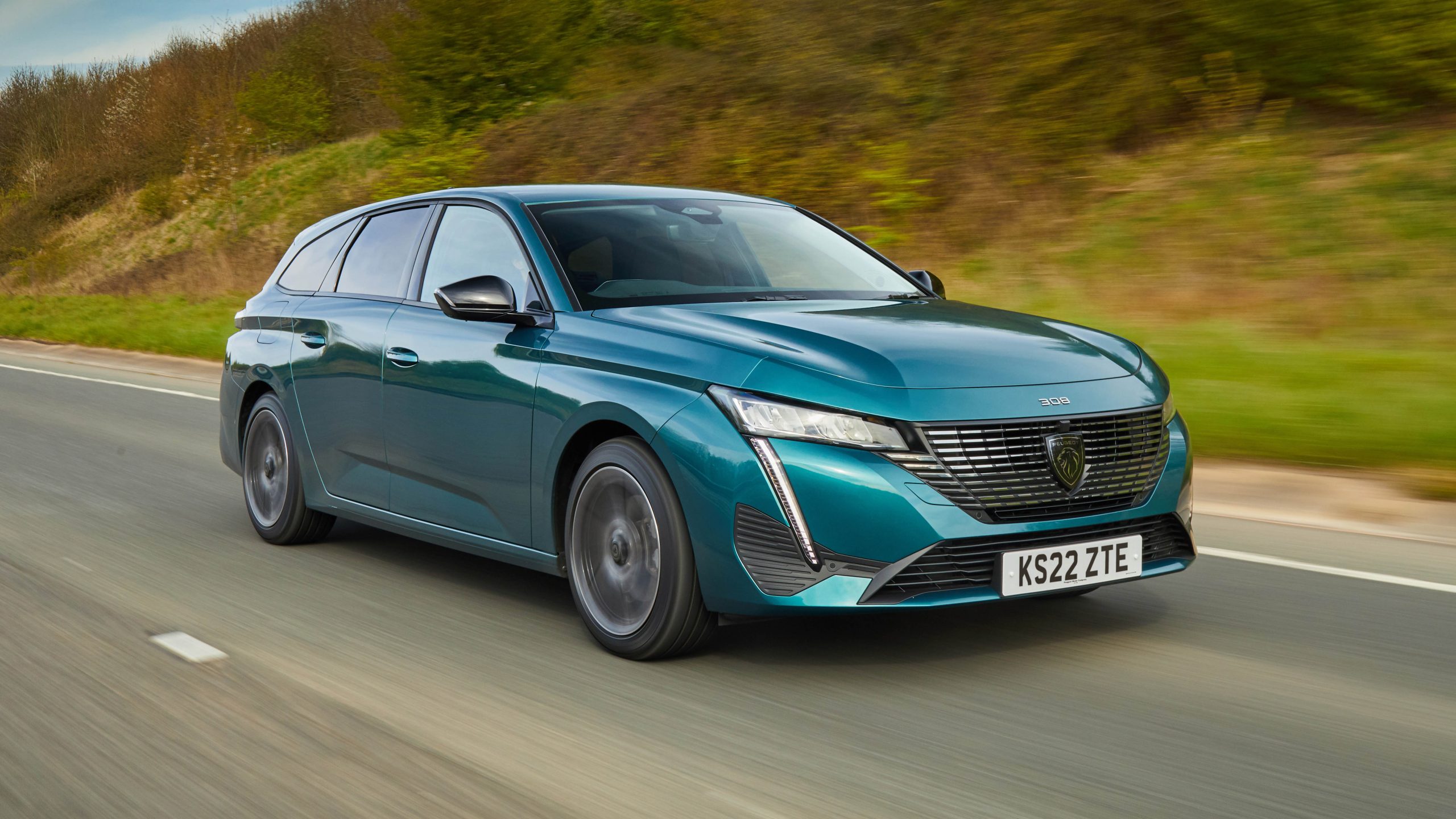
8. Peugeot 308 GTi
The Peugeot 308 GTi demonstrates that front wheel drive cars can achieve high performance without compromising refinement or usability. Its turbocharged engine provides strong output, offering lively acceleration from low to high revs. The engine’s torque delivery is smooth and manageable, giving the driver confidence to push the car through corners without sudden traction loss.
The gearbox, whether manual or dual clutch, is precise and reinforces the connection between driver and vehicle. This combination of accessible power and accurate transmission control allows the 308 GTi to accelerate efficiently while maintaining stability, an area where many rear wheel drive competitors often require more careful modulation.
The chassis of the 308 GTi has been meticulously tuned to provide balance and agility. The front strut and rear multi-link suspension allow the car to maintain composure during aggressive cornering, absorbing imperfections in the road without compromising performance.
Steering is precise and responsive, providing clear feedback and helping drivers place the car accurately through tight bends and fast sweepers alike. Compared to rear wheel drive rivals, which often rely on controlled oversteer or weight transfer to achieve dynamic performance, the 308 GTi uses suspension geometry and torque vectoring to create a stable yet engaging driving experience.
The 308 GTi’s ability to maintain composure under sustained performance conditions is another advantage over some rear wheel drive rivals. Its brakes, chassis, and tires work together to ensure predictable handling even during extended track sessions or aggressive road use.
Aerodynamic elements, though subtle, improve high speed stability and help keep the front tires planted. This combination allows drivers to extract consistent lap times and enjoy the car’s responsive handling over long periods, highlighting how well-engineered front wheel drive platforms can match or exceed the capabilities of rear wheel drive vehicles in both performance and confidence.
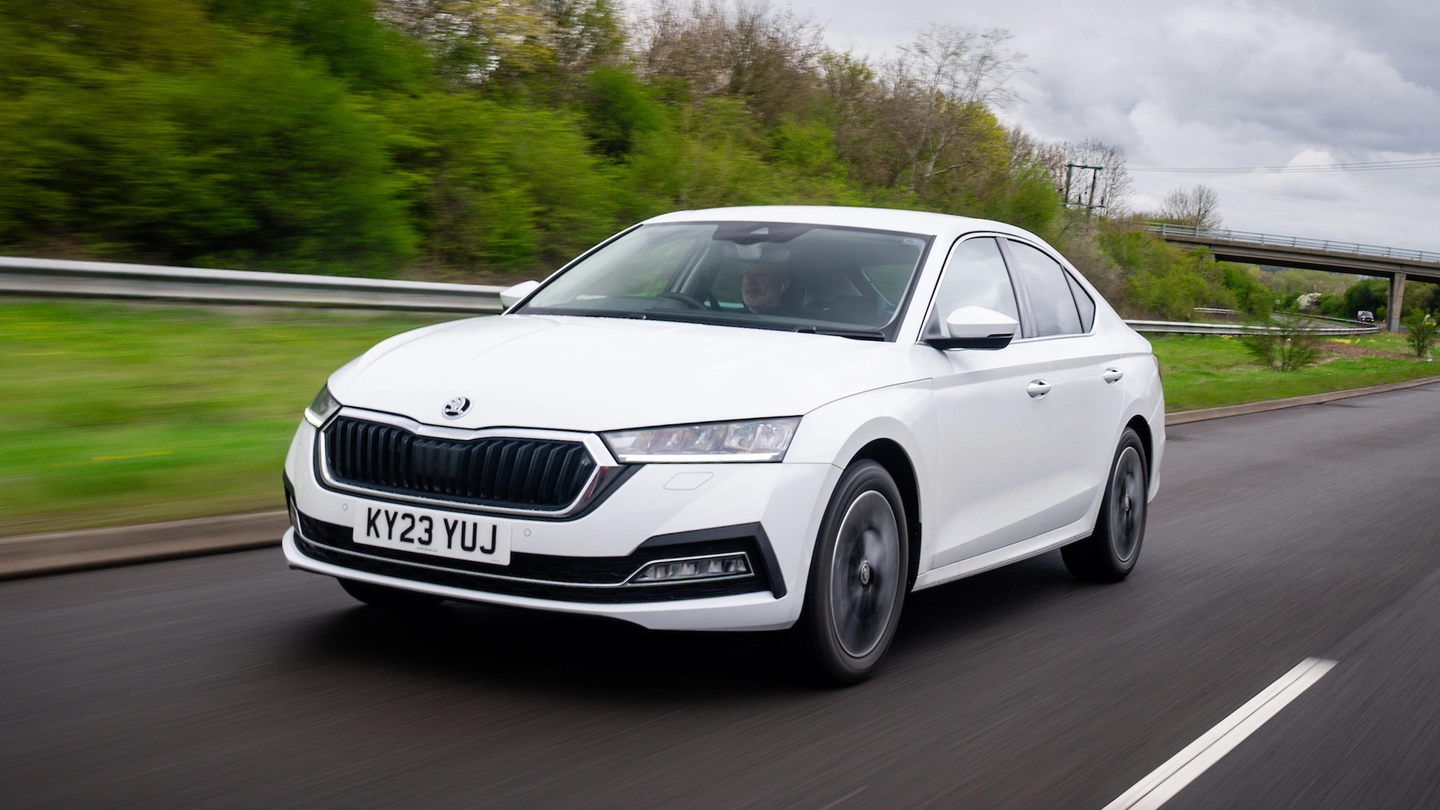
9. Skoda Octavia vRS
The Skoda Octavia vRS is a performance sedan that pairs practicality with impressive driving dynamics. Its turbocharged engine provides broad torque delivery, allowing smooth and confident acceleration from a standstill or through corners. The power output is balanced and accessible, avoiding the sudden over-enthusiasm that can challenge Front Wheel Drive layouts.
Unlike some rear wheel drive competitors, which rely on the rotation of the rear wheels to maintain excitement, the Octavia vRS achieves a composed and predictable performance, making it suitable for both spirited driving and everyday use. The gearbox, available in manual or DSG, ensures precise power application and complements the car’s dynamic character.
Handling in the Octavia vRS is enhanced by a well-tuned suspension setup that blends stability with agility. The front struts provide sharp turn-in, while the multi-link rear suspension keeps the rear end settled under lateral load.
This combination allows drivers to navigate fast corners with confidence and maintain a consistent line, a level of predictability that rear wheel drive competitors may struggle to achieve without electronic intervention.
Steering feedback is clear and communicative, allowing subtle adjustments and precise control even in challenging driving conditions. The car’s chassis engineering enables confident maneuvering through twisty roads and high-speed sweepers alike.
In real world and track scenarios, the Octavia vRS consistently demonstrates a balance of speed, stability, and usability. Its brakes are effective and fade-resistant, chassis response remains predictable under sustained load, and its tires maintain grip over extended sessions.
The car’s combination of power, suspension tuning, and torque management allows drivers to extract the maximum potential from its front wheel drive layout, often outperforming rear wheel drive sedans in both technical driving sections and longer circuits. The Octavia vRS proves that front wheel drive performance sedans can be practical, fast, and confident all at once.
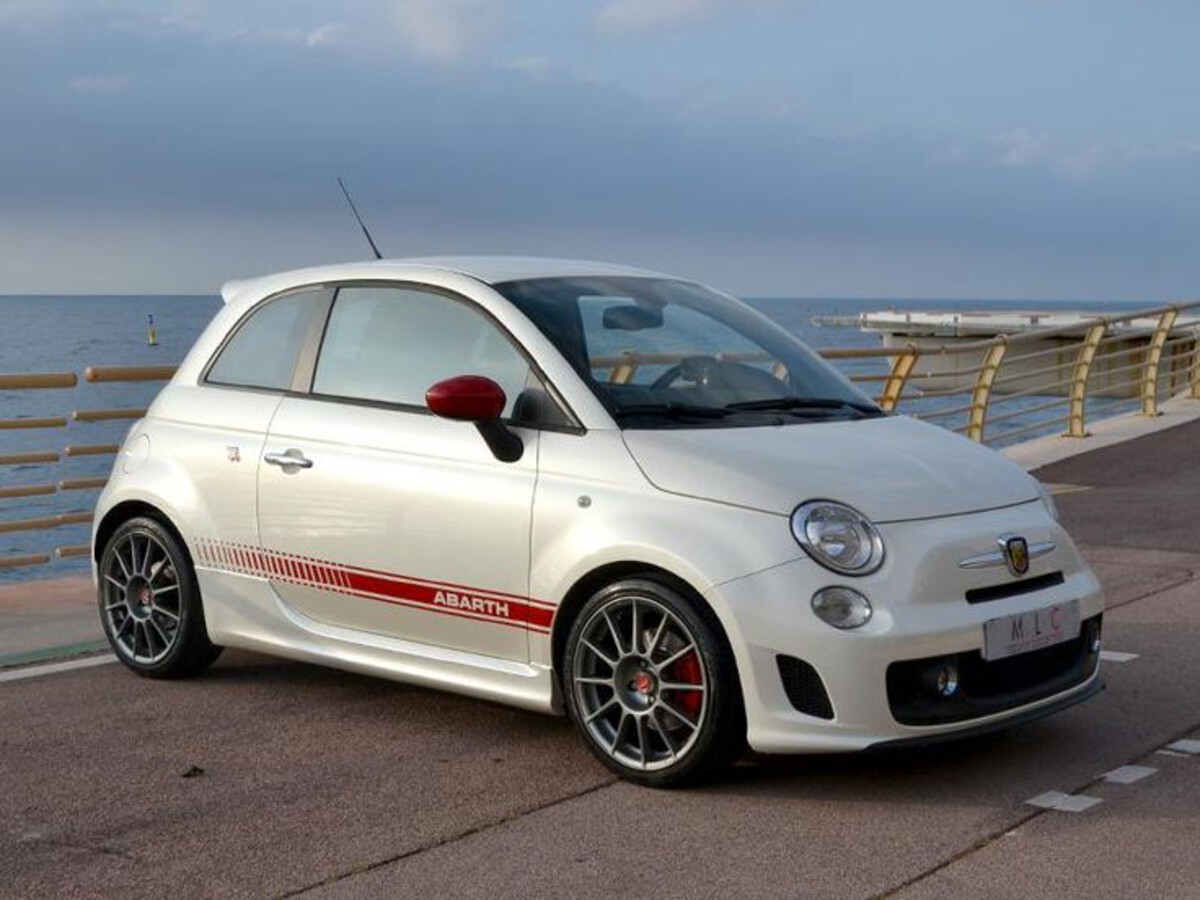
10. Fiat Abarth 595 Competizione
The Fiat Abarth 595 Competizione demonstrates that even small vehicles can offer serious front wheel drive performance. Its turbocharged engine provides lively acceleration with a linear power curve, giving the driver a sense of control even at high revs.
The compact dimensions and lightweight construction allow for rapid changes of direction and nimble responses to steering input. Unlike many rear wheel drive cars, which often rely on oversteer and rotation to create excitement, the Abarth 595 Competizione achieves agility and precision by keeping the front wheels firmly planted and using torque efficiently. Its gearbox offers quick and satisfying shifts, enhancing the connection between driver and car.
The limited slip differential plays a critical role in the Abarth 595 Competizione’s performance. By distributing torque efficiently to the front wheels, the car minimizes wheelspin and maintains corner exit speed. This allows the driver to apply power early and confidently, a situation where some Rear Wheel Drive competitors might struggle with traction.
The precise management of torque enhances grip, improves handling, and allows for more consistent driving dynamics. Combined with a responsive chassis and sharp steering, the Abarth feels agile and capable in a way that belies its small size.
On both tight roads and technical circuits, the Abarth 595 Competizione proves that a front wheel drive car can be fast, enjoyable, and rewarding to drive. Its compact size, lightweight design, and carefully tuned suspension enable confident cornering and rapid directional changes, while the engine’s responsiveness ensures strong acceleration at all speeds.
The car’s combination of agility, predictability, and performance demonstrates that front wheel drive vehicles can achieve results comparable to, and in some situations superior to, rear wheel drive rivals, highlighting the potential of intelligent engineering and precise tuning in small performance cars.
