
Over the past decade, the automotive and aerospace industries have witnessed remarkable advancements in engine technology, driven by the relentless pursuit of higher performance, improved efficiency, and reduced environmental impact.
The evolution of engines during this period has not only redefined what vehicles and machines can achieve but has also set new benchmarks for engineering excellence.
From internal combustion engines that push the boundaries of speed and power to electric motors that are revolutionizing transportation, the last ten years have produced engines that are as sophisticated as they are powerful.
Technological innovation has been fueled by new materials, advanced manufacturing techniques, and the integration of electronics and artificial intelligence into traditional mechanical systems.
Engine designers are now challenged not only to deliver raw performance but also to address emissions regulations, fuel economy standards, and the rising demand for sustainability.
Modern engines are no longer judged solely on horsepower or torque. Engineers have focused on extracting maximum efficiency while maintaining durability and reliability, even under extreme conditions.
Hybrid and electric powertrains have forced the industry to rethink conventional design principles, blending the benefits of traditional combustion with the possibilities of electrification.
The use of turbocharging, direct injection, and variable valve timing has reached levels of sophistication that were hard to imagine a decade ago. Meanwhile, aerospace engines have become more fuel-efficient and environmentally friendly, capable of reducing the carbon footprint of air travel while delivering unprecedented thrust-to-weight ratios.
What makes an engine truly impressive is not just its performance on paper but how it transforms the experience of driving, flying, or operating machinery. The past ten years have produced engines that combine precision engineering with advanced software, allowing for adaptive responses to varying conditions.
This has led to a new era where power, efficiency, and intelligence coexist, challenging traditional notions of mechanical design.
As we examine the ten most impressive engines developed in the last decade, it becomes clear that the limits of what can be achieved in engine technology are continuously expanding, setting the stage for a future where energy, performance, and sustainability are seamlessly integrated.
These engines represent a mix of groundbreaking innovations and practical applications, highlighting the versatility of modern engineering. Some prioritize raw speed and performance, achieving feats previously considered impossible for internal combustion engines.
Others focus on efficiency, aiming to reduce emissions while delivering dependable power. Hybrid and fully electric engines have demonstrated that alternative power sources can rival traditional designs in both performance and reliability.
Each of these engines tells a story of human ingenuity, pushing the boundaries of science and mechanics while redefining expectations for what an engine can accomplish in contemporary applications.
1. Mercedes-AMG M139 Engine
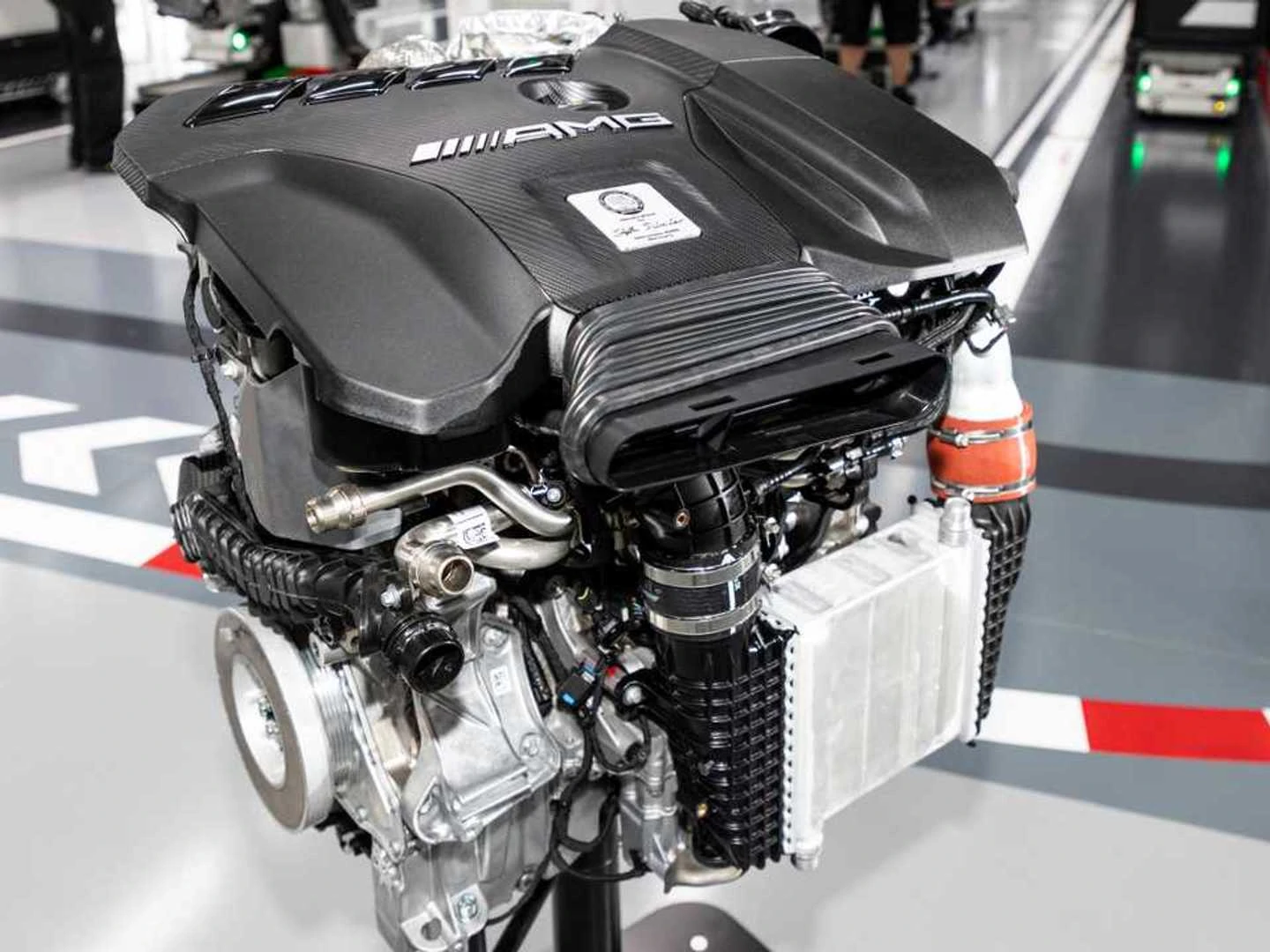
The Mercedes-AMG M139 engine has been a standout in recent automotive history due to its combination of compact size, high output, and engineering precision.
This 2.0-liter turbocharged inline-four engine redefined expectations for small-displacement engines, delivering extraordinary power without sacrificing efficiency.
It produces over 300 horsepower in standard configurations and reaches nearly 416 horsepower in higher-spec models, making it one of the most powerful four-cylinder engines ever produced for a production car.
Its design demonstrates how careful engineering can extract remarkable performance from a relatively small package.
One of the most important aspects of the M139 is its twin-scroll turbocharger system, which improves responsiveness and reduces lag, allowing the engine to deliver consistent torque across a wide RPM range.
The engine employs advanced cooling techniques, including water-to-air intercooling, to maintain optimal performance under demanding conditions.
Additionally, the M139 features an innovative exhaust system designed to enhance sound quality while also improving efficiency.
The combination of these features makes the engine not only powerful but also enjoyable to drive, with a character that many automotive enthusiasts admire.
The M139 engine also incorporates cutting-edge manufacturing techniques and materials to achieve both durability and lightweight performance.
Forged components, high-strength alloys, and precise machining processes allow the engine to withstand the stresses of high RPM operation while remaining relatively compact.
Its efficiency benefits from direct fuel injection and an optimized combustion chamber, which together reduce fuel consumption without compromising power output. This balance of performance and practicality represents a significant engineering achievement that has influenced other manufacturers.
Beyond raw numbers, the M139 demonstrates how modern engines can combine traditional mechanical excellence with intelligent electronic management.
The engine control unit continuously monitors various parameters, adjusting fuel delivery, ignition timing, and turbocharger operation in real time.
This ensures not only maximum performance but also reliability and compliance with increasingly strict emissions standards. In essence, the Mercedes-AMG M139 engine exemplifies how engineers can achieve extraordinary results by integrating advanced technology into a well-established mechanical foundation.
2. Ferrari F154 V8 Turbo Engine
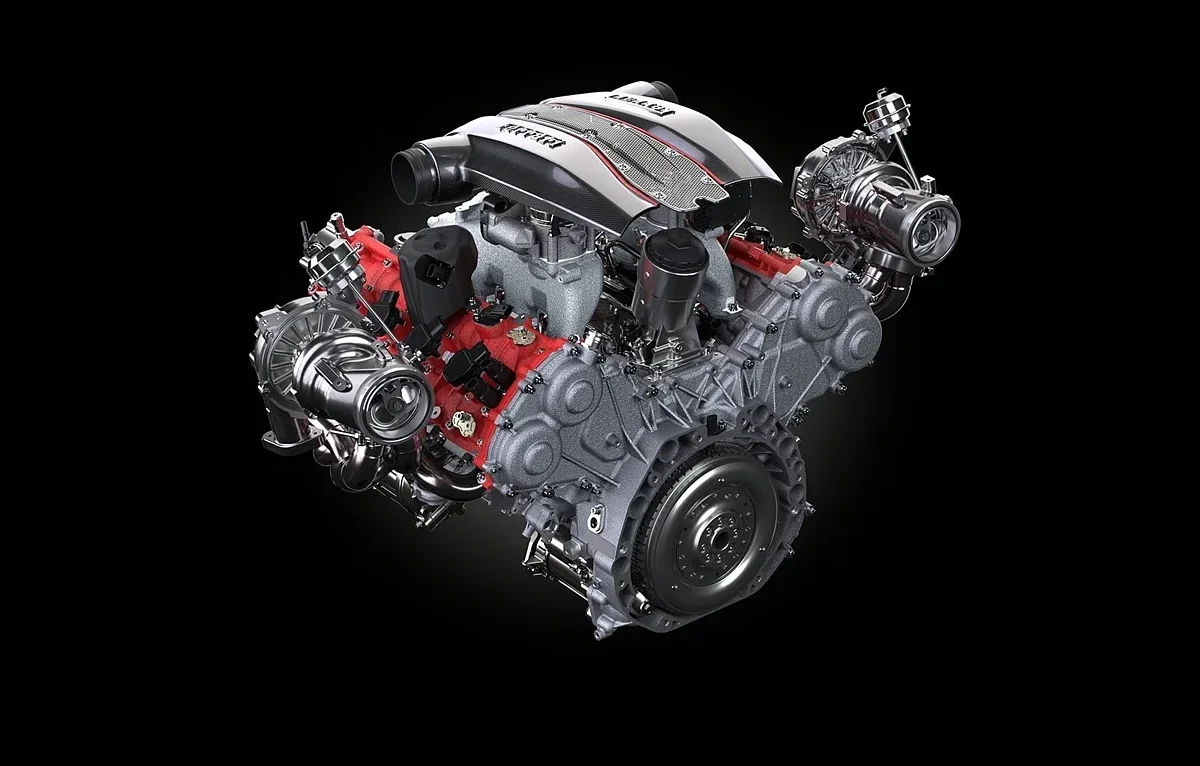
Ferrari’s F154 V8 turbo engine represents a significant leap in performance for supercar engines, combining traditional Ferrari character with modern turbocharging efficiency.
This 3.9-liter twin-turbocharged V8 produces up to 720 horsepower in certain configurations, providing exhilarating acceleration and top speeds that were once reserved for naturally aspirated engines of much larger displacement.
Its design reflects Ferrari’s commitment to performance, precision, and the iconic sound that the brand is known for.
The F154 engine utilizes a combination of high-pressure direct injection, variable valve timing, and an innovative turbocharging system to maximize output while maintaining reliability.
Ferrari engineers paid meticulous attention to thermal management, ensuring that the engine can sustain high-performance operation without overheating.
The engine’s lightweight construction, including aluminum alloys and magnesium components, contributes to the vehicle’s weight reduction, improving handling and responsiveness. The blend of power, sound, and engineering finesse makes it a benchmark for modern supercar engines.
Another impressive feature of the F154 engine is its responsiveness across the RPM range. The engine delivers strong low-end torque while remaining capable of extremely high revs, allowing drivers to experience both smooth cruising and aggressive acceleration.
Advanced electronics optimize fuel delivery and ignition timing dynamically, adapting to driver input and road conditions. This level of refinement ensures that performance is accessible and controllable, which is particularly important for high-powered sports cars.
The Ferrari F154 engine also represents Ferrari’s adaptation to stricter emissions and fuel economy standards.
Turbocharging allows for smaller displacement without sacrificing power, reducing fuel consumption under normal driving conditions. At the same time, Ferrari has preserved the signature exhaust note that enthusiasts expect.
The F154 demonstrates that modern engine design can meet contemporary environmental requirements while delivering the thrilling performance and character that define Ferrari.
3. Porsche Taycan Electric Powertrain
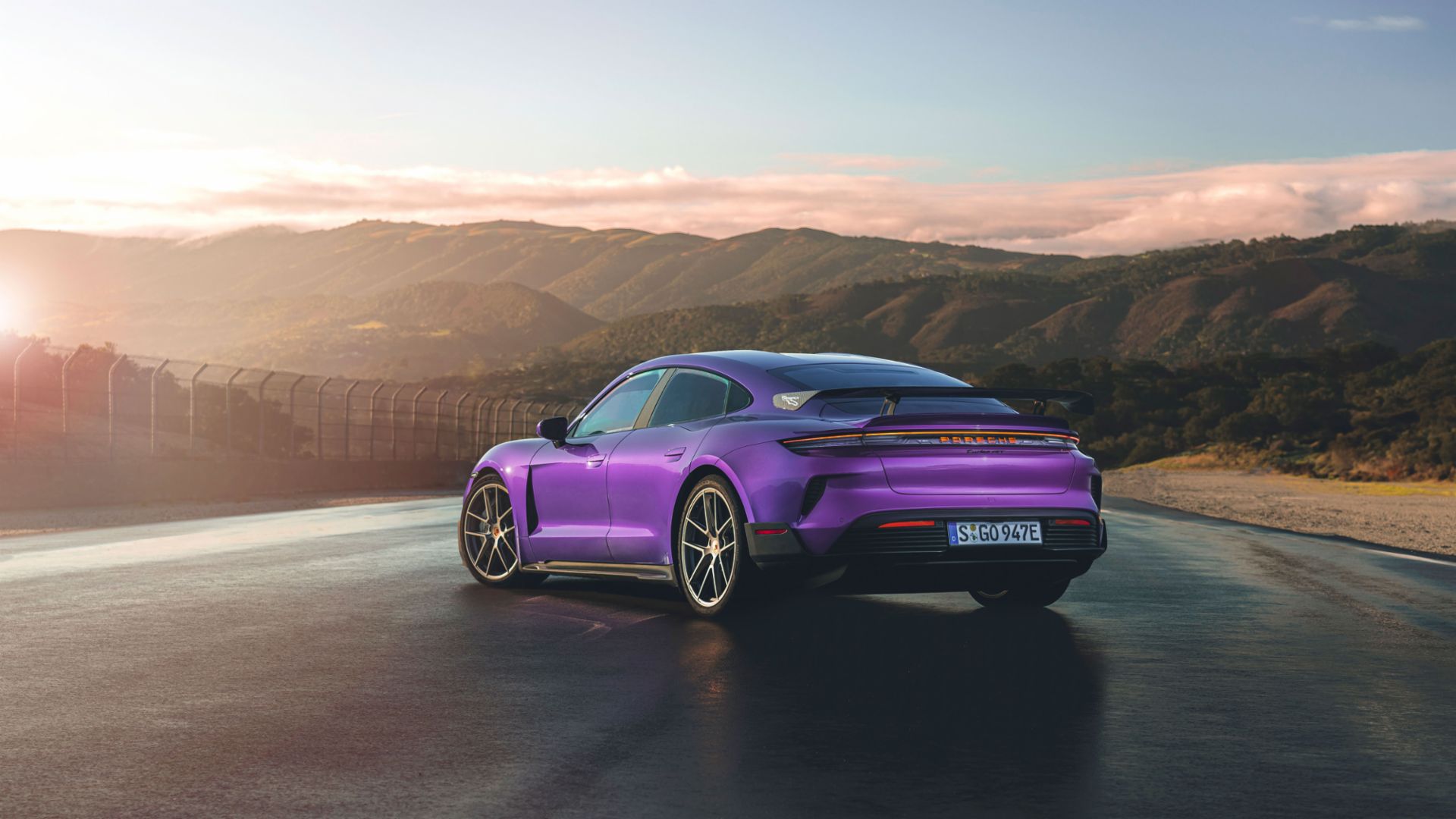
The Porsche Taycan introduced one of the most advanced electric powertrains of the past decade, marking a major step forward in electric vehicle performance.
Unlike conventional internal combustion engines, the Taycan uses a dual-motor system with permanent magnet synchronous motors, providing instant torque and high efficiency.
The system produces up to 750 horsepower in its top configuration, delivering acceleration comparable to many high-end supercars while maintaining precise handling and long-range capability. Its architecture represents a milestone in electric mobility.
Porsche’s engineers developed a unique 800-volt electrical system for the Taycan, doubling the standard voltage found in most electric vehicles. This allows faster charging, reduced heat generation, and greater efficiency.
The Taycan also features advanced regenerative braking, which captures energy during deceleration and feeds it back into the battery. This not only improves range but also enhances driving dynamics, giving the car a responsive and controlled feel even at high speeds.
The design of the Taycan powertrain emphasizes both performance and durability. The motor and inverter systems are compact yet capable of sustained high output without overheating.
Porsche also optimized the vehicle’s weight distribution and chassis to take full advantage of the instantaneous torque provided by the electric motors.
The result is a car that is not only fast in a straight line but also agile and precise in corners, demonstrating the potential of electric engines beyond mere efficiency.
Finally, the Taycan electric powertrain highlights how software integration has become a central aspect of modern engine performance.
Advanced thermal management, torque vectoring, and energy distribution are all controlled electronically, allowing the vehicle to adapt to changing driving conditions in real time.
The Taycan shows that electric engines can rival traditional engines in both excitement and engineering complexity, redefining expectations for what a modern powertrain can achieve.
4. BMW S58 Engine
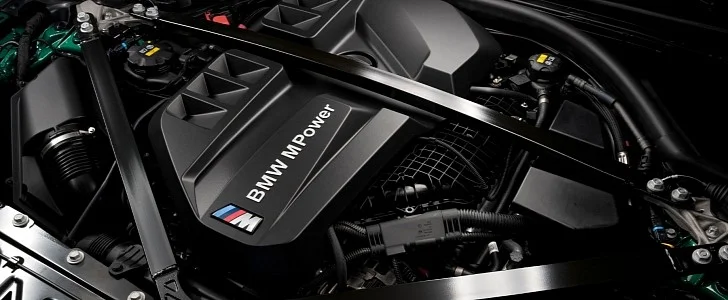
The BMW S58 engine represents one of the most powerful and refined inline-six engines of the past decade.
This 3.0-liter twin-turbocharged engine has become the cornerstone of BMW’s high-performance M models, producing up to 503 horsepower in the latest configurations.
It combines traditional six-cylinder smoothness with modern turbocharging efficiency, resulting in a powerplant that is both exhilarating and manageable.
Its design reflects BMW’s philosophy of balancing everyday usability with track-capable performance, making it a versatile and technically sophisticated engine.
One of the defining features of the S58 is its twin-scroll turbocharger setup, which improves throttle response and maximizes torque delivery throughout the RPM range.
This engine produces an impressive 479 lb-ft of torque, allowing for effortless acceleration from low speeds while still achieving high-revving performance.
BMW engineers also implemented a variety of advanced cooling technologies, including an integrated water-to-air intercooler and optimized oil flow systems.
These systems maintain consistent performance even during prolonged aggressive driving, ensuring reliability and efficiency under demanding conditions.
The S58 also incorporates lightweight materials and precision engineering to enhance both performance and durability.
Forged pistons, reinforced crankshafts, and high-strength cylinder liners contribute to its ability to handle high pressures generated by turbocharging without compromising longevity.
Additionally, direct fuel injection and variable valve timing are finely tuned to optimize combustion efficiency, ensuring that the engine delivers impressive power without excessive fuel consumption.
This combination of performance and efficiency demonstrates how modern engines can achieve remarkable results through careful engineering.
Beyond its mechanical attributes, the S58 also benefits from sophisticated electronic management. The engine control system continuously adjusts boost levels, fuel delivery, and ignition timing to match driving conditions, ensuring that the engine performs optimally across a wide range of situations.
Dynamic engine mounts and adaptive software further enhance refinement, reducing vibrations and improving the driving experience. The BMW S58 engine is, therefore a testament to how modern high-performance engines can marry raw power with advanced technology and usability.
5. Honda K20C1 Turbo Engine
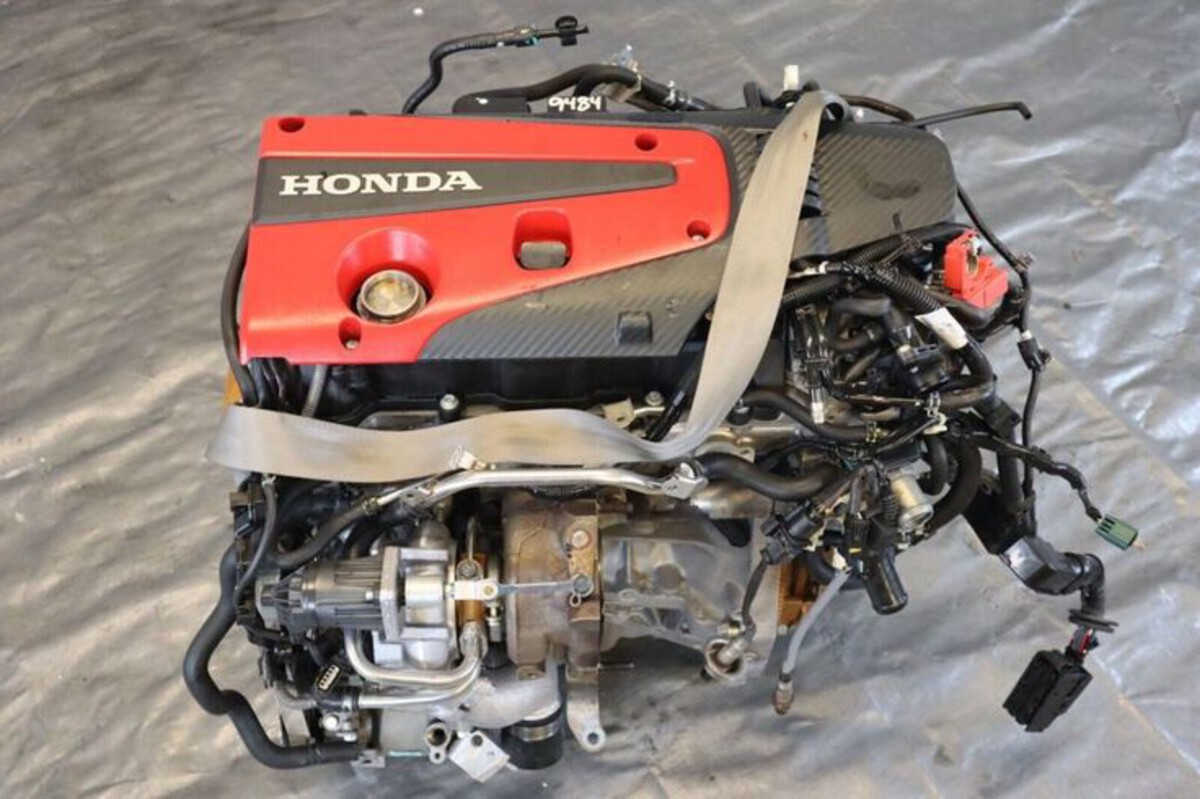
The Honda K20C1 is a 2.0-liter turbocharged inline-four engine that has made a significant impact in both performance and efficiency.
Introduced in the Civic Type R, it produces up to 306 horsepower and 295 lb-ft of torque, setting new benchmarks for front-wheel-drive performance.
Honda’s approach to this engine emphasized not only peak output but also drivability, precision, and reliability, demonstrating that small-displacement engines can deliver thrilling performance without compromise.
A key innovation in the K20C1 is its single-scroll turbocharger, which is complemented by an advanced intake and exhaust design. This combination enhances low-end torque while maintaining strong power delivery at higher RPMs.
The engine also employs VTEC variable valve timing, a hallmark of Honda engineering, to optimize both performance and efficiency.
These technologies allow the engine to remain responsive and linear in power delivery, ensuring predictable handling and confidence-inspiring performance even on twisty roads.
The K20C1 also stands out for its lightweight construction and compact packaging. Aluminum alloys and optimized component design reduce engine weight, contributing to the vehicle’s balanced weight distribution.
This allows the Civic Type R to combine impressive straight-line acceleration with sharp handling characteristics, making it a favorite among enthusiasts.
Additionally, the engine has been engineered for durability, with reinforced internals capable of withstanding the stresses associated with high-performance turbocharging and spirited driving.
Finally, Honda’s electronic management system ensures that the K20C1 performs efficiently and reliably under varying conditions. The ECU carefully modulates boost, fuel delivery, and ignition timing to optimize performance without sacrificing longevity.
Combined with advanced cooling systems and precise machining tolerances, the K20C1 demonstrates that a modern performance engine does not need excessive displacement to deliver world-class results.
It exemplifies the philosophy that intelligent design and technological integration can produce engines that excel in power, efficiency, and driver engagement.
6. Ford EcoBoost 3.5L Twin-Turbo V6
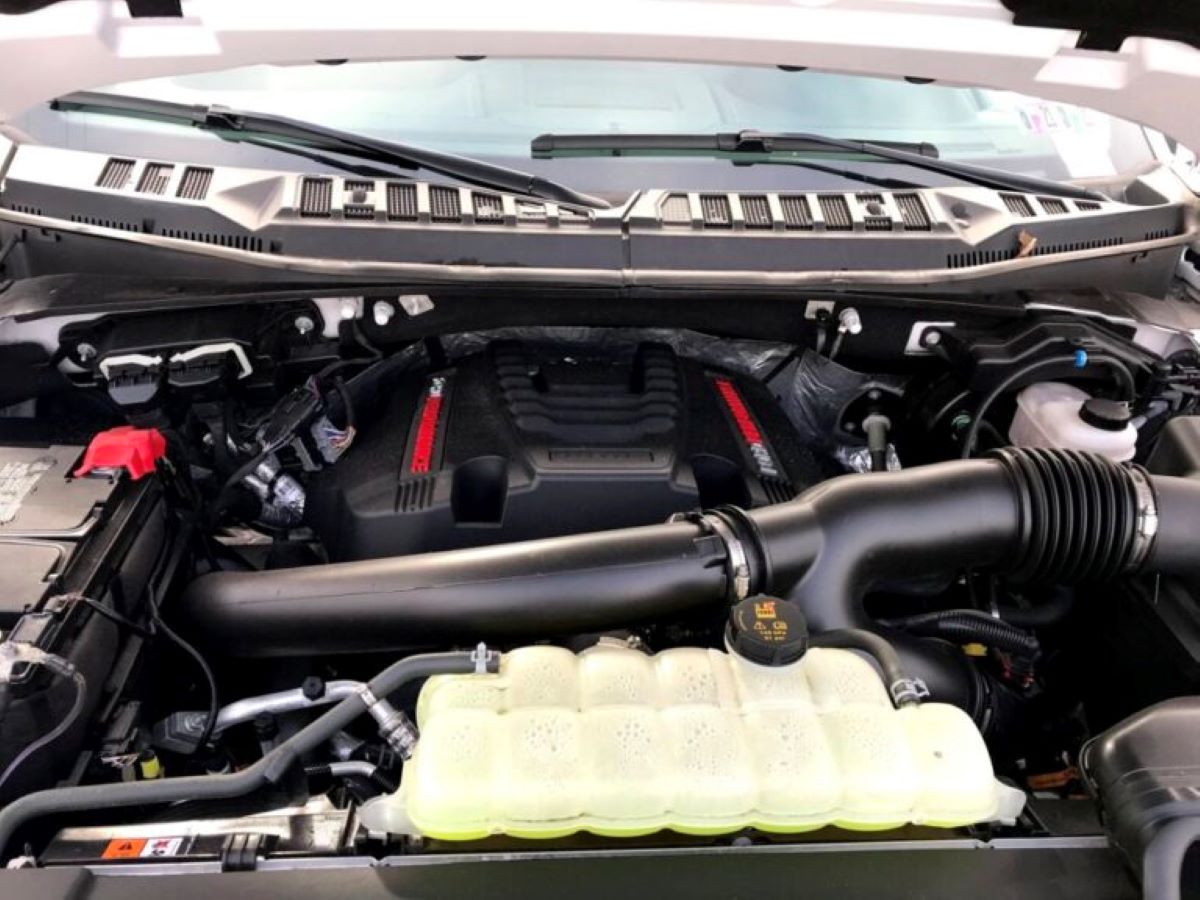
The Ford EcoBoost 3.5-liter twin-turbo V6 has become one of the most versatile and powerful engines of the past decade.
This engine is featured in vehicles ranging from performance SUVs to full-size pickup trucks, demonstrating a remarkable balance between performance, efficiency, and reliability.
Producing up to 450 horsepower and 510 lb-ft of torque in high-output versions, the EcoBoost V6 challenges the assumption that larger displacement engines are always necessary for significant power.
One of the major strengths of the 3.5L EcoBoost is its twin-turbocharging system, which provides excellent torque at low RPMs while maintaining strong power at higher speeds. The engine also benefits from direct fuel injection and variable cam timing, which optimize combustion efficiency and reduce emissions.
Ford’s engineers focused on creating a compact and lightweight design, improving vehicle handling and fuel economy without sacrificing strength or reliability. This makes the engine suitable for both aggressive driving and heavy-duty applications, highlighting its versatility.
The EcoBoost 3.5L engine also incorporates advanced materials and precision engineering to ensure durability under high stress. Forged steel crankshafts, high-strength pistons, and reinforced connecting rods allow the engine to withstand extreme pressures generated by turbocharging.
Advanced cooling techniques, including an intercooler and optimized coolant flow, prevent overheating even during sustained high-performance operation. These engineering decisions enable the engine to perform reliably across a wide range of conditions, from daily commuting to demanding towing scenarios.
Beyond mechanical engineering, the EcoBoost 3.5L V6 leverages sophisticated electronic controls to enhance performance and efficiency.
The engine control unit dynamically adjusts boost pressure, fuel delivery, and ignition timing based on driving conditions, improving responsiveness while reducing fuel consumption.
Additionally, features like cylinder deactivation during light loads further improve efficiency. The combination of power, versatility, and intelligent management makes this engine one of the most impressive examples of modern V6 design.
7. Chevrolet Corvette C8 LT2 Engine
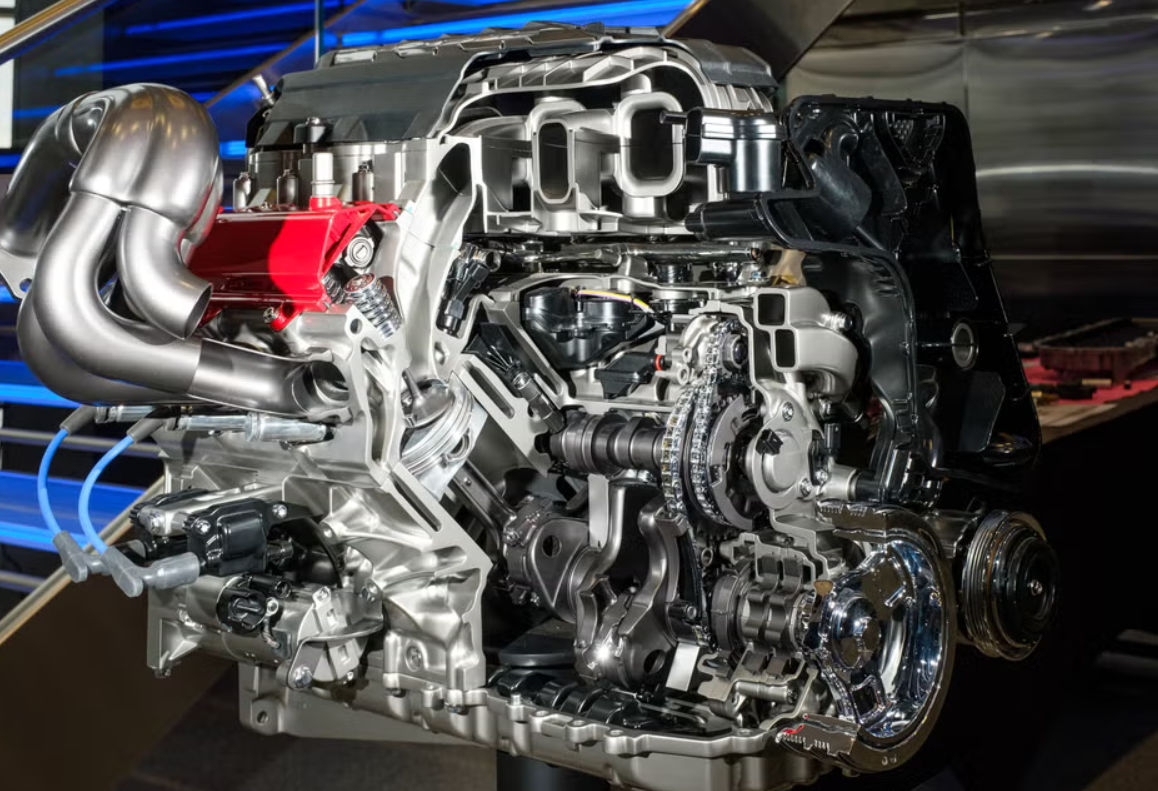
The Chevrolet Corvette C8 introduced the LT2 6.2-liter naturally aspirated V8, which stands out for combining extreme performance with accessibility.
Producing 495 horsepower and 470 lb-ft of torque, the LT2 demonstrates how a well-engineered naturally aspirated engine can compete with turbocharged alternatives in power, responsiveness, and driver experience.
Its mid-engine layout enhances weight distribution, allowing the engine to contribute not just power but also to the handling dynamics of the car.
One of the key innovations in the LT2 is its dry sump lubrication system, which ensures consistent oil delivery even during high lateral acceleration. This system is critical for maintaining performance on the track while also extending engine life.
The engine features variable valve timing and high-flow intake and exhaust systems, which optimize power delivery and responsiveness.
Combined with the Corvette’s lightweight chassis, the LT2 enables blistering acceleration and precise cornering without compromising reliability.
The LT2 also emphasizes efficiency despite its naturally aspirated design. Advanced fuel injection and combustion optimization reduce waste, while precision machining and lightweight materials contribute to vehicle performance.
The engine produces a signature exhaust note that enhances the driving experience, combining auditory excitement with engineering sophistication. It demonstrates that even traditional V8 engines can remain relevant and competitive in a modern performance context.
Finally, electronic management plays a key role in maximizing the LT2’s performance. The ECU manages ignition timing, throttle response, and engine mapping to ensure consistent power output under a variety of conditions.
This allows drivers to experience the full potential of the engine whether on a racetrack or public road.
By integrating modern electronics with classic V8 engineering, Chevrolet created an engine that balances heritage, innovation, and high performance, making it one of the most impressive naturally aspirated engines of the past decade.
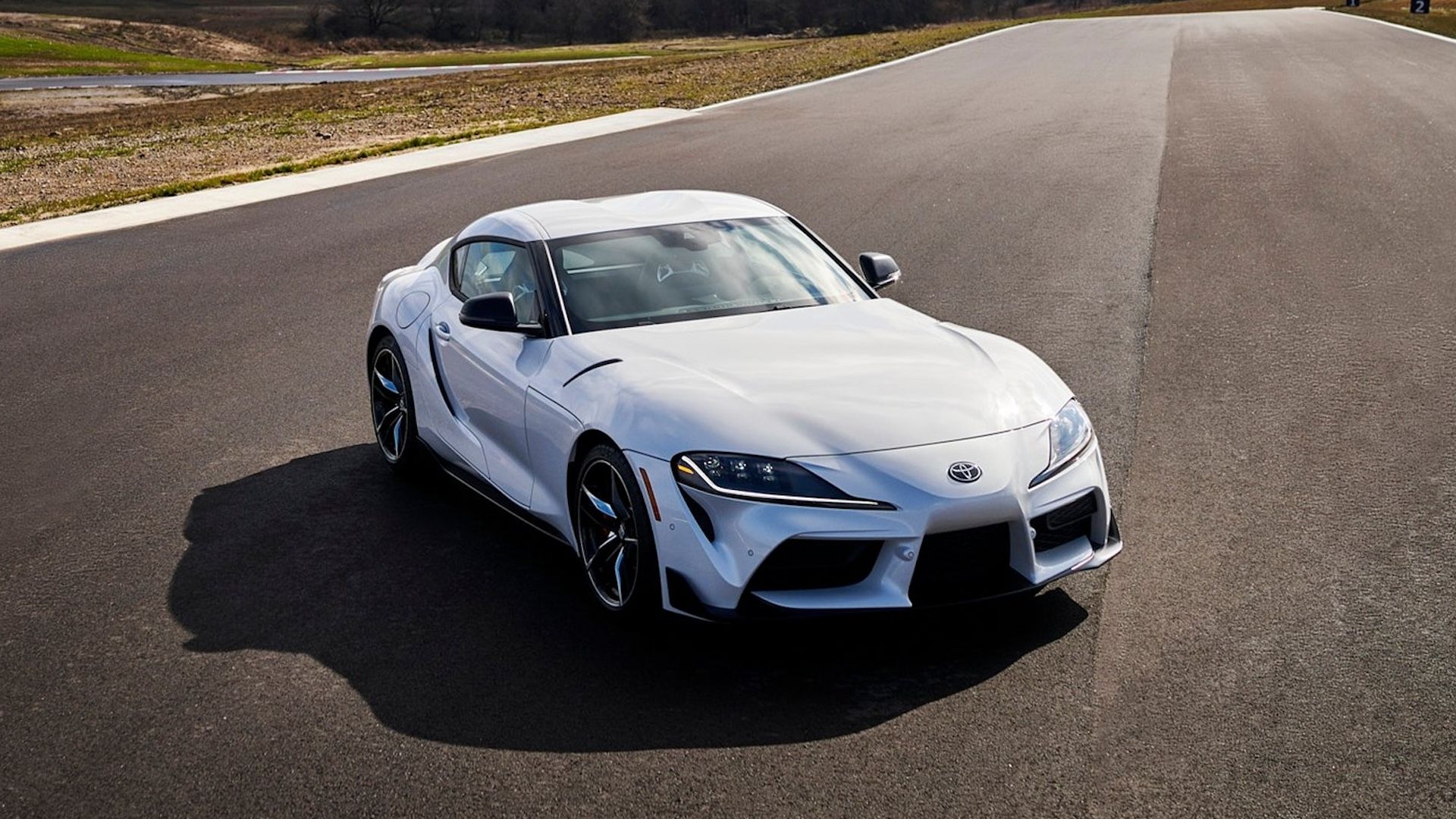
8. Toyota GR Supra B58 Engine
The Toyota GR Supra’s B58 engine is a 3.0-liter inline-six turbocharged powerplant that exemplifies the marriage of performance, smoothness, and reliability.
Producing up to 382 horsepower and 368 lb-ft of torque in its latest iteration, the B58 provides strong acceleration, responsive handling, and a refined driving experience.
The engine is praised for its linear power delivery, which allows drivers to harness its performance across the entire RPM range without feeling abrupt or difficult to control.
Its design reflects Toyota’s commitment to creating engines that are both enjoyable and durable, capable of high-performance operation without compromising longevity.
A key feature of the B58 is its single twin-scroll turbocharger, which helps eliminate lag while maintaining consistent boost across various engine speeds.
The engine employs direct fuel injection and an optimized combustion chamber to achieve excellent thermal efficiency, reducing fuel consumption while maintaining high performance.
Advanced cooling systems, including water-to-air intercooling and precise oil flow management, ensure that the engine can operate safely under extreme conditions, whether on the track or during spirited road driving. This combination of features makes the B58 a benchmark for modern inline-six engines.
The B58 also benefits from lightweight materials and precision engineering to improve both performance and durability. Aluminum construction, forged pistons, and a reinforced crankshaft allow the engine to handle high pressures generated by turbocharging without compromising reliability.
Additionally, its compact size contributes to improved vehicle weight distribution and handling, allowing the GR Supra to combine powerful acceleration with agile cornering. These engineering choices reflect Toyota’s philosophy that performance engines should be efficient, reliable, and enjoyable to drive.
Electronic management plays a crucial role in maximizing the B58’s potential. The ECU continuously adjusts fuel delivery, boost levels, and ignition timing in real time to ensure optimal performance and efficiency.
Adaptive features, such as variable valve timing and torque management, allow the engine to respond seamlessly to different driving conditions.
Combined, these mechanical and electronic innovations make the B58 engine not only powerful but also refined and practical, demonstrating that modern performance engines can deliver excitement without sacrificing reliability or everyday usability.
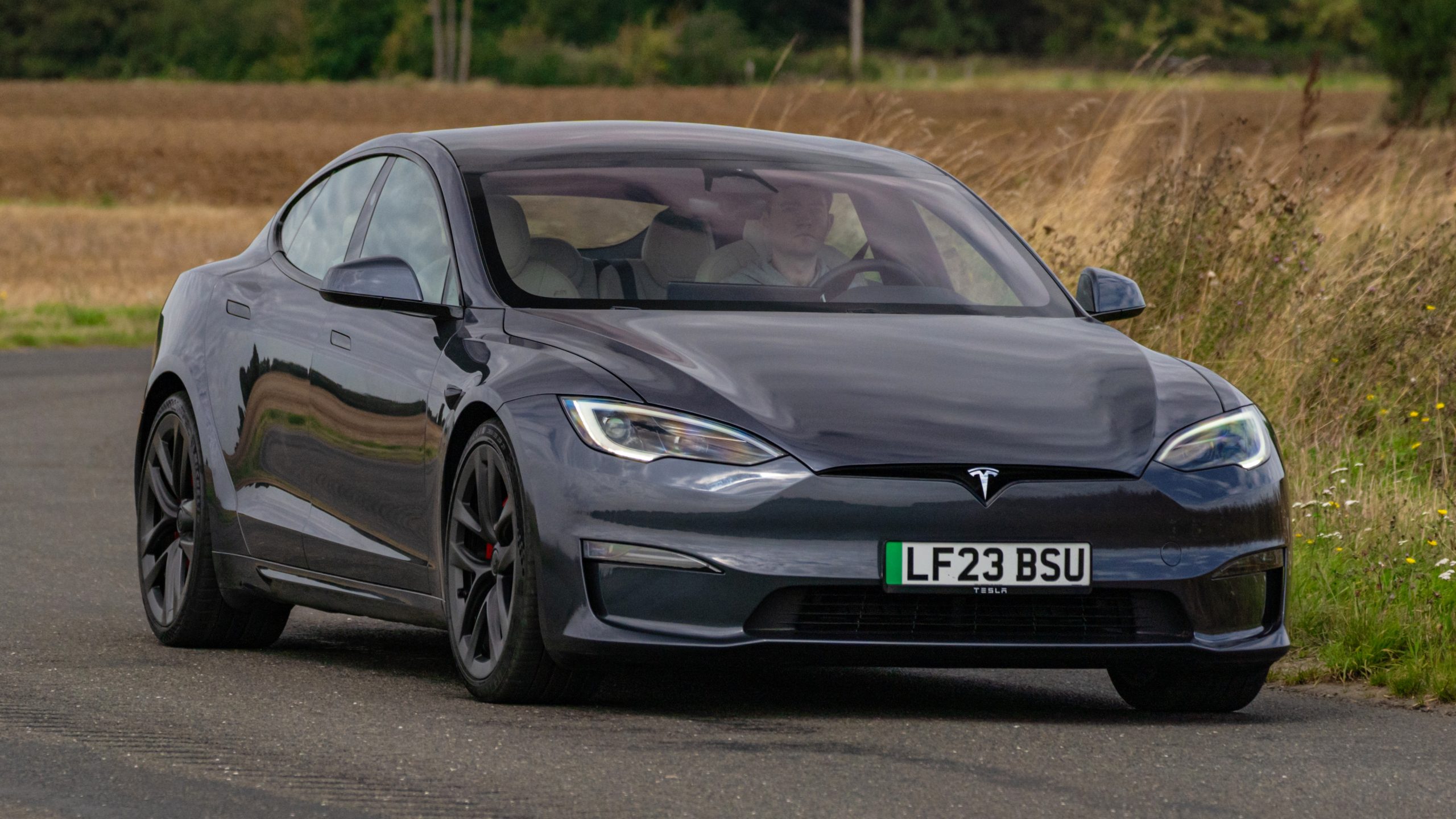
9. Tesla Model S Plaid Tri-Motor Powertrain
The Tesla Model S Plaid introduced a tri-motor electric powertrain that redefined the limits of electric vehicle performance.
Producing over 1,020 horsepower and delivering a 0 to 60 mph time of under two seconds, this powertrain represents one of the most impressive feats in automotive engineering over the past decade.
Unlike conventional engines, the Plaid’s system relies entirely on electric motors, which provide instant torque and eliminate many mechanical limitations inherent in internal combustion engines. The result is an unprecedented combination of acceleration, efficiency, and technological sophistication.
Tesla’s tri-motor configuration allows for exceptional traction and handling. Two motors power the rear wheels while a single motor drives the front, enabling dynamic torque vectoring that optimizes grip during acceleration and cornering. This system enhances stability and driver control while maximizing the efficiency of the electric motors.
The powertrain is also highly responsive, delivering immediate power output without the need for gear changes or turbo lag, which gives the driver a uniquely direct and thrilling experience.
Thermal management and battery optimization are key to the Plaid’s performance. Advanced liquid cooling ensures that the motors and battery pack remain within safe operating temperatures, even under extreme acceleration.
The battery’s high voltage and sophisticated management system allow for consistent power delivery while minimizing energy loss.
This allows the vehicle to sustain high performance over extended periods without overheating or degradation in efficiency, addressing one of the common limitations of high-powered electric systems.
Finally, the tri-motor powertrain demonstrates how software integration has become as important as mechanical design in modern engines.
Tesla’s control algorithms manage torque distribution, regenerative braking, and motor efficiency in real time, adapting to driving conditions and driver input.
The combination of instantaneous electric torque, adaptive control, and efficient energy use makes the Model S Plaid’s powertrain one of the most remarkable engineering achievements of the last decade.
It proves that electric engines are not only capable of rivaling traditional internal combustion engines in performance but can surpass them in acceleration, control, and technological sophistication.
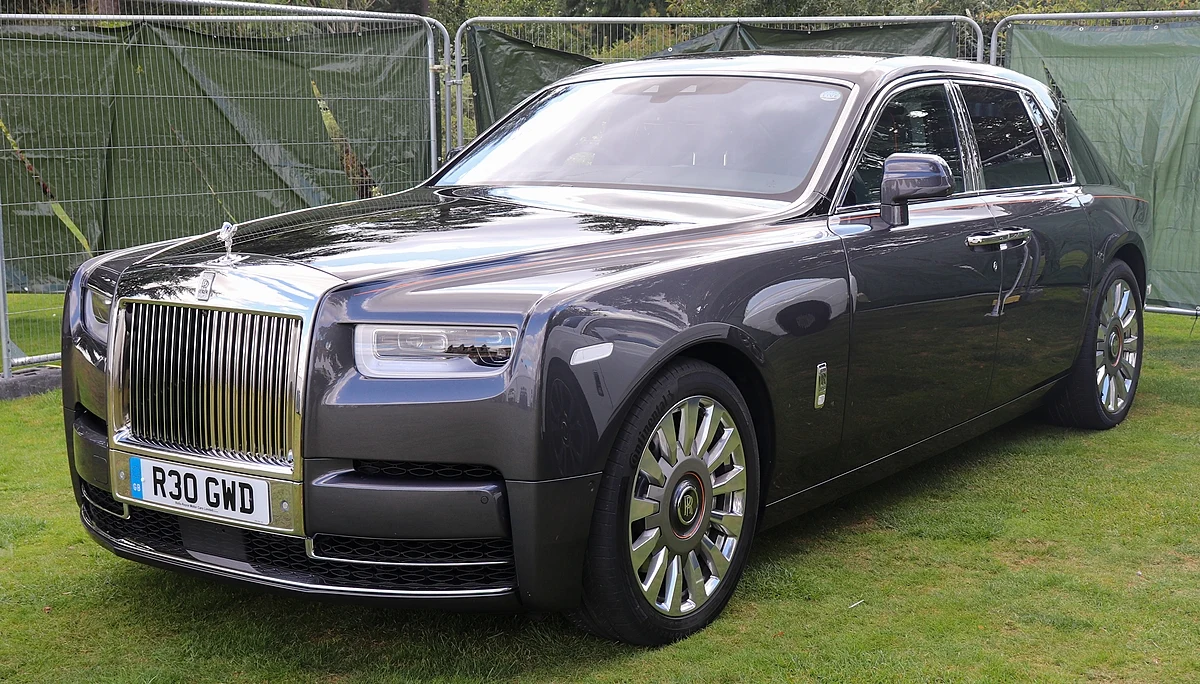
10. Rolls-Royce Phantom 6.75L V12
The Rolls-Royce Phantom 6.75-liter V12 engine represents the pinnacle of luxury performance engineering.
Producing approximately 563 horsepower and 664 lb-ft of torque, this engine emphasizes smoothness, effortless power delivery, and refinement rather than raw track-focused performance.
It is designed to provide an unmatched driving experience, where power is abundant yet delivered in a serene and controlled manner.
Every aspect of the V12 has been meticulously engineered to achieve quiet operation, smooth acceleration, and exceptional reliability, embodying the principles of grand touring excellence.
One of the most imp. features of the Phantom’s V12 is its dual turbocharging system, which delivers substantial torque across the entire RPM range.
This ensures that even a slight press of the accelerator results in immediate, effortless acceleration, reinforcing the car’s reputation for seamless performance.
Advanced materials and precision engineering ensure durability, while a sophisticated cooling system maintains optimal engine temperature in various conditions, allowing the engine to perform consistently in both city traffic and long-distance cruising.
The Phantom’s engine also incorporates modern combustion optimization techniques, including direct fuel injection and variable valve timing.
These innovations improve efficiency and reduce emissions without compromising the quiet, smooth power delivery expected from a luxury vehicle of this caliber.
Lightweight internal components, including forged pistons and a reinforced crankshaft, contribute to reduced vibrations and increased responsiveness.
The attention to detail extends beyond performance, as Rolls-Royce engineers have also focused on minimizing noise, vibration, and harshness to maintain the brand’s signature refinement.
Electronic management systems play a critical role in harmonizing the Phantom’s engine with the car’s sophisticated chassis and luxury systems. The ECU monitors and adjusts fuel delivery, turbo boost, and ignition timing continuously, ensuring the engine operates flawlessly under all conditions.
Adaptive technologies work in concert with the suspension and drivetrain, allowing the Phantom to feel both dynamic and serene depending on driving conditions.
This combination of mechanical excellence, advanced electronics, and attention to refinement makes the Rolls-Royce Phantom V12 engine one of the most impressive examples of engineering in the past decade, demonstrating that power and luxury can coexist in perfect harmony.
