
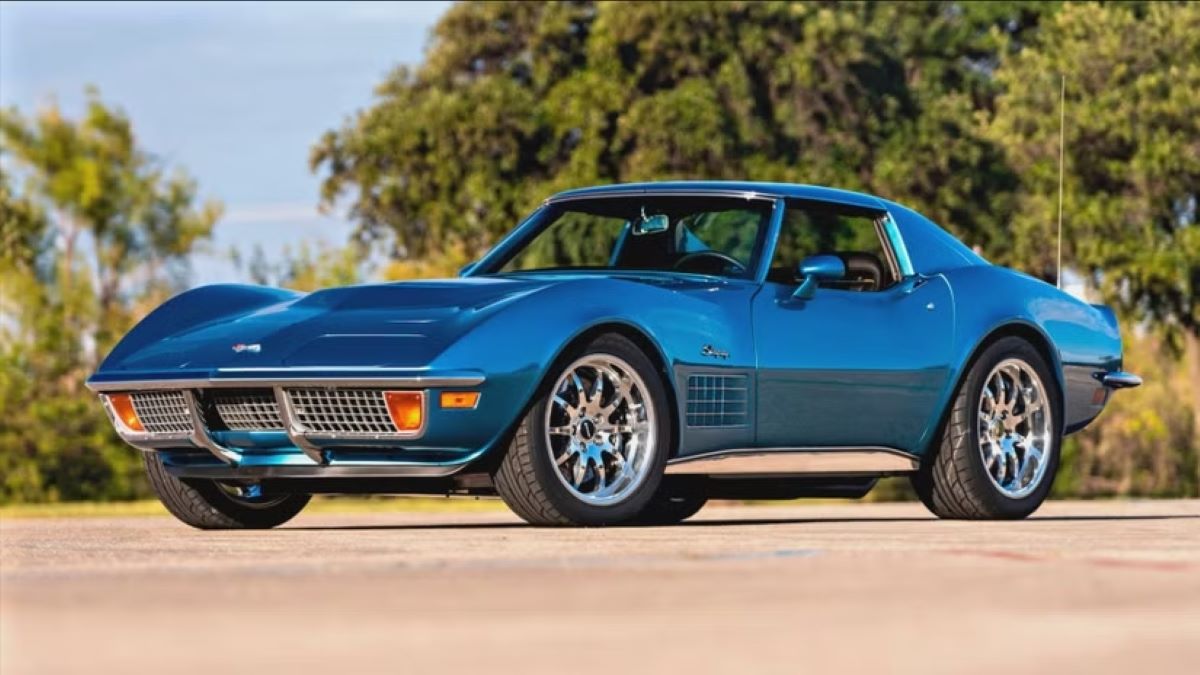
The V8 engine has long held a special place in the hearts of automotive enthusiasts. Its distinct sound, immense power, and versatility across muscle cars, luxury sedans, trucks, and sports cars have made it one of the most celebrated engine configurations in history.
While modern technology has pushed the automotive industry toward smaller, more efficient engines and electrification, there remain certain V8 engines whose impact, performance, and legacy cannot be overstated. These engines were not only technical marvels of their time but also symbols of engineering excellence that defined the driving experience for generations.
Their power delivery, torque characteristics, and unique personalities contributed to vehicles that are still admired and revered today. The decision to discontinue some of these engines often left fans disappointed, as many felt that no successor could fully capture their essence or deliver the same combination of performance and character.
From classic American muscle engines to European performance powerplants, each of the V8s on this list represents a story of innovation, dominance, and a touch of automotive magic that is increasingly rare in today’s market.
V8 engines have been known for their ability to provide both high horsepower and substantial torque, giving vehicles an unmistakable presence on the road. The engines discussed in this article span decades of automotive history and showcase the diversity of applications in which V8s have thrived.
Some of these engines were designed for brute force, producing thunderous acceleration in muscle cars that became cultural icons. Others were crafted with precision engineering, offering smooth, refined power delivery that elevated luxury and sports vehicles to new levels of performance.
Despite their differences, all these engines shared a common thread: they brought excitement, emotion, and driving satisfaction that few other engines can match.
They defined eras and, in many cases, pushed automotive technology forward by introducing innovations in materials, combustion, and mechanical design. The passion they inspired among enthusiasts remains strong, even years after production ended, reflecting the enduring appeal of the V8 configuration.
Discontinuation of these legendary engines often occurred for reasons related to regulatory pressures, fuel efficiency concerns, or shifts in consumer demand toward smaller or electrified powertrains. Yet, the absence of these engines in modern lineups leaves a noticeable void, especially for those who value the visceral connection between man and machine.
While turbocharging, hybridization, and electric motors offer new avenues for performance, the sound, feel, and character of a naturally aspirated V8 remain unmatched for many enthusiasts. Each engine discussed here has a legacy of performance, reliability, and iconic status that makes it a candidate for revival or at least continued reverence in automotive circles.
Their discontinuation is often seen as a loss not only in terms of raw power but also in the emotional and cultural impact they carried, which no newer technology has fully replaced.
In this article, ten legendary V8 engines are highlighted, celebrating their contributions, technical achievements, and lasting influence on the automotive world. These engines were chosen for their combination of performance, engineering excellence, and emotional resonance.
They include American muscle engines that defined speed and aggression, as well as European V8s that showcased refinement and advanced engineering. Each entry will provide insight into why the engine was significant, what made it exceptional, and why discontinuing it left a gap in the market that has yet to be filled.
By examining these engines in depth, we can appreciate the artistry and skill that went into their design and understand why they remain some of the most cherished powerplants in automotive history.
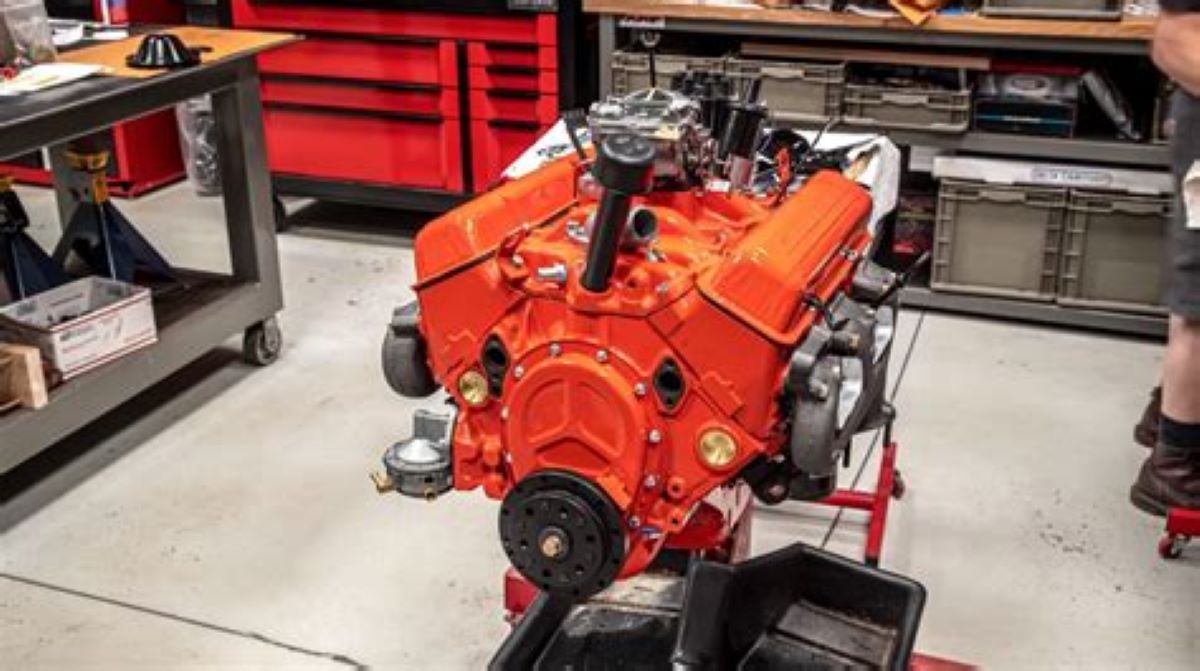
1. Chevrolet Small-Block V8
The Chevrolet Small-Block V8 is arguably one of the most iconic engines in automotive history. Introduced in the 1950s, it revolutionized the concept of a lightweight, powerful, and versatile V8 engine. Its compact design made it suitable for a wide range of vehicles, from sports cars to pickup trucks, and its potential for performance tuning was virtually limitless.
Over the decades, the small-block evolved through multiple generations, each bringing enhancements in horsepower, torque, and efficiency. It became a favorite among racers and hot-rodders due to its simplicity, reliability, and vast aftermarket support.
This engine was capable of delivering impressive performance without requiring exotic or overly complex components, making it accessible to both manufacturers and enthusiasts.
One of the defining characteristics of the Chevrolet Small-Block was its ability to adapt to changing automotive demands. From carbureted versions to fuel-injected models, and from naturally aspirated to supercharged configurations, the engine maintained its relevance for decades.
Its durability allowed vehicles to handle heavy loads and endure long-term use without major issues. Muscle cars like the Corvette and Camaro benefited immensely from this engine, cementing its reputation as a powerhouse capable of thrilling acceleration and highway performance. The small-block’s sound, a deep rumble with a precise note, became instantly recognizable and contributed significantly to its legendary status among car enthusiasts.
The aftermarket potential of the Chevrolet Small-Block also contributed to its fame. Enthusiasts could modify the engine extensively, installing larger carburetors, higher-performance camshafts, and reinforced components to achieve levels of power far beyond stock specifications.
Racing series around the world frequently utilized versions of this engine, demonstrating its competitive capabilities in diverse environments. Its simplicity meant that tuning and repairs could be performed without sophisticated machinery, making it a favorite for DIY mechanics and professional builders alike. This accessibility, combined with exceptional reliability, ensured the engine’s popularity for generations.
Despite its long history and continuous innovation, Chevrolet eventually discontinued certain versions of the small-block in favor of more modern engines with advanced technologies like direct injection and variable valve timing.
While these newer engines offer improved efficiency and emissions compliance, many fans lament the loss of the straightforward, raw appeal of the original small-block V8.
Its combination of versatility, power, and enduring charm ensures that it remains one of the engines that should have continued in production, as its absence leaves a void in the hearts of automotive enthusiasts who value character as much as performance.
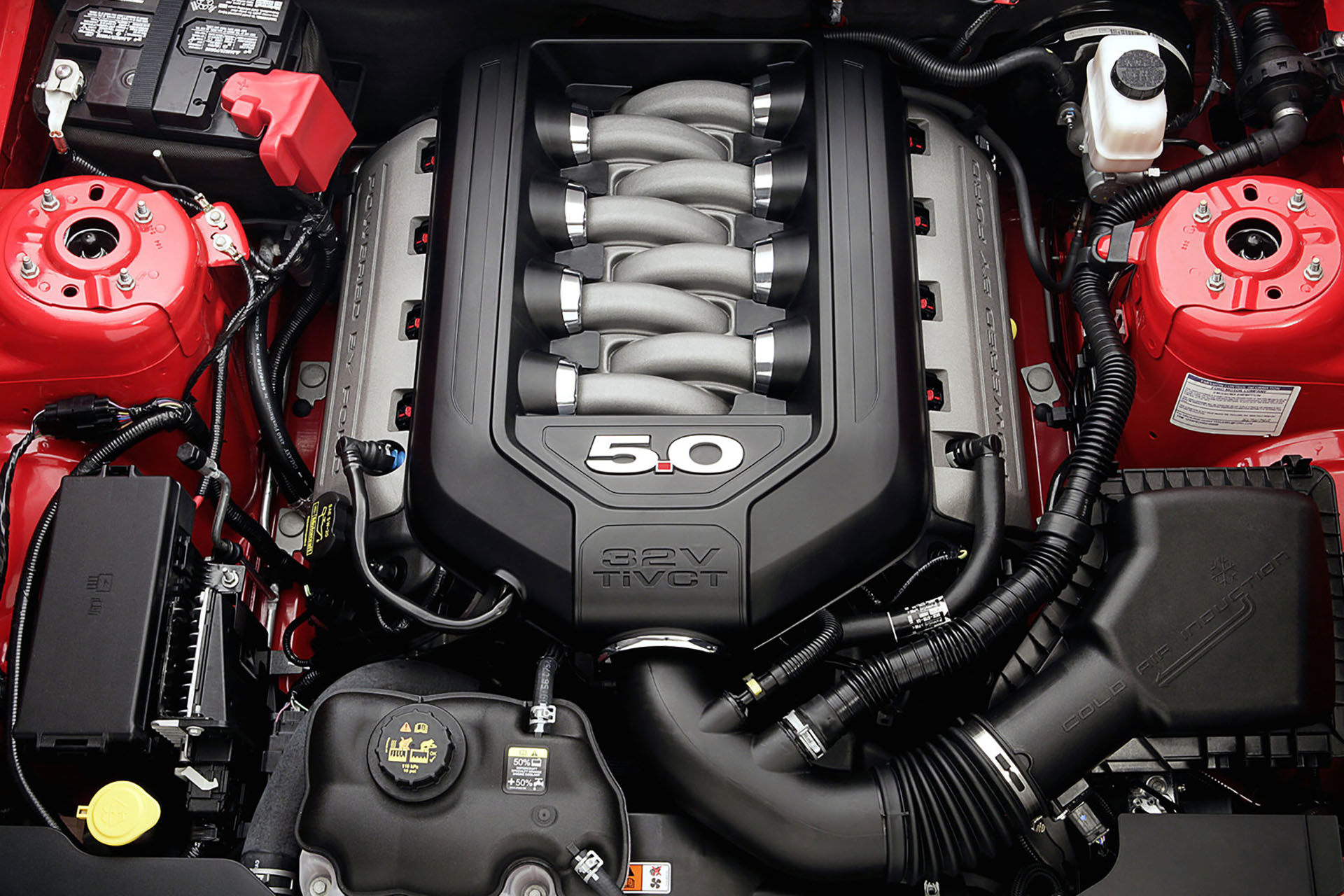
2. Ford 5.0 “Coyote” V8
The Ford 5.0 Coyote V8 represents a modern interpretation of the classic American V8 formula. Introduced in the 2011 Mustang GT, the Coyote engine combined traditional pushrod-inspired performance with advanced technology, including dual overhead cams and variable valve timing.
Its design allowed it to produce impressive horsepower and torque while maintaining a relatively lightweight package. The 5.0 quickly became a benchmark for naturally aspirated American V8s, offering both exhilarating performance and everyday drivability. Its ability to rev freely and deliver power smoothly across the RPM range made it a favorite among enthusiasts looking for a balance between raw muscle and refinement.
The Coyote engine also demonstrated incredible tuning potential. Enthusiasts could achieve significant gains in horsepower through relatively simple modifications, such as intake upgrades, camshaft swaps, and forced induction kits.
This versatility made it a favorite in drag racing, road racing, and street performance circles. Its sound, a deep and aggressive growl at high RPMs, further enhanced its appeal, creating an auditory experience that complemented its performance. The engine’s combination of modern engineering and traditional V8 character allowed it to bridge the gap between classic muscle cars and contemporary performance vehicles.
Despite its acclaim, rumors of phasing out the naturally aspirated Coyote in favor of smaller turbocharged engines have caused concern among purists. While Ford continues to innovate with new technologies, the Coyote represents a unique balance of power, sound, and driving enjoyment that is difficult to replicate with smaller or forced-induction engines.
For those who cherish the V8 experience, the Coyote remains a shining example of how modern engineering can enhance, rather than diminish, the classic American V8 formula.
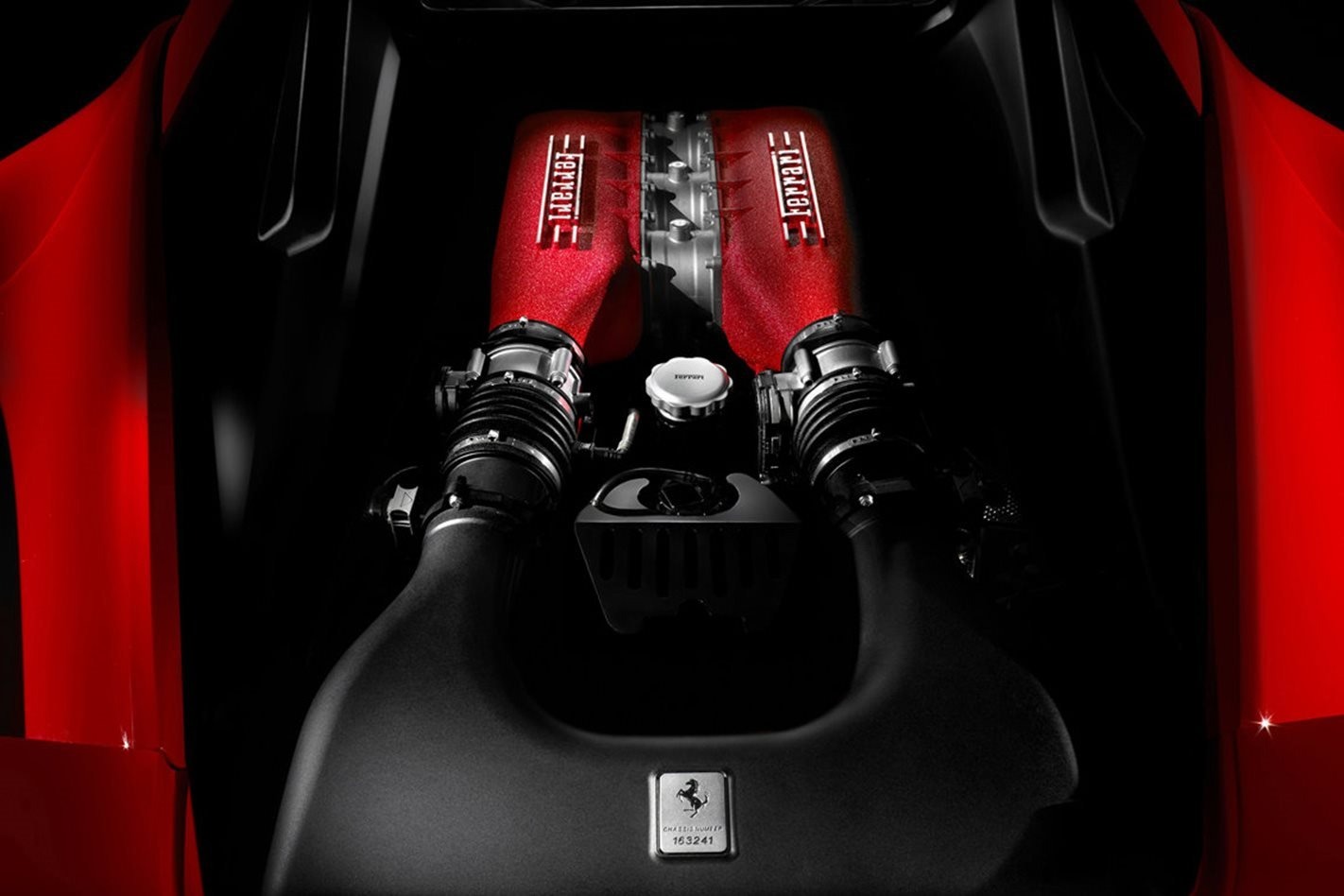
3. Ferrari F136 V8
Ferrari’s F136 V8 engine represents the pinnacle of Italian engineering and performance. Introduced in the mid-2000s, it powered a range of Ferrari models, including the 430, 458, and California. This naturally aspirated engine was praised for its high-revving nature, responsiveness, and unmistakable exhaust note.
Unlike many mass-produced V8s, the F136 was crafted with meticulous attention to detail, utilizing lightweight materials and advanced engineering to achieve both power and reliability. Its design emphasized balance and agility, ensuring that Ferrari sports cars remained sharp and thrilling to drive on both road and track.
Beyond raw performance, the F136 engine carried a sense of artistry. Each unit was assembled with precision, and the combination of engine sound, vibration, and responsiveness created an immersive driving experience that few engines could replicate.
Ferrari’s engineers ensured that every detail, from the exhaust note to the intake resonance, enhanced the sensory experience. This attention to character and emotion made the F136 a benchmark for naturally aspirated V8s and a symbol of Ferrari’s dedication to engineering excellence.
Despite its legendary status, Ferrari eventually transitioned to turbocharged V8 engines for efficiency and emissions reasons. While these newer engines offer impressive performance, many enthusiasts mourn the loss of the F136, as its naturally aspirated character, immediate throttle response, and unique soundtrack are difficult to reproduce.
The F136 remains a benchmark in high-performance engineering and a reminder of the visceral thrill that only a finely tuned Ferrari V8 can provide.
4. Lamborghini V10/V8 Hybrid Inspirations
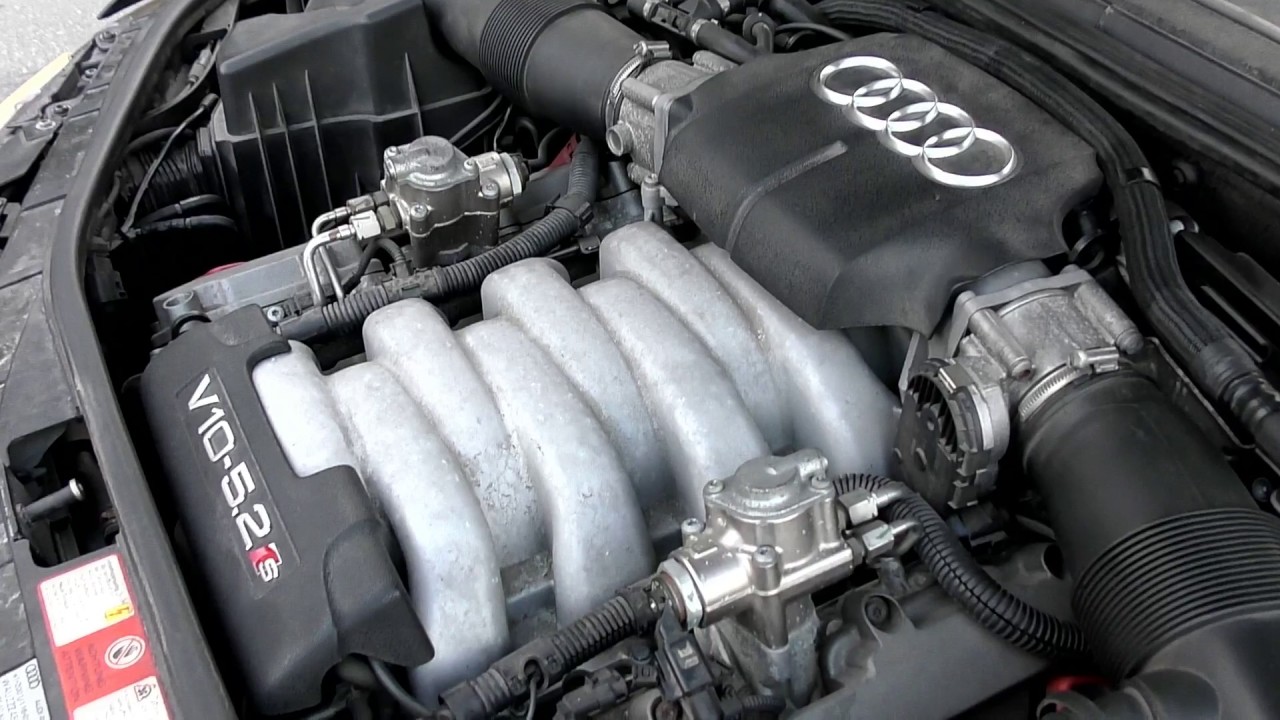
Although Lamborghini is better known for its V10 and V12 engines, the influence of their V8 development on performance culture cannot be overlooked. In concept vehicles and earlier prototypes, Lamborghini explored high-output V8 designs that blended lightweight materials with cutting-edge engineering.
These engines were designed to deliver extreme power while maintaining the precise handling and balance that Lamborghini vehicles are known for. The concept V8s demonstrated that Lamborghini could achieve exceptional performance without relying solely on larger displacement engines, offering a glimpse into potential future powertrains that were never fully realized.
The experimental nature of these V8 engines allowed Lamborghini to push boundaries and innovate in materials, such as the use of aluminum alloys and advanced composites.
The engines also influenced future hybrid and turbocharged developments, contributing to Lamborghini’s ongoing pursuit of combining raw power with modern efficiency. Although these engines never reached widespread production, they remain a testament to Lamborghini’s engineering ambition and the potential for a high-performance V8 to compete with larger, more traditional engines.
The discontinuation or shelving of these V8 concepts leaves enthusiasts imagining what could have been. A production Lamborghini V8 with the character and engineering prowess of these prototypes would have offered a unique alternative to the company’s larger engines, combining agility, power, and an accessible entry point into Lamborghini ownership.
The lessons learned from these experiments continue to influence the design of contemporary performance vehicles, highlighting the enduring legacy of V8 innovation in even the most exotic automotive environments.
5. Dodge 426 HEMI “Elephant Engine”
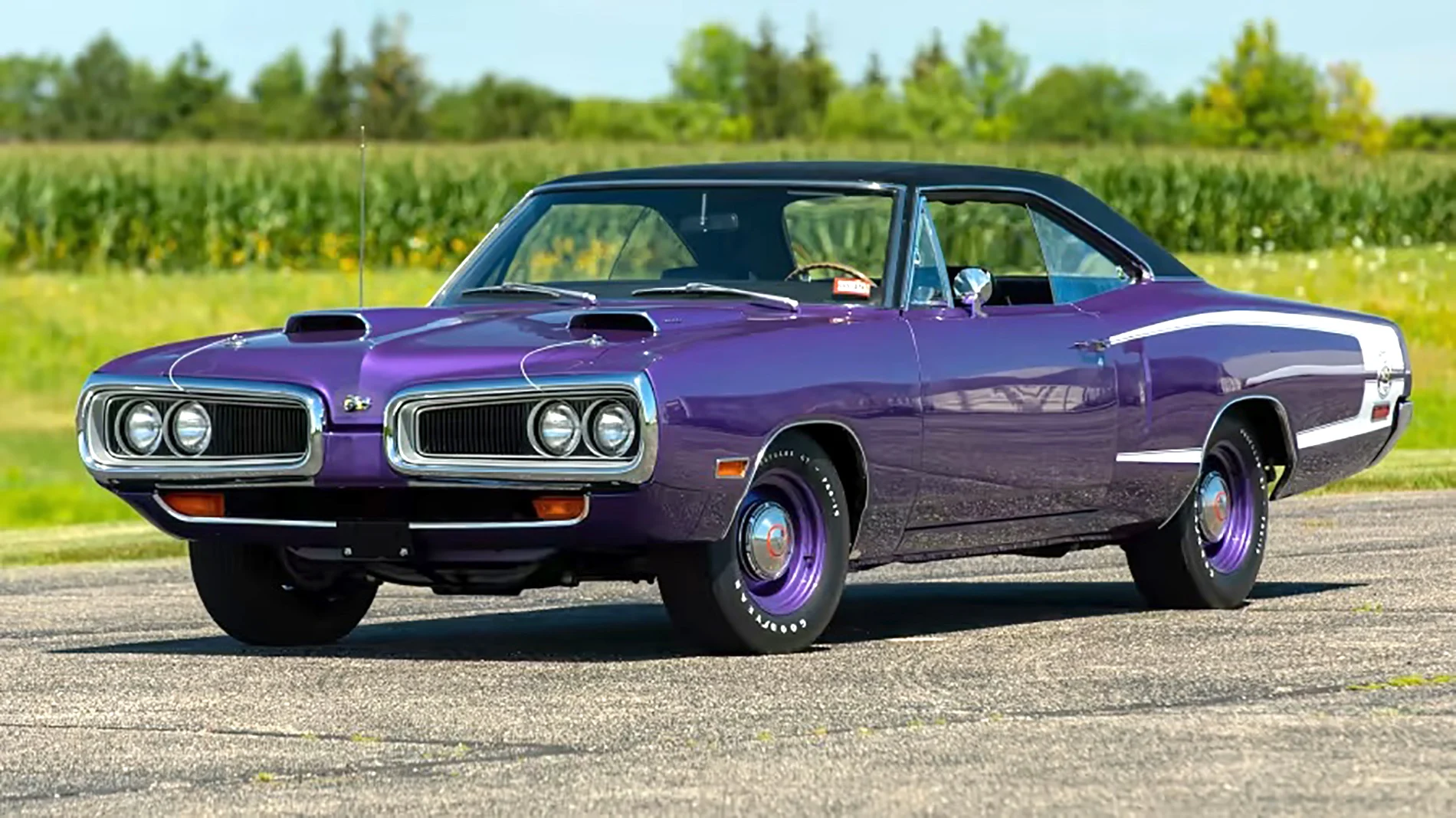
The Dodge 426 HEMI, often nicknamed the “Elephant Engine” due to its massive size and incredible power, is one of the most revered V8s in muscle car history.
Introduced in the 1960s, the 426 HEMI was designed with racing in mind, particularly for NASCAR and drag racing, and it quickly earned a reputation for dominance on the track. Its hemispherical combustion chambers allowed for more efficient airflow and higher compression ratios, which translated directly into exceptional horsepower and torque.
The 426 HEMI became synonymous with brute force and raw performance, propelling vehicles like the Dodge Charger, Challenger, and Plymouth Barracuda to legendary status. Its presence alone was enough to intimidate competitors, and it played a crucial role in cementing Chrysler’s position as a major player in the muscle car era.
The 426 HEMI’s cultural impact was as significant as its mechanical achievements. Muscle car enthusiasts still celebrate it as the expression of 1960s and 1970s American automotive excess. Its roar at full throttle is instantly recognizable, a symphony of power that evokes nostalgia for a time when horsepower was king.
Collectors prize vehicles equipped with this engine, and even today, it commands high values at auctions and shows. The aftermarket for the HEMI remains vibrant, with builders continuing to enhance and customize these engines for modern performance applications. Its legacy is not just about raw numbers but about the emotion and excitement it delivered to generations of car enthusiasts.
Despite its legendary status, the 426 HEMI was eventually discontinued, largely due to tightening emissions regulations and the decline of the muscle car era. While Chrysler has occasionally revived the HEMI name in smaller, modern engines, the original 426 remains unmatched in its combination of size, engineering sophistication, and racing pedigree.
Its discontinuation left a significant gap in the world of high-performance V8s, as few engines have ever captured the same balance of engineering brilliance, aggressive power delivery, and iconic status. The 426 HEMI stands as a timeless example of what a V8 can achieve when engineers prioritize performance without compromise.

6. Chevrolet LS7 V8
The Chevrolet LS7 V8 is one of the most celebrated modern American engines, representing the pinnacle of the LS engine family. Introduced in 2006 in the Corvette Z06, the LS7 was a naturally aspirated 7.0-liter powerhouse capable of producing 505 horsepower and 470 lb-ft of torque.
Its design emphasized lightweight construction, with components such as titanium connecting rods and an aluminum block, allowing the engine to rev freely and respond instantly to throttle inputs.
The LS7 became a benchmark for naturally aspirated V8 performance, combining raw power with reliability and a willingness to handle extreme driving conditions without hesitation. Its engineering sophistication demonstrated that the American V8 could compete with, and even surpass, many exotic engines in terms of performance and refinement.
The LS7’s adaptability and tuning potential further contributed to its legendary status. With aftermarket support, this engine could be upgraded for even higher horsepower outputs without sacrificing reliability.
It became a favorite among track-day enthusiasts and professional racers alike, serving as the foundation for high-performance builds in Corvettes, Camaros, and custom vehicles. Its combination of engineering precision and accessibility made it a rare engine that appealed to both purists and performance modifiers. Beyond the numbers, the LS7 demonstrated that a naturally aspirated engine could remain relevant and exciting in an era increasingly dominated by forced induction and turbocharging.
Despite its acclaim, the LS7 was eventually discontinued, replaced by newer engines such as the supercharged LS9 and later LT-series engines.
While these successors delivered impressive performance and efficiency improvements, many enthusiasts mourned the loss of the LS7 for its raw, unfiltered driving character and high-revving appeal. Its combination of displacement, materials, and mechanical purity makes it one of the V8s that should have continued in production, offering a unique blend of power, responsiveness, and driving enjoyment that modern engines struggle to replicate fully.
7. Mercedes-Benz M113 V8
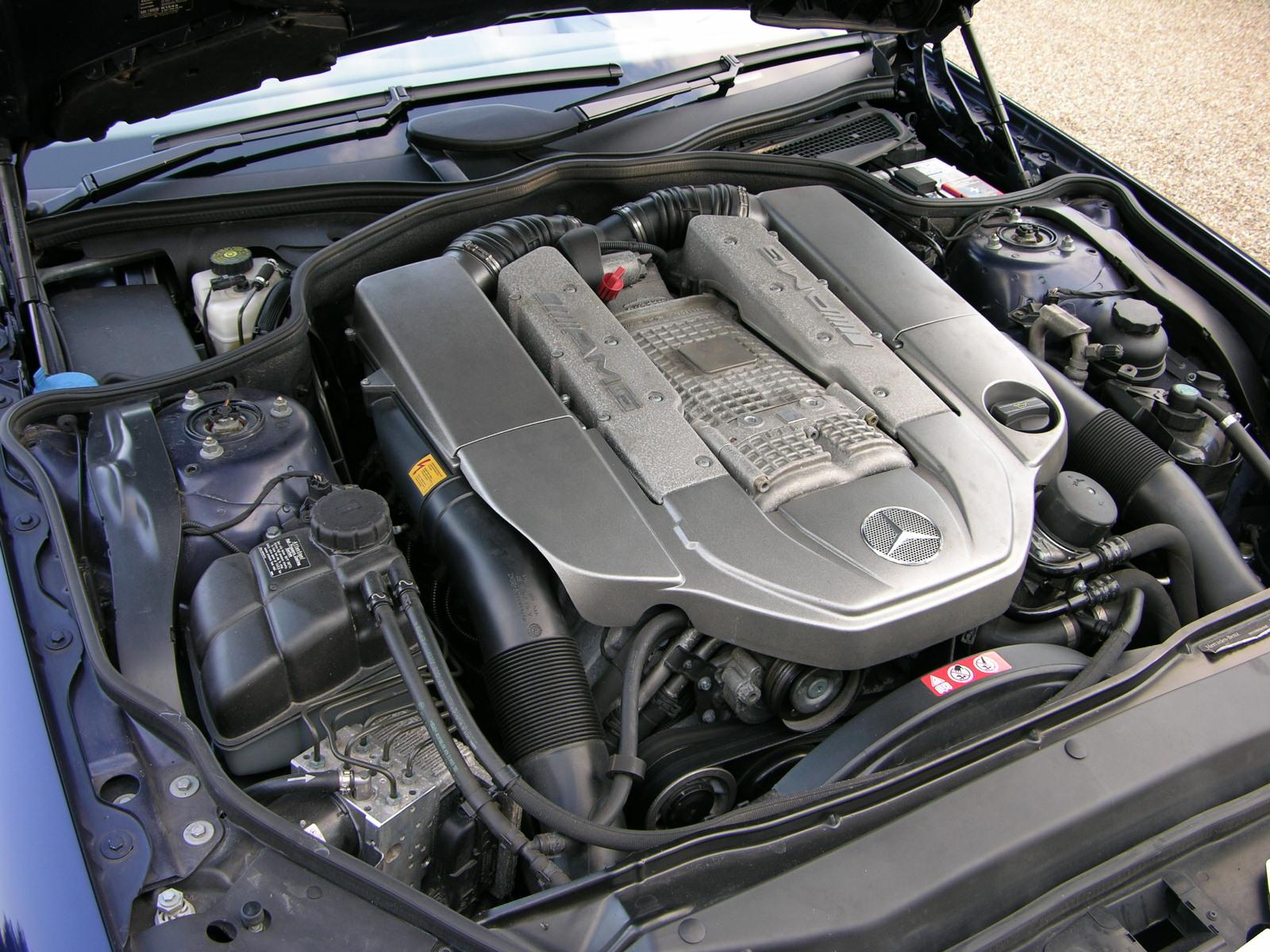
The Mercedes-Benz M113 V8 is a quintessential example of European engineering that combines performance, refinement, and reliability. Introduced in 1997, this naturally aspirated V8 powered a wide range of Mercedes models, from luxury sedans and coupes to high-performance AMG variants.
The M113 was celebrated for its smooth power delivery, strong torque across the rev range, and impressive longevity, making it a favorite among drivers who valued both performance and durability.
Unlike some high-strung performance engines, the M113 could effortlessly power heavy luxury vehicles while providing a relaxed, refined driving experience, demonstrating that a V8 could excel in comfort-oriented applications as well as spirited driving scenarios.
Another feature of the M113 was its smoothness and sound. Mercedes engineers ensured that the engine delivered a refined auditory experience, with a rich, deep exhaust note that conveyed power without being aggressive or intrusive.
This made the M113 particularly well-suited for luxury sedans, where comfort and subtlety are as important as performance. Its responsiveness and linear power delivery also contributed to a driving experience that was engaging yet controlled, allowing drivers to enjoy both relaxed cruising and spirited acceleration without compromise.
The discontinuation of the M113, replaced by newer direct-injection and turbocharged engines, left a void in the Mercedes lineup for those who appreciated naturally aspirated V8s.
While modern engines offer higher efficiency and lower emissions, many enthusiasts miss the combination of smooth character, linear power, and mechanical reliability that the M113 delivered. It remains a standout example of how a V8 can combine refinement, power, and versatility, making it one of the engines that should never have been retired.
8. Jaguar AJ-V8
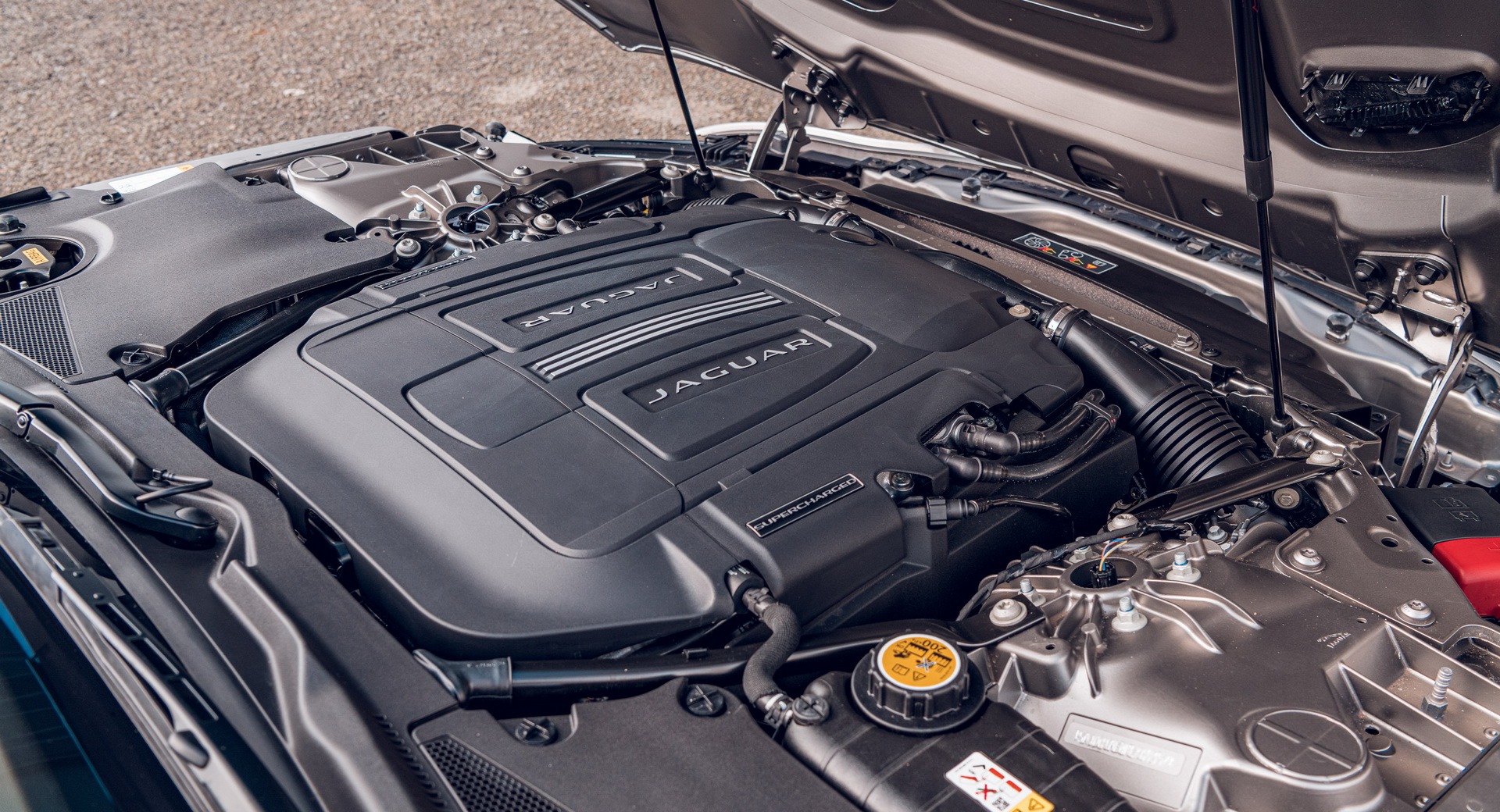
The Jaguar AJ-V8 engine represents a blend of British engineering sophistication and performance pedigree. Introduced in the mid-1990s, it powered vehicles such as the Jaguar XJ, XK8, and S-Type, delivering smooth and refined power with a distinctive character.
The AJ-V8’s design emphasized compactness and lightweight construction, incorporating aluminum blocks and heads for improved performance and efficiency.
Unlike many mass-market V8s, the AJ was engineered with precision to offer a balance of luxury and sportiness, providing ample torque for effortless cruising while retaining the responsiveness required for spirited driving. Its versatility allowed it to serve in both high-end sedans and performance-oriented coupes without compromise.
The AJ-V8 also demonstrated impressive tuning potential. Enthusiasts could enhance its output with forced induction or ECU modifications, making it a capable performer in motorsport applications or high-performance street builds.
Its combination of British engineering elegance and performance flexibility made it highly regarded among collectors and enthusiasts, who appreciated its unique character compared to American and German V8s. The engine’s balance of refinement and excitement made it a rare example of a V8 that could satisfy both luxury buyers and performance purists simultaneously.
Jaguar eventually replaced the AJ-V8 with newer engines that prioritized emissions compliance and efficiency, leaving a gap for those who valued naturally aspirated V8s with distinctive character. While modern engines may outperform the AJ in raw numbers, few can match its combination of smoothness, sound, and refined driving experience.
The AJ-V8 remains a testament to Jaguar’s ability to engineer a V8 that delivers both sophistication and performance, and its discontinuation is still lamented by enthusiasts who cherish its unique blend of qualities.
9. BMW S62 V8
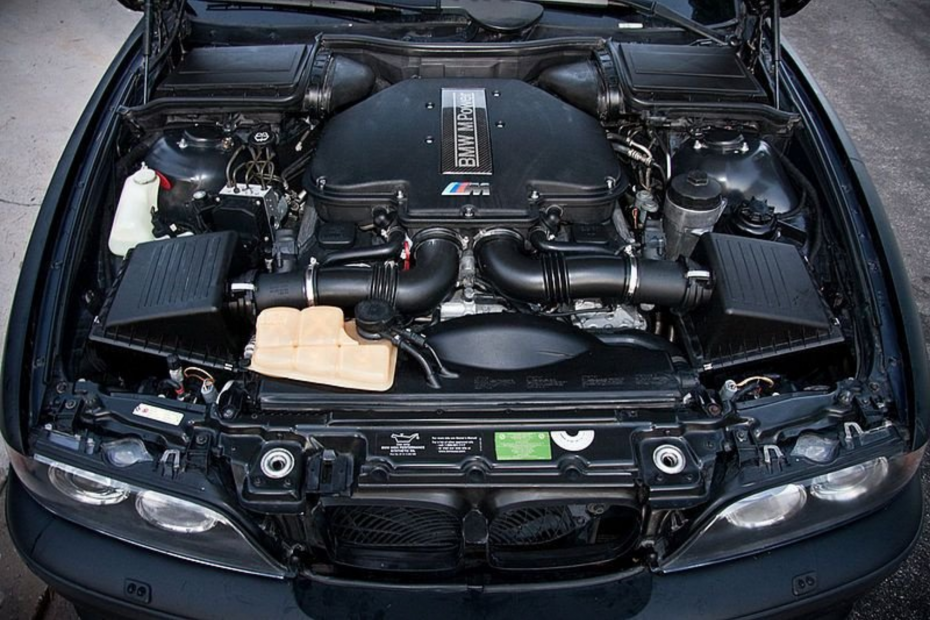
The BMW S62 V8 is one of the most revered naturally aspirated engines produced by the German automaker, renowned for its performance and precision. Introduced in the late 1990s for the E39 M5, the S62 produced 394 horsepower and 369 lb-ft of torque from a 4.9-liter displacement.
It represented the culmination of BMW’s M division expertise at the time, incorporating features such as a variable-length intake manifold, individual throttle bodies, and advanced engine management systems. These technologies allowed the engine to deliver exceptional responsiveness, smooth power delivery, and a high-revving character that made the E39 M5 a benchmark for sports sedans. Its design emphasized driver engagement, making it one of the most beloved V8s among BMW enthusiasts.
The engine’s engineering allowed for significant tuning potential, and enthusiasts often extract even higher horsepower figures while maintaining reliability. Its use of lightweight aluminum components and robust internal design contributed to its ability to handle higher stress levels than many other engines of the era.
Beyond raw performance, the S62 represented a philosophy of creating a driver-focused powerplant that emphasized mechanical feel and connection to the vehicle, which became a benchmark for subsequent generations of BMW engines. Its influence continues to be felt in the design of modern performance engines, even as forced induction becomes more common.
Discontinuation of the S62 in favor of turbocharged V8s was met with disappointment by purists who valued the naturally aspirated character and rev-happy nature of the engine. While newer engines provide better efficiency and higher peak power, they often lack the immediacy and mechanical engagement that defined the S62.
For many enthusiasts, this engine represents a peak in BMW’s naturally aspirated V8 design, combining performance, sound, and engineering refinement in a package that has become increasingly rare in the modern automotive industry.
10. Nissan VK56DE V8
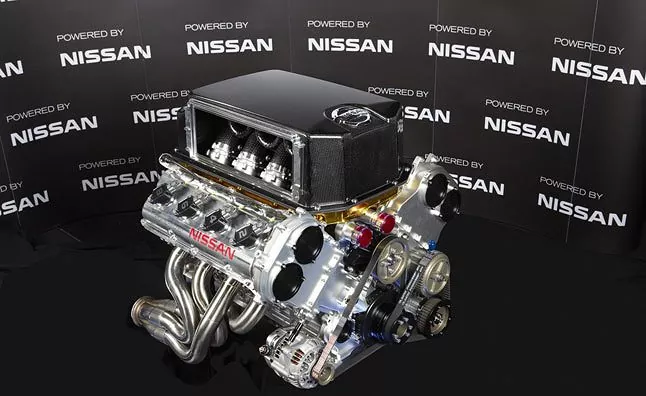
The Nissan VK56DE V8 represents the pinnacle of Japanese V8 engineering, showcasing the brand’s ability to combine power, refinement, and durability in a naturally aspirated package. Introduced in the early 2000s, the 5.6-liter VK56DE powered vehicles such as the Titan, Armada, and Infiniti QX56, delivering strong torque and smooth performance across a wide RPM range.
Unlike some performance-oriented engines, the VK56DE was designed to handle heavy loads while still providing responsive and enjoyable driving dynamics. Its combination of displacement, engineering precision, and reliability made it a versatile engine capable of powering trucks, SUVs, and luxury vehicles with equal competence.
One of the VK56DE’s strengths was its robust construction. With an aluminum-alloy block and heads, along with forged steel components, the engine provided excellent strength-to-weight ratios and durability.
Its DOHC design with variable valve timing allowed for efficient combustion and strong torque delivery, while the engine’s tuning ensured smooth operation under both highway cruising and high-load conditions. The VK56DE also demonstrated impressive reliability, with many engines surpassing hundreds of thousands of miles without major issues, reflecting Nissan’s commitment to longevity in addition to performance.
Discontinuation of the VK56DE in favor of smaller, turbocharged engines left a noticeable gap for those seeking large, naturally aspirated V8s in trucks and SUVs. While newer engines may offer improved efficiency and emissions performance, the character, sound, and simplicity of the VK56DE remain unmatched in its segment.
Enthusiasts and fans of Nissan’s engineering continue to celebrate this engine as a representation of the durability, performance, and emotional satisfaction that only a well-engineered V8 can provide. Its absence in the modern lineup is a reminder of a time when large displacement V8s could combine practicality, power, and driving enjoyment without compromise.
