
The Mazda Miata has earned a reputation as a lightweight, balanced sports car that proves speed is not only about raw horsepower. Its relatively low weight allows modest power to feel lively, responsive, and engaging on real roads.
Because of that reputation, many people assume that beating a Miata in power to weight terms requires exotic engineering or a large budget. That assumption is not accurate. Across several decades of American performance history, there are affordable muscle cars that quietly deliver stronger power-to-weight ratios while remaining accessible to everyday buyers.
These vehicles often combine V8 engines or high output V6 powerplants with curb weights that are not as excessive as modern performance cars, resulting in impressive straight line and real world performance.
Cheap does not mean poorly built or dull to drive. Many older muscle cars were designed in an era where simplicity and mechanical honesty mattered more than screens and driver aids.
That simplicity often keeps weight down and maintenance costs reasonable. When paired with engines that produce significantly more horsepower than a Miata, the math begins to favor these cars even if their handling philosophy is different. A strong power to weight ratio translates to faster acceleration, stronger passing power, and a more aggressive driving experience that some enthusiasts prefer.
This article focuses on affordability and realistic ownership. The cars discussed here are widely available on the used market, often for prices comparable to or even lower than clean Miata examples.
They are not rare collector models or limited production halo cars. Instead, they represent mass-produced muscle machines that still deliver serious performance without demanding a premium price. Some come from the golden age of muscle, while others are modern interpretations that retain a raw edge.
Each section groups two cars together, examining why their power-to-weight ratios surpass that of a Miata and how they achieve this advantage.
The discussion stays grounded in general mechanical principles rather than exact specifications, highlighting how engine output, curb weight, drivetrain layout, and design philosophy combine to create compelling performance bargains. For drivers who value acceleration and presence as much as agility, these twelve muscle cars prove that there are plenty of alternatives that hit harder per pound while staying within reach financially.
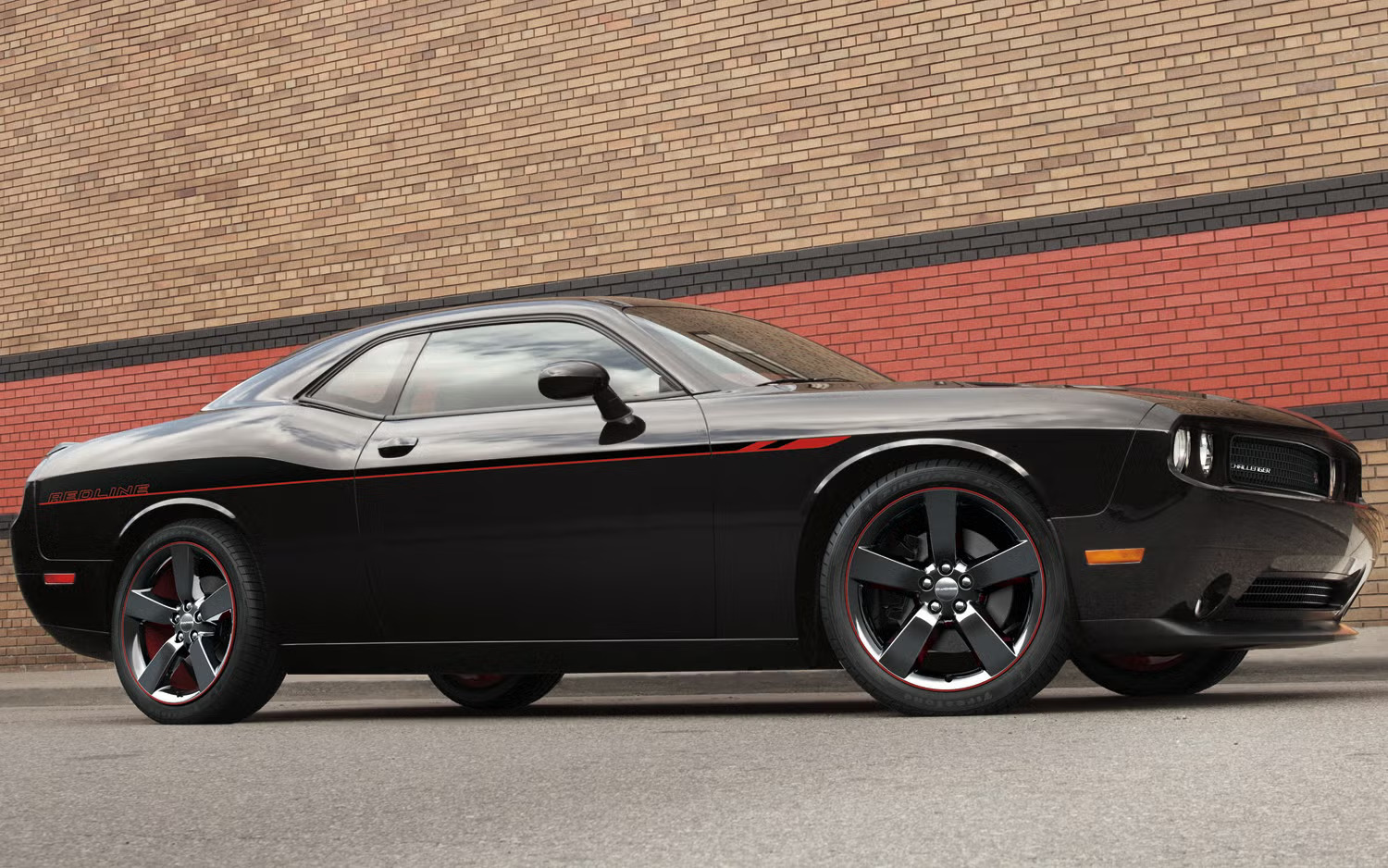
Dodge Challenger RT and Dodge Charger RT
The Dodge Challenger RT is often perceived as a large, heavy, and retro-styled car that prioritizes presence over nimble handling. Its broad, aggressive lines give it an intimidating stance, but beneath the sheet metal, it contains a highly capable V8 engine that can generate strong power relative to its mass.
While it might appear bulky on the road, the Challenger’s curb weight is carefully balanced with a powerplant that provides ample horsepower and torque, resulting in a power-to-weight ratio that surpasses many lighter sports cars.
This combination allows the car to accelerate strongly off the line, giving drivers an immediate sense of speed that feels much more intense than its dimensions might suggest. Even at highway speeds, the V8 continues to deliver smooth, relentless performance without requiring constant downshifting or aggressive revving.
One of the most notable aspects of the Challenger RT is its ability to make its power usable for everyday driving. Unlike some high-strung sports cars that demand constant attention and precision to feel fast, the Challenger’s engine produces abundant torque low in the rev range.
This means that even casual throttle inputs are rewarded with significant forward motion, making city driving, freeway merging, and passing slower vehicles effortless.
The combination of this torque and the car’s controlled mass allows the driver to feel fully in command of the acceleration experience. While the handling is not as sharp as a smaller sports car, the Challenger makes up for it with sheer thrust and a commanding road presence that few vehicles in its price range can match.
The Dodge Charger RT mirrors much of the Challenger’s performance philosophy but adapts it to a four-door format, providing practicality alongside power. At first glance, the Charger may seem like a family sedan, but under the hood it shares the same robust V8 engines as the Challenger.
This enables a surprisingly high power-to-weight ratio, allowing drivers to enjoy muscle car acceleration in a vehicle that offers room for passengers and cargo. Its wide stance and carefully tuned suspension also contribute to maintaining stability during aggressive acceleration, ensuring that the power delivery feels controlled rather than overwhelming. This combination of practicality and performance makes the Charger RT a unique proposition in the affordable muscle car market.
Both Dodge models exemplify how thoughtful engineering can overcome the perceived disadvantages of larger size. They demonstrate that strong engine output, when paired with relatively well-managed weight, can produce power to weight ratios that compete with or exceed those of lighter sports cars.
These vehicles are ideal for drivers who appreciate the visceral sensation of acceleration without sacrificing comfort or space. They remain among the most attainable ways to enjoy classic American muscle performance while retaining the ability to handle everyday driving scenarios with ease.
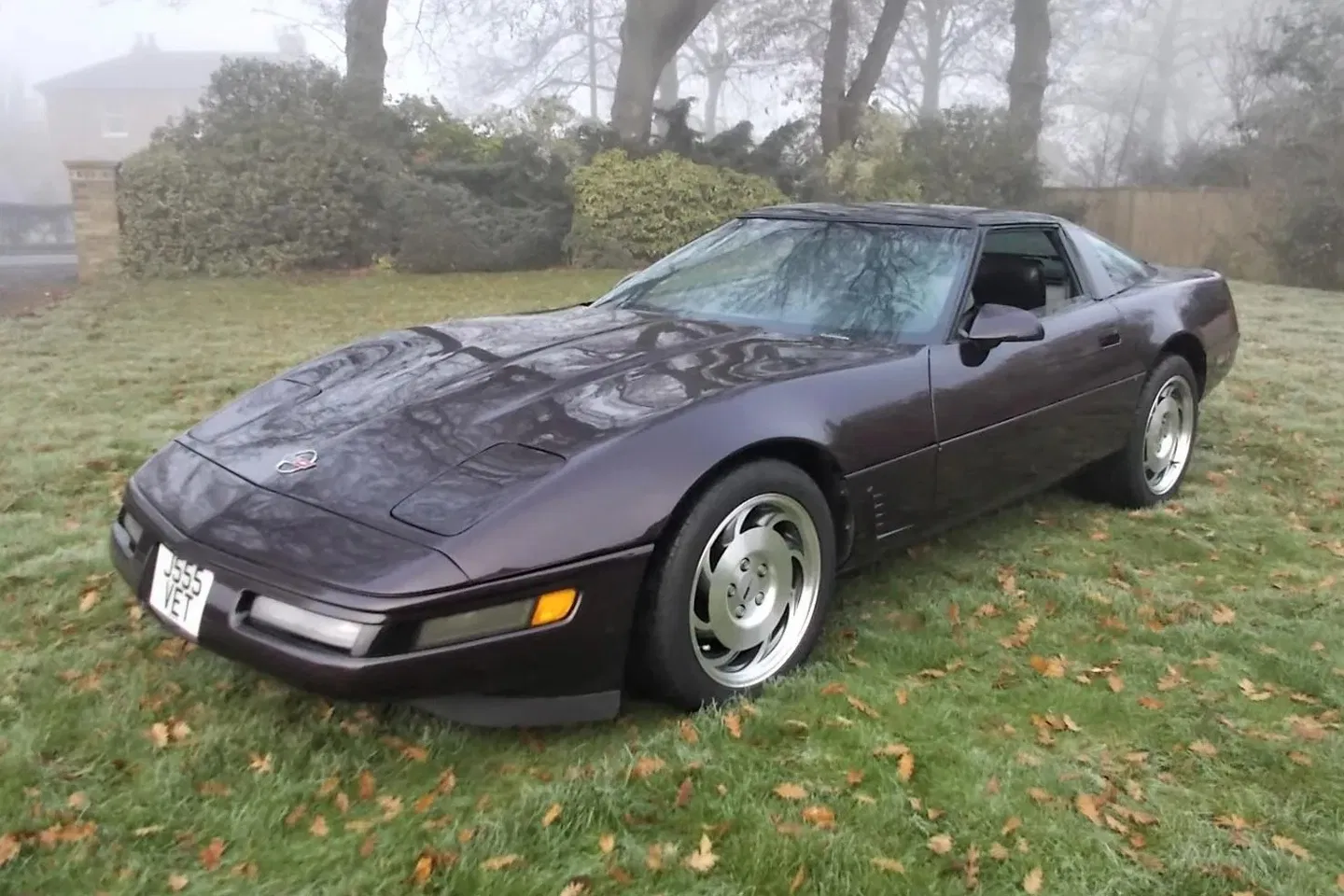
Chevrolet Corvette C4 and C5
The fourth-generation Chevrolet Corvette, commonly referred to as the C4, represents a significant milestone in affordable American sports car performance.
Designed with a lightweight chassis and a low curb weight, the C4 benefits from engines that produce substantial horsepower without the burden of unnecessary mass. This results in an impressive power-to-weight ratio that allows the car to feel quick, responsive, and capable of thrilling acceleration.
While it is a dedicated sports car rather than a traditional muscle coupe, it shares muscle car DNA in its approach to engine output and performance-focused engineering. The combination of light structure, aerodynamic shaping, and V8 power makes the C4 a vehicle that can outperform many lighter cars in real-world acceleration tests, demonstrating that size and displacement can work in harmony rather than against each other.
Driving the C4 Corvette reveals the benefits of a platform designed with performance in mind. Acceleration is immediate and linear, giving the driver constant feedback and confidence. The car’s low weight ensures that engine output translates efficiently into speed, reducing the sense of lag or hesitation that heavier cars often suffer.
Its handling, while oriented toward stability rather than extreme agility, complements its power, allowing the driver to carry speed through corners while still feeling in control. The C4 also benefits from a relatively simple mechanical layout, making it easier to maintain and modify without prohibitive cost. These factors combine to make it a highly effective sports car that delivers excellent power per pound.
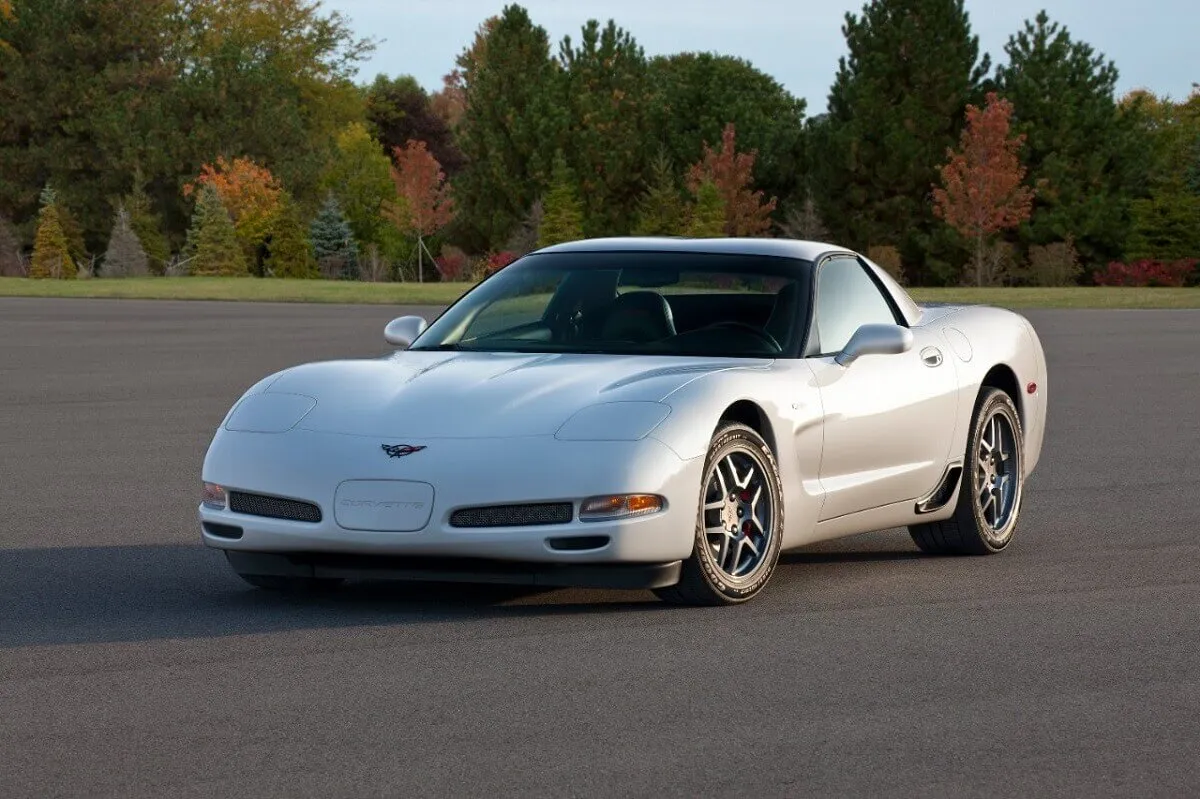
The fifth generation Corvette, or C5, improved on the C4’s formula with increased rigidity, refined aerodynamics, and more powerful engine options. Although the C5 is slightly heavier, it offsets the additional mass with larger horsepower figures, maintaining a strong power-to-weight ratio.
The car’s improved suspension geometry and balance enhance both acceleration traction and high-speed stability, making it a more well-rounded performer. While still a two-seat sports car, the C5’s refinement makes it more comfortable for extended drives without compromising its explosive acceleration. Its combination of V8 power and relatively low mass continues to place it ahead of many lightweight sports cars in pure performance metrics.
Both the C4 and C5 Corvettes illustrate how careful engineering can create a sports car that is affordable, reliable, and thrilling. Their focus on maximizing power relative to weight ensures that they remain relevant in discussions of performance even decades after their introduction.
For enthusiasts seeking an American sports car that combines accessible pricing with exceptional acceleration, the Corvette C4 and C5 remain standout choices, offering an experience that challenges smaller, lighter roadsters in every meaningful metric of power to weight efficiency.

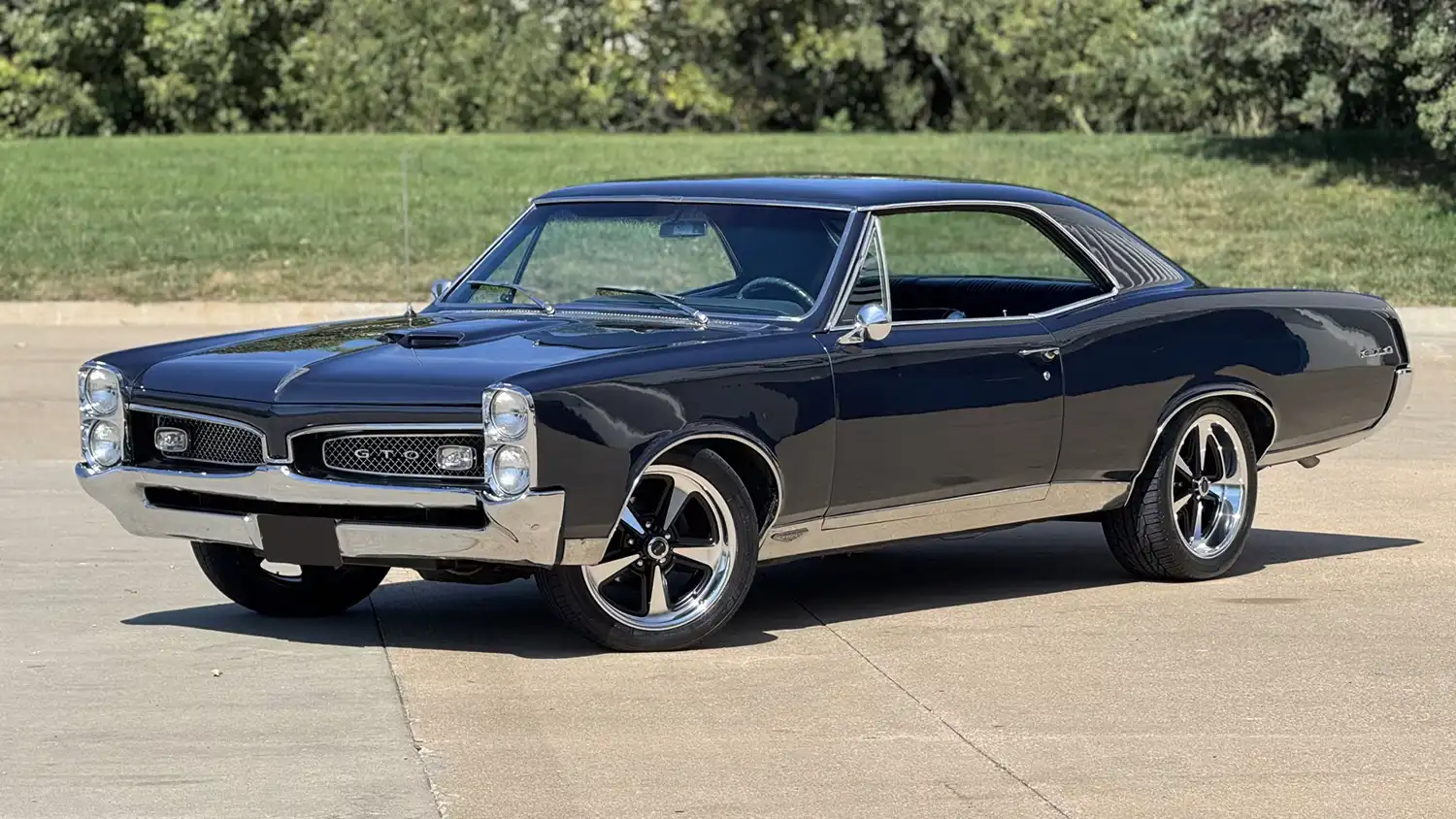
Pontiac GTO and Chevrolet SS
The modern Pontiac GTO reimagined classic muscle car principles with a more contemporary approach. Built with a solid chassis and a focus on both comfort and performance, the GTO’s high output V8 engine allows it to achieve a remarkable power to weight ratio.
The combination of substantial horsepower and carefully controlled mass enables it to accelerate quickly and consistently, providing a thrilling driving experience that rivals smaller, lighter sports cars. Despite the inclusion of modern amenities and comfort features, the GTO does not compromise on performance, and its engine delivers power smoothly and linearly, allowing drivers to exploit its capabilities without unnecessary complication.
The GTO also benefits from an understated design that belies its performance potential. Many casual observers may not immediately recognize it as a serious performance car, but behind the wheel, the vehicle’s rapid acceleration and strong engine response become immediately apparent.
The torque-rich V8 provides authority across a broad range of speeds, making city driving, highway overtaking, and spirited runs equally satisfying. For drivers seeking a combination of muscle car tradition and modern refinement, the GTO offers a unique blend of performance, comfort, and accessible pricing.
The Chevrolet SS follows a similar philosophy but translates the muscle car ethos into a practical four-door sedan package. Its V8 engine produces abundant horsepower and torque, enabling a strong power to weight ratio even in a larger body.
Unlike traditional sports cars that may compromise interior space for performance, the SS retains functionality for everyday use while delivering acceleration that eclipses lighter, smaller cars. Its platform allows drivers to enjoy the thrill of a muscle car while accommodating passengers, making it an ideal solution for those who want performance without sacrificing practicality.
Together, these two vehicles demonstrate that modern muscle can balance refinement, usability, and raw performance. By prioritizing engine output and maintaining reasonable curb weight, the GTO and SS outperform many smaller sports cars in acceleration, proving that muscle cars remain a compelling alternative.
They offer drivers the visceral satisfaction of powerful American engines combined with a layout that supports both daily driving and spirited performance, making them accessible choices for enthusiasts who value versatility and speed.
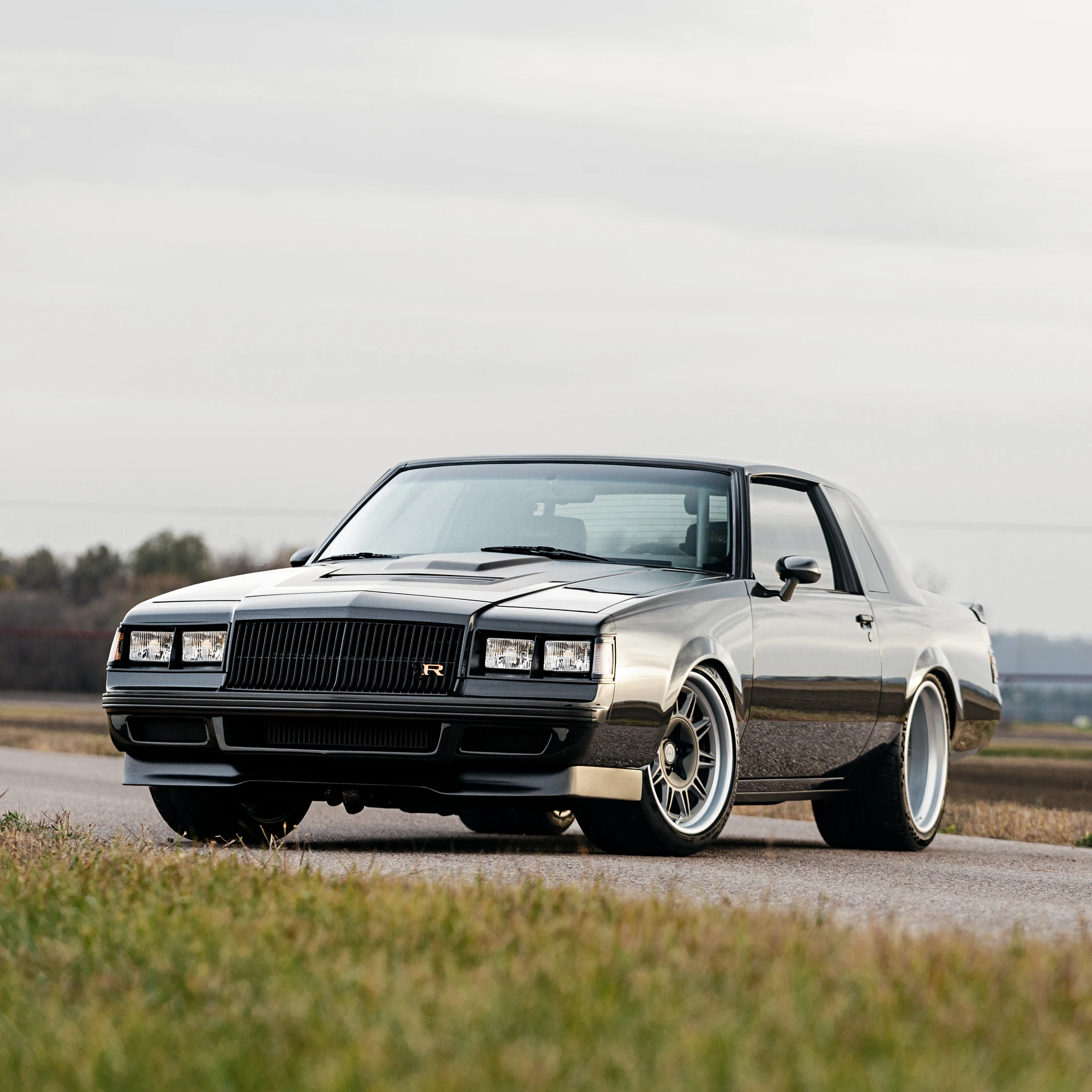
Buick Grand National and Ford Thunderbird Super Coupe
The Buick Grand National is an iconic example of a muscle car that used forced induction to maximize performance without excessive displacement. Its turbocharged V6 engine produces impressive horsepower and torque, allowing it to compete with larger V8-powered cars in acceleration.
The car’s relatively modest curb weight amplifies this advantage, resulting in a power to weight ratio that exceeds many contemporary sports cars, including the lightweight Mazda Miata. The Grand National’s combination of turbocharging, low weight, and strong chassis engineering creates a vehicle that delivers startling acceleration, giving drivers a unique and memorable driving experience even decades after its release.
What makes the Grand National particularly interesting is the character of its power delivery. The turbocharged engine builds boost quickly, producing a surge of acceleration that feels dramatic and immediate. This makes it extremely competitive in both city and highway driving scenarios.
Unlike naturally aspirated cars that may require high revs to extract maximum performance, the Grand National’s turbocharged engine provides a broad, usable power band that enhances the driving experience. Its blacked-out styling and understated appearance also make it a sleeper, allowing drivers to surprise observers with performance that far exceeds expectations.
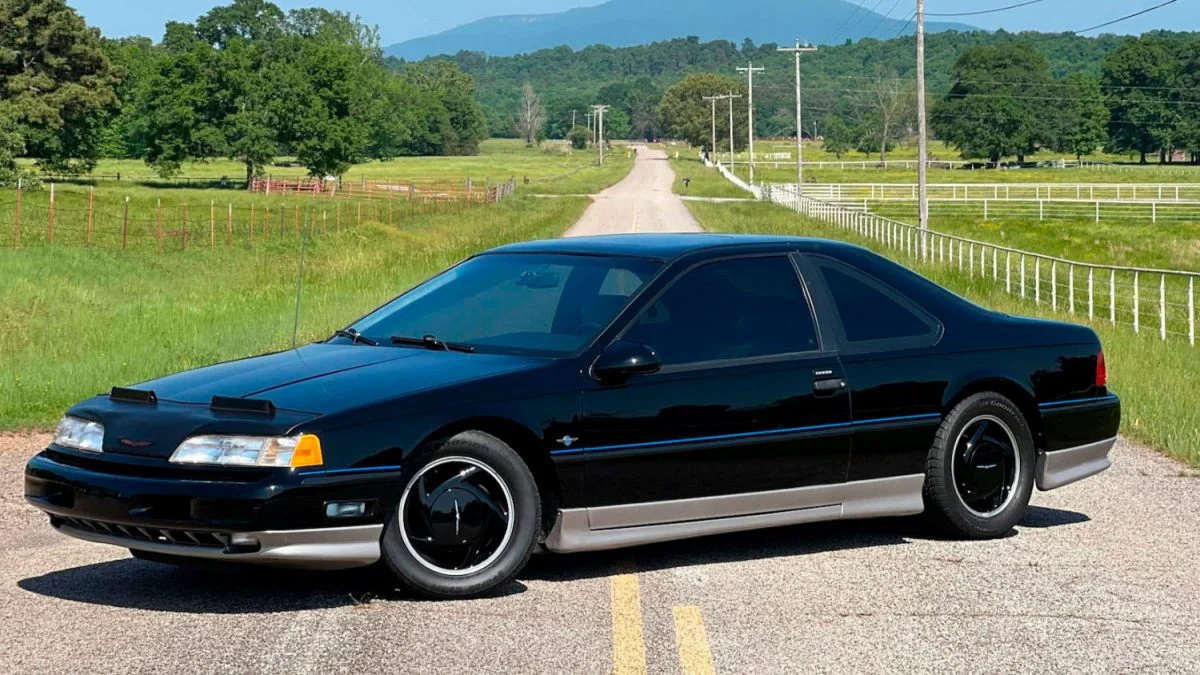
The Ford Thunderbird Super Coupe takes a similar approach to achieving high power-to-weight efficiency. Equipped with a supercharged V6 engine, the Super Coupe is capable of producing significant horsepower while maintaining a curb weight that does not overly hinder acceleration.
While it may appear to be a comfortable grand tourer, its engine allows it to accelerate with the authority of a muscle car. This combination of comfort, style, and performance makes it a unique option for enthusiasts who desire both practicality and raw speed. The Super Coupe demonstrates how forced induction can be used to overcome weight constraints and produce a compelling power-to-weight ratio.
Together, the Buick Grand National and Ford Thunderbird Super Coupe illustrate alternative paths to muscle performance. Instead of relying solely on large displacement engines, these cars show that turbocharging and supercharging can achieve exceptional power relative to weight.
They remain affordable, intriguing, and highly capable vehicles for enthusiasts who want strong acceleration, unique engineering approaches, and an alternative to traditional V8 muscle cars. Both vehicles continue to represent intelligent design choices that maximize performance per pound without requiring extreme measures.
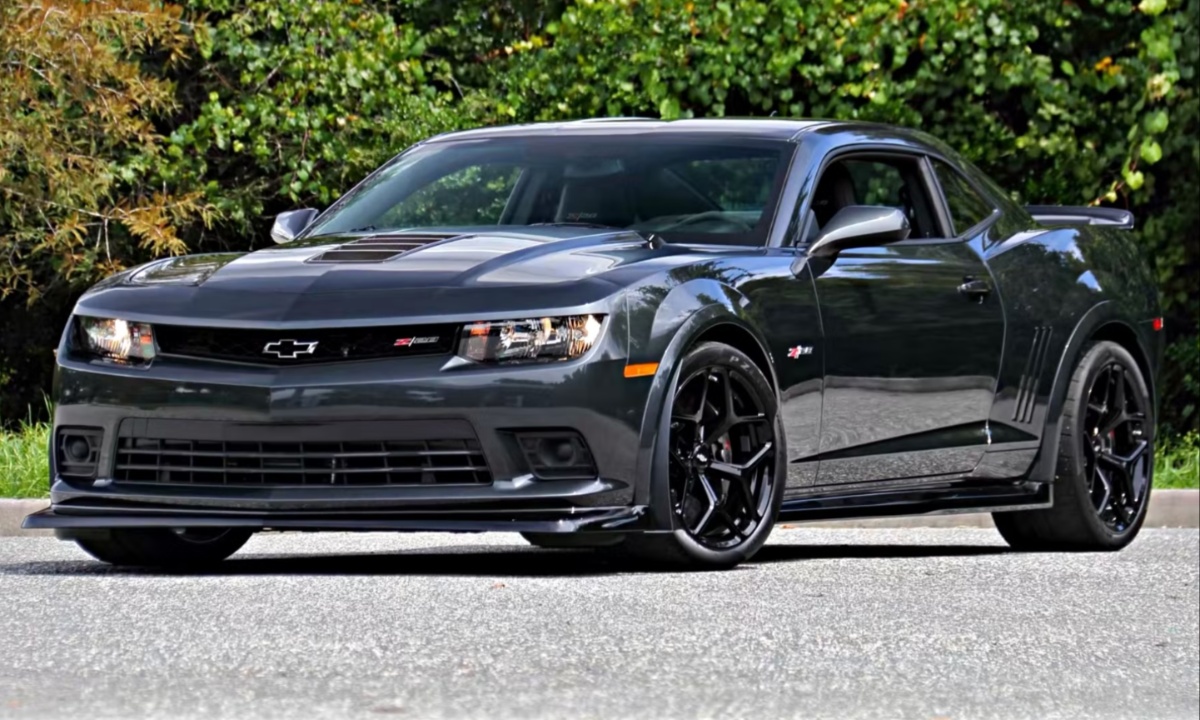
Chevrolet Camaro Z28 and Pontiac Firebird Formula
The fourth-generation Chevrolet Camaro Z28 has long been recognized as one of the most accessible and effective V8 performance cars of its era. Its combination of powerful small block engines and a relatively lean chassis gives it a power to weight ratio that exceeds many lighter sports cars, including the Mazda Miata.
While its long hood and wide stance may give it a bulky appearance, these dimensions are offset by clever engineering decisions that limit unnecessary mass. The Camaro’s layout emphasizes mechanical simplicity, allowing the engine’s output to be transferred efficiently to the rear wheels.
This combination makes acceleration feel immediate, particularly when merging onto highways or launching from a stoplight, highlighting its muscle car credentials in a way that is both thrilling and approachable.
The Z28 is particularly notable for how usable its performance is. Its V8 engines generate strong torque at low and midrange RPMs, meaning drivers can experience powerful acceleration without constantly wringing the engine to high revs.
This accessibility makes the car feel effortless during daily driving, yet it retains an unmistakable sense of aggression when fully pushed. Unlike some lightweight sports cars that require careful gear selection and constant attention to extract speed, the Camaro delivers performance that is simple to harness.
The sound of the engine, the immediate response to throttle inputs, and the feeling of controlled power combine to create a visceral driving experience that remains appealing decades after its introduction.
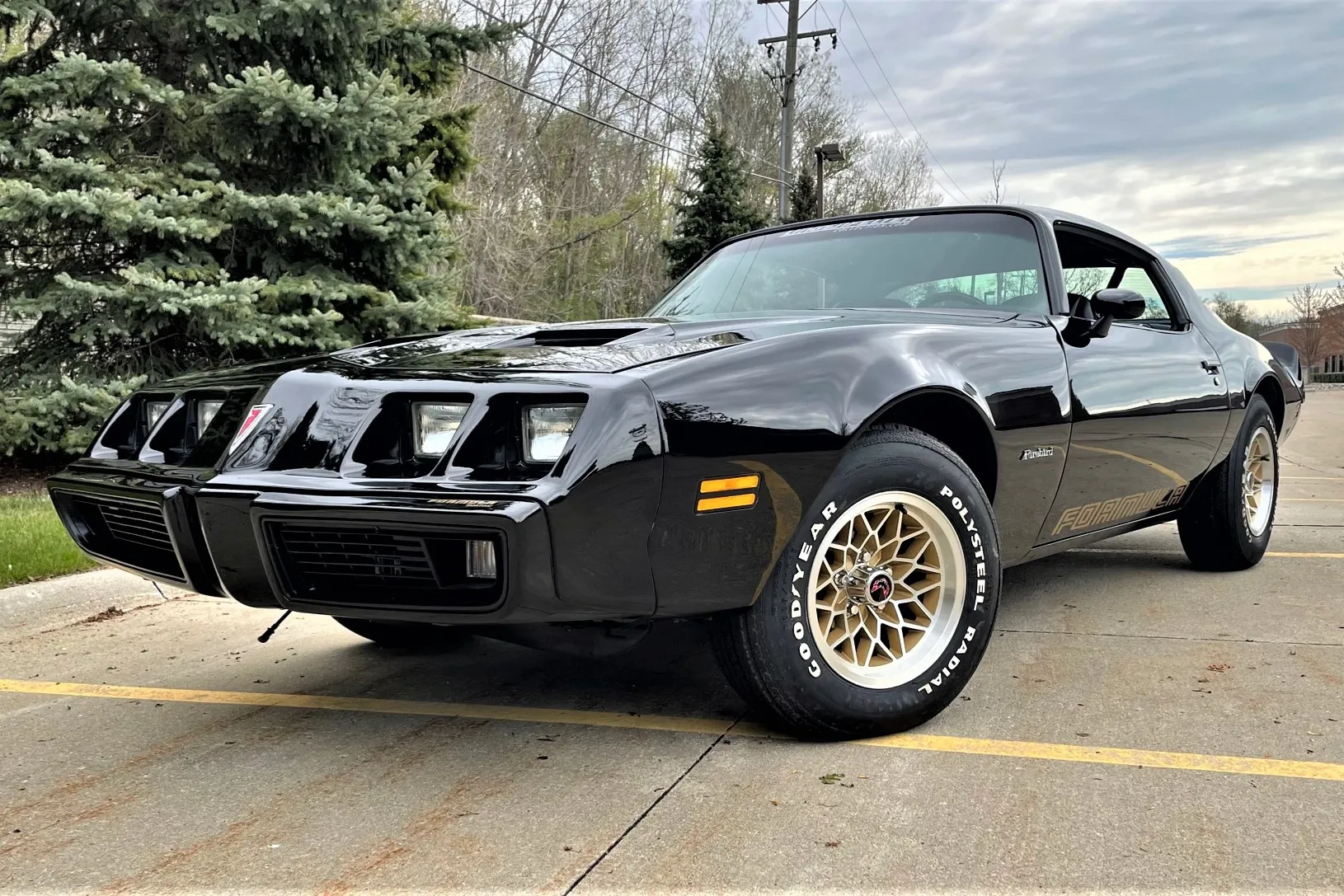
The Pontiac Firebird Formula shares much of the Camaro’s mechanical DNA but adds its own character. Focused on performance rather than luxury, the Formula often sheds unnecessary weight through fewer amenities and more aggressive suspension tuning.
Its wide, low-slung profile improves stability during acceleration, ensuring that the car feels planted even under hard throttle. The result is a vehicle whose power-to-weight ratio not only surpasses that of the Miata but also delivers confidence-inspiring performance for spirited driving. Enthusiasts appreciate how the Formula blends style and practicality, offering a unique alternative to the Z28 while maintaining strong performance capabilities.
Both of these cars also benefit from decades of aftermarket support. Parts availability, engine upgrades, and suspension modifications are plentiful, allowing owners to maintain or improve performance without prohibitive costs.
While neither car matches the Miata’s nimbleness in tight corners, their superior power-to-weight ratios make them exceptionally fast in straight-line scenarios. Drivers who prioritize acceleration and engine presence over agility will find both the Z28 and Firebird Formula to be compelling, affordable, and enduring examples of American muscle at its best.
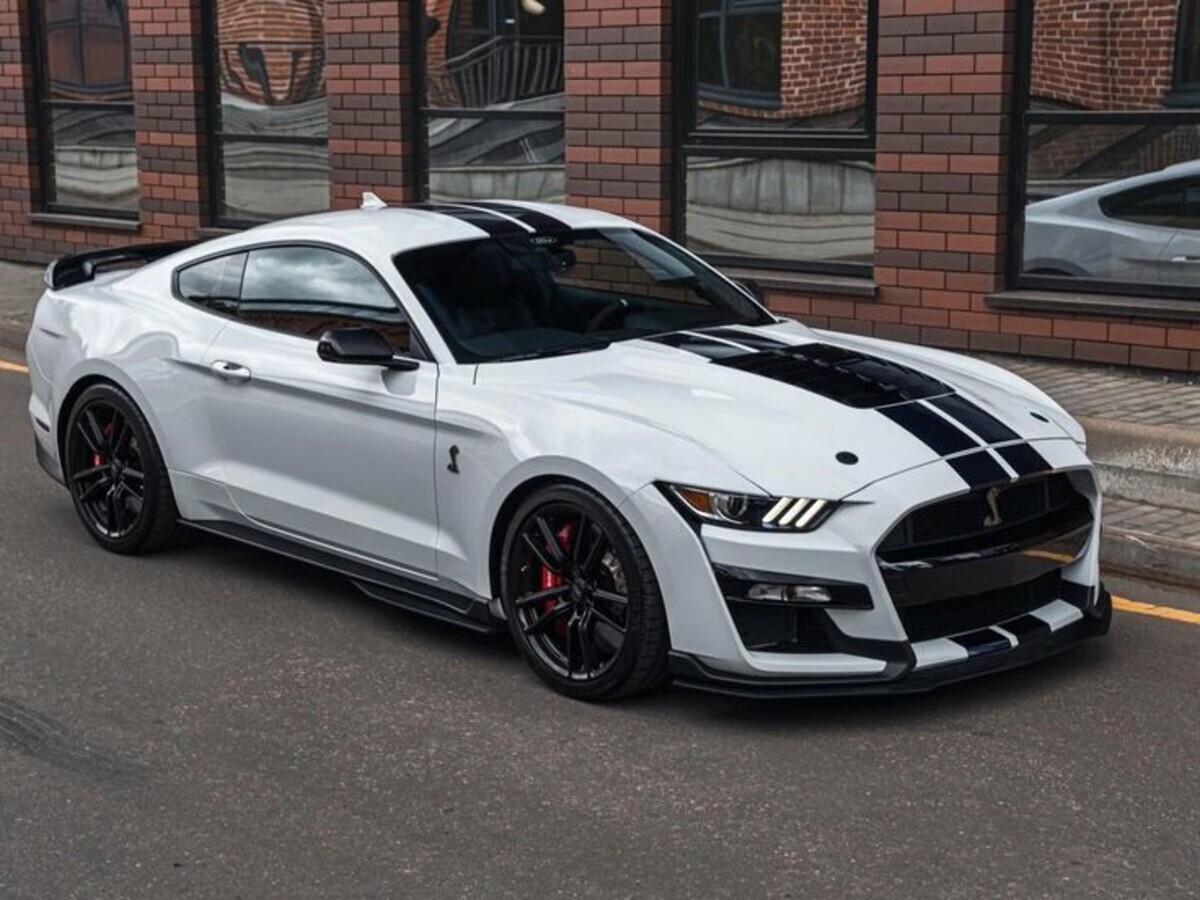
Ford Mustang GT and Chevrolet Camaro SS
The Ford Mustang GT, particularly models from the late 1990s and early 2000s, represents a critical period in muscle car evolution, where performance and daily usability were balanced with remarkable effectiveness.
Equipped with potent V8 engines, these Mustangs achieve a power-to-weight ratio that allows them to accelerate with authority, easily surpassing smaller sports cars like the Mazda Miata. The engines are designed to deliver robust output across the rev range, giving the car a sense of urgency that is hard to ignore.
Combined with a reasonably light chassis and simple suspension layout, the Mustang GT offers a performance experience that is immediately gratifying for both novice and experienced drivers.
One of the Mustang GT’s key strengths is its versatility. Unlike some performance vehicles that feel demanding or difficult to drive in urban settings, the Mustang provides effortless acceleration and manageable handling. Its engine delivers torque in a usable range, so passing slower vehicles on the highway or accelerating out of corners is simple and satisfying.
The car’s weight remains low enough relative to its power that acceleration feels explosive without being unpredictable, allowing drivers to confidently exploit the V8’s capabilities. This balance between raw power and everyday usability defines the Mustang GT as one of the most approachable muscle cars on the market.

The Chevrolet Camaro SS operates in a similar performance space but leans slightly more toward aggressive engineering. Its higher output engines and firmer suspension make it feel sharper during acceleration and more planted under hard throttle. The Camaro SS benefits from both increased horsepower and a chassis designed to handle its power effectively.
While modern safety equipment and additional features add some weight, the car’s power to weight ratio still outperforms many lighter sports cars, particularly in straight line acceleration. The SS delivers a blend of style, presence, and speed that makes it a serious contender for enthusiasts seeking muscle performance without a large budget.
Together, the Mustang GT and Camaro SS illustrate the evolution of modern muscle cars. They demonstrate that it is possible to achieve high power to weight ratios without resorting to extreme lightweight construction.
By pairing robust V8 engines with platforms that avoid unnecessary bulk, both vehicles provide acceleration and road presence that rival smaller, lighter cars. Their enduring popularity and availability in the used market make them excellent choices for enthusiasts who want the thrill of classic American muscle combined with more contemporary comfort and refinement.
