
Ferrari’s identity has often been associated with mid-engine supercars and racing machines, yet some of the most important and emotionally resonant cars to wear the prancing horse have placed their engines ahead of the driver.
These front-engine Ferraris represent a different philosophy, one rooted in grand touring tradition, mechanical elegance, and long-distance performance rather than pure circuit dominance. They combine power with refinement, offering a balance that shaped the brand long before the modern supercar era took hold.
From early V12 masterpieces to modern high-performance coupes, these cars defined what it meant to drive fast with style and purpose.
The front engine layout allowed Ferrari engineers to craft cars that were usable, stable at high speed, and capable of covering great distances without sacrificing driver engagement. This configuration also supported beautifully proportioned bodies, long hoods, and cabins set rearward for ideal weight distribution.
Designers had space to create flowing lines that became timeless rather than aggressive, helping these cars age with dignity rather than trend-driven drama. Many of Ferrari’s most admired shapes came from this layout, and their visual influence still echoes in modern designs.
Beyond aesthetics, these machines carried immense mechanical significance. Naturally aspirated V12 engines, later joined by V8s and even V6 powerplants, delivered smooth power curves and unmistakable sound.
Manual gearboxes dominated for decades, reinforcing the tactile connection between driver and machine. These cars were not built solely for lap times or marketing numbers. They were built to feel alive on real roads, rewarding skill, patience, and mechanical sympathy.
This article presents ten of the greatest front engine Ferraris ever built. Each was chosen not only for performance or rarity, but for its influence, character, and lasting reputation. Together, they tell a story of innovation, craftsmanship, and a unique interpretation of speed that remains deeply rooted in Ferrari’s heritage.
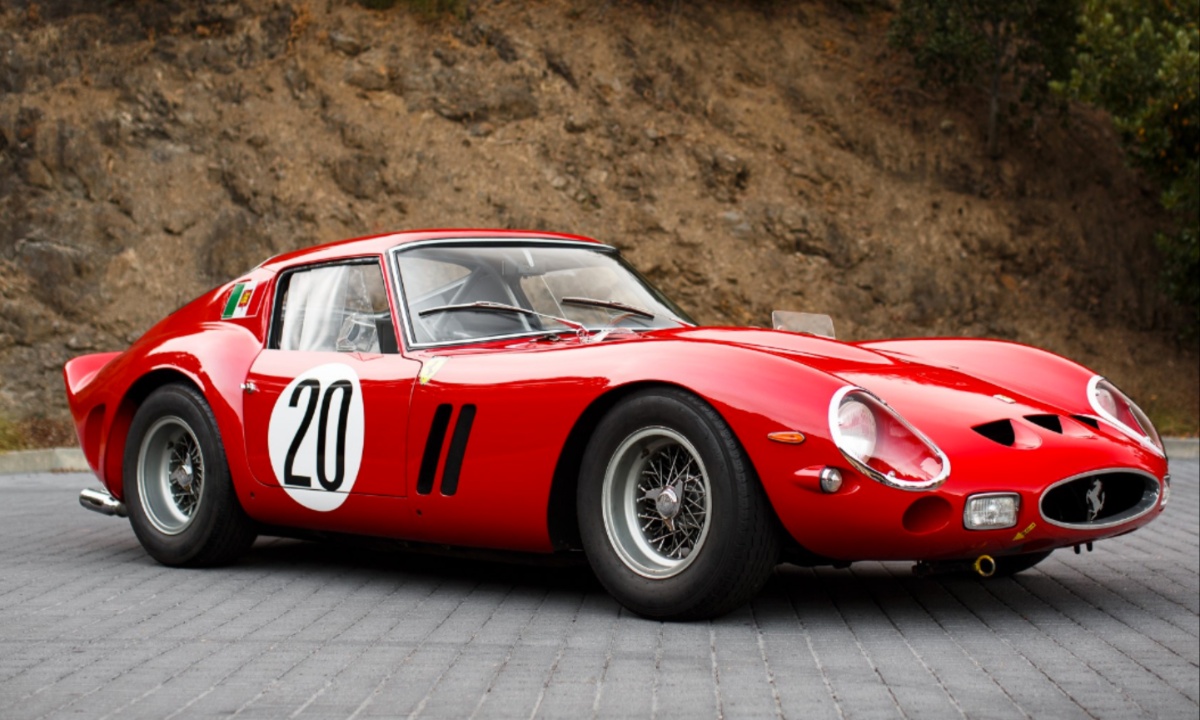
Ferrari 250 GTO
The Ferrari 250 GTO stands as one of the most celebrated automobiles ever created, regardless of layout or brand. Built between 1962 and 1964, it was conceived primarily for racing, specifically to compete in GT class events such as the Tour de France and various endurance races.
Its 3.0 liter V12 engine produced around 300 horsepower, which might seem modest by today’s standards, but it was revolutionary at the time. The engine was derived from Ferrari’s 250 series racing cars, yet tuned for reliability as much as for performance, allowing it to endure long races without compromising on speed.
Each car was hand-assembled, with meticulous attention to detail, ensuring that no two GTOs were exactly alike. The car’s lightweight bodywork, combined with a tubular steel frame, gave it remarkable agility, and its engineering reflected a perfect harmony between competition and road usability.
What made the 250 GTO extraordinary was the precision of its balance and handling. The front engine layout allowed Ferrari engineers to distribute weight strategically, giving the car a neutral balance that could handle corners with surprising predictability.
Its suspension geometry was advanced for the era, combining wishbones, coil springs, and telescopic dampers in a setup that allowed controlled weight transfer and feedback to the driver. On the track, it could match or outperform cars with more raw horsepower because its responsiveness rewarded driver skill rather than brute force.
Even on narrow, winding roads, the car felt alive, communicating constantly through its steering, brakes, and engine. Drivers reported that the GTO provided a unique sense of connection with the car’s mechanics, a feeling that few automobiles, even modern ones, could replicate.
Visually, the 250 GTO achieved near perfection, with its form sculpted directly by aerodynamic and mechanical necessity. The long, sweeping hood tapered into a low front end, optimizing airflow for both speed and engine cooling. Its curving fenders allowed ample wheel clearance without interrupting the car’s clean lines.
The cabin, although compact, was ergonomically designed for racing, placing the driver close to the mechanical core while providing a clear view forward. Even the rear of the car, with its subtle Kamm tail, contributed to high-speed stability.
The proportions created an organic elegance, a look that transcended mere styling trends of the early 1960s and has remained timeless. Each element seemed deliberate, giving the car a purposeful, purposeful presence that continues to inspire admiration among enthusiasts, collectors, and designers alike.
Today, the 250 GTO is considered the pinnacle of Ferrari’s front-engine heritage, a model that embodies history, performance, and art in one package. Its racing pedigree, limited production of just 36 units, and auction values exceeding hundreds of millions of dollars elevate it beyond mere transportation.
The GTO also influenced the design and engineering of subsequent Ferraris, setting benchmarks for aerodynamics, weight distribution, and engine performance that guided the brand for decades. Owning or even witnessing one is often described as a transcendent experience, highlighting the cultural and emotional weight the car carries.
For these reasons, it is widely regarded not just as one of the greatest front engine Ferraris, but as one of the greatest automobiles of any era.
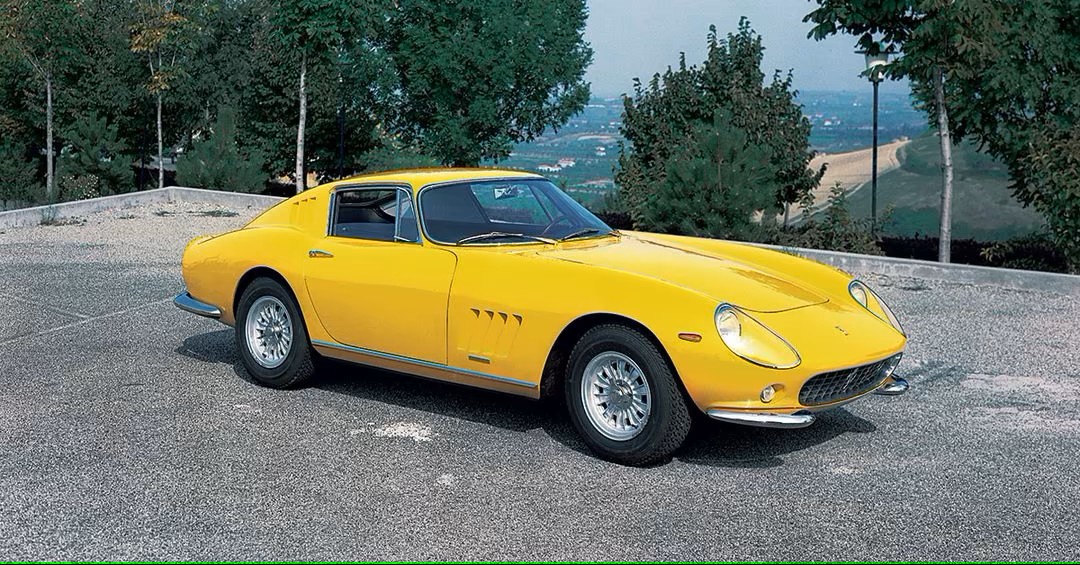
Ferrari 275 GTB
The Ferrari 275 GTB, produced from 1964 to 1968, represents a significant evolution in Ferrari’s approach to road cars, blending performance, refinement, and style. It introduced independent rear suspension to the front engine lineup, a major advancement that improved handling, stability, and ride comfort.
Unlike earlier Ferrari models that relied on live rear axles, the 275 GTB allowed each rear wheel to respond individually to road imperfections, enhancing grip and reducing body movement. This technical innovation made the car more refined, particularly on long drives, without sacrificing the dynamic character that defined the brand.
Its 3.3 liter V12 engine produced roughly 280 to 300 horsepower depending on the version, and it offered a smooth power delivery that was as pleasurable on winding mountain roads as it was on open highways.
Driving the 275 GTB is often described as an intoxicating experience. The front engine layout combined with a rear-mounted transaxle resulted in near-perfect weight distribution, giving the car remarkable balance through corners. Steering was precise yet forgiving, allowing confident entry and exit even at high speeds.
The engine’s responsiveness was immediate, and the exhaust note was both musical and engaging, reinforcing the sense that the car was alive and listening to the driver. Unlike many modern performance cars, the 275 GTB demanded active participation, rewarding those who understood how to modulate throttle, brake, and steering inputs in harmony with the car’s dynamics. Every journey, whether short or long, could be an exhilarating lesson in automotive finesse.
The design of the 275 GTB marked a turning point for Ferrari’s aesthetics. Its long, flowing hood, compact passenger compartment, and gently sloping rear conveyed elegance while hinting at aggressive potential.
The original Pininfarina bodywork emphasized simplicity and proportion, with restrained curves that contrasted with the more flamboyant styling of some contemporaries. Minor changes across different production years, such as the introduction of a shorter nose and updated vents, allowed subtle improvements in aerodynamics while preserving the car’s character.
Inside, the cabin was purposeful and driver-focused, featuring simple instrumentation, supportive seats, and easy access to controls, underscoring the car’s dual nature as both a performance machine and a comfortable grand tourer.
The 275 GTB also had a significant impact on Ferrari’s engineering trajectory. It demonstrated that innovation, refinement, and driver engagement could coexist in a front engine format. The combination of transaxle layout, independent suspension, and a responsive V12 set a new standard for performance cars that sought to marry comfort with excitement.
Collectors and enthusiasts continue to value the 275 GTB not only for its technical accomplishments but also for its timeless design and evocative driving experience. It remains a reference point for what a front engine Ferrari should feel and look like, bridging the gap between raw early models and later, more technologically sophisticated grand tourers.
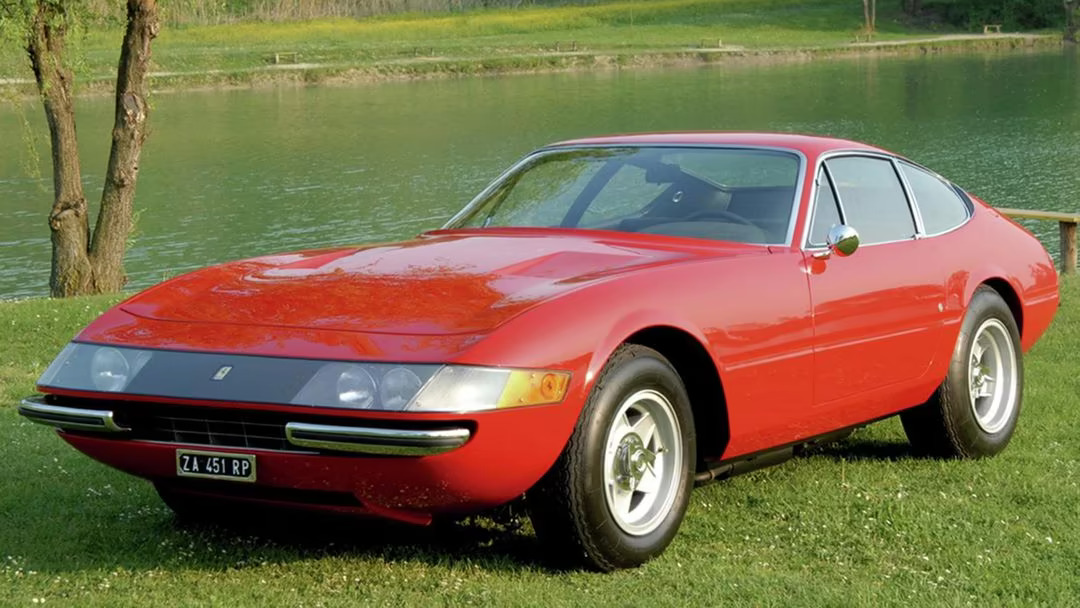
Ferrari Daytona 365 GTB 4
The Ferrari Daytona, officially the 365 GTB 4, arrived at the turn of the 1970s as a statement of raw presence and technical competence. Its 4.4 liter V12 engine, producing approximately 352 horsepower, allowed it to accelerate from 0 to 60 mph in just over six seconds, remarkable for a car of its size and era.
Unlike previous Ferraris that leaned heavily toward race-derived components, the Daytona was designed to be robust, reliable, and comfortable over long distances. Its chassis, suspension, and brakes were optimized to handle both spirited driving and extended tours, demonstrating that front engine cars could be both intimidating and accessible.
The car’s size contributed to its stable and planted feel, a characteristic that inspired confidence even at high speeds, while still retaining a connection between driver, machine, and road.
Driving the Daytona was an exercise in power management and composure. The car’s heavy V12 generated strong torque across a broad rev range, allowing effortless overtaking and acceleration. Steering was weighty and communicative, providing constant feedback that encouraged engagement without inducing fatigue.
Its suspension balanced firmness with suppleness, absorbing highway imperfections while maintaining cornering composure. Even in spirited driving conditions, the Daytona conveyed a sense of reliability, encouraging drivers to push the car confidently. This combination of raw performance and user-friendly dynamics made the Daytona a rare example of a car that excelled in both comfort and thrill simultaneously.
The Daytona’s design was bold and unmistakable. Its long, low hood and sharply angled front gave it an aggressive stance, while its wedge-shaped profile spoke to the design trends of the 1970s. Despite the angular aesthetic, careful attention was paid to proportion and flow, preventing the car from appearing heavy or ungainly.
Headlights were hidden behind covers, emphasizing the car’s clean nose, while the cabin maintained a low, streamlined look. Inside, the cockpit combined functional elegance with luxury touches, including leather seats and simple, logical instrumentation, reinforcing the Daytona’s dual purpose as both a high-speed performer and a long-distance cruiser.
The Daytona secured its place as one of Ferrari’s most iconic front engine GTs because it successfully bridged eras. It maintained the performance pedigree expected of Ferrari while embracing the comfort, scale, and presence required by contemporary grand tourers.
Its legacy influenced subsequent Ferrari models, showing that a front engine layout could deliver both charisma and capability in a way that resonated with drivers seeking style, speed, and substance.
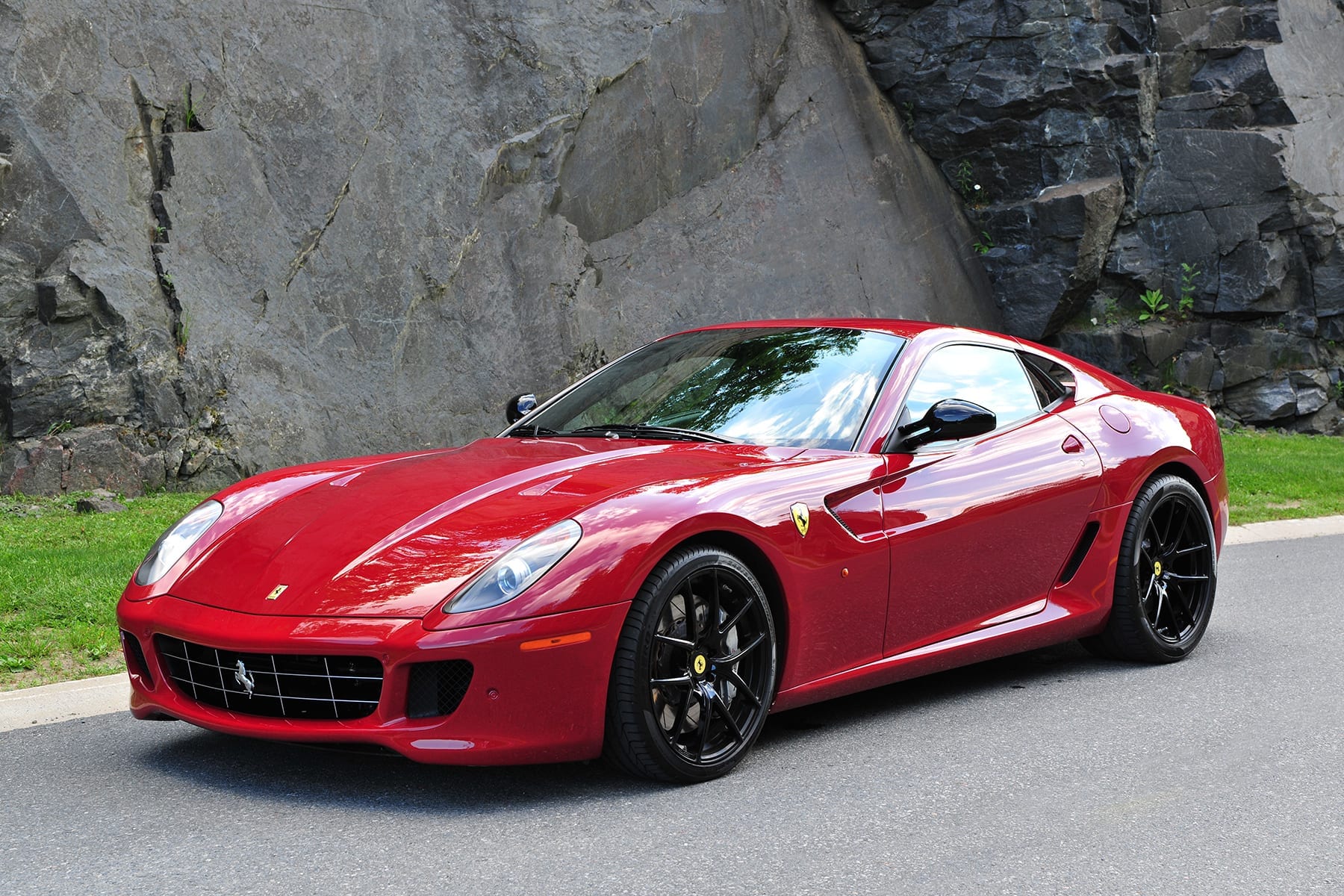
Ferrari 599 GTB Fiorano
The Ferrari 599 GTB Fiorano represented a modern apex for front engine V12 Ferraris when it debuted in 2006. Its 6.0 liter naturally aspirated engine produced over 600 horsepower, making it capable of competing with mid engine supercars while maintaining the long-hood, front engine proportions of classic Ferraris.
The Fiorano was engineered to balance power with control, ensuring that its immense output could be harnessed effectively on both road and track. Ferrari’s focus on reducing weight, optimizing aerodynamics, and refining chassis stiffness allowed the car to achieve an impressive combination of acceleration, handling, and braking performance, making it a technological benchmark for front engine GTs of its time.
Driving the 599 GTB Fiorano delivers a remarkable fusion of tradition and innovation. The car’s front engine placement creates a familiar sense of balance, while the sophisticated suspension, active aerodynamics, and electronic stability systems ensure that cornering and acceleration remain predictable.
The V12 engine delivers smooth, continuous power across the rev range, accompanied by the unmistakable Ferrari exhaust note that is both musical and spine-tingling. Despite its size, the Fiorano communicates information clearly through the steering and pedals, creating a sense of connection and engagement that many modern supercars struggle to replicate.
Drivers describe it as a car that feels alive yet entirely controllable, an ideal combination of raw performance and mechanical sympathy.
The design of the 599 GTB Fiorano reflects Ferrari’s ability to combine elegance and aggression. Sculpted body panels guide airflow efficiently, while subtle aerodynamic devices, such as the integrated front splitter and underbody channels, enhance stability at high speed.
The long hood, short cabin, and flowing roofline echo the proportions of classic front-engine Ferraris while incorporating modern refinement. Inside, the cabin balances luxury with purpose: premium materials, driver-focused controls, and seating that supports both spirited driving and comfortable long-distance travel. The effect is a car that feels cohesive, intentional, and thoroughly modern without losing a sense of heritage.
The 599 GTB Fiorano also reinforced the relevance of front engine Ferraris in an era dominated by mid engine supercars. Its combination of technology, performance, and emotional engagement proved that a front engine layout could remain competitive, satisfying both purists and enthusiasts seeking a complete driving experience.
The Fiorano became a reference point for future front engine Ferraris, showing that tradition and cutting edge engineering could coexist in a package that is powerful, beautiful, and deeply rewarding to drive.

Ferrari 812 Superfast
The Ferrari 812 Superfast represents the pinnacle of naturally aspirated front engine performance. Its 6.5 liter V12 engine produces over 800 horsepower, making it one of the most powerful front engine production cars in history. Beyond sheer output, the 812 emphasizes usability and engagement, delivering power in a manner that is immediate yet manageable.
Engineers focused on extracting both high-end performance and low-speed responsiveness, creating a car that could dominate a track while remaining accessible on open roads. Every system, from suspension to aerodynamics, was optimized to balance high-speed stability with driver involvement, proving that extreme power does not need to compromise control or coherence.
Design plays a critical role in the 812’s character. Its aggressive lines, muscular haunches, and aerodynamically functional vents convey performance without appearing cluttered or overworked. Ferrari retained the classic long hood and cabin placement, maintaining a visual lineage that ties the 812 to decades of front engine V12s.
Subtle details, such as active aerodynamic flaps and integrated diffusers, enhance high-speed performance while remaining visually discreet. The interior continues Ferrari’s tradition of combining driver focus with luxury, blending tactile materials and intuitive controls with advanced technology.
The 812 Superfast demonstrates the enduring potential of the front engine V12 layout. Even in an era of turbocharging and hybridization, it shows that naturally aspirated, front engine Ferraris can deliver breathtaking performance, precise handling, and emotional resonance.
The car embodies the culmination of decades of engineering evolution, creating a machine that is simultaneously aggressive, elegant, and supremely capable, reaffirming the relevance and allure of front engine Ferraris for a new generation of enthusiasts.
Ferrari F12 Berlinetta
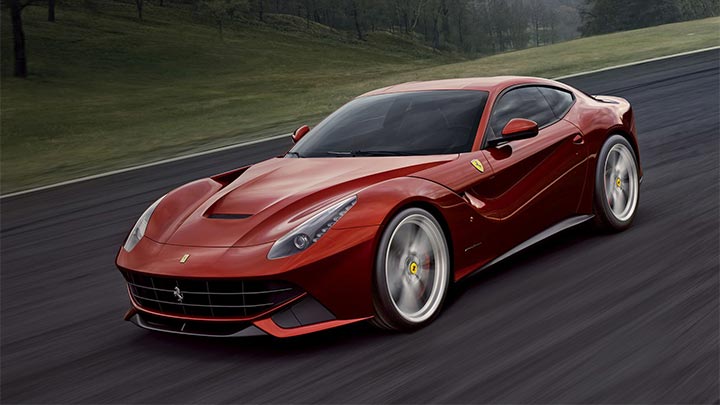
The Ferrari F12 Berlinetta, introduced in 2012, marked a significant refinement in front engine V12 performance. It replaced the 599 GTB Fiorano with a lighter and more aerodynamically efficient platform, while its 6.3 liter naturally aspirated V12 delivered an impressive 730 horsepower.
This engine, one of Ferrari’s most powerful naturally aspirated units, offered a linear power curve that felt responsive at all speeds. Acceleration from 0 to 60 mph occurred in just under 3.1 seconds, a remarkable achievement for a car of its size, yet the F12 retained the composure and reliability expected from a grand tourer.
Ferrari engineers focused on combining raw performance with driver engagement, ensuring that every gear shift, throttle modulation, and steering input contributed to a connected, visceral experience.
Driving the F12 Berlinetta is a lesson in precision and excitement. Its advanced suspension geometry, rear-wheel steering, and active aerodynamics create a sense of balance that allows the car to feel nimble despite its large front engine layout. The steering is responsive and communicative, providing immediate feedback while allowing confident cornering at high speeds.
The V12 engine, paired with an F1-inspired dual-clutch transmission, delivers its power effortlessly, creating an intoxicating soundtrack that rises and falls with the driver’s input. The car’s chassis is tuned to combine comfort with performance, so long journeys feel manageable without sacrificing the thrill of spirited driving, highlighting Ferrari’s ability to balance extremes in one package.
The F12 Berlinetta also demonstrates Ferrari’s commitment to innovation while respecting tradition. By integrating advanced electronics, weight reduction strategies, and aerodynamic improvements, Ferrari enhanced handling, stability, and responsiveness without compromising the raw character of a front engine V12.
The car successfully balances comfort for everyday driving with the capacity to perform at track levels, offering a holistic driving experience. Its presence on the road reflects power, elegance, and technological sophistication, making it one of the most complete front engine Ferraris of its era and a natural progression in the lineage of Ferrari grand tourers.
Ferrari 550 Maranello
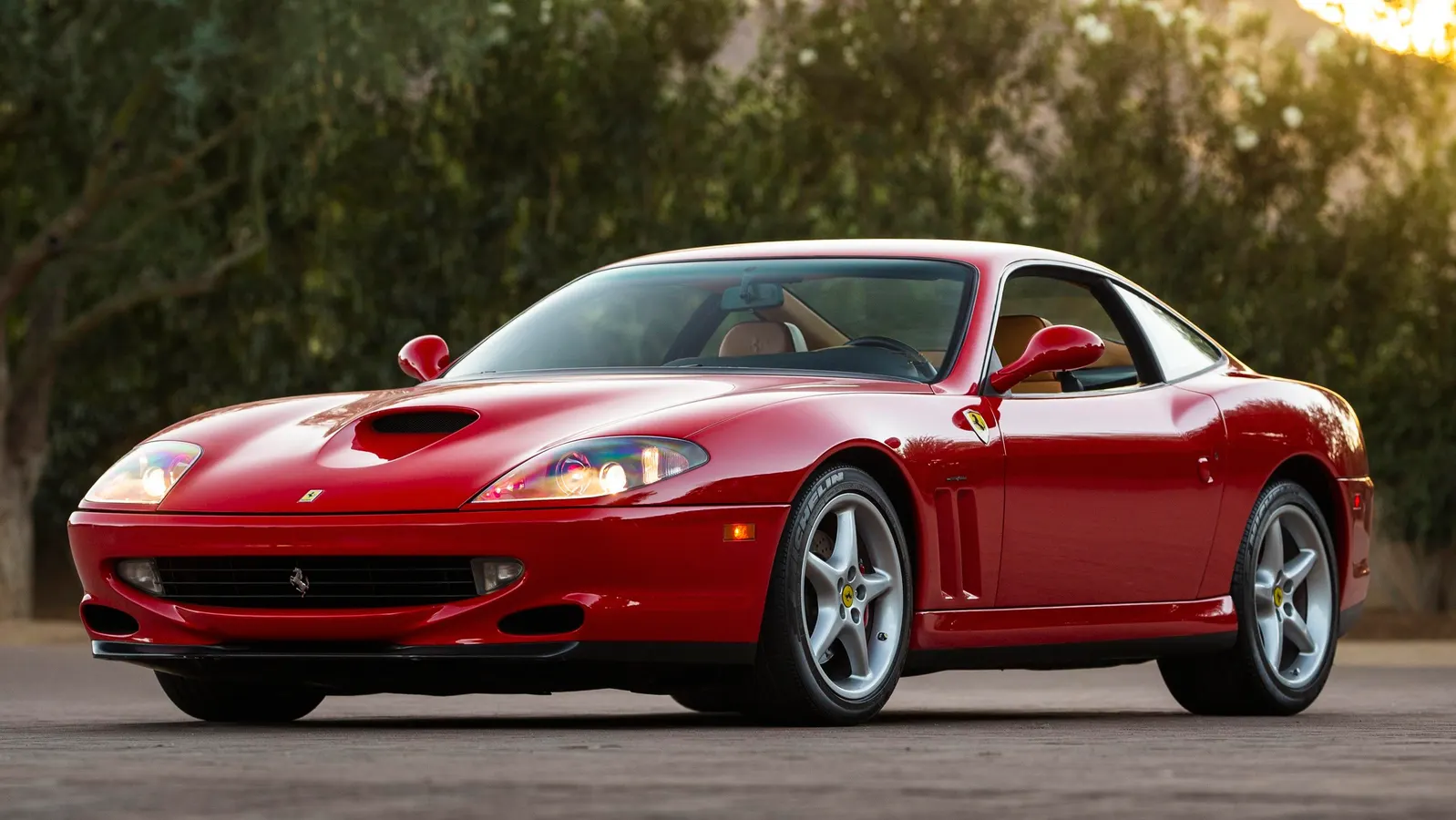
The Ferrari 550 Maranello, produced from 1996 to 2001, marked a renaissance for front engine V12 Ferraris after a period of mid-engine focus. Its 5.5 liter V12 produced approximately 485 horsepower, delivering smooth, linear power ideal for long drives and spirited performance alike.
Ferrari emphasized simplicity and mechanical purity, with a front-engine, rear-wheel-drive layout paired with a traditional six-speed manual gearbox. This configuration reinforced the connection between car and driver, requiring engagement and skill rather than reliance on electronic aids.
The 550’s chassis and suspension were engineered for balance and stability, allowing drivers to explore its full performance envelope with confidence, making it one of the most approachable front engine Ferraris of the modern era.
The design of the 550 Maranello is understated yet elegant. Pininfarina’s styling emphasizes smooth lines, restrained curves, and classic Ferrari proportions. The long hood houses the V12, while the compact cabin ensures a driver-focused layout.
Minimalist detailing allows the car’s natural presence to command attention without flamboyance, and the subtlety of the design has aged gracefully, avoiding visual trends that can make cars feel dated. Inside, the cabin features leather upholstery, intuitive controls, and comfortable seating for two, reinforcing the car’s grand touring credentials while keeping the driver engaged.
The 550 Maranello reaffirmed Ferrari’s commitment to front engine V12 architecture, proving that tradition could coexist with modern performance and comfort. Its balance, drivability, and refinement made it a beloved model among enthusiasts, bridging the gap between classic Ferrari values and contemporary engineering.
By focusing on engagement, mechanical purity, and elegance, the 550 created a benchmark for future front engine Ferraris, offering a compelling alternative to the mid-engine supercar dominance of the late 1990s.
Ferrari 575M Maranello
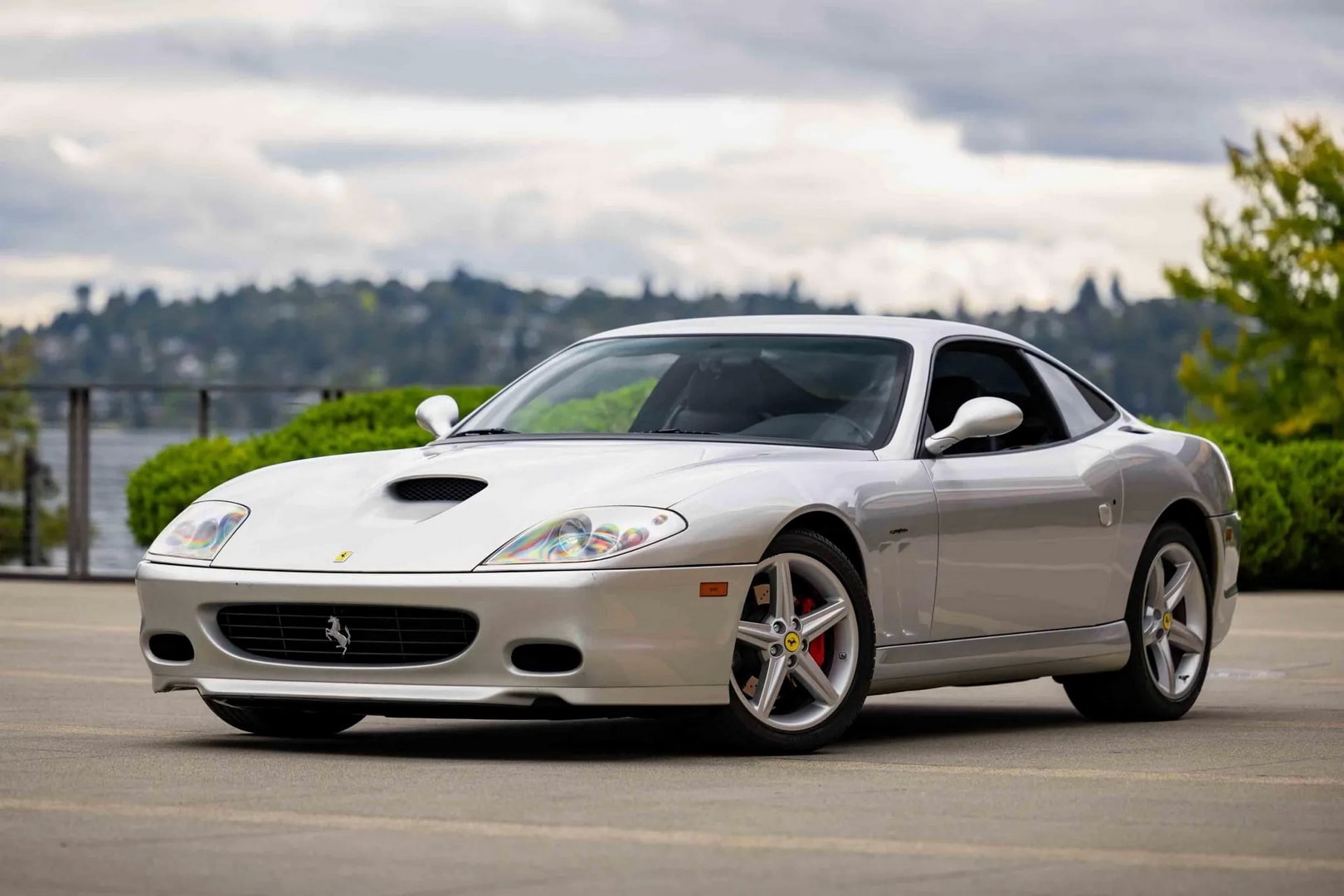
The Ferrari 575M Maranello, introduced in 2002, evolved from the 550 Maranello with incremental improvements that enhanced power, handling, and refinement. Its 5.7 liter V12 produced around 508 horsepower, providing increased performance while retaining the character and linear delivery of its predecessor.
The “M” in the name stands for “modificata,” reflecting its status as an upgraded model. Ferrari updated the suspension, brakes, and transmission options to improve agility and ride quality, making the 575M more versatile for both spirited driving and long-distance touring.
Despite these improvements, the car maintained the traditional front engine, rear-wheel-drive layout, preserving the balance and mechanical purity that made the 550 so successful.
The 575M’s design builds upon the elegance of the 550 while introducing modern refinements. Pininfarina crafted subtle changes to the front and rear fascias to improve aerodynamics and cooling, while retaining the timeless proportions that emphasize a long hood and compact cabin.
Interior updates included improved ergonomics, higher-quality materials, and subtle technology integration, maintaining comfort and luxury without detracting from the driver’s focus. The aesthetic communicates understated sophistication while clearly signaling Ferrari performance.
The 575M Maranello represents the refinement of a classic formula, proving that incremental improvements can elevate a vehicle without altering its core identity.
By enhancing power, handling, and comfort, Ferrari ensured the 575M remained relevant in a competitive market while preserving the essence of front-engine V12 driving. This model continues to be celebrated for its balance of tradition, performance, and elegance, embodying the qualities that define Ferrari’s front-engine grand tourers.
Ferrari 456 GT
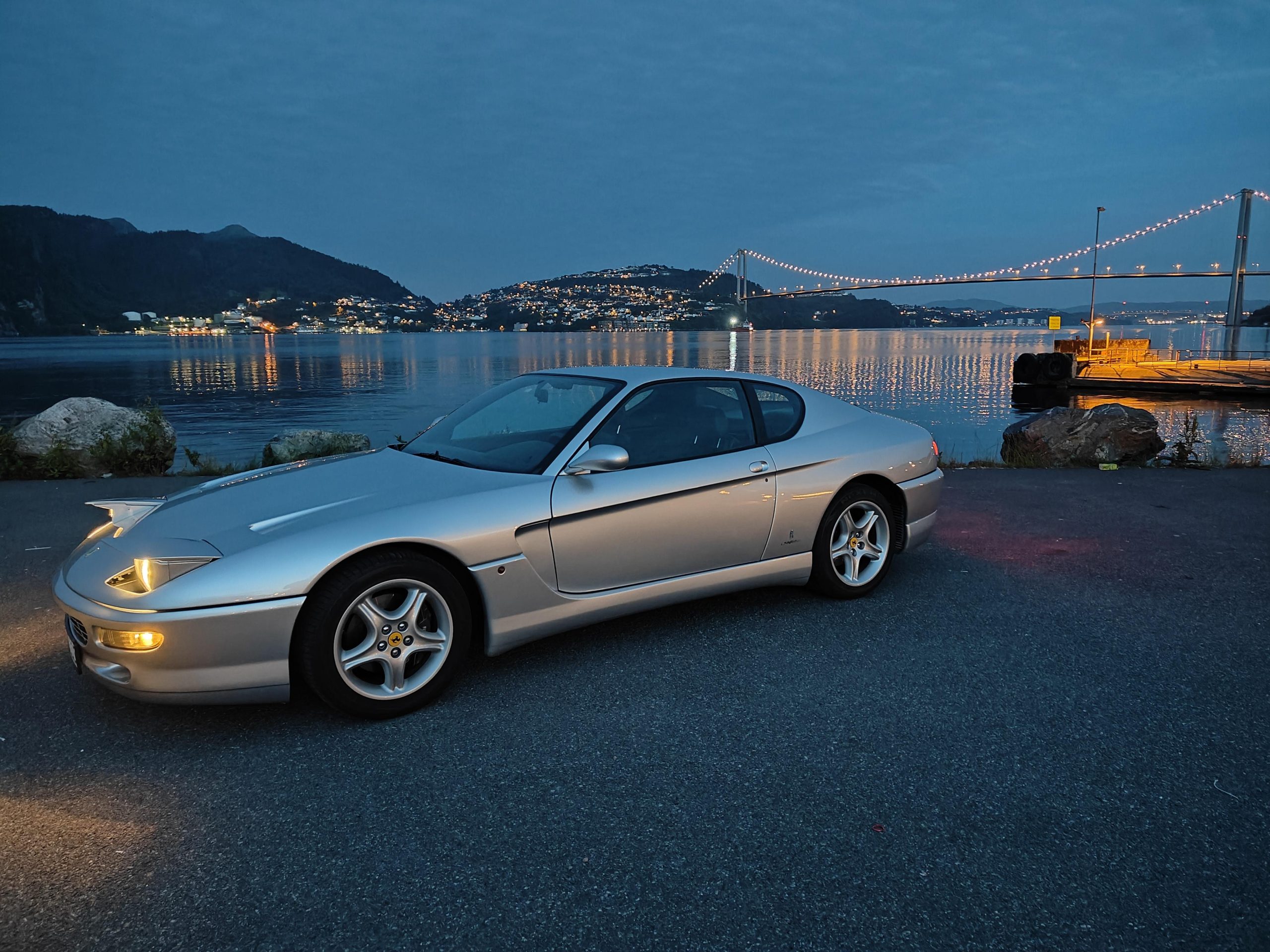
The Ferrari 456 GT, produced from 1992 to 2003, offered a unique interpretation of front-engine V12 performance by blending speed with practicality. Its 5.5-liter V12 produced around 442 horsepower, capable of propelling the car from 0 to 60 mph in just over five seconds, an achievement for a four-seat grand tourer.
Unlike smaller, two-seat Ferraris, the 456 GT prioritized comfort, usability, and long-distance capability without sacrificing the engagement and performance expected from the brand. Ferrari engineers carefully tuned the chassis and suspension to accommodate additional passenger space and luggage capacity, while still ensuring the car remained responsive and rewarding to drive.
The design of the 456 GT emphasizes elegance and refinement. Pininfarina crafted a low, sweeping roofline, gently curving fenders, and clean surfaces that create a dignified, timeless presence. The long hood houses the V12 engine, while the cabin and rear seating integrate smoothly into the silhouette, ensuring proportion and balance.
The interior emphasizes comfort and usability, with supportive leather seats, a simple yet functional dashboard layout, and sufficient space for passengers and luggage. The aesthetic communicates sophistication rather than aggression, reflecting the car’s focus on grand touring excellence.
The 456 GT demonstrated the versatility and adaptability of Ferrari’s front engine philosophy. It proved that the brand could produce a high-performance vehicle that remained usable and comfortable for longer trips, catering to a broader audience without sacrificing character.
Its combination of speed, refinement, and practicality ensured that it occupied a unique place in Ferrari history, bridging the gap between pure sports cars and luxurious grand tourers.
Ferrari Roma
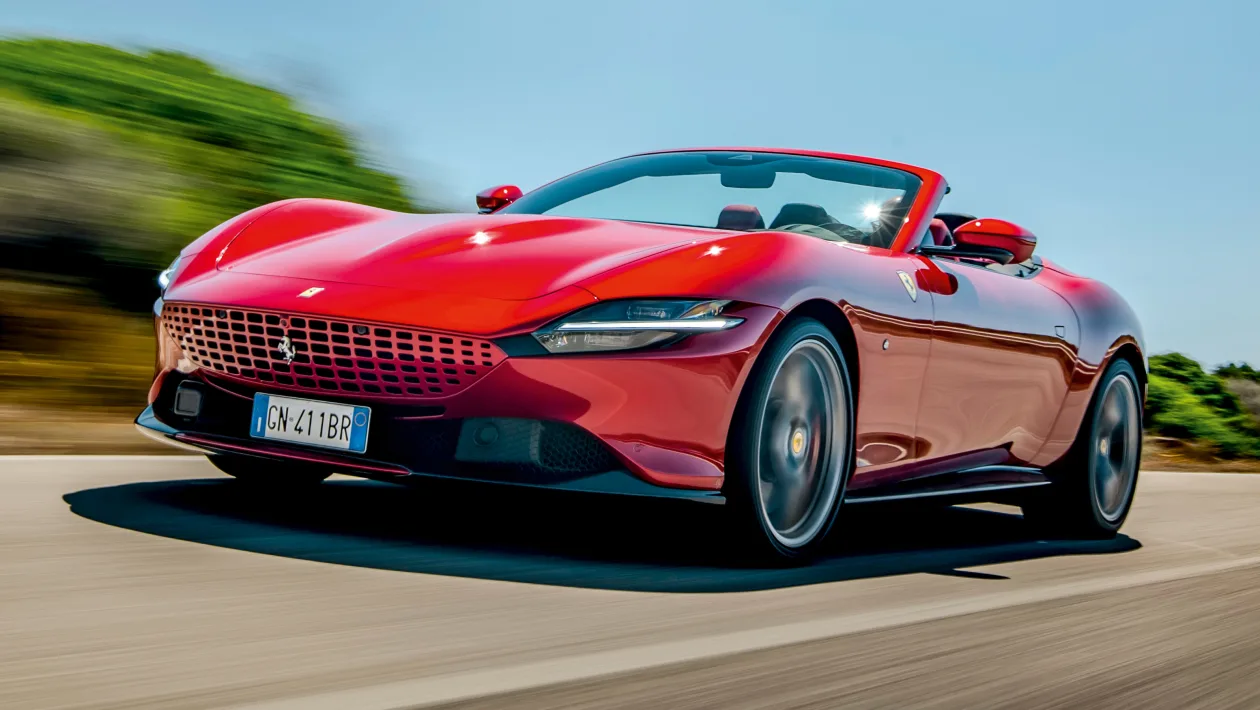
The Ferrari Roma, introduced in 2019, offers a modern reinterpretation of the front-engine grand tourer. It features a turbocharged 3.9 liter V8 producing approximately 612 horsepower, blending efficiency and performance in a compact, elegant package.
The Roma was designed to offer effortless usability without compromising Ferrari’s performance heritage, making it suitable for daily driving, weekend excursions, and spirited driving alike. Its lightweight construction, advanced suspension, and electronic driver aids provide agility and responsiveness, allowing the car to feel lively and connected despite its modern complexity.
The Roma demonstrates that front engine Ferraris can remain relevant in an era dominated by hybridization and mid-engine layouts.
The design of the Roma emphasizes elegance, proportion, and restraint. Its long hood, compact cabin, and gently sloping rear create a balanced silhouette that harks back to classic front engine Ferraris, while modern detailing communicates sophistication and technology.
Subtle aerodynamic elements are integrated seamlessly into the body, improving stability and performance without disrupting the car’s clean aesthetic. The interior is minimalist yet luxurious, with intuitive controls, premium materials, and a focus on driver ergonomics, reinforcing the Roma’s mission as a refined yet engaging grand tourer.
The Ferrari Roma underscores the continuing relevance of front-engine layouts in modern performance cars. By combining contemporary technology, turbocharged efficiency, and timeless proportions, Ferrari has created a vehicle that remains true to its heritage while embracing the future.
The Roma demonstrates that front-engine grand tourers can continue to offer emotional, practical, and exhilarating experiences, ensuring this classic configuration remains central to Ferrari’s vision for decades to come.
