
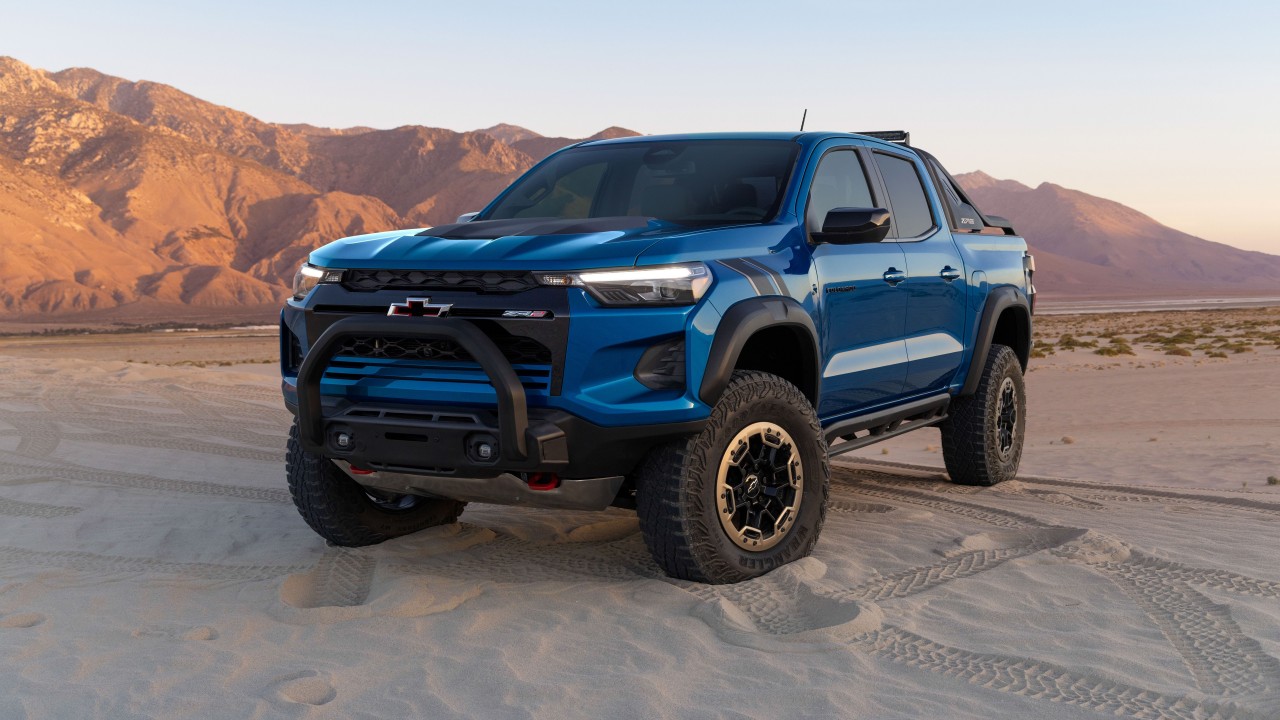
Driving through the rugged terrain of Helena and the surrounding Rocky Mountains presents a unique set of challenges for truck owners. The steep inclines, winding roads, and unpredictable weather conditions demand vehicles that combine power, durability, and reliability.
Big trucks are often the preferred choice for navigating these conditions because they offer higher torque, stronger engines, and better stability under heavy loads. However, not all trucks are created equal when it comes to mountainous driving.
Some trucks excel in power delivery, climbing ability, and braking performance, while others struggle, leaving drivers frustrated and sometimes unsafe on the road. Understanding which trucks can meet the demands of the Rocky Mountain environment and which trucks are prone to losing power under stress can make the difference between a confident drive and a constant uphill battle.
Mountain driving is not just about engine strength; it also requires careful attention to handling, transmission efficiency, and cooling systems. Trucks that perform well in flat terrain may falter when faced with long climbs or high-altitude conditions, where thinner air affects engine performance.
This chooses a truck crucial for anyone living in or frequently traveling to areas like Helena. Furthermore, fuel efficiency and brake reliability are important considerations, as mountainous roads often require extended periods of engine braking and lower gear operation.
Selecting the right truck can reduce wear and tear, prevent overheating, and ensure the vehicle maintains consistent power throughout demanding drives. Conversely, choosing trucks prone to power loss can lead to frequent stops, increased fuel consumption, and a higher risk of mechanical failures.
This article provides a detailed comparison of five trucks well-suited for Helena Rocky Mountain roads against five trucks that tend to lose power under demanding conditions.
By evaluating engine performance, transmission, torque, stability, and reliability, readers will gain a comprehensive understanding of what to look for when purchasing or evaluating a big truck for mountain use. The goal is to help drivers make informed choices that match their needs and ensure safe, confident driving on some of the most challenging roads in the United States.
5 Big Trucks for Helena Rocky Mountain Roads
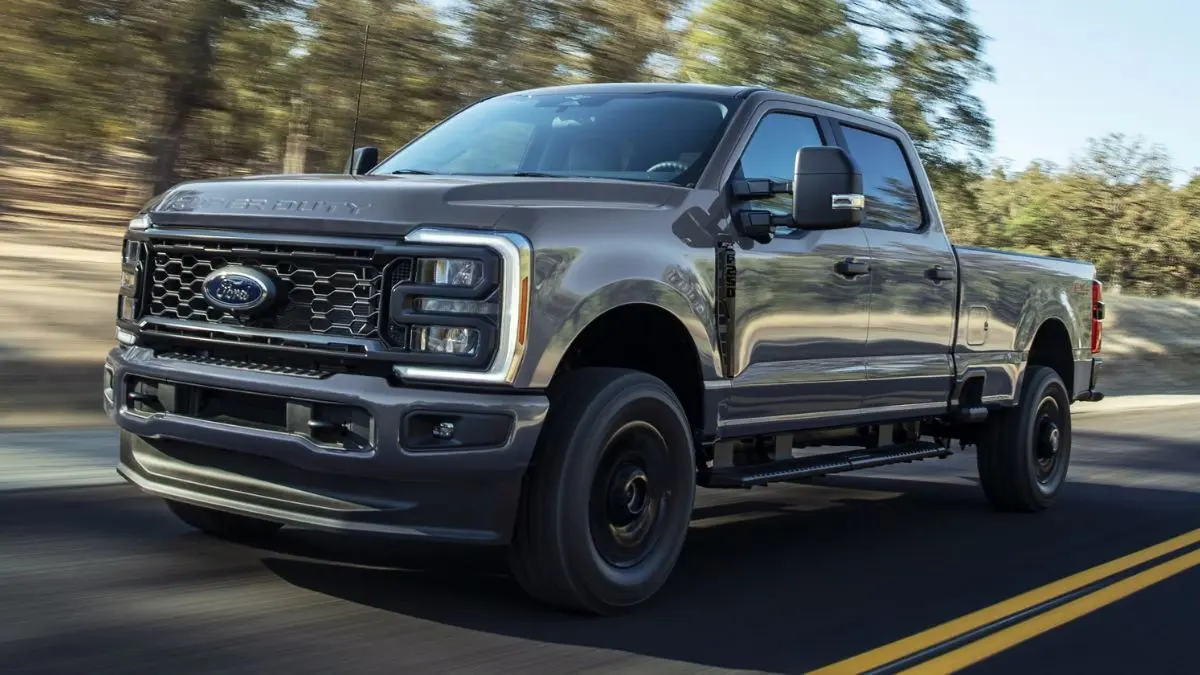
1. Ford F-350 Super Duty
The Ford F-350 Super Duty has long been recognized as a workhorse capable of handling some of the most demanding driving conditions in the United States. Its heavy-duty frame is constructed from high-strength steel, which provides both rigidity and durability when carrying heavy loads or navigating steep, winding mountain roads.
The truck’s chassis is designed to withstand stress and flexing that can occur during extended climbs, making it particularly suitable for areas like Helena, where elevation changes are frequent and unpredictable.
The 6.7-liter Power Stroke V8 turbo diesel engine offers outstanding torque, producing more than enough power to haul large trailers or payloads while maintaining a steady speed uphill. The engine’s turbocharged design allows it to deliver consistent low-end torque, which is critical when climbing long gradients without excessive gear shifting.
The suspension system of the F-350 is equally impressive. It combines solid axles with advanced shock absorbers to provide a balance between load-carrying capacity and ride comfort. This design minimizes body roll and ensures that all four wheels maintain traction even on uneven surfaces, which is common on mountain roads that feature gravel, loose rocks, or minor washouts.
Drivers hauling heavy equipment or towing large trailers will appreciate the truck’s ability to maintain stability and control under these challenging conditions. Additionally, the four-wheel-drive system can be engaged to distribute power evenly between the front and rear axles, improving grip on slippery or snow-covered roads during Helena’s colder months.
Another key factor that makes the F-350 suitable for mountainous driving is its engine and cooling system design. Turbo diesel engines produce high torque without overheating as quickly as naturally aspirated engines under sustained high-load conditions.
The F-350 also includes features such as engine braking and adaptive transmission settings that allow drivers to maintain control on steep descents while minimizing brake wear. For trucks not equipped with such features, repeated braking on a long downhill stretch can lead to brake fade and overheating, but the F-350 mitigates these risks effectively.
Modern technology enhances the truck’s usability in demanding terrain. Advanced safety features such as hill start assist prevent the truck from rolling backward when beginning an ascent on steep inclines, while trailer sway control and dynamic stability control enhance driver confidence when towing.
In combination, these elements make the F-350 one of the most reliable and capable trucks for mountainous regions. Its ability to deliver consistent power, maintain stability, and handle high loads ensures that drivers in Helena can navigate steep roads safely, efficiently, and with minimal stress on the vehicle.
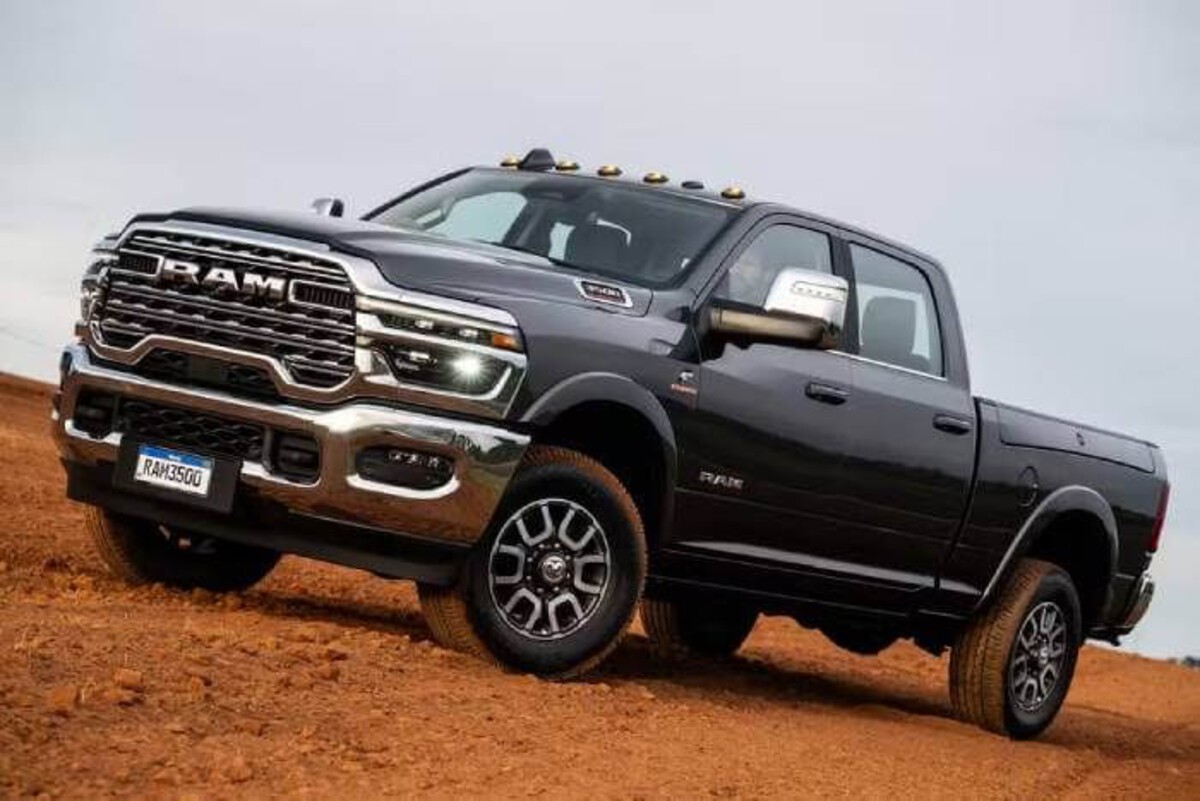
2. Ram 3500 Heavy Duty
The Ram 3500 Heavy Duty stands out as a mountain-ready truck due to its extraordinary torque, robust engine options, and durable frame construction. Its Cummins 6.7-liter turbo diesel engine is specifically engineered to deliver exceptional low-end torque, which is essential when driving up long inclines or towing heavy trailers on winding mountain roads.
Unlike many trucks that lose momentum when ascending steep grades, the Ram 3500 provides smooth, consistent power that allows drivers to maintain forward momentum without stressing the engine. Its six-speed automatic transmission is optimized for heavy loads and towing, with specific modes that adjust gear ratios for maximum efficiency in challenging terrain.
The truck’s suspension system is also tailored for mountainous driving. By combining a coil-spring front suspension with a multi-link rear suspension, Ram ensures that the 3500 can absorb road imperfections while maintaining optimal traction.
This is particularly important on mountain roads where uneven surfaces, sharp curves, and sudden elevation changes are common. When the truck is fully loaded with cargo or towing a large trailer, the suspension keeps the vehicle stable and predictable, reducing driver fatigue during long climbs or descents.
Another major advantage is the Ram 3500’s braking system. Equipped with large ventilated discs, the brakes are capable of handling repeated stops on steep inclines without significant fade.
Engine braking supplements the system to further reduce wear, which is essential for trucks frequently navigating mountainous terrain. Drivers can descend long grades without worrying about overheating brakes, a common problem for trucks that are not engineered for sustained downhill operation.
Finally, the Ram 3500 includes a suite of modern technologies that enhance safety and performance. Hill descent control allows for controlled, low-speed descents on slippery or uneven terrain, while adaptive cruise control and navigation assist help drivers anticipate sharp curves or sudden elevation changes.
The combination of powerful torque, heavy-duty suspension, and advanced driver aids makes the Ram 3500 highly effective for Helena’s mountainous roads. It is capable of handling extreme grades, heavy towing, and long-distance mountain travel with remarkable reliability and minimal driver effort.
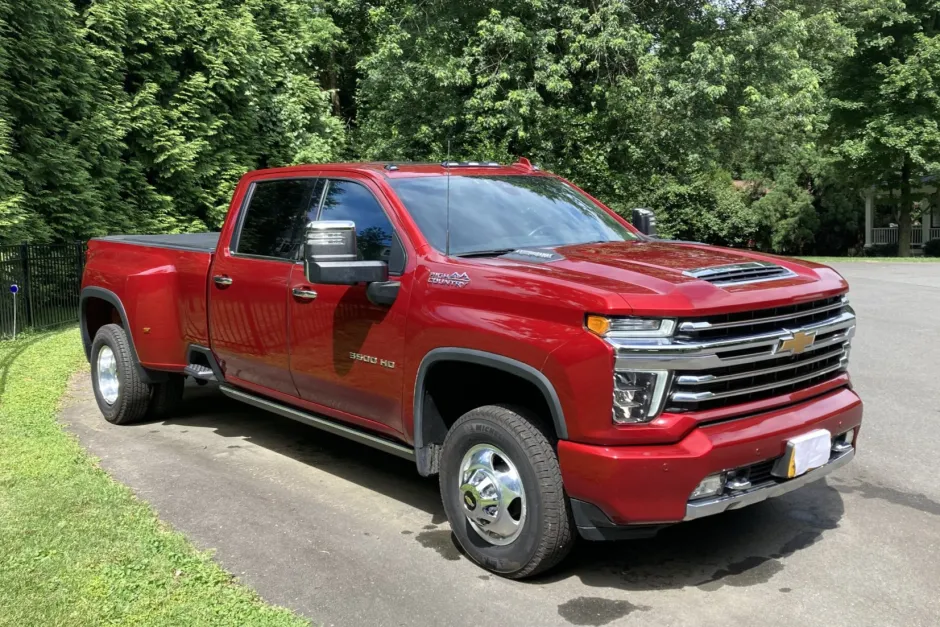
3. Chevrolet Silverado 3500HD
The Chevrolet Silverado 3500HD is designed for endurance, strength, and reliability, making it ideal for drivers who frequently encounter challenging mountain roads. It is equipped with a Duramax 6.6-liter turbo diesel engine, capable of producing high torque and horsepower that allow the truck to climb steep inclines without significant power loss.
Its heavy-duty frame construction provides stability under both payload and towing loads, reducing flex and improving traction on uneven surfaces. For drivers in the Rocky Mountains, this stability translates into safer handling and greater confidence on roads that often feature sharp curves and unexpected elevation changes.
Transmission technology in the Silverado 3500HD is optimized for high-load scenarios. The multi-speed automatic transmission allows for smooth power delivery when ascending or descending long grades.
Its integrated hill-hold and grade-assist features prevent rollback on steep inclines and reduce stress on the brakes when descending, making it easier to maintain control of the vehicle even under heavy load. These transmission features are particularly beneficial for drivers towing large trailers, as they prevent sudden jerks or power drops that can occur with less capable transmissions.
The Silverado 3500HD also prioritizes safety and stability. Trailer sway control and dynamic stability systems help manage the truck when towing heavy trailers, reducing the likelihood of accidents caused by sudden weight shifts.
Advanced braking technology further enhances control on steep descents, providing confidence when driving down long, winding mountain roads. These features, combined with the truck’s robust engine, make it a reliable choice for drivers who require consistent performance under challenging conditions.
Finally, the Silverado 3500HD is built for longevity and continuous mountain operation. Its engine and transmission components are engineered to withstand sustained high-load driving without excessive wear.
This makes it an ideal truck for those who frequently traverse the Rocky Mountains, where long climbs and steep descents are common. Combined with its towing capabilities, reinforced frame, and driver-focused technology, the Silverado 3500HD offers a complete package for anyone seeking a reliable, powerful, and mountain-ready truck.
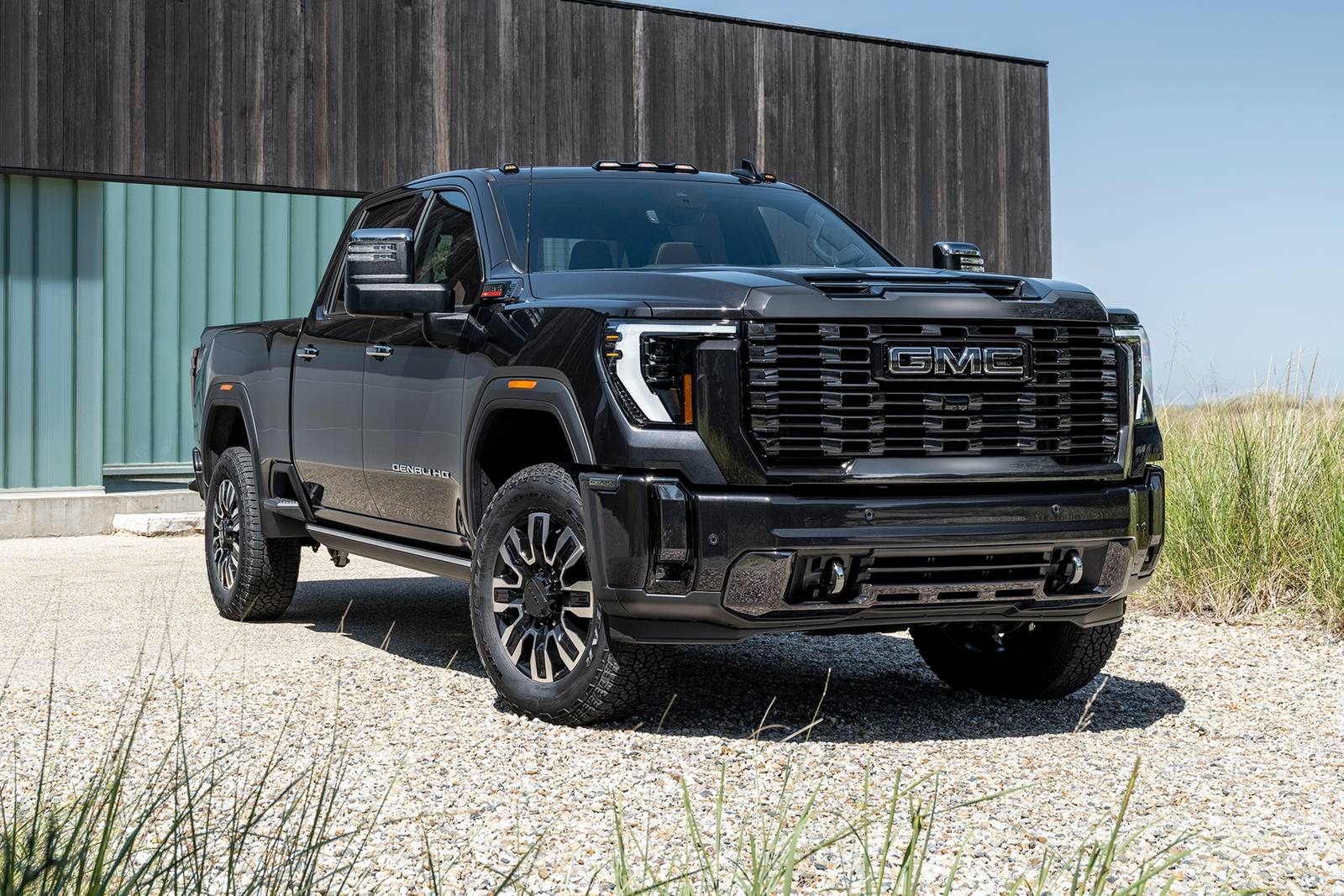
4. GMC Sierra 3500HD
The GMC Sierra 3500HD offers a balance of power, comfort, and reliability, making it suitable for mountain driving. Its Duramax diesel engine delivers strong torque for uphill climbs, while maintaining fuel efficiency on long routes.
The engine is specifically designed to handle extended high-load operation without overheating, a key consideration for drivers who regularly navigate steep gradients. The truck’s reinforced frame adds structural rigidity, ensuring that it can manage heavy payloads and trailers while maintaining precise handling on uneven roads.
Suspension and stability are major strengths of the Sierra 3500HD. The truck combines adaptive shock absorbers with heavy-duty rear leaf springs, allowing it to absorb road irregularities while maintaining control and traction.
This is particularly important on rocky or gravel mountain roads where maintaining tire contact with the surface is critical for stability. Its braking system is also highly effective, with large ventilated discs that prevent fade on long downhill stretches, ensuring safety even under full load.
Driver-assist technology further enhances the Sierra 3500HD’s performance on mountain roads. Hill start assist prevents rollback on steep inclines, while lane departure warning and rearview cameras improve awareness on narrow or winding roads. Even when towing a large trailer, the truck maintains predictable handling, reducing stress on the driver and increasing safety.
The Sierra 3500HD has a proven reputation for reliability under high-stress conditions. Its engine and transmission can endure sustained climbing and towing in high-altitude areas without losing performance.
Combined with its advanced safety features, reinforced frame, and adaptive suspension, the Sierra 3500HD offers a reliable, high-performance solution for drivers tackling the steep and unpredictable roads of Helena and surrounding areas.
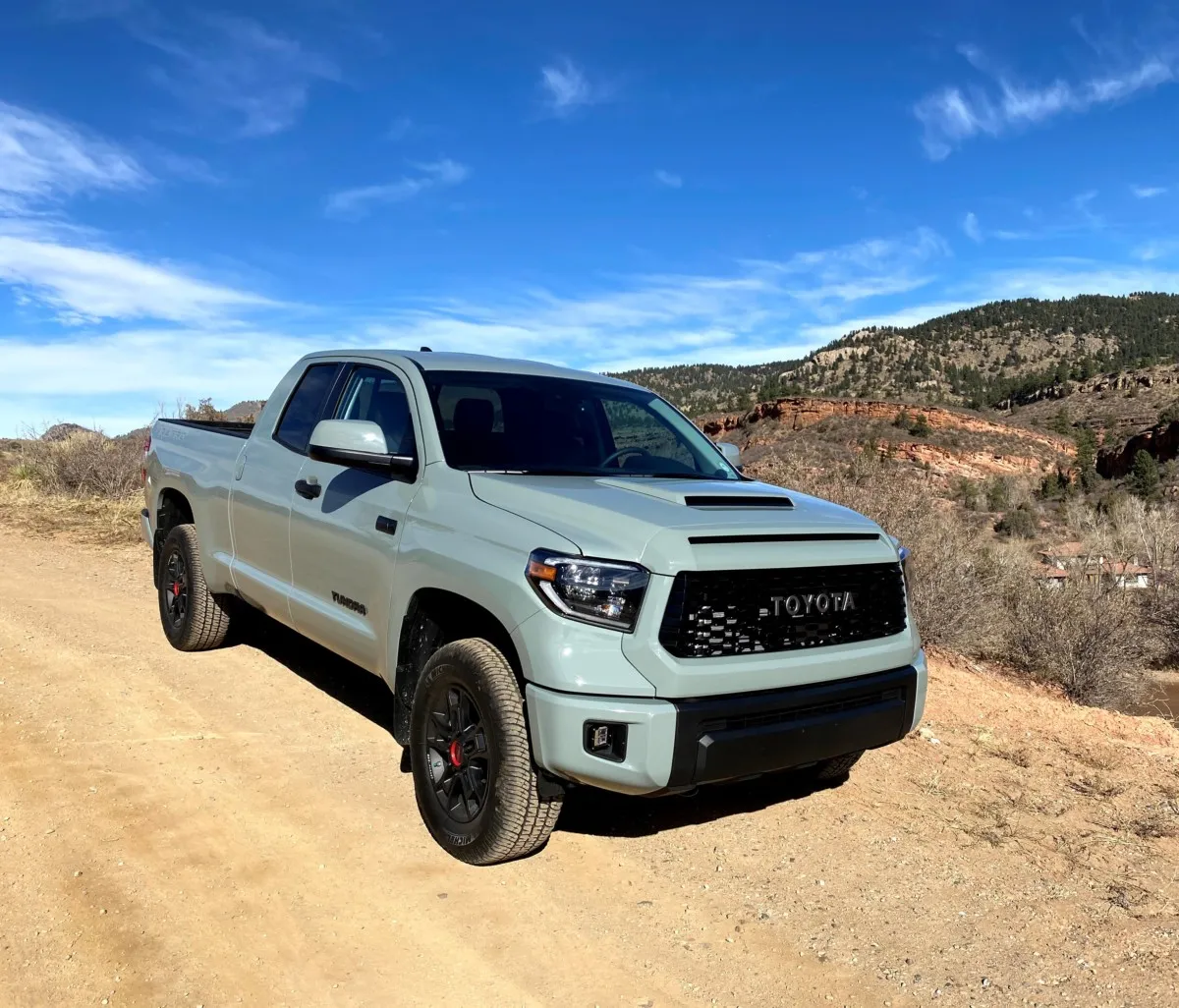
5. Toyota Tundra TRD Pro
The Toyota Tundra TRD Pro provides an alternative for those who prefer a lighter yet still capable truck for mountainous driving. Its naturally aspirated V8 engine delivers smooth, consistent torque, which is essential for climbing roads with frequent elevation changes.
While the Tundra cannot match the torque of heavy-duty diesel trucks, its engine is reliable and less prone to overheating, making it well-suited for moderate loads and extended mountain travel. The truck’s frame is reinforced to handle off-road conditions and mountainous terrain, providing a level of durability uncommon in similarly sized trucks.
The Tundra’s suspension system is designed to optimize off-road stability and handling. With reinforced components and advanced shock absorbers, the truck absorbs uneven surfaces and maintains traction on loose gravel, snow, or rocky roads.
Its four-wheel-drive system and traction control allow it to climb steep grades and navigate difficult terrain without losing stability. For drivers in mountainous regions, these features provide confidence that the vehicle can handle unexpected road conditions.
Driver-focused technology enhances the Tundra’s capability in mountainous terrain. Hill-start assist, crawl control, and selectable terrain modes allow drivers to manage steep inclines and declines with minimal effort. Combined with its responsive steering and braking, these features make long climbs and descents less taxing, especially when compared to trucks lacking such adaptive technology.
Finally, Toyota’s reputation for durability and reliability makes the Tundra TRD Pro a strong option for mountain driving. Although it cannot match the towing and payload capacity of heavier-duty trucks, it consistently maintains engine power and performance on long climbs, avoiding the common power loss experienced by many smaller or naturally aspirated trucks.
For moderate towing, consistent uphill driving, and long-distance mountain travel, the Tundra TRD Pro is a dependable and practical choice.
5 Trucks That Lose Power in Mountain Conditions
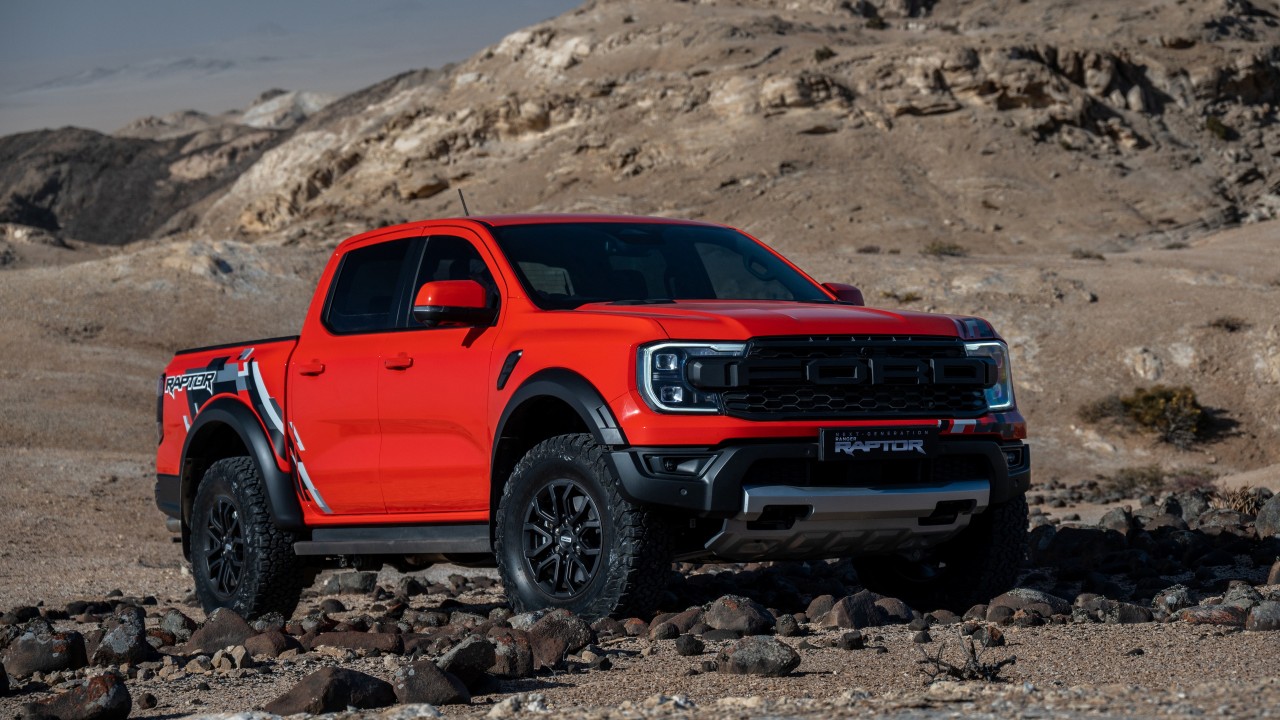
1. Ford Ranger
The Ford Ranger is a midsize pickup truck that performs well in urban or light off-road environments but struggles significantly in mountainous terrain. Its smaller engine, typically a turbocharged four-cylinder or a naturally aspirated V6 in older models, is adequate for everyday commuting and occasional towing on flat roads, but it often fails to maintain consistent power when climbing steep inclines or navigating long grades.
Drivers report that when the truck is fully loaded or towing even modest trailers, it tends to lose momentum and requires frequent downshifting. This not only reduces fuel efficiency but also increases wear on the transmission, which can be problematic over time.
The Ranger’s suspension and braking systems are also less suited for mountainous conditions. While adequate for light loads, the lightweight frame struggles to provide stability on winding or uneven mountain roads.
On steep inclines, the truck can feel sluggish, and its lighter suspension makes it more prone to body roll, reducing traction and handling precision. Extended descents may lead to brake overheating, as the truck relies more on conventional braking than engine-assisted braking systems, which are common in heavy-duty trucks designed for mountainous use.
Technology features in the Ranger, such as hill start assist or traction control, provide some help but cannot compensate for the engine’s power limitations or the frame’s lightweight design.
When the vehicle is loaded or towing, drivers often notice a noticeable drop in speed and performance, especially on long uphill sections. In situations where continuous engine output is required, the Ranger can feel underpowered and stressed, which can be both frustrating and potentially unsafe.
While the Ford Ranger excels in city driving, off-road trails of moderate difficulty, and general utility work, it is not ideal for drivers who frequently encounter steep mountain roads or carry heavy loads. Its smaller engine and lighter chassis result in power loss under high-stress conditions, making it a truck that requires careful planning and constant gear management in areas like Helena and other Rocky Mountain regions.
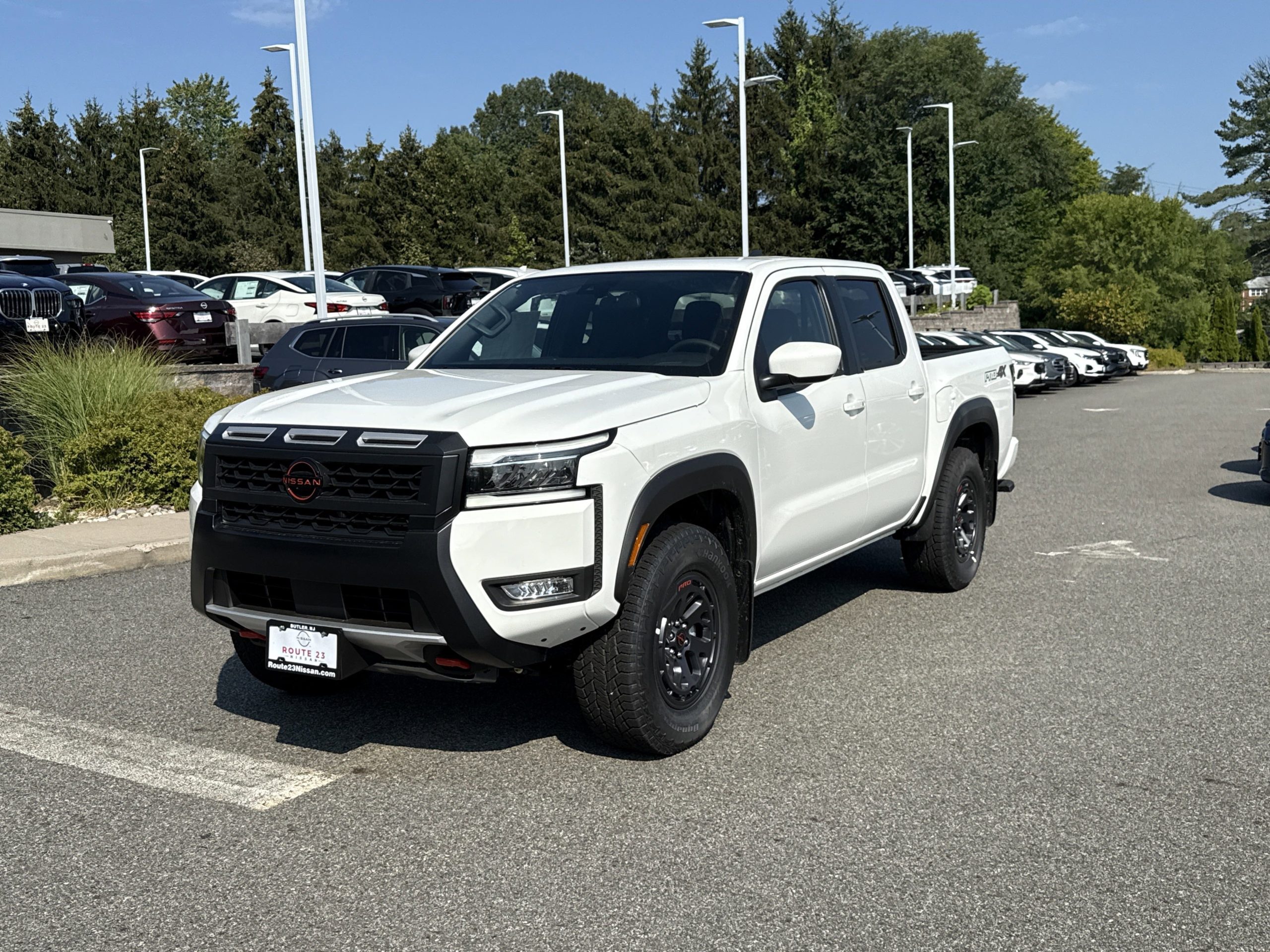
2. Nissan Frontier
The Nissan Frontier is another midsize truck that struggles with extended mountain driving. Its V6 engine provides reasonable torque for flat or slightly hilly roads, but when faced with steep inclines and high-altitude conditions, it can experience significant power loss.
The engine’s lower displacement and limited turbocharging capability reduce the truck’s climbing ability, making it challenging to maintain consistent speed on long grades. Drivers often find themselves shifting down frequently to compensate for the engine’s insufficient low-end torque, which can increase wear on both the transmission and the engine.
The Frontier’s suspension system is tuned more for comfort and everyday usability than heavy-duty stability. On mountain roads with tight curves, loose gravel, or uneven surfaces, the truck may exhibit body roll and reduced traction, particularly when carrying a load or towing.
Braking is another area where the Frontier can fall short. Extended downhill driving can overheat the brakes, as the vehicle lacks robust engine braking and advanced downhill-assist systems found in larger, heavier-duty trucks.
Interior technology in the Frontier is basic compared to full-size trucks. While features such as hill start assist exist, they provide only minimal help in compensating for the engine’s limited power output and the truck’s lighter frame. Drivers navigating steep or high-altitude mountain roads may notice sluggish acceleration and slower response times when fully loaded. Over time, frequent exposure to these conditions can lead to increased mechanical stress and higher maintenance costs.
Although the Nissan Frontier is reliable for city commuting, short off-road excursions, and light towing, it is not designed for sustained mountain driving. Its engine, transmission, and suspension combination are insufficient for maintaining consistent power under prolonged uphill stress.
Drivers who frequently navigate steep grades or carry heavy loads in regions like Helena may find that the Frontier struggles to deliver the performance and stability required for safe and efficient mountain travel.
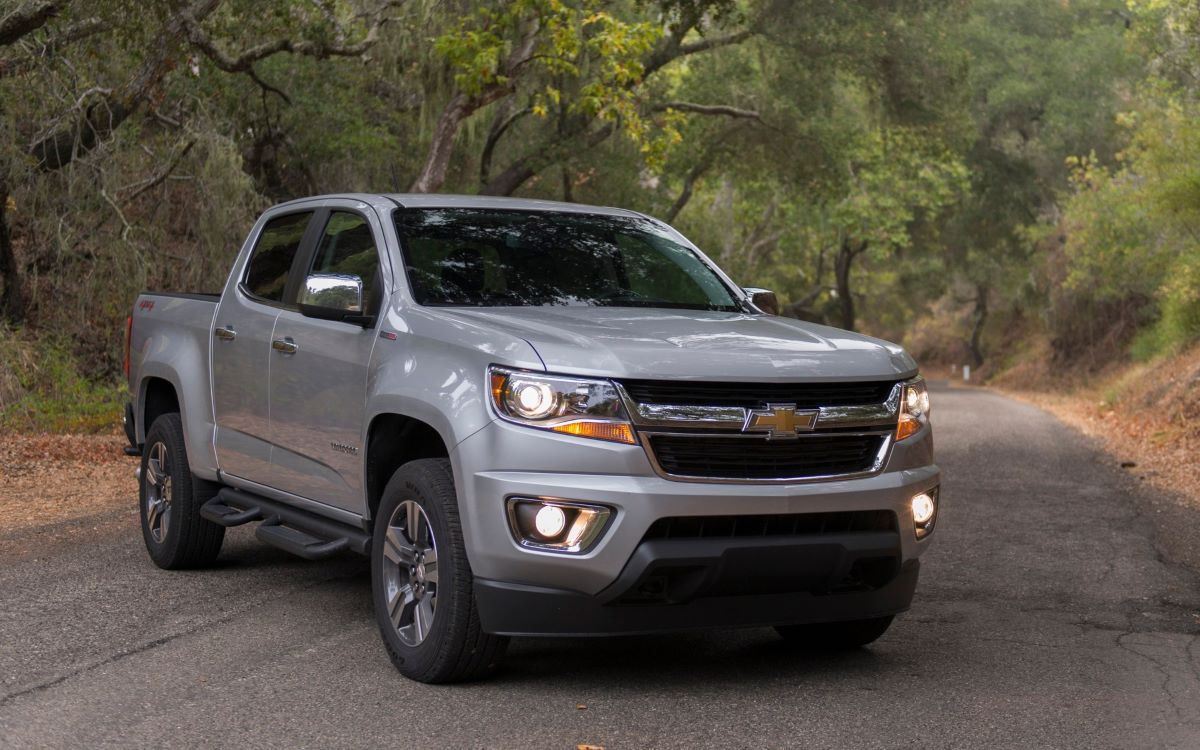
3. Chevrolet Colorado
The Chevrolet Colorado is a versatile midsize truck, but it exhibits significant limitations when faced with continuous mountain driving. Its engine options, typically a four-cylinder or a V6, perform adequately under normal conditions but often lose power under sustained high-load climbs.
Even when equipped with the V6, drivers may notice a drop in acceleration on long grades, requiring constant gear management and careful throttle control. This can be particularly frustrating when towing a trailer or carrying heavy cargo, as the truck’s power delivery is not as smooth or consistent as that of a full-size, heavy-duty pickup.
Colorado’s suspension is tuned primarily for comfort and light payloads, which can result in reduced stability and control on winding or uneven mountain roads. While it handles everyday driving well, the truck can feel less planted when climbing steep inclines or navigating sharp curves with a load.
Braking can also become an issue during long downhill stretches. Without sufficient engine braking or reinforced brake systems, drivers must rely heavily on the pedal, which increases the risk of brake fade and can compromise control on challenging descents.
Technology aids, such as traction control, hill start assist, and off-road driving modes, provide some assistance but are not enough to offset the engine’s lack of torque and the lighter chassis. Drivers often notice that acceleration slows dramatically when fully loaded, and maintaining momentum on extended grades can be difficult. Over time, the strain on the engine and transmission may lead to premature wear, especially if the truck is consistently used in high-altitude or steep terrain environments.
While the Chevrolet Colorado is excellent for urban driving, moderate off-road use, and light towing, it is not well-suited for the demanding conditions of continuous mountain driving. Its engine and chassis are prone to power loss under high stress, making it less reliable for areas like Helena and the Rocky Mountains, where consistent climbing performance is essential.
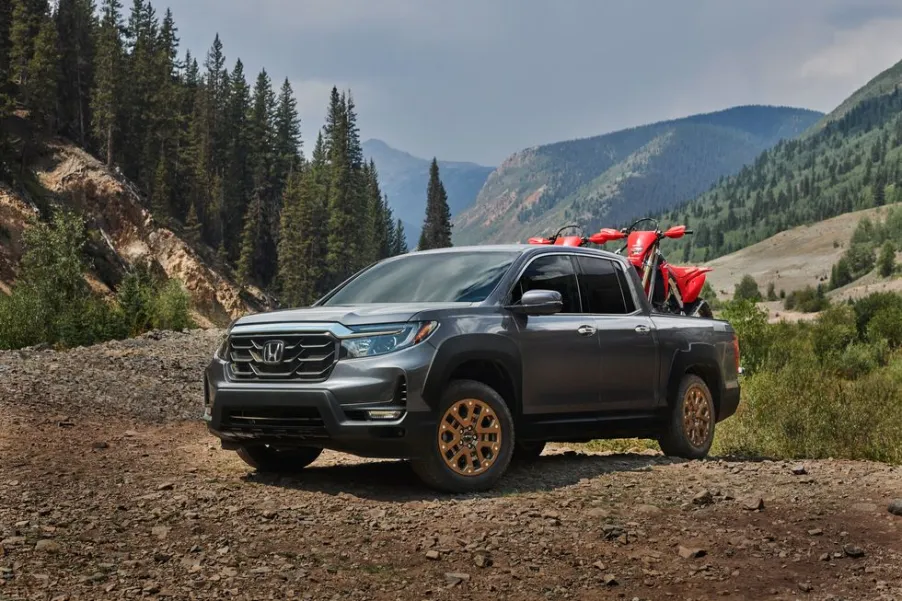
4. Honda Ridgeline
The Honda Ridgeline prioritizes comfort, smooth handling, and urban usability over rugged mountain performance. Its V6 engine delivers adequate power for city driving and light hauling, but it struggles to maintain output under sustained uphill loads or high-altitude conditions.
Drivers often experience slower acceleration and reduced torque when climbing long grades, which requires constant attention to gear shifting and throttle input. This can be particularly noticeable when the vehicle is carrying heavy cargo or towing a trailer, as the engine has limited capacity to sustain continuous high-load operation.
The Ridgeline’s suspension system is optimized for ride comfort, which can result in increased body roll and reduced stability on winding mountain roads.
While this design provides a smooth ride over potholes and small bumps, it does not offer the reinforced stability necessary for high-load or steep-grade driving. Brake performance is similarly limited; extended downhill use can overheat the brakes, particularly when the truck is loaded, as it lacks heavy-duty engine braking found in larger trucks designed for mountainous conditions.
Although the Ridgeline is equipped with features like all-wheel drive and hill start assist, these technologies cannot fully compensate for the engine’s power limitations or the truck’s lighter frame. On long climbs or steep roads, drivers may notice significant decreases in acceleration and responsiveness, which can make mountain driving more challenging and stressful.
In general, the Honda Ridgeline excels as an urban or suburban pickup and is capable for light off-road use. However, it is not built for continuous mountain driving or heavy-duty towing in steep terrain.
Drivers in areas like Helena may find that the Ridgeline struggles to maintain consistent performance, particularly under full load, making it a less reliable option for challenging mountainous conditions.
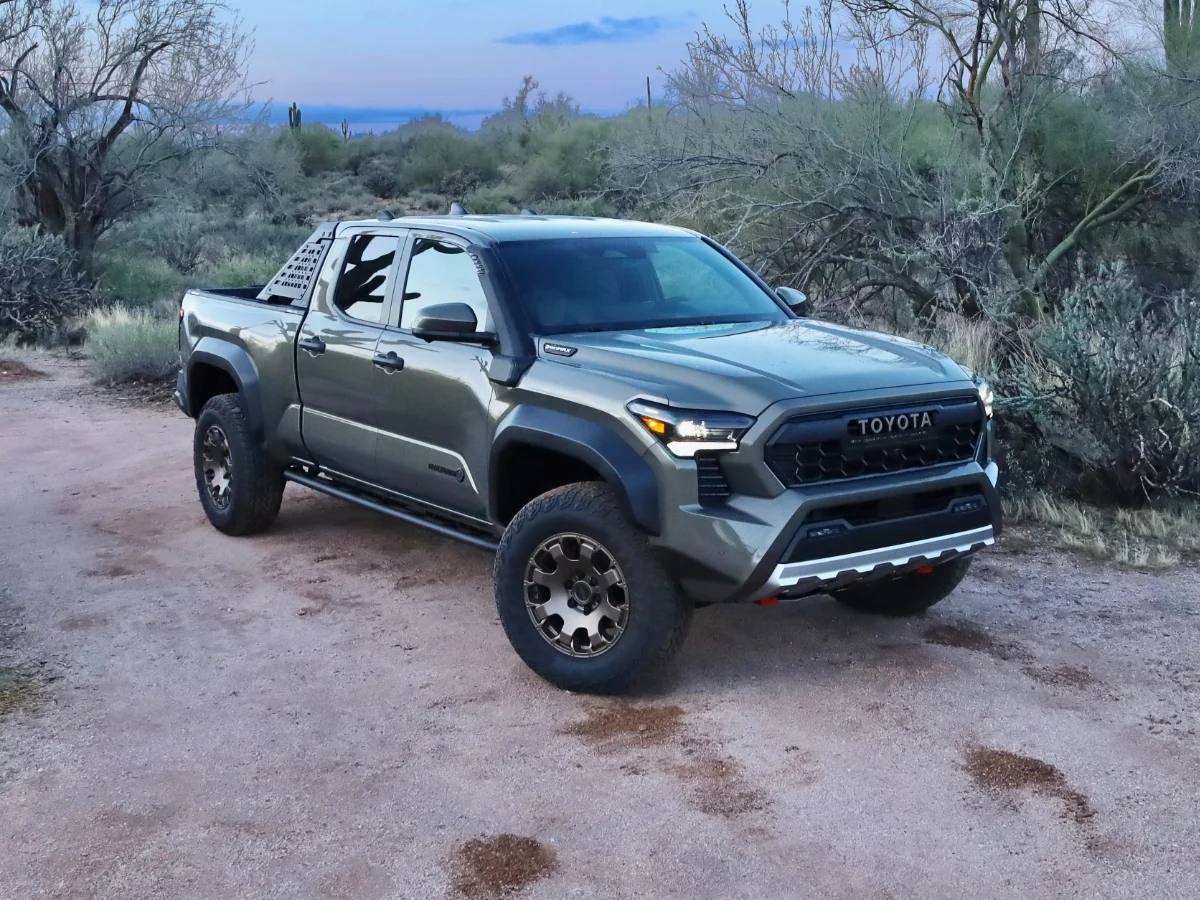
5. Toyota Tacoma
The Toyota Tacoma is a highly popular midsize truck, known for reliability and off-road capability, but it faces challenges in steep mountain terrain. Its engine options, typically a four-cylinder or a V6, perform well in light-duty or moderate off-road scenarios but can lose power under sustained climbs or heavy loads.
The naturally aspirated engines are prone to torque limitations at low RPMs when tasked with hauling cargo or towing trailers on long grades, forcing drivers to downshift frequently to maintain momentum. This repeated gear shifting can reduce fuel efficiency and place additional stress on the transmission and drivetrain over time.
The Tacoma’s suspension system is optimized for off-road maneuverability and comfort, which is ideal for dirt trails or uneven surfaces but less effective for heavy-duty stability on mountain roads.
When fully loaded or towing, the truck may exhibit body roll or reduced traction on sharp curves or steep inclines. Braking performance can also be an issue on long downhill stretches, as the Tacoma’s brakes are not designed to handle continuous heavy use without supplemental engine braking, which may not be sufficient during sustained descents.
While features like hill start assist, traction control, and selectable terrain modes improve performance, they cannot compensate for the Tacoma’s engine limitations.
Drivers often notice slower acceleration and reduced climbing ability under load, especially at higher elevations where thinner air affects engine performance. Extended use in such conditions can lead to increased mechanical strain and reduced reliability over time.
The Toyota Tacoma is ideal for light-duty off-road adventures, daily commuting, and moderate payloads, but it is not built for the sustained demands of mountainous driving. Drivers in Helena or other high-altitude regions may find that it struggles to maintain power under load, making it less suitable for long climbs, steep grades, or heavy towing compared to full-size, heavy-duty trucks.
