
The 1990s marked a transformative era in automotive history, especially for high-performance supercars that combined raw power, innovative design, and advanced engineering.
During this decade, manufacturers pushed the boundaries of speed, handling, and aesthetics, resulting in vehicles that were both highly desirable and, at the time, difficult to obtain in certain countries due to strict import regulations.
Enthusiasts today view these cars as timeless icons, representing a golden age of automotive creativity and performance. What makes the 1990s particularly memorable is the balance between analog driving experiences and emerging technological enhancements.
Unlike modern vehicles dominated by digital interfaces and electronic aids, many of these supercars offered drivers an unfiltered connection with the road. They were built for thrill, requiring skill, focus, and precision to harness their full potential.
The combination of powerful engines, lightweight construction, and aerodynamic styling allowed these cars to achieve performance figures that were groundbreaking for their era, making them benchmarks for later generations. Beyond speed and handling, design played a central role, with sculpted lines, aggressive stances, and exotic profiles that still turn heads today.
Many of these vehicles were produced in limited numbers, adding rarity and desirability, and creating a devoted fan base that celebrates their legacy. Another defining factor of the 1990s supercars was the diversity of approaches manufacturers employed.
Some focused on pure track-oriented performance, while others blended luxury with extreme power, creating machines that could handle long-distance driving with sophistication. The engines ranged from V8s and V12s to rare flat-twos and turbocharged units, each with a distinct character and soundtrack.
Importantly, many of these cars were restricted by age or emissions laws in different countries, making ownership challenging for enthusiasts outside their origin markets. In recent years, regulations have evolved, allowing collectors and enthusiasts to legally bring these vehicles into more regions, which has revived interest and demand.
Today, these supercars are not just relics but celebrated pieces of automotive history, combining nostalgia, performance, and collectability. Owning a 1990s supercar today is as much about appreciating its engineering and design as it is about experiencing the thrill of a vehicle that defined an era.
This article examines ten iconic 1990s supercars that have become legal to import everywhere, highlighting their unique characteristics, historical significance, and continuing influence on the automotive world. Each model tells a story of ambition, innovation, and enduring appeal, offering enthusiasts a chance to experience a legendary period of car design and performance firsthand.
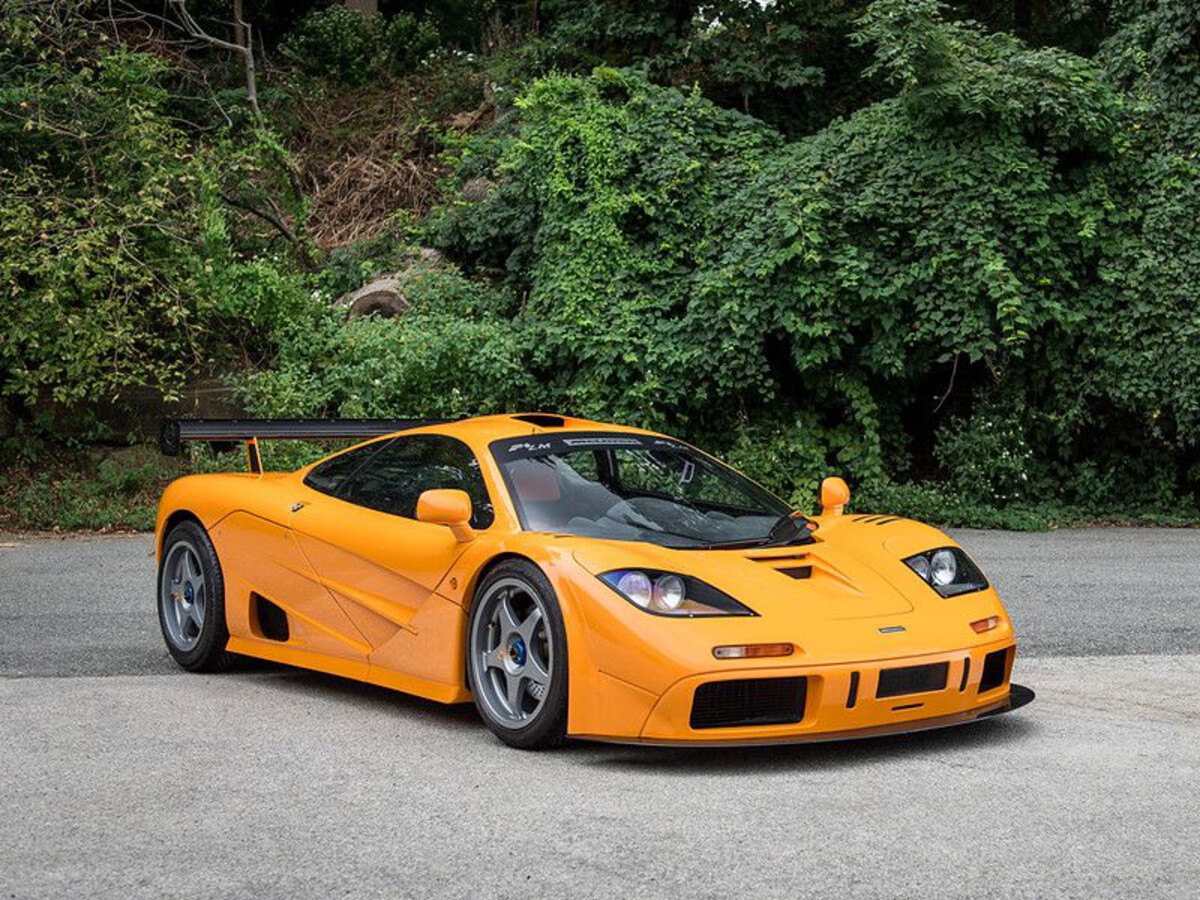
1. McLaren F1
The McLaren F1 remains one of the most revered supercars of the 1990s, celebrated for its unique engineering and groundbreaking performance. It featured a central driving position, placing the driver in the middle, flanked by two passenger seats.
This layout enhanced visibility and handling, creating an immersive driving experience unlike any other. Its naturally aspirated V12 engine produced over 600 horsepower, allowing the car to surpass speeds of 240 mph, setting records at the time.
The car’s construction relied heavily on carbon fiber, making it both lightweight and structurally rigid. This approach influenced many future supercars, establishing a benchmark for performance-focused design. The F1 was not only fast but remarkably balanced, providing exceptional cornering and braking capabilities. Its manual gearbox ensured a direct connection between driver and machine, an aspect cherished by enthusiasts.
Beyond performance, the F1 showcased meticulous attention to detail. Each car included custom interiors, hand-finished components, and a sense of exclusivity that underscored its value. Only 106 units were produced, making it rare and highly collectible today.
Its combination of rarity, innovation, and raw performance ensures that the McLaren F1 remains a symbol of 1990s automotive excellence.
The car’s historical significance extends beyond speed records. It demonstrated that extreme performance could coexist with luxury and practicality, as the F1 was designed to be drivable on public roads comfortably. Its influence is evident in modern hypercars that continue to adopt lightweight materials, aerodynamic designs, and naturally aspirated engines.
Importing a McLaren F1 today is feasible in regions where classic car regulations allow vehicles over 25 years old. Enthusiasts are drawn to its legendary status, driving experience, and collectible value, making it a dream acquisition for collectors and performance aficionados.
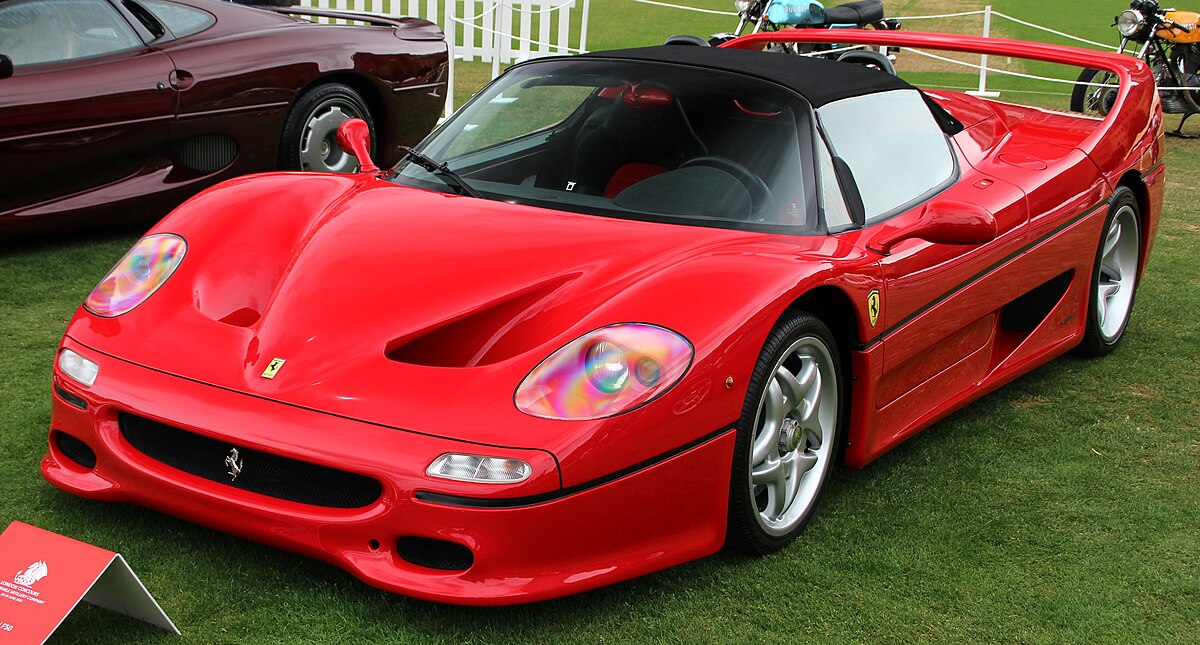
2. Ferrari F50
Ferrari’s F50 epitomized the brand’s racing heritage, blending Formula One-inspired engineering with road-going usability. Powered by a naturally aspirated V12 engine derived from Ferrari’s F1 technology, it delivered breathtaking performance and a distinct exhaust note.
The F50’s design emphasized aerodynamics, with sculpted bodywork and a removable hardtop for an open-air experience. Its advanced suspension system provided responsive handling while maintaining comfort for spirited driving.
Only 349 units were ever produced, giving the F50 rarity and desirability among collectors. Ferrari focused on lightweight materials, including carbon fiber and aluminum, ensuring performance was uncompromised. The car’s manual gearbox reinforced the driver-focused nature, requiring skill to maximize its potential. Unlike some extreme supercars, the F50 could be driven daily, offering a balance between excitement and usability.
The F50’s aesthetics remain iconic, characterized by flowing lines, prominent air intakes, and a low, aggressive stance. Every angle of the car reflects Ferrari’s commitment to performance and style, creating a visual presence that stands out even decades later. Its cockpit places the driver at the center of the experience, emphasizing control, engagement, and thrill.
Historically, the F50 represented Ferrari’s final naturally aspirated V12 supercar before the brand shifted toward turbocharging and hybrid technology. This fact enhances its collectible status, symbolizing the end of an era for pure Ferrari engineering. The car also demonstrated that race-derived technology could translate effectively to road vehicles without sacrificing performance or reliability.
With changes in import laws, the F50 is now legally available in many regions. Enthusiasts seek it for its rarity, historical importance, and exhilarating driving experience, securing its place among the most desired 1990s supercars worldwide.
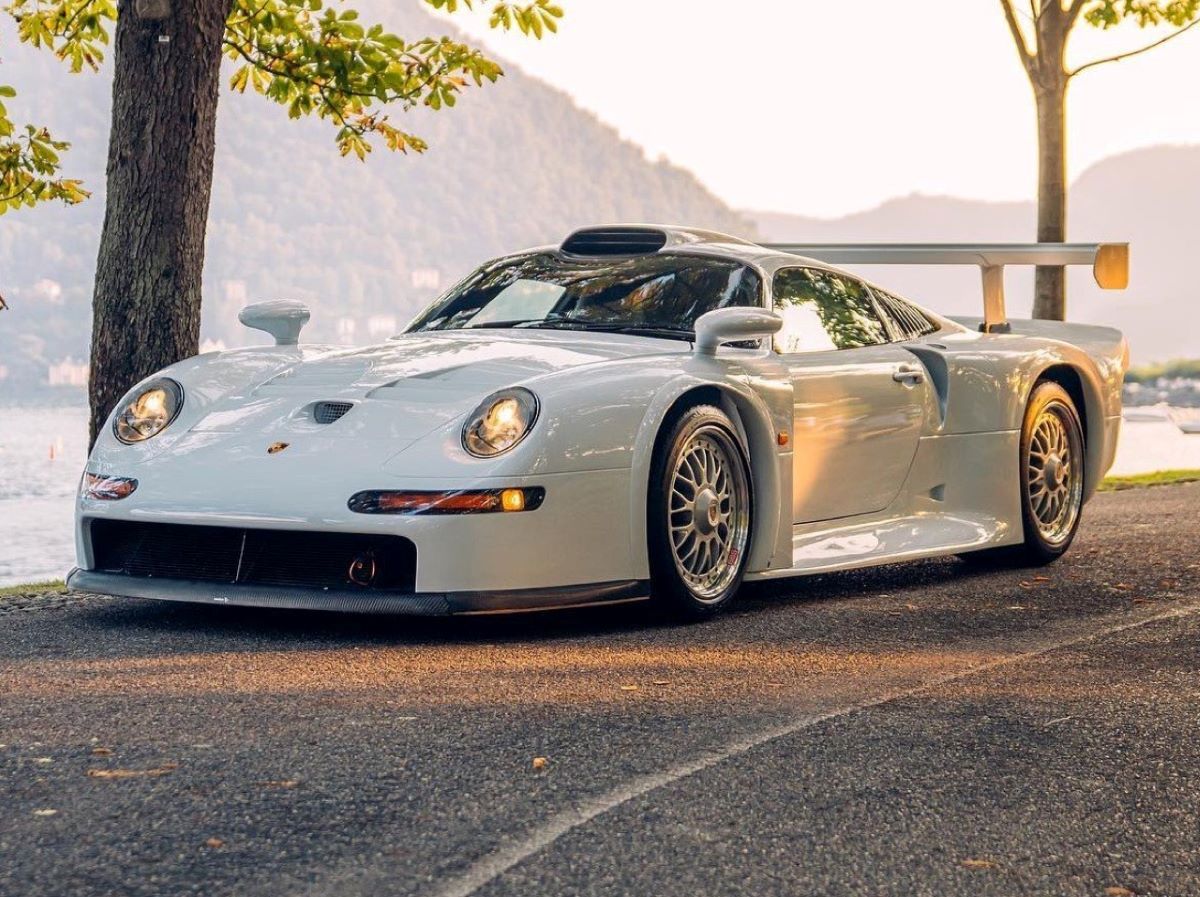
3. Porsche 911 GT1
The Porsche 911 GT1 merged the brand’s racing pedigree with road legality, producing a car that was both fast and functional. Its mid-engine layout distinguished it from traditional 911s, providing superior weight distribution and handling.
The twin-turbocharged engine delivered high horsepower, making it competitive on tracks and thrilling on public roads. Aerodynamic design elements, including a large rear wing and vented body panels, enhanced stability at high speeds.
Porsche produced only a limited number of road-going versions to meet homologation requirements for racing. This scarcity contributes to its iconic status and collectible value today.
The GT1’s chassis and suspension were directly influenced by Porsche’s endurance racing experience, offering precise control and confidence-inspiring cornering. Every aspect emphasized driver engagement and performance.
Inside, the cabin was minimalist yet functional, focusing on driving rather than luxury. Controls were positioned for efficiency, and weight-saving measures were apparent throughout. This approach underscored the car’s purpose: delivering an unfiltered, race-oriented experience for the driver. Its unique combination of speed, handling, and racing heritage made it a standout model in Porsche’s 1990s lineup.
The GT1 also marked Porsche’s commitment to blending competition with road usability. It proved that extreme performance could coexist with homologation standards, inspiring future supercars to adopt similar dual-purpose designs. Its performance remains impressive even by modern standards, emphasizing the technological advancements of its era.
Legal importation of the 911 GT1 has opened opportunities for collectors worldwide to own a piece of Porsche’s racing history. Enthusiasts value its rarity, engineering, and thrilling experience, cementing its legacy as a defining 1990s supercar.
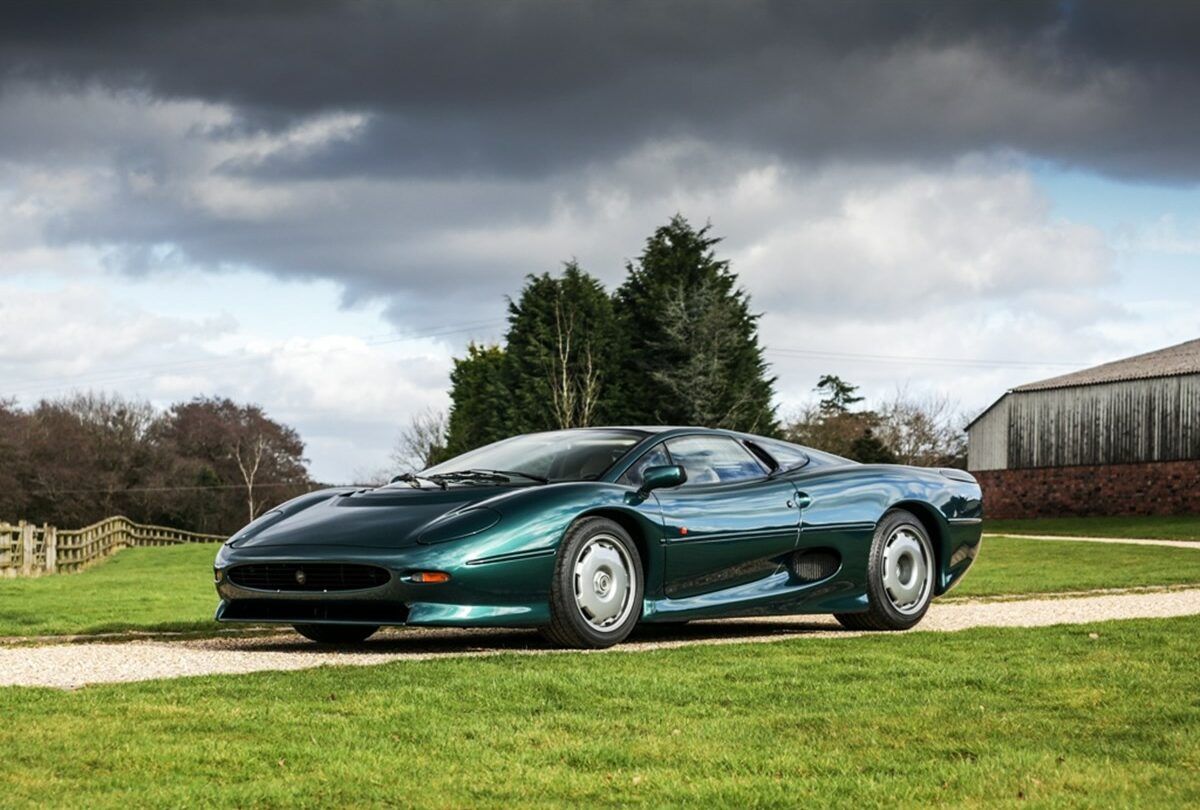
4. Jaguar XJ220
Jaguar’s XJ220 captured attention for its striking design and record-setting performance. When introduced, it was the fastest production car in the world, featuring a twin-turbocharged V6 engine producing over 540 horsepower. Its top speed exceeded 210 mph, showcasing Jaguar’s engineering capabilities and challenging competitors like Ferrari and McLaren. The car’s aerodynamic design minimized drag while maintaining stability at extreme speeds.
The XJ220’s lightweight construction emphasized performance, combining aluminum panels and advanced composites. Handling was precise, aided by a sophisticated suspension system that balanced comfort and agility. Despite its extreme speed, the car retained usability, making it suitable for road driving in addition to track performance.
Only 275 units were produced, and the exclusivity added to its desirability among collectors. Its distinctive design, with smooth curves and dramatic lines, reflected the era’s supercar aesthetics. The interior offered a blend of luxury and driver-focused controls, reinforcing the car’s dual purpose of performance and comfort.
Historically, the XJ220 demonstrated Jaguar’s ambition to compete at the highest level of automotive performance. Its record-setting achievements pushed competitors to innovate, influencing the supercar market throughout the 1990s. The car remains an icon of British engineering and design from this period.
Legal import laws now allow collectors to bring the XJ220 into more regions, giving enthusiasts the opportunity to experience its unique combination of speed, luxury, and history. Its status as a rare, high-performance machine ensures it remains highly sought after.
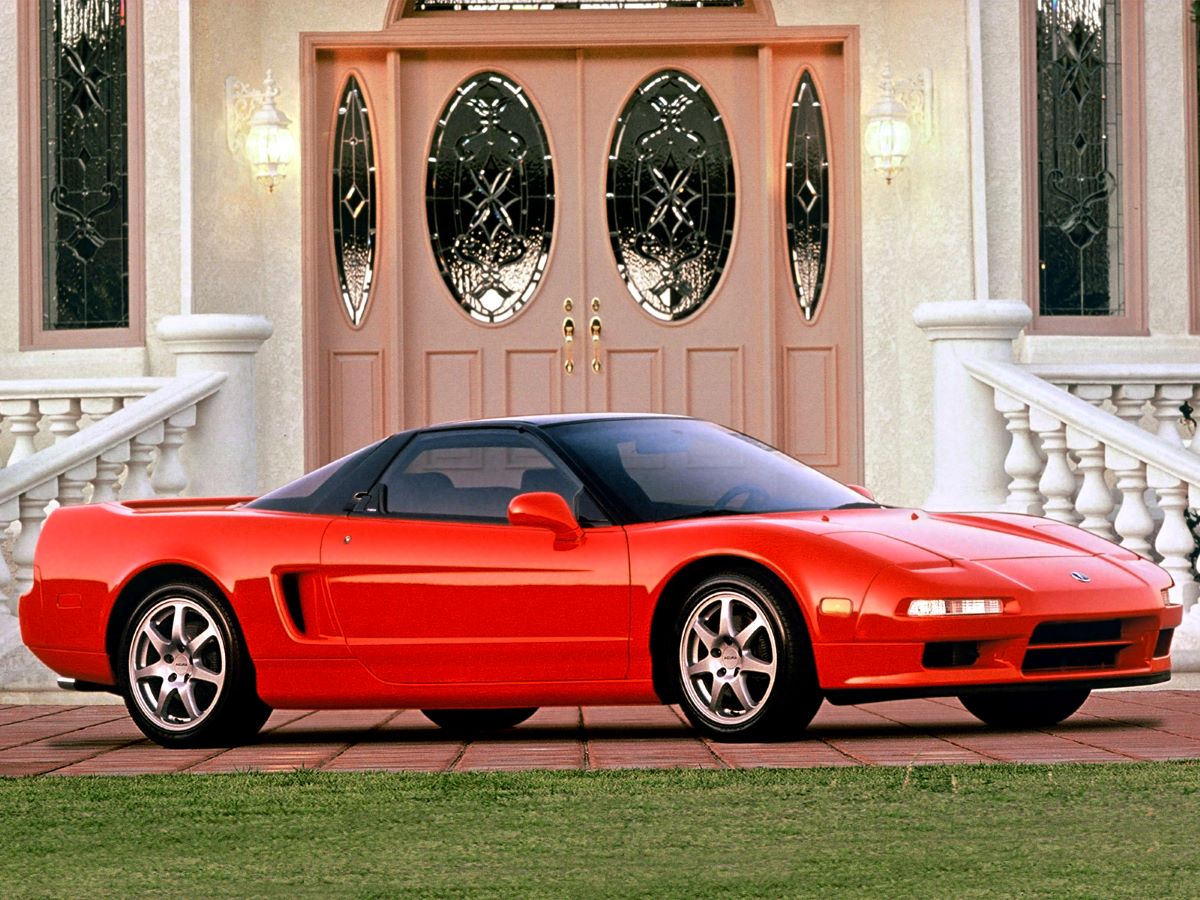
5. Acura NSX
The Acura NSX was a groundbreaking Japanese supercar, emphasizing reliability, handling, and performance in a package suitable for daily driving. Its naturally aspirated V6 engine produced smooth, predictable power, complemented by a lightweight aluminum chassis.
The NSX pioneered technologies like all-aluminum monocoque construction, which enhanced rigidity while reducing weight. Its mid-engine layout provided balanced handling and precision cornering, establishing it as a driver-oriented machine.
The NSX’s design was understated compared to its European competitors, focusing on aerodynamic efficiency and visibility. Despite being less flamboyant visually, it offered performance and refinement that rivaled Ferrari and Porsche. Japanese engineering emphasized reliability, allowing owners to enjoy high-performance driving without constant maintenance concerns.
Production numbers were limited, adding exclusivity, yet the NSX was accessible enough to inspire a global following. Its manual transmission provided direct control, appealing to driving purists. The cabin was ergonomically designed, ensuring comfort during both spirited and everyday driving.
The NSX influenced the automotive industry by demonstrating that supercars could combine performance, reliability, and usability. Its engineering solutions were adopted by other manufacturers and inspired future sports cars. Today, the NSX is celebrated for its balance, performance, and historical significance in the 1990s supercar scene.
Import regulations now permit the NSX to enter many regions, increasing demand among collectors and enthusiasts. Its combination of Japanese engineering, timeless design, and engaging driving dynamics solidifies its place among iconic supercars of the decade.
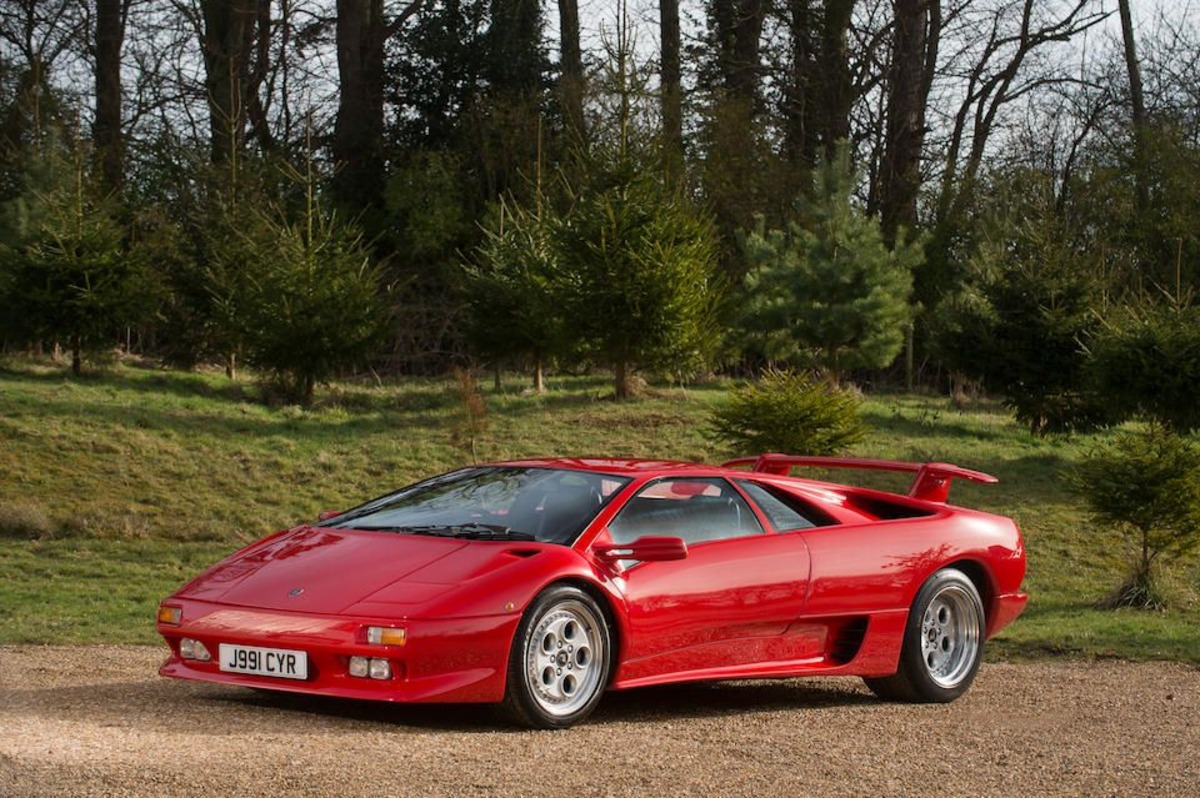
6. Lamborghini Diablo
The Lamborghini Diablo was an unmistakable symbol of 1990s Italian automotive extravagance, blending extreme performance with bold design. Its V12 engine produced a powerful roar and incredible acceleration, easily propelling the car past 200 mph.
Lamborghini focused on dramatic styling, giving the Diablo scissor doors, aggressive lines, and a low, wide stance that dominated the road. Its aerodynamics were designed to enhance stability at high speeds while maintaining a striking presence in any environment.
The Diablo’s performance was complemented by advanced suspension and braking systems that allowed it to handle corners and high-speed maneuvers with surprising precision. Despite its wild appearance, the car retained enough balance to be controllable for skilled drivers, reflecting Lamborghini’s expertise in combining extreme power with usability.
Early models offered a naturally aspirated engine, while later variants introduced all-wheel drive systems to enhance traction and handling.
Luxury was not sacrificed for performance. The interior featured premium materials, driver-focused controls, and options for customization that allowed owners to personalize the cabin according to taste. Each car’s build quality reflected Lamborghini’s dedication to craftsmanship, and the tactile feedback of the controls ensured a connected driving experience. Production numbers were limited, with each Diablo representing both a work of engineering and a piece of automotive art.
Historically, the Diablo represented Lamborghini’s evolution in the supercar segment, bridging the gap between the Countach’s raw extremity and modern hypercars’ refined engineering.
It captured attention worldwide and inspired the aesthetic of later models, ensuring its influence extended far beyond its production years. The Diablo’s combination of power, design, and rarity solidified its reputation as one of the decade’s most iconic supercars.
With import regulations evolving, the Diablo is now legal in many regions, enabling collectors and enthusiasts to own a true 1990s supercar legend. Its legacy endures because it offers the visceral thrill of classic Italian design alongside the engineering that continues to influence Lamborghini’s modern creations.
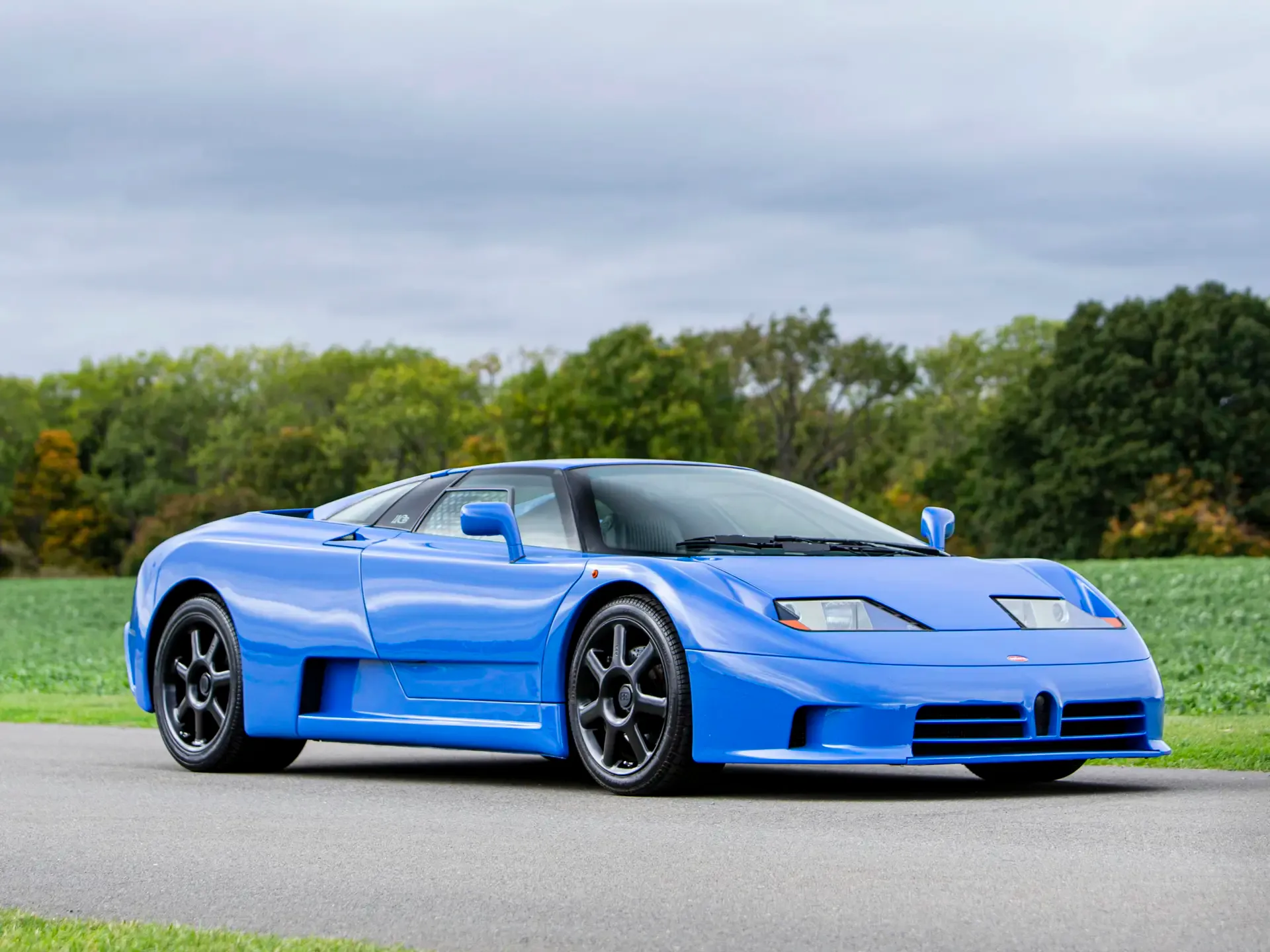
7. Bugatti EB110
The Bugatti EB110 stands out as one of the most technologically advanced supercars of its time, featuring quad-turbocharged V12 power and an all-wheel-drive system that was revolutionary in the early 1990s. Its top speed exceeded 210 mph, making it one of the fastest cars in production when it was released.
The EB110’s lightweight chassis and aerodynamic design allowed it to combine speed with agility, creating a supercar that could excel both on highways and tracks. Its sharp lines, distinctive angular styling, and aggressive stance made it instantly recognizable as a high-performance exotic vehicle.
Bugatti produced the EB110 in extremely limited numbers, with fewer than 140 units completed. This rarity immediately increased its desirability, as collectors recognized it as a high-performance masterpiece.
The car’s interior featured luxurious materials and ergonomic controls, emphasizing both comfort and performance. Despite its extreme engineering, the EB110 could be driven comfortably for long distances, showcasing Bugatti’s ability to combine exotic performance with usability.
The car’s engine technology was groundbreaking, with four turbochargers boosting a V12 to extraordinary levels of power. Its advanced all-wheel-drive system provided traction and stability, making the car controllable even under extreme conditions. Suspension and braking systems were engineered for precision, demonstrating a perfect balance between raw power and driver confidence.
Historically, the EB110 marked Bugatti’s revival under Italian ownership and demonstrated that the brand could return to creating world-class supercars. Its technical sophistication influenced later hypercars, especially in terms of engine development and all-wheel-drive performance.
The EB110 also symbolized a period when engineering ambition often exceeded production practicality, producing vehicles that were as rare as they were capable.
Now, the EB110 is legally importable in many regions due to relaxed regulations, allowing enthusiasts to experience its advanced technology and performance firsthand. Its rarity, engineering excellence, and historical significance make it one of the 1990s supercars most treasured by collectors worldwide.
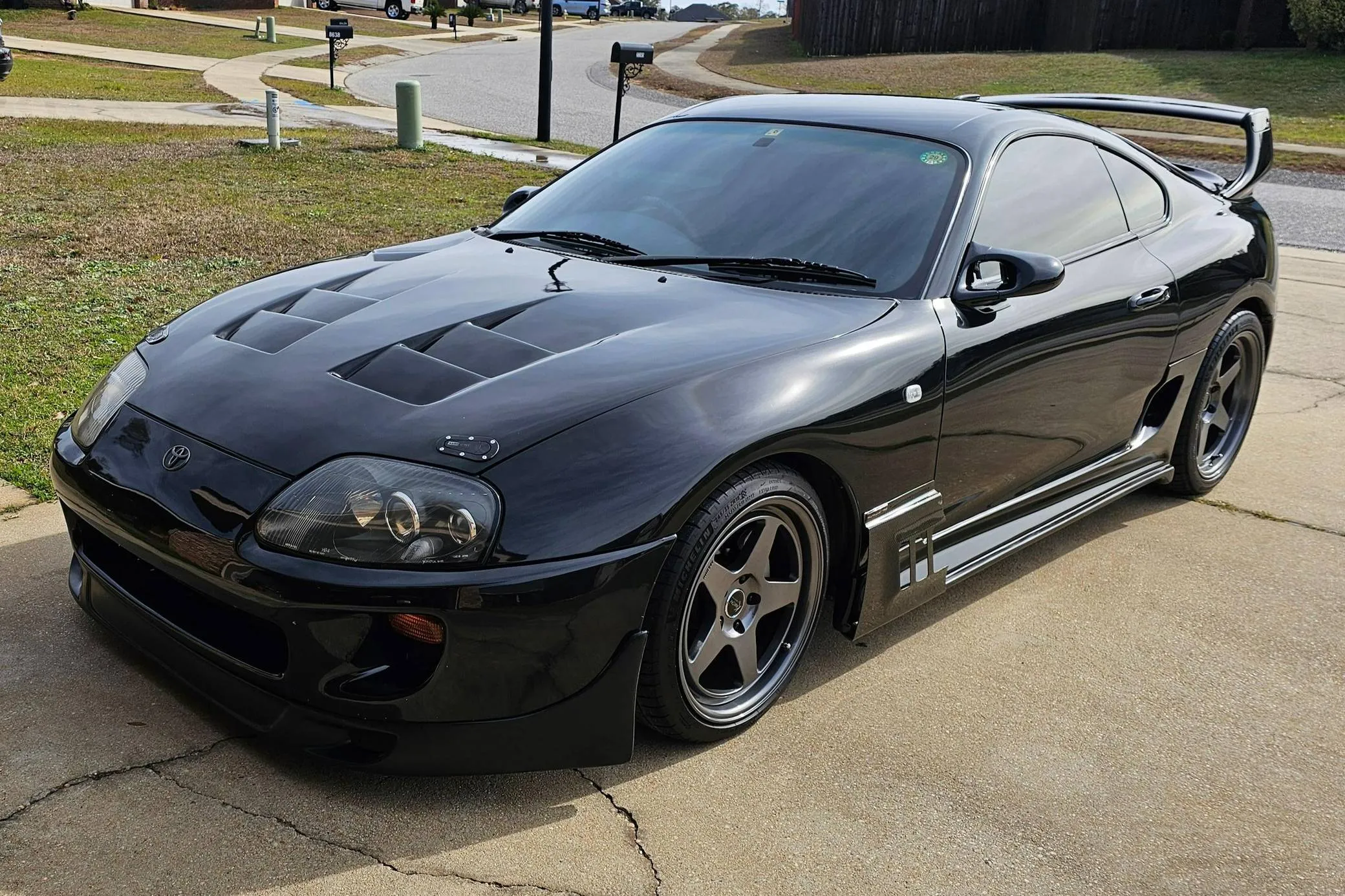
8. Toyota Supra Turbo (Mark IV)
The Toyota Supra Turbo, particularly the Mark IV, became an icon due to its remarkable combination of performance, tuning potential, and reliability. Its 2JZ-GTE twin-turbocharged inline-six engine could be pushed far beyond stock specifications, creating a lasting legacy in both street and track performance communities.
The car’s rear-wheel-drive layout and well-balanced chassis allowed for precise handling, offering a driving experience that remained engaging even as power increased. Its design was smooth, aggressive, and modern for the 1990s, combining aerodynamic efficiency with Japanese styling cues that have aged gracefully.
The Mark IV Supra was more than just speed; it represented a tuner culture movement that emphasized modification, personal expression, and motorsport influence. Its engine and drivetrain were engineered for durability, allowing enthusiasts to experiment with power upgrades without compromising reliability.
The turbocharged engine produced strong acceleration and high-speed performance, making it competitive with far more expensive European supercars of the era.
Inside, the Supra balanced comfort with sportiness, featuring supportive seats, intuitive controls, and a driver-focused cockpit. Its interior reflected Japanese attention to detail and ergonomics, offering a refined experience for both spirited drives and long trips.
Limited production versions, such as the Twin Turbo RZ models, increased collectibility due to their enhanced performance features and exclusive options.
The Mark IV Supra also holds historical significance for bridging Japanese engineering with global performance standards. It became a symbol of attainable supercar-like performance and influenced subsequent Japanese sports cars and tuning culture. Its presence in films, racing games, and car culture media further cemented its legendary status.
With import laws now permitting vehicles over 25 years old, the Supra Turbo is accessible to enthusiasts worldwide. Its blend of performance, tuning potential, and nostalgia makes it one of the most desirable and recognizable 1990s supercars available today.
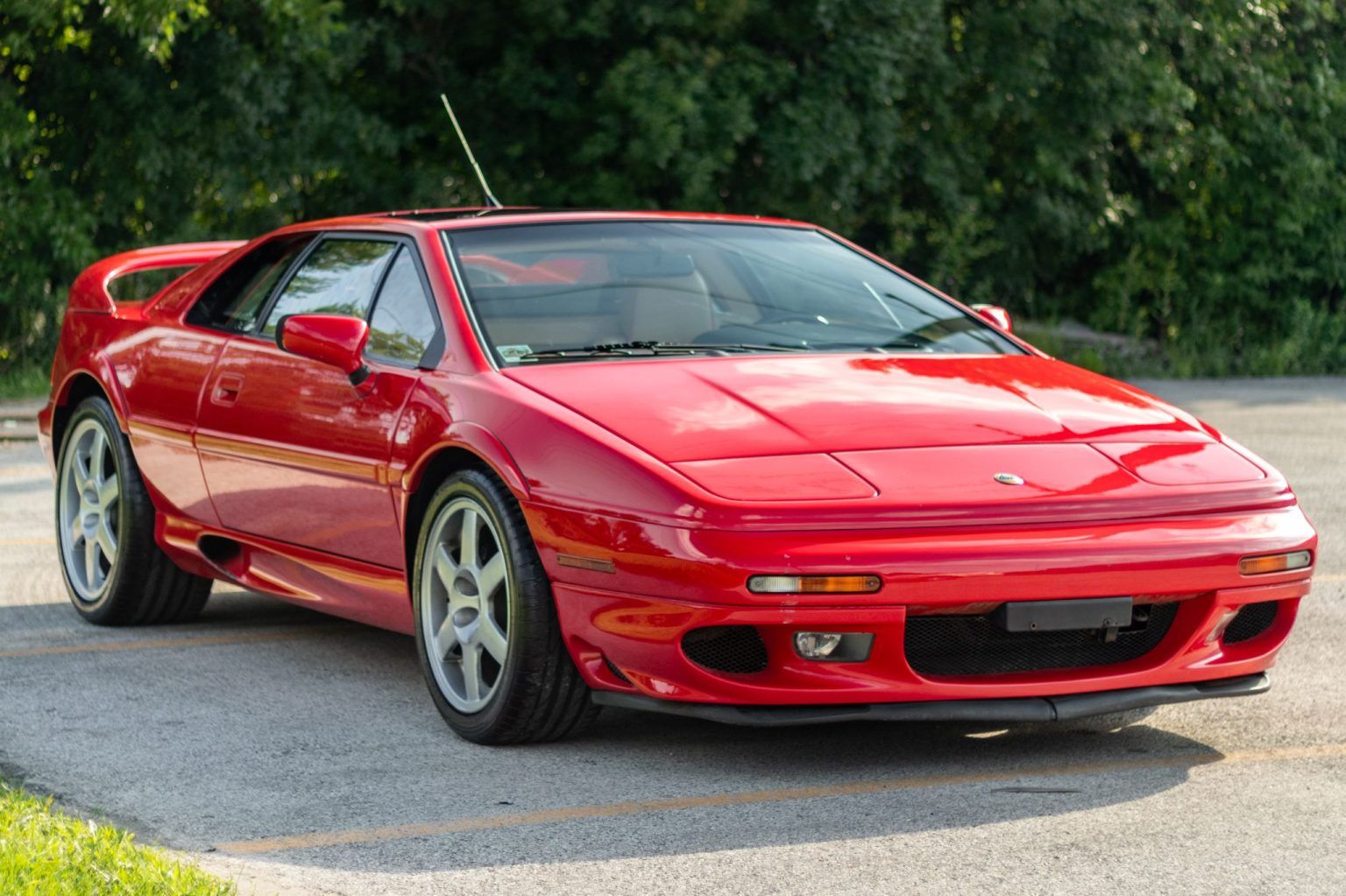
9. Lotus Esprit V8
The Lotus Esprit V8 represented a leap in British sports car engineering, combining lightweight construction with V8 power for exceptional performance. Its mid-engine layout and precision suspension delivered sharp handling and agility, making it highly responsive on twisty roads and tracks.
Lotus engineers emphasized minimal weight, employing composite materials and aluminum to enhance speed and maneuverability. The Esprit’s wedge-shaped design remained strikingly futuristic, reflecting both aerodynamics and Lotus’ commitment to visual drama.
The V8 engine provided thrilling acceleration, complementing the car’s handling prowess. Despite its power, Lotus retained a focus on driver engagement, with a manual transmission and finely tuned chassis allowing skilled drivers to extract every bit of performance. Only a limited number of Esprit V8s were produced, emphasizing exclusivity and increasing interest among collectors.
Luxury was subtle yet functional, with driver-focused controls and seats designed for comfort during spirited driving. Lotus ensured that the car maintained usability for road driving, not just track performance. Its engineering highlighted a commitment to balance, demonstrating that extreme handling could coexist with everyday practicality.
Historically, the Esprit V8 marked Lotus’ final major evolution of its iconic wedge-shaped supercar before the company shifted toward newer models and technologies. Its design influenced future sports cars and reinforced Lotus’ reputation for producing lightweight, high-performance vehicles that emphasize driving purity.
With updated import rules, the Esprit V8 is now legally available in multiple regions, allowing collectors to own a distinctive 1990s supercar. Its combination of rarity, engineering excellence, and iconic design continues to attract enthusiasts seeking a pure, driver-focused experience.
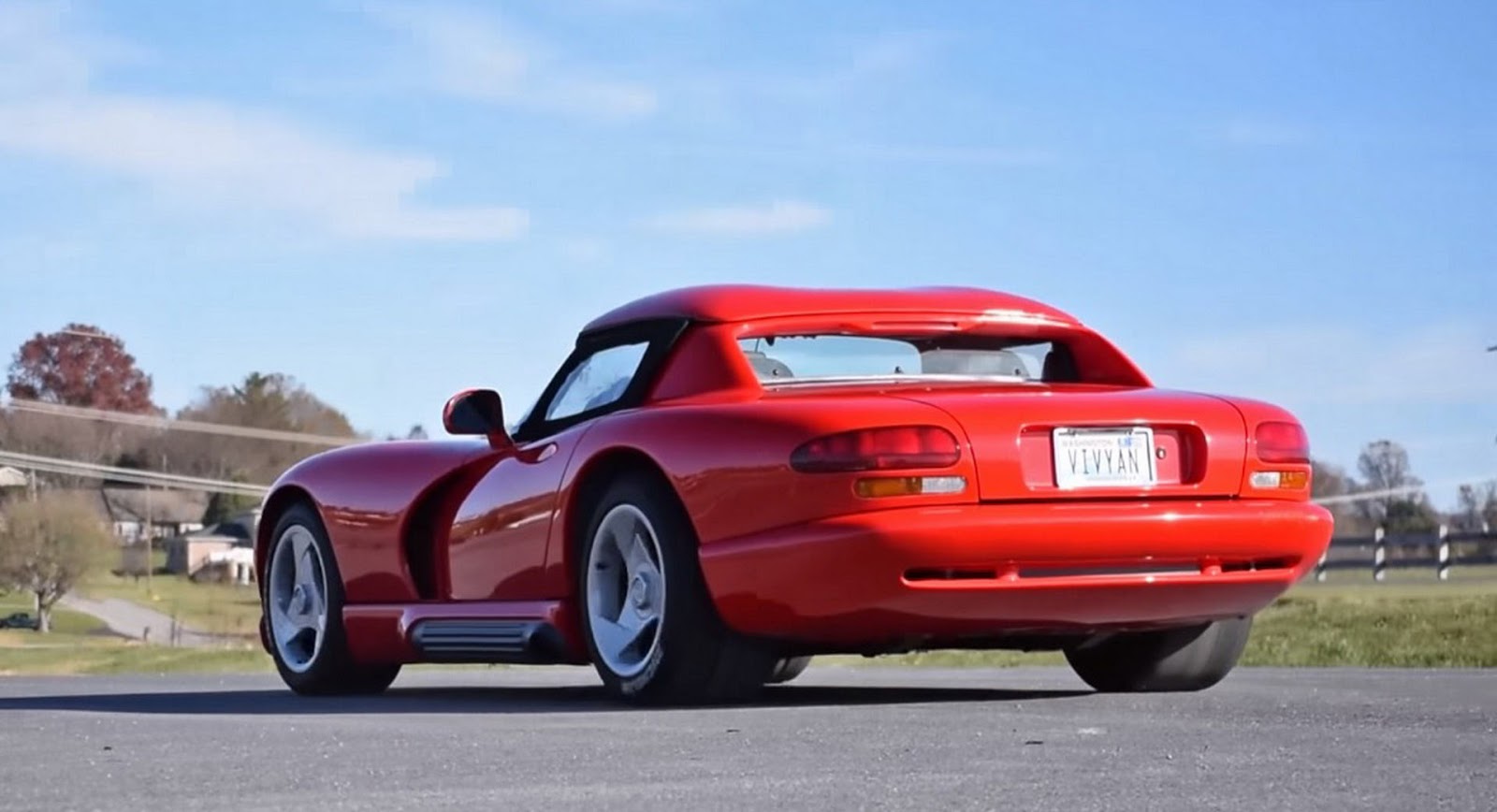
10. Dodge Viper RT/10
The Dodge Viper RT/10 introduced American muscle and raw performance into the 1990s supercar scene, featuring a massive V10 engine capable of producing intense power and acceleration. Unlike European exotics, the Viper focused on simplicity and raw driving dynamics, delivering a visceral experience with minimal electronic interference.
Its open-top roadster design emphasized exposure to the environment, reinforcing the connection between driver, machine, and road. The Viper’s bold lines, long hood, and aggressive stance reflected American automotive confidence and performance ambition.
The car’s handling required respect and skill, as its large engine produced immense torque that could easily overwhelm unprepared drivers. Dodge engineered the chassis and suspension to balance straight-line speed with cornering stability, creating a machine that rewarded careful driving. The RT/10’s manual transmission allowed full control over power delivery, ensuring a tactile and engaging driving experience.
Inside, the Viper was purpose-driven, with a straightforward cockpit that focused on the essentials. Its minimalistic interior design emphasized performance over luxury, reflecting the car’s philosophy of raw, unfiltered driving. Production numbers were limited during the initial years, establishing the Viper as both exclusive and highly desirable among American and international collectors.
Historically, the Viper RT/10 challenged perceptions of what an American supercar could be, combining extreme engine power with a unique design philosophy. It demonstrated that performance could be thrilling without relying heavily on electronics or refinement, influencing future muscle cars and supercars.
With import laws now permitting its entry in many regions, the Viper RT/10 is accessible to enthusiasts worldwide. Its combination of raw power, aggressive design, and historical significance ensures it remains a highly sought-after 1990s supercar.
