
Hybrid vehicles are widely recognized for their impressive efficiency, especially in urban environments where stop and go traffic allows their electric motors and regenerative braking systems to shine. Many buyers are drawn to hybrids with the expectation that they will deliver consistently high fuel economy across all driving conditions.
However, real world experience shows that highway driving, particularly on fast US interstates, presents a very different scenario. At sustained speeds above 65 to 75 mph, hybrids often lose a noticeable portion of their efficiency advantage, leading to reduced range compared to their city performance.
This difference exists because hybrid systems are optimized for variable driving patterns rather than constant high speed cruising. In city conditions, hybrids frequently switch to electric power, recover energy during braking, and shut off the engine when idle.
On interstates, these advantages diminish significantly. The gasoline engine remains active most of the time, and there are fewer opportunities to recover energy through braking. As a result, the efficiency gap between hybrids and conventional gasoline vehicles narrows considerably, sometimes surprising owners who expected consistent savings across all conditions.
Aerodynamics also play a major role in highway efficiency loss. As speed increases, air resistance rises sharply, requiring more energy to maintain motion. This affects all vehicles, but hybrids feel the impact more strongly because their electric assistance contributes less at steady speeds.
Instead of benefiting from electric torque and energy recovery, they rely heavily on the internal combustion engine, which operates under continuous load. This reduces the relative advantage of hybrid technology and leads to higher fuel consumption per mile.
Plug in hybrids face an additional challenge during long interstate trips. Once their electric only range is depleted, they effectively operate as heavier conventional hybrids, carrying extra battery weight that no longer contributes to propulsion.
This further reduces efficiency on extended highway drives, especially when compared to their city performance where the battery plays a larger role. Drivers often notice that their first tank of fuel delivers better range than subsequent ones, particularly when the battery is not recharged during the journey.
The purpose of this article is to examine ten hybrid models that tend to suffer the most noticeable range loss on US interstates. These vehicles are not necessarily poor performers, but they demonstrate a significant gap between their advertised or city efficiency and their real world highway performance.
Understanding these differences can help buyers make more informed decisions and set realistic expectations about how hybrids behave in different driving environments.
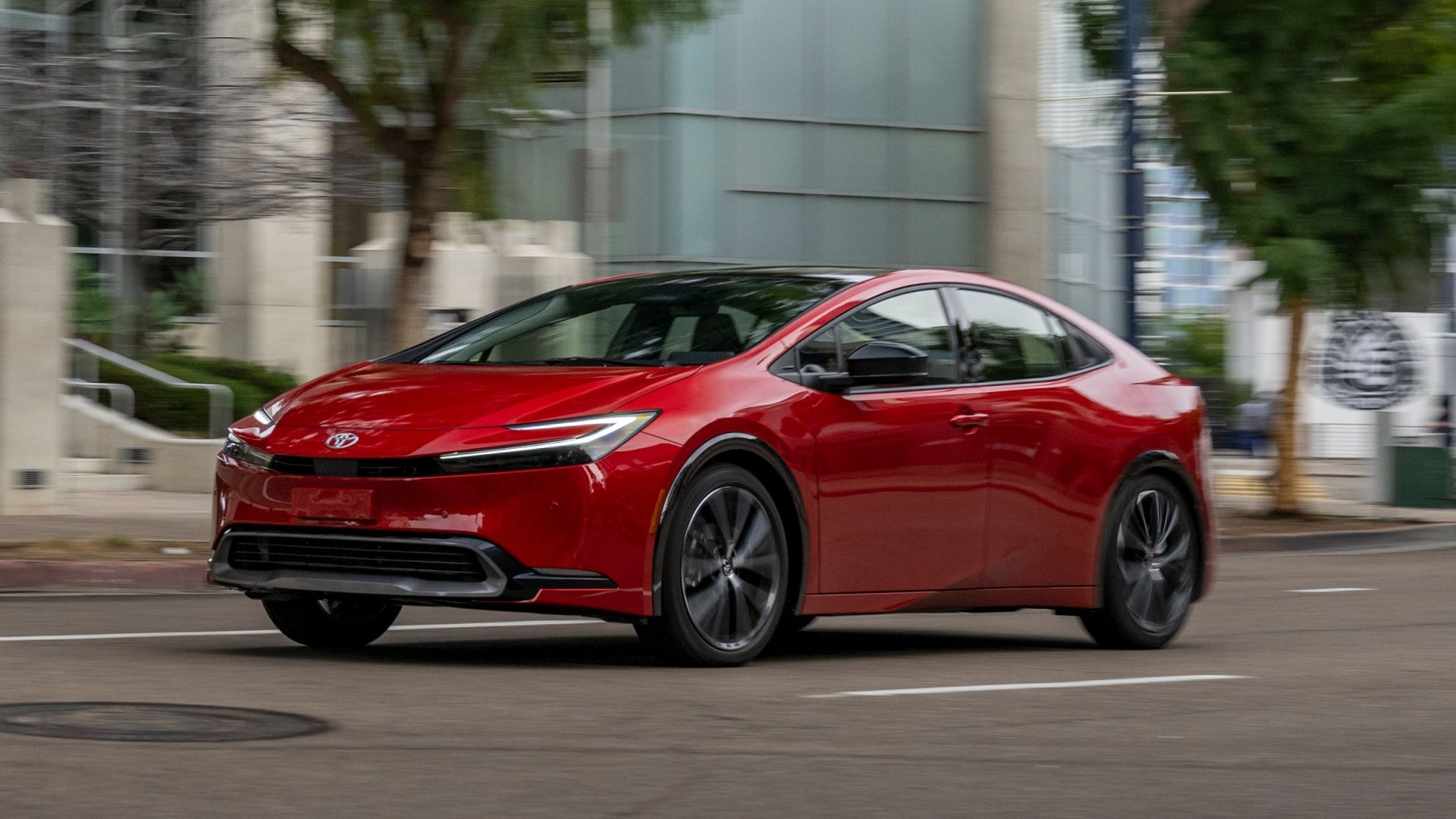
1. Toyota Prius
The Toyota Prius is widely recognized as the standard bearer for hybrid efficiency, particularly in urban settings. Its hybrid system combines a gasoline engine with an electric motor, enabling it to operate on electric power for short bursts. In city traffic, this allows the Prius to achieve remarkable mileage figures. However, these benefits change when the vehicle is driven at sustained high speeds on interstates.
Highway driving relies primarily on the gasoline engine, as the electric motor provides limited assistance during constant speed cruising. This eliminates one of the primary advantages of hybrid technology: the ability to operate intermittently on electric power. Drivers may notice that fuel consumption climbs steadily when cruising above 65 mph, despite the vehicle’s efficient design.
Aerodynamics play a critical role in the Prius’s highway efficiency. While its shape is optimized for reduced drag, air resistance increases with speed, requiring more energy from the gasoline engine. The hybrid system cannot recover as much energy because regenerative braking is minimal on highways. Consequently, range diminishes more quickly than city estimates would suggest.
The weight of the battery and hybrid components also affects interstate performance. Although lightweight compared to some hybrids, the Prius still carries additional mass that the electric system cannot fully compensate for at high speed. The engine must sustain a continuous load, which reduces fuel economy compared to city driving where the engine frequently shuts off.
Real world reports from owners consistently show a gap between city and highway fuel economy. While the Prius remains more efficient than many conventional vehicles, the difference highlights how hybrid advantages are optimized for stop and go traffic. Awareness of this can help drivers plan refueling more accurately on long trips.
Additional factors include the behavior of the continuously variable transmission. At high speeds, the transmission operates to keep the engine in an efficient range, but it cannot prevent the increase in fuel consumption caused by sustained high speed. This leads to a noticeable drop in highway range.
The Prius’s performance also varies with load and wind conditions. Extra passengers, cargo, or strong headwinds exacerbate the efficiency gap. Even moderate winds can affect range due to the vehicle’s relatively small engine needing to maintain higher RPMs. This makes planning for long highway trips important.
Lastly, drivers who rely on the hybrid system to save fuel must adjust expectations for interstate travel. While the Prius still provides excellent efficiency, the difference between urban and highway driving conditions is significant. Understanding the limitations ensures drivers are not surprised by shorter highway range than advertised.
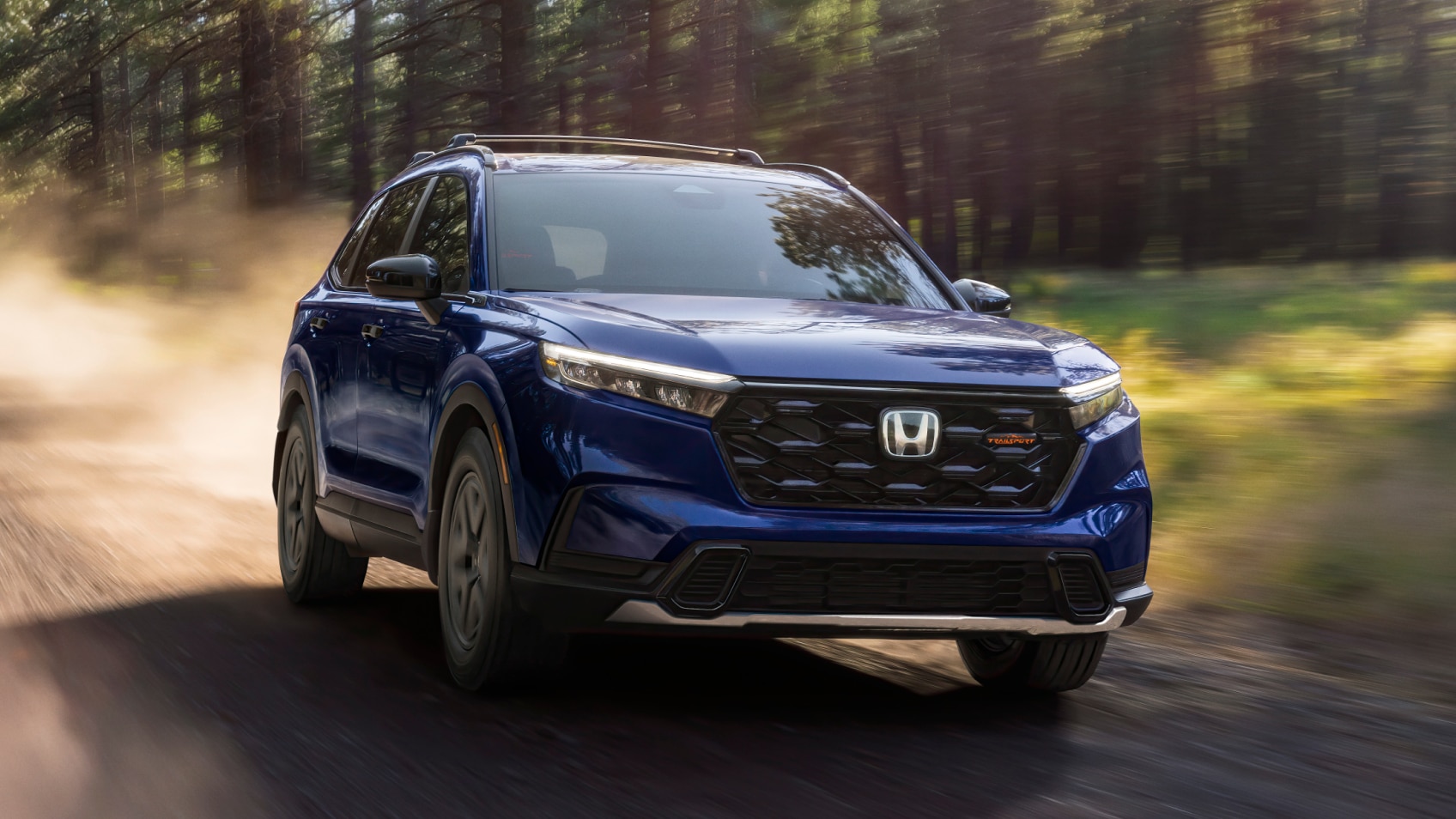
2. Honda CR‑V Hybrid
The Honda CR‑V Hybrid has grown in popularity thanks to its balance of utility and fuel economy. In urban settings, its hybrid system maximizes the use of electric assistance during acceleration and deceleration. Stop and go traffic allows the battery to recharge frequently through regenerative braking. This makes the CR‑V Hybrid particularly appealing to commuters.
On interstates, however, the advantages of the hybrid system are less apparent. Sustained high speed driving reduces the opportunities for electric power to contribute meaningfully. The gasoline engine remains active nearly continuously, increasing fuel consumption and reducing range compared to city driving.
Aerodynamics and weight further contribute to range loss. As a compact SUV, the CR‑V Hybrid presents a larger frontal area than a sedan, increasing air resistance at high speeds. Maintaining velocity requires the gasoline engine to operate under higher loads, which offsets some of the hybrid system’s efficiency.
Drivers often notice that the difference between city and highway fuel economy is substantial. While the hybrid system provides a measurable improvement over conventional CR‑Vs on the highway, the advantage shrinks considerably. In some cases, highway efficiency comes close to that of non hybrid SUVs.
Load distribution also affects efficiency. Carrying multiple passengers or luggage amplifies the energy demand on highways. The regenerative braking system cannot capture energy effectively during steady cruising, meaning the engine works harder for longer distances. This contributes to a perceptible drop in highway range.
Additionally, the CR‑V Hybrid’s all wheel drive version experiences slightly lower efficiency on interstates due to mechanical drag and extra weight. The system adds complexity and reduces the advantage of electric assistance under constant speed conditions. Front wheel drive versions perform somewhat better, though still experience range reduction.
Tire selection and pressure also influence highway performance. Higher rolling resistance can increase fuel consumption significantly during sustained high speed driving. Owners should be mindful of maintenance and proper tire inflation to minimize efficiency loss on long interstate trips.
The CR‑V Hybrid remains an excellent choice for a practical hybrid SUV. Yet understanding how it behaves on interstates helps set realistic expectations. While city driving showcases the full potential of the hybrid system, highway efficiency is necessarily lower due to continuous engine operation and reduced regenerative opportunities.
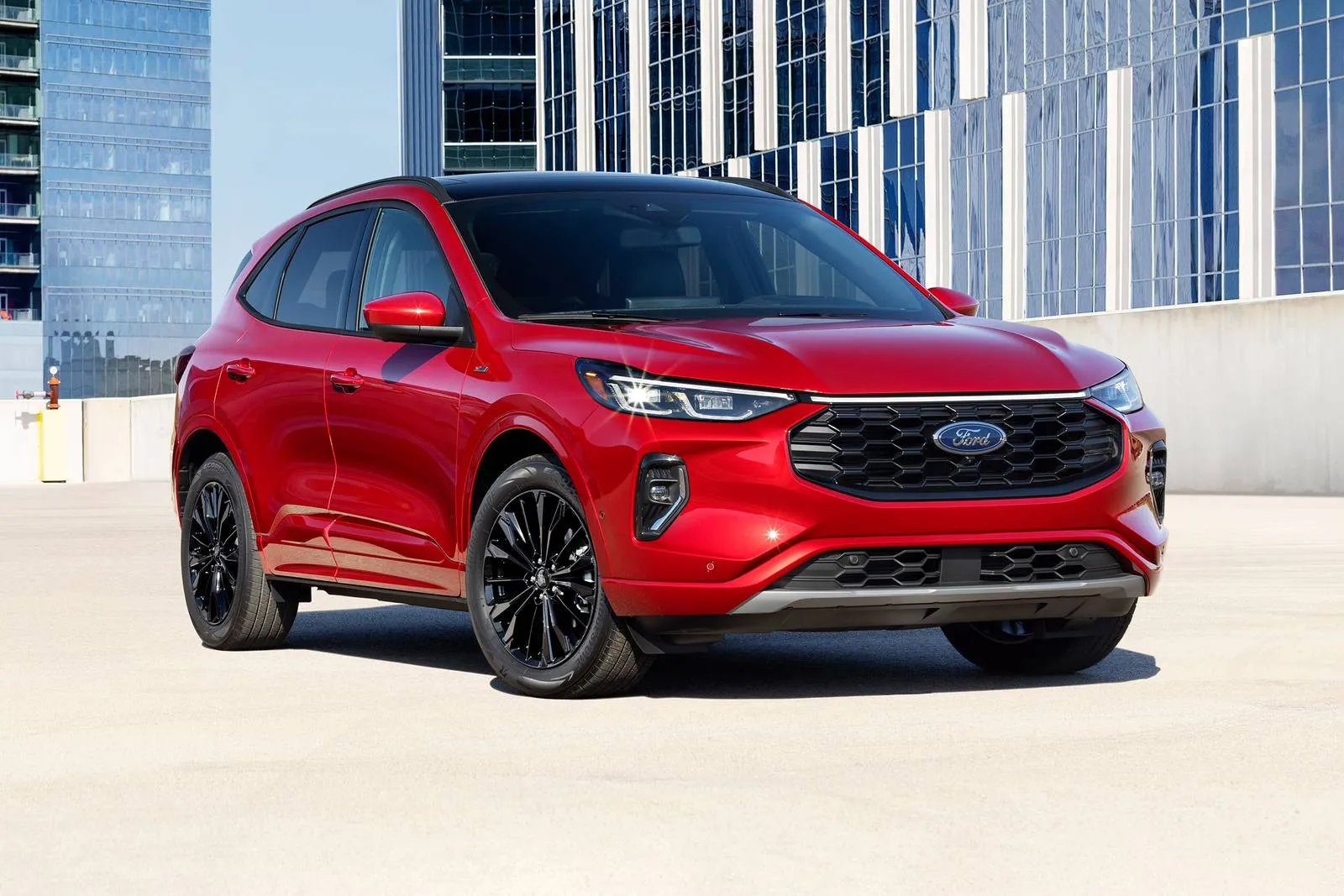
3. Ford Escape Hybrid
The Ford Escape Hybrid has become a strong contender in the compact SUV hybrid market. Its hybrid system blends a gasoline engine with an electric motor to optimize fuel economy in urban conditions. Regenerative braking, engine shutoff during stops, and electric torque assist provide substantial gains in city driving.
On the highway, the Escape Hybrid’s performance changes noticeably. Sustained high speeds reduce the role of the electric motor, causing the gasoline engine to work continuously. This leads to higher fuel consumption and reduced range compared to city driving conditions, where the hybrid system can frequently intervene.
Aerodynamics play a large role in range loss on interstates. The Escape’s taller body and larger frontal area increase wind resistance at high speed, requiring additional energy to maintain velocity. Even with an efficient hybrid drivetrain, the combination of aerodynamic drag and continuous engine operation leads to lower highway efficiency.
All wheel drive models experience slightly worse range due to increased mechanical resistance. The extra weight and power requirements of all wheel drive systems mean the gasoline engine operates more frequently, while the electric system has fewer opportunities to assist. Front wheel drive versions are more efficient but still experience range reduction.
Driver behavior also influences the efficiency of the Escape Hybrid on highways. Rapid acceleration, maintaining high RPMs, or climbing steep grades amplifies fuel consumption. Unlike city driving where regenerative braking captures energy, highway driving relies almost entirely on the engine, limiting the hybrid system’s contribution.
Weather conditions, such as headwinds or cold temperatures, further exacerbate highway range loss. Cold weather reduces battery efficiency, meaning the gasoline engine must provide more power. Similarly, strong winds increase air resistance, further decreasing fuel economy. These factors are particularly noticeable on long interstate trips.
The continuously variable transmission helps maintain engine efficiency, but it cannot fully mitigate the impact of sustained high speed cruising. Owners often find that the Escape Hybrid’s highway fuel economy falls well below city ratings. Understanding this difference is crucial for long distance planning.
Despite these challenges, the Escape Hybrid remains a capable and versatile SUV. Its city performance is impressive, while highway driving remains adequate for long trips, albeit with a noticeable reduction in efficiency compared to urban conditions.
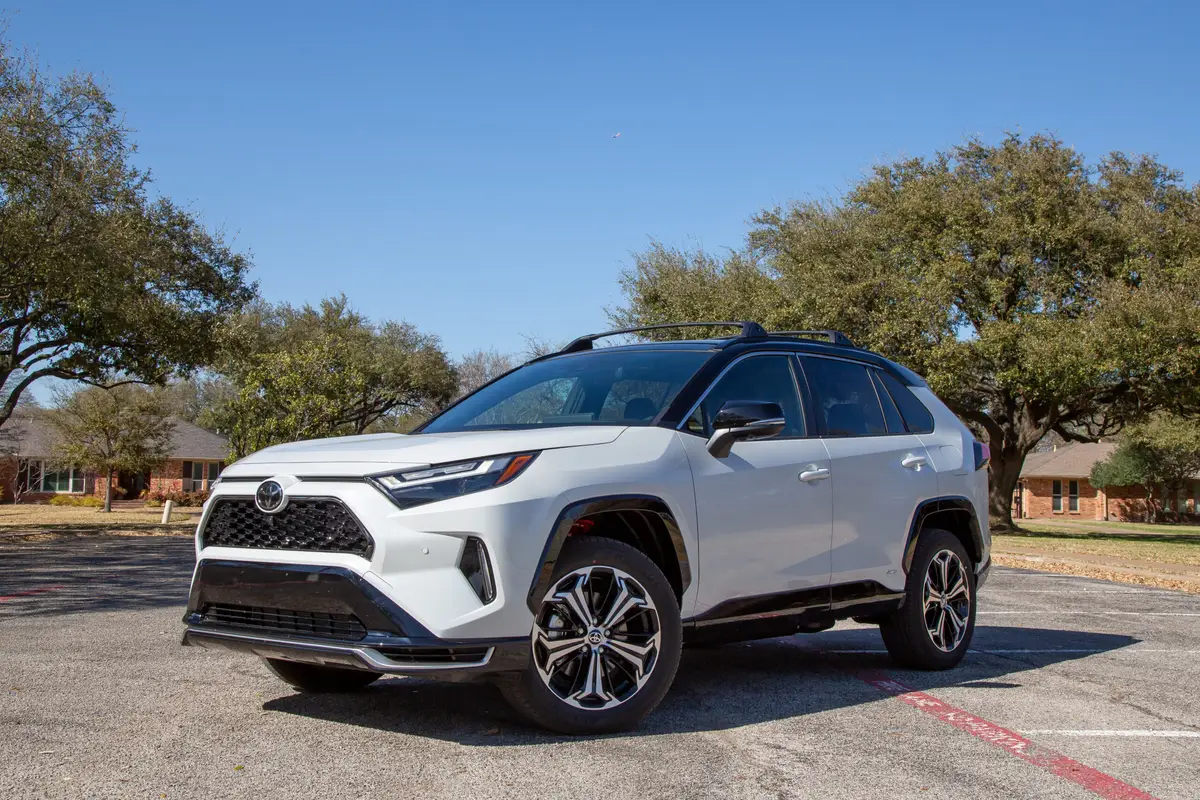
4. Toyota RAV4 Hybrid
The Toyota RAV4 Hybrid is a best selling SUV that combines hybrid efficiency with ample interior space. Its hybrid system performs well in urban traffic, where the electric motor and regenerative braking contribute significantly to fuel economy. In stop and go traffic, the RAV4 Hybrid delivers consistent, above average mileage.
Highway driving presents a different picture. Sustained speeds reduce the opportunity for electric assistance, forcing the gasoline engine to provide the majority of propulsion. Range decreases accordingly, and the vehicle behaves more like a conventional SUV than a hybrid under these conditions.
Aerodynamic drag plays a critical role in highway efficiency. The RAV4’s higher profile increases wind resistance, requiring the engine to work harder to maintain speed. Even with a streamlined design, the impact of air resistance at 70 mph or more cannot be fully offset by the hybrid system.
Vehicle weight also contributes to highway efficiency loss. Carrying multiple passengers or cargo increases the load on the engine, further diminishing fuel economy. Regenerative braking cannot recapture energy effectively when deceleration is minimal, making high speed cruising less efficient.
Real world reports from RAV4 Hybrid owners consistently show a gap between city and highway efficiency. While still better than many gasoline SUVs, the difference can be surprising for those expecting uniform performance. Knowledge of this helps drivers plan refueling stops accurately.
Engine tuning also affects highway fuel economy. The RAV4 Hybrid is optimized for smooth acceleration and urban efficiency, which means the gasoline engine may operate at higher RPMs during sustained high speed driving. This increases fuel consumption relative to city conditions.
All wheel drive models experience slightly greater highway efficiency loss due to additional mechanical resistance. The drivetrain and weight increase reduce the effectiveness of the electric motor during steady cruising, highlighting the importance of drivetrain choice for long trips.
The RAV4 Hybrid remains an efficient and practical SUV. Its highway performance is reasonable, but drivers should anticipate lower range than city figures suggest, particularly during sustained high speed travel or when carrying extra weight.
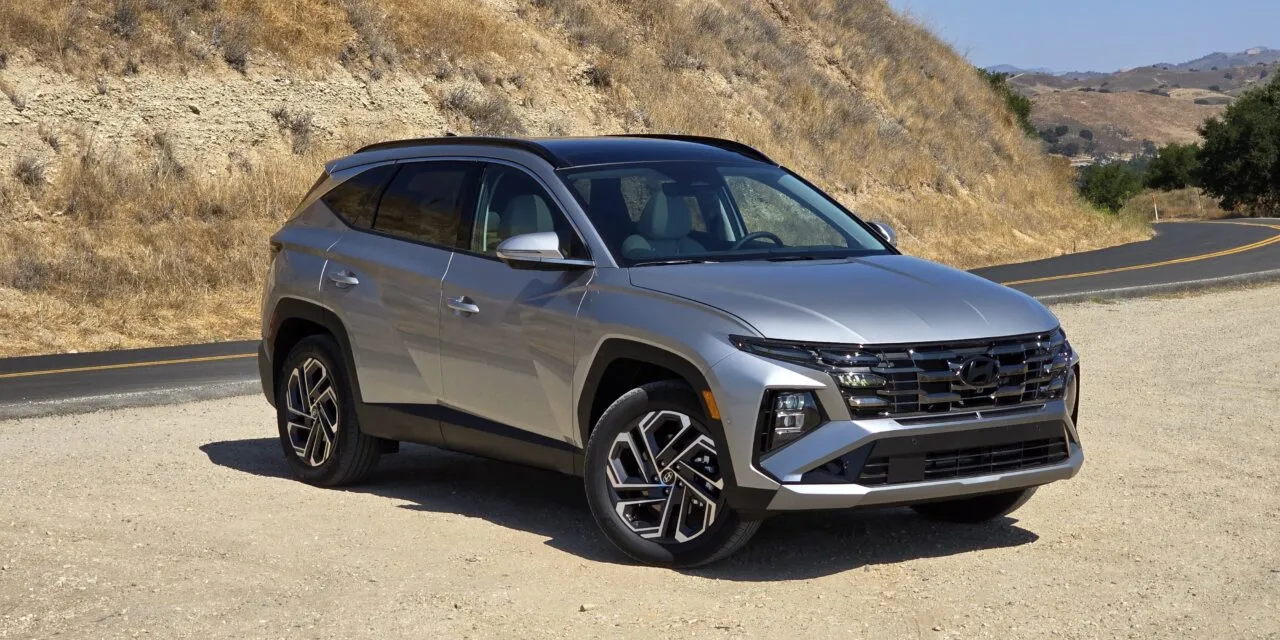
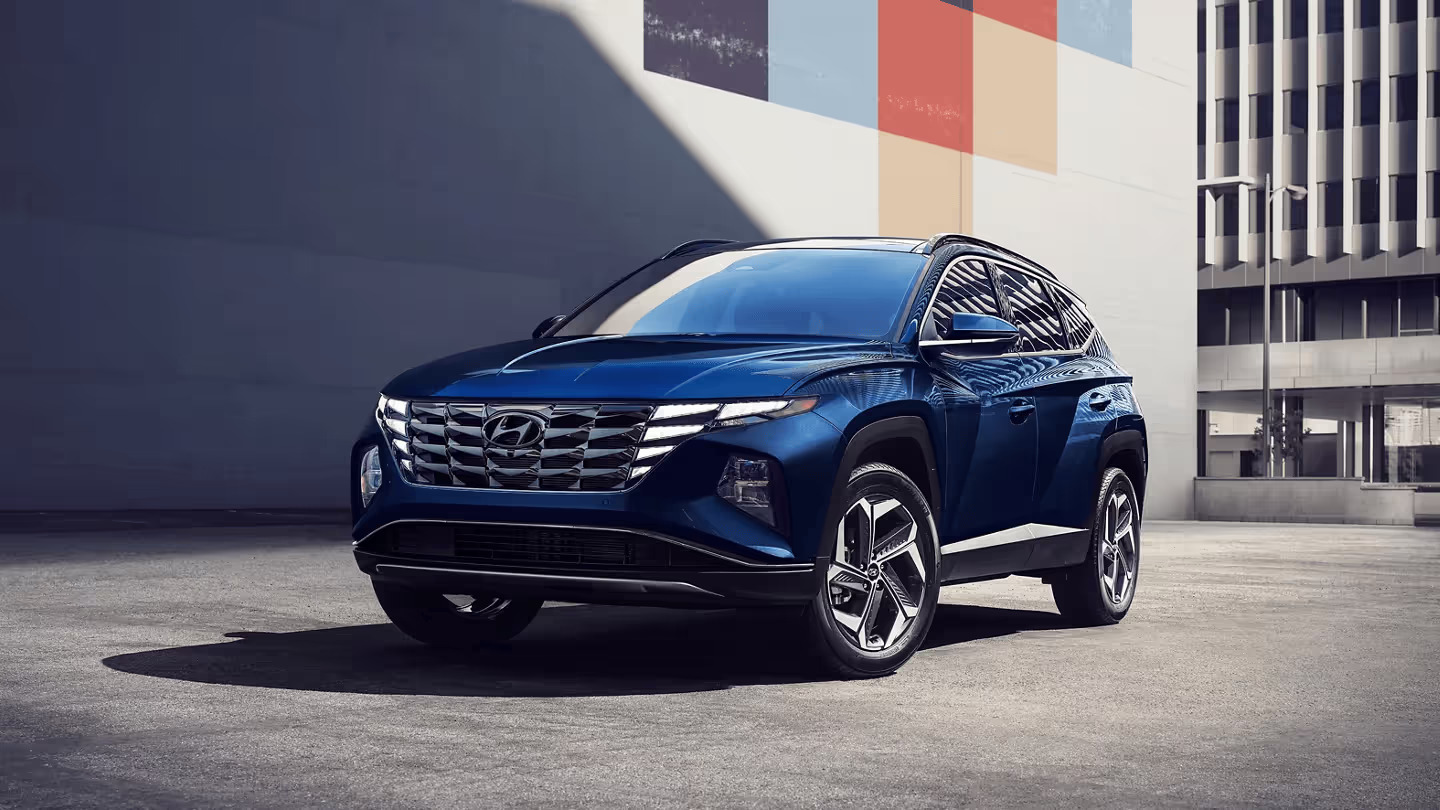
5. Hyundai Tucson Hybrid
The Hyundai Tucson Hybrid offers a blend of style, efficiency, and utility. Its hybrid system delivers strong mileage in urban traffic, where frequent stops allow electric assistance and regenerative braking to reduce fuel consumption. Drivers benefit most from these features during city commuting.
Interstate driving reduces the effectiveness of the Tucson Hybrid’s system. At sustained speeds, the gasoline engine operates almost continuously, with the electric motor providing minimal assistance. This results in lower fuel economy and reduced range compared to urban driving.
The vehicle’s size and weight contribute to range loss on highways. Maintaining high speeds requires significant engine power, and the extra mass carried by the hybrid components adds to fuel consumption. Aerodynamic drag further increases the energy required to sustain velocity.
Driver behavior also influences highway efficiency. Rapid acceleration or maintaining higher than normal speeds exacerbates fuel consumption. Regenerative braking opportunities are limited on long stretches of highway, making the engine the primary source of propulsion for extended periods.
Weather and terrain can magnify efficiency loss. Headwinds, inclines, or cold temperatures reduce battery efficiency, requiring more gasoline usage. These real world factors explain why drivers often experience a larger gap between city and highway mileage than advertised.
Transmission behavior also affects fuel economy at high speeds. The Tucson’s system is designed for smooth acceleration and efficiency at moderate speeds, but during interstate cruising, the engine may run at higher RPMs than necessary. This increases fuel consumption and contributes to the reduction in highway range.
The Tucson Hybrid remains a solid choice in its class. Its efficiency in urban conditions is excellent, but its performance on interstates highlights the limitations of hybrid technology when sustained high speed operation dominates.
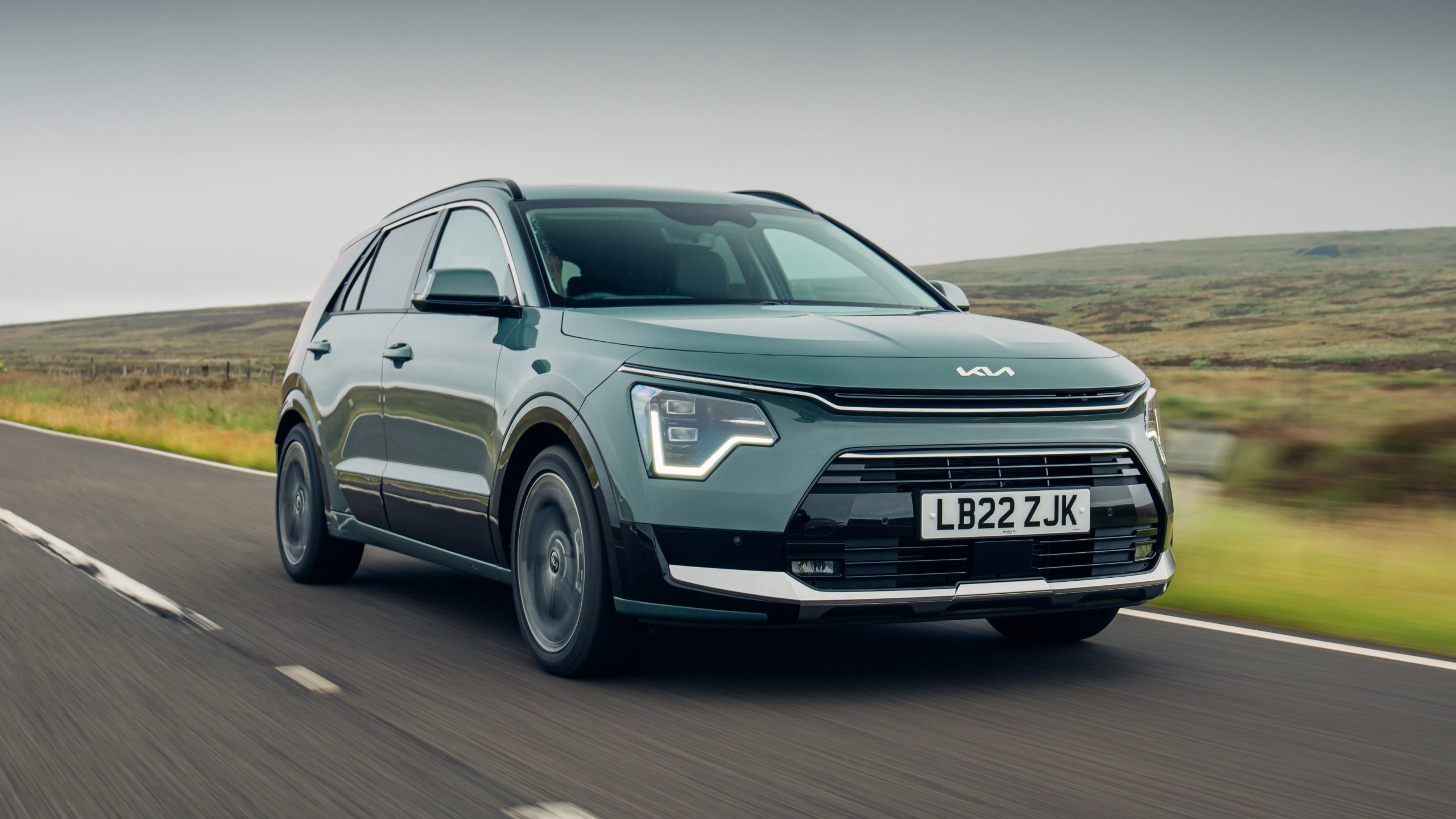
6. Kia Niro Hybrid
The Kia Niro Hybrid is a compact crossover designed for efficiency and practicality. Its hybrid system is optimized for city driving, using electric power to assist acceleration and conserve fuel. In stop and go traffic, the Niro can operate on electric power alone for short stretches, which helps maximize fuel economy.
On highways, however, the Niro’s hybrid advantages are less pronounced. Sustained high speed driving forces the gasoline engine to provide most of the propulsion. The electric motor contributes minimally, and regenerative braking is almost nonexistent, leading to a noticeable drop in efficiency compared to city driving.
Aerodynamics and weight further affect the Niro’s highway range. While its design is relatively sleek for a crossover, increased air resistance at high speeds requires additional engine power. This combined with the weight of the hybrid system and passengers reduces fuel efficiency during long interstate trips.
Driver behavior influences highway performance significantly. Maintaining high RPMs, rapid lane changes, or climbing steep inclines increases fuel consumption. Unlike city driving, where energy recovery is frequent, the system must rely on continuous engine operation to maintain speed.
The Niro’s transmission also impacts efficiency at higher speeds. Its automatic system aims to balance power and economy, but under constant load, it cannot fully compensate for the energy required to maintain highway velocity. This leads to lower miles per gallon and shorter range than expected.
External conditions such as wind, temperature, and terrain play a role in highway performance. Cold weather can reduce battery efficiency, and strong headwinds increase drag, forcing the engine to work harder. Drivers often notice a significant difference between city and highway fuel economy in these conditions.
Despite these limitations, the Kia Niro Hybrid remains a practical and efficient vehicle. Its performance on interstates is reasonable for a compact hybrid, but drivers should anticipate reduced range and higher fuel consumption compared to urban driving conditions.
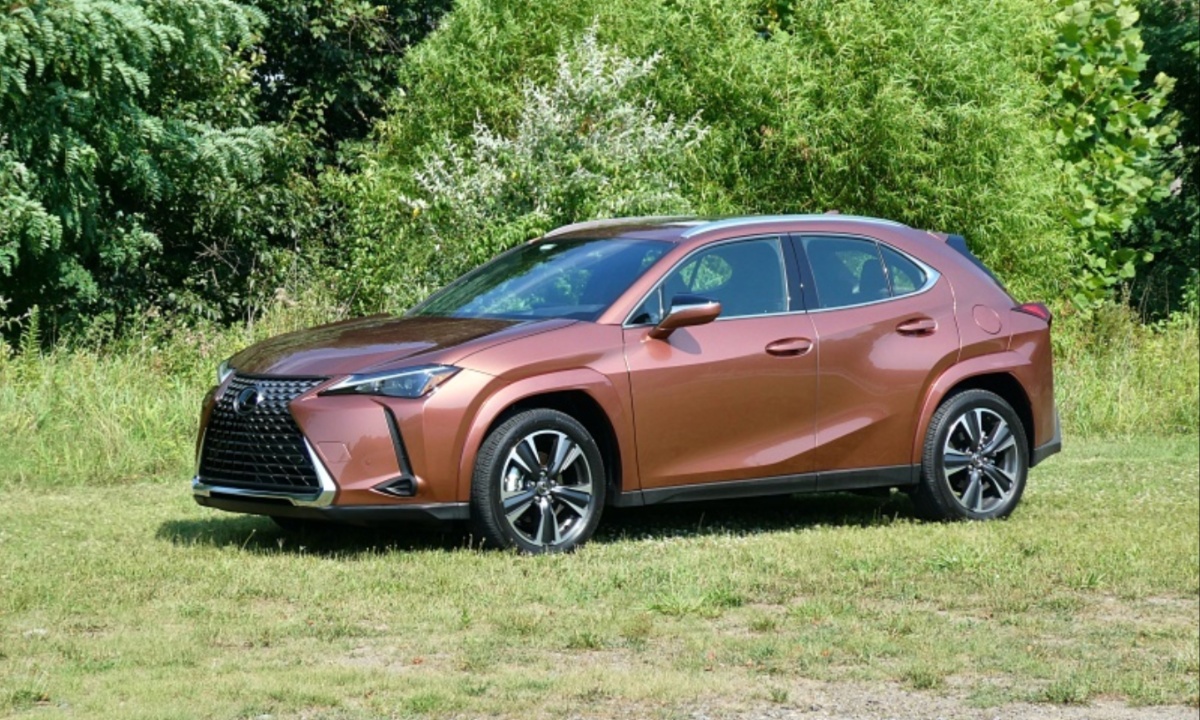
7. Lexus UX 300h
The Lexus UX 300h combines hybrid efficiency with premium design and comfort. Its hybrid system is particularly effective in city driving, where frequent stops allow the electric motor to handle short bursts of acceleration. Regenerative braking contributes to battery charge and reduces fuel consumption in urban settings.
On interstates, the UX 300h relies more on the gasoline engine. Sustained high speeds reduce the electric motor’s role, resulting in higher fuel consumption. Drivers may notice a significant difference between the city and highway range, especially during long stretches without stops.
Aerodynamics help mitigate some efficiency loss, but cannot fully compensate for sustained high speed cruising. The vehicle’s relatively compact size reduces drag compared to larger SUVs, yet air resistance still increases exponentially with speed, requiring more energy to maintain highway velocity.
The weight of the hybrid system also impacts range. While the UX 300h is lighter than many SUVs, carrying passengers or cargo increases the load on the gasoline engine during sustained interstate travel. This further reduces fuel efficiency and contributes to range loss.
Transmission performance also influences highway consumption. The continuously variable transmission is tuned for smooth operation, but at sustained high speeds, it cannot fully offset the higher energy demands. The gasoline engine must operate almost continuously, further lowering fuel economy.
Driver behavior and terrain affect efficiency as well. Aggressive acceleration, hills, or strong headwinds increase fuel usage. Regenerative braking is largely ineffective on highways, so the system cannot recapture energy efficiently, creating a more conventional driving experience.
Despite the limitations on interstates, the Lexus UX 300h remains an efficient hybrid. Its comfort and reliability make it an appealing choice, but drivers should anticipate a noticeable drop in highway range compared to city conditions.
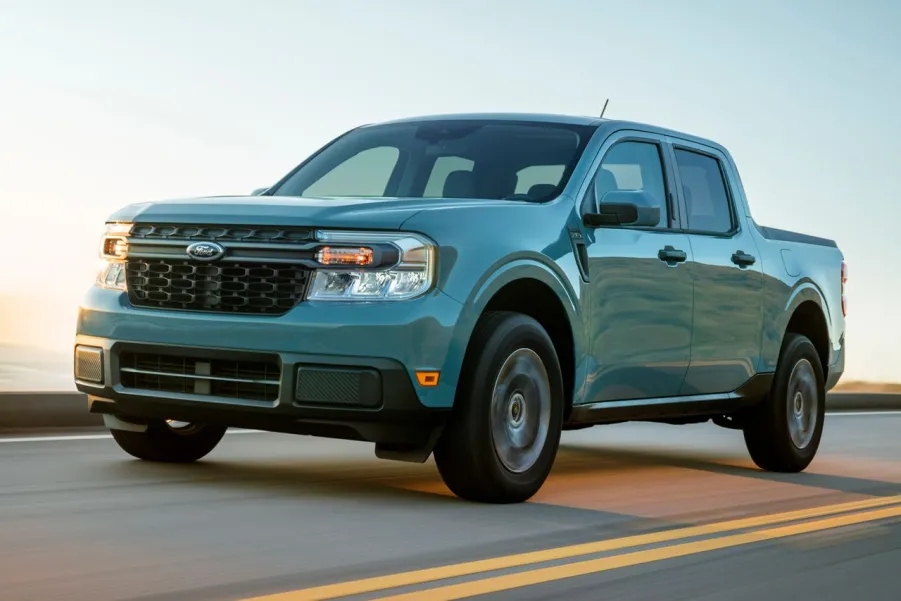
8. Ford Maverick Hybrid
The Ford Maverick Hybrid is unique among compact pickups for offering hybrid efficiency with practical utility. Its hybrid system provides excellent fuel economy in urban environments, particularly in stop and go traffic, where the electric motor can assist acceleration and regenerative braking recovers energy.
Highway driving reduces the hybrid system’s effectiveness. At sustained speeds, the gasoline engine must provide the majority of propulsion, and the electric motor contributes minimally. This leads to a noticeable decrease in fuel efficiency and range during long interstate trips.
Aerodynamic drag and vehicle weight further impact highway performance. The Maverick’s taller profile and pickup bed increase air resistance, while the hybrid components add extra mass. The combination requires the engine to work harder to maintain speed, reducing fuel economy.
Driver behavior is a key factor. Carrying heavy loads, towing small trailers, or maintaining high speeds increases fuel consumption. The lack of frequent braking opportunities on highways limits regenerative energy recovery, leaving the gasoline engine to sustain power continuously.
Transmission and engine tuning also affect efficiency. The Maverick’s system is optimized for low and moderate speeds, where hybrid benefits are maximized. On interstates, continuous operation of the gasoline engine results in higher fuel usage compared to city driving.
Environmental conditions such as wind, temperature, and terrain influence fuel economy as well. Cold temperatures reduce battery efficiency, and headwinds increase drag. Drivers may experience even greater range loss on highways under these conditions, particularly when the vehicle is loaded.
Despite the challenges, the Maverick Hybrid provides strong efficiency for a pickup truck. While its highway performance is less efficient than in urban driving, it still outperforms many conventional trucks in fuel economy during long trips.
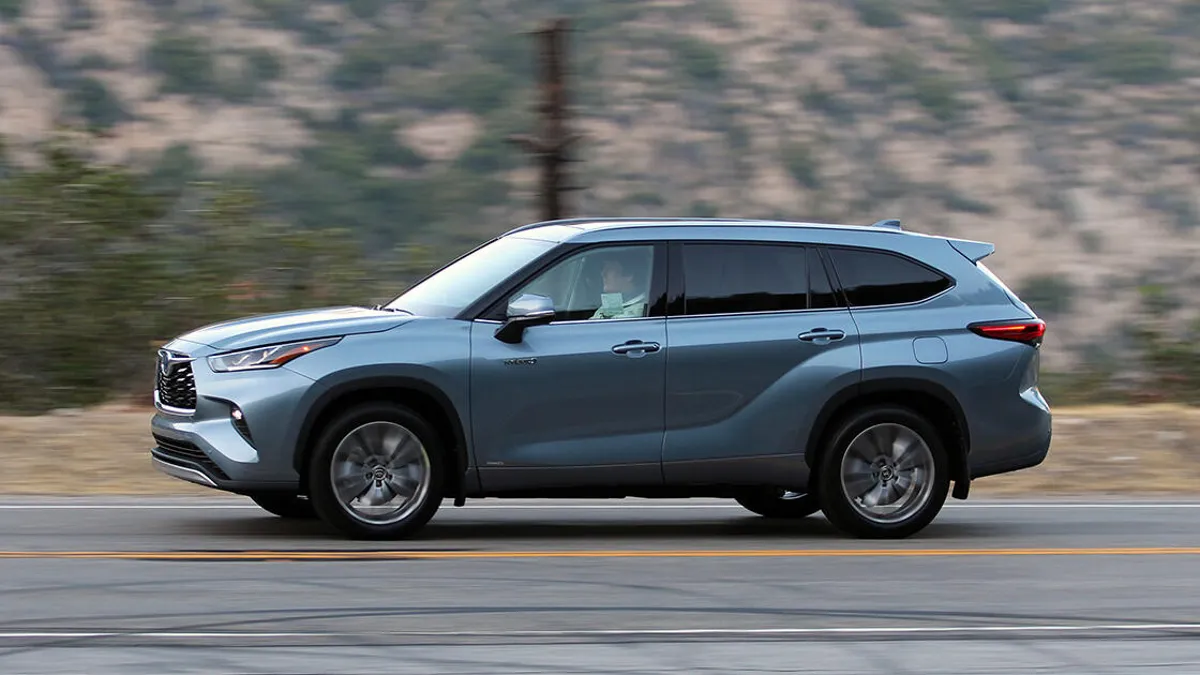
9. Toyota Highlander Hybrid
The Toyota Highlander Hybrid is a midsize SUV that balances performance, utility, and efficiency. Its hybrid system excels in city driving, where frequent stops and electric motor assistance reduce fuel consumption. Regenerative braking and engine stop-start systems maximize efficiency in urban traffic.
Highway driving reduces the hybrid system’s effectiveness. Sustained speeds require continuous operation of the gasoline engine, and electric motor assistance is minimal. This results in higher fuel consumption and reduced range compared to urban environments.
Aerodynamic drag significantly affects highway performance. The Highlander’s larger body and higher stance increase resistance at high speeds, forcing the engine to work harder. The hybrid system’s advantages, particularly regenerative energy recovery, are limited under these conditions.
Weight is another factor in range reduction. Carrying passengers or cargo further increases energy demands. The gasoline engine must maintain continuous power, while the battery contributes minimally, leading to a noticeable decrease in miles per gallon.
Driver behavior impacts efficiency on interstates. Accelerating aggressively, climbing hills, or maintaining speeds above the vehicle’s optimal range increases fuel consumption. These factors highlight the difference between city and highway performance.
Transmission performance also plays a role. The Highlander’s continuously variable transmission is designed for smooth acceleration and efficiency at moderate speeds. At sustained highway velocities, however, it cannot fully offset the energy demands, leading to reduced efficiency.
Despite the highway range loss, the Highlander Hybrid remains a capable and efficient SUV. Its fuel economy is strong for its size, but drivers should expect lower efficiency and reduced range during extended interstate trips.
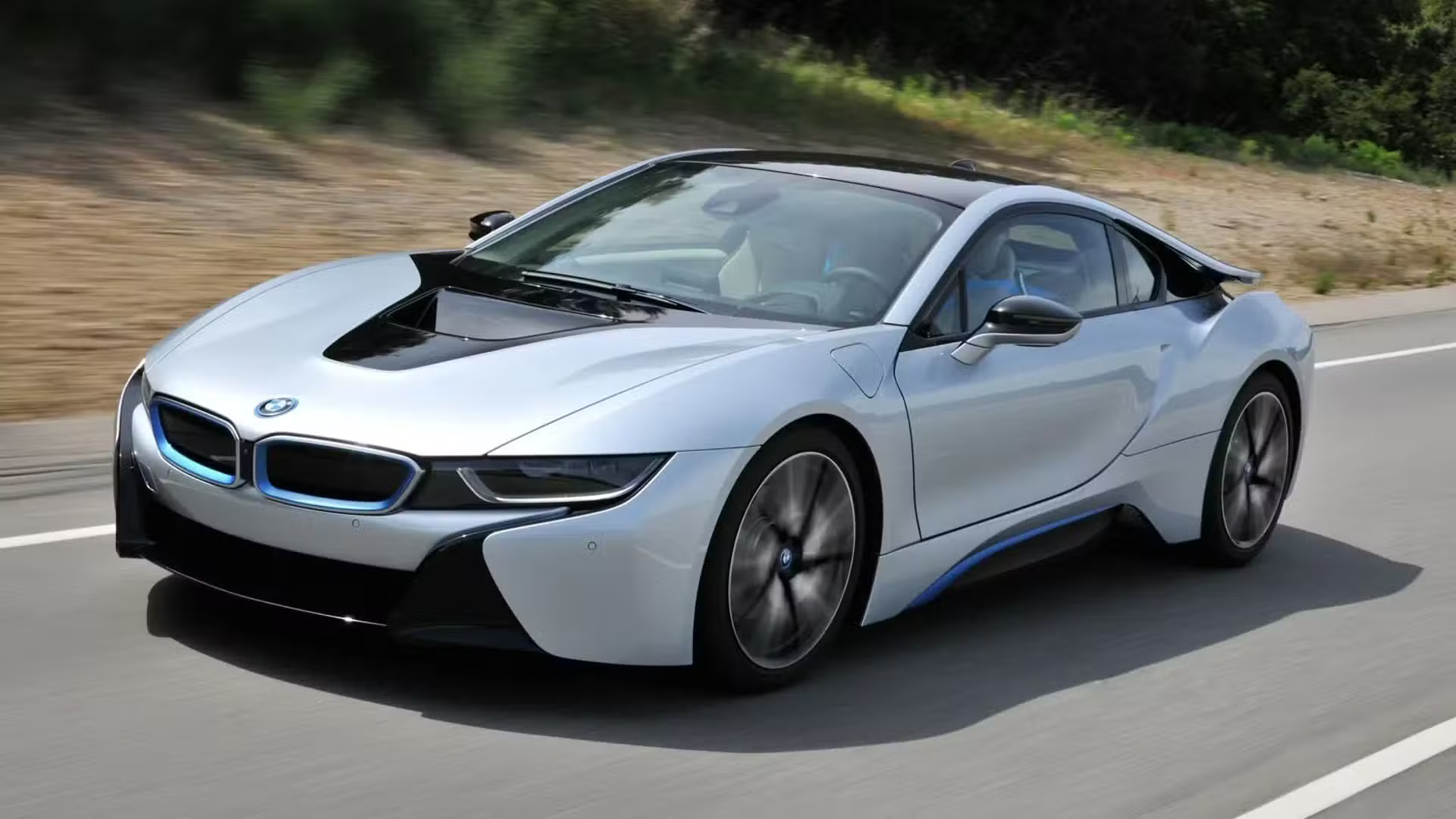
10. BMW i8
The BMW i8 is a plug-in hybrid sports car that combines performance and hybrid technology. In urban settings, the electric motor handles short bursts of driving, while regenerative braking recaptures energy. The plug-in battery allows for some all-electric driving, reducing fuel consumption in stop and go traffic.
Highway driving changes the dynamic. Once the battery is depleted, the i8 relies almost entirely on its gasoline engine. The extra weight of the battery reduces efficiency, and at sustained high speeds, fuel consumption increases significantly. Range on interstates is therefore less than expected.
Aerodynamics help the i8 maintain performance efficiency, but cannot eliminate the effect of sustained engine operation at high velocity. The gasoline engine must continuously provide power for acceleration and top speed maintenance, limiting the contribution of the electric system.
Driver behavior heavily influences efficiency. Aggressive driving, high RPM cruising, or carrying passengers reduces range further. Unlike city driving, regenerative braking is minimal on highways, preventing energy recovery and forcing the engine to sustain continuous load.
Environmental conditions, such as wind, incline, and temperature, also affect highway range. Cold weather decreases battery efficiency, while headwinds increase aerodynamic drag. These real-world factors lead to differences between city and interstate performance.
Transmission tuning is optimized for sporty responsiveness. At sustained highway speeds, the engine operates continuously in higher power ranges, reducing fuel economy. This makes the i8 more of a performance vehicle than a long-distance efficiency champion on interstates.
Despite these limitations, the BMW i8 remains an innovative and efficient sports hybrid. Its highway performance demonstrates the trade-offs between hybrid efficiency and high-performance engineering, highlighting the challenges of plug-in hybrid technology in fast driving conditions.
