

General Motors has initiated supervised public highway testing of its next-generation eyes-off autonomous driving system, marking a significant step forward in its renewed push toward consumer-facing autonomy. The trials are currently underway in California and Michigan, with a targeted commercial rollout set for 2028.
The system represents GM’s most substantial progress since restructuring its Cruise program, which has now been redirected from robotaxi operations toward integration in consumer vehicles. As part of the testing phase, GM has deployed more than 200 vehicles equipped with the technology, each accompanied by a trained safety driver responsible for monitoring performance and intervening when required.
This new system builds on the foundation of GM’s existing Super Cruise hands-free driving technology, which has already accumulated over 800 million miles of real-world usage.
The next-generation platform introduces a significantly upgraded hardware and software stack, including a full sensor suite composed of LiDAR, radar, and camera systems seamlessly integrated into the vehicle’s body. Supporting this is a centralized computing architecture that GM claims delivers a 35-fold increase in AI processing capability and up to 1,000 times greater data bandwidth compared to its previous systems.
The technology falls under SAE Level 3 autonomy, commonly referred to as “eyes-off” driving. Unlike Level 2 systems, which still require constant driver attention, Level 3 allows drivers to disengage from monitoring the road under certain conditions, currently limited to highway environments.
GM’s long-term objective, however, is to expand this capability to full “driveway-to-driveway” autonomy. In preparation, the company’s data-collection fleet has already logged more than one million miles across 34 U.S. states.
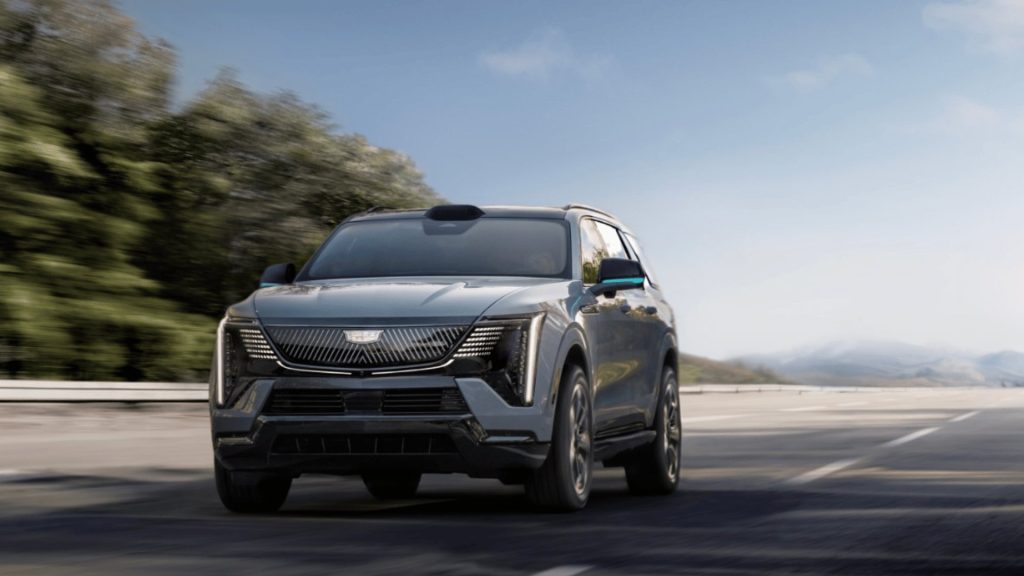
GM’s renewed autonomy strategy follows the shutdown of its Cruise robotaxi division in late 2024 after a high-profile incident in San Francisco involving a pedestrian.
Rather than continuing with a standalone ride-hailing model, GM has absorbed Cruise’s technology into its broader consumer vehicle ecosystem. The company is now pivoting toward a software-driven business model, with subscription-based autonomy services projected to generate approximately $2 billion in annual revenue at scale.
However, GM’s ambitions face growing pressure from international competitors, particularly Chinese automakers. Companies like BYD have aggressively advanced their driver-assistance technologies, offering systems such as the God’s Eye ADAS platform, featuring LiDAR and AI integration, as standard equipment on vehicles priced as low as $10,000. This approach contrasts sharply with Western manufacturers, which typically position such features as premium add-ons.
Regulatory developments in the United States may provide some insulation. A Commerce Department ban on Chinese-origin connected vehicle software, effective March 2026, is expected to strengthen the domestic position of companies like GM. Even so, the gap between standard equipment offerings in China and subscription-based models in the U.S. could widen if current trends continue.
Among U.S.-based automakers, Ford, Rivian, and Lucid are pursuing similar timelines for Level 3 deployment. In contrast, Mercedes-Benz and Stellantis have stepped back from their respective programs, citing high development costs and limited consumer demand as key deterrents.
