
Getting more power out of your car is one of the most universal desires in automotive culture, and it sits right alongside one of the most universal fears: doing something that voids the warranty you paid for when you bought the vehicle.
These two things feel like they are in permanent opposition, and for a lot of modifications, they genuinely are. But the relationship between performance upgrades and warranty coverage is more nuanced than most people realize, and several power-boosting approaches fall clearly on the safe side of that line.
Here is the legal foundation worth understanding: in the United States, the Magnuson-Moss Warranty Act prevents manufacturers from voiding your warranty simply because you installed an aftermarket part. To deny a warranty claim, the manufacturer must be able to demonstrate that the specific aftermarket modification caused or contributed to the failure being claimed.
That is a meaningful legal protection that many car owners do not know exists, and understanding it changes how you think about what modifications are actually safe to make on a warrantied vehicle. That said, some modifications are still genuinely risky from a warranty standpoint.
Engine management reflashes that increase boost pressure beyond factory limits, aggressive forced induction systems that stress rotating assembly components beyond their designed tolerance, and anything that physically alters the engine internals are all reasonable targets for manufacturer warranty denial. Manufacturers know what their engines can handle and what overstress looks like when they inspect a failed component.
What this page covers is the other category: eight specific approaches to increasing horsepower that work within your engine’s designed capabilities, that use the power that was always there but was restricted for emissions, regulatory, or market positioning reasons, and that do not give a manufacturer’s warranty department a legitimate reason to deny your claim. Each one is practical, documented, and applied to real vehicles to show how the results look in the real world.
1. Cold Air Intake Installation
Cold air intake systems are one of the most popular and most debated performance modifications in the enthusiast community, and the debate largely centers on whether they produce meaningful horsepower gains or just more intake noise.
For well-engineered systems on appropriate applications, the answer is genuine power gains, and the mechanism is straightforward enough to understand clearly.
Factory air intake systems are designed around a set of priorities that includes noise reduction, compliance with strict intake noise regulations, packaging within a crowded engine bay, and cost efficiency at production scale. None of these priorities are horsepower.
Stock airbox designs frequently route intake air through baffled housings, restrictive filter media, and tubing designed to reduce resonance rather than maximize airflow. A cold air intake replaces this system with a design optimized specifically for airflow volume and intake air temperature reduction, both of which directly affect power output.
Cold air density is the physics behind the name. Cooler air is denser, meaning more air molecules fit in the same volume. More air molecules in the combustion chamber mean more oxygen available to combust fuel, which allows the engine management system to add more fuel and produce more power.
Every 10-degree Fahrenheit drop in intake air temperature produces approximately one percent improvement in power output, and a well-positioned cold air intake drawing from outside the hot engine bay can reduce intake air temperature by 15 to 40 degrees Fahrenheit compared to a stock airbox drawing warm under-hood air.
Airflow restriction reduction is the second mechanism. Dyno testing of cold air intake systems on appropriate applications consistently measures 8 to 18 horsepower gains on naturally aspirated engines and similar results on turbocharged applications where intake restriction affects compressor inlet conditions.
These gains are not universal, and poorly designed systems or applications on engines with minimal stock intake restriction show smaller returns. Quality systems from established manufacturers like Injen, K&N, and AEM on well-suited applications deliver documented gains that show up in both dyno figures and seat-of-the-pants driving feel.
Warranty considerations for cold air intakes are generally favorable under the Magnuson-Moss Act. A dealer must demonstrate that an intake system caused a specific failure to deny a related warranty claim, and for intake-related failures that does not constitute a realistic concern for quality systems installed correctly.
Engine computer systems that are MAF-based adapt to the different airflow characteristics of aftermarket intakes through normal sensor operation, requiring no tuning changes that could create other warranty concerns. For an owner of a 2023 Hyundai Elantra N Line Manual (CN7 generation) looking to extract more from the 1.6T four-cylinder, a quality cold air intake is one of the cleanest, warranty-safe power upgrades available.
2. High-Flow Performance Exhaust
Factory exhaust systems are designed with muffling as their primary objective and emissions compliance as their secondary objective, and power comes in somewhere further down the list.
This priority structure means that production exhaust systems typically include more back pressure and more acoustic damping than an engineer optimizing purely for power output would specify, and removing that restriction produces real, measurable horsepower gains without touching anything inside the engine.
Exhaust back pressure is the resistance the engine faces when trying to push spent combustion gases out of the cylinder through the exhaust manifold and out the tailpipe.
Some level of back pressure is necessary for proper exhaust scavenging in naturally aspirated engines, but production exhaust systems typically include more restriction than optimal for power, particularly through the muffler sections, where baffles, chambers, and packing materials that dampen sound also restrict flow.
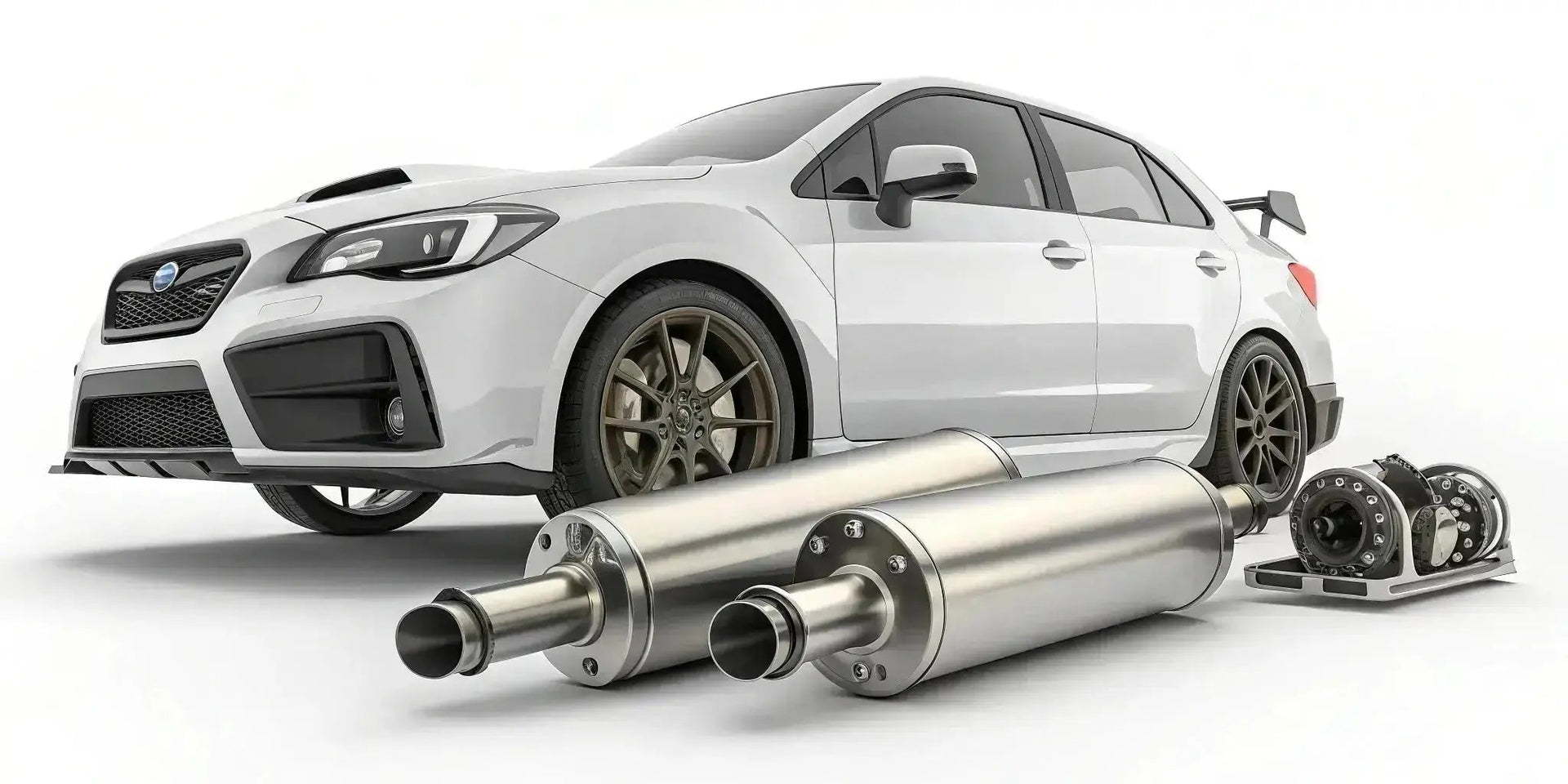
Performance exhaust systems address this restriction through larger diameter tubing, reduced-restriction muffler designs that use straight-through perforated core construction rather than baffled chambers, and improved exhaust flow geometry through bends that maintain consistent internal diameter rather than collapsing partially as production bent tubes sometimes do.
These design improvements reduce exhaust back pressure, improving the engine’s ability to evacuate combustion gases efficiently and allowing fresh charge to enter the cylinder cleanly for the next combustion event.
Cat-back exhaust systems, which replace everything from the catalytic converter rearward while leaving emissions-related upstream components in place, are the most warranty-safe performance exhaust modification category.
By retaining the factory catalytic converter and all upstream exhaust components, including the manifold and downpipe, cat-back systems make no modification that affects emissions compliance or that could logically be connected to most engine mechanical failures.
Axle-back systems, replacing only the muffler section, are even more conservative in their modification scope while still providing meaningful restriction reduction.
Power gains from quality cat-back exhaust systems typically run between 5 and 15 horsepower on naturally aspirated engines and can reach 20 horsepower or more on turbocharged applications where exhaust back pressure affects turbocharger outlet conditions.
Brands including Borla, Corsa, MagnaFlow, and Milltek produce cat-back systems with documented dyno results and emissions compliance across a wide range of vehicle applications.
An owner of a 2022 Honda Civic Sport Hatchback CVT (eleventh generation) can expect genuine power improvement from a quality cat-back exhaust system while keeping the factory catalytic converter and upstream emissions hardware completely intact, maintaining full emissions compliance and presenting no reasonable basis for warranty denial on any subsequent powertrain claim.
Also Read: 8 Reasons Why Your Car Insurance Is Increasing Even With a Clean Record
3. Performance Air Filter Replacement
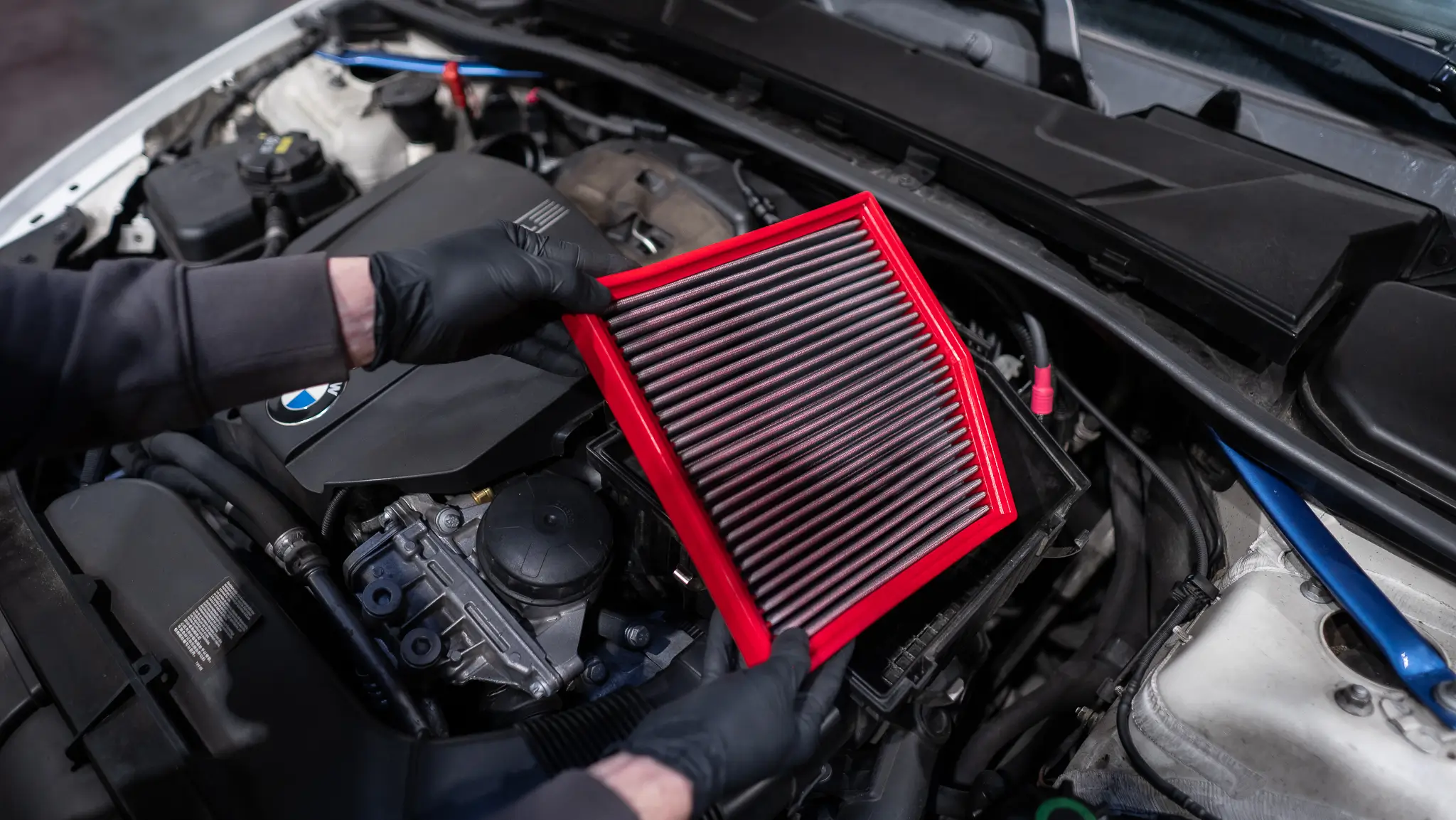
Performance air filter replacement is widely regarded as the least intrusive method of improving engine breathing without altering factory intake architecture. This modification involves removing the standard disposable paper filter and installing a reusable high-flow unit that fits directly inside the original airbox.
The intake ducting sensor placement and airflow path remain unchanged, which preserves factory calibration logic and emissions behaviour while reducing restriction at the filter surface.
Standard paper filters are engineered primarily for cost control, predictable filtration behaviour, and extended replacement intervals. Their fibre structure is dense by design, ensuring uniform particle capture across a defined size range.
This density creates airflow resistance that remains consistent throughout the service life of the filter, even as contamination accumulates. The resulting intake restriction is accepted during production because it supports durability targets and reduces maintenance variability rather than supporting airflow efficiency.
High flow filters rely on oiled cotton layers or advanced synthetic media to achieve filtration through adhesion and depth capture rather than pore restriction alone.
This approach allows a greater air volume to pass through the same housing area without sacrificing particle control. Because the filter occupies the factory airbox, installation requires no cutting, rewiring or recalibration. Air mass sensors continue to measure intake volume accurately, allowing the engine control unit to respond as designed.
Measured power increases from this modification are modest on naturally aspirated engines, usually ranging between three and seven horsepower under controlled testing conditions. These gains occur because the engine requires less effort to draw air at a given throttle opening.
Throttle response improves slightly, and the engine reaches the requested airflow with reduced pumping loss. On turbocharged engines, the effect is more pronounced because intake restriction influences compressor efficiency and boost development at lower engine speeds.
From a warranty perspective, air filter replacement presents negligible exposure. A filter element does not alter engine hardware nor does it introduce software changes. Consumer protection legislation requires a manufacturer to demonstrate direct causation between a modification and a failure. Establishing such causation from a filter swap is impractical when the component operates within factory design parameters.
4. OEM Performance Tune From the Manufacturer
An often overlooked source of manufacturer-approved power improvement comes directly from official performance accessory and calibration programs. These programmes are developed by vehicle manufacturers to satisfy owners who desire enhanced output while retaining warranty protection. Unlike third-party software, these calibrations are validated using factory testing protocols and are distributed through authorised dealer networks.
Factory performance tunes adjust parameters such as fuel delivery, ignition timing, throttle mapping, and, where applicable, boost control. Each adjustment remains within mechanical limits defined during engine design.
Because the same engineering teams oversee both standard and performance calibrations, component durability and thermal margins are preserved. The result is improved output achieved without introducing abnormal stress to internal parts or driveline assemblies.
In many cases, these calibrations are installed by dealers as approved accessories. They carry warranty coverage that aligns with the original powertrain terms.
This structure eliminates uncertainty for owners concerned about future claims. Installation records remain within the manufacturer’s service system, which provides clear documentation that the vehicle operates under approved specifications.
Performance divisions within major brands often support these initiatives. Their calibrations reflect an understanding that standard factory settings include conservative allowances for fuel quality maintenance variability and environmental extremes. For owners who adhere to recommended service schedules and use appropriate fuel grades, some of this conservatism can be safely reduced through controlled recalibration.
A practical advantage of manufacturer programmes lies in integration. Throttle response, transmission behaviour, and stability systems are adjusted to complement the revised engine output. This coordination maintains predictable drivability across daily use rather than delivering isolated power increases that disrupt vehicle balance.
Many owners assume factory upgrades provide only marginal improvement. In reality, some programmes deliver gains ranging from twenty to forty horsepower depending on engine configuration. These gains exceed what many standalone aftermarket components can provide without compromising warranty coverage. Documentation from the manufacturer supports these figures through validated testing rather than estimated claims.
Before considering external modifications, owners benefit from reviewing available factory-supported options. These programmes often include additional cooling hardware intake components or exhaust elements designed to operate together with the calibration. The result is a cohesive upgrade path that aligns with original engineering intent.

5. ECU Tune From a Reputable Tuner
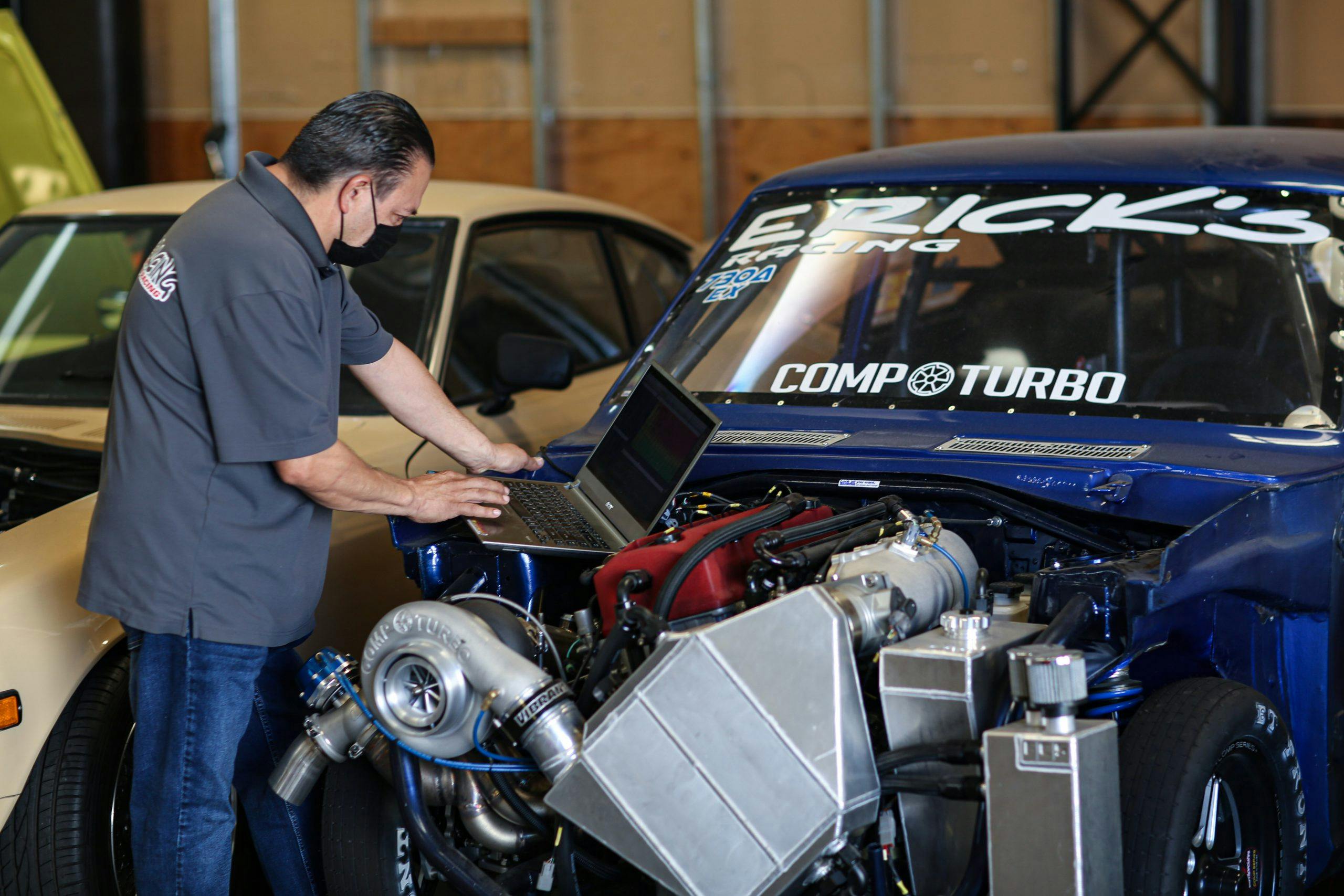
Engine control unit calibration changes are the most powerful single modification category available on modern vehicles, but they are also the category where warranty risk varies most dramatically depending on the specific parameters changed and the quality of the tuner’s work.
Conservative professional tuning adjusts ignition timing to the most advanced curve the engine can sustain on the specified fuel grade without knock retard activity, optimizes fuel delivery to produce the stoichiometric combustion conditions that produce peak efficiency and power, adjusts variable valve timing to the positions that maximize torque across the desired operating range, and removes the throttle limiters and conservative torque management that production calibrations use to protect the powertrain under worst-case usage scenarios.
These adjustments recover power that the factory calibration left on the table through conservatism rather than adding power beyond what the engine’s hardware can safely support. Turbocharged engines offer the most responsive calibration gains because boost pressure, which is the primary power lever in forced-induction applications, is controlled entirely by software in modern electronic boost management systems.
A production turbocharged engine whose boost pressure is managed conservatively for broad market reliability can often support 15 to 30 percent more boost than the production calibration specifies, depending on the platform’s engineering margins.
Reputable tuners who have developed validated calibrations for specific platforms based on extensive data logging and testing can provide this boost increase with confidence backed by documented platform experience.
Warranty risk from ECU tuning depends on the tuner’s specific calibration choices and how the vehicle is subsequently maintained and operated. A tune that stays within the engine’s design envelope, uses appropriate fuel specification, and is applied to a well-maintained vehicle creates a much lower warranty risk profile than a tune that pushes boost, timing, and fuel delivery to the absolute limit of what the hardware can mechanically survive.
Many owners who have received tune-related warranty denials were using aggressive calibrations from low-quality tuners who prioritized maximum power numbers over calibration safety.
An owner of a 2021 Volkswagen Golf GTI Autobahn (MK8 generation) looking for a responsible ECU tune would benefit from researching tuners with extensive MK8 EA888 evo4 platform experience, requesting specifically a Stage 1 conservative tune on 93-octane fuel that stays within documented reliable power levels for this engine, and retaining the ability to restore the factory calibration if a dealer service visit requires it.
6. Header Upgrade on Naturally Aspirated Engines
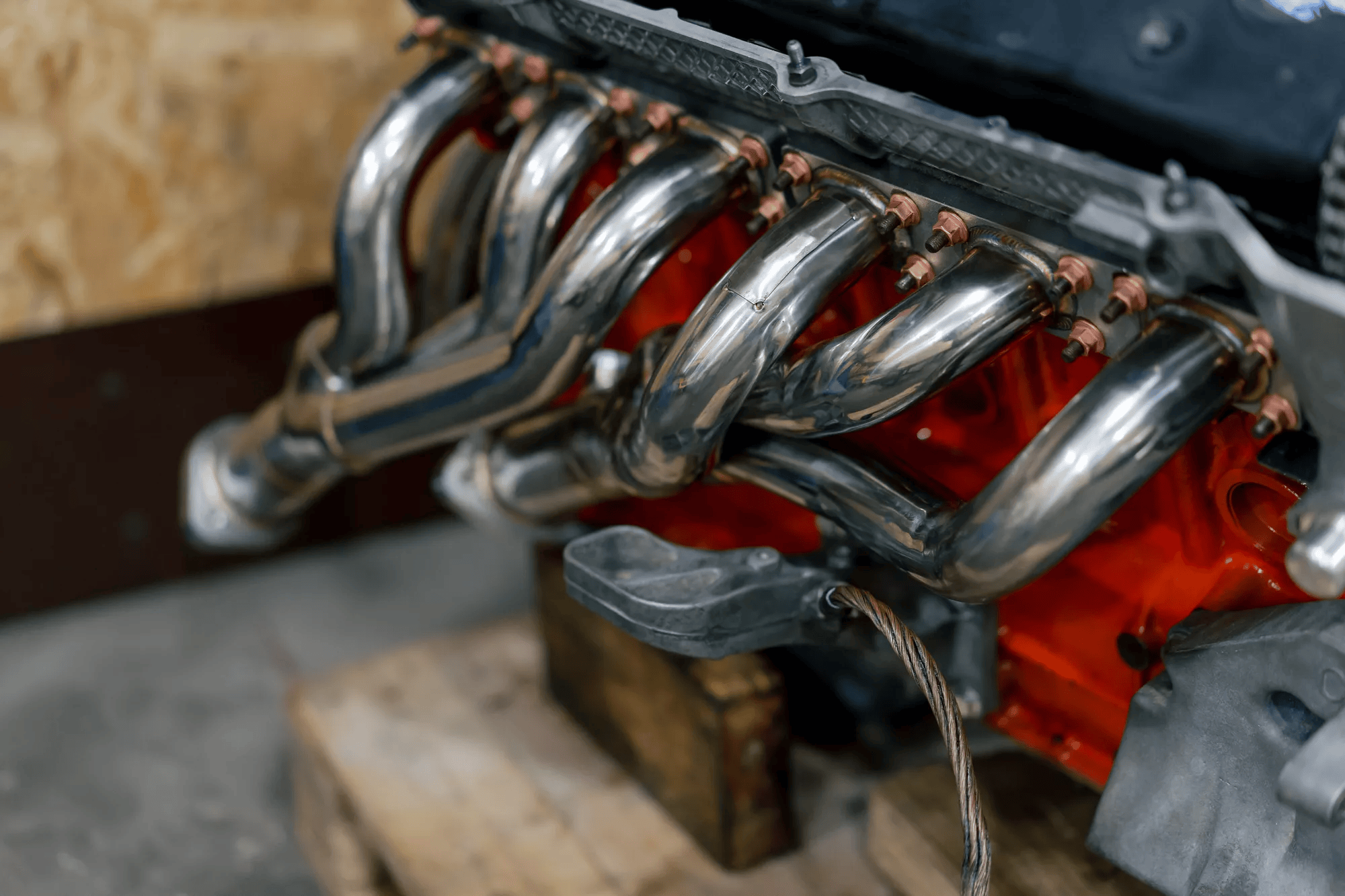
Exhaust headers, the manifold sections that collect exhaust gases from each cylinder’s exhaust port and route them toward the main exhaust system, are one of the most technically direct ways to improve power on a naturally aspirated engine.
Factory exhaust manifolds are designed for compact packaging, cost efficiency, durability under extreme heat cycling, and acceptable exhaust noise rather than for optimal exhaust scavenging, and performance headers address this directly by providing individually tuned primary tube lengths that use exhaust pulse timing to create a scavenging effect that helps draw spent gases out of the cylinder.
Exhaust scavenging is the technical mechanism that makes header length and diameter choices so important for power. When an exhaust valve opens at the correct moment in the exhaust stroke, the mass of exhaust gas already moving through the primary tube creates a low-pressure zone behind it that continues toward the collector.
When the primary tube length is tuned correctly for the engine’s RPM range, this low-pressure wave arrives at the exhaust port just as the exhaust valve is opening, effectively helping pull spent gases out of the cylinder. This scavenging effect reduces pumping losses and allows the intake charge to begin entering the cylinder earlier in the valve overlap period, increasing volumetric efficiency and power.
Performance headers for street applications designed for emissions compliance retain the factory oxygen sensor bungs and are sized for catalytic converter compatibility, allowing the factory emissions system to remain fully intact downstream of the headers.
Street headers that maintain emissions compliance typically use primary tube diameters optimized for broad power delivery across a wide RPM range rather than maximum peak power at a narrow RPM band, making them appropriate for street use while still producing measurable gains over production manifolds.
Dyno results for quality header installations on naturally aspirated engines with more restrictive production manifolds typically show 10 to 20 horsepower improvement, with the gains concentrated in the mid-RPM range where the header’s scavenging tuning produces the most pronounced effect on volumetric efficiency.
Power gains may be accompanied by a torque improvement in the same RPM range that drivers feel as a stronger throttle response during everyday acceleration, rather than just higher peak power numbers.
For an owner of a 2019 Toyota 86 GT (ZN6 generation), whose naturally aspirated 2.0-liter FA20 boxer engine responds well to exhaust flow improvement, quality headers with an appropriate emissions-compatible design represent one of the most effective naturally aspirated power upgrades available while keeping the factory catalytic converter and downstream exhaust system intact.
7. Upgraded Spark Plugs and Ignition System
Spark plugs and ignition components play a central role in how effectively an engine converts fuel and air into usable power. While upgrades in this area do not deliver dramatic horsepower increases on their own, they determine whether the engine can fully benefit from any other mechanical or calibration improvement.
An engine that fails to ignite its air-fuel mixture cleanly and consistently during each combustion cycle experiences reduced efficiency and lost output that accumulates gradually during operation. Factory-installed spark plugs are engineered to function acceptably under a very wide range of operating conditions.
Manufacturers design them to perform during cold starts, extended idling, heavy traffic use, sustained motorway driving, and high engine speed operation in hot climates.
This wide tolerance range ensures durability and reliability for the average driver, though it does not always reflect the needs of owners who use premium fuel, maintain strict service schedules, and frequently operate the engine closer to its upper performance limits.
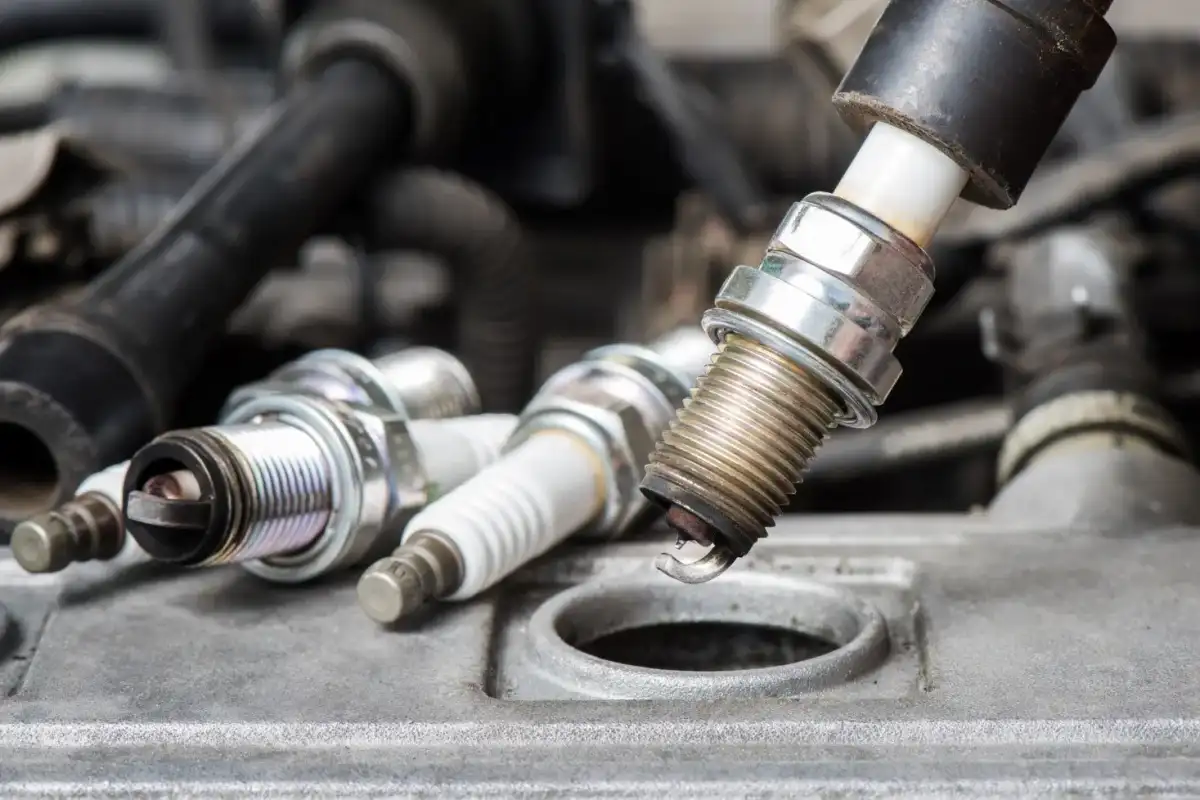
Iridium and platinum-tipped spark plugs are produced using extremely durable electrode materials that resist wear far more effectively than conventional copper designs. As standard plugs age, electrode erosion increases the gap between firing points. This widening gap demands higher voltage from the ignition coil and often results in weaker or delayed spark delivery.
The consequence is incomplete combustion that may not be noticeable during daily driving but steadily reduces efficiency and throttle response. High-quality plugs from established manufacturers maintain consistent spark energy across a longer service life.
This consistency ensures that combustion events occur at the precise timing expected by the engine control system. Stable ignition timing supports smooth power delivery, improved fuel use, and reduced misfire occurrence under load.
Turbocharged engines place additional demands on spark plug selection. Correct heat range selection is essential when boost pressure and fuel quality are considered.
Plugs that retain excessive heat may trigger pre-ignition under load, while plugs that dissipate heat too quickly may accumulate deposits during low-load operation. Selecting the correct specification requires careful assessment of factory boost levels and intended usage.
A driver of a 2020 Ford Mustang EcoBoost High Performance Package fitted with properly specified NGK iridium spark plugs ensures that the 2.3-litre turbo engine operates with consistent ignition across all conditions.
This attention to ignition health removes avoidable power loss caused by aged or unsuitable components and supports stable combustion under both daily and spirited driving conditions. Reliable ignition performance forms a dependable base for any future engine improvement.
Also Read: 8 Reasons to Take a Professional Driving Course Even as an Experienced Driver
8. Ram Air and Forced Ram Air Systems
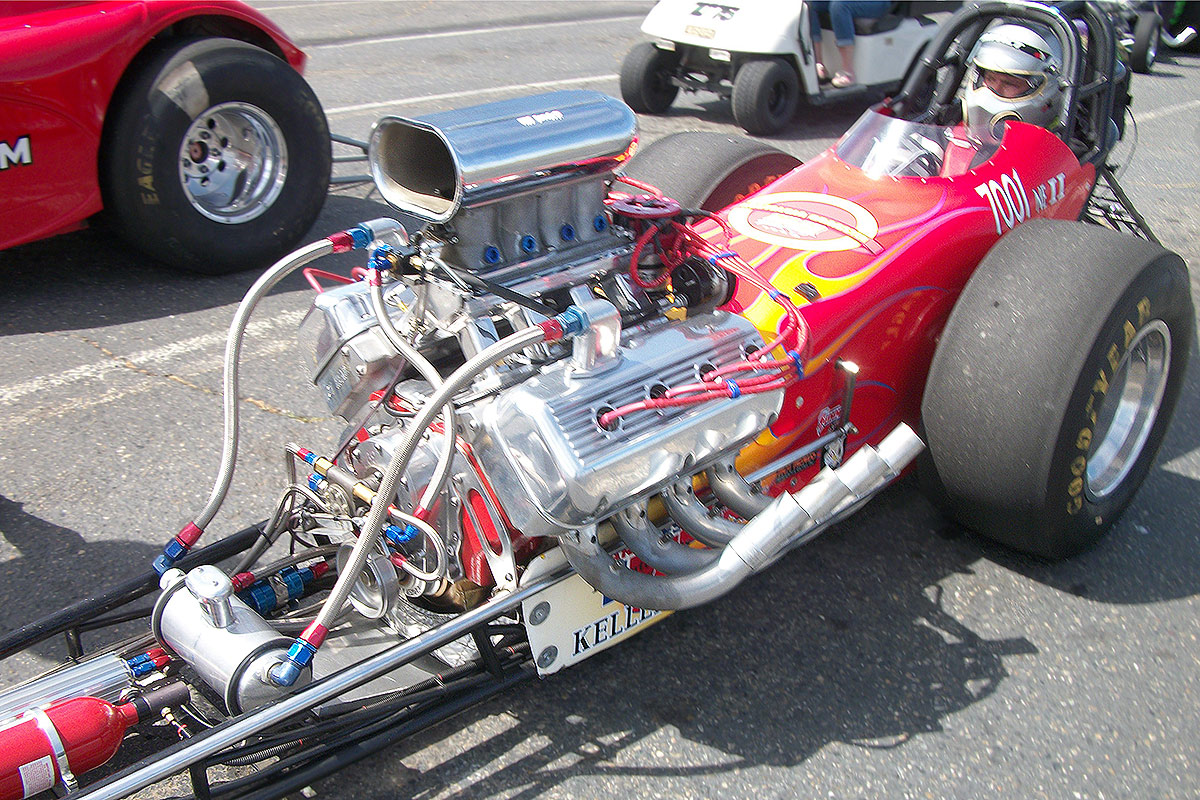
Ram air intake systems rely on vehicle motion to increase the pressure of air entering the engine. As a vehicle moves forward, air accumulates at the front-facing intake opening.
When this air is directed efficiently into the intake system, it enters the engine at a higher density than stationary atmospheric air. Higher air density allows a greater mass of oxygen to enter each cylinder, supporting stronger combustion without altering engine internals.
The pressure increase generated by ram air follows established aerodynamic principles. As vehicle speed rises, the pressure at the intake opening increases gradually. At motorway speeds, this increase is modest, but at higher speeds the effect becomes measurable.
A properly designed system can generate several percentage points above atmospheric pressure, which translates into improved airflow and increased power during sustained high-speed operation.
Unlike mechanical supercharging or turbocharging, ram air systems introduce no additional heat source and contain no moving parts. Their effectiveness depends entirely on intake positioning and sealing. For the system to function correctly, the air collected at the forward-facing scoop must travel through a sealed duct directly to the air filter. Any gaps allow pressure to escape into the engine bay, reducing effectiveness.
Many aftermarket intake systems unintentionally provide ram air benefits through a forward-facing duct design. The most effective designs ensure that the intake path remains isolated from under-bonnet air and that pressure is retained from the scoop to the filter housing. Careful sealing and smooth internal surfaces support consistent airflow delivery at speed.
Vehicle manufacturers have applied ram air principles for decades in performance applications. From classic bonnet-mounted scoops to advanced duct systems used in motorsport, the science behind dynamic intake pressure is well established and reliable when applied correctly.
An owner of a 2023 Nissan Z Performance equipped with the twin-turbocharged VR30 engine can benefit from a properly designed forward-facing intake system.
When combined with effective sealing, such a system supports cooler intake temperatures while also capturing dynamic pressure at speed. This approach enhances airflow within factory design limits and maintains a cautious warranty posture when installation and maintenance are carried out correctly.
