
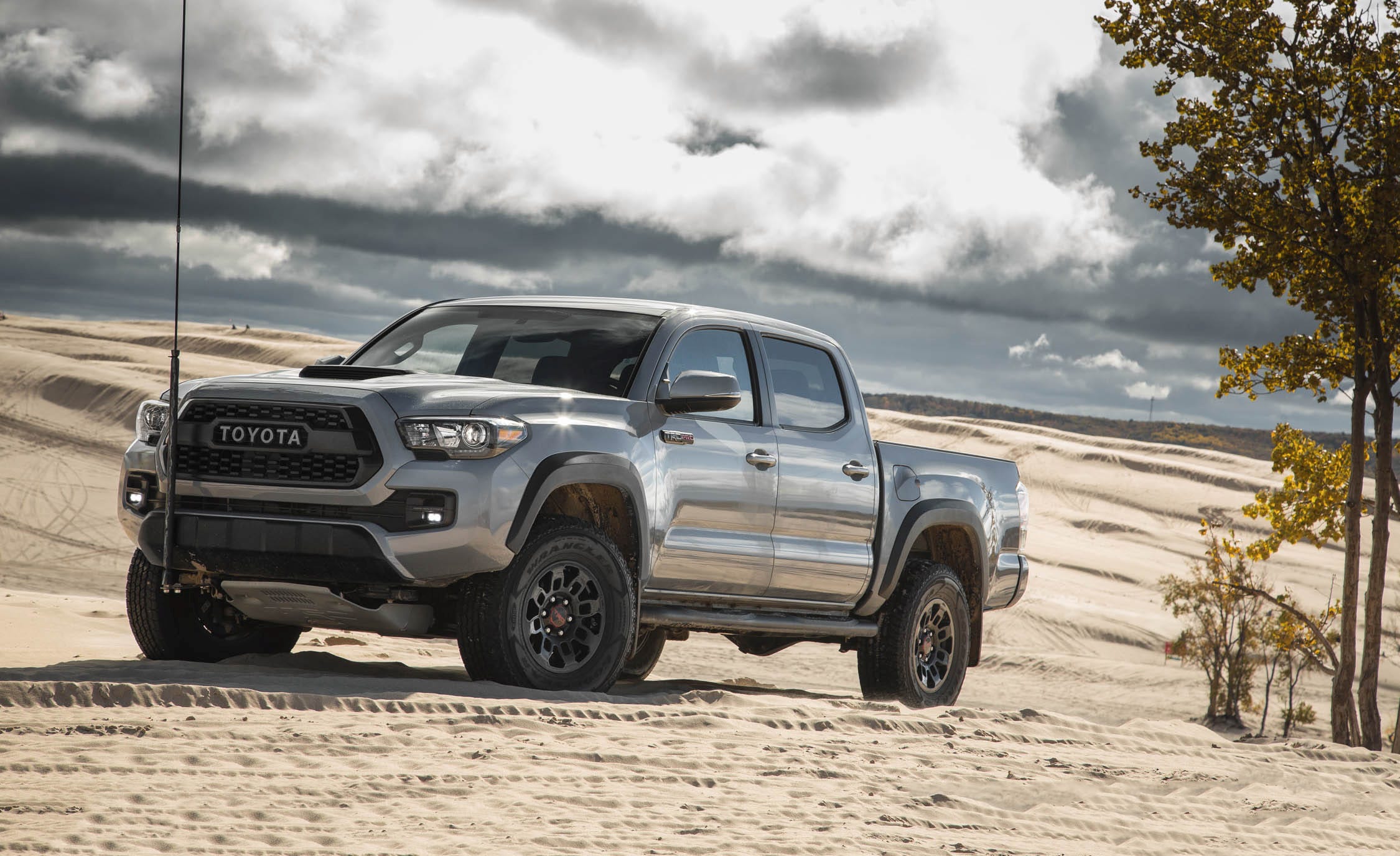
Something interesting happens when you walk into a Toyota dealership and start looking at used truck prices. You check the sticker on a four-year-old Tacoma with 45,000 miles and blink twice, because the number does not look like what you expected from a used truck with nearly 50,000 miles on the odometer. Then you check a comparable American truck of the same age and mileage, and suddenly the Toyota pricing starts making a different kind of sense.
Toyota trucks hold their value. Not just slightly better than competitors, but meaningfully, measurably, and consistently better across model years, trim levels, and geographic markets in ways that automotive analysts, insurance actuaries, and used car buyers have all noticed and documented.
Kelley Blue Book, Edmunds, and J.D. Power residual value studies have consistently placed Toyota trucks at or near the top of the retained value rankings across their respective categories, and this consistent ranking reflects real market behavior rather than brand favoritism.
American truck manufacturers build excellent products. Nobody is dismissing the capability, refinement, and technology that Ford, General Motors, and Ram pack into their current offerings. But when you look at what happens to the price of those trucks after three, four, or five years, a pattern emerges that tells a story about how the market views long-term Toyota truck ownership versus long-term American rival ownership.
Why do Toyota trucks hold value this well? Part of it is the documented reliability reputation that has been built across decades of ownership data. Part of it is genuine demand from buyers who specifically want Toyota trucks and who are willing to pay premium prices to get them rather than accepting alternatives.
Part of it is production volume management that keeps supply below where demand sits, which is a market dynamic that supports pricing in ways that oversupply cannot. Eight specific Toyota truck models follow, each with documented value retention credentials that outperform their American segment rivals.
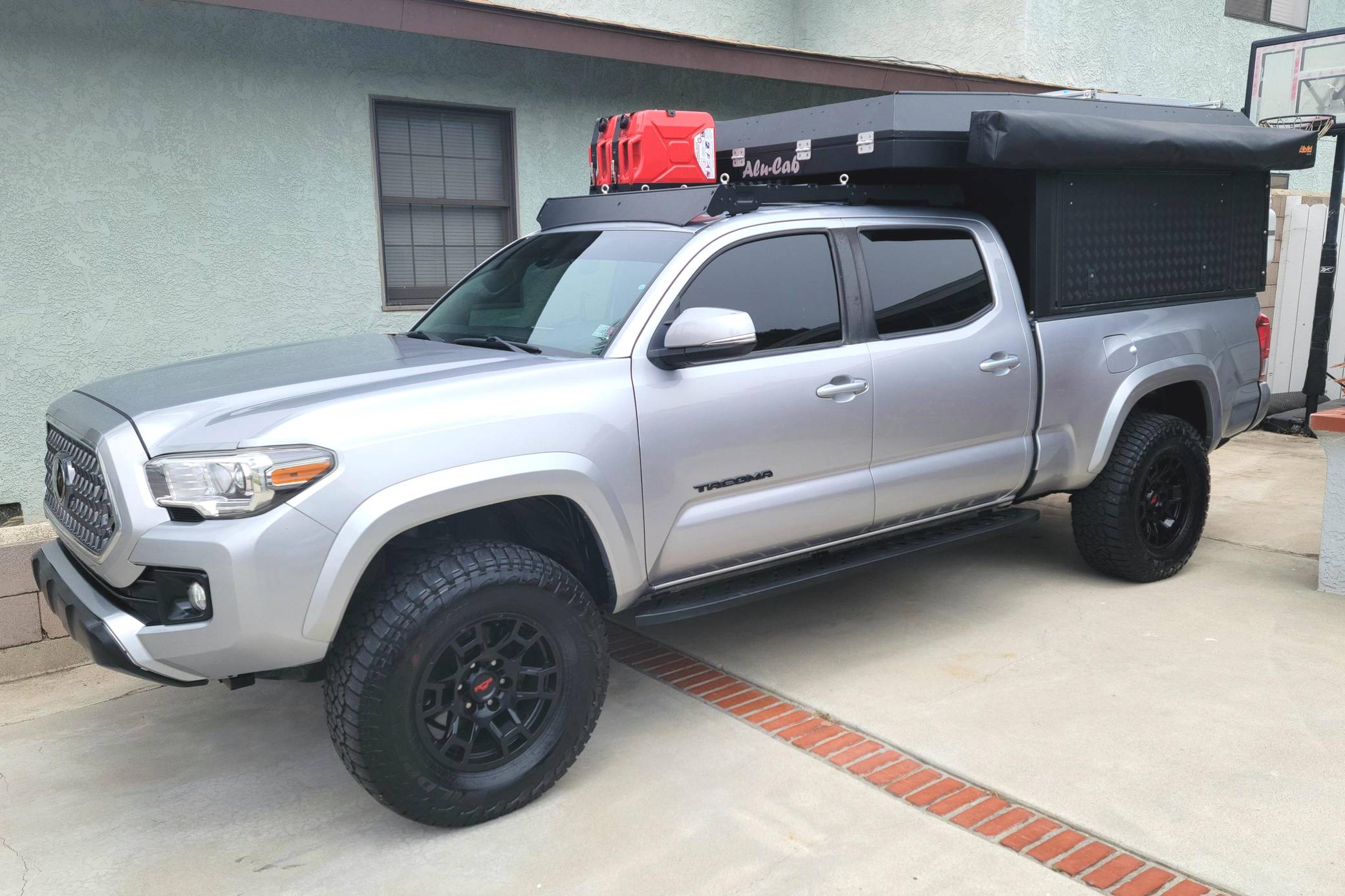
1. Toyota Tacoma TRD Off-Road Access Cab 4×4 (2019)
Depreciation is supposed to be one of the predictable facts of vehicle ownership. You drive it off the lot, and the value starts declining. By year three or four, you have lost a substantial percentage of your original purchase price. That is how it works for almost every vehicle in almost every segment. And then there is the 2019 Toyota Tacoma TRD Off-Road Access Cab 4×4, which apparently did not receive the depreciation memo.
Kelley Blue Book residual value data for the 2019 Tacoma TRD Off-Road in 4×4 Access Cab configuration consistently places this truck’s retained value at 70 to 80 percent of original MSRP at the four-year mark, which is a depreciation rate that puts most mid-size and full-size truck competitors to genuine shame.
Finding used examples of this specific configuration at reasonable prices requires either patience, geographic flexibility, or accepting higher mileage than most buyers prefer, because clean, low-mileage examples move quickly when they do appear in the market.
Toyota’s 2.7-liter four-cylinder and 3.5-liter V6 engine options in the 2019 Tacoma carry reliability reputations that used truck buyers specifically seek, contributing to strong demand across the full mileage spectrum of available used examples.
Buyers who might hesitate to purchase a used truck at 80,000 miles from an American manufacturer often approach a Tacoma with 80,000 miles with considerably more confidence, because the documented reliability record for these engines at and beyond that mileage is well-established in owner communities and consumer satisfaction data.
TRD Off-Road specific equipment adds value that buyers specifically pay for rather than accepting as incidental. Multi-terrain select system, crawl control, locking rear differential, Bilstein shocks, and TRD-tuned suspension calibration represent genuine capability additions that off-road oriented buyers will pay premium prices to acquire in the used market rather than settling for base or SR5 specification alternatives.
Owners of the 2019 Toyota Tacoma TRD Off-Road Access Cab 4×4 who decide to sell or trade consistently discover that dealer trade-in values and private party sale prices exceed their expectations based on the vehicle’s age and mileage, which is the most practical validation of value retention that any truck owner can experience.
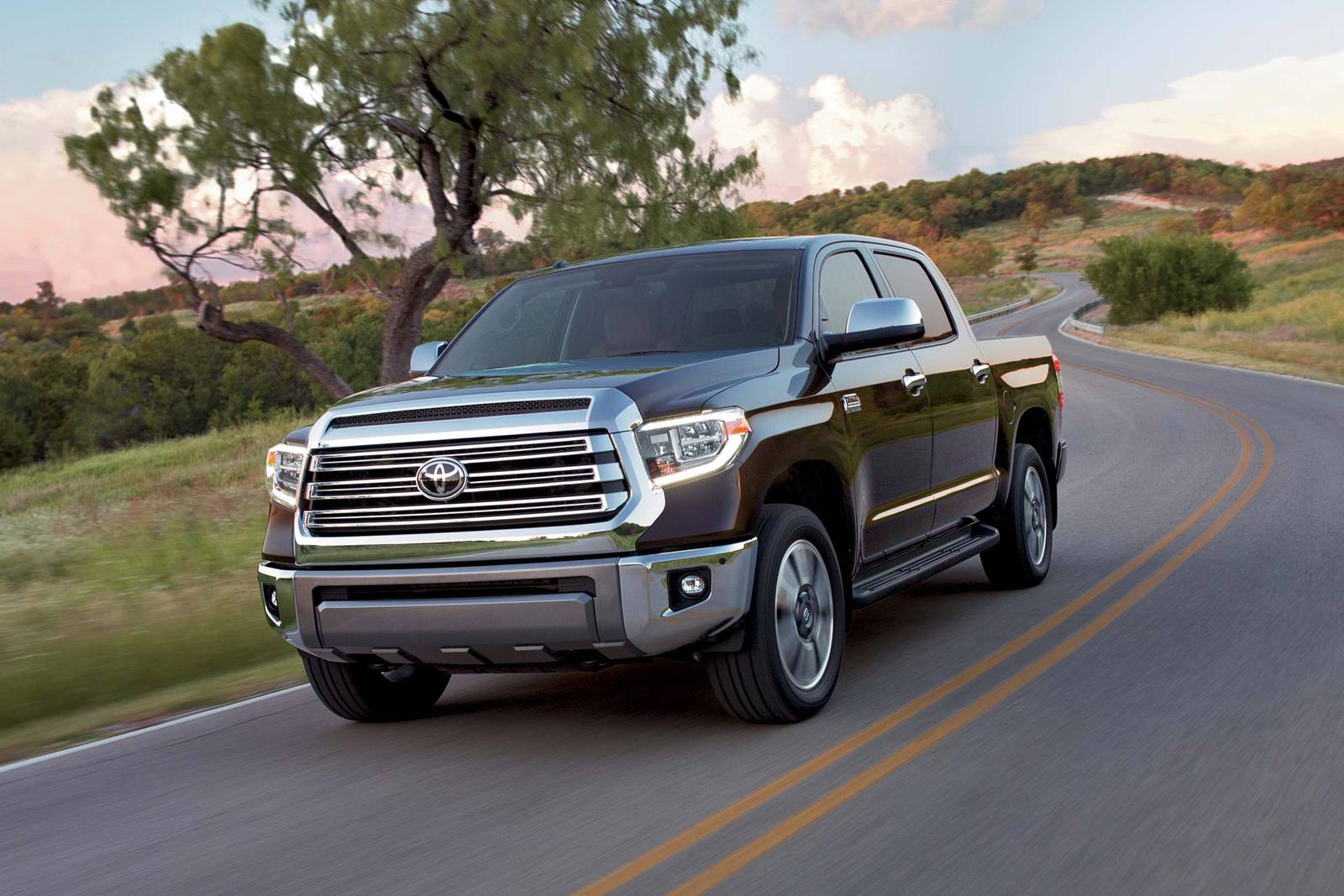
2. Toyota Tundra CrewMax SR5 5.7L 4×4 (2020)
Full-size truck buyers in the American market have historically been loyal to domestic brands in ways that no other vehicle category demonstrates quite as strongly, and Toyota’s Tundra has competed in this environment for over two decades against Ford F-150, Chevrolet Silverado, and Ram 1500 rivals that collectively dominate sales volume by enormous margins. What the Tundra lacks in sales volume compared to these competitors, it more than compensates for in what happens to its value after the first owner decides to sell.
Retained value data for the 2020 Toyota Tundra CrewMax SR5 5.7L 4×4 at the four-year mark consistently places this truck 8 to 12 percentage points ahead of comparable F-150, Silverado, and Ram 1500 examples in the same period, which translates to thousands of dollars in practical value difference when the original buyer goes to sell or trade.
A difference of 10 percentage points on a $45,000 truck is a $4,500 real-world outcome that affects whether the original buyer can afford their next vehicle on the terms they want. The 5.7-liter i-FORCE V8 engine in this generation of Tundra is an engine specifically renowned in owner communities for longevity that extends well beyond what most full-size truck buyers plan for when they purchase.
Documented examples of this engine exceeding 300,000 miles with original internals intact are not exceptional outliers but reasonably common outcomes when regular oil service with appropriate specification oil has been maintained. This longevity reputation drives used buyer confidence at mileages that would create more hesitation around American rivals.
CrewMax cab configuration provides the largest interior passenger space of any Tundra body style, with rear seat dimensions that accommodate adult passengers for extended travel without the compressed legroom that some crew cab alternatives from competing manufacturers provide. Buyers who prioritize rear passenger space specifically will pay for CrewMax examples in the used market, sustaining demand and prices across the Tundra’s full ownership lifecycle.
Used Toyota Tundra examples of this generation regularly sell faster than equivalent-priced American full-size truck alternatives when listed at comparable asking prices, which is the market’s most direct statement about relative demand and willingness to pay.
Also Read: 5 Toyota Trucks That Are More Reliable Than 5 GMC Trucks
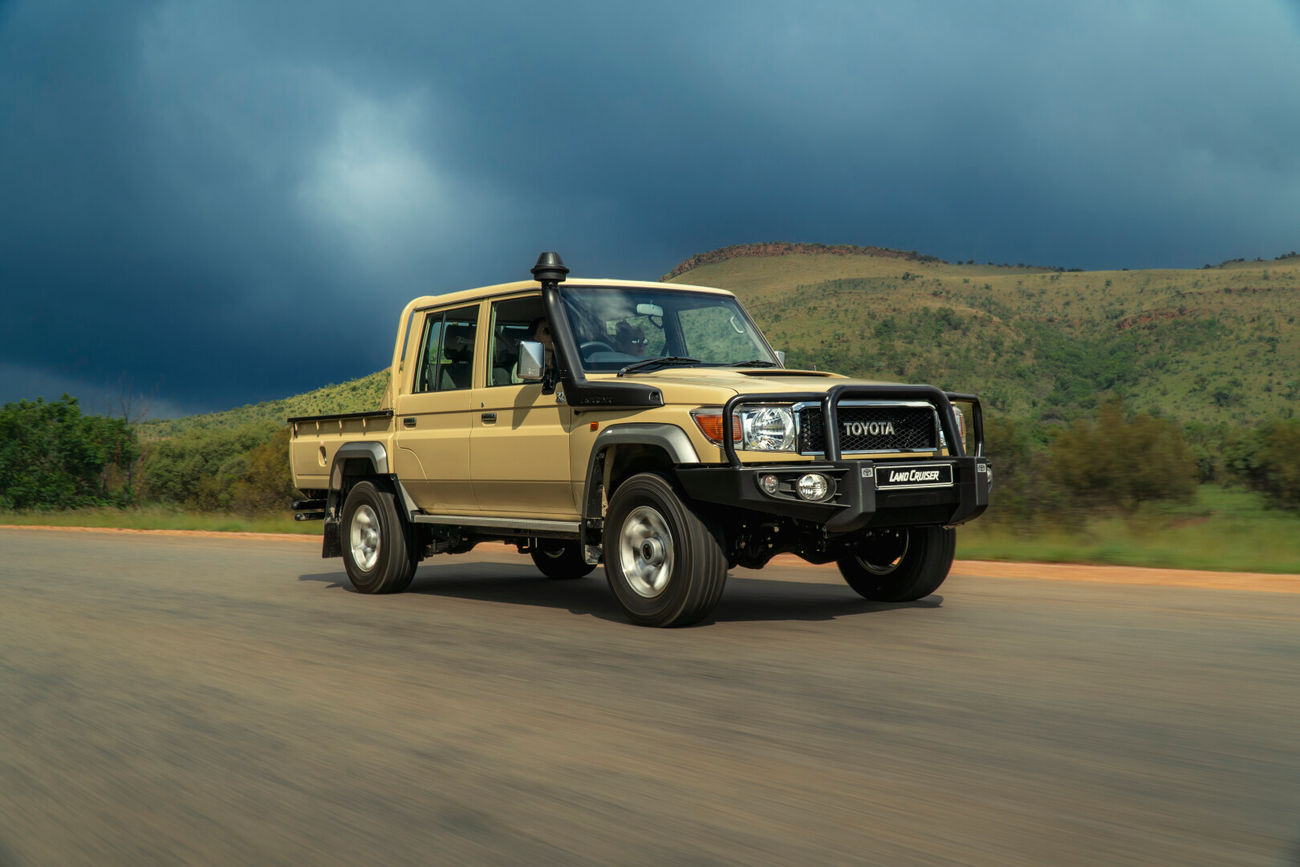
3. Toyota Land Cruiser 70 Series Double Cab 4.5L V8 Diesel (2022 Export Specification)
Long after most manufacturers moved toward comfort-oriented pickups and electronically assisted driving systems, the Toyota Land Cruiser 70 Series Double Cab continues to hold its place as a working truck built around mechanical durability rather than trend-driven redesign. Its presence in global markets remains steady because demand is driven by real usage conditions rather than cosmetic updates or frequent generational changes.
A major reason this truck maintains strong retained value is its structural simplicity. The ladder-frame chassis remains heavily reinforced, designed for continuous load carrying, rough roads, and extended operation in remote regions. This is not a platform built for occasional utility use. It is engineered for sustained service where breakdown recovery is difficult and downtime carries high operational cost. That expectation alone keeps demand stable in both new and used markets.
Power delivery comes from the 4.5-liter V8 diesel engine, widely recognised for torque-heavy output at low engine speeds. The design focuses on pulling strength rather than acceleration figures. In real usage, that means steady performance when hauling cargo, towing equipment, or operating in off-road conditions where consistent wheel movement matters more than speed. The engine’s character has remained unchanged for years because its original configuration already meets long-duration workload expectations.
Mechanical systems are intentionally straightforward. The drivetrain avoids unnecessary electronic dependence, relying instead on proven mechanical engagement for four-wheel drive operation. This approach reduces potential failure points and allows field servicing in locations where advanced diagnostic tools may not be available. In many regions, this reliability factor directly supports resale strength because buyers prioritize dependability over modern convenience features.
Interior design reflects function-first thinking. The cabin is durable, easy to clean, and resistant to wear from heavy use. Controls are positioned for quick access, and materials are selected for long service life rather than luxury presentation. While comfort features exist, they are secondary to usability under demanding conditions.
Market behavior surrounding the Land Cruiser 70 Series is distinct. In several export regions, waiting periods for new units remain long, and second-hand examples often sell at prices close to or sometimes above original purchase levels, depending on mileage and condition. This occurs because supply is tightly controlled while demand continues across mining operations, agricultural sectors, and government fleets.
Maintenance structure supports long ownership cycles. Parts are widely distributed in regions where the vehicle operates, and mechanical familiarity among technicians reduces service complications. This accessibility keeps operating costs predictable, reinforcing buyer confidence in both new and used transactions.
The 70 Series Double Cab remains a rare example of a truck whose value stability is driven by consistent real-world demand rather than marketing positioning or short-term market behavior.
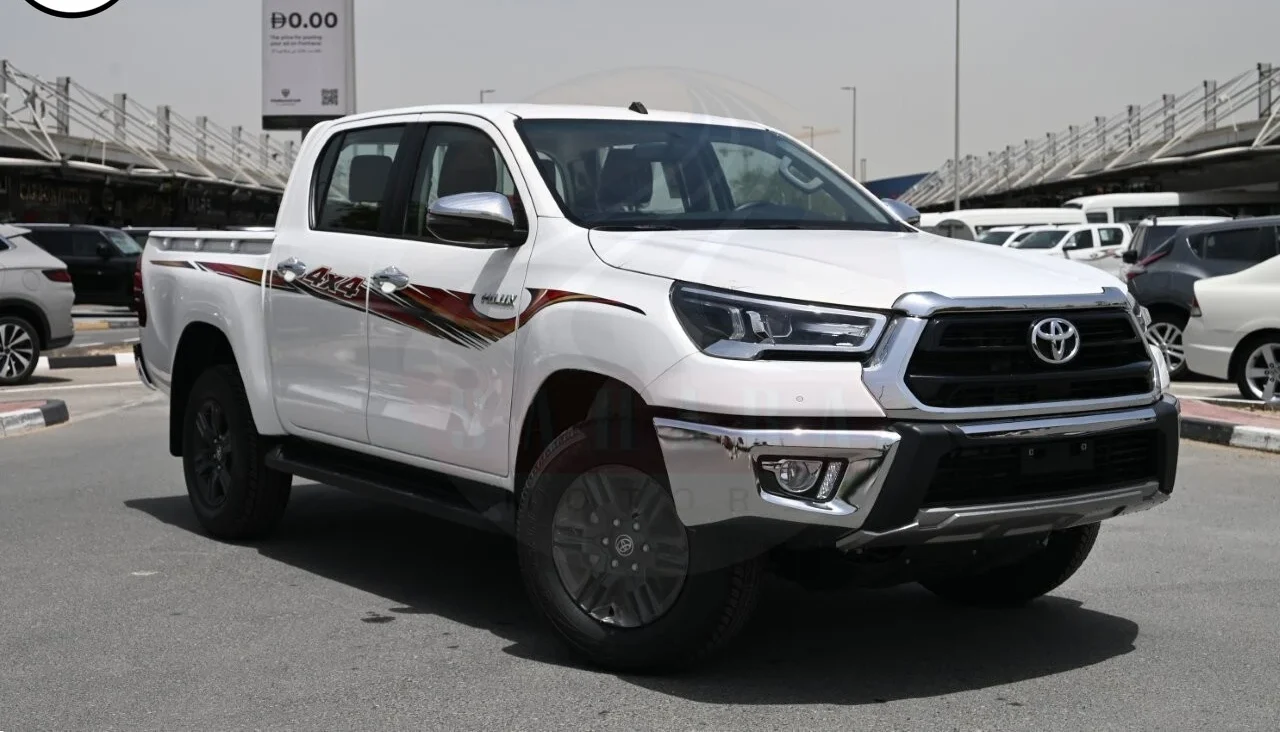
4. Toyota Hilux Double Cab 4WD (2022 Export Market)
Including the Hilux in a Toyota truck value retention article requires acknowledging that this vehicle is not sold new in the United States market, which itself tells part of the value retention story. Toyota’s decision not to import the Hilux for American retail sale is based on corporate strategy rather than the truck’s capability, and American buyers who have imported used Hilux examples from Canada, Japan, or other markets pay premiums that reflect both the scarcity premium and genuine enthusiasm for a truck with a global reliability reputation that spans continents and decades.
Hilux Double Cab 4WD value retention in markets where it is sold new, including Australia, Canada, Latin America, Europe, and Southeast Asia, is consistently among the highest of any light-duty truck in those markets. Australian market data consistently shows Hilux depreciation curves that outperform Ford Ranger, Isuzu D-Max, and Mitsubishi Triton alternatives in the mid-size truck segment, with five-year retained values regularly documented at 55 to 65 percent of original purchase price in markets where new pricing is comparable to American mid-size trucks.
2GD-FTV 2.4-liter four-cylinder turbodiesel available in international Hilux specification is the engine that underpins the truck’s reputation for extreme-condition durability. Documented use in disaster relief operations, remote agricultural applications, and high-cycle commercial fleet service across challenging global environments has established this engine’s capability at sustained high-duty cycles that no American mid-size truck engine has been tested against at comparable scale.
American buyers who specifically research and import legal Japanese domestic market Hilux examples pay import costs, compliance verification expenses, and premium used prices that together demonstrate how strong the demand is for a truck that Toyota does not currently sell in the American new vehicle market. This willingness to pay premium prices for imported examples is among the most direct expressions of brand trust available in the used vehicle market.
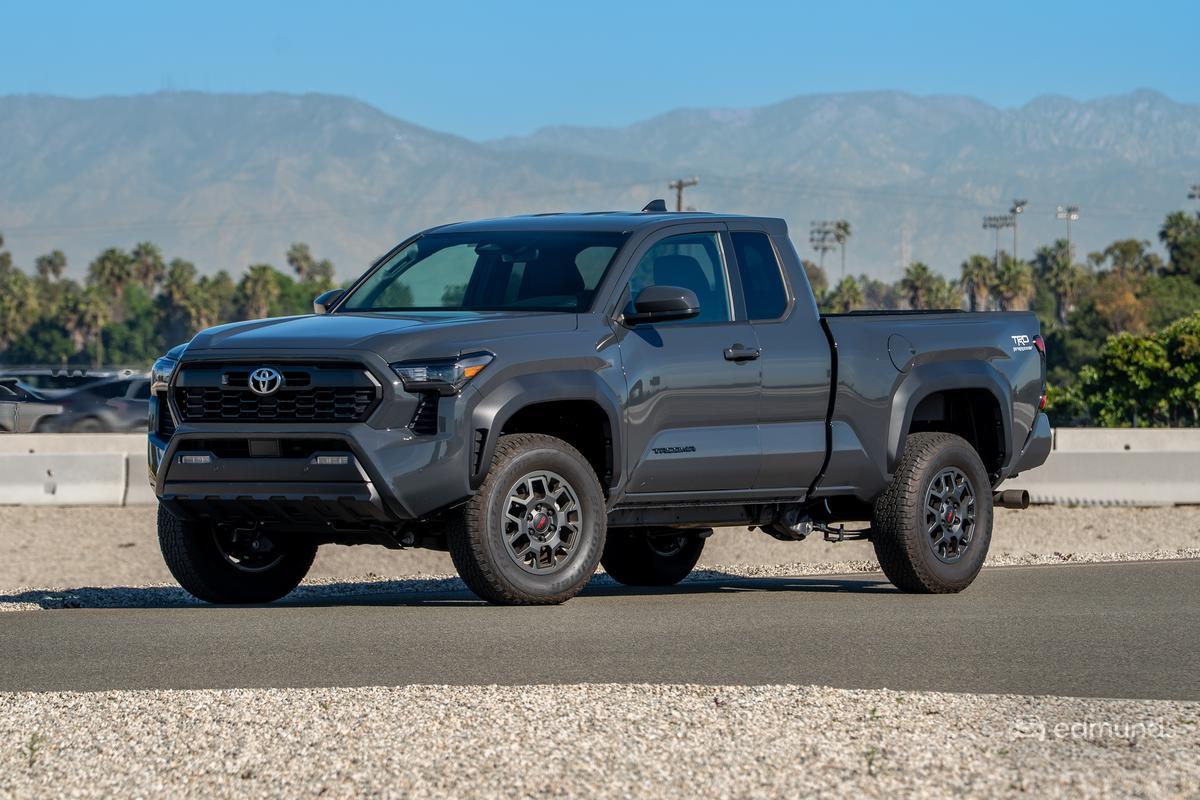
5. Toyota Tacoma TRD Sport Double Cab 4×4 (2022)
Not every truck buyer wants crawl control and locking differentials. Some want a capable four-wheel-drive truck that looks good, drives confidently in everyday conditions, and holds its value across the ownership period without requiring off-road specific equipment that most buyers will never fully use. For this buyer, the 2022 Toyota Tacoma TRD Sport Double Cab 4×4 represents the sweet spot between capability, daily usability, and documented value retention that American mid-size alternatives consistently fail to match.
TRD Sport specification adds 18-inch wheels with street-oriented all-season tires, sport-tuned suspension with a hood scoop that is admittedly more aesthetic than functional, and sport interior trim that includes an 8-inch touchscreen with Apple CarPlay and Android Auto integration.
This specification creates a truck that reads as premium without requiring the buyer to commit to the TRD Off-Road or TRD Pro price premium for capabilities they may not use. Used buyers who want a capable Tacoma at a price that does not reflect the TRD Off-Road’s premium specifically seek Sport examples, sustaining demand across the full used lifecycle.
Retained value for the 2022 Tacoma TRD Sport Double Cab 4×4 at the two-year mark was documented at approximately 90 to 95 percent of original MSRP during the peak used vehicle market conditions, which is effectively full replacement cost depreciation for a two-year-old truck with typical miles.
Even as used vehicle market conditions normalized from their pandemic-era highs, Tacoma TRD Sport retained value has settled at levels that still outperform American mid-size alternatives in comparable specification by 8 to 15 percentage points.
3.5-liter V6 engine with Toyota’s variable valve timing on both intake and exhaust, paired with the six-speed automatic transmission, delivers performance appropriate for the Sport specification’s street-oriented character while maintaining the engine reliability reputation that drives used buyer confidence across the full mileage range. Documented reliability data from Consumer Reports and J.D. Power consistently places this powertrain combination among the most reliable in the mid-size truck segment.
Fleet operators and business buyers who specify Tacoma TRD Sport examples in their light-duty fleet inventory specifically choose this configuration for its combination of street capability and expected service cost over multi-year ownership cycles, which validates the value retention case from an institutional buyer perspective alongside the individual owner perspective.
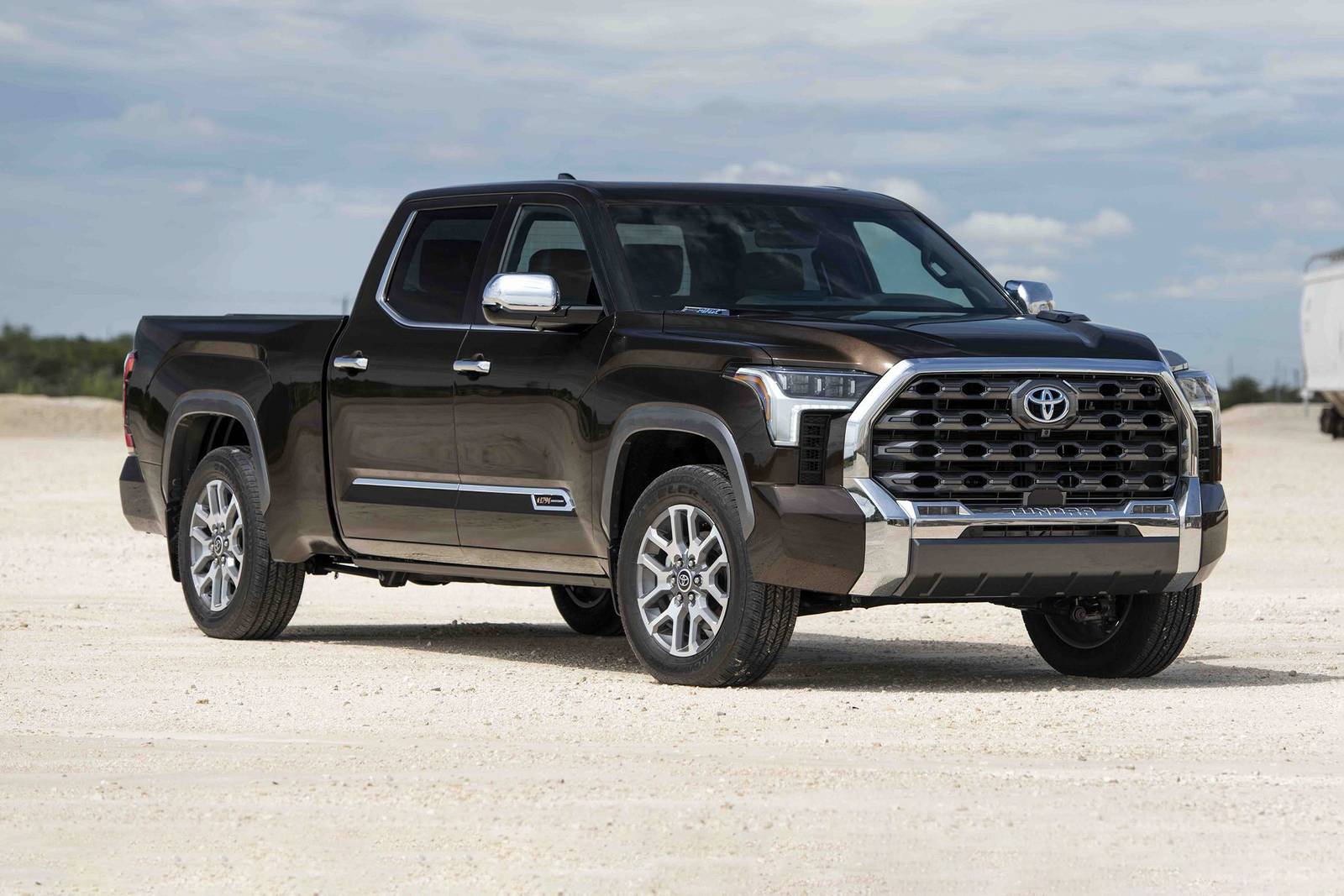
6. Toyota Tundra Platinum CrewMax 4×4 (2023)
When Toyota completely redesigned the Tundra for the 2022 model year, replacing the previous generation’s 5.7-liter V8 with twin-turbocharged V6 and hybrid V6 powertrains, the used vehicle community watched with interest to see whether the new platform would maintain the retained value legacy that the previous generation had established so convincingly.
Early evidence from the market suggests that the new Tundra is building its own value retention story, and the 2023 Tundra Platinum CrewMax 4×4 specifically represents the new platform’s value proposition at its most complete.
New twin-turbocharged 3.5-liter V6 i-FORCE MAX hybrid powertrain available in Platinum specification produces 437 horsepower and 583 pound-feet of torque, delivering performance that exceeds the previous generation’s 5.7-liter V8 in both output and fuel efficiency.
This powertrain improvement addresses the one area where previous Tundra generations trailed American competitors, and buyers who were previously deterred by fuel economy comparisons now have a competitive case from Toyota’s flagship powertrain.
Platinum trim specification delivers a comprehensive luxury content package that includes a 14-inch center touchscreen, premium JBL audio system, power running boards, panoramic moonroof, and leather interior with heating and ventilation that creates an ownership experience that directly competes with the Ford F-150 Platinum and Ram 1500 Limited at comparable price points.
Used buyers who want this level of content specifically will pay for Platinum specification examples rather than accepting lesser trim levels as substitutes. Retained value data for the 2023 Tundra Platinum at the one-year mark is encouraging, with used listings in good condition appearing at 85 to 92 percent of original MSRP, depending on mileage and market location.
This early indication, while based on a shorter data history than the previous generation, suggests that Toyota’s new platform is inheriting the retained value characteristics that made previous Tundra generations so financially compelling for buyers who factor resale into their ownership cost calculations.
Toyota’s decision to maintain the Tundra’s separate manufacturing identity through its San Antonio, Texas, facility and its specific engineering path rather than sharing platforms with domestic competitors preserves the Tundra’s distinct market position that value retention depends upon.
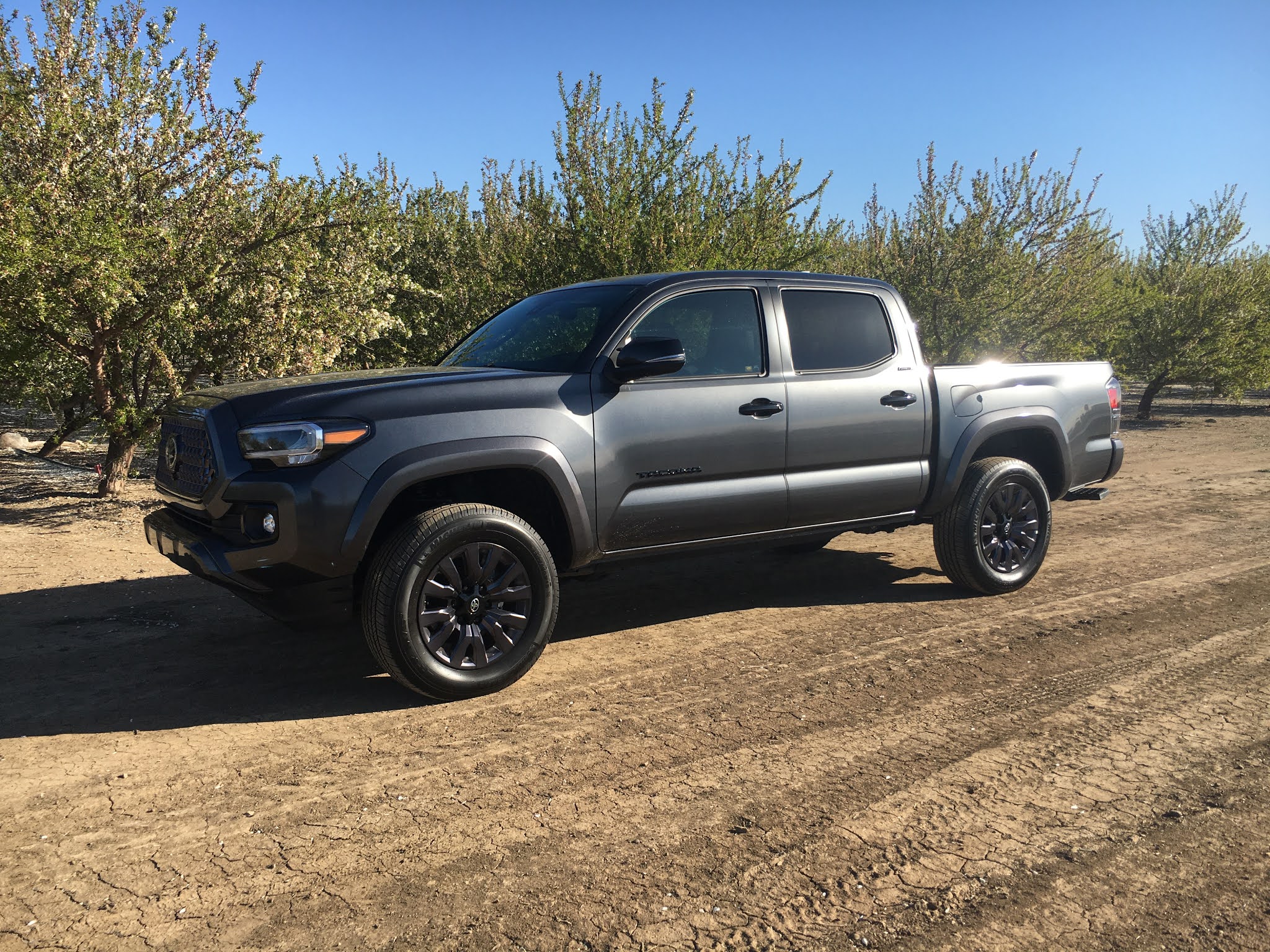
7. Toyota Tacoma Limited Double Cab 4×4 (2021)
Premium truck specification has become one of the most competitive segments in the American vehicle market, with Ford Platinum, Ram Longhorn, and Chevrolet High Country competing aggressively for buyers who want full luxury amenities in a truck body.
Toyota’s Tacoma Limited represents the brand’s answer to this demand in the mid-size segment, and its retained value at the premium end of the Tacoma lineup mirrors the strong value retention that less expensive Tacoma configurations demonstrate.
Limited specification adds premium leather seating, genuine wood interior trim, navigation system, JBL premium audio, and a 9-inch rear seat entertainment option that creates an interior environment that competes directly with small luxury SUVs in perceived quality.
Buyers who prioritize interior comfort and technology alongside truck capability find the Limited specification delivers both without the capability compromises that some luxury-oriented trucks impose on their off-road and towing credentials.
Retained value for the 2021 Tacoma Limited Double Cab 4×4 at the three-year mark has been documented at approximately 75 to 83 percent of original MSRP, which outperforms Ford Ranger Lariat, Chevrolet Colorado LTZ, and Jeep Gladiator Overland at comparable age and mileage by margins that range from 8 to 14 percentage points in most market analyses.
This retained value advantage represents thousands of dollars in practical financial outcome for the original buyer who eventually sells or trades. Insurance replacement cost for high-mileage Tacoma Limited examples reflects the truck’s strong used market value, with insurers noting total loss payments on higher-mileage Limited examples that exceed what comparable American mid-size trucks would generate.
This insurance valuation difference has real-world implications for owners who finance or insure based on vehicle value rather than original purchase price alone. Private party sale data for 2021 Tacoma Limited examples listed on major online marketplaces shows average days-to-sale metrics that outperform American mid-size truck alternatives at comparable asking prices, which is the market’s most direct statement about relative demand among private transaction buyers who have the widest range of alternatives available at any given moment.
Also Read: 5 Toyota Trucks That Refuse to Die vs 5 That Don’t
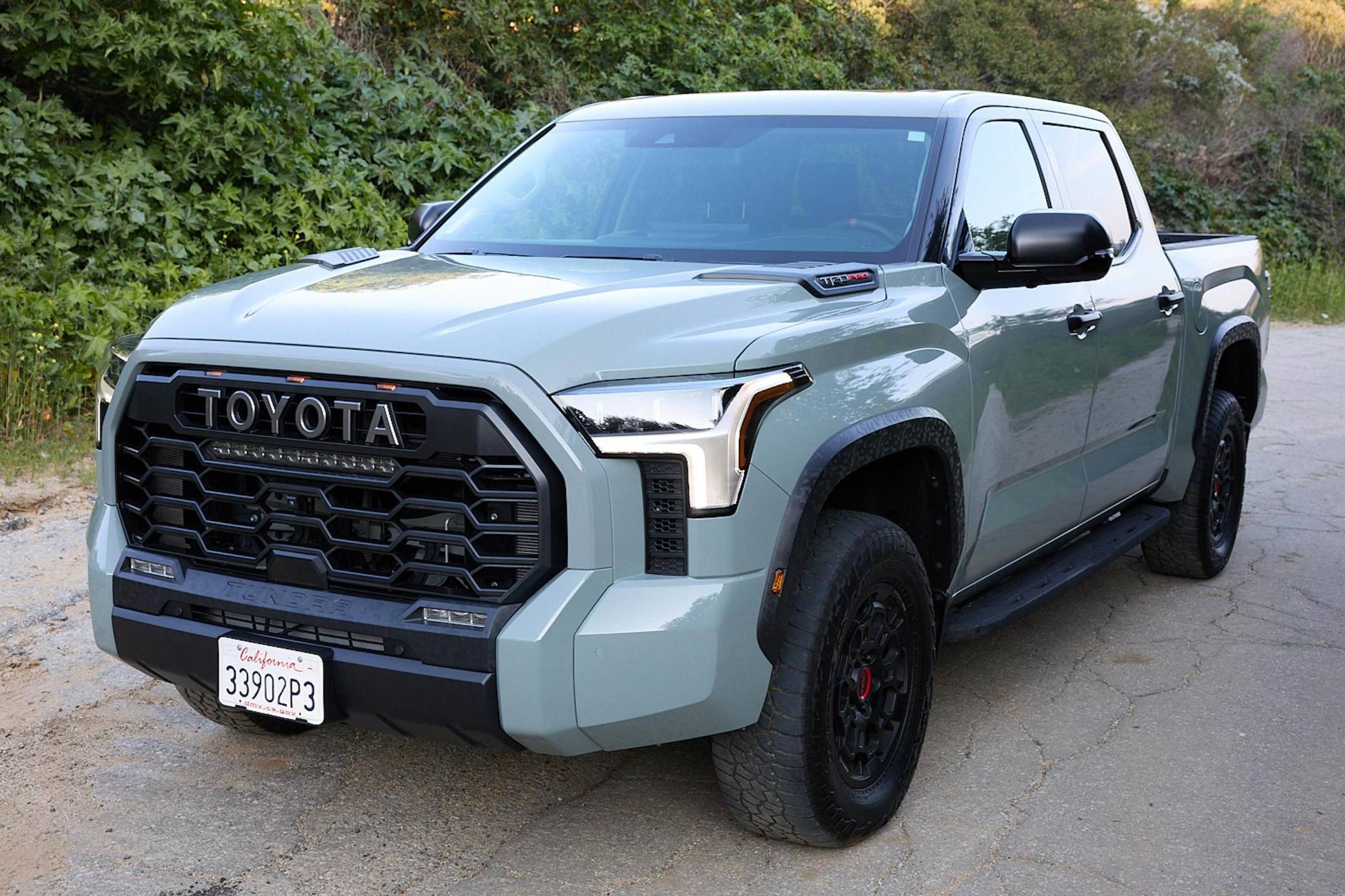
8. Toyota Tundra TRD Pro CrewMax 4×4 (2022)
Completing this list with the new-generation Tundra TRD Pro is appropriate because this truck represents Toyota’s most direct statement about where it positions itself in the full-size truck market, and its retained value performance reflects how the market has received that positioning.
Buyers who paid premium prices for the 2022 Tundra TRD Pro CrewMax at launch, often above MSRP during a period of constrained supply, experienced the unusual situation of a new vehicle purchase that actually appreciated or maintained value rather than declining in the first months after purchase.
TRD Pro specification on the new Tundra platform combines Fox internal bypass shocks tuned specifically for this application, TRD-developed front and rear skid plates, multi-terrain select and crawl control systems, and TRD Pro-specific exterior treatments, including grille, front bumper, and available heritage color options that give the truck a visual identity distinct from lower TRD specifications. This combination of exclusive visual treatment and genuine functional capability creates a truck that buyers specifically want rather than accepting as an alternative to something else.
i-FORCE MAX hybrid 3.5-liter V6 powertrain in the TRD Pro delivers the 437 horsepower and 583 pound-feet of torque combination with towing capacity of 11,455 pounds and payload of 1,440 pounds, which positions the TRD Pro as capable rather than compromised by its off-road focus.
Buyers who worried that the new turbocharged hybrid powertrain would sacrifice capability for efficiency have found through real-world towing and hauling use that the i-FORCE MAX delivers its rated capacity with confidence that erases concerns about the departure from the previous generation’s naturally aspirated V8.
Retained value data for 2022 Tundra TRD Pro examples, while still accumulating across a shorter ownership timeline than previous generation trucks, shows values at the two-year mark that consistently exceed American full-size performance truck alternatives, including the Ford F-150 Raptor and Ram 1500 TRX at comparable age and mileage when adjusted for original MSRP differences.
This retained value performance at the performance truck level of the market validates Toyota’s decision to invest in TRD Pro specification as a distinct product rather than simply a trim level applied to standard Tundra hardware.
