
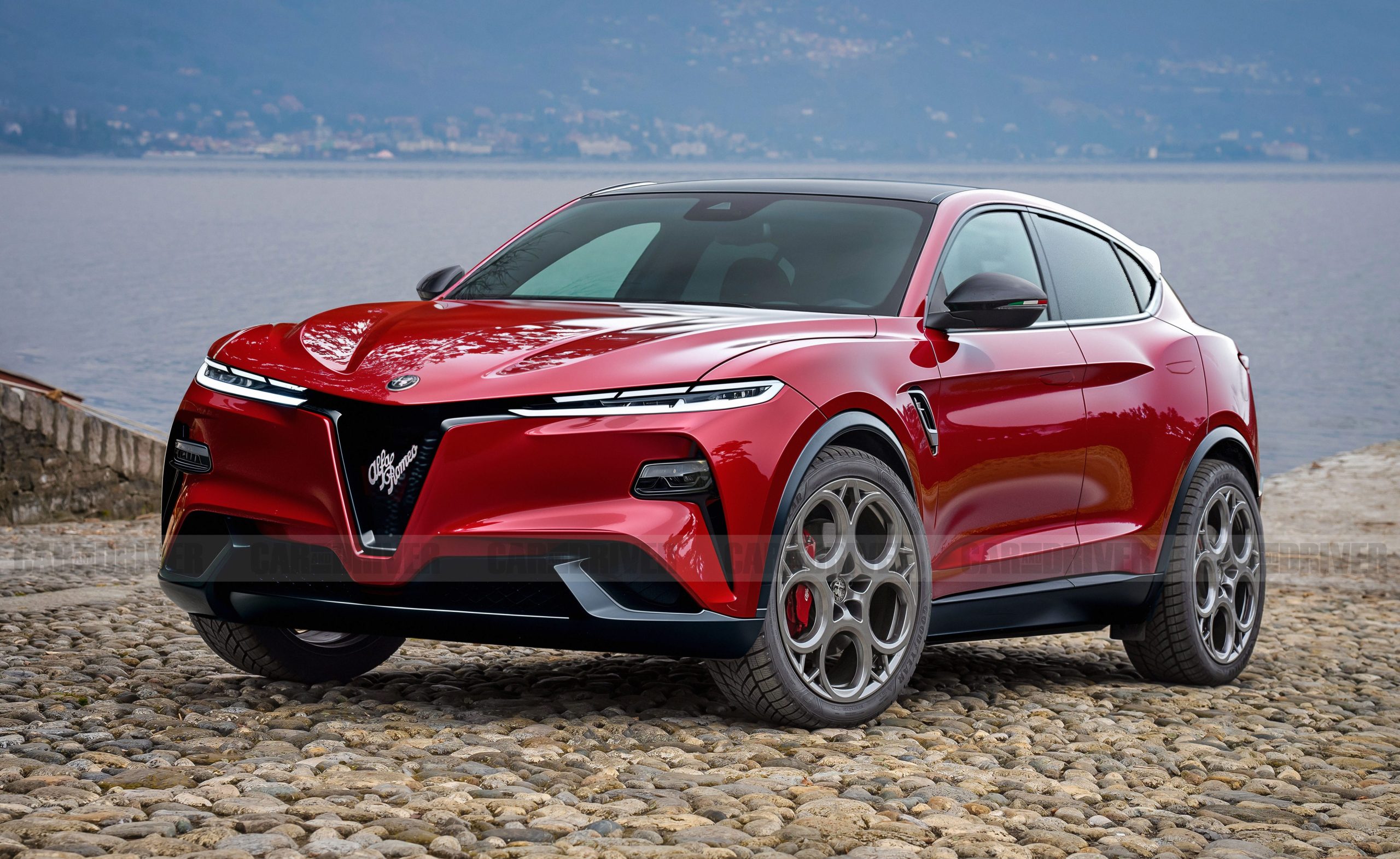
Buying a brand-new car feels like one of the best decisions you will ever make. That smell when you first open the door, the spotless paint, the zero miles on the odometer, and the way everything feels crisp and untouched. It is genuinely exciting. But here is what the dealership brochure will never tell you: the moment those tires roll off the lot, your wallet starts taking hits you probably never planned for.
People budget for the monthly payment and maybe the insurance. Then life happens. Registration fees show up in the mail. The first oil change is more expensive than expected. Fuel costs start adding up faster than anticipated. Suddenly, that “affordable” new car does not feel so affordable anymore.
Here is the thing: none of this means you made a bad choice. It just means you deserved more information upfront. Car ownership in 2026 comes with a whole set of financial realities that go far beyond the sticker price, and understanding those costs before you sign the paperwork is genuinely powerful.
This page is your honest, friendly breakdown of what new car ownership actually costs in 2026. Not to scare you away from buying. Not to make you second-guess yourself. But to help you walk into that dealership (or click “confirm” on that online order) knowing exactly what you are getting into, from depreciation to financing charges, insurance rates, maintenance schedules, and the taxes nobody warned you about.
Whether you are eyeing a 2026 Toyota Camry XSE, a 2026 Ford F-150 XLT, or something sportier like the 2026 Chevrolet Corvette Stingray, the hidden costs apply across the board. Once you know them, you can plan for them. And planning is what turns a stressful purchase into a smart one.

1. Depreciation, The Invisible Price You Start Paying Immediately
What Nobody Tells You Before You Drive Away
Picture this: you just handed over your down payment, signed the final paperwork, and pulled out of the dealership lot in your brand new 2026 Honda Accord Sport. You feel great. But in the time it took you to drive two miles down the road, your car has already lost a chunk of its value. That is not an exaggeration. That is depreciation, and it is the single biggest financial cost of owning a new vehicle.
Depreciation is the gap between what you paid for the car and what it is worth when you decide to sell or trade it in. A new vehicle loses roughly 15 to 20 percent of its value in the first year alone. By the time three years have passed, most vehicles have dropped to about 60 percent of their original purchase price. Some vehicles do worse than that.
Let’s put actual numbers to it. Say you bought a 2026 Kia Telluride SX at a purchase price of $47,000. After one year, that vehicle might realistically be worth somewhere around $38,000 to $40,000, depending on mileage and market conditions. You just lost $7,000 to $9,000 without doing anything wrong. You did not wreck it. You did not neglect it. You just owned it.
By year three, that same Telluride could be worth somewhere between $28,000 and $32,000. That means in 36 months, you absorbed somewhere between $15,000 and $19,000 in depreciation costs alone. If your monthly payment was $750 a month over that period, depreciation essentially doubled your real cost of ownership.
Some cars depreciate faster than others. Luxury sedans tend to take harder hits. German luxury vehicles, despite their prestige, are notorious for steep depreciation curves. A 2026 BMW 5 Series 530i that stickers at $57,000 can lose more value in the first two years than a comparable Japanese vehicle would lose in four.
Electric vehicles present their own depreciation story. While certain models hold value better than others, rapid technology advancement in the EV space means newer models with better range and charging speed can make older EVs feel outdated quickly. If you are purchasing a 2026 Volkswagen ID.4 Pro AWD, it is worth researching how similar model years have held value in the used market before committing.
Trucks and SUVs generally hold value better than sedans in the current American market. A 2026 Ram 1500 Laramie, for example, tends to retain value more reliably due to sustained demand in the used truck market. But even trucks are not immune. Higher sticker prices mean higher absolute dollar losses, even when the percentage is lower.
Here is a practical tip most dealers will not share: buying a vehicle that has been out for one model year in the used market can save you 15 to 20 percent instantly, because the previous buyer absorbed that first-year depreciation drop. If saving money matters more than that new-car smell, a certified pre-owned version of the same model you want is often the smarter financial play.
Still, if new is what you want, just plan for depreciation as a real, calculable cost. Add it to your monthly ownership math. When you know it is coming, it does not sting as much.
Also Read: 12 Tips for Driving Safely Around Large Semi Trucks on the Highway

2. Financing Charges. The Number Hidden in Plain Sight
What Your Interest Rate Is Actually Costing You Each Month
Sticker price gets all the attention. Interest rates quietly take the money. Most buyers focus on getting a monthly payment they can live with, which is completely understandable. But focusing only on the monthly number without understanding the total interest paid over the life of a loan is one of the most expensive habits in car buying.
Here is how the math works against you. Say you are financing a 2026 Subaru Outback Onyx Edition XT. The MSRP is around $42,000. After a $4,000 down payment, you are financing $38,000. On a 72-month loan at 7.5 percent interest (which is a realistic rate in the current 2026 lending environment), your monthly payment comes to approximately $590. That sounds manageable, right?
Run the full calculation. Over 72 months, you will pay roughly $42,480 total. That means you paid about $4,480 in interest on top of the $38,000 you borrowed. Combined with the $4,000 down payment, your total outlay for a $42,000 vehicle becomes approximately $46,480. You are paying more for the car than it sticker-priced at, and that is before depreciation, insurance, or a single oil change.
Rates in 2026 are not the historic lows buyers experienced in the early 2020s. The Federal Reserve’s rate adjustments over recent years have pushed average new car loan rates higher, and buyers with anything less than excellent credit are looking at rates that can reach 9, 10, or even 12 percent, depending on the lender. On an 84-month loan at those rates, the interest cost on a moderately priced vehicle can exceed $8,000 to $10,000.
Longer loan terms make the monthly payment feel comfortable, but they cost you more in the long run. A 2026 Mazda CX-90 PHEV Premium financed over 84 months looks affordable on a per-month basis. Stretched across seven years of interest payments, however, you end up spending more than someone who financed the same car over 48 months, even though the monthly payment is lower.
Dealer financing adds another layer to think about. Dealerships often mark up the interest rate they offer you above what the lender actually approves. A lender might approve you at 6.9 percent, and the dealer presents you with 7.9 percent, pocketing the spread as profit.
You have the right to shop for financing independently through a credit union, bank, or online lender before stepping into the dealership. Showing up with a pre-approval in hand gives you leverage and a real benchmark for comparison. One more thing worth knowing: gap insurance becomes especially relevant here.

3. Auto Insurance in 2026, More Expensive Than Most Buyers Expected
Why Your Premium Jumped and What That Means for Your Budget
Insurance does not just protect your car. At the rates being charged in 2026, it also takes a serious bite out of your monthly budget, and most new buyers are caught off guard by how much a brand-new vehicle costs to insure compared to what they were paying before.
Insurance companies price premiums based on several factors: the vehicle’s market value, repair costs, theft rates, driver history, location, and how much it costs to fix or replace parts. Brand new vehicles, by definition, have higher market values, newer technology, and more expensive components than older cars. That means higher premiums. Full coverage, which virtually every lender requires when you are financing or leasing, adds collision and comprehensive to your policy and drives the monthly cost up considerably.
Take the 2026 Genesis GV80 3.5T as a practical example. With an MSRP around $70,000, insuring this vehicle for full coverage can run anywhere from $200 to $280 per month, depending on your location, driving record, and insurer. That is $2,400 to $3,360 per year in insurance premiums alone. Over five years of ownership, you could be spending $12,000 to $16,800 just on insurance for a single vehicle.
Even more modestly priced new vehicles carry higher insurance costs than many buyers expect. A 2026 Hyundai Santa Fe Calligraphy AWD, which stickers in the mid-$40s, might carry full coverage premiums of $130 to $170 per month for a driver with a clean record in an average suburban market. Add in any blemishes on your driving history, and that number climbs.

4. Taxes, Fees, and Registration: The Costs You See at Signing
Breaking Down the Charges That Appear on Your Final Paperwork
There is a moment in every car purchase when the finance manager slides over a sheet showing your out-the-door price, and it is almost always higher than the number that was discussed on the showroom floor. This is where taxes, fees, and registration costs show up in full force, and for many buyers, the total is a genuine surprise.
Sales tax is the big one. Depending on which state you are buying in, sales tax on a new vehicle can range from zero (in states like Oregon or Montana) to over 10 percent in certain California counties. On a $50,000 vehicle, a 9 percent sales tax adds $4,500 to your purchase cost on day one. That is not a fee you can negotiate away. It is a government charge, and it is real.
Then there is the dealer documentation fee, sometimes called a “doc fee.” This covers the paperwork processing cost for the dealership and varies widely by state. In some states, it is capped by law at a few hundred dollars. In others, dealers can charge $700, $800, or even over $1,000 for a doc fee. When you are comparing prices between dealerships, always compare out-the-door numbers, not just the sticker price.
Title and registration fees are set by your state and are calculated based on the vehicle’s value and weight in most cases. On a newer, more expensive vehicle like a 2026 Cadillac Escalade Premium Luxury 4WD, these can run several hundred dollars. Some states also charge a personal property tax on vehicles annually, meaning you pay not just at purchase but every year you own the car.
Destination charges are listed on the Monroney sticker and represent the cost of shipping the vehicle from the manufacturing plant to the dealership. For most vehicles in 2026, destination charges range from $900 to $1,800. This is typically non-negotiable, but is worth being aware of when you are comparing the sticker price to your out-the-door cost.
Dealer add-ons are where buyers lose money they did not have to lose. Paint sealant packages, nitrogen-filled tires, VIN etching, fabric protection, and extended appearance warranties are all high-margin products added at the dealership level. On a 2026 Acura MDX Type S AWD, a dealer might tack on $1,500 to $2,500 in add-ons that were already installed before you walked in. You can decline almost all of these, but you need to ask, because they will not volunteer to remove them.
Knowing every fee before you get to the finance office puts you in control. Request an itemized breakdown of all fees before you sit down. Dealers are legally required to disclose them, so there is no reason not to ask for the complete list upfront.

5. Maintenance Schedules and Service Costs, What New Does Not Mean Free
The Expenses That Start Sooner Than You Think
Owning a brand-new vehicle in 2026 does not mean you get a free pass from service costs. Routine maintenance begins from day one, and depending on the vehicle you choose, those service visits can cost considerably more than those who switched from older vehicles are prepared to handle.
Oil changes are the starting point. Traditional internal combustion engine vehicles require oil changes roughly every 5,000 to 7,500 miles under normal conditions, or every 10,000 miles for vehicles using full synthetic oil with extended change intervals. A dealership oil change for a 2026 Lincoln Nautilus Reserve AWD using the correct synthetic blend can run $80 to $130 per visit. Do that twice a year and you are spending $160 to $260 just on oil changes.
Tire rotation and brake inspections are also part of the standard service schedule. Most manufacturers recommend tire rotations every 5,000 to 7,500 miles. Skipping them saves a small amount of money upfront and costs you a full set of tires early because uneven wear is not covered under any warranty. A set of replacement tires for a 2026 Volvo XC60 B6 AWD Plus, which uses performance all-season tires in larger sizes, can easily run $900 to $1,400 installed.
Cabin air filter replacements, engine air filter changes, brake fluid flushes, and transmission fluid services are all additional items that come due on a schedule. Many buyers assume the manufacturer’s warranty covers these, but it does not. The warranty covers defects. Routine wear items are your financial responsibility from the moment you drive off the lot.
Electric vehicles are not maintenance-free either. A 2026 Rivian R1T Quad-Motor Adventure, for example, still requires tire rotations, cabin filter changes, brake fluid checks, and the periodic inspection of its high-voltage battery cooling system. EV brake pads tend to last longer due to regenerative braking, but when they do need replacement, the labor cost on certain EV platforms is higher because of the additional disassembly involved.
Hybrid vehicles occupy a middle ground. A 2026 Toyota Venza XLE AWD Hybrid requires all the standard fluid and filter services of a conventional vehicle, plus periodic inspections of the hybrid battery system and inverter. None of these is expensive on its own, but they add up to a real number when you calculate annual maintenance costs honestly.
Here is a practical number to carry with you: budget $800 to $1,500 per year for routine maintenance on a new vehicle, depending on the type and how many miles you drive. Some years will be fewer. But a year with four tire replacements, a brake job, and a full-service interval can push that number considerably higher. Planning means you are not borrowing money for a brake job on a car that is supposed to be new.
6. Fuel and Energy Costs in 2026, Gas, Electric, and Everything In Between
What You Are Spending Every Time You Fill Up or Plug In
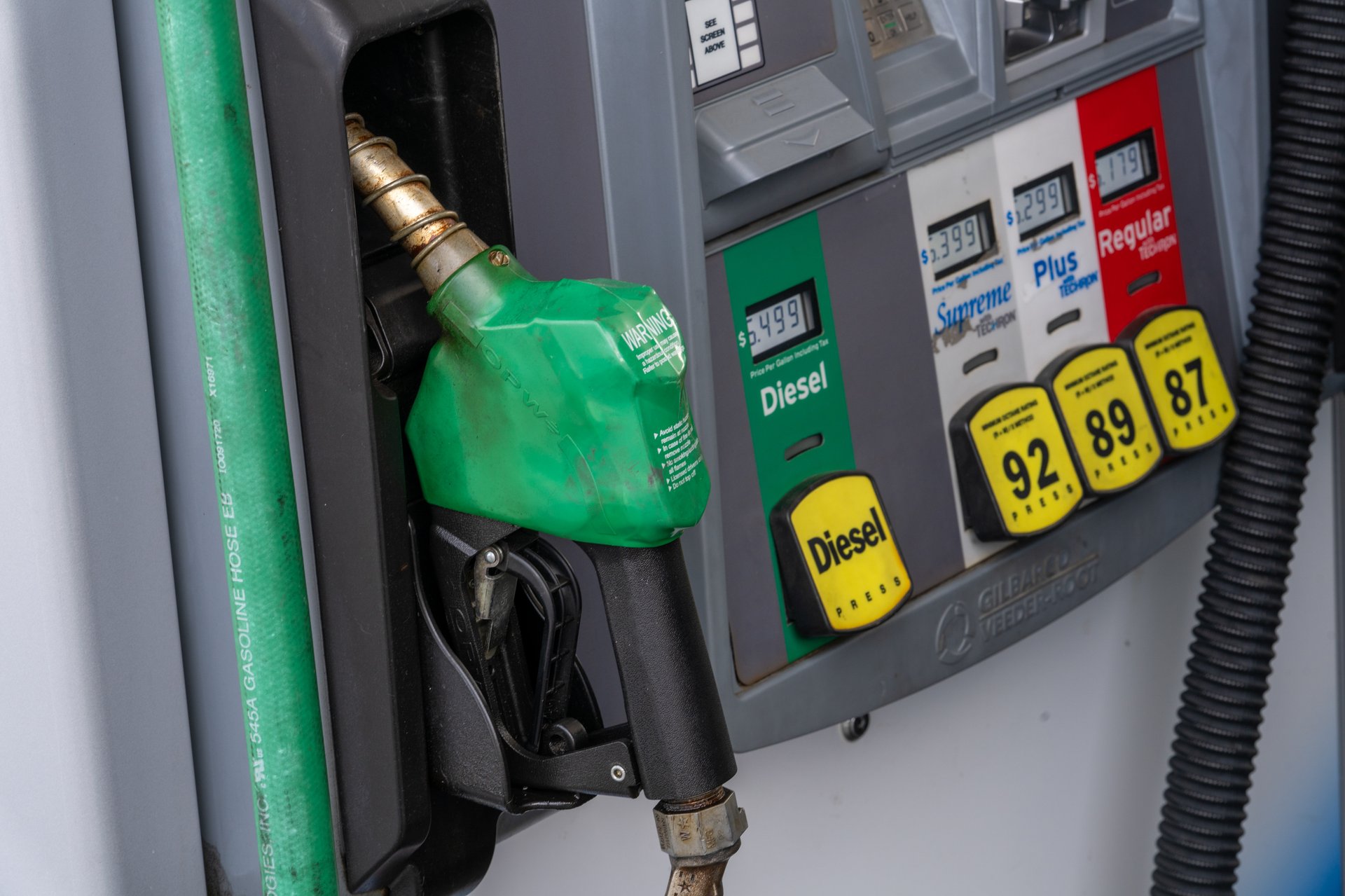
Fuel is the cost that hits you every single week, which makes it one of the most important numbers in your total ownership picture, yet most buyers evaluate it as an afterthought. Whether you are running on premium gasoline, regular unleaded, or electricity, the energy cost of your vehicle adds up to thousands of dollars over a typical ownership period.
Gasoline-powered vehicles vary widely in their efficiency. A 2026 Jeep Wrangler Rubicon 4xe gets around 19 to 22 miles per gallon in combined driving without using its hybrid electric assist, while a 2026 Toyota Prius Limited can achieve close to 57 miles per gallon combined.
The difference in annual fuel costs between those two vehicles, assuming 15,000 miles driven per year and an average gas price of $3.50 per gallon, is roughly $1,100 to $1,400 per year. Over five years, that gap becomes $5,500 to $7,000 in fuel savings alone.
Vehicles that require premium fuel add another layer of cost. A 2026 Alfa Romeo Giulia Ti requires premium unleaded, which typically runs 25 to 40 cents per gallon more than regular. At 15,000 miles per year and roughly 28 miles per gallon, that extra cost for premium adds up to $130 to $215 per year. Small number individually, but it stacks on top of everything else in your ownership costs.
Electric vehicles have changed the cost conversation in interesting ways. At the national average electricity rate in 2026, charging a 2026 Hyundai IONIQ 6 Standard Range RWD costs roughly $0.03 to $0.04 per mile, compared to $0.10 to $0.14 per mile for a comparable gasoline sedan.
Annual energy savings can be $1,000 to $1,800, depending on driving habits and local electricity rates. However, if you are charging primarily at public DC fast chargers rather than at home, those savings shrink considerably, because commercial charging rates are higher and sessions can cost $20 to $45 for a meaningful charge.
Home charging infrastructure is its own expense. Installing a Level 2 home charger for a 2026 Ford Mustang Mach-E Premium AWD typically costs between $500 and $1,500, including equipment and installation. That is a one-time upfront cost, but it is a real one that belongs in your first-year ownership budget.

7. Technology, Infotainment, and Repair Costs in the Modern Vehicle
Why Your New Car’s Screens and Sensors Are More Expensive Than You Realize
Modern vehicles in 2026 are rolling computers. The 2026 Mercedes-Benz EQS 450 Plus Sedan, for example, features a sweeping panoramic display, over-the-air software updates, driver-assistance radar systems, and a suite of cameras that cover every angle of the vehicle. It is genuinely impressive technology. It is also genuinely expensive to repair when something goes wrong.
Advanced Driver Assistance Systems, commonly called ADAS, include features like automatic emergency braking, lane-keeping assist, adaptive cruise control, and blind-spot monitoring. Almost every new vehicle will include some version of these systems in 2026.
The cameras, radar modules, and ultrasonic sensors that power these features are calibrated to very precise tolerances. When a vehicle is in a collision, even a minor one, these sensors often need to be professionally recalibrated. A single front-camera recalibration after a windshield replacement can add $300 to $600 to what would otherwise have been a straightforward insurance claim.
Infotainment systems in 2026 vehicles are larger, more connected, and more integrated into the vehicle’s core controls than ever before. A 2026 Lucid Air Grand Touring uses a massive curved display that handles everything from climate control to navigation. Replacing that display unit if it fails outside of warranty is not a $200 part from the auto parts store. It is a multi-thousand-dollar dealer repair.
Touchscreen-based controls for HVAC and basic driving functions have also eliminated many physical buttons, which were cheap and simple to replace. Now those functions live inside software layers on expensive hardware panels. Repairs that once cost $50 for a replacement knob now cost $800 to $1,500 for a control panel module.
Software updates, while often free through over-the-air delivery, can occasionally introduce bugs that require dealer visits to resolve. Some manufacturers charge for certain software feature activations, essentially locking features behind subscription paywalls. Seat heating subscriptions, enhanced navigation packages, and remote access features are examples of add-on costs that did not exist in the previous generation of vehicle ownership.
Also Read: 8 Tips for Organizing Your Truck Bed to Maximize Daily Utility and Storage
8. Building Your Real Monthly Budget Before You Buy
Adding Up What New Car Ownership Actually Costs in 2026
Most people calculate car affordability by asking one question: Can I afford the monthly payment? That question is the beginning of the conversation, not the end. Real affordability means accounting for every cost of ownership every month, and when you run those numbers honestly, the picture looks very different.
Start with your loan payment. On a $45,000 vehicle financed over 60 months at 7 percent interest with a $5,000 down payment, your monthly payment lands around $792. That is the number most buyers focus on.
Add insurance. Full coverage on a 2026 Nissan Pathfinder SL 4WD for a driver with a clean record in a mid-sized American city averages $135 to $165 per month. Call it $150.
Add fuel costs. At 15,000 miles per year with the Pathfinder’s combined fuel economy of around 23 miles per gallon and $3.50 per gallon gas, monthly fuel costs run approximately $190.
Add maintenance amortized monthly. Budget $100 per month to build a maintenance fund that covers oil changes, tires, filters, and unexpected service items across 12 months.
Add your depreciation cost, which is real even if it is not a bill you receive each month. On a $45,000 vehicle losing 15 percent of its value in year one, that is $6,750 in depreciation divided across 12 months, which equals about $562 per month in lost equity.
Add registration and annual fees. Depending on your state, annual registration for a vehicle in this price range runs $150 to $400. Call it $25 per month.
Your total real monthly cost of owning a $45,000 vehicle comes to approximately $1,819 per month. Yet most buyers, looking only at the loan payment, would say the car costs $792 per month. The difference between those two numbers is where financial surprises live.
This is not meant to talk you out of buying a new car. A 2026 Nissan Pathfinder SL is a great vehicle for a family that needs space and reliability. The point is simply that understanding the real number before you buy means you can plan for it. You can adjust your lifestyle, increase your savings rate, or choose a slightly less expensive model and close the gap.
Run this calculation for every vehicle you seriously consider. Compare the total monthly cost, not just the payment. Look at insurance quotes across multiple models before you fall in love with one. Check fuel economy ratings and match them to your actual driving habits. Evaluate whether the vehicle’s technology level matches your willingness to pay for repairs and updates.
Buying a new car in 2026 is absolutely possible without creating financial stress, but only if you go in with your eyes fully open. The sticker price is just the beginning of the story. The real cost is written in depreciation curves, interest charges, insurance premiums, fuel bills, and maintenance schedules. When you know all of those numbers upfront, you are not just buying a car.
You are making an informed investment in something you will use every single day. That is the kind of confidence no dealership promotion can give you. Only preparation can.
