
Most drivers pay close attention to the engine because it receives nearly all the care. Regular oil changes, tune-ups, and dashboard warning lights usually take priority. While that happens, the transmission keeps working without drawing attention, changing gears thousands of times during daily driving with little recognition.
Everything seems fine until the transmission begins to slip, hesitates before changing gears, or produces an unusual whining sound. That is usually the moment many vehicle owners start checking repair prices, only to discover that fixing or replacing a damaged transmission can cost far more than expected. At that stage, a repair bill may even rival the value of an older vehicle.
Many people assume changing the transmission fluid is an extra service designed to increase maintenance costs. That belief is far from the truth. Transmission fluid keeps internal parts properly lubricated, helps remove heat, and allows the gearbox to operate as intended. When the fluid becomes old or contaminated and is left unchanged for too long, wear increases, performance drops, and expensive damage can follow.
The answer is not the same for every vehicle. Service intervals depend on the model, the manufacturer’s recommendations, and the way the vehicle is driven. Heavy traffic, towing, frequent stop-and-go driving, and harsh weather can shorten the fluid’s useful life.
Reading the owner’s manual carefully and following the proper maintenance schedule can save money, extend the transmission’s service life, and help the vehicle continue performing reliably for many years.
What Transmission Fluid Actually Does
Think of transmission fluid as three jobs rolled into one liquid. First, it lubricates dozens of moving metal parts, gears, clutch packs, and bearings, all grinding against each other thousands of times per minute. Without proper lubrication, that metal-on-metal contact generates friction, heat, and eventually, expensive damage.
Second, it acts as a coolant. Transmissions generate serious heat during operation, especially in stop-and-go traffic, towing situations, or hot climates. Fluid circulates through the system, pulling heat away from critical components and helping regulate operating temperature. Overheated fluid breaks down chemically, losing its ability to protect anything it touches.
In automatic transmissions, the fluid does more than provide lubrication. It also generates the hydraulic pressure needed to change gears smoothly. As the fluid deteriorates, its ability to maintain consistent pressure declines, which can result in rough shifts, delayed gear engagement, or inconsistent transmission performance.
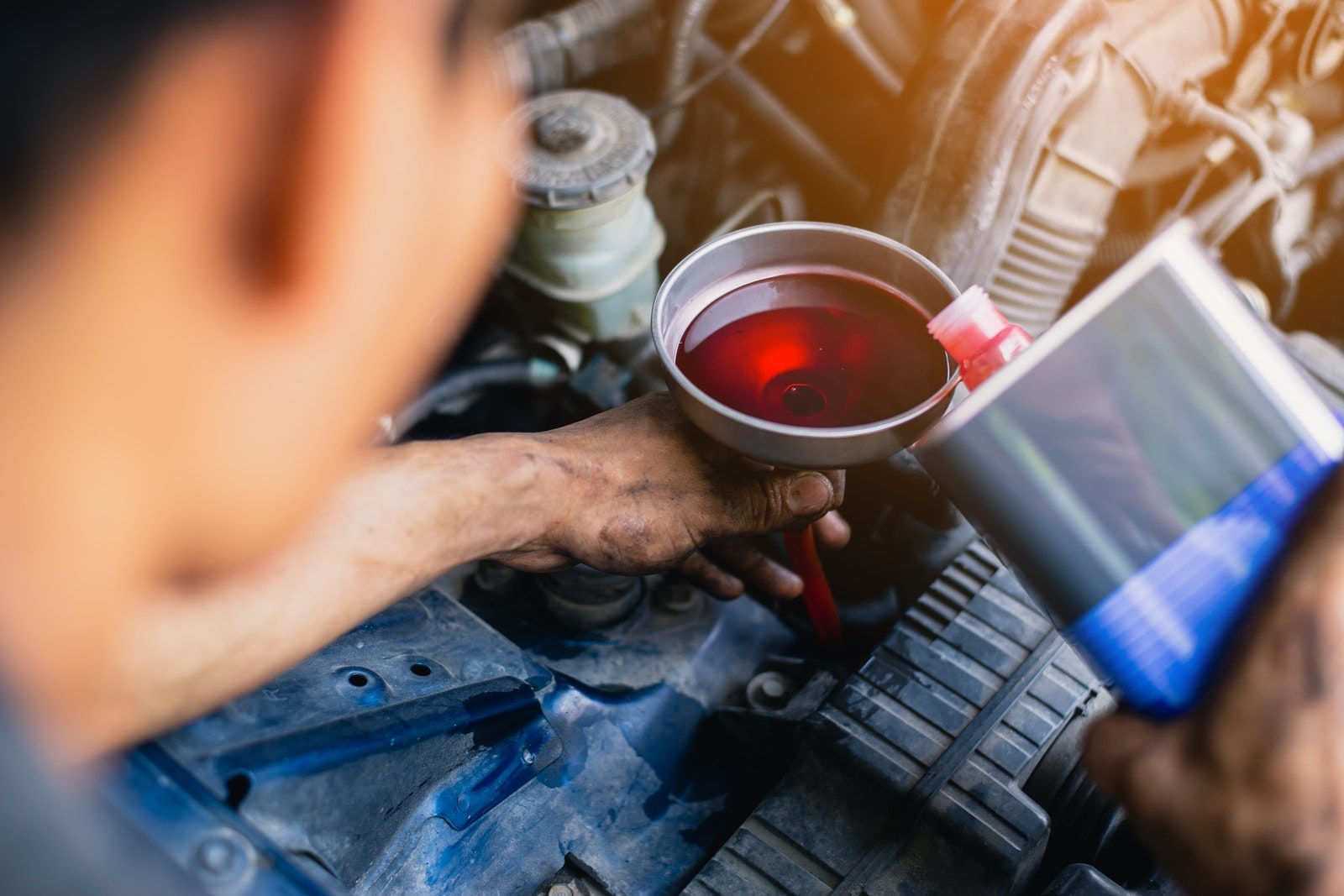
Fresh fluid is typically a bright red or pink color and has a somewhat sweet smell. As it ages, exposure to heat and friction causes it to darken, thin out, and eventually smell burnt. That burnt smell is a red flag, a sign the fluid has broken down past the point of doing its job properly. At that stage, it’s no longer protecting your transmission; it’s just along for the ride while damage accumulates underneath it.
Manual transmissions use fluid differently from automatics, relying less on hydraulic pressure and more on straightforward lubrication between gears. Still, the degradation principle applies to both. Old, contaminated fluid loses viscosity and protective additives regardless of transmission type, and both eventually suffer mechanical consequences if the fluid never gets replaced. Understanding this function makes the rest of the conversation, timing, cost, and consequences much easier to evaluate honestly.
The Truth Behind “Lifetime Fluid” Claims
Automakers love the phrase lifetime fluid, and it sounds reassuring, like your transmission is somehow exempt from the wear and tear affecting every other component under the hood. Reality tells a messier story. That term usually refers to the expected lifetime of the vehicle under specific, often optimistic, driving conditions, not a guarantee that the fluid magically never degrades.
Some manufacturers genuinely design transmissions with longer fluid intervals, occasionally stretching past 100,000 miles under normal circumstances. Others use the term loosely, banking on the fact that most owners sell or trade their vehicle before fluid degradation becomes a visible problem. By the time issues show up, the original owner is often long gone, and the expense lands on whoever bought the car secondhand.
Independent transmission specialists tend to push back hard against blanket lifetime claims, and for good reason: they’re the ones repairing transmissions that failed prematurely because fluid sat unchanged for well over a decade. Mechanics who see failed transmissions daily generally recommend service intervals somewhere between 30,000 and 60,000 miles for most vehicles, regardless of what the sticker on the fluid reservoir claims.
Driving conditions matter enormously here, too. A commuter cruising smooth highway miles in a mild climate puts far less stress on transmission fluid than someone towing a trailer through mountain roads in summer heat or a delivery driver stuck in constant stop-and-go traffic. Manufacturer intervals typically assume ideal conditions that don’t reflect how most people actually drive day to day.
The safest approach treats “lifetime fluid” as a marketing phrase worth verifying independently, not a guarantee to take at face value. Check your owner’s manual, then cross-reference that recommendation against your actual driving habits before assuming you’re in the clear.
Also Read: 10 Reasons Why Your Transmission Fluid Change Is More Critical for Modern 8 Speed Units

Signs Your Transmission Fluid Needs Attention
Serious transmission problems rarely appear without warning. In many cases, your vehicle shows early signs that something is wrong if you know what to look for. One of the first indicators is delayed engagement, where the car hesitates for a moment before moving after you shift into Drive. This delay is often caused by worn or contaminated transmission fluid that can no longer generate the hydraulic pressure needed for smooth operation.
Rough or jerky gear changes also deserve attention. A properly maintained automatic transmission should change gears so smoothly that you barely notice it. If you feel a hard clunk, delayed response, or sudden jolt while the transmission changes gears, the fluid may no longer be providing the lubrication and hydraulic pressure needed for proper operation.
Unusual noises matter just as much as unusual feelings. Whining, humming, or grinding sounds coming from underneath the vehicle, particularly during acceleration or gear changes, often point toward fluid that’s lost its protective viscosity, leaving metal components grinding with less cushion than they need.
Burning smells rank among the most urgent warning signs on this list. Fresh transmission fluid has a mild, slightly sweet odor. A sharp, burnt smell indicates the fluid has broken down from excessive heat exposure, losing its ability to protect internal components effectively.
Fluid color and consistency tell their own story during a simple dipstick check, where available. Healthy fluid looks bright red or pinkish and feels relatively thin. Fluid that’s turned dark brown or black or developed a thick, gritty texture has likely accumulated contaminants and lost much of its protective capability.
Leaking fluid, visible as reddish spots underneath a parked vehicle, signals a separate mechanical issue requiring prompt attention, since low fluid levels alone can cause overheating and premature wear regardless of the fluid’s actual condition.
How Often You Actually Need a Change
There’s no single universal number here, frustrating as that might sound, but there are reliable guidelines depending on your situation. Manufacturer recommendations typically range anywhere from 30,000 miles on the conservative end to over 100,000 miles for vehicles marketed with extended-life fluid claims. Your owner’s manual remains the first and most reliable reference point specific to your exact make and model.
Beyond the manual, driving conditions should heavily influence your actual interval. Regular towing, frequent hauling of heavy cargo, stop-and-go city traffic, or consistently hot climates all accelerate fluid breakdown considerably faster than gentle highway commuting. Many mechanics classify these as “severe” driving conditions, which typically call for service roughly every 30,000 to 50,000 miles regardless of what standard manufacturer guidelines suggest.
Vehicle age and mileage matter beyond the fluid itself. Older transmissions with higher mileage generally benefit from more frequent fluid checks, since accumulated wear inside the system tends to generate more debris and contamination as time goes on compared to a newer unit with tighter tolerances.
The type of transmission plays a role, too. Continuously variable transmissions, increasingly common in modern vehicles, often require specific fluid formulations and sometimes shorter intervals than traditional automatics, since their internal mechanisms operate under different stress patterns entirely.
When genuinely uncertain, a transmission fluid inspection during a routine service appointment costs relatively little and provides real clarity. A quick color and smell check, alongside a level inspection, tells a trained technician plenty about whether your fluid still has useful life left or needs replacing soon. Erring toward caution here almost always costs less than erring toward neglect.
What Happens If You Skip It Entirely
Ignoring transmission fluid doesn’t cause sudden failure most of the time. It causes a slow, expensive decline that often goes unnoticed until the damage becomes severe. Degraded fluid gradually loses its ability to lubricate internal components, meaning metal parts experience increasing friction with every mile driven.
That friction generates heat, and heat accelerates fluid breakdown even further, creating a compounding problem. Clutch packs inside automatic transmissions wear faster under these conditions, leading to slipping, where the engine revs without corresponding acceleration, a clear sign of internal damage already occurring.
Debris and metal shavings accumulate within old fluid too, circulating through the entire system and potentially clogging small passages responsible for precise hydraulic pressure. Once passages become restricted, shifting becomes unpredictable, sometimes harsh, sometimes delayed, sometimes both within the same drive.
Left unaddressed long enough, this deterioration can lead to complete transmission failure, an outcome carrying a genuinely painful repair bill. Rebuilding or replacing a transmission frequently costs between $2,000 and $5,000, depending on the vehicle, occasionally more for luxury or specialty models with complicated gearboxes.
Compare that figure against a routine fluid change, typically costing under $200 at most shops, and the math becomes impossible to ignore. Regular maintenance here isn’t about being overly cautious; it’s about avoiding a repair bill that dwarfs the preventive cost by a factor of ten or more.
DIY Versus Professional Service
Changing transmission fluid yourself is technically possible, though considerably more involved than a standard oil change most home mechanics feel comfortable tackling. The process requires locating the correct drain plug, often trickier to access than an engine’s oil pan, along with sourcing the exact fluid type specified for your particular transmission.
Using the correct transmission fluid is just as important as replacing it. Many drivers assume all automatic transmission fluids are the same, but manufacturers specify different formulations for their transmissions. Filling the system with the wrong type can lead to poor shifting performance and even accelerate wear instead of preventing it. Before buying transmission fluid for a DIY service, always check your owner’s manual to confirm the recommended specification.
Some transmissions include a dipstick for straightforward level checks and simple fluid changes, similar in spirit to engine oil. Others, increasingly common on newer vehicles, are sealed units without a dipstick, requiring specialized tools and lift access to service properly, effectively ruling out most home garage setups entirely.
A full fluid and filter change, versus a simple drain-and-refill, produces meaningfully different results too. Draining alone typically removes somewhere between 40% and 50% of total fluid, since a portion remains trapped in the torque converter. A complete flush, usually performed by professional equipment, removes closer to 100%, offering more thorough contaminant removal.
For anyone uncertain about their mechanical comfort level, professional service remains the safer choice, particularly given how expensive transmission repairs become when something goes wrong. The relatively modest cost difference between DIY and professional service rarely justifies the risk involved in getting it wrong on a component this critical to your vehicle’s operation.
Also Read: 8 Signs Your Transmission Fluid Needs Immediate Attention

Making the Right Call for Your Vehicle
Weighing everything covered here, the smartest approach starts with your owner’s manual, then adjusts based on honest reflection about how you actually drive. Someone towing regularly or living somewhere with brutal summer heat should lean toward shorter intervals regardless of manufacturer optimism. Someone driving gentle highway miles in a mild climate has more flexibility to stretch intervals closer to the manufacturer’s maximums.
Watching for warning signs matters just as much as following a calendar. Rough shifting, unusual noises, burnt smells, or dark fluid all deserve prompt attention rather than being brushed aside until a bigger problem forces the issue. A quick inspection during routine maintenance costs little and provides real peace of mind.
Given the enormous gap between preventive service costs and full transmission repair bills, treating this as optional maintenance rarely makes financial sense. A little attention now protects one of the most expensive components in your entire vehicle, and that’s a trade worth making every time.
