
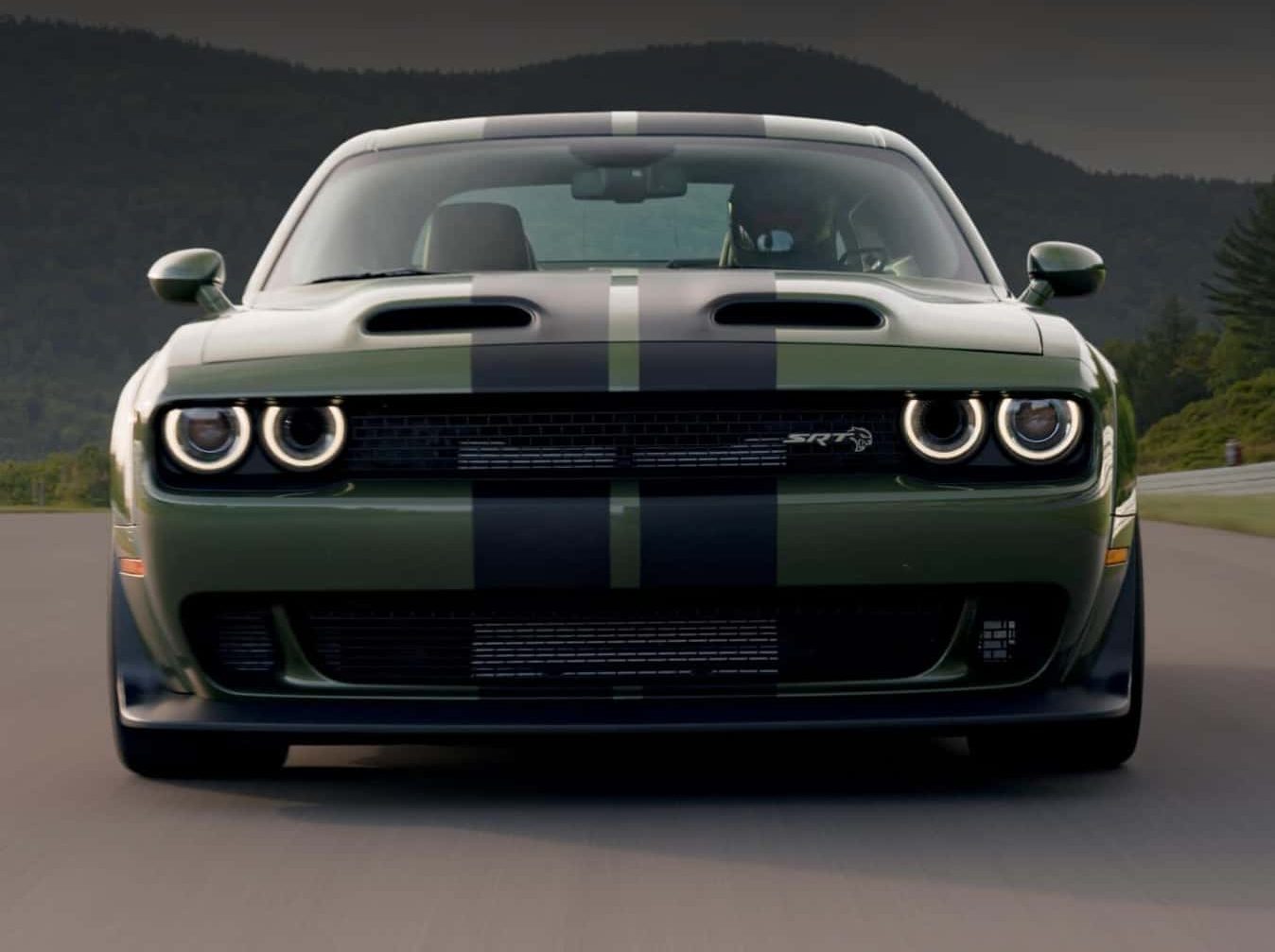
American performance engineering has produced several standout muscle machines, but few nameplates command attention like the Chrysler Hellcat lineup. Built around supercharged HEMI V8 power, these vehicles carry a reputation shaped by raw acceleration, loud exhaust character, and power figures that challenge far more expensive performance cars. What makes this family interesting is not just the horsepower rating, but how Chrysler and Dodge applied the same core engine philosophy across different body styles and driving purposes.
From coupes designed for straight-line aggression to sedans built for everyday road presence, and even SUVs that move with unexpected urgency, the Hellcat badge has expanded far beyond its original coupe identity. Each variant carries its own personality, shaped by weight distribution, drivetrain tuning, cooling capacity, and software calibration. That variation creates a clear ranking opportunity when power output becomes the measuring line.
Instead of treating these machines as simple horsepower machines, it becomes more meaningful to look at how each model applies that power in real conditions. Some versions prioritize stability at high speed. Others lean toward tire-shredding acceleration. A few focus on blending practicality with extreme output in a way that still works for daily driving conditions.
This ranking places eight Chrysler Hellcat variants in order based strictly on factory power output, starting from the lowest rating and moving toward the highest. Each entry reflects a different engineering decision, showing how the same supercharged foundation adapts across multiple platforms.
The result is a lineup that demonstrates how flexible a single performance engine platform can become when applied across coupe, sedan, SUV, and special edition builds.
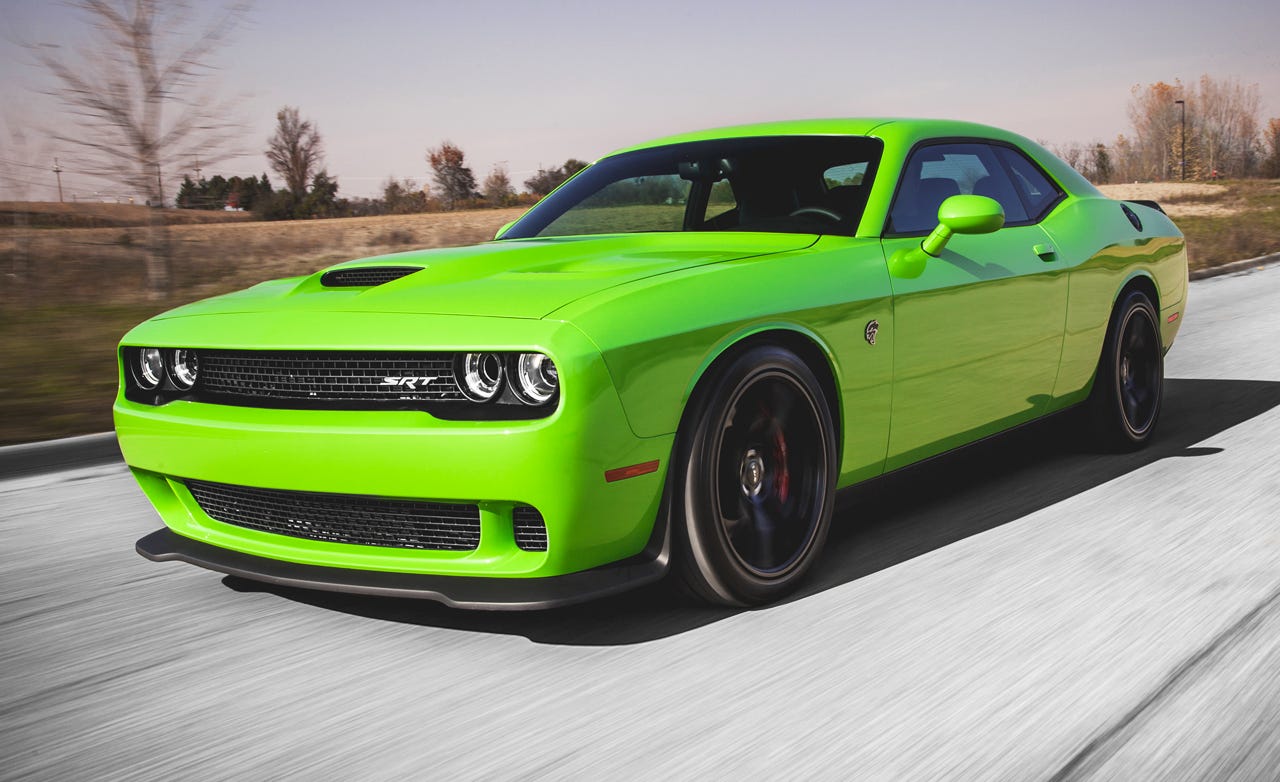
1. Dodge Challenger SRT Hellcat (2015 Standard Coupe)
- Engine: 6.2L Supercharged V8
- Torque: 881 Nm
- Horsepower: 707 hp
- Length: 5027 mm
- Width: 1923 mm
The arrival of the 2015 Dodge Challenger SRT Hellcat marked a turning point for modern American muscle cars, especially within Chrysler performance engineering. At its core sits the 6.2-liter supercharged HEMI V8 engine producing 707 horsepower, a figure that immediately placed it among the strongest factory coupes of its time. This model introduced the Hellcat nameplate into mainstream performance culture, and its output became the baseline for all later variants.
From a structural standpoint, the Challenger platform prioritizes straight-line stability over sharp corner precision. Its long wheelbase and heavy chassis give it a planted feel during acceleration, especially when launch control is engaged. Power delivery comes in a continuous surge once the supercharger builds pressure, creating a forceful forward motion that defines the driving experience.
The rear wheel drive layout ensures that all engine output is directed through the rear axle, demanding careful throttle control during aggressive starts. Cooling systems play an important role in sustaining performance. The large hood scoop and functional air intakes support heat management for the supercharged engine.
Without proper airflow, sustained high-output driving would become difficult due to heat soak. Chrysler engineers addressed this by integrating high-capacity radiators and intercooler systems designed for repeated performance runs. Inside the cabin, the Challenger Hellcat balances modern comfort with performance intent.
The seating position is wide and supportive, allowing the driver to maintain control during acceleration bursts. Digital instrumentation displays performance metrics such as boost pressure and engine temperature, giving the driver insight into mechanical activity.
On public roads, the car behaves with surprising civility when driven gently. However, once throttle input increases, the transformation is immediate. Rear tires can lose traction quickly under full acceleration, especially on lower grip surfaces. That behaviour reinforces the character of the vehicle as a high-output muscle coupe designed for controlled aggression rather than refined handling precision.
This model earns its position as the starting point of the Hellcat hierarchy due to its foundational 707 horsepower output and its role in establishing the performance identity of the entire lineup.
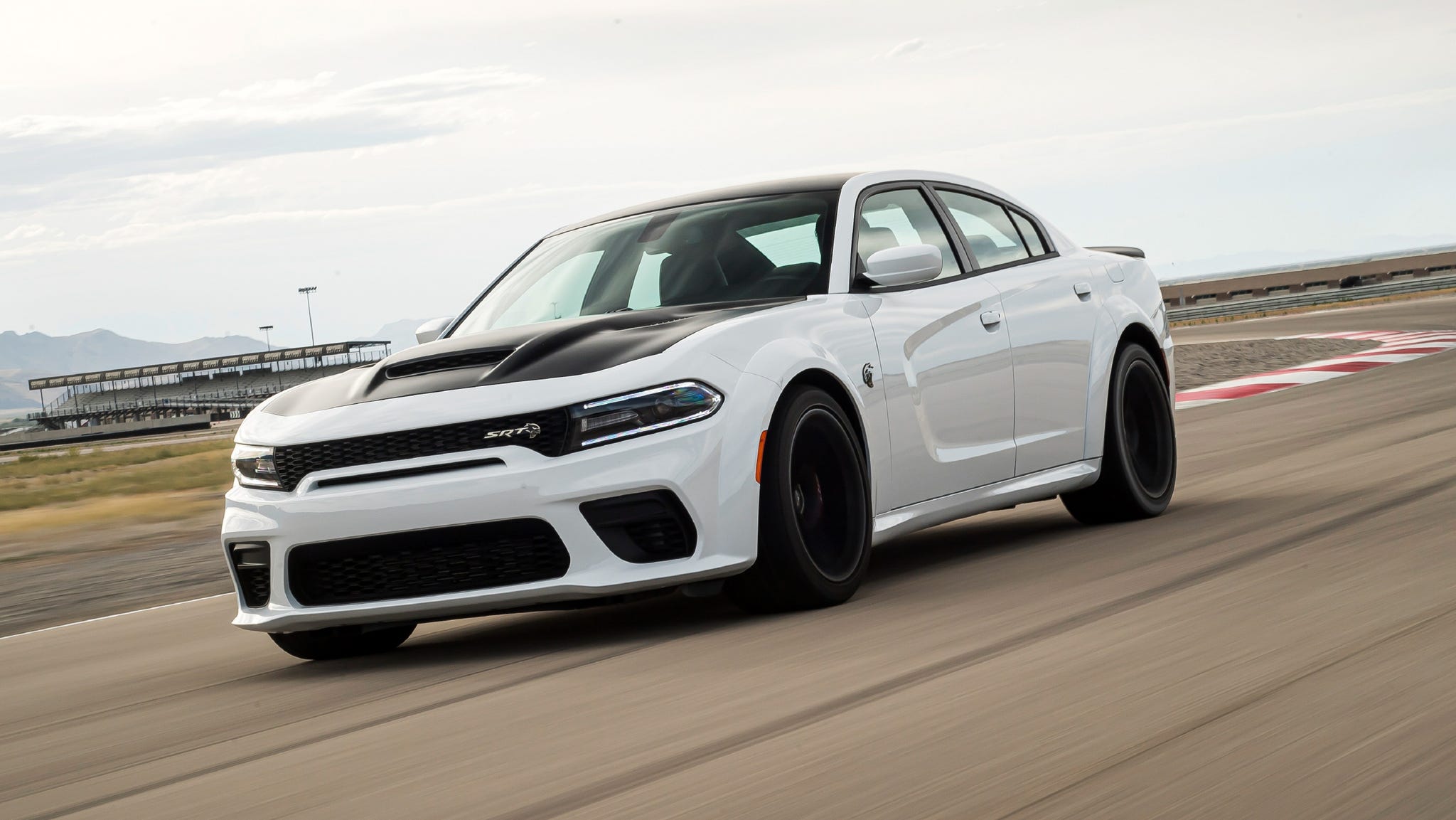
2. Dodge Charger SRT Hellcat (Four-Door Performance Sedan)
- Engine: 6.2L Supercharged V8
- Torque: 881 Nm
- Horsepower: 707 hp
- Length: 5101 mm
- Width: 1905 mm
A four-door sedan producing 707 horsepower from a supercharged engine brings a different interpretation to the Hellcat formula, and the Dodge Charger SRT Hellcat delivers that idea with strong presence. Built on the same 6.2-liter supercharged HEMI platform as the Challenger variant, it carries identical output figures but introduces a longer wheelbase and heavier body structure, which changes how its power feels during real driving conditions.
Unlike the coupe version, the Charger focuses on combining high performance with everyday usability. The extra doors and larger cabin space allow it to carry passengers comfortably while still delivering intense acceleration. Even with added weight, the supercharged V8 provides strong forward motion, pushing the sedan from a standstill into high speeds in a smooth yet forceful surge.
The engine produces a deep, aggressive tone under heavy throttle, while the supercharger adds a sharp mechanical sound that stands out during acceleration. Weight distribution plays a noticeable role in how the Charger behaves on the road. The added mass slightly softens the raw edge seen in the coupe, especially during launch.
This creates a more controlled takeoff, particularly when traction systems are active. Rear wheel drive setup keeps the driving experience rooted in traditional muscle car behavior, sending all power directly to the rear wheels and demanding careful throttle input when accelerating hard.
Cooling and airflow systems are designed to handle repeated high-output driving. Larger front air openings and functional vents help manage engine temperature during extended performance use. This becomes important when the car is driven aggressively for longer periods, where heat buildup can affect consistency.
Inside, the Charger Hellcat offers a more spacious and comfortable cabin compared to the coupe. Rear passengers benefit from generous legroom, while the front area keeps a driver-centered layout. Digital displays provide live performance data such as boost levels, engine load, and temperature readings, keeping the driver informed during spirited driving.
Driving behavior changes depending on the selected mode. In relaxed settings, the car feels like a smooth and comfortable sedan suitable for daily travel and highway cruising. When performance mode is activated, throttle response becomes sharper, gear changes feel quicker, and acceleration becomes far more immediate, turning the sedan into a serious high-output machine.
This variant earns its position by matching the Challenger’s horsepower output while offering a more practical sedan layout with a different driving character.
Also Read: 10 Used Dodge SUVs With Proven Long-Term Reliability
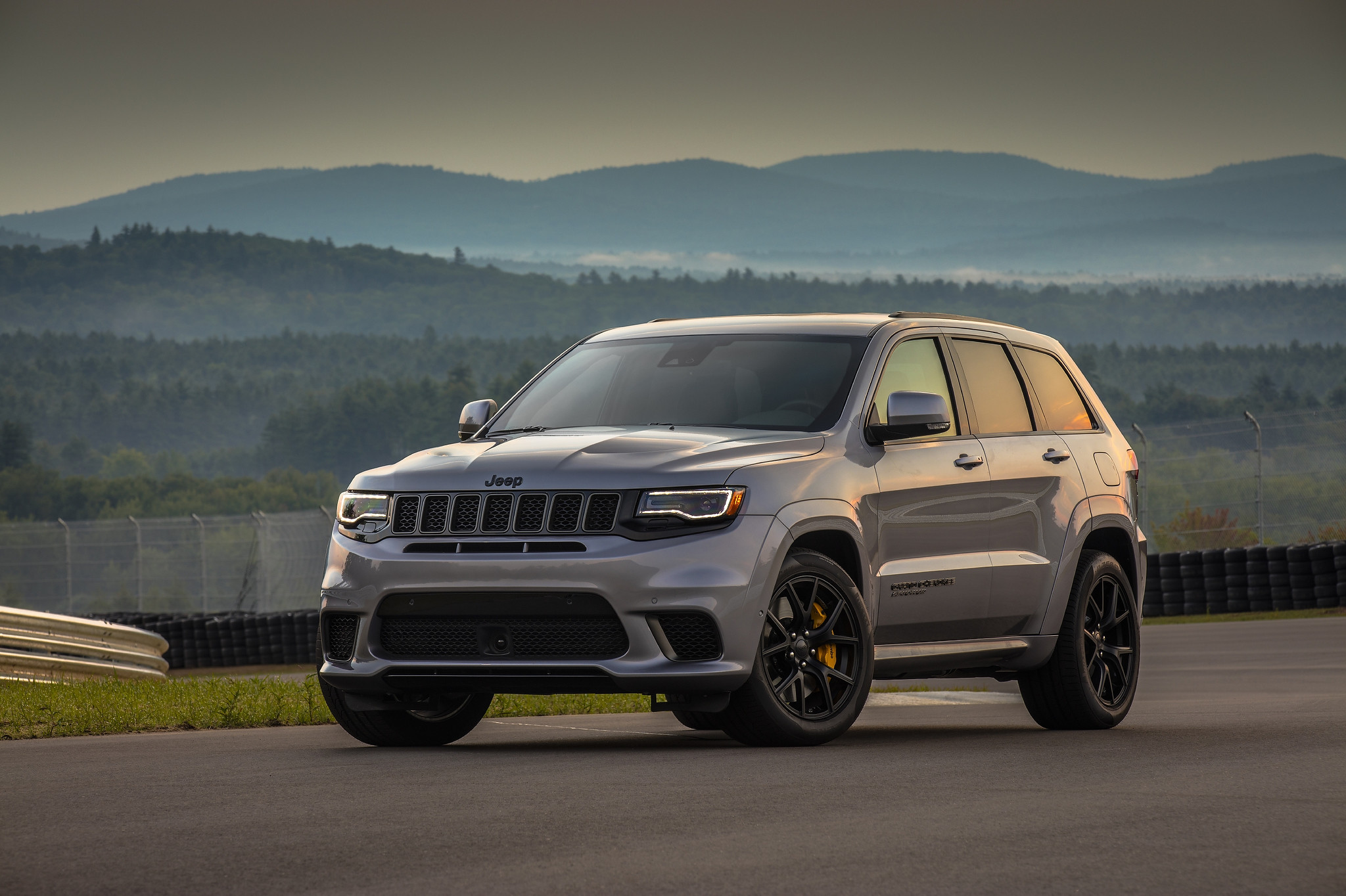
3. Jeep Grand Cherokee Trackhawk (High Performance SUV Variant)
- Engine: 6.2L Supercharged V8
- Torque: 868 Nm
- Horsepower: 707 hp
- Length: 4822 mm
- Width: 1943 mm
A performance SUV with supercharged muscle car power creates a unique segment within Chrysler engineering, and the Jeep Grand Cherokee Trackhawk represents that concept with remarkable execution. Powered by the same 6.2-liter supercharged HEMI V8 engine, it produces 707 horsepower, placing it alongside the Challenger and Charger Hellcat variants in raw output terms.
The main difference lies in the vehicle’s purpose and weight distribution. The Trackhawk carries a full SUV body structure, an All Wheel Drive system, and reinforced chassis components designed for utility and performance combined. Despite increased mass, acceleration remains extremely strong due to the traction advantages provided by the All Wheel Drive system. Power is distributed across all four wheels, allowing the vehicle to launch with reduced wheel spin compared to Rear Wheel Drive Hellcat models.
Supercharger response remains immediate, delivering torque across a wide range of engine speeds. This creates a strong forward surge that feels unusual for a vehicle of its size and shape. The SUV body rises slightly under acceleration load but maintains stability due to electronic traction systems and suspension calibration designed for performance driving conditions.
Cooling requirements are more demanding in this configuration due to vehicle weight and drivetrain complications. Engineers integrated enhanced cooling channels and airflow management systems to maintain consistent engine performance during repeated acceleration cycles. Without these systems, sustained output would place thermal stress on mechanical components.
Interior space reflects a luxury SUV design combined with performance instrumentation. Seating is upright and supportive, offering visibility that suits both road travel and high-speed driving. Digital displays present performance data, including torque distribution and engine output metrics.
Driving behavior varies based on mode selection. In standard driving mode, the Trackhawk functions as a comfortable SUV suitable for daily travel. In performance mode, throttle response sharpens, suspension stiffens, and power delivery becomes more aggressive, transforming the vehicle into a high-speed utility machine.
This model earns its ranking position due to matching 707 horsepower output while introducing All Wheel Drive traction and SUV practicality within the Hellcat performance family.
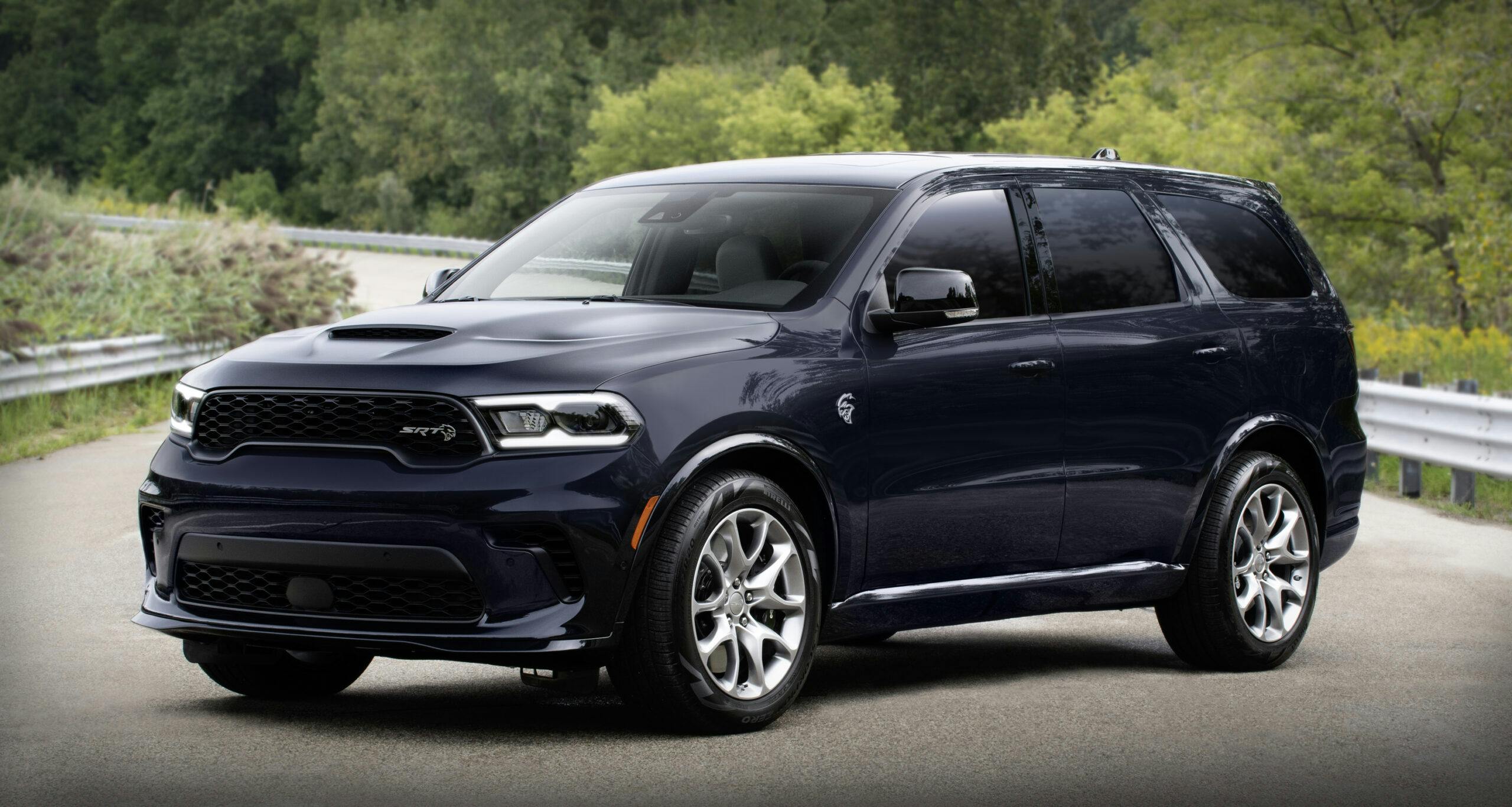
4. Dodge Durango SRT Hellcat (Limited Production Performance SUV)
- Engine: 6.2L Supercharged V8
- Torque: 874 Nm
- Horsepower: 710 hp
- Length: 5101 mm
- Width: 2018 mm
The Dodge Durango SRT Hellcat brings supercharged performance into a three-row SUV format, delivering 710 horsepower from the familiar 6.2-liter supercharged HEMI V8 engine. This makes it one of the most powerful production SUVs ever offered under the Chrysler performance umbrella. Unlike coupe or sedan variants, this model prioritizes utility without reducing the intensity of its power delivery.
Power output sits slightly above the standard Hellcat variants due to revised tuning for SUV application. The engine produces strong torque across a wide range of engine speeds, allowing the Durango to move its heavier frame with surprising urgency. All Wheel Drive traction plays a central role in managing this output, distributing power across all four wheels to reduce wheel slip during acceleration.
Vehicle weight is higher due to its SUV structure and family-oriented design. Despite this, acceleration remains strong, with the supercharged engine providing immediate response once throttle input increases. The vehicle feels stable during straight-line acceleration, supported by a reinforced chassis and suspension system designed to handle both performance and passenger comfort.
Cooling systems receive heavy attention in this configuration. Larger air intakes and improved thermal management components allow the engine to maintain stable performance during extended driving sessions. This becomes important when the vehicle is used in performance mode, where engine load increases.
Suspension tuning balances comfort and control. Unlike coupe-based Hellcat models, the Durango SRT Hellcat must support passenger comfort across multiple seating rows. Adaptive damping systems adjust stiffness based on driving conditions, providing smoother ride quality during normal travel and firmer response during aggressive driving.
Interior layout reflects its SUV purpose. Three rows of seating allow up to seven passengers, while the front cabin provides a driver-focused interface with performance displays. Digital clusters present real-time data such as engine output, torque distribution, and temperature readings. Despite its family-oriented structure, the cabin retains a strong performance identity.
On-road behavior changes depending on driving mode. In normal settings, the SUV behaves like a comfortable family vehicle suitable for long-distance travel. When performance mode is selected, throttle response sharpens, gear movements become more aggressive, and acceleration becomes forceful despite the vehicle’s size.
This model earns its position due to its 710-horsepower rating combined with SUV practicality and All Wheel Drive traction, making it one of the most versatile Hellcat-powered vehicles.
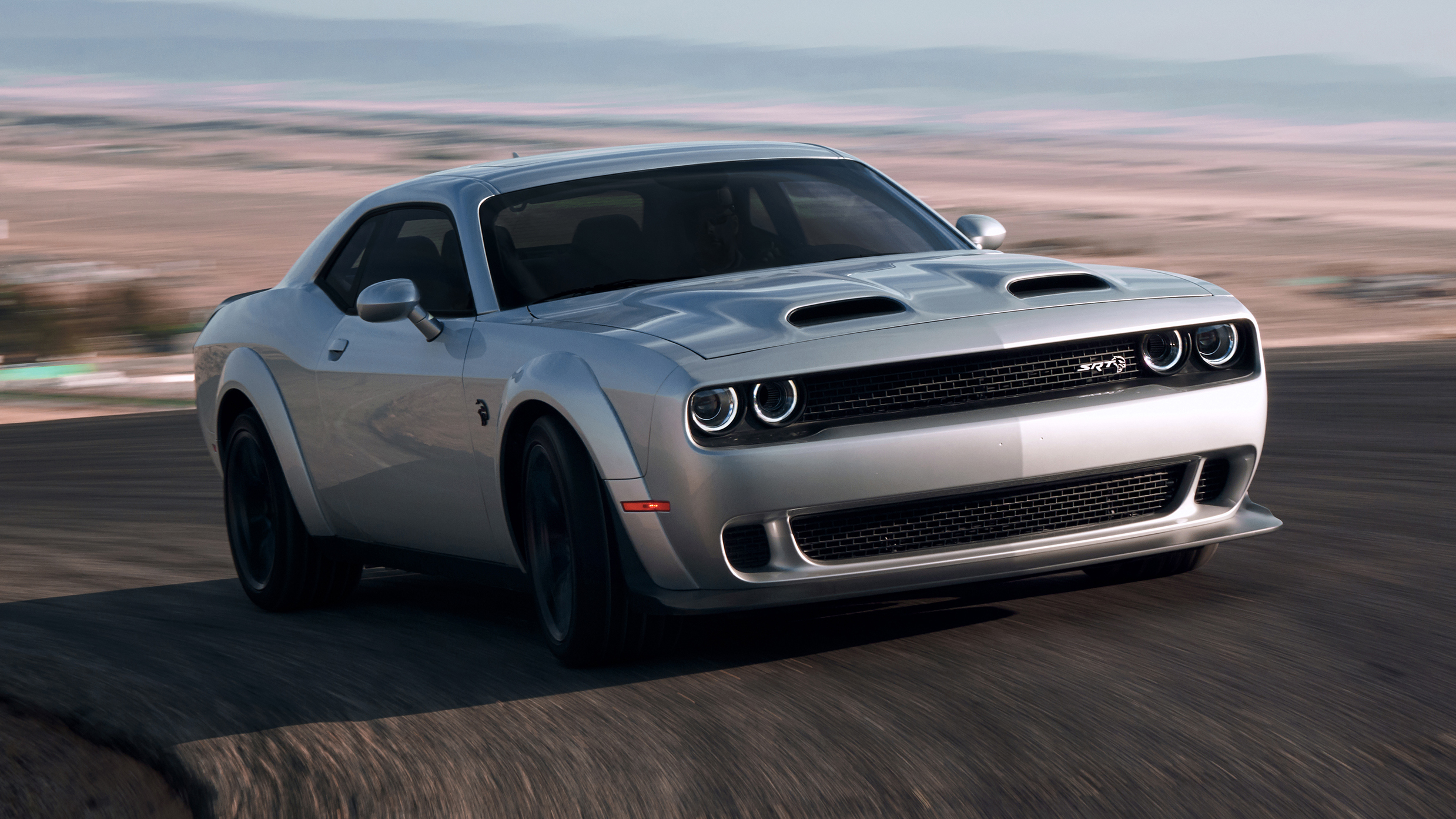
5. Dodge Challenger SRT Hellcat Redeye (High Output Coupe Upgrade)
- Engine: 6.2L Supercharged V8
- Torque: 959 Nm
- Horsepower: 797 hp
- Length: 5027 mm
- Width: 1923 mm
The Dodge Challenger SRT Hellcat Redeye represents a refined evolution of the original Hellcat coupe, built around the same 6.2-liter supercharged HEMI architecture but tuned for higher output delivery. Factory rating rises to 797 horsepower, placing it well above the standard Hellcat variant and introducing a more aggressive performance profile.
Chrysler engineers achieved this increase through internal engine reinforcement, upgraded supercharger components, and revised calibration settings that support higher boost pressure. Acceleration behavior becomes more forceful compared to the base model. Once throttle input is applied, boost builds quickly and delivers a sustained surge of power that continues through higher engine speeds.
The Rear Wheel Drive layout remains unchanged, meaning traction management becomes an important part of the driving experience. Wider tires and performance-oriented suspension tuning help manage the additional output, especially during hard launches.
Cooling capacity receives attention in this version. A functional hood design with a center air intake allows improved airflow to the supercharger system, reducing heat buildup during extended performance use. Additional cooling systems assist engine stability when the vehicle is operated under repeated acceleration cycles. This allows the Redeye to maintain higher output levels without rapid thermal reduction in performance.
Transmission calibration is adjusted to handle increased torque delivery. Gear changes occur with a more aggressive response in performance mode, reducing delay between shifts and maintaining forward momentum during acceleration runs. The drivetrain remains focused on durability under high-output conditions, supporting the engine’s increased power ceiling.
Interior layout stays consistent with the Challenger platform, offering a wide cabin with performance-focused instrumentation. Display clusters provide real-time engine data such as boost levels, engine temperature, and performance mode status. Seating remains supportive during high acceleration loads, helping the driver maintain control during rapid movement.
On-road behavior reflects its purpose clearly. Gentle driving produces a comfortable cruising experience, while increased throttle input results in immediate and intense forward motion. Tire grip becomes a limiting factor under full acceleration, especially on low-traction surfaces. This reinforces the Redeye’s position as a performance-focused coupe designed for controlled power application.
This variant earns its position due to its 797-horsepower output and its role as a stronger evolution of the original Hellcat coupe platform.
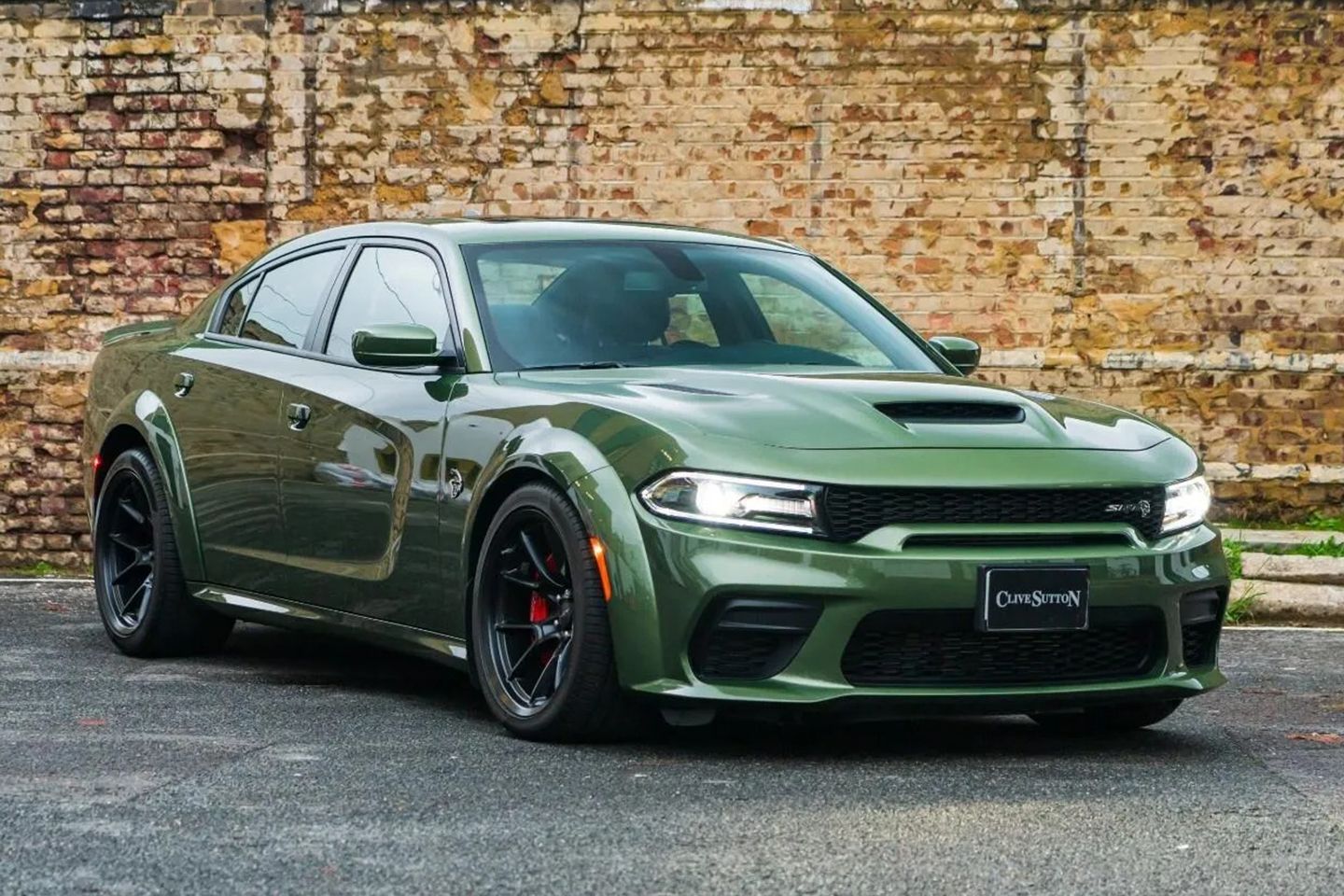
6. Dodge Charger SRT Hellcat Redeye (Super Sedan High Output Version)
- Engine: 6.2L Supercharged V8
- Torque: 959 Nm
- Horsepower: 797 hp
- Length: 5101 mm
- Width: 1905 mm
The Dodge Charger SRT Hellcat Redeye brings high-output supercharged engineering into a four-door sedan layout, delivering 797 horsepower while maintaining a practical structure suited for everyday passenger use. Built around the 6.2-liter supercharged HEMI engine shared with its coupe counterpart, this version adds extra weight due to its larger body and extended cabin space, yet it still retains strong acceleration capability through refined tuning and drivetrain calibration designed to manage the added mass.
Power delivery feels slightly more measured compared to the coupe version, mainly because of the sedan’s increased weight and longer body structure. Even so, performance remains intense under full throttle conditions. The supercharger provides an immediate boost response, pushing the vehicle forward with strong force even at highway speeds.
Rear wheel drive layout continues to define its character, which means careful throttle control is required during aggressive launches to manage traction effectively. Chassis reinforcement supports the elevated output level, helping the sedan maintain structural stability during hard acceleration. Suspension tuning is adjusted to balance weight distribution while preserving control during rapid movement.
Adaptive damping systems assist in controlling body motion during cornering and high-speed travel, allowing the sedan to stay composed under demanding driving conditions. Brake systems are upgraded to handle the increased kinetic energy generated by higher speeds and heavier mass, ensuring consistent stopping performance.
Cooling systems are enhanced in a similar manner to the coupe Redeye, with larger air intake openings and improved airflow channels that help regulate engine temperature during extended high-output operation. These improvements allow the sedan to sustain consistent performance during repeated acceleration runs without excessive heat buildup affecting output stability.
Inside the cabin, the Charger Redeye combines performance-focused instrumentation with passenger comfort. Front seats offer strong support during acceleration, helping the driver maintain control under forceful throttle application, while the rear seats provide usable space for passengers. Digital displays present live performance data such as engine output, temperature readings, and system status, reinforcing the vehicle’s performance identity without sacrificing usability.
Driving behavior changes depending on the selected drive mode. In normal settings, the sedan operates like a comfortable four-door vehicle suitable for daily commuting and long-distance travel. When performance mode is activated, throttle response becomes sharper, gear changes feel quicker, and acceleration becomes far more aggressive, transforming the sedan into a high-output performance machine.
This model ranks above the standard Charger Hellcat due to its higher horsepower rating and more refined performance tuning, while still maintaining the practicality expected from a full-size sedan.
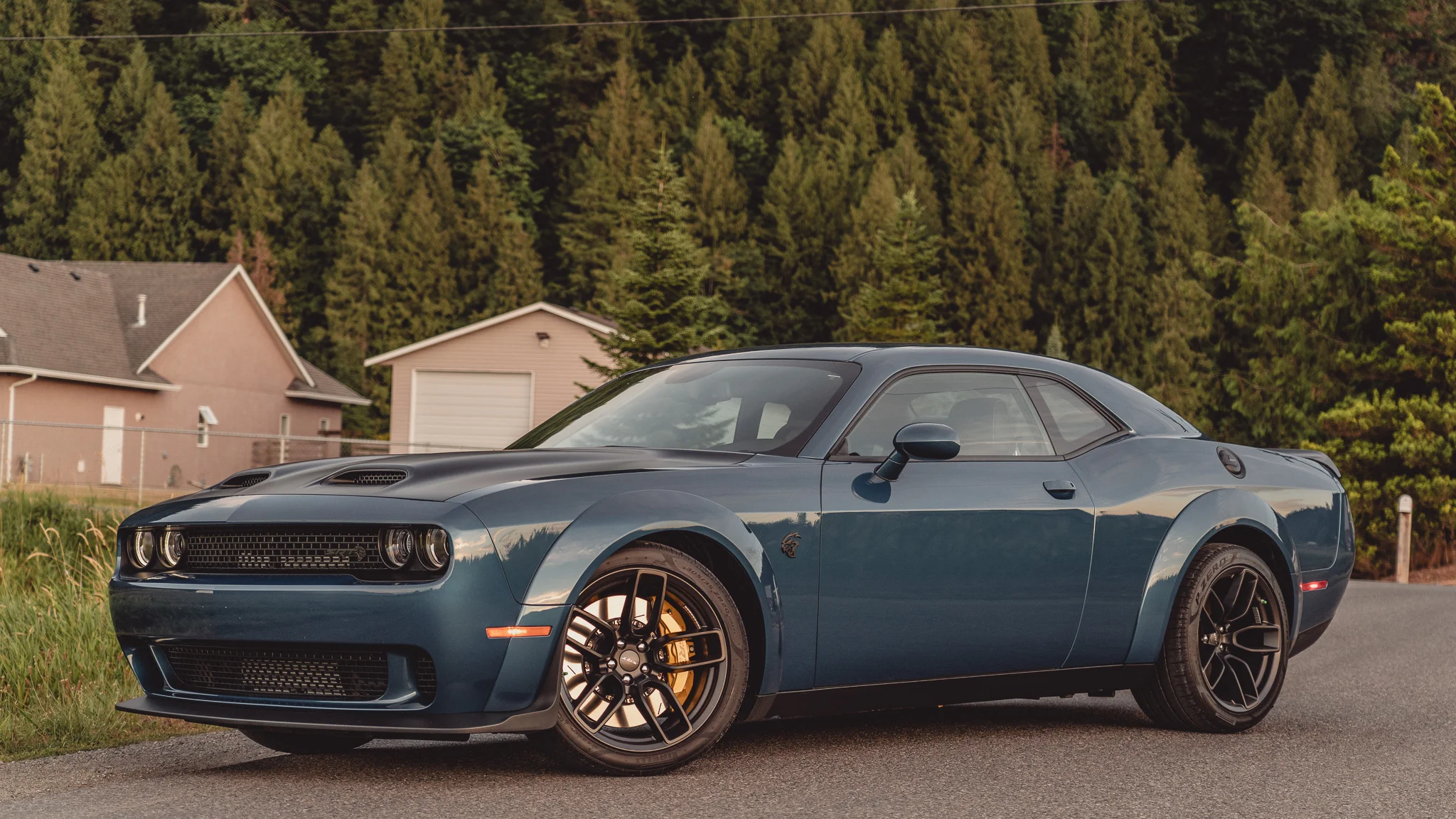
7. Dodge Challenger SRT Hellcat Redeye Widebody (Track-Oriented Coupe Variant)
- Engine: 6.2L Supercharged V8
- Torque: 959 Nm
- Horsepower: 797 hp
- Length: 5027 mm
- Width: 1989 mm
The Dodge Challenger SRT Hellcat Redeye Widebody builds upon the high-output Redeye platform by integrating a wider stance and improved tire contact system designed for better traction control. Powered by the same 797-horsepower supercharged HEMI engine, this variant focuses on improving stability and road grip rather than increasing raw output.
Widebody engineering expands the fender structure, allowing the use of wider tires that improve traction during acceleration and cornering. This adjustment becomes important when managing the high torque output produced by the supercharged engine. Increased tire contact patch allows more effective power transfer to the road surface, reducing wheel slip during aggressive launches.
Suspension geometry is adjusted to complement the wider stance. Enhanced damping systems and revised alignment settings improve vehicle stability during high-speed driving conditions. Body roll is reduced compared to standard body variants, allowing more controlled handling during directional changes. Steering response remains heavy and stable, consistent with the Challenger platform’s performance identity.
Cooling improvements mirror other Redeye configurations, with functional air intake systems supporting engine temperature regulation. The widebody design also assists airflow distribution around the wheel arches, reducing turbulence at higher speeds.
Interior design remains consistent with the Challenger family. The cabin features performance-oriented displays that provide engine and system data in real time. Seating is designed to maintain driver stability during acceleration runs, especially under high torque conditions. Rear seating space remains available, supporting the coupe’s grand touring capability.
Driving experience becomes more composed compared to narrower body variants. Acceleration remains strong due to identical engine output, but improved traction allows more efficient power application. This results in cleaner launches and improved stability during high-speed driving sessions.
This variant holds its position in the ranking due to its 797-horsepower output combined with enhanced traction control and stability improvements introduced by the widebody design.
Also Read: 9 Classic Dodge Muscle Cars That Won’t Break the Bank
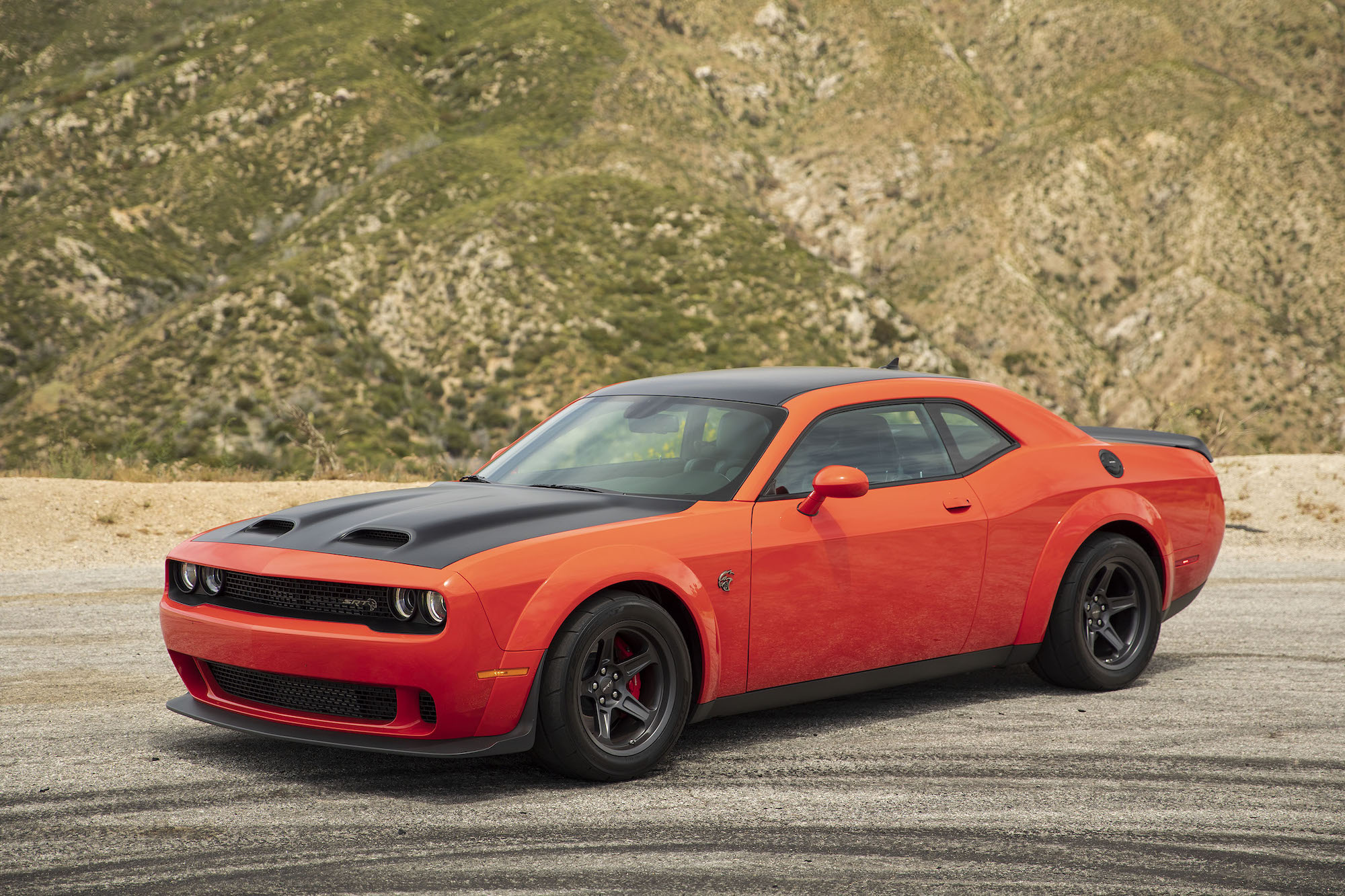
8. Dodge Challenger SRT Super Stock (Highest Output Drag Special Coupe)
- Engine: 6.2L Supercharged V8
- Torque: 972 Nm
- Horsepower: 807 hp
- Length: 5027 mm
- Width: 1923 mm
The Dodge Challenger SRT Super Stock stands at the top of Chrysler Hellcat variant performance output, delivering 807 horsepower from its 6.2-liter supercharged HEMI V8 engine. Designed with drag racing intent in mind, this model pushes the limits of factory-engineered acceleration within the Challenger platform.
Power delivery is optimized for straight-line performance. The engine produces extreme torque levels that allow rapid acceleration from standstill, especially when equipped with drag-oriented tires. The supercharger system is tuned for maximum boost efficiency, delivering immediate and sustained power output across a wide portion of the engine range.
Drivetrain configuration remains rear wheel drive, but traction management systems are carefully calibrated to support controlled launches. Drag radial tires play a major role in transferring power to the ground, reducing wheel spin during full throttle starts. Line lock and launch control systems assist in preparing the vehicle for performance runs.
Chassis tuning is focused on stability during acceleration rather than cornering agility. Suspension components are adjusted to move weight toward the rear during launch, improving traction on the driven wheels. This setup allows the vehicle to maintain forward stability under extreme torque conditions.
Cooling systems are engineered for high load performance. Functional air intake systems, hood vents, and upgraded intercooling components ensure that engine temperatures remain manageable during repeated acceleration attempts. This supports consistent performance during drag strip use.
Interior design remains performance-focused but simplified. Seating supports driver stability during hard launches, while instrumentation displays performance metrics such as boost levels, engine temperature, and acceleration data. Rear seating remains present but secondary to performance purposes.
Driving experience is intense under full acceleration. Once the engine reaches peak boost, the vehicle surges forward with rapid force that defines its drag-oriented nature. Steering input remains minimal during straight-line runs, as the focus is entirely on acceleration efficiency.
This model earns the highest position in the ranking due to its 807 horsepower output, making it the most powerful factory Hellcat variant in the Chrysler lineup.
