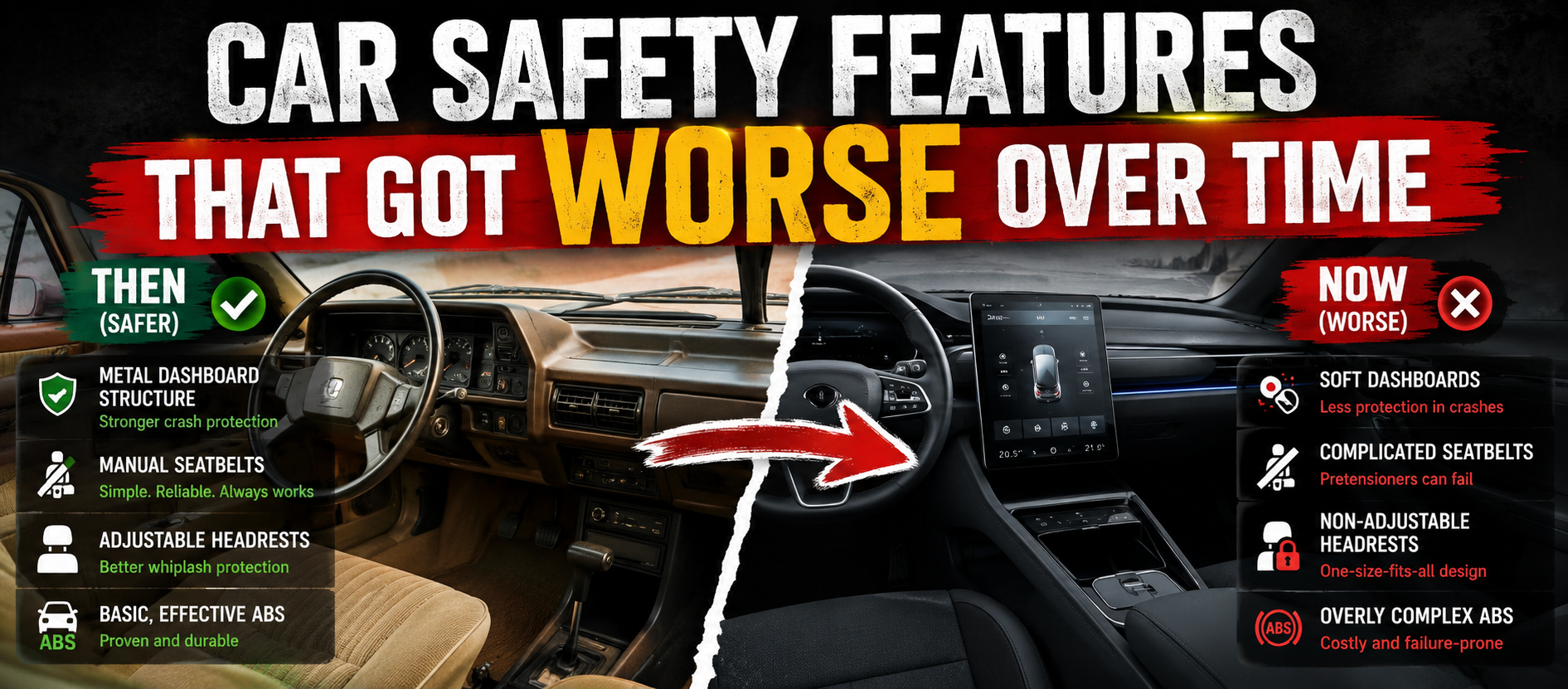
For over a century, automotive safety advanced along a predictable, linear path of physical improvement. The introduction of laminated safety glass, three-point seatbelts, crumple zones, and hydraulic anti-lock brakes shared a common trait: they functioned transparently in the background, requiring zero conscious management from the driver while fundamentally increasing survival rates. However, the modern era of automotive design has flipped this paradigm.
In a rush to satisfy complex global crash-test mandates and software-driven marketing narratives, engineering teams have increasingly automated the driving experience.
The tragic irony of the modern showroom is that features explicitly labelled as “safety advancements” frequently achieve the exact opposite outcome.
By replacing intuitive, muscle-memory mechanics with digital menus, capacitive touch surfaces, and unpredictable automated interventions, carmakers have introduced an unprecedented level of cognitive overload into the cabin.
Drivers are no longer simply scanning the road ahead. They contend with intrusive steering corrections while also searching through layered menus just to clear a fogged windshield. At the same time they must manage large structural blind spots. Safety, rather than remaining a passive protective layer, has become an active source of distraction and operational frustration.
The degradation of modern automotive ergonomics is directly linked to the pursuit of the coveted five-star crash rating. Organizations like the National Highway Traffic Safety Administration (NHTSA) and the Insurance Institute for Highway Safety (IIHS) have updated their testing protocols to emphasize roof-crush resistance and severe side-impact mitigation.
To survive these violent testing parameters without cabin intrusion, manufacturers were forced to drastically alter structural architecture.
The result is a generation of vehicles featuring exceptionally thick roof pillars, reinforced door panels, and high waistlines. While these structural reinforcements protect occupants during a severe rollover or T-bone collision, they severely compromise everyday visibility.
Drivers are left looking out of what resembles a armored bank vault, completely blind to pedestrians, cyclists, and smaller vehicles in tight urban environments.
To offset the blind spots created by these thick pillars, carmakers turned to a digital band-aid: Advanced Driver Assistance Systems (ADAS). Instead of engineering outward visibility into the chassis, vehicles are now wrapped in radars, ultrasonic sensors, and cameras.
This shift from physical visibility to digital monitoring created a secondary hazard: alert fatigue. The modern driver is constantly bombarded by a chorus of chimes, flashing lights, and vibrating surfaces, causing many to deactivate these lifesaving technologies out of pure frustration.
ALSO READ: 7 Common Factors That Cause Car Safety Sensors to Give False Alarms
1. Thickened A-Pillars: The Death of Outward Visibility
The pursuit of structural rigidity and roof-crush standards transformed the modern sports coupe from an open greenhouse into an ergonomic bunker. The 2024 Chevrolet Camaro LT1 represents the absolute extreme of this compromise.
To guarantee the vehicle could withstand severe rollover forces without collapsing, engineers significantly widened the A-pillars (the structural supports flanking the windshield) and raised the beltline to shoulder height.
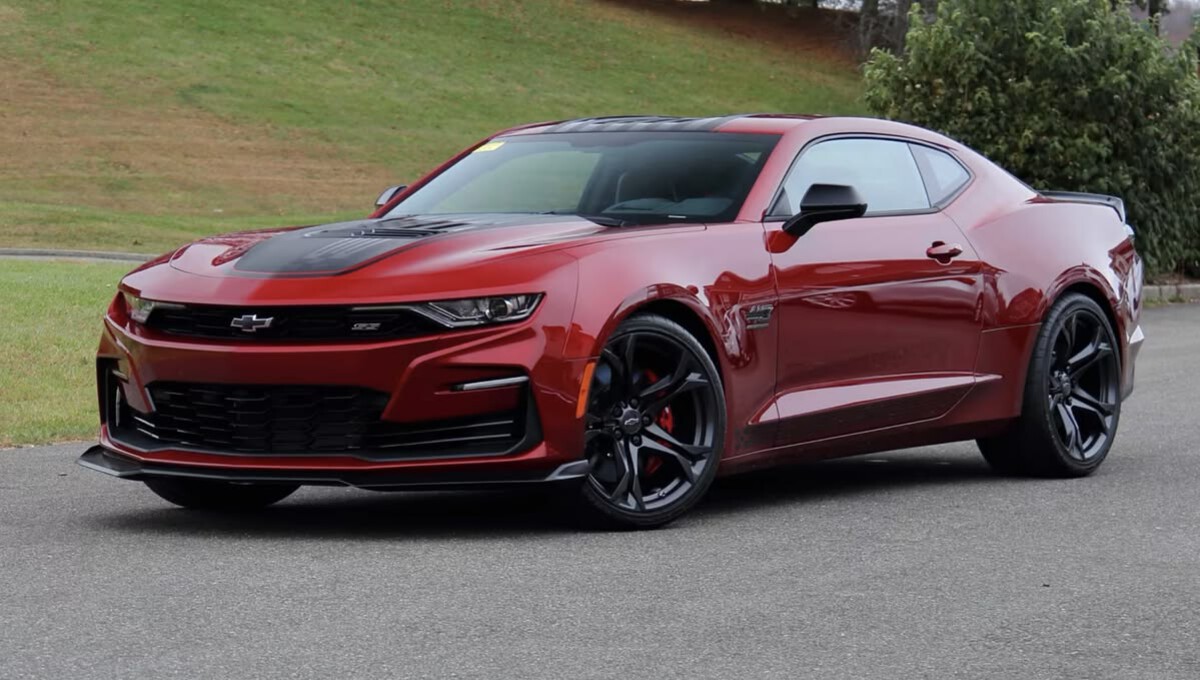
In real-world driving, these massive structural pillars create a severe blind spot at forward-diagonal intersections. When turning left, an entire oncoming vehicle or a pedestrian in a crosswalk can be completely obscured behind the pillar’s footprint.
Drivers are forced to crane their necks forward and lean over the steering wheel just to verify the road is clear, converting what should be a subconscious glance into a clumsy physical maneuver.
By over-engineering the chassis to protect occupants during an accident, the vehicle actively increases the likelihood of a low-speed pedestrian collision.
2. Touchscreen Defroster Controls: Digging for Basic Visibility
For decades, clearing a flash-fogged windshield required a simple, blind reach to a physical climate control panel. A driver could twist a mechanical dial all the way to the right to activate maximum defrost without ever taking their eyes off the road.
The integration of the MIB4 infotainment ecosystem in the 2025 Volkswagen Golf GTI (Mk8.5) illustrates how digitizing this critical safety function severely compromises driver focus.
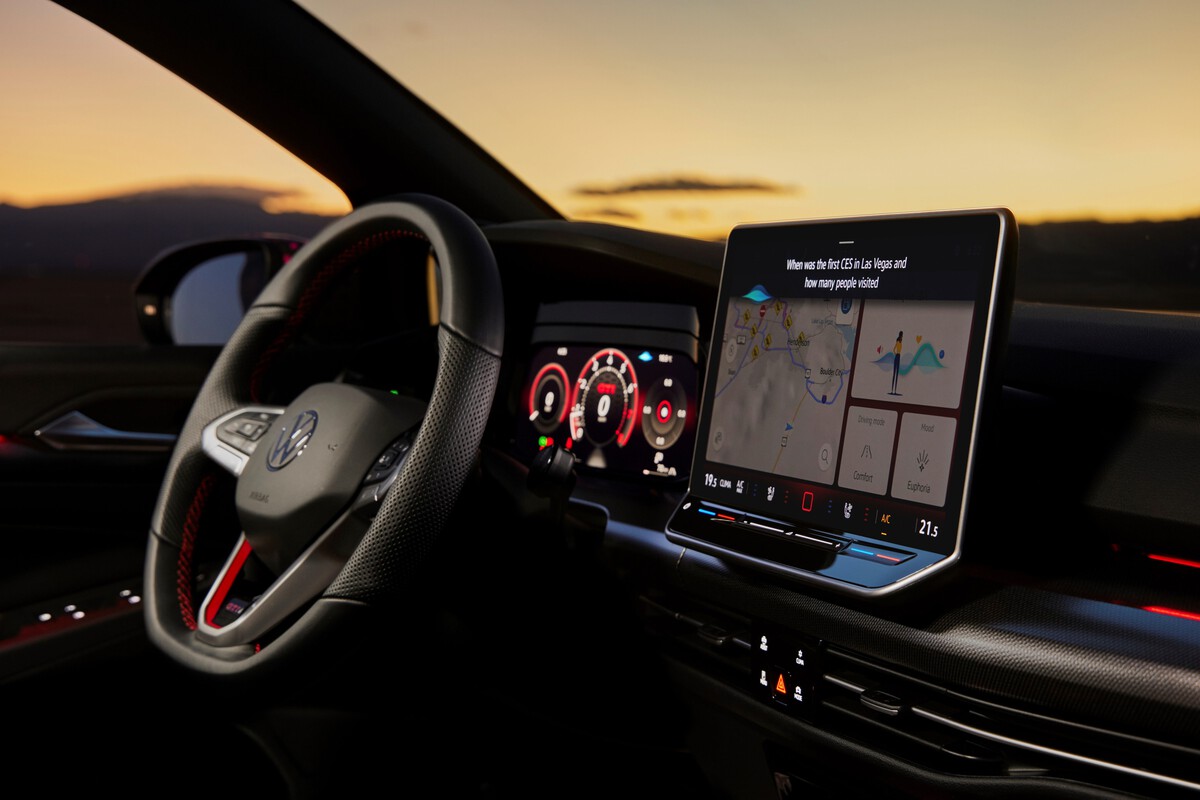
In the Golf GTI, the physical buttons for the front and rear defrosters were removed and placed inside a digital climate menu on the central touchscreen.
When a sudden temperature differential fogs the windshield, the driver must look down at the display, locate the “Clima” menu, and tap the digital icon to clear the glass. At highway speeds, taking your eyes off the road for even three seconds to understand an infotainment menu means travelling blind for nearly the length of a football field.
According to research published by the AAA Foundation for Traffic Safety, complex touchscreen interactions can distract a driver for up to 40 seconds, transforming a basic environmental adjustment into a high-risk operational hazard.
3. Intrusive Lane-Keep Assist: Fighting the Steering Rack
Lane-Keep Assist (LKA) and Lane Centering systems were developed to prevent catastrophic run-off-road and head-on collisions caused by driver micro-sleep or distraction.
However, the calibration of these systems in vehicles like the 2024 Subaru Outback Wilderness, which relies heavily on the dual-camera EyeSight system, frequently degrades into an unpredictable wrestling match between the driver and the steering rack.
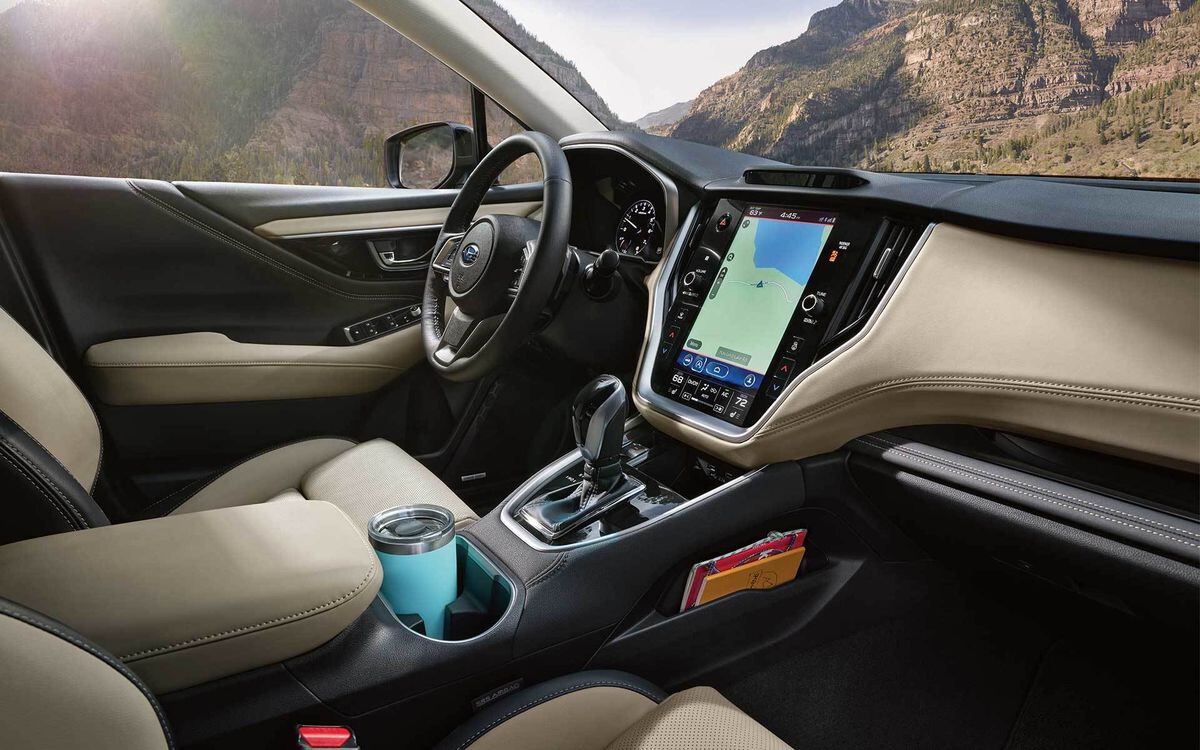
The core vulnerability lies in the system’s inability to consistently interpret complex real-world road environments. In construction zones with conflicting temporary lane markings, on roads with deep potholes, or when the driver steers wide to safely pass a cyclist on the shoulder, the EyeSight system can misread intentional steering inputs as unintended lane drift.
The electric power steering motor then applies an immediate, jerky counter-torque to pull the vehicle back into the center of the perceived lane. This unexpected steering feedback can startle the driver, occasionally provoking an over-correction that compromises vehicle stability on slick or loose surfaces.
4. Digital Side Mirrors: Misjudging Depth and Distance
The transition from physical glass mirrors to digital camera-based side mirrors represents a clear instance of aerodynamic efficiency superseding human spatial awareness. Available in global markets on the 2024 Audi Q8 e-tron, the Virtual Exterior Mirrors replace traditional glass with slim door-mounted camera stalks that project live video feeds onto high-contrast OLED displays positioned inside the door panels.
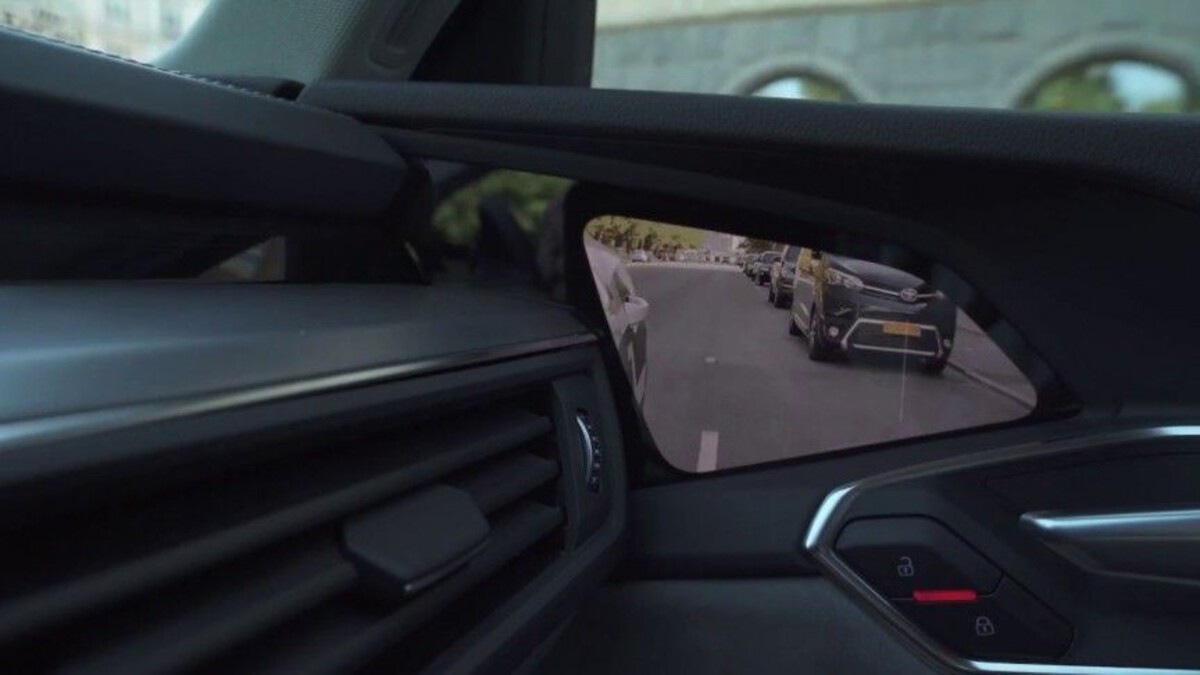
While this design shaves crucial drag points off the SUV’s aerodynamic profile, it disrupts natural human depth perception. A traditional glass mirror allows the driver’s eyes to utilize stereoscopic vision, instantly calculating the approach speed and distance of trailing vehicles. The OLED screens inside the Q8 e-tron project a flat, two-dimensional image.
When glancing down before a high-speed lane change, the driver’s brain must actively translate a 2D rendering into a 3D spatial layout. Furthermore, during heavy rainstorms or nighttime driving, glare on the camera lens or pixelation on the internal screen can obscure trailing vehicles, rendering a critical safety monitor highly unreliable.
ALSO READ: 5 Aftermarket Car Safety Upgrades That Work vs 5 Gimmicky Accessories
5. Cap-Less Fuel Fillers: The Vulnerability of the Easy Seal
Introduced as a convenience feature to eliminate forgotten, dangling gas caps and prevent superficial paint scratches, cap-less fuel filler technology has introduced a set of mechanical and environmental vulnerabilities.
Systems like the Easy Fuel setup utilized in the 2023 Ford Explorer Timberline rely on a series of spring-loaded internal flapper doors that are mechanically forced open by the standard diameter of a fuel pump nozzle.
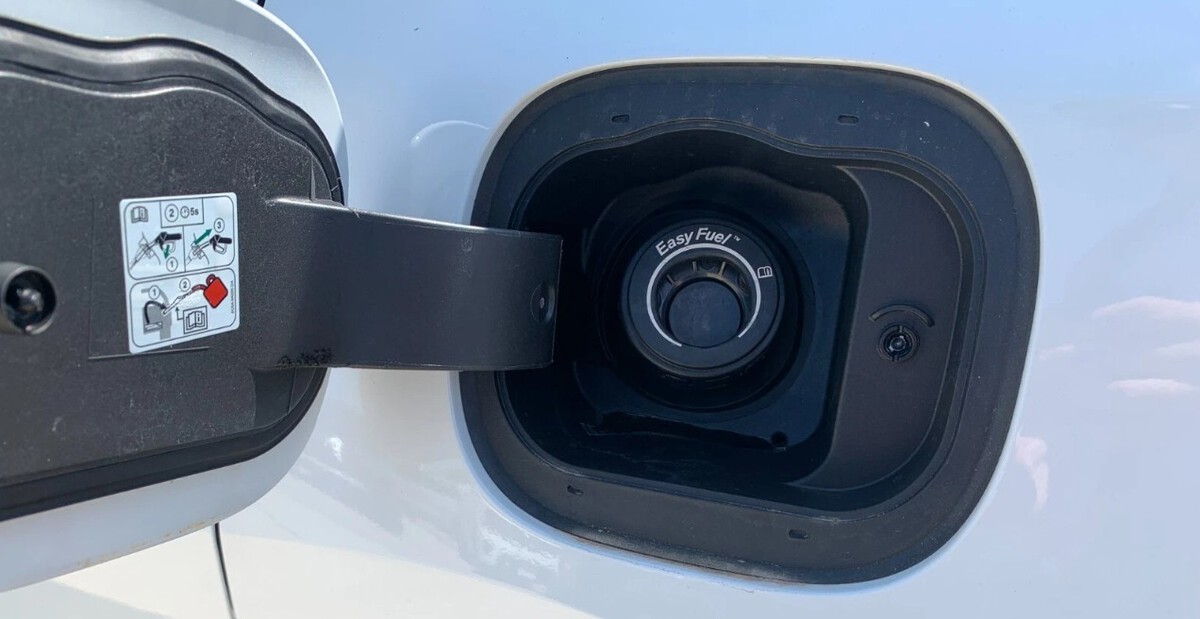
Without a threaded, rubber-gasketed traditional cap to seal the fuel neck from the outside world, the integrity of the evaporative emissions (EVAP) system depends entirely on these spring-loaded doors. In rugged environments, fine dust, road salt, mud, and ice accumulate inside the fuel filler recess.
When a refueling nozzle is inserted, this debris can be pushed directly into the fuel neck, contaminating the fuel system or lodging within the seal mechanism.
Once a tiny grain of grit prevents the spring flapper from closing flush, the vehicle suffers from a persistent EVAP vacuum leak, triggering check engine lights and potentially allowing volatile fuel vapors to escape freely near hot exhaust components.
6. Monostable Electronic Shifter Toggles: The Rollaway Hazard
The mechanical gear shift lever was a model of functional clarity. A driver could pull a lever through physical detents from Park to Drive and verify the transmission’s status strictly through tactile feedback and hand position.
The adoption of electronic shift toggles, such as the rotary dial assembly implemented in the 2024 Jeep Grand Cherokee L, replaced this definitive physical confirmation with ambiguous electrical contacts.
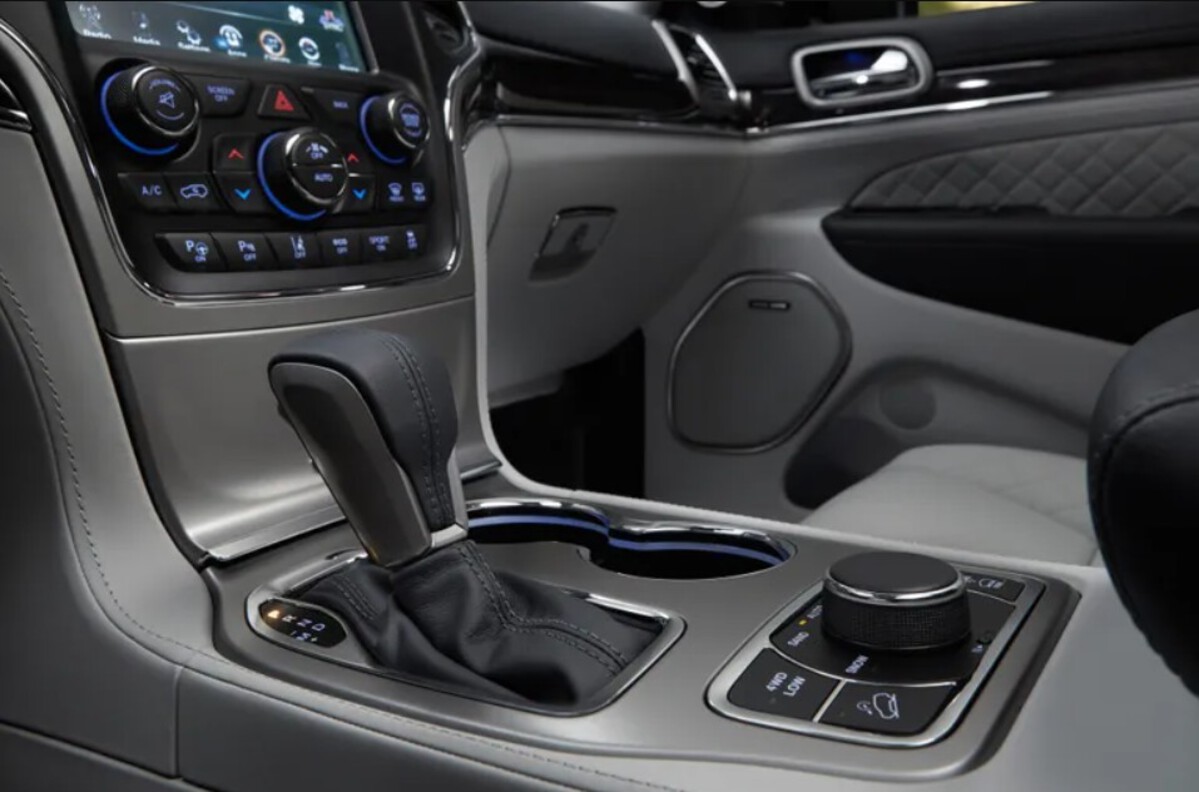
Because these electronic rotary dials do not move along a linear path, they feel identical whether the vehicle is in Reverse, Neutral, or Park. If a driver is distracted or in a hurry, it is remarkably easy to spin the dial one click short of Park and exit the vehicle while the transmission remains in Neutral or Drive.
While modern software updates include an auto-park safety routine that automatically engages the electronic parking brake if the driver’s door opens, real-world component failures or sensor glitches leave open the risk of a vehicle rollaway accident.
7. Automated High Beams: Blinded by the Sensor Suite
Automatic High Beams (AHB) were introduced to optimize nighttime illumination on dark roadways, automatically flashing the high beams when the forward environment is clear and dipping them when trailing or oncoming traffic is detected.
The execution of this system in high-volume crossovers like the 2025 Toyota RAV4 Hybrid shows how heavily dependent these safety features are on ideal environmental conditions.
The windshield-mounted monocular camera used to detect oncoming headlights and trailing taillights is often disrupted by real-world driving conditions. Heavy rain, dense fog, and snowstorms can obscure its view, while rolling hills and sharp bends further limit consistent visibility, reducing the system’s ability to maintain reliable detection.

This causes the high beams to remain fully engaged, blinding oncoming drivers and flashing bright light directly into their retinas. This latency in switching back to low beams forces drivers to manually override the system, distracting them from tracking the road ahead during low-visibility conditions.
ALSO READ: How a Cheap Compact Changed Global Car Safety Standards
8. Flush Pop-Out Door Handles: The Post-Crash Entrapment Risk
The obsession with minimizing aerodynamic drag to maximize driving range has fundamentally altered one of the oldest and most vital safety components on a car: the external door handle. The 2024 Tesla Model 3 (Highland) utilizes completely flush, electronic door handles that sit integrated into the sheet metal when the vehicle is in motion.
Unlike a traditional mechanical handle that is physically linked to the door latch via a steel rod, these flush handles rely on a fully functioning low-voltage electrical system to actuate an internal solenoid.

If the vehicle suffers a catastrophic high-voltage impact that cuts all 12-volt accessory power, the exterior handles remain locked and flush with the bodywork.
First responders and bystanders attempting to pull occupants from a burning or smoking cabin are left with no physical lever to grab onto. While internal manual release tabs exist, trapped, disoriented, or unconscious passengers are frequently unable to locate them under duress.
The current state of automotive safety tech highlights a clear imbalance between digital capability and human biology. In the rush to deliver futuristic aesthetic styling and achieve high scores on standardized crash metrics, automotive brands have overlooked a core truth: a safety feature is only effective if it works seamlessly with human ergonomics.
Replacing physical controls with complex touch submenus, eliminating physical lines of sight in favor of cameras, and relying on automated systems that struggle in real-world conditions has created a driving environment defined by distraction.
Fortunately, there are signs of an industry course correction. Prominent safety institutions, such as the Euro NCAP, have introduced updated testing guidelines that penalize manufacturers who rely entirely on touchscreens for critical driving functions.
To achieve top safety ratings moving forward, vehicles must feature dedicated, physical controls for indicators, hazard lights, wipers, horn, and emergency SOS systems.
This structural pivot represents a vital acknowledgement that safety cannot be solved by software patches alone. True safety lies in minimizing cognitive strain and ensuring the driver remains fully alert and in absolute control of the machine.