
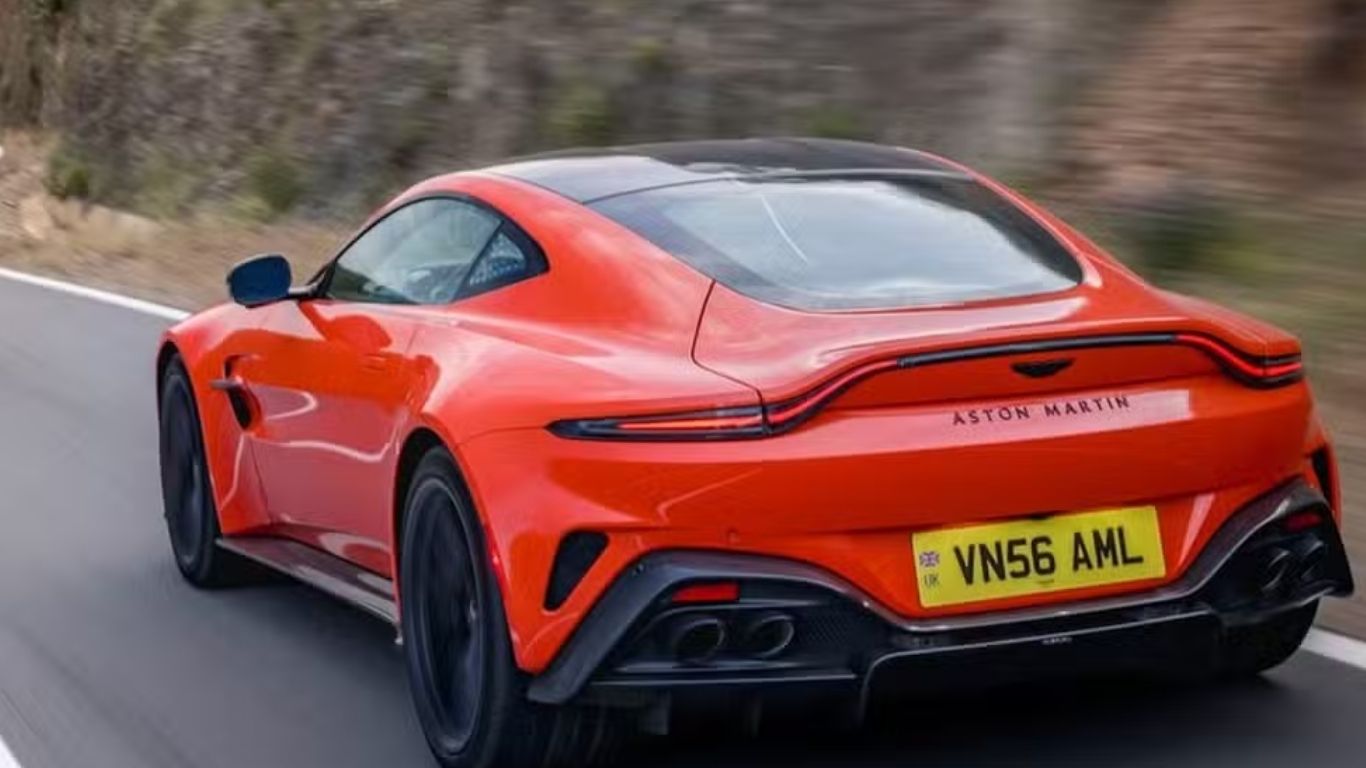
Picture yourself waiting at a red light beside a car that seems completely unremarkable. Nothing about it grabs your attention. It looks like the kind of everyday commuter vehicle you would forget within minutes. Then the light changes. You press the throttle, the exotic supercar beside you launches hard, and somehow that ordinary-looking sedan is already several car lengths ahead. By the time you realize what just happened, it is shrinking into the distance while everything else is still trying to catch up.
That is the entire magic of a sleeper car, a vehicle engineered specifically to hide devastating performance behind a completely unremarkable exterior. No aggressive body kit. No screaming exhaust note announcing its arrival three blocks early. Just a plain shell wrapped around an engine that has absolutely no business being that powerful.
These cars exist because manufacturers eventually figured out that some buyers want blistering performance without the attention, the insurance premiums, or the constant questions from strangers in parking lots. The result is a genuinely fascinating category of vehicle that rewards anyone who actually understands what they are looking at.
This list focuses on eight factory-built machines that deliver that exact experience. Each one carries everyday styling but brings acceleration numbers that challenge or even surpass expensive exotic models. From electric powertrains with instant torque to turbocharged engines tuned for brutal launches, these vehicles prove that performance does not always come wrapped in aggressive styling. Each entry includes core specifications and a closer look at why they consistently surprise unsuspecting drivers at stoplights.
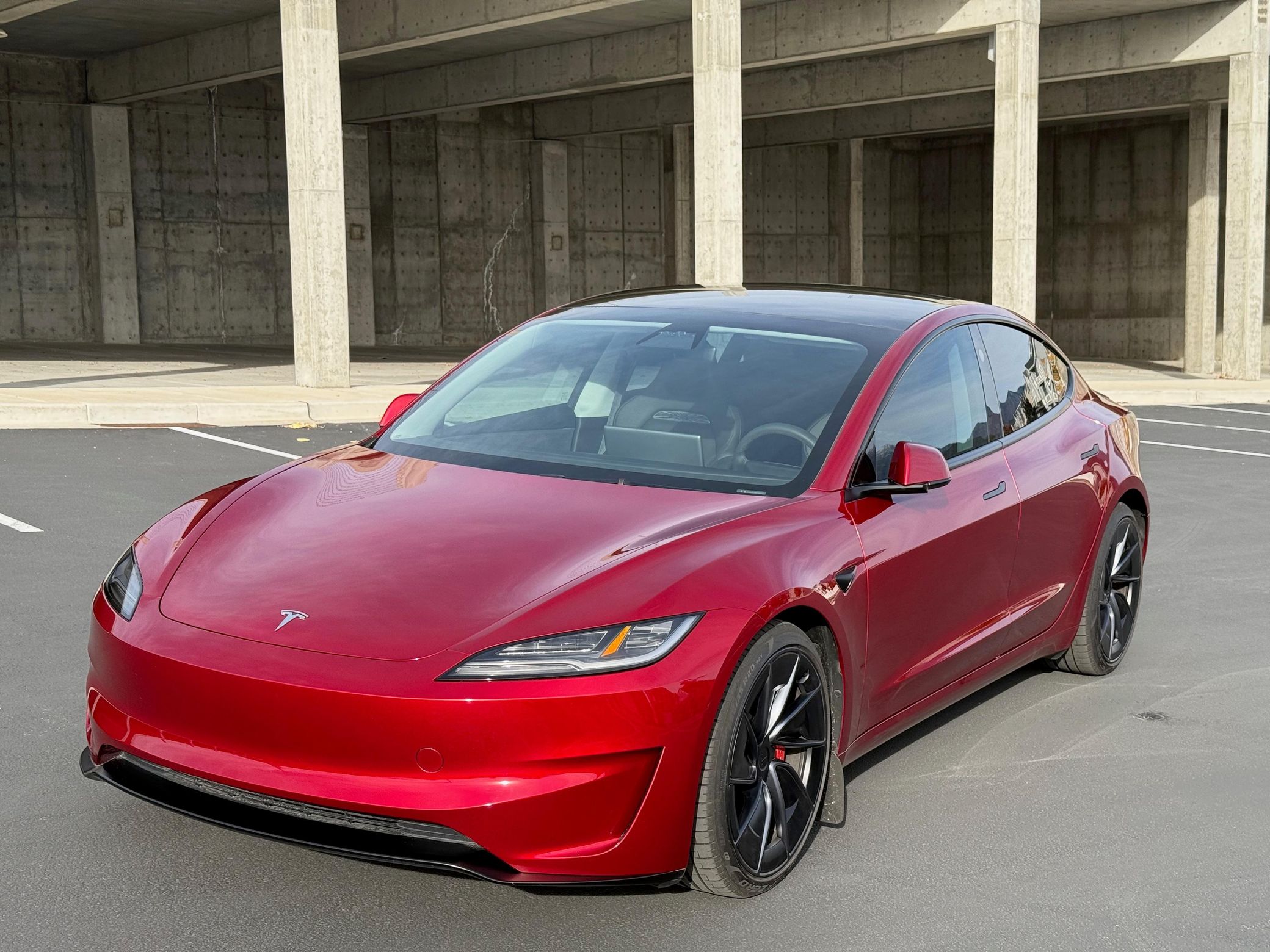
1. Tesla Model 3 Performance
0-60 MPH Time: 2.9 seconds
- Engine: Dual Electric Motors
- Horsepower: 510 hp
- Torque: 547 lb-ft
- Size: 185.8 in. Long x 82.2 in. Wide
Nothing about the silhouette of a Tesla Model 3 Performance suggests danger. It shares its basic shape with thousands of standard Model 3 sedans currently working as rideshare vehicles and rental fleet cars across the country, which is exactly the point. To the driver next to you, this looks like a common electric rental car or a standard office commuter. There is no spoiler screaming for attention, no aggressive vents, nothing that would make a passerby glance twice.
What that unassuming shell hides is a genuine performance monster. A 2.9-second sprint to 60 mph puts this sedan firmly into supercar territory, and the way it achieves that number explains why electric performance feels so fundamentally different from anything gasoline-powered.
Thanks to its instant electric torque and all-wheel-drive grip, it launches off the line faster than a Ferrari Roma. That comparison deserves a moment of appreciation. The Ferrari Roma is a genuinely beautiful, genuinely fast grand touring coupe wearing a badge that commands instant respect anywhere it goes. It announces itself before it even arrives.
The Tesla Model 3 Performance announces nothing, sitting quietly in a grocery store parking lot looking like exactly what most people assume it is: practical, efficient, forgettable transportation. Yet in a straight line from a standing start, the Tesla gets to 60 mph before the Ferrari does, and that gap exists specifically because of how electric motors deliver power compared to even a finely tuned gasoline V8.
Dual motor all-wheel drive completes the disguise by ensuring all that instant torque actually translates into forward motion rather than wheelspin. Two separate motors, one powering the front axle and one powering the rear, distribute power intelligently the moment the accelerator gets pressed, converting raw electrical output into genuine, usable acceleration.
A driver pulling up next to this car at a stoplight has absolutely no visual cues warning them that the seemingly ordinary sedan beside them is capable of embarrassing some of the most celebrated names in automotive history, the instant the light turns green.
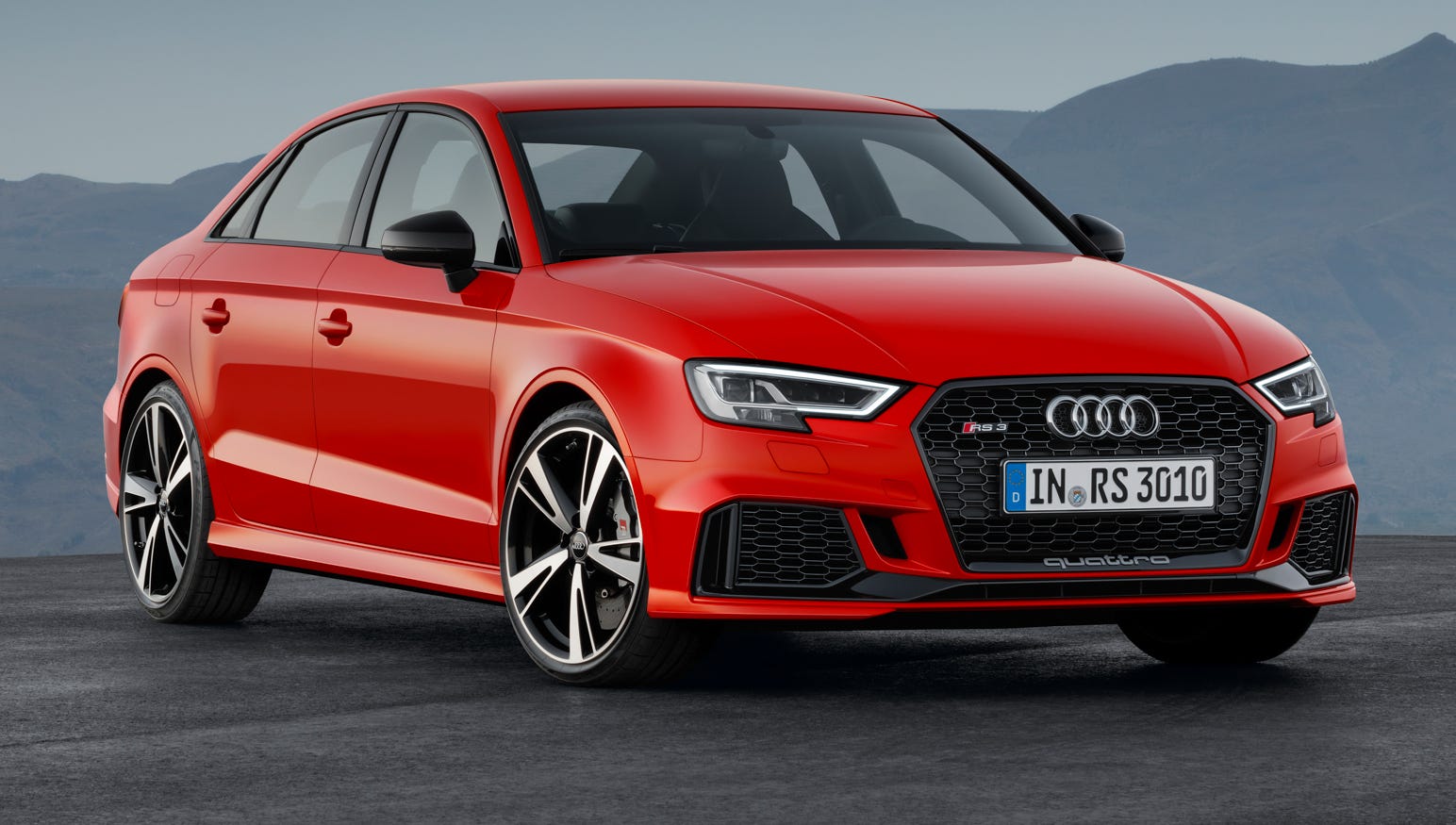
2. Audi RS 3
0-60 MPH Time: 3.6 seconds
- Engine: 2.5L Turbocharged 5-Cylinder
- Horsepower: 401 hp
- Torque: 369 lb-ft
- Size: 178.8 in. Long x 72.9 in. Wide
Compact sedans often carry a predictable reputation tied to practicality, first cars, and daily commuting duties. Its exterior design fits that expectation so well that most people assume it belongs in the same category as basic entry-level transportation.
Audi designed the RS 3 using the same underlying structure as its less performance-focused compact models, meaning the understated appearance is built into the car from the ground up rather than added later through styling choices. Under the surface lies a powertrain that completely changes the character of this sedan. Audi equips it with a 2.5-liter turbocharged five-cylinder engine rooted in the brand’s rally racing history.
That engine layout is uncommon in modern production, giving it a distinct sound that stands apart from typical four-cylinder or V6 setups. The exhaust note carries a deep, uneven rhythm that hints at its motorsport background, though most people only notice it briefly, if at all.
Power output reaches 401 horsepower, delivered through Audi’s Quattro all-wheel-drive system. Traction plays a major role in how this sedan performs from a standstill, turning raw output into immediate forward motion rather than wasted tire spin.
A dedicated launch control system coordinates throttle, brakes, and traction settings to optimize acceleration during stoplight starts. The driver only needs to activate it and let the system handle power distribution with precision that is difficult to match manually.
Acceleration from 0 to 60 mph takes about 3.6 seconds, placing it in a range that rivals much more expensive performance cars. Visually, most observers would expect a figure closer to the mid-7-second range based on its calm appearance. That difference between expectation and reality defines its character, allowing it to leave a strong impression every time it launches forward without warning.
Also Read: Top 10 Sleeper Cars That Look Like Boring Commuters
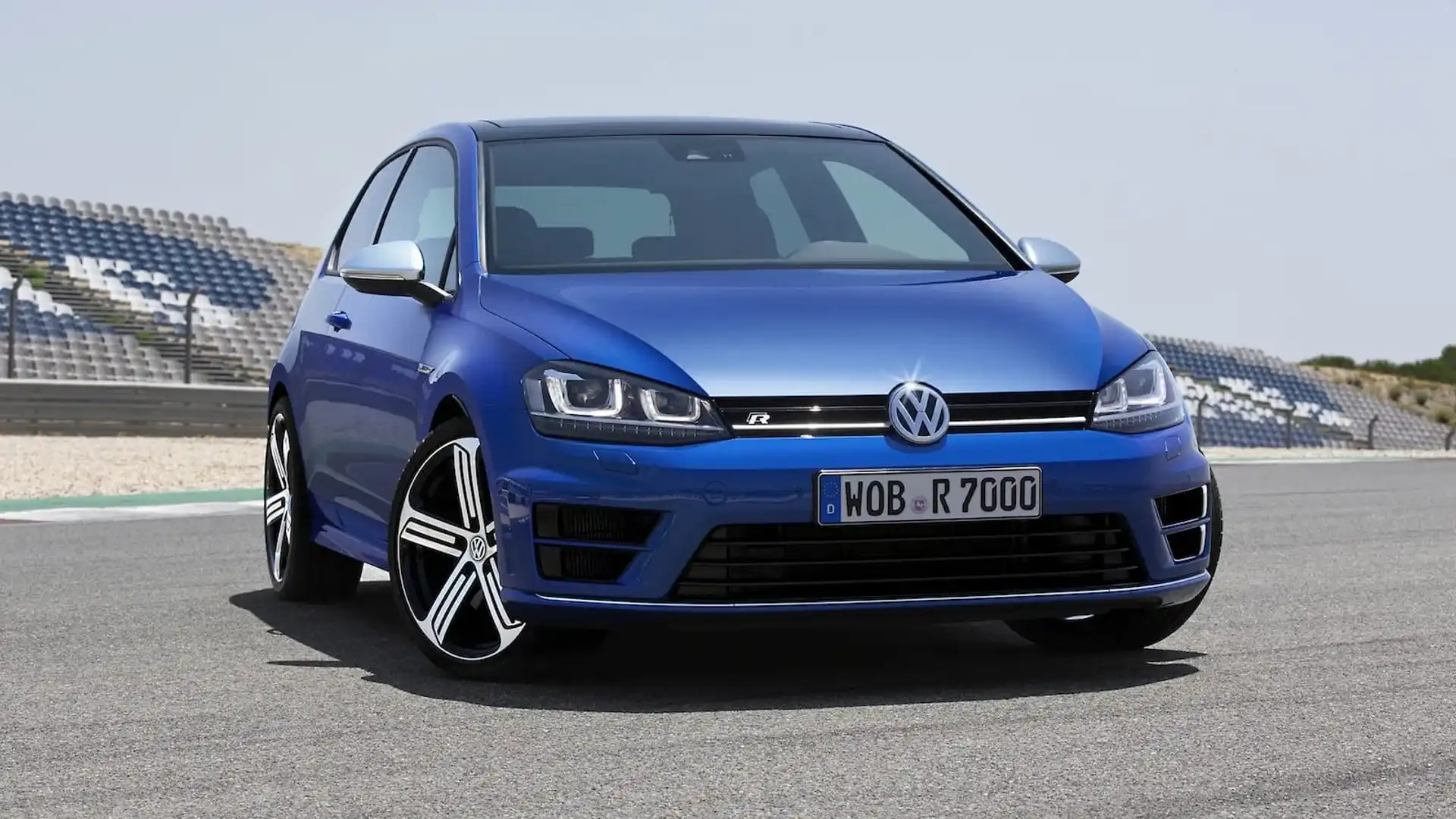
3. Volkswagen Golf R
0-60 MPH Time: 3.9 seconds
- Engine: 2.0L Turbo 4-Cylinder
- Horsepower: 328 hp
- Torque: 310 lb-ft
- Size: 169.1 in. Long x 70.4 in. Wide
Hatchbacks hold a modest position in vehicle types, valued more for usefulness than speed. The Volkswagen Golf fits the familiar compact shape seen in everyday traffic. Many parents use standard versions for school runs, students rely on them for commuting, and grocery trips are common. Because of this ordinary presence, it rarely draws attention, which makes the high-output version a surprise.
While the standard model focuses on routine driving, the R version adds an advanced All Wheel Drive system with torque distribution that directs power to wheels with better grip based on steering input and road conditions. Instead of sharing power evenly, the system adjusts where force goes to support traction during acceleration or cornering.
This setup enables a 3.9-second sprint from zero to 60 mph, a figure far beyond what most people expect from its compact shape and calm styling. The exterior changes are subtle, including sport-style wheels and a small rear wing, so it still blends in with other compact cars in traffic.
Practical use remains strong with usable cargo room, comfortable seating in the back, and clear outward visibility. During normal driving, it feels ordinary, but on an open ramp, it responds with sudden force that surprises nearby traffic.
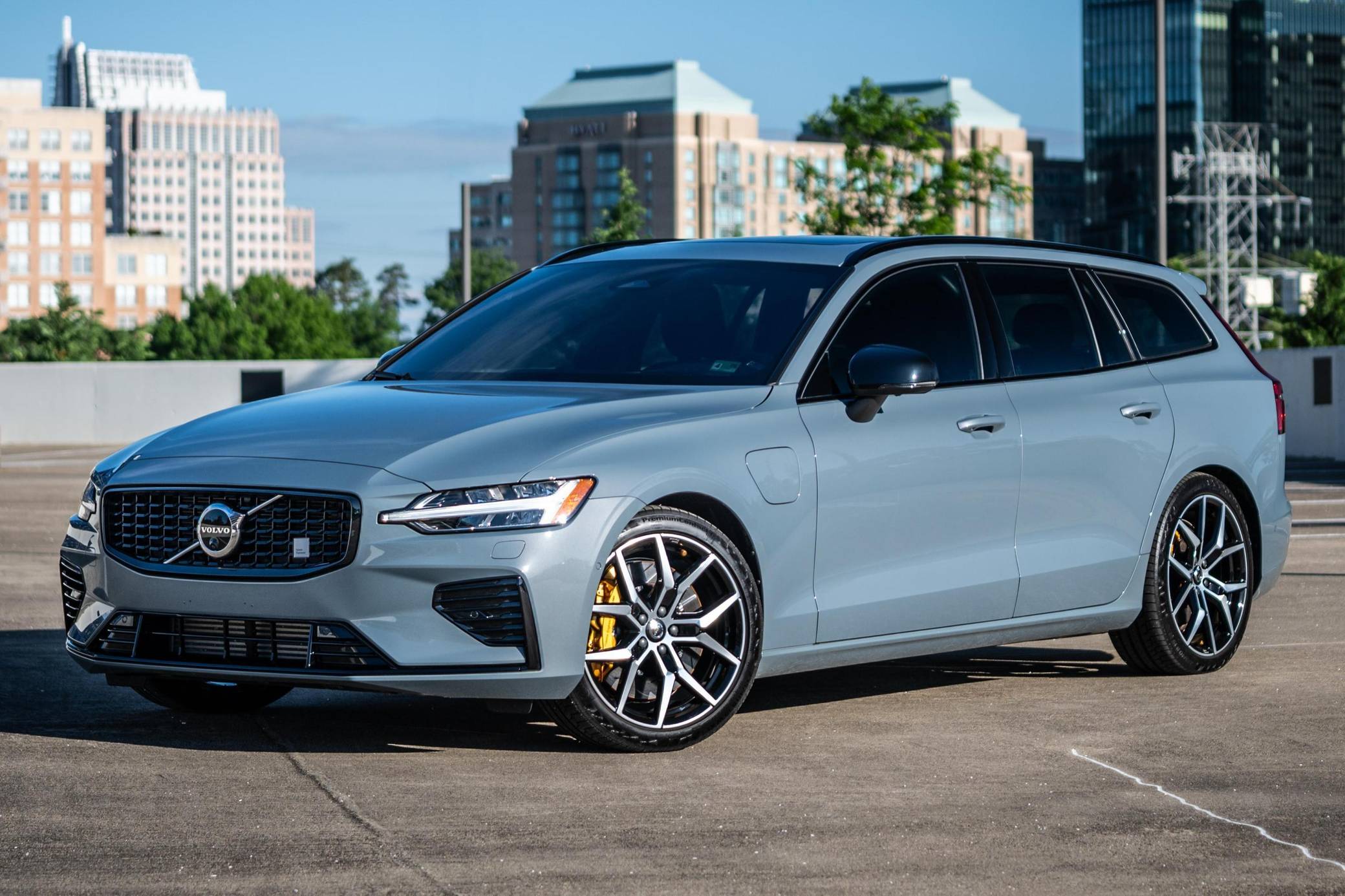
4. Volvo V60 Recharge Polestar Engineered
0-60 MPH Time: 4.1 seconds
- Engine: 2.0L Turbo 4-Cylinder Plug-in Hybrid |
- Horsepower: 455 hp (total system) |
- Torque: 523 lb-ft (total system) |
- Size: 187.4 in. Long x 72.8 in. Wide |
Few vehicle categories project “responsible, sensible, slightly boring” quite as convincingly as the Swedish station wagon. Nothing says family vehicle quite like a sensible Swedish station wagon. Volvo has spent decades building a brand reputation centered on safety, practicality, and understated Scandinavian design rather than outright speed, and that reputation works brilliantly as camouflage for this particular plug-in hybrid wagon.
Onlookers watching this car pull into a school parking lot make assumptions instantly, and those assumptions are almost always wrong. Most drivers assume you are heading to a school board meeting, completely unaware that this plug-in hybrid uses electric motors to deliver instant supercar-level pulling power.
That instant pulling power comes from combining a turbocharged four-cylinder gasoline engine with an electric motor system, a combination that produces a combined 455 horsepower and a genuinely massive 523 lb-ft of torque once both power sources work together under hard acceleration.
Torque figures like that explain why this seemingly mundane wagon manages a 4.1-second sprint to 60 mph, a number that would have seemed completely implausible attached to any station wagon just a decade or two earlier.
Electric motors contribute instant torque from the very first moment the accelerator gets pressed, filling in any gap before the turbocharged gasoline engine fully spools up, creating a smooth, continuous, and genuinely startling wave of acceleration from a vehicle that looks like it should be hauling lumber from a hardware store rather than embarrassing performance cars at intersections.
Practicality remains fully intact throughout all of this hidden performance engineering, which is precisely the point of building a sleeper this way. The V60 Recharge Polestar Engineered offers genuine cargo space behind the rear seats, comfortable accommodations for passengers, and the kind of all-weather composure that Volvo has built its entire reputation around.
A family using this wagon for daily school runs and grocery trips gets every practical benefit they would expect, while also quietly owning one of the most effective automotive disguises currently available on any dealer lot in the country.
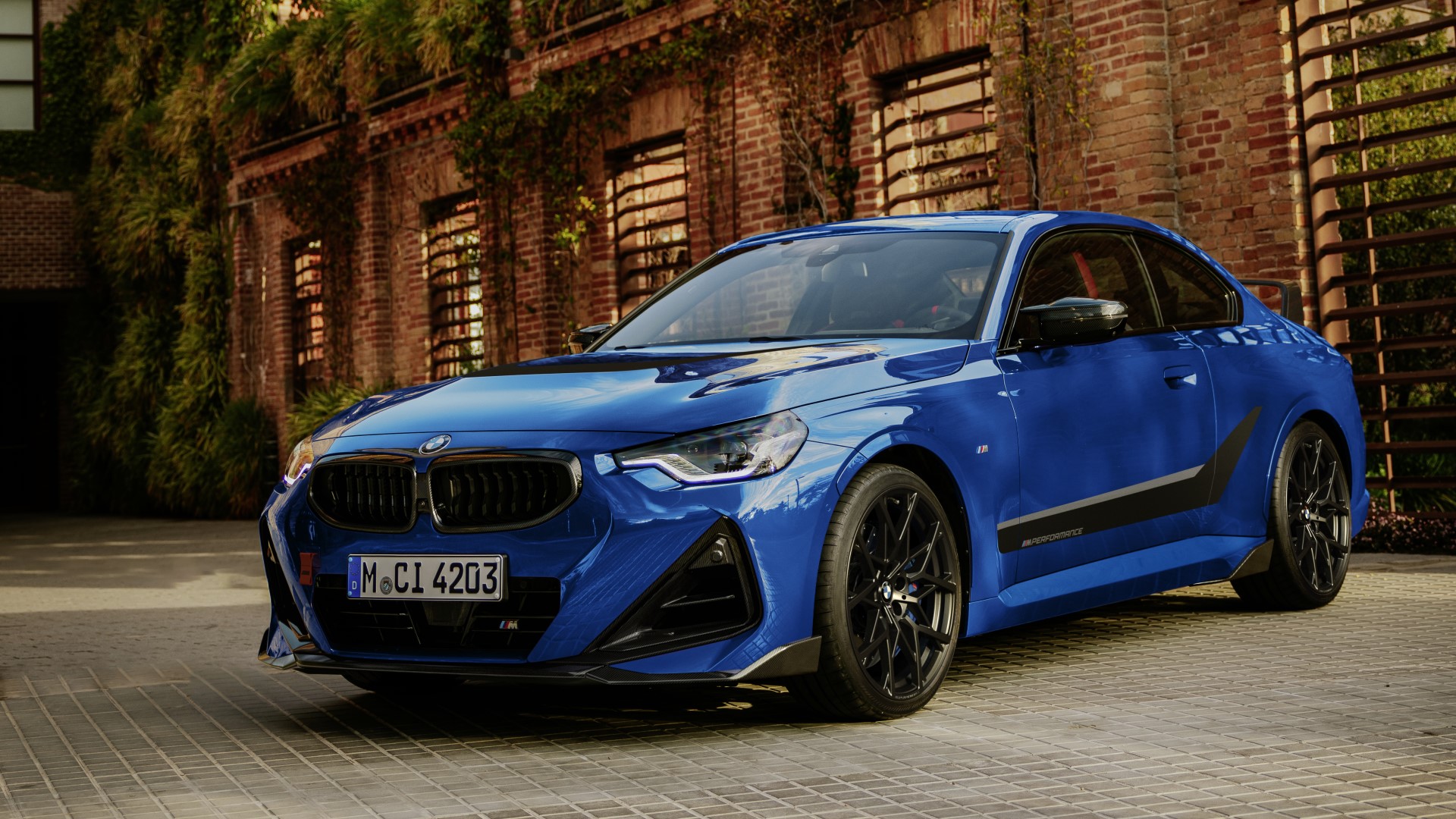
5. BMW M240i xDrive
0-60 MPH Time: 3.6 seconds
- Engine: 3.0L Turbocharged Inline-6
- Horsepower: 382 hp
- Torque: 369 lb-ft
- Size: 179.4 in. Long x 72.4 in. Wide
Many people associate BMW’s M2 with a wide, aggressive coupe that draws attention, so a smaller BMW parked nearby is often assumed to be a calmer version. That assumption is what makes the M240i xDrive such a strong sleeper. Without the wider bodywork of the M2, this compact coupe blends in with standard daily drivers.
Beneath that exterior sits BMW’s B58 engine, widely respected for smooth power delivery and strong output. This turbocharged inline-six has built a reputation among enthusiasts and tuning circles for reliability paired with strong acceleration, a rare mix in modern boosted engines.
A sprint to 60 mph in about 3.6 seconds places this coupe in territory that surprises people who judge speed based on appearance. Many expect restrained styling to match restrained performance, yet the M240i xDrive delivers far more than its understated look suggests. Its clean exterior avoids oversized vents or sharp aero pieces, resembling a comfortable commuter rather than a performance machine.
All Wheel Drive helps put the B58 engine’s torque to use across varying road conditions, giving this coupe consistent traction in rain or light snow. Drivers can pull away with confidence without waiting for perfect weather, something Rear Wheel Drive sports models often struggle with.
For those wanting BMW performance without the attention that the M2 brings, the M240i xDrive offers a balanced alternative within the lineup.
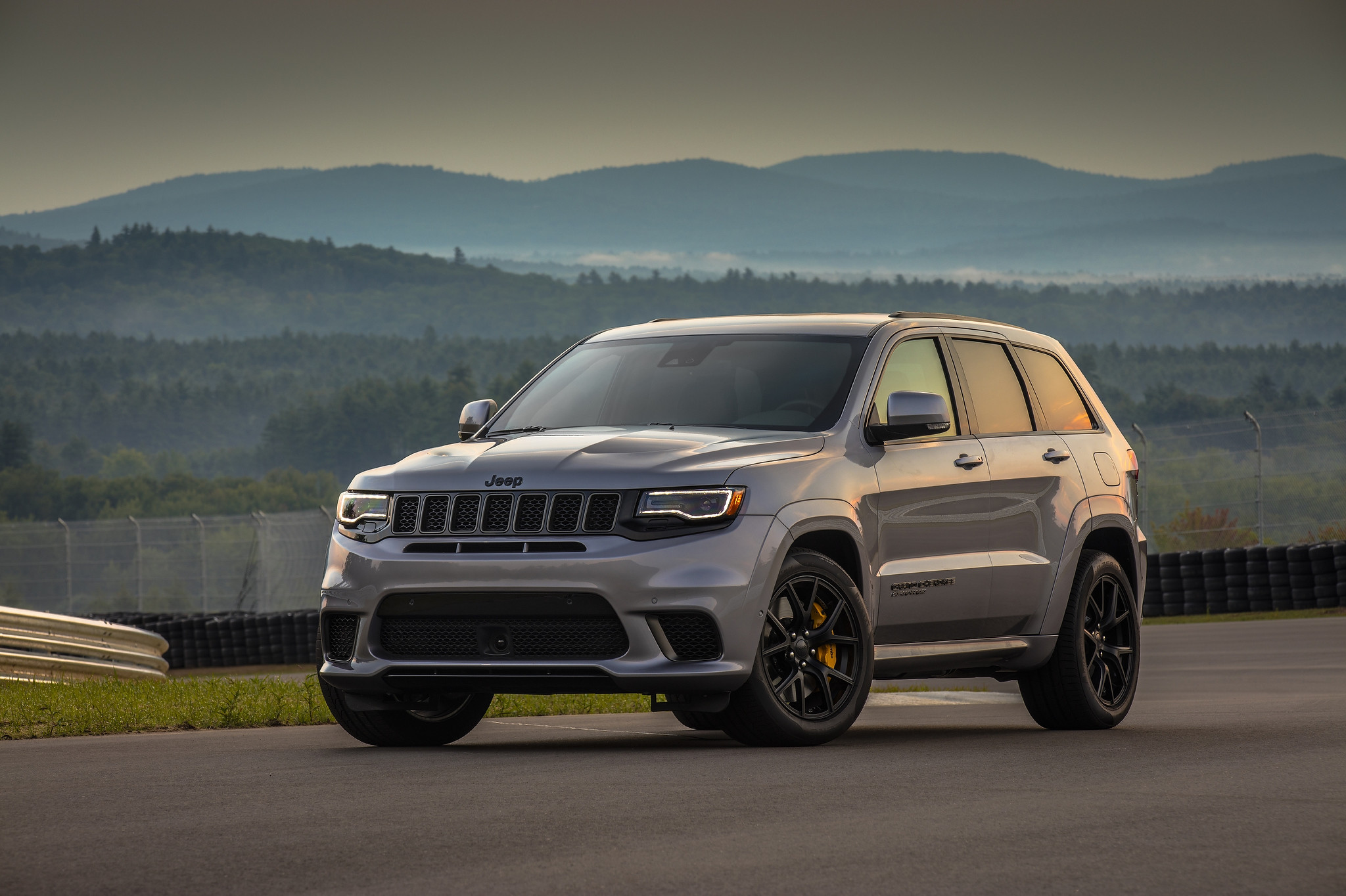
6. Jeep Grand Cherokee Trackhawk
0-60 MPH Time: 3.5 seconds
- Engine: 6.2L Supercharged V8
- Horsepower: 707 hp
- Torque: 645 lb-ft
- Size: 189.3 in. Long x 76.5 in. Wide
Sometimes the most effective disguise is not subtlety, but sheer scale, and the Jeep Grand Cherokee Trackhawk proves exactly that point. This is a vehicle built around hauling families, towing trailers, and handling daily school runs, the kind of practical, unremarkable purpose that defines midsize SUVs across virtually every manufacturer’s lineup. This is a heavy, midsize family SUV meant for hauling kids and trailers.
What makes this particular family hauler genuinely shocking sits directly underneath that practical, family-friendly exterior. But under the hood sits the same roaring supercharged Hellcat engine used in muscle cars, letting this massive 4×4 shock high-end exotic cars from a dead stop.
Borrowing an engine directly from some of the most aggressive American muscle cars ever produced and dropping it into a family SUV sounds almost absurd on paper, yet that is precisely what happened, and the resulting performance numbers prove the concept works spectacularly well.
A 3.5-second sprint to 60 mph from a vehicle weighing well over 5,000 pounds represents a genuine engineering achievement, since overcoming that much mass requires absolutely enormous power output combined with sophisticated all-wheel-drive traction management.
The supercharged 6.2-liter V8 producing 707 horsepower provides that enormous power, while Jeep’s all-wheel-drive system works overtime to translate it into forward motion rather than wasted wheelspin against the pavement. Visual cues hinting at this hidden capability remain remarkably subtle for anyone not specifically looking for them.
There is a functional hood scoop and slightly larger brakes peeking out from behind the wheels, but to a casual observer at a stoplight, this still reads primarily as a large, practical SUV rather than a genuine supercar hunter. That difference between its hauling-capable, family-focused identity and its genuinely supercar-humbling acceleration capability is exactly what makes the Trackhawk one of the most audacious sleeper builds any major manufacturer has ever put into production.
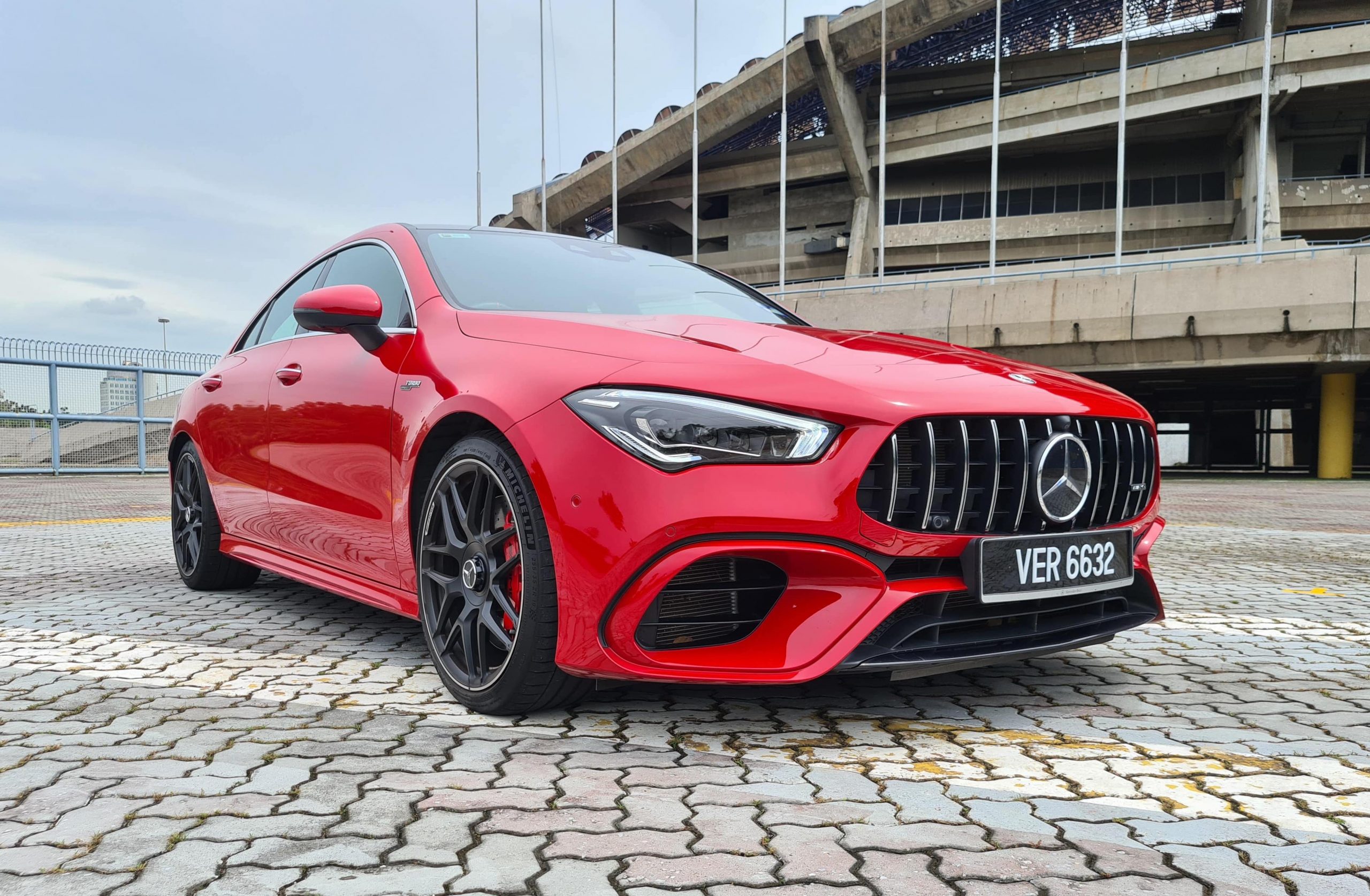
7. Mercedes-AMG CLA 45 S
0-60 MPH Time: 3.7 seconds
- Engine: 2.0L Turbo 4-Cylinder
- Horsepower: 416 hp
- Torque: 369 lb-ft
- Size: 184.8 in. Long x 73.1 in. Wide
Mercedes designs the CLA lineup as an entry point into its brand, offering a compact sedan that fits well with urban driving and appeals to buyers stepping into premium cars for the first time. Its small footprint and sleek shape make it easy to place in tight parking spots and everyday traffic. That approachable design also hides the more performance-focused CLA 45 S sitting at the top of the same model family.
Beneath the calm exterior sits serious engineering that pushes a 2.0-liter four-cylinder engine to extreme output levels. This unit produces about 416 horsepower, making it one of the strongest production four-cylinder engines available. Achieving that level of power requires high turbo boost, reinforced internal components, and very tight manufacturing standards that go far beyond typical compact sedan engines.
Hand-built assembly at Mercedes-AMG plays a major role in how this engine is constructed. Each unit is assembled by a single technician rather than moving down a fully automated line, allowing careful attention during each stage of the build. That process supports durability under intense pressure and helps the engine handle conditions that would quickly overwhelm weaker designs.
Acceleration reflects that engineering effort, with a 0 to 60 mph time of roughly 3.7 seconds. That performance places the car far beyond what its calm styling suggests. A small grille adjustment and a subtle rear spoiler are the main visual differences separating it from the standard CLA. Parked in everyday settings like a café lot, it appears similar to a regular compact luxury sedan, yet it delivers performance that few would expect once it gets moving on an open road.
Also Read: 10 Turbocharged V6 Sleeper Cars Hiding in the Used Market
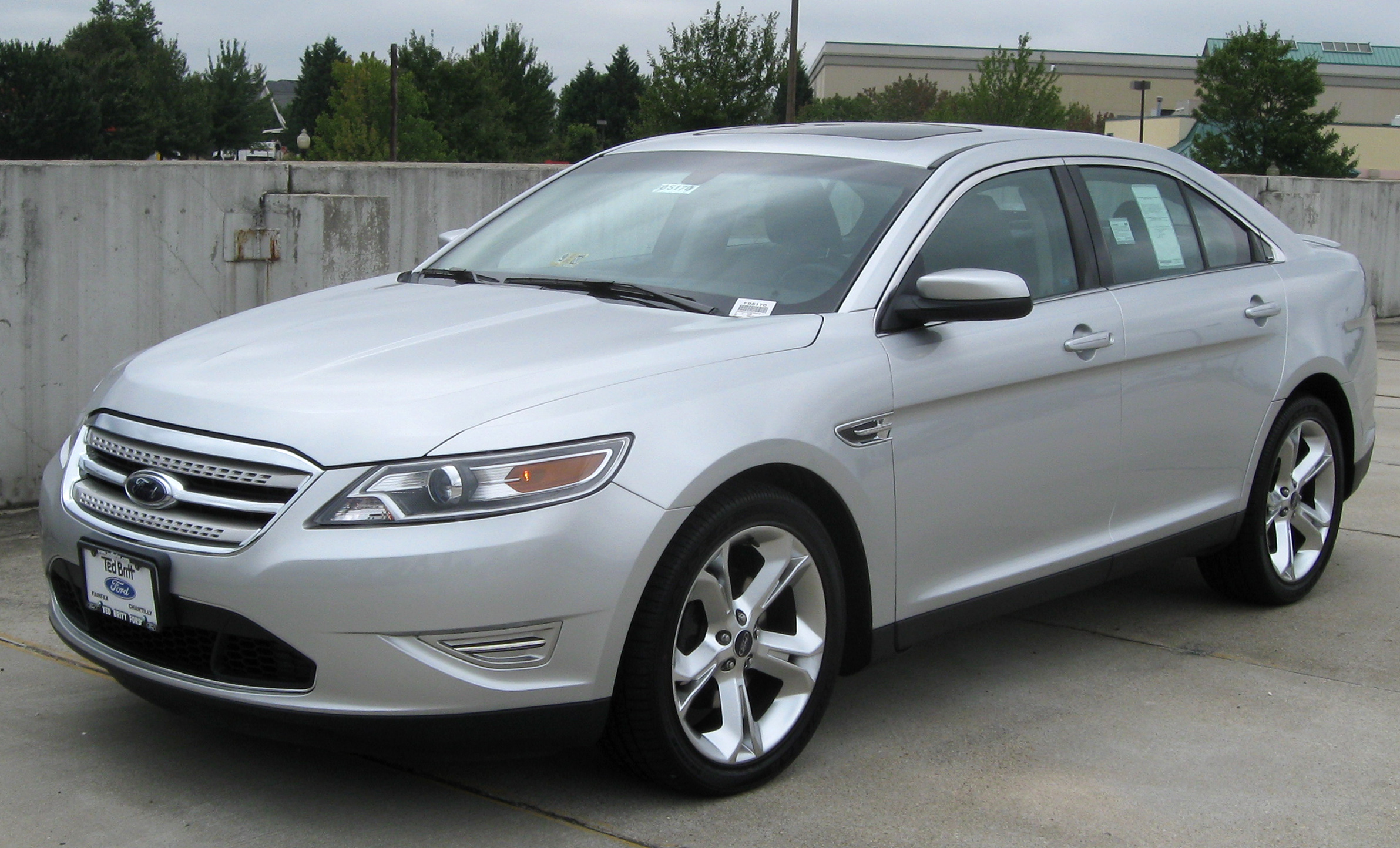
8. Ford Taurus SHO
0-60 MPH Time: 5.2 seconds (easily modified to sub-4 seconds)
- Engine: 3.5L Twin-Turbo V6
- Horsepower: 365 hp
- Torque: 350 lb-ft
- Size: 202.9 in. Long x 76.2 in. Wide
Closing out this list brings us to perhaps the most quintessentially American sleeper car concept currently available, a vehicle whose entire visual identity practically begs to be underestimated. The ultimate modern dad car looks exactly like a standard unmarked police cruiser.
That resemblance is not accidental either, since the Taurus shares platform and styling elements with Ford’s actual police interceptor lineup, creating genuine confusion among other drivers who often slow down nervously the moment they spot one in their rearview mirror.
Factory acceleration numbers alone place this large sedan into respectably quick territory without venturing into genuinely shocking performance, but that factory figure tells only part of this particular sleeper’s story. While its factory time is quick, enthusiasts love this twin-turbo V6 because a simple software tune unlocks massive hidden power, allowing it to easily embarrass sports cars.
Modern turbocharged engines are frequently engineered with additional performance headroom built directly into their hardware, intentionally limited by conservative factory software calibration designed to ensure long-term reliability across millions of vehicles operated by drivers with vastly different maintenance habits.
A relatively straightforward software tune on the Taurus SHO’s twin-turbo V6 can unlock that hidden hardware potential, dramatically improving acceleration figures and pushing this large American sedan into genuinely shocking sub-4 second territory once properly modified.
That transformation potential has built a genuinely passionate enthusiast community around this specific model, with owners specifically seeking it out precisely because of how much hidden performance sits waiting just beneath a simple software update.
What makes this particular sleeper concept so satisfying is the layered nature of its disguise. Most onlookers see a large, unremarkable sedan and assume modest performance. Slightly more informed observers recognize the police-adjacent styling and assume government fleet duty rather than genuine speed.
Only a small minority recognizes the SHO badge and twin-turbo engine designation, understanding exactly how much performance potential sits waiting underneath that purposefully unremarkable American sedan shell, ready to unlock with nothing more than a laptop and the right software.
