
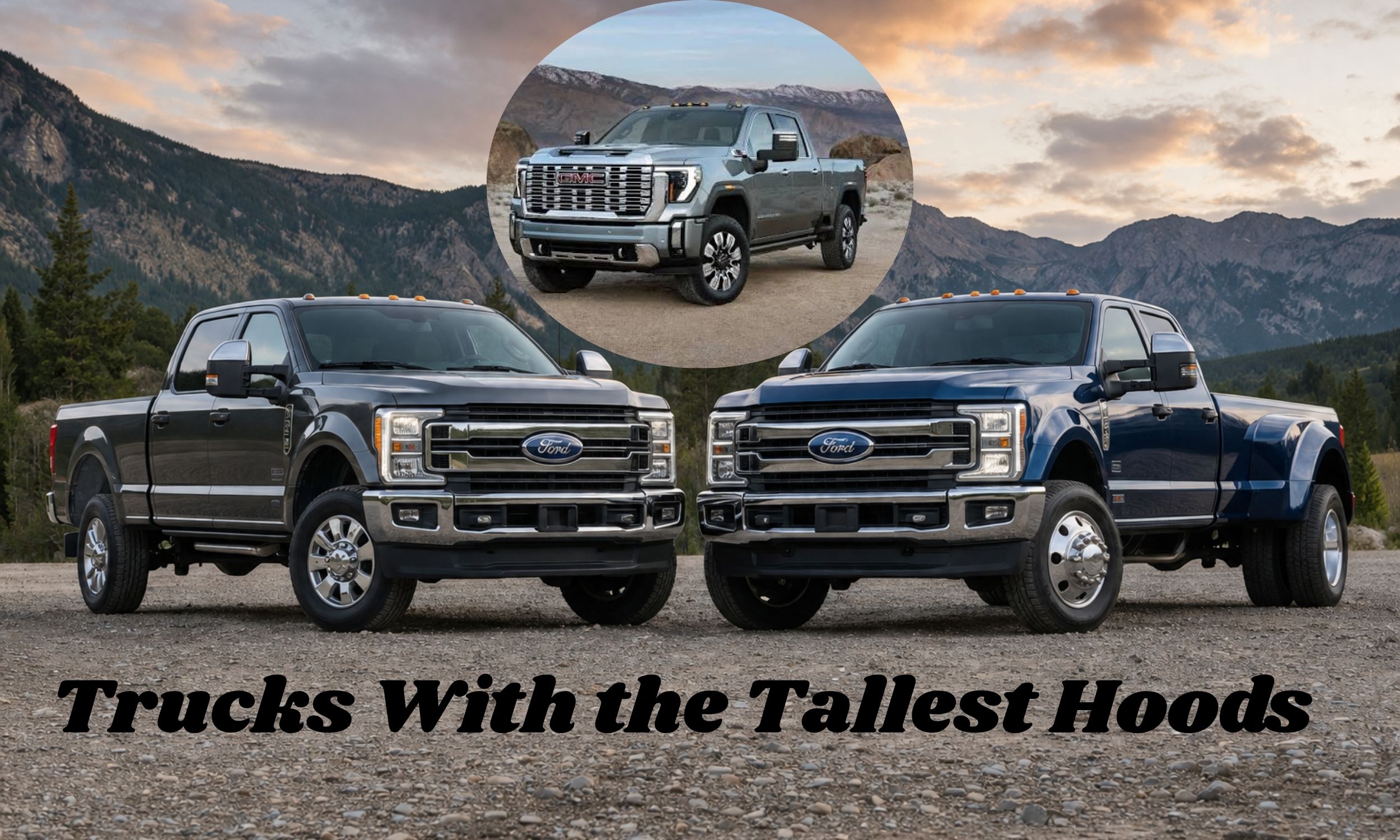
Anyone who has tried parking a modern heavy-duty pickup in a tight space has probably noticed how difficult it is to judge what is directly in front of the truck. From the driver’s seat, the area close to the front bumper is often hidden because today’s pickups have much taller hoods than older models. In many cases, the hood reaches about the chest level of an average adult standing beside the vehicle, making these trucks look much larger than they did years ago.
Several reasons explain why pickup trucks have grown this tall. One of the biggest factors is the need to house large diesel engines together with turbochargers, intercoolers, and bigger cooling systems. These components require much more room under the hood than smaller engines. Off-road versions also sit higher because of raised suspension systems, which lift the front section of the truck and add even more height.
Vehicle styling also plays a part in this trend. Manufacturers understand that many buyers like trucks with a bold and commanding appearance, so taller front ends have become a common design choice. While the rugged look appeals to many people, it can also reduce forward visibility, especially when driving in crowded areas or parking.
This list highlights eight of the tallest pickup trucks currently available, together with their specifications. Looking at the numbers makes it easier to understand why these trucks stand so high and whether their height comes from engineering needs, appearance, or a combination of both.
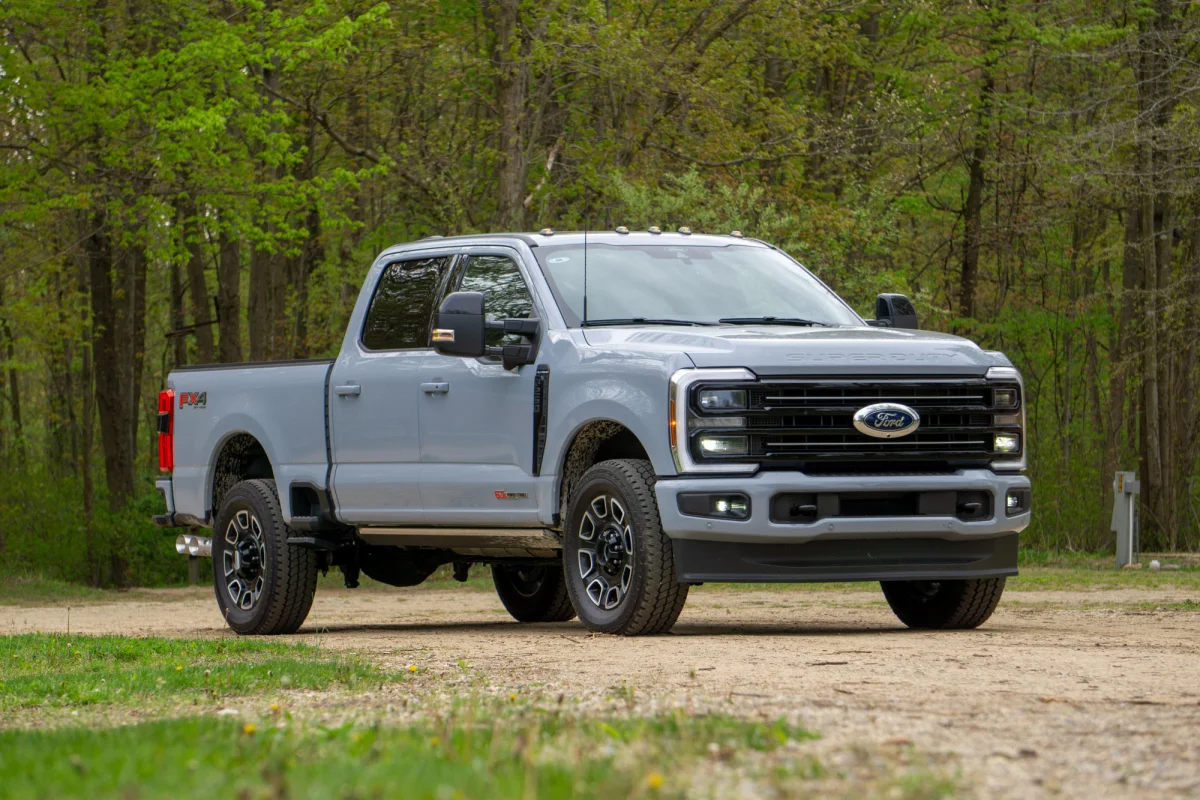
1. Ford F-250 Super Duty
Hood Height: Approximately 54 to 55 inches
- Engine: 6.7-liter Power Stroke V8 Turbo Diesel
- Horsepower: 475 hp
- Torque: 1,050 lb-ft
- Size: 232.0 to 266.2 in L × 80.0 in W × 79.8 to 81.5 in H
Walk up to a parked F-250, and you might genuinely need to look up to see over the hood, depending on your height. That 54- to 55-inch measurement isn’t an accident of styling alone; it’s a direct consequence of what’s packed underneath. The 6.7-liter Power Stroke diesel cranking out 1,050 lb-ft of torque needs serious breathing room.
Turbochargers, intercoolers, and a cooling system built to handle sustained heavy towing all demand physical space, and Ford’s engineers chose to build outward and upward rather than compress everything into a tighter, more conventional engine bay.
Here’s the tradeoff nobody talks about enough: that considerable torque figure is genuinely useful. Anyone regularly hauling a gooseneck trailer, heavy equipment, or a loaded livestock trailer benefits directly from the low-end pulling power this engine delivers, power that simply wouldn’t exist without the cooling capacity that hood height accommodates.
Shorter drivers routinely mention the adjustment period. Climbing into an F-250 for the first time often means raising the seat considerably higher than feels natural, just to establish a clear sightline over that towering front end. It’s a genuine learning curve, one dealerships rarely warn first-time Super Duty buyers about ahead of time.
Should that bother you enough to reconsider? Depends entirely on what you’re buying the truck to do. Weekend errands and light hauling don’t demand this level of capability, and the visibility tradeoff might not feel worth it. Serious towing work, though, changes that calculation considerably, and most F-250 owners will tell you the height stopped mattering within a week of ownership.
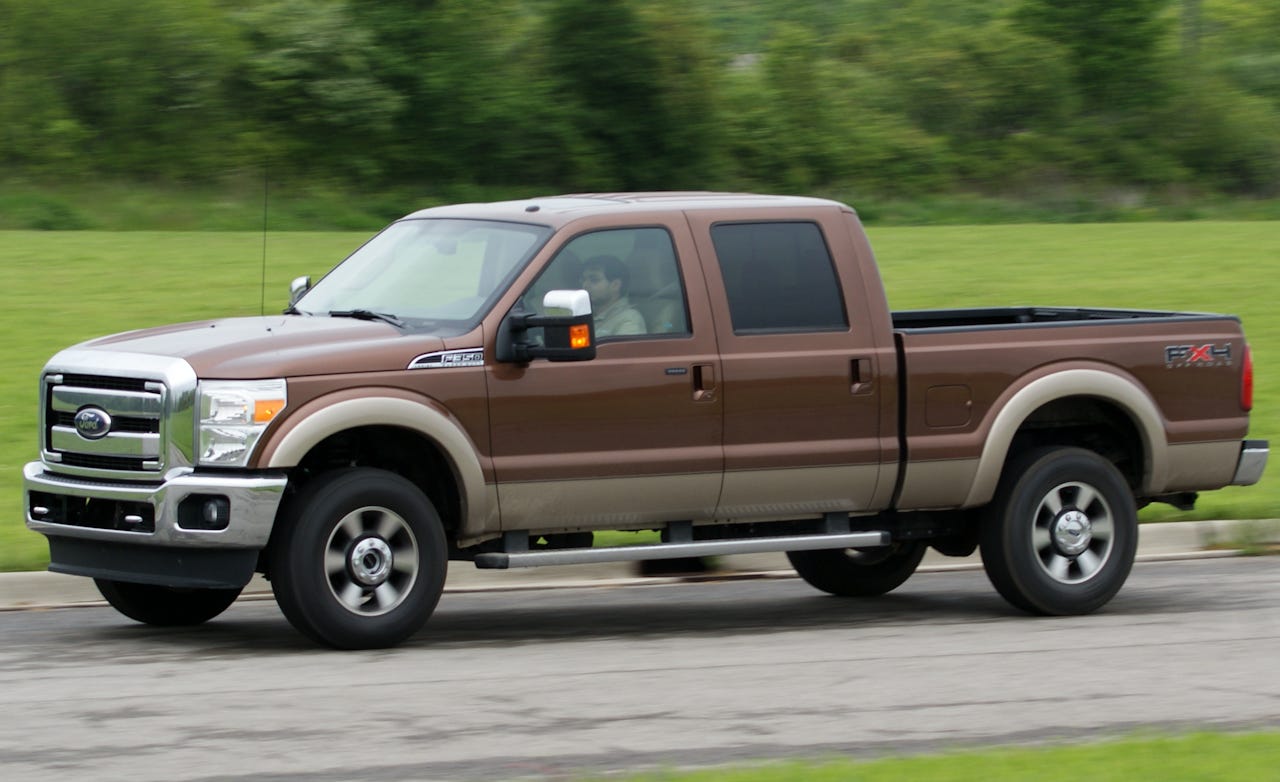
2. Ford F-350 Super Duty
Hood Height: Approximately 54 to 55 inches
- Engine: 6.7-liter Power Stroke V8 Turbo Diesel
- Horsepower: 475 hp
- Torque: 1,050 lb-ft
- Size: 232.0 to 266.2 in L × 80.0 in W × 79.8 to 81.5 in H
Twins, essentially. The F-350 shares its hood structure and engine bay architecture almost identically with the F-250, carrying that same imposing 54 to 55-inch height while stepping up considerably in payload rating, frame reinforcement, and available dual rear wheel configurations.
Same engine, same numbers: 475 horsepower, 1,050 lb-ft of torque, delivered through that identical 6.7-liter Power Stroke diesel. What separates these two trucks isn’t the powerplant itself but everything supporting it, stronger axles, reinforced suspension components, and a chassis built to handle genuinely massive trailer weights that would flex a lighter-duty frame considerably.
Consider what that shared hood height actually represents: Ford applying one consistent cooling architecture across its entire Super Duty lineup rather than engineering a shorter hood for lighter configurations. That consistency simplifies manufacturing while guaranteeing every Super Duty variant, regardless of specific weight rating, gets identical thermal performance under sustained heavy loads.
Dual rear wheels stretch the F-350’s visual footprint even further, adding width and presence that makes an already tall front end look even more dominant from a passing lane or rearview mirror. Contractors specifically favor this configuration when stability under maximum load matters more than everyday parking convenience.
Would a shorter hood work just as well mechanically? Ford’s engineers apparently decided otherwise, prioritizing consistent, proven cooling performance across the lineup over chasing a sleeker profile that might shave an inch or two off the height but potentially compromise long-term reliability under the heaviest possible working conditions.
Also Read: 8 Pickup Trucks That Prove the 1990s Were a Golden Era
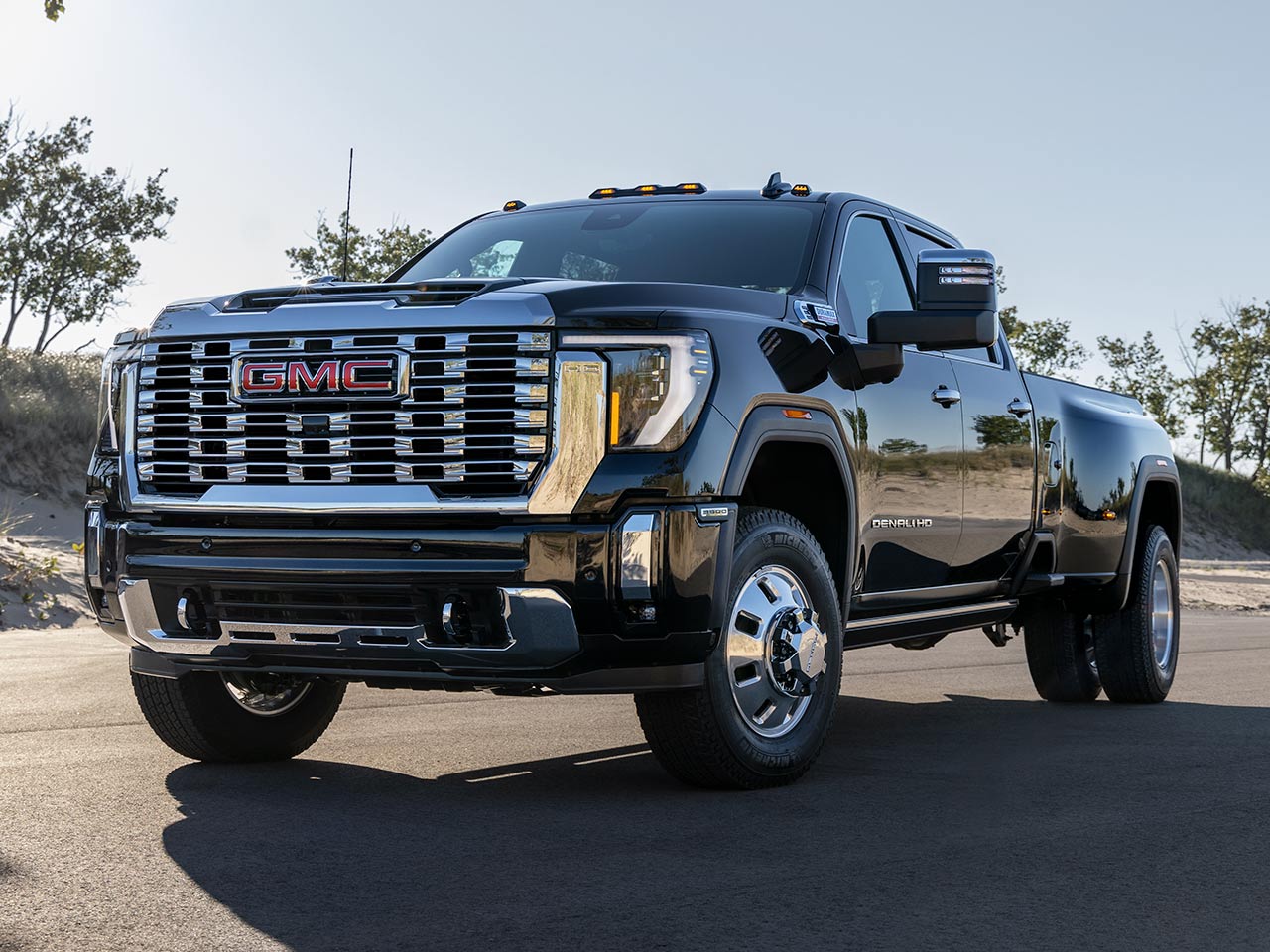
3. GMC Sierra 3500HD
Hood Height: Approximately 53 to 54 inches
- Engine: 6.6-liter Duramax Turbo Diesel V8
- Horsepower: 470 hp
- Torque: 975 lb-ft
- Size: Up to 266.8 in L × 81.9 in W × 80.9 in H
A quick look at the GMC Sierra 3500HD makes one thing clear. Chrome plays a major role in its design, giving the truck a bold and upscale appearance. With a hood standing about 53 to 54 inches high, GMC has plenty of room to create a front end that attracts attention whether the truck is parked at home, on a job site, or outside a dealership.
Beneath the polished exterior sits a truck built for demanding work. The 6.6-liter Duramax diesel engine delivers 470 horsepower and 975 lb-ft of torque, placing the Sierra 3500HD alongside heavy-duty rivals from Ford and Ram. Producing that amount of power for towing and hauling requires a large cooling system, which is one reason the truck carries such a tall hood.
Many buyers choose the Sierra instead of the closely related Chevrolet Silverado 3500HD, even though both trucks share much of the same engineering. The difference usually comes down to style rather than capability. Trim levels such as the Denali and AT4 give buyers the choice between a more luxurious appearance or a tougher off-road look, allowing each version to appeal to different preferences.
Performance remains very similar regardless of the extra chrome or premium trim. The truck’s strength, towing ability, and mechanical components closely match those of its Chevrolet counterpart. For many GMC owners, appearance carries just as much weight as capability.
That is why plenty of Sierra 3500HD buyers proudly point to its styling as the main reason they picked it instead of a Silverado, even though both trucks are built on the same foundation.
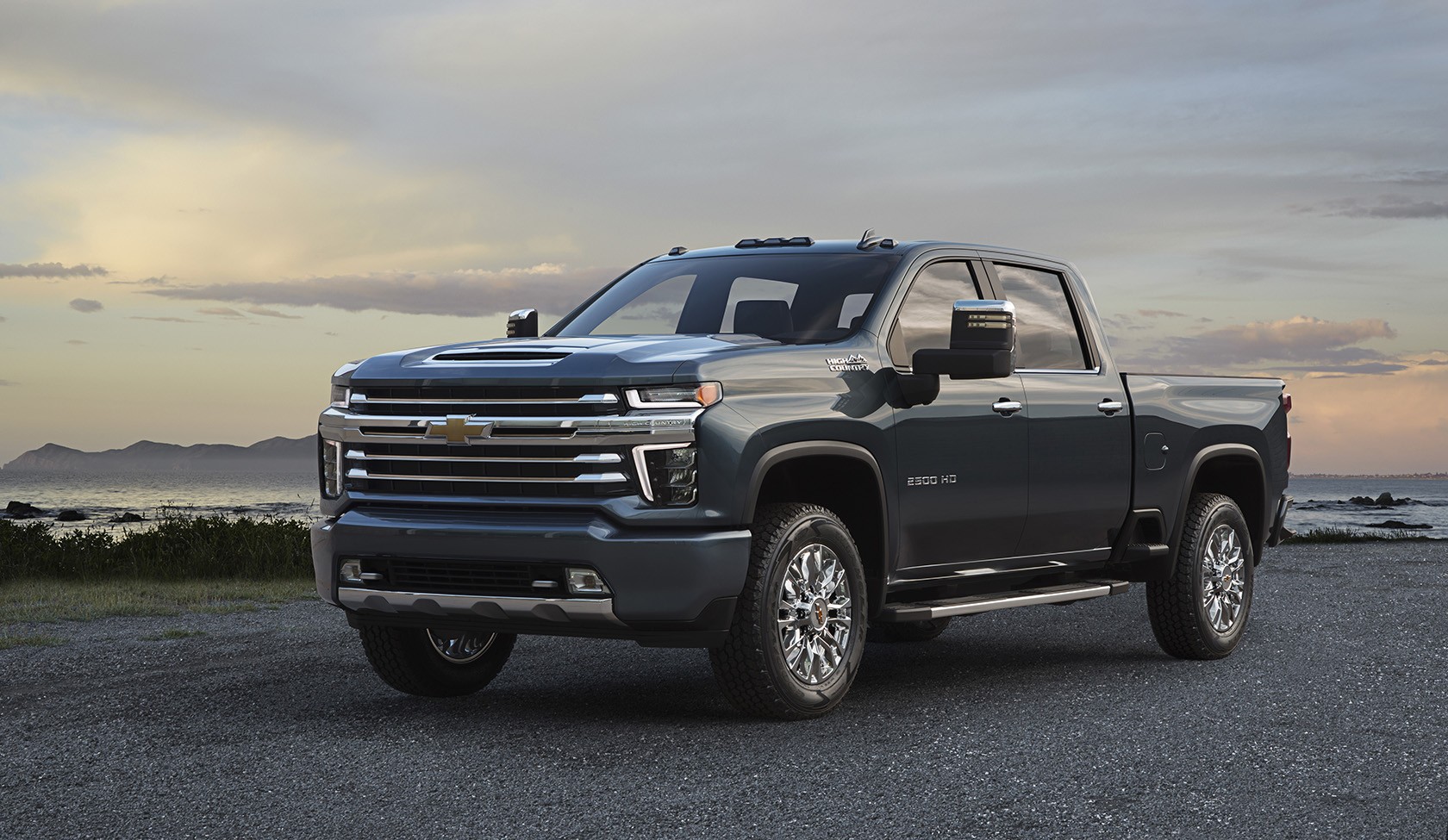
4. Chevrolet Silverado 3500HD
Hood Height: Approximately 53 to 54 inches
- Engine: 6.6-liter Duramax Turbo Diesel V8
- Horsepower: 470 hp
- Torque: 975 lb-ft
- Size: Up to 266.8 in L × 81.9 in W × 80.7 in H
Strip away GMC’s chrome-forward presentation, and you’re left with the Silverado 3500HD, mechanically near-identical underneath but wearing Chevrolet’s comparatively restrained styling language instead. That 53- to 54-inch hood height carries over directly, driven by the same considerable Duramax diesel and its associated cooling requirements.
470 horsepower. 975 lb-ft of torque. Numbers matching its GMC sibling precisely, because they’re pulling from the same engineering foundation. Ranchers, contractors, and serious trailer-towing buyers gravitate toward this specific powertrain regardless of which General Motors badge happens to sit on the grille, since the underlying mechanical capability remains genuinely identical between these two trucks.
Here’s an interesting wrinkle worth considering: pricing differences between Chevrolet and GMC often factor heavily into which badge buyers choose, sometimes more heavily than any genuine preference for one styling approach over the other. Silverado buyers frequently cite value as their deciding factor, accepting slightly less brightwork in exchange for comparable capability at a friendlier price point.
The tall hood serves a practical engineering purpose rather than a stylistic one. Like other heavy-duty diesel trucks, it provides the space needed to accommodate a large engine along with its extensive cooling sys.tem, ensuring sufficient airflow and component clearance instead of simply creating a more aggressive appearance
High Country trim buyers get their own dose of upscale treatment too, chrome accents and premium touches that echo what GMC offers, proving General Motors gives buyers genuine choice in how they want their capability presented, even while the fundamental hood height and mechanical foundation stay essentially the same across both brands.
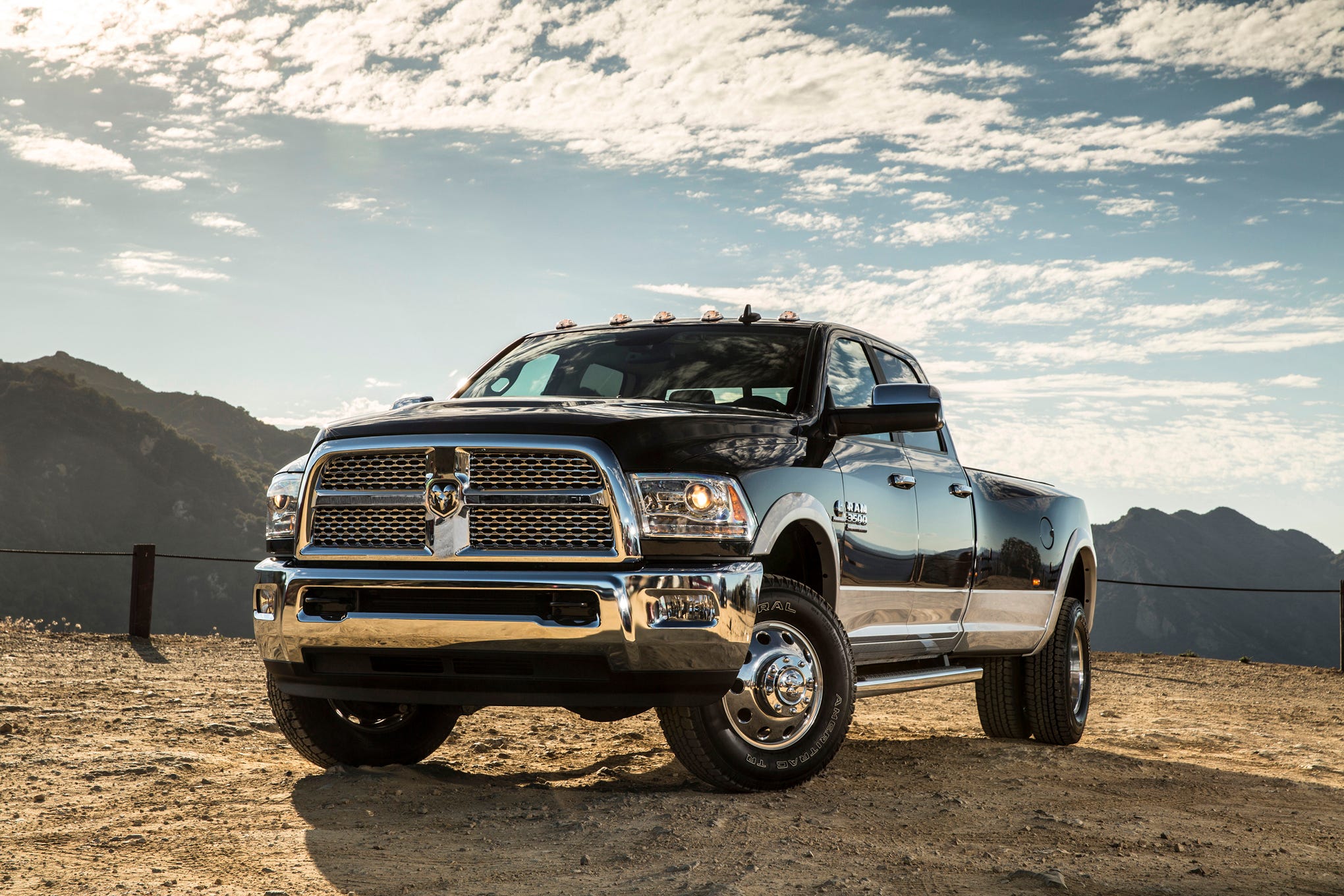
5. Ram 3500 Heavy Duty
Hood Height: Approximately 52 to 53 inches
- Engine: 6.7-liter Cummins High-Output Turbo Diesel I6
- Horsepower: 430 hp
- Torque: 1,075 lb-ft
- Size: Up to 261.1 in L × 83.5 in W × 80.9 in H
1,075 lb-ft. Read that number again. It’s the highest torque figure on this entire list, and it comes from an engine configuration genuinely different from every other truck covered here, a straight-six rather than a V8. That inline-six layout creates its own particular packaging puzzle.
Longer than a V8 but narrower, the Cummins engine demands specific hood dimensions to accommodate its shape alongside considerable turbocharging and cooling hardware, landing the Ram 3500 at roughly 52 to 53 inches, slightly shorter than its Ford and GM rivals but still genuinely towering compared to any half-ton truck.
Ram’s crosshair grille design amplifies that height perception further, creating an unmistakable front-end silhouette that’s become genuinely iconic among heavy-duty truck enthusiasts, instantly recognizable from considerable distance on any highway or job site.
Why does that torque figure matter so much practically? Farmers and commercial haulers moving the heaviest gooseneck and fifth-wheel trailers consistently favor low-end pulling power over peak horsepower numbers, since real-world towing happens mostly at lower engine speeds where torque, not horsepower, determines how confidently a truck actually pulls a heavy load up a grade or away from a stop.
Buyers specifically loyal to Cummins power often cite this exact torque advantage as their deciding factor, choosing the Ram 3500 over comparable Ford or GM alternatives precisely because that number sits highest among heavy-duty competitors, accepting whatever visibility tradeoff comes with the correspondingly tall hood structure as simply part of owning the strongest available pulling power in this segment.
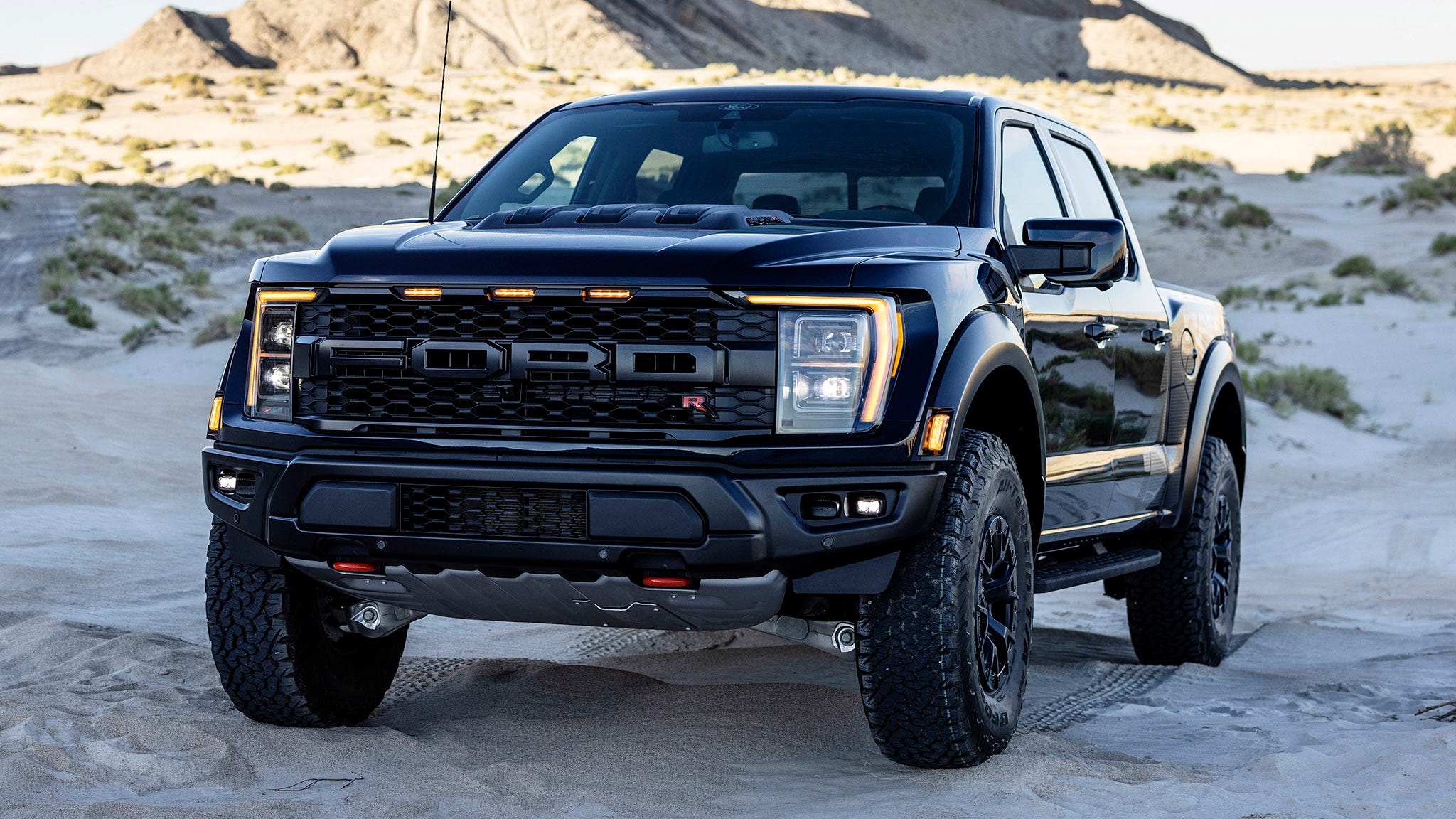
6. Ford F-150 Raptor R
Hood Height: Approximately 49 to 50 inches
- Engine: 5.2-liter Supercharged V8
- Horsepower: 720 hp
- Torque: 640 lb-ft
- Size: 232.6 in L × 87.0 in W × 80.6 in H
Forget about diesel engine cooling because that is not what gives the Ford Raptor R its towering height. This truck was built with one clear purpose in mind, and that is delivering outstanding performance far from paved roads. Its suspension system is designed to handle high-speed runs across rough ground that would quickly damage the suspension of a regular Ford F-150.
Rather than focusing on carrying heavy loads, the Raptor R is engineered to remain stable and controlled across demanding off-road conditions. Power is another area where this pickup stands in a class of its own. A supercharged 5.2-liter V8 engine produces an impressive 720 horsepower, placing the Raptor R among the strongest production pickup trucks available today.
That output gives it exceptional acceleration and plenty of strength for challenging driving conditions. While many modern trucks have moved toward smaller turbocharged engines, Ford continues to offer a large V8 for buyers who appreciate its unmistakable sound and strong performance.
Height also plays a major role in the truck’s identity. The hood rises to about 49 to 50 inches, thanks to a suspension system developed for desert driving and demanding rock crawling. Instead of relying on engine size to create that height, the raised suspension lifts the entire front section well above what you would find on a regular half-ton pickup.
Large fender flares and a wider stance make the truck appear even bigger from every angle. Place the Raptor R beside a standard Ford F-150, and the difference becomes obvious immediately. Its taller body, wider proportions, and aggressive styling leave no doubt about its purpose.
Those same features that make it outstanding away from paved roads can also make everyday parking more challenging. Tight parking spaces demand extra care, reminding owners that a truck built for extreme off-road adventures may require a little more patience during daily driving.
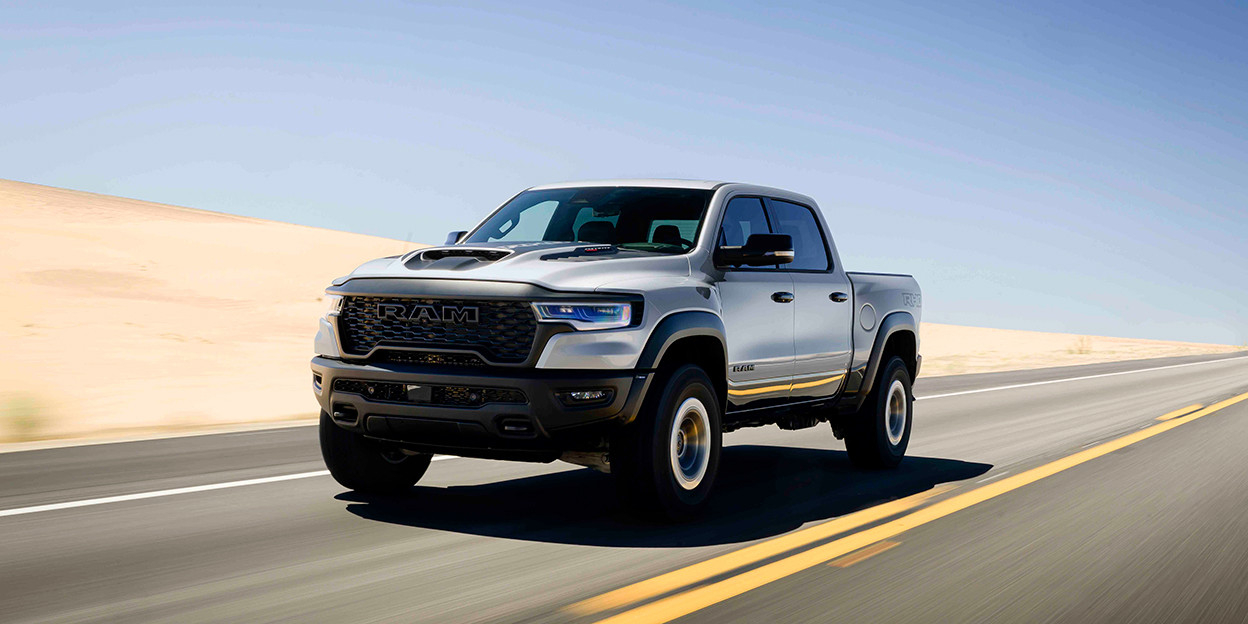
7. Ram 1500 RHO
Hood Height: Approximately 48 to 49 inches
- Engine: 3.0-liter Twin-Turbo Hurricane I6
- Horsepower: 540 hp
- Torque: 521 lb-ft
- Size: 232.9 in L × 88.0 in W × 80.9 in H
Power from a six-cylinder engine delivering 540 horsepower would have sounded impossible in a pickup truck not too many years ago. That has changed with the Ram RHO, which takes on Ford’s Raptor lineup by showing how modern twin turbo technology can match the performance many people once expected only from larger V8 engines.
Standing about 48 to 49 inches high, the truck’s hood reflects its off-road-focused design instead of the cooling needs associated with diesel-powered heavy-duty pickups. Much of that height comes from the advanced suspension setup, which is built to handle demanding conditions while giving the truck an aggressive stance.
The Ram RHO also stretches about 88 inches wide, making it one of the widest pickups in this group. Large fender flares combine with the raised suspension to give the truck a bold appearance that easily stands out on highways, city streets, and rough trails. Its broad body also adds to the confident look many truck buyers appreciate.
Choosing between the Ram RHO and Ford’s supercharged Raptor R has become a popular topic among truck buyers. Some people appreciate the strong performance and better efficiency of the turbocharged six-cylinder engine, while others still enjoy the sound and feel of a supercharged V8. Much of the discussion continues among enthusiasts and shoppers comparing both models.
Built with off-road driving in mind, the Ram RHO features suspension designed for fast desert runs and rough surfaces. The extra suspension travel and generous ground clearance naturally raise the front of the truck, giving it a much taller hood than a regular Ram 1500.
Also Read: 8 Diesel Trucks Ranked by Resale Value
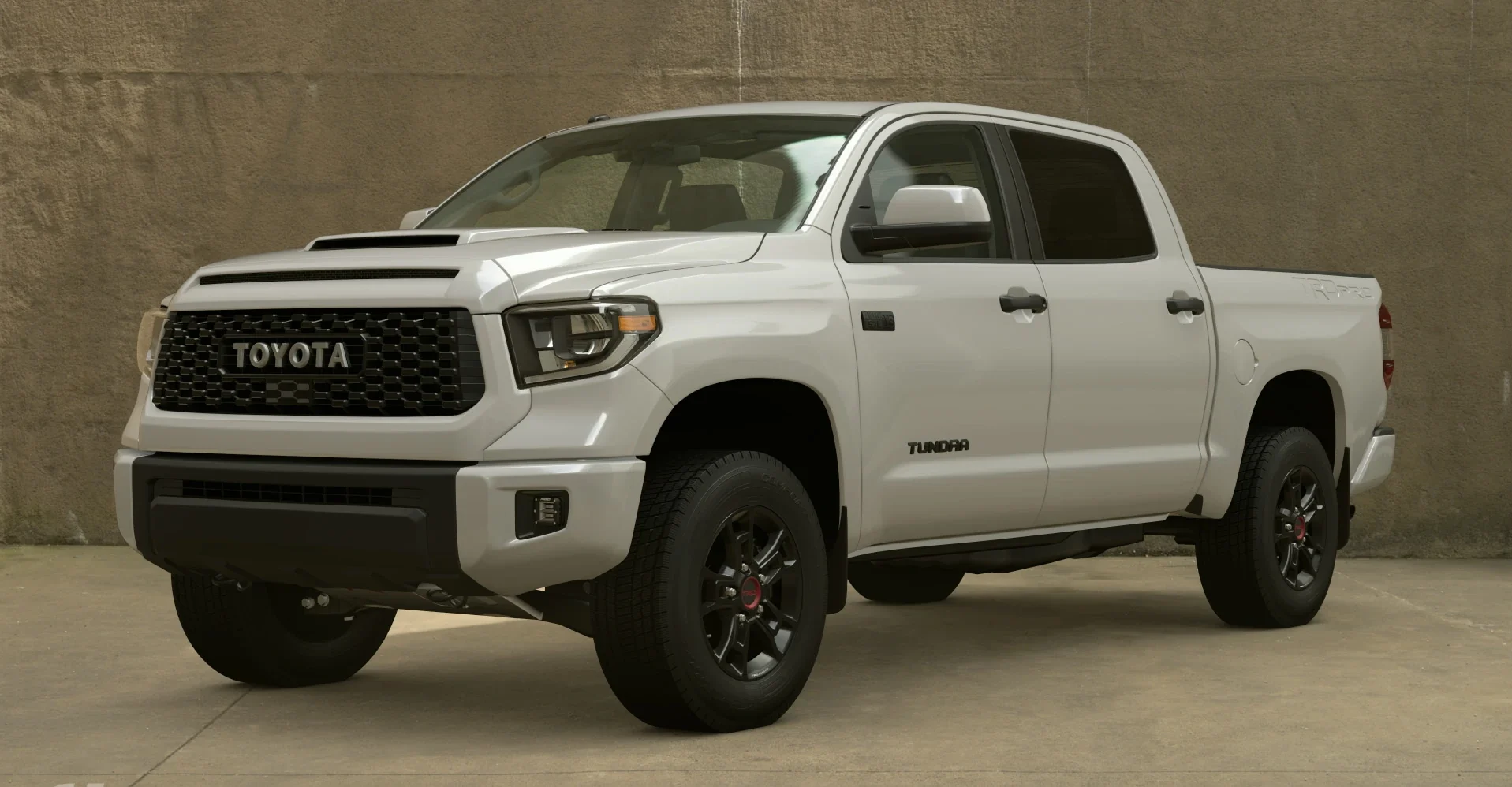
8. Toyota Tundra TRD Pro
Hood Height: Approximately 47 to 48 inches
- Engine: 3.4-liter Twin-Turbo V6 Hybrid (i-FORCE MAX)
- Horsepower: 437 hp
- Torque: 583 lb-ft
- Size: 233.6 in L × 81.6 in W × 78.0 in H
Hybrid technology, meet tall-hood truck culture. The Tundra TRD Pro closes out this list with a genuinely different engineering story than everything preceding it, combining a twin-turbo V6 with electric motor assistance to reach 437 horsepower and 583 lb-ft of torque, output figures that hold their own against considerably larger, more conventional engine configurations found elsewhere in this article.
That battery pack and electric motor hardware need genuine packaging space too, sitting alongside the twin-turbo V6 within a hood structure measuring approximately 47 to 48 inches, the shortest measurement on this list, yet still noticeably taller than any standard, non-TRD Pro pickup you’d find on a typical dealer lot.
TRD Pro suspension upgrades echo priorities seen throughout the Raptor R and RHO, adding genuine ground clearance and off-road capability that gives Toyota’s flagship performance trim real credibility against established American rivals that have dominated this particular segment for years.
Should reliability-focused buyers worry about combining turbocharging with hybrid complications? Toyota’s broader reputation suggests otherwise. Decades of dependable pickup truck production have earned genuine trust among buyers who might otherwise hesitate at a powertrain this mechanically involved, trust that extends directly into confidence surrounding this newer hybrid configuration.
Does the shortest hood on this list mean the least capable truck? Hardly. The Tundra TRD Pro proves genuine off-road credibility and impressive power output don’t require chasing the absolute tallest measurement available, closing out this list as solid evidence that meaningful capability comes in more than one specific height, engineering approach, or brand badge.
