
Driving range is often associated with electric vehicles, but it is equally important for gasoline-powered cars. A vehicle’s maximum distance on a full tank depends on two key factors: fuel economy and fuel tank capacity.
Some cars combine efficient engines with large fuel tanks, allowing them to travel well beyond 500 miles before refueling. Others prioritize lightweight construction, high performance, or compact packaging, resulting in surprisingly short driving ranges that require more frequent trips to the gas station.
Cars that struggle to reach 300 miles on a full tank are not necessarily poor vehicles. In many cases, manufacturers intentionally accept a shorter range to improve handling, reduce weight, or maximize performance.
Sports cars often feature relatively small fuel tanks because additional fuel adds weight that can affect acceleration, braking, and cornering. High-horsepower engines also consume fuel at a much faster rate, further reducing the distance drivers can travel between fill-ups.
For buyers who regularly commute long distances, fuel range can be an important ownership consideration. More frequent refueling stops may become inconvenient during highway trips or daily driving.
On the other hand, enthusiasts often consider this a reasonable trade-off for engaging performance and responsive handling.
The following ten cars are known for offering relatively short driving ranges, often struggling to reach 300 miles on a full tank under EPA estimates or typical real-world driving conditions. Despite their limited range, each delivers unique strengths that continue to attract enthusiastic buyers.
Also Read: 10 Electric Vehicles That Spend the Least Time at Charging Stations
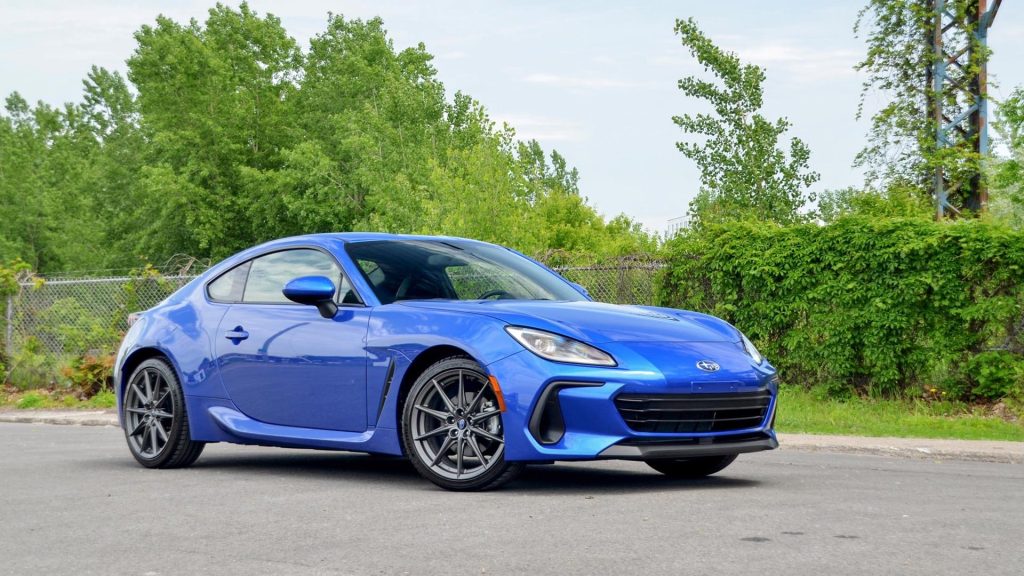
1. Subaru BRZ
The Subaru BRZ was never designed to be a long-distance highway cruiser. Instead, its engineering focuses on lightweight construction, balanced handling, and delivering one of the purest driving experiences available at an affordable price.
To achieve that objective, Subaru equipped the coupe with a relatively small fuel tank measuring just over 13 gallons. Combined with spirited driving, this modest capacity often limits the BRZ to less than 300 miles on a full tank despite respectable fuel economy figures.
Enthusiasts rarely view the limited driving range as a major drawback because the BRZ encourages drivers to seek winding roads rather than endless interstate miles. The naturally aspirated boxer engine rewards high engine speeds, and owners frequently use the available performance throughout every drive.
Aggressive acceleration and enthusiastic cornering naturally increase fuel consumption, reducing the practical distance between fill-ups even further.
The compact fuel tank also contributes to the car’s carefully balanced chassis. Carrying less fuel means lower full weight and reduced mass over the rear axle, helping preserve the agile handling characteristics that define the BRZ.
Subaru deliberately prioritized driving dynamics over maximum cruising range, and that philosophy is evident throughout the vehicle’s design.
The BRZ features a driver-focused interior with well-bolstered sport seats, straightforward controls, and outstanding visibility. Each element is purposefully designed to enhance driving engagement, reinforcing its identity as a sports coupe instead of a grand touring car.
Owners who purchase the BRZ typically accept more frequent fuel stops because the reward comes every time the road begins to twist. For enthusiasts, its lively personality easily outweighs the inconvenience of a relatively short range.
Specifications
- Engine: 2.4 liter naturally aspirated flat four
- Torque: 184 lb ft
- Horsepower: 228 hp
- Length/Width: 167.9 inches / 69.9 inches
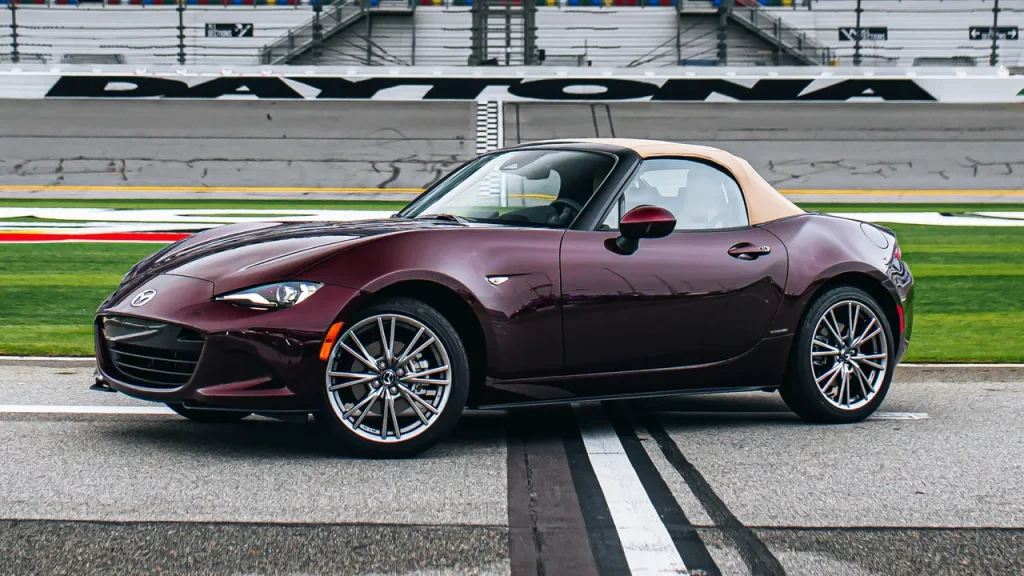
2. Mazda MX-5 Miata
Few sports cars embody driving enjoyment as completely as the Mazda MX-5 Miata. Its lightweight construction, responsive steering, and perfectly balanced chassis have earned worldwide admiration for decades.
One compromise that accompanies this philosophy is a relatively short driving range. Equipped with a fuel tank of approximately 11.9 gallons, the Miata frequently struggles to exceed 300 miles between fill-ups, particularly when driven enthusiastically.
Mazda intentionally kept the fuel tank compact to preserve the roadster’s low weight and ideal weight distribution. Every engineering decision surrounding the Miata centers on responsiveness rather than long-distance efficiency.
Carrying additional fuel would increase vehicle mass and slightly alter the handling characteristics that have made the car famous. As a result, the smaller tank remains an important part of its full design.
The naturally aspirated 2.0 liter engine delivers strong efficiency during relaxed highway driving, but most owners enjoy using the upper portion of the rev range, where the engine feels most energetic.
Frequent acceleration, spirited cornering, and open-top weekend drives naturally reduce real-world range compared with official estimates.
The cabin stays simple and purposeful, prioritizing the driver above all else. Its compact layout, supportive seats, and easy-to-use controls highlight the Miata’s sports car character. Rather than focusing on excess luxury, it keeps attention firmly on the driving experience.
Although drivers may visit fuel stations more often than owners of larger sedans, few consider it a significant sacrifice. The Miata proves that an engaging driving experience can outweigh practical considerations, making every mile far more memorable than the number displayed on the trip computer.
Specifications
- Engine: 2.0 liter naturally aspirated inline four
- Torque: 151 lb ft
- Horsepower: 181 hp
- Length/Width: 154.1 inches / 68.3 inches
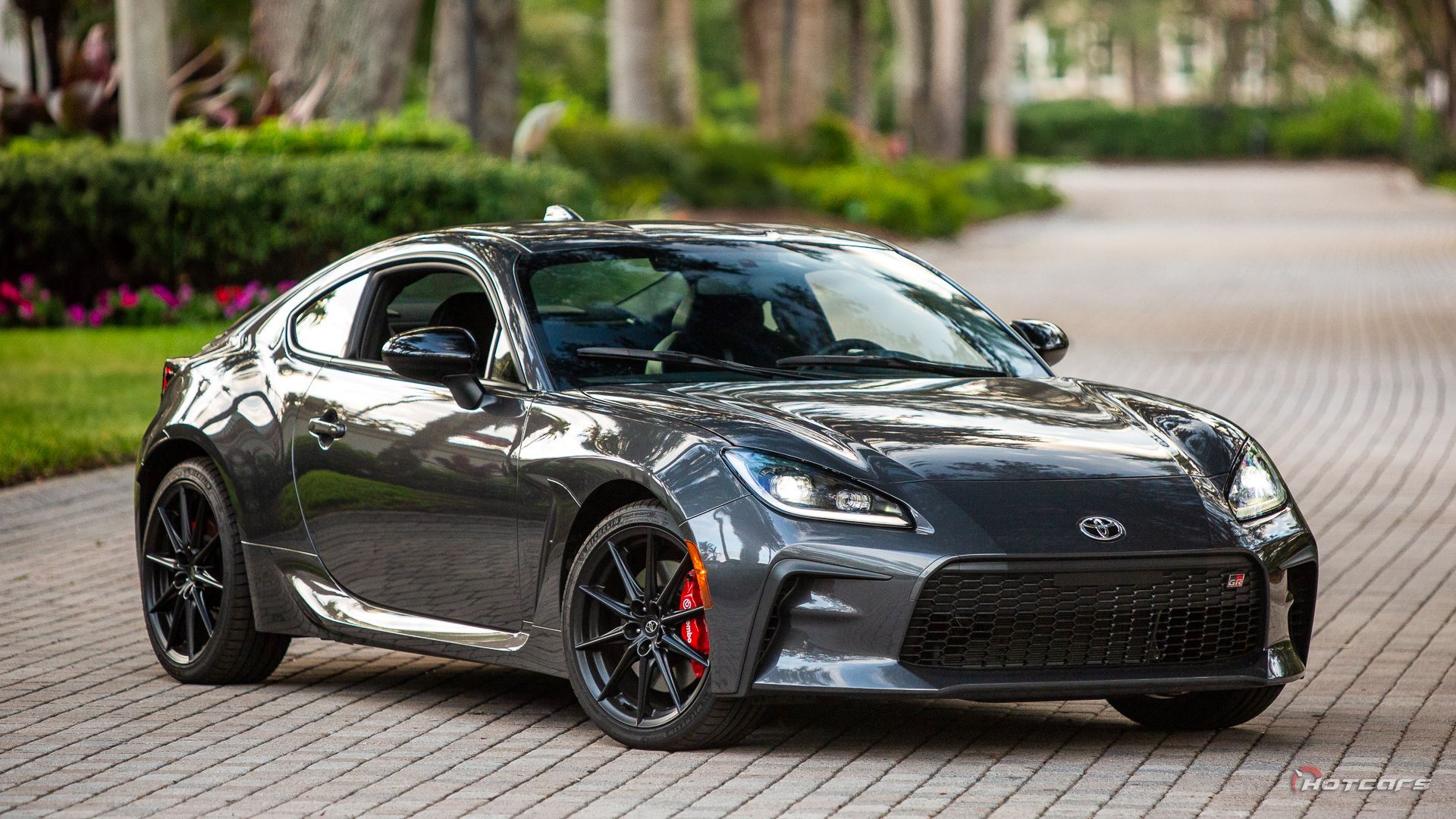
3. Toyota GR86
The Toyota GR86 follows the same philosophy as traditional lightweight sports coupes by prioritizing driver engagement over long-distance touring. Rather than equipping the car with a large fuel tank, Toyota chose a compact 13.2 gallon tank that helps keep weight under control and contributes to the GR86’s balanced handling.
While its EPA fuel economy figures are solid, the coupe’s limited fuel tank size restricts driving range, making it difficult to exceed 300 miles per fill-up, particularly when driven as intended in a more spirited manner.
The GR86 encourages spirited driving every time the road begins to curve. Its naturally aspirated 2.4-liter boxer engine delivers power progressively, rewarding drivers who keep the engine in the higher rev range.
While this makes the coupe entertaining, it also increases fuel consumption compared with gentle highway cruising. Many owners rarely achieve the maximum theoretical range because they frequently take advantage of the car’s responsive throttle, sharp steering, and excellent chassis balance.
Toyota also focused on keeping unnecessary weight to a minimum throughout the vehicle. A larger fuel tank would have increased mass and slightly altered the carefully tuned weight distribution that defines the GR86’s handling characteristics.
Engineers accepted a shorter cruising range because preserving agility was considered more important than reducing fuel stops.
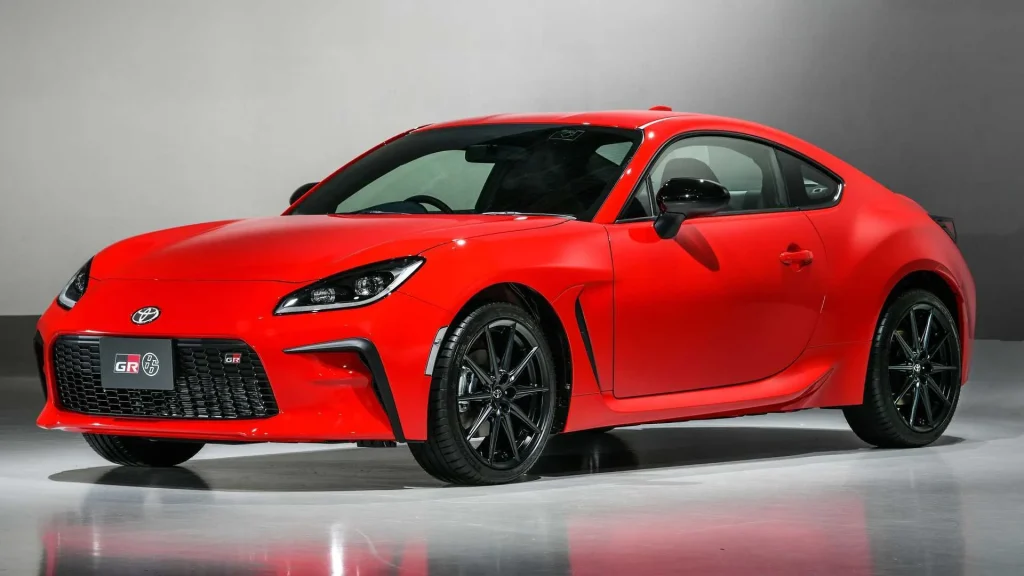
The GR86 carries through a driver-first design, offering supportive sport seats, a clean and straightforward dashboard, and intuitive controls that help reduce distractions. Each detail is tuned to maximize engagement behind the wheel rather than prioritize luxury or long-distance comfort.
For buyers seeking an affordable sports coupe, the occasional extra fuel stop becomes a small compromise. The GR86 rewards its driver with an engaging experience that few vehicles at its price point can match, making its limited driving range an acceptable trade-off for exceptional handling.
Specifications
- Engine: 2.4 liter naturally aspirated flat four
- Torque: 184 lb ft
- Horsepower: 228 hp
- Length/Width: 167.9 inches / 69.9 inches
4. Chevrolet Camaro SS
The Chevrolet Camaro SS delivers impressive V8 performance, muscular styling, and exhilarating acceleration, but efficiency has never been its primary objective.
Powered by a naturally aspirated 6.2-liter V8 producing substantial horsepower, the Camaro consumes fuel at a noticeably faster rate than most family sedans. Even with its 19-gallon fuel tank, spirited driving often limits the vehicle to fewer than 300 miles before refueling becomes necessary.
A major reason lies in the character of the engine itself. The V8 provides abundant torque throughout the rev range, encouraging rapid acceleration whenever the driver presses the throttle. While highway cruising can produce respectable fuel economy for such a powerful engine, city driving and enthusiastic use quickly reduce the available range.
Many owners purchase the Camaro specifically to enjoy its performance, making conservative fuel-saving habits relatively uncommon.
The Camaro SS also places considerable emphasis on handling. Performance suspension tuning, wide tires, and rear-wheel drive combine to create an engaging driving experience that rewards spirited operation.
Those same characteristics naturally encourage driving styles that consume more fuel than the EPA laboratory cycle might suggest.
The Camaro features supportive sport seats and a driver-focused cockpit that reinforces its performance-driven character. Practicality is secondary to excitement, underscoring its identity as a modern American muscle car.
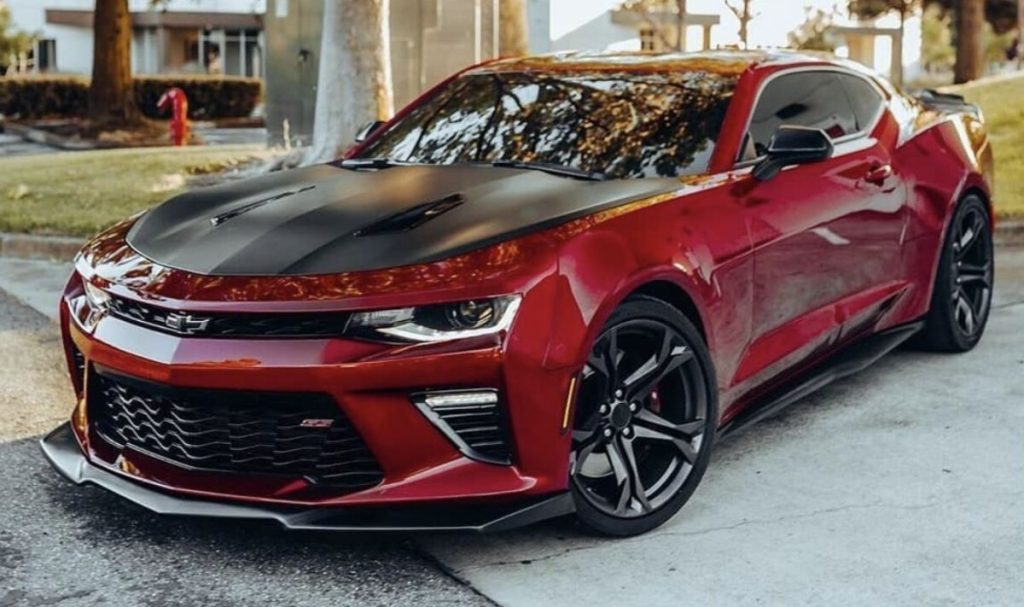
Drivers considering the Camaro SS rarely focus on maximizing distance between fuel stops. Instead, they appreciate the unmistakable soundtrack, strong acceleration, and responsive dynamics that define the car.
Its relatively short real-world range simply reflects the performance-oriented philosophy that has made the Camaro an icon for generations.
Specifications
- Engine: 6.2 liter naturally aspirated V8
- Torque: 455 lb ft
- Horsepower: 455 hp
- Length/Width: 188.3 inches / 74.7 inches
5. Dodge Challenger SRT Hellcat
The Dodge Challenger SRT Hellcat was engineered with one objective above everything else: delivering relentless muscle car performance. Its supercharged 6.2-liter HEMI V8 produces immense horsepower and torque, making it one of the most powerful production coupes ever built.
That incredible output comes with a significant trade-off in fuel consumption. Despite carrying an 18.5 gallon fuel tank, the Hellcat often struggles to approach 300 miles on a full tank, especially when driven in the spirited manner it encourages.
The reason is simple. A supercharged V8 requires a considerable amount of fuel whenever boost builds under acceleration. Gentle highway cruising can improve fuel economy, but few owners purchase a Hellcat only to drive conservatively.
Quick launches, aggressive passing maneuvers, and enthusiastic weekend drives rapidly reduce the available fuel range. In urban driving, frequent stop-and-go traffic further increases consumption, making fuel stops much more common than in ordinary coupes.
Dodge accepted this compromise because efficiency was never the vehicle’s mission. Engineers focused instead on creating an authentic American muscle car capable of extraordinary straight-line speed while remaining comfortable enough for everyday driving.
The spacious cabin, supportive seats, modern infotainment system, and surprisingly usable trunk add practicality without distracting from the car’s performance-focused identity.
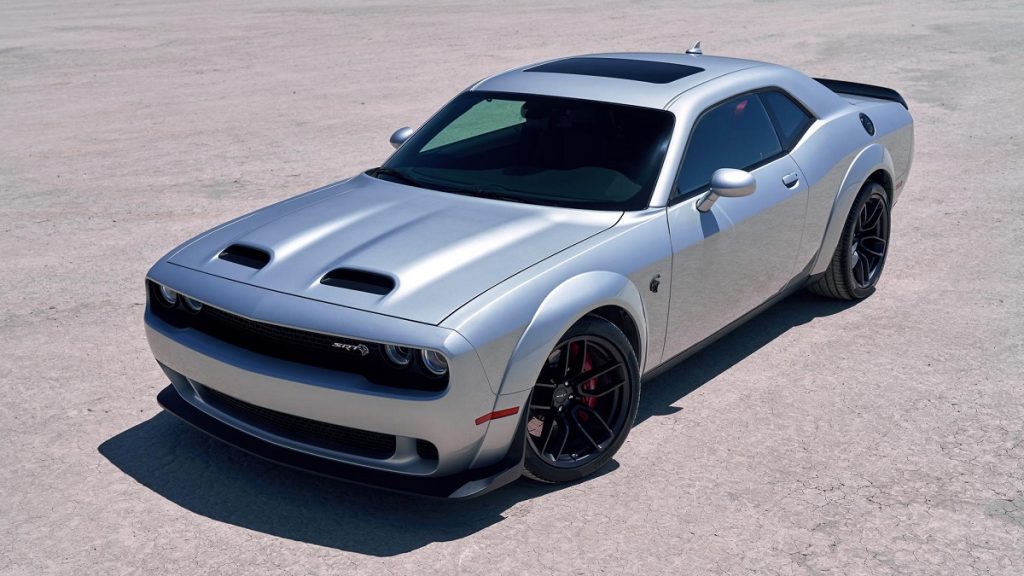
Another factor affecting range is the vehicle’s substantial weight. Moving a large coupe powered by a high-output V8 naturally requires more energy than a lightweight sports car. Owners generally consider that a fair exchange for the unmistakable exhaust note and thrilling acceleration.
The Challenger SRT Hellcat reminds buyers that maximum performance and maximum fuel range rarely coexist. Drivers who choose this legendary muscle car willingly accept more frequent fuel stops in exchange for an unforgettable driving experience every time they press the accelerator.
Specifications
- Engine: 6.2-liter supercharged HEMI V8
- Torque: 650 lb ft
- Horsepower: 717 hp
- Length/Width: 197.9 inches / 75.7 inches
6. Audi R8 V10 Performance
The Audi R8 V10 Performance represents one of the last opportunities to experience a naturally aspirated V10 in a modern production supercar. Its spectacular engine, razor-sharp handling, and everyday usability have earned it a loyal following among enthusiasts.
However, impressive performance comes at the expense of driving range. Equipped with a fuel tank of approximately 21.9 gallons, the R8 can still struggle to exceed 300 miles on a full tank when driven enthusiastically because of its thirsty V10 engine.
Unlike turbocharged rivals that often prioritize efficiency during relaxed driving, the naturally aspirated V10 encourages drivers to use higher engine speeds where it produces its distinctive soundtrack and strongest performance.
Every hard acceleration or spirited run through winding roads significantly increases fuel consumption. As a result, real-world driving range frequently falls well below what careful highway cruising might achieve.
Audi intentionally designed the R8 around balance rather than endurance. Engineers focused on weight distribution, precise steering response, and exceptional chassis dynamics instead of maximizing fuel capacity.
Carrying additional fuel would increase the full weight and slightly alter the handling characteristics that define the car’s personality. The relatively limited range, therefore, reflects a deliberate engineering decision rather than an oversight.
The R8 features an upscale, driver-focused cabin with premium materials, supportive sport seats, and a Virtual Cockpit digital instrument display that keeps key information within easy reach. A clean, uncluttered layout helps minimize distractions and allows the driver to stay fully focused on the road.
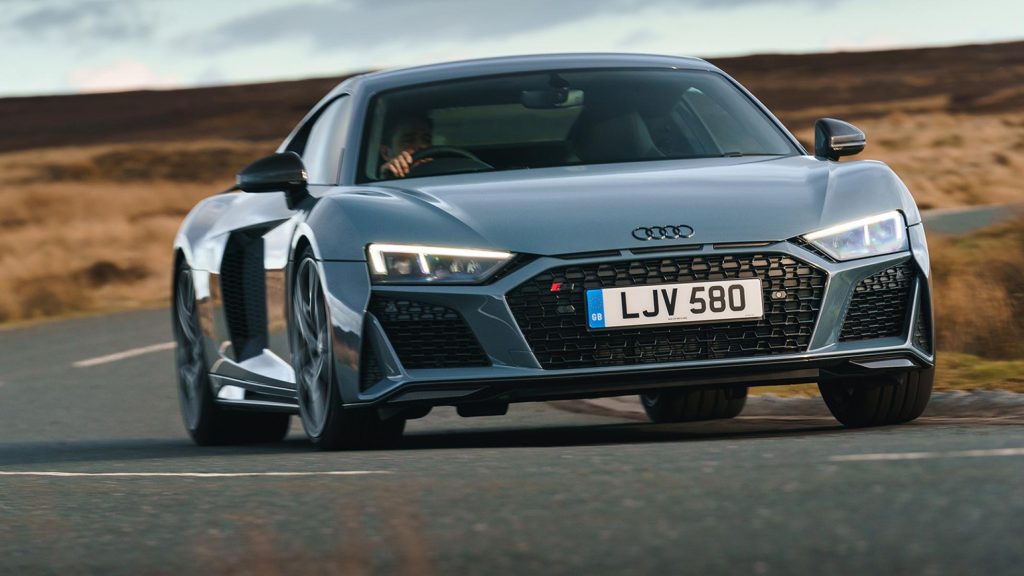
Even with spirited driving leading to more frequent fuel stops, most owners tend to see it as a small trade-off rather than a real drawback.
The emotional appeal of the naturally aspirated V10, combined with exceptional handling and supercar performance, makes the R8 an unforgettable machine whose limited range becomes part of its unique character.
Specifications
- Engine: 5.2 liter naturally aspirated V10
- Torque: 413 lb ft
- Horsepower: 602 hp
- Length/Width: 174.4 inches / 76.4 inches
7. Nissan Z
The latest Nissan Z carries forward decades of sports car heritage while introducing modern performance and technology. Beneath its retro-inspired styling sits a twin-turbocharged 3.0-liter V6 that delivers impressive acceleration and strong mid-range power.
While the engine provides thrilling performance, it also contributes to a relatively short driving range. Combined with the Z’s 16.4-gallon fuel tank, spirited driving often makes it difficult to reach 300 miles before the next fuel stop.
Performance enthusiasts rarely drive the Nissan Z gently. The responsive throttle, rear-wheel-drive layout, and available six-speed manual transmission encourage enthusiastic acceleration and frequent use of the engine’s generous power.
Every quick launch, high-speed merge, or spirited drive through winding roads increases fuel consumption well beyond what is possible during steady highway cruising.
Nissan deliberately balanced the Z around driver enjoyment rather than maximum fuel efficiency. The compact fuel tank helps keep vehicle weight under control while maintaining the balanced handling characteristics expected from a modern sports coupe.
Engineers understood that buyers interested in the Z would prioritize responsiveness, braking, and cornering over long-distance fuel range.
The cabin of the Z combines classic design influences with modern technology, featuring a digital instrument cluster, supportive sport seats, an intuitive infotainment system, and a driver-focused cockpit that highlights its sporting character. While practicality is present, it is clearly secondary to performance.
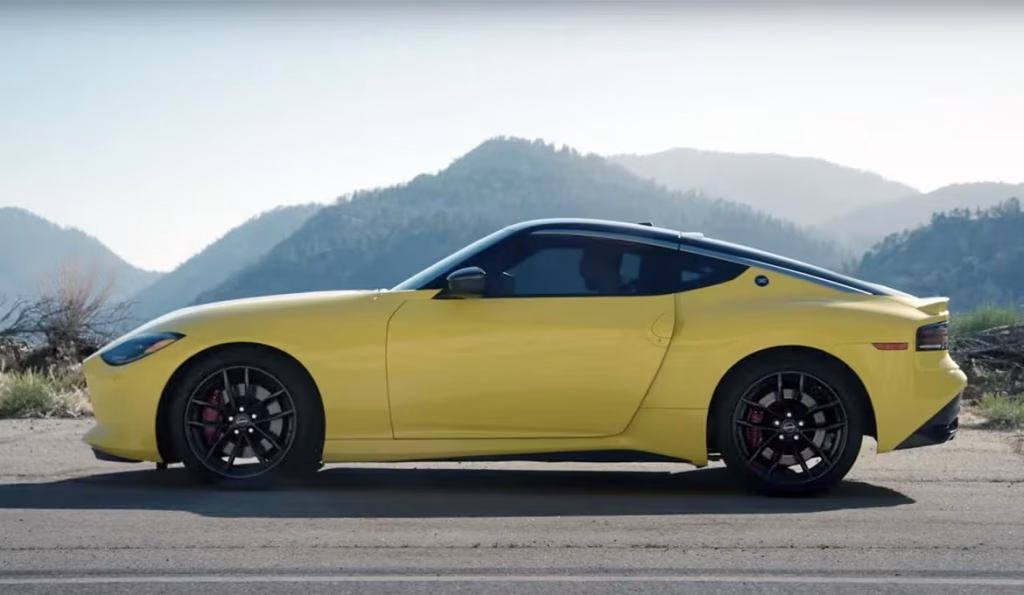
Despite requiring more frequent visits to the gas station than many everyday vehicles, the Nissan Z rewards drivers with an engaging experience every time they get behind the wheel. Its limited driving range reflects the compromises necessary to create a genuine rear-wheel-drive sports car that emphasizes excitement rather than economy.
Specifications
- Engine: 3.0-liter twin-turbocharged V6
- Torque: 350 lb ft
- Horsepower: 400 hp
- Length/Width: 172.4 inches / 72.6 inches
8. Porsche 718 Cayman GTS 4.0
The Porsche 718 Cayman GTS 4.0 proves that exceptional driving dynamics often come before long-distance practicality. Powered by a naturally aspirated 4.0 liter flat-six engine, the Cayman GTS delivers immediate throttle response, an exhilarating soundtrack, and precise handling that has made it one of the finest driver’s cars available today.
The trade-off is a relatively limited driving range. With its modest fuel tank and enthusiastic fuel consumption during spirited driving, remaining below 300 miles on a full tank is common for many owners.
Unlike turbocharged engines designed to maximize efficiency, the naturally aspirated flat six encourages drivers to rev the engine toward its redline, where it produces its most rewarding performance.
Frequent acceleration through mountain roads or track sessions can reduce fuel economy substantially, making fuel stops a regular part of ownership.
Porsche intentionally engineered the Cayman around balance and agility. The mid-engine layout, lightweight construction, and compact dimensions create remarkable cornering ability.
Increasing fuel tank capacity would add weight and potentially affect the handling precision that defines the car. Engineers accepted the shorter cruising range because preserving driving enjoyment remained the priority.
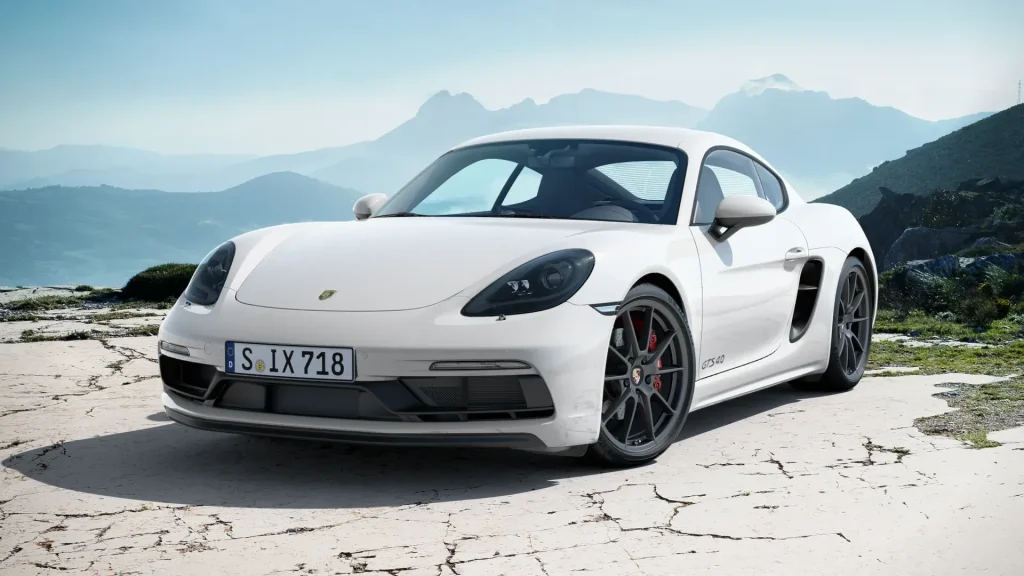
The cabin reflects Porsche’s performance philosophy with supportive sport seats, high-quality materials, and controls positioned for quick operation. Every detail emphasizes the connection between driver and machine rather than luxury for its own sake.
Owners rarely purchase the Cayman GTS to cover hundreds of uninterrupted highway miles. Instead, they seek one of the purest sports car experiences on the market. The need to refuel more frequently becomes a small compromise when every mile delivers the level of precision and excitement that has made Porsche famous.
Specifications
- Engine: 4.0 liter naturally aspirated flat six
- Torque: 309 lb ft
- Horsepower: 394 hp
- Length/Width: 172.4 inches / 70.9 inches
9. Lexus LC 500
The Lexus LC 500 stands apart from many modern grand touring coupes by relying on a naturally aspirated 5.0-liter V8 instead of a smaller turbocharged engine. That decision gives the LC 500 an unmistakable exhaust note, smooth power delivery, and an engaging driving experience that appeals to enthusiasts.
However, the large-displacement engine also consumes fuel at a noticeable rate. Even with a 21.7-gallon fuel tank, real-world driving, particularly in city traffic or during spirited acceleration, can make it difficult to comfortably exceed 300 miles on a full tank.
One reason is the vehicle’s character. The LC 500 encourages drivers to enjoy the upper reaches of the V8’s rev range, where the engine produces its most exciting sound and strongest performance.
Hard acceleration increases fuel use, which reduces how far the car can travel on a single tank. Although steady highway driving can improve efficiency, many owners value the coupe’s strong engine and driving experience more than fuel economy.
The LC 500 also carries a substantial amount of luxury equipment, premium sound insulation, and high-quality materials. These features contribute to its refined grand touring nature but also increase its full weight, requiring additional fuel during everyday driving.
Lexus intentionally accepted this compromise to create a vehicle that prioritizes comfort, refinement, and emotional appeal over maximum efficiency.
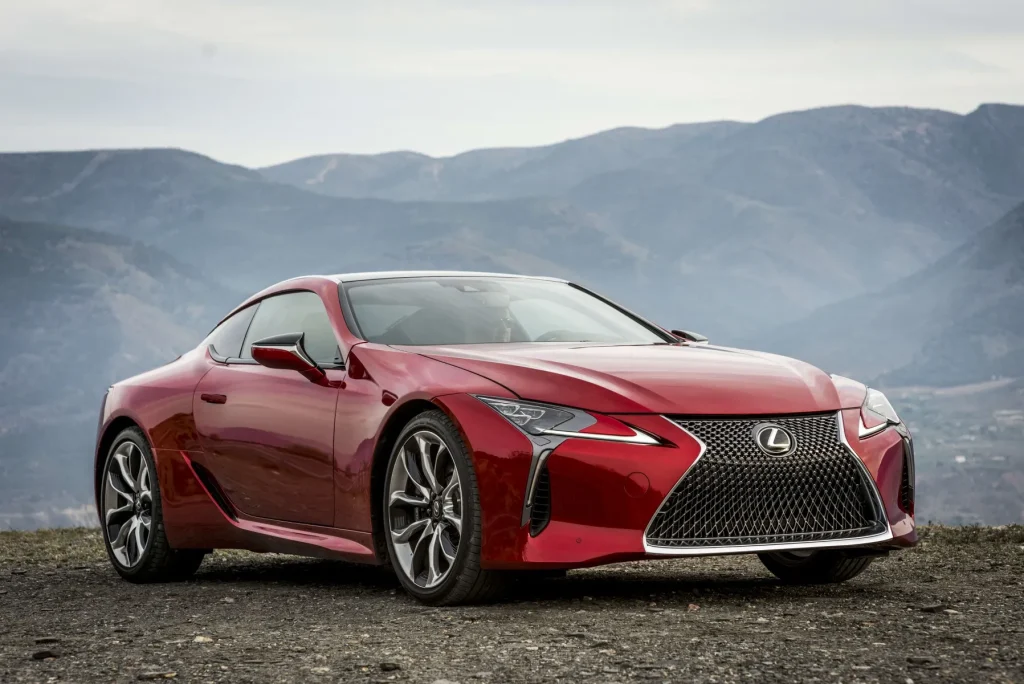
Meticulous craftsmanship defines the cabin, where premium leather upholstery, refined trim, and supportive seating create one of the most luxurious interiors in its class. Even extended drives remain comfortable, despite the need for occasional fuel stops.
For buyers seeking a naturally aspirated V8 luxury coupe, the LC 500 delivers an experience few competitors can replicate. Its relatively limited driving range becomes a reasonable compromise for an engine that continues to represent one of the automotive world’s finest naturally aspirated powerplants.
Specifications
- Engine: 5.0 liter naturally aspirated V8
- Torque: 398 lb ft
- Horsepower: 471 hp
- Length/Width: 187.4 inches / 75.6 inches
10. Mercedes AMG GT Coupe
The Mercedes AMG GT Coupe was created to deliver high performance with everyday usability, but fuel efficiency was never at the top of its engineering priorities.
Beneath its long hood sits a handcrafted twin-turbocharged 4.0-liter V8 that produces remarkable acceleration and an unmistakable exhaust note. While the engine is impressively refined, its appetite for fuel means the AMG GT frequently struggles to reach 300 miles on a full tank during enthusiastic real-world driving.
The V8 develops abundant torque from low engine speeds, making rapid acceleration effortless. Drivers often find themselves using this performance whenever road conditions allow, naturally increasing fuel consumption.
Stop-and-go city traffic, spirited weekend drives, and frequent highway overtaking all reduce the available range considerably compared with ideal laboratory conditions.
Mercedes AMG engineers intentionally focused on performance rather than maximizing distance between fuel stops. The vehicle’s balanced chassis, rear transaxle layout, adaptive suspension, and aerodynamic bodywork were all designed to create an engaging grand touring sports car.
Increasing fuel capacity would have added unnecessary weight and potentially affected the handling balance that distinguishes the AMG GT from many rivals.
The cabin combines premium craftsmanship with a driver-focused layout. High-quality materials, supportive performance seats, and advanced infotainment technology create an environment suited to both spirited driving and comfortable long-distance travel.
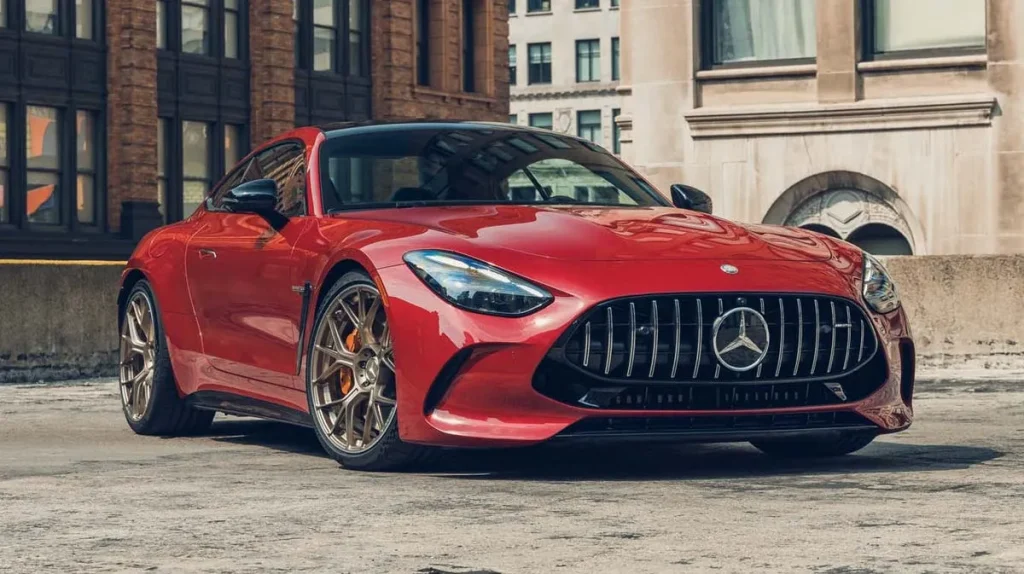
Owners may need to refuel more often compared to traditional luxury coupes, but the driving experience is widely seen as making up for it.
The handcrafted V8, precise steering, and exceptional road presence make the AMG GT a rewarding machine whose relatively short driving range simply reflects its uncompromising performance-focused character.
Specifications
- Engine: 4.0-liter twin-turbocharged V8
- Torque: 590 lb ft
- Horsepower: 577 hp
- Length/Width: 179.0 inches / 76.3 inches
Also Read: 10 Car Companies That Got Their Start Building Tractors
