
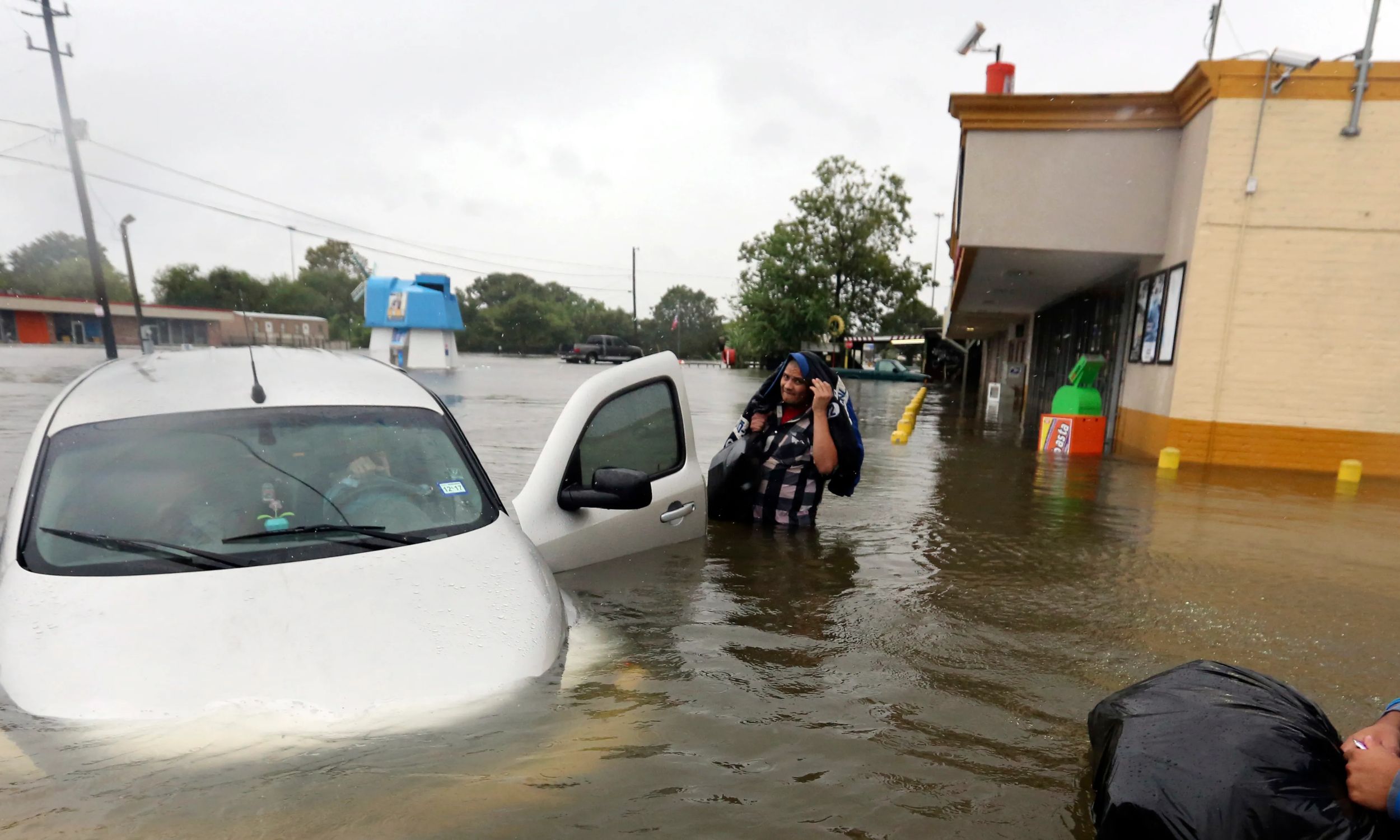
Buying a vehicle requires a different approach if you live in an area that experiences heavy rain, flash floods, or frequent tropical storms. A car that performs well in normal weather may become a poor choice once roads begin to fill with standing water.
Low-riding sedans, especially those with limited ground clearance and low air intake placement, can suffer severe damage after driving through water that is deeper than expected. Engine failure caused by water entering the intake, electrical problems, and water-soaked interiors are all expensive repairs that many drivers would rather avoid.
One of the first specifications worth checking before buying a vehicle for these conditions is its maximum water wading depth. This figure shows how much water the vehicle can safely pass through at low speed without allowing water into the engine, electrical components, or cabin ventilation system.
A higher wading depth gives drivers more confidence when unexpected flooding blocks part of the road, although caution is always necessary whenever standing water is present. Manufacturers that build vehicles for demanding conditions usually take extra steps to improve durability.
Air intakes are positioned higher inside the engine compartment, sensitive electronic components receive better protection against moisture, and breather tubes are relocated to reduce the chance of water entering vital systems. These engineering improvements help vehicles remain dependable when weather conditions become challenging.
The nine vehicles featured in this list combine generous ground clearance, capable All Wheel Drive systems, and impressive water-wading ability. Together, these qualities make them strong options for drivers who regularly encounter flooded roads and want a vehicle that is better prepared for difficult weather conditions.
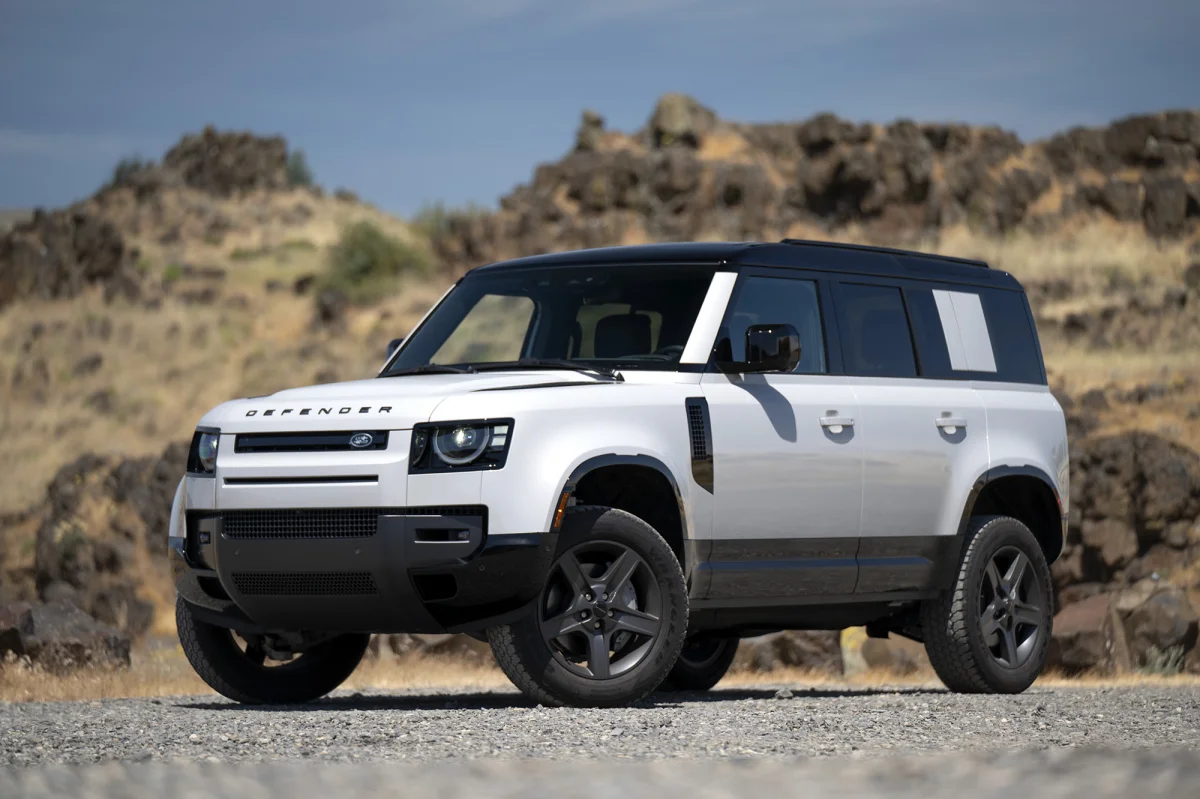
1. Land Rover Defender 110
Max Wading Depth: 900 mm (35.4 inches)
- Engine: 3.0L Turbocharged Inline-6 (or 2.0L Turbo / 5.0L Supercharged V8)
- Horsepower: 296 hp to 518 hp
- Torque: 295 lb-ft to 461 hp
- Size: 187.4 in Long x 78.6 in Wide
Among production SUVs available today, the Land Rover Defender 110 sets the benchmark for factory-rated water-wading capability with an impressive depth of 900 millimeters. This ability comes from careful engineering rather than marketing claims.
Land Rover designed the Defender with a high-mounted air intake, sealed electrical wiring, and well-protected underbody components so it can handle extended water crossings with greater confidence. Every part of the vehicle has been developed to perform reliably when road conditions become challenging.
Another advantage comes from the Defender’s electronic air suspension. Before entering standing water, drivers can raise the vehicle to its highest setting, increasing the distance between the underbody and any hidden obstacles below the surface.
This extra ground clearance helps reduce the risk of striking submerged debris, deep potholes, or uneven road surfaces that cannot be seen through muddy water. It gives drivers an extra level of confidence beyond the already impressive factory wading capability.
The Defender also includes one feature that very few competitors can match. Its Wade Sensing system uses ultrasonic sensors mounted beneath the door mirrors to monitor water depth while the vehicle is moving. The information appears on the central touchscreen, allowing the driver to see the current water level in real time instead of relying only on visual judgment.
This technology becomes especially useful because floodwater often hides sudden drops, drainage channels, or deep holes beneath the surface. By providing accurate measurements throughout the crossing, Wade Sensing helps drivers make better decisions and avoid entering water that exceeds the vehicle’s safe operating limits.
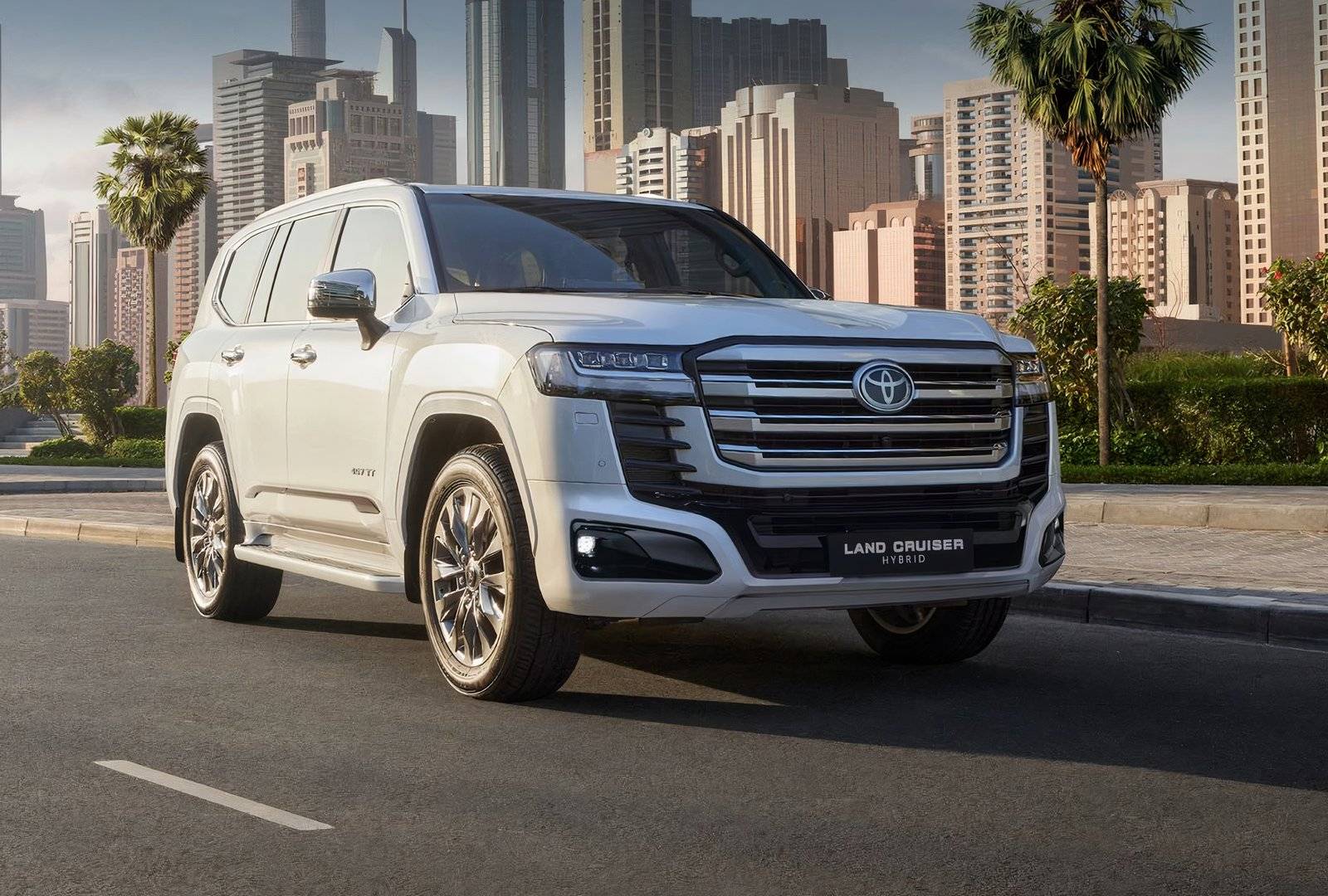
2. Toyota Land Cruiser 300 Series
Max Wading Depth: 700 mm (27.5 inches)
- Engine: 3.5L Twin-Turbo V6 Petrol (or 3.3L Twin-Turbo V6 Diesel)
- Horsepower: 409 hp (Petrol) / 304 hp (Diesel)
- Torque: 479 lb-ft (Petrol) / 516 lb-ft (Diesel)
- Size: 196.3 in Long x 78.0 in Wide
Few SUVs have earned as much confidence from emergency services and humanitarian organizations as the Toyota Land Cruiser 300 Series. Its reputation comes from years of dependable performance in places affected by flooding, harsh weather, and damaged roads rather than advertising claims.
Many agencies continue to rely on it because it has repeatedly shown that it can handle demanding conditions while remaining reliable. This long history has helped make the Land Cruiser one of the most trusted full-size SUVs available. Buyers can choose between a 3.5-liter twin-turbocharged petrol V6 producing 409 horsepower or a diesel V6 that delivers 304 horsepower and an impressive 516 lb-ft of torque.
The diesel engine is especially well suited to low-speed driving through standing water because of its strong pulling power. Measuring 196.3 inches in length and 78.0 inches in width, the Land Cruiser offers a spacious cabin while maintaining the rugged construction needed for difficult driving conditions. It balances passenger comfort with the durability expected from a vehicle built to tackle demanding environments.
Toyota also designed the Land Cruiser with water crossings in mind. The engine air intake sits high inside the engine bay, helping reduce the risk of water entering the engine during shallow flood crossings. Electrical wiring and important components are also better protected against moisture than those found in many standard SUVs.
Another advantage is the full-time Four Wheel Drive system, which continuously sends power to all four wheels without requiring the driver to switch modes. This allows the vehicle to maintain better traction on wet, muddy, or slippery roads, giving drivers greater confidence and stability when road conditions become unpredictable.
Also Read: 5 Vehicles That Handle Rainy Cities and 5 With Visibility Problems
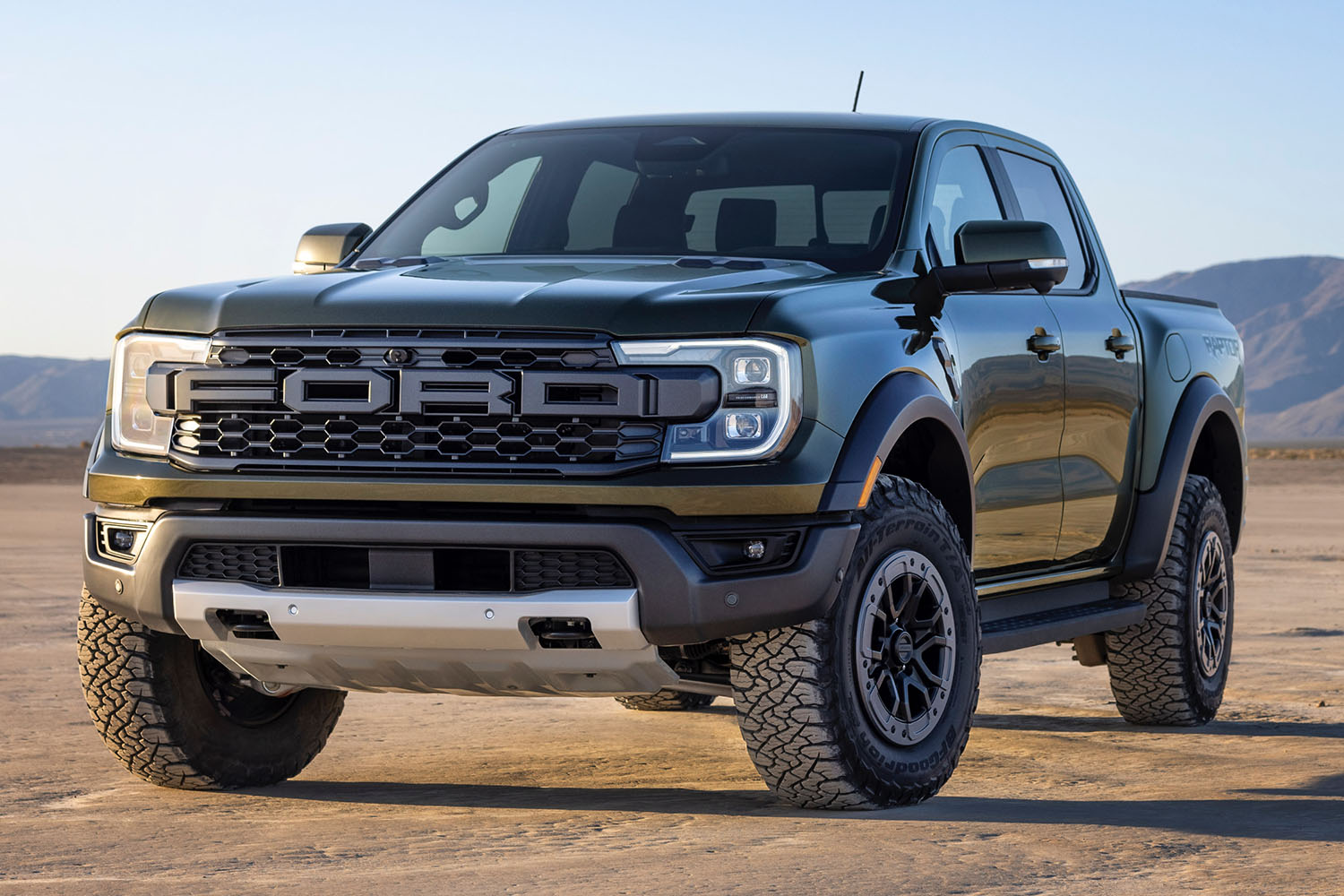
3. Ford Ranger / Ranger Raptor
Max Wading Depth: 800 mm to 850 mm (31.5 to 33.4 inches)
- Engine: 3.0L Twin-Turbo V6 (or 2.7L / 2.3L EcoBoost variants)
- Horsepower: 270 hp to 405 hp
- Torque: 310 lb-ft to 430 lb-ft
- Size: 211.0 in Long x 79.1 in Wide (Raptor)
When it comes to midsize pickup trucks with strong water-crossing ability, the Ford Ranger stands among the best choices available. Its high factory-rated wading depth of between 800 and 850 millimeters, depending on the version, is not simply the result of increased ride height.
Ford carefully designed the truck with this purpose in mind, giving drivers extra confidence when dealing with flooded roads or heavy rainfall. That attention to detail has made the Ranger, especially the Ranger Raptor, a dependable option for people who regularly encounter challenging driving conditions.
Under the hood, buyers can choose from several engine options, including a 2.3-liter EcoBoost four-cylinder, a 2.7-liter V6, or the Ranger Raptor’s 3.0-liter twin-turbocharged V6. Depending on the model, output ranges from 270 to 405 horsepower, while torque figures vary between 310 and 430 lb-ft.
Measuring 211.0 inches long and 79.1 inches wide, the Ranger Raptor offers a strong road presence without becoming too wide for tight city streets where drivers may need to maneuver around stalled vehicles during flooding. Ford also paid close attention to components that are easily affected by water.
The alternator and breather tubes have been positioned higher inside the engine bay, reducing the chances of water reaching these vital parts during deep crossings. This design allows the truck to handle deeper water without requiring aftermarket upgrades such as a snorkel. The Ranger Raptor also features advanced Fox Live Valve bypass shock absorbers, which react quickly to unexpected bumps hidden beneath floodwater.
As a result, the suspension remains composed when potholes, raised manhole covers, or uneven road surfaces cannot be seen, giving the driver better control and a more stable driving experience.
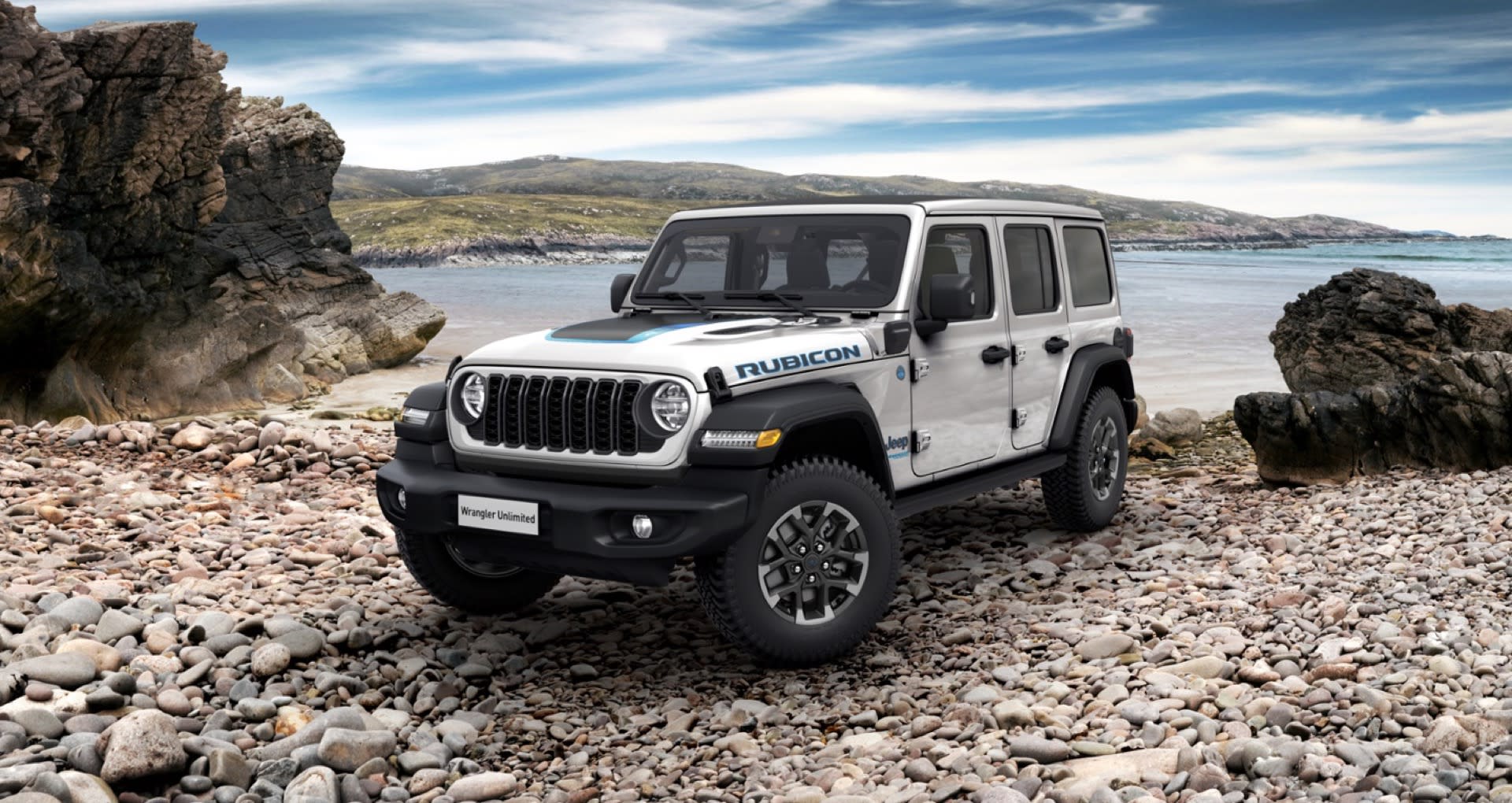
4. Jeep Wrangler Rubicon
Max Wading Depth: 762 mm (30.0 inches)
- Engine: 2.0L Turbo 4-Cylinder or 3.6L V6
- Horsepower: 270 hp to 285 hp
- Torque: 260 lb-ft to 295 lb-ft
- Size: 188.4 in Long x 73.8 in Wide
Water crossings have always been part of the Jeep Wrangler Rubicon’s purpose, so its engineering reflects that from the ground up. Instead of treating flooded roads as rare situations, Jeep built this SUV to handle them with confidence. One of the biggest advantages is its body-on-frame construction, which allows water to move around the vehicle more effectively than a unibody design. This structure also adds strength and durability when driving through demanding conditions.
The Wrangler Rubicon is available with either a 2.0-liter turbocharged four-cylinder engine or a 3.6-liter V6. Depending on the version, output ranges from 270 to 285 horsepower, while torque varies between 260 and 295 lb-ft. At 188.4 inches long and 73.8 inches wide, its compact size makes it easier to steer through narrow streets, tight spaces, and areas where stalled vehicles may block part of the road during flooding.
Jeep also paid close attention to protecting the vehicle’s electronics. Important control modules are sealed inside waterproof resin coverings that help keep moisture away from sensitive components during water crossings within the vehicle’s rated limits.
The air intake system includes a monsoon water separation feature that removes water before it reaches the engine’s air filter. This extra layer of protection is especially useful during heavy rainfall, when large amounts of water can enter the intake system on many vehicles. These thoughtful engineering details help the Wrangler Rubicon remain dependable when weather conditions become challenging.
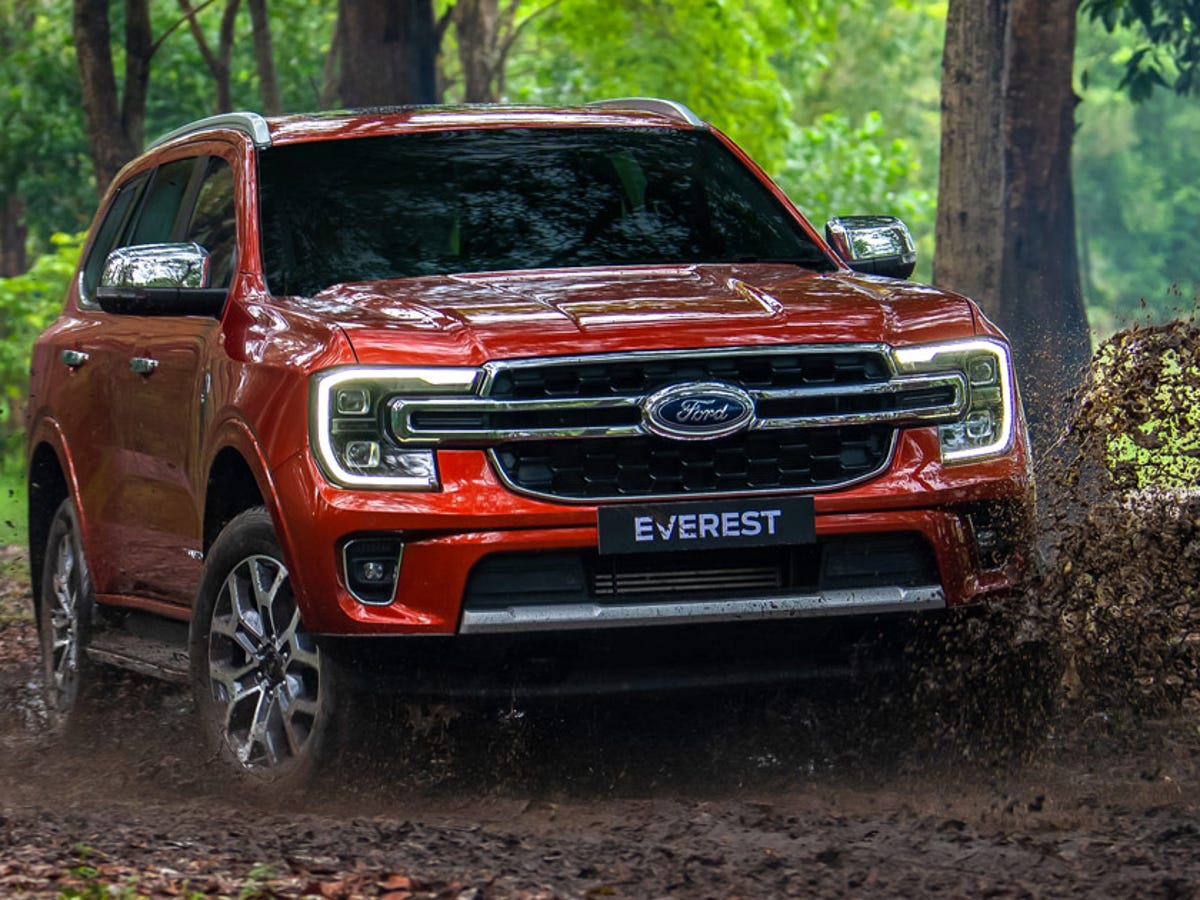
5. Ford Everest / Endeavour
Max Wading Depth: 800 mm (31.5 inches)
- Engine: 3.0L Turbo-Diesel V6 (or 2.0L Twin-Turbo Diesel)
- Horsepower: 207 hp to 247 hp
- Torque: 369 lb-ft to 443 lb-ft
- Size: 193.4 in Long x 75.6 in Wide
For families who need three-row seating without giving up true flood capability, the Ford Everest stands out as a strong option. It uses a body-on-frame construction and shares its heavy-duty mechanical foundation with the global Ford Ranger pickup truck referenced earlier in this list, giving it the strength needed for challenging water conditions while still serving as a practical family SUV.
That shared platform means the Everest inherits the same elevated alternator positioning and protective breather tube routing that help the Ranger achieve its impressive wading performance, applied here to a vehicle with genuine family-hauling interior capacity.
Diesel power comes from either a 2.0L twin-turbo unit or a 3.0L turbo-diesel V6, generating horsepower between 207 and 247 alongside torque from 369 to 443 lb-ft. This diesel focus benefits flood-prone region owners specifically, since diesel engines carry fundamentally different ignition and fuel system characteristics compared to petrol units that make them somewhat more tolerant of moisture exposure during challenging crossing situations.
Interior cabin shielding against exterior water pressure received dedicated engineering attention rather than simply relying on the same door sealing used in standard passenger cars. Achieving a genuine 800 mm wading depth with three rows of passengers requires confidence that water cannot seep through door seal systems or ventilation pathways under the pressure that standing water at that depth creates against the lower portions of the body panels.
Electronic control unit positioning directly behind the firewall places this critical computer component as far away from flood water ingestion risk as the vehicle’s architecture allows, insulating the ECU from the scenario where water overcomes the vehicle’s protective measures and enters the engine bay from below.
This positioning decision reflects an understanding that genuine flood-region customers sometimes face conditions exceeding even rated wading depths, and the ECU’s survivability in those edge cases determines whether a recoverable situation becomes a total loss.
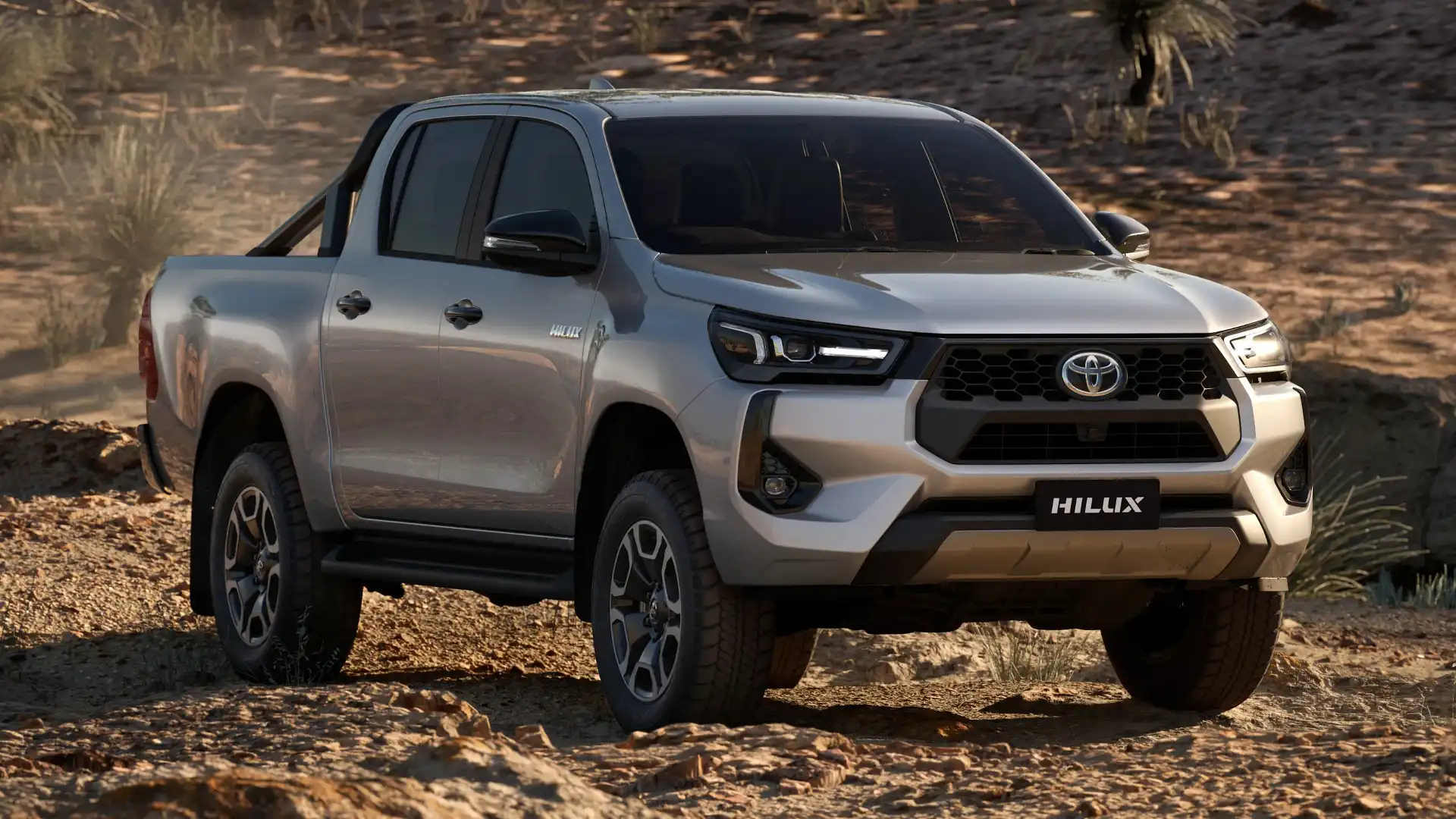
6. Toyota Hilux (4×4 Variants)
Max Wading Depth: 700 mm (27.5 inches)
- Engine: 2.8L Turbo-Diesel 4-Cylinder (or 2.7L Petrol)
- Horsepower: 164 hp (Petrol) / 201 hp (Diesel)
- Torque: 181 lb-ft (Petrol) / 369 lb-ft (Diesel)
- Size: 210.4 in Long x 73.0 in Wide
For decades, the Toyota Hilux 4×4 has built a reputation as one of the most dependable pickup trucks for drivers who regularly face rough roads and harsh weather. It has proven itself across many countries where damaged roads, deep potholes, and poor drainage are part of everyday driving.
Its long record of reliability comes from practical engineering rather than flashy features, making it a trusted choice for work, business, and emergencies. Whether used in busy cities or remote locations, the Hilux has consistently shown that it can keep moving when many other vehicles begin to struggle.
Power comes from a 2.8-liter turbo diesel four-cylinder engine that delivers 201 horsepower and 369 lb-ft of torque. That strong low-speed pulling power is especially useful when driving through standing water or climbing uneven roads where steady performance matters more than outright speed.
Buyers who prefer gasoline can also choose the 2.7-liter petrol engine, which offers another option for areas where diesel may not always be available. This flexibility makes the Hilux suitable for different markets and driving conditions. Another strength of the Hilux is its heavy-duty leaf spring rear suspension, which has been designed to cope with demanding road conditions.
When driving through flooded streets, hidden potholes or debris beneath the water can damage many vehicles. The suspension helps the rear wheels stay planted, giving the driver better control even when the road surface cannot be seen clearly.
Toyota also designed the engine bay to reduce the chances of water affecting vital components such as the air intake and ignition system during shallow flood crossings. These engineering details help the engine continue running smoothly, reducing the risk of being stranded when driving through flooded areas or waterlogged streets.
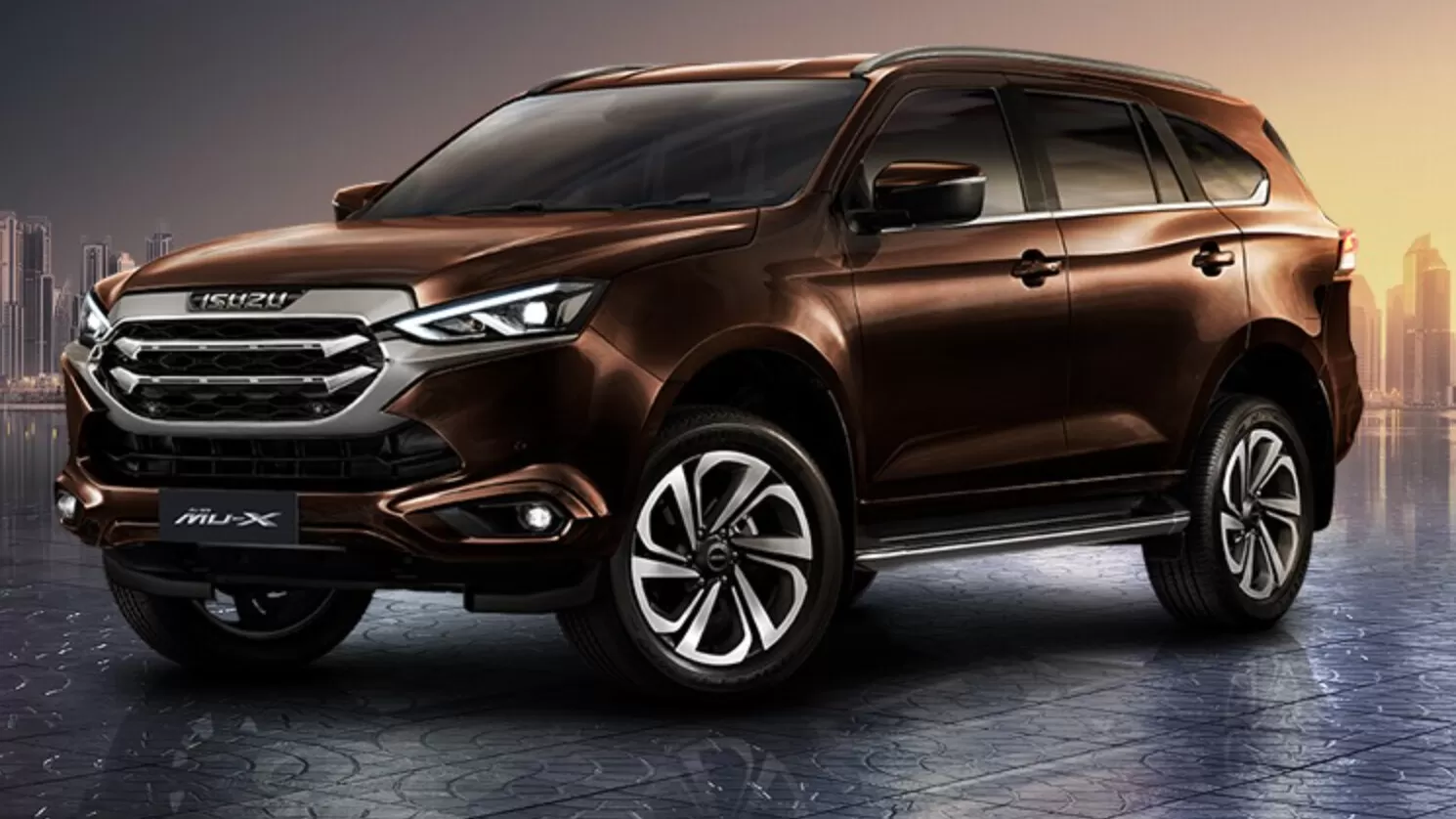
7. Isuzu MU-X
Max Wading Depth: 800 mm (31.5 inches)
- Engine: 3.0L Turbo-Diesel 4-Cylinder
- Horsepower: 187 hp
- Torque: 332 lb-ft
- Size: 190.9 in Long x 73.6 in Wide
Market adoption tells a genuinely revealing story about the Isuzu MU-X’s real-world flood credentials, since this three-row family SUV has achieved strong sales specifically across Southeast Asian and certain coastal markets where seasonal flooding represents a recurring, predictable reality of daily life rather than an occasional emergency. Buyers in those markets choose their vehicles based on genuine wet-season survival capability, giving the MU-X’s popularity there considerably more credibility than any controlled test result could provide.
A 3.0L turbo-diesel four-cylinder produces 187 horsepower and 332 lb-ft of torque, with the diesel powertrain choice reflecting the same moisture-handling advantages discussed regarding the Toyota Hilux, alongside diesel fuel’s generally better availability through the kind of infrastructure disruption that major flooding events typically cause throughout affected communities.
Ground clearance measuring 235 mm places the MU-X’s underbody considerably higher above road level than typical crossover-style SUVs built on car platforms, directly contributing to that 800 mm wading capability by keeping critical underfloor components further away from rising water as the vehicle moves through a flooded crossing at an appropriate low speed.
Differential breather valve repositioning represents a specific engineering detail that many buyers never notice yet proves genuinely critical during an actual flood crossing. Standard differential breather valves located at low positions on the axle housing can allow filthy, debris-laden floodwater to seep back through the breather pathway into the differential oil when water pressure builds against the housing during submersion.
Re-routing these breather valves to exit at a higher elevation prevents this contamination pathway entirely, protecting transmission components from the kind of water contamination that causes expensive internal damage days or weeks after the initial flood event when owners believe the crossing has already passed without consequence.
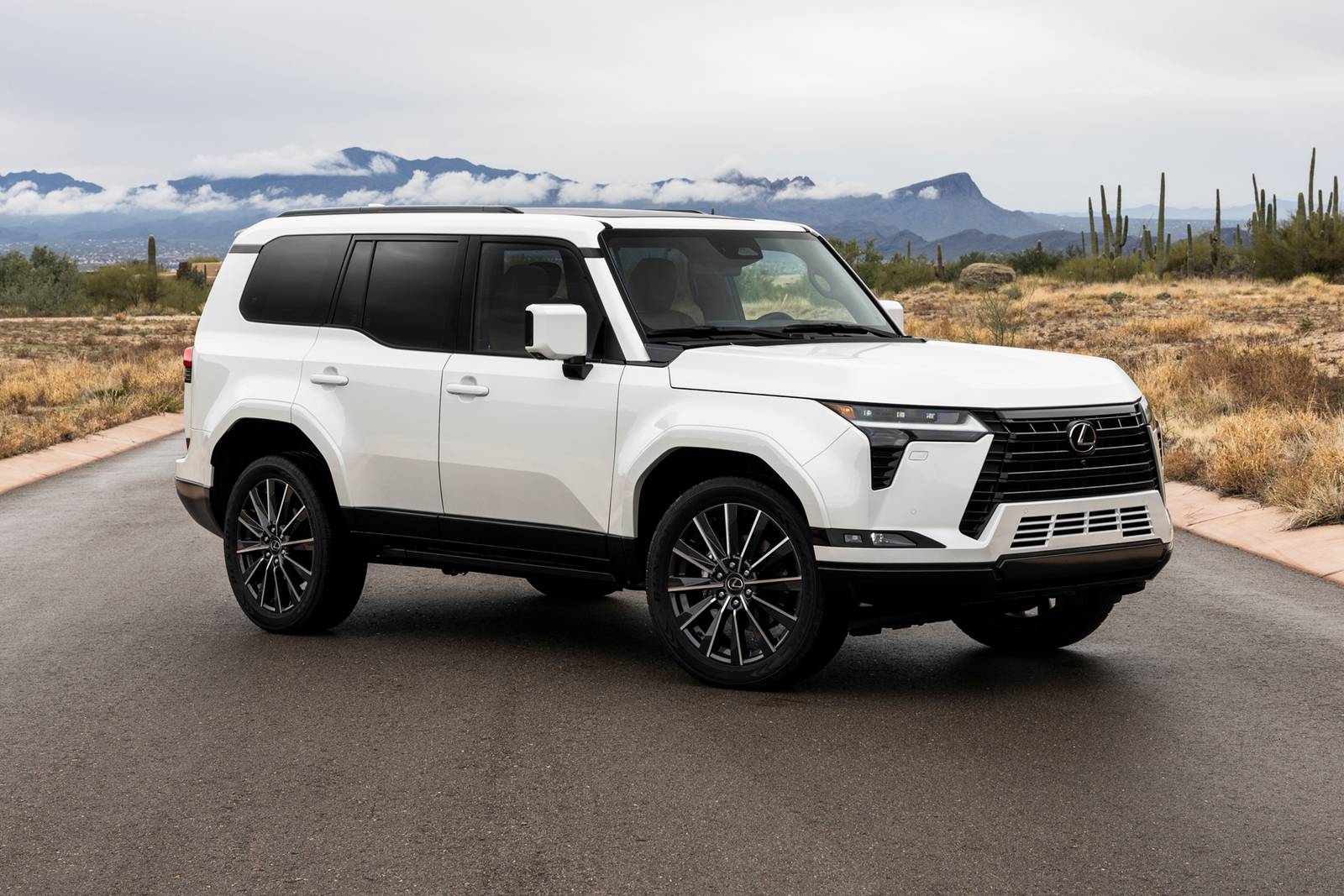
8. Lexus GX 550
Max Wading Depth: 610 mm (24.0 inches)
- Engine: 3.4L Twin-Turbo V6
- Horsepower: 349 hp
- Torque: 479 lb-ft
- Size: 197.1 in Long x 83.2 in Wide (Overtrail trim)
For many buyers, choosing a luxury SUV means finding one that delivers premium comfort without giving up the ability to handle difficult weather conditions. That balance becomes even more important for people who occasionally drive on roads affected by heavy rainfall or standing water.
The Lexus GX 550 meets both needs by combining a refined interior with the rugged engineering of the globally respected Land Cruiser platform. This shared foundation gives the SUV the strength and durability expected from a serious off-road vehicle while maintaining the comfort and quality associated with the Lexus brand.
Under the hood is a 3.4-liter twin-turbocharged V6 engine that produces 349 horsepower and 479 lb-ft of torque. The engine delivers smooth acceleration during daily driving and plenty of low-speed pulling power when extra control is needed on wet or uneven roads. Measuring 197.1 inches in length and 83.2 inches in width, the GX 550 has a confident road presence and a spacious cabin that keeps passengers comfortable on both short trips and long journeys.
Another feature that adds to its capability is the Multi Terrain Select system. Drivers can choose different driving modes to suit changing road conditions, allowing the vehicle to adjust how power is delivered to each wheel. This improves traction on slippery roads where ordinary traction control may not respond as effectively.
For buyers who want a luxury SUV that feels refined during everyday commuting but can also handle demanding conditions with confidence, the GX 550 makes a very strong case. It delivers dependable capability without sacrificing comfort, build quality, or the premium driving experience that many luxury SUV owners expect.
Also Read: 5 Cars for Tacoma Rainy Commutes vs 5 That Leak
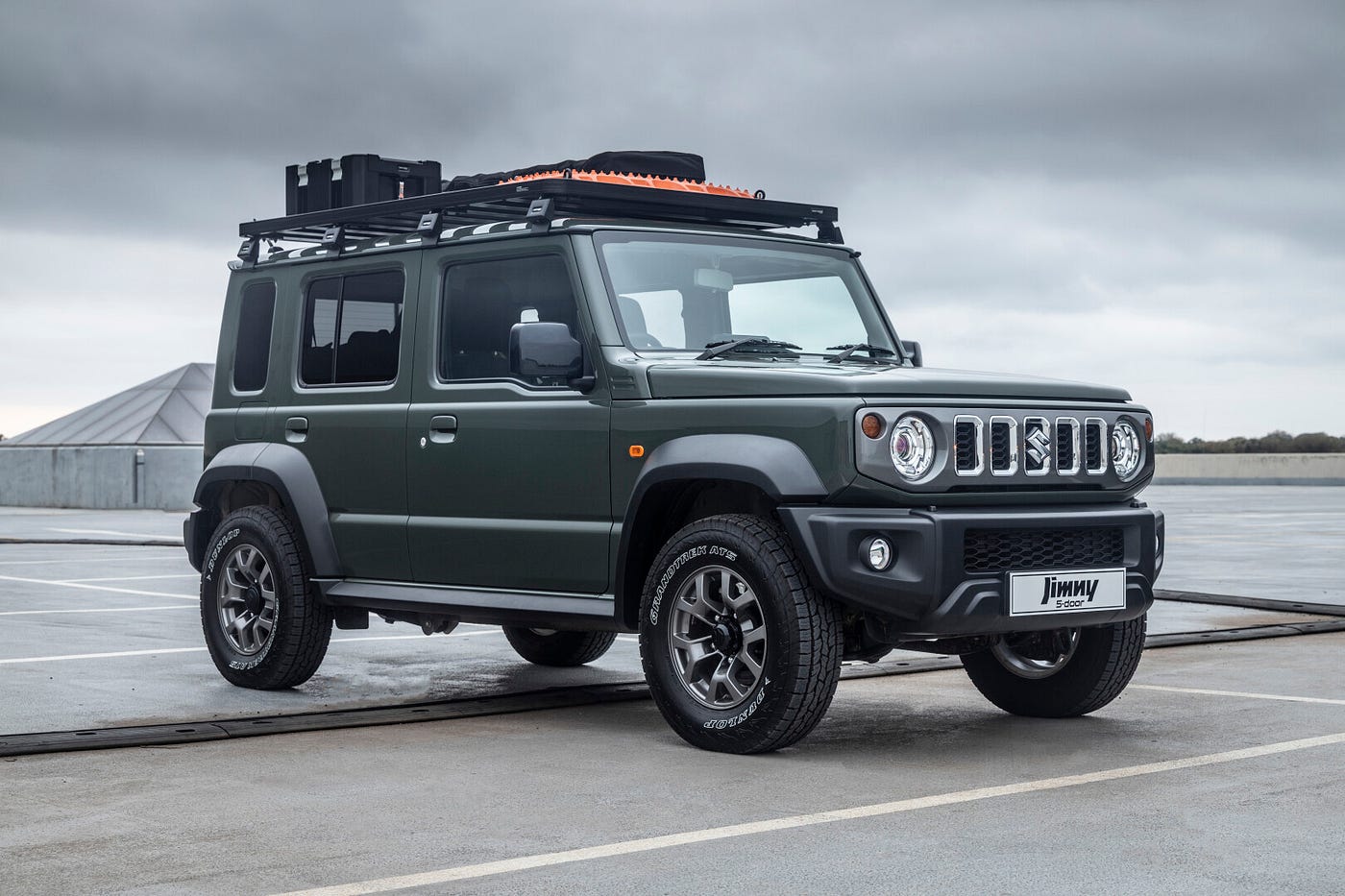
9. Suzuki Jimny 5-Door
Max Wading Depth: 400 mm (15.7 inches, easily modified via snorkel)
- Engine: 1.5L Naturally Aspirated 4-Cylinder
- Horsepower: 101 hp
- Torque: 96 lb-ft
- Size: 156.7 in Long x 64.8 in Wide
For buyers who need dependable flood driving capability without spending luxury SUV money, the Suzuki Jimny 5 Door stands out as an excellent option. It has earned a loyal following by combining affordability with genuine off-road ability in a compact package.
Its small size makes it especially useful in crowded cities where flooded roads and narrow streets can quickly become difficult for larger vehicles to pass through. Rather than relying on size alone, the Jimny focuses on practical engineering that works well in demanding conditions.
Power comes from a 1.5-liter naturally aspirated four-cylinder engine producing 101 horsepower and 96 lb-ft of torque. While these figures are modest, they suit the Jimny’s compact dimensions of 156.7 inches in length and 64.8 inches in width. The lightweight design allows the vehicle to move through tight spaces that many larger SUVs cannot access. This becomes especially useful during heavy rainfall when drivers may need to work around stalled vehicles or blocked roads.
Another advantage is the Jimny’s low weight. Unlike heavier trucks that can sink deeper into soft mud hidden beneath floodwater, the Jimny places less pressure on the road surface. This reduces the chances of getting stuck while maintaining steady traction.
Its narrow track also makes it easier to maneuver through congested streets where larger vehicles struggle to find enough room. For drivers looking for an affordable Four Wheel Drive vehicle that can handle difficult weather without sacrificing everyday usability, the Suzuki Jimny 5 Door remains a practical and dependable choice that consistently punches above its size.
Finally, the factory 400 mm wading depth rating climbs considerably with aftermarket snorkel installation, a popular and straightforward modification that relocates the air intake to roof height and transforms the Jimny into a surprisingly capable flood crosser at a fraction of the cost of any other vehicle on this list.
