
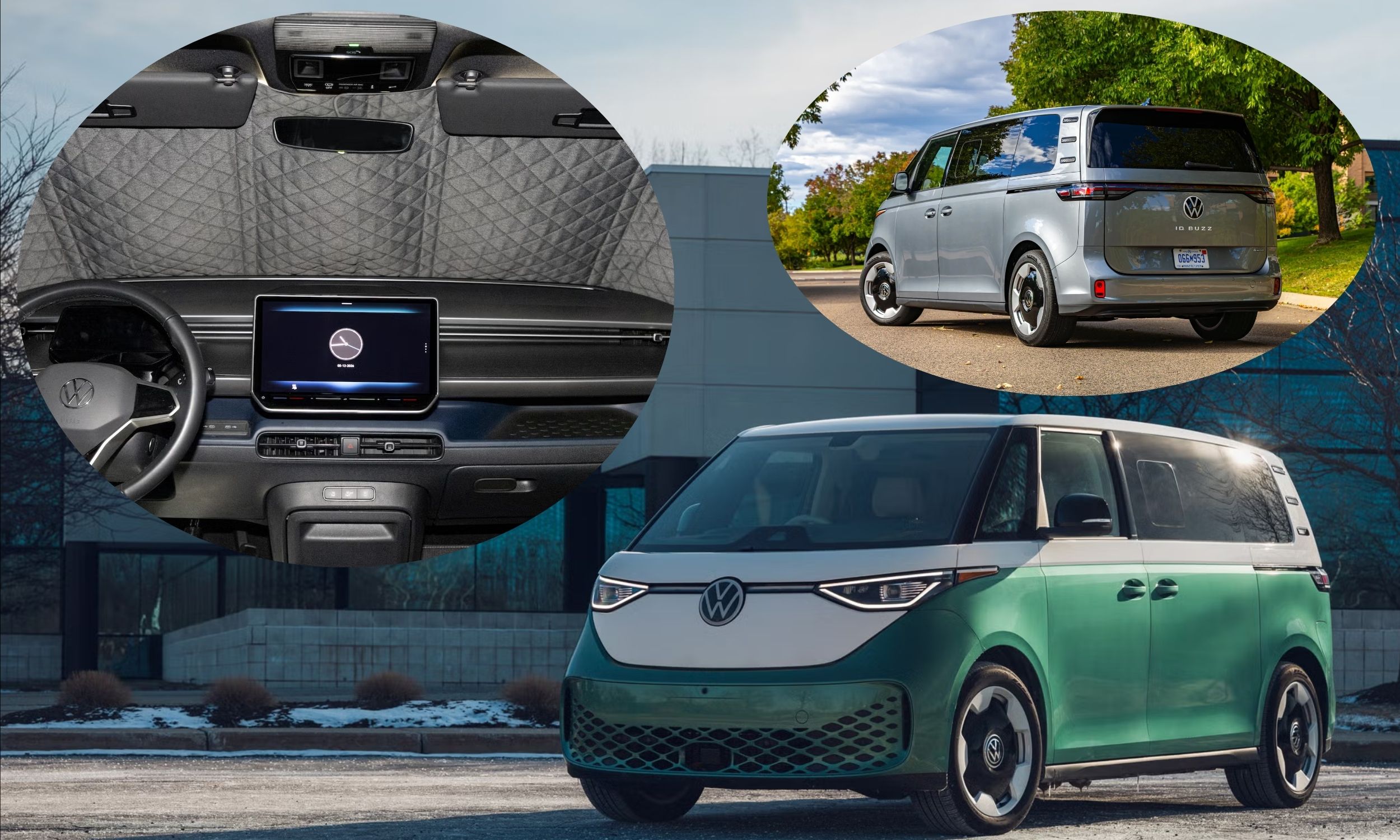
Many people thought the Volkswagen ID. Buzz had reached the end of its journey in the United States after disappearing from dealer showrooms shortly after its much-publicized debut. The retro-inspired electric van arrived with plenty of excitement, attracted plenty of attention wherever it went, and reminded many drivers of the classic Microbus. Its stay was short-lived, though.
Import tariffs and a difficult electric vehicle market forced Volkswagen to suspend sales, leaving many people uncertain about the model’s future. By the 2026 model year, the ID. Buzz was completely absent from the American lineup as Volkswagen took time to rethink its plans.
During that break, many buyers questioned whether the company would ever bring the electric van back. Thankfully, the answer is yes. Volkswagen has confirmed that the ID. Buzz will return for 2027 with several updates designed to make it a stronger option for different types of drivers.
This time, buyers will have more freedom when choosing their preferred version. Instead of offering just one configuration, Volkswagen now introduces three trim levels, giving customers options that better suit different budgets and lifestyles. The company has also made its 4Motion all-wheel-drive system available on the entry-level model, making extra traction easier to access without moving to a higher trim.
Another fresh addition is the Tourer model, created with camping and outdoor adventures in mind. Rather than serving only as a family people mover, it is designed to support weekend getaways and longer road trips. With these changes, Volkswagen hopes the 2027 ID. Buzz will enjoy a much stronger return than its brief first appearance in the American market.
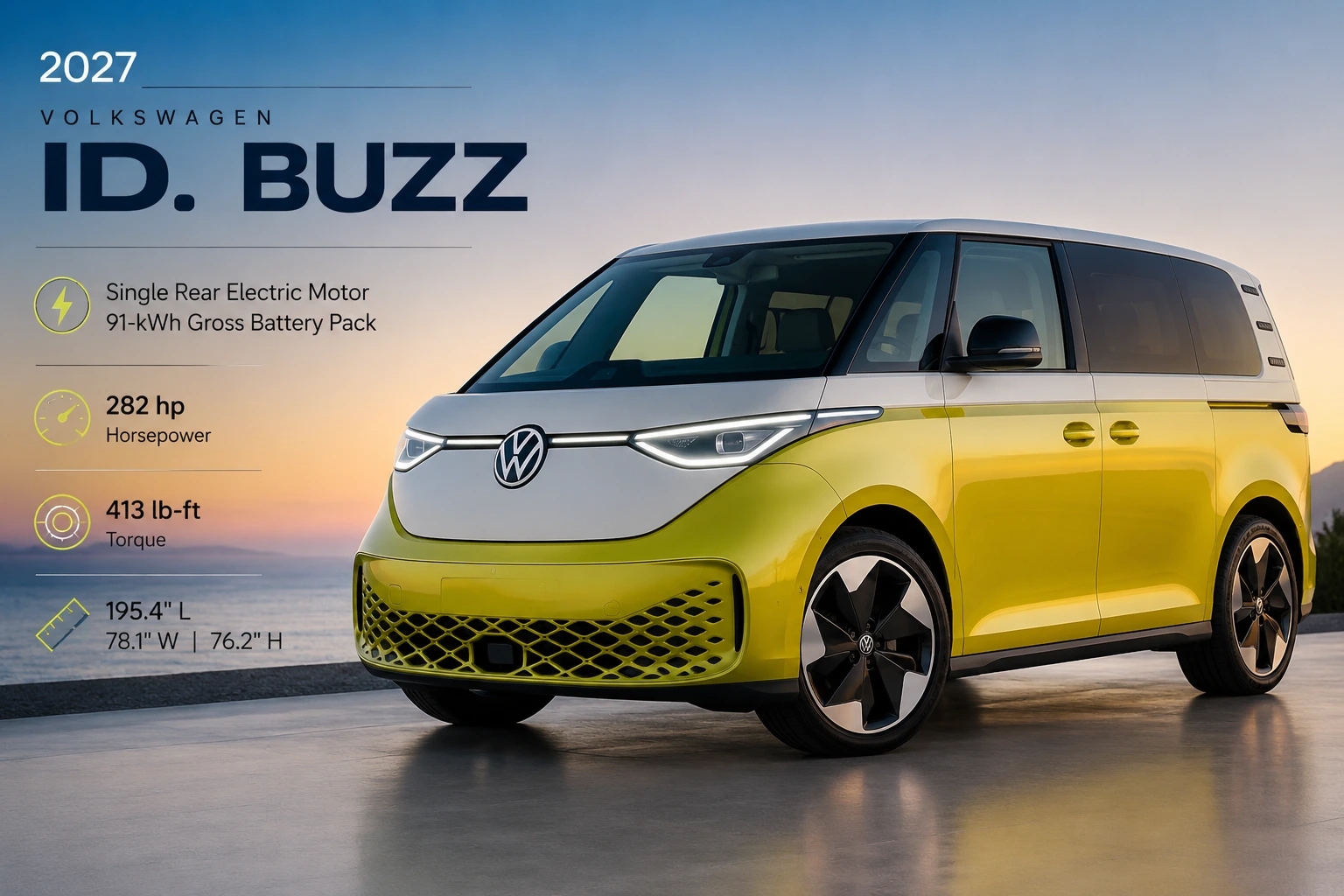
Why the ID. Buzz Disappeared and Why It Is Coming Back
Understanding the 2027 return requires briefly understanding what went wrong during the van’s initial American run. Volkswagen introduced the ID. Buzz to the United States for the 2025 model year with genuine excitement and critical praise, earning reviews that described it as genuinely joyful and among the most characterful electric vehicles available. A Cars.com review titled “This Sparks Joy” captures the emotional response the van generated from nearly everyone who drove it.
Despite that enthusiasm, sales never matched expectations. The ID. Buzz was sold for just one year before tariffs and an unstable electric vehicle market led VW to pull it, and to date, VW has delivered fewer than 10,000 ID. Buzz vans in the U.S. The combination of a challenging pricing structure and limited range made the decision straightforward for Volkswagen, even as it frustrated buyers who had been waiting years for this vehicle.
After years of building excitement, the Volkswagen ID. Buzz was only on sale in the U.S. for a single year, and in December 2025, VW announced its electric reboot of the Microbus would skip the 2026 model year, but the brand insisted it was a temporary absence and that the ID. Buzz would return for the 2027 model year.
Volkswagen kept its word. A brand spokesperson confirmed to Cars.com that the 2027 ID. Buzz will go on sale in the fall. The returning lineup is more complete than what buyers saw the first time around, suggesting Volkswagen used the gap year to make substantive improvements rather than simply refreshing the marketing.
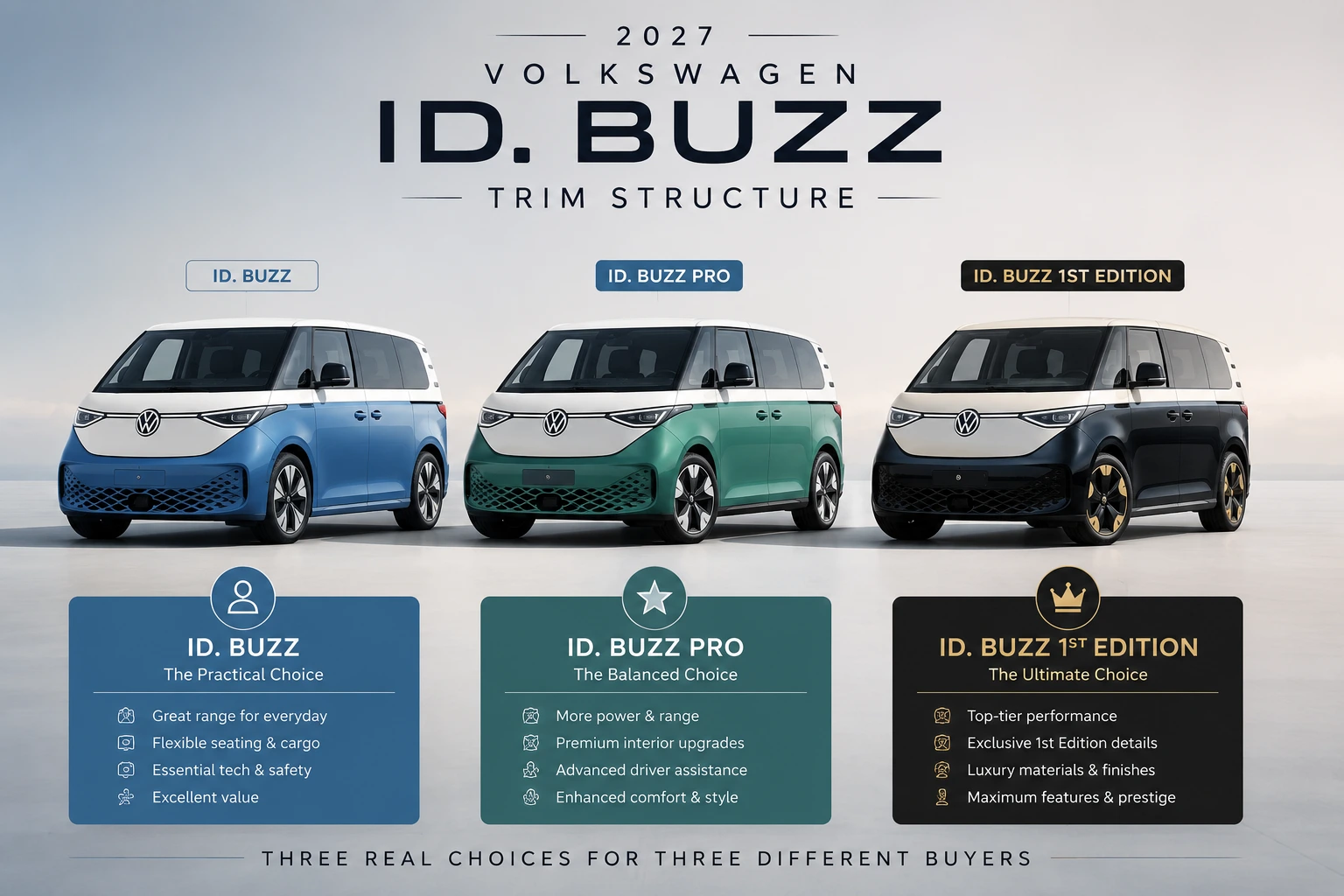
The Trim Structure: Three Real Choices for Three Different Buyers
The 2027 ID. Buzz arrives with a lineup that finally gives buyers genuine choices rather than asking everyone to accept one configuration regardless of how they intend to use the van. The returning range includes 4Motion all-wheel drive now available on the entry-level Pro S trim, and a new Tourer trim optimized for camping, with other trims consisting of the base rear-wheel-drive Pro S and the Pro S Plus 4Motion.
Breaking that down practically, the entry point is the rear-wheel-drive Pro S, which serves buyers who prioritize simplicity, a lower purchase price, and primarily fair-weather urban or suburban driving. This configuration makes the most sense for families in climates where all-wheel drive is more of an occasional comfort than a year-round necessity.
The Pro S 4Motion sits in the middle, pairing the standard van’s passenger configuration with all-wheel drive for buyers who need winter traction capability without the camping-specific equipment that adds cost and commitment in the Tourer. This trim makes practical sense for buyers in northern states who want the ID. Buzz’s unique character, alongside the confidence that comes with powered rear wheels during snow.
The Pro S Plus 4Motion tops the lineup with 21-inch wheels and the highest equipment level, catering to buyers who want the most refined and feature-complete version of the vehicle available. This configuration positions the ID. Buzz is a premium family hauler rather than a utilitarian transport solution, reflecting the van’s genuinely upmarket character despite its retro styling inspiration.
Also Read: 5 Volkswagen Models Worth Buying vs 5 to Avoid
The Tourer: VW’s Answer to Expensive Conversion Vans
The Tourer trim is the most genuinely novel addition to the 2027 ID. Buzz lineup and the one that creates a product category that the van did not previously occupy in the American market. Volkswagen designed this configuration specifically around overnight use, building camping functionality directly into the production vehicle rather than leaving buyers to source aftermarket conversions that often cost more than the van itself.
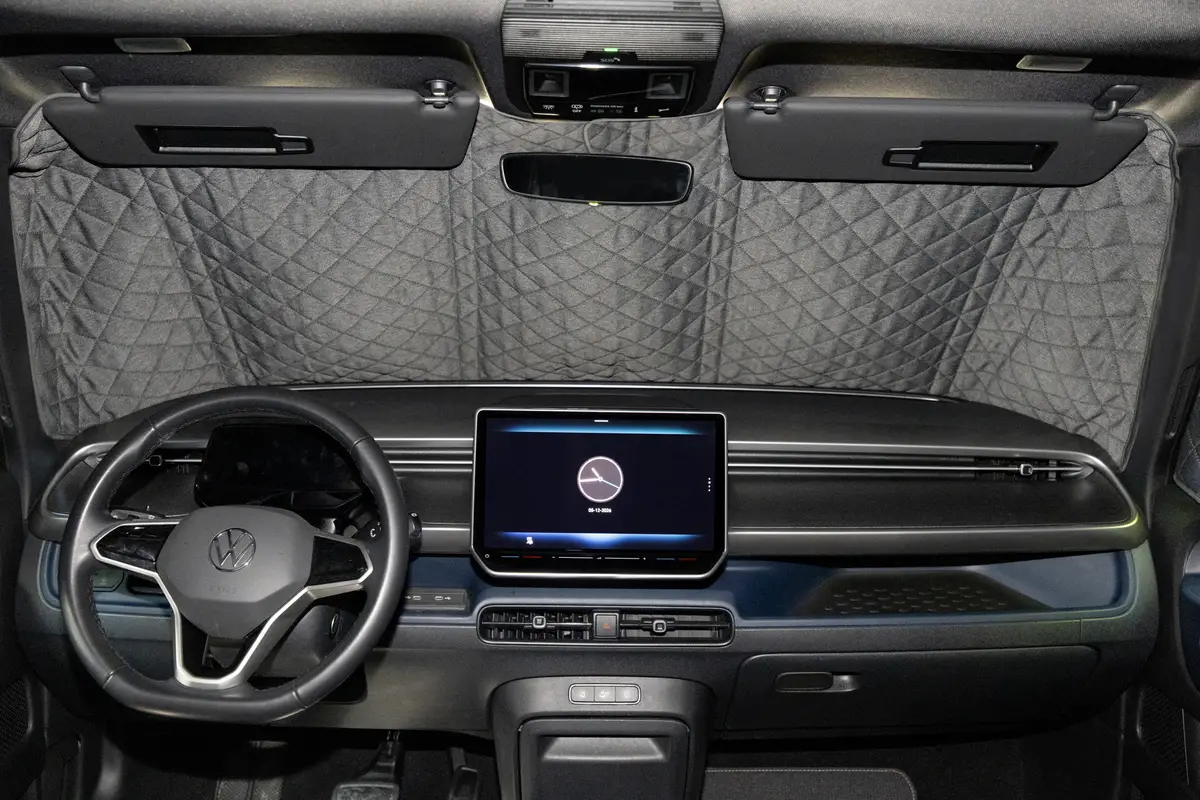
Based on the AWD Pro S 4Motion trim level, the Tourer 4Motion includes a mattress that lies across the backs of the folded second- and third-row seats, window blinds, ventilation panels that clip into the front windows to keep fresh air circulating, a retractable tow hitch, second-row captain’s chairs, an electrochromic roof, and 20-inch dark graphite wheels with black discs.
The electrochromic roof deserves specific attention because it represents a genuinely premium detail rather than a basic camping add-on. An electrochromic panel adjusts its opacity electrically, allowing occupants to control light penetration through the roof glass without needing physical shades or curtains that take up storage space or create visual clutter inside the van.
Since the interior is taken up with a bed, the Tourer also comes with a table and chairs to set up outside the van, and an Overnight Mode will adapt the software of the interior and exterior functions to make people comfortable in the ID. Buzz overnight.
The Overnight Mode software feature is particularly clever because it extends the camping functionality beyond physical equipment into how the van manages its electrical systems, climate control behavior, and ambient features during overnight stays, treating the van as a temporary shelter with appropriate system priorities rather than simply a parked vehicle.
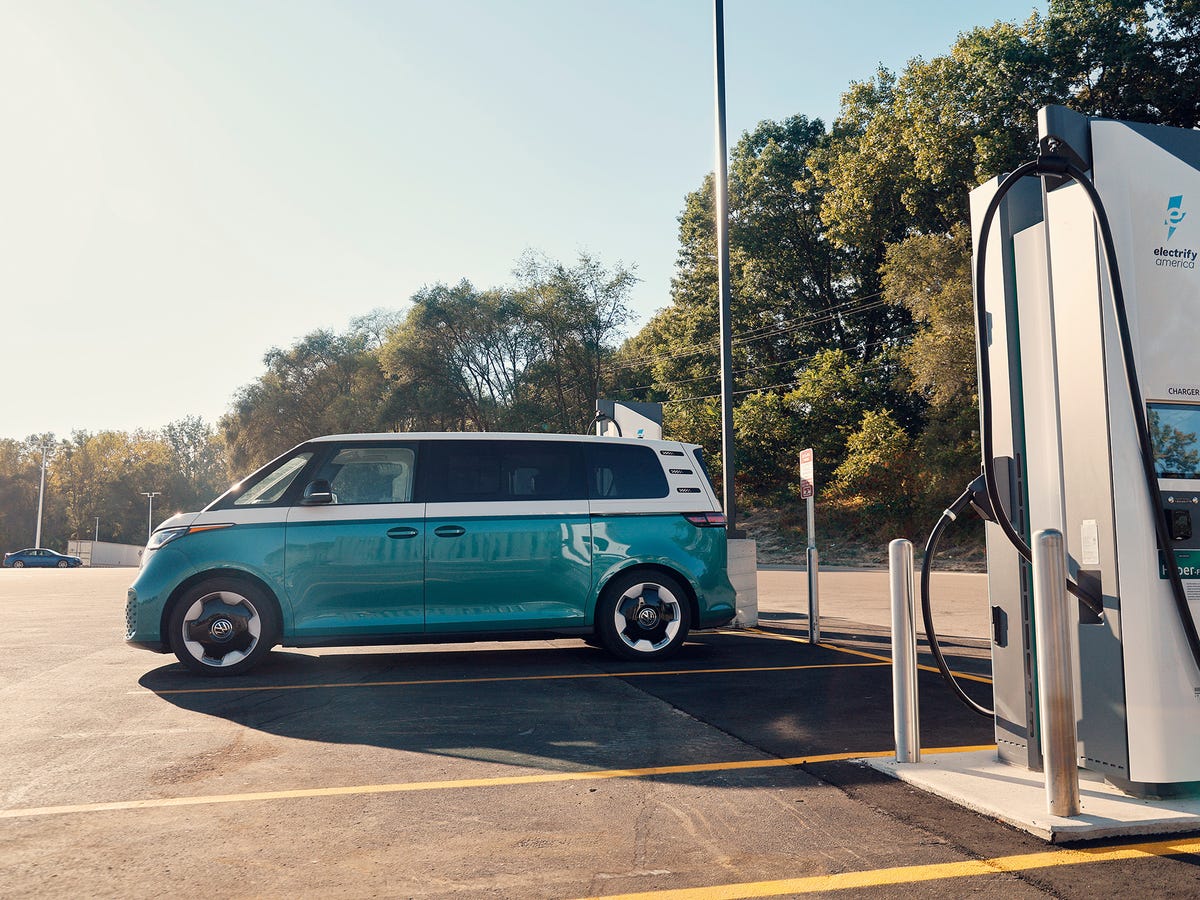
Charging Standard Update: NACS Across the Entire Lineup
Every 2027 ID. Buzz variant will come equipped with a North American Charging Standard port, allowing access to Tesla Supercharger stations across the United States. This update resolves a major early inconvenience for ID. Buzz owners, who previously relied on a CCS connector while facing a charging network where Tesla’s Supercharger system was often the most widely available fast-charging option in many areas.
All 2027 ID. Buzz variants will have a North American Charging Standard port to enable charging at Tesla Supercharger stations. The practical impact of this change extends considerably beyond simply adding access to one charging network. The Tesla Supercharger network represents the largest and most consistently reliable fast-charging infrastructure available across the United States, with stations distributed through urban centers, suburban corridors, and along major interstate routes in a pattern that makes long-distance electric vehicle travel genuinely practical rather than anxiety-inducing.
Gaining access to this network transforms the ID. Buzz from a vehicle that required careful charging stop planning into one that can rely on the same infrastructure confidence that Tesla owners have enjoyed since the Supercharger network’s early expansion.
For Tourer buyers specifically, this NACS compatibility pairs naturally with the camping functionality. A van configured for overnight stays in remote locations benefits enormously from being able to charge at widely distributed Supercharger stations along travel routes, since the most practical camping destinations are rarely situated conveniently near CCS charging infrastructure.
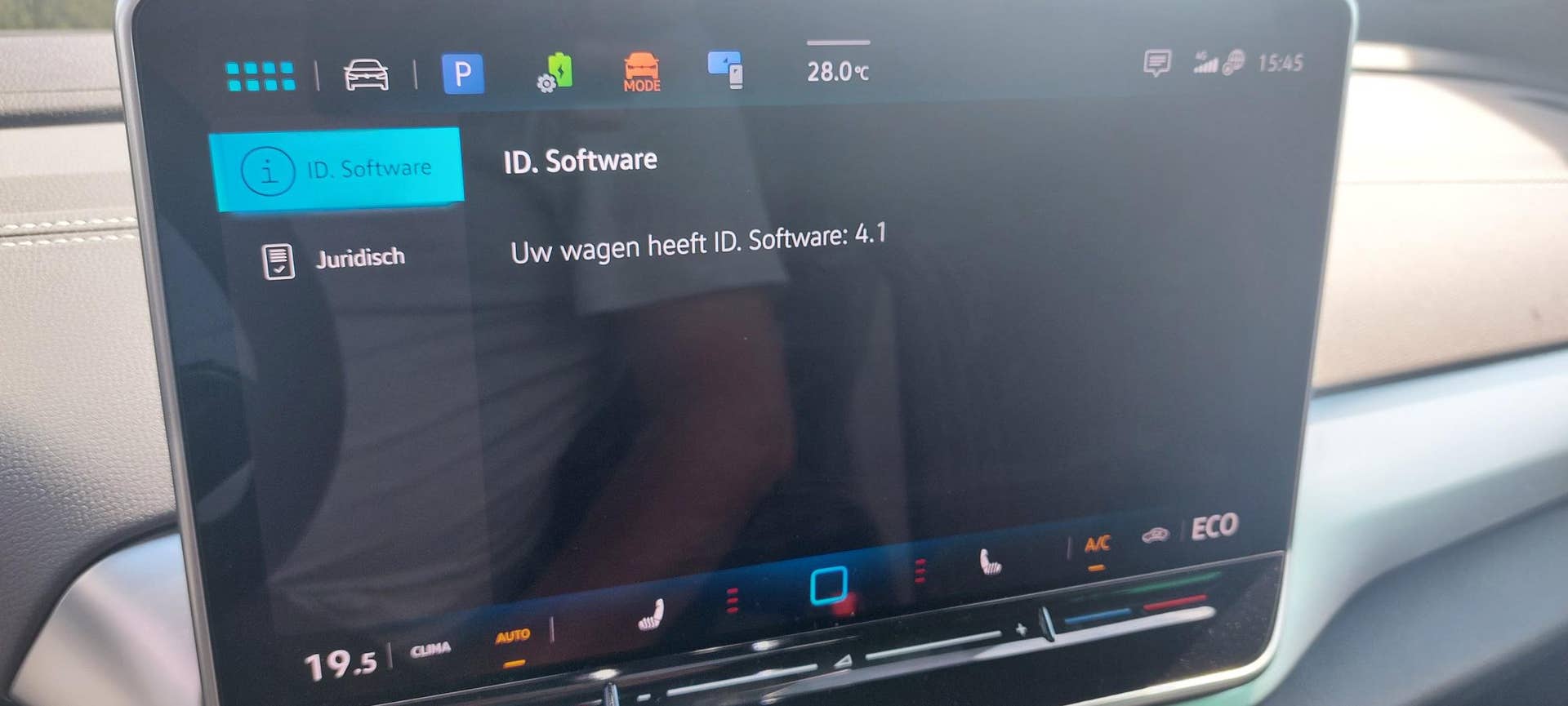
Software Refresh: VW’s ID.S 6 Platform Arrives
Beyond the physical hardware changes, the 2027 ID. Buzz receives a complete software platform update that changes how the van’s technology systems present information and respond to driver input. Volkswagen spent the gap year addressing software criticisms that followed the initial American launch, and the updated system reflects genuine revisions rather than cosmetic changes to existing menus.
Every 2027 ID. Buzz gets VW’s latest Android-based ID.S 6 software, which features a refreshed navigation screen and a redesigned settings page. It also includes a free trial of VW’s App Store, which owners can use to download third-party apps directly to the vehicle.
The App Store integration represents a broader philosophical approach to vehicle software that treats the ID. Buzz is a platform capable of expanding its functionality after purchase rather than a fixed hardware product with unchangeable feature boundaries.
Third-party applications downloaded directly to the vehicle’s screen extend what the infotainment system can do without requiring owners to rely entirely on smartphone mirroring through Apple CarPlay or Android Auto. This approach aligns the ID. Buzz with the direction that the broader automotive software industry is moving, where connected vehicles increasingly function as programmable platforms rather than appliances with permanently fixed capabilities.
For a vehicle already positioned as a lifestyle statement rather than purely utilitarian transportation, an expandable software ecosystem fits naturally with the buyer profile Volkswagen is targeting.
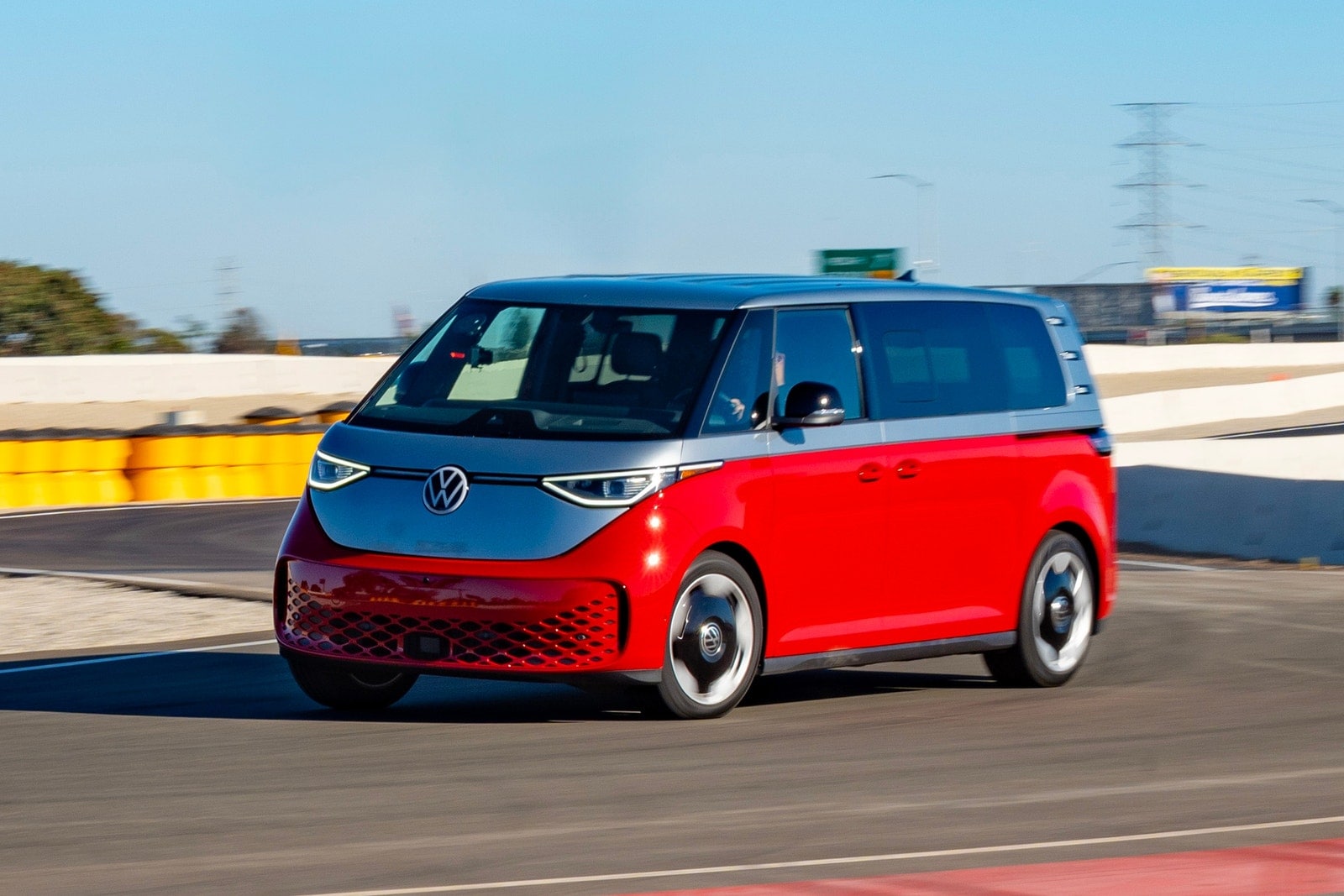
The Range Problem That Still Needs Addressing
Volkswagen’s transparency about what has not changed for 2027 deserves acknowledgment alongside enthusiasm for what has improved. The van’s limited EPA-rated range was one of the primary factors that constrained its initial sales success, and Volkswagen is not hiding the fact that this particular limitation carries forward into the new model year.
The electric van’s electrical architecture is unchanged for 2027, so buyers should not expect much improvement to its range from the 2025 model’s maximum EPA-rated range of 234 miles.
This unchanged range creates a real tension with the Tourer’s camping ambitions, since buyers planning extended road trips to remote camping destinations will need to plan charging stops more carefully than drivers of competing electric vehicles with larger battery capacities.
A 234-mile maximum range on a camping-focused van means that Tourer buyers heading to national parks or wilderness areas at a distance from major charging infrastructure should map their routes against charging stop availability before departing rather than assuming the van can handle the full journey on a single charge.
The honest framing from Volkswagen suggests the 2027 ID. Buzz is a meaningful improvement over its predecessor in almost every dimension except battery range, which requires buyers to weigh the van’s genuine strengths against this specific limitation based on their actual usage patterns.
Also Read: 5 Volkswagen Engines That Require Strict Maintenance vs 5 That Are Forgiving
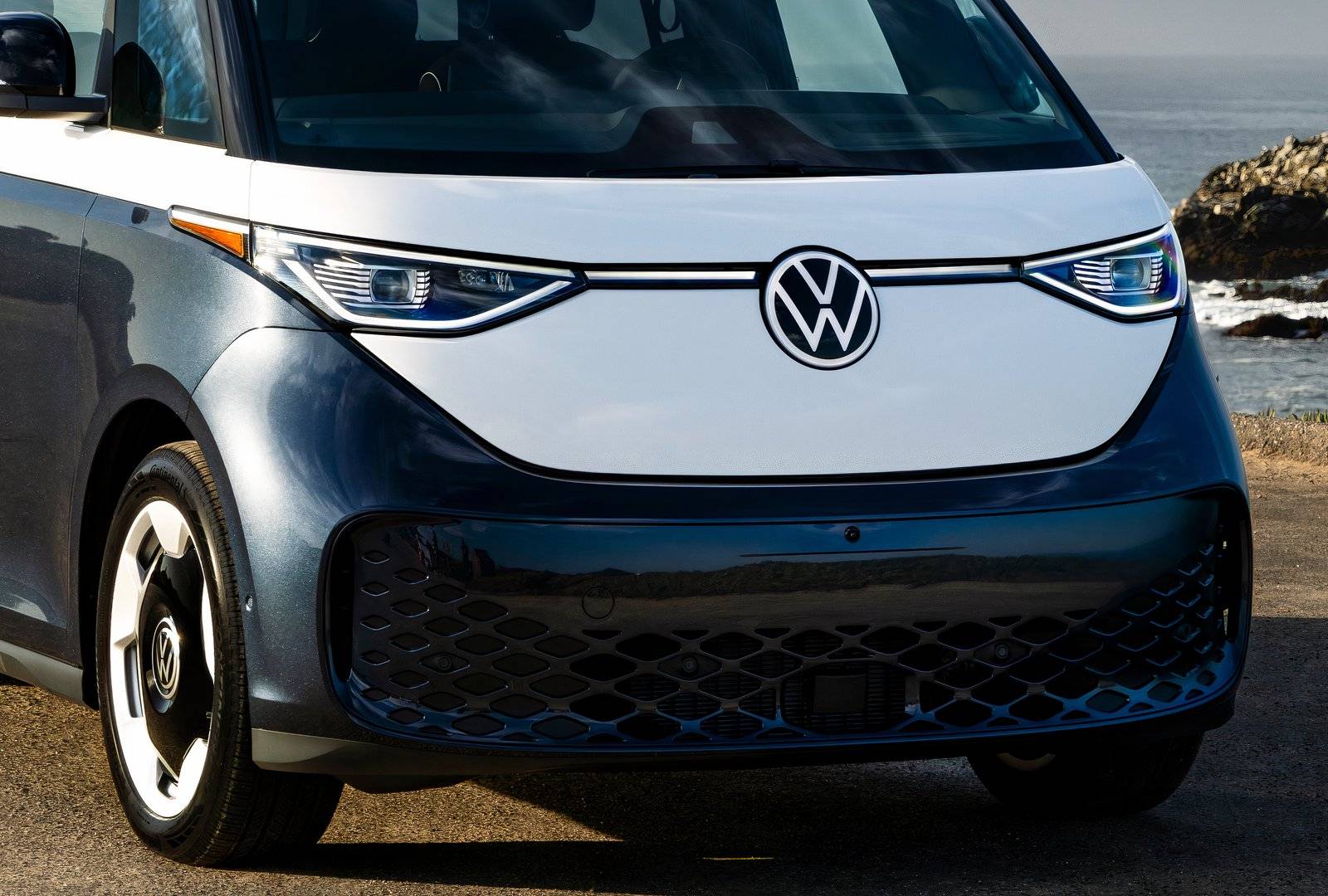
What It Costs and When Buyers Can Expect to See It
As for the price, VW will share that information closer to the start of sales in the fall. That timing means buyers are interested in the 2027 ID. Buzz will need to wait through the summer before Volkswagen publishes the final pricing structure that will determine whether the returning lineup represents better value than the 2025 model’s $61,545 base sticker.
Pricing will determine whether the broader trim structure translates into genuine market accessibility or simply provides the appearance of choice while keeping the entry price close to where it was during the vehicle’s initial run. If Volkswagen uses the additional trims to create a genuine lower entry point below the 2025 base price, the 2027 lineup could reach a buyer base that found the original pricing prohibitive. If the Pro S starts near where the 2025 model did, the expanded trim range primarily adds optionality at the top rather than accessibility at the bottom.
The fall sales launch positions the 2027 ID. Buzz for the holiday shopping season and the beginning of the 2027 model year purchase cycle, giving Volkswagen a clean entry window into the market without competing directly against a previous model year inventory rundown. For buyers who fell in love with this van during its first appearance and then watched it disappear, the wait is nearly over.
