
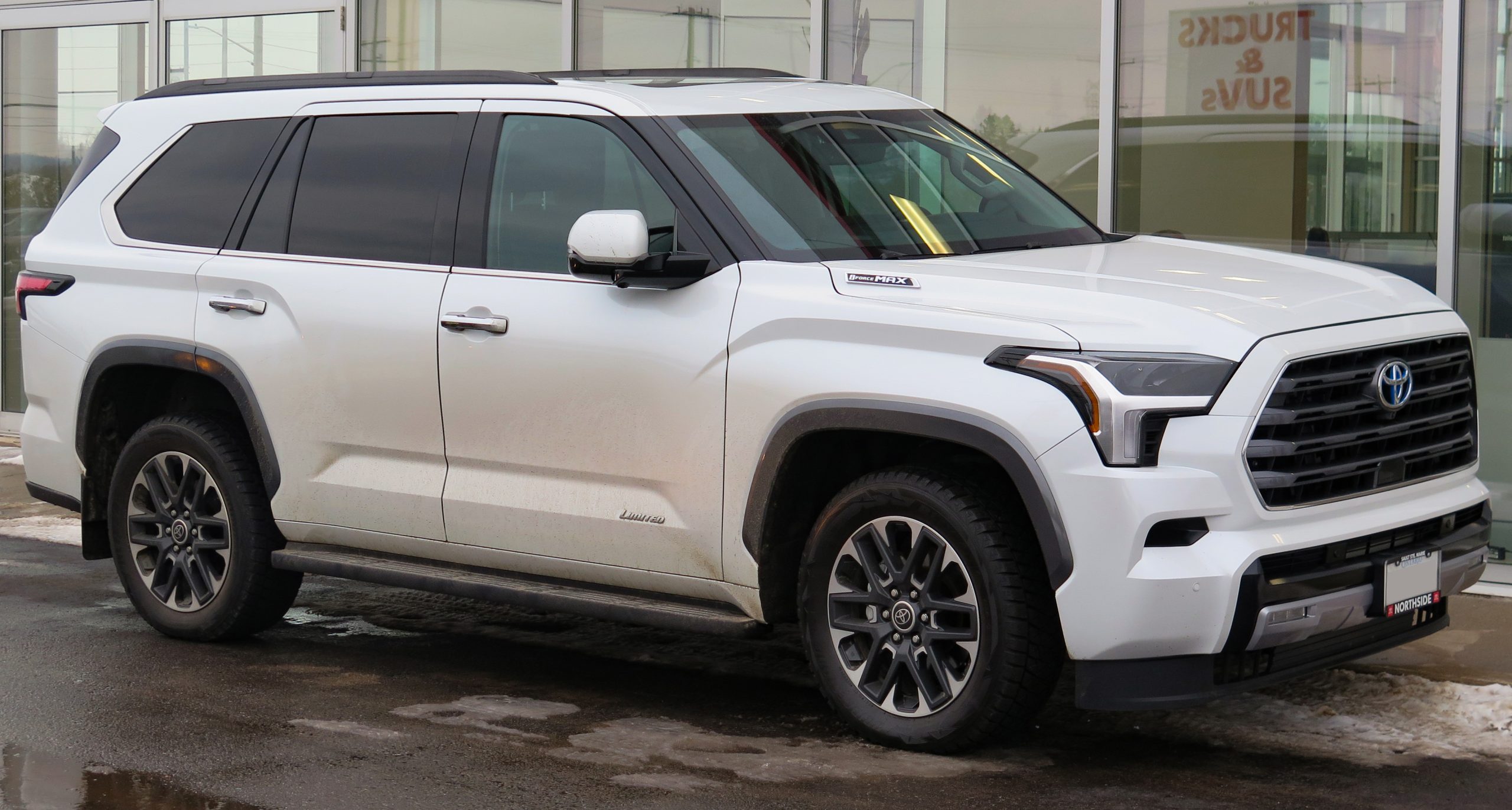
In an automotive market increasingly focused on electrification, software, and advanced driver assistance systems, one traditional body-on-frame SUV has quietly earned a title that matters just as much to many buyers: longevity.
The Toyota Sequoia has officially been recognized as America’s longest-lasting vehicle, according to the latest research from automotive analytics firm iSeeCars, with the highest-mileage one percent of Sequoias currently on the road recording at least 296,509 miles.
The finding places Toyota’s full-size SUV ahead of every other passenger vehicle analyzed in the United States and reinforces the brand’s long-established reputation for durability.
The milestone is particularly significant because it reflects vehicles that are still in operation rather than theoretical engineering targets.
Unlike laboratory durability tests, iSeeCars examined millions of real-world vehicles to determine how far owners are actually driving them over many years of service. That makes the Sequoia’s result a practical measure of long-term ownership rather than a marketing claim.
Also Read: Ford Recalls More Than 110,000 Vehicles, Including the Mustang and Mustang Mach-E
The Study Behind the Ranking
According to iSeeCars, the latest longevity study analyzed millions of vehicles sold across at least ten of the past twenty model years. Researchers examined odometer readings and calculated the mileage reached by the highest-performing one percent of each model still operating on American roads.
The Toyota Sequoia emerged as the full leader with 296,509 miles, narrowly approaching the 300,000-mile mark. Behind it were several other highly respected utility vehicles, including the Toyota Land Cruiser at approximately 280,000 miles, followed by the Chevrolet Suburban, GMC Yukon XL, and Chevrolet Tahoe.
Karl Brauer, executive analyst at iSeeCars, noted that the rankings represent vehicles that continue to accumulate mileage in everyday use.
Rather than identifying the maximum mileage ever recorded for a model, the study reflects the mileage currently achieved by the top-performing one percent of vehicles still being driven.
That distinction provides a more realistic picture of long-term durability because many of these SUVs remain in active service.
Toyota’s Reputation for Longevity Continues
The Sequoia’s first-place finish did not happen in isolation. Toyota dominated the full rankings, with numerous models appearing among America’s longest-lasting vehicles.
According to iSeeCars, Toyota accounted for half of the top twenty vehicles in the potential lifespan rankings. Models such as the 4Runner, Tundra, Tacoma, Highlander Hybrid, Avalon, Prius, and Land Cruiser all ranked among the vehicles most capable of covering exceptionally high mileage when properly maintained.
The study also ranked Toyota as America’s most durable mainstream automotive brand. Researchers estimated that Toyota vehicles have a 17.8 percent predicted chance of reaching at least 250,000 miles, significantly outperforming the full industry average.
Lexus, Honda, and Acura followed closely behind, highlighting the continued dominance of Japanese manufacturers in long-term reliability.
For consumers planning to keep a vehicle for a decade or longer, these rankings provide valuable insight into which manufacturers consistently produce vehicles capable of enduring heavy use.
Why the Sequoia Lasts So Long
Several engineering decisions contribute to the Toyota Sequoia’s remarkable longevity. Unlike many crossovers built around passenger-car platforms, the Sequoia has historically used a body-on-frame construction similar to Toyota’s full-size pickup trucks. This design offers greater structural durability under demanding towing, hauling, and off-road conditions.
Earlier generations earned widespread recognition for their naturally aspirated V8 engines, particularly the 4.7-liter and later the 5.7-liter V8. Both developed reputations for surviving hundreds of thousands of miles with routine maintenance, contributing significantly to the model’s long-term reliability.
The current-generation Sequoia introduced Toyota’s twin-turbocharged i-Force MAX hybrid V6, replacing the outgoing V8. While the new powertrain has not yet accumulated decades of real-world mileage, Toyota engineered it around heavy-duty truck applications and paired it with a robust 10-speed automatic transmission designed for demanding workloads.
Toyota’s conservative engineering philosophy also plays an important role. Rather than introducing radical mechanical changes every model year, the company typically refines proven systems over extended production cycles, allowing potential weaknesses to be identified and corrected before widespread deployment.
Maintenance Plays a Critical Role
Although the Sequoia has earned exceptional reliability ratings, reaching nearly 300,000 miles still requires consistent maintenance.
Automotive experts frequently note that longevity depends as much on owner care as on manufacturer engineering. Regular oil changes, cooling system service, transmission fluid replacement, brake maintenance, suspension inspections, and timely replacement of wear items all contribute to extending vehicle life.
According to iSeeCars’ reliability analysis, the Toyota Sequoia has an estimated average lifespan exceeding 191,000 miles, while nearly 45 percent of examples are expected to surpass 200,000 miles, placing it among the most durable large SUVs available today.
Those figures demonstrate that high mileage is not limited to a handful of exceptional vehicles. Instead, a substantial percentage of Sequoias remain operational well beyond mileage levels where many vehicles have already been retired.
Large SUVs Continue to Dominate High-Mileage Rankings
One interesting takeaway from the research is the dominance of full-size SUVs. Among the highest-ranking vehicles for longevity, large body-on-frame SUVs consistently outperform smaller crossovers and many passenger cars.
Besides the Sequoia, models such as the Land Cruiser, Suburban, Tahoe, Yukon XL, and Expedition all appeared near the top of the rankings. There are several reasons for this trend.
Many owners purchase these vehicles specifically for towing boats, campers, horse trailers, or commercial equipment, making them more likely to accumulate significant annual mileage. Manufacturers also engineer them to withstand higher loads, which often translates into stronger drivetrains, heavier-duty suspensions, and more durable cooling systems.
Their higher purchase prices also encourage owners to maintain them for longer periods instead of replacing them after only a few years.
A Different Measure of Reliability
Many reliability surveys focus on problems reported during the first three to five years of ownership. While those studies remain useful, they do not necessarily indicate whether a vehicle can remain dependable for two decades.
The iSeeCars methodology approaches reliability from another perspective by measuring actual survival over time. Instead of counting repair incidents, researchers analyze how many miles vehicles continue accumulating before disappearing from the active vehicle population.
That makes the Sequoia’s performance especially impressive because it demonstrates sustained durability over extended ownership rather than simply strong short-term quality.
Industry analysts often note that today’s average vehicle age in the United States continues to rise as consumers keep their cars longer amid higher new-vehicle prices. In that environment, long-term durability has become increasingly valuable for buyers looking to maximize ownership costs over many years.
Strong Resale Values Reflect Consumer Confidence
The Sequoia’s durability also helps explain its strong resale performance. Used Sequoias frequently command prices well above comparable competitors with similar mileage.
Buyers have become increasingly willing to pay premiums for well-maintained examples because of the model’s proven ability to continue operating reliably at mileage levels that would discourage purchases of many other SUVs.
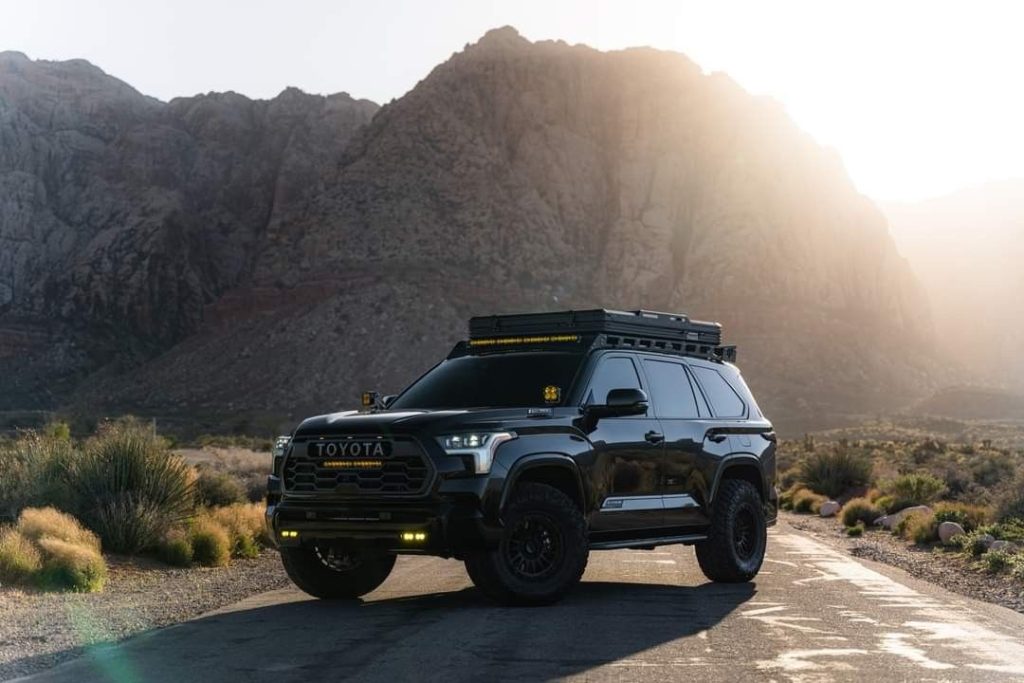
This reputation creates a cycle that benefits owners. High resale values reduce depreciation while encouraging sellers to maintain their vehicles properly, further strengthening the model’s reputation in the used market.
Many independent repair shops also report extensive familiarity with Toyota’s truck-based platforms, making long-term ownership more practical thanks to widespread parts availability and well-documented maintenance procedures.
What It Means for Buyers
For consumers shopping for a full-size SUV, the latest findings provide another compelling reason to consider the Toyota Sequoia. While purchase price, fuel economy, technology, and towing capacity remain important considerations, long-term durability can dramatically influence total ownership costs.
According to the iSeeCars research, America’s highest-mileage Sequoias are approaching 300,000 miles while remaining on the road, a benchmark unmatched by any other passenger vehicle analyzed.
Combined with Toyota’s dominance across multiple longevity rankings, the results reinforce the company’s standing as one of the industry’s benchmark manufacturers for durability.
For owners who prioritize keeping a vehicle for well over a decade, the Sequoia’s latest achievement is more than just another industry ranking. It represents decades of engineering focused on building vehicles capable of delivering dependable service long after many competitors have reached the end of their useful lives.
As rising vehicle prices encourage Americans to extend ownership periods, longevity is becoming one of the most valuable attributes a vehicle can offer, and the Toyota Sequoia now stands at the very top of that list.
Also Read: 10 Production Cars That Had Two Engines
