A two-driver household does not always need two vehicles designed for the same purpose. If the primary car handles long family trips, heavy cargo, or towing, the second vehicle can focus on efficiency, easier parking, daily commuting, and lower running costs.
Choosing the right secondary car is therefore less about buying the largest vehicle possible and more about filling the transportation gaps left by the household’s main car.
For this ranking, fuel economy, U.S. pricing, safety performance, passenger usefulness, cargo flexibility, and powertrain specifications were considered. Manufacturer data, EPA-based fuel economy figures, and Insurance Institute for Highway Safety results provide the factual foundation.
A good second car should be practical enough for either driver to use without creating unnecessary duplication in the driveway.
Hybrid sedans and hatchbacks perform especially well because they can reduce fuel consumption during frequent commuting while remaining capable of longer journeys. Other households may benefit from all-wheel drive or additional cargo capacity.
The eight vehicles ranked here serve different needs, but each has a clear reason to exist beyond being another car. The best choice ultimately depends on what the primary vehicle does poorly and which daily driving duties the second driver handles most often.
Also Read: 10 Car Brands Most Likely to Cross 250,000 Miles
1. 2026 Toyota Corolla Hybrid LE
For households that already own a larger SUV, pickup, or three-row crossover, the 2026 Toyota Corolla Hybrid LE makes a compelling secondary vehicle because it concentrates on inexpensive daily transportation.
Toyota lists a $24,975 base MSRP for the Hybrid LE, while its EPA-estimated fuel economy reaches 53 mpg city and 46 mpg highway in front-wheel-drive form. Those numbers immediately give it a defined role as the household’s high-efficiency commuter.
The logic becomes clearer when two drivers have different routines. There is little financial sense in using a large truck for a solo commute if another vehicle can achieve 50 mpg combined.
The Corolla’s 11.3-gallon fuel tank and strong efficiency also reduce the frequency of fuel stops during routine driving. Toyota additionally offers all-wheel drive on the Hybrid LE, giving households in snow-prone regions another configuration to consider.
Safety equipment strengthens its secondary-car credentials. Toyota Safety Sense 3.0 is standard on the Corolla, bringing active driver-assistance technology into one of Toyota’s least expensive hybrid models.
The 2026 Corolla sedan also carries a Good rating in the IIHS small overlap front evaluation. IIHS notes that its sedan ratings do not apply to the Corolla Hatchback, an important distinction when comparing body styles.
Performance is modest rather than sporty. The hybrid system produces 138 horsepower, and the gasoline engine’s published torque figure is 105 lb-ft. That output fits the Corolla’s intended job: commuting, errands, and routine transportation rather than replacing a household’s performance car or tow vehicle.
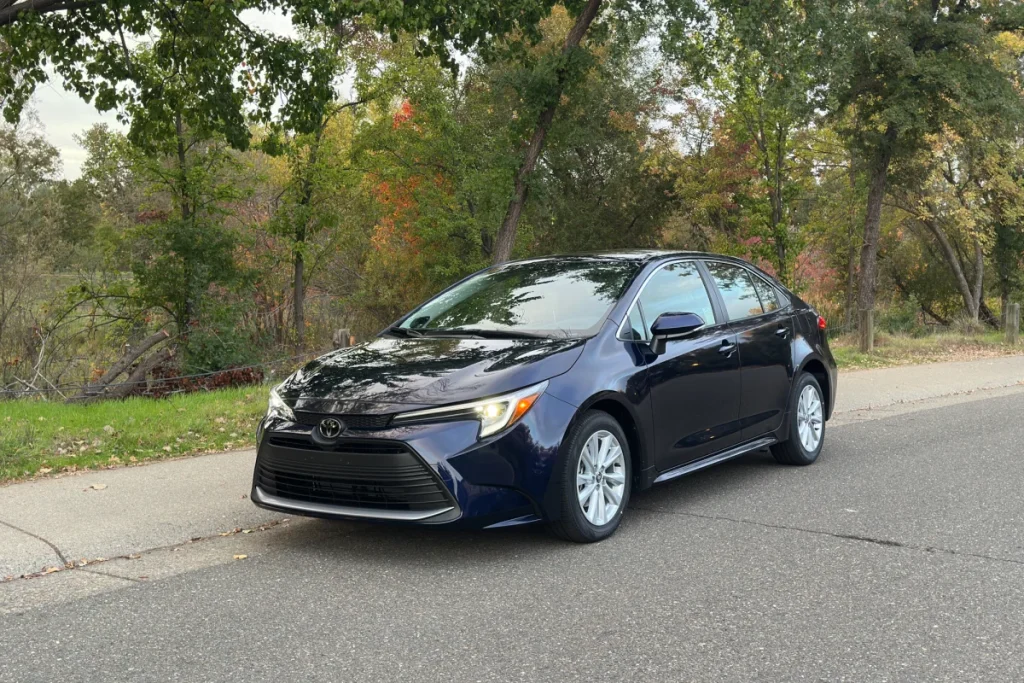
The Corolla Hybrid LE earns first place because its purpose is exceptionally clear. It can absorb high-mileage daily driving while leaving the household’s larger or less efficient primary vehicle available for the trips that actually require it.
- Engine: 1.8-liter four-cylinder hybrid
- Torque: 105 lb-ft for the gasoline engine
- Horsepower: 138 hp total hybrid system output
- Length/Width: 182.5 inches / 70.1 inches
2. 2026 Honda Civic Hatchback Sport Hybrid
Some households need their second car to do more than commute. Grocery runs, airport luggage, bulky purchases, and occasional longer drives can quickly expose the limitations of a traditional compact sedan. The 2026 Honda Civic Hatchback Sport Hybrid answers that problem by combining a hatchback body with a 200-horsepower electrified powertrain.
Honda’s U.S. specifications rate the hybrid hatchback at 50 mpg city, 45 mpg highway, and 48 mpg combined. The Sport Hybrid starts at $30,595. That makes it more expensive than the Corolla Hybrid LE, but the Honda delivers considerably greater system output and a more cargo-oriented body design.
Its 200-horsepower total system rating is particularly useful in a two-driver household where the second vehicle cannot feel restricted to short urban journeys. The 2.0-liter Atkinson-cycle four-cylinder works with the hybrid system to provide substantially more output than many economy-focused compact hybrids.
Honda also equips the Civic with steering-wheel-mounted deceleration selectors that allow the driver to adjust regenerative braking intensity.
Crash-test performance gives the Civic another measurable advantage. IIHS rates the 2026 Civic Good in driver-side and passenger-side small overlap front protection. The Institute states that these ratings also apply to the four-door hatchback.
Honda made side-structure improvements beginning with 2025 models, and the updated side ratings also extend to the hatchback version.
This is where the Civic separates itself from a second car purchased purely to save fuel. It can operate as an efficient commuter during the week, then take on practical household duties when the primary vehicle is unavailable.
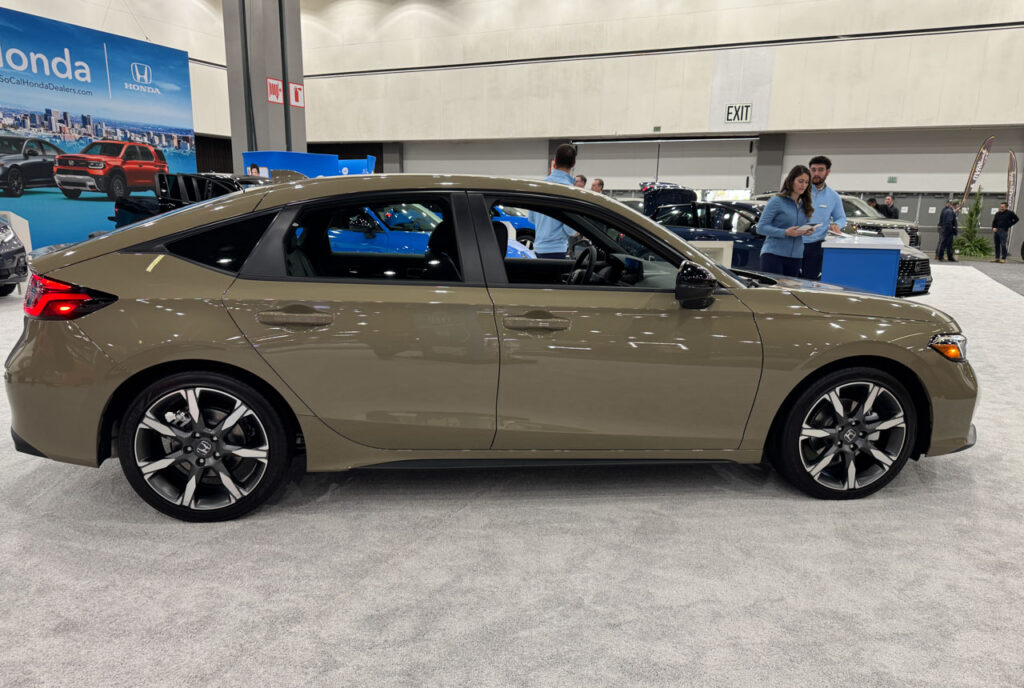
The hatchback configuration provides greater loading flexibility than a conventional trunk, while the hybrid system still delivers EPA-estimated fuel economy approaching 50 mpg.
For two drivers who regularly exchange cars depending on the day’s schedule, the Civic Hatchback Sport Hybrid is an especially balanced choice. Neither person has to feel that they have been assigned the household’s basic backup car.
- Engine: 2.0-liter four-cylinder hybrid
- Torque: 232 lb-ft electric motor torque
- Horsepower: 200 hp total system output
- Length/Width: 179.0 inches / 70.9 inches
3. 2026 Toyota Prius LE
The 2026 Toyota Prius LE makes sense when a household’s main vehicle already provides space, towing ability, or all-weather utility. Its strongest contribution is fuel efficiency.
Toyota’s U.S. figures rate the front-wheel-drive LE at an EPA-estimated 57 mpg city, 56 mpg highway, and 57 mpg combined, making it particularly suitable for the driver who covers the most commuting miles.
Unlike older Priuses that emphasized economy at the expense of performance, the current generation has considerably more power. Its 2.0-liter four-cylinder hybrid system produces 194 combined horsepower in front-wheel-drive form.
Toyota also offers electronic on-demand all-wheel drive, which increases total system output to 196 horsepower. This flexibility allows buyers to choose between maximum EPA-rated efficiency and additional driven-wheel traction.
The hatchback layout gives the Prius another reason to serve as a household’s second car. It can handle routine shopping and luggage without forcing the family to use a larger SUV for every cargo-related trip. At 181.1 inches long and 70.2 inches wide, it also occupies substantially less road and parking space than many full-size family vehicles.
Safety performance adds measurable value. The 2026 Prius qualifies for the IIHS Top Safety Pick+ award after earning the required crashworthiness and crash-avoidance results under the Institute’s current criteria. IIHS announced the Prius as a 2026 Top Safety Pick+ winner in May 2026.
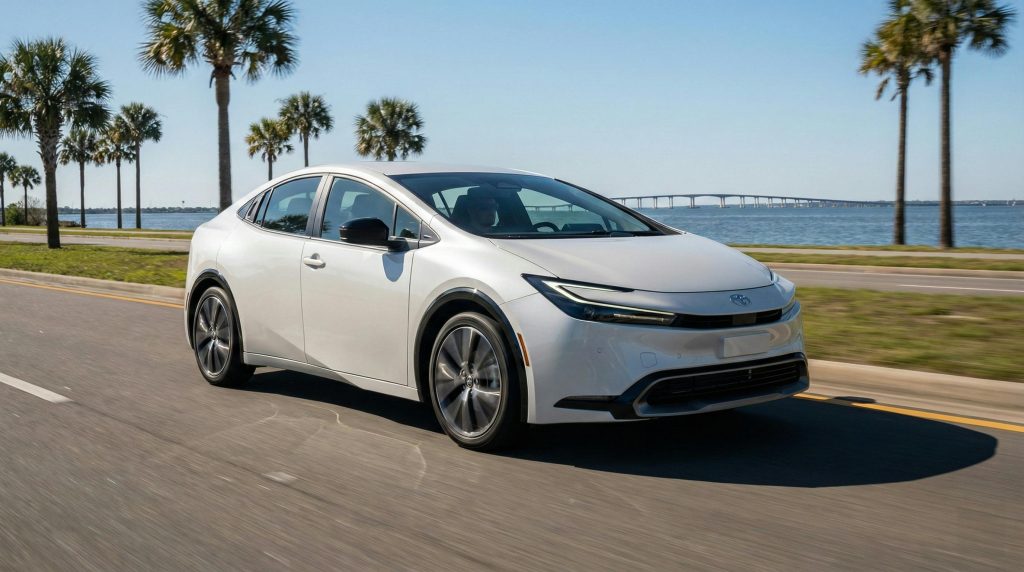
The Prius LE ranks highly because it complements rather than copies a primary vehicle. If one driver needs a large SUV for family duties while the other regularly travels alone, sending the 57-mpg Prius on the longer daily route can be a much more efficient division of household vehicles.
- Engine: 2.0-liter four-cylinder hybrid
- Torque: 139 lb-ft gasoline engine torque
- Horsepower: 194 hp total system output
- Length/Width: 181.1 inches / 70.2 inches
4. 2026 Subaru Impreza Sport
Not every two-driver household can use a front-wheel-drive hybrid as its second vehicle. Snow, frequent rain, unpaved access roads, or year-round outdoor activities may make standard all-wheel drive more valuable.
The 2026 Subaru Impreza Sport approaches the secondary-car role from that direction, providing symmetrical all-wheel drive as standard equipment rather than making buyers move to an optional drivetrain.
The 2026 lineup has been simplified to Sport and RS trims. In sport form, the Impreza uses a 2.0-liter SUBARU BOXER four-cylinder engine producing 152 horsepower and 145 lb-ft of torque. A LineTronic continuously variable transmission is standard.
This is not a high-output configuration, but a secondary household car does not necessarily need to duplicate the power of the main vehicle.
Its five-door body is the more important advantage. The Impreza measures 176.2 inches long and 70.1 inches wide, making it relatively manageable in urban parking.
At the same time, published U.S. specifications provide 20.4 cubic feet of cargo room with the seats in use and up to 56.0 cubic feet with the rear seating area folded. That flexibility allows the smaller car to absorb errands that might otherwise require the household’s crossover.
Subaru also made a meaningful safety change for 2026. IIHS states that the manufacturer added a rear-side thorax airbag to improve rear-occupant protection in side crashes. The Institute’s updated side rating for the 2026 Impreza is based on a Subaru-conducted test of an Impreza Sport.
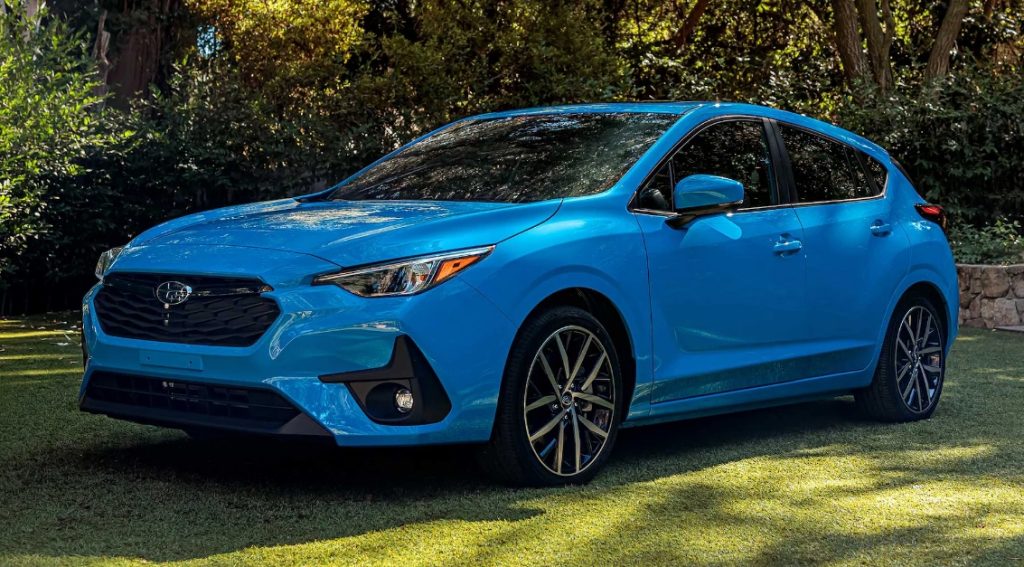
The Impreza’s value in a two-driver garage comes from contrast. Besides a larger family vehicle, it provides a compact footprint and hatchback practicality without asking the second driver to surrender all-wheel drive.
That is a useful combination for households where weather conditions matter more than achieving the highest possible fuel economy figure.
- Engine: 2.0-liter SUBARU BOXER four-cylinder
- Torque: 145 lb-ft
- Horsepower: 152 hp
- Length/Width: 176.2 inches / 70.1 inches
5. 2026 Hyundai Elantra Hybrid Blue
Fuel savings become more meaningful when the secondary vehicle handles repetitive weekday mileage. The 2026 Hyundai Elantra Hybrid Blue is particularly well suited to that assignment because its EPA-estimated ratings reach 51 mpg city, 58 mpg highway, and 54 mpg combined.
For a household that already owns a larger, less efficient vehicle, those numbers create a strong reason to send the Elantra on the longer daily commute.
Hyundai takes a different mechanical approach from several hybrid rivals. The Elantra Hybrid combines a 1.6-liter gasoline engine with an electric motor and a six-speed dual-clutch transmission.
Total system output is 139 horsepower, while Hyundai lists 195 lb-ft of combined torque. The power figure is modest, but the torque rating gives the car useful response for ordinary traffic and highway merging.
Its shape also works in the Elantra’s favor. Measuring 185.4 inches long and 71.9 inches wide, the sedan remains considerably easier to place in many parking spaces than a full-size pickup or large SUV. The 14.2-cubic-foot trunk provides useful room for groceries, work bags, and luggage without requiring the household’s primary vehicle for basic errands.
There is also a strong warranty argument. Hyundai’s U.S. warranty program includes a 10-year or 100,000-mile powertrain limited warranty for the original owner and a 10-year or 100,000-mile hybrid/electric battery warranty. Warranty terms and eligibility should always be checked carefully, particularly when purchasing used.
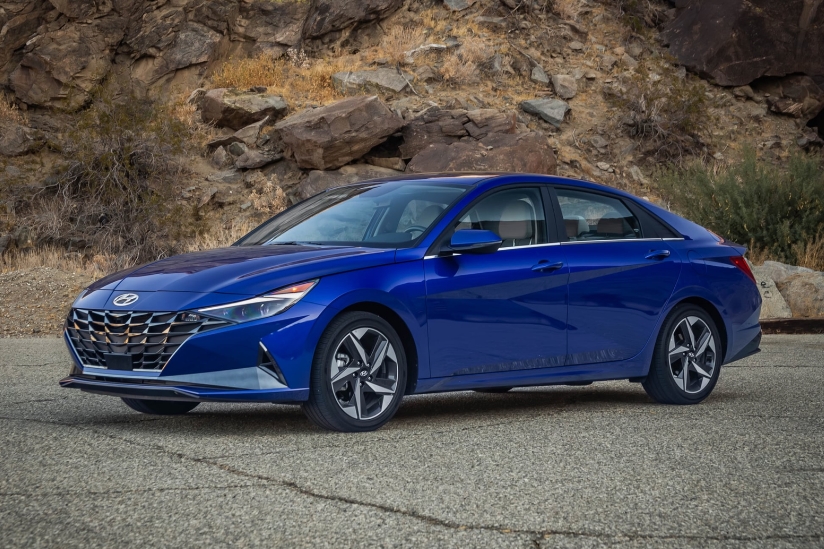
The Elantra Hybrid Blue is not intended to become the household’s towing vehicle or weekend adventure machine. Its purpose is much more focused.
It can take the high-mileage driving burden away from a larger primary car while offering enough passenger and trunk space for regular daily use. In a two-driver household, that clear division of responsibilities can make the second vehicle financially useful rather than simply convenient.
- Engine: 1.6-liter four-cylinder hybrid
- Torque: 195 lb-ft combined system torque
- Horsepower: 139 hp total system output
- Length/Width: 185.4 inches / 71.9 inches
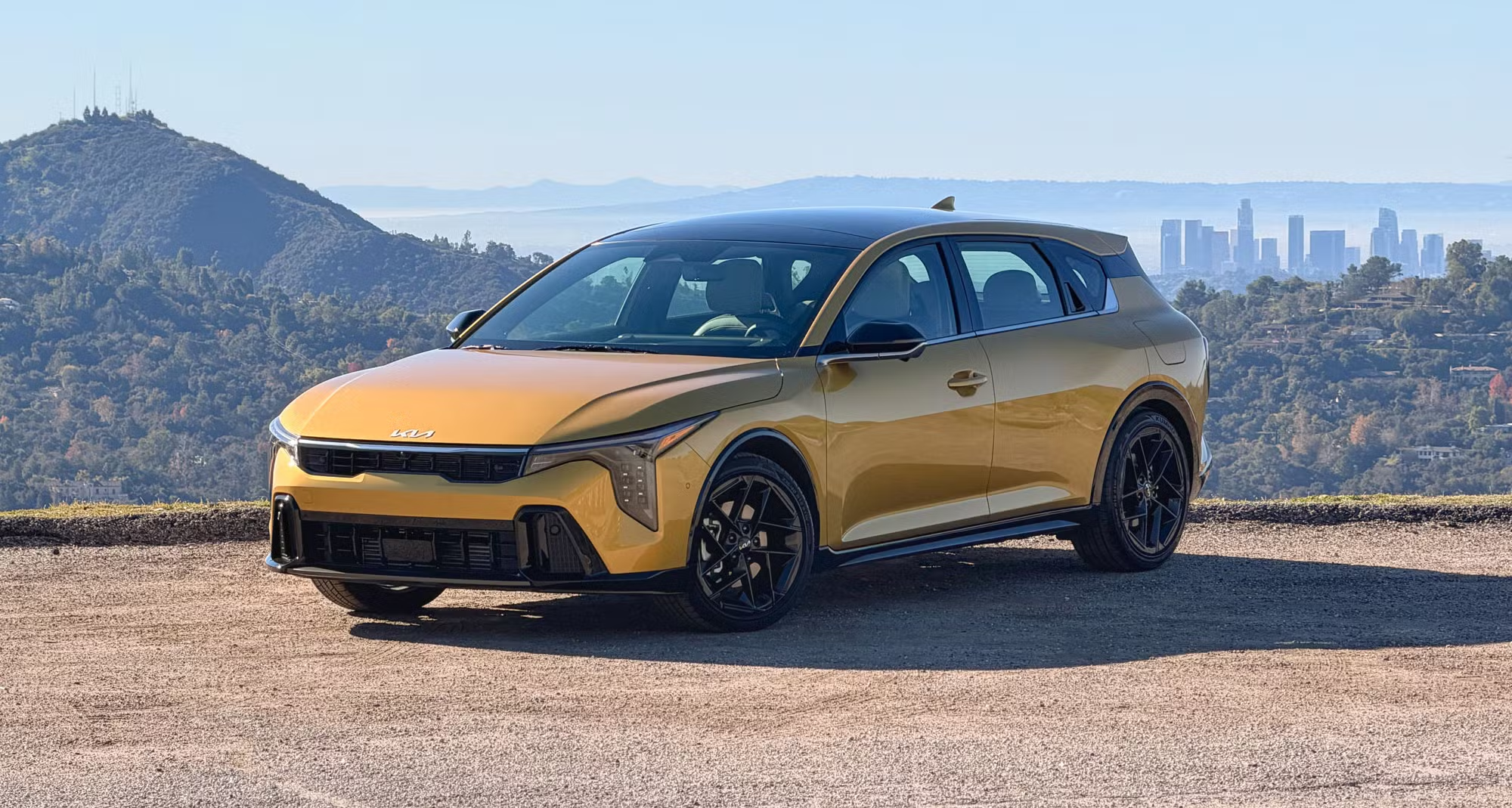
6. 2026 Kia K4 Hatchback GT-Line Turbo
A secondary car does not have to be chosen exclusively for maximum fuel economy. Some households already own a practical primary vehicle and want the second car to provide a smaller footprint, flexible cargo access, and stronger acceleration.
The 2026 Kia K4 Hatchback GT-Line Turbo fills that role with a 190-horsepower turbocharged engine and a conventional eight-speed automatic transmission.
The K4 Hatchback is 174.4 inches long, making it 11 inches shorter than the K4 sedan. Kia achieved that reduction while retaining the same 72.8-inch width and 107.1-inch wheelbase.
The shorter body is useful in tighter parking environments, but the hatchback layout prevents the car from becoming impractical. Kia lists 22.2 cubic feet of cargo volume behind the rear seats, giving it more loading flexibility than a traditional compact trunk.
Its turbocharged 1.6-liter four-cylinder produces 190 horsepower and 195 lb-ft of torque. Those figures create a different driving character from the efficiency-focused hybrids ranked above.
The GT-Line Turbo also uses a multi-link rear suspension, while lower-output K4 versions use a torsion-beam rear setup. This gives buyers a mechanical reason to consider the turbo trim beyond engine output.
Technology is another strength. Kia equips the K4 family with a wide digital display arrangement, and available features include a Digital Key 2.0 system, Harman Kardon audio, and driver-assistance equipment. Buyers should compare trim specifications carefully because not every feature is standard.
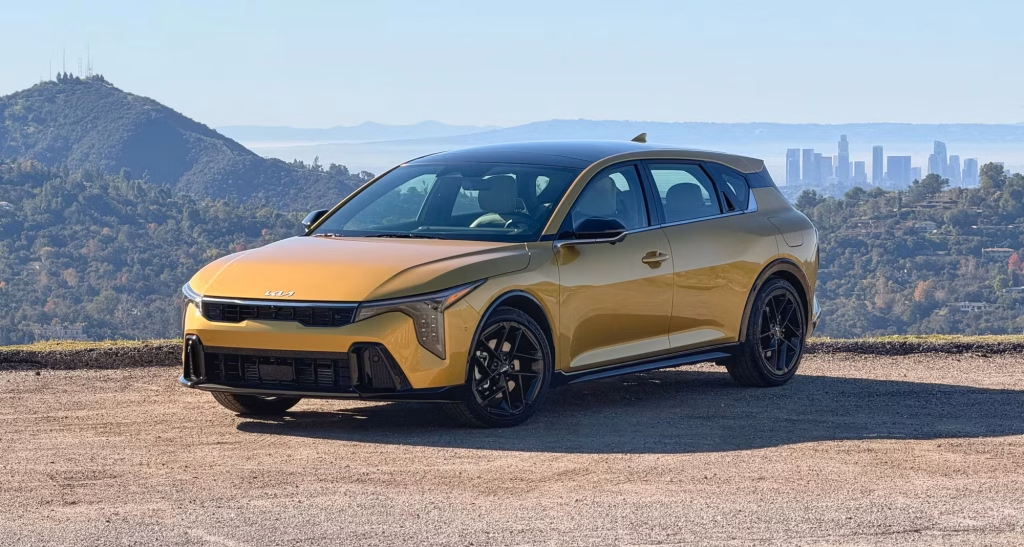
For a household with a large SUV or pickup already parked at home, the K4 Hatchback GT-Line Turbo offers something deliberately different. It is shorter, easier to maneuver, and more cargo-flexible than a compact sedan, yet its 190-horsepower engine prevents it from feeling like a purely economical backup vehicle.
That balance earns the K4 its sixth-place position. It works best when two drivers want their vehicles to serve different purposes without forcing the person using the smaller car to accept uninspiring performance.
- Engine: 1.6-liter turbocharged four-cylinder
- Torque: 195 lb-ft
- Horsepower: 190 hp
- Length/Width: 174.4 inches / 72.8 inches
7. 2026 Honda Accord EX-L Hybrid
When the second driver regularly carries passengers or spends hours on the highway, choosing the smallest possible commuter may create unnecessary compromises. The 2026 Honda Accord EX-L Hybrid offers a different solution.
It provides midsize-sedan space while maintaining an EPA rating of 51 mpg city, 44 mpg highway, and 48 mpg combined, according to Honda’s U.S. specifications.
Its hybrid powertrain produces 204 horsepower, giving the Accord substantially more output than several economy-focused models on this list. Honda pairs a 2.0-liter Atkinson-cycle four-cylinder with its two-motor hybrid system.
The traction motor is rated at 247 lb-ft of torque, helping provide immediate response during ordinary acceleration. Those figures allow the Accord to serve as more than a short-distance backup vehicle.
Size is another important part of the equation. At 195.7 inches long and 73.3 inches wide, the Accord is noticeably larger than a Corolla or Prius.
That extra footprint pays dividends when coworkers, adult passengers, or family members regularly use the rear seats. A 16.7-cubic-foot trunk also gives the sedan enough luggage space for longer journeys.
Crash-test data provide another reason to consider it. IIHS lists the 2026 Accord as a Top Safety Pick. The sedan earns Good ratings in the small overlap front, updated moderate overlap front, and updated side evaluations. “Good” is the highest rating on the institute’s crashworthiness scale.
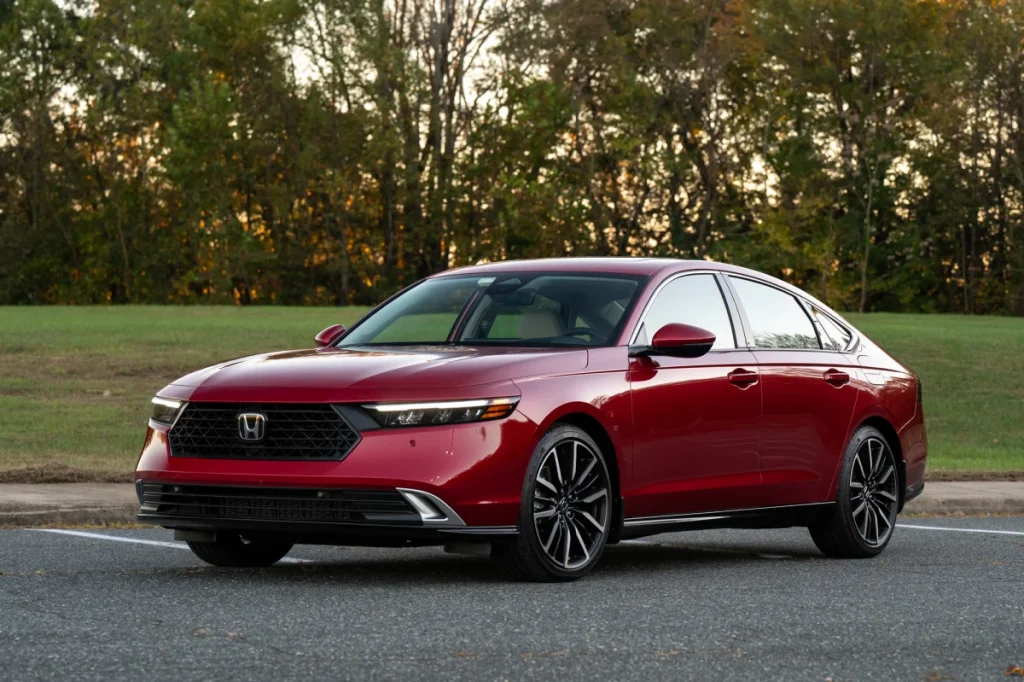
The Accord EX-L Hybrid works best in a household where the second car cannot feel secondary in actual use. One driver may take the SUV when cargo or additional ground clearance is required, while the Accord handles long commutes and passenger duty at up to 48 mpg combined.
It is larger and more expensive than basic commuter choices, but its efficiency, 204-horsepower output, and verified IIHS crash-test results create a strong multipurpose package.
- Engine: 2.0-liter four-cylinder hybrid
- Torque: 247 lb-ft electric motor torque
- Horsepower: 204 hp total system output
- Length/Width: 195.7 inches / 73.3 inches
8. 2026 Mazda3 Hatchback 2.5 S
The final entry takes a more traditional approach. The 2026 Mazda3 Hatchback 2.5 S does not use a hybrid system, yet it offers a combination of naturally aspirated power, compact dimensions, and hatchback cargo access that can fit neatly beside a larger primary vehicle. Mazda lists the 2.5 S at a starting MSRP of $25,650 before destination and other charges.
Under the hood is Mazda’s 2.5-liter SKYACTIV-G four-cylinder. In the naturally aspirated configuration, the engine produces 186 horsepower and 186 lb-ft of torque.
That is considerably more horsepower than some efficiency-oriented compact cars without requiring a turbocharger on the base model. A six-speed automatic transmission is standard on the 2.5 S.
The front-wheel-drive hatchback’s EPA estimates reach 27 mpg city, 35 mpg highway, and 30 mpg combined for the 2026 2.5 S configuration. Those numbers cannot match a Prius or Corolla hybrid, which explains the Mazda’s lower ranking.
Its attraction comes from serving drivers whose second-car priorities extend beyond maximum gasoline savings.
At 175.6 inches long and 70.7 inches wide, the Mazda3 is one of the shorter cars in this ranking. That compact footprint can make parking easier when compared with a midsize sedan or large household SUV. The rear hatch also provides a wider cargo opening than a conventional sedan trunk.
Safety performance is particularly noteworthy. IIHS lists the 2026 Mazda3 four-door hatchback as a Top Safety Pick+. Its current rating summary includes good scores in the small overlap front, updated moderate overlap front, and updated side crashworthiness tests.
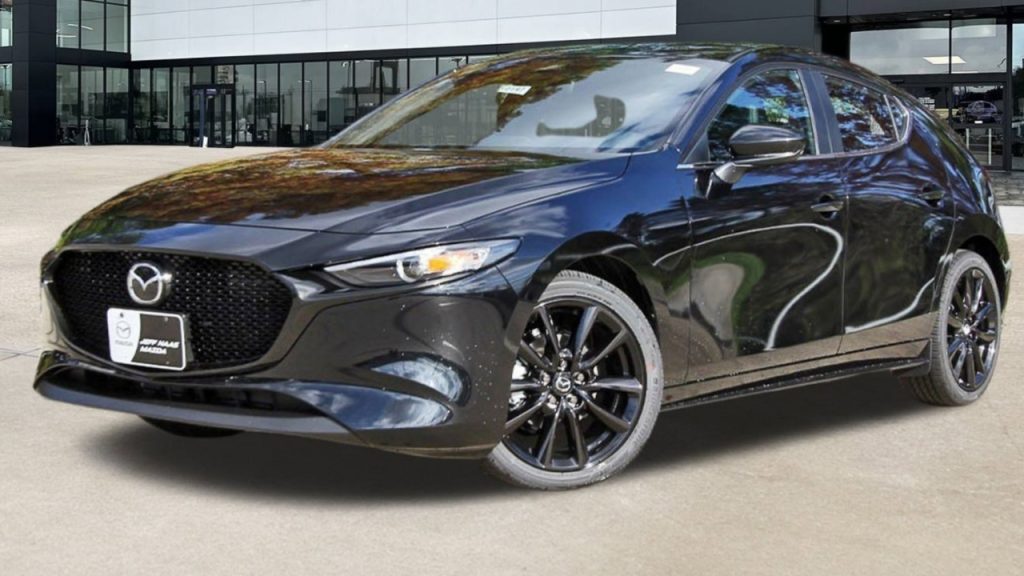
Mazda’s U.S. news release also confirms the Mazda3 hatchback among its 2026 Top Safety Pick+ recipients.
The Mazda3 earns its place for households that want the second car to feel distinct from the main family vehicle. It sacrifices hybrid-level mpg, but its 186-horsepower engine, short body, hatchback configuration, and top-tier 2026 IIHS award make it a credible alternative to another crossover.
- Engine: 2.5-liter SKYACTIV-G four-cylinder
- Torque: 186 lb-ft
- Horsepower: 186 hp
- Length/Width: 175.6 inches / 70.7 inches
Also Read: The 10 Cars Owners Hold For 15 Years or More Are All Japanese