
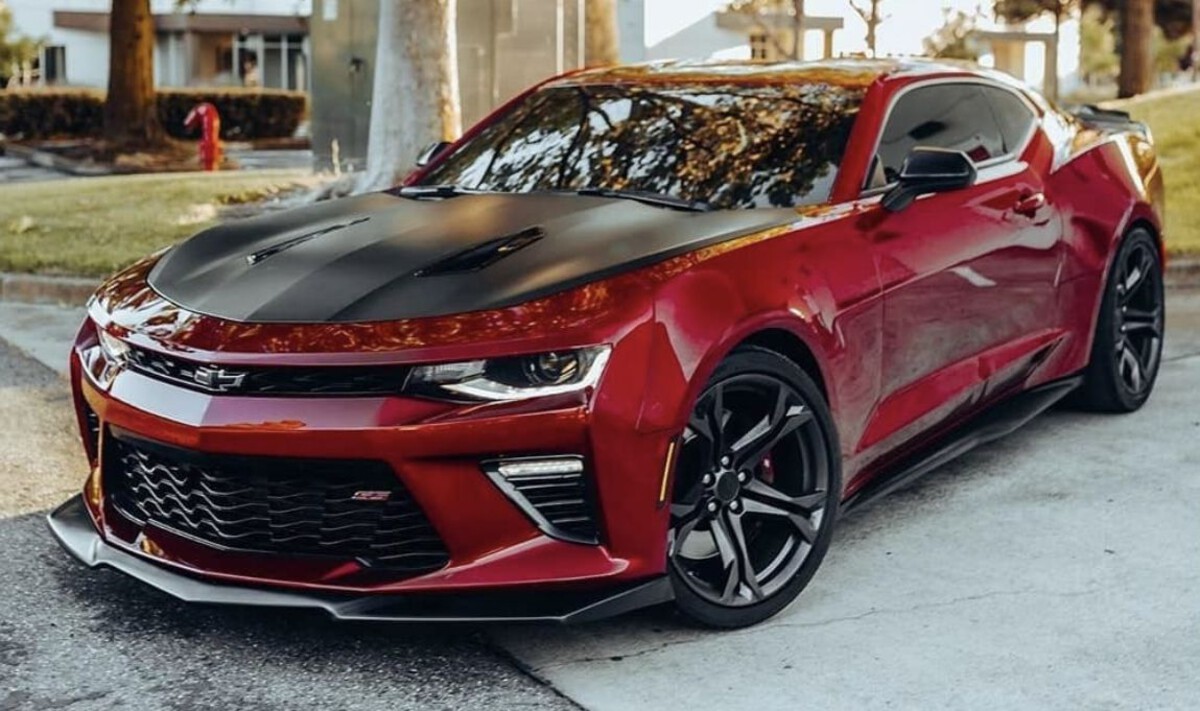
American muscle cars have spent decades selling an image built around horsepower, acceleration, and unmistakable road presence. Yet real-world fatality data show that some versions of the Chevrolet Camaro, Dodge Challenger, Dodge Charger, and Ford Mustang are appearing in a far less desirable ranking.
The Insurance Institute for Highway Safety, or IIHS, found that six of the 21 vehicles with the highest driver death rates for model year 2020 were muscle-car variants.
The IIHS analysis examined driver deaths from 2018 through 2021 involving 2018-2020 model-year vehicles. Researchers calculated deaths per million registered vehicle years, rather than simply counting fatalities.
That distinction matters because a popular model with millions of vehicles on the road could naturally accumulate more deaths than a low-volume car. A rate-based comparison provides a clearer picture of fatality risk across individual models.
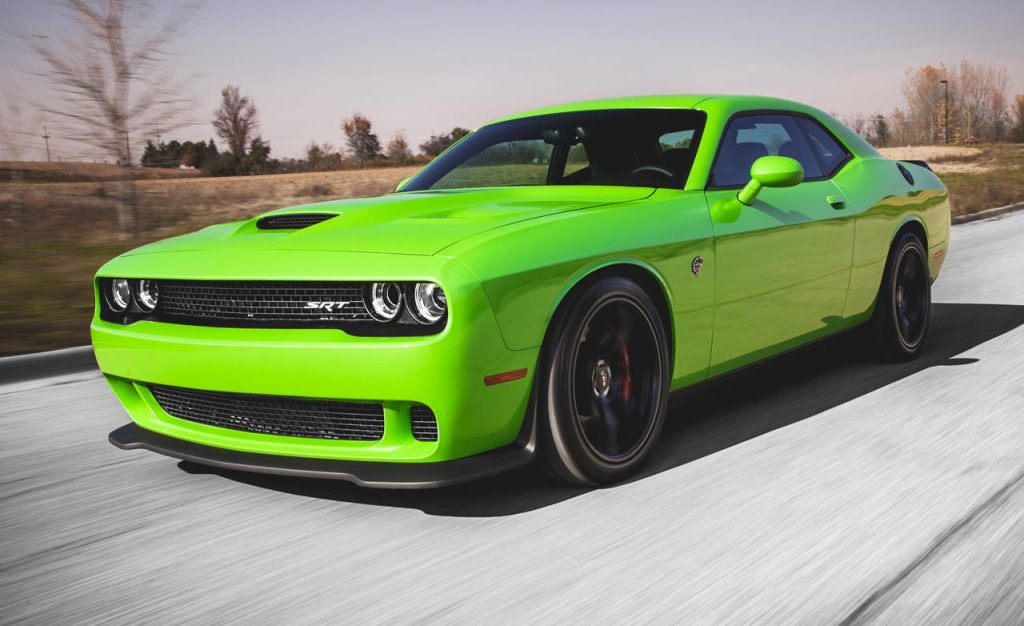
Among the muscle cars in the highest-rate group, the two-wheel-drive Dodge Challenger recorded 154 driver deaths per million registered vehicle years.
The Dodge Charger HEMI 2WD posted 118, while the Chevrolet Camaro convertible reached 113 and the Camaro coupe 2WD recorded 110. The Challenger HEMI 2WD was at 101, and the Ford Mustang convertible recorded 97.
Those figures, also highlighted in legal-industry summaries such as Boesen Law’s discussion of vehicle death rates, require careful interpretation. They do not prove that every muscle car is structurally unsafe or that every owner drives recklessly.
What they show is that real-world outcomes can differ sharply from the picture created by horsepower figures, safety equipment lists, and controlled crash tests. Boesen Law’s ranking, which draws from IIHS data, also placed the Challenger behind only the Mitsubishi Mirage in its list of models with the highest driver death rates.
Also Read: The 10 Cars Owners Hold For 15 Years or More Are All Japanese
Muscle Cars Are Breaking a Familiar Pattern in Fatality Data
Small vehicles have traditionally dominated lists of the highest driver death rates. Basic crash physics helps explain why. In collisions involving vehicles of significantly different sizes and weights, occupants of the smaller vehicle are generally at a disadvantage.
That pattern remained visible in the IIHS data. Eight of the 21 models with the highest driver death rates were minicars or small cars.
The Mitsubishi Mirage G4 had the highest measured rate at 205 driver deaths per million registered vehicle years, followed by the Mitsubishi Mirage hatchback at 183. Small models, including the Hyundai Accent, Chevrolet Spark, and Kia Rio sedan, also appeared among the high-rate vehicles.
IIHS Vice President of Research and Statistical Services Chuck Farmer said the muscle-car results suggested that the vehicles’ history and marketing may encourage more aggressive driving. That observation shifts the discussion beyond crash structure.
A vehicle can offer airbags, stability control, and strong occupant protection while still producing poor real-world outcomes if it is frequently driven at excessive speeds or in high-risk situations.
Horsepower alone is not a cause of fatal crashes. A powerful car operated responsibly does not automatically become dangerous. The concern is the combination of extreme capability, public roads, and driver decisions.
A moment of excessive throttle on a wet road, an attempt to race another vehicle, or a high-speed cornering mistake can create consequences far beyond those experienced in a lower-powered car.
The Dodge Charger HEMI 2WD recorded 164 other-driver deaths per million registered vehicle years, the highest other-driver death rate in the study. The standard Charger 2WD posted 105, while the Challenger 2WD recorded 91. Three Dodge muscle cars were therefore among the vehicles with the highest rates of deaths involving drivers of other vehicles.
The opposite end of the IIHS rankings provides useful context. Eighteen of the 23 vehicles with the lowest driver death rates were SUVs or minivans, and 12 were luxury vehicles. Four models had zero driver deaths during the study period: the BMW X3 4WD, Lexus ES 350, Mercedes-Benz E-Class sedan 4WD, and Nissan Pathfinder 2WD.
These figures do not guarantee that one vehicle is always safe and another is always deadly. Death rates are population-level measurements influenced by crash exposure, driver behavior, and vehicle characteristics. Still, the clustering of muscle cars near the high end is too significant to dismiss as a simple coincidence.
Driver Behavior Is a Critical Part of the Muscle-Car Risk
A family minivan and a 700-horsepower performance coupe may travel on the same roads, but they are often purchased for different reasons. Muscle cars are openly associated with acceleration, engine sound, and performance. Advertising, enthusiast culture, and manufacturer-developed performance features can strengthen that identity.
Importantly, IIHS adjusted its driver death rates for driver age and gender. Muscle-car variants remained prominent among the highest-rate vehicles. That means the results cannot simply be dismissed by saying young male drivers buy performance cars. Driver demographics matter, but the adjusted data still showed a concerning pattern.
Crash-test ratings should also not be confused with real-world death rates. A controlled crash test evaluates occupant protection in carefully defined scenarios. Death-rate analysis captures the combined result of vehicle design, road environments, speed, crash type, and driver behavior across real traffic.
The IIHS findings also avoid an important statistical mistake sometimes made when discussing the Boesen Law ranking or similar summaries. A raw number of deaths is not automatically the same as a death rate. IIHS used deaths per million registered vehicle-years specifically to compare models with different levels of exposure.
The 154 figure for the Challenger, for example, represents a rate, not simply 154 total Challenger drivers killed.
This distinction is especially important because Boesen Law’s article labels the figures as a “number of deaths” while citing IIHS material. The underlying IIHS table identifies 154 as the Challenger 2WD’s driver death rate per million registered vehicle years. For a data-backed comparison, the IIHS methodology is the more precise way to describe the statistic.
The muscle-car results are especially relevant in the used-car market. High-performance vehicles depreciate, making horsepower that was expensive when new accessible to younger or less experienced buyers. A used muscle car can offer extraordinary acceleration for the price of a newer mainstream crossover.
Driver education may be part of the solution. Many motorists receive a license after learning basic road rules and vehicle control, and then can legally purchase a car producing several hundred horsepower without additional performance training.
Advanced instruction can teach throttle control, braking technique, and how quickly a powerful rear-wheel-drive car can lose traction.
Modern crash-avoidance technology also matters. Automatic emergency braking, improved forward-collision systems, and better vehicle stability software can reduce certain risks, although no technology can compensate for every deliberate high-speed decision.
What the Data Means for Muscle-Car Safety
The IIHS study does not declare muscle cars universally unsafe. Instead, it identifies a clear real-world pattern: six of the 21 vehicles with the highest driver death rates for model year 2020 were Camaro, Challenger, Charger, or Mustang variants. Three Dodge muscle cars also ranked among vehicles with the highest other-driver death rates.
That is a significant finding for an automotive category built around power and speed. It shows that safety cannot be judged only by the number of airbags, a crash-test result, or the presence of electronic driver aids.
The methodology behind the IIHS figures also deserves attention. The institute studied 2020 models with at least 100,000 registered vehicles or at least 20 deaths during the 2018-2021 study period.
The rates were adjusted for driver age and gender. IIHS also noted that some models were excluded because of insufficient exposure, meaning the ranking is not a simple list of every vehicle sold in America.
That context prevents the findings from being exaggerated. The data applies to specific vehicle configurations and a defined period. A Challenger 2WD rate should not automatically be assigned to every Challenger trim, and the Camaro convertible’s figure should not be treated as the rate for every Camaro ever produced.
At the same time, the concentration of performance cars remains notable. IIHS had traditionally found the highest driver death rates among small vehicles, where lower mass and size can create a disadvantage in serious crashes.
The appearance of six muscle-car variants adds another risk pattern centered less on vehicle size and more on the interaction between performance and real-world use. Boesen Law’s summary draws attention to the same underlying data, but the IIHS findings provide the critical methodological context.
The Challenger’s 154 figure is a normalized death rate, while the Mirage G4’s 205 represents the highest driver death rate in the IIHS table. The comparison is based on registered vehicle years, making it more useful than simply comparing total fatalities.
American muscle cars remain culturally important and enormously appealing to enthusiasts. Their horsepower is not automatically a death sentence, and responsible owners drive these vehicles safely every day.
Yet the IIHS data demonstrate that performance, vehicle image, and real-world driving behavior can combine in ways that produce unusually severe outcomes.
The most important figure may therefore not be 650 or 700 horsepower. It is the death rate measured after these cars enter public roads. When six muscle-car variants appear among the 21 highest driver death rates, the data deserve attention rather than dismissal.
The cars provide extraordinary capability, but the safety margin still depends heavily on the decisions made behind the steering wheel.
Also Read: 10 Most Popular Car Brands That Are Owned By A Single Company
