
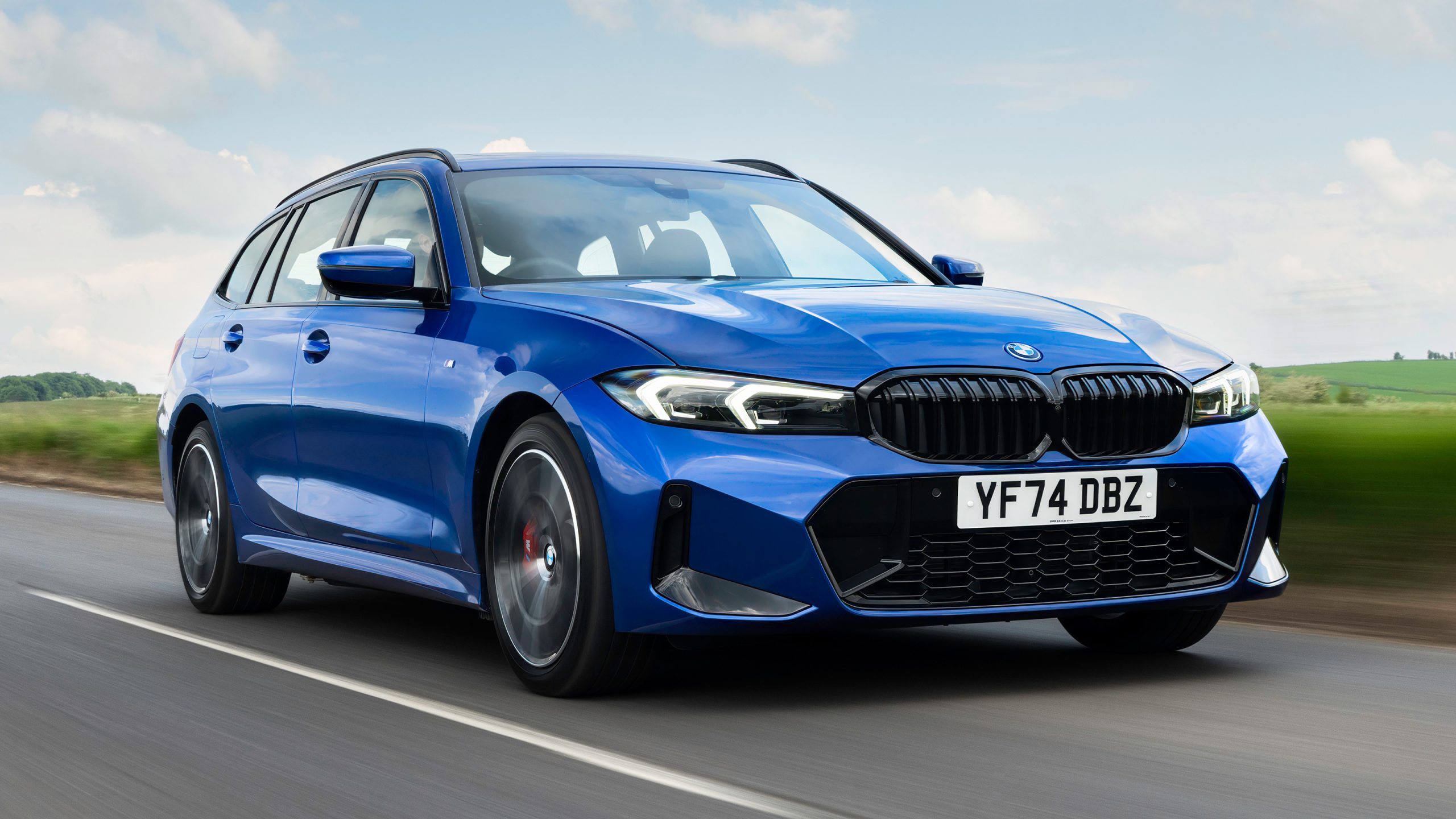
BMW’s U.S. sales performance has changed considerably during the past five complete calendar years. Traditional sport sedans remain important, but sports activity vehicles now generate an enormous volume for the German luxury brand.
BMW of North America’s annual sales reports show the company sold 336,644 vehicles in 2021, 332,388 in 2022, 362,244 in 2023, 371,346 in 2024, and a record 388,897 in 2025.
This ranking adds U.S. model-series sales for the five complete years from 2021 through 2025. BMW’s reported model-series figures are used, meaning related derivatives counted by BMW under one sales line remain within that series. The numbers are not global deliveries, production totals, or estimated registrations.
The results reveal the scale of America’s shift toward luxury SUVs. Two Spartanburg-built X models dominate the ranking, each exceeding 350,000 U.S. sales during the measured period. Sedans, coupes, convertibles, and newer electric models compete for the remaining positions.
Every total is calculated from annual U.S. sales data, giving a clear numerical picture of which BMW nameplates attracted the most American buyers across the last five full sales years.
Also Read: 8 Car Brands Ranked By Customer Satisfaction
1. BMW X5: 364,264 U.S. Sales
The BMW X5 takes first place with 364,264 U.S. sales from 2021 through 2025. The five-year total comes from 60,725 units in 2021, 82,372 in 2022, 72,573 in 2023, 72,348 in 2024, and 76,246 in 2025. BMW’s annual U.S. reporting and model-sales data confirm the X5’s remarkable volume during this period.
Those figures tell a more interesting story than a simple first-place finish. The X5 began the measured period at 60,725 sales, then surged beyond 82,000 units in 2022. Volume settled above 72,000 in both 2023 and 2024 before climbing 5.4 percent to 76,246 in 2025.
BMW’s 2025 sales table placed the X5 only 300 units behind the X3 for that individual year, but the X5’s stronger accumulated five-year count gives it the lead in this ranking.
Its U.S. position is also connected to BMW’s manufacturing strategy. Plant Spartanburg, South Carolina, is the company’s global center of competence for several X models.
BMW states that the facility is its largest single production plant globally and can assemble up to 450,000 vehicles annually. The X5 is part of that U.S.-built Sports Activity Vehicle portfolio.
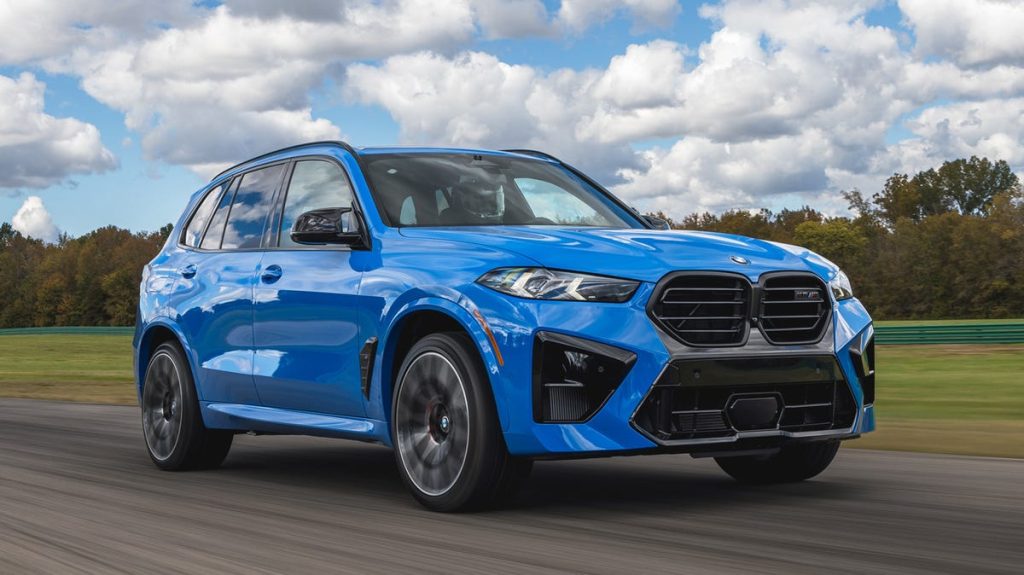
The current X5 xDrive40i demonstrates why the nameplate can cover daily luxury and serious performance without moving into an M model. Its 3.0-liter BMW TwinPower Turbo inline-six uses 48-volt mild-hybrid technology and produces 375 horsepower. BMW lists 398 lb-ft of torque for the powertrain.
A total exceeding 364,000 sales is substantial for a premium midsize SUV. More importantly, the X5 remained a high-volume product every year rather than depending on one exceptional sales spike. That consistency makes it BMW’s U.S. volume leader across the five complete calendar years examined here.
- Engine: 3.0-liter BMW TwinPower Turbo inline-six with 48V mild-hybrid technology
- Torque: 398 lb-ft
- Horsepower: 375 hp
- Length/Width: 194.2 inches / 78.9 inches
2. BMW X3: 350,173 U.S. Sales
Only 14,091 vehicles separate the BMW X3 from the first-place X5 after five complete years of U.S. sales. The compact luxury SUV accumulated 350,173 sales between 2021 and 2025, with 75,858 units in 2021, 65,799 in 2022, 63,172 in 2023, 68,798 in 2024, and 76,546 in 2025.
The annual figures establish the X3 as one of BMW’s most consistently important American products.
Its sales curve differs from the X5’s. The X3 entered this five-year window with an exceptional 75,858-unit result in 2021, when BMW’s U.S. sales data identified the X3 and X5 as its top-selling models. Volume declined to 65,799 in 2022 and then to 63,172 in 2023. Rather than continuing downward, the X3 recovered to 68,798 in 2024.
Then came 2025. BMW reported 76,546 X3 sales in the United States, an 11.3 percent increase from the previous year’s 68,798 units. That made the X3 BMW’s single best-selling model in America for 2025, beating the X5 by exactly 300 vehicles.
The X3’s second-place five-year position shows the importance of the compact luxury SUV class to BMW’s American business. It is smaller than the X5, yet it provides the upgraded seating position and SUV body style that have become central to the U.S. premium market. BMW also assembles the X3 at Plant Spartanburg in South Carolina.
For the current X3 30 xDrive, BMW specifies a 2.0-liter turbocharged four-cylinder with 48-volt mild-hybrid technology. Output is 255 horsepower, and BMW’s U.S. technical specifications list 295 lb-ft of torque. Standard xDrive all-wheel drive further aligns the model with American luxury-crossover expectations.
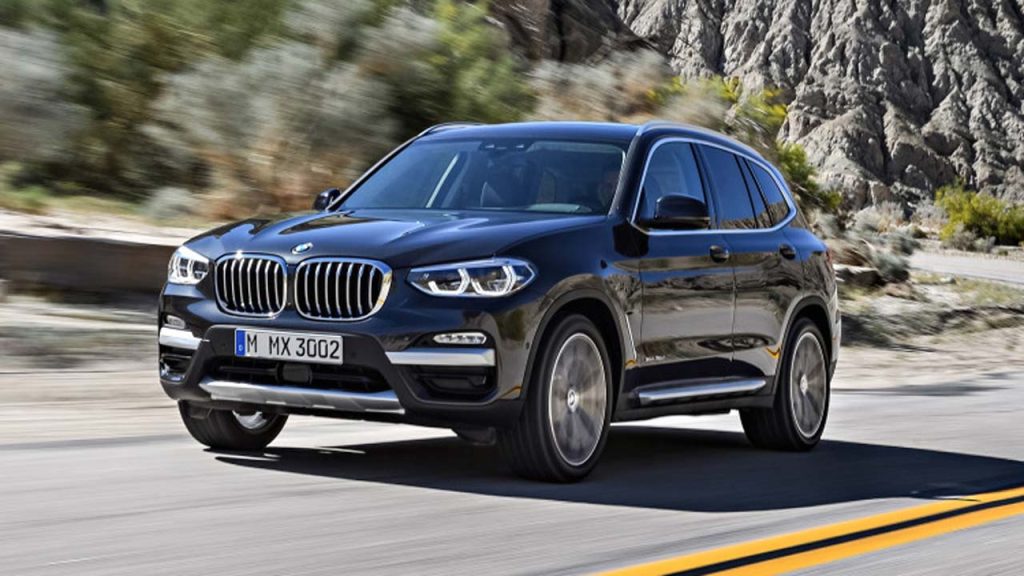
The X3 does not lead the complete five-year calculation, but its 2025 victory suggests strong momentum. More than 350,000 U.S. sales across five years put it in a different volume category from most BMW passenger cars and lower-selling X models.
- Engine: 2.0-liter BMW TwinPower Turbo four-cylinder with 48V mild-hybrid technology
- Torque: 295 lb-ft
- Horsepower: 255 hp
- Length/Width: 187.2 inches / 75.6 inches
3. BMW 4 Series: 202,671 U.S. Sales
The BMW 4 Series claims third place with 202,671 U.S. sales from 2021 through 2025, using BMW’s reported model-series totals of 22,938 in 2021, 36,954 in 2022, 50,777 in 2023, 42,623 in 2024, and 39,379 in 2025.
BMW’s annual reporting groups the 4 Series body styles under one model-series line, so this ranking follows the same company methodology rather than attempting to separate every coupe, convertible, Gran Coupe, and performance derivative.
The pattern is striking because sales more than doubled between 2021 and 2023. From 22,938 vehicles, the series jumped to 36,954 and then reached 50,777 units. That 2023 figure was the strongest in the five-year period.
Volume fell to 42,623 in 2024 and declined another 7.6 percent to 39,379 in 2025, but the cumulative count remained large enough to keep the 4 Series ahead of BMW’s other passenger-car lines.
Part of the explanation is the breadth of the 4 Series family. BMW has used the name across traditional two-door models and the four-door Gran Coupe body style. The i4 electric Gran Coupe also expanded BMW’s presence in this design category, though BMW separately reports battery-electric sales information in its annual releases.
The important point for this ranking is consistency: the calculation follows BMW’s published model-series sales table.
The current 430i Coupe provides a useful mechanical reference for the series. Its 2.0-liter BMW TwinPower Turbo four-cylinder uses 48-volt mild-hybrid technology and produces 255 horsepower. BMW lists 295 lb-ft of torque.
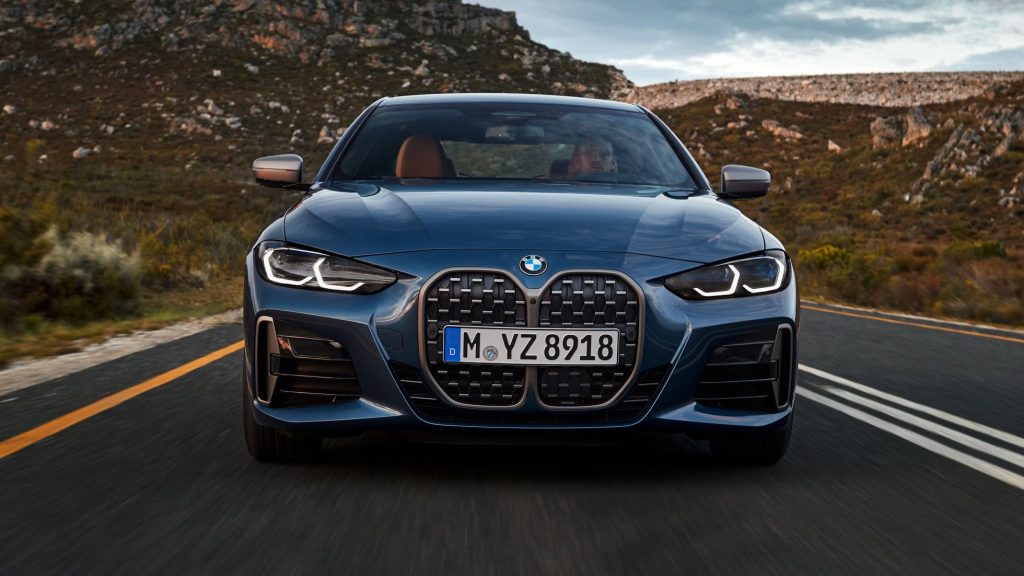
Buyers seeking greater performance can move into six-cylinder and M configurations, helping the broader 4 Series address multiple price and performance levels.
More than 202,000 sales across five years demonstrate that American BMW buyers have not abandoned passenger cars. The X5 and X3 dominate the volume chart, but the 4 Series proves that a diverse coupe-oriented model family can still generate major U.S. sales.
- Engine: 2.0-liter BMW TwinPower Turbo four-cylinder with 48V mild-hybrid technology
- Torque: 295 lb-ft
- Horsepower: 255 hp
- Length/Width: 187.9 inches / 72.9 inches
4. BMW 3 Series: 177,785 U.S. Sales
The BMW 3 Series may be one of the brand’s most recognizable nameplates, yet the last five complete U.S. sales years place it fourth rather than first. Adding annual sales of 49,458 in 2021, 30,400 in 2022, 33,816 in 2023, 31,329 in 2024, and 32,782 in 2025 produces a five-year total of 177,785 vehicles.
The annual U.S. data also make clear that BMW has reported 3 Series and 4 Series sales separately since June 2015, preventing the two nameplates from being combined in this ranking.
Its strongest year in the measured period came immediately at the beginning. The 49,458 units sold in 2021 represented nearly 17,000 more vehicles than the 2025 result. Sales then dropped sharply to 30,400 in 2022. Instead of continuing to collapse, the 3 Series settled into a relatively narrow range during the following three years.
That stability deserves attention. BMW sold 33,816 units in 2023, followed by 31,329 in 2024 and 32,782 in 2025. The SUV market may dominate BMW’s American volume, but roughly 30,000 or more annual 3 Series sales across four consecutive years show that the compact sport sedan still maintains a meaningful U.S. customer base.
The current 330i illustrates the formula BMW continues to use. A 2.0-liter BMW TwinPower Turbo four-cylinder produces 255 horsepower and 295 lb-ft of torque.
The engine is paired with an eight-speed automatic transmission, and U.S. buyers can choose rear-wheel drive or xDrive all-wheel drive. BMW’s current U.S. model information continues to position the 3 Series as its core four-door sport sedan.
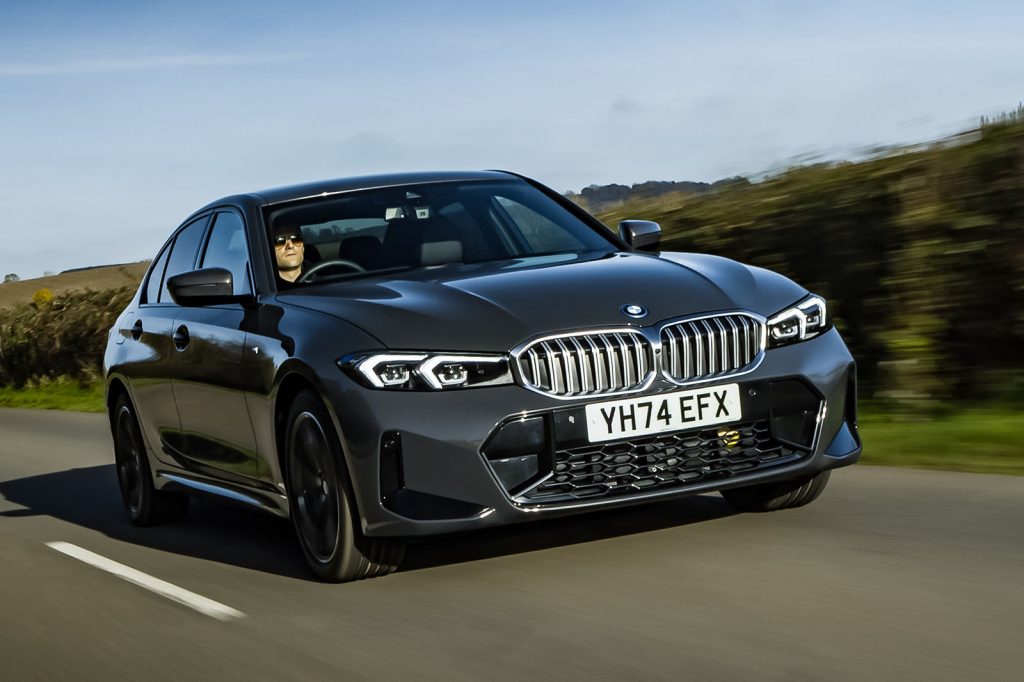
Fourth place is therefore not evidence that the 3 Series has become irrelevant. The sales numbers instead show how BMW’s U.S. business has expanded around it.
X models now accumulate far greater volume, and the broader 4 Series finished ahead during this particular five-year window. Even so, 177,785 U.S. sales make the 3 Series one of BMW’s four biggest model lines by accumulated American volume from 2021 through 2025.
- Engine: 2.0-liter BMW TwinPower Turbo four-cylinder with 48V mild-hybrid technology
- Torque: 295 lb-ft
- Horsepower: 255 hp
- Length/Width: 185.9 inches / 71.9 inches
5. BMW X7: 143,756 U.S. Sales
The BMW X7 reaches fifth place with 143,756 U.S. sales from 2021 through 2025. Its annual volume was 23,046 units in 2021, 30,706 in 2022, 28,797 in 2023, 29,632 in 2024, and 31,575 in 2025.
BMW’s reported U.S. model data show that the X7 finished the five years with its strongest annual result, despite being one of the company’s largest and most expensive vehicles.
Unlike the X3 and X5, the X7 was never designed to chase the broadest section of the luxury SUV market. It is BMW’s large three-row Sports Activity Vehicle, placing passenger capacity and flagship-level equipment ahead of compact dimensions.
Yet its sales record shows remarkable consistency. After jumping from 23,046 sales in 2021 to 30,706 in 2022, annual U.S. volume remained close to or above 29,000 units for the rest of the measured period.
The 2025 result is particularly significant. BMW sold 31,575 X7s, an increase of 6.6 percent from 29,632 in 2024. At the same time, BMW set its third consecutive annual U.S. sales record, delivering 388,897 vehicles across the brand.
BMW’s Spartanburg, South Carolina, manufacturing operation also gives the X7 a direct connection to the U.S. market. The large SUV is part of BMW’s American-built X-model portfolio, an important production strategy for a company whose U.S. sales have become heavily influenced by SUVs.
The current X7 xDrive40i uses a 3.0-liter turbocharged inline-six with 48-volt mild-hybrid technology. BMW rates it at 375 horsepower, while current U.S. specifications list 398 lb-ft of torque.
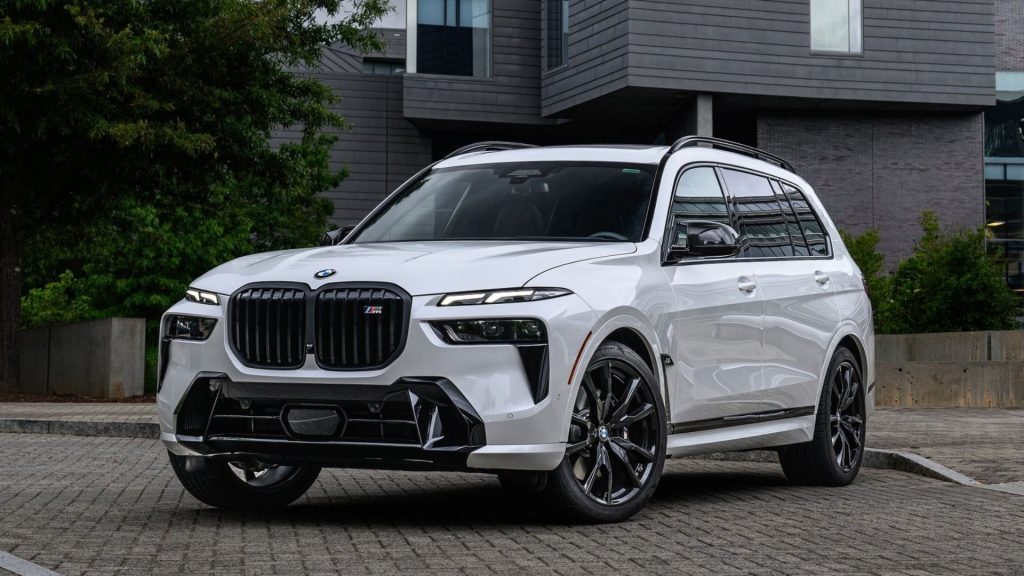
The X7’s fifth-place finish is impressive because its price and dimensions naturally limit its potential customer base. BMW still moved nearly 144,000 examples in five years, demonstrating substantial American demand for a large three-row luxury SUV.
- Engine: 3.0-liter BMW TwinPower Turbo inline-six with 48V mild-hybrid technology
- Torque: 398 lb-ft
- Horsepower: 375 hp
- Length/Width: 203.6 inches / 78.7 inches
6. BMW 5 Series: 120,203 U.S. Sales
The BMW 5 Series follows with 120,203 U.S. sales across the 2021 to 2025 calendar years. Its five-year calculation comes from 24,523 vehicles in 2021, 20,857 in 2022, 22,401 in 2023, 25,315 in 2024, and 27,107 in 2025. The figures show a model that experienced a sales decline early in the period before building momentum during its latest generation.
The sales trajectory forms a clear recovery pattern. Volume dropped from 24,523 units in 2021 to 20,857 in 2022. A modest increase followed in 2023, when 22,401 vehicles were sold.
BMW then recorded 25,315 sales in 2024 before the series climbed another 7.1 percent to 27,107 units during 2025. That final figure was the 5 Series’ strongest annual U.S. performance within this five-year window.
Timing matters when reading those numbers. BMW introduced a new generation of the 5 Series for the 2024 model year, bringing major changes to the sedan’s technology and powertrain lineup.
The same vehicle architecture also supports the battery-electric i5, although BMW separately reports i5 battery-electric sales in its U.S. BEV data. BMW recorded 6,877 i5 sales in 2025, down from 8,763 in 2024.
For a technical reference, the current 530i uses a 2.0-liter BMW TwinPower Turbo four-cylinder with 48-volt mild-hybrid technology. BMW rates the sedan at 255 horsepower and 295 lb-ft of torque. An eight-speed automatic transmission is standard, while buyers can select rear-wheel drive or xDrive all-wheel drive.
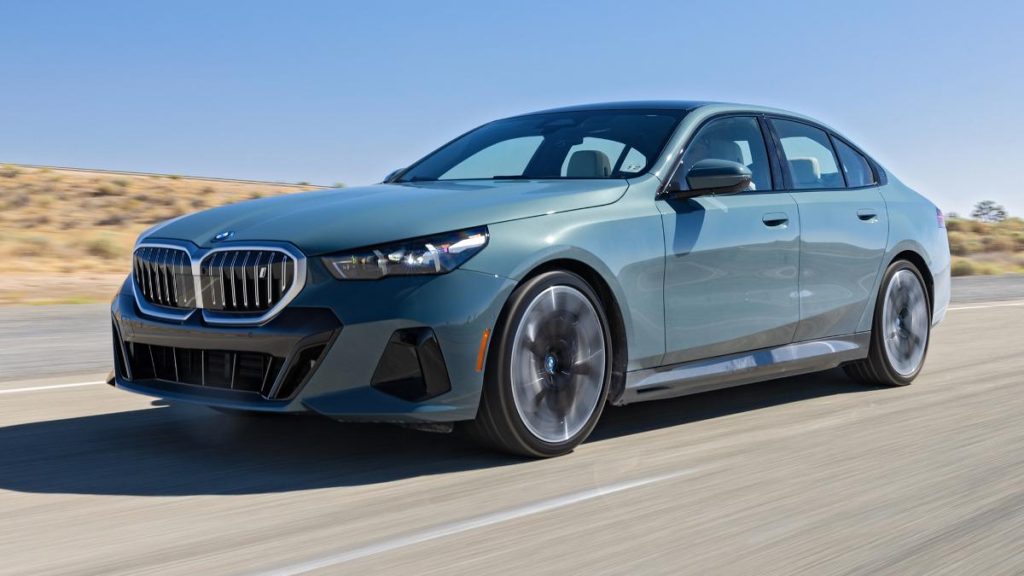
The 5 Series cannot match BMW’s SUV leaders in accumulated sales, but 120,203 U.S. units remain significant for a midsize luxury passenger car. Its recent annual gains are equally important.
While American buyers continue moving toward X models, the 5 Series increased sales in both 2024 and 2025, preserving a substantial place in BMW’s U.S. portfolio.
- Engine: 2.0-liter BMW TwinPower Turbo four-cylinder with 48V mild-hybrid technology
- Torque: 295 lb-ft
- Horsepower: 255 hp
- Length/Width: 199.2 inches / 74.8 inches
7. BMW X1: 101,090 U.S. Sales
The BMW X1 takes seventh place with 101,090 U.S. sales from 2021 through 2025. The five-year calculation consists of 18,253 vehicles in 2021, 7,103 in 2022, 21,042 in 2023, 27,306 in 2024, and 27,386 in 2025. BMW’s official U.S. sales tables document the model-series figures, including the 2024 total and the latest full-year result.
No other BMW this high in the ranking experienced such a sharp mid-period sales swing. The X1 entered the five-year window with 18,253 sales before volume collapsed to 7,103 in 2022. That decline coincided with the transition toward the third-generation X1, which BMW introduced in the United States for the 2023 model year.
The redesigned model quickly changed the sales direction. U.S. volume nearly tripled to 21,042 units in 2023. Another 29.8 percent increase followed in 2024, taking annual sales to 27,306.
BMW then sold 27,386 X1s during 2025, narrowly exceeding the previous year’s figure and establishing the highest annual result in these five years. BMW’s 2024 sales table directly records the jump from 21,042 to 27,306 units.
Its compact dimensions give the X1 a different position from BMW’s dominant X3 and X5. The current X1 xDrive28i measures 177.2 inches long and 72.6 inches wide, making it substantially shorter than BMW’s larger Sports Activity Vehicles. Yet standard all-wheel drive and a turbocharged engine preserve the mechanical characteristics many American luxury-crossover buyers expect.
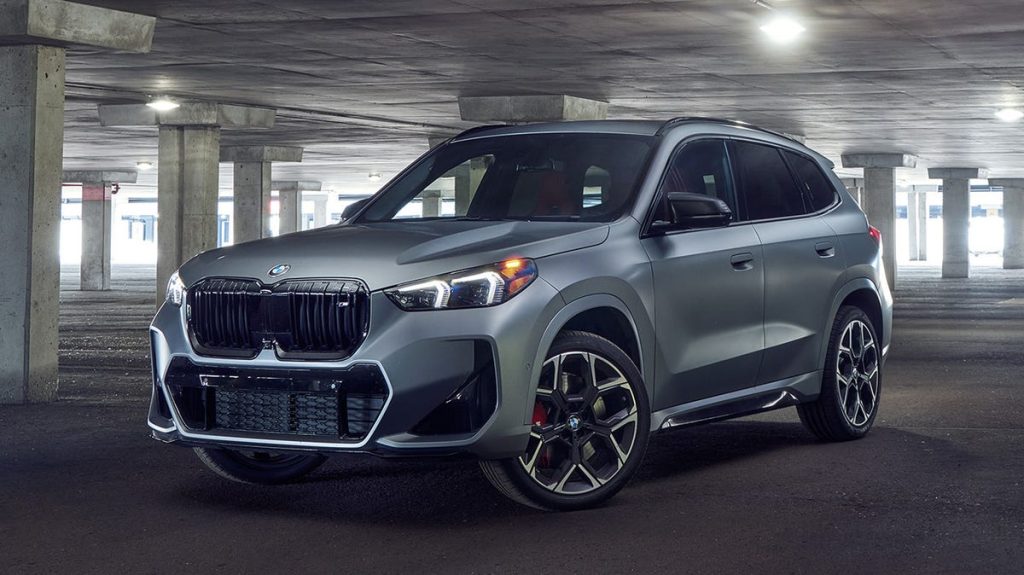
BMW’s current U.S. rates the xDrive28i’s 2.0-liter turbocharged four-cylinder at 241 horsepower and 295 lb-ft of torque.
Crossing 100,000 accumulated U.S. sales is significant, but the annual pattern matters even more. The X1 finished 2025 selling at nearly four times its 2022 volume, making its five-year result a story of product-transition disruption followed by a substantial recovery.
- Engine: 2.0-liter BMW TwinPower Turbo four-cylinder
- Torque: 295 lb-ft
- Horsepower: 241 hp
- Length/Width: 177.2 inches / 72.6 inches
8. BMW 2 Series: 75,210 U.S. Sales
The BMW 2 Series accumulated 75,210 U.S. sales between 2021 and 2025, earning eighth place in this ranking. BMW reported 15,683 sales in 2021, followed by 11,548 in 2022, 11,620 in 2023, 15,384 in 2024, and 20,975 in 2025.
The 2021 and 2024 figures appear in BMW of North America’s official annual model-sales tables, while the 2025 result comes from the company’s latest full-year reporting.
This model line finished the period very differently from where it started. After recording 15,683 sales in 2021, volume declined by more than 4,000 units in 2022. The following year was almost flat, with the series adding only 72 sales and reaching 11,620 vehicles.
Then the direction changed. Sales climbed 32.4 percent to 15,384 units in 2024, a gain of 3,764 vehicles. The acceleration continued in 2025, when U.S. volume reached 20,975 units. That means the 2 Series sold more vehicles in the final year of the period than in any of the previous four years examined here.
The model-series label is important when interpreting the total. BMW’s U.S. sales reporting uses a single 2 Series line rather than breaking every body style and performance derivative into separate annual sales rows. Following BMW’s reporting method keeps the calculation consistent with the other vehicles in this ranking.
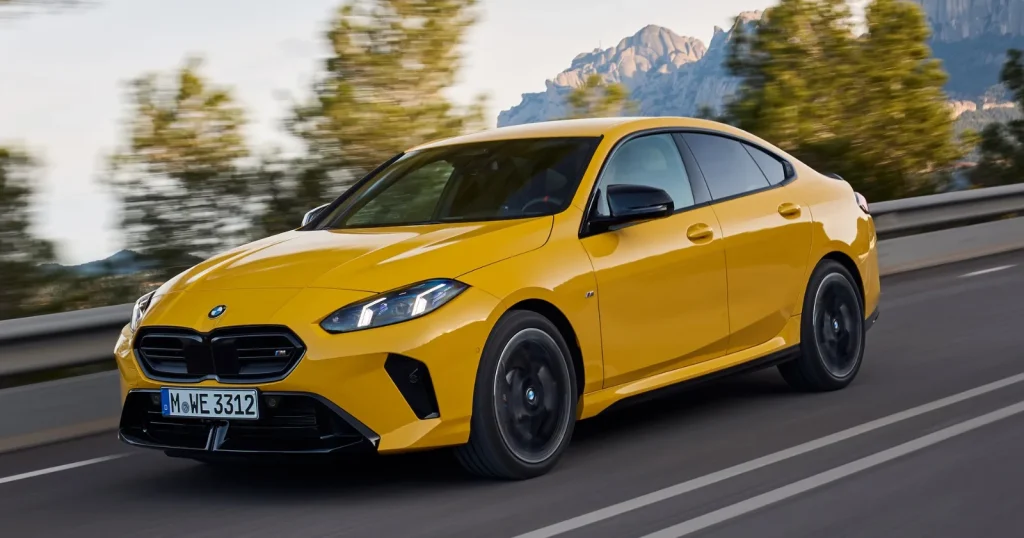
For a current technical reference, the 228 xDrive Gran Coupe uses a 2.0-liter BMW TwinPower Turbo four-cylinder. BMW’s U.S. rates the engine at 241 horsepower and 295 lb-ft of torque. The compact four-door measures 179.2 inches long and 70.9 inches wide.
The 2 Series cannot approach the six-figure totals of BMW’s largest U.S. volume leaders, but its late five-year growth is impossible to ignore. Annual sales rose from 11,548 in 2022 to 20,975 in 2025, an increase of more than 81 percent. That rising volume gives the series a stronger finish than its eighth-place cumulative position initially suggests.
- Engine: 2.0-liter BMW TwinPower Turbo four-cylinder
- Torque: 295 lb-ft
- Horsepower: 241 hp
- Length/Width: 179.2 inches / 70.9 inches
9. BMW X6: 54,824 U.S. Sales
The BMW X6 accumulated 54,824 U.S. sales from 2021 through 2025, placing the coupe-shaped SUV ninth in this ranking. The five-year calculation uses 9,590 sales in 2021, 13,675 in 2022, 10,077 in 2023, 9,482 in 2024, and 12,000 in 2025.
BMW’s 2025 reporting confirms the latest 12,000-unit result, while annual U.S. sales data document the earlier figures.
Its best year during the period was 2022, when U.S. volume reached 13,675 units. Sales then fell by more than 3,500 vehicles in 2023 and slipped below 10,000 in 2024. The final year brought a clear recovery. BMW sold 12,000 X6s in 2025, a 26.6 percent increase from the 9,481 units shown in BMW’s prior-year comparison.
The X6 occupies a narrower market position than the X5. Its sloping roofline creates BMW’s Sports Activity Coupe profile, emphasizing styling and a sportier appearance instead of maximizing rear cargo space. That distinction helps explain why the X5 sold several times more vehicles during the same five-year period.
Production also connects the X6 directly to BMW’s American operations. BMW identifies Plant Spartanburg in South Carolina as its global center of competence for sports activity vehicles, including the X6. The plant can assemble up to 450,000 vehicles annually.
For the current xDrive40i, BMW uses a turbocharged 3.0-liter inline-six with 48-volt mild-hybrid technology. The model produces 375 horsepower and 398 lb-ft of torque.
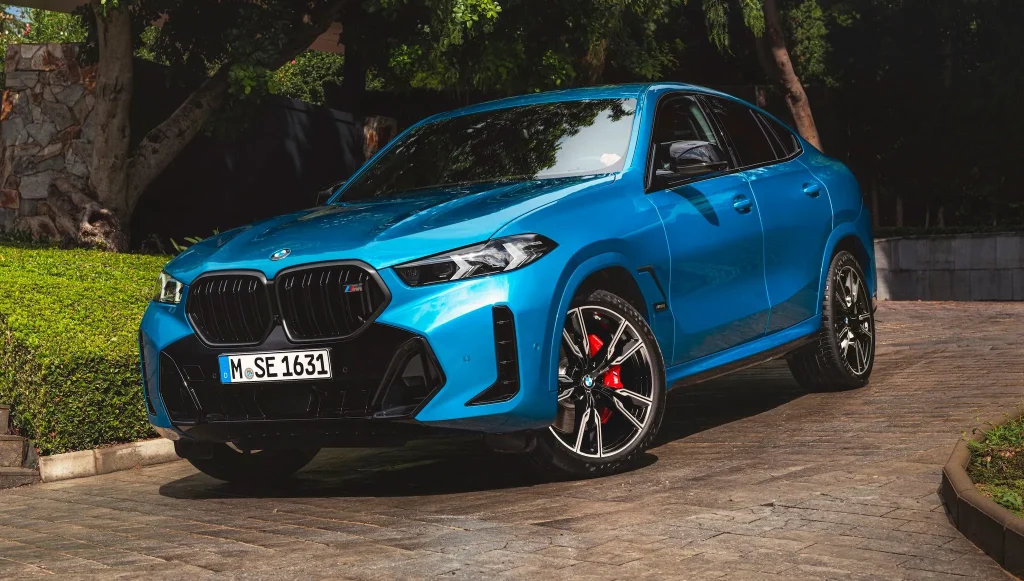
With nearly 55,000 U.S. sales in five years, the X6 proves that a style-focused luxury SUV can still generate meaningful volume. Its 2025 rebound was particularly notable, but its more specialized design keeps it behind BMW’s broader high-volume model lines.
- Engine: 3.0-liter BMW TwinPower Turbo inline-six with 48V mild-hybrid technology
- Torque: 398 lb-ft
- Horsepower: 375 hp
- Length/Width: 195.0 inches / 78.9 inches
10. BMW 7 Series: 46,597 U.S. Sales
The BMW 7 Series completes the ranking with 46,597 U.S. sales between 2021 and 2025. Annual volume totaled 7,705 vehicles in 2021, 5,974 in 2022, 10,811 in 2023, 10,714 in 2024, and 11,393 in 2025.
BMW specifically reported 10,811 sales for 2023, describing it as the first full year in the U.S. market for the current flagship generation. BMW’s 2025 sales table then recorded another increase to 11,393 vehicles.
The low point came in 2022. Sales fell to 5,974 units as BMW moved through a major product transition. The arrival of the seventh-generation 7 Series changed the trajectory dramatically. Volume increased by more than 80 percent to 10,811 vehicles in 2023, nearly matching the combined sales of the previous two individual years.
Unlike the X6, the 7 Series maintained that higher level. U.S. sales reached 10,714 in 2024 before rising 6.3 percent to 11,393 in 2025. BMW’s official full-year reporting shows the company set a U.S. sales record of 388,897 vehicles in 2025, and the flagship sedan contributed its strongest annual figure of these five years
The 7 Series naturally operates in a limited segment. Its size, luxury positioning, and six-figure starting price territory reduce the potential customer base compared with the X3 or X5. BMW also expanded its flagship family with the battery-electric i7, whose EV sales are separately identified in the company’s electric-vehicle reporting.
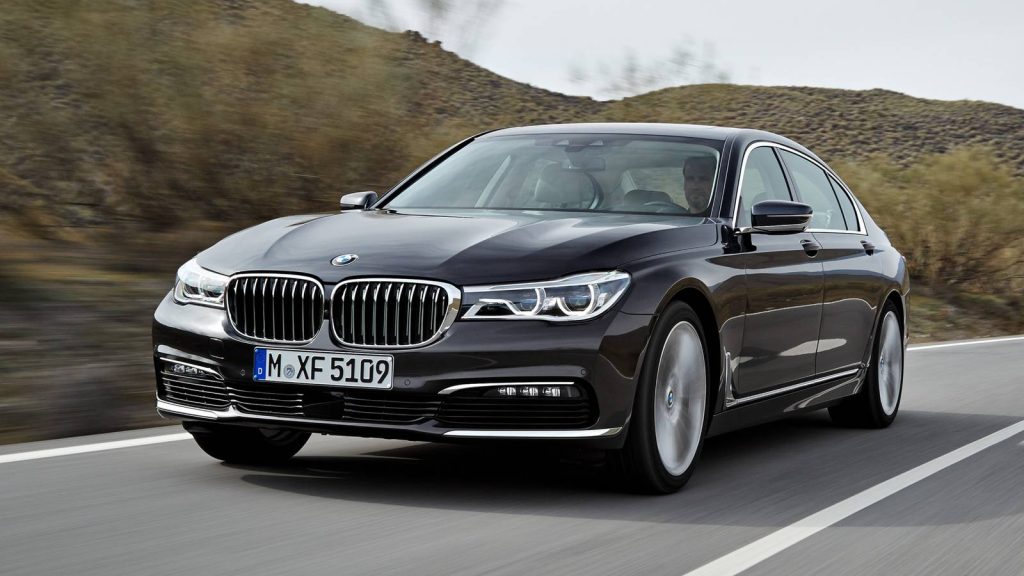
The current 740i provides the gasoline-powered reference for specifications. Its 3.0-liter turbocharged inline-six uses 48-volt mild-hybrid technology and produces 375 horsepower with 398 lb-ft of torque.
Finishing tenth does not indicate weak momentum. The numbers show the opposite. After the 2022 low, the 7 Series recorded more than 10,000 U.S. sales in three consecutive years, closing 2025 with its highest annual volume in this five-year calculation.
- Engine: 3.0-liter BMW TwinPower Turbo inline-six with 48V mild-hybrid technology
- Torque: 398 lb-ft
- Horsepower: 375 hp
- Length/Width: 212.2 inches / 76.8 inches
Also Read: 10 Most Popular Car Brands That Are Owned By A Single Company
