
Tesla is expanding its most important vehicle family in the United States with the six-seat Model Y L, a longer three-row version of its best-selling electric crossover. The new variant arrives at a crucial moment as Tesla tries to convert stronger global deliveries into a sustained sales recovery.
Tesla opened U.S. orders for the Model Y L in early July, with the initial launch series priced at $61,990. The vehicle offers six seats across three rows and an estimated driving range of 325 miles.
Tesla’s published specifications confirm the six-seat layout and range estimate, while Reuters reported that the U.S. introduction is part of the company’s effort to stimulate vehicle demand following major changes to federal EV incentives.
The timing is significant. Tesla delivered 480,126 vehicles globally during the second quarter of 2026, according to company figures reported by Reuters. Of those, 467,762 were Model 3 and Model Y vehicles, showing how heavily Tesla still depends on its two core product families.
Rather than waiting for a completely new mass-market SUV, Tesla is extending the Model Y into another segment. The Model Y L first appeared in China before expanding into other markets and eventually reaching the United States.
For American customers, the longer crossover offers a more family-focused Tesla. For the automaker, it is a test of whether new versions of established vehicles can create meaningful sales growth as electric vehicle competition becomes increasingly intense.
Also Read: 10 Car Brands Most Likely to Cross 250,000 Miles
A Bigger Model Y Targets Three-Row SUV Buyers
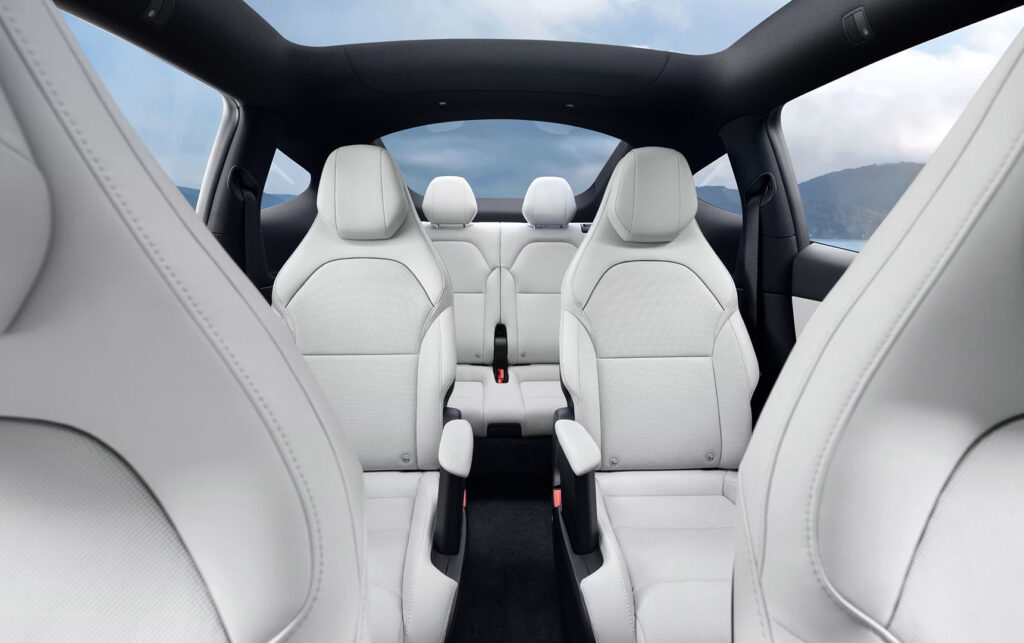
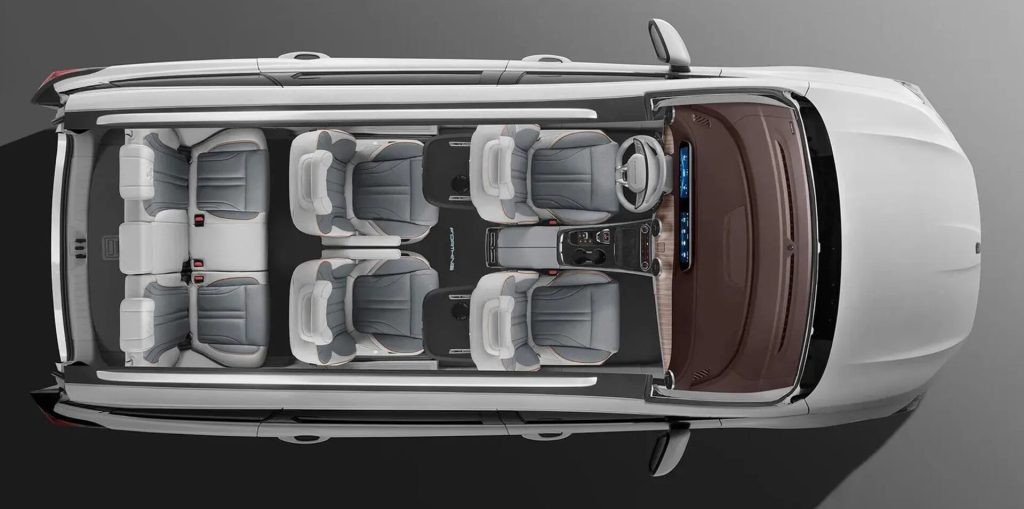
The Model Y L’s most important change is its passenger layout. Tesla uses a 2+2+2 seating configuration with two captain’s chairs in the second row and two seats in the third. The arrangement provides space for six occupants while creating a center passage that can improve access to the rear seats.
The longer body is essential to the design. Reuters described the Model Y L as a long-wheelbase version of Tesla’s popular SUV. The vehicle measures approximately 195.9 inches long and has a wheelbase of roughly 119.7 inches. The regular Model Y is about 188.6 inches long with a 113.8-inch wheelbase.
Those additional inches provide more room for second- and third-row passengers. Previous attempts to add extra seating to the regular Model Y were limited by the crossover’s dimensions, particularly for passengers using the rear seats regularly. The Model Y L takes a more deliberate approach to three-row transportation.
Its captain’s chair layout also puts the Tesla into competition with family-oriented electric SUVs such as the Kia EV9 and Hyundai Ioniq 9. Both vehicles have demonstrated growing interest in battery-powered three-row SUVs that provide practical passenger space.
Tesla enters the segment with the advantage of an established nameplate. Millions of drivers are already familiar with the Model Y, Tesla’s software, mobile application, and charging ecosystem. The Model Y L allows the company to address larger families without introducing an unfamiliar vehicle.
Range could become another selling point. Tesla lists an estimated 325 miles of driving range for the six-seat configuration. That gives the crossover enough projected capability to appeal to families considering longer trips, especially when combined with access to Tesla’s Supercharger network.
Tesla also lists a 0 to 60 mph time of 4.4 seconds. Performance may not be the main purchasing factor for a three-row family crossover, but the acceleration preserves one of the characteristics traditionally associated with Tesla vehicles.
The $61,990 starting price presents a greater challenge. Electrek noted in its coverage of the launch that the Model Y L Launch Series costs more than the starting prices of the Kia EV9 and Hyundai Ioniq 9. It is also significantly more expensive than several regular Model Y configurations.
Tesla is initially offering a launch series rather than introducing the cheapest possible version. Reports on the U.S. configuration indicate that the package includes one year of Full Self-Driving (Supervised), one year of Supercharging, and one year of Premium Connectivity.
The company could eventually introduce less expensive Model Y L variants, although Tesla has not publicly provided a timetable. For now, buyers must decide whether the additional passenger space, range, charging access, and bundled features justify the premium.
Tesla Needs Fresh Demand in a More Competitive EV Market
The Model Y L arrives during a complicated period for Tesla’s automotive business. The company’s second-quarter delivery performance provided a significant boost.
Reuters reported that Tesla’s 480,126 global deliveries exceeded Wall Street expectations and strengthened hopes that the company could return to annual sales growth after two consecutive years of declines.
The Model 3 and Model Y remained responsible for nearly all of those deliveries. That concentration explains why Tesla continues expanding its existing vehicle families. The company has increasingly introduced new versions of the Model Y and Model 3 instead of rapidly adding completely separate mass-market nameplates.
There are significant financial advantages to this strategy. Developing a new vehicle architecture can require billions of dollars and years of engineering. A derivative of an established model can share manufacturing processes, components, software, and supplier relationships.
The Model Y L gives Tesla access to a different customer group while retaining the identity of its highest-volume crossover.
China provided an early test. Tesla introduced the longer Model Y there while facing intense competition from domestic manufacturers. Reuters noted that Chinese EV companies have continued to pressure Tesla with rapidly expanding lineups and aggressive pricing.
Bringing the Model Y L to the United States gives Tesla an opportunity to target a market where three-row SUVs remain particularly important.
American families frequently prioritize passenger space, cargo flexibility, and long-distance driving capability. Until recently, electric vehicle buyers had relatively few practical three-row choices. The Kia EV9, Hyundai Ioniq 9, and other newer models are beginning to change that situation.
The Model Y L also gives existing Tesla customers a potential upgrade path. A Model 3 or standard Model Y owner who needs more seating can move into a larger Tesla while retaining the same software environment and charging experience.
Customer retention is becoming more important as rival automakers improve their electric vehicle offerings.
Tesla’s sales figures demonstrate the importance of keeping buyers within the Model 3 and Model Y families. Vehicles outside those two product lines accounted for only 12,364 deliveries during the second quarter of 2026.
Any major near-term increase in Tesla’s automotive volume will therefore depend heavily on its core models.
A six-seat Model Y could potentially contribute more meaningful volume than an expensive, low-production flagship. However, the Launch Series price may initially restrict its customer base.
Tesla also faces uncertainty in the American EV market following changes to government incentives. Reuters reported that the loss of a major federal electric vehicle tax credit has placed additional pressure on demand. Buyers now have more electric crossovers to choose from, making price and practicality increasingly important. The Model Y L must compete on more than the Tesla badge.
The Six-Seat SUV Is a Major Test of Tesla’s Sales Comeback
Tesla’s stronger second quarter has created renewed optimism, but one successful delivery period does not guarantee a lasting recovery.
Reuters reported that the latest results have raised hopes that Tesla can end its two-year run of annual delivery declines. At the same time, analysts continue monitoring the company’s performance in the United States as competition grows and EV incentives change.
The Model Y L has several important jobs.
It must convince families that a stretched Model Y can function as a practical three-row crossover. It must justify a $61,990 Launch Series price when competing electric SUVs start for less. Most importantly, it must show that Tesla can generate new demand by expanding existing vehicles.
Its specifications provide a solid foundation. Six seats, second-row captain’s chairs, an estimated 325 miles of range, and Tesla’s established charging network address several concerns families commonly have about electric SUVs.
The Model Y L could also help fill a gap in Tesla’s product portfolio. The company’s vehicle sales remain concentrated around the Model 3 and Model Y, while higher-priced models contribute relatively little volume. Creating a larger version of the Model Y allows Tesla to move into another part of the SUV market without relying on a completely separate platform.
The strategy comes as investor attention increasingly shifts toward Tesla’s artificial intelligence, robotaxi, and Optimus humanoid robot programs. Barron’s has noted that investors are closely watching whether these businesses can eventually make significant financial contributions.
Vehicle sales, however, remain essential to Tesla’s current operations. The company’s delivery data shows that the Model 3 and Model Y continue to carry the automotive business. Expanding the Model Y into a more practical six-seat crossover is therefore a logical attempt to reach customers Tesla may previously have missed.
The Model Y L will not solve every challenge facing the company. Its initial price could limit sales, and the three-row EV segment is becoming increasingly competitive. American electric vehicle demand also remains sensitive to affordability and changes in government policy.
Still, Tesla now has a fresh product built around its most successful vehicle family. Reuters characterized the U.S. introduction as part of Tesla’s effort to boost sales, and the timing makes the strategy clear.
The automaker has regained global delivery momentum, but sustaining that improvement will require continued demand for its core vehicles.
The six-seat Model Y L is now one of the clearest tests of whether Tesla can turn a strong quarter into a broader sales comeback in the United States.
