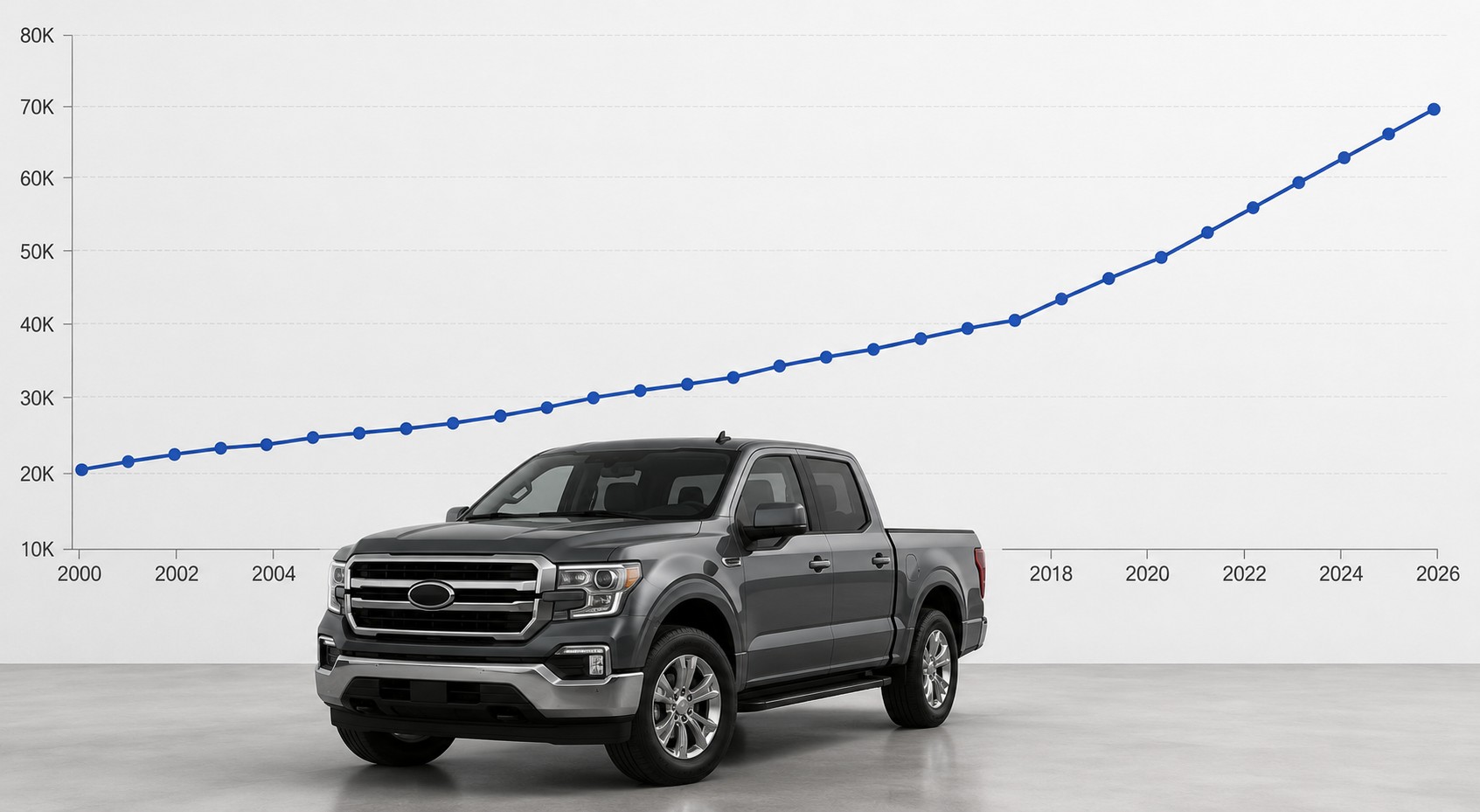
Buying a new pickup truck in America has changed dramatically over the last twenty-six years. What used to be a practical, work-focused purchase has slowly turned into one of the biggest financial commitments a household can make.
In the year 2000, a base full-size pickup truck could be purchased for somewhere between $17,000 and $20,000, making it an affordable option for tradespeople and families alike.
Fast forward to 2026, and that same category of vehicle now averages nearly $66,000 for a full-size pickup. This is not a small shift; it represents more than triple the sticker price of a comparable truck from two and a half decades ago. Inflation alone cannot explain this jump, since consumer prices have risen far less than truck prices during the same period.
Several forces have pushed prices upward, including added technology, larger engines, stricter safety requirements, and a shift toward premium trims. Automakers have also leaned into higher-margin trucks because buyers keep purchasing them despite the rising cost.
This article breaks down the truck pricing story year by year, decade by decade, and explains why the increases have accelerated so sharply in recent years.
Truck Prices From 2000 to 2010: The Early 2000s Baseline
In the year 2000, a base Ford F-150 or Chevrolet Silverado cost around $18,000 to $20,000 for a basic work trim. These trucks were simple, with vinyl seats and few electronics, built mainly for construction and farm use.
By 2005, prices had crept up to roughly $22,000 to $25,000 for a mid-trim truck. Buyers were beginning to request more comfort features, and automakers responded by adding options packages that increased average transaction prices.
The 2008 financial crisis briefly slowed price growth, since demand for large vehicles dropped as gas prices spiked. Manufacturers offered heavy discounts and incentives just to keep truck sales moving during that difficult economic period.
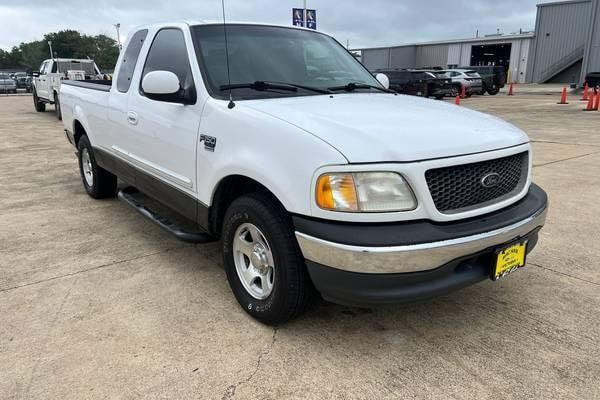
By 2010, the average new truck price had settled around $28,000 to $30,000 for a well-equipped model. The recession’s aftermath left automakers focused on efficiency, though truck sizes and features continued expanding steadily.
Interestingly, historical inflation data on new trucks show this segment did not always outpace general inflation in the earliest years. Between 1983 and 2026, trucks experienced an average inflation rate of about 1.51% per year, which was actually lower than the broader consumer inflation rate. This suggests the sharpest increases came later, not evenly across the decades.
This first decade set the stage for what followed. Trucks were still viewed primarily as tools, not lifestyle statements, and pricing reflected that utilitarian mindset.
Truck Prices From 2011 to 2020: The Decade of Rising Trims and Technology
The 2010s marked a turning point where trucks began shifting from work vehicles into family and lifestyle vehicles. Manufacturers introduced crew cabs, leather interiors, and infotainment systems as standard features rather than rare upgrades.
By 2013, average new truck prices had climbed to roughly $33,000 to $35,000 across most full-size models. Buyers were increasingly choosing higher trims like the Ford F-150 Lariat or Ram 1500 Laramie instead of base work trucks.
Around 2016 and 2017, prices pushed past $38,000 as diesel engines, four-wheel drive, and larger touchscreens became common. Automakers discovered that loaded trucks carried far better profit margins than smaller sedans.
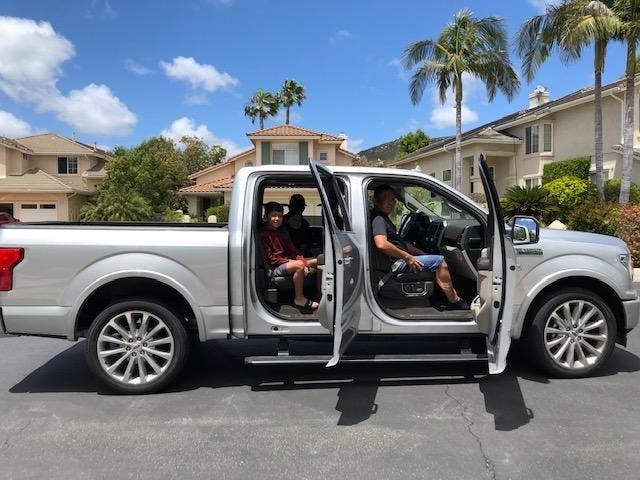
By 2019, Kelley Blue Book data showed full-size truck sticker prices starting near $28,000, but the average price actually paid by buyers had risen to right around $40,000. This gap between sticker price and real transaction price became a defining trend.
This period also saw major model redesigns that pushed costs higher. The 2019 model year brought significantly redesigned versions of the Chevrolet Silverado and Ram 1500, both of which arrived with more features and higher price tags.
By 2020, the average transaction price for a full-size truck had reached the low-to-mid $40,000 range. Supply chains were still stable at this point, but pandemic disruptions were about to change everything.
The decade closed with trucks firmly established as premium purchases rather than basic tools. Even entry-level buyers were now expected to pay significantly more than they would have a decade earlier.
Truck Prices From 2021 to 2026: Tariffs, Chip Shortages, and Record Highs
The pandemic years triggered the fastest truck price increases in modern history. Semiconductor chip shortages limited vehicle production, and dealers responded by charging well above the sticker price for available inventory.
By 2022, average truck transaction prices jumped dramatically compared to prior years. In fact, 2022 was recorded as one of the years with the largest price changes for trucks, alongside 2021, reflecting how severe the supply crunch became.
Wage data from this period show just how quickly trucks outpaced everyday income growth. Between 2014 and 2024, the average price of a mid-tier full-size pickup truck climbed 53.1%, while average blue-collar wages grew only 38.7% during that same period.
This gap matters because trucks were traditionally marketed toward exactly these blue-collar workers. The report notes that the full-size pickup has long served as a professional tool and trade symbol, often representing the largest purchase a worker makes outside of a home.
By 2023 and 2024, average truck prices stabilized somewhat but remained near record highs above $60,000. Manufacturers continued prioritizing loaded trims since buyers kept purchasing them despite affordability concerns.
Entering 2026, new tariffs on imported components added fresh pressure to already rising prices. Kelley Blue Book reported that the average transaction price for a new vehicle reached $49,275 in March 2026, a 3.5 percent increase compared to the prior year.
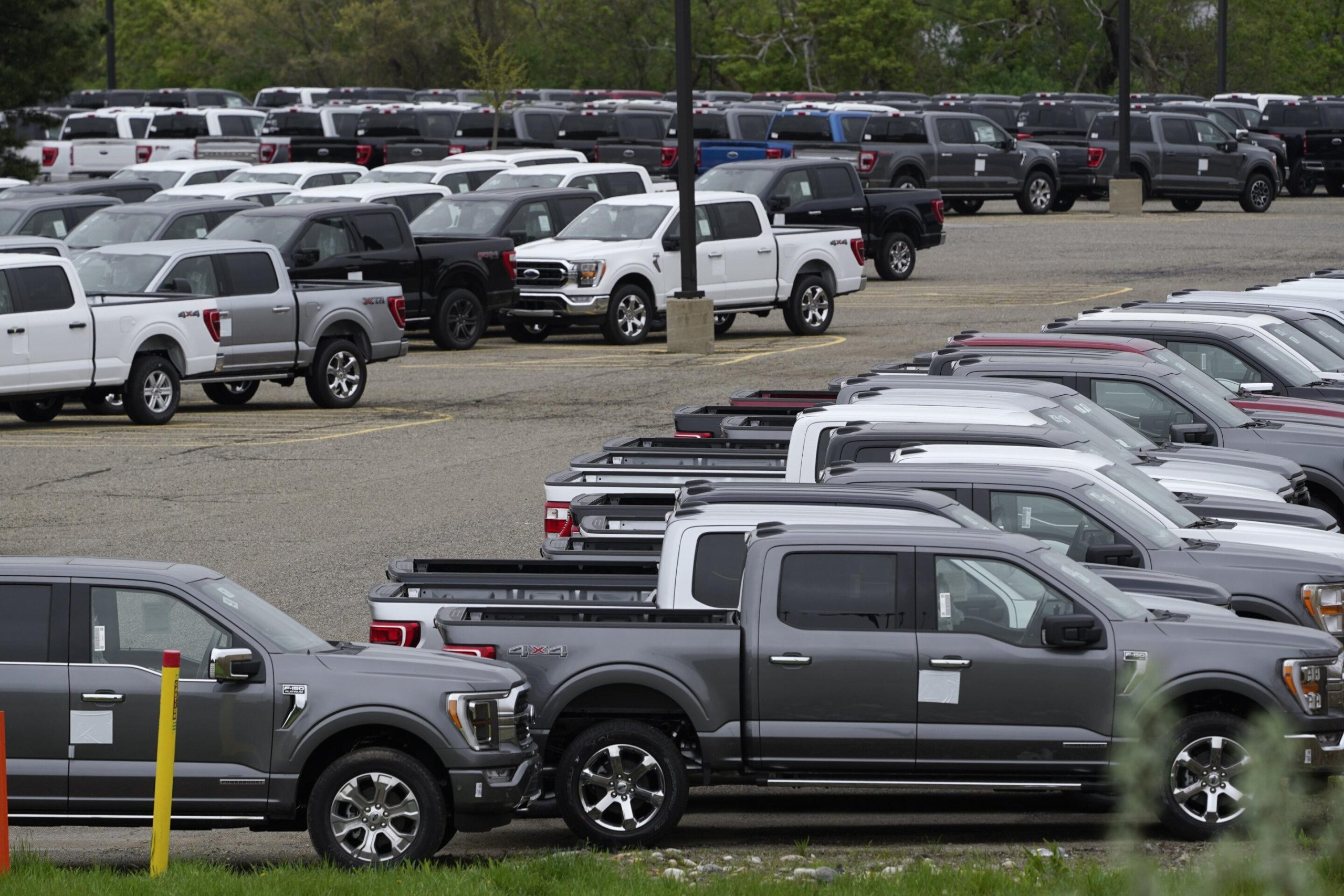
For trucks specifically, the numbers were even higher. The average transaction price for a new full-size pickup truck reached $65,964 in March 2026, up 2.8 percent year over year.
This makes trucks the most expensive mainstream vehicle segment by a wide margin. The price gap between average trucks and the average new vehicle exceeded $16,000, showing how heavily equipped modern trucks have become.
Base work trucks technically still exist on paper, but very few buyers actually choose them anymore. Most buyers now select higher trims like Lariat, Limited, High Country, or Denali, which push final prices well above $60,000.
The rate of price growth has also been accelerating rather than slowing down. From December 2024 to December 2025, prices rose only half a percentage point, but by early 2026, the increases climbed to 1.9 percent, then 3.4 percent, then 3.5 percent within just three months.
Tariffs are widely seen as a major driver behind this recent acceleration. Analysts note that tariff uncertainty is part of the reason prices are rising faster than initially expected, with automakers and dealers gradually passing costs onto consumers.
Despite these steep prices, consumer buying habits have barely shifted. A Cox Automotive analyst observed that buying behavior does not change quickly, since most Americans have already experienced past gas-price swings without abandoning larger vehicles.
Electric trucks have followed a different pattern entirely during this same window. Average EV transaction prices actually fell 2.8 percent year over year in March 2026, marking the third consecutive month of declines, even though EVs still cost more on average than the market.
Heavy-duty commercial trucks have seen even steeper increases than consumer pickups. New Class 8 sleeper trucks are now running above $170,000 due to tariff surcharges on imported components and raw materials.
This surcharge has added a substantial amount to sticker prices industry-wide. The fifteen percent tariff surcharge has added roughly $10,000 to the price of a new Class 8 truck since late 2024.
Used trucks, interestingly, offer a very different value proposition right now. A well-maintained three- to five-year-old truck can still deliver most of what a new model offers, often in the $30,000 to $45,000 range without the six-figure new-truck sticker.
Looking at the bigger inflation picture confirms just how unusual recent years have been. Since the Bureau of Labor Statistics began tracking new truck prices in 1983, the years with the largest single-year increases were 2022, 2021, and 1991, reflecting how supply shocks repeatedly reshaped this market.
Looking ahead, most analysts expect little relief in the near term. Forecasts suggest truck and SUV prices could rise another three to five percent in 2026, even before accounting for the added impact of new tariffs.
The trajectory from 2000 to 2026 tells a clear story of transformation. Trucks have moved from simple, affordable work vehicles into expensive, technology-packed lifestyle purchases that now rival the cost of a small home down payment in some regions.
For buyers today, the choice increasingly comes down to timing, trim selection, and whether a used truck might better serve their needs. Prices show no clear sign of reversing anytime soon, making informed research more important than ever before.
Also Read: 8 Longest Pickups You Can Park in a Standard Garage