
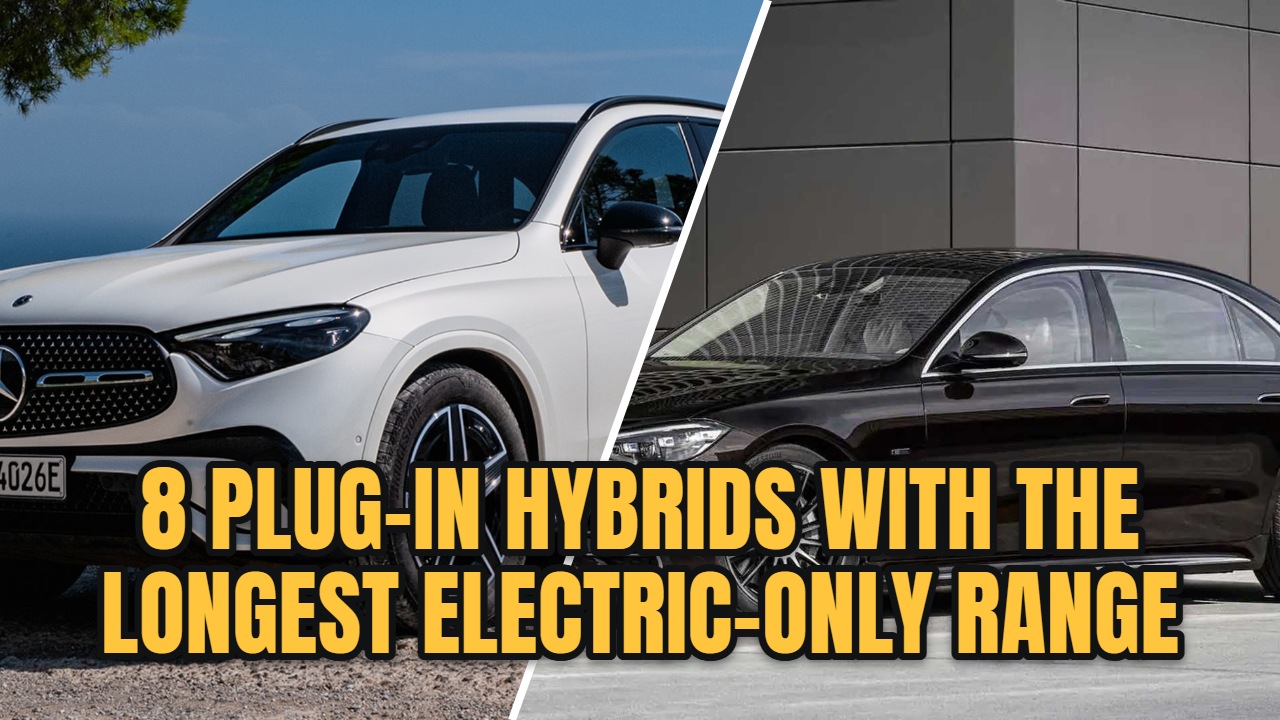
Plug-in hybrids have changed significantly from the short-range models that once relied on gasoline after only a handful of electric miles. In 2026, several PHEVs sold in the United States can cover a typical daily commute using battery power alone, while retaining an internal-combustion engine for longer journeys.
That flexibility makes electric-only range one of the most important numbers for shoppers comparing plug-in hybrids.
This ranking focuses on U.S.-market plug-in hybrid vehicles and orders them by their maximum EPA-estimated or current manufacturer-published electric driving range, where applicable. Range can vary by trim, wheel size, temperature, driving speed, climate-control use, and charging habits, so the highest available rating for each model is used.
The leaders now approach or exceed 50 miles of battery-powered travel. Mercedes-Benz has pushed its compact plug-in hybrid SUV to 54 miles of electric range, while Toyota’s redesigned RAV4 Plug-in Hybrid targets 50 miles. Those figures allow many owners to complete daily errands or commutes without starting the gasoline engine.
Here are eight plug-in hybrids ranked by their longest electric-only driving range, beginning with the current U.S.-market leader.
Also Read: 8 Vehicles With the Lowest Step-In Height in 2026
1. Mercedes-Benz GLC 350e 4MATIC: 54 Miles
The Mercedes-Benz GLC 350e 4MATIC takes first place because its electric capability extends far beyond what many drivers still expect from a plug-in hybrid. Mercedes-Benz lists up to 54 miles of battery-only driving for the 2026 model. That is enough to cover a substantial daily commute without gasoline when the SUV begins the day with a full charge.
Its advantage comes from a plug-in hybrid system designed to make electric driving a major part of normal use rather than a brief low-speed feature.
A turbocharged 2.0-liter inline-four works with the electric drive system, producing 313 combined horsepower and 406 lb-ft of combined torque. Mercedes pairs the powertrain with a 9G-TRONIC nine-speed automatic transmission and 4MATIC all-wheel drive.
Charging capability also separates the GLC 350e from many PHEV rivals. Mercedes supports DC fast charging at up to 60 kW. That matters because a longer electric range becomes much more useful when drivers can restore battery capacity during a stop instead of depending exclusively on overnight charging.
The 54-mile figure changes how the gasoline engine may be used. An owner traveling 20 miles to work and 20 miles home could theoretically complete the entire commute electrically under suitable conditions. The engine remains available for interstate trips and journeys beyond the charged battery range.
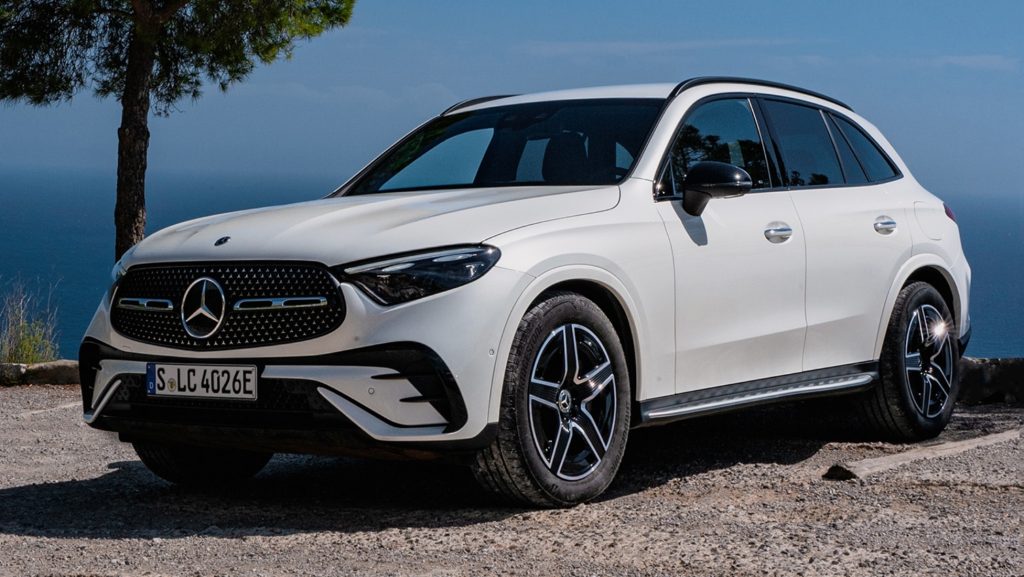
Real-world mileage will still move with weather, speed, and accessory use. Yet the official 54-mile rating gives the GLC 350e the highest figure in this ranking. It demonstrates how closely a modern PHEV can imitate an electric vehicle during everyday driving while keeping gasoline flexibility for longer travel.
- Engine: 2.0-liter turbocharged inline-four plug-in hybrid
- Torque: 406 lb-ft combined
- Horsepower: 313 hp combined
- Length/Width: 185.7 inches / 74.4 inches
2. 2026 Toyota RAV4 Plug-In Hybrid: 50 Miles
Toyota’s redesigned RAV4 Plug-in Hybrid approaches a long electric range from a mainstream SUV perspective. For the 2026 generation, Toyota increased the model’s battery-only capability to a manufacturer-estimated 50 miles. The figure represents a meaningful improvement for the RAV4 PHEV and places it second in this U.S.-focused ranking.
The new model is not simply chasing range. Toyota also raised maximum plug-in hybrid system output to as much as 320 net combined horsepower, an 18-horsepower increase compared with the outgoing 302-horsepower system.
All 2026 RAV4 PHEV models use all-wheel drive, and the lineup expands to four grades with SE, XSE, Woodland, and GR SPORT versions.
A 50-mile electric range is especially important in a vehicle positioned for family and commuter use. Drivers with predictable weekday travel could complete many trips without consuming gasoline, provided the battery is charged regularly. When a longer journey begins, the hybrid system removes the need to plan the trip around public charging stations.
Toyota’s strategy also broadens the type of buyer who may consider a PHEV. The Woodland grade adds a more adventure-oriented direction, while GR SPORT targets drivers interested in a sportier configuration. This gives the plug-in hybrid system roles beyond pure efficiency.
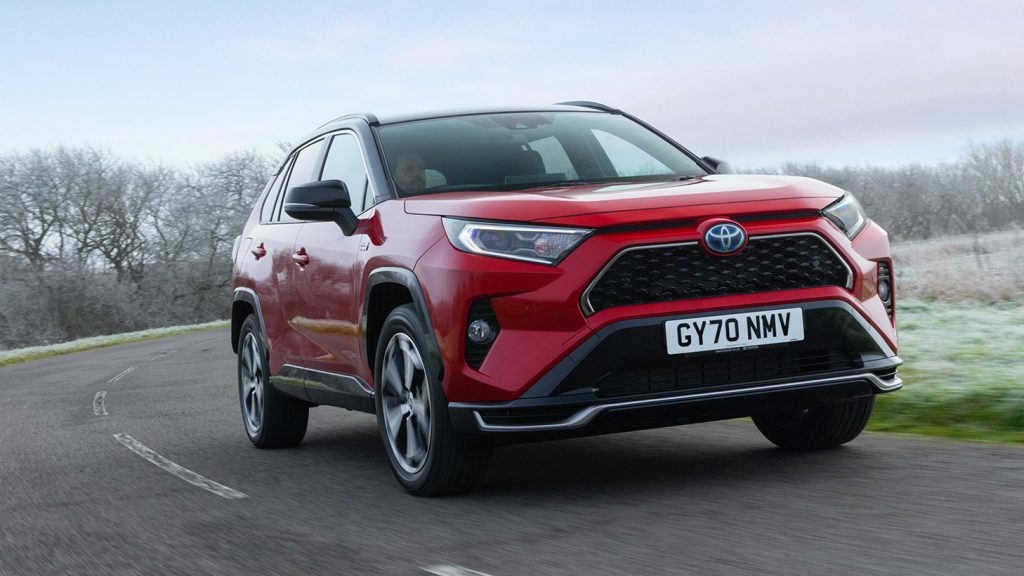
One distinction is important when comparing the RAV4 with the Mercedes-Benz above it. Toyota describes the 50-mile figure as a manufacturer-estimated all-electric driving range, while the Mercedes carries a 54-mile EPA range figure. Final EPA ratings remain the preferred benchmark for direct U.S. comparisons when available.
Even with that qualification, Toyota’s 50-mile target is a major step for a high-volume compact SUV. It gives the 2026 RAV4 Plug-in Hybrid enough electric capability to function as a battery-powered daily vehicle for many households while retaining the long-distance convenience of gasoline.
- Engine: 2.5-liter four-cylinder plug-in hybrid
- Torque: System torque is not published as one combined figure by Toyota
- Horsepower: Up to 320 net combined hp
- Length/Width: 181.0 inches / 73.0 inches
3. Mercedes-Benz GLE 450e 4MATIC: 49 Miles
The Mercedes-Benz GLE 450e 4MATIC takes a different route to long electric-only range. This is a sizable luxury SUV with a curb weight of 5,754 pounds, yet Mercedes-Benz gives it an EPA-estimated 49 miles of battery-powered driving with a fully charged battery.
That places the GLE 450e third in this ranking and only five miles behind the smaller GLC 350e.
Its plug-in hybrid hardware pairs a turbocharged 2.0-liter inline-four with an electric motor. Combined output reaches 381 horsepower and 479 lb-ft of torque, while a 9G-TRONIC nine-speed automatic transmission sends power through a fully variable 4MATIC all-wheel-drive system.
Mercedes-Benz quotes a 5.8-second 0-to-60 mph time, illustrating that the PHEV system is responsible for performance as well as efficiency.
Charging is another part of the GLE’s appeal. Mercedes lists 9.6-kW AC charging and standard 60-kW DC charging. Under suitable conditions, DC charging can take the battery from 10 to 80 percent in an estimated 20 minutes. Few plug-in hybrids emphasize fast charging this heavily.
For owners, 49 electric miles can substantially reduce gasoline use on shorter trips. The benefit depends on regular charging, since a PHEV carrying a depleted battery cannot deliver its maximum electric-driving advantage.
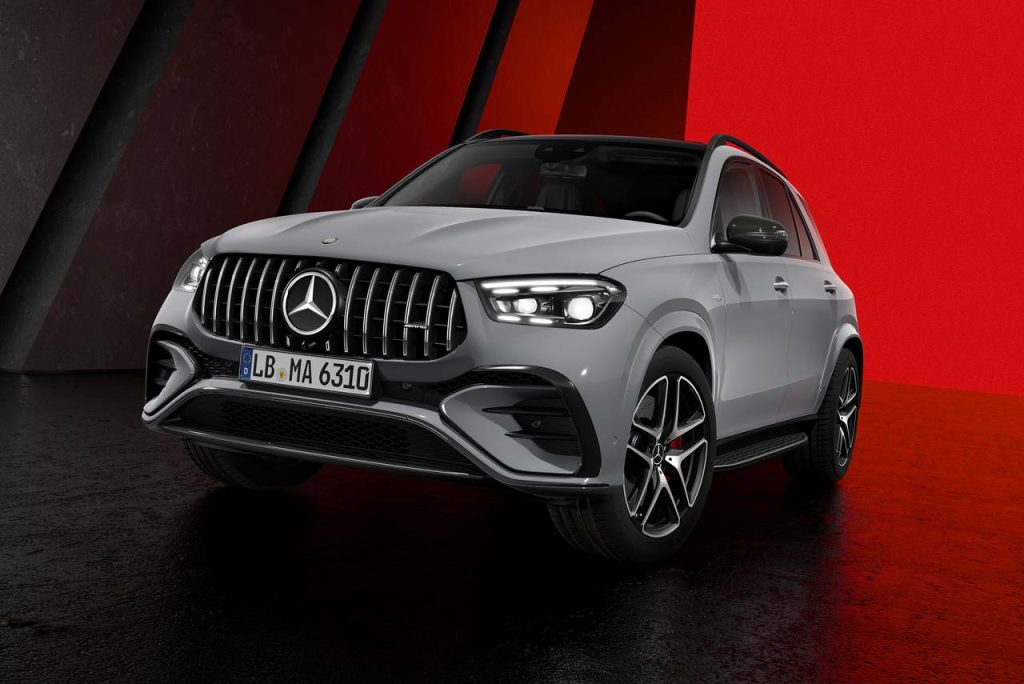
The GLE 450e earns third place because it combines a near-50-mile EPA electric range with the size and capability of a midsize luxury SUV. Mercedes even rates it to tow up to 7,700 pounds, giving the electrified powertrain a much broader role than commuting alone.
- Engine: 2.0-liter turbocharged inline-four plug-in hybrid
- Torque: 479 lb-ft combined
- Horsepower: 381 hp combined
- Length/Width: 194.3 inches / 76.7 inches
4. Mercedes-Benz S 580e 4MATIC: 47 Miles
Electric-only range becomes particularly impressive when the vehicle carrying the battery is a full-size flagship sedan. The 2026 Mercedes-Benz S 580e 4MATIC can travel up to 47 miles on electric power, giving it fourth place here.
That distance is notable because the S-Class is built around rear-seat space, advanced chassis hardware, luxury equipment, and substantial performance rather than minimal vehicle weight.
Under its long hood sits a turbocharged 3.0-liter inline-six. Mercedes combines that engine with mild-hybrid technology and a plug-in hybrid electric motor, producing 503 combined horsepower and 553 lb-ft of combined torque.
The official U.S. specifications also list 4MATIC all-wheel drive and a 9G-TRONIC nine-speed automatic transmission.
What makes the S 580e unusual is the way electric driving fits into a high-performance luxury package. A driver can use battery power for many local journeys, then rely on the gasoline engine and hybrid system when a greater distance is required.
The PHEV is not positioned as a stripped-down economy model. Its electrified system contributes to the sedan’s strong acceleration and smooth power delivery.
Dimensions reinforce the scale of the achievement. The S 580e measures 209.5 inches long and 75.6 inches wide without mirrors. Its curb weight is approximately 5,465 pounds, yet its electric range remains competitive with much smaller plug-in hybrids.
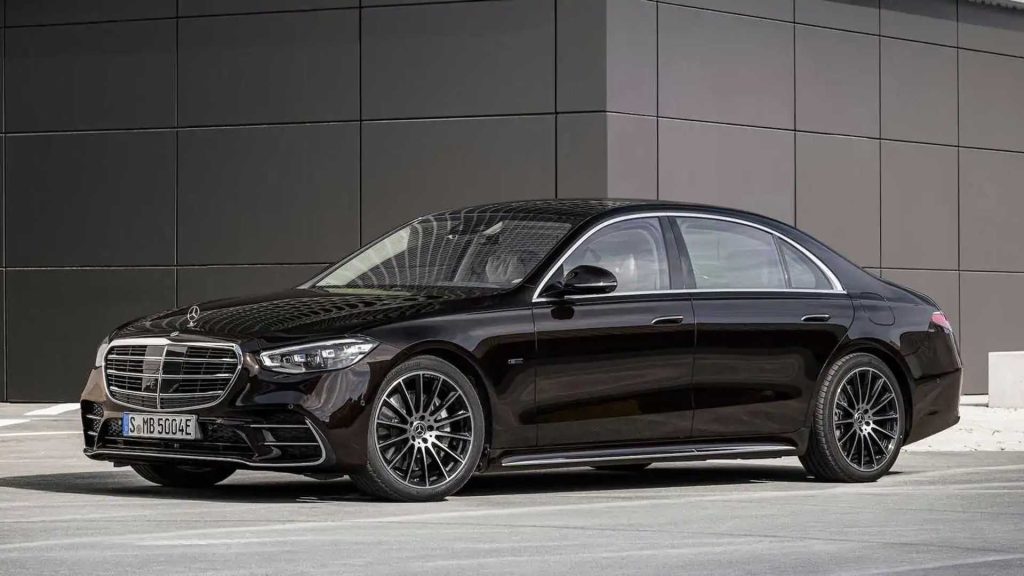
The 47-mile figure also makes charging behavior important. Owners who plug in frequently can reserve gasoline for longer journeys instead of consuming fuel during every short city trip.
Fourth place belongs to the S 580e because it proves a long PHEV range does not have to be restricted to compact, efficiency-first vehicles. Mercedes has given its flagship sedan enough battery capability to complete substantial daily driving on electricity while retaining 503 horsepower.
- Engine: 3.0-liter turbocharged inline-six plug-in hybrid
- Torque: 553 lb-ft combined
- Horsepower: 503 hp combined
- Length/Width: 209.5 inches / 75.6 inches
5. BMW X5 xDrive50e: 40 Miles
BMW treats electric range as only one part of the X5 xDrive50e’s plug-in hybrid equation. The 2026 U.S. model carries an EPA electric driving range of 40 miles, enough to place it fifth in this ranking.
BMW’s own U.S. product information describes the X5 plug-in hybrid as capable of up to 38 miles on battery power, while current 2026 EPA specification data lists 40 miles. The EPA figure is used here for ranking consistency.
Performance is where the X5 begins to separate itself from efficiency-first PHEVs. A 3.0-liter BMW TwinPower Turbo inline-six works with a 194-horsepower electric motor. Together, the system produces 483 horsepower and 516 lb-ft of torque. That amount of output gives the X5 a very different character from a conventional commuter-focused hybrid.
The electric motor is integrated with the eight-speed automatic transmission, allowing battery power to contribute directly to the SUV’s acceleration.
For daily use, a fully charged X5 can handle many shorter commutes without starting the gasoline engine. Once battery energy is depleted, the inline-six and hybrid hardware allow the trip to continue without an extended charging stop.
Charging habits remain central to the ownership experience. A driver who plugs in regularly can take advantage of the 40-mile electric rating during local travel. Owners who rarely charge will carry the additional PHEV hardware without receiving the same gasoline-saving benefit.
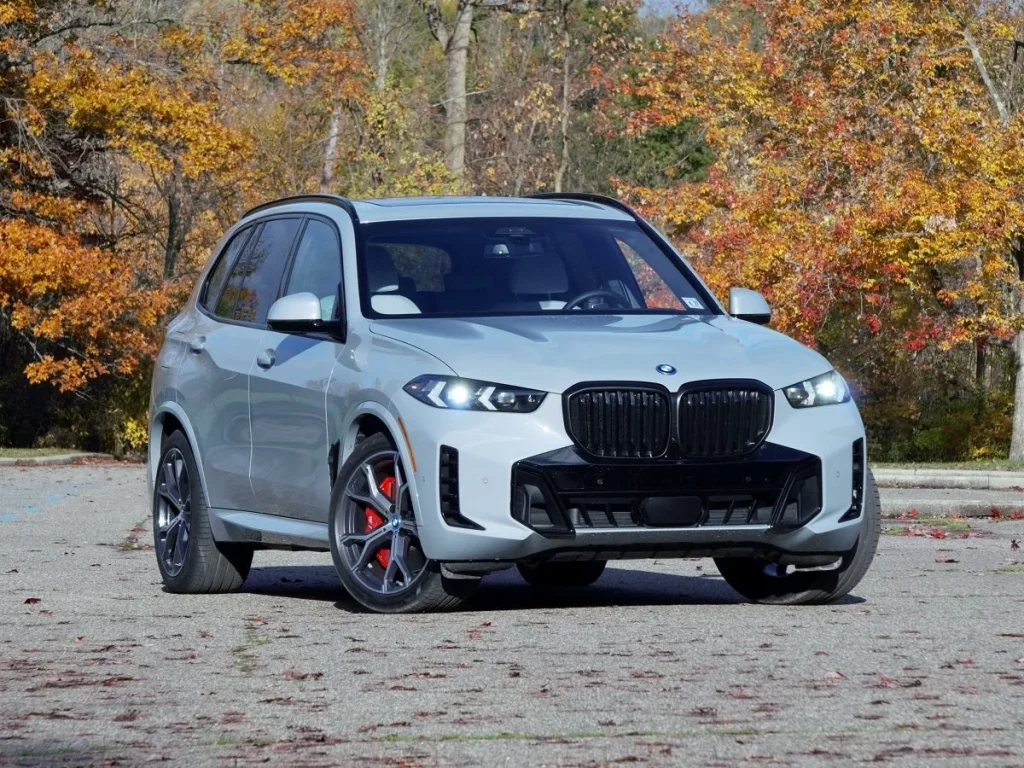
The X5 xDrive50e earns fifth place because it combines meaningful battery-only range with 483 horsepower. Instead of asking buyers to sacrifice performance for electric commuting, BMW uses the plug-in system to support both.
That dual-purpose character makes its 40-mile EPA rating particularly useful for drivers who want one SUV for weekday trips and longer highway travel.
- Engine: 3.0-liter turbocharged inline-six plug-in hybrid
- Torque: 516 lb-ft combined
- Horsepower: 483 hp combined
- Length/Width: 194.3 inches / 78.9 inches
6. Lexus RX 450h+: 38 Miles
Sixth place goes to a plug-in hybrid that approaches electric driving with a quieter, less performance-dominated philosophy. The 2026 Lexus RX 450h+ carries a manufacturer-estimated all-electric driving range of 38 miles.
Lexus directly publishes that figure for the U.S.-market RX PHEV, giving the midsize luxury SUV a clear position among the longer-range plug-in hybrids currently available.
Its powertrain begins with a 2.5-liter naturally aspirated four-cylinder rather than a turbocharged six-cylinder. Electric motors and a lithium-ion battery work with the gasoline engine to produce 304 total system horsepower. Standard all-wheel drive uses Lexus’ electrified approach to provide power to both axles.
The RX 450h+’s 38-mile electric figure can cover a substantial amount of routine driving. A 15-mile trip to work followed by the same journey home would fit inside the published battery-only range under favorable conditions. Regular overnight charging could therefore keep the gasoline engine inactive for many weekday journeys.
Lexus also gives the RX PHEV a different mission from the 483-horsepower BMW immediately above it. Acceleration and maximum output are not the only priorities.
The RX focuses heavily on smooth operation, cabin refinement, and predictable everyday usability. Electric driving fits naturally into that formula because low-speed battery operation reduces engine activity during short urban trips.
Weather, highway speed, heating, air conditioning, and driving style can still reduce the distance achieved from a charge. The 38-mile figure is a standardized estimate rather than a guaranteed result for every journey.
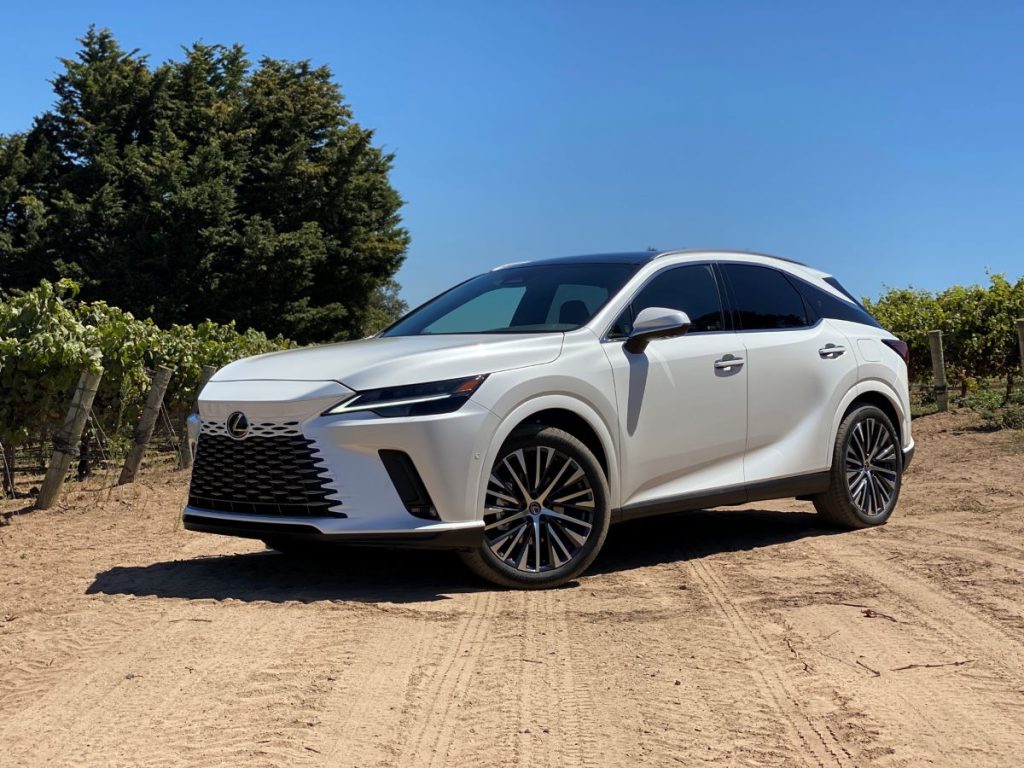
Even so, the RX 450h+ earns sixth place with enough electric range to make regular charging worthwhile. It gives U.S. luxury SUV buyers a PHEV that can handle many local trips on electricity without abandoning gasoline flexibility when the destination is hundreds of miles away.
- Engine: 2.5-liter four-cylinder plug-in hybrid
- Torque: Lexus does not publish a combined system torque figure
- Horsepower: 304 total system hp
- Length/Width: 192.5 inches / 75.6 inches
7. Volvo XC60 Plug-In Hybrid: 35 Miles
The Volvo XC60 Plug-In Hybrid reaches seventh place with an EPA-estimated electric-only range of up to 35 miles. That may place it behind the near-50-mile leaders, but Volvo combines its usable battery range with one of the most powerful drivetrains in the luxury PHEV SUV class.
The 2026 U.S.-market XC60 can also cover up to 560 miles with a full gasoline tank and fully charged battery.
Rather than designing the plug-in model strictly around fuel savings, Volvo gives it the T8 eAWD powertrain. A turbocharged 2.0-liter four-cylinder works with electric propulsion to produce 455 combined horsepower and 523 lb-ft of torque. The power is enough to move the XC60 from 0 to 60 mph in a manufacturer-estimated 4.5 seconds.
That performance changes the character of the electrified SUV. During routine weekday travel, the 35-mile electric range can handle short commutes, school runs, or local errands without relying continuously on gasoline. When stronger acceleration is requested, the hybrid system has substantial combined output available.
The XC60 also demonstrates why charging frequency matters more than simply buying a PHEV. Drivers covering 25 miles per day and recharging regularly can use the battery for a large share of their travel. Someone who rarely plugs in will not receive the same benefit from the 35-mile EPA estimate.
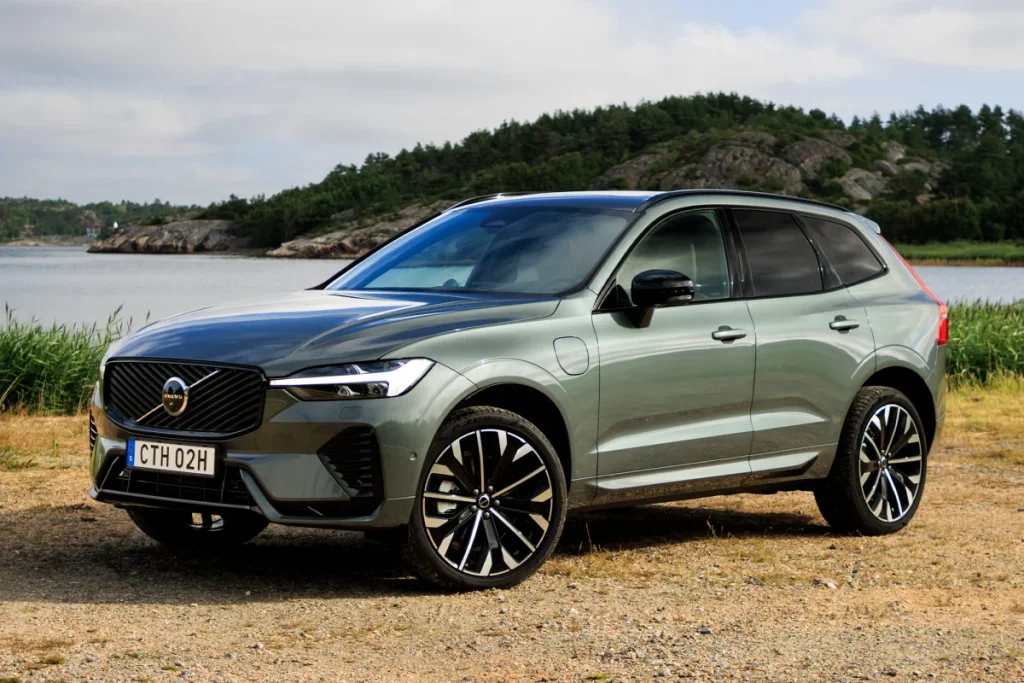
Volvo’s official U.S. data confirms the 35-mile electric figure, making the XC60 a data-supported seventh-place choice. Its combination of electric commuting ability, all-wheel drive, and 455 horsepower gives the battery a dual purpose: reducing gasoline use on short trips and contributing to serious performance.
- Engine: 2.0-liter turbocharged four-cylinder plug-in hybrid
- Torque: 523 lb-ft combined
- Horsepower: 455 hp combined
- Length/Width: 185.4 inches / 78.7 inches
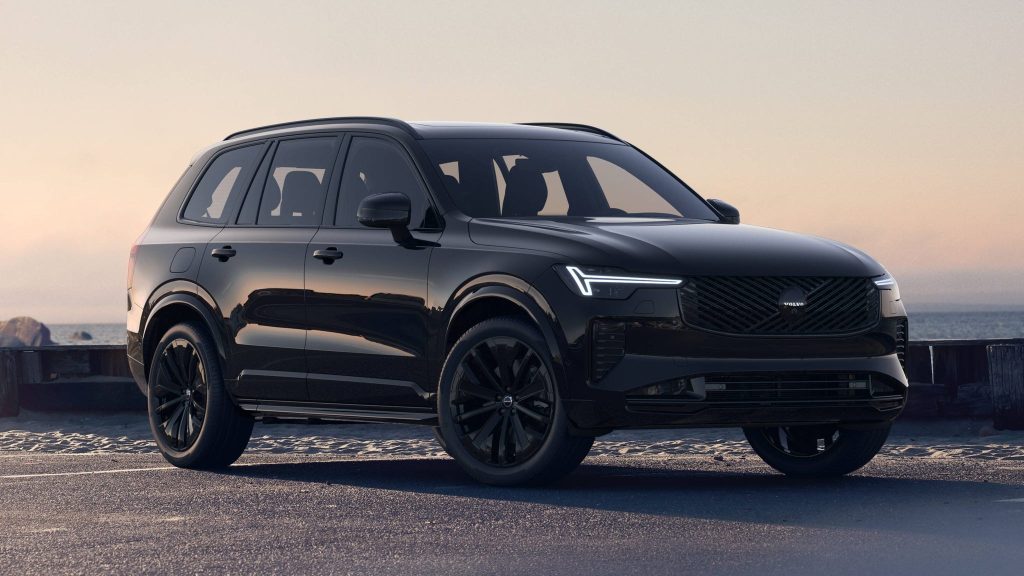
8. Volvo XC90 Plug-In Hybrid: 32 Miles
The final vehicle in this ranking is considerably larger than a typical efficiency-focused plug-in hybrid. Volvo’s XC90 Plug-In Hybrid is a three-row luxury SUV, yet its electrified powertrain provides an EPA-estimated 32 miles of electric-only driving.
That figure gives the XC90 eighth place while allowing it to retain the passenger capacity expected from Volvo’s flagship SUV.
Space is central to the XC90’s appeal. Unlike smaller PHEVs built mainly for commuting, this Volvo can accommodate up to seven occupants. Its battery range, therefore, has a family-focused purpose. Short school trips, grocery runs, and local journeys can potentially be completed using electricity when the battery starts with sufficient charge.
The T8 plug-in hybrid powertrain does not make the XC90 slow. Volvo pairs a turbocharged 2.0-liter four-cylinder with electric propulsion to create 455 horsepower and 523 lb-ft of torque. All-wheel drive is standard, and Volvo quotes a 0-to-60 mph time of 5.0 seconds for the PHEV.
Its electric-range figure requires some context. Volvo’s current U.S. range information places the XC90 at an estimated 32 electric miles, compared with 35 miles for the smaller XC60. The difference is understandable given the XC90’s larger body and three-row packaging.
Thirty-two miles may not sound dramatic beside the Mercedes-Benz GLC 350e’s 54-mile rating, but it can still cover many short daily journeys. The gasoline engine then removes range anxiety when a family leaves town or continues beyond the charged battery’s capability.
The XC90 closes this list because it combines verified electric-only range with genuine three-row utility. For buyers who need seven-passenger capacity but still want the possibility of completing local travel on battery power, its 32-mile rating remains an important specification.
- Engine: 2.0-liter turbocharged four-cylinder plug-in hybrid
- Torque: 523 lb-ft combined
- Horsepower: 455 hp combined
- Length/Width: 195.0 inches / 79.1 inches
Also Read: 8 Engines Known for Burning Oil and What the Fix Costs
