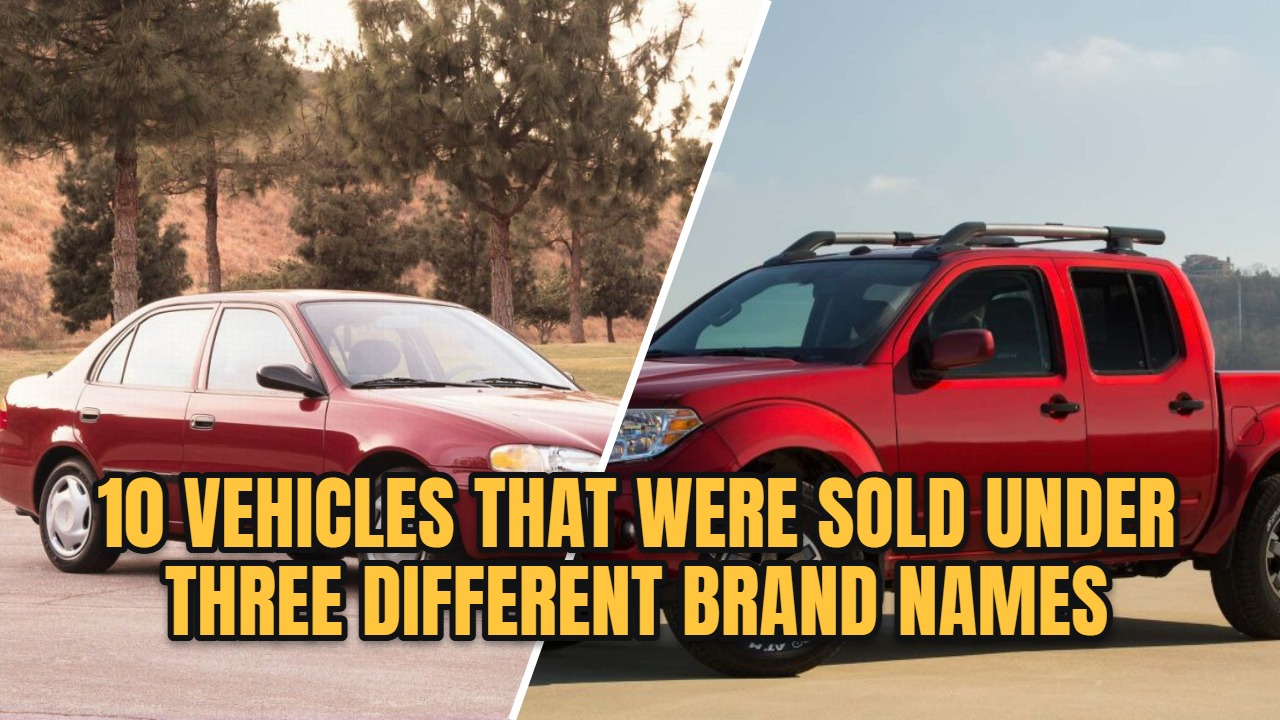
Automotive badge engineering has been a common business strategy for decades, allowing manufacturers to sell essentially the same vehicle under multiple brand names. By changing exterior styling, interior trim, equipment levels, and badging, automakers have expanded market reach while reducing development costs.
In the United States, this practice became especially popular among General Motors, Toyota, Chrysler, and several joint-venture partnerships. Buyers often assumed they were purchasing completely different vehicles, even though many shared the same platform, engine lineup, transmission, and structural design.
Some badge-engineered models were sold under two brands, while a smaller group appeared under three or even more different nameplates during their production lives. These vehicles usually received minor styling updates such as revised grilles, headlights, taillights, or interior materials, but the underlying engineering remained largely identical.
In many cases, identical assembly lines produced all versions, with only final trim and branding distinguishing one model from another.
This ranking focuses on vehicles sold in the United States that officially appeared under three different automotive brands. Each example is supported by the manufacturer’s production history and documented model information rather than aftermarket conversions or dealer-installed badges.
The article explains how each vehicle was marketed, why manufacturers adopted multiple brands, and what differences existed between the versions while highlighting the specifications of the original platform that made the strategy possible.
Also Read: 10 Cars That Lose the Least Value in Their First Year
1. Toyota Matrix, Pontiac Vibe, and Toyota Voltz
The first-generation Toyota Matrix became one of the best-known examples of successful badge engineering in North America. Developed through the long-running partnership between Toyota and General Motors at the NUMMI assembly plant in Fremont, California, the same basic vehicle reached customers under three different brand names.
In the United States and Canada, it was sold as the Toyota Matrix and the Pontiac Vibe, while Toyota marketed a right-hand-drive version in Japan as the Toyota Voltz. Although each model received unique front-end styling, wheel designs, and interior trim, all three shared the same platform, suspension layout, and much of their mechanical hardware.
Toyota and General Motors pursued this strategy to satisfy different customer groups without funding separate vehicle development programs. The Matrix targeted traditional Toyota buyers seeking practicality, while the Pontiac Vibe appealed to younger customers through sportier styling and Pontiac-specific design cues.
The Toyota Voltz expanded the concept into the Japanese domestic market, giving Toyota another compact hatchback without requiring a completely separate engineering effort.
Mechanically, the vehicles were nearly identical. Most models offered Toyota’s dependable 1.8-liter four-cylinder engine paired with either a manual or automatic transmission. Higher-performance Matrix XRS and Vibe GT variants even shared Yamaha-developed high-output engine technology.
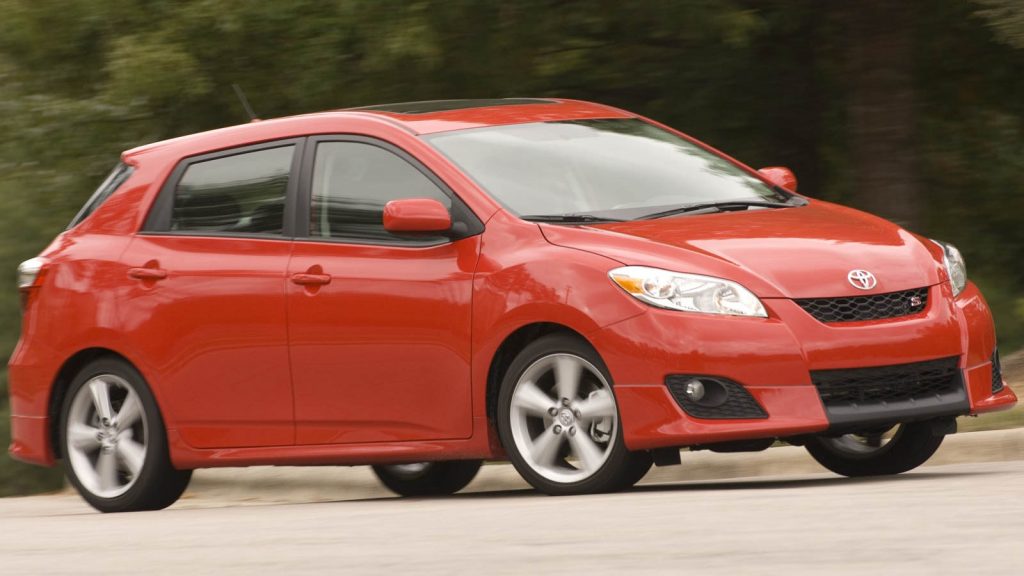
Because the mechanical components were common across all three versions, owners often discovered that many replacement parts were interchangeable.
The Matrix, Vibe, and Voltz remain some of the clearest demonstrations of how manufacturers successfully marketed a single vehicle through three different brand identities while preserving the same engineering foundation.
Specifications
- Engine: 1.8-liter inline-four (2ZZ-GE performance version)
- Torque: 130 lb-ft
- Horsepower: 180 hp
- Length/Width: 171.9 inches / 69.9 inches
2. Chevrolet TrailBlazer EXT, GMC Envoy XL, and Isuzu Ascender
General Motors relied extensively on badge engineering during the 2000s, and the long-wheelbase GMT360 SUV platform became one of its most recognizable examples. The extended-wheelbase version of the platform appeared in American dealerships as the Chevrolet TrailBlazer EXT, GMC Envoy XL, and Isuzu Ascender.
Although each brand targeted different buyers through unique front fascias, interior trim, wheel designs, and equipment packages, the three SUVs shared the same chassis, engines, transmissions, suspension components, and manufacturing facility.
Chevrolet positioned the TrailBlazer EXT as a practical family SUV with broad mainstream appeal. GMC emphasized a slightly more upscale image through additional standard equipment and premium styling details on the Envoy XL.
Isuzu, whose own SUV development resources were limited at the time, used the Ascender to maintain a presence in the midsize SUV market by leveraging GM’s existing engineering investment.
All three models offered seating for up to seven passengers thanks to the stretched wheelbase. Buyers could choose between the proven 4.2-liter Atlas inline-six engine or the optional 5.3-liter V8, depending on trim level and model year.
Because the mechanical systems remained virtually identical, maintenance procedures and replacement parts were largely interchangeable across the three brands.
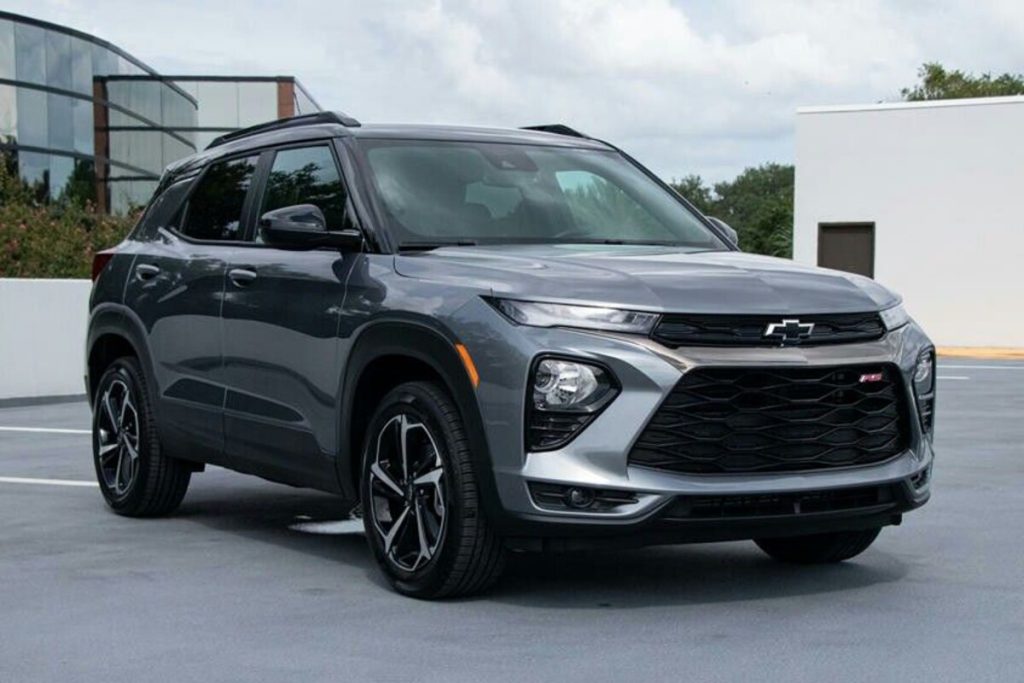
The TrailBlazer EXT, Envoy XL, and Ascender illustrate how one manufacturer successfully expanded a single SUV platform across multiple brands while minimizing development costs. Despite their different badges and styling details, they delivered nearly identical driving experiences and capabilities to American buyers.
Specifications
- Engine: 5.3-liter V8
- Torque: 330 lb-ft
- Horsepower: 300 hp
- Length/Width: 207.8 inches / 74.7 inches
3. Dodge Raider, Mitsubishi Montero, and Plymouth Arrow SUV
Long before modern crossover partnerships became common, Chrysler and Mitsubishi collaborated on several vehicles sold under different brand names in the United States. One of the most interesting examples was Mitsubishi’s first-generation Pajero, which reached American buyers primarily as the Mitsubishi Montero.
Chrysler also sold the same basic SUV as the Dodge Raider, while an earlier version of the platform and marketing strategy appeared under the Plymouth Arrow SUV name in certain export markets connected to Chrysler’s distribution network.
Although the branding evolved, the vehicle’s engineering remained rooted in Mitsubishi’s compact off-road platform.
The Montero served as Mitsubishi’s flagship sport utility vehicle and quickly earned a reputation for durability and genuine off-road capability. Dodge marketed the Raider to customers who wanted a rugged two-door SUV but preferred buying from a Chrysler dealership.
Exterior styling changes were minimal, consisting mainly of different grilles, badges, wheel designs, and trim levels. Underneath, the chassis, suspension, transfer case, and most mechanical components remained common.
American buyers appreciated the truck-based construction, solid rear axle, and dependable four-wheel-drive system. The available V6 engine provided respectable towing capability and enough power for highway travel while maintaining the reliability Mitsubishi had established in the SUV market.
Because so many components were shared, many replacement parts remain interchangeable between the Raider and Montero today.
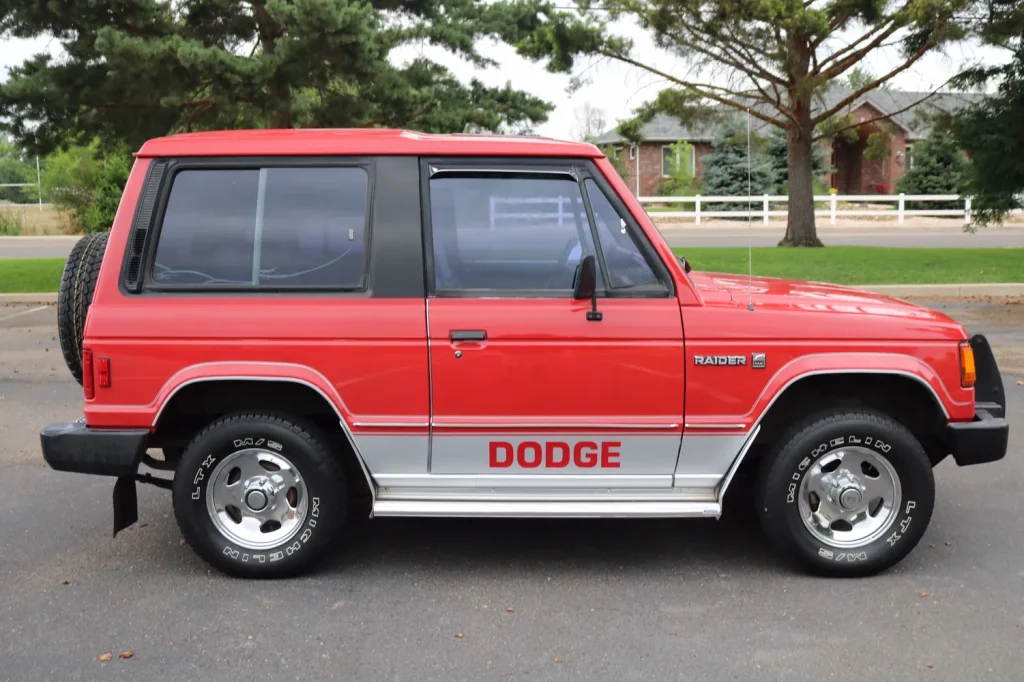
This badge-engineering effort demonstrated how manufacturers could broaden dealership offerings without investing in an entirely new vehicle.
Even though the names differed, the driving experience, capability, and engineering were fundamentally the same, making this one of the more distinctive three-brand examples associated with the U.S. market.
Specifications
- Engine: 3.0-liter SOHC V6
- Torque: 168 lb-ft
- Horsepower: 143 hp
- Length/Width: 157.3 inches / 66.5 inches
4. Chevrolet Prizm, Geo Prizm, and Toyota Sprinter
Few compact sedans better represent international automotive cooperation than the vehicle Americans knew as the Geo Prizm and later the Chevrolet Prizm. Its engineering originated from Toyota’s E100 Corolla platform, which was also marketed in Japan as the closely related Toyota Sprinter.
While the American models carried General Motors branding through the NUMMI joint venture in California, the underlying vehicle remained overwhelmingly Toyota in its design, manufacturing processes, and mechanical reliability.
The Geo Prizm debuted as an affordable compact sedan aimed at buyers seeking dependable transportation. When General Motors phased out the Geo brand after the 1997 model year, the same vehicle continued almost unchanged as the Chevrolet Prizm.
Across the Pacific, Toyota sold the closely related Sprinter with styling differences suited to the Japanese market. All three versions shared the same platform architecture, suspension design, engines, transmissions, and many interior components.
This arrangement benefited both companies. Toyota increased production efficiency through higher manufacturing volumes at NUMMI, while General Motors gained access to one of the most reliable compact car platforms available without developing a competing model from scratch.
Many owners were surprised to discover that numerous maintenance parts carried Toyota part numbers despite the Chevrolet or Geo badge on the hood.
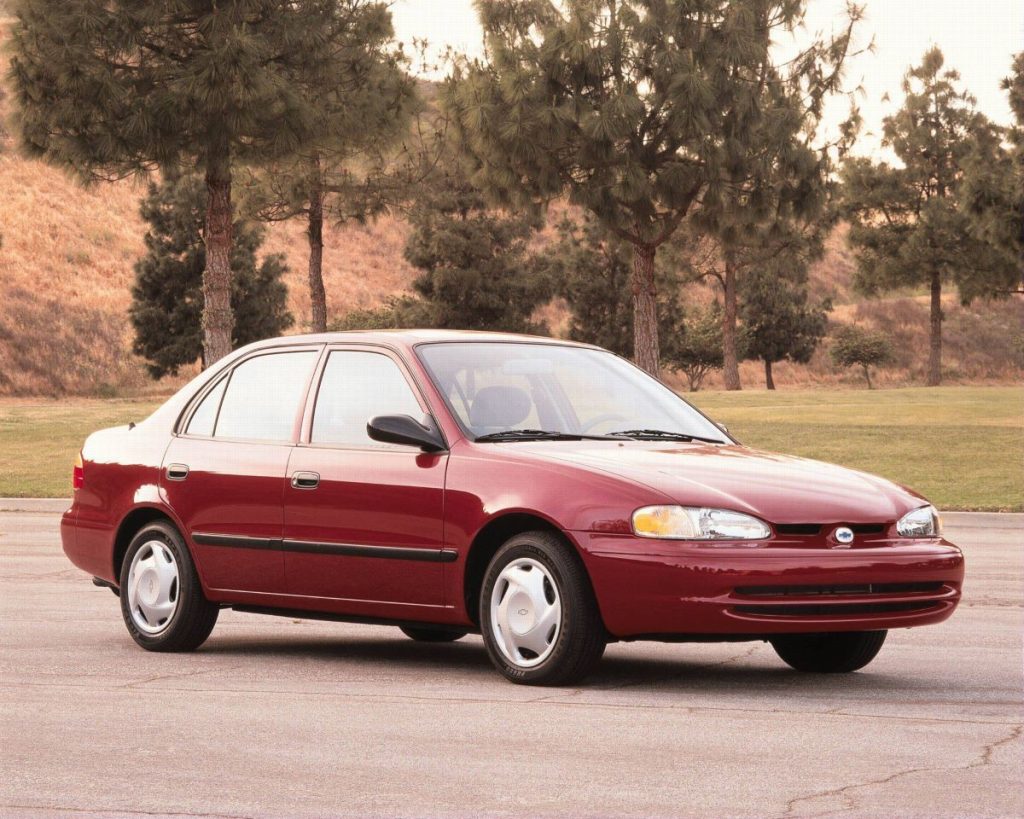
Decades later, the Prizm continues to enjoy a strong reputation for longevity because it inherited much of the Corolla’s proven engineering. It remains one of the clearest examples of how a single vehicle platform successfully reached customers under three different automotive brand identities while maintaining consistent mechanical quality.
Specifications
- Engine: 1.8-liter inline-four
- Torque: 122 lb-ft
- Horsepower: 120 hp
- Length/Width: 174.8 inches / 66.7 inches
5. Chevrolet Nova, Geo Prizm, and Toyota Corolla
During the late 1980s and early 1990s, General Motors and Toyota expanded their partnership through the NUMMI joint venture in Fremont, California. One result was a compact sedan that appeared under three different brand identities.
American buyers first knew it as the Chevrolet Nova (1985 to 1988), followed by the Geo Prizm (1989 to 1997), while Toyota continued selling the same underlying vehicle as the Toyota Corolla.
Although each version received its own grille, badges, trim levels, and equipment packages, the platform, powertrains, and manufacturing process were fundamentally the same.
For Chevrolet, the Nova filled an important gap in its compact lineup with a car that offered Toyota-level reliability. When GM introduced the Geo brand, the vehicle simply transitioned into the Geo Prizm with updated styling and branding.
Toyota, meanwhile, benefited from higher production volumes while continuing to market the Corolla as one of America’s best-selling compact cars.
The similarities extended well beyond appearance. Suspension components, engines, transmissions, braking systems, and much of the interior architecture were shared between the three models.
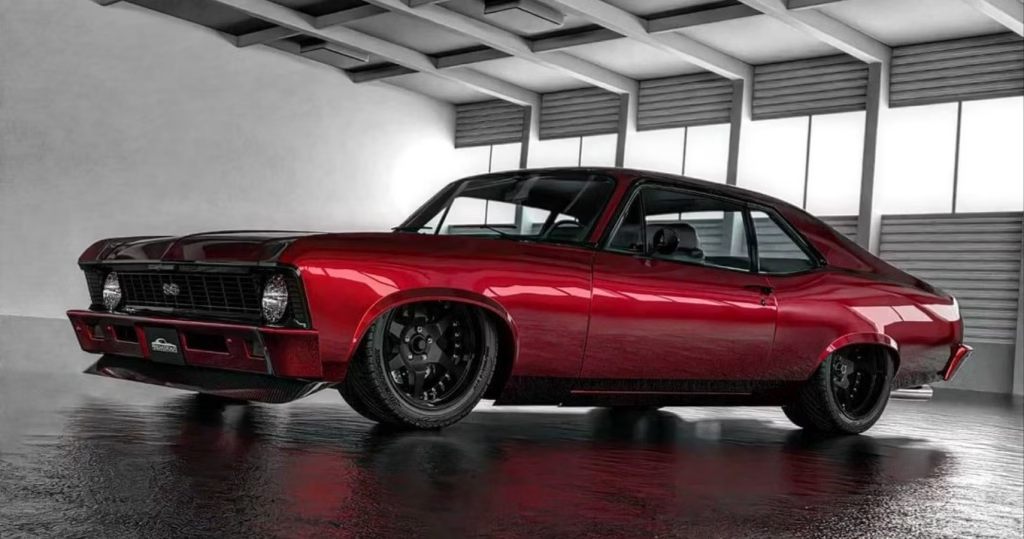
Owners often discovered that many service parts could be sourced through either Toyota or General Motors dealerships, depending on the component. This interchangeability helped keep maintenance costs reasonable while reinforcing the vehicle’s reputation for durability.
Today, collectors and enthusiasts recognize these cars as some of the best examples of successful badge engineering in the U.S. market. Despite carrying three different badges during their production history, they delivered nearly identical driving characteristics and earned reputations for long-term dependability.
Specifications
- Engine: 1.6-liter inline-four (base U.S. specification)
- Torque: 100 lb-ft
- Horsepower: 102 hp
- Length/Width: 172.2 inches / 66.1 inches
6. Chevrolet C/K, GMC Sierra, and Cadillac Escalade EXT
Not every badge-engineered vehicle received only cosmetic changes. General Motors used its GMT800 full-size truck platform as the foundation for three distinctly branded products aimed at different customer groups.
The underlying architecture supported the Chevrolet C/K Silverado, the GMC Sierra, and later the Cadillac Escalade EXT. Although the Escalade EXT adopted luxury styling and an integrated cargo bed, its chassis, suspension layout, drivetrain, and much of its engineering originated from the same full-size truck platform shared with Chevrolet and GMC.
Chevrolet marketed the Silverado as its mainstream pickup, emphasizing capability and value. GMC positioned the Sierra as a more premium truck with additional comfort features and upscale trim.
Cadillac transformed the platform into the Escalade EXT, targeting luxury buyers who wanted pickup utility combined with premium materials, advanced technology, and distinctive styling.
Under the sheet metal, however, the relationship was obvious. The three vehicles shared GM’s proven V8 engines, automatic transmissions, four-wheel-drive systems, and body-on-frame construction.
Many suspension, steering, braking, and drivetrain components were interchangeable, illustrating how one engineering program could support multiple brands while keeping manufacturing costs under control.
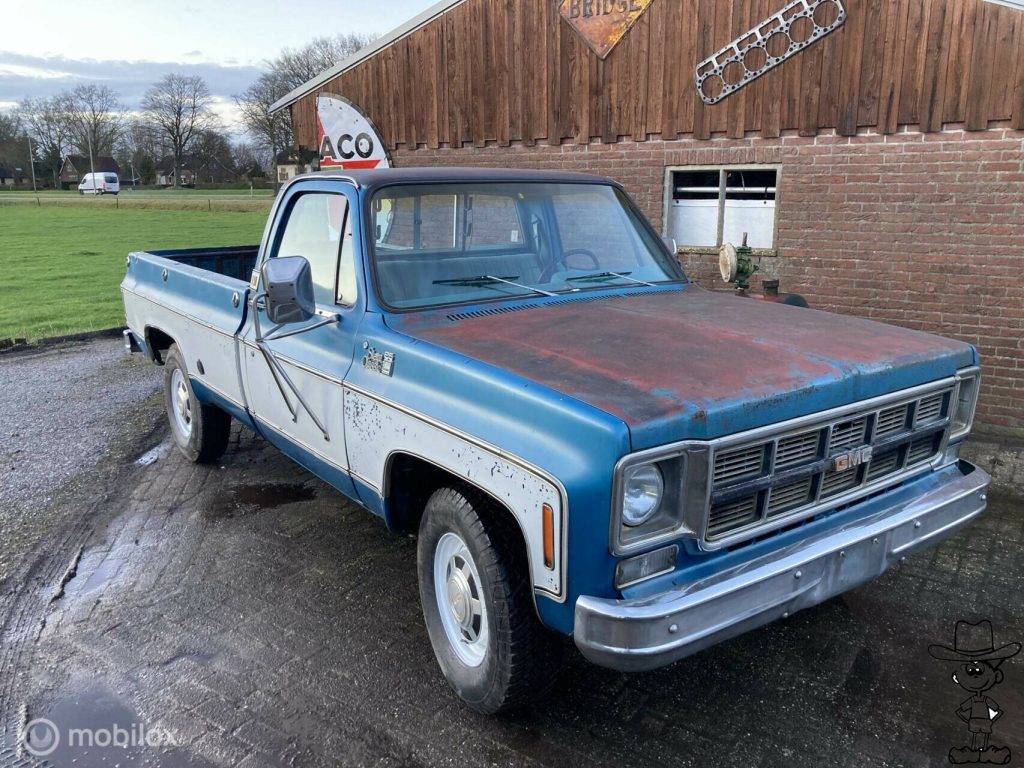
The Escalade EXT demonstrated that badge engineering could extend beyond simple rebadging. Cadillac engineers added exclusive body panels, interior appointments, and luxury equipment, yet the truck retained the rugged foundation that had already proven itself in Chevrolet and GMC applications.
This strategy allowed General Motors to compete in multiple market segments without developing three separate truck platforms.
Specifications
- Engine: 6.0-liter V8 (GMT800 platform representative)
- Torque: 380 lb-ft
- Horsepower: 345 hp
- Length/Width: 221.4 inches / 79.8 inches
7. Mitsubishi Eclipse, Eagle Talon, and Plymouth Laser
One of the best-known examples of badge engineering in the American performance car market came from Diamond-Star Motors (DSM), the joint venture between Chrysler Corporation and Mitsubishi Motors in Normal, Illinois.
The same sporty hatchback was sold simultaneously as the Mitsubishi Eclipse, Eagle Talon, and Plymouth Laser. While each model featured unique front and rear styling, wheel designs, and interior trim, the three cars shared the same platform, engines, transmissions, suspension, and manufacturing facility.
The strategy allowed Chrysler to offer an affordable sport compact through two of its brands while Mitsubishi strengthened its presence in the growing U.S. performance market. Buyers could choose the version that best matched their preferred dealership without sacrificing performance or reliability.
Turbocharged all-wheel-drive variants were available under all three badges, making them highly desirable among enthusiasts.
Mechanically, the similarities were extensive. The high-performance models used Mitsubishi’s turbocharged 2.0-liter 4G63 engine, which earned a reputation for exceptional durability and tuning potential.
Manual and automatic transmissions, braking systems, and much of the suspension hardware were interchangeable across the Eclipse, Talon, and Laser. Even today, restoration projects frequently use parts sourced from all three models because of their shared engineering.
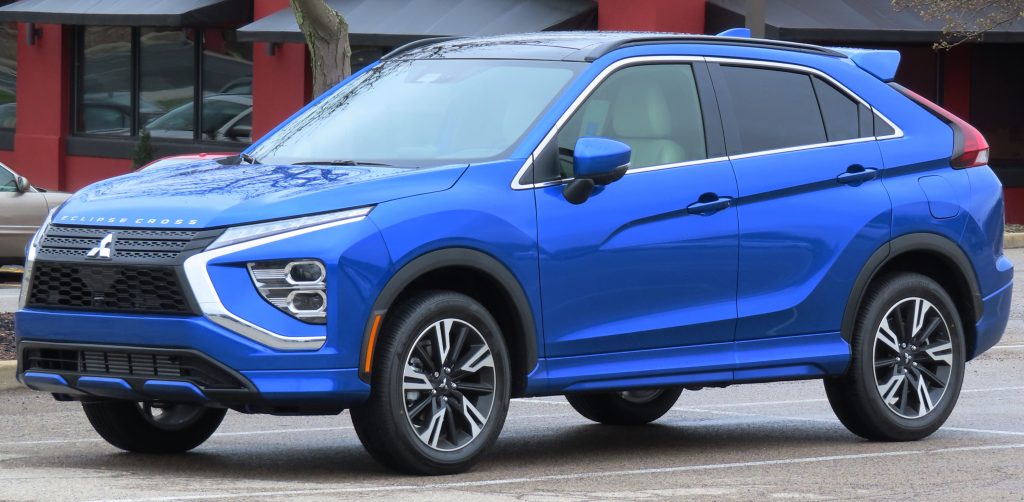
Although the Plymouth Laser disappeared after the first generation and the Eagle brand was eventually discontinued, the Eclipse continued for several generations.
The DSM partnership remains one of the most successful collaborations in American automotive history, and these three nearly identical sports cars continue to enjoy a strong following because they combined proven engineering with distinctive brand personalities.
Specifications
- Engine: 2.0-liter turbocharged inline-four (4G63)
- Torque: 203 lb-ft
- Horsepower: 195 hp
- Length/Width: 172.8 inches / 66.7 inches
8. Dodge Colt, Plymouth Colt, and Mitsubishi Mirage
During the 1980s, Chrysler relied heavily on Mitsubishi to strengthen its compact car lineup in the United States. One of the clearest examples was the vehicle Americans could purchase as the Dodge Colt, the Plymouth Colt, or the Mitsubishi Mirage.
Rather than engineering separate entry-level cars for each division, the companies marketed the same basic platform under three different brand names, with only modest styling and equipment differences separating them.
The Dodge Colt was positioned as an economical commuter aimed at budget-conscious buyers. Plymouth sold an almost identical version through its own dealer network, while Mitsubishi marketed the Mirage under its own brand with trim levels tailored to its customer base.
Regardless of the badge on the hood, buyers received nearly identical chassis engineering, powertrains, and driving characteristics.
This approach significantly reduced development costs while allowing Chrysler to give both Dodge and Plymouth dealers a competitive subcompact. The shared mechanical design also simplified maintenance.
Engines, manual transmissions, suspension components, steering parts, and many interior pieces were interchangeable across the three versions, a fact that continues to benefit owners restoring these cars today.
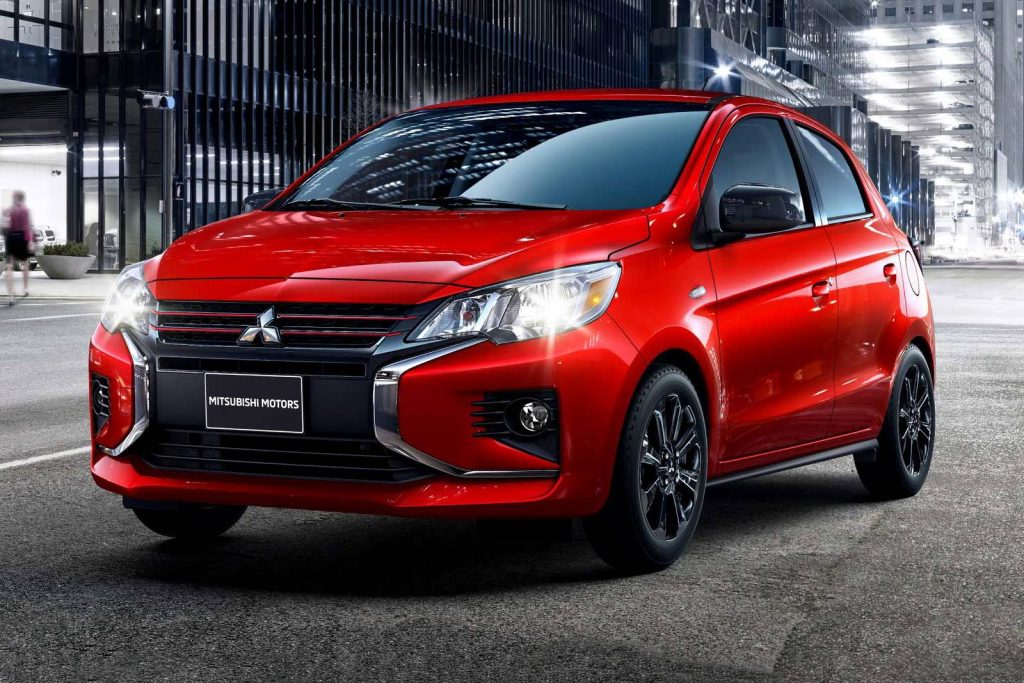
The Colt and Mirage families helped establish Mitsubishi’s reputation for building dependable, fuel-efficient small cars in America. At the same time, Chrysler gained competitive products without the expense of designing an entirely new platform.
Their success illustrates how badge engineering could satisfy multiple brands while delivering consistent quality and reliability to U.S. consumers.
Specifications
- Engine: 1.5-liter inline-four
- Torque: 82 lb-ft
- Horsepower: 81 hp
- Length/Width: 163.8 inches / 64.6 inches
9. Suzuki Equator, Nissan Frontier, and Nissan NP300
Automakers do not always share vehicles through corporate ownership. Sometimes, manufacturing agreements allow one company to expand its lineup using another manufacturer’s proven platform.
A good example is the midsize pickup sold in the United States as the Suzuki Equator, while the same basic truck was marketed globally as the Nissan Frontier in North America and the closely related Nissan NP300 in numerous international markets.
Although the NP300 name was not used in the U.S., it represented the same D40-generation platform and engineering that underpinned the American Frontier and Equator.
Suzuki introduced the Equator for the 2009 model year to compete in the growing midsize pickup segment without funding an entirely new truck program. Nissan supplied the platform, powertrains, chassis, and production through its manufacturing facility in Smyrna, Tennessee.
Suzuki differentiated the Equator with a revised grille, unique badging, and trim-specific styling, but the truck remained mechanically identical to the Frontier.
Customers could choose either a four-cylinder engine or Nissan’s well-known 4.0-liter V6, paired with manual or automatic transmissions and available rear-wheel or four-wheel drive.
The frame, suspension, braking system, and towing capability mirrored those of the Frontier, allowing Suzuki to offer a competitive pickup with minimal engineering investment. Replacement components for the drivetrain and chassis are still widely interchangeable because both trucks shared the same foundation.
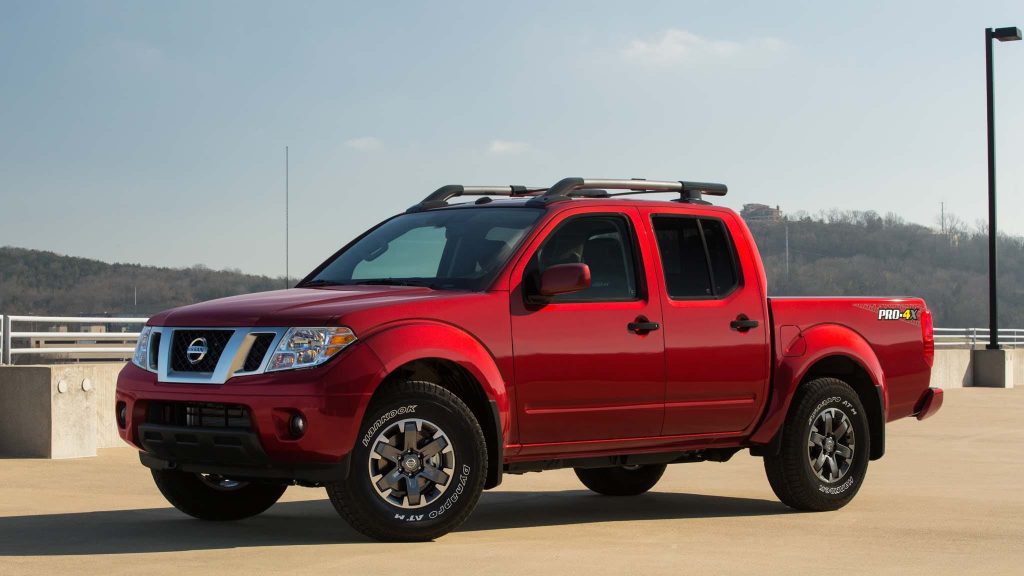
Although Suzuki exited the U.S. automobile market in 2012, the Equator remains an excellent example of modern badge engineering. Its close relationship with the Frontier and the globally marketed NP300 demonstrates how a single pickup platform successfully served three different brand identities and regional marketing strategies.
Specifications
- Engine: 4.0-liter DOHC V6
- Torque: 281 lb-ft
- Horsepower: 261 hp
- Length/Width: 205.5 inches / 72.8 inches
10. Saab 9-2X, Subaru Impreza, and Subaru WRX
The Saab 9-2X is often remembered as one of the most unusual products in General Motors’ history. Introduced for the 2005 model year, it was developed through GM’s ownership stake in Subaru’s parent company, Fuji Heavy Industries.
The vehicle shared nearly all of its engineering with the Subaru Impreza, while the performance-oriented Aero model closely mirrored the Subaru WRX. Although Saab applied its own front fascia, lighting, interior materials, suspension tuning, and sound insulation, the underlying platform, drivetrain, and powertrains remained unmistakably Subaru.
Saab’s objective was to expand its lineup with an entry-level all-wheel-drive wagon while avoiding the enormous cost of developing a new model. Buyers benefited from Subaru’s proven symmetrical all-wheel-drive system and dependable boxer engines, combined with Saab-specific styling and a quieter cabin.
The Aero trim was particularly notable because it effectively delivered WRX performance wearing Saab badges, earning the nickname “Saabaru” among enthusiasts.
Mechanically, the relationship was undeniable. The chassis architecture, transmissions, suspension layout, braking system, and much of the drivetrain were shared with the Impreza family. Many replacement parts remain directly interchangeable, making maintenance relatively straightforward despite the Saab branding.
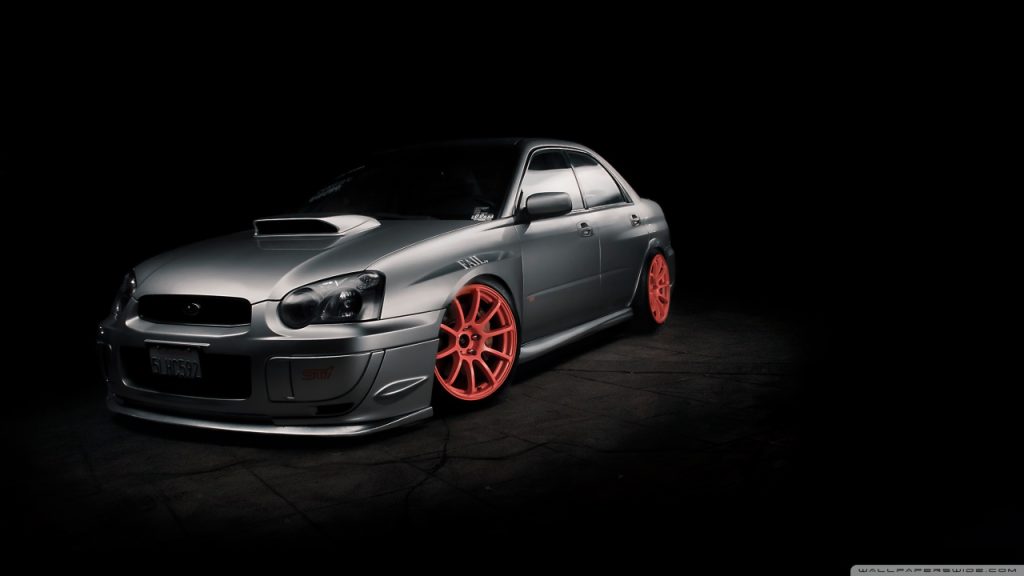
The primary differences involved cosmetic updates, suspension calibration, and interior appointments designed to better match Saab’s premium image.
Production lasted only two model years, making the 9-2X relatively rare today. Nevertheless, it stands as one of the clearest examples of cross-brand collaboration in the American market, where one proven Subaru platform successfully appeared under three recognizable automotive identities while maintaining its renowned reliability and all-weather capability.
Specifications
- Engine: 2.5-liter turbocharged flat-four (Aero)
- Torque: 235 lb-ft
- Horsepower: 227 hp
- Length/Width: 174.8 inches / 68.1 inches
Also Read: 10 Slowest Sports Cars Ever Made