
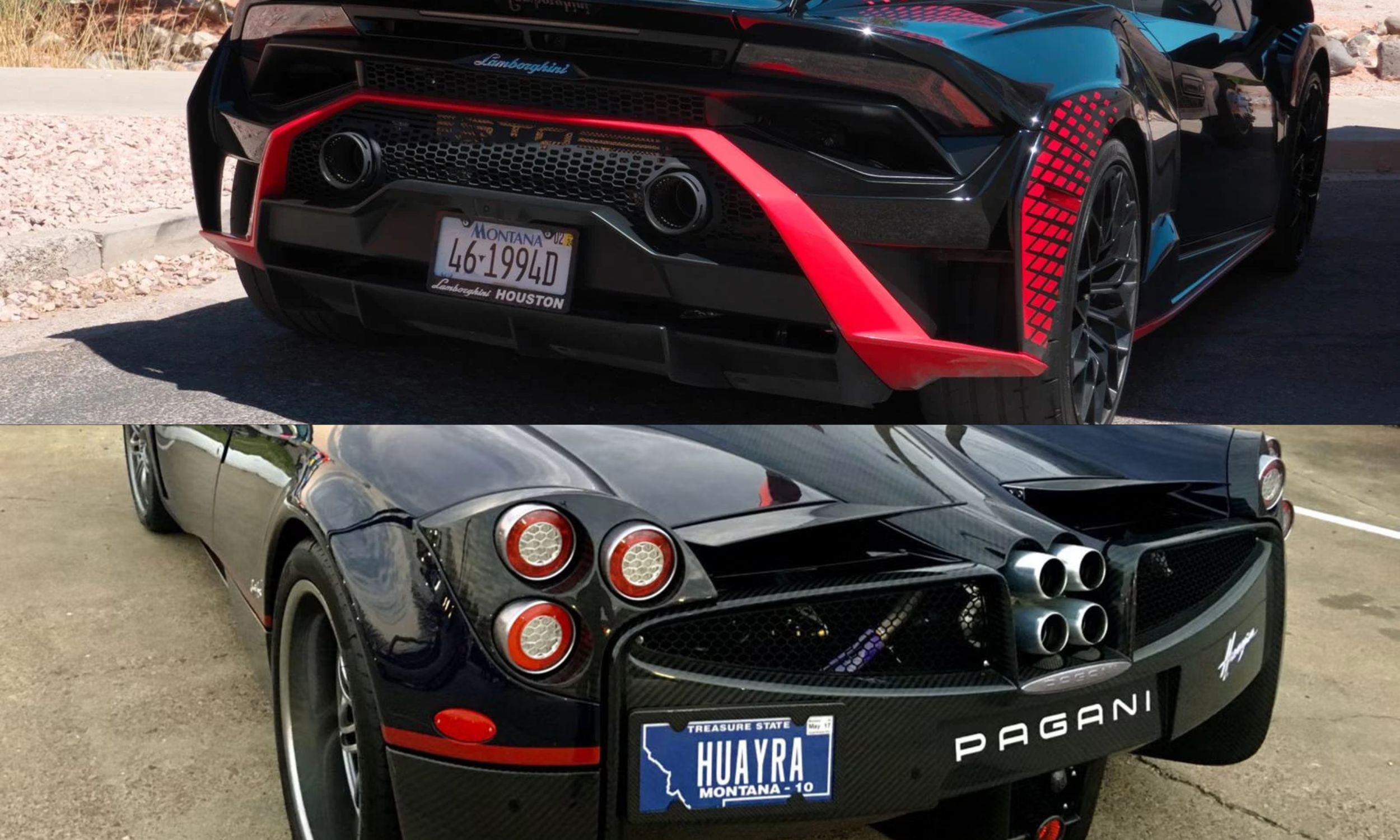
Owning an exotic car comes with more than a hefty purchase price. Registration fees, sales tax, inspections, and other state requirements can add thousands of dollars to the cost of ownership.
That is why it is common to see a Lamborghini, Ferrari, or McLaren driving in places like California or Florida with Montana license plates. In many cases, the owner does not live in Montana. Instead, the vehicle is registered through a Montana limited liability company (LLC), a legal option that has become popular among some high-end car owners.
Montana allows vehicles to be registered through an LLC without requiring the owner to live in the state. Since Montana has no statewide sales tax and offers a registration process that appeals to collectors, many owners use this approach to reduce costs where permitted by law. Even so, this strategy is not suitable for everyone.
Each state has its own registration and tax laws, and owners should understand those rules before choosing this route. Below are eight reasons many exotic car owners decide to register their vehicles in Montana.

1. No Sales Tax on Vehicle Purchases
The first figure that grabs most people’s attention is Montana’s zero sales tax on vehicle purchases. Buying a $50,000 sedan could mean saving a few thousand dollars. On a $500,000 hypercar, those savings become far more significant and can even surpass the cost of a well-equipped everyday luxury car.
Compare that against states like California or New York, where combined state and local sales tax on vehicle purchases can easily climb past 8% or even 10% in certain jurisdictions. On a genuinely expensive exotic, that tax bill alone can reach tens of thousands of dollars, sometimes rivaling the cost of a genuinely excellent daily driver purchased outright.
Wealthy collectors specifically buying multiple exotic vehicles over the years find these savings compound considerably. Someone acquiring several six-figure vehicles throughout their lifetime could theoretically save enough through Montana registration to purchase an entirely additional car, purely from avoided sales tax that would’ve otherwise gone straight to their home state’s treasury.
This particular financial incentive explains why Montana LLC registration became such standard practice specifically within exotic car ownership circles rather than spreading broadly across ordinary car buyers.
The savings only make genuine financial sense once a vehicle’s price climbs high enough that the tax percentage translates into a genuinely substantial dollar figure worth the administrative effort required to set up an LLC in the first place.
2. No Vehicle Emissions Testing Requirements
Emissions testing has become genuinely burdensome for owners of high-performance vehicles specifically, since many exotic cars feature engines tuned aggressively for maximum output rather than passing standard emissions checks with a comfortable margin. Montana sidesteps this entire headache by simply not requiring emissions testing for vehicle registration whatsoever.
States like California maintain notoriously strict emissions standards, occasionally creating genuine compliance problems for imported or heavily modified exotic vehicles that technically meet federal requirements yet struggle against California’s considerably stricter state-specific testing protocols.
Owners specifically importing rare, low-volume supercars sometimes discover their vehicle simply cannot pass certain state emissions requirements without expensive modifications that would compromise the car’s original engineering. Montana registration eliminates this problem.
Without any emissions testing requirement built into the registration process, owners avoid the genuine possibility of their expensive purchase becoming essentially undriveable within their actual home state due to a testing technicality that has nothing to do with the vehicle’s genuine roadworthiness or safety.
This particular benefit matters considerably more for owners of specific rare or track-focused vehicles compared to typical daily-driven exotics, since standard supercars from major manufacturers generally do meet federal emissions requirements without excessive difficulty. Specialty builds, heavily modified vehicles, and certain gray-market imports face this challenge considerably more often.
Also Read: 5 Common Reasons Your Car Shakes While Idling
3. No Personal Property Tax on Vehicles
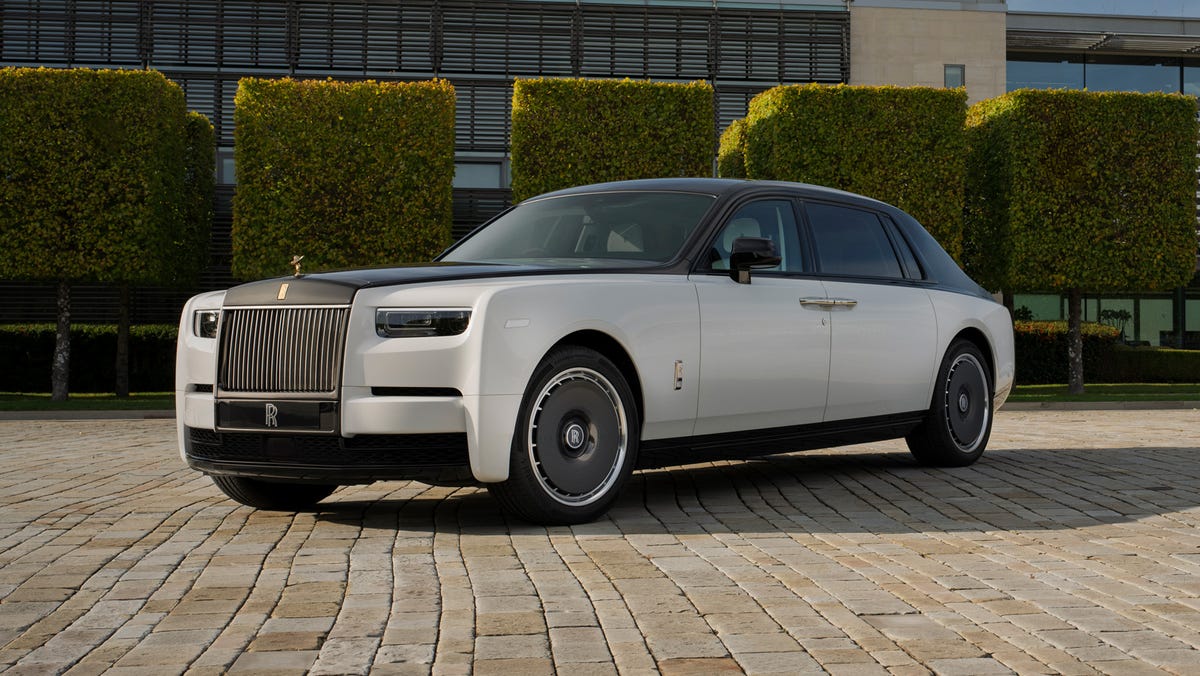
Owning an exotic car involves much more than paying the purchase price. In several US states, vehicle owners must also pay an annual personal property tax based on the car’s assessed value. This is a recurring cost that continues for as long as the vehicle remains registered in that state, whether it is driven every day or spends most of its time inside a climate-controlled garage.
For owners of high-value performance cars, this yearly tax can become one of the biggest ownership expenses outside insurance and maintenance. The difference becomes much clearer when you compare everyday vehicles with luxury models. Someone driving a family sedan may only pay a few hundred dollars each year in personal property tax.
An owner of a Ferrari, Lamborghini, McLaren, or Bugatti could face an annual bill running into thousands of dollars because the tax rises with the vehicle’s value. For collectors who own several expensive cars, these yearly payments can grow into a very large financial commitment after just a few years of ownership.
Montana offers an alternative that attracts many collectors. The state does not charge an annual personal property tax on vehicles. Because of this, some owners register their exotic cars through a Montana limited liability company, commonly known as an LLC, where the law allows.
By avoiding that recurring tax, owners who keep their vehicles for many years may save a considerable amount of money compared with registering the same cars in states that impose annual property taxes. This approach is especially attractive to people who treat exotic cars as long-term collector vehicles rather than short-term purchases.
4. Simplified LLC Formation Process
Setting up a Montana LLC specifically for vehicle registration purposes has become genuinely streamlined, largely thanks to specialized registration service companies that handle the entire process for clients who’ve never actually set foot in Montana and have no genuine intention of ever visiting.
These specialized services typically charge a few hundred dollars for complete LLC formation, vehicle titling, and registration handling, a genuinely modest fee considering the potential tax savings involved for anyone registering a genuinely expensive vehicle. Most of these companies operate entirely online, allowing clients to complete the entire process remotely without requiring any physical presence within Montana itself.
Montana’s business-friendly regulatory environment specifically encourages this practice too, since the state genuinely benefits from collecting registration fees and modest annual LLC filing costs from thousands of out-of-state vehicle owners who wouldn’t otherwise have any connection to Montana’s economy whatsoever.
This administrative simplicity explains why the practice has spread so widely, specifically within exotic car ownership circles rather than remaining limited to sophisticated business owners already familiar with LLC structures.
Word spreads quickly among wealthy car enthusiasts once someone demonstrates genuine, substantial savings, and the relatively low barrier to entry through specialized registration services has made this strategy accessible even to buyers with no prior business formation experience whatsoever, further accelerating its popularity throughout collector car communities nationwide.
5. Avoiding High Insurance Rate Zones
Insurance costs for exotic cars can vary widely across the United States, and where a vehicle is registered often plays a part in determining the premium. Insurance companies look at many factors before setting a price, including theft rates, accident statistics, repair costs, traffic conditions, and legal risks in the area where the vehicle is expected to be used.
A supercar registered or driven in a busy city may attract a much higher premium than one kept in a location with fewer claims and lower risk. That is one reason some owners consider Montana registration as part of their ownership strategy.
Even so, registration alone does not guarantee lower insurance costs. Insurance companies pay close attention to where a vehicle is actually driven and stored, not just the address shown on the registration documents.
If a car is registered through a Montana LLC but spends nearly all its time in another state, the insurer may ask questions before issuing a policy or handling a claim. Giving incorrect or incomplete information about the vehicle’s location can create serious problems if an accident or theft occurs.
Insurance should never be treated as an area where shortcuts are acceptable. Saving money on registration means very little if a claim is later delayed or denied because the policy did not match the vehicle’s actual use.
Before registering an exotic car through a Montana LLC for insurance reasons, owners should discuss their plans with a qualified insurance adviser and confirm that every detail is properly disclosed. Taking that extra step can provide peace of mind and help avoid expensive surprises if the unexpected happens in the future.
6. No Vehicle Inspection Requirements
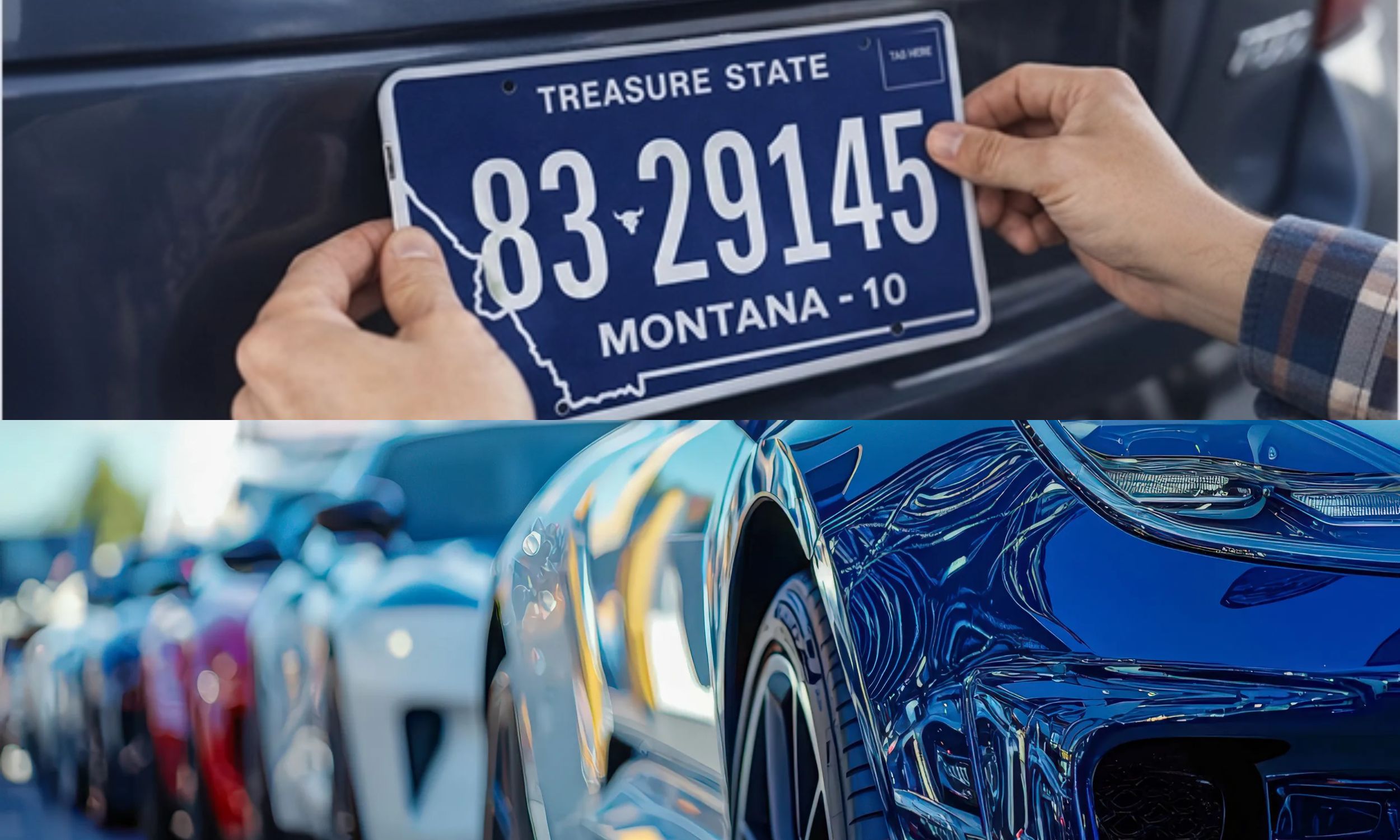
Vehicle safety inspections are a normal part of ownership in many states. Before renewing a registration, owners may have to prove that their vehicle meets basic safety requirements. Inspectors usually check items such as the brakes, tyres, lights, steering, suspension, windshield, and other equipment that helps keep the vehicle safe for public roads.
If something fails the inspection, the problem must usually be fixed before the registration can be renewed. While this process is straightforward for most everyday vehicles, it can become much more difficult for owners of exotic cars, classic models, and heavily modified performance vehicles that do not match factory specifications.
Montana takes a different approach. The state does not require periodic safety inspections for standard vehicle registration, removing one hurdle that owners in other states often face.
That can make registration easier for people with collector cars, rare imports, or customised vehicles that might receive extra scrutiny elsewhere. Factory-built exotic cars usually have little trouble meeting safety standards, but owners of modified vehicles often appreciate avoiding repeated inspections.
Classic exotic cars also benefit from this system. Older vehicles were designed to meet the standards of their own time, not today’s requirements. Without mandatory periodic safety inspections, owners can focus on preserving their vehicles while keeping them properly maintained. It is still their responsibility to ensure the car is safe to drive, but the registration process is often much simpler than in states with regular inspection programmes.
7. Privacy and Reduced Public Exposure
Wealthy exotic car owners sometimes specifically value the additional layer of privacy that LLC registration provides, since vehicle ownership records tied to a business entity rather than an individual’s personal name genuinely reduce how easily curious observers, or worse, potential thieves specifically targeting valuable vehicles, can trace a particular exotic car back to its actual owner.
High-profile individuals, celebrities, athletes, and business executives particularly value this privacy benefit, understanding that publicly available vehicle registration records tied directly to their personal name could potentially expose details about their location, daily routines, or wealth that they’d genuinely prefer to keep private rather than easily discoverable through basic public records searches.
This privacy consideration extends beyond simple curiosity too, addressing genuine security concerns. Exotic vehicles represent obvious, visible signals of considerable wealth, and owners specifically concerned about theft, stalking, or other security risks appreciate the additional buffer that LLC registration provides between their actual identity and their vehicle’s public registration information.
For owners specifically balancing privacy concerns against practical registration considerations, working with experienced registration services genuinely familiar with structuring LLC ownership appropriately becomes particularly important, ensuring the privacy benefits are actually achieved correctly rather than accidentally creating public records that inadvertently expose the exact same personal information the owner was specifically hoping to keep private through this particular registration strategy.
Also Read: 7 Common Reasons Your Car Stalls and How to Prevent Them

8. Legal Loophole With Long-Standing Precedent
Perhaps the most genuinely compelling reason this practice has become so widespread comes down to simple legal precedent: Montana LLC registration for out-of-state vehicle owners has operated within a genuinely established legal framework for years, meaning this isn’t some risky, untested strategy but rather a well-documented approach that thousands of owners have successfully utilized without facing genuine legal consequences.
That established track record provides considerable confidence for buyers specifically weighing whether to pursue this particular registration strategy for their own exotic vehicle purchase. Unlike genuinely questionable tax avoidance schemes that might invite serious legal scrutiny, Montana LLC vehicle registration operates within clearly defined state law, exploiting a genuine legal gap rather than violating any specific statute or regulation.
Some states have attempted to push back against this practice over the years, occasionally pursuing legal action against specific owners they believe are primarily using Montana registration to avoid their actual home state’s tax obligations while genuinely operating the vehicle almost exclusively within that home state’s borders. These challenges have had mixed success, generally succeeding only when clear evidence shows the vehicle essentially never operates in Montana whatsoever.
Given how thoroughly this practice has become established within exotic car ownership circles, complete with dedicated registration service companies, established legal precedent, and widespread community knowledge shared across automotive forums and enthusiast communities, Montana LLC registration remains a genuinely viable, low-risk strategy for collectors specifically seeking to minimize the considerable costs associated with owning genuinely expensive exotic vehicles within their home state’s typically much stricter regulatory framework.
