
Electric vehicle depreciation has become one of the biggest concerns for new-car buyers. While the Tesla Model 3 remains America’s best-selling EV sedan, aggressive price cuts introduced by Tesla beginning in 2023 significantly affected used values across the market.
According to multiple iSeeCars depreciation studies, several electric vehicles have retained a higher percentage of their original value after three years than the Model 3.
Limited production, stronger demand, premium brand reputation, and stable pricing have helped these models perform better in the resale market. The following EVs have consistently demonstrated stronger three-year value retention than the Tesla Model 3 in the U.S. market.
Also Read: 10 EVs Ranked by Charging Speed
1. Chevrolet Corvette E-Ray
The Chevrolet Corvette E-Ray may not be the first vehicle buyers think of when discussing electric technology, but its hybrid-assisted electrified drivetrain has produced one of the strongest resale performances among electrified performance vehicles.
More importantly, iSeeCars’ depreciation studies consistently show that limited-production performance models such as the E-Ray retain their value substantially better than the Tesla Model 3, whose resale values were heavily impacted by repeated MSRP reductions beginning in 2023.
The E-Ray benefits from an entirely different market dynamic than mass-market EVs. Chevrolet builds the car in comparatively limited numbers, demand remains extremely strong, and many dealers have maintained waiting lists since its introduction.
Unlike Tesla, which frequently adjusted pricing nationwide, Chevrolet largely maintained stable pricing for the E-Ray. Stable MSRPs generally support healthier used-vehicle values because buyers are not suddenly competing with significantly cheaper new examples.
Performance also contributes to resale strength. The combination of the naturally aspirated 6.2-liter LT2 V8 and an electric front motor produces a combined 655 horsepower, allowing the E-Ray to accelerate from 0 to 60 mph in approximately 2.5 seconds according to Chevrolet.
That level of capability places it among the quickest production Corvettes ever built while also introducing all-wheel drive for the first time in Corvette history.
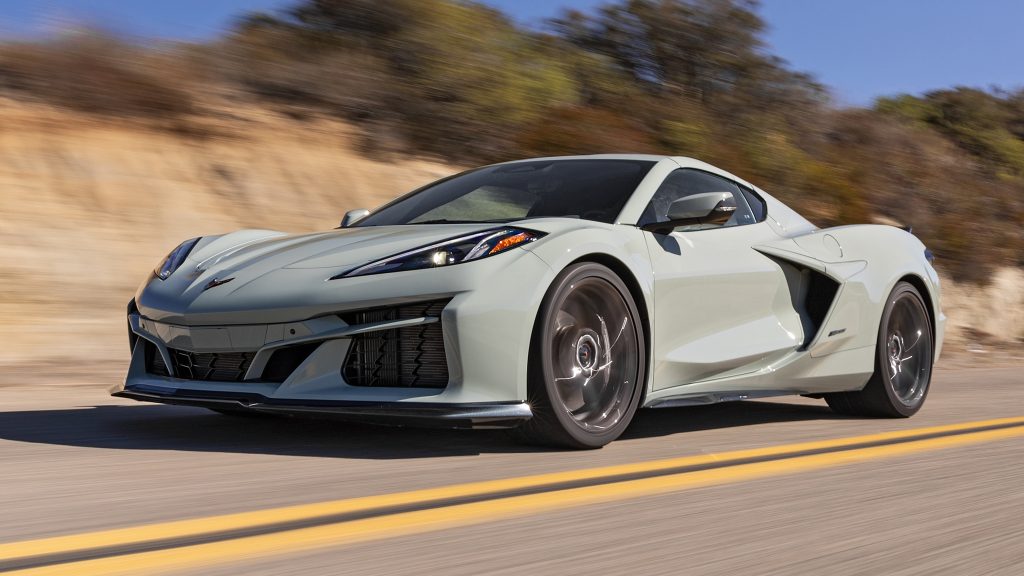
The resale data reflects buyer enthusiasm. Performance vehicles with limited supply typically experience lower depreciation than high-volume sedans, and the E-Ray has followed that pattern.
While the Model 3 remains an outstanding everyday EV, the E-Ray’s exclusivity, stable pricing, and collector appeal have allowed it to retain a greater percentage of its original value during the first several years of ownership.
Specifications
- Engine: 6.2-liter LT2 V8 with Front Electric Motor
- Torque: 595 lb-ft (combined)
- Horsepower: 655 hp (combined)
- Length/Width: 184.6 inches / 79.7 inches
2. Porsche Taycan
At first glance, it may seem surprising that the Porsche Taycan appears on this list because luxury EVs often depreciate rapidly.
However, certain Taycan variants, particularly the GTS, Turbo, and Turbo S, have consistently demonstrated stronger resale performance than the Tesla Model 3 in iSeeCars retention analyses. Porsche’s brand strength, lower production volume, and loyal customer base have helped preserve values better than many mainstream electric vehicles.
One important distinction lies in pricing discipline. Porsche rarely makes the dramatic nationwide price adjustments that affected Tesla beginning in 2023.
When Tesla repeatedly lowered new Model 3 prices, used values immediately responded because buyers could purchase new cars for much less than before. Porsche maintained far greater pricing consistency, allowing resale values to remain comparatively stable.
Another factor is buyer demographics. Taycan owners typically keep their vehicles longer and frequently order highly customized configurations.
Many used buyers specifically seek desirable options such as rear-axle steering, adaptive air suspension, premium interiors, or Performance Battery Plus packages. Those unique specifications help maintain demand in the certified pre-owned market.
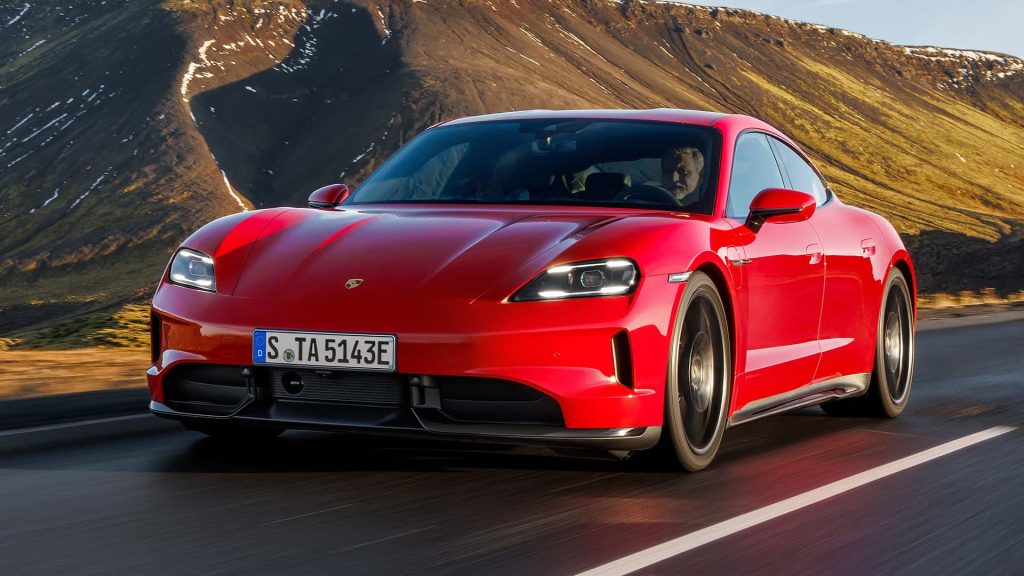
The Taycan also delivers genuine performance credentials. Even the Taycan 4S offers sports-car acceleration, while the Turbo S produces extraordinary output and supports ultra-fast DC charging using its 800-volt electrical architecture.
Combined with Porsche’s reputation for engineering excellence and strong dealer support, these qualities have helped the Taycan outperform the Tesla Model 3 in three-year value retention despite competing in a much higher price segment.
Specifications
- Engine: Dual Permanent Magnet Synchronous Electric Motors
- Torque: 626 lb-ft (Launch Control, Taycan 4S with Performance Battery Plus)
- Horsepower: 509 hp (Overboost with Launch Control)
- Length/Width: 195.4 inches / 77.4 inches
3. Hyundai Ioniq 5
The Hyundai Ioniq 5 entered the U.S. market with bold styling, an advanced 800-volt electrical architecture, and some of the fastest charging speeds available outside the luxury segment. Those features have translated into stronger resale performance than the Tesla Model 3 in several iSeeCars depreciation reports covering three-year ownership.
While the Model 3 experienced significant value declines following Tesla’s nationwide price reductions beginning in 2023, Hyundai maintained a more consistent pricing strategy on the Ioniq 5, helping stabilize used-market demand.
Demand has remained healthy because the Ioniq 5 appeals to a broad audience. Families appreciate its spacious cabin and flat floor, commuters benefit from its long driving range, and technology enthusiasts value features such as vehicle-to-load capability, dual 12.3-inch displays, and ultra-fast DC charging.
Charging from 10 percent to 80 percent can take about 18 minutes on a compatible 350-kW charger, making it one of the quickest-charging EVs sold in America.
Industry analysts have also noted that limited production during the model’s early years helped support resale values. Unlike high-volume EVs that flooded the used market, the Ioniq 5 maintained relatively balanced supply and demand.
Certified pre-owned examples remain attractive because Hyundai backs the vehicle with one of the strongest warranty programs in the industry, adding confidence for second owners.
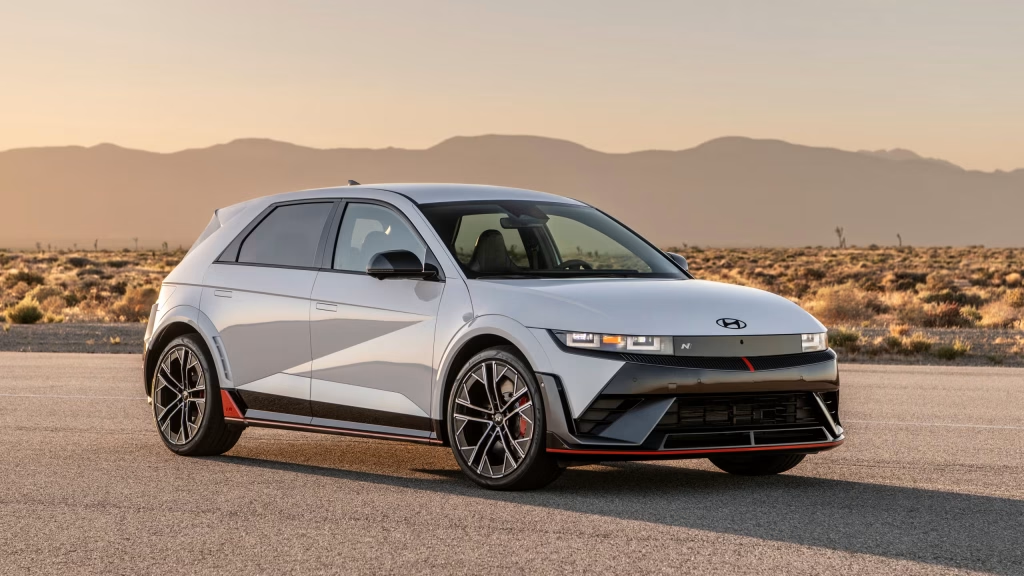
Although depreciation affects every electric vehicle, the Ioniq 5 has generally retained a greater percentage of its original value than the Tesla Model 3 according to iSeeCars’ three-year depreciation studies.
Its combination of rapid charging, distinctive design, practical interior, and strong warranty support continues to make it one of the most desirable used electric crossovers in the United States.
Specifications
- Engine: Dual Permanent Magnet Electric Motors (AWD)
- Torque: 446 lb-ft
- Horsepower: 320 hp
- Length/Width: 182.5 inches / 74.4 inches
4. Kia EV6
Rather than relying solely on headline performance numbers, the Kia EV6 has built its reputation through balanced engineering and consistent market demand.
Sharing Hyundai Motor Group’s advanced E-GMP platform with the Ioniq 5, the EV6 combines long-range capability, ultra-fast charging, and sporty handling in a package that has retained value better than the Tesla Model 3 according to multiple iSeeCars depreciation analyses.
One reason is pricing stability. Tesla’s frequent MSRP adjustments immediately affected used Model 3 values because buyers could purchase brand-new vehicles for substantially less than before.
Kia’s pricing strategy has been considerably steadier, allowing resale prices to follow more traditional depreciation patterns instead of reacting to sudden manufacturer price cuts.
The EV6 also benefits from broad consumer appeal. It offers competitive EPA driving range, available all-wheel drive, advanced driver assistance systems, and one of the quickest charging experiences in the industry thanks to its 800-volt architecture.
On compatible high-output DC fast chargers, the battery can recharge from approximately 10 percent to 80 percent in under 20 minutes under ideal conditions. Those real-world advantages have kept demand strong in both the new and certified pre-owned markets.
Awards have further strengthened buyer confidence. The EV6 has received recognition from organizations including North American Car, Utility, and Truck of the Year and IIHS for safety, helping maintain interest among used buyers.
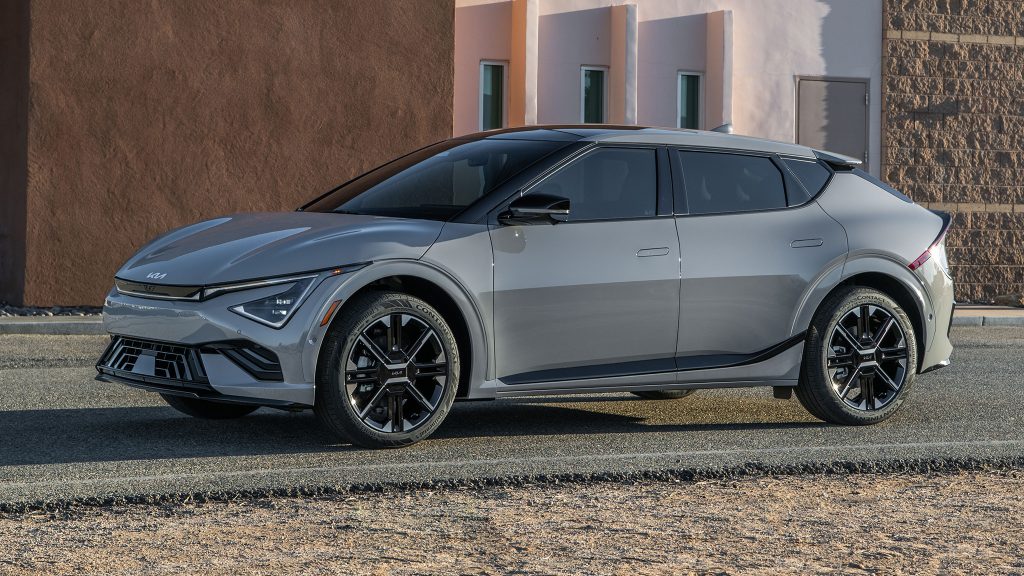
Combined with Kia’s comprehensive warranty coverage and improving brand reputation, these factors have supported healthier resale values than the Tesla Model 3 during comparable ownership periods.
Specifications
- Engine: Dual Permanent Magnet Electric Motors (GT-Line AWD)
- Torque: 446 lb-ft
- Horsepower: 320 hp
- Length/Width: 184.8 inches / 74.4 inches
5. Hyundai Kona Electric
Unlike many electric vehicles that experienced sharp resale declines after the industry-wide pricing adjustments of 2023 and 2024, the Hyundai Kona Electric quietly established itself as one of the better-performing models in terms of value retention.
According to iSeeCars depreciation analyses, the Kona Electric has consistently held a higher percentage of its original value than the Tesla Model 3 over comparable ownership periods. Its affordable purchase price, practical size, and dependable reputation have helped maintain demand in the used market.
One advantage comes from the vehicle’s target audience. The Kona Electric was designed as an efficient compact crossover rather than a high-volume performance sedan.
Buyers looking for an affordable EV with solid EPA driving range, low operating costs, and a familiar crossover layout continue to seek it out in the certified pre-owned market. That steady demand has prevented depreciation from accelerating as dramatically as it has for several larger EVs.
Hyundai’s pricing strategy has also been an important factor. While Tesla repeatedly reduced the Model 3’s MSRP, affecting both new and used prices, Hyundai avoided similarly aggressive nationwide price changes on the Kona Electric.
As a result, resale values followed a more traditional depreciation curve. Industry pricing guides from Kelley Blue Book and wholesale auction data have reflected stronger residual values than many expected from an entry-level electric crossover.
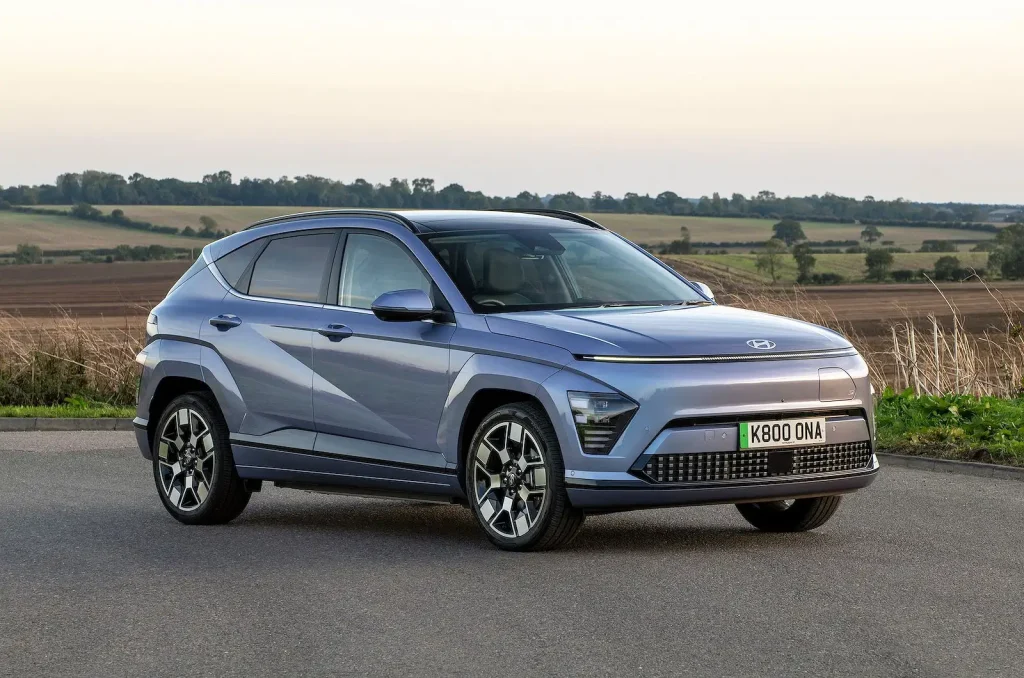
Another benefit is long-term ownership confidence. Hyundai backs the Kona Electric with an extensive battery warranty, and reliability surveys have generally produced favorable results for its electric drivetrain.
Buyers searching for an efficient commuter often view the Kona Electric as a lower-risk purchase than some competing EVs, helping preserve resale demand years after the original sale.
Specifications
- Engine: Single Permanent Magnet Electric Motor
- Torque: 188 lb-ft
- Horsepower: 201 hp
- Length/Width: 171.5 inches / 71.9 inches
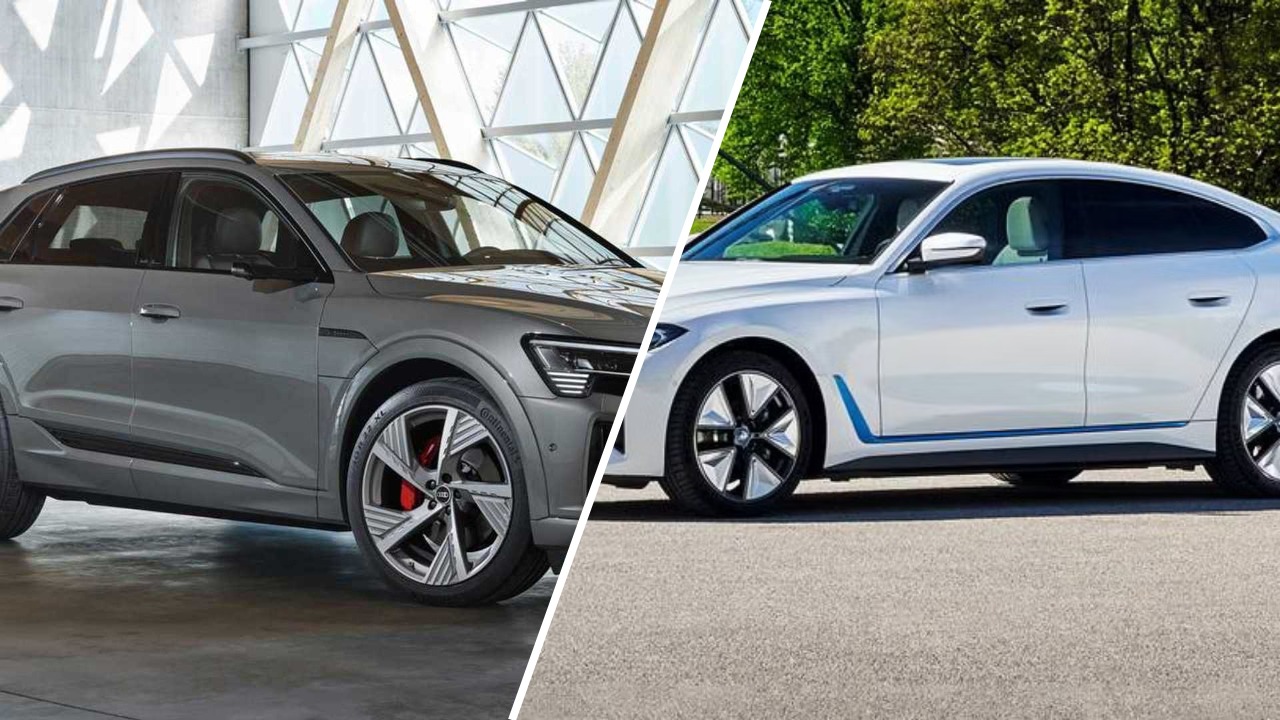
6. BMW i4
Luxury electric sedans often experience substantial depreciation, but the BMW i4 has performed better than many competitors, including the Tesla Model 3 in several iSeeCars three-year retention comparisons.
BMW entered the EV market with a familiar sports sedan formula, giving buyers an electric vehicle that still delivered the driving dynamics, interior quality, and premium ownership experience associated with the brand. Those qualities have translated into healthy demand in the used luxury market.
Instead of relying on constant pricing adjustments, BMW has maintained relatively stable MSRP positioning for the i4. That consistency has protected used values from the sudden drops experienced by vehicles whose manufacturers repeatedly lowered new-car prices.
Certified Pre-Owned BMW programs have further strengthened buyer confidence by extending warranty coverage and comprehensive inspections, increasing the appeal of lightly used examples.
The i4 also benefits from its shared platform with the gasoline-powered 4 Series Gran Coupe. This design allows buyers to enjoy traditional BMW proportions, refined ride quality, and familiar ergonomics while taking advantage of electric propulsion.
The M50 performance model has attracted particular attention thanks to its impressive acceleration, producing performance that rivals many dedicated sports cars while maintaining everyday practicality.
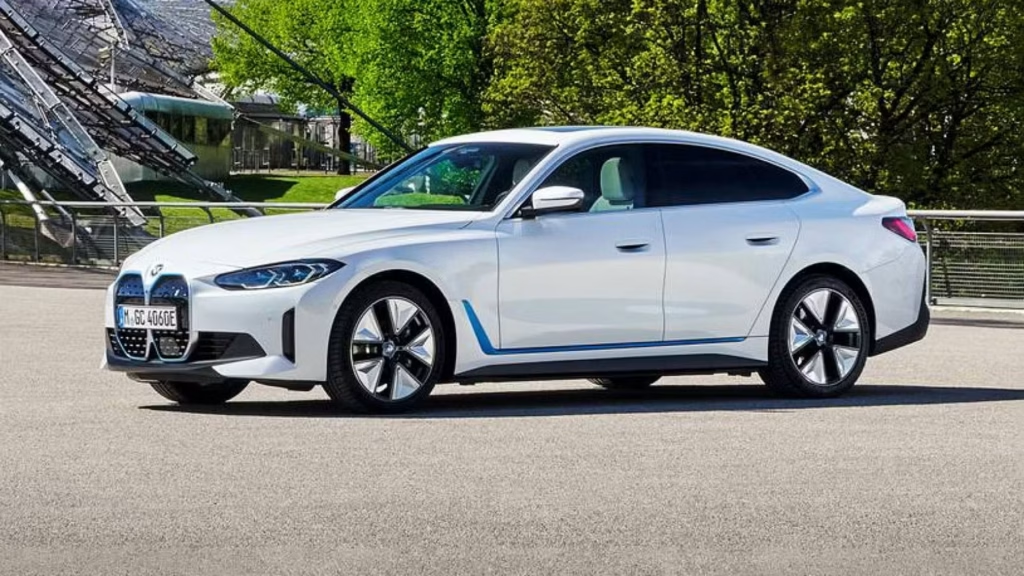
Market analysts continue to note that premium brands with loyal customer bases often experience healthier resale performance than mass-market competitors when pricing remains disciplined.
Combined with BMW’s reputation for engineering and a growing nationwide charging network, the i4 has retained value better than the Tesla Model 3 during the first three years of ownership in multiple industry depreciation studies.
Specifications
- Engine: Dual Electric Motors (i4 M50)
- Torque: 586 lb-ft
- Horsepower: 536 hp
- Length/Width: 188.5 inches / 72.9 inches
7. Genesis GV60
Luxury electric crossovers have faced difficult resale conditions over the past few years, yet the Genesis GV60 has managed to outperform the Tesla Model 3 in several iSeeCars three-year depreciation studies.
The difference stems from a combination of controlled production volumes, premium positioning, and stable manufacturer pricing. While Tesla’s repeated MSRP reductions had an immediate impact on used Model 3 values, Genesis maintained far more consistent pricing, helping preserve resale performance.
The GV60 also benefits from exclusivity. Genesis sells significantly fewer vehicles than Tesla in the United States, meaning fewer used examples enter the market at any given time. Limited supply has helped support stronger transaction prices, particularly for well-equipped Performance and Advanced trims.
Buyers looking for a premium electric crossover with distinctive styling often find the GV60 appealing because it offers luxury features without the high production numbers associated with many mainstream EVs.
Technology has been another selling point. The GV60 uses Hyundai Motor Group’s advanced 800-volt E-GMP platform, allowing extremely fast DC charging under ideal conditions.
The cabin includes premium Nappa leather, facial recognition entry, a fingerprint authentication system, heated and ventilated seats, and a high-quality Bang & Olufsen audio system. These upscale features continue to attract used buyers searching for a luxury EV that feels different from the competition.
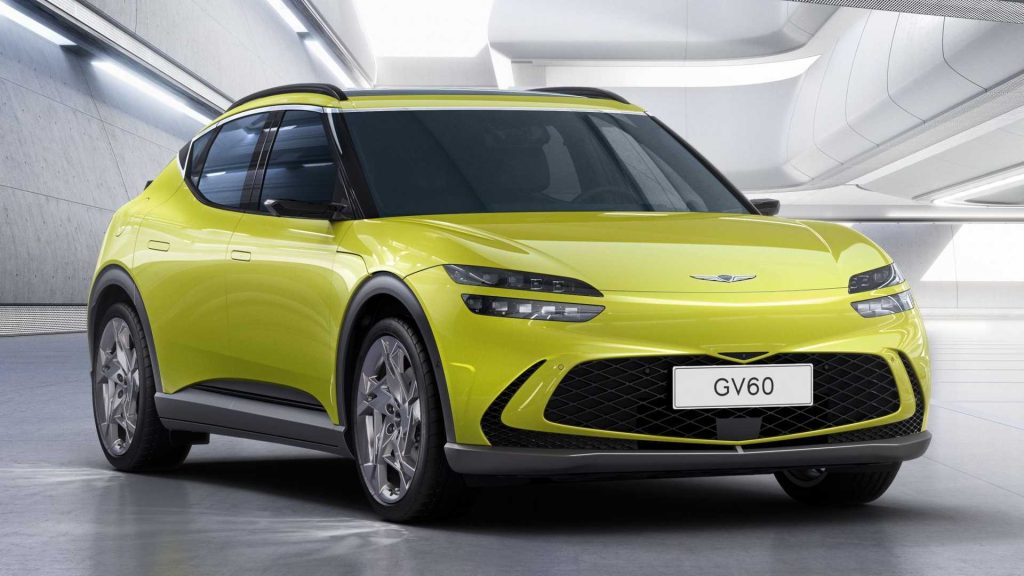
Industry pricing data from Kelley Blue Book, Black Book, and iSeeCars indicates that premium Genesis EVs have retained value more effectively than the Tesla Model 3 during comparable ownership periods.
Buyers who prioritize luxury, advanced charging capability, and lower production numbers have helped keep demand healthy in the certified pre-owned market.
Specifications
- Engine: Dual Permanent Magnet Electric Motors (Performance AWD)
- Torque: 516 lb-ft
- Horsepower: 429 hp (483 hp with Boost Mode)
- Length/Width: 177.8 inches / 74.4 inches
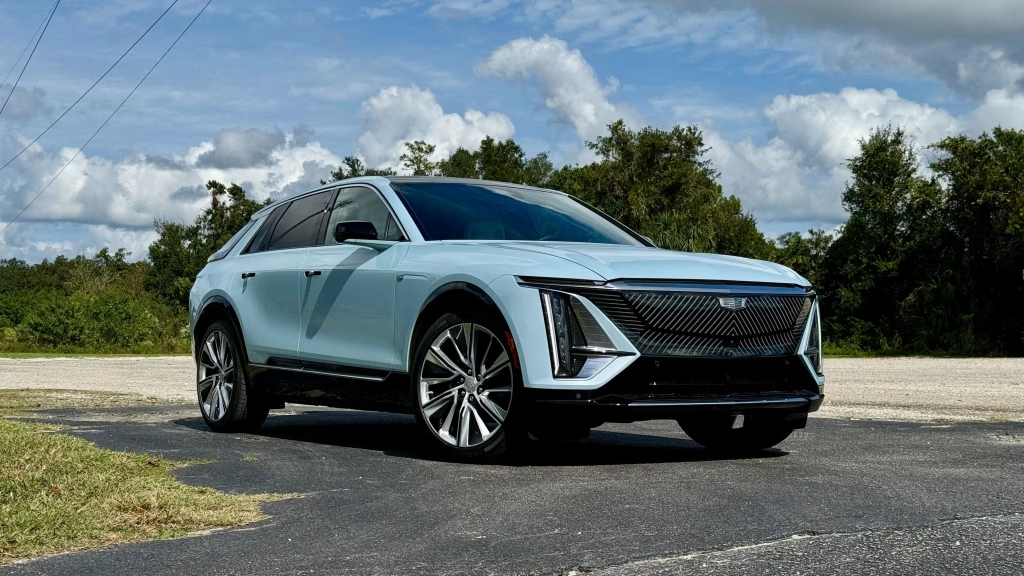
8. Cadillac Lyriq
Cadillac entered the modern electric vehicle market with the Lyriq, a luxury crossover built on General Motors’ Ultium platform.
Although it competes in a crowded premium EV segment, the Lyriq has demonstrated stronger three-year value retention than the Tesla Model 3 in multiple iSeeCars depreciation comparisons.
Stable pricing, premium branding, and healthy consumer demand have all contributed to its favorable resale performance.
Unlike manufacturers that relied on aggressive nationwide price reductions, Cadillac generally maintained consistent MSRP levels for the Lyriq after launch. This pricing discipline helped prevent the rapid used-value declines experienced by several high-volume electric vehicles.
Certified Pre-Owned Cadillac programs have also increased buyer confidence by providing factory-backed inspections and warranty coverage, making lightly used Lyriqs attractive alternatives to buying new.
The vehicle’s combination of luxury and technology has broadened its appeal. Inside, buyers find a striking 33-inch curved LED display, Super Cruise hands-free driving capability on compatible highways, premium leather seating, AKG Studio audio, and one of the quietest cabins in the segment.
The Ultium battery platform supports competitive driving range while allowing future software improvements through over-the-air updates, helping the vehicle remain current even after several years of ownership.
Market analysts have observed that luxury buyers often place greater emphasis on brand image, interior quality, and ownership experience than simply purchasing the least expensive EV available.
That trend has supported used Lyriq demand and helped it retain a higher percentage of its original value than the Tesla Model 3 during the first three years, according to recent iSeeCars resale studies.
Specifications
- Engine: Dual Permanent Magnet Electric Motors (AWD)
- Torque: 450 lb-ft
- Horsepower: 500 hp
- Length/Width: 196.7 inches / 77.8 inches
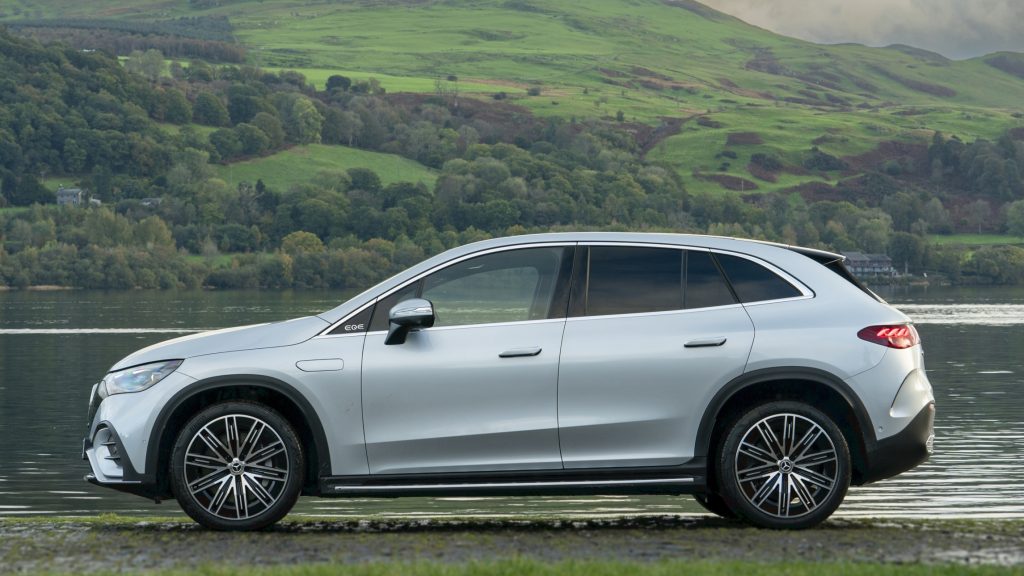
9. Mercedes-Benz EQE SUV
Mercedes-Benz entered the premium electric SUV segment with the EQE SUV, offering buyers a vehicle focused on refinement, comfort, and advanced technology rather than headline acceleration alone.
According to recent iSeeCars three-year depreciation studies, the EQE SUV has retained a greater percentage of its original value than the Tesla Model 3.
A major reason is that Mercedes has maintained a more measured pricing strategy, avoiding the frequent nationwide MSRP reductions that significantly affected used Model 3 values after 2023.
The EQE SUV also appeals to a different type of customer. Mercedes buyers often prioritize craftsmanship, ride quality, dealership experience, and brand prestige. These characteristics help sustain demand in the certified pre-owned market.
Mercedes-Benz Certified Pre-Owned coverage further strengthens buyer confidence, making lightly used EQE SUVs attractive purchases for customers seeking a luxury EV without paying new-vehicle pricing.
Technology plays an equally important role in the vehicle’s resale strength. Buyers receive the latest MBUX infotainment system, optional Hyperscreen technology, advanced driver assistance features, air suspension, premium interior materials, and one of the quietest cabins in the luxury EV segment.
Continuous over-the-air software updates also help keep the vehicle competitive as new technology enters the market.
Although luxury EVs traditionally depreciate more quickly than mainstream gasoline vehicles, the EQE SUV has demonstrated stronger value retention than the Tesla Model 3 according to iSeeCars’ comparative three-year studies.
Its combination of premium engineering, stable pricing, limited production relative to Tesla’s volume, and sustained demand among luxury buyers has helped preserve resale values more effectively than many expected.
Specifications
- Engine: Dual Permanent Magnet Electric Motors (EQE 500 4MATIC)
- Torque: 633 lb-ft
- Horsepower: 402 hp
- Length/Width: 191.5 inches / 76.4 inches
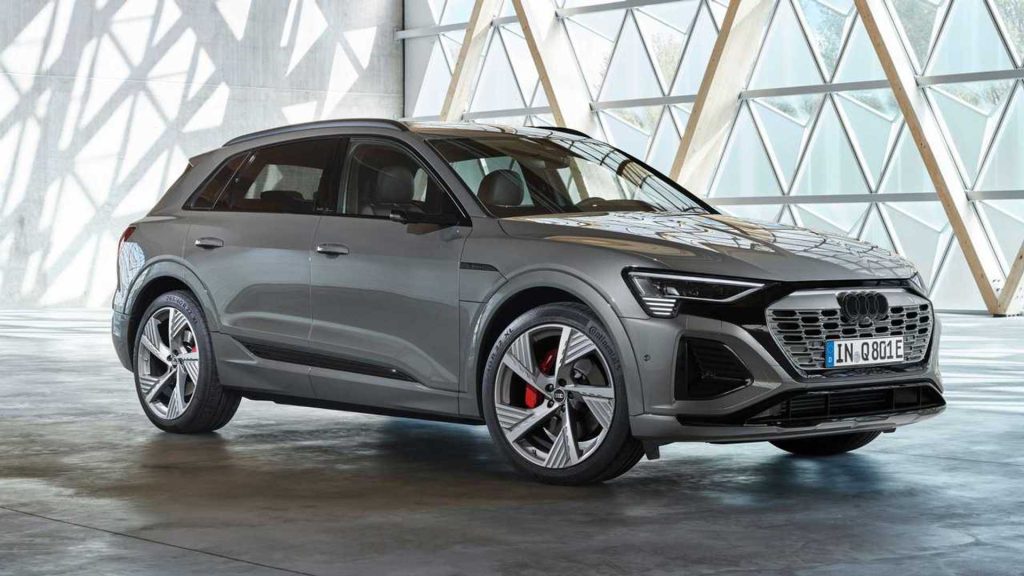
10. Audi Q8 e-tron
Audi’s Q8 e-tron represents the evolution of the original e-tron SUV, introducing improved battery capacity, greater driving range, and updated technology while continuing Audi’s emphasis on refinement.
According to iSeeCars resale analyses, the Q8 e-tron has retained value better than the Tesla Model 3 over comparable three-year ownership periods. Unlike Tesla, whose repeated MSRP adjustments reshaped the used EV market, Audi maintained relatively consistent pricing, helping stabilize resale values.
One reason for its healthy residual performance is customer loyalty. Audi owners often remain within the brand when replacing their vehicles, creating strong demand for certified pre-owned models.
Audi’s nationwide dealer network and factory-backed certified pre-owned program further increase confidence among second owners. Those factors support stronger resale values even as the broader EV market continues to mature.
The Q8 e-tron also delivers a premium ownership experience that appeals to luxury SUV buyers. The cabin features high-quality materials, a quiet interior, dual touchscreens, Virtual Cockpit digital instrumentation, adaptive air suspension, and advanced driver assistance systems.
Its refined ride quality distinguishes it from many sport-oriented electric vehicles, attracting buyers who value comfort as much as performance.
Industry valuation data from iSeeCars, Kelley Blue Book, and Black Book shows that stable pricing, premium branding, and steady consumer demand have enabled the Q8 e-tron to outperform the Tesla Model 3 in three-year value retention.
While every electric vehicle experiences depreciation, Audi’s flagship electric SUV has proven that thoughtful pricing and strong brand reputation can significantly reduce that loss.
Specifications
- Engine: Dual Electric Motors (Q8 e-tron quattro)
- Torque: 490 lb-ft
- Horsepower: 402 hp
- Length/Width: 193.0 inches / 76.3 inches
Also Read: Top 10 States Where You Don’t Need a Front License Plate
